Genius Network® presents: Wyland interviewed by Joe Polish
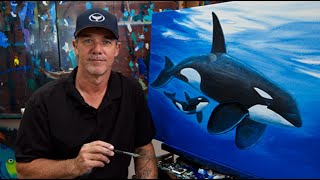
Artist Wyland talks with Joe Polish about painting 100 murals over 27 years and building a brand with 400,000 collectors worldwide. At 14, he saw gray whales and Jacques Cousteau on TV. Now he runs the Wyland Foundation and has painted with over a million kids.
Questions this video answers
Over 400,000 collectors in about 100 countries.
He painted 100 Wailing Wall murals.
About 27 years.
Beijing (as an official cultural event for the Green Olympics).
Around 350–400 major original pieces per year.
Chapters
Hello, this is Joe Polish, and you're about to watch me interview the famous artist Wylan at his studio here in Laguna beach for Genius Network. And I want to let you know I'm going to ask him questions not only about art, because he's one of the most prolific, highest paid artists alive, but I'm also going to ask him some questions about business. And we're going to spend a little bit of time talking about not only your art, what starts. Started all of this, who you are, but your business philosophies because you are arguably one of the.
This is business. I thought this was a hobby. Yeah, I gotta go.
I want to hear about. I want to hear, is it a business or is it a hobby?
You know, what kind of a lifestyle for me, you know, it's. It's never really been a job. It's been more of an adventure. And of course, it is work. You got to work hard at your hobby. And anyway, it's been, you know, quite a journey now. Over 30 years on the Green Message and kind of living the dream of being an artist in California. You know, when I grew up in Michigan, far away from the ocean, you know, I always felt that one day I would be in California with my art because obviously, look at my art, it's more west coast style. But I got a great education, I went to a great art school. I only went two years because, you know, I couldn't take the winners in Michigan. But I came to Laguna beach here when I was 14. You know, we did a little road trip out here with the family, and this is the very first place I came, which is Main Beach. And, you know, I immersed myself in the ocean. And when I came up out of the water for the first time, two gray whales actually broke the surface, spouted and fluked up right in front of me, pretty much changing my life forever. You know, I was an artist.
How old were you at that time?
Well, I was 14 years old. And, you know, art is really the only thing I ever wanted to do. But I was inspired by Jacques Cousteau. And every Sunday he would have the undersea world of Jacques Cousteau. And he instilled in me a passion for the ocean and the water planet. So those memories are very strong and vivid. And eventually I became a diver and I started diving into the oceans and taking the beauty that I see and shoot it forward through my art, my paintings, sculptures, and eventually through the giant murals, the Wailing Wall project.
What do you think most people perceive you to be when they hear of Weiland the artist.
Rich. No, I'm just kidding. You know, it wasn't always like that, though. I was a starving artist. Okay? And I'm still not rich. I'm rich in a great life. I mean, I. You know, the most uninteresting thing to me is money. I mean, seriously, the most interesting thing is being creative to get out of bed and feel great passion for what you love to do. I like to create things out of nothing, whether it's a blank canvas, an ugly building, a piece of clay, turn that into a beautiful octopus or a big sculpture of a dolphin or a whale or shark. I'm an artist first and foremost. And that's pretty much, you know, been my entire life and lifestyle. And then to be able to share, you know, that gift with friends, with family, with over 400,000 collectors now in a hundred countries, is a wonderful thing. But it didn't start out that way. I was a classic, starving artist when I came out here. I was living on Snickers bars, you know, but I cut them in threes, breakfast, lunch, and dinner. And people don't believe that, but it's true.
You really did that?
Oh, absolutely. I lived in a little tiny studio in Huntington beach, and I think it was $100 a month, and. And even that was tough. But ironically, I feel like I was an artist that was in the right place at the right time. And when the environmental movement started in the 70s, there I was inspired by Jacques Cousteau and Greenpeace, and that whole green movement was just in its early stages. And here I was, an artist taking all that inspiration in. And I decided early on that art could play an important role in conservation and clean water, healthy oceans, that art could move people to a higher consciousness and even action. So I've been involved in that green movement for 30 years now.
You've got the wailing walls, which are viewed, I guess, by over a billion people every year. You've done now over 100 of them? Yeah.
You know, after I did the first one, which, by the way, is on the side of this building, they were going to tear my original wailing wall down. So I bought the building here. I bought the whole block so they couldn't do it. And four inches of it was property on the Hotel Laguna, so they painted over it. But the city allowed me to do a tile mural, a replica of the original wall. But, yeah, unfortunately, we lost my first wailing wall. And it's really sad, but after I did that first one, I decided if I was serious about using public art to raise awareness and inspire people to get involved. I would have to probably paint 100 walls. So when I was doing an interview like this for the LA Times, Gordon Grant, the How many of these giant murals of Wales are you going to paint? I go, I'm going to paint 100. I painted 100. It took me 27 years to do it. And last year, I'm proud to say I painted the last one in Beijing for the Green Olympics as an official cultural Olympic event for the Green Olympics and invited kids from all the Olympic countries to join me in painting my last wailing wall project, which we painted on canvas.
Now, is it your last one or are you going to do more? That's it.
That's the last wailing wall. Will I quit painting murals? No, but what I'm really focused on now is creating a hundred sculptures, monumental sculptures, life size and in some cases larger life sculptures of all the great whale species and other aquatic Life. And pick 100 Host Cities. 100 cities will have one of my sculptures. And. And so it'll be a global environmental sculpture tour. So the largest art project in history. First one was the wailing wall project. Now you know, job security, but I think it's fun. And if you look around the gallery, you'll see some of my sculptures. So just imagine the size and scale of say, the Bird's Nest or in Beijing or the Cube. When I was in Beijing, I was absolutely inspired by some of the architecture that was created for the Olympics and some of the other great things that are going on. My project really is going to be a 25 year project to create the largest environmental and monumental art project in history. Why? Because I can. I like to think big. You know, it doesn't cost anymore to think as big as you possibly can. And there's not enough people today that think really big.
That's an interesting statement.
You got to think big, man. You got to think, go big. It takes the same amount of energy to think big or think small. So it's up to you. I always felt that bigger is better. Obviously my subjects are big.
Do you believe your skill was a gift, you're born with it, or was it developed? I mean, maybe. Of course it's both. But in your perspective, have you really worked hard to develop this or have you just really had this gift and you.
Well, it's both. First of all, it's a gift. You're either a pure artist or you're not. But you can learn to paint, you can learn to Be a good artist, to be a great artist. I personally believe it's a gift. And when you have the gift, some people don't even appreciate or use that. So I always appreciated the gift I was given. But I've been painting since I was 4 years old. I used to paint dinosaurs, Jurassic scenes, and nobody ever told me to stop, so I just kept going. Kids sometimes are discouraged. They're going, ah, you're not a very good artist. But, you know, I never was discouraged. I always had a tremendous amount of confidence and I did have a lot of support. I mean, I had an art teacher in first grade saw me kind of not paying attention in class and sketching, and she told me to stay after class. And I thought, oh, I'm in trouble here. But she said, you, drawings are very good. And she was an artist herself. So we drew together for about an hour. And afterwards she said, said, wyland, you could be a great artist. I was in first grade. I believed the teacher. And now, whenever I have a chance, I'll come off a wailing wall painting a mural, and I'll see a group of kids, or even one kid, and I'll sketch with them, look at their drawings and encourage them.
So that totally resonates with you when you see kids and you just want to encourage them.
Well, I think it really told me how powerful that is for you to mentor a young person and try to give them something. I call it sharing it forward. You know, I've had my 15 minutes of fame. You know, I've been very successful. Now I feel a great responsibility to share what I know with kids. Not only the art, but the message, but the art is critical as well. Because you're going to see me on a campaign, a continuous campaign to keep art in schools, particularly in America, because it may very well be an artist that creates the clean energy idea of this century. You know, what kind of citizens are we going to develop if we take art and music and dance, you know, out of our schools? It's ridiculous. The greatest investment we can make is to ensure that the kids get everything they need to become, you know, well rounded, good students, good citizens for the planet, good thinkers. We're competing with the entire world, okay? We have to keep art as one of the key components in our schools, in our curriculum. So you're going to see me fighting to keep art and science. And in fact, my ultimate goal is to bridge those two worlds in nature. Art and science come together beautifully.
Well, you know, you're more than just an artist from My perspective. I mean, you're a very incredible entrepreneur, and I'd love to hear your definition of what your thoughts were.
Well, I had to be. I had to be an entrepreneur, and I had to build a brand. I didn't even know it was called a brand, But I knew instinctively that people were not going to do it for you. I would sell my art to galleries, and they would sell them all. And then I'd go back, and they'd say, well, we had a lot of bills, so the artist doesn't get paid. And I said, well, maybe I should open a gallery. So 31 years ago, I opened the first little studio gallery out in the canyon. And it really taught me how to not only present my art, frame it, market it, but also how to talk to people about my art. And the very first collectors that I've had still collect my art today. It was a lot cheaper back then, but I decided right then and there that you had to be more than an artist. You know, the idea of the bohemian starving artist, it didn't look like much fun. I mean, look at van Gogh. A guy lost a piece of his ear, and I thought, you know what? I'm not that kind of personality. I love people, and I love taking my art and seeing it move people. So all those elements kind of came together in a great way. But I realized that I had to communicate with people and basically just build my own brand from scratch. There was nothing like it. The art that I create is a new art form. The art of the past was marine art, which really is man's conquest of the sea. Mine is man's appreciation of the sea and what we need to bring tech. I call it marine life art. And it's really captured the imagination of the entire world. It's global now, and I'm really excited about that. So with that success, it's really allowed me to do more with my nonprofit. So those things go hand in hand. There's a real balance going on here. There's two great things happening, but it's a new paradigm for artists. It's the greatest time in history to be an artist, because why people are interested in art, and apparently art is a better investment than the stock market. Whoo. There you go. All right, we got that one, Ryan. No, you know, art is cool. It's hip. So be a collector. If you're watching this, go buy a piece of art.
Do you have a distinction between good art and bad art? I mean, how would you define art when you say art needs to stay in School. What does art mean?
Art. Art is what is inside of you and how you perceive the world. And in my case, it's the. The natural world. I'm an appreciator of a lot of different styles of art. In fact, I never used to like the abstract stuff. I would go to, like, MoMA Museum of Modern Art, and I'd go, that's crap. You've done it. You walk in there, it looks like the guy spilled paint on the ground, and it's Jackson Pollock. I'm going, I don't get that. But after you kind of live a little longer and you go back and you look at it again, you go, that's pretty good. That's got some rhythm, and there's some color theory. So your art evolves. In the beginning, your tastes are a certain way. And then as you kind of travel around the world, like, I was just in Beijing, and the art scene there is emerging and really dynamic. And it inspired me, in fact, so much so that the official artist for China for the Olympics, and I really painted together for two weeks, and I was the official US Olympic artist. So we got to paint his style of traditional Chinese brush. And of course, mine isn't perfect, but he thought it was pretty good. And now I'm, like, possessed with it. So as I travel, as I take in other art forms, and then I kind of spit it out there. The Wyland Way. It's exciting. Keeps it exciting. Keeps it fresh. I know one thing for sure. People walk into Wyland Galleries and go, how could one guy create all this art? Well, I'll tell you how. I don't have a job. And by the way, I don't want one either. This is all I do. I get up every day and I create art. It's a good gig.
Could you ever see yourself not doing it?
No. No. It would be impossible not to do this. In fact, the reason I'm doing the Jackson Pollock in the abstract is not only because I think it's a great challenge and fun. When my hands start shaking, I can still do abstracts. In fact, they'll probably even be better. So anyway, I'm kind of predicting, and I'm getting a little looser. So that's what artists do. I mean, they start out tight, and then you just don't care. You're like, hey, I'm having fun here. And then you probably go back and get tight again. Anyway, it really is probably the ultimate career on the planet is being an artist. What is an artist? I mean, really. And you get away with a lot more. Like, I work with a lot of great scientists, right? They have to follow rules. Artists, there's no rules in being an artist. And the business side of art, it's wide open. But the one thing you got to have is you got to have work ethic and you have to have integrity. You have to be honest. And that's what owning a gallery has enabled me to do, is to promote my art the right way to frame it, to sell it, to get to know the customers and collectors and do it on my terms. And not too many artists have that opportunity. That's what success gives you, the opportunity to do it your way. As Frank said.
Well, so you have the side of you that's the artist that creates, and you have this business side of you that actually monetizes the art. What's the difference between Weiland the artist, Weiland the businessman?
Well, I'm kind of a hybrid. You're either a. The artist, you know, like in the corner, you know, kind of timid, or not. Me, I'm not timid. I'm kind of Mark, Victor Hanson style. I'm out there.
So you're like add, like Mark?
Yeah, pretty much, yeah. So I have a lot of different, like Kobe Bryant. I have a lot of different ways of getting. Getting to the hoop, right? Which getting to the hoop to me is, is getting my art into collections, talking to people about the art, but equally important, the message of the art, the message that in this century, we need an environmental renaissance. We need a sea change in the way that we've been treating our planet. I'm sure when I started out, everybody went, wow, he's painting whales. The guy's going to starve to death. But that didn't matter to me. What I felt that my subject matter meant something to my soul. And I felt that if the whales couldn't have a voice, I would be the voice for them through my art. Darn if it didn't resonate not only in Southern California, but now globally. That message is now global and it's not going away. There's an environmental renaissance happening right now, and it's no longer just a little trend. I mean, it's in corporations, it's in families and kids, and I'm sitting on position to actually make a difference, to really do some high level things, take a look at the natural world, get out of the computer for a couple of minutes and go outside and realize what we have and how important it is to protect it, not only for us, not only for the whales. But for our kids, for future generations.
You know, one thing I want to make a distinction of because a lot of people, be it musicians, be it artists, whatever they think when someone starts making money that they've sold out. And what it appears is that in the process of you making money, you've been able to accomplish incredible things that not having that money you would have never been able to accomplish. So have you gotten better as a result of becoming financially successful? Are you about the same? I mean, what's your perspective on that?
Well, I just think that being successful gives you a lot more opportunities. Like I had the opportunity to headline the largest international art show in the world, the International Art Expo in New York at Jacob Javits. They asked me to headline this year and try to inspire artists to think green, to go green, to use green materials, you know, water based paints instead of oils, printing materials. I'm now printing on bamboo, which is very sustainable. So what I do is I'm educating myself and then I'm sharing it forward with artists and with people around the world. I also am asking continuously to talk to art students when I lecture or whether I give a commencement speech about the business of art. Now, it was really taboo when I went to college. They said, wylan, you're a fine artist. Don't worry about the business. That doesn't make one bit of sense. I mean, if you don't want to do the business, that's fine, hire a business manager, whatever, but at least understand all aspects of the job. The career of being an artist in the 21st century. In fact, Mark Victor Hanson, who wrote Chicken Soup for the Soul, and I just wrote a book called Don't Be a Starving Artist. We want to give it to all the artists for free. So hopefully at some point you'll be able to download it. If not, I want to help artists be successful because I want artists to be happy. They should be happy. You should be happy that you were blessed with some talent, that you can create something out of nothing. I mean, being an artist is a wonderful thing.
Well, you are arguably one of the greatest marketers of art alive today. I don't know if you consider yourself.
That, but definitely I've heard that I've got some marketing skills because I basically just learned as I went, I said, well, this works and this doesn't work.
What is marketing art from your perspective? Do you consider yourself a marketer?
Do you think it is not really, you know, sales and marketing? Not really. I am of the belief that if you create A great product that people will come. But that may not be enough. You may have to do more. You may have to market it. I think marketing alone and sales alone is not enough, especially during a recession like this. If you look, half the gallery is probably closed in the US right now and around the world. Half the artists are having to get real jobs. The strong brands, cause related brands like the Weiland brand are there. They will be there. They will weather the storm. Because we spent 30 years doing good things, not only creating the art, but forwarding the message of conservation and then also giving back. You know, the charity part, you know, we donate to over 100 conservation groups a year and individuals. We give Wyland scholarships to kids. I've personally painted with over a million kids in the last 30 years. And that to me is my highest accomplishments. Being able to. My team and I set up canvases at science museums, in schools, actually visit Schools in all 50 states in America and. And paint with kids and let them know that it's great to be an artist. Follow your dream.
Gotcha. What strengths and qualities do you think are just absolutely essential for someone to be successful as an artist?
The biggest one. You're going to think, this is ridiculous. Be a nice person. Every time I talk to kids, I go, be genuine. Be a nice person. Be nice to your parents. Be nice to your teachers. Be nice. I've tried to be nice to people for 30 years. And these people remember, they go, you were nice to me when you were a starving artist at the art festival here in Laguna. And I remember that. And I told you I didn't have any money, but one day I'm going to come and buy one of your sculptures, your tables. And people remember that. So I always say, be nice and give something back. When I moved to Hawaii, that was the big thing that the Hawaiians always seemed to talk about, giving something back. In the giving, it really comes back at you. As you know, it's the law of karma.
If you had to give someone, like, pieces of advice on just starting out their starving artist, they admire you, they look up to you. I mean, what would you tell them? Obviously, be nice. It does sound simple.
Be nice is real simple. And follow your dream. Never, ever give up. If you're doing what you love to do in life, whether you want to be an artist, a scientist, a writer, a filmmaker, you've reached the pinnacle of success. Because if that's your dream, I want to be a writer or an artist, a teacher, a great honorable career, by the way. In fact, I Think they should pay the lawyers what they pay to teachers and pay to teachers what they pay lawyers. Oh, that would be fantastic. Then you get rid of 90% of the lawyers and you have great, well paid teachers.
That would be fantastic.
That's my philosophy. But anyway, I just think if you want to do something and it's burning inside you, America, you know, you're born in the greatest country in the world because it allows you that freedom and that opportunity to do that. Of course they want to tax the holy heck out of you. Hey, pay your taxes, just make more money, give more. And it all seems to work out in the end. But if you're loving what you're doing, you've reached the pinnacle of success in life. That's what life is for me to tell these kids and these college kids that are all worried they're coming out of college in a recession, say, look, you're already ahead of me. I didn't graduate. I only went two. I got an honorary doctorate's degree, three of them. But you guys are ahead of me. All you got to do is work hard and just keep following your goal.
One name, Wylan. I mean, what is this with artists with one name?
Well, I always liked my family name, so even in high school, on my jock jacket, it said Weiland. So I always liked Weiland. And I always like to take negative things and make them positive. So where I'm from, calling you by your last name was derogatory, but I liked it. I wanted to make my name a name of respect. So, anyway, you got Sting, and you got, you know, Cher and all the Madonna and Barney, you know, one of.
The greatest and the artist formerly known as. Whatever he is.
Yeah, no, just Weiland is good. Less is more.
Does that help you meet women? Just the one name.
Oh, is it better? Yeah, sure, yeah. You know, when I was in France, the artists cannot understand why I would paint whales. Because the biggest thing in the world as artists, you get to paint beautiful models and wonderful looking women. And I go, yeah, I do paint women, but they're 40 tons and they live out there in the ocean. So anyway, they laughed at that. They thought it was fun. But I'm, what, 52 now? So that's young for an artist. Right now I'm doing my 21st book of my art, and most artists that have a book are dead. I didn't like that. That whole starving artist, bohemian, no success. You gotta suffer for your art. That whole thing stinks. So I think in the 21st century, we need to do a 180 paradigm shift. I'm willing to take the bullets with these art critics. They haven't really harassed me in a long time, but they say, why don't. It's commercial right now. They think I'm pretty good. And this is all good. Who cares if you paint for the critics? That's the biggest mistake you're going to have. Paint for you. Paint for your soul. Fill yourself up if it sells. Geez, that's good. I think they always got it backwards. They said, I'm a fine artist. Never sold a painting in your whole life. People hate it. It's junk. But the art critics love this stuff. Oh, he's a fine artist. He's living in some shack down there. No, that's ridiculous. I think a fine artist is an artist that people love, appreciate and collect. That's a fine artist who wrote the book on this fine art thing. I don't get it. The commercial. You're commercial because you sold some art. You know, they always said that Norman Rockwell was commercial. And now Leroy Nieman and Peter Max, these guys are fine artists. Robert Bateman.
Well, they're also people that influence the world tremendously and have built a huge base.
Absolutely. They've been very successful. But I think most artists don't really achieve any success until they're dead. And that's dumb. You should actually get all the success when you're, like, in elementary school and, you know, the perks now. I mean, now they want to give you everything when you're an established artist. I think they should give it to you when you're a starving artist. See, the whole thing's backwards because now you really don't need anything. Your career has kind of taken off. I love the idea that I can make a difference in people's lives, particularly young people. And that, to me, is the value of. Of my life. That is so fulfilling to know that I can go anywhere in the world, take out a paintbrush and stretch a canvas, and bring kids from all over the country to come together and paint a vision of whatever the theme is. The one we're doing now is with the National Forestry and noaa. So those two organizations, because of the Wyoming foundation, are working together. It's the forest that is so. And we're going to paint that vision with schools all over the nation. We're going to kick it off on Thursday in Washington, D.C. at the National Mall. Anyway, it's exciting. I guess, at the end of the day, if you're just doing it for the money, I Don't think that's what it's about, but the money is okay. I'm going to tell you this.
Well, you're a capitalist. Would you.
Oh, absolutely. This is America. It's okay to be successful and make money and drive nice cars. I do. I drive good motorcycles. And I think it's the American way. And I'm a big time capitalist. I think the more successful you are, the more you can give it back. By the end, we're going to give it all back anyway. Yeah.
You know, I have a good friend named Dan Sullivan that founded this company called Strategic Coach. And he said, you know, he says the only problem with capitalism that was named by its enemies and that capitalism in its purest form is this collaboration between other people. And you talked about integrity, you talked about creating value, getting paid for it. I mean, there'd be no innovations, there'd be no improvements in anything if it wasn't for people like that. So in the art world, I think you have a massive amount of influence. So for artists that are out there and they're struggling in their challenge, I mean, so many of them that I meet, they have this aversion to making money. And I mean, how do you shift that? I mean, what could you say to them? Because really, you're in a position to really influence that type of thing.
Well, I think being a good artist is not enough. I think you got to be a good human being. I really do. I think today also, I think you got to have a cause element just because you're a great artist. You can't be a great artist in a complete, you know what? Right.
Jackass or whatever.
Yeah. And I've seen, seen it. The worst enemy is the artist himself. If you're not really communicating and being, I guess, a good individual, I really think that that's been something that has got me through the peaks and valleys of the recessions. I've seen these before. And then it always seems the harder you work, the more good things happen to you. I called Spencer Johnson, who moved my cheese, just wrote Peaks and Valleys, the new book. One of the most successful authors of all time. I said, did you read this book, the Secret? Because I thought it was amazing. And he goes, wylan, come on. He goes, you and I have been living the secret for 25, 30 years. We put great things out in the universe and we kind of will them to happen. And sure enough, that's what comes back to you. So always put out good vibes, put out big dreams, think big and set Your goals and go after it. And those things come. And it's really ironic because even in the beginning when I was having trouble paying a rent or whatever, sure enough, at the last second when something was due, car payment, whatever, somebody would commission a painting or a mural.
Do you consider yourself a lucky guy?
I'm lucky and I work really hard at my luck. I have a lot of people that work for me and I take care of my family a lot too. They take care of me. So we have this symbiotic relationship. But they realize that I'm out there in front and they're cheering me on. Just keep going with it because I've created this tidal wave of art, but tidal wave of goodwill. As you're creating good things in the universe, other good things are coming to you. So anyway, if you're creating bad things, I'm sure you're just going to get avalanched, you know, you're going to fall off the lip and hit the reef.
Well, you're a totally prolific guy. I mean, obviously books, art, photography, everything you do, the wailing walls. How many pieces of art do you even know that you've created?
Well, mine's like a batting average. I'm kind of like considered a batting average. I try to do My average around 350400 originals, major pieces of art a year. But think about it. I really don't do anything else. Although the foundation, the Weiland foundation takes about half of my time. But it's the balance. I think it's a balance. I think if you just stayed in the studio and created art all day, you might go a little crazy. So the balance is to have something else to do which is create wonderful art and then go out and share it, get kids involved.
How do you manage your time between all this?
Well, what I try to do is not manage it. I try not to manage my time. I like to be kind of free flowing and go with the flow. Okay, like today we were going to go on the Goodyear blimp and unfortunately the wind was blowing. But I had just painted the largest Earth portrait in history. A giant three story mural portrait of the planet Earth on top of the largest murder mural in history in Long beach that I painted 17 years ago. So I had seen the finished mural, of course, that I painted on Earth Day on cnn. But I was going to get a chance today to go up and see it from the blimp and photograph. So that didn't happen. And that's why we're here doing this interview. But Anyway, what the heck was my point there? My point was for Earth Day, I wanted to do something really artsy and kind of cool and hip. So I decided that in a 24 hour marathon, I would paint a portrait of the planet Earth in deep black space. And I did. It looked impossible. When I got up on the roof, I couldn't see one end to the other, it was so big. But anyway, the way that it turned out, it was awesome. And there was, at one point on Earth day, there was 11 helicopters kind of, you know, swarming around. Looked like Apocalypse now, you know, shooting this. And then it was going around the world. The idea that an artist could paint the largest Earth, you know, the only thing larger was the Earth itself. But we painted this thing, a volunteer effort in 24 hours and required, I don't know, 4,000 gallons of paint.
Man. Okay, so that's fascinating to me. So do you see it, the finished product in your mind, or do you create it as you go along?
Well, the funny thing is I've never really done one like that. So what I did is here I am, if you can imagine, I'm standing on top of the Earth and we have footage of this. So I'm standing there just in case.
Someone wants a question.
Absolutely. So I'm standing there and I have to imagine in my mind the Earth that I'm about to paint on this roof, from space. I'm not looking at any pictures, nothing. So what I do is I imagine North America, South America, and then of course, the enormous water planet, all the blue. I just painted the entire thing from my mind's eye. And then I started to second guess. Well, you know, is this going to be right? Are the Great Lakes here? Or, you know, is Alaska up there? But when I watched CNN that night, it was the first time I got to see it from above. It was perfect, absolutely perfect. So trust your instincts.
Do you ever find yourself saying, I screwed this up, I'm gonna scrap this, I made a mistake.
Well, the thing is, if it was my, you know, wall or roof, then I probably would have did grids and really took my time. I mean, 24 hours. But it's not mine, so what do I care? I go in very loose. You know, that's the thing with these walls too. I always say, you know, but they.
Come out so awesome. It seems like you don't grew up.
Well, not that you can see. I always say I practice on other people's walls. But I know this is kind of a business, an entrepreneur thing and art and Business really don't go together, but they should, because the whole world is art. I mean, look at cities around the world are basically judged on the art that they have, right? Only in America is art kind of a second class citizen. Try to get a loan as an artist. Forget it. I always tell them I'm a publisher, which is true too. But the art thing needs to come up and I'm going to really be working hard with my professional artist friends and people in the industry to bring art into the schools and bring up the appreciation of art in America because it is appreciated. If you go anywhere else in the world, artists are worshiped.
Well, you're doing a lot of things to influence and help a lot of people. So as it relates to business people, what sort of things would you recommend that they learn? Did you just develop these business skills or did you have mentors? I mean, what do you do to educate yourself?
Yeah, well, I just developed my own strategy on, you know, selling and marketing my art. And then I started out having one little studio gallery. And then eventually we opened probably 30 or so galleries around the country in strategic places. And now what I've done is I've decided that I want to pass ownership onto the managers and friends so they could open Weiland Galleries because it is a good gig. It's a great lifestyle to have art that you love and then be able to sell it to your friends and family and collectors. I mean, it's a great business. So right now I'm looking globally at taking my brand into China. So while in China and sell it kind of like Coca Cola license it. Oh, yeah, definitely. I'm into licensing big time.
Can you talk just even a couple minutes on licensing?
Sure. Branding and licensing, they go hand in hand. But licensing, I mean, you know, I thought I was doing really good licensing, and then I heard that SpongeBob did $1.4 billion last year. 1.4 billion. I went, Whoa, SpongeBob. And then Disney did 265 billion. Okay, now that's some serious licenses.
So did that annoy you or just inspire you?
No, no. And this is the thing. If you're an artist, don't get mad, get even. No, if an artist does good, kiss the ground he walks on and goes, thank God, that means it's possible. I mean, I've sold originals for over 200,000 for a living artist. Impossible. I've sold a watercolor here for $97,000. A watercolor for a living artist? I don't know any living artist that ever did that. In history. So if an artist. Don't be a hater, be a lover. Go. My God, a living artist sold a painting for that much money. Cool. That means it's possible, right? Yes.
So how does someone learn how to do that if they don't know? Here you are doing it, you're doing it. But if you.
I don't think it happens overnight. I think what's happened is I've developed a really good following, and people have been following my career for 30 years now. And a lot of people realize that art is a good way to go. It's a good investment. Listen, I don't sell it as an investment. I sell it as an investment into your life. Art enriches your life. People that have my art, they're not buying it, saying, oh, God, when he kicks off, this stuff's going to be worth a fortune. No, they love the art. And that's how I try to present it.
So what do you collect? What are you into?
Well, I don't even have to anymore. I can trade with anybody. I mean, jeez, virtually anybody in the world will trade with me. But I have a Robert Wood. And it's really ironic because when I was a kid growing up in Michigan, my mom had this cheap Kmart painting. Remember those kind you buy at Kmart? Over the couch, they've got the frame on it. Same thing. Robert Wood, the seascape artist from Laguna. So I'm growing up in Michigan. Here's the painting. Well, about 15 years ago, I'm walking down the street here in Laguna, where I live, and I go into a gallery and look, and there's that painting, but it's the original. Oh, wow.
So I went, so you got it?
Oh, yeah, of course. So now I hang that in my house in Florida. And I love telling people that story. When I was a kid, my mom paid $15 for that painting. I paid more. Robert Wood's dead. He's not making anymore. But he was one of the great seascape painters. Also. Robert Wood did How to Paint Seascapes with Walter Foster books. Well, they're now doing Wyland Books, how to Paint Marine Life. It's amazing how things come full circle. And if you're watching this, your turn's next.
Well, it goes with what you said about being nice to people. Because it's like one of my favorite quotes, I don't even know who originate is be nice to the people you meet on the way up, because they're going to.
You may see them on the way down.
Yes, exactly.
That's so certainly true. And you've seen people like that that are just mean spirited and that. And then you don't hear about them anymore, unfortunately. To mean the mean ones, they kind of pushed their way in there. But I think the tortoise and the hare. I'm a big tortoise guy. I think the tortoise. Just building your brand and having a huge foundation. My team was just in Vegas at the licensing show and what they realized is people used to try to invent brands like facades. This is a real brand. This is a brand that's built on. On actually accomplishing important things in the world. Disney has accomplished great things in the world, but everybody thinks that, well, I can do a mouse and some imitations don't work. Be original.
It's a real substance to it.
Yeah, get some substance to it, live it, dream it and then share it. But my foundation and my brand is built on accomplishing super high goals in the areas of the environment, protecting the environment.
What's interesting is your belief in sustaining things. And even in your bathroom here, which I think is kind of funny, there's a little sign that says, keep it nicer than it was before you showed up. And that's kind of your philosophy where you want things to be left in a better place than they were before you showed up. The ocean, everything.
Well, nobody's perfect either. But you don't have to be perfect. All you have to do do is do a little better. So if everybody does a little better, and what's ironic is if everybody does a little bit, you can make a world of difference. In the last century, it was all about like Jacques Cousteau. He went out himself and did things. Now it's about partnerships. So we're partnered with the Scripps Institute of Oceanography. They do the greatest science on oceans and water and. And then we bring the art. So when two groups come together in that mastermind theory, you can accomplish big things. When a lot of groups and individuals come together, they can change the world. Absolutely. And I'm here to help change the world. Just in my little part, my little art part that I know and writers, people say, do what? You know, I've always known the art thing, you know, it's instinctive to me. But the greatest reward that you can have is when you share it with somebody and they appreciate it. The little lights come on, especially in those young eyes and minds. It's a great thing.
Well, okay, so let's talk about your foundation and people that are watching this and they want to get involved. They want to find more information.
Key word, get involved. Get involved in any foundation that you feel strongly about. Mine is the Wyland foundation. We celebrate ourselves 16 years this year. And in those 16 years we've developed art and science programs that are unparalleled that regard every drop of water on the planet. And using the art component, you know, you can go further, art can go deeper. But using art and science together, it's super powerful. Usually there's curriculum on science or art. We combine both creatively and we use some of the greatest scientists on the planet. Planet Dr. Sylvia Earle, for instance, is on the Wyland foundation board. And Bob Ballard, who discovered Titanic. And then, you know, our creative team, we really don't follow any rules. We're here to break down all the barriers and all the rules and just say that what we're providing is unique in the world of education.
Out of all the books you've written, is there anything you'd recommend, where to start for anyone that wants more information about you? I mean, what's the.
Yeah, I say go to wyland.com w y land. Get it? Y land. Anyway, go to wyland.com you can see all my books there. There's one called hold you'd Water, kind of an unusual title. And it gives you 67 things to do to keep the planet blue, the ocean blue. And in the back you can total little things you can do to protect the quality of water. And by protecting water, by protecting the energy and shutting off the lights and the water when you're brushing your teeth, you're actually saving money too. So, kids, you're doing your family a favor. You're doing good things in this economy. So you're going to see the green revolution really take hold with Obama. And if you're not green in this century, you're gone. So I'm going to give you a heads up. Go green.
Well, yeah, if anyone has a perspective on that, it would be you. Now at your foundation meeting that I first met you at, I met Jane Seymour there.
You're collaborating with Ms. Jane? Sure. Yes.
She's a very nice lady.
Jane is awesome. She's an up and coming artist, emerging artist. She's also an official US Olympic artist. Like I am supporting our US Olympic team through the arts. And she's super cool. She cares about water. She's one of those givers too. You know, Jane doesn't have to do any more than she already does, but she's a real genuine person that Cares about certain issues. She has her open hearts. All right, Jane. Anyway, what's cool is if all the people, all the good people on the planet unite, we can have not only a great society, great kids, but we can have a clean, healthy ocean and environment and clean lakes, rivers, streams, ponds, wetlands. We have a beautiful, pristine environment. The health of the ocean and clean water is tied not only to fish, but to our health. That's a health issue that we need to get in front of, and that's why I'm so passionate about it. Plus, water has played the most important role of all in my life. I'm a water sign. And when I'm immersed in water, I'm reborn.
I'm Aquarius, by the way.
Just all the water signs out there. But water is so critical, and it's important to get in front of issues, not, oh, by the way, we don't have any more water to drink. So I believe the investment that I've made with my Wyland foundation is the most important investment of all. And that's educating and inspiring kids to get involved today in issues that they strongly believe in. And art is, is the gateway to all that creativity and all that soul. Because if people see the beauty in nature, they'll work to preserve it. And art is a great way to present that. That's awesome.
Well, I want to wrap up here. I want to just give you an opportunity for famous last words. We'll do that. One last question then. Famous last word. I'll give you a chance to maybe think about it. When you get discouraged, when you get overwhelmed, when anyone that's watching this, it gets derailed. I mean, what recommendations would you have? Because you have a lot of insight on a lot of things and you deal a lot with the creative mind. I mean, the mind can invent and develop so many enormous things. And it could also be a huge form of self destruction for someone, too. And I've seen a lot of artists go off the deep end. What recommendations or things could you share with people?
I always say, go back to your core. Go back to the things that give you joy and go back there often. I mean, the thing that gives me joy, I'm a diver. I like being immersed in water. If I can't get in the ocean, I'm in my bathtub up there. I don't care. There's something about water that reinvigorates your soul and then getting close to animals. The native people would tell me, if you're eye to eye with a bald eagle, that's the highest level of consciousness. Well, for me, being in the sea, swimming eye to eye with a humpback whale, I mean, it's unbelievable.
Why whales?
Why whales? Well, the whale has been iconic to me ever since Cousteau. And then eventually, as I started diving and I started getting close to whales on their terms, I realized that the whales don't have a voice. So maybe I could be the voice for great whales and other live animals. And I've expanded not only from whales to other aquatic animals, but freshwater habitats and now land animals realizing that the forest, the land, the air, the sea, it's all connected. If we're going to protect the ocean, we need to protect it all.
Well, famous last words, then.
Famous last words. This is a good Wyland one. There's two types of people. There's anchors and motors. Lose the anchors, get with the motors. That's awesome. And let's get the job done. It's a race to save the planet. The motors are going to lead the way. Awesome.
Well, look, you're doing a lot of great things. I really appreciate you taking the time to do this interview. It's going to be viewed by lots of people, so I appreciate it.
Keep up the way. Thanks for coming to my crib. Now get out of here. I got to get back to work. Work. Thanks a lot, everybody. Good job. See you in Laguna. Thanks, dad. Appreciate it. All right, have fun, guys.
More from Joe

This FBI Trick Can Command Respect Without Saying a Word ft. JEFFERSON FISHER & CHRIS VOSS

How To Stand Out, Be Different, and Create Raving Fans, Customers, and Employees ft. Jesse Cole



90% Of Businesses Fail In Their First Year, Here's Why! ft. Dr. Benjamin Hard & Dr. Robert Cialdini

The 1 Piece of Business Advice I Got From Elon Musk That Changed Everything Ft. Kamal Ravikant

The 6 Traits You CAN'T Teach in Entrepreneurship ft. Richard Branson & Gino Wickman

The Leg Method: How to Make Your Book into a Million-Dollar Asset ft. Anna David


7 Millionaire Mindset Hacks for Daily Success and Wealth ft. Brian Tracy & Dan Sullivan
