Getting in Bed with Your Clients | Scott Hoffman
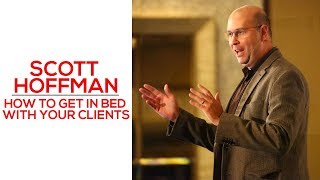
A recorded talk introduced by Joe Polish featuring Scott Hoffman, founding partner of Folio Literary Management. Hoffman discusses the publishing business, the persuasive power of books, reasons people buy nonfiction, and his shift from D.C. politics to literary management, along with practical insights on authorship and platform-building.
Chapters
Our next speaker, Scott Hoffman, is one of the founding partners of Folio Literary Management and a refugee from the D.C. world of politics. The first book Scott sold as an agent, believe it or not, was Brendan Burchard's life's golden ticket to Harper Collins and Brendan's last book. Scott got him a two million dollar advance for that book. And he's had authors that I'm sure he's gotten many, many millions of dollars for. But he's going to talk about how to get in bed with your customers, literally. So give it up for Mr. Scott Hoffman.
Thanks, man.
Thank you.
I appreciate it. All right. When they watch your videos, they're going to do it on their computer in their office. Maybe in the future they're going to do it sitting on their couch in their living room. If they have a smart tv, if they watch your videos, if they listen to your audios. When they listen to your audios, they're going to do it in the car, they're going to do it on their MP3 player, they're going to do it when they're working out. It's my job to get you between the sheets with your customers, and not for a little bit of time either. I want to get you into bed with your customers and your potential customers for like 7 to 10 hours. Even longer if they like to do it slowly. You know, we're not talking about Sting and Trudy stuff, we're talking about books. Of course. Right. And it's really not about geography. It's not about where they're hearing your message, it's how they're hearing your message. And books are one of the best ways to communicate a gigantic amount of information to a gigantic amount of people at the same time and have almost their entire mind share. When they're watching videos, they're doing something else. They're playing with their iPad, the window's minimized in the background. They're making phone calls, they're working out while they're listening to audio. Reading a book is one of the last things that human beings do and focus on nearly completely. How many people in the room have had their lives changed by a book? How many people in the room have had their lives changed by a tweet? Right. Ok. Not even close. That's the power of books. What I do is get six and seven figure advances for big platform authors so they can do three things. One, first and foremost is to change the world, hopefully for good. Second is to enhance the value of their core businesses. And third is to make A little bit of money in the process. This whole publishing thing wasn't always a career. I used to be in politics. I ran a lobbying firm in Washington D.C. you can boo now. Yeah, it really is a slimy business. Every story you've ever heard about D.C. is true. It's probably only half the story. And I left D.C. and I was looking for what to do with my life. And so I figured that since I'd already sold my soul once, I'd make the perfect investment banker. Do we have any bankers in the room? Good. Good. Decided I didn't want to do that. I didn't want that lifestyle. I didn't want to spend 18 hours a day, seven days a week, staring at spreadsheets in a cubicle, no matter how much they were going to pay me. And I figured that one of the things that I liked to do more than anything else in the world was to write. But I had no idea how an idea became a book. I mean, everybody's seen that. Schoolhouse Rock, How a Bill Becomes a Law, right? But there's no Schoolhouse Rock for books. So I went to a friend, right? So I went to a friend whose husband was a best selling author. I said, how did he get his first book deal? And she said, actually, I don't really know. It was before we met. Why don't you talk to him? Took the guy out for a beer and he said, hell, I just wrote the damn thing and my agent did the rest. And my jaw hit the floor. Your agent? What are you, like a movie star? You've got an agent? The guy was 5 foot 6. He weighed maybe 130 pounds. He had less hair then than I do now. He said, no, my literary agent, the woman who does all my book deals. I said, that's a job? He said, yeah. And I asked, can you make a living doing that? Said, well, she makes 15% of everything I make and she's got like 49 other clients. And that's when the light bulb went off in my head and I realized that my two favorite things in the world were books and deals. And there was this job where I could do book deals for a living. So that's what I do. How many of you in the room would like to write a book in the next two or three years? Okay, fantastic. When it is your time to write a book, what I'm about to tell you is going to save you, hopefully a year of your time and let's say, give you $250,000 worth of value at the very least. You are probably, if you are like 75% of first time authors going to make the same mistake in that you are going to choose to write the wrong first book. There are four reasons, four primary reasons that people buy nonfiction books. I'm going to tell you what all of them are. There are actually seven reasons why people buy them, but there are really four that are most relevant for this crowd. Okay, the first reason people buy nonfiction books is to solve a problem they know they have. And the second part of that sentence is equally important as the first. To solve a problem they know they have, they have to know that they have the problem. If you're trying to help them solve a problem they don't know they have, you're not an author, you're an evangelist, and you're not going to make any money doing it. You would much rather be the guy out there selling the bibles than the guy out there preaching the word, regardless of how much money all these mega pastors are making, right? So if they have that problem, if they're overweight and they need to, like JJ says, drop seven foods, lose seven pounds in seven days, she's helping them solve that problem. Okay, number two. The second reason that people buy nonfiction books is to take advantage of an opportunity that they believe exists. The opportunity doesn't even necessarily have to exist, but if they believe it's there, you can sell them a book to take advantage of that opportunity. Okay, Take Brendon Burchard, for instance, the millionaire messenger. Make a difference and a fortune sharing your advice with others. Or Brendan's second book, the activating the 10 human drives that make you feel alive. If you can give them that message and allow them to achieve what they believe they can achieve, they will pay you $25 for a book. The third reason people will buy books is to learn more about a subject they're already fascinated by. That's why celebrity books do well. It's largely well if you're working. Let's say you are. Paris Hilton. The four most depressing words in the English language are, Paris Hilton, best selling author twice. But why? Because people are fascinated by her. And they're fascinated by the lifestyle they lead by the lifestyle she lives. And that leads us to number four. The fourth reason why people buy nonfiction books is to live vicariously through the lives of other people. Good, bad, and indifferent. The best books will combine multiple categories. A great weight loss book will help you solve that problem and will show you a vision of the person you know you can be. A good personal finance Book will solve your money problems or show you how to solve your money problems and let you aspire to something that's even greater than you ever thought possible. If you can combine those things and put them together with platform writing credentials and ideas, you can have a best seller. Like so many of the folks in this room, the most important word in the book business right now is platform. Why and what is a platform? Platform is your ability to let people know your book exists and then get them someplace where they will plunk down their hard earned $25 to buy it. Why? Because traditional publishers, and most of what I do is dealing with traditional publishers. But most of what they do is taking good ideas and making them better. Working with literary agents like me, working with authors like you to package ideas in a way that readers will find them valuable. They're really good at designing those books. They're really good at warehousing those books. They're really good at getting to places where people are going to want to buy them. What they're really not good at is convincing somebody to pick that book up and take it out the door or, or actually hit the buy button online. And that's where you come in. Your ability to get somebody to buy your book is your platform. So if you can combine the platform with the writing, the good news is, even if you're not a great writer, I mean, Rick Frischman, who's had. How many books has Rick had published? Michael? Do you know Rick? Rick's had like 13 or 14 books published. Hasn't written a word of any of them himself. You can always get a writer to write your book if that's not what your strength is. If you package the platform and the writing and the credentials and the idea, that's the recipe for a New York Times bestseller. So I'm going to wrap things up by talking about the state of the book business right now. People two years ago were talking about gloom and doom, how books were disappearing, how nobody was going to be able to make a living writing anymore. The demise of the book business has been greatly exaggerated. The publishing business has been around since 1600. The first book that Gutenberg printed was the Bible and the old Saw Goes. The second book that was printed on Gutenberg's press was a book about the demise of publishing. We are one of the most exciting times in the world right now when gatekeepers no longer are keeping you from reaching the people who want and who need to hear your ideas. No longer is some guy in Manhattan or some woman at a cocktail party in Brooklyn going to be able to stand between you and the person whose life you can change. People read more now than they have at any other time in human history. Twenty years ago, if you wanted to connect with somebody, what did you do? You picked up the phone. 100 years ago, you might have sent them a telegraph. Now you send them a text. If you can leverage the ability to write, there are always going to be guys like me who can help you figure out a way to make a little bit of money from it, too. So I don't actually consider myself to be in the book business anymore. I'm in the artist management business. I take people who have fantastic ideas and fanatical followings, package them together and come up with life changing products. How many people in the room want to do that? Cool. All right, so I'm more or less out of time here, so I'll give the stage back to Joe, but I hope that was. Hope that was worthwhile for you. Thank you, Sam.
More from Joe

This FBI Trick Can Command Respect Without Saying a Word ft. JEFFERSON FISHER & CHRIS VOSS

How To Stand Out, Be Different, and Create Raving Fans, Customers, and Employees ft. Jesse Cole



90% Of Businesses Fail In Their First Year, Here's Why! ft. Dr. Benjamin Hard & Dr. Robert Cialdini

The 1 Piece of Business Advice I Got From Elon Musk That Changed Everything Ft. Kamal Ravikant

The 6 Traits You CAN'T Teach in Entrepreneurship ft. Richard Branson & Gino Wickman

The Leg Method: How to Make Your Book into a Million-Dollar Asset ft. Anna David


7 Millionaire Mindset Hacks for Daily Success and Wealth ft. Brian Tracy & Dan Sullivan
