Gnar Country: Fascinating Insights Into Flow and Aging with Steven Kotler & Joe Polish
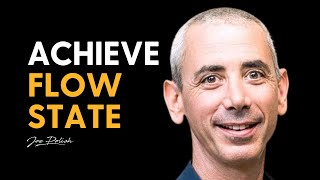
This recorded conversation (Joe Polish interviewing Steven Kotler) explores "gnar/gnarly" as a metaphor for high-risk, high-reward environments and how flow states support peak performance and healthier aging. Kotler describes his action-sports background (reports breaking ~87 bones), Lyme disease recovery after entering flow while surfing, and experiments applying flow to older adults (a park-skiing pilot with 17 participants aged ~29–68). He summarizes neuroscience links: flow flushes stress hormones, boosts immune function (natural killer/T-cells), supports neurogenesis in the hippocampus, and amplifies productivity (claims of ~500% more productive in flow; larger gains if engineered). Practical guidance includes flow triggers (26 total), the Challenge–Skill balance (noting the sweet spot shrinks with allostatic load in older adults), training recommendations (novel outdoor environments; dynamic, deliberate play; WHO-derived exercise targets: ~150–300 minutes stamina/week; strength, balance, agility, flexibility training), and a behavioural approach of "go slow to go fast"—micro-progressions (one-inch-at-a-time). The discussion also covers group/team flow, social bonding neurochemicals (oxytocin, serotonin, endorphins), and how applying these ideas can extend high-performance into later life ("high-performance aging").
Questions this video answers
87
17 participants, ages reported ~29–68
150–300 minutes per week
~500% on average (claims from a decade of self-reported data)
Chapters
I'm going to talk a little bit about the systems that I work with. I'm also going to talk a little bit about the culture and education that I'm part of. and that's a lot of work. So I had to learn as much as I wanted, and it's a lot of work to do for two years. And I found that it's absolutely worth it. And I think people are going to love it. So, thank you. Thank you all so much. This is a really important subject. You've written a lot of books. You're a journalist. You're a legit journalist. You do a lot of research. You are a medical budget. I remember when we first met, we were having some debates. But over the years, I've come to believe Joe is one of the truly good people in the universe, but I started out to use Satan. He used to say, Mark, you know, he said, Mark, and he'd say things like this, but yeah. So, Not Country, this is his latest book. It comes out on the 28th of this month. The actual one he had to patch up on February 12th. So we're not covering it, though. Sorry, I just don't know. See, this is the difference between a galley and a new one. It's a good-looking book here. And here's the thing. So I just had seen, a few weeks ago, Wish You Were Here in Beaver Creek. It's four days you've seen it for the first time in 30 years. And I've not been reading this book. I don't think I probably would have done it. I probably would have talked myself out of it. And even though the very beginning part of this book, the whole book, is utilizing skating as a way to, as it says, growing old and staying rad, and it's called Nara Country, so I'm gonna, we're gonna talk about New Orleans, we're gonna talk about talking about it right now, so what the hell is Nara, explain this, why am I in this book, and then we'll get into the topic, which is really fun, books about being performative. One of the reasons that we're going to get into the titles, sorry to make sense of it all along, but Gnar is actually a sort of slang, and it's short for gnarly. And despite whatever you may think about athletes, their lingo is incredibly precise. So they have to perform in situations where if they fuck up, they'll die. So the term gnar, or gnarly, means literally any environment that is high in perceived risk and high in actual risk. tree, any landscape, terrain, pictures are real. Our tree is also a phenomenal scripture of our later years. High perceived risk, high actual risk, and it turns out, and I get into this, it's a phenomenal description of the living art of creating minds that takes to really thrive and kick ass during our later years. So that's where the title comes from. So you are a pretty intense dude, right? So you've broken over 80 bones in your body, how many bones have you broken? 87. 87, okay. And you, Lyme disease and all kinds of different things that caused you just to, I don't know, did you seek this out or did you stumble upon it as a result of basically feeling hopeless and maybe going to die? Did you float? Yeah, yeah. And just, so I, um, The longest sort of second half of the story, the first half of the story, I think you were a journalist in the early 1990s. Journalists, astounding career, especially if you are like me, where they pay you to be curious. That was, I was like a candy store, two things I was really fascinated with. And I was really interested in the neuroscience of the 90s, especially around like 94, 95, and neuroscience shifted before that era. We've been like, let's identify clusters of neurons and maybe what do they do? This is what emotions are. This is what consciousness might be. This is how we can study this sort of flow. These bigger topics that have sort of been false limits to science suddenly became examinable through neuroscience, which fascinated, and action sports, which is the other half of it. And I'm not an actual born gifted athlete, but I'm a lifelong action sport athlete. And I'm sort of just a chess teacher, plus the gravity game of chess getting started, the X Games as well. Most of them certainly didn't get into the exact sporting communities that they were in. The punk rock communities that were rooted in my town, such as that of Big Mo Abbi, that where he liked to be. So they didn't talk to me, so I spent the better portion of about a decade chasing professional athletes around on these cross-oceans. And if you know anybody in the sports of the 1990s, it's often referred to as the era of the law school war. And law school fights, fights that had never been done before, were never going to be done. In fact, It got so radical during the era, it was very often like, somebody would do something that wasn't possible on Monday, and Wednesday, somebody else was iterating upon it, and on Friday, somebody else was building on that. And it was none of it made any sense. But what's really weird, and what would really caught my attention, and I think this may resonate with this group, is most D.I.C. sport athletes, you know only about peak performance, especially back in the 90s. If you were gonna perform your best, you better have had a good childhood, you better have had a good education, the right parents, all this stuff. And all the athletes I know, these people, their jobs are great, they have almost no money, they have very, very little education, and the communities we're living in are high-risk and have lots of substance abuse. You put those things together in a community, people die, people go to jail. What they don't do is reinvent what's possible for the human species, and that's what's going on. So, I had the neuroscience on one hand saying, oh, here's the tools, and this is absolutely perfectly and completely weird and possible thing, but I always like to point out that, like, is there one thing to, like, turn on a toilet seat? So you can sit in there and have a dessert on or go play, or watch somebody jump a 100-foot cliff. But when you go crazy with your friends on Friday night, and then every week's a hungover on Saturday morning going to the mountains, and your friend does something that for all the recording is crazy. It's totally possible that Shane is sexism. He's not a person on a screen. He's not a human being. So he's like, oh my god, my very flawed and very broken friend just can't possible what the hell is going on. So that's where all of it started. He talked to those people. Nobody was really using the word flow. They had tons of words, a lot of mystical language, a lot of it took a really long time to sort of decode. And then through the language barrier, figure out what everybody was talking about, but everybody kept talking about the experience of love. They would use different language, they would describe it different ways, but every single day, how did you do that? I don't know how I did it, but I know when I'm performing like that, I'm in an altered state of consciousness where every decision, every action, Flow seamlessly, effortlessly, from the last step of the definition of flow comes from another. That was the answer. She said, yeah, I wonder how the glow, as you recall, at times in their life, they felt their best, they performed their best. It was in the same net, but in an alternate state. And every decision or reaction to this flow is seamlessly, effortlessly, perfectly, and less. That's what the title comes from. It's actually at the bottom of the line of the description, meaning it describes how this experience makes us feel of what it's like to be in a flow state. So flow is one of those words where the experience sounds like what it is. Um, then I got Lyme disease. Um, let's just do a point. I spent three years in bed. Doctors had pulled me off drugs. My stomach line was bleeding out. There was nothing I could do for me. I was functional. Ten minutes a day, I had to go to the emergency room. I had to relieve a certain amount. You know, it can get too great and lumped up in the mind. I didn't have a short-term memory. I didn't have a long-term memory. But if I met you before the age of 30, I will not remember you. Like, you cleaned me, like, maybe two months at a time. It's just wiped. Is that a good fix? I don't know, I don't know, I don't know, I don't know, I don't know, I don't know, I don't know, I don't know, I don't know, I don't know, I don't know, I don't know, I don't know, I don't know, I don't know, I don't know, I don't know, I don't don't know, I don't know, I don't know, I don't know, I don't know, I and don't know, I don't don't know, I don't don't know, demanded we go surfing, and I was actually crazy to walk to the table, I like, I'm not don't going surfing. know, Are you out of your mind? Did I don't you leave know, my house? I don't know, I don't know And like, after four hours of that, or like, fuck it, let's just go surfing. What's the worst that could happen? And I dropped into an immediate flow state. As soon as, like, they got me to the break, they gave me a giant board, they carried me out to the break, they put me on the board, but I got myself into the first wave, and as soon as I stood up, I stood up, too. Deepest, craziest lips that I've ever had. Like nothing you should prepare to record something. It was almost a different experience. But all the pain was gone. My head was clear. I felt good. I felt so good. I got like four more waves. After those five waves, totally disassembled, can't even move. Probably all of what we've had, and people have brought me food for like two weeks, so I couldn't get out of my bed to get to my kitchen and everything else. But on the 15th day, I get to walk again, and a neighbor who's a former purchaser for a bag down the street was like, you've got to take me to the beach. He was like, dude, you can't walk a lot. But it was close to about 10 miles. I went from 10% functional to 80% functional. and I was doing it differently, surfing and having these very powerful, rigid experiences. And what I started to realize is that the exact same state of consciousness that had gotten those athletes from the normal up to superman, superwoman, had gotten me from super-sub-car back to normal. And the question was, what the hell is what, right? At that point, I was a narrow guy. Surfing is not a known cure for chronic autoimmune conditions. Bam! I'm a rational, hardcore rationalist. You know, I'm very hostile to a lot of woo-woo ideas, and I feel like you won't get anywhere with that stuff. But I was having this super-curious way of sleeping on when I heard the athletes talking about it. So I thought, oh shit, the disease must be in my brain. So if you can help me feel better, I must be dying. So I laid out an idea. I caused him to let me sort of get into the field of neurobiology. We're going to talk about deinformatation in a second. So one of the things I want to just mention, Tax researchers, while flow is incredibly good performance, cognitive performance is optimized, physical performance is optimized, it's also amazing for your immune system. So if we're going back to your best work at Harvard in the 90s, shows that as we move in the flow, all the stress hormones get flushed out of our systems. So why do flow cure Lyme? That's the most autoimmune issues. Autoimmune issues are nervous, anxiety, why are you doing You don't this? know where normal is, so you can't find normal again. Your home use space can't return to where it was. So by flushing all the stress hormones out of your system, you get back to a normal baseline and you re-establish that pattern simultaneously. All of these are almost 100% boost in use, so in a really serious way. Probably the most important, especially for a pre-performance stage example, when we drop into flow, two things that happen is we get a sense of control. We could be wanting something to flow fast that looks like pre-performance, but on the inside doesn't feel like pre-performance. It feels like, oh, should I have that control over things? I can, or I'm late control. It is a writer's exam on Monday, Wednesday, and Thursday. It normally doesn't happen at 6 a.m. It could be one of you leading a business meeting where everybody's just getting along and it is a really fast coffee. You're doing a great leader. You're doing a great job. It could be any of those things. But you get a sense of control. You get a sense of mastery. We can talk about the learning flow, it amplifies the learning, and it really increases mastery. Mastery can control the two most positive views that humans can get. These are going to be our two favorite theories. When we get the most positive outcomes that we can get, it amplifies the production of new cells, which fight disease, and it amplifies the production of natural killer cells, which are the seed cells that target sick cells, tumors of sick cells. So a lot of the causes of aging are They're all information-related, first of all. So when you push out the stress hormone from our system, you're a general fighting agent. But T-cells and alveolar cells are really going after some of the diseases of aging. So why do we think it's so important over time is what it does to the immune system. You know, can you just speak to, because I don't want to forget about this, and there's 90 questions I have, because I want to hear some things, but just simply productivity. The more effective airflow state you talk about at site, how like five times the level of things that a person can do or get done. For instance, if we could engineer flow, most people can work and get as much productive work done in a single day as they can create. So, this is in our research, but we've seen the business results in the last decade. Going around the world, this is self-reported, so you've got to take it with a grain of salt. But spend a decade working hard to be the top CEO, so that's how much more productive they were in flow than out of flow. And on average, we're just 500% more productive in flow. So that means if you spend money on flow stay, take two days a Friday off, a year and a half, a year and some days, a month, another six days, two years, the thing I want to say is two days a week in flow, you're 1,000% more productive than the competition. The thing I want to say is I know if we try to work in 130 countries where we work with everybody, from the Army, or to the Air Force, and San Francisco Police Department, to Facebook, Accenture, Bay, Capital, and on and on and on. In other words, chances are we're trading your competition already. and they're going to end up 1,000% over that. So my point is slow. It's no longer a secret. It's leaking into the mainstream, which I think is a great, great thing, but it's sort of like AI. If you're not hip to us, if you're not familiar with these tools, This is where the value of optimizing ourselves is just as important as optimizing ourselves. Yeah, so those two things I think are really important and why I want you to touch on them right now. If you go through and see this book, you'll kind of get it, and I believe you'll understand it at a far deeper level. If one of individual flow, what that does for the person, then there is group flow. Everyone here has teams, they have companies, they have this genius network. If you could have a genius network, when it is in group flow, if it can get there and when it can get there, it makes it a hell of a lot more of a blind experience. Can you speak to what are the things that are needed in order to get into group flow? It's a really long list. The original work was done by Keith Sawyer. He did all of this work. He was a psychologist who studied under Jigsaw, and I was at the University of Chicago, and there was a gap recession, so he teamed up with Second Street Television, a comedy troupe, and became a PNSA videotaper. Second Street Television for 15 years, and he used audience laughter as a gauge for Gurt and Flo, teaming up together, teaming up for him. That was because the impromptu group is Gurt and Flo, and he did frame-by-frame analysis of what happened, what changed, and we were able to change my stage and that was sort of the foundation of the reason I started there. The other thing I want to say to Richard, the other thing I want to say about Team Flow is First, start yourself. Start it in your flow. Flow is a little like other emotional events. It engages the leaders in flow to drive their teams into flow. It has to do with brainwave engineering and a whole bunch of other neurochemical stuff. The other thing I want to point out is a counterpoint to this. And when I hear companies talk to everybody, I say this out loud. It is worth doing. Ask aggressive leaders. The only thing you're going to do is try to get something to burn out. Period. If you are moving the goalposts, and I tell people this, if you're building balsams to the goalposts on you, this happened more than twice. Quit. done with the job, you cannot win, it will block flow, and you're only going to end up toward burnout. That's the number one cause of burnout. There's nothing you can do about it. So if you're one of those leaders who's leading in that style, you're in that situation, get out of it. The third thing I want to say about group flow is there's a really cool new textbook on it called Team Flow. It's very short, pretty straightforward, sort of written for a business audience, even though it's a textbook. That said, they did a lot of work. In my book, The Art of Impossible, while the book talks a lot about flow, the story starts talking about motivation, because that's if you're interested in how people do performances in order of the process. And it always starts with motivation, group flow. It always starts with what's known as collective ambition. So, a genius network is a great example. There's a collective ambition. There's a goal. I think that's a really good point. I think that's a really good point.
Hey, I hope you're enjoying this video and I want to let you know that I have a new book that's come out and if you'd like to get it absolutely free, there's a link below in the description or you can wait till the end of this video or you can simply go to joesfreebook.com and you can.
Get a copy there. and how that, you know, how that got you into a flow state. So you created your dog sanctuary and you would take hospice dogs that were basically going to die, you put them in packs and get them out running, go running with them and they would heal. What the hell is happening? So it started So if you ever brought your team to a ropes course, right? Group team bonding, anything like that. What are you doing? You're trying to drive people into group love. That's what, that's all about. Why? Because the neurochemicals, three of the neurochemicals that show up in a flow are very potent social bonding neurochemicals, right? And they bond. So you have oxytocin, serotonin, and endorphins. These are the most potent social bonding chemicals that the brain can produce if you give them all the flow. One with the dogs, it started because we do extreme culture scares. So if you are a geriatric duo with horrible abusive past, late stage cancer, heart disease, one-eyed, brainless, flatulence, you're our guy. That's the way life is. So when you're dealing with extreme culture scares in your scenarios where they don't have a home to live, They showed up in a new pack because they showed up in high school on the first day, right, as a transfer in. Like, you're not welcome with open army by the pack. They're suspicious of the trainers and we need to get dogs adopted into the pack as quickly as possible. So, I decided to actually try to see if we could run them up and down the mountains of the mountains and sort of Running down, I'm doing a great PC flow. I don't think most people know flow. Dogs getting into flow is actually the first competition I ever imagined. So I started getting into flow for dogs doing this, and I was like, this can't be real. There's no way this is real. I sort of knew the neurobiology, and I was looking across species, so it should be possible, but I just didn't believe it. I think I'm getting the flow of my dogs. You know who I was when she published my first book. I was like, am I having my babies? Is that actually really happening? His answer was, oh, I get the flow of my dogs all the time. All people talk about it. Who knows how it can impact you? So we started using flow in the hospital, including in the hospital's work, among other things. We did some education in psychology and a couple of other things. This is actually one of the foundations of our country, We would not all go to a phenomenal that one of the best students in America, right, before they come to us, and she would always use a hardcore, old-school-like suit back, you know, where they not very much would be like, don't get emotionally attached to samples, can be dead in a month, two months, just know that. and we've helped over 700 dogs in the past. There are a facility of 5,000 in Calgary facilities. It's a huge sample size. And as a result, we're seeing it again and again and again. And I started to say, in three or four dog years, it's 21 to 22,000. And I found out two things. One, I started to realize there was a movement in the veterinary world for double canine lifespan. I wasn't the only person signing with this. There were a lot of people doing online tech stuff, but there was an overall movement for double canine lifespan. So part of that was the first thing that I started to realize. And the same time I was seeing some dogs, a bunch of other people, they had never seen They discovered the blue zones, these long-lived communities, and if you break down what's going down in the blue zones, you break down what we were doing with the dogs, it's the exact same thing. There were a couple of dietary things they were doing in the blue zones that we were doing differently with the dogs for a bunch of reasons, but other than that, it was the same, and that was when I started to really pay attention to this stuff. This is very real. It's working for humans, it's working for dogs, it's working for thousands and thousands of subjects. Let's start packing that. Yeah, which is also why, so like what Stephen's work here is focused on is slow and basically high-performance aging, right? So what does that even mean? The first thing you have to know is the old story we already did, which most of you have definitely heard and probably have been able to be part of. It's what I like to call the Long Slow Rock Theory. This is the idea that all of our mental skills and all of our physical skills can combine over time, and there's nothing we can do to stop this line. This actually dates back to Freud. Freud said in 1907, He was scared of turning 50. And so he said, you know, most people, once they turn 50, they are too fixed in their ways. I'm paraphrasing. Don't even try psychotherapy with them. They're no longer educable. So the idea of an old dog, cat, Martin Luther King Freud, all that happened over the 20th century. We improved Freud right by the 1990s. But the 1990s, We just figured out the biology of decline, and then a couple of cracks started showing up in that thinking. And over the next 30 years, what we've learned is that all the skills we used to think decline over time. We now know they're use-and-reduce skills, so if you never stop training them, you can hang on to them even as far, far later in life than anybody thought possible. Okay, so what are two or three of the most important discoveries that you've learned about your own body and your ability to perform when doing this? Because you do some crazy shit in our country. And then we can show the video later, okay? Okay. So, it's actually a G7 ad story. So, it was the last phone call I had with the G7 ad. I passed away during COVID, and we talked at least six months before he died. How old was he when he passed away? I want to say he was 82, 83, somewhere, somewhere in his 50s. And when I heard he had a stroke, so I really just called in to sort of check in on him and see how he was doing. A little known fact about Flow that checks up in high is that when he talks about flow and performance, it checks up in a certain mode, so it's like working at flow in adult development. Turns out, for reasons that we can talk about later, he argued that flow, on the other side of a flow state, but learning increases, our skills increase, we're more adaptive, we're more complex, we also get an increase in flow. He argued that it's the age of adult development that gives us through flow states that we actually mature as adults. Now, obviously, he was the primary driver for adult development. I think that was overstating the case a little bit, but he spent most of his career working on adult development flow. So, you know, I'm a lifelong seer, and my plan for my later years is to see as much as possible, and I'm a good mountain seer, which means I like to take big, big risks, and I like to go really gnarly, really scary, hard lines, and I'll just tell you my compound key idea, but by as early as if you translate it out of Italian, and I've read that, is there's always an outdoorsman who's a rock climber, and if you live downtown, like a lot of places, But I started to realize that this guy was a lot more serious about being a rock climber than he ever told anybody. He was in these articles that kind of translated out of his head. He was talking about early 60s, 70s value rock climbers by name. There was like, there's no way you would know those names if you weren't in that community. And so I called him up to talk about this. And I was like, you know, we were talking about it. And he just started to raise his hand. And you've also probably searched on Google about this. He's like, you know, you do something. Climbing mountains are on climbing. Your whole life is slow. You can do it my age. And some days you can't even get out of bed. You forget about climbing mountains. You need a backup plan. You've got to be careful. And he was just telling me one slow jump to another. They have a backup plan for how you get in the flow as you age. Otherwise, you can find yourself locked out of this state. And that's a real shame. It really lags right now. The other side of the story is, I've been to the U.S. Community Performance Agent, and there's a whole bunch of new theories that said, you know, that I basically looked at slow signs, and the Body Foundation Network, Neuroscience, and a couple of other places that said, not only can you teach an old dog new tricks, old dogs should be better than younger dogs at learning certain tricks that we've worked in the lab, if you're right, if it was accurate, Anybody over 40 or 50 or 60 or 70 should be on board with using difficult, challenging physical skills, supposedly impossible skills. So I decided in my 53, I was going to just focus on how to park skiing. Park skiing is the discipline that involves doing tricks off jumps on rails and boxes and wall rides. It's incredibly acrobatic. It's very dangerous. There are about 11 different biological reasons it's considered. All those bugs are really hard to learn. If you're over 30, 35, by the time you get to 40, 50, it's impossible. It's crazy. It's beautiful. I have nothing more to say. No, you don't want to just spill this. I got to get the flow. Yeah, by the way, every time I hear something like that, I think I'm at a flying convention. Yeah, exactly. Thank you. Dude, that's group 4 right there. That's the guy that we were talking about. What's that? What's that? What's that? What's that? What's that? What's that? What's that? What's that? What's that? that? What's that? that? What's that? What's that? What's that? that? What's that? What's that? What's that? What's that? What's that? What's that? What's that? The What's that? speed What's that? skating, What's that? where that? What you're in contact with the surface, or you're moving in a single direction, and figure skating works above the surface here, and you're twirling and flipping and all that stuff, so it's a radically different sport. And I think if you think of it five years, you cool it to be five years. I accomplished all 20 tricks on that trick list in under a season, which was why Ryan Wiggs, my team partner, with Stuart Schmidt, the leadership director, Ryan, who was a full-responsible athlete on Park Skier, who had gotten injured, had a family, walked away, came back. When I came back to see me, more progress in a single season than he's ever seen. And at that point we were like, okay, this is cool, it's working, but we've got like the sexiest pilot study in the history of pilot studies, but that's all we've done. So the following year we came back, and this is the video Joe was going to talk about, and we took 17 older adults, ages 29, 68, using the exact same protocol we were using, and then four days on the mountain. and talk about how to park speed or how to park snowboard. We've been steering down the action sports because maybe not for everyone, I don't understand that, but apparently not for everyone. And we turned into a training called Entrepreneur that the whole goal of it, we'll talk about this a little bit, but mindset is crucial to performance aging. Having a positive mindset, I think the second half of my life is filled with like for real impossibilities. I'm sure my best years are ahead of me. For a lot of neurological reasons, it translates to an additional seven and a half years or half a long decade. So where to start with me? You start with a mindset, you start by working on your mindset, and when we started up the export, we just wanted to see if we could explode people's mindsets towards Aja, and you know, maybe even a more computably, you know, five hundred, I think it was three hundred and forty people, five hundred is an exaggeration I think. But there's an important number. It worked really, really beautifully there. So now we're kind of confident that it works. And I'm not as upland, but that's the story of those experiments. We're one of the hardest in our country, and that's what I get. Yeah, yeah. What did you learn about your body, your ability to perform? Like, what do you think? So, to do this, it makes sense. I'll tell you what you want to do about flow. Flow states have triggers. You want more flow in your life. There are preconditions that lead to more flow. First thing to know, FlowFall is focused on who shows up on our redemptive sit here and now. That's what all the triggers do. They drive our attention into the present moment. The most famous of these triggers, we're going to think somebody mentioned yesterday, is the Challenge Skills Balance. We pay the most attention to the task at hand. We challenge the task slightly. These are skill sets that you want to stretch, but not snap. including emotionally, there's a sweet spot between anxiety, too much stimulation, and boredom, not enough stimulation. What's known as the flow channel in these big physiologies, they are $50 to convert. Years ago, she sent me a message off the Google Map Edition, because we grew up with standards for challenges, skills, and average folks, and they came up with 4%. That's the difference. But it was a back of the envelope calculation. It wasn't real science. It was just a thing they did. Jim Conley actually told me about it. Mike didn't. Jim Conley told me about it, but we took it into the first, like, for a couple of years. We found out it was pretty close to accurate. It's really hard to test. It's really hard to figure it out. But we thought it was really close to accurate. But this is the first thing that we did. in older adults, and older here means anybody over 30, actually, for a reason that we didn't get to, but once you sort of cross that threshold, all your trauma, states would keep writing, and we call it allostatic load. It's trauma, the effect of trauma over time on our physiology and our psychology, so it's allostatic load. Allostatic overload is one of the number one causes of burnout, but what we started to figure out is that because of allostatic load So when you're going after difficult physical challenges, sweet spot is no longer four to five percent, it's down to one percent. So it's way shrunk down, and you don't even notice it, because a lot of it's subconscious, but there are subconscious breaks and governors on performance that tend to be there. So the idea was, we're going to start with an established motor pattern, something that you can do 100% of the time, perfect success, no fear, and build on one micro-ocean at a time, because this we're trying to do a quick one-inch-at-a-time, which is the motto, and for myself, for Mariah, for most of you, we actually did this. slow down way, way, way down in how they normally want to progress. Even when everything was going well, even when everything was working, we slowed everything down immensely. And it worked. We got to go slow, to go fast, and a lot of great performance. And this was definitely, definitely the case here. So that was one So, what we're going to do today, we're just going to go for a few more minutes, then we'll take a pretty cool big lunch, and then we'll come back with Stephen a little bit later. What are the biggest obstacles that as people age that get in their way of doing what you do? It's a slow ride, right? I think the major obstacles is people do the wrong things, they reach for the wrong levers. So if you want to be a performance agent, in a sentence, everything you need to know about being a performance agent, if you want to rock till you drop, you have to engage on a really, really regular basis in challenging social and creative activities that demand that all these words mean something, so you can talk about what they mean. dynamic, deliberate play, and take place in novel outdoor environments. That's the biggest lever we have at our disposal. I'll say it again, we want to engage in novel, creative, and social activities. Novel, challenging, creative, and social activities that demand dynamic, deliberate play, and take place in novel outdoor environments. What about shaming your younger friends, like Joel, when he goes, well, we're reviewing, and then I'll say, well, I'm okay with it. challenging creative and social activities. that demand dynamic, deliberate play, and take place in a novel outdoor environment. So you can define what those terms mean in a second, and why they're important, well, I'll let you ask us about it. Yeah, well, what else can you say? So I've been on Joel's houseboat with him. He skis probably every weekend. He has a houseboat. We're continuing to separate, but this is a challenging social and creative activity, right? Yeah. I mean, dynamic just means all five categories of functional fitness. So I say, we have to train all our skills. What are those skills? Strength, stamina, agility, balance, and flexibility. Those are the five skills we have to train. And there are very precise numbers for this in the WHO School of Health Organization. We need 150 to 300 minutes of moderative maintenance for peak performance aging, not for healthy aging or advanced successful aging. For peak performance aging, we really want to perform our best. So 150 to 300 minutes of stamina training a week. So we're opening training a week, two strength days a week, three balance flexibility, and agility days a week. So if you see it, if he's coming to Genius Network, you're like, he's hitting all the boxes. I mean, I went waterskiing with him, and the freaking guy is amazing, and he's been, he started waterskiing after the 150 runs of the movie. Yeah, and he does it. My friend Rebecca Rush, who has most of the Endurance Mountain Bicyclers in the UK, she started mountain biking professionally until her 30s, and she started winning her awards until her 40s. Wow. She has one rack powered Iditarod, and we're making it four. Wow. Awesome. Awesome. So there you go. And Ivy, look, to me, this is very inspiring to our 55-year-old mom. So, you know, we're both on the same page. I think you're a real hero. I'm a little older. Yeah, yeah, like eight months. Yeah, yeah. So, the cosplay and all of that. Exactly. And we're both on Grog and stuff. I sent him a picture, I texted him a couple days ago, me with Henry Rollins from Black Flag when I was in my twenties, when I took that picture. Touch on some of these, that if you took all of the things you know and gave someone one technique to immediately better their health, what would that one technique be? Depends on the person, but the... So, for beat performance, I do respect it. So the mindset and the next two things to focus on, social activities, are really crucial. So like, it is, from a performance-aided perspective, you could be morbidly obese, and you're going to go farther by having regular social contact without losing weight. Social contact is the growth equivalent of putting a stock in, right, in terms of longevity and health. So social contact really, really matters. Change your mindset. This is what we want, the single greatest core level for preserving physical health and mental health. See you next week. Thank you. You know, it's leg strength, which is odd, but they've done all these studies on cognitive reserve and preserve of brain function, which they think is because if you lose your legs, you lose your ability to move around and talk to people, basically, and so it stimulates our brain so much that we fall off a cliff without it. That's one of the reasons, but they think there's other stuff that they just haven't found yet. Yeah, uh, how many of you did not shave those whiskers? Freakin' guy. Every. Day. This dude is like, he's a doctor, Chinese medicine, he sends in a song that had optimized, like... And I'm full off the bench here. And he literally sits like this for 30 minutes every day in a sauna. And I'm like, you know, he tried to do it for like three minutes. You're like, what the hell? And just sits there in the friction of his weight. And the guy's one of us currently physically fit because he focuses on the legs straight down, which is awesome. Yeah, I just wanted to show my socks, see what was in there. Yeah, like that. Now I probably can replace him again. What's a step-by-step method or way to get more easily in the flow that everyone here can utilize going forward? And when we come back, we'll do Q&A and stuff with everyone. So, I don't know if there's a step-by-step. There's no one size fits all. There are 26 non-flow triggers. As we all know, analogy is a flow trigger, risk is a flow trigger, and that doesn't just mean physical risk, emotional risk, social risk, intellectual risk, pattern recognition. So let me tell you why my backup plan was interesting. When we link ideas together in a novel way, that's pattern recognition. It's fundamental. It's what those neurons do at a basic level, and it creates dopamine. You know, a little bit of dopamine. And we all know this from Dennis Dukko. Of course, most of you can answer, right? That little running pleasure you feel, that's dopamine. And it's common pattern recognition. So creativity is a flow trigger. So when I say challenging creative activities, by the way, both of those are flow triggers. But the interesting thing about park skiing, of why the claims that you're seeking is. You want to stack creative experience on top of creative experience on top of creative experience. If you're looking at a terrain and you're like, oh, that's a mountain of snow. I need to roll 180 off of it, or I can grind across it, or whatever it is that I was going to do, that's data recognition. So you can stack creative decision on top of creative decision. We were talking about this last night at dinner. You can stack creative decision on top of creative decision on top of creative decision as you're skiing or snowboarding down a mountain. I got hired a bunch of years ago, I can't talk about the program I coached, but for a major college football program. The idea was, if we can get our players in the flow before practice, when you hear us go down and the answer is yes, that actually worked, what did we do? The first football team, they all started practicing, they always ran laps around the football field. That was what everybody did to warm up, and we just put that in nature. We used to kick it off the football field, go run the trails, and incorporate the terrain. So if you've got a hill, go up an angle and come down with your body, just like you reserve for your skate or whatever, and you just run it. There's a line that you can't run that far. It was roll and do sort of the things you're going to be doing on the field, through the forest. Novel outdoor environments. And it worked. Tremendous amount of flow during practice, a lot less injury on the field at the moment. So it's not just seeing snowboarding, that's sort of the thing that works here. Another thing I want to say, one of the reasons is the novel outdoor environments are really crucial to this. So most of us work out, most of the public doesn't work out outside, and really, if we didn't work outside, we're not seeking out novel outdoor environments. Here's why it matters so much. One, especially when people come to say, for example, we said earlier, they're not known causes of aging. They can threat a future specialty. In fact, in my work with Peter Diamandis, we talked a lot about it. All of that led back to information. When we are in nature, most people know that 20 minutes in nature flushes stress hormones out of the system and will actually outperform most FSRIs for mild to moderate depression. It sort of equals out once you get to extreme depression. There are reasons for this, but if you're curious, come see me offline and I'll show you why it works. But one, outdoor environments are calming us down. Malady is a flow trigger. When we power LTE, it produces Dolby and Dolby Flash focusing for the present moment, but there will be no Dolby performance in your standpoint if you want to hang on to your metal functions. Three things are important. One is knowledge based outdoor environments. Why? Do you want to hang on to your cognitive function? Do you want neurogenesis? Do you want the birth of new neurons? Do you want new neural networks? Most of the neurogenesis of the adult brain takes place in the spondylocyte of the canvas. So that's the Latin word for seahorses. It looks like a seahorse. It's a deep brain structure. It does long-term memory. It also does location. So something out of perspective, right? Remembering where you are when like emotionally charged, like I got attacked by a bear or there was a great group on the third tree happens is a really crucial survival. So the brain is specifically designed to remember where you are when you have emotionally charged experiences. That's what When we birth 700 new neurons every day, the capsule don't basically die, but that's what they're for. And so, I would say peak performance is nothing more than getting our biology to work for us rather than against us. Peak performance aging is getting our biology to work for us rather than against us. But faced with the challenges and opportunities of aging, this is what I'm talking about when I say something like that. Novel, outdoor environments use the brain the way the brain is designed to be. And as a result, we get to hang on to brain function for a long while. So that's sort of the new novel challenge. Okay, so in our country, so you write a lot about, it's pretty much the journal of your skiing and all the crazy-ass stuff that you're doing, and then at the end of the book, you tie it all together. So this is the galley, the way that I physically read a book is I'll take like certain notes and stuff, and I have like highlights and notes and everything in the very end. Oh, and you never want to make an author feel good. Let me just show you that having this much in a book, he makes the author feel pretty good. Yeah, and what's cool about this, what's kind of cool about my job here is this, you know, I really have to go deep with this and everything ties together with, you know, Akshay and Bradford and everything we've had conversations of. I'm buying everyone a copy of the book, so as soon as it comes out, we will mail it to you. What will people get out of this book? How do you suggest they utilize it to enhance and very much positively impact their existence? One of the reasons it's sort of a diary is, if you've ever read The Art of the Possible, which is over there, it's sort of an up-and-up. It's not a textbook, but it's essentially a textbook. It's friendlier and more fun to read, but it's essentially a textbook because of the pain. It's all about the science of performance, but the application, you know, it's called The Art of the Possible book. It's about the science of big performance, and I actually couldn't explain what they are meant by the title. The application of that science on a day-to-day basis, on the basis of real worlds, here and here. It's wild and different for all of us, but it's good. And it's really hard to teach it to people, it's really hard to teach applying big performance. It's a daily thing, and writing this book, this sort of diary, this form, allowed me to go day by day, and really do apply it to performance, apply it to performance gauging and group levels. Those are the three things that have it, that still exist everywhere. One of the reasons is it's a really complicated writing challenge to do that kind of thing and come out with it. It was a complicated writing challenge to solve, which is why I don't think anyone else has really tried to do this. I just thought it would be a huge service to any industry with us or who is interested in the application of this stuff. As Joe pointed out, it's sort of an adventure story with some science woven through, and I tied it all together. And yes, it has to come at the end and not the beginning. I know that would have made your life easier. Yeah, yeah, yeah, because at first I'm like, I'm reading all this stuff on a screen, what the hell's going on? And then, yeah, it is, you know, plus it actually, I always, appreciate when other people suffer or figure things out so I can make discoveries without having to go through all that. Not that you're going to bypass any of that. As a matter of fact, I think it really makes you want to be more of it. I can only speak from my own perspective and my own interpretation of it. This makes me really want to do a hell of a lot more in nature. and go outside and also realize, you know, I have a tumble, I have a peloton, I go to gyms, but man, there are people, we have termed meditation and everything staring at a freaking screen. And there's so much that nature provides and, you know, literally, I have friends that, based on their stress level, same diet, same everything, but when they're really stressed out, They have cortisol without weight, all this. And one of the things you described, you know, we've had conversations numerous times, you can't just say, well, how do you solve one problem that solves five problems or solves 10 problems? And the way you talk about hiking with your dogs while wearing a weight vest, you know, like you're doing several different things. By the way, if you're looking for one non-access sport activity, if you're looking for one activity, I think with the weight vest is probably the single best thing you can do. And the bonus with the weight vest, and I will, we have, so the collective, we have a partnership with HyperWear that the never-living shareholder of everybody else's weight vest, theirs is the best. It's the best on your body. It's HyperWear. result as getting into flow state of what this can do for you, not just physically and mentally, and adding years to your life. As you get towards the end and you write about this, the biggest thing from a money standpoint that I got out of this, and then we can maybe talk about it. Here's what I'm saying, I don't even know if we should even talk about it, because I'd rather there's enough entrepreneurs in there, because non-entrepreneurs may not even get this, but get paid to grow old. Literally, the way you tie it all together at the end is it actually shows you how to get paid to get older, right? And most people, they don't get paid to get older. As a matter of fact, their economic value goes down, or at least they perceive it that way. And the way you explain it and what you describe and what can happen if you If you tap into this, if you utilize it, all of you that get it will literally figure out how to use this book to get paid to grow old, because who the hell would not want to know how to do that? And you actually just sit in his room, and when I saw it, I was like, oh my god, this is like the greatest hook ever. And so that's, which I've even talked to you about that way, the way I perceive it. Yeah, so he describes how you're going to be able to give you a role, but not in the same way, like, here's the how-to strategies. It's like just the way he describes about who you become and what happens when you incorporate this. And so I think you're going to get a tremendous amount out of it. So why don't you think about any questions you have for Stephen. We will take a break. Is there anything else you want to say before we break? And then we'll just go to Addy for your time. Thanks for listening. Thanks, Leo. Okay, I hope.
You found that video awesome and useful. So if you want to get a free copy of my book, I want you to click here. And if you want to watch some more videos that will be useful and awesome, click here. Go ahead. You're over here.
Do it now. Come on. Thank you for.
Watching.
More from Joe

This FBI Trick Can Command Respect Without Saying a Word ft. JEFFERSON FISHER & CHRIS VOSS

How To Stand Out, Be Different, and Create Raving Fans, Customers, and Employees ft. Jesse Cole



90% Of Businesses Fail In Their First Year, Here's Why! ft. Dr. Benjamin Hard & Dr. Robert Cialdini

The 1 Piece of Business Advice I Got From Elon Musk That Changed Everything Ft. Kamal Ravikant

The 6 Traits You CAN'T Teach in Entrepreneurship ft. Richard Branson & Gino Wickman

The Leg Method: How to Make Your Book into a Million-Dollar Asset ft. Anna David


7 Millionaire Mindset Hacks for Daily Success and Wealth ft. Brian Tracy & Dan Sullivan
