Happiness Rules: What To Do To Succeed and Flourish In Your Business and Personal Life
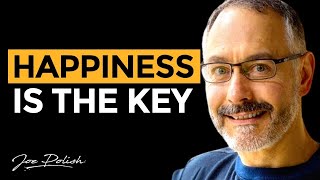
Dr. Manuel Astruc presents a framework treating happiness as the engine of success, not its outcome. He outlines three rules: Fitness (sleep 8+ hours, move more, active recovery 4-6 times daily), Growth (gratitude), and Purpose (build connections). His sister's death in 2008 sparked the approach.
Chapters
What I've come to discover is that happiness is really the engine that drives success instead of the outcome of success. Here's a definition of you from Sean Achor. He's a happiness researcher from Harvard. The feeling of joy that you give as you strive to fulfill your potential, it's a definition of happiness. What I love about that definition is it's got embedded two key parts.
On September 24, 1988, Joel Weldon was only 47, but Bobby McFerrin's song Don't Worry, Be Happy hit number one on the Billboard Top 100 chart. That simple yet profound song about happiness has been used in movies, TV shows, commercials and presidential elections.
Why?
Because it captures the essence of happiness. And we all want to be happy, don't we? The great creative genius and originator of the Disney empire, Walt Disney, said, and I quote, happiness is a state of mind. It's just according to the way you look at things. So how have you been looking at the things in your own life? Your career, your relationships, your health, your finances? What would your life be like if you could be even healthy, happier? Sure, you have challenges. We all do. Yet you know some people who are a lot happier than others. How can you unleash even more happiness in your life? It can begin by listening to Dr. Manuel Astruc, a board certified psychiatrist with over 50,000 hours of helping individuals deal with life's challenges. He's worked in his private practice and in the addiction field as the medical director of Saratoga County Alcohol and Substance Abuse services for over 20 years now. His own struggles with burnout, addiction and depression inspired him to start yout Next Act. That's his coaching program for high performing entrepreneurs suffering from stress and burnout. The outside world sees one side of a successful entrepreneur, but there's another side to success. From stressed out to burned out to numbed out, high achievers pay a price for their success that they keep to themselves. Yes, Dr. Manuel has been through the wringer and not only has survived, but he has thrived mainly through his creation of the Happiness Rules. As a matter of fact, that is the title of his talk for you today, Happiness Rules. Please help me in welcoming Dr. Manuel Astruc.
Thank you, Timothy. How happy are you on a scale of 1 to 10? So 10 is a feeling of well being and 0 is the pits. What's your happiness number and how do you get more of that? During today's talk, you're going to know what the Happiness Rules are and how to implement Happiness Rules into your life so that you can become happier. You're going to get a detailed handout of all the material in the presentation. And ideally, if this makes sense to you, you're going to come out of this happier. You've been misled by. You were given a formula that told you that success, that happiness was the result of hard work and success. Happiness came from working hard and becoming successful. Success is defined as the progressive realization of a worthy goal by Earl Nightingale. He's a motivational speaker. I followed those rules. I followed that formula. I wanted to become a doctor. I worked hard, college, med school, residency, started a private practice, became successful. What I found at the end was burnout. And burnout is defined as exhaustion detached from work, becoming bitter, becoming cynical, and losing effectiveness at work. My burnout got really bad. It got to a point that something had to change. In September 2008, I was sitting in a darkened room. I was staring across at a picture of my sister Magdalena. We're twins. And in this picture, she's beaming. And what you can't tell is that she's wearing a wig because she's going through chemotherapy. Three years before, she'd been diagnosed with brain cancer and had a terrible prognosis. And the month before, on August 24, 2008, she had passed away. It was so striking to me. In that moment, I was healthy, I was successful, I had a thriving private practice, and I was miserable. And Magdalena, with a terrible prognosis, lived life with a smile on her face. In that moment, there was a line in the sand, a moment of truth. I committed to enjoying the ride and becoming happy no matter what. And over the years, that's what I've been able to do. And now that's what I like to teach other people. What I've come to discover is that happiness is really the engine of that drives success instead of the outcome of success. Here's a definition of you from Sean Achor. He's a happiness researcher from Harvard. The feeling of joy that you get as you strive to fulfill your potential, it's the definition of happiness. What I love about that definition is it's got embedded two key parts. Number one, embraces suck. And number two is Dan Sullivan's elegant idea. Make your future bigger than your past.
Hey, I hope you're enjoying this video. And I want to let you know that I have a new book that's come out and if you'd like to get it absolutely free, there's a link below in the description. Or you can wait till the end of this video or you can Simply go to joe'sfreebook.com and you can get.
A copy there.
Now.
The happiness rules do not work. They get broken. If what you're dealing with are things like PTSD or clinical depression or anxiety, they can be helpful. But with those conditions, you need to get some professional help as well. There's a whole area of psychology that's opened up which is called the positive psychology movement. And there's many theories about how to flourish and how to have happiness. And they're all working with the same basic ingredients that we pick and choose from. And we put these ingredients together and that's how we define or achieve happiness. Where happiness rules stands out. What's completely different from the happiness rules and other methods is that they were not named by a psychiatrist who's listened to 417 episodes of I Love Marketing. We've got three big rules, two parts to each rule. First, fitness rules. Part one of fitness rules are the physical fitness rules. Sleep, optimize for eight or more hours a day. Move more. Eat well. Mental fitness. Cut out negativity in your life as much as you can. Limit your exposure to negativity. We've got a lot of negative thoughts frequently in our head. Don't wrestle and try to push them out of your head. Put a blinder to them. When you try to push the thoughts out, they get bigger. Develop a gratitude. Practice R and R Play time off. But this is also where resiliency lives. So techniques like Jason teaches us, breathing, meditation, taking a walk, adding five minutes four to six times a day of active recovery is incredibly helpful. Resets your nervous system. Develop a sense of awe. Cultivate a sense of wonder. Second set of rules Growth rules. First part of growth rules learning and growing. Work with a growth mindset. We are never finished products. We can always get better. We talked about this last month's meeting. Jim Rohn Work on yourself as hard as you work on your business. The past is for learning. This comes from the promises of Alcoholics Anonymous. We will not regret the past nor wish to shut the door of on it. Second part of growth rules connection. We've been talking about that all day long, today and yesterday. There's an incredibly tight correlation as we age with our health and happiness and the quality of the connections that we have. Focus on your relationships. Find your tribe. One of the big findings of all of the positive psychology research that's been done is that other people matter. Purpose rules. First, blaze your own trail. This is where courage lives. But Wiesen was talking about that what Are you interested in? What's your vision? Not that vision, this vision. What's the impact that you want to have in your life? What are you curious about? What are you good at? David Evans and Bill Burnett are teachers at Stanford. They've got a course. In the book Designing your life, David Evans was asked to summarize how to design your life. He came up with a 10 word answer. Get curious. Talk to people. Try stuff. Tell your story. In the last section, committing to enjoying the ride. I have two quotes for you. The first from Viktor Frankl, Man's search for meaning. Everything can be taken from a man but one thing. The last of the human freedoms. To choose one's attitude in any given circumstances, to choose one's own way. And the second is more recent. It's from Jason Tzedukas. I saw this quote recently. Jason Tzedukis is the actor on Ted Lasso. He said, if you have the opportunity to hit a rock bottom, however you define that, you can become 412 bones or you can land like an avenger. All these concepts are familiar to yuom. The happiness rules gives you a handle and a way to think about them so that you can remember them. Things that are easy to do are also easy not to do, according to Jim Rohn. For the next week, commit to living life intentionally by design, putting the happiness rules at the center. And if it makes sense, share the happiness rules with the people around you. Family, friends, loved ones. And imagine in a year we get back together and everybody has moved up their level of happiness and the people around them have moved the level of happiness up what the world starts to look like. Living the happiness rules can change your life. I know it's changed mine and it can change yours. So go out there and be happy. Thank you. Thank you.
I'm going to speak a little softer because of that wonderful voice that you just heard. I've had the opportunity to talk to this wonderful man on the phone. And the one thing that I think if you've talked to him in the last two days here in the room, unfortunately on our virtual audience, you haven't been able to. He's so happy. It's just a joy to be around this guy. And he practices what he preaches and the first thing he asks you is, are you a happy person? I'm not going to ask you to share the number, but that's an important question to think of. How happy are you all the time? So this was a talk 100% relevant to everybody. And then the title, the Next act, which would be something you should be looking forward to. Now, of course, they've been kidding me about my birthday and all of that and being old. But I'm looking for that next act and so should you be. What is that next act moving forward. And then he told you right away that he had a handout. Now, do we have the handout going out? Do you have a copy of that here? Or can we get one to just tell quickly? Could we just have one up here, Gina first as you pass them out. And then of course, you'll be getting the link correctly, Gina online to do that. So tell us about the handout. What is on there?
So it basically goes over all the slides, all the information, all the quotes, and the happiness rules. Perfect.
So one thing to think of when you're giving a presentation and you've got. We had three main groups, but each had two parts. So there were six things, a lot of things to write down. Having a handout for your audience really makes a big difference. So they can listen to you and not have to be taking so many notes. Because if you're writing a note, you're not hearing the next idea. So that's why handouts are very valuable. And then you use specific dates. That's a very powerful tool when you're telling a story, the more specific you could make it. There I was in Detroit, Michigan. It was August 15th, 4:00 in the afternoon. If you say nothing else, the audience knows. Well, that's a true story. You don't ever want to say this is a true story or this really happened to me. Oh, they mean everything else was a lie. No, just set it up the right way. And you did that perfectly. At 4:31, we had the first happiness rule right into it. And getting into that very quickly, what these doable things. I mentioned that about the other presentations that we've been hearing. Are these things that Manuel shared with you, something that you could do? Let me ask one of the most challenging people in the room, Jim. Jim, Is this something Jim do? Are there things he talked about doable?
Let me trust my intuition.
Yes.
Okay. He's now using two of the ideas already. He's. But seriously, these were doable ideas. And sometimes we go so deep with things that we confuse our audience because they're not going to do anything about it. This was very easy to do. And then he used the imagined idea again at the end as a year from today. And imagine that you were doing this. How happy could you be? You should be very Happy with this talk. You had great ideas. The technology got a little bit challenging for you, but you kept smiling. I was watching there. So based on what we saw Marcus do, maybe there are some cases where you don't want to use visuals. If you had just talked to us about this, maybe had a couple of notes or just had this wonderful sheet which had all these ideas, you could have used this as your slides without showing us anything. And there are some challenges here. Jenny is very good at using this, but she too had the challenges. So I think we need to give our speakers some extra little reinforcement because of these technical challenges we had today and yesterday. But let's show them how happy you are. Let's give them one more. Yeah.
Thank you very much. Appreciate it.
I have a question. Maybe.
Yeah, yeah. Oh, go ahead.
Who's that?
Hey guys, it's Daniel Linares in New York, actually walking my dog, but really enjoyed this conversation. Sorry. I enjoyed this 10 minute talk and, you know, I think you spoke about something that was a really great reminder. Something that has helped me over the years really reshift around finding joy in the day to day. Can you talk a little bit about kind of reframing not just being happy at the destination or the top of the mountain, but really finding joy in the day to day? And I think so many of us can get so busy and almost unsatisfied until we get to that destination, which often changes as you pursue the destination. Can you talk a little bit about that? Because I think it's something that I really used to be focused on and I've been so fortunate to discover that happiness isn't a destination, it's the journey.
Yeah. Thank you so much for the excellent question. I think we fall asleep and we start chasing success and numbers and metrics and problems. And what's required is really keeping the intention and the attention on happiness and gratitude and keeping that central to our lives. And we'll go off course, like we'll forget, but then it's bringing yourself back and being off course as part of the journey will always find ourselves off course. The goal is to remember faster and to get back centered on what your center is going to be.
Thank you so much.
Thanks. Thank you.
Awesome.
Thank you all. Okay.
I hope you found that video awesome and useful. So if you want to get a free copy of my book, I want want you to click here. And if you want to watch some more videos that'll be useful and awesome, click here. Go ahead.
You're over here.
Do it now.
Come on.
Thank you.
Watch them.
More from Joe

This FBI Trick Can Command Respect Without Saying a Word ft. JEFFERSON FISHER & CHRIS VOSS

How To Stand Out, Be Different, and Create Raving Fans, Customers, and Employees ft. Jesse Cole



90% Of Businesses Fail In Their First Year, Here's Why! ft. Dr. Benjamin Hard & Dr. Robert Cialdini

The 1 Piece of Business Advice I Got From Elon Musk That Changed Everything Ft. Kamal Ravikant

The 6 Traits You CAN'T Teach in Entrepreneurship ft. Richard Branson & Gino Wickman

The Leg Method: How to Make Your Book into a Million-Dollar Asset ft. Anna David


7 Millionaire Mindset Hacks for Daily Success and Wealth ft. Brian Tracy & Dan Sullivan
