How A Seafood Business Boomed with Wild Ideas: A True Story!
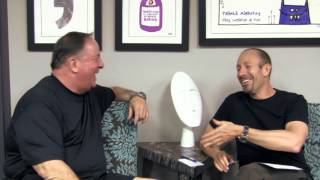
A recorded interview (YouTube) between Joe Polish and Jeff Moore about Jeff’s seafood business (Wild Things Seafood / International Pacific Seafoods) and the marketing tactics that grew it. Jeff describes launching Wild Things, customer engagement across before/during/after units, moving the free line (free samples/offers), masterminds and supplier collaboration, and practical advice on execution—focus on one thing, habits, and meeting customers where they are. The conversation includes tactical examples (video outreach, personalized videos, free-offer URLs) and references to marketing frameworks and mentors (Dean Jackson, Jay Abraham, Dan Sullivan, Evan Pagan).
Chapters
Hey, this is Joe Polish. I'm here with my friend Jeff Moore, who has a seafood company that you're gonna hear all about in just a moment. And what's kind of funny is Jeff happens to be in Phoenix, and we have no prep. I just grabbed a couple of sheets of my riffs and the eight profit activators, if we decide to talk about this, and said, let's do a video interview on marketing, because Jeff has done a lot of cool stuff. So Wild Things Seafood. Talk about both your companies. So you own the.
Yeah. International Pacific Seafoods is a company that's been around for about 35 years. My family bought it back in 1999. I've been president of the company since 2002. Back in 2009, my dad decided he wanted to open a store selling seafood to his friends. And I was begging him at the time because the economy wasn't really great to not do that. And we started doing a warehouse sale. And that was the beginning of Wild Things Seafood, which was actually. There's a pretty funny story behind that. A guy gave me the idea and told me, yeah, Wild Things Seafood told me the whole idea. And I asked him how long he had the idea, and he goes, like, four or five years. I just haven't done anything with it. And within five minutes, I had called my IP attorney and registered Wild Things Seafood under the distribution and production of seafood, and then called my IT guy and registered wildthingsseafood.com wildthingseafood.com and all this stuff. I hung up, and I'm like, tell me some more about this. He's like, what just happened? I go, I took action. And he's just like, oh, dude, this is my idea.
Was he mad at you?
Yeah, but it was like he owned it for five years, and he keeps says it every day. That was my idea. And I used one from you saying, ideas are ten for a penny. I go, what are you doing about taking action? And, you know, that should be a lesson that should earn him millions of dollars in the future.
You would hope. Well, you know, here's what is funny. There's a lot of people that will that that was my idea. As if a thought is a business. As if a thought is the implementation or execution of something. When a thought in your mind. I mean, every single thing that's been done, someone probably thought about.
Yeah.
Or millions of people probably thought about, but how many people actually do it? It's kind of like I've never been a big sports fan because I had my My interest in sports, kind of squash as a kid when I had a sadistic Little league coach, made my playing Little League ruined it. And it literally affected my ability to be in the sports, you know, later, later in life. However, you know, I've met many professional players and that sort of stuff. And I'm always curious to watch how many people observe the game versus how many people actually play the game, you know, and you've always been very big on execution. So to give some historical background and the reason why I'm interviewing Jeff now, unfortunately, Dean Jack is not here with us because Jeff's done a lot of stuff with Dean. But you know, Dean isn't at the office at this random time. You just decided to be.
Yeah, I just decided to show up.
To do an interview.
Hey, guys.
So he's here in spirit. We'll mention his name, we'll talk about Dean, you know, that sort of stuff.
But I'm Dean Jackson.
I'm Joe Polish. I love marketing. So I'll suggest to Dean that we make this interview, which could be a genius network interview. It could be I love marketing episode, you know, whatever that we, we put it out there. But you've been to two I love marketing events that we've done for the period of time that we've done platinum. You were in platinum. And you've done some really incredible stuff. I mean, you. And you have really awesome offers with your seafood and you even brought a whole slew of wild fish and various.
Other monkeys and strange and grass fed beef for my friend.
He didn't bring any monkeys. I mean, I'm just making that up.
We got powder for that in the bathroom.
Yeah, we do. We do. Which you have to come to my office.
You've got to go to the bathroom at Joe's office.
No, no. I have the craziest office in Piranha Marketing.
It is awesome.
Yeah, it is. The whole office is actually kind of cool. So it's a extension of my ADD brain. I think this, you know, we've got. I mean, this is like this a normal thing maybe for the video, but if there was a scan of the camera, people would see some really weird stuff. All right, so talking about marketing, what is your definition of marketing? You have really invested a lot of time and money and you' executed on a lot of things. You not only have learned a ton of stuff, you know, from people like me and Dean, but you're good friends with Jay Abraham. You just had dinner over his house last week. You know, Evan Pagan, Paul, all these People. But you know, what's your definition of marketing and where does it fit into business? From its role of importance to making money to representing, you know, what the public perception is of the company, all that sort of stuff. What role does marketing play?
What is it? I think that marketing in its purest sense is engagement. And however that engagement occurs, all the way through the process, the customer engagement process, from the time that you decide that there's a target to that target, becomes a prospect, that prospect becomes a customer, that customer becomes a client, which is a bigger definition of that. And then that client becomes an evangelist of what you do. And I think that entire process, all the way through everything you do. And I love that. That's why I just really subscribe so much to. I love marketing. The eight profit activators, breakthrough DNA. The whole deal is the before unit, the during unit, and the after unit. And how that isn't a line, but it's a circle. And that before, you know, the before is kind of the romance, but the during is really where this happening, the meat and potatoes, where it becomes a business where, you know, like we were talking about downstairs, that you're able to advertise in a national publication or a couple of national publications about the 25K group in August because you're able to put this together. And that during unit, that experience, that the people that are going to be there, the attendees that are going to be there, that's every bit as important as the reasons that you created the compelling offer that you created before. It's that experience that's gonna carry it through and have people talk more about you, about the people that are there and just about the whole process and the experience that they. I keep using experience, and I think that's okay. No, no, it's all experience is everything. And I think what happens is, because you're so, you know, you recognize your ADD and everything, but you've got a team that's around that's, that's got you. You have your unique ability, but you subscribe to the unique process part about it. And so it's not just, hey, come in here, give me some money, and I'm gonna tell you some cool stuff, and you hopefully can go out there and do it. Your entire process, the before unit, the during unit, and the after unit, I think creates something in marketing that we all want in business and that is intimacy with your clientele. And I think that, that you've drawn real close. Like, I feel that the. I feel like it's okay for Me to walk in and say hi to everybody at this place. You know, there's a. Of intimacy now we're not hugging and kissing, you know, that kind of intimacy. Even though you know that's okay. But we'll, you know, but there's this level of intimacy that there's a connection there. And I think marketing and that engagement creates that connection and makes you part of me and makes me feel like I'm part of you and your organization.
You know, there's. I had a guy that I named Jeff that I did a lot of coaching with early on in my career. You know, we were running coaching programs in the late 90s and his name was Jeff Smith and I had him at one of the 25k meetings early on when I started 25k and we were talking about running coaching programs and how to deliver a coaching program and how to have people stay in a coaching program and how to create value in a coaching program. And people that were in the room were, you know, there was a conversation about, you know, how do you get people to stay. And you know, there's a lot of people that run continuity coaching programs that use a lot of tricks and tactics and you know, of course I talk about stick strategies and a lot of people think the engagement is trickery or the right copy or whatever. And sometimes it is. The problem with that is it's very short lived because people aren't stupid. You know, I mean they, they can find out relatively quickly if it's just if it's hype or if there's some real substance to what someone's.
The peek under the curtain. They go oh yeah, exactly, exactly.
And he made this comment which is really interesting. He said, you know, out of all the different things that we've TR over the years to keep people in programs and stuff, he's like, the real thing is instilling the feeling that you're going to a place where everybody knows your name and they're always glad you came. You know the chairs commercial slogan. Very much so, yeah. And it's one of those things to where that's hard to fake. I mean you can have, you gotta.
Want to do it.
Yeah. I mean you can go to a restaurant and they can have maybe nice service and someone could be polite that really doesn't care about you that much to do it consistently, to have the entire company be there to be of service and they really genuinely want the person to have a good experience. They really want to provide stuff. Because if you have an organization that's Selling stuff that the owner or the team or whoever doesn't even believe in. They're not going to convey that.
Sort of. Not at all.
There's something to be said about taking what you do seriously enough to where you're willing and able to deliver these really cool experiences. And then if you do powerful, persuasive, compelling copy marketing, you're not faking it.
You can't.
You're singing from the rooftops because you know you're frickin proud of what you sell. Very much so you think it's awesome. I just did the last episode I recorded with Dean on I Love Marketing, talking about a book that I recently read called so Good They Can't Ignore youe, which the title was taken from a line from Steve Martin where he was being interviewed by Charlie Rose and saying, how'd you become so successful? And he's like, well, you just gotta be so good that they can't ignore you.
It's a great thing.
Yeah. And part of it is that you need to develop skills that are rare and valuable and you develop career capital so that you can literally get paid for it. It's one thing to have a thought or an idea, it's another to really put something together and deliver it. So saying that you do some really effective marketing in wild things seafood, but you also do some unique things. You go in and you train your vendors, you do all kinds of stuff. And I don't want to. I mean, you can name names if you want, but I don't want to speak. But I'd like you to kind of walk people through what you do and how you do it. What have you done that has been a game changer that has made you money, that has created bonding and relationship and engagement with your clients and what are some mistakes that you've done? I'd love to cover both of those in our conversation today. Just, you know, let's talk about some best practices, some best strategies, and let's talk about some lessons.
Well, first and foremost, the money making thing. There's things that have made us money in the past. To me, completely unsatisfactory to my level of expectation as far as what I've learned, what I've implemented, what I've done. I. First and foremost, I don't know if it's. I just grew up with this, but I sincerely have, and you know, this too, a genuine, authentic love for people and the energy, like a positive energy thing. And I love to make people feel that they can achieve new things. I like to Be out of the box. I'm an out of the box thinker, but I like to be. That intimacy thing goes back. I think that one of the first kind of engagements that we had was I was sending you over some seafood so I could introduce my company. And instead of just sending you over seafood and go, hey, check this stuff out. You know, Jeff Moore or whatever, I went into a conference room and I. I knew what all of your. Your team, what their favorite type of seafood was. And I went in, put a flip cam up on a deal and started talking to that camera. It's about 11 minute video. Talked about the seafood, where it came from, made fun of you, which is always a lot of fun to do and. But just gave everything. And I remember the response that you have was like, you could do this as, you know, like a consumer awareness guide. And it's like, right, I do this all the time anyway. And so that really kind of hit for me. And when we did this gourmet giveaway, which is a completely untargeted and not, you know, the way I want it to go as far as wild things. But everybody that ordered in wild things, when we built this list of 2,000 people over the last few months of people that have ordered our seafood, everybody got a video from me. And at first it was me like, hey, Rakim, man, thanks. You know, I saw that you ordered this. I absolutely love what you ordered. You ordered the wild king salmon. I want you to know that this is caught hook and line off the boats of southeast Alaska. And, you know, and I would explain it and I'd explain what's going on and how we believe that the best way for us to share our experience is to give it away for free. And that's exactly what we're doing. I mean, there was a thing, but I used their name and it was like, whoa. But then that became. And as I'm sharing it and talking to Dean about it, he's like, when. When does this become a thing? When you get 2,000 orders in a day. And I'm like, so then I started to do. Not with the name, but make it still very personable and look in the camera and things. And that was convertible, but not nearly as exciting as when you use somebody's name in it. And so I learned that, you know, to be able to do that. And then everybody's. I'm starting to get people in these in the breakthrough Mastermind deal, saying, you know, have just record a bunch of names and stick it in there. That's Just so not me, you know, it's the connection. It's the energy. It's the thing on Thanksgiving Day when I look at my text and it's you and Renee hiking, and you're saying, I don't even know what you eat on Thanksgiving. You know, okay, is it seafood? Is it what? You know, what is it meant the world to me. And if I know that that means the world to me, I'm sure that's special to everybody. And I know that as far as a network, as far as you're not building a network of people because you have this thing in your mind going, network. Network is good. That worked good. No, you love people. You like connecting people. You like helping people. And to me, I think that that is the ultimate. To become somebody's trusted advisor, to become their friend and trusted advisor to me, is the ultimate position that I can have. Whether it's with my business, whether it's my family, you know, my friends, anything is something that really gets me going. I started my mastermind group Thursday night boardroom because I had all this video, and I just wanted to share it. And then it just all of a sudden is built into this group that's got 90 members in it, you know, and they all come every other Thursday. And they don't. 90 don't come, thank God. But. But, you know, it's that love of people, that energy that we get from people. But seeing the stuff that you've done, seeing the power of the mastermind, I'm just gonna fumble around with this pen.
Here while you talk.
The power of the mastermind that you taught me, and that was the thing that we did last year, was I worked with a major broadline distributor, and I'm a tiny, tiny bit of this Broadline distributor. I'm $25 million. They are a $42 billion corporation. So, I mean, they're doing $2.2 billion worth of C4. I can't even, you know, they can't get the janitor to open the back door for me. But as I started to look at the power of the mastermind and bringing a group together that has, you know, similar thoughts and similar passions, I put a mastermind group together of six suppliers we call the gang of six. And we put this group together. We met at this distributor's home office with all their executives going, what are these guys doing? And all of a sudden, I was able to put this mastermind group together of suppliers and some of them competitive supplier where I had to kind of keep the glue I was the glue that kept it together. And it was a two day mastermind. And now I'm running a mastermind group of suppliers that act as one. And it's a $650 million group, not just a 25 million dollar group. And so I learned that at Platinum. I learned that bringing like minds together is just as powerful as things can be. But just the engagement part, really being sensitive. I think Wyatt Woodsmall was the guy that said, when you can articulate the needs, desires, challenges, fears, and of the other person, not better than they can to themselves, but better than. Not better than they can to you, but better they can to themselves, you have passed the tipping point of becoming that person's trusted advisor for life. And then all you have to do is continue to add value to the relationship and they will eagerly receive it for life. And I was like, you know, that's my motto. You know, I have another one that's learn to teach, teach to know, know and share and share with passion. And that one's like a bumper sticker over my door. But it's every breath I take. You know, it's stuff just. And I think that you're probably. I know you're this person, you're learning something not for the consumption of Joe Polish, but you're literally. You can, as a guy with add, you can't learn stuff for the consumption of Joe Polish. You are literally listening to this saying, I'm going to share this with Peter. I'm going to share this with Dean. I'm going to share this with Jeff. I'm going to share this with somebody. You're learning it, and you're obligated to learn it on behalf of somebody else. And I think that that, to me, has always been a big driver for me. Again, making money on this stuff. I think that you can get so big and grandiose. I was telling these stories to Jay Abraham and he's like, man, these are all great ideas, but can you assign a dollar figure to it? Well, no, no, no, no, no. And he stopped me. He goes, this is gonna sound really weird coming from me. And I said, what? He goes, if you can't assign a dollar figure to your activities and these really cool plans and this way to bring people together, he goes, you have a business plan based in arrogance because this is now about you and it's not about what you're driving. And so at that very lunch, I learned that all business, since the beginning of business, ever has one overriding purpose. Take away all the. The Fancy stuff and all that kind of stuff. Every business has one overriding purpose, and that is to drive new, increased and or more profitable consumption of our product or service. And if that is irrefutable and we understand that that is it, then at the core, we all share a basic common language. And so I had a meeting today down the street here with a big time VP at this place, and we talked about that. And then we were able to talk about the three challenges. And then I was able to even pull out the R question, you know, and use that. And this meeting, I left and my VP was with me that I took to the airport before I came back here. He goes, man, he goes, I'm your biggest fan. And he goes, that was the best I've ever seen. And I'm like, literally, as a lifelong learner, I'm able in my mind to go, that was. I love marketing. Episode 111. That was the 10x talk deal from this one. This was this. And I'm able to catalog this stuff, but I learned it to share it. That's great. And that's been probably the best thing is to learn it to share it. Yeah.
You know, and part of it too is I think, which is hard for some people, is you always focus on the mindset of the person that you're selling and what the hell is it that they want. I mean, you're not, you know, I don't hear you constantly talking about, you know, your seafood and where it comes from, or, I mean, you know, all that stuff. Those are features. But I mean, you're, you're always thinking about what's in it for them. And as much as a skilled marketer kind of gets that and understands that a lot of people, they, they got things to sell and they're constantly thinking about why they need to sell it for themselves. Not, you know, what value can people give them, not what value can they give other people?
Well, yeah, and I think that from that point, and again, this is something that I learned from you. I learned it from Eben. I learned it from Core influence, from Frank. On the back of my car, I was talking about, there's five questions and these questions, everybody's like, oh, there's seafood questions. This is a different card. These are seafood questions. And I said, no, there are five questions that when we ask these questions from every single customer we meet is we find out that 75% of the time the customer is not using the best available option in their restaurant. No matter how accomplished the chef. Chef is. And over the last six years, we've saved the restaurant operator three and a half million dollars in annual food costs just by asking these questions. These questions have nothing to do with seafood and everything to do with the customer. It's funny, there's a story back in 2011, I'm at experts Academy, and I'm talking to David Bach, who I'm a big fan of, and the guy that encouraged you to buy this building. You know, all that stuff.
He tries to take credit for that.
He does. Well, he did in the genius interview, too. Yeah, but. And. Oh, God, you know what? I just remembered how I connected with you, and I'll. I'll. I just remembered now. Fantastic.
We had a conversation prior to this recording saying, how the hell did you come into my world?
Yeah, it was. It's still. But it's a good story, though, and it's about walking your talk, too, by the way. It's. It's fabulous. So I. I give my card to.
David.
David. Jeez. He made a charge of David Bach. You know, it's hard to remember his name. He's only got 12 New York Times bestsellers. And I hand him my card, and he goes, what are these questions on the back? And I go, those are the questions I ask every single customer when I meet him. And he goes, this is genius. Well, you know, I don't see. Like, genius to me is like the great kazoo on the Flintstones with the big head and all that kind of stuff. I'm like, dude, I sound genius just so I don't forget the questions, you know? He goes, I have seven questions I ask every prospective client. He goes, why aren't those on the back of my card? I go, I don't know. He goes, is it okay if I put my questions on the back of my card?
And I'm like, yes, for a license.
Yeah. It's like. It's not prior art, buddy. He's just like. And we had a great conversation, and we talked about the stickiness of coaching, and you were just talking about. And he goes, what would you suggest? He goes, I'm going through a change in my coach. Coaching. And I said, you know, you hire somebody and you've got this program that works, works for people that do it. And he goes, right. I go, so, you know, it works. He goes, right? I go, where are the people when you give them that program? And he goes, what do you mean? I go, where are they mentally? I go, you could explain this. This great program and what it's going to do for them, you know, P90X what it's going to do for you. Right. Losing weight. It's not about losing weight weight. It's not about any of this stuff. It's about the things you have to do. And I go, David, when you hand them this program and this coaching program and stuff, they might not be ready for it. And so they might be thinking you're building this big, you know, entertainment center, cool thing that's going to have my TVs and whatever in there and all this kind of stuff. But all of a sudden you show up and you give them a box from Ikea that they have to build themselves. They're not there yet. It's going to stay there. And so it's meeting the customer where they are no matter what.
You've got Very good point.
Boom. Get them there and say, oh, hey look, see that brown thing? Don't step on it, it's gonna make your shoe smell. And then you keep going. And so it's like meeting customers where they are is without a doubt the greatest marketing strategy. But again, you can't fake that. You can't walk in there and you can't, I'm here to meet you, I care about you. It's like, say that shit.
Right, right, right. Well, and the beauty of technology, I think one of the advantages, there's many disadvantages of over communication. You know, I think most people don't admit just how much of a complexity keeping up with email and all of the different eye candy that's available, you know, from a million different sources. Oh yeah, there's so much interesting stuff, stuff out there. The one thing is it's harder these days to be a fraud. It's harder to deliver crappy service and not get found out quickly because of reviews, because of how people talk. So I think keeping things in check. And I was just in Costa Rica. I've got quite a few mosquito bites on me right now. And it was interesting because we would go out to a couple times, we went out to restaurants a lot. We had a full staff of people waiting on us hand and foot. And they were amazing people and the food they were making was awesome. Anyway, we went out in this little.
Town.
And most people are on island time. I mean they're just taking forever to greet you, taking forever to bring you menus, taking forever to everything. Like they're very slow.
This is Joe on free days going tick tock.
No, but I'm saying it would be like free weeks if you waited quick. It like took A long time. And I made this comment to Renee. I said, you know, I go, and how many? There are like four different places that like supposedly had credit card machines, but they were broken. I'm like, you all have smartphones. Get square. I mean, how hard is that? Right? And the, the thing I was like going, you know, so there are places where it doesn't matter. You can still, you know, have to be like, fabulous. But the analogy I came out of it is like, if there was anyone and I'm sure they're there, but we didn't experience any of this where they literally just served people quickly. Like they would greet them, they had their act together. They had like anywhere near like just a four season service attitude. How they would just dominate. I think, you know, maybe not.
They'd be called a foreigner. You're not here. Get out.
Yeah, but, you know, it was awesome. But the point I made is like, you know, in business you don't have to be like the best in the world. You simply sometimes just have to show up. You just have to be a little bit better than your competitors. And what I'm always surprised by is that a lot of people in business, they act as if it's so damn difficult to deliver good service. It really isn't. I mean, most people suck.
I mean, you know, it's so funny, you talk about being just a little bit better than the next guy. I have a friend that's in our mastermind group and he is a hugely successful attorney. I mean, seven figure guy. He's never worked more than 25 hours a week. So we've got names for him and they're not, they're not happy names. Right. But his whole thing ever since he was in college was I'm just gonna be 10% better than the average guy. And it's like, right, he could. And in that he became the best in the world at what he does. But it was just that. And you're right, it's just, it's. It's.
This is.
You want to be served the way you want to be served. I want to be communicated in a way that it's, it's compelling as Dean will use. And I think that they're all prepositions, but it's at to or with. Yeah. And it's like, are you talking at them? To them or with them? And at them gets clicked deleted. Two is like, like, if this is important. Yeah, I'll probably read it with. It's like, oh, man. I got an email from Joe. Cool, man. What's going on? Okay, cool. You know, or hey, this didn't come from Joe, but it came from Rochelle. But you know what? I like what he's doing here. Yeah. So it's at to or with and it's like reviewing your copy and saying is this at to or with? The thing that drives me crazy is when people send an email to somebody and say say everyone and they use this big third person crowd thing. Those emails. You might send a million emails out but those are all one at a time conversations. Don't treat them like you're standing on a stage.
Yeah, exactly.
At to or with. Where is this communication?
Yeah, so yeah, no, that's awesome. So let's talk like you handed these business cards. You got some questions and you know this is very tactical but I think it's worth mentioning. Okay so you've got a business card here for wild things seafood. And you know of course you have wildthingseafood.com is one of your URLs and you have an offer and I remember when you were going through platinum you really describing your free offers and how creating irresistible offers. So a couple things for one it says try us for free right now. And then you actually have registered free seafoodandsteaks.com now what is that all about? Let's. Let's walk people through and I know this must suck for you because we're, you know this is kind of as explaining a marketing strategy. We're also promoting your free seafood.
Yeah.
Great.com which is gonna suck.
Free seafood and steaks is something that's an evolution still. It is definitely from the based on the would you like it to Cookie right out of the before units.
Let me mention that for if someone has never listened to I love marketing has not read our report Breakthrough DNA. Exactly. That's a good way to Breakthrough DNA which is available@ilove marketing.com There is a process of and see we've got the profit activator. So I'll read them to you real quickly. Just Profit activator number one, narrow your focus and select one target market at a time. Profit activator number two, use direct response. Not image but direct response offers to compel compel prospects to call you like you're doing here.
Not convince but compel.
Yep. Activator number three is patiently and systematically educate and motivate prospects to meet you when they're ready. Activator number four is present your unique service offer in a way that makes it easy to get started. Profit activator number Five, delete a dream come true experience designed from your client's perspective. Profit activator number six, provide after sales service even after you've already been paid, meaning once you got a check, you actually still need to continue to care about the person if you want them to come back. Profit activator number seven, nurture lifetime relationships and focus on lifetime value. And profit activator number eight, orchestrate referrals by giving your clients the opportunity to feel great. Now, these all encompass the before, during, and after units of your business, which every business has. And so you've got free seafood and steaks, and one of the things was. Yeah, you're talking about the cookie. You need to just go look up the episode on. I think if you just type in cookie on the search box, they can find that episode and all.
Number 70. Yeah, would you like a cookie on steroids? Is the one that we did on that one for sure.
So you constructed that. You've tried different variations of it. So a couple things. I mean, many people would be scared to do an offer like that, but, you know, you, you know, and again, like you mentioned, it's still a work in progress. You know what I've learned about marketing, it's always a work in progress. Like David Ogilvy said in Ogilvy on advertising. I think it was in Ogilvie on advertising, where if you're going to get into the advertising and marketing business, you need to be a person that thrives on constant activity because the advertising field breeds anxiety. I think those are the terms he uses. Breeds anxiety.
Yeah, that sounds more like him than does Hopkins, but, yeah, definitely does.
So it's always a work in progress. Okay, so let's talk about, about this free offer. So what is. Why do you do that? What is the psychology behind it and how does it work for you?
Well, I mean, we believe that the best way for us to share our quality and value is to get you to try it. And the best way to get you to try it is to give it away for free. You know, the first time I ever heard this was in Tony Robbins deal with Evan Pagan, his new money master. And he talked about moving the free line. And I saw, I met, you know, and the Business Mastery deal, Evan talking about that back in 2009, and I was like, for free? Sounds good to me. I give free stuff away all the time. And food service, you go to a restaurant and it's like you're talking to a chef. You don't say, try my stuff. It's really Good. He's gonna say, give me a sample. Well, that's just the culture of that business. So I've already been doing that. So now moving it over to direct to consumer was easy. Right now there is a warning is this works really well. So well that you don't need. You do need to pay it very, very close attention to profit activator number one before you go to profit activator number two. Because free is still the most convertible work anywhere, really. You know, there's free whatever is. You know, there's some even more convertible stuff, but free seafood's pretty damn convertible.
Oh, yeah, yeah.
So some of the. One of the work backs is that we're actually going to do this in a more exclusive standpoint. So for us, going back then to profit activator number eight, which is like we talked about in a circular deal, is if you had your own domain, you know, you had your own URL that we gave to you and you said, hey, I love Jeff's stuff and actually they're gonna hook you up for free. Just use this. This is my own. They gave me my own private domain to give to you, to give to anybody I want to. And go ahead and order and you're gonna, you know, you'll get some free stuff. And actually he's gonna, you're gonna go through a sequence where you're not just gonna get $30 for free the first time. Over the next eight weeks, he's gonna make offers to you that you get like $120 worth of free stuff, right? And you're like, wow, now you do that just for anybody. You're giving away a lot of $120 stuff. You're literally created your own Groupon, you know, big flushing sound here. Right? But if you're orchestrating that. And now, you know, we were talking about Jay Abraham and Christy Abraham earlier, and you and Dean and Sean Phillips is talking to people about us. And, and you know, if you had your own URL and said, look, these guys, I trust them, they've got great stuff, give them a try. And it's your own URL. That's pretty cool. Totally. Now it's exclusive. Yeah, Right. And so that's some of the tweaks that we're going to be making on this thing. And then it's really easy. When it comes through that URL, I'm going to say, hey, rocking Joe gave me, you know, I see that Joe gave you his URL and. And you ordered some seafood from us. You know, let Me just tell you a little bit about it. So now all of a sudden you feel good about giving it to him. You're now being recognized for giving it to him. Right, right. And now you feel pretty damn good about that. And so does he. Because now he's getting free stuff.
Especially him, that guy, you know, I mean, we only had him on camera right now and everyone could see. Yeah, yeah, he's kind of got a mohawk and stuff going there.
You see that? I can't believe that you let him wear a script skirt. A skirt and the cut off tank top and stuff. He told me yesterday it was leg warmers and dolphin shorts. That is pretty funny. You're a maniac. Exactly.
So all right, now we're not going back to before Evan, you know, even invented this whole moving the free line a little bit that he did. This is like a status thing on Evan.
Minimize. Yeah, exactly.
Evan's brilliant. Actually, Evan's great. I gave away a free room of carpet cleaning. And what's interesting is talking about Jay Abraham. I mean, Jay's been talking about lifetime value and preemptive and everything for decades. And I am continually amazed by how many people will play the low price game. But they never understand lifetime value of a client and use like Jay Abraham terminology. You don't know how much you can afford to spend to acquire a client until and unless you know how much they're actually worth. And the reason that you do something like free is of course you're right about selecting a single target market because there are ways to do things for free that will be incredibly useful and beneficial to remove risk and make it totally non threatening. And literally you put your money where your mouth is. If your stuff is really great and there's the ability for them to buy more, do it. There are other things where you can do free the wrong way. It could be a disaster.
Oh yeah, like out the door.
Yeah, totally. So but the point is, is to incentivize and compel people to want to do business with you. And the hard thing for great craftsmen, for people that care, that really have good stuff, stuff that don't understand marketing is like, why do we need to do that stuff? Shouldn't just be being good be good enough? And you know, if it was, we wouldn't write long form sales letters. None of us would learn how to write copy. We wouldn't study sales and persuasion. And you know, there are some things that are bought, many things that simply.
Need to be sold.
I mean, you literally need to put things out there need to.
Greatest, by the way, greatest. 3 minutes and 50 seconds on video. Oh, my goodness. I played that at that big Cisco event with all the TVs up there in that group. I mean. Yeah. Which.
Thank you, by the way.
Phenomenal. I mean, that thing that just still to this day is goosebumps.
Yeah. You know, I think. I hope one day that that is turned into a documentary. Go type in is selling evil into Google. And the first thing that should pop up is me. Of course. Remember that, Howard. Did you ever see that movie from Howard Stern years ago, Private Parts?
Oh, my goodness.
He's like, in Central park, and he's like, we're all gathering here today in celebration of me. Yeah, that's really funny. All right, so I've got a list of things that are my riffs. And I just pulled this out because I was like, you know, I think Jeff would have some good insights on stuff. You have been such a great proponent of Kekich credos, my friend. Dave KEKICH.
We did 90. Number 90 today. Yeah. I've asked, actually, Babs, now if I can have permission in the next go around to use the quotable Dan Sullivan. Oh, really? And that would be awesome. And they're over in London right now. But by the way, they haven't even used the gift certificate you gave them. I'm gonna give it to them again. And I'm saying, really do this, because I even offered to deliver it for free up to kids Canada and do that.
I'm glad you told me that.
Yeah. And she was. Oh, she says, I don't know what to order. And I said, well, let's pretend it's tomorrow. And we just finished making a dinner for friends last night. What would you have had to have served to be happy with what you ate last night? So use the art. She's like, great.
Oh, you know, let me mention this, too. We'll come back to Dave Kekich in a moment, like, so, Babs, who runs Strategic Coaches? Dan Sullivan, partner and wife. Basically, they have the R factor question at Strategic Coach, which is the relationship question. Sometimes they call it the result question. And it's basically the question goes, if we were to meet, you know, a year from today, three years from today, what needs to happen, both personally and professionally, for you to feel happy with your progress. And it's a way for you to basically identify someone's dangers, opportunities, strength, what it is that they want, and it allows you to open up the door to have a relationship. And when someone does not want to have a relationship with you either because they're just not a right fit or you don't have the proper rapport with them. They won't answer the question. And when I first heard them say that. And it's a brilliant question.
Are you kidding? I use it all the time. Yeah.
And you know, there's a book that Dan Sullivan wrote called the Dan Sullivan Question, which you can get@strategiccoach.com Me and Dan even did an episode at 10xtalk.com 10xtalk.com where you can actually. You should just listen to all of.
Them because they're all good, dude. Immediately useful.
And honestly, not because I'm on there, because Dan Sullivan, genius. Yes, true. That is true. So, yeah, the R Factor question is really good. And I wanted to mention that because you did mention it earlier. And I want anyone that's like, what is he talking about there? So going back to Dave Kekich, Dave has been paralyzed from the chest down for over 30 years. In spite of that, the guy has just overcome incredible obstacles, has managed to work out. He's almost 70 years old and he's in great physical shape.
Wow. That picture you just recently took, that just recent.
That was less than a month ago.
Good lord. No.
The guy's in incredible shape.
Yeah. Awesome.
And he's in a wheelchair. And you know, some people, like, I don't have time to work out. You know, I can't work out. I mean, the guy can't walk. I mean, he can't feel anything below his chest. And so he's quite an inspiration. And he's someone that if I find my whining about stuff or presented with what I think are, you know, difficult obstacles, some way to give myself perspective is I, you know, I ask, you know, what would Dave Kekich do?
Yeah. You know. Yeah.
And so he wrote these hundred credos that for years I've, I've handed out and they contain more stack in my car.
I give them out all the time.
Yeah, they're great. So talk about, talk about those. Why do you share them with your, you know, Thursday night boardroom and why you talk about it?
I actually started. It was such a, you know, I was so inspired by it and it made it, it was so meaningful to me. And I announced this at the Isle of Marketing. I got a little teary eyed, whatever, that I was sharing them with my family and my kids. And it was. And my wife. And it was, you know, what does this credo mean to you? You know, and how are you going to apply this to your life. And you know, that, that is. That was really important to me. And it was like, okay, I'm sharing it with these, you know, five people. And I'm like, I'd really like to get people's impressions on a grander scale. And so I started doing it on Thursday night boardroom on our Facebook deal and do it every weekday without fail. And no matter where I am, if as long as I've got a computer. And I started sharing it and I just, every day, you know, instead of just, hey, I'm sharing this out there and whatever, I have to actually read it, copy it, make it, you know, I'm commenting on it. And it literally I'm watching this kind of, you know, create shifts in my life because it's changing my environment, it's changing my mindset, every single thing. And Kekich credo's to me what those are and credo just is believe is so important. Those types of things that can very gradually shift our identity into our best self. And I just think that he's done that. I think you're just a champion of that. And can I mention how we met or how we came together? So I'm listening. And I'm a huge fan. Ever since Brian Tracy taught me this, I'm like, you know, at one point I thought I was Nightingale Conant's number one customer, you know, and, you know, and I saw. And I'm a huge fan of the interview medium as one of the greatest. It is the greatest tool for learning ever. And so because you're experiencing it with the person, instead of them talking at you or to you, it's with you and you're in it and you're. It just. I just think it's the greatest medium. And the Genius Network series is. Is tremendous. And just, just think that's just. To me, it's just awesome. And I think that that's a good thing with the. I love marketing too, because I think it's you and Dean talking with each other, and it's that interview with each other and you sharing stuff, right? And I think Dean is brilliant, and I think that you have this wonderful ability to craft and bring stuff together as we talked about. So I'm listening to Genius Network, and I'm listening to the Inner with Tony Schwartz. You know, and I'd heard your name through like Evan was talking about at New Money Masters, and I'm like, this is Joe Polish. Look it up. You know, it was 1984, 94, whatever it was this long haired, you know, ponytail wearing schmuck. And I'm like, God, this guy is hilarious. And so I got the Genius network series and I ordered it. And I'm listening to the interview with Tony Schwartz. And I thought, you know, when he was talking about Anticolus and the entailment of the virtues and all of these things, I was just so amazed. And I was a huge fan of his book, the Powerful Engagement. And I was like, I'm sharing this with the boardroom. This is it. Learn to teach. Teach. No, no one. Share. Share with passion, you know. And so I'm going, I'm sharing. So I look at the cd, I'm driving. I remember I was driving up from San Diego. I'm on Commonwealth in Fullerton, approaching harbor. I knew exactly where I was. And I call this phone number and Gina answers the phone and I'm like, I want to buy like 30 of these CDs. And she's like, well, you know, let me see just a second. And you know, we'll give you the rights to it for whatever. You know, it's small. I'm like, you're kidding me. And she was so helpful and so genuine and so authentic and so caring. And I'm like, wow, I'm not talking to a phone bank here. I'm not talking to somebody somewhere that doesn't care. And it's just like, yeah, email, name, number, whatever, right? I was literally, truly talking to somebody that I felt like I was talking to friends. And from that point on, it was like, this is the real deal. These guys are the real deal. I'm a huge fan of hers, and I'm a huge fan of the guy that's created the culture that's put this through. And so that's been my thing. You know, I emailed you from Brussels, Belgium, and all these places. Joe, you know, there's too many posers in this group, man. Let's interview them and see if they're implementing and throw their asses out. Right, right, right. I became part of it. You made me feel part of it. That's been special.
Thank you. And you've been great too, because like, you, you know, you don't just sign up for stuff, you participate in stuff.
Yeah. It's not intellectual entertainment, as Jay says. We're using it.
Right. And you know, the thing that Dan Sullivan talks about, there's five ways to get paid. And I've always really shared that with as many people as I can because I just think it's so profound where you Know, reward is one way to get paid money. The second is utilize so people actually use your stuff. Third is appreciate you. Fourth is refer you. Fifth is it enhances you. And so whenever I sell things, whenever I associate with clients, partners, I always look at the five ways to get paid, you know, and I used to think money was the number one when I first started the business. I'm reading all this stuff on how to make money, how to do marketing so you can make more money.
And that's all.
Yeah, that's all important. I mean I do not like at all advocate in any way, shape or form that the making of money is not a good thing and should not be a goal.
I mean you absolutely creates a sustainable enterprise. Absolutely.
I mean, I am a capitalist.
However, even though he looks like a communist, doesn't he look like a Russian scientist?
Certainly not a socialist. And you know, so the thing with, when I started, when I joined Strategic Coach, you know, Dan Sullivan got me to look at what the hell I do and why I'm interested in things and why, you know, because I used to give myself a bunch of flack for. I would find myself spending time on things that I just knew if I spent time over here, I would make more money doing this. But I was just really interested in this or I really spend more time with this person than the person over here. And part of it is what I realized is after he took me through this process, the things that are the biggest rewards for me for why I do stuff is does it enhance me? First, so everything that I involve myself.
In.
Do I get a double whammy sort of approach? Not only do I make money, but it actually makes me better. Second, do people utilize me? I never like selling how to marketing advice and knowledge to people that are in the biz op industry or something because I want people that actually do stuff. I mean, I cannot stand when you give somebody something that, you know, if they will use it, it will change their life, it will make them more money, it will make them more valuable, it will help them, it will help their families, it will help their families, families, you know, and they simply don't do it. It's just like, ah, you know, that's.
Not, that's not exclusive to biz op. I mean, oh no, there's plenty of good biz ops right out there.
There's just a higher percentage and there's some great business opportunities.
Right?
There's this, there's a higher percentage of implementation when you give stuff to people that are business owners versus Want to be business owners. Now granted, everybody starts out unless you're born in the money, which is rare and even if you are, you know, lose it.
Yeah.
I mean most people that are born into money, you know, don't have a great track record compared to, you know, entitlement. Exactly. And so the thing is I'm just very big on people that actually utilize stuff. And so you have, you've been very big about that. Now some of that, I don't know if it's teachable but what I'd love to do with, you know, because we can be here for two weeks. Weeks, but we're not going to be. I'd love to get your advice for people out there that have a hard time implementing, executing. They are procrastinating, they're wavering, they're second guessing themselves. You've always been a great encourager of get off your ass and take action. So to whatever degree you were speaking to someone that wants to do something and they're not, not they're afraid to pull the trigger, what do you say to them?
You know, first of all, I don't think it's, they're afraid to pull the trigger. I think it's the, they start to lay out all the things that they have to do and they're still concentrating on the result. I think Tim Ferriss in the 25k group last year when you did the videos, you buy the book, you get the videos and things, right?
My insane offer dot com.
My insane offer dot com he talks about, about, you know, one strategy is to give yourself a limited amount of time. Like, well, I'm going to do this for whatever but I'll tell you, and it changed my life. The book that Charles Duhigg wrote, the Power of Habit. One thing, one thing that you can do, not for 21 days, one thing that you're going to do for the rest of your life, one thing. And then as you start to compound that into something else, when that one thing becomes automatic and you, your life that you're doing it without even thinking about it with, you're not applying any willpower to it, you do something else. But back to Tim Ferriss, it's like here is something that I'm going to do and I'm going to do it for the next week or 14 days or whatever, or just a day or two days or three days because I have a theory and I'm not a scientist or anything like, well, I guess I'm a practical. But if we start to do a Bunch of things. Even if it's a 21 day for a habit. Bunches of things. And here's all the stuff I need to do to get this done. We have now attempted to shift our identity. We will die to protect our identity. We will die for our identity. But if we do one thing at a time in little tiny bites and we start to shift over, right? Our identity changes as our environment and our environment changes and we never. Everybody's like, get out of your comfort zone. You don't think of your comfort zone as something you've got to get out of. It's just change where you are. And so you're now dragging this basically 300 pound little hula hoop with you, right? You're stepping out of it, but you're still taking it with you. And so it's start with just one thing. I'm going to start with, with this one strategy. What's the one thing? You always did this when we were here. What is the one thing you're gonna do with this? What is the one thing before we leave, before we even leave this conversation. What can you do right now? What phone can you call? What can you do? How can you do this? And I think if you just start with one thing, everybody's like, oh, but there's so many things, you know, I gotta lose so much weight in 90 days. You just start with one little thing, you're gonna going to look back 90 days from now and it's going to feel like a quantum leap. But right now it's so excruciatingly small. We talk about that 10% change or that 5% change, but over time it becomes this massive thing. And so one thing, what is that one thing? And you talked about there's so many different things I could have been doing. And Evan quoted Wyatt the other day, Wyatt Woodsmall, and saying it's the thing you're doing when you're not doing what you're saying supposed to be doing. That's the problem. So getting back when you talk about choosing one target audience, choosing that highest value thing recently again from stuff, I'm listening to you. What are those highest value activities? Three of them. Just three of them. And now if somebody's working for you, what can we implement in a unique process that's going to take two of those away? So you can really just the one that you said, the one thing. And if we can just concentrate on that one thing that becomes the regular part of our life. And now that's the one thing that we always do. No matter what. We could do it differently. Right? Yeah, it's that, that's how you test and move forward for the result. But it's the one thing that's the. I've lost £50. It was when I decided it wasn't £50 I was fighting. It was the behavior that resulted in me being, being 377 pounds a few years ago and now being 280 pounds and on my way down to 230 pounds of twisted steel. And sex appeal is. It's the behavior, it's the little things. It's my relationship with Sean Phillips and using full strength and using it no matter what. It's like there's no willpower in that. I love that stuff. Give me an excuse to have more of it and that type of thing.
So it's one thing, you know, that's great. Going back to Kekich credos too. He has the one credo where he's talking about a few basic moves. Produce all results. And you know, there's, you don't need. Even in business. I mean, the difference between being rich and being broke, as Gary Halbert would say, could be one sales letter.
Exactly.
One sales letter.
The Boron letter is one of the greatest books.
And I love, love it. Exactly. You know, effectively use. And so the point is there's, you know, the Dan Sullivan quote, getting results doesn't take time. It's the not getting results that takes up all your time.
Right. And well, and I was telling my son this the other day, what you do once in a while, things that you do every once in a while will not harm or benefit you. And he's like, well, what's that mean? I go, look, you know, what if, if I eat cake or a burger or something like that every once in a while, it's not going to kill me. But the same thing, if I decide I'm going to make some sales calls today or I'm going to work in my highest value activity once in a while, it's really not going to benefit me that much either.
That's a good point.
And so it's what we do consistently. And if it's something you've got to do for the rest of your life, you can't start by doing 20 things. It's got to be one thing.
Yeah, well, I love it. I love it, you know, so I'm glad we sat down.
Me too.
Just, just had a conversation about this. I love the part with engagement. I love the thing about one thing And I love the fact that you talked about the free offer and creating a compelling thing and about caring about people and having the relationships and how do people best do business with your company so they not only can get access to great products and great service and stuff, but also see how you actually do some very effective marketing and communication and follow up because you're a guy that literally implements the before, during and after strategies so that you can deliver a world class experience because you're not trying to sell somebody once. You're trying to develop relationships with people that you can continue to have as clients. And I think a couple people, just two that would watch this interview may want to go visit your website or something.
Well, yeah, and that's great. You put me on the spot because you're never happy, fully happy. You were just meeting with your web guys today. You know, it's like, oh God. But it's wild things. Wild, wild things. Seafood www.wildthingsseafood.com is our consumer division and it's again a work in progress. InternationalPacificSeaFoods.com but also Thursday night boardroom, we've talked about it a couple times here and we use, we are thick in the teachings from Joe and Dean Dan Sullivan. We use Frank Kirk and Evan Pagan, a lot of Tony Robbins stuff. That's Facebook. It's a closed group. But you can request entry to that group where we're doing the cat catch credos every day. There's some great interaction on that. And that is facebook.com Thursday Nightboardroom I guess would be that one. And that's part of an evolution as well. But those are the ways to get a hold of of me. And if you just want to call me and talk about marketing stuff, I'm cool with that. I mean if I've got time, I will do that. I'll give you our toll free number at the office. It's 866-360-340-FISH. How do you like that? 866-360-3474 which nobody has the numbers on the phone anymore when we're using iPhones and stuff like that, I don't think. But that's it. And we also. Oh that 866360 fish.
No, no, that's having everybody call you. What if they just, you know, you.
Know, what if I don't have time, I'm going to tell you I don't have time and to come to the boardroom, you know, and we'll do that. So I don't regret it. I Love talking to people. I've actually had people call me from episode number 70 from Canada saying, really? What do we do? How do we set that up?
Go go to ilovemarketing.com and listen to episode number 70. We did that during a platinum meeting.
Yeah, that was a lot of fun. But I got to tell you before this is, you know, I consider you a friend and, you know, obviously a mentor, a coach in your own way. But sitting down and talking about this, to be able to sit and do an interview like this, be interviewed by you like this, this is one of those things, you know, I'll go fall short of bucket lists stuff, but. But this is really a dream come true for me and something that. A very, extremely proud moment in my life. So I really appreciate coming together with you. And the people here are world class. You know, if we. I was. I was Dan. I had Dan give me his. His Colby score. You know, I'm like, I want people like you guys here. You know, give me your Colby score. And. But this is a dream come true. And the relationship that I've built with you and with Dean over the last couple of years and Tim Paulson, too, a very handsome man, has been something that I cherish a lot, and so I really appreciate it.
Well, you're great. Thank you so much. Very happy you came down and you really offered some great insight and some great advice, and so I would love, wherever you're watching or hearing this interview, this episode, if there's a place to comment, please do watch your language. If you hated it, just write. You know, be one of those crazy people on YouTube that just writes all kinds of nonsense. But no, thank you. And give us your comments. And thank you, Jeff. And go check out his website. You'll see some cool stuff. And until we speak again, go out and implement something. All right, bye.
Just one.
More from Joe

This FBI Trick Can Command Respect Without Saying a Word ft. JEFFERSON FISHER & CHRIS VOSS

How To Stand Out, Be Different, and Create Raving Fans, Customers, and Employees ft. Jesse Cole



90% Of Businesses Fail In Their First Year, Here's Why! ft. Dr. Benjamin Hard & Dr. Robert Cialdini

The 1 Piece of Business Advice I Got From Elon Musk That Changed Everything Ft. Kamal Ravikant

The 6 Traits You CAN'T Teach in Entrepreneurship ft. Richard Branson & Gino Wickman

The Leg Method: How to Make Your Book into a Million-Dollar Asset ft. Anna David


7 Millionaire Mindset Hacks for Daily Success and Wealth ft. Brian Tracy & Dan Sullivan
