How Jonathan Cronstedt Leveraged Everything, Went BANKRUPT And Built A Company Worth Over $1-Billion
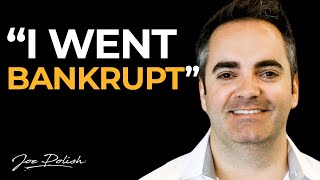
Interview between Joe Polish and Jonathan Cronstedt covering Cronstedt's journey from a 2007 bankruptcy to leading Kajabi (a knowledge-commerce platform). Key themes: resilience, risk, and relationships; mentorship from Joe Polish and Dan Kennedy; Kajabi described as an LMS + marketing automation hybrid now about 14 years old and powering roughly $2.1 billion annually in creator transactions. Cronstedt discusses list-building (Schwartz awareness spectrum, "side door" entry), the importance of integrity in marketing, lessons from private equity (Spectrum Equity, Tiger Global, TPG, Owl Rock, Maritek, Tidemark), product-market fit, the value of customer recognition (Kajabi Hero program), hiring mistakes (over-promotion/over-titling), the "tacos and tequila" partner-fit test, AI and one-person billion-dollar company potential, and the "silver tsunami" acquisition opportunity in retiring small businesses.
Questions this video answers
January 31, 2025
$2.1 billion annually (platform transactions, per Cronstedt)
About 14 years
Spectrum Equity (first), Tiger Global (second round anchor), TPG, Owl Rock, Maritek, Tidemark
Dan Kennedy's Platinum Insiders Mastermind recording from 1995 (featuring Joe Polish)
Chapters
Resilience, risk, and relationships would be the three things that I think this story will tell. I did what any smart kid would do. I 100% financed a bunch of houses. The mortgage market was never going to go away. 2007, houses are underwater, company's gone, I'm now bankrupt. So I buy Dan Kennedy's whole enchilada. Joe Polish is on the cd. And I remember it because Joe Polish says someday they will erect a statue for my contributions to direct response marketing. This is the guy that I'm going to learn this industry from. This for me, is a very surreal experience because 17 years ago, I was running microphones in this very room, coming off of a bankruptcy from the mortgage business and living in a one bedroom apartment that used to be in there off of Joe's office. So everything you were about to hear started with getting connected with Joe Polish.
Yeah. And you've done a lot of cool stuff. And now I think you're pretty wealthy, allegedly. Yeah, allegedly. And you've done a lot of stuff. And yeah, it goes back a long time. So, I mean, I guess it would be kind of funny to tell the story of how we originally met each other because I think it's got some good lessons there. And it also is perseverance on your part and just things of trying to be useful to each other.
Well, so I would say if I was to try and tie in anything foundational to the story, it would be resilience, risk and relationships would be the three things that I think this story will tell. So I was the vice president of sales for a mortgage company in Orange County, California. Thought I had figured life out. Thought I was rich enough, successful enough, was getting all of these inbound messages from direct sales marketers, Dan Kennedy, guys selling systems to the mortgage business. So then, of course, I did what any smart kid would do. I 100% financed a bunch of houses. The mortgage market was never going to go away. 2007, houses are underwater, company's gone, I'm now bankrupt. And had all these letters from guys like Scott Tucker and Mike Midget and other marketers that none of you have ever heard of. And I was like, you know, I'm going to go into information marketing. So I buy Dan Kennedy's whole enchilada shows up, locking the front door of our house four boxes high. First thing I pull out is the Platinum Insiders Mastermind recording from 1995. Joe Polish is on the CD. And I remember it because Joe Polish says someday they will erect a statue for my contributions to direct response marketing. And I'm like, this is the funniest guy I've ever heard. Like, he can help me figure this out. So I call up his office. I believe I got Eunice. I'm not sure. And I said, I want to hire Joe for consulting. And this was when he was very affordable. He was $25,000 day back then. And they said, He's 25,000 a day. I said, well, I'm bankrupt. I'll give him $500 for five minutes. And if he doesn't want to be my friend, all good. So knowing Joe, he picks up the phone. I've got a timer on my computer screen of five minutes. We end up on the phone for like, an hour and a half. And he's like, love to have dinner with you next time I'm in la. So he's in LA for a Nat Hallowell event. We have dinner in la. He's like, you know what? You're not crazy. I think I can help you. I was like, that's amazing. What do we do next? He goes, I don't have any idea. I'll call you. Okay, great. So I go home, I get a call a week later, and it's Joe. He's like, what are you doing? I'm like, still bankrupt and nothing. He's like, all right, cool. Pack for a week. Pick me up at LAX tomorrow. And I'm like, sure. So I pack for a week, pick him up at LAX. We drive from LA to Burbank, get on a Gulfstream 550 with Bill Phillips and his whole entourage for Harv Ecker's Seminar of the Century, where Bill is talking about his new book, Transformation. The photo of Joe on a private jet with Bill on the way down the stairs. I actually got to take that photo on that plane. And that was my first experience in this world of info marketing. And I was like, this is the greatest industry ever. And watching Joe go backstage at Harv Ecker's event, like, asking Harv before he goes on stage if he had a bowel movement that morning. I'm like, this is the guy that I'm going to learn this industry from. And that was where it started. Then you had me move out here for three months, let me live in your apartment off the office. You called me the CEO of Baby Bitch Enterprises. And I would follow him around. He would make me handwrite copy Gary Halbert sales letters. He would drop stacks of books off and make me read, read them. I got a chance to do telemarketing for you for your first super conference where you brought in Branson by satellite. And then I got to go to your better, your best award and mastermind in Maui with Tim Ferriss, Josh Bazzoni.
Joe Sugarman. We had. Tim Larkin was at that thing. Who else was there? That was a great event. And that's what happened. The bigger thing, though, is I remember you saying, I've got a couple hundred thousand dollars. I will give this, you know, to you. I can put it into this. And Wise says, like, no, no, you do not want to do any of that shit. So my first initial thing and the fact that you had enough, because I remember Gina actually came to me. She's like, this guy wants to pay $500 for just a few minutes of your time.
Thank you, Gina.
Yeah. And at the time, I would do, like, you know, 3,000 for an hour. Right. And I only wanted to do a minimum of two hours. I was like, well, you know. And he was insistent on it, like, could you do it? And I'm like, yeah, I'm just sure I want to meet this guy. Like, why the hell not? Because I didn't care about the money. I just like the fact that he had enough cojones to do that. And then when you're telling me all the stuff you're trying to do, I was like, I do not want you to piss away that money. Do not give it to these people, because there's many people that would have taken your money. And you were offering me that money. He's like, I'll give you a couple. Like, let's. And I'm like, no, that's not. Not hemorrhage any more money here. You're already. And so that's where it all started.
God watches out for fools and little children. And I didn't know then how fortunate I was to meet a mentor in this space of character, integrity. Like, I never knew how fortunate I would be that Joe would be the guy I would see this whole world through.
Yeah, no, thank you. I appreciate the kind words. So you.
It's gonna get worse.
Yeah, of course. Yeah. So what I think would be most useful to everyone here, though, is you've learned a shit ton about how to build a business, how to build a list, what works, make offers. I mean, how many of you are users or have used Kajabi as an example? Yeah. So explain what Kajabi was. So you're president of Kajabi. Couple billion dollar valuation took money off the table. You made a lot of money on that deal after they had that acquisition. What does Kajabi do? And it's not really even about what Kajabi does, it's about what they provide and how that applies to everyone here.
So essentially, Kajabi is one of the largest tools underpinning what I would call the creator economy. We prefer to call it knowledge commerce or the knowledge economy because creators kind of capture people like Mr. Beast and sort of more the ad driven creators. But for us, it's anybody who has something to teach any type of premium digital content behind a paywall. If a learning management system and a marketing automation platform had a baby, it would be Kajabi. So if you have any type of information that you're looking to put online that you would like to market and sell, Kajabi is your all in one solution to be able to do that. And the platform is now coming up on its 14th birthday this year and it's currently powering about $2.1 billion annually for the creators that are on that platform and transacting on it, not including the people that are transacting off of it.
Awesome. The questions I'm going to ask you are specific to things that I think will be helpful for people here building and growing their business. What have you noticed and observed that people that are and growing their list and running companies are doing well in terms of their follow up communications? Because that is so critical. It's one thing about having something to sell, it's how you capture leads, follow up with leads, communicate with leads, that whole process.
Yeah. So I think ultimately the real question is the underlying strategy of who are you trying to reach and at what stage of awareness are they in? One of the first books Joe had me read was Breakthrough Advertising by Eugene Schwartz. And I still think his awareness spectrum is, is probably the best formulaic way to approaching your list building based on how aware your audience is of either their problem, their solution to that problem, your solution as one of the solutions to that problem and moving them down that process. So the first question I would be asking on a list building site is what is the level of awareness of the people that you're targeting and what are you putting in front of them? Because if you're putting a problem aware person in a solution aware funnel, they might not make that connection and it's not going to convert well. But if you're speaking to a problem aware person and you're providing a problem aware next step, it's a very easy process for them to take that next step and the one after and the one after and the one after. But if you miss that piece in the middle, you've all of a sudden seen a whole lot of people fall out of that process. And so really starts with who are you targeting? What is the question or conversation that's already going on in their mind? And how can you enter that effortlessly, hopefully through a side door rather than trying to get through that locked promotional resistance door that we all have?
Explain the side door thing, the psychology behind that, because I think that's really important.
So the side door is really, rather than me trying to sell you on a problem that you may not necessarily be aware of, the question is, what conversations are you already having in your mind that I can enter into effortlessly? That's not viewed as a sales conversation. So it's the difference between somebody coming to your front door as a door to door salesperson, knocking on the door and pitching you something versus you sitting down next to somebody at a coffee shop or on an airplane or at a cocktail party and you're having an effortless conversation that you're not. Your guard is not up for whatever is coming. So the side door is how do you enter that conversation in a way where that resistance we all have is not there, those guarded perceptions are not there.
Okay, good. So by the way, if anyone has questions, let us know about psychology and stuff, because I'm going to jump around in different topics. So what have you learned from the sale of a company?
So I learned that the vast majority of what I thought was important was not remotely important. So I think the number one thing I learned, and I know anyone who's been through this process will laugh. But number one, whoever is buying your company, they will always give you your price if they get to have their structure. And what that means is we as entrepreneurs have dreamed the entire time of starting a company of what it will be worth and what our number will be, what the enterprise value will be. But as entrepreneurs, we are not trained to view it in terms of liquidation preferences and earn outs and different hurdles or lending covenants on debt. There's so much complexity that can come in that we as entrepreneurs typically don't think of in our equation of business. And if you're not aware of those or you're simply fixated on the number, you'll miss a whole lot of things that are extremely important in that process that can either come back to bite you or be pleasant surprises if you're with equity groups that are really wonderful. We were fortunate that our first equity group Spectrum Equity. They were truly incredible. Again, one of those lucky circumstances where we had a lot of inbound interest. And Spectrum was a group that whenever we needed to split a nickel with them, they gave us three pennies. They were unbelievably fair, couldn't recommend them highly enough, and they were amazing. Our second round was anchored by Tiger Global, followed on by tpg, which is another very large group, and then three smaller ones, Owl Rock, Maritek and Tidemark. And that was one where I learned the value of the first partner you choose. So in software, there's a group called Sequoia, and the only reason you raise from Sequoia is because whoever you raise from next is going to view you as more valuable. Our diligence period with Spectrum took six months. Our diligence period with Tiger took six weeks because of the six months Spectrum had spent. So having that right partner first changed the game for the other partners that we would eventually bring on. But what I learned was we always viewed it in terms of marketers were campaigns. How many people are we bringing in? How are they converting? Is it backing out? Are we growing? We weren't thinking in terms of net revenue retention. We weren't thinking in terms of proactively designing a product that even if we had no marketing, there was revenue expansion taking place within it. And those were all the lessons that we got going through the diligence process with private equity of them asking questions that as entrepreneurs just simply never occurred to us. So I would say that going through the process of building your company to sell, even if you have no intention of selling it, is not only extremely healthy, but it's extremely helpful.
That's great. So we've been around a boatload of marketers. I think there's so many creative people in the marketing space, so many scoundrels, and some of them are the same people. So what have you learned from observing people in terms of qualities and characteristics related to integrity?
What's the quote? You can fool all of the people some of the time and some of the people all of the time. But what I have learned is if you want to do anything of significance or size, integrity is unequivocal and it's binary that the moment that you color outside those lines. And it might even be something as simple as a campaign that over promises and under delivers. And we operate in a world where you might only be one something away. And is that accurate? Maybe. Is it true? Not in the definition I would use. And I think that even going through our equity rounds, it's something that, as a marketer, I wouldn't anticipate was important. But to private equity, it was that all of a sudden, when we started unpacking campaigns, if it was based on income claims or if it was based on things that were not steeped in integrity, they viewed that as a very significant liability, even if it was converting in the short term. So I would say that the integrity, the character, and what the brand stands for, unbelievably important. And it's something that Kajabi has been a disproportionate beneficiary of for a very long time, even sometimes to our detriment in our enterprise value. One of the things we always said at Kajabi was, if you ever lock in a price on our platform, you'll have it forever. So we have people today that were founders that joined in 2015 when we redesigned the platform. They have an account today at $97 a month. That would cost you probably $900 a month. So, I mean, by a factor of one tenth of what it would cost you to buy it today. We've never changed their price. We even have some accounts on that founder's plan that have cost us as much as, I think the most expensive one we ever had was a gentleman who taught martial arts, and his video hosting bill was almost $22,000 a year, and he was paying us $1,000 a year. We still didn't change his price because it was a matter of integrity. Like, well, we said it might not have been smart at the time, but can't take it back. So I think that integrity is always who you are when nobody's looking. And for us, standing by, that has been something that has been extremely valuable for us, and the market has supported us because of it.
That's great. So what do you think? What did you do early in your career that you think helped you, and what did you do that you wish you avoided?
Learning to sell was without question the keystone habit that I think unlocked so much. I was laughing when Dan Sullivan was talking about when entrepreneurship starts to show up. And that age around 10. I mean, I can remember being the first person to get a computer in my family and starting a desktop publishing service and, like, riding around on my bike, putting flyers in a mailbox, and, like, I was thrilled to be doing that. So for me, learning to sell early was huge. Gave me faster path to income, gave me the confidence to be able to sell things, the things that I wish that I had done differently early in my career. I wish I had been more patient, I think that growing up in a home where we were middle class but money was always tight, mismanaged. Like, I mean, you know, my parents were both VPs, but somehow like, the electricity would get shut off because someone forgot to pay it. So it's like, I think I was in such a hurry to fix that that I might have missed maybe uncovering some passions because, like, even in this season, after two and a half years of exiting operations, I don't know what to do because I don't have any hobbies. So, like, I wish I had allowed that period to happen a little bit more organically rather than just like, how do I get paid?
Hey, I hope you're enjoying this video and I want to let you know that I have a new book that's come out and if you'd like to get it absolutely free, there's a link below in the description. Or you can wait till the end of this video or you can Simply go to joe'sfreebook.com and you can get a copy there. What are the most. We're going to come back to the hobbies thing. What are the most actionable lessons you learned building a multi billion dollar company? Multi billion valuation, I should say.
So I would say the number one thing that is my favorite to talk about that for businesses that don't have it, I think is one of the most synergistic things for both your customer base and your employee base is, is the relationship and the exponential capability of recognition and revenue recognition. There's a quote that's a little bit dark, but I always thought it communicated it very well. As Napoleon Bonaparte said, my life as a general changed when I realized men would die for a blue ribbon. And it just shows you how important recognition can be, especially in communities that have a shared lexicon of how that recognition is put forth. Recognized all those things. And so for us, the Kajabi Hero program was hugely transformational. It was an afternoon. Kenny was like, you know, I think we should do something to recognize our customers. What are we going to do? He's like, well, I don't really know, but I think we should call it the Kajabi Hero program. It's like, that sounds really cool. So it started as a T shirt that whenever anybody would earn their first thousand dollars on the platform, we would mail them a T shirt in just a blister pack envelope that just said, hey, we're excited that you did this. Here's a T shirt. Why don't you take a photo on social media and tell everybody what you're working on. And that has now grown to a program that encompasses probably a dozen different levels of recognition at a variety of areas of entrepreneurship. But what we didn't know is how significant it would become. Because as an online entrepreneur, you've got tons of hours of screen time alone. You're telling your family you're building a business, they're telling you nobody gets rich on the Internet. You're an idiot. What kind of scam is this? It's cool to be able to show up for somebody in a physical way that celebrates them, validates that they're on a path. And that program grew like crazy for us. But where it got really exciting from the business case was seeing that recognition begin to drive revenue through a partner program. So what we realized is we got to show up for them and recognize them. And in doing that, say, hey, you're teaching something, and the people that are learning from you might have something to teach too. Wouldn't it be cool if you told them how you're doing it? And all of a sudden, we now had this partner program that started ballooning. And it was something that we didn't realize the significance of the relationship between our partner program and our hero program until we realized that we were really terrible at paid marketing. So we were spending about a million dollars a month in paid media, PPC of a variety of kinds, and our marketing team was thrilled, telling us, we're absolutely shooting the lights out. The attribution's incredible. Look at this. And Kenny and I were just, I just don't think we're as good as these reports are making us look. Don't trust it. 2nd month million dollar ad spend. We're like, all right, that's it. Shut off all the ads. So literally turned off all of the advertising for the next month. And the business growth remained entirely unchanged. So literally, the pain of realizing that we had set a million dollars a month on fire for two months with complete confidence that we had our attribution figured out, we were shooting the lights out. And little did we know the entire time it was being powered by mostly referral, brand recognition, things that were not in our paid media budget. So it was transformational for us to figure out that recognition and revenue side that was a big one. And the other one, quite frankly, is just having a business that has network effects. If you can find any way in your business that whatever transformation you are offering can have one or one and a half or two more exposures than the one exposure that person represents. You can have a business that can grow in any environment under any constraints. It's an unlock that I never knew how significant it was until we watched it start happening. And what's amazing. And it compounds geometrically.
That's cool. So has Mike Koenigs ever tried to convince you to take a bubble bath with him?
Twice. I'm actually probably one of the only people that has seen Mike Koenigs during shirt changes from videos, prance topless through an office. True story.
Yeah. Yeah.
This was at a time where Mike. And the thing about it I always joke about, Mike should literally be his own venture studio. Because if you want to know what everyone will be building and buying three to five years from now, it's whatever Mike is into today. Like, I can remember being at Traffic Geyser. I worked at Traffic Geyser, got hired out of there after Tony Robbins acquired Chet Holmes International. And I met Mike at Ultimate Business Mastery Summit, and he hired me at Traffic Geyser. And it was when you had. What was the black box for live video online, like before anyone was doing live video broadcasting? Tricaster. No, yeah, it was Tricaster. Tricaster. Oh, sorry. Yeah, yeah, it was either live stream or tricaster. Stay in the tricaster. Yeah. And so, I mean, this was. Mike was like, we're gonna do live video. Nobody's doing live video. So he's got all this equipment doing live video. And that's when he tried to get me to take a bubble bath.
Yeah, yeah. How did you.
It's just not the same when it's not live.
How did you cleanse yourself from that? Was it like a seance or sage or. How did you address this?
You know, like Brillo pads. Yeah, yeah, you just. Just get one. Like a body sized Brillo pad. Just slip and slide.
Right.
Just go for it. Right. Then you flip over, repeat, you're.
Yeah, that's helpful. It's very good. Okay.
You don't feel clean, but it hurts enough you forget about it. Right?
Yeah, yeah. Makes sense. Glad I asked that.
Isn't it great to have friends you just can't escalate with?
Yeah, yeah. What do you think the biggest lever in business is?
The biggest lever I'm going to have to say product market fit. Product market fit. When you get product market fit, right, you honestly have to try and screw it up to stop the growth. So, like, the way that I think about it is if you have product market fit, you could stop every aspect of sales and marketing, but you couldn't stop the business from growing regardless, because you are solving a problem that is so prevalent and so impactful that even without communicating the sales, the marketing, the value prop, you can't stop people from telling other people about, you gotta buy this thing. So product led growth, I mean, I don't think there's anything that beats it.
Okay. No, that's good. How do you think current technology has made communication better or worse?
I think that it has definitely empowered connection at scale, but I think that it has moved us to a place where we are so suspect of agendas in communication. And now with the advances in AI, I think we have moved to a place that societally our starting point is now distrust that we may have moved from trust to guarded to. Now I believe none of what I hear and only half of what I see. And to me I don't know how that works in terms of functional relationships and where we go as a society. But I think that communication methodologies are moving us to a place where we will have more options to connect and communicate than we have ever had. And I think we will still place an even bigger premium on the authentic human connection because it will be so rare and so different. It's like when music came out and I remember because you gave me the book Spider and the Starfish talking about the music industry's response to streaming and you saw all of the money go to live concerts. I think you're going to see that exact same thing happen in communication because I think it will be the only way we will know it's you and me. It's not an AI of you, it's not a chatbot of you, it's not an autoresponder of you. Like, yeah, that's where I think it's going to go.
Yeah, I think you're absolutely right. What's happening in the world right now that you see as a huge opportunity.
It sounds so cliche, but AI Sam Altman said a couple days ago that he thinks that we will see the first one person billion dollar companies through AI. And I think it is something that I. A year ago I would have completely derided it. I thought it was a joke. I made the jokes about how Google's AI can only recognize a cat like 1 in 35 times. Like why would I be worried about a robot like that? And now seeing the speed at which it's improving, the capabilities that it gives us, I can't think of a better way to look at industries and especially industries that are really slow to move and bringing this type of technology There, I mean, you can just take out giant swaths of market share because nobody is even looking at it in those worlds.
Yeah, that's interesting.
And the only other huge opportunity that I see, the silver tsunami. So we're watching the retirement of the largest, wealthiest and most entrepreneurial generation and they are surrendering businesses that their children don't want because they all want to be YouTubers. And there are these giant, profitable, wonderful businesses that can all be bought for pennies on the dollar because. And what most people don't know is when you take your company to market, less than 1 in 10 companies that ever get brought to market actually transact. So that means that 9 out of 10 companies that somebody spent their life building that they believed had long term enterprise value, doesn't have enterprise value. And if their kids don't want it, it just goes away. And those are businesses that are all profitable that can be bought for two, three, four times per profit. I mean, and even less if they just didn't transact. So to me, that's an unbelievably huge opportunity. And until robotics comes around, AI is not replacing any aspect of home services.
Yeah, I think Tommy's really keyed into that. What was the process for hiring people at Kajabi and what worked and what didn't work?
So what worked well was creating a culture where referrals were extremely desirable. Like, everybody loved what they did at Kajabi so much that they wanted to refer anybody they could that fit a job description that we had. I mean, I don't think we started recruiting until we were well over 150 employees. It was all referral until then. So the referral engine and the culture side worked really, really, really well. Until it didn't. The area that I think we massively shit the bed was wanting more for others than they wanted for themselves. And believing that the employees we had were wired the way we were wired. And it resulted in us over promoting, over titling and breaking people in the process. I mean, like literally taking someone who's been with you through every stage of the business and they're like, you put me here. And now you're having the conversation of, well, you don't have the ability to stay here and the needs of the business are what they are and that it is what it is. And had we just had the foresight or the knowledge or the experience to leave that person maybe two runs back where they were really good, they might have been really good and stayed really good, but we were like, well, you were already Here. So of course you get the promotion, of course you get the title, of course you get the job. And it resulted in. In some carnage because, I mean, it was one of those things that the moment you give somebody that paycheck, well, that's what the job's worth. And if they have the title, they must have the capability, and that's the way that they're thinking. And then when you try to walk that back, you can't put that genie back in the bottle like we had when we were going through Tiger. The gentleman who built Toast said it best. He's like, I can introduce you to the team that got us to 1 million, that got us to 10 million, that got us to 50 million, that got us to 100 million, and it got us to 250 million. But he said, the thing is, they're all different teams. And if I had known that versus, like, nope, we're bringing everyone along. But yeah, we missed that one.
Gotcha. That's good. That's helpful. All right, so what was your tacos and tequila process for dealing with private equity?
So tacos and tequila is a very scientific process and it involves how you choose partners for any significant aspect of your business. And for us, that was a tremendous amount of inbound interest from private equity that we decided to funnel into a Javier's restaurant in Irvine for tacos and tequila for each meeting. And the rule was, if we wouldn't have tacos and tequila with these guys, again, whether we did business or not, it was a non starter. We wouldn't work with them. And we had some meetings that not only did we not want to not work with them, we didn't even want to finish lunch. So it was a great test to be able to say, anyone can bring the checkbook, anyone has the team of analysts that will do the drag. The spreadsheet formula thing. There's a lot of things that are very replaceable in that, but when you're going to spend this amount of time and lock arms with these guys, you better be sure that you'd meet them for a meal and not hate life doing it. And so for us, that was the tacos and tequila test. And it was one that, quite frankly, Spectrum Equity passed with flying colors. Like, we said no to them twice. And they actually bought tickets to our User Summit as attendees and sent us a selfie from the lobby. And we were like, these equity guys are just at our event talking to our customers. Like, that's insane. Nobody does that. We should totally hang out with these guys. Changed everything, and they did very well.
Yeah, that's good. I like that. So what are the characteristics of a great leader?
First and foremost, I would say communication. And second would be integrity. I think that as a company grows, in my experience, I did not realize the increasing weight placed on the words and the methodology of how communication takes place. And I think that the entrepreneurial side is fast, loose. I can always adjust. I can always fix it when the organization grows. Being much more deliberate in the communication and how that communication is taking place and having a strategy wrapped around it, I think is critical because I think there are tons of amazing leaders that probably aren't recognized as such because they've not done the work to put in the strategy for how they're displaying that regularly and consistently throughout an organization. And then the integrity side, I mean, that's just one. You either have it or you don't. And if you don't, I don't think there's any employee that's ever going to go the extra mile for you.
Gotcha. Okay, so there's this line on the wall there from Dan Sullivan that says if you've got enough money to solve the problem, you don't have a problem. So, you know, the best problems in life to have are the. This is, I guess, best is relative, but is to ones where you can cut a check and make it go away. How has your life changed for the better as a result of having made a lot of money? And how has it made your life more difficult?
So being able to cut a check for problems that previously would have been a lot more work has been an amazing gift. Like being able to not worry about getting six bids for a job because the second guy was good enough, and you don't know if it was more expensive or less. That's been amazing. I would say that the downside to it is it has brought more just angst and uncertainty because it's not a skill set I have. Like, it's like all of a sudden you're, you know, Danica's here. So I'll use a terrible race analogy, but it's like you're a race car driver. You know the car like the back of your hand. You're driving, you're shifting. You could literally spec out the tires in your sleep. And you know how to drive this car. You know how to make it go faster, go slower, how to care for it. You know everything about this car. And then all of a sudden, someone's like, I really like your car. Here's a box of money. And you're like, but I don't know how to handle a box of money. I drive a car. And then all of a sudden you're confronted with this entrepreneurial, schizophrenic dichotomy of, like, everyone I know who has a cash flow business dreams of the exit. And everyone I know who has an exit panics to find the cash flow. And you're always caught in this middle of, well, now I've got to give up control and I have to trust and I have to invest, but I'm not operating. My hands aren't on the wheel. And for me, that was a very disorienting feeling, especially coming from a family where financial acumen in my family was not high. It was just one of those things that. That's why groups like this are so impactful, because you get the chance to supplement whatever you're missing with people that have it. But even when you're around people that have it, it still is a very unsettling feeling because you're being asked to do something that was not how the success came. And so for me, that's been weird. I would say the other thing, too is, like, you know, just adapting the friends and family relationship side where, like, you want it to still be the same, but it's a little bit different. There's always just like. Even the whole thing where Christmas, everyone's like, I never know what to get you for Christmas. I'm like, sorry, you don't have to get me any. Well, of course I have to get you something. I feel a little boxed in here. I don't know what to say right now.
Yeah, it's interesting because they all of a sudden think like, oh, because you can buy no longer has the value, as if you couldn't buy it, or you're not going to be surprised or whatever, because I hear that shit too. And it's like, it's not like I'm not made of money. I mean, I have people that constantly say, well, what do you get a person? What do you get the gift for the person who has everything. It's like there's so many fucking things I don't have. And it's not necessarily material items, right?
Completely.
Yeah.
No, it's definitely the way I would say it felt was the initial excitement was then replaced by a very unmoored sense. For me, I think what's interesting about it is I think had we stayed operating, I wouldn't think about it because I would be thinking entirely about the business but moving to a board position for a company that you used to operate is like entrepreneurial purgatory. Like, I mean, showing up once a quarter to people that used to report to you when you're talking about business initiatives, and then getting smile fucked until I see you next quarter. Which, if you guys are not familiar with that technical term, smile fucked, is when you say to somebody, hey, we should do this. That's a great idea. Let me circle back with you on that, which is code for I'm not gonna do anything, and I'll see you next quarter. So that's what being on a board is like. But I think that amplifies that angst for me, where it's like, you know, we're no longer on the wheel.
Okay. I hope you found that video awesome and useful. So if you want to get a free copy of my book, I want you to click here. And if you want to watch some more videos that will be useful and awesome, click here. Go ahead. They're over here. Do it now.
Come on.
Thank you.
Watch him.
More from Joe

This FBI Trick Can Command Respect Without Saying a Word ft. JEFFERSON FISHER & CHRIS VOSS

How To Stand Out, Be Different, and Create Raving Fans, Customers, and Employees ft. Jesse Cole



90% Of Businesses Fail In Their First Year, Here's Why! ft. Dr. Benjamin Hard & Dr. Robert Cialdini

The 1 Piece of Business Advice I Got From Elon Musk That Changed Everything Ft. Kamal Ravikant

The 6 Traits You CAN'T Teach in Entrepreneurship ft. Richard Branson & Gino Wickman

The Leg Method: How to Make Your Book into a Million-Dollar Asset ft. Anna David


7 Millionaire Mindset Hacks for Daily Success and Wealth ft. Brian Tracy & Dan Sullivan
