How To Create A Personal Brand Website with Dmitriy Kozlov at Joe Polish's Genius Network
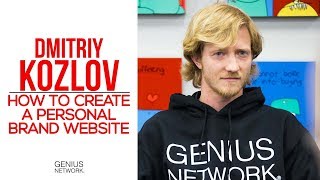
Joe Polish and Dmitriy Kozlov discuss building personal brand websites that align purpose, perception, and personality. Key structure: power statement at the top, your story, credibility markers like media logos, then content that proves your value before asking for anything. Kozlov says entrepreneurs should build early for post-exit opportunities and speaking gigs.
Chapters
Hello, this is Joe Polish, and I'm here with Dmitri Kozlov. Yep, from Russia. Can you say something in a Russian accent real quick?
I'm so happy to be here, Joe. Thank you so much.
Okay, that's. And how do you know Gracias?
That would be a Spanish word.
You'll totally throw me off if you speak in any other language because I'm clueless. I have no idea. But we've got my little. I don't even know what this is. Kind of like a snow thing with a young version of me. But we're gonna have fun today. So. Dmitri Kozlov is a serial entrepreneur and spoken word artist with a passion for fusing artistic expression, online marketing and entrepreneurship. Through his primary venture, Influex, a boutique creative agency that creates results driven influencer sites, Dimitri has created the personal brand sites of some of the top online influencers, all of which are my friends. Dimitri is also passionate about empowering the next generation as the co founder of Maverick Next and an accelerator network for young entrepreneurs to get mentorship and peer support to write their next greatest entrepreneurial chapters. Using his life as a canvas for artistic expression, Dimitri's journeys from high level mastermind groups to Burning man to the jungles of Peru to nomadic travels around the world continue to expand his creativity expressed through his poetic performances and innovative influencer sites. So what didn't I say about you that people need to know?
There was a lot there. Yeah, I mean, I think you covered it all in a pretty short bio.
Yeah, yeah, yeah. And you're a cool dude. I mean, we just had a great time at the Genius Network meeting that just ended. And I'd like to get into something about personal brand sites. And what's interesting is I don't know how much of my rap you've ever heard about branding. I mean, I think there's so much misinformation that is fed to small business owners about building a brand new and so much of it is ego based that it's easy to sell anything. That's like build your ego, build your name, build your brand. But I see so much money wasted in it. And of course you have a background in direct response and making offers and knowing that the purpose of having a website is designed to actually get a response and all that. So I'd love to have you even like, I've written some questions to make sure that I cover, you know, all of it as much as I can, because I really do want this conversation to be real valuable for the listeners if they're listening on my podcast or if you happen to watch this online. So for people who don't know what you do, how do you describe what you do and the results you guys deliver?
Right. So we create what we call influencer sites. So the name of the company being Influex, it's kind of like fusion of influence and expression. Yeah, I look at influence as, you know, Robert Cialdini's book Influence. Everything around direct response and even just what makes people make a business decision. I look at. That's the whole category of influence and expression is more of, like, brand essence or personal essence. And you have a very particular expression that's outside of just what your effectiveness and direct response is. And people who walk into a genius network event or a meeting start to get your essence and get your expression.
And.
And I think that they make a decision to buy or make a decision to be part of your world very much for the essence and expression reason for who you are and being excited to be part of that as much as they make it for the specific, specific marketing communication of what the benefits of being part of it are, where you sell them that and then you give them a lot of that expression in essence. So what we do is we get people's essence. We kind of like do essence extraction and then essence expression through design, branding. In some cases, we write some of the copy for our clients as well and combine that with influence, which is really just understanding what's the primary purpose of the site. Is it to generate leads? Is it to get more speaking gigs? Is it to get more people into the programs? And we have those two work together because I think essence and being really authentic in your expression influences somebody's decision just as much as the right marketing tactic and the right things on a website in the right place. So we kind of fuse those two as we create these influencer sites.
Great. So, like, you know, I started my marketing business before the Internet even existed. So in my world, I always had to first focus on the psychology. And then all this new technology came into being. And I still look at how you position and sell something very similar. Something I learned from the original guy I got introduced to Direct Response from, which is a guy named Gary Halbert, who was this crazy, wacky, brilliant copywriter who became a good friend of mine. And people either loved him or they hated him because he really could piss off a lot of people. He was erratic as hell, but the guy just was a brilliant wordsmith. And he would talk about there's three things you need in order to sell something, you need a product or service, you need a sales pitch or a marketing message, and you need a delivery system. And so even today I think of what's the product or service or the experience that you're selling, it could be a cause, this could be for a nonprofit, it could be for anything. But let's just keep it in the world of people actually have something to sell. I mean, it could be people that are trying to raise investor capital. But at the end of the day, it's easier to put things in the context of I've got this thing, this product, this service, and I got to sell it to someone. So what most people have always focused on is what they do and then how do you tell people about it? And the middle part, the marketing message, the sales copy, the sales pitch, if you don't know how to assemble that, there's a ton of places where you can talk about your product or services. Back when I first learned marketing, it was yellow pages, direct mail, postcards, tv, radio, magazine advertising, newspaper advertising. Today it's every form of online social media websites that you could imagine. And so what I think of, even when websites first started, I thought of a website as an electronic brochure. You're going to be looking at something, but it's still going to say something in the copy. And what you say is how you position it. And I would always teach people when it comes to using advertising that the difference between a $1 bill and a hundred dollar bill is the message on the paper. Same paper, same ink, different message. And if you were to look at a screen, think of it as real estate. What are you going to build there? What is it going to say? So as we get into this, I'm going to make the assumption that most people are never going to give you or I a penny. We're just going to provide a service here for everyone listening and we're going to guide them. So whoever they hire, whatever they do, they're going to have a better chance of taking their website or whatever they're doing with their communication and building, as we call it, their personal brand. And it's going to be more effective. But people can hire you if they want. I pay you money. You're a client of mine, I'm a client of yours, which is great. What I want though is I want real people to actually understand the distinction. So I guess why should someone have a personal brand site? Why does it even matter?
Right? So firstly, there's different classes of people for who it matters. And there are some people, especially right now, like the coaching consulting expert industry is huge. And there's a lot of people stepping into building careers around what they're selling is their personal skill sets more than a specific product or service or that service is attached to their personal skill set. So for those people, obviously it matters because their name.com is is like the center of your online universe, right? Even if somebody sees a Facebook post or they see an ad or they just hear about somebody from speaking on stage, they're googling oftentimes that person and the first thing that comes up is for most people, usually quite embarrassing. And that even goes for major influencers. Whether somebody is like a coach consultant, doing something with their personal brand starting out or their major influencers. Like a lot of the people you listed and you and many others who we've worked with, when we first look at the site, it's not representing who you are in person and it's not doing what it needs to for your business. So for a lot of people, you have your whole team has o Polish email addresses. When somebody Googles Genius Network, your personal site comes up. And it's the same for most people, whether they're independent, right? Coaches, consultants, authors, speakers. Or if you have a business that isn't directly sourced from or connected to your personal brand, but it's its own brand, very oftentimes it's still connected to a personal brand or personal reputation. And just like personal reputation damage will harm the brand itself. Like, for example, I'm looking at your bookshelf. There's Branson books.
I don't know why there's Branson books on.
So if Branson started doing things that were really damaging to his personal brand, it would affect people doing business with Virgin companies.
I'm surprised at all things he's done that that has not happened too much.
Well, he's polarizing. He's authentic. So people that want to do business Virgin are people that like how Virgin and how he shows up in the marketplace. There are certain people who are, just because it's polarizing, they're like, hell no. That I don't support that. And he doesn't want those people. Which I think is also really important in a personal brand is to determine it's authentic. It's what you stand for and who you are for you. You'll talk about addiction quite a bit in Genius Network. And for people that are turned off by that or just like, listen, I want nothing to do with that conversation. It's like, cool, you don't have to be a part of this. But for most people, they're, like, cool either. They'll maybe some people tolerate it, but I think most people actually love that as part of the conversation, love that it's open and authentic. So we're getting more into, like, the tips here. But I think it's important to be authentically expressed in a personal brand and not really fear that, oh, this is going to hurt my business, because then you're going to have a neurosis no matter what. This is who I am versus this is who my business is, and you have to hide. Ideally, this is something that gets you more congruent with your business message and your personal message. So I think it's whether somebody has a business around their personal name or if somebody has a business that has nothing to do with who they are at that time, but there's a brand that they have out in the marketplace, who they are personally as a CEO and founder will still impact either positively or negatively. And you get to choose that. The success of the business and the reputation of the business.
Well, I mean, I think there's a couple things based on what you said that are important. If you try to portray yourself as someone that you're not, and, you know, it's easily found out that you're not that way. You know, don't sit and try to, you know, build a whole business about pontificating positive messages if you're really an asshole behind the scenes. You know, I mean, if you like an example, Larry Wingett, who's a buddy of mine, he's very polarizing. And he watched. There's a comedian. Some people that are younger may not know the comedian, but Dennis Miller, who was watching on TV years ago and he was. Larry Winget was this professional speaker wearing the suits, doing the whole thing. And he heard Dennis Miller say, I'm not very endearing. And for some reason that just hit him that I'm not very endearing either. I'm not an endearing person. And so he created. He's like, I'm just going to be me. Started wearing these crazy clothes. Shaved his head, earrings, big bracelets, all this crazy boots. I mean, if you've never seen Larry Wingett, he's a character. You can watch one of my interviews with him on video. I do a whole tour through his boot closet, which is funny, but he just like. He's just really hardcore. And it's very congruent with who he is. But a lot of people that I've even heard People say this. This is what I want to portray. This is who I am. You, you know, on stage in my brand. But that's not who I am as a person. I'm like, well, why the hell would you even do that? That just seems like a pain in the ass.
Yeah. The incongruency becomes painful.
It's like trying to remember lies, you know, it's like trying to pretend to be someone that you're not. And so, you know, if you wanted to create characters and all that, or, you know, some people are like, well, what if my real me is like a shy, introverted, scared person? But I want to, you know. Well, first off, there's ways to build your Persona around that that can become, you know, very approachable by very many people. I think the reason a lot of people resonate with me in the field of addiction and recovery is I'm so open about talking about all of my struggles, talking about all the shit that has happened in my life. And a lot of people, I think, find it, find me real. And I really hope that I come across that way and there is a time and a place for it. Most people, not all, but most people have drank beer. Most people at some point in their life have gone to church, but most people don't drink beer in church. So, you know, there's a time and place on how you portray yourself. But at the end of the day, whatever you build your business and your brand around, I really should be around you, who you really are. David Ogilvy, who's one of the greatest advertising minds in history, he wrote a book years ago called Ogilvy on Advertising. And what he said is that brand is the personality of your product or service. And I've always liked that sort of definition because there's a lot of people that talk about brand. And I always say, you know, you can't deposit name recognition in the bank. You know, a small service business is an example or a small company that doesn't have the, you know, the ad budget of an Apple Computers or a Coca Cola or a McDonald's. They're not going to build a global brand just by having logos.
That's why it's so vital. It's to. To firstly fuse it with the direct response elements and to do what works. And then also for brand to be not just something that you invent and create. It's not just a blank canvas project. It's more of a what's the essence of your brand? Or if you're a personal brand, what's the essence of your personality, like who are you and what are the most important parts of that essence to display and express out to the world that will actually resonate with people that want to do business with you.
Yeah, gotcha. Good, that's great. So, all right, let me go see some questions here. What advice do you have for entrepreneurs who have built great brands, products, services companies and so on, but who don't put intention into building their personal brands?
Yep. So this has been such a interesting conversation lately with some really successful entrepreneurs who've built these really big brands and now like, wow, what's next for me? Because eventually they exit or they sell. And as entrepreneurs there's still something next that they want to do. And in many ways their personal brand is that thing that they build. That's what they're known for. But there's an evolved expression to that.
Yeah, I got you said something real important. Sorry to interrupt. Although that's part of my brand. I just interrupt people and it's, I think even the website you're building for me, which is we interrupt like as people scroll through. Kidding. That doesn't happen. Although I'm thinking that could be a strategy here. You said if they're entrepreneurs, if they sell, they usually want to do something else. Well, here's a real easy way to find out if you're not an entrepreneur, if you ever sell your company or you have this idea of retiring, you're just not an entrepreneur. None of them want. No true achievement minded entrepreneur ever wants to stop. And people think it's about the money. Money, of course, is important because that's how you actually create a team and that's how you change the world and that's how you do what you need to do. It's the fuel that drives the engine. But at the same time, the entrepreneur is always going, so what's that have to do with building a brand? Well, you're always growing.
So anyway, I believe entrepreneurs at heart most of the time are artists or they're creators in some way. And their external, their businesses are expressions of whatever it is that they're creating. And usually within a few years, oftentimes whatever they created, they'll want to move on to the next thing. You talk about all the time being inspired by new projects. What allows somebody in the marketplace to start new projects faster is if you have a really great personal reputation, personal list outside of what is built just for that specific company. Because if that company sells the list, the brand, the audience, all of that goes. And now you're an entrepreneur who's, you've got that exit under your belt, but you're kind of starting from scratch as far as your public reputation goes. Now there's people who know you for what you've done, but now you've got to build that from scratch. So, perfect example, somebody who we're supporting with his journey right now. So Michael Perella with I Love Kickboxing and his other fitness businesses, you know, huge success in that industry. And that's been a chapter and he'll continue to serve that industry. And there's the question for him of, okay, like, what, what is next? How do I. How do I serve in a bigger way? As whether it's this chapter comes to a close or whether it's like, I'm taking all my skills from this and want to. Want to do, go into the next thing. And for him, as it is for many other entrepreneurs, it's not like, hey, I want to build another brand or another company. It's I want to use my personal skills, wisdom, all the stuff that I've gathered and garnered from all of these experiences to impact other companies or impact the world. Write a book, you know, with Tucker Max with bookinabox. So many of his clients are people who've built successful companies and now are saying, hey, I want to take all my experiences and publish a book around it. So what I've seen many entrepreneurs. Cameron Herald is a really great example of this as well. He walked a particular career path so he could build a few companies playing an executive role to nine figures so that he could coach entrepreneurs afterwards. That was actually his dream. He just wanted to build the experience and the reputation publicly. So he was really smart at doing this because he built his personal brand the whole way. Many entrepreneurs, Michael included, and many others. There's another Mike that I talked to recently who has a company called CEO Warrior, also sold and exited from a business and now is like, hey, how do I position my personal brand alongside this other training company that I'm doing? So the advice is start doing this sooner rather than later, because at some point you're going to want to do it.
Yeah.
You know, for you it was, you know, Piranha Marketing, all the different expressions of that, and then, and then Genius Network and other brands and projects and all these things you've been involved with. At the center of that is Joe Polish. And if all of those brands went away, you'd be like, well, I'm still Joe Polish and I've still got my personal reputation with the world. And the emails that go out go out for me. And everybody knows who Joe Polish is. And if every one of your brands and companies all of a sudden just got destroyed for whatever reason and you had to start fresh, you still have your personal brand reputation list audience. So I think it's whether you're focused on building a business that's right now in a consultative or kind of like a speaker, author, whatever fashion around your personal brand or not, or you're just building a separate company, start that process sooner than later, even if it's baby steps. And then the additional benefit of that, too, is you end up, if you have a great personal brand presence, you end up getting speaking engagements, more media and pr, because most media and people who run podcasts and all of these people, they want to talk about. They want to talk to the person, they want to interview the person, they want to write the story about the person and their entrepreneurial story more than they want to write about a company or a brand. So it opens you up for even greater media exposure for whatever external brands you're building, if you're building a really solid personal brand and sharing your story with the world. Right, right.
Yeah. And you know the interesting thing, too, because you take Genius Network, which is one of my main things, and so much of my life goes through Genius Network, the organization, but also the activity of genius networking and being a Genius Networker and all the different ways that I talk about it. And I've never wanted Genius Network to be known for Joe Polish. I wanted it to be known for the people that are in Genius Network. And I think it has that reputation, although currently I'm the one that runs it.
You're a catalyst for it.
Correct.
You're not Genius Network, and Genius Network isn't you, but you're a catalyst for growing Genius Network, and then Genius Network then supports your personal reputation and connections as well.
Yeah, exactly. So, no, it's a good point. So what are some key questions people should be asking when creating their personal brand sites? Meaning how should they? Because I'm sitting there again, going back to, if someone never has an opportunity beyond hearing us right now to think about this, how would they feel equipped to know what to do?
Right. So I think there's three lenses that we look through, and I have a cat on my shirt here. That helps.
Yes, you do.
Remind of this.
That is a cat.
So the three lenses are purpose perception and pursenality. So purpose, perception, personality.
What kind of drugs were you on when you first gave up with that sort of analogy?
I just, I love cats. I give this presentation. When I give a presentation like this on stage, I tell people that three things about me. One of them is I like cats and poetry. And I end up doing spoken word performance at the end of it. But I use all these cat puns throughout because it's fun, it helps people remember. And for me, it's my, it's part of my little personal essence. People who know me well know that I like cats. So purpose, perception, personality, right? There's other ways to say that, but this is easy to remember.
That's great.
So the purpose piece of that is just asking what? And asking this for the site as a whole and asking for each section and each page of the site, what is the primary purpose of this site and the secondary purpose of this site? Like, what do I want somebody to do? Oftentimes people start design without ever answering that question for themselves. And then people waste tens of thousands of dollars trying to create a website that doesn't achieve a particular purpose. So, you know, asking that first and usually for most people it's I want to build my list. And whether it's I want to drive people into a particular program and drive applications, or it's I want more speaking gigs, right? I want more media exposure. But asking those questions and then building your entire site around that as a purpose because it'll tell you where to put what buttons, what navigation you should have, how the homepage scrolls, a lot of the copy that you should have if you just ask the purpose. And part of that purpose question is like, for who? Right? Who's going on the site and what do I want them to do is what is the purpose of the site? So 2 is perception and perception is this is the fun balance of, you know, what do you want people to experience you as? And it's not being inauthentic because the third is actually personality, which is being authentically yourself, but it is that how you're perceived matters and you get to intentionally control that perception in a way that's authentic to you. But Neil Patel has this really great article. It's like how spending $162,000 on clothes made me $692,000 or something. Something like that. And he did nothing else different. He started going to his sales meetings, his high level B2B sales meetings, did nothing else different, but started wearing super high end clothes. And his conversions increased and his overall just top line sales increased and just same presentation, same personality, same everything.
Interesting.
So the difference was how are people experiencing and perceiving him. And it wasn't like those clothes were any more or less authentic to him than the clothes that he was wearing before, but people were experiencing him differently. So it's the same online. I look at your website as a representation in many ways. It should be an expression of who you are in person.
This is very interesting what you said too, because there's ways that how people try to portray, be it class or wealth or you know, peacocking or, you know, there's a million different ways that you can categorize this. But we have a genius network member who's been in the group for a few years named Deving. And he is an Indian guy and he's a financial advisor, he's a wealth advisor and he owns a bunch of franchises for different investments that he has. And I think he has a Ferrari, a Bentley and I think a Rolls Royce. And he buys these cars, parks them to where his office is, where he has all these other advisors. And once he started doing that, all of these other people started doing business with him and working with him. That did not. And he's actually explained to me how by buying these cars, it just has made him more money than what it even cost him to buy these cars in the way he's positioning it now. What I get afraid of when I say stuff like that is people are under the belief that, oh, if they go and buy something expensive, especially if they're not in a position to do that, that that somehow is going to translate to money, which in many cases it doesn't at all. Unless you actually are strategic about how you do it.
Right. It should be intentional, it should be congruent to where you're actually at. But I think the reason I share this so often is most of the time people's sites are incongruent to where they're at in just an underselling and negative way. For most people, again including a lot of the influencers we mentioned, we know who they are. And if you go to their sites you're like, this is a joke. Some seventh grader threw up a WordPress template with some broken links. And this is this person's website who's supposedly this major influencer. And it does damage first time experiences and first time perceptions. And if that's the case, imagine for somebody who's not, you know, who's not a best selling author, but who is selling, you know, maybe it's $20,000 consulting packages or who is saying, hey, I'm a really great speaker and I want to speak in front of your corporate audience and they're selling $10,000 speeches, which there's many great speakers out there who are really wonderful speakers who, if you go to their website, you can, it does not remotely represent the level of professionalism or brand and all of that. They are. So that's where perception comes in, right? It's if I'm booking speakers and I'm going on there and the person has a total joke of a website and I don't even know where to click to book the person and I can't see testimonials that they're speaking and I can't download their media kit and all these things aren't there and they're presenting themselves as a speaker, I will make the assumption that they're probably not a professional. And if I go on the site and I see, you know, a beautiful speaking reel and I see some great photos of them speaking and I see their bio that I would put on the, on my event site and I see some testimonials of similar companies like mine who have hired that person to speak. And then I see an application that says, you know, like some details about my event to get in touch with the speaker's assistant. Now I'm like, it could be the same exact quality of speaker, but that perception, what that, that site is now creating a perception of professionalism and something high end that I'd want to pay money for.
Right? Yeah, love it. Okay, and so next is personality.
Right? So personality just really being authentic. You know, we talked about this quite a bit in our portfolio. Specifically, I like playing around with this. You know, if you look at like jopolish.com, frankkern.com, yannicksilver.com, they all follow virtually the same formula. And we can go into that formula a bit so that people could, as they're building their own sites, copy that formula for themselves. But it's important if you copy a formula which is just the structure of what goes where, when, which is guided by purpose, but also guided by just the structure that usually just works for most sites, that somebody isn't copying that formula while also trying to copy the design elements. Because Yonex site is, you know, a bunch of colorful doodles and literally the blog is like a journal and it's very yonic. Frank's site, you know, looks like a direct response ad and it's, it's black and white with a little bit of like red and gold throughout. It's very frank and it's very, it's very much like. It's more of like Ogilvy style, which is representative of who he is, but follows the same formula.
Yeah, totally.
And then if we look at your site, he. It's more like walking around the Genius Network office where it has an air of professionalism but also fun and artsy and has some of the gaping void style imagery on there and uses a lot of great photography of both like you and the events. So each of them follows the same structure, but each of them expresses the personality really differently. So for somebody building their own site, or let's say, you know, you're working with an agency or a freelancer, giving more of, hey, this is my essence. This is the stuff that's really fun for me. This is the stuff that's important to me. In addition to these are the goals that I want to achieve with my site will allow that site to be a much more authentic expression of who they are. And the impact on the audience is that people will be more likely to experience them through that site and therefore more likely to buy or subscribe because it's not generic, it's not a copycat, it's that person and their expression online.
Gotcha. Gotcha. No, so that's good. So purpose, perception, personality. So typically you talked about structure, but they're all informed, being formulaic. So if you were to just look at great sites out there, what would be the structure of a great site? And walk us through any other things that like a great homepage, what it should look like. There's one thing what it should do, but also what it should look like.
Right. So most sites will follow this structure with depending on your purpose, some elements just rearranged a little bit. So the top we've got primary navigation, logo, left hand corner, top right hand corner. A really good thing to do because most people read sites like a zoo. So most people just like they land, they first look at the logo, they go to the right, they go to the center and they go to the right again. And this is all above the fold and they're doing it subconsciously. So top right of the navigation. Oftentimes this isn't required, but especially if you're looking, if you've got a primary purpose that's like to get new gigs or to get people to opt in, it's putting the call to action on the top right corner and then somebody goes to the center. What should be above the fold. There's different ways of approaching this, but typically it's a headline or like a one liner, a power statement that represents who you are and the value to the person for why am I on this site? So for you, it's ELF versus Half. Now we've got a few different expressions. So then we have the artist and recovery side of things, and we've got any problem can be solved with the right Genius Network. So we've got those slides that all represent different. Both expressions of you and benefits in short lines.
Yeah, but in business. And so to define it for people, ELF is easy, lucrative and fun. You can have an ELF business or you can have a half business, which is hard, annoying, lame and frustrating. And my thinking behind a lot of it is, you know, I started teaching ELF marketing strategies, which are all robotic and automated things, you know, well over a decade ago. But my new marketing book, which we've been putting together, I mean, people have been yelling at me for not selling it to them. I mean, I've given it to Genius Network members even over the last year, but we've not released it yet because, for one, I keep adding things to it. And secondly, it's a big thing, but it's going to be a huge part of my personal brand. It's going to be a big part of what it is that I'm doing. So I'm very much thinking about the future here as we convey stuff.
Right, right. And the ELF versus Half really represents so much of what Genius Network is and your marketing programs and everything. So I just use that as an example. But for, you know, for Frank, his headline is, I think is like the fastest way to profit or the fastest way to success or something like that is to turn advertising into profit, which is like, that's really what Frank's all about. And if you're on the site and if that doesn't interest you, you're probably going to go away. And if you're on the site and that's the thing you want to do, you're going to restart reading his articles and opt in. So it's having a really good, I call it like a power statement, a one liner, a headline with a combination of who you are and the benefits of somebody being there, then still right above the fold is the initial opt in. So we call it like a transitional call to action. Like if somebody's not doing business with you yet, but then they're. I mean, everybody listening to this podcast probably knows what an opt in is, but something that's ideally connected to that top statement that gives them value. So the more connected it can be so for you, there's the elf versus half and then giving away the first chapter. I think it's a couple of chapters of your book, and it's directly connected to that top statement. So they're like, cool, this is what you're about. This is the value I'm here for, and I can immediately get it right now. And now you've accomplished the first major thing that you want people to do, which is opt into your site.
Right. Let me break this down because I want to ask you about this too. And some of this for experienced marketers will come across as basic. But it's such important psychology to kind of get and understand it. I mean, when I first started learning direct response and even making a differentiation between image advertising or brand building versus direct response, where before the Internet existed, there was, let's get our name out there. I want to get our name out there. People would talk about how many hits they would get on their website when websites started coming in. I always love the term that what hits stands for is how idiots track success. It's like, okay, great, so you have a bunch of people visiting your site. But one form of advertising is designed to get your name out there. The other is designed to get your name out there and get a response back. And if you do direct response, effectively, you not only can build a brand, but you can also be capturing leads. You can be, you know, lead generating and, you know, way before Seth Godin ever wrote, you know, permission marketing, you know, when I was starting my carpet cleaning business and so many direct marketers back in the day, they would have response mechanisms to, you know, generate a lead to get someone to raise their hand. When I was running a carpet cleaning company, which I learned all of marketing, never thinking I would teach it to anyone. I learned it because I needed to survive. I would run ads that said, warning, don't call any carpet cleaner until you listen to this free recorded message. And people would call in and they would listen to a free recorded message or call and request A Consumer's Guide to Carpet Cleaning. And instead of yes, I want my carpets cleaner. No, I don't. It's like, I'm interested in reading this guide. And then it became a lead generator. And then, of course, Dean Jackson invented the squeeze page in 1997 with an ebook called Stop youp Divorce.
And.
And so it was the first time anyone ever put a website together where in order to get to the next page and read more, you have to enter your, like, the key. And so if you think of it As a key to open the door and get to the other side. That's great. So my question to you about all of that is, you know, most people don't buy what it is you're selling by visiting your website. They visit the website initially to explore and then you capture information from them so you can start a dialogue with them. So instead of doing monologue speaking, you're doing dialogue. And that's where lead generation comes in. But there's a lot of people that are like, I don't want to put an opt in, it's going to be intrusive or whatever. And there are ways where you can make a website too salesy, I guess, although I hate even using that term because if you're doing your selling effectively, it doesn't even come across as selling because people love to be sold, they hate to be pressured. So in the context of websites and technology and how like what are the right and wrong ways to do opt ins, right?
And this is a really great conversation because we're not talking about somebody driving traffic to a squeeze page where the only squeeze page is great because the only thing somebody can do on that page is opt in or leave, right? So you're very directly just seeing is this person interested in this or not? And if they're not, they leave. And if they are, they go through the rest of your sales process and funnel and relationship nurturing. If you're doing it right with a website, specifically with a personal brand site, it's kind of like this is our first above the fold invitation. So you say, hey, this is who I am. This is the value I provide to you. Here's how you can start getting that value. Now a lot of people will scroll right past that, which is totally okay. Which next section is ideally starting to build the relationship with them. So on a personal brand site, it's going to the story which isn't. And ideally you can have some credibility above the fold, right below the opt in too. Like you can put the media logos that you've been featured in or a couple of testimonials really useful to put right beside the opt in. So if you have the opt in and then the media logos below that or the testimonial below that, especially if you're not super well known in the marketplace yet. Now it's somebody saying, hey, I'm giving you my email address and you're trusted by a lot of people and they say this thing is valuable that you're going to give me. But right below that it's now you have an opportunity to really like, you've shaken their hand and you've said one liner of this is what I do. And now you have an opportunity to bring them into your story.
Yeah.
So for. I'll keep using your site as an example because it comes to mind there. Then we have the quote on top that's like, I think from Deborah carpet cleaner to one of the most connected businessmen on the planet, which is a different story than before it was. Here's all of Joe's accomplishments.
Right.
And that then brings people in. Then there's a little section on the homepage that has that quote picture of you and then a little bit of information about who you are that combines story and credibility. And then there's a button to read more which goes to the full story page for story. I really recommend for people starting that about page with story. Compelling story versus credibility, because there's other ways to build credibility than listing your own accomplishments on your own about page.
First off, I totally agree with what you're saying with story. And the reason is because believability is infinitely more valuable when it comes to selling and engaging people than credibility. Because there's a lot of people that aren't very credible, but they're very believable. And. And there's a lot of people that are incredibly credible. I mean, they're solid, they've done their research, they're documented, but they can't sell their way out of a paper bag because their story sucks.
Right. Right. So it's like there's things we do on the site that build authority, and then there's things you do on the site to build connection and the story. The purpose of the story in your about page and your story section on your homepage is to build connection and do so authentically. There's other pieces which now as you scroll down now, we can put, hey, here's some more testimonials. Here's some media appearances. If you're a speaker, you can say, you know, I'm the chosen speaker of these organizations. And if you're just getting started, you know, you'll speak at some schools and put those on there. But. Or if you've got, you know, if you've got a service business, here are the clients that we've done work for. But doing so either right above or right below the story, but not mixing your about with credibility too much.
Gotcha.
Or you can do it in the same section. Like for you, we've got, hey, here's the story headline that creates connection. And then here's the media logos as part of that same section. So there's authority and connection. And then as somebody scrolls further down, now that we've given people the one liner and said what we're about and the value for them, we've invited them to opt in. We built connection through a story. We've built credibility through a combination of testimonials, media logos and all the other forms you can do Facebook screenshots, all the other forms of credibility. We don't need a ton, you don't need a stack of them on the homepage. That's what a testimonials page is for. But like three or four really good ones. Then only after that, then we can say, hey, here's the main thing I offer. Because now we've built the relationship and for you it's, it's, here's what Genius Network is about. For many people it's just, hey, I work with six figure entrepreneurs to help them scale to seven figures. Click here to find out about my coaching programs, which we're not starting with that because if we start with that, it's kind of like who are you? And you're trying to sell me coaching. But now that we've built the relationship, built credibility through story and authentic connection, now we can say, here's the, now we can say, here's an opportunity to work with me. And this is still on the home page. So it's kind of following the structure. And then from that it goes into the footer, which the footer on a site is. It's funny that for so many people building their own websites, it's a throwaway item. They throw some links in there and there's a couple of social media links and it's whatever. But if you think about it, it's at the bottom, bottom of every single page on your site. It's at the bottom of every blog post, your about page, your contact page. Literally built into the default of all site templates directly on every single page. So this is where you can get really intentional. Just like you're getting super intentional about the header of the site, you get intentional on the footer. So the things you should have there are firstly, something that reestablishes connection. Ideally it's a photo. So with you it's like we've got a photo of you in the background and, and that's what we've been doing lately with most influencers. And somebody building their own site could easily just put another more playful photo of Themselves down there. So up top they're probably a little more professional. Down at the bottom they're probably a little more open because you've built more of a relationship. And then the transitional call to action, the opt in again down in the footer because again, this is on every page of the site and people are scrolling down to it. So now they're on your site, they read a blog post and at the bottom of the blog post, now they have an opportunity to opt in again. They read your story, they have an opportunity to opt in again. So this is why bringing it back to the opt in conversation. Yes, we want it above the fold and no, we don't really care that much if somebody the first time on your site within the first 30 seconds opts in above the fold because that's just the first time we're making them this offer. But now it's going to be all over your site and built in in a way that after you've built connection, you're giving people the invite. Top 10.
Gotcha.
Gotcha.
No, that's very good, Very good. So the thing that I think about a lot is the whole. And me and Dean Jackson did a whole episode on this. We even did a great conversation with Dan Kennedy, the curmudgeonous marketer who I've known for years. And so Dan used to write a lot of my sales copy for me in the early stages of my marketing info marketing business back in the early 90s and later 90s. And there's the whole thing about when you're first starting in business, you get paid for what you do. And then if you do a really good job of doing that and you start building a great reputation, you start getting paid for who you are. And, and so in the beginning you do a lot of what ing. And then as you grow, you do a lot of hooing. And so as people, what I see as a mistake is that people that have really not yet established anything valuable, but they try to portray themselves as like a big deal or that we've done this or we've done that and it's just total bullshit. It's this total fluffery. And like Richard Branson as an example, I mean I've interviewed him probably more than most anyone. I mean, we've got hours of video on Necker Island. Most of it's never, well, 99% of it's never been released to the public. But you know, I've got a couple of great videos with Richard online and stuff. And I tell people all the time. You know, Richard doesn't even need to do anything at this point other than just be Richard Branson. You know, he gets paid for just because he's Richard Branson. He doesn't even need to say anything that useful. And he's still going to get a big check just to show up. And he turns down most of the invitations and most of the offers and that sort of stuff. So he's a who for people that haven't gotten there yet and they need to bridge this gap. What are some of the mistakes that people make with that, if we want to call it that, or what are some of the things that people could be doing until they. Because a lot of people have a real fear with like even people that have accomplished stuff. Some people just have a hard time talking about it. And then other people who are arrogant or egotistical or delusional actually think that they can just call themselves the world's greatest whatever. And somehow that's going to translate into flocks of people coming to seminars and stuff. So just some of your thoughts on that.
Right. So there's two things here, and I'll answer both very tactically. One is I actually missed a piece on the homepage which is really relevant to this, which is giving people content. So right on the homepage we should have, ideally it's blog or podcast or even if you just write three really value driven articles so that you're giving people value directly. And this is ideally before the here's how you work with me section. And I think that this is a really key thing for building a personal brand or a company brand that it's not just talking about. You know, Frank Kern has this really great thing. He says, you know, there's three ways to show people that you can help them. One is to tell them that you can help them. Two is to have others like testimonials show how you can help them. And three is to just actually help them.
Yeah, that's what I do in my podcast. Literally, we just help people.
So it's a really important thing. And you know, we go on again, it's on joepolish.com, there's the 10x talk, there's the I Love marketing podcast. There's all the stuff, all the free content that you put out to the world. And I think it's really important for people, even if they're not content machines, to just take some of their wisdom, put it into some really great free materials online, include that on the site, make that really easy for people. People to access. Because if you can't do that, then all the other stuff isn't really worth doing because it's not worth trying to build up who you are and your perception and your brand and all of those other things. If you can't actually offer people some value. Now, if you can offer people value, then all of that becomes the container for that value. And that value is what gets shared and people connect with. So the second thing is, and this comes from one of my favorite marketing books, it's called Building a Story Brand by Donald Miller. And the second thing is this is the whole lens that you actually want to look at this personal branding process through, which is that you are not the hero of your journey. So if you look at it all through the hero's journey lens, you are not the hero of your journey or of the journey here. You are the guide to the hero. So building your whole personal brand site and personal brand presence, it's, you are the Yoda to the Luke Skywalker. You are the Morpheus to the Neo, right In the Matrix.
One thing I even say all the time when I'm giving people advice on coaching is this line, don't be a sage from the stage, be a guide on the side.
Right? Right. And the reality is, most people out there who are entrepreneurs, they're heroes of their own journey, they can come across a really great looking brand. And if you're playing the hero, they say, wow, that's so inspiring. Everything Joe's doing is so awesome and what a hero. And I'm too busy looking for a guide right now. And I'm looking for my Yoda. Right. I'm Luke Skywalker. I'm looking for my Yoda. I'm looking for somebody to guide me in becoming the Master Jedi. I'm not looking for another Master Jedi who's going to talk about how awesome he is. So I think that's really vital. Regardless of where you're at in your own hero's journey, the important thing is to ask, how can I be a guide to the people I'm looking to serve? And whether that's through content, whether that's through the copy on the site, and this is really important in even the headline, the story, you choose to present all the perception pieces, which is you don't want to give the perception of just how awesome you are, but you want to give the perception of who you are in respect to helping somebody in their journey get to where they want to go. And ideally, you have your ideal person that you're supporting as clearly defined as possible. And that's what again, what you do really well with the 10x talk and the I Love Marketing podcast is that people are looking at this and it's not about how awesome Joe is, it's about I'm listening to this because it'll help me get from where I am to where I'm going. And same thing with Genius Network. It's not about celebrating the awesomeness of you. It's about helping building a better entrepreneur. And there's also people who don't, you know, who don't do this as well, who through their ego attract people who are attracted to that kind of marketing and you know, without like naming names. But there's definitely people out there who there's a much more like ego and I'm the hero. And very rarely, but sometimes they are very successful at what they do. And typically they're also less happy because of the people that they're attracting. Aren't people who are as much on their own hero's journey and looking to create something greater their lives. But they're usually stuck and going to stay stuck, which is why they just want another hero to look up to.
Yeah, I'm trying to think what is the name that came up with the model of power, achievement and affiliation? And there are some people that are very power personalities that attract a lot of affiliation people. They want to be around that energy. And, and here's the thing too. I mean there's no way for me to say in all contexts this is right or wrong. I mean, certain people go through different stages. I mean where most of my revenue comes from is people that are very achievement minded, people that are very much givers versus takers. I am very outspoken about, you know, life gives to the giver and takes from the taker. You know, if you're coming to Genius Network and all you're trying to do is do a business deal or trying to get someone to buy your shit or whatever and you're not willing to contribute, you're not willing to give talks, you're not willing to give the very best of yourself to a group that you're even going to pay to attend, then it's probably not going to be a good group for you because the ticket price is just for participation. And some people that they're just looking for business deals. There's a lot of other groups to join. The Genius Network is probably not going to be your group. And we're not going to talk just about marketing. We're going to talk about addiction, we're going to talk about workaholism, we're going to talk about health, we're going to talk about all kinds of crazy shit that all entrepreneurs have to deal with. And so some people, it's too close to that sort of thing. But there are people that, they have made a fortune and will continue to do so and will have giant audiences, some that are a thousand times the size of my whole thing with expensive cars, with women, with vacations, with yachts, with, you know, all the, you know, the trappings of fame and the mansions and all of that shit, which, you know, in certain contexts, if that's your game and there's a certain type of person you're trying to attract, it works very effectively. I mean, you know, like, when I was a young guy, I would probably have been more attracted to that than I am today.
Right. Well, that's where I think it's really important to know your audience really well, which is, you know, a lot of people, you know, a lot of, I'd say people that are like more professional. What, what they do, like really will like, look at somebody like Tai Lopez and just be like, wow, this is, this is such a joke. Yeah. And that is definitely inappropriate perspective. Like why this guy is just like, like, you know, Lamborghinis and beautiful women and this and that. And he's using this to sell his products and programs. But then if you look at the impact that he's actually having is he's targeting personal development programs to, you know, for the most part, your 19 year old kid who otherwise might sit there and just smoke pot in his mother's basement for the next five years. And he sees this ad on Facebook and what he's attracted to is the flash, and then what he actually ends up getting is a lot of personal growth and development. And I'm not saying this like say yes, go market like Ty, but it's more like knowing, knowing if we're gonna use things to alter people's perception, what's the purpose of that and why are we doing it? And honestly, you and I can't reach a lot of those same kids in the same way, in a way that we're communicating because they're just gonna look at us and say, who gives a shit about the stuff that Joe's saying? But somebody who's approaching them with that can. The important thing is not to mistake that for if you're then trying to, you know, serve the world in a very different way, to think that you have to start filming marketing videos and taking pictures with Lamborghinis that aren't yours and displaying that on your website to try to attract a sense of wealth. But that's not actually what's happening.
Well, yeah, and I'll tell you, like, for him as an example, I don't know him personally. I mean, he's texted me a few times, but I don't know him personally. So I can't really speak to Ty. What I will speak to is that he knows his audience and he knows how to attract people. And there's a lot of people like that. And Gary Vaynerchuk knows his audience. Tony Robbins knows his audience. Mel Robbins knows her audience. Brendan and Frank, they know their audience. The thing is, and it's funny too, because I have different approaches to. Like, at this year's Genius Network annual event, I'm going to do a panel with millennials and Gen X people, some of the sharpest in the world, that have millions of followers. I'm going to bring together the. But I don't go and advertise it like that because this is the first time I've even mentioned it publicly. Because when people get there, it's like going, holy shit, this is like a big surprise. These are some of the most influential young people. And so there's all that sort of stuff that happens. But the point is, what's the outcome that you want for yourself? What's the outcome that you want for the people? And speak that way, because I've seen a lot of people that, you know, they try to serve a master that they cannot or be something they cannot. And I try to just take the, you know, the approach of, like, who do I want to be a hero to? Like in my current state of consciousness, this is what I like talking about. And I do weird shit. I mean, there's some stuff that I, you know, certainly if I was to use a car, I would use it in the context like we are right now. I'm giving away a Tesla and Ben Hardy's who wrote the book willpower doesn't work. 30 year old guy, number one writer in the world on medium.com willpowerdoesntwork.com we're giving away. I gave my Tesla, but I'm not shooting a ton of videos of me in front of a car thinking that somehow that's going to attract the type of client that I want because I actually want humans that can make a lot of money, can buy cars all day long and they've kind of gone.
Yeah, that's not their key motivation.
Exactly.
I think to wrap up the doing versus hooing piece of this wedding versus hooing.
Although the doing versus hooing, but yeah.
The wuting versus hooing. I think it's really important. The more you do what you do, the more you master your craft. And part of that is, I think part of this context is then sharing that with the world in a way that actually impacts people with consistency. Putting out content with consistency, actually coaching, consulting, whatever your craft is with consistency. And you do more and more of that. Firstly, it integrates into your who, because then you can just show up and you know that you have that gift to give because you've practiced that enough. And second, that's how your reputation gets spread. So ultimately, everything around personal brands and personal brand sites is that's the platform to, like, showcase who you are and what you're doing to the world. But the most important thing is obviously to just keep doing the thing and keep putting out the bringing your gifts to the world and whatever that looks like. And if you stop doing that, no site or marketing tactic is going to help you, make you a better who and make you a better, more highly paid invited speaker. But if you are doing all of those things, the right kind of branding, the right kind of site will just amplify and accelerate those areas so that you can go from the wedding to the who a whole lot faster than if you just stayed in the basement and worked your craft.
Right, right. No, that's great. That's great. So, okay, let's see what else I got for you. So what other pages should be on a great personal brand site? Like, what are some tactical suggestions?
So we mentioned the story page and just having the compelling story that connects with the audience. For most people, there's a speaking page, even if you're not out there trying to sell. Speaking, I think is a really vital piece to include for most entrepreneurs.
Yeah, you'd be surprised what people will.
Yeah. Even if you're getting invited to speak for free or you're getting paid to speak, usually that's something that helps to grow the business. A media page. Or it could be a speaking and media page combined. Right. To get invitations onto podcasts, get written about all these things. If you make it easy for a reporter to look at your site and say, cool, this is how I contact this person for this thing, or a podcaster or somebody running an event, you're more likely to get that. If you make it hard. Right. Then you're less likely to get those invitations. So like a speaking and media page or those could be two separate things. Obviously a blog and podcast, we talked about that on the homepage. But building that as an intentional page. Your services or products or programs page. Usually most people aren't going to buy your direct services, products, programs, consulting directly from your site. But oftentimes, especially if you're working in one on one or you're doing masterminds or something along those lines, you can drive initial applications because the site is building the relationship. It's much like you talked about with the nine word email. It's like meeting somebody at a Starbucks and building that relationship. A personal brand site is like if you're sitting down with somebody at a Starbucks and they're getting to know you, they're not necessarily going to buy from you right there. It's not a sales conversation, but they maybe will say, hey, I'm really interested in doing business with you. Let's follow up on a conversation. And ideally you have a services program, speaking page, or services, programs, products, offers page that invites people to the first steps of working with you. And then a testimonials reviews, really credibility page, like three or four of those on the homepage, but then a page where you just include as many of those as you have. So for you, we have like the industry recognition page where we got to do all the photos and the videos of, you know, people who say awesome humans who say how big of a heart you have and how awesome you are at marketing and all these other things about you. And I think that for most people, even if they don't have this major industry recognition, you can do something as simple as post on Facebook and say, hey, if I've impacted your life, will you please comment below and share that with me? And then you'll get at least 5, 6, 7 testimonials if you're doing something in the world, and usually a whole lot more. And then you just take screenshots of those and include them on the testimonials page. And then finally a contact page. A contact should be, I like to call it a connect page most of the time. And actually displaying social media with purpose on there. So versus just having, you know, here's my social icons, but actually having, you know, connect with me on Facebook to watch my live interviews, you know, check out my YouTube channel where I have my show, follow me on Twitter for inspirational insights, whatever those might be, versus just little links and then the contact form that makes it easy for people either to drive them Back to the speaking and media thing or to do business with you or whatever. Usually if you're doing it right for the mastermind applications or the coaching applications or the speaking, those inquiries will come in through there. But the contact form becomes this catch all for any other kind of inquiries for your site.
Gotcha. Those are great suggestions, great suggestions. Love it. All right, what else do I got for you here? So basically, how did you learn all this stuff? Like, I mean, you didn't just wake up one day and you're like, I know how to design websites and build a team of people that know how to do it and think about how things should be positioned and what they should say and write sales copy and all that. So how did you figure all this shit out?
In college I started the first domain I ever bought was dmitrykozlov.com easy to remember names, right? Right. One of those really easy to spell names too. And I started building a blog on that site. And then that led to a bunch of people I was doing a little bit of MLM at the time and some of the other distributors in that company started paying me to build these sites for them. That led to me then doing this more for small business owners. Graduated college, started building this agency, found James as a business partner. I really got into the direct response world through some of it was through studying a lot of online marketing that I initially found through like Jonathan Budd and Mike Dillard and that whole crowd that was kind of like on the fringes of the MLM world but getting more into online marketing. So that was kind of my entry point. Then I went to Yannick Silver's underground online marketing seminar as a YEN entrepreneur scholarship at the time. And then through a lot of connections there, started getting exposed to this whole world and the major influencers in this world. And probably about four years ago, Mike Dillard came to us and said, hey, can you build me a new mikedillard.com? and he had hired a really awesome expensive agency to start the process for him, but they didn't finish it in the right way. We finished and launched the site. He mailed it out to his list saying, hey, here's my awesome new site, here's the people who built it. And that led to just all sorts of people making requests for us to do this. And for the longest time we were doing some personal brand sites and then a lot of other stuff as well. So the way we learned, myself, my business partner James and our whole team, a lot of the direct response stuff was just we've been behind the scenes of doing so many people's launches, websites, funnels, all of these things for so many years.
Yeah. You just see what's working and what isn't.
Yeah, yeah, Yep. So. So that it's been really cool because we've been getting paid to learn versus having to go pay to learn. So instead of like, you know, going to events and getting mentors and direct response that. That we would be paying for, we were having those people as our clients. And part of the work, especially now that we do so much more of these personal brand sites, is Essence Extraction, which I look at as just really deep dive interview questions, much like you do on these podcasts, of understanding who somebody is understanding their work. And we've done that, especially myself, with like the Essence Extraction process, personally, with so many people that have so much wisdom and genius to share with the world, because I have to understand it so well to be able to express it in a design. So the craft itself has led to me mastering the knowledge and expertise around this in a way where we can bring it to the world for those people, oftentimes better than they were doing so themselves before we started working with them.
Gotcha. Gotcha. Well, okay, so what is your unique process for creating influencer sites?
Yes, our unique process is we start with what we call an Influencer intensive, where it's really a lot of information gathering. So it includes this Essence Extraction process, which for us is a bunch of questions.
Yeah, which I mean, you've taken me through this whole thing.
Yeah, for us it's a bunch of questions. Then we have the person get some professional photography. We have a guide for that. By the way, all the resources that we have, they're free on our website. So happy to just like, what I want for people to get from this process is improve the world of websites. So whether they ever hire us or not, whether there are other freelancers listening to this or just people building their own sites, just download our resources, swipe stuff from our portfolio. It'll improve the industry of websites overall. So there's this.
What's the best website for that?
Influex.com Spell that. I N F L U E X. Okay, so it's like influence and expression.
Gotcha.
We also have influencersites.com which redirects to that. So we have the influencer Intensive. That's step one that includes Essence Extraction. Getting your world creative clarity. Call with me where I really take all of the Essence Extraction and bring it into the clear messaging for how we create that then there's essence, expression, which is all design and in some cases messaging, and really taking all of the deep understanding that we have of that person and expressing it out to the world through our digital artistry and creating the actual design of the site. And then we have expert execution. You can tell I love alliteration. Yeah, yeah. So we have expert execution, which is what we call our development process, where we have a very detailed checklist of what and how we do development so that the site is something that expresses the artwork that we created for years and doesn't end up. It works perfectly on all devices. It's SEO ready. It's all the things that are important. Plus it's really easy for somebody to edit. So that's what we call expert execution. And then we just have a launch party.
So someone ever. How do people prevent themselves from hiring a company? They build something and then when, you know, they need to leave or for whatever reason, you know, they want to take it in house, they want to do something, you know, how do you assure that you're not stuck with, like, you're not trapped?
Right. The questions to ask in advance if you're interviewing a design agency or anybody who's doing tech for you would especially be around, what platform are they using? How easy is it for somebody on your team or somebody else to use that platform? So, for example, if it's WordPress, that's which is one large category right. Under that there's different tools that people can use. So making sure that you can even ask them for a demo. Right. Of like, is it easy enough for my assistant to be able to at least manage the site and if not, probe and ask why? And just really asking the question of asking an agency, what happens if we no longer work together? What happens to my site? And usually they'll have a really good answer for that if they're doing things the right way.
Got you. Okay, cool. All right, let me see. So you did this amazing spoken word performance, whatever you want to call it, I don't even know what the hell you would call it, but everyone, I mean, I got kind of goosebumps just watching you do your thing. It was really powerful. And when we ended a genius network meeting, a lot of people mentioned how intense that was. So you have this passion for fusing art, entrepreneurship, marketing, all of it together. And so what does it mean to you? And how can people kind of learn from your whole perspective of how you fuse all three of them together?
Yep. Yeah. I'll firstly say I believe that Most entrepreneurs are artists that are just artists in business and they're looking to express and create something. So I think just honoring that and not getting overly caught up in, just focused on, you know, there's an infinite business game out there. You know, you build a million dollar company, now you're in a group with people with $10 million companies and you gotta reach that, you're in that group and now there's people with $100 million company, but you haven't built to a billion yet, so you're not really enough as an entrepreneur. So I think it's important to embrace the identity of an artist as an entrepreneur. And that size and money is just a tool that allows you to do, to do more of what you want to do. But the artistry, like entrepreneurial artistry, is really important to embrace. And looking at it from that perspective, if money wasn't a thing, what is it that I would want to build and create? And then money is really important. You bring in the entrepreneurial element, but again, as, as a tool for you to amplify your expression as an artist. So I think that's the most important thing to keep in perspective. I've seen a lot of people create kind of a neurosis, a division between those two parts of themselves. There's an artist in them and then there's an entrepreneur in them. And they're oftentimes at odds with each other. So asking, even if sometimes it's an artist's skill, like they're a musician and then they're in a business that's like logistics and has nothing to do with music and they're looking to okay, one day I'm going to retire and sell this business and then I can go do music. I would encourage people to really ask themselves how can I fuse those together? Even more so if you're in the marketing industry. In the marketing world, usually most artistic talents, if expressed authentically and if combined with direct response knowledge, will lead to really great marketing pieces, which we've definitely found for us, that's part of what we do, is bring artistry into websites. But for myself and spoken word as well, is I've gotten a lot of business connections and growth in, in my network and reputation and all of that through going up there and sharing. A part of myself has nothing to do with business, but just through authentically sharing what is my deepest passion, which is my spoken word poetry. So I think for most people there are oftentimes not most people, but I think some entrepreneurs are afraid to develop and share that part of themselves. And I found, at least for myself and others, that I've seen that once you do step into that artist identity more and more, as long as you still keep a very rational mindset about the business side of things, it will only accelerate what you do. And I think we each have these gifts. Whatever gifts were given or developed throughout our lives for a reason. And we don't have to finish one chapter of our lives to start the next, but actually bring all of our greatest gifts and passions into one path as much as we can. And oftentimes, unpredictable things can fuse together into a much bigger chapter than we can imagine through just living in a particular box of art or business or marketing.
Right, right. No, that's great. And, you know, I've started to have people now that tell me that they come to my. They come to Genius network because of the stuff I do with addiction. And it kind of goes back to, you know, people don't do business with you because they understand what you do. People do business with you because they feel understood. And if you create, like a personal brand, no matter any of the people, the names we've talked about, however someone wants to portray themselves, whoever they're attracting in some level, is because that person feels they resonate with them. Even if it's something I'm like, I would never do that. But it doesn't matter because you're not your own customer in all cases. But who you are and who you attract, people are feeling understood by you. So is there anything I should have asked you that I did not ask you?
If I can wrap up with a spoken word piece, that'd be awesome.
That would be amazing.
Yes. Am I allowed to say one swear word on this podcast?
You can say whatever you want.
Awesome. Yes. Cool.
And we'll ask our video guy, Is there any particular camera he should look at?
Awesome. Yes. So two of my greatest heroes personally growing up were Eminem when I was younger for his artistry. And then as I got older and started becoming really passionate about entrepreneurship, it was Steve Jobs. And Steve Jobs is kind of my entrepreneurial icon that I look to. So this piece is called Stay Hungry, Stay Foolish, and it is a rap. I will consider it like a spoken word channeling experience of Steve Jobs 2005 commencement speech at Stanford University, which is one of the best talks and speeches I've, I think, ever seen that inspires so many entrepreneurs. One of the most quoted the world. So I took that piece and put it into a spoken word expression, and I'm excited to share that. Awesome. You never know the last breath you will take. So face death every day. Because in the face of death, everything falls away, leaving only what is truly important to you. Your beauty, your story, your truth, your music, your soul. What you do as unity forms within you and your music is pouring from you till every last bit of your fuel and your courage is used. And even when it feels like your hustle useless, just remember that nothing is useless. And there's a reason you've been suffering through this. Because it's something that moves you to remember the truth. That you've got nothing to lose. And even more so, you've got nothing to prove. So just do what you love and love what you do. Trust in your music. Fuck your excuses. Stay hungry. Stay foolish.
Awesome brother. Love it.
Awesome. Thank you.
Thank you. And so for people that want to reach you, get ahold of you, where do they go first?
My Facebook. Let's link that below. I post a lot of fun stuff on there and then influex.com is our main business website.
Awesome. So if you're a lot of great tips, there are a lot of suggestions. So if you're watching us or you're listening to this, you now have from someone who spends their whole business doing these types of communications, these types of sites and positioning some people that collectively your clients are viewed by hundreds of millions of people. This is awesome. So really great tips. And so let us know what you think and anyone that you hear the word, oh, I want to build a website or whatever, I would highly recommend sharing this interview with them and make it a great day.
More from Joe

This FBI Trick Can Command Respect Without Saying a Word ft. JEFFERSON FISHER & CHRIS VOSS

How To Stand Out, Be Different, and Create Raving Fans, Customers, and Employees ft. Jesse Cole



90% Of Businesses Fail In Their First Year, Here's Why! ft. Dr. Benjamin Hard & Dr. Robert Cialdini

The 1 Piece of Business Advice I Got From Elon Musk That Changed Everything Ft. Kamal Ravikant

The 6 Traits You CAN'T Teach in Entrepreneurship ft. Richard Branson & Gino Wickman

The Leg Method: How to Make Your Book into a Million-Dollar Asset ft. Anna David


7 Millionaire Mindset Hacks for Daily Success and Wealth ft. Brian Tracy & Dan Sullivan
