How to Help Your Loved Ones battle ADDICTION: 8 Tips from the Experts Feat. Dr. Gabor Maté
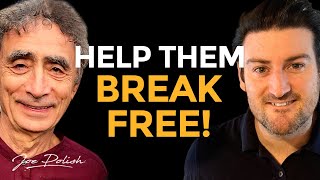
Dr. Gabor Maté and other experts explain addiction as a symptom of trauma and disconnection, not a moral failing. Families have two rational choices: walk away or support without trying to change. Emerging treatments like psilocybin and MDMA show promise beyond traditional approaches.
Chapters
Because addicts or in active addiction, people lie, they cheat, they steal. They have symptoms that are much different than, say, like an actual disease, like cancer. And so they cause trouble, they cause a ruckus, they're self-destructive. How does one— how do you interact with someone that's caused so much grief in your life, I mean, in my worst stages of addiction, I was a pain in the ass. And so how does one hold compassion when there's a family member, a husband, a wife, a child, you know, friends that are just causing so much trouble? How do we take that framing? 'Cause I'd love to have people leave here and have a whole different perspective on how to interact with addicts, how to think about it, because through this room, we can make an incredible impact in the field of helping people struggling with trauma.
Well, and just as you, in my case, when I was in my addictive phase and my addiction was besides to work, it was for shopping. And I shopped compulsively for classical music. And how can that be addiction? You just love music. No, I didn't. I love the music. Yes, I'm passionate about it, but it's the shopping I was addicted to. I had to get more and more and more. And it doesn't matter how many CDs I bought. Next day I had to get a whole bunch more. And, and I, and of course, in the process, I was spending a lot of money. And of course, the one addiction justified the other because I was saying, I worked so hard, I deserve to give myself some pleasure. That's how clever the addicted brain is. It just, it justifies everything. And I lied to my wife about where I was going to the store again. But it was like I was having an affair. I lied and I cheated and so on. So what do I say to families? So there's two major things I say to families. One is, you have a decision to make. There's two rational choices and one irrational one. The rational choice is, number one, what you're doing causes me so much pain and so much stress, I can't be with it. I love you very much, but this is too hard on me, and I'm not willing to expend my energies trying to self-care for all the stress that's being caused for me by your behavior, so I can't be with you. That's a perfectly rational choice. Or you can say, I love you very much, and I understand that 'What you're doing, whatever it is, comes out of your pain, and this is the only way so far you've found to deal with your pain. So I'm not going to judge you, I'm not going to cajole you, I'm not going to try and change you. I just hope you come to your senses at some point, but I'll be with you and I'll be supporting you emotionally and so on.' That's another rational choice. What is completely irrational and dysfunctional is to stay with somebody and try and change them. To cajole them, to convince them, to bribe them, to beg them, to coerce them to change. That's what's crazy-making. Don't ever do that. It's one or the other. That's the first thing. But the second thing is, given my understanding of addiction, that it isn't an individual brain disease, but actually is a function of a child's experience, a person's experience in a family environment, and particularly in a multigenerational family environment where trauma is passed on from one generation to the next unwittingly. But it is. I was— I did not mean to traumatize my kids, but I did. And parents do. Then we recognize that the addiction that's manifested in you didn't begin with you. It's actually an expression of multigenerational family dynamics. And so what it actually is, is that recognition allows for an opportunity now. Let's all heal together. So that you say to the addict, thank you for being the sensitive one who's manifested for all of us what's been hidden in the family and that we haven't known how to deal with or haven't even realized it was there. And so now it's time to heal the whole family system. And we invite you to join us. If you're ready and if you're not ready, we're still going to carry on that path of healing for the family because it's so important. But we're not going to judge you whether you join us, whether you don't. So that's what I would say to families. And, you know, I should mention my book on addiction is entitled In the Realm of Hungry Ghosts. And there's a chapter on families in there saying just what I said here.
What is your definition of a of addiction versus someone that's just, say, a heavy drinker, and but they're not really an addict, or they, you know, maybe have bingeing periods of, of life, maybe on a frequent basis, but they have not yet— their life is not out of control. Because there's— this is confusing, especially for many people that often listen to these things that seek it out. They're, they're functional addicts. People that are so down and out there or so struggling are oftentimes not the ones that are hearing this. And most people that would hear this conversation are frankly family members or people that would be trying to figure out how to help, you know, one of their kids or one of their loved ones that's struggling with addiction. So how would you define it?
The fastest two-word definition is can't stop. So, and of course, every definition that you're going to find from anybody that you've interviewed, and if you do a Google search and look at all the different organizations organizations in their definition, they're going to have some sentence fragment that relates to continued use despite negative consequences, right? So the difference between dependence and addiction is that person who might be dependent and might be relying on it in, in, you know, troubled times or whatever it may be, they never lose the ability to decide to stop if they want to. So their, their life may be getting out of control, and there might— they might have some issues that, you know, like they really shouldn't be drinking or they shouldn't be using drugs. But if somebody were to come to them and they were prompted in some way to have a conversation and say, like, you know, like, we're worried about you, we're concerned, they'll take that seriously, you know, like someone who doesn't have an addiction. The addicted person is going to be in denial. That's where the fight's going to come, you know, and I use the term fight kind of loosely, the disagreement. You're going to be faced with the denial and the delusion of, I don't have a problem and I don't need any help. I'm fine. I got this under control. I can handle it. I can stop whenever I want. You know, this is not a big deal. And whatever, however that conversation is going to go, but I think that can't stop is the easiest the easiest definition to use because it's not just about what's happening when the person is under the influence, it's also what's happening when they're not. So, you know, they, they, they're hungover on Sunday morning and when they come to, they say to themselves, I'm never going to do this ever again. Like, I can't, I can't live this way. And we're talking about someone now, by definition, let's just say we're talking about someone who's addicted. Okay. And this addicted person is waking up on a regular basis all by themselves saying, I can't live like this anymore, I don't want to do this anymore, I have to stop, um, that's it, I'm done. And then by Thursday or Tuesday or sometimes later that day, they are drinking or using drugs again. So the can't stop feature is not only when the person is using the substances, it's also when they're not. Despite the fact that they're promising themselves, I'm not going to do this anymore, there they are doing it again. And that feature is why it kind of flies in the face of some of the common misconceptions of they have to want it, they have to be ready, they have to hit bottom. What I'm saying is that Keith Cunningham has a quote in his book where the conventional wisdom rarely passes the sniff test on common sense. Yeah, yeah. And so most people's experience of the, the conclusions they arrive at is you can't help someone with an addiction until they want it, until they're ready, until they hit bottom. But they are regularly at the bottom. They are regularly having frequent moments of clarity all on their own where they're saying, I don't want to live this way anymore, but they can't stop by definition. And so getting that person sober is not gonna be something that they're gonna initiate on their own because of the very nature of addiction itself.
Yeah, yeah, that's a very good point. I also wanna say things too, because the addicts, I think in active addiction, you lie, you cheat, you steal, oftentimes a lot. And sometimes you knowingly do it, other times it's just a protective mechanism and they're so lost in it, they don't even know. And I think one thing that's very confusing is people like, "Well, you must want this, you must want this." And you'll oftentimes be like in their defending state, "Well, yeah, I do want it. I want it." And I am yet to meet a true addict that is literally living the consequences of pain and suffering that really wants to be there. Now, they'll often say just in a, lost state that, you know, screw you, yes, I want to do that, and convince even the person trying to help them that they don't give a shit. But most of them give a shit. They just don't know what to do. They're just so consumed by the can't stop that you're just going to hear the most crazy things come out of their mouth. And the people that love them the most often are the ones that are dealing with the, uh, you you know, the shrapnel because they're so close to them in the proximity. So, it's a lot easier for me to help other people with their addiction problems than it was for me to help me with my own, right? Or to help, it goes back to even what, you know, my real business of teaching people, you know, how to build and run businesses and marketing and stuff. It's a lot easier to deal with someone else's marketing problem than deal with your own. And that applies, I think, to almost anything, right? That's why you got a lot of unhealthy doctors that could dispense good health advice, but they have a hard time actually taking it. So the reason I bring this up is I want to let a lot of the people that are listening know that if you weren't so close to, say, if it was your son or your daughter that's struggling with addiction and they're saying things to you that you can't even believe are coming out of their mouth, or they're not able to see what you see and you love them and care about them and you see someone in front of you just what you perceive as destroying their life as a result of, you know, their addiction. And I believe addiction is just the symptom of a deeper pain. Like my friend Gabor Mate says, the question is not why the addiction, but why the pain? You know, why do they have this pain? Why do they have this loneliness or this emptiness that they're looking for some way to scratch this itch? Why does it exist? And That is why getting outside help when you seek it out is so damn important. Like, because I— look, I know this from firsthand experience of people struggling with addiction that I've referred that you help them, and you have, because you're not the father, you're not the, you know, the mother, you're not the brother, you're, you know, you're not even someone that may even know this person, but you are a person that can come in with your own experience and your own knowledge and things like that. So for you, how much of your recovery was kicking and screaming and everything in your life in the beginning till you got to the, to the state where you're at?
Hey, I hope you're enjoying this video, and I want to let you know that I have a new book that's come out, and if you'd like to get it absolutely free, there's a link below in the description, or you can wait till the end of this video, or you can simply go to Joe's Free Book and you can get a copy there.
Well, that's a great question, Joe, and it flies in the face of what we're talking about here with what parents are dealing with and why I'm so passionate about what I do. Is my mother— after I had a particularly bad night, I came home on a Sunday morning feeling hungover, feeling embarrassed about whatever it was that happened. I come walking in the door And my mother, again, Sunday morning, 11:00 AM, I come walking in. My mother very easily could have said, where the eff were you? It could have been an angry conversation. It could have been a frantic, worried conversation. None of those things happened. What my mother said in that moment very simply was, would you like to go to a meeting with me? And I said, okay. My mother didn't have any idea what happened the night before. She didn't bother to have a conversation with me as you just described. So my advice to parents is to stop trying to ration— like, stop trying to have a reasonable conversation with an irrational person, right? If you're talking about their substance use, they cannot help but to defend it. They cannot help but to lie about it. They are incapable of connecting the dots between the circumstances of their life and their, and their substance use. I had a guy once tell me that his DWI arrest had nothing to do with the fact that he was drinking. Now, when you think about that, it's so extreme a rationalization that I almost wanted to be like, "Okay, hold on one second. Let me just go get a coffee. I'll come back and I want to hear this one because this is going to be incredible how you've arrived at this, you know, conclusion." You know, but of course, I was counseling and I just said, "Tell me more about that." You know, And then he started to, you know, just reveal all these details as to why he really believed that this DWI, it was the cop's fault, it was entrapment, it was 1:30 in the morning, I wasn't even that bad, I hardly even drank that much, I only blew a 0.09, 0.08 is the limit, right? I've had far worse nights driving home. He's admitting to driving drunk in other instances where he hasn't been arrested where it's been worse. Yeah, but he's, he's trying to convince me with all the rationalization he possibly has that he does not have a problem and he does not need help and he doesn't have to go to rehab. He doesn't need to be here. He doesn't have to be sitting across from me. This is all a big overreaction. If that cop didn't have it out for me, all of that is the thinking that is typical of someone who is struggling with addiction. So as, as a parent or a family member, you might be listening to that and thinking like, oh my God, like, that's so extreme. That's the thinking that's taking root in your child right now if they have it. If they're 17 years old— I got sober at 17 years old the first time, and I was a full-blown addict and alcoholic. That doesn't have anything to do with the quantity. It doesn't have anything to do with the, with, with, you know, some kind of you know, like that I had dozens and dozens of consequences. It just has to do with the reaction of, of alcohol and the substances that I was addicted to on my body and what happens in my brain. And that's what's going on in the brain. And so once you identify that, you go, okay, my kid has an addiction, so I'm not going to have direct conversations where I'm trying to reason with him and get him to see it. Because that's not gonna be effective. What you wanna focus on is what's the practical, tangible step you can get them to take when you can see that they're in pain, when they, when they might be having a moment of clarity and they might be saying, you know what? Um, I don't wanna do this anymore because again, that thought is happening frequently. And if you can learn how to identify that, then it's as simple as presenting an opportunity for recovery. Expecting that someone is going to stop using or stop, you know, drinking and, and, and be sober, get sober, stay sober forever without them actually getting help and being connected to a helpful resource— that's irrational for us as a society and as families to have that expectation if we understand that this person is dealing with addiction, which means they're not going to stop. It's continued use despite negative consequences. So waiting for some big major consequence to happen in the hopes that that's going to wake them up and they're going to realize, oh my God, I have a problem, I'm going to stop now— that's kind of happening all the time, but it doesn't lead to them stopping. They drink and they do drugs again. So they have to be connected to the helpful resource, and that's what an intervention is all about.
Yeah, I mean, one of the things that you've told me too is oftentimes if I just give someone someone's number, in your particular case for an intervention or for someone that is a therapist, sometimes they'll call a therapist, but rarely do they want to call an interventionist unless you put them to, even when someone is seeking out like a parent or a family member or a husband or a wife, it's like, you gotta talk to this person. And even then, you know, what's funny for a lot of people you need to realize is that you think the addict is being resistant, Oftentimes, the people that are trying to help, they're resistant to that too. And, on one hand, it's— I have a friend that wrote a book called "Come Here, Go Away," Ralph Earl. And then, Marilyn Murray, another friend of mine, she's an 87-year-old therapist who wrote "Prisoner of Another War" and then, "The Murray Method," which is all about trauma. And, to go back to the line, "Come here, go away," now, that's really spoken in the context of sex addiction, love addiction where you want someone to come here, but you're also pushing them away. And the come here, go away behavior for help is just notorious for people that struggle with addiction. So how does someone, uh, how would you recommend— because you, you explained it, but I want to go a little deeper with this because I think it's really good— how do they need to show up? How could they show up? What are some— and I know there's no perfect way because their decision. I mean, this is a very complex sort of issue. So to enroll or invite someone into getting help that has all kinds of barriers to resistance and all kinds of rationalizations, and like you mentioned, you know, try to talk rationally to an irrational person is very difficult. And so you're— you obviously didn't feel threatened or attacked or accosted or, you know, being accused of anything when you walked in and your mother said, would you like to go to a meeting? So What state was your mother in that allowed her to do that? Because, you know, that is a place of demonstrating her own recovery. And I think it's really important for people to hear and piece apart what is going on there.
Yeah, I mean, a lot of— so I just spent the last couple of months writing a book. And so I have about 130 pages or so that's discussing what— it's an answer to that question. Right. Um, the— so what were the critical things that were different about my mother, let's say? Um, well, number one, she's not in denial about the fact that her little boy could maybe have alcoholism, that it's not something that she's going to deny. It's, it's like, you know, if the house is on fire you're able to say that's a fire. No one is going to spend any time denying that that's a fire, and you're going to call for help as soon as you notice it. Even if you just see signs of smoke, you're not going to say, oh, let's see if it gets worse before we call for help. You know, it's only a little bit of fire, it's not— it hasn't really extended to the, to the upper floors yet. I mean, you know, let's wait until it's a 5-alarm blaze before we call someone. So my mother had the advantage of never blaming herself for the possibility of me having alcoholism and addiction. She wasn't going to be guilty about it because she understands it from personal experience and she knows it's a possibility. It's not something that she's afraid of. If the conventional wisdom— back to what we said before, that doesn't really pass the sniff test of common sense— if you are consistently told that there's nothing that you can do to help someone who has an addiction and you're a parent, I cannot arrive at the conclusion that my son or my daughter has an addiction because that would mean saying there's nothing I can do to help. And so if you are of the belief that there's nothing you can do to help, then you just can't— you, you, you can't allow yourself to think that this is addiction. So it must be something else. And that's where all of the— and so we think it's anxiety, it's social anxiety, it's depression, it might be bipolar disorder, it's ADHD related, it's, it's it's PTSD, maybe they do have trauma, and maybe they're, you know, all of these various different things are on the list of possibilities of what's wrong. The, the starting point here is just put addiction on the list as a possibility. You have to be willing to also have addiction be a consideration, okay? And all, all that means is, is it's, it's like a peanut allergy. Like, some kids just have it. It's not about how they were raised. You would never say like, oh no, my kid's too smart to have a peanut allergy. He knows better. He's, you know, we raised him right. You would never say that. It's just a reaction to a substance that in like amounts doesn't affect other people, right? So other people can have a handful of peanuts, no big deal. Other people can have 3 beers, no big deal. For someone who's an alcoholic, they have 3 beers and the reaction, the physical reaction is, I need more beer. Now, what winds up happening after that is, is irrelevant. It's just about the fact that there's a reaction, and the reaction has nothing to do with your parenting. The reaction has nothing to do with anything that you did or didn't do. And my mother understood that fundamentally, so she wasn't afraid of it. And the other key thing is that my mother had the belief that recovery is possible. It was never hopeless. She knows that there's a place to go. She knows that there's, there's something that people can do if they do have this problem. It worked for her. It's worked for countless people that she knows from her personal experience. And so she knows that there's a, there's, there's a solution for this and that there's a place that she can bring me to. And I think that that's probably the reason why, um, you know, I spend probably so much time on this. And, well, explaining this piece of it as an interventionist, one of the key things, one of the key strengths is that as soon as you start telling me some of the details about what's going on with your addicted loved one, I'm start— I start cycling through the Rolodex in my brain of what potential recovery programs are going to be right for that person. So I think about 30% of it is that I know where to bring them, right? Right. So as a parent, the first step then, I have to admit that this is addiction. I got to be okay with it, acknowledge it, accept it. That means that they can't stop and that they're not going to get help on their own. Just let go of the idea that they're going to seek help on their own. Only 10% of people with addictions ever get help for it. 90% of people who struggle with addictions never get help, and that's because they don't perceive the need for it. And that's backed up by the National Home Survey on Drug Use and Health. It's a survey that's been going on for over 50 years, started in 1971. The last one in 2022, 94.7% of people who meet the criteria for a substance use disorder do not perceive the need for help. That's what you're up against. So if you're thinking, well, let's just sit, let's sit back and wait for him, we can't, we can't take it upon us. Who are we to step in to say something about what this person should be doing? They have something that's going on in their brain that's convincing them that this is not a problem, and this is a, this is a problem that can kill them. And that's why we have more people dying today than ever before. And that's why we have the same percentage of people getting help for it. And, and really, the ones who get help are the ones who were intervened on. Now, sometimes those interventions— we're not talking about family, although that's often the case— but they can be unpleasant. It could be jail systems, it could be, um, you know, overdoses. You're in the hospital, you're, you know, All sorts of terrible things can happen that wind up being the external factor without which that person would not have gotten sober the day that they did. But it's not about that person initiating the process on their own. It's not about them being ready. It's almost always like, you know, hide and seek, you know, ready or not, here it comes. Always, you know, that that person just winds up in treatment despite the fact that they don't want it. They're not necessarily ready. They haven't necessarily hit bottom because last night might not even been that bad a night. I just happened to get arrested. And the judge says, would you like to go to jail? Would you like to go to treatment? I'll go to treatment, Your Honor. That's how people get started. And oftentimes that's how people get started from the family perspective as well. When a wife or a mom or a dad, they just had enough. That's it. We can't have the car anymore. We can't do this. We can't— like, I, I'm not going to be able to live this way. You can't be around the kids drunk. Whatever it might be, that ends up being this precipitating factor that if it wasn't for that, that person doesn't get sober that day. Um, and so really it's about the opportunity for recovery that's being presented while at the same time that person is facing a moment of clarity where they're being kind of confronted with the reality of the situation in a way that they're not able and capable to do on their own.
Yeah, no, that's very good.
Caused by this thing we call addiction. And so the question is, give a couple definitions. I mean, there's a lot of different definitions I've heard of addiction. The way that I think about addiction, it's a connection disorder. So what we're really talking about here is how to connect with others, how to connect with yourself, and there's mechanisms that people use to numb themselves because they're feeling disconnected.
I just— a connection disorder. I mean, talk about piercing symptomatic crap.
Mm-hmm.
Connection disorder. So What if addiction, maybe all addiction, maybe some of it, what if addiction is a symptom of us not being connected the way we need? Is that essentially what I'm hearing you say?
Absolutely, absolutely. The opposite of addiction is connection. And so the thing, and there's other people that are saying this, you know, like my dear friend Gabor Mate, who wrote a book called In the Realm of Hungry Ghosts, is, you know, I mean, he believes that addiction is a response to trauma. And I used to believe that addiction is a was a brain disease and needed to be cured. And I'd rather people refer to it as a brain disease than looking at people as moral degenerates that are just making bad choices. Because, you know, addiction is doing something you don't want to do, or maybe you do want to do it, and not being able to stop. And, and, and this thing that you're doing, either the drugs, the chemicals, the behavior, is compulsive, it's impulsive, and it has consequences that are bad. And so, you know, to have a craving that is far greater than your ability to stop it— in people that don't have addictions and they see the crazy making of addicts, like, why are you drinking and drugging and watching internet porn and gambling the money away? Or the workaholism, or the exercise addiction, or the bulimic, you know, I mean, all addictions have elements of binging and purging, excess and deprivation. And there's a, you know, the rock band Guns N' Roses from back in the day, their first most popular album was called Appetite for Destruction. And that, those three words really greatly describe what an addict is craving. They are craving destruction. Addicts crave, the addict mind craves chaos, not harmony. And for some reason, it's very difficult for people to comprehend that. For instance, you know, someone's not a smoker and hates smoking. As an example, my father died from lung cancer, and he smoked most of his life.
And people will—
and so I hate cigarettes. I can't stand cigarettes. I don't like the smell of them. But when I was a drug addict, I used to smoke cigarettes, and I used to smoke cocaine. I used to freebase cocaine. I used to snort crystal meth. I used to take speed. Speed. I would take LSD. I would get high and smoke pot. I mean, like, you know, I drink constantly. I mean, when it was just like constant consumption. And, you know, it would be real easy to say, well, that person's an idiot. And you could argue, well, you know, but I'll tell you, when I was in those moments, it was way more powerful than my ability to control that. And what I was really trying to do was just numb myself because I was in pain. I was depressed. I felt anxious. I felt fearful. And so if someone is depressed or having anxiety or incredibly lonely or fearful or just wants to jump out of their skin or is hating life, there's nothing wrong with wanting that pain to go away.
If you're—
if you just itch, there's nothing wrong with wanting the itching to stop. The challenge is the mechanisms we choose to scratch the itch. And so what happens with addiction is that people are trying to numb themselves, but the way that they're going about trying to escape it is actually making it worse. So when I say I want to change the global conversation about how people view addicts, the question, well, how you gonna do that? Well, part of it is quit looking at these individuals as moral degenerates. These are people that are traumatized, and the things that they're doing— Totally. Yeah, I mean, if you look at people in jail, like, you cannot punish pain out of people, and we're putting these people in cages. Now granted, addicts in their worst states lie, they cheat, they steal, they can do harm, they can drink and drive and kill people, they can rob stores. I mean, they can, they can do awful things. However, most addicts aren't doing those things. Most addicts are like just hurt individuals, and they're trying to escape this mental pain and anguish. And so what the way that I am thinking about addiction right now, and by the way, everything that I'm saying, I am a student just as much as, you know, I'm an addict that's out searching for solutions, talking to some of the best people in the world because of who I am. I have an opportunity to use my business contacts and what I do in the world to actually get into places that many people people cannot. So I'm really seeking this out, but I'm also a beginner's mind. I try, like, I'm always open to have my paradigm shifted. I'm always open to say, what don't I know? And unlearning is more important than learning. So as I'm on this, this journey, I'm looking at addiction as a solution, which sounds crazy to some people. But I start thinking, okay, if the world is flat and you think the world is flat, you're going to interact with the world is a flat world. But once you learn the world is round, that changes everything about how you look at the world. Well, if you think addicts are moral degenerates and they're losers and they should be thrown in prison, then who's gonna treat these people? The criminal justice system. Judges, wardens, you know, police officers. And these people are not equipped, nor are they trained, to treat people like, that are addicts, like, in a compassionate way. They need to get them off the street, they need to throw them in jail, they need to process them, lock them up. And most people that are in, like, 80 to 90% of crimes that are committed, people were under the influence, for one. And most of those crimes are not violent crimes. A lot of these people that are in jail, possession, you know, things like that. And the reality is People that you— again, you cannot punish the pain out of people, and you can't incarcerate them. And Gabor Maté said if you wanted to create the perfect system that kept people as addicts, you would develop the exact prison system that we have in the United States.
Yeah, and the idea of the connection— the lack of connection, in my opinion, one of the most fundamental human needs, maybe the most fundamental human need that we all have, I don't care who you are, we all have it, is the need for connection. What does it feel like to be disconnected? Living hell, in a sense. And so if people are acting out with addictive behaviors, with addictive chemicals, because it's a symptom of them being disconnected. Then when you look at, well, our system, the way it's set up, the prison system, none of that is offering connection. Oh no. Connection's a matter of the heart, not like, okay, there's a cement cage to connect to. Like, no. So I'm curious when— because I love where you're going with this. I think insanity doing the same thing over and over again and expecting a different result. I think we as a society, we have so many systems set up to treat the symptoms of addiction, and I think we've proven about 12,000 times in a row it doesn't work.
Right.
It might temporarily patch things, it might keep people out of harm's way temporarily, but to get to the heart of the matter, I dare say we have to go to the heart. So when we look at the disconnection that is maybe the deepest form of human suffering with addicts. Where does the disconnection come from?
Well, there's a lot of things, so let me give some commentary on that too. I want to say one more thing about the solution aspect of it is when I say addiction is a solution, it actually numbs you if you're in pain. If you're feeling disconnected, you can artificially get high You can, you know, you can act out sexually, you can gamble and get an adrenaline surge, you can look at internet screens and you can get dopamine hits. I mean, there's all kinds of stimulation that will make you feel artificially connected and that will numb the pain. And that is a solution. The problem is this is a solution that will kill you in some cases. So if you can survive addiction, it might get you through some some sort of painful moments. The challenge is actually, you know, creates more. But I'll say the connection this way. So, like, Dr. Bob and Bill W., they're the ones that founded AA, Alcoholics Anonymous, in the 1930s. And to this day, there are millions of people that rely on 12-step groups. Now, if you have never been to a 12-step group, or you like or dislike 12-step groups, or whatever perspective whatever perspective you have about it, I want you to know that if 12-step groups just stopped, like, tomorrow, and these are worldwide, the world would be a much different place. It would be screwed. Yes, we would literally probably go into war. I mean, there are so many people that go to 12-step groups. Now, why do they go to 12-step groups? They're trying to connect with other addicts, right? And hope heals. Sure. And so when you are able to walk into a room where you're so broken and so desperate that you have to really say, "I need help," these groups are readily available for free. And they operate through the voluntary contributions of their members. But this is not a sort of like, "Hey, let's endorse 12-step groups," although I think they're incredibly valuable. There's many other things that I believe will help with addiction, and 12 steps are just one of them. And so Bill W. and Dr. Bob founded AA in the '30s, and there's a quote from Bill W. where he said, "As alcoholics, we're trying to drink God out of a bottle." And I always even say, even if you're an atheist, if you just think of that statement, like, okay, as an alcoholic, we're trying to drink God out of a bottle. I believe, however someone wants to define spirituality, and I can make fun of it just as much as like—
I don't make fun of spirituality.
You were just doing it before I was speaking.
I'd be offended if that ever happened.
And so, you know, if you think about that, he's like, okay, you know, we're trying to drink God out of a bottle. And addicts are actually the most spiritually potential people, I believe, because they're trying to connect with something. Sure. You know, let's get high. Let's, you know, I'm trying to drink my way to this void I'm feeling. I'm trying to, you know, if you're a sex addict, you're trying to, you know, have sex or look at porn, if you're gambling, you're just trying to connect with that feeling, something, so you can feel exhilarated, so you can feel better.
It's just strongly looking for connection where it's not.
Exactly.
But it is the desire for connection at some level that drives the reaching to the addiction.
I think most forms of self-destruction are looking for love in all the wrong places. But it's seducing. It's tempting. It's exhilarating. Believe me, I mean, a lot of my, you know, because my addictions have been drugs, alcohol, sex, work, exercise, performance addiction, image management. I mean, all of the shit that goes into, you know, living a double life is exhausting. And, you know, if you start looking at self-destructive behavior, and I'm sure everyone that is watching this or listening to this that is connected with being a human, they have done things that they wish they would have done differently, that they regret. They procrastinate. They can't make their goals happen. They don't do New Year's resolutions. Maybe they've lied. Maybe they've cheated. Maybe they stole. Maybe they've done something that they're horribly shamed about. Addiction is rooted in isolation. Isolation. It's rooted in shame. It's rooted in guilt. It's rooted in self-loathing, isolation. And so humans have experienced things. Different people respond to different things and have different sensitivity levels. But if you just sit and think about, like, did you have loving, wonderful parents that you felt really connected with? If you did, then you're— you probably feel more connected as a human. But if you had a parent die, if you were molested, like, you know, my mother died when I was 4 years old. My father never remarried. He was a totally broken person. He didn't know how to cope with it. And so I don't remember many aspects of my childhood that were very happy. Now, given the circumstances, even when people do awful shit, I believe most human beings— when I'm thinking from my higher self, whatever that higher self is, and a lot of times I'm not— I believe most people Most people, even when they're doing crazy shit, are doing the best they know how to do given the circumstances. And so my father, you know, tried to do the best he could do, but he was a really broken person. So therefore he didn't know quite how to instill a lot of confidence, a lot of self-esteem, a lot of love. I was molested as a kid. I used to get paid money to not say anything about it, and it wired in my mind that sex is not an intimate act of love and oneness, it's something that you do just to get off. So I was never able to feel comfortable with sexuality. I was never able to feel comfortable with connection. And it's funny because now I'm known as this connector in business because I connect, you know, all kinds of, you know, great people.
Off the charts.
It's—
and if I— you said so much and I want you to keep going.
No, no, please interrupt me at any point in time if there's—
I already interrupted you.
He just did that, did you see that?
Yeah. And I love your vulnerability. So your mother died when you were 4. If that's not disconnection with a capital D, I don't know what would be. Your father couldn't cope with the loss of his wife. He became psychologically unavailable. That's disconnection. D with a capital D. And then you got a form of connection. Now granted, none of us would say this was a great form of connection. It was shitty connection, but it was connection. You were molested.
Yeah, I was molested.
That was a sexual experience that you learned to associate, ah, sexual stimulation equals connection. It especially equals way more connection that I'm getting with mom has passed away. Way more connection than I'm getting with dad who's maybe there physically but not there really psychologically. So that made an impression on you. You were a little boy who became desperate for connection and life gave you an example, albeit really a crappy example from our standards today, but it gave you an example of what connection was and you ran with it.
Yeah, and what I did is it is it— there's not a day that's gone by in my adult life where I've not thought about that. And it's in the rumination, the preoccupation, the— and for years I had so much of my self-worth tied into this shameful, violated piece of shit that I felt like after that happened. Because— and it didn't happen once, it happened multiple times. And I didn't know how to interpret it because I was between the ages of 8 and 10 years old. And, you know, and so part of it is like it didn't make any sense. And I used to minimize it, you know. I never told anyone about it. I mean, now I publicly am talking about this shit, you know, like right now. But it took years before I could realize that you're as sick as your secrets. And if you have sickness and you feel shameful and you feel like you can't get ahead, I mean, there's there's probably something that is interfering with it. Meaning the sun is always there, there just may be clouds.
Sure.
And so my form of clouds were addiction, my form of clouds were hiding it in denial and trying to, you know, escape it in any way that I could escape it. And I used to say, oh, but you know, I don't live in a third world country, I wasn't I wasn't starving to death. I wasn't thrown in a concentration camp. And I've got people like Gabor Mate that said, you know, how does a 4-year-old, you know, do you know any 4-year-olds? He's like, how does a 4-year-old respond to their mother dying? I mean, you're 4, how would you? And I'd be like, you know, he's like, abandonment, you know, you know, how would? And so you were right though, like it is a form of connection. And what I've learned, part of The goal is to find the best forms of treatment that have efficacy, where people can go and find community, sharing inspirational videos, talking with addicts, and just putting that stuff out there in the world. Because I want to help connect people, because I, I never felt that connection growing up. And so I initially found it through, you know, doing drugs and escapism. But the way that I define myself, it took me years to really kind of make any sense about it. And what I, what I would want people to actually think about— who do you know in your life that is struggling with addiction? If you yourself are struggling with addiction or behavior, that it's kind of like— there's a song lyric, I tell myself I will not go even as I I drive there. And if you can imagine, I don't want to do this, I don't want to be in this relationship, this person hurts me, this person beats me, this person is abusive, this environment is abusive, but you keep walking through that door. What it did for me is it somehow created this template. So when you take sex addiction, you know, which is— there's an interview I did with Pat Carnes years ago. Now people, if they just type in Joe Polish sex addiction into YouTube. You can watch the video, and I'd watch the full-length video if you're interested in this, about an hour and 45 minutes long. And he— we talk about arousal templates, and whenever someone is introduced to sexuality, they have an arousal template. So if you— you're saying earlier with connection, what if you're introduced into sex by being raped or being molested molested or in some sort of dangerous way, what's weird is that in many cases you can create a trauma bond where you actually bond with the trauma and then you live your life out being pursuing things that kind of reenact some of the shit that was done to you. So, when you see a woman that will be attracted to guys that beat her or are mean, that are abusive, and you look back at, well, what happened in the life? It wasn't always being molested. Abused or assaulted. It could have been an alcoholic parent. It could have been some sort of abandonment. It could have been some sort of exposure to a disease. It could have been a horrible car accident. But there was some sort of trauma, you know, and people bond with traumas. And then they seek out these sort of things, and they're just trying to connect. I mean, it doesn't make sense to a lot of people.
It's not a logical issue, it's an emotional issue.
It's subconscious.
Subconsciouses don't work logically.
Exactly. Exactly.
Do you remember how old you were when you first lied to yourself? I was in second grade. I was wearing a Bo Jackson t-shirt and dark blue sweatpants. But I'm getting ahead of myself. You know, when people meet me, they conjure up a lot of ideas of who they think I am, of what challenges I must have to go through. And they're right, I certainly have challenges that I deal with. But it's not the physical challenges that weigh us down in life. We learn to cope with them or we get tossed aside. It's the emotional ones that truly take a lot of courage to deal with. The day I learned about lying to myself— we call that denial— and denial happened when I was in second grade. My mom dropped me off at school one morning, And this was before cell phones and pagers. She then had a whole day of errands planned, so she wasn't going to be home, and my father was on a business trip. And as the day progressed, something happened. I experienced an incredible amount of pain in my abdomen, the kind of pain that lets you know that something bad is coming. And as I was holding my abdomen, I realized I was getting sick. And what you may never know is people that are in my condition, we can't usually use normal bathrooms. We have special equipment. And so my equipment was at home, and I was getting sick, and I knew I was going to have diarrhea. Now I'm in second grade, and that's the moment I told myself, Sean, if you can just act like nothing is wrong, you can go in your pants right now. And I told myself that if I just acted natural, if I just put on that good smile, if I act like everything is great, they'll leave me alone because they'll think that everything is fine. Don't we all do that? Put on that smile, let everybody know, "I'm fine!" And so I switched seats on the Titanic. I went from being in that abdominal cramps to then sitting in my own waist. And the people at a distance, they couldn't tell. They thought I was happy and fine and normal. But the people close, They knew something was wrong, didn't they? See, we can smell the truth, can't we? The people in your life that are close know what you're going through. And sadly, I've been a studier of human beings, and sadly, I found that human beings, what they think is the best thing is to just keep people far enough away from you that they can't smell the truth on you. And I'm here to tell you that's not the way to live life. The way to live life is to get help, no matter what size problem you're dealing with. It wasn't until I was willing to come out of that denial, willing to shake myself from that delusion that I was fine, that I went to the nurse's station, I called my neighbor and asked her if she would come and clean me up. And as I was laying on that nurse's stage cot and she was cleaning me up, I was just filled with shame and embarrassment. How did I get myself into this? What kind of idiot am I? Why did I think this was a good idea? She looked deep into my eyes. She said, "Oh, sweetie, you did your best." Every single person in here, I'm here to tell you, you're doing your best. No matter what mess you're in, no matter what mess you've been in or what mess you're headed into, you're going to do your best. But it's not until you get out of denial, it's not until you're willing to say, "I could use some help right now. I'm ready to take off this fake smile that everything is perfect, and I'm going to reach out and say, 'Hey.'" "I'm stuck here. I'm going through this challenge in my marriage. My kids don't talk to me. My business is not as great as the numbers I say." It's not until we reach out for help can we get out of our messes. And one of the best ways that I've got myself out of my messes is through a simple line that I would like you to write down in your notebook. It will pull you out of tons of problems. It's a question that you can ask yourself, no matter what circumstance you're in, no matter how difficult. And the question is, "What's funny about this?" I learned the power of laughter years ago when I worked for Congress. That's some funny stuff right there, right? I worked on Capitol Hill for my congressman, and one morning I got to work early. Have you ever got to a meeting early or an event early? You have your hot tea and your newspaper, and you're just ready for your me time. Well, that's what happened. I got to work early. I thought I was the only one there until I heard a voice off in the distance. Sean, get in here. Yes, Mr. Congressman? Sean, I need you to run a message on the other side of the Capitol. Can you do that? No one else is here. Yes, sir. So I take this message, I head out to a part of the Capitol that I had never been to. I get to the elevator bank. Now, for those of you that are a little perceptually slow, I'm not very tall. So when I get to the button, I have to take with me an elevator stick. Also known as a backscratcher. I press the button, except— doors open, I go inside, I turn around, I find my floor, hit the button. The doors are now closed, and the light is not coming on. And I realize, "Oh no." On the outside, the buttons are pressure-sensitive. On the inside, they're heat-sensitive, and my elevator stick wasn't hot enough. So I thought, "What would MacGyver do?" If I had a pack of chewing gum and a tampon, I could make a bomb. So I start heating this sucker up. Nothing happened. So I did what any other man would do. I just started stabbing violently the button. Nothing happens. So then I decided to sit on my elevator stick, and now I am grinding my elevator stick. I am like, "Who's your daddy?" Right? I press the button. What do you think happened? Nothing. I asked myself one question. What question did I ask myself? The answer to that was nothing. So that's why you have to ask it a couple times. What could be funny about this? Well, then I looked up and I saw a little camera in the elevator. Finally, the elevator doors open because somebody called it from the outside. I get down to the maintenance department and I say, "Excuse me, you have elevators trapping people with disabilities whose elevator sticks aren't hot enough." And the man said in the most condescending voice, "What? They're not heat sensitive. They conduct an electrical current." If you would have had just a little bit of tin foil on the end of your elevator stick, you would have been fine. I looked at the man.
Shh.
Who comes to work with tin foil? Am I just going to be in an elevator like, hey guys, want to bake a batch of brownies? What are you talking about? And it was that moment that we started to laugh together. And you guys all run successful, amazing lives. But I see you in my office as a therapist. I have a unique way of dealing with my clients. I see them for 12 hours in a row and then never again. And I see people holding on to stress, and they're in messes, and they're not getting help until finally they reach out. And you gotta laugh. You gotta take yourself, well, not so seriously. You know, I love to laugh. That's why I'm friends with Joe Polish, right? If you want a good laugh, be friends with Joe Polish. I mean, his dating life alone is hilarious. I mean, but honestly, raise your hand if you've been, uh, greatly impacted by Joe Polish. Right? I mean, Dan Sullivan, I mean, if it wasn't for Joe, I mean, you'd have to quote yourself, right? I mean, Dean Graziosi, if it wasn't for Joe Polish, you'd still be slumming it at $15 million a year. I mean, think about all the good. But you've all taught me so much. Where's Brendan Burchard? Brendan has taught me so much. One of the things he always ends with is, did I live? Did I love? Did I get more likes on Facebook than Tony Robbins? Just saying, just saying. You gotta laugh, you gotta have fun here. Thank you so very much.
What is your perspective on addiction and recovery, and how can we best help families, you know, heal and recover, since you know that's one of my main areas of focus.
I think addiction's a really tough problem.
Very.
First of all, I think it's universal. I think all of us are addicted in one way or another to one thing or another. The only reason we don't see that is that some addictions are socially acceptable. Yeah, workaholism. Workaholism, addiction to shopping, addiction to power, addiction to thinking, which is very prominent in intellectual circles. I mean, there's all sorts of things. How to deal with addictions, I think it's really tough. I mean, one strategy is to shift addictive behavior to things that are less harmful rather than more harmful. It's better to be addicted to running than to cigarette smoking, for example, but it's still an addiction. To try to get to the root of addictive behavior, I think that's really tough. I think the people that have it right are Buddhist psychologists who say that the root of addictive behavior is attachment. It's the illusion that satisfaction and completeness come from something external to you. And until you can practice realizing that you are complete as is, it's hard for you to be free. I think the most encouraging thing that I see about addiction is that— and this is true of everything I looked at, whether it's cigarettes or heroin— if people progress, I mean, just go through life enough and don't, you know, get snuffed out in one way or another, one day their motivation to drop it becomes— reaches a point at which it's easy. You know, you see people that have tried to quit smoking again and again, and they talk about what a struggle it is and how hard, and they go back to it. And one day a person wakes up, and it may be looking at stained fingers or looking at a dirty ashtray, and suddenly they don't want to do it anymore. And that time it's easy. The problem is you can't put motivation into another person, and that's the frustration of addiction treatment. All you can do is arrange circumstances and encourage people to try and keep trying, and one day the reservoir of motivation is full enough that it becomes easy.
Yeah, well, you know, this is— now this will always sound kind of weird when I bring up addiction stuff, but you are very knowledgeable in the area of shifting consciousness. And so, you know, I believe that addiction is a solution. It's not a very good solution, it could kill you. And I also believe that I'd like to see policy change because you can't punish the pain out of people. Right now we have the criminal justice system treating addiction, and we need a more compassionate approach. And there's ways to really shift consciousness. And so I want to ask you about plant medicines and psychedelics, because I see MDMA coming down the pike, psilocybin. You have lots of experience with— you wrote a book called The Natural Mind in 1971.
My first book, yeah.
A revolutionary approach to the drug problem. And you thought this would totally shift, but what happened is this war on drugs happened. And I mean, I'd love to have you— I know this is not an easy question, but what is consciousness? I mean, and looking at altering it and shifting it in ways so you live in the world in a better, happier, more connected space, 'cause I think the opposite of addiction is connection. And so anything you could speak to that.
Well, that's a big subject.
Yeah, it is.
I know, I know.
I would say, you know, the, the argument that I get into with scientific materialists is over the nature of consciousness. They think that consciousness is a product of brain biochemistry or electrical activity in the brain. I think that consciousness is primary and that I think consciousness organizes matter into more and more complex forms. There's no way of proving one or the other. It's just a different worldview, but I I find that my worldview makes things much more interesting. And, you know, my experiences also are that by changing consciousness, by changing what's in your head, you can change the external world. And I have seen that again and again. You know, just as a mundane example, I've for a long time lived with dogs, and I've always had Rhodesian Ridgebacks. And I had a male— I lived out in I had a property that bordered on Saguaro National Park, east of, southeast of Tucson. And I had one big male who all he wanted to do was crawl in your lap and snuggle. And I came home one day and found he had backed a worker, you know, someone who's working on the landscape, against the wall. The guy was brandishing a rake and the dog's hackles were up, snarling. There was no way to convince this guy that it was his emotions that were producing this behavior in the dog. Uh, there was no way to convince him that this was not a vicious attack dog that I had there. And I see this kind of thing all the time, you know, in interactions with people, interactions with all sorts of things. Uh, I've also seen— I'll just tell you a few. I've told these stories before, but, uh, some of the potentials that I see in psychedelics— I had— this goes way back in my in my early exploratory days. I must have been about 28, I suppose. I had a lifelong allergy to cats. If a cat licked me, if a cat came near me, my eyes would itch. If it licked me, I'd get hives. So I never let cats near me. And one day I took LSD with a group of friends outdoors. It was a beautiful day. I just, it was just, everything was wonderful. In the midst of this, a cat jumped into my lap. And my immediate reaction was sort of this, and then I thought, this is really silly, you know, and I relaxed and I petted the cat, had no allergic reaction. I've never had one since. So instant disappearance of a lifelong allergy. Yeah. Um, tell you what, around the same time, even more— I mean, that even— I, first of all, I'd love to open Dr. Weil's allergy clinic. You know, maybe 10 sessions spaced a week apart, and the first one you get a full dose of whatever, and then—
And a kaleidoscope on your face.
And then the dose reduces, and at some point you're taking a placebo, and you don't know when that happens. Allergies are learned responses. You can unlearn them. So this one's a little trickier to explain. I also had— grew up being told that I could never get tan. I had fair skin, and my experience was when I was out in the sun, I would burn.
I spent—
we used to go down to the Jersey Shore, and this is in the days before sunscreen. Probably the things we put on us magnified the— the sun. But anyway, I, you know, sheets of skin peeling off, bright red, horrible pain. And then, you know, I'd be as fair as ever. So I just took this that, no, I couldn't get tan. So also around this time, also with LSD, on a beautiful day, I was living in rural Virginia, I was running around with no clothes on, and I was lying in the grass and looking up at the sun. And I thought, this is also really silly. And I just sort of relaxed and, you know, exposed myself to the sun. The next day I got tan, and I have ever since. No, that's a little trickier to explain.
I mean, that's something— Yeah, 'cause the question is what the hell's going on?
Well, what's going on, probably, you know, your pigmentation is controlled by cells called melanocytes, which are close to neurons, and they are involved with the immune system. So again, this has to be a mind-mediated effect that changes the way that those cells behave. But I think that just hints at the kind of potential that's there. And same with the back pain stuff, that there are ways that you can change external reality and physical reality by changing things in your head.
Oh, my belief, because of all the pain I used to have, and having spent a lot of time in the addiction recovery world with my own recovery, is I see addicts have a tremendous amount of back pain, knee pain, neck pain, shoulder pain, migraine headaches, skin problems, digestive issues, and I think the same things that manifest themselves as addictions in destructive ways are the same mechanism that manifests in pain. And I don't hear very many people, if anyone, talking about it and linking the two together. But I think there's a huge thing, sleep problems, all kinds of stuff because I've been, you know.
And have you, do you have any experience with ibogaine or know people that have?
Oh, I'm the first person in the world to have before and after brain scans and serotonin and dopamine tests of doing ibogaine. I scanned my brain before, went and did it, came back and scanned it again. And I have hours of interviews with one of the top psychiatrists who specializes in using psychedelics and plant medicines for addiction treatment and PTSD. So yeah, I've—
so this is the African— this is the African psychedelic, and little known here, and has a reputation now for treating addictive behavior, sometimes very fast. Yeah, it's not available here. There are clinics in Mexico.
That's where I went, right?
But, you know, you asked at the beginning of what's happening. It is remarkable to me to see this you know, new interest in psychedelics in our culture and a lot of research. And in the old days, you know, it was a lot of research looking for bad effects. And now there's a lot of researchers trying to document positive effects of psychedelics. Oregon has an initiative coming to legalize psilocybin. I think the potential for MDMA to treat PTSD, psilocybin for obsessive compulsive disorder and depression, I think, these will eventually have these drugs be available for therapeutic use.
Are you friends with Rick Doblin?
Yeah, sure.
Yeah. I mean, Rick, he is just the guy. I mean, you got to really give him credit for the sheer amount of doors slammed in his face and the amount of resistance, but just wanting to go out there and find ways to help reduce human suffering.
So it's changing now. I mean, when I see characters on mainstream TV series microdosing, Something is changing.
Exactly. Last night at dinner when you guys got in from out of town, uh, you— we were talking about addiction because you know that one of my main areas of focus is, uh, addiction. So what can Vasper do, uh, for— be it the hormone system, the nervous system— for anyone that struggles with addiction, suffering from addiction? That sort of stuff?
Yeah, that's a great question. So, um, the, the issue of addiction has been looked at from every angle, and I think one angle that possibly hasn't been examined thoroughly is from the endocrine system point of view, from a hormonal balance. But hormonal balance and the, the way we achieve hormonal balance here happens basically naturally in a young child. It's very difficult or impossible to achieve it later because your muscles are longer, you cannot concentrate lactic acid at those levels. So, so that's why this gives us a completely brand new look into this situation and into this problem, which is completely separate from what other people are doing. I'm not saying that what they're doing is not effective, it could be extremely effective, but in order to, to actually address the problem at its source, you need to find out how to treat the source. And I believe that hormonal balance, having the whole endocrine system in balance, translates into emotional balance. When you have emotional balance and hormonal balance, then you don't need to reach out for a drug because you are actually happy. So I saw one of your signs, you know, if you're not happy, do something else. If you're not happy, you're okay with it, don't do anything. So this is what basically to me, that's what the essence of happiness and satisfaction in life comes from, being balanced hormonally. And again, we see that very on everyday basis, we see it with our children. And when you see those children, they don't have post-traumatic stress issues, they don't have depression, they don't have, they're just alive and they love life right from where it comes from. So this is the whole idea, Just bring it to all of us.
So maybe this could, you know, take every adult that's gotten screwed up along the way and help hopefully unscrew them a little bit.
Yeah.
Yeah.
We learn a lot from our kids.
Yes, we do. Yes, we do.
I learned a lot from the two that I have.
Yeah, awesome.
What helps you find peace and closure the most?
I don't know that I'll ever find closure on this. I do feel like we pick our lives. And I do feel that way in a spiritual sense, that there is more than this. And I do think that we pick our paths before we're here for a reason. And my daughter gives me an immense amount of peace. Peace because she has shown me what life truly is about. And, um, if I can make her proud, then it's all, it's all I really want.
Yeah.
Do you know how to articulate what life is really all about at this stage?
Like what life here is all about?
When you say your daughter or something, I'm I interpret that as love, really caring, protection.
Yes.
But what does it mean for you?
What makes you feel connected, feel whole?
Being authentic to myself.
Yeah.
And that was a really big thing for me. And Gabor speaks about this hugely, which is the attachment versus the authenticity. And I had a really— from a very early age, really unhealthy attachments, whether they are my parents, my grandparents, everybody in my family was extremely unhealthy. It was a trauma bond, really. And I struggled with that my whole life, trying to keep the attachment and be authentic, but then I was having to show up as a different person to everybody in my family, which told told me that I wasn't being authentic to myself at all. Um, and so walking away from them and making that choice and being able to be in a space where I can say, I know how hurt you all are, but I can't do this anymore, and I need to be true to myself, and that's what this looks like for me moving forward, is if I can't be authentic with you, then we can't be in a relationship.
Mm-hmm.
Yeah.
And here you are having to navigate this whole world now of people that are in the quote-unquote author, speaker, influencer space.
Yeah.
It's a whole nother can of worms with—
Yeah. Yeah. It's so interesting.
So he went to an orthopedic surgeon or a neurosurgeon, and neurosurgeon said, that's a fragmented disc. You need immediate surgery.
You're going to be paralyzed.
So I went to a third one and a fourth one. So after the fourth one, he said, "Ah, my options are out, you know. I was trying to avoid surgery, but I don't think I'm going to be able to." But in the meantime, a friend of his who was crippled with pain was free. And he said to his friend, "What happened to that pain?" And he said, "I went to talk to this doctor in New York, University Medical Center. It went away." Well, it's funny because the rabbi says, I never heard anything that ridiculous in my life, that someone can talk to you and the pain can go away. But he said, I was desperate, so I made an appointment with Dr. Sarno. That was the doctor. He said, I took my MRIs up and I handed my MRIs to him, and I knew what he was going to say because the ego always anticipates. It's always anticipating that this is not TMS, you need surgery, this is a physical structural problem. And he said, but he didn't say that. He looked at the MRI and looked at me and said, 'Son?' Everybody was son because he was an older— he said, 'It kind of rocked me because I just had 4 people tell me,' you know, they were well-respected people he went to, 'that you're going to be paralyzed.' He said, 'There's nothing wrong.' So he asked Dr. Sarno the golden question. It's asked 99.9% 99.9% of the time, to me and to everybody that does this work now, which is thousands of people, by the way— it was only like 2 of us before— that everybody who heals writes a book, starts a company like mine, and they're competing against me. The people that I helped, they're charging like 3 times what I'm charging. Um, the question some of you are probably asking right now— I saw some hands go up that they're in pain, What do I do? That's the question. What do I do? Every day I get it. And Dr. Sarno, being a wise man, said, what do you like to do? He said, I like to ski. He said, go skiing. He told him, go skiing. I just had 4 people tell me to be paralyzed.
Okay, I hope you found that video awesome and useful. So if you want to get a free copy of my book, I want you to click here. And if you want to watch some more videos that will be useful and awesome, click here. Go ahead, they're over here.
Do it now.
Come on.
Thank you. Watch 'em.
More from Joe

This FBI Trick Can Command Respect Without Saying a Word ft. JEFFERSON FISHER & CHRIS VOSS

How To Stand Out, Be Different, and Create Raving Fans, Customers, and Employees ft. Jesse Cole



90% Of Businesses Fail In Their First Year, Here's Why! ft. Dr. Benjamin Hard & Dr. Robert Cialdini

The 1 Piece of Business Advice I Got From Elon Musk That Changed Everything Ft. Kamal Ravikant

The 6 Traits You CAN'T Teach in Entrepreneurship ft. Richard Branson & Gino Wickman

The Leg Method: How to Make Your Book into a Million-Dollar Asset ft. Anna David


7 Millionaire Mindset Hacks for Daily Success and Wealth ft. Brian Tracy & Dan Sullivan
