How To Make Your Next $1M Dollars in Your Business ft. Brian Kurtz
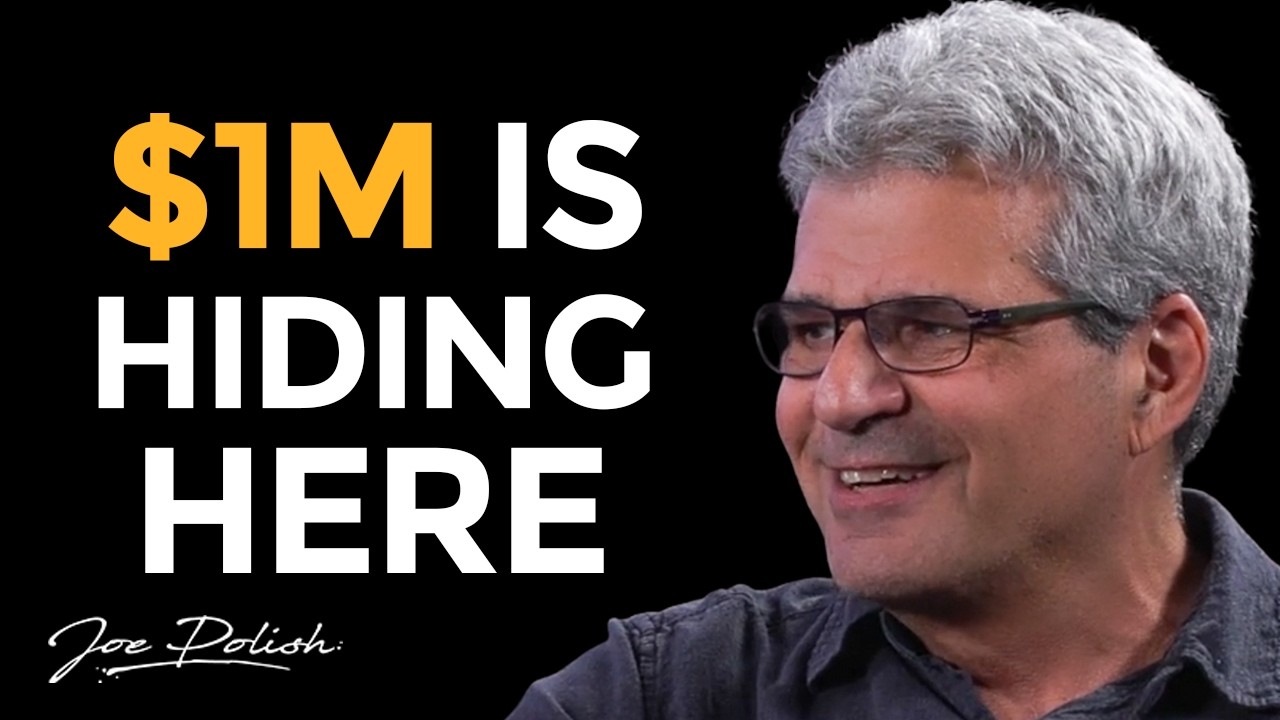
Brian Kurtz, a direct-response marketing expert, walks through how to find an extra $1 million in your business. Start by auditing what you already have: your list, your offer, and your creative. The 40-40-20 rule matters most, and lifetime value calculations beat chasing new customers.
Chapters
What do they need to do in order to make an extra million dollars that currently does not exist in ways that they haven't even thought of before, or maybe they're just not leveraging?
Take a look at your business from an internal standpoint. The starting point is you have to assess your assets. Assessing your assets means you need to look at everything that you already have. I mean, Jay Abraham's book, it's Getting Everything You Can Out of All You've Got. You need to know what your business is first, and then try to figure out where you can find more of them. It basically It takes the people you already have, you assess them, and you have all of their purchase data. Then you can go out to a bigger universe and find those people with the same characteristics and the same data.
Alright, now I'm about to introduce someone who's genuinely one of the smartest people on the planet on marketing, a genuinely amazing, caring, loving human being, a dear friend of mine for over 3 decades. He's awesome. So his name is Brian Kurtz, and he's one of the true legends of direct response marketing. For over 40 years, he's been a serial direct marketer who's never met a medium he didn't like. A medium not like the ones that— anyway, you know what I'm saying. During his time at Boardroom Inc., he oversaw the mailing of nearly 2 billion pieces of direct mail and worked alongside some of the greatest copywriters in the history of our industry. He hosted Titans of Direct Response, authored The Advertising Solution and Overdeliver. Overdeliver, there's a copy of it behind me here, and has delivered 13 presentations right here in Genius Network. His mission today is simple, to be the bridge between the timeless truths of direct response and what's cutting edge now, including how AI fits into all of it. And if you ask him, he'll tell you he's really just a Little League umpire who does marketing on the side. Please help me welcome my dear friend, Brian Kurtz.
All righty. I just want to say one thing about Joe and the carpet cleaning, which I spoke at his carpet cleaning conferences. And that was like really early in my career as far as speaking. And the thing that I just marveled at is that he owned an industry. And talk about— I don't know if it's the second biggest win or not. And that was a great presentation, Michael. So I think that the idea that owning— there are guys in marketing today that own a country. Like, there's a guy— I'm in Jeff Walker's Mastermind, and there are guys, like, there's a guy from Brazil, and there's a guy from Hungary, and there's a guy from France, and they come into the United States. The United States is the snobby, you know, "We're the best marketers." We are. I'm not saying it because it's not true. But they come in, they can speak the language, they absorb everything, and then they go back and change their countries, and they've really changed their countries. And Joe did the same with the carpet cleaners, you know, and I just always emphasize with the people I coach, it's like narrow to wide is always better, you know, and you— to try to be all things to all people all the time, that's exhausting. But going a mile deep with an industry, a niche, is always so much better. So, but I was like, I used to like marvel at those events. They were amazing.
No, they were, you know, and I miss them to the degree that It is so interesting to take a business that has been in business for 5, 10, 20, sometimes 30 years, and they're chugging along and they can't get a breakthrough. And then you teach them like, here's how to change your offer, here's how to change your pricing, here's how to package something up in a different way, here's how to offer a money-back guarantee and create risk reversal, here's how to do upsells without having to do bait and switch, but how to literally entice people. And then, and the best thing that I loved about it was when I started teaching them how to how to use consumer awareness guides. The biggest thing that I think was the coolest is when you teach someone how to have success or become more better at one area they're trying to get better at, it changes their identity. And all of a sudden they don't view themselves just as carpet cleaners anymore, they view themselves as like real business owners. Because in that industry there's often a low barrier to entry in order to get into it, and a lot of times if they're not having financial success, they just don't feel good about themselves.
And you created an unfair advantage for them because Joe would put together these books of every, like, direct response ad from anybody he could find. And the thing is, you could just rip it off. I always say stealing is a felony, stealing smart is an art. But— and it's true. But that's why people have swipe files and all of that for their marketing. But Joe would just give it to them because if you're at this thing, you're sitting— and this is a good lesson for everybody— like, if you're geographically your business is in a geographic area, you can just basically share, and they did. Like the guy, the carpet cleaner in Iowa and the carpet cleaner in California, they could just do the same marketing and then they can compare notes, and they did. And Joe just got— it was— and I've seen other industries like that, like Mike Aguilaro with HVAC businesses.
Robin Robbins.
Robin Robbins, IT. I mean, those are the— It's like there are really big marketers around. I like the small marketers that dominate. And Joe, just so you know, Joe talks about it a bit, but I just wanted, and I was sort of part of it. I spoke a couple of times. In fact, Mark Victor Hansen was, I remember being, I said, I'm speaking on the same stage as Mark Victor Hansen. How did this happen?
And I would bring people to the carpet cleaners. Like when I had Richard Branson come and speak at one of the events.
You had Robert Kiyosaki.
Oh yeah, Kiyosaki in the late '90s before he started offending the shit out of people. I don't know if I'm going for the stage. No, but yeah, like Michael Gerber, I mean like all kinds of different things.
And Brian Kurtz.
Yes, yeah, well, you know what's funny? So I met Ken Glickman.
Ken Glickman.
VP of Boardroom in 1992. Me and Eunice went to one of his talks and I became dear friends with the guy. I talked to him about, I don't know, 3 weeks ago. Oh, you did? Yeah, yeah. —what it was the weirdest thing, he was running the iPower and Time Magic seminars for Boardroom. And so they would do these seminars and I show up at this thing and I am just like a seminar junkie. I am literally the exact sort of like person that would like just buy everything trying to find out the magic secret and how to make things work. The difference was I actually did my best to implement some of it and have success with it because it's impossible to implement everything. It's like you're going to hear ideas at a Genius Network meeting like everyone is going to walk out of a Genius Network annual event if you take like the duffel bag of— in the wheelbarrow we give you for books and take a— and some will read them and some of them don't. But it's the pursuit, it's that desire that is as important if not more important than the book because how many of you ever had a book that has changed your life? Okay, how many of you ever given or recommended that book to somebody and they didn't even read it and it didn't change their life, right? Why? It's because, well, is it the book? Because if it was access to information that made someone better or successful or whatever, every reference librarian in the world would be a multimillionaire, you know, because they are trained in how to— but why is that? It's the person, it's the intention. Some people are built to be entrepreneurs, others are not. But the thing with the carpet cleaning stuff is that I never thought I would ever teach or speak on a stage or do anything like that. I mean, I was in a desperate situation. I think you should try it. Yeah, I should. No, but I was a convert of my own system. I never— and I've watched people, people that just get into trying to be speakers and make money, some do and succeed at it, but there's a lot of people that I think who are the very best at actually teaching other people is if they've really done it themselves. Not pretend they've done it themselves, but not pretend like you're a— you know, you can be a real monk or you can be a fake monk and still make a lot of money like Jay Shetty or something, who never really was a real monk, but, you know, that's theater, that's performance instead of doing it. But the— you know, there's— being a convert of your own system, I think, is one of the best ways— to actually, you know, if you understand the pain of your audience at such a deep level that you— and you've learned how to get out of that pain, like I would do that whole exercise, you know, think of the business owner and I've done this for, as weird as it sounds, for Genius Network members, if you're— you're staring at the ceiling, it's 3 in the morning, you've got— you're just sick to your stomach, you can't sleep, you're tossing and turning, you got bile coming up from your esophagus because you want to throw up. What the hell is causing that? What is their pain? What is— and I understood everything about the struggles of a carpet cleaner so I could speak with— to them. And I remember Chet Holmes. You remember Chet Holmes, right? So I'm friends with his daughter. And Chet Holmes, the ultimate sales machine, he had called me up and he was— him and Jay Abraham. This is before I'd become friends with Jay. And I was the biggest in the industry for the carpet cleaning industry. And, um, He's like, we're going to do— we have one of— I hear you do really well in the carpet cleaning industry, and we are going to do a $10,000 a person event, and we want to invite you to come and speak at it because we have one of our clients, one of Jay's clients, that was a big rug cleaner in— I don't know if it was Ohio or something. And I go, okay. Tell me more. What are you thinking? You know, because I just knew what worked in that industry. Like, 20% of all the carpet cleaners in America had become— had bought something from me. Literally 20% of every carpet cleaner, one in five. So I understood the industry. And so he said, okay, well, what we're going to do, we're going to do this big event. We're going to give you an hour time slot, and we would like you to we would like you to promote it to your whole list and we'll let you come and speak and then we're gonna— I think he said we'll give you like 10% of all the people that sign up as a result. And not like asking will I do this, like this is what you're going to do. And this is like— and I'm like, I'm like, oh really? So you want me to promote your $10,000 event to my list? And I'm like, Are you kidding me?
Like, why on earth would I—
and he was like really arrogant, right? And I go, first off, I go, just feel free to— I don't need to speak at your event. Go ahead and market it. Good luck with everything. Let me know how it goes. And so I was like, I got to get this asshole off the phone as quickly as humanly possible. And he was like, back then doing stuff with Tony. Couple years go by. I run into him at an event. This is like 2010. We go to a big event, remember SANG, Speakers, Authors, Networking Group, and this is when before Larry, Larry, Stephen, and Chet actually first started it. So we go to this thing, I take Tim Ferriss with me, I have like a bunch of these jackass marketers, and so we go to this thing out in the middle of nowhere in Texas. We had to drive 90 minutes to go to this big house and Chet's there and I'd never met him in person. I never met him, yeah. Yeah, and he came up and he comes up to me, he goes, Joe, He goes, first off, I'm so sorry about that phone call. He goes, I was a total jerk. He goes, I just want to apologize. And I go, so what ended up happening? He goes, you were absolutely right. We promoted it. It didn't work. It was too expensive. He's like, I just thought I just knew something you didn't. And he was a great salesperson. I mean, Chet is a very smart guy. His book is an excellent book. I recommend it. There's a lot to be— to learn from that. But it's like when— if you— some people just know a niche and others don't. So why am I sharing all that? There are all kinds of people—
How do you like my interview with Joe?
Yeah, yeah. No, we'll switch it.
And I— it's fine. I mean, I'm less nervous now than I was. But the thing I wanted to say, that Jay Abraham— and I said this yesterday— I love you, Joe.
It makes up for every time I give you the mic and you talk out of your ass. That's right. I talk out of my ass.
Yes, and then you're like, yeah, you owe me, right? But Jay Abraham taught me, I mean, I knew Jay since the early '80s. He was the consultant for the newsletter business and the business that I was in, and he said something to me early on, and then he said it again when I was leaving Boardroom. He said, if you did it, you have a moral obligation to teach it. And just those few words, and I mean, you did it early on in your career, 'cause the thing is, I did a full— I taught a full semester of direct marketing at my alma mater, Rutgers, in 1989, and I remember the guy who was the chairman of the business school knew me, and he called me up and he said, "There's a course in direct marketing on the books, and the guy who taught it last time got terrible reviews because he was like an academic. He didn't know anything." And direct response marketing is a practical application piece of marketing. It's not general advertising. It's not image advertising. And if you haven't done it and, you know, waited for responses and, you know, the idea of doing a mail— and direct mail is slow, too— waiting 12 weeks for the results and then acting on those results, an ROI on every piece of media that you did. So I have been doing it for only 9 years. And he said, "I'm only gonna keep this course on the books if a professional in the industry teaches it." And he was kind of— I couldn't refuse. Anybody, you know, flattery doesn't work on everybody, but it works on me. So, you know, he said, "You know, you're the guy to do it." And I'm saying, "I guess I'm the guy to do it." But I always remember that because I think that not doing something and then you're gonna teach it— now, there are things you can teach. That, you know, that you haven't done. But man, something like direct response marketing, I don't think— and I haven't done everything in direct response marketing, so I'm not the ultimate teacher. I got speakers for the students at Rutgers.
Well, I mean, look, like, we don't have to get shot by a gun to know that getting shot by a gun is a bad idea, right? But there are certain things that it's better to experience. Hey, I hope you're enjoying this video, and I want to let you know that I have a new book that's come out, and if you'd like to get it absolutely free. There's a link below in the description, or you can wait till the end of this video, or you can simply go to joesfreebook.com and you can get a copy there. I remember, like, um, Ken introduced me to Jeff Madoff, who's now been a friend of mine for a long time. Madoff. So he's a producer, he's a director, uh, and, and, uh, so we're sitting in his office in New York, and one of the first things he said is he's like, uh, uh, Have you ever taken acid? And I'm like, yeah. And he's like, how do you explain to someone who's not taken acid what an acid trip is like? It's kind of hard. Like, yeah. And there's certain things if you just have— we were really talking about experience. Like, how do you— there's certain things. But the niche thing is, see, the carpet cleaning industry in most niches can't afford the talent of like a Tony Robbins. Like, a lot of the big— so There's this fascination with fame, which I've actually learned is really dangerous to be seduced by being well-known. I'd much rather be well-paid than well-known. And fame— there's a lot of negatives that come with fame. There's a lot of positives. I mean, you can, you can do a lot of stuff if you're famous. But when you go into a niche, you can just take over things and be highly, highly profitable. Because if I taught just a general course on marketing, without doing it in a niche, it's very hard to sell. It's hard. It's very hard to sell. And so what I was saying was every person— see, if Chet would have approached me with a collaboration instead of like, oh, let's play a status thing here, that's one of the things where I think a lot of guru sort of mindset where you get a bunch of people applauding you and telling you great, wonderful, nice things.— and you start believing your own PR, it literally goes to your head. And at the time, you know, he was doing a lot of stuff with Tony and had a big success. And there becomes that curse of knowledge where you think just because you've had success over here, you can just take that anywhere. And the approach, you know, always was, even before I called it "What's in it for them?" was like, okay, if I'm going to approach anybody to do something for me, it's got to be compelling. It's got to be something that they want to do. And when I was approached with it, it didn't make me want to do it. Now, the reason I want to set this up is because you wrote a book called Overdeliver. And Overdeliver is really about creating that. And if people view doing business with you that you overdeliver and you give them more than what they expected, they will keep coming back and they will tell other people about you. And there's a way that you can engineer that. And that's some of the things I want to—
I'll tell you, I was in a mastermind and when I was asking— a marketing mastermind. And I was writing the book and I asked for ideas for the title, and I said, "I have this idea, 'Overdeliver.'" And some— I won't mention names, but these major marketing guys, two of them in particular, still have them in my mind, they said, "That's a terrible title." And I said, "Why?" And he said, "Well—" Well, one of them was like a consultant for like experience marketing, so he said, "You know, 'Overdeliver' is great, but once you overdeliver, then how you gonna overdeliver on the overdelivery?" and that, and so you're gonna disappoint people eventually. And I said, well, that's not a good reason not to name my book Overdeliver, because I would rather err on the side of overdeliver and then overdeliver on that, and then maybe not overdeliver as much, but still try to overdeliver as much. And if I fall short, I fall short at some point. But to think about, like, I'm not gonna title my book that because of that, because my whole marketing career was all about overdelivery. So he gave me— he told me not to pick the title and use that for a title, and it made me even more want to use the title. Plus, I like the idea of owning a word, you know, and I don't own the word overdeliver, but, you know, like Jeff Walker wrote the book Launch, and he owns the word launch in marketing. And so people, you know, give it back to me, like in my mastermind, like They'll say, wow, you really over-delivered at that meeting, Brian. Yes, of course I did. And I'm not reading my press clippings here. I never do that. And I get hives when people call me a guru. I like being called an OG. I like that. I like being an original gangster. But people call me a guru. They call me a legend. And I just freeze up. It's not right.
That's why I called you a legend. I was hoping you'd be frozen up when you heard that.
I was getting hives over there. 'Cause that's not—
'Cause you really, what you're saying is you don't deserve that title.
No. Well, no, I, yeah.
No, what it is is it makes you just sound like you're too old, I think is where you're going with that.
I know, I know. And I'm not, I don't know what too old is. Maybe I'm at that point, who knows? But I think to justify my existence, I constantly have to say that I've got 45 years— that's not one year's experience for 45 years. I've got 45 years of cumulative experience, and therefore, that's a good thing, and I have a lot of wisdom. And that's the way I justify my existence, actually. So, because otherwise I'm just going to be, you know, old news, and I don't want that because I want to still make a difference for a new generation of marketers. That's really my mission. And I learn as much as when I— like, I have a lot of guys big into AI in my mastermind. I bring in speakers, and, you know, I love the new, and I don't have to do the new. That's kind of— being old makes you— it's easier. I don't have to do anything, actually. So it's a great place to be, but I still want to be ambitious. I still want to make a difference. I want to share what I've learned. You know, I got Jay in my ear saying, you have an obligation. To teach it, but I don't have to teach it myself. I just need to bring in the experts. I'm always— and Marty Edelston taught me this at Boardroom, because Boardroom was not a guru newsletter. It was a panel of experts. I don't know if anybody remember the Bottom Line Personal. Anybody ever remember? This is like a young crowd.
Who doesn't know?
Anybody never heard of Boardroom, Bottom Line Personal, Boardroom books, Bottom Line books? Some people, a few. But people aren't raising their hands at this meeting, so We have no idea.
No, the amount of people that raise their hands here is actually higher than most. Yeah, yeah. It depends on— Unless you train them like monkeys at some of these, like—
It's higher than a group of Hungarian entrepreneurs, which is an oxymoron, sitting on their hands when an American like me gets on the stage and says marketing isn't everything and it's the only thing. Just think about that. A country that was— communist until 1989, and I'm the money-grubbing American getting up on stage. But it was a great lesson.
Well, so let's try to take this many years that you've been doing this and create something useful out of this conversation that they can really take home, and it could alter the way that they do marketing. So first off, define marketing.
What's your definition of it? You know, Mark, when I— speaking of when I was on the stage in Budapest, I started with "Marketing isn't everything, it's the only thing." Then I went to "Marketing is not evil," because I'm starting from scratch with those guys. So you have to, like, make the case that marketing is not evil. And from there I said, you know, marketing versus selling, very different. You know, selling is the— the way I define it, selling is basically the transaction, and marketing is everything that creates the transaction. I keep it simple. That's a simple definition. But marketing is so broad, and I just, you know, marketing is, and then I went into things like, well, if you don't want it, you can be as aggressive or non-aggressive in your marketing as you want, but you always want to be consistent and congruent with your marketing. So you can be super aggressive if that's who you are. As Joel says, you know, you get on stage, you want to be the same person on stage, off stage. In your marketing, you want to be the same person, especially if you're a personality brand, but Most brands, I think, really need to be consistent and congruent with their mission, with their vision of what they're trying to sell. And to me, that— and I started— they started warming up to me a little bit, so I know I was getting to them. And then I got into some just basic principles of direct response marketing, and I think I won them over, because they did clap for me. So they got off— they weren't sitting on their hands at the end.
But it is— That may not happen here.
No, I doubt it. Speaking of clapping, I gotta tell this story. I'm a tangent waiting to happen, but it's about Joe Polish. And you'll like this, you'll like this, 'cause Joe Polish, I spoke at Michael Fishman's Consumer Health Summit in the 8th or 9th year. So he's been doing it for what, 20 years or so? 25 years, yes. Yeah, and Michael Fishman was one of my best friends, he still is, and he finally asked me to speak. It's like, wow. And I was leaving Boardroom and it was gonna be all about my light bulb moments at Boardroom. And I don't know if anybody have ever— I know Joel has, but has anybody ever come to a presentation and got a standing ovation before they started without the MC saying, we're going to give a standing ovation for every speaker? Has anybody had that experience? So not that many. And I had that experience there. But the best part of it— and it's not a brag. It happened to me, and I'm like crying. I guess because Michael should have had me as a speaker 5 years before that. So everybody sits down, and one voice in the back says, Brian, don't fuck it up. And that was Joe before I spoke. So that's my good friend Joe Polish.
No, I mean, I always try to— that's just sort of— it's weird the way that I have gone about building rapport with people.
But you have to know who you're building it with. Yeah. Well, and also I can—
I've somehow managed to learn how to say things that if other people said it, they would get killed. And I think part of it is I think most people know that I'm not— there's not an intention of harm behind what I—
Let's try to get some concepts out here for these guys.
Okay. So let me do this. So you've been doing this forever. We've already established that. So what timeless marketing principles still hold true today regardless of technology or platform?
Yeah. So I'll set it up first by saying that, you know, when I— back in the 1920s when I started in marketing, there were— advertising opportunities were finite. You had direct mail, you had radio and TV, you had package inserts and print public— you know, print advertising, but they were finite and there wasn't a lot of choices. And today the difference is that advertising opportunities are now infinite. I mean, there's so many different things. And so one of the premises of that is that, and I think it's still true today, the dangers of one-stop shopping in marketing. And even back then when the advertising opportunities were finite, and Joe mentioned that I've worked, just because I've been around so long, I've worked with every great classic copywriter who's been alive in my lifetime. It's a blessing. I mean, it's one of the blessings of my life. I've worked with Gene Schwartz and Gary Bencivenga and Jim Rutz, and they became friends too, and people in Genius Network like Paris Lampropoulos. And so I think that when you have— to have a one-stop shop back when there were— oh, wow, that's a great picture.
Titans of direct response. Yeah, so we've got Gary Bencivenga, one of the top copywriters in the world, me and Brian, and then Dan Kennedy, who always looks like a walrus.
He partnered with me on that event too.
There's a picture up there. There you go. Grumpy-ass Dan Kennedy. And Craig Clements, actually.
Oh yeah, Craig Clements. He photo bombed it. And that was before he was a billionaire.
Yeah, exactly. Now he's got a billion-dollar company.
Now I lost my train of thought. My synapses don't work as well. So— Dame's a one-stop shopping. Dame's a one-stop shopping. And so we— so Gary Bencivenga in that picture, You know, if— to go to an agency that's going to handle all of your marketing, it's still a mistake. And hopefully— I know there are agency owners and all that, and that's why specialization is so important. That's why niche is so important. So we— if I was going to get the best copywriter, if I went to an agency, that would be a waste of time, you know, because the copywriters at that time could make so much more money. They could get royalties on their packages. And to go to a copywriter that's basically an amateur or average, and as Michael Bernoff says, "Average sucks," you want to get the best of the best. And so, and we paid top dollar for it too because you don't want to leave that to amateurs when you're— and it was all direct mail. We're paying postage and printing. That's something that's foreign to most people here. But, you know, that's why chapter 3 of my book Overdeliver is why paying postage made me a better marketer. And the reason— it's not because everybody should do direct mail today, and people should consider direct mail today, but it's because of the discipline that we had to have.
And it goes back to, if you don't pay, you don't pay attention, even though that first is applied towards just giving stuff to people for free and then them not placing value on it. But if you have access to things that when you have to pay to make something work, you pay more attention to it.
Exactly, exactly. So, so the advertising opportunities are now infinite. Today, I think that that's a license for, you know, somebody came up to you and said, and you want to do some marketing, they said, "I can handle all of your marketing or all of your online marketing even." I would run away in most cases. You know, how could they do everything? You know, YouTube, SEO, and you know, you're going to go to Stephen Spencer if you're going to do SEO because he's the specialist, right? And so it's basically— It's a long way of saying specialization is still critical today as well, and if— but there are so many charlatans out there that say, you know, I can handle all of your marketing. And so that's one thing that's stood the test of time. Now there's another thing, and I got this from Perry Marshall, who's a great marketer, a good friend, and he has this thing called Maze 2.0. And Maze 2.0 is like you take two axes— what do they call that thing when you get the four boxes? There's a name for it. Quadrants. Quadrants, right. So basically the axis is online, offline, live, recorded. Online, offline, and then you have 4 boxes, right? You can put any medium in any one of those 4 boxes. A book is recorded and offline. A webinar, a recorded webinar is recorded and online. So, and basically what Perry did for his mastermind, and he did it for my mastermind, is he plotted— it's a cool, it's a cool thing when he put it all together— like all of the advertising medium, and you can see exactly where they are and all the things. Now most entrepreneurs would look at that and say, "Wow, I got a lot of work to do. I got to be in all those media so I'm gonna make some sales." No, that's not what you want to do. What you want to do is figure out like one in each quadrant. I kind of teach two in each quadrant, because that will make it feel like you're everywhere without driving yourself crazy and going broke. And then the other piece of that— and this is so important— Bill Bernbach, who was one of the Mad Men from the '60s, advertising guy, and this quote, I have it in one of my chapters. I have a quote before the beginning of each chapter. And he had a quote that says, adapt— don't adapt the technique to your idea, adapt the idea to the technique. So you have people in online marketing today said, "I gotta be on Facebook." Well, no you don't. You gotta figure out what your idea is, who— where you— where the list or the universe lives for your product, and then figure out where the best place to do it, and then you go to this— something like Maze— doesn't have to be Maze 2.0, but you want to pick those media that are going to be the most applicable to you. And it's hard to do on your own, and that's one of the reasons why being in Genius Network is so good, because we have experts in everything, but buy à la carte, I guess is the point.
It's really important to have a stable of expertise and having access to that stable. Exactly. You're never going to know what horse you're going to ride.
You don't want to put all your eggs in one basket. So, and then there So there are 3 other really key foundational things that I've identified, and there are probably more. And I identified them by when I was— I did a blog post about, you know, you may not know it when you see it. And I did like the 7 characteristics that were present in every copywriter that I— the top copywriters, like the A— they call them the A-list writers, the big top copywriters, the guys that got the most money for royalties, all that. And I tried to see what was the makeup of them, you know, in terms of what they knew. I'm not gonna list all 7 unless Joe wants me to, but number 5, as I recall— I have to remember them by number— 5 is knowledge of direct, some basic direct marketing, even if you're the copywriter. And it's the old story. Dan Kennedy used to have like a cartoon, and because he was he was chiding copywriters that they needed to be multifaceted, and the copy was their thing, but he had this guy, a bum sitting on the side of the road saying, "Well, write for food." That's not the copywriter you want to hire. You want to hire the copywriter that understands some basic direct marketing and principles. So when I identified that, I think there were 3 that I would identify that every, even if you're an entrepreneur and you're not doing the marketing in your company, you should know the basics of these 3 principles. One is some— the 40-40-20 rule. Now, I never invented anything in my life, but I did do a tweak on the 40-40-20 rule in my book, which I call the 41-39-20 rule. So the 40-40-20 rule says that it's a 3-legged stool of marketing. It's, it's basically list, offer, and creative or messaging. So that's the the 40, 40, the mo— to guarantee success in any direct marketing campaign, you need, it depends 40% on the list, 40% on the offer, and 20% on the creative. I made it 41, 39, 20 because I knew that the list or the audience was the most important. I learned that from Gene Schwartz from Breakthrough Advertising. You know, classic book written in 1966. He says, you know, the The copywriter or the marketer doesn't create the desire in the marketplace. The desire is already there. We have to capture it and then bring it out. So, and I'll prove it to you why the list is the most important. Because if you have the best list, you have a list of customers that you know are ideally suited for your product, and you have a mediocre offer and mediocre copy, you'll make some sales. It won't be ideal, but you'll make some sales. The opposite's not true. If you have— you can get the world-class copy from the best copywriter, an irresistible offer to the wrong audience, you get zero orders every time. So that— it's a principle that I think is still— it still holds true today. And it's not that— so here's the other side that's really interesting is that— so you said— so it looks like the creative is half as important as the other two, 20 to 40 to 40. I'm not a math guy, but I think it's half as important. So I did a blog post, and I think it's in my book— no, it's not in my book— but I said the, the, the least important element in your direct marketing campaign, it's the least important until it's not. And what I meant by that is that once you have the list dialed in and the offer dialed in, then the creative and the messaging becomes the most important. 'Cause now, you know the audience is right, you know you have an irresistible offer, then you go to that, that's why, and you don't buy the copy and the copywriter from an agency. You get world-class copy and then you are able to adapt it to the list and the offer. So, it's a, I hope I explained that so you could follow it. I'm, you know, I know it.
Well, let me ask, is this making sense?
Does this make sense? Yes. Yes? Okay.
So let me ask you a question.
And I have two more things that have stood the test of time. But go ahead.
OK, so I want to ask you, like, so let's just play a thought experiment here. Let's just say that the utilization of AI allows anyone and everyone on the planet to write in Gary Halbert, John Carlton, Paris Lampropoulos, Gary Benzavinga, the very best offer copy, etc., ever. And now all of a sudden everyone has the ability to write amazing advertising and promotions. What do you do with that? Yeah, I— And I'm not saying that it's not there yet.
No, no, no.
And I know there's a lot to piecing it together, but I'm just— 'Cause I actually think there's something of understanding the psychology of selling that if you do not, you will not use it. I don't give a shit.— there's an exercise, maybe I'll take everyone through it tomorrow, that Gary Halbert would teach people that would say, I want to write world-class copy like you. And he's like, do you really want to write world-class copy? I want to. Yeah, I want to. And he would literally make them handwrite his world-class copy, and he would train people.
He would have them write, he would have them like copy, hand copy his his sales letters.
Oh yeah, no, Gary would have some people—
And they would, he also was, he had them as butlers too. They would go pick up his, he got these guys to live with him. Yeah, no, I mean, I know about these people. And they're in the industry now, Sam Markowitz and Doberman Dan. There are copywriters all over the place that, and I'd say you're a student of copywriting. Oh yeah, no, Gary— I don't think you were ever his butler though.
Hell no, no, Gary was so—
You ever picked up his dry cleaning?
Gary was so dysfunctional that he would literally just like, it would, how he figured out how to survive 'cause he would try to teach someone how to write copy and he would have them like, no, Gary was just a destroyer.
Let me ask you the question about the AI thing. So I'm not an AI doubter. I mean, you know, people, you know, I'm not a Luddite. I bring in all the best speakers to my, I don't know it, but that's why I get people who are smarter than me to teach it. But I was at my Jeff Walker mastermind earlier this week and one of the people that were talking and I said, yeah, you know, Someday we're not going to need copywriters or something like that, and we're not going to need, you know, I'll be obsolete and many other teachers of marketing will be obsolete. And she said something, and I believed it because it justified my existence again. She said, you know, you get to 90%, and that other 10%, this is the quote, the other 10% is everything. It's everything because you'll get the differentiators. The psychology, all of that. Will that be usurped by AI? Probably. I'll probably be dead, so I don't have to worry about it by the time that happens. But I think— and of course, when we talk about being at a live event, just the human to human, I don't think the human's gonna go away in the copy that we write. But I think that a lot of copywriters will be more— copywriters are often unemployed. They're going to be more unemployed. There's no doubt about it. Because if they're relying— I love Peter's thing about— so it's savior, threat, tool, right? AI. There's also the crutch, too, which I guess is a version of tool, maybe, or I don't know. But a bad tool would be a crutch. And I think that there's still room, but you want to be a bot or you want to be the best? That's a quote from Kevin Rogers. He did a blog post about it. He's a copywriter coach. You know, you can be a bot and you can get— remember, if you have your audience dialed in, if you have the perfect list, you can get away with 90% good copy and maybe even a mediocre offer and you'll make some sales. That's not the business that we're in, right? We want to be world-class in our marketing and what we sell, and that's— I'll be preaching that until they bury me because what else do I have to do except do that? Because I think that— and it's only good— it's only— it's sort of like— somebody recently called me a cheerleader for this. I didn't think that was much of a compliment, but I'm not just a cheerleader. I really want to teach the fundamentals that we're talking about today so that they don't go away, and then it could actually become your unfair advantage when everybody else is relying 100%— because again, this is sales copy, and it's the human And again, if you understand your list segmentation at the deepest level, you have to write— you're writing one-to-one and writing one-to-many at the same time.
Well, see, that's the key though. So knowing how to select who to present the message to. So if you take someone that's on a street corner in Los Angeles with a— what do you call those big loudspeaker things? Megaphones. Megaphones, preaching. The Bible. And you go into a church and there's someone with the same message in a church where people went there that wanted to hear a sermon, completely different response from the audience, right? So knowing how to select the— it's not just about the message. But I will say this though, I think, because I think about this all the time, the moment that AI can do something better than I can do and I choose not to do it, I'm an idiot. Maybe. Maybe.
Everything's a maybe, right? That's important.
But it depends on what it is. And I think if you're not world-class at something and you're very mediocre, you better figure out how to package yourself in a way to be more valuable or—
Or become a plumber because that's AI-proof. Maybe. I'm kidding. No, but it's true. I mean, the trades.
The trades will go longer. But I was talking to Tommy Mello. Joe Polish, the other day. Oh, yeah. He knows. And even him, he's like, it's just a matter of time. It's literally just a matter of time. And so, but my thing is, is I think about this and I think this is what everyone needs to be at least entertaining to a certain degree or at least taking very seriously, is that if you are replaceable, what do you do that is not easily replaceable? And how do you— because if it's just a content thing,— like why the hell should anyone pay me for consulting if they can go to my AI clone and get something as good or even better if it's just that good?
Well, you can charge for the AI clone.
No, no, I'm not trying to find a solution to it. I'm just saying this is the product.
Oh, I was putting him on the hot seat. No, no. Joe, I think you can—
No, no, so like pretend you can't tell me any— like I'm just saying like a thought experiment is there's all these copy— like people— I'm finding this There's fear.
I'm going to be replaced, and it shouldn't happen.
But the problem is you're fighting gravity. You're arguing with reality when you—
I don't think you give up the fundamentals, though. It's not like you throw up a white flag, because that could be our mantra. You may go down in flames, but I haven't seen it yet.
Well, everyone's selling the picks and the shovels, and there's always that. There's always the mining thing. Everyone's heard it.
What blew my mind recently, we had this guy Sam Woods came to my mastermind. He's a copywriter who's really all AI all the time. And he scared the shit out of us and he excited the shit out of us. What? Savior and threat, right?
I saw him do an early on talk. Yeah, he's been doing it.
He started with my group. Yeah, I know.
That's how I met him. Yeah, yeah.
And he's really— he definitely— he started as being, I'm going to scare the shit out of all you copywriters and marketers. And then he told me— some people probably know this, but if you don't, you'll like this. Anybody hear of rentahuman.ai? Yeah? Peter, you haven't heard of it? Rentahuman.ai. Basically, you go there. You can actually— it's like a job posting. And you post for $5 or $10, and the AI agent assigns the human something that the AI can't do. So, that, when I read that, I almost like, you know, well, I almost said I'm done, you know. But there is, that's not, we're not talking about signing documents as something people want to do as a full-time job. But I still think that there's going to be a role, as you say, Joe, you know, for that. And that's why if we keep talking about the 10% is everything, even if it isn't, I think that'll keep us motivated to keep on bettering the bot. Well, I think knowing how to—
like, I think one of the biggest dangers, especially with human isolation, and I think first, Jared put this in a thread that I was on with Peter yesterday when we were talking about Nathan. You gave me the AI, the restaurant where they take your AI girlfriend or boyfriend and you have a drink and a meal with your—
Can you get the AI girlfriend to pay? No.
Oh. No. And where it's not just social distancing was COVID, it's now human distancing, right? Yeah. And when you start creating human distancing, people don't learn how to interact with other humans. And I think that is a skill that if people do not learn how— my friend Ishan Goel, Ishan was the very first Genius Youth conversation we had years ago when I think he was 16. He's now today turned 27. And basically he said that he was in a drive-through with— for food with his partner and like her brother who's like 18 years old, 19, 18 or 19. He's like he didn't know how to talk to the person in a drive-through. He kept fumbling it. He said to me, he goes, Joe, it's the weirdest thing. He goes, I cannot— and he's still a young guy. He hangs out with a bunch of young people. And he's very successful. He's become a millionaire even when he was like 22 years old. So young success, and he's all with very young people. Man, young people are getting so screwed up. They don't know how to talk to people anymore.
No, they don't. And they're lonely too. Yeah.
And so the thing is the ability to— people don't buy from you because they understand what you do. People buy from you because they feel understood. And you can do a lot of things with AI that will— AI can understand you and learn you, but as a human, when you're sitting there talking to another person, because so much of selling to consumers is not actually done with just ads and promotions, it's campaigns, it's relationships. Yes. You go and develop relationships with people that will endorse you and that will recommend you and that will buy from you. I mean, almost everyone that is in Genius Network, it's not because of some ad or campaign, it's because of a long a long tail introduction into something or simply someone that referred them into a group or they were in Strategic Coach or Cameron Harold recommended people, whatever. And so, there's— that all comes from relationships and all of the other businesses that I have in different things, they've all come— I have equity in 37 companies and there's like all of those came out of relationships. They weren't ads, they weren't promotions. And so there's all kinds of stuff that I think AI is going to obliterate a lot of mediocrity. Yeah, yeah, yeah.
And you can't be blind. I'll give you the other two things that I think will stand the test of time. So some version of the 41-39-20 rule. I'm trying to get you to think about it that way as far as the 40-40-20 rule. There's lifetime value. The lifetime value of a customer is a concept that's never going to go away. You need to calculate it all the time. Lifetime could be 2 years. Lifetime could be a decade. Lifetime could be 30 years. But the thing is, you need to know how much you can spend for a customer and how— and it's going to pay you. This is direct response, measurable, and when it's going to pay you back without losing all your cash in the bank. You need to, you know, that's just a basic premise of direct response marketing, and I don't think it's going away. I think, but we're gonna have, we're gonna be, there's gonna be more pressure on the second, third, fourth, fifth product. I mean, every marketer is always trying to, you know, sell you and upsell you and upsell you. It's been done since the beginning of time, and now you can do it a lot easier with pop-ups, with AI, all of that. But I still think at the end of the day, you gotta make enough money to, you know, create an ROI, and it's gotta be enough so that you're not gonna go broke. And the third one is RFM. Does everybody know what RFM is? People, raise, really raise your hand. I won't embarrass you. Does everybody in this room know what RFM is? Yes. Anybody? Raise your hand if you don't know, so I know I'll be talking to a— okay. I'm not gonna talk down to you, I swear. I never do. But RFM is basically how human beings behave in the marketplace. And it's not a rule of thumb. It's so— it's probably the most important thing if you— that's why when I said the copywriters needed to know about marketing, they needed to know about, you know, the list thing. They needed to know about lifetime value, and they need to know about RFM. And so RFM stands for recency, frequency, and monetary value. And all it is is that it says that a more— somebody who buys from you more recently is someone that's worth more than someone who hasn't. Someone who buys from you more frequently is worth someone who hasn't. And the people who spend the most money with you are worth more than those haven't. The key is to combine them. So we, you know, at Boardroom, you know, we used to have mailings of 1 to 2 million pieces of direct mail, and we were able to basically do— I'm not going to go into the granular on this, and I didn't do it because I'm not a math major, but we did— we had a PhD statistician doing RFM analysis on a 9 million, or basically a million or 2 million name selection on the list, and we could predict and this is in the 1990s, in the go-go '90s, that we could predict which the top 30% that would respond at a particular response rate and then don't mail the rest. I mean, it's done in a much more sophisticated way now in all different ways, but the point is that it was all based on RFM. So, you know, if you have somebody who is a recent buyer or someone who bought 3 months ago and then they buy again in the next month, that's gonna be worth more than the person that bought in the 3 months. And then the total dollar amount. And so you can do RFM analysis on a 9 million name database or a 100 name list. I mean, if you need to do it by hand, do it by hand, because your best customers— and this goes back to something we talked about at the marketing day yesterday— you know, the sexy part of marketing is cold traffic. I'm gonna get new customers that have never heard of me before. Well, you gotta do that, you gotta get new customers into your business, but that's really hard. I'm not saying anything's easy in marketing, but what's easier is to sell to an existing customer. And so that's what— and so you basically are analyzing your current list, your buyers or your prospects, by recency, frequency, monetary, and then you're selecting them to buy more products from you without going out to the outside because you've already— I mean, this is logic, so I mean, I know you all understand it. But it's a critical— I don't think that's going away. I don't see that going away.
Well, no, you know, what also is not going to go away is the ability to take risk because there's lots of money everywhere all the time and all kinds of people that have problems and challenges that are looking for something to solve. Making a profitable business is solving problems for a profit. Dan Sullivan's line, "Other people's bad news is your good news." There's a shit ton of bad news out there, and if you have the ability to do that and simply going out and making an offer to people that are in pain or in desire or in want or just, you know, that need, want something and presenting it to them, and the entrepreneurs are the ones that to take a risk. So here's an experiment I want to do here. So, got everyone sitting in a room here and you have been bestowed with some superpowers from God and you can utilize AI, all of your knowledge, every freaking marketer you've ever learned, every copywriter, all of the stuff that you have utilized over the years and you have to give the best piece of advice to everyone in the next 6 months how to uncover $1 million within their business either from new customers, existing customers, unconverted leads, whatever. What— and you are responsible. You have to— so everyone here, they need you, Brian, to tell them what do they need to do in order to make an extra $1 million that currently does not exist in ways that they haven't even thought of before, or maybe they're just not leveraging? What are some of the things that you would recommend?
It's not an easy button, and it's not just one thing.
No, I know, and it doesn't need to be.
No, and it's a tough question, obviously. And that's exactly what I was afraid of, that Joe would stump me. No, but I think my answer to the question is take a look at your business from an internal standpoint. Like, whenever I've done— I haven't done a lot of one-on-one consulting since I left Boardroom.
But let me just for a moment also say, we can do this together. You can call a helpline or whatever. So meaning you have all power, okay, to do this, because I actually want to see if we can do this and solve this. All right, good.
I think we can. But I think, I think it's— I'll give you the starting point. I think the starting point is you have to assess your assets. And I think, I think most companies Most— I say marketers, but every company is a marketer in a way. So you need to— and by the way, I'm sorry I haven't looked over to you guys. I am blind in my left eye, so it's difficult. So I just want to apologize. I should have apologized for that at the beginning, right, Joel? I was really just ignoring you, Joel, because I— so— That's great.
You should. I mean, Joel should.
No, I should never ignore Joel. So assessing your assets means you need to look at everything that you already have. I mean, Jay Abraham's book, it's "Getting Everything You Can Out of All You've Got." And that, to me, I think that's a universal starting point. I mean, who— the whos— you said, I can get Gary Bencivenga, and I can get the best graphic designers and all this other stuff, and the best the best landing page person, the best launch expert, you know, I think that comes after. I think you need to know what your business is first and then try to figure out where you can find more of them. And it's so simple because that's what regression modeling is. It basically takes the people you already have, you assess them, and you have all of their purchase data, and then you can go out to a bigger universe and find those people with the same characteristics and the same data. So I can't solve that problem as quickly as I'd like, and I hope I'm not disappointing everybody in the room.
So we need to wrap. So what is the last— if this is your last time to give people any— send them off with words of advice and wisdom on how to better their marketing and stuff, what would you share?
I had some notes to myself. You going to say buy Bitcoin?
Yeah.
No. Let me see. I got to most of that. There was something that came up in the marketing day yesterday. And I promised to share this with you, Jade. Because I think someone— Jade asked a question. And she said, you know, you had the before, during, and after segments that Dean— Dean is so brilliant. So before, during, and after. And Jade asked the question, how do you— and then Joe and Dean were saying that who do you want to be a hero to? By the way, there's another element of that, a little quick tangent, that if you can make your customer the hero— that's what Product Launch Formula does it. They kind of make your customer the hero, not you. You're not being a hero to them. You end up being a hero to them because you made them a hero. Kind of convoluted, but there's a way to do that. But anyway, going back to this, Jade asked, how can you be a hero to somebody in the before? So it's like the warm-up. It's almost like the warm-up to an audience. And so I just wrote some notes down, and I saved them, so I thought I'd make— and I'll use them now. So it's you need to constantly just drum value. It's always about— and nothing new here, but Always leading with value, always leading with service first, and those are not selling terms, you know, but that's the best way to sell. Patience. We talked about patience yesterday, being a patient marketer. I mean, people are so impatient. I have patience because again, I was a direct mail guy. So I, I'm not saying I want to wait 12 weeks for response rates, but I did wait for 12 weeks for response rates, so I'm, I can be a patient more. I want to get rich I want to get rich slowly, in the words of David Bach, right? So, and then I think there's a concept that I derive from Product Launch Formula, which is the idea of giving— don't hold back your best stuff, even to a new customer, because online gives you a distinct advantage. In direct mail, we couldn't do this because we're paying postage and printing. But online, and the thing is that you need to be confident. You need to be confident to give away your best stuff up front because you have to know in the back of your mind that there's more stuff that you can give away, more best stuff coming. Now, a lot of marketers say, "Oh, this is my best stuff. I got to charge a high price for it, and I don't want to give that away." That's limited thinking about what you can do as a marketer. And of course, if you give away the best stuff first, then you have to overdeliver on the next level. But it'll push you so much more to give away more best stuff all the time. And so lead with your best stuff even in the before stage of the 3 stages. I think— but you have to have confidence that you can create. And I think everybody in this room If you talked about whatever your best piece of content is, your best stuff is, and you gave it away or you— at a low price or whatever, you know you can produce more best stuff. And I just— so that would be sort of the pep talk for everybody here that, you know, don't limit yourself by holding back on your customers. You got to love on them. And online marketing, you know, information is ubiquitous. You know, you're gonna be behind if you don't give away your best stuff, if it is really your best stuff. And, you know, I think that's a really— it's a different kind of marketing headset right now, and it's all because information is everywhere and it's not getting any less, I gotta tell you that. So that would be my— awesome, awesome.
Okay, I hope you found that video awesome and useful. So if you want to get a free copy of my book, I want you to click here. And if you want to watch some More videos that will be useful and awesome. Click here. Go ahead. They're over here. Do it now. Come on. Thank you. Watch 'em.
More from Joe

This FBI Trick Can Command Respect Without Saying a Word ft. JEFFERSON FISHER & CHRIS VOSS

How To Stand Out, Be Different, and Create Raving Fans, Customers, and Employees ft. Jesse Cole



90% Of Businesses Fail In Their First Year, Here's Why! ft. Dr. Benjamin Hard & Dr. Robert Cialdini

The 1 Piece of Business Advice I Got From Elon Musk That Changed Everything Ft. Kamal Ravikant

The 6 Traits You CAN'T Teach in Entrepreneurship ft. Richard Branson & Gino Wickman

The Leg Method: How to Make Your Book into a Million-Dollar Asset ft. Anna David


7 Millionaire Mindset Hacks for Daily Success and Wealth ft. Brian Tracy & Dan Sullivan
