How To Solve the World’s Biggest Problems - Peter Diamandis
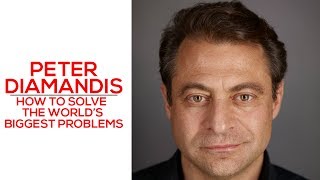
Peter Diamandis argues that exponential technology and incentivized competitions can solve the world's biggest problems. He uses examples from XPRIZE and his book Abundance to show how crowdfunding and gamification have tackled challenges in energy, water, healthcare, and disease.
Chapters
Welcome to the Genius Network show. In this episode you'll discover how to solve the world's biggest problems and build a company that impacts a billion people. Your future wealth roadmap and more with Genius Network member Peter Diamandis. Peter is the founder and chairman of the xprize foundation, co founder of Human Longevity Inc. Co founder of Singularity University, co founder of Planetary Resources, co founder of Space Adventures and Zero Gravity Corporation, and as well as a New York Times best selling author of Abundance the Future is Better Than youn Think and how to Go Big, Create wealth and Impact the World. If you would like access to the full feature video presentation, the show notes and the special resources for this episode, please visit geniusnetwork.com 44 that's geniusnetwork.com 44.
Let me tell you a little bit about the wonderful New York Times best selling author, Mr. Peter Diamandis. Okay? And I go back and forth and say Diamandis, Diamandis. I still honestly don't know how to pronounce his name. Okay? I've said it a million times. It doesn't matter. The guy's a stud. And he wrote this book, Abundance the Future Is Better Than youn Think. And I want this event to actually be phase two of getting this message of abundance out there. But first, no one's going to want to get the abundance of a message, get the message of abundance. If you don't out there, if you don't really quite understand or know exactly what that means. So you're going to learn very quickly what that means. And Peter, he's created a lot of companies. International Space University, Zero G Flights. He's the co founder of Singularity University with Ray Kurzweil and the XPRIZE foundation, which actually takes on massive problems and challenges in the world and uses incentivized competitions in order to get some of the smartest people to actually work on some of the world's greatest problems and solve them. And he is one of the most fascinating, incredible people that I've ever met. And on top of that, he's just a genuinely nice guy who really cares about people, who really wants to help the world and has done incredible things. And I think the guy's just getting started. And so I really just am honored to be able to do this event with Peter. And now Peter, get your butt up here and bedazzle everyone if you could. Mr. Peter Diamandis.
Thank you.
And here's the clicker, all right, the all important clicker. Yes, thank you. Thank you, man. First of all, Joe said it correctly. I've been a friend of Joe's or admirer for many years, but we just met less than a year ago, and I've been in this community for seven months maybe. And I have to say, Joe and all of you have changed my life in an extraordinary way. And I've had a chance to get many of you involved in xprize and Singularity University and Abundance, and it's been amazing. You know, marketers have a bad rap. And I know, Joe, one of your missions is to change that view. But the nickname I've given at least the community here as I speak about it is the Justice League of Marketing, the League of Extraordinary Marketers. I think John Benson had that name for it. And it's a powerful, powerful set of tools you have to change the world. And I, for one, am extraordinarily thankful for those of you who've been working with me, working with us and helping. It's been great. I joined as a 25k member after the first meeting because I really did get. No matter what you're telling people, it's true, I've been getting a huge amount of value. So I wrote my check and joined as a member. And now time is my biggest enemy for attending. But I hope to change that and learn how to make my life more efficient. That was what I wrote down on my what I want out of this, how to work smarter, not harder. So I'm extraordinarily thankful. And I'll come back to that in a moment. I'm just back. On Sunday night, I was at JPL with Charles Elachi, the director of JPL for the landing of Curiosity. What an extraordinary success that was, huh? So to put it in perspective, I'm there amazing group of people from Jeff Bezos and Morgan Freeman. I had Paul Jacobs, the chairman of Qualcomm, with me and great, great group of folks. So this group of scientists for the last few years has been building Curiosity here on Earth. They launch it nine months ago and it lands like to the second with a precision the size of this room on Mars. I mean, how extraordinary is that? I mean, it's an amazing world we live in today when you can actually pull that off. And Jean Liu, the head of Caltech, and, and Charles Elachi were going around meeting folks and telling people how extraordinarily nervous they were on whether this thing was going to work. But not only did it work, I mean, all the landers historically landing on Mars had only a 33% chance of success. And this thing Worked with a series of 70 pyrotechnics that to go off in microsecond precision. And how they came up with this landing sequence of heat shields, parachutes, rockets, you know, sky cranes, I mean, incredible. But it did, it worked perfectly. And now we have literally a robot that has a two year lifetime from its design, but probably could go for a decade. It's nuclear powered and has the potential to find out whether there's life on Mars. And we're living in an extraordinary time. And I just want to put that in perspective. So let me jump. In the book I wrote, Abundance the Future Is Better Than youn Think is really about mindset. And I want to start with that notion of mindset. Because those engineers who built Curiosity could not have done it unless they had the mindset that they could make it work no matter what. Everyone said an extraordinary crazy idea they rolled to make it work. And mindset for me is everything. Because if you have the wrong mindset, you're going to give up. If you think the world is going to hell in a handbasket, why would you ever possibly invest in the future? And one of my missions and the mission I am so thankful that you've been helping with and the mission I want to continue is changing the mindset of humanity, of saying the world is extraordinary, the world is getting better. The world is something that we can make a difference in. So when I talk about the world getting better and creating a world of abundance, everybody says to me, what are you crazy? I mean, haven't you been seeing the economic downfall in Europe? Haven't you heard about the terrorists? Haven't you heard about this, that and the other thing? And I'm going, guys, listen. We're living in a world where the media is a drug pusher and negative news is their drug. On every second of every day, on your iPad, your iPhone, your television, your radio, on every single device you have, you're having negative news pushed to you in a nonstop fashion. And you have to remember that. But the fact of the matter is the world is getting extraordinarily better at an extraordinary rate. Over the last hundred years, the human lifespan has more than doubled. The cost of energy, of food has come down thirteenfold, energy twenty fold. The cost of communications a hundredfold and a thousandfold. Literally. We are living in the most peaceful time ever in human history. And these are the facts of the last hundred years and the forces that created that are only accelerating. So we have the potential to live into an extraordinary world of abundance. So I do Want to acknowledge the group here, many of you, I'm not going to call everybody out who helped put abundance on the New York Times list. We hit number two. We were there for nine weeks. And for me it was the beginning of changing that mindset. I wanted kids and adults to have a set of facts that are counter to what the drug pushing media is constantly feeding us. And you know why they feed us that, right? The brain is structured to pay far more attention to negative news than positive news. And we use that in our marketing techniques. You know, when you say to someone a piece of negative news, they go, what? What was that? And they pay attention and they focus because that's the way our brain is structured. But there's a downside of that, and the downside is that we become pessimistic. And facts and knowledge is the mechanism to counter that. The neocortex of the brain. So there is an amazing video that a fellow by the name of Jason Silva created about abundance. And what I'd like to do is show that full context and then dive in a little bit more. Oh, I'll mention before I say that, that one of the upsides of your campaign was that abundance hit the top of Bill Gates personal reading list. So that was very cool. So onto the video.
You know, I'm really exc about Peter Diamandis and Steven Kotler's new book Abundance. Right off the bat, they explain this idea that technology is a resource liberating mechanism and that scarcity is actually contextual. Something is only scarce until you develop the technology that turns it into something abundant. They introduced this concept of exponential technological progress. And to explain this, they talk about 30 steps. If you take 30 linear steps, 1, 2, 3, 4, 5. 30 steps later you're at 30. If you take 30 exponential steps, 2, 4, 8, 16, 30 steps later, you're at a billion. That's the reason that the cell phone in your Pocke today is a million times cheaper, a million times smaller, and a thousand times more powerful than a 60 million dollar supercomputer was in the 1960s at the billion fold increase in price and performance and miniaturization. You know, a young person with a cell phone in Africa today has access to better communications technology than the US president did 25 years ago. So it's this concept of exponential growth, right? And then you have the rising billion around the world, people coming online for the first time, buying smartphones, joining the global conversation. You have a new generation of techno philanthropists, you know, that have made billions of dollars in the information age, they have the resources of nation states, and they want to transform the world. You have DIY innovators leveraging emerging technologies to impact the world in a positive way. And so the book ends up being a kind of really optimistic take on a possible path that we could take. We can leverage these emerging technologies that are evolving exponentially, and we can transform the world. It's up to us. And abundance shows us.
That's the amazing Jason Silva. If you haven't seen his work, if you look on YouTube, he's done some beautiful, beautiful work. And unfortunately, he's not in town to be with us today. You know, Steven Kotler, who's an amazing author as well, and I wrote this book to give you guys the facts and give you guys the stories to spread the meme, because, you know, how you think affects the decisions you make and affects how you communicate. And that's everything. That's all we have. It's our mindset, how we think. It changes our performance, our success, our relationships. It changes everything. So in this book, I'm going to give you a quick summary because hopefully it's going to be useful. I start with a story that's extraordinary. It's the reason that the book is covered in. In aluminum, or at least in faux aluminum, as best you can. The duda on the Left is Napoleon III. The year is 1840, and Napoleon is inviting the guy on the right, the King of Siam, over for dinner. And Napoleon feeds all of his troops with silver utensils.
Silver.
To show his wealth that he can feed all his thousands of troops. Napoleon himself is fed with gold utensils. And the King of Siam himself is treated as a God and fed with aluminum utensils. You see, aluminum back then was the most precious metal on the planet. Even though aluminum is 8.3% of the Earth by weight, you can't go in someplace and dig up aluminum in the ground. All the aluminum we have on Earth is bound with oxygen and silicates to form what's called bauxite. And bauxite was so difficult to pull the aluminum out of that it was worth more than gold and platinum, which is why the tip of the Washington Monument, built in that same decade, is made of aluminum. And then a technology came along called electrolysis that made it so easy to extract aluminum from the bauxite that we use it in an abundant mindset. Aluminum foil, aluminum cans, aluminum airplane. We think of it as a cheap metal to build with. For me, that got me thinking about technology as a resource liberating force. And if we know anything, it's that technology is accelerating exponentially. And we'll hear about this in detail from my good friend and partner, Ray Kurzweil tomorrow. So that, as a mindset, makes me think about what else we think of as scarce. You know, people talk about energy scarcity. Do we have the energy to provide everyone on this world with the level of living that we have today? Well, ladies and gentlemen, we have 5,000 times more energy that hits the Earth's surface from the sun than we use as a species. Every year we are bathed in abundant energy. It's just our ability to convert it from sunlight to usable energy hasn't caught up yet. But there's great news in this area. The cost of solar dropped 50% this past year and 50% the year before. And the amount of solar we're producing is increasing at 30% a year. We're only 20 years away from meeting 100% of our energy needs from solar. This year alone in India, the cost of solar energy was less than 50% the cost of energy from diesel fuel. We're in the middle of a transformation no one speaks about or talks about, but abundant energy doubling year on year on year. All of a sudden we have eight times than 16 and 30 times as much energy as we use as a species. It's going to change the world. We talk about water scarcity, but we're living on a water planet, right? 70% of the Earth is covered by water. Yes. 97.5% is salt water, 2% is ice, and we fight over half a percent of the drinking water on the planet. But there are amazing technologies coming online today, like Dean Kamen's Slingshot that has the potential to provide billions of people with clean drinking water because it can convert anything. Salt water, arsenic laden water, the water out of your latrine into water so pure you can inject it. You heard from Jason's video the idea that the Masai warrior in Africa today is better mobile, calm than President Clinton or President Reagan did 25 years ago. And if they're on Google on a smartphone, they have access to more knowledge and information than President Clinton did 15 years ago. But it gets much better than that because on your smartphone that you get for 80 bucks, an Android phone in Kenya right now, for 80 bucks on that smartphone comes free GPS, HD video, HD still cameras, libraries of books, games, Skype, video, teleconferencing. These are the things that any one of us would have spent hundreds of thousands of dollars for just 20 years ago. Today is free. Extraordinary. I'll speak about this in a little bit, but we have at the XPRIZE foundation something called the Qualcomm Tricorder xprize, which is a competition, an X prize to develop a device that anyone on the planet can have that can diagnose them better than a team of board certified doctors. So imagine on the smartphone, your physician and your educator, not just for us, but for every kid around the planet. And not just any education, any physician better than we can buy here in New York today. And one of the things that you need to know as marketers is man oh man, your business is about to explode. This is the human population on Earth. We just crossed the 7 billion mark. Anybody here, by the way, worried about population explosion, raise your hand. Okay, well, good to know you're not. Because the single thing that we can do to bring down a population of any country is to make it healthier and better educated. Proven time and time again. And that's the trend we're on. So on this graph, the green line here is the number of Internet users. In 2010, we were just shy of 2 billion people connected on the net. By 2020, it's about to grow to 5 billion people, which means that literally 3 billion new minds are coming online.
Now.
These are 3 billion new customers. These are 3 billion people who have never bought anything on the Internet. So I think about this, what do they want? What are they going to create? What are they going to desire? What are they going to invent? What are they going to solve? They represent an extraordinary force for innovation. These people are truly entrepreneurs. They're living their life on the cutting edge. Now what's people say? These people don't make much money. But think about the math here. 365 days times 3 billion, times 5 or $10 a day, plugged into the economy from them, it's tens of trillions of dollars. It's truly the long tail of the global economy that's about to come online. So abundance for me has been about where we're going. And I just recently signed a contract for my next book, which I call how to Solve the World's Grand Challenges and Make youe Dreams Come True. And one of the things that I've been learning and doing interviews on with extraordinary CEOs are a set of tools that are allowing us to literally fight at a much higher weight class. And these are tools and technologies that many of you know about. You use them yourselves. But I'm looking to pull together the best practices to empower people to do extraordinary things on this world. Because one of my messages are, you know, you can stop complaining now and you can start solving. Anyone can start solving. So some of the ideas. I don't know if Claire Lynn is in the audience yet, but you'll meet Claire. She's been working with this on me, with me. Extraordinary individual. So the whole field of gamification, of powerful technology. I have a group out of Singularity University. It turns out that if you get malaria, you have to have a blood test and you're looking in your blood for a parasite in the bloodstream. And it takes a physician 30 minutes looking at a slide to see if they can find the malaria parasite. And to diagnose hundreds or thousands of people takes a lot of time. So one of the SU students created a game out of it. He took images of blood samples, he loaded them online and he taught people what a malaria parasite looks like. And then he created a first shooter game that you get points when you find a malaria parasite and you shoot it. Can you imagine this? And he put those images, thousands and millions of images up online and challenged people in this game to find malaria parasites. And he took it down from 30 minutes, like seven seconds just by gamifying it. I mean, the way you think about something can change it. So all of a sudden it becomes something that's scarce physician's time for 30 minutes, something abundant that anybody could do. In my TED lecture, I talked about the game called Foldit, that the notion that a protein is a three dimensional structure composed of a series of amino acids and how those amino acids fold determines a protein's functionality. And it used to be a supercomputing problem. And a team out of University of Washington created a game out of this and said, hey, let's put up an amino acid sequence and challenge people to figure out how to make it fold. And so this game attracted hundreds of thousands of users. And at the end of the day they said, well, who's the best user? Because these people were folding much better than supercomputers. And they asked, well, is it a Caltech professor? Is it an MIT graduate student? And it wasn't. It turned out that the best protein folder in the world was a person up in Manchester. It was a woman who during the day was a secretary at a rehab clinic who went home at night and played this game and became the world's best protein folder. Extraordinary crowdfunding. You've heard about this. It's coming online in a big way. It's liberating. Capital to make us all able to make our dreams come true. So one of the people I interviewed for Bold is a gentleman named Eric Migikovsky. Now, Eric was an entrepreneur. He's 27 years old, and he had come up with the idea of creating a watch connected to his BlackBerry, which would be his mechanism for getting his emails and his text messages and controlling his music and so forth. And he got about $300,000 of funding from a number of venture capitals out of Y Combinator. And he built the watch and it was working, but Everybody wanted an iOS and Android version of the watch. And he went out to his Marketplace, to his VCs and said, I need another $200,000 to make the Android version. And he pitched and pitched and pitched and they all said no. Now here he is, he has what he considers like the ideal product, and he's got two months of capital left. And everyone he pitched said, no, no. So he heard about Kickstarter and he went up and he launched a Kickstarter campaign for something called the Pebble Watch. And all he wanted was actually, he wanted $200,000. He set a goal with $100,000. He launches this Kickstarter campaign for the Pebble Watch. And in the first three hours, he nets $200,000. In the first day, he nets a million dollars. Over the course of this campaign, he got 68,929 people to pledge over $10 million. The power of the crowd to finance a new product or idea is extraordinary. We have companies like Indiegogo and Rocket Hub and many others that are bringing on a brand new source of capital. This is the power of the crowd to capitalize ideas. It's democratizing the distribution of cash. It's no longer A few VCs who make the decision. It's no longer a few banks making the decision. It's people making the decision for other people. It's a powerful trend that's going to change capital flow. Microwork another area. The idea of having to hire a bunch of people sometimes gives you pause because all of a sudden you've got a cash flow burn rate that's extraordinary. I'm doubling the size of xprize this year. I'm thinking about, oh my God, that's a lot of mouths to feed. Well, there's a company, an organization, one of many, you know, Amazon's Mechanical Turk, but Crowdflower. I just had a chance to meet with Lucas, the CEO. They are a workforce of 3 million people that you can buy for an hour, for a moment, for a Week on demand and pay for what you need. Do you want to know? You know the address and email of every pharmacist in the United States. You can put that up as a task on Crowdflower and you can ask for anything. What information do you wish you had that you don't have? You can literally create a request, put it up on Crowdflower and pay only for the data. And crowdflower will in fact create a mechanism to validate the data so you have high degree of validation. So a piece of data only gets sent to you if two or three people find the same piece of data, for example, and you might pay a penny, a $0.10 quarter, whatever it's worth for you. So it's on demand work on demand knowledge when you need it. So there was a scientist, another biological example, doing research in tuberculosis, and they needed to know whether a slide had a piece of a. A tuberculosis, blanking on the word organism on it. And so they put these slides up and the crowd got paid a penny every time they found one. Another example was a company that literally wanted to screen porn from their photos. So that was a task they put up. So whatever task you have that can be digitized by Google, they can put up and handle the whole DIY community, do it yourself community. I recently had a chance to spend time with a guy named Jim Rogers. Jim is the CEO of Local Motors. He's created a community of 35,000 people that get together and design cars online. And they design only the design of the car, but how to manufacture it, source the parts. And then he's created a location where you can go and build that car over the course of two weekends. And then there is Chris Anderson, the editor of Wired, who created DIY drones. It's literally a community of people that got together and open sourced the software and hardware for a new generation of drones that outfly at 100th the cost, some of the top military drones. So this is a voluntary network for something that he had a passion to do. He put that intent out there, created a community of what was initially 17,000. It's grown now to over 30,000 people that voluntarily write the code, design the hardware and open source it to people. I want to acknowledge Joe and Mike Klein for their help. I've created a new program which you're going to be getting a copy of here today, called Exponential Thinking, which is really all of the thinking around abundance and around bold in its early stages. I want to share with you what I've been learning because it really is the ability to harness the power and force of the crowd. Every interview I'm doing, I am blown away by the applicability of I have to XPRIZE and SU and all the companies that I'm working with. Another thing I want to give away. Many years ago, I had an interesting experience. I was starting International Space University, and a friend of mine put a copy of Murphy's Law on the wall. You guys all know Murphy's Law. If anything can go wrong, it will. And I'm sitting there going, I'm so pissed at this. I'm like, you know, like what? That is, like, the stupidest thing I've ever heard. I was literally angry. And so I had a whiteboard behind me at my desk, and I went to the whiteboard and I wrote on it. If anything go wrong, fix it. To hell with Murphy. And I wrote Peter's Law at the top. And then I started accumulating things that worked for me in my life that had been sort of like the way I was living my life. And it's all, again, about mindset, right? All about mindset. And so I wrote next, when given a choice, take both, you know, who actually said, you have to choose one. And I ended up writing something called Peter's Laws. It was about 18 laws, 19 laws back then. A friend of mine who was in an advertising agency saw this, you know, wrote them out on my Mac. Image Writer, if you remember that thing. And he created a poster of it, and he printed 100 copies and gave them to me. So I went to the Harvard Co Op and I gave the guy 10 copies. Would you sell these? And he says, okay, leave them here. I'll see if they sell. He called me back two days later and said, can I have 100 and so 50,000 copies later, I ended up saying, okay, time to revamp them and create the next iteration. So with my client and his team's help, we've created the next version of Peter's Law, the creed of the persistent and passionate mind. And I've got a copy for all of you. Some of them, some of my favorites. Start at the top, then work your way up. If you can't win, change the rules. If you can't change the rules, then ignore them. I think these are sort of the mindset by which all of you live by. No simply means beginning at one level higher. The best way to predict the future is to invent it yourself, which is my favorite and the way I live by. So I'd like to talk a little bit about xprize, because A number of you have been getting involved. A number of you were at our visioneering. I want to acknowledge Naveen Jain, who's one of my trustees and benefactors in the audience here. Naveen, would you please stand up one second. You'll get to meet Naveen, the CEO of inome, and Jake Silverstein, one of our Vision Circle members, and Laura Mueller, who works with me at the XPRIZE Foundation. So at xprize, we're cranking. We're having an amazing, amazing effect. And I'm very proud of and I really want to invite this community to help us. Our goal is to find the world's biggest problems that people think are stuck and then literally ask the crowd, ask the world to focus on solving them and to say, I don't care where you've gone to school, what you've ever done. Before you solve this problem, you win and all of us win. And we do this by setting a very clear goal and weighting it with a large amount of money. And people don't do this for the money. The money is the excuse. It credentials the problem as being useful and important to the world. So we have had a few big successes. The Wendy Schmidt oil cleanup competition on the heels of the BP oil spill was amazing. We asked teams to reinvent how to clean up oil spills because it hadn't changed in 21 years since the Exxon Valdez. 350 teams entered this competition. The top 10 teams that went head to head in the world's largest oil spill cleanup facility, which is located of course, in New Jersey. I know low blow. Of the top 10 teams that went head to head, seven of them doubled the rate of oil spill cleanup. And these teams were like 20, 30, 50 person companies. And imagine that doubled what had been $100 billion industry had done. The top team improved it by a factor of six fold cleanup. So you're cleaning up on the ocean before it hits the land. One of the teams that doubled the oil spill cleanup rate was a team that met in a Las Vegas tattoo parlor. I kid you not, it's a great piece of video. I'm not going to show here, but. And so you could have bet on any of the 350 teams, you'd have never bet on that team that met in a Las Vegas tattoo parlor. The tattoo artist was the designer. One of his customers backed it. They built a scale model in the guy's swimming pool. And the first time it saw full scale oil and water was in the test facility. But it still doubled. It was extraordinary. We have the Google Lunar X prize. We have 25 teams building lunar lander vehicles and the size of these teams are like 20 to 50 people. There's only been two countries ever to gone to the moon surface, the US and the Soviet Union. And Soviets aren't around anymore. So the next team that actually goes to the moon may in fact be one of these teams. Naveen's chairman of one of them, Moon Express, putting his money where his mouth is to go and get to the moon surface. We have just launched the Qualcomm Triquarter X Prize. Let me tell you what this is about because it's perhaps one of the most impactful prizes we're doing. Rand Corporation a few years back did a study to show that 45% of the time that you go to the doctor, you get the wrong diagnosis or the wrong course of treatment. 45%, it's a coin flip. By 2020 in the United States we're going to be short 91,000 doctors. We can't train enough doctors and people are worried about that. So what we've said is we want teams to create a handheld mobile device that you can speak to. It's got artificial intelligence you can cough on. It has the ability to do literally an RNA or DNA analysis of the pathogens in your sputum. You can do a finger blood prick and do a full blood chemistry, perhaps transdermal blood chemistry and can diagnose you better than a team of board certified doctors. Now I announced this on the stage at CES with Paul Jacobs, the chairman of the Qualcomm foundation. In January, six and a half months later, we have 230 teams from 30 countries around the world competing for this. And we expect this to be won in the next three and a half years. And when it's won, it's going to transform healthcare in a huge way. So what else are we working on? Working on something called the Autonomous Auto X Prize. For the first fully autonomous car to race nonstop from LA to dc. We'll have Google, we'll have gm, we'll have universities, all the car companies about transforming the future of driving, giving you back your time and freedom. We're working on an earthquake prediction xPrize. Imagine being able to predict an earthquake just 5 or 10 minutes before the lives that would be saved. This week here in New York, we're working on the launch of a childhood obesity xPrize. One of the epidemics striking this nation in many parts of the world that could take down our health care system. Other areas working on the field of Alzheimer's. We're looking at an X prize, perhaps for mapping the ocean floor. We know of only 1% of the ocean floor. So literally anything that there is a market failure where people think it can't be done. So I'll tease one thing that we're doing, the way we do this is we get our extraordinary group of trustees benefactors together and we brainstorm and we spend a lot of time thinking about where an XPRIZE could exist. So one of my goals is every year to bring together a small team of people who are passionate about changing the future and creating an innovation and adventure trip. And so we're going to do one of these for just 36 people. And we're going to be doing it this coming February and tomorrow I or Joe. And Joe's been great and really modeled after the trip that Joe's been taking with Richard Branson to his island. We're creating an extraordinary experience where we can bring people together to talk about changing the world. In this image, Rob McEwen, the chairman of Goldcorp. On the far left, Jim Cameron, myself, Elon Musk, and then Jim Giannopoulos, the chairman of Fox. So we're creating a trip for 36 people. It's going to take place in February in which over the course of four days, we're going to give you the most extraordinary experience. We'll start in San Diego with Paul Jacobs. We'll be going down to the top oceanographic institutes there, taking you down to Subdive. We'll be going up to LA, going and tour SpaceX with Elon Musk. We'll be going to Jim Giannopoulos and Fox Studios. We'll be sitting down with folks like Quincy Jones. We'll be going up to Virgin Galactic and the Spaceship Company. We'll be touring that facility. We'll be going up to Paul Allen's Stratolauncher. We'll be going up and doing a zero G flight. We're going to be creating the experience of living on the edge of the space and ocean frontier and then brainstorming what X prizes should we be creating in exploration, in ocean, in space, in land, and really getting you in the mindset of what's possible in the world and where should we be going. So my goal is also to get your guys help in where should we be going and how do we spread the message of this? How do we change the mindset of people to saying anything is possible if you focus the passionate human mind, the capital and the technology. So What I'd like to do is end on a video if we can go ahead and switch over, which just got released. I just saw this recently. I was very thankful that I was included in it, but the mindset again, the idea that the future is ours to create. So if we can switch, let's go.
Climate change, deadly earthquake.
The suicide bomber is a nuclear device in the heart of the nation's capital. It's no wonder that we're pessimistic. It's no wonder that people think that the world is getting worse. But perhaps that's not the case. Perhaps we forget that we've only just begun. Doing what's never been done before is intellectually seductive. Whether or not we deem it practical.
What we're seeing is unfathomably new possibilities all of a sudden becoming available to us.
The future doesn't belong to the faint hearted.
It belongs to the brave. You have to trust in something. Your gut, destiny, life, karma, whatever.
We truly are living in an extraordinary time and many people forget this. So now, technically, your device is on. Can you tell? Can you hear me? The yearning to do what we do in the service of something larger than ourselves. Where did we come from? Are we alone in the universe? What is the future of the human race when you conduct those exercises? Innovation follows just as day follows night. We can do this. I know we can. Because we've done it before.
Stay hungry. Stay foolish.
Ladies and gentlemen, thank you very much. Joe. Thank you so much pal.
Thanks for listening to this episode of Genius Network with Peter Diamandis. If you would like access the full feature video presentation, the special resources and show notes for this episode, please visit geniusnetwork.com 44. If you would like to learn more about the Genius Network annual event, please visit geniusnetworkevents.com that's geniusnetworkevents dot com don't miss out on more insights, strategies and wisdom like this on Genius Network. Subscribe to Genius Network today by visiting geniusnetwork.com subscribe that's geniusnetwork.com subscribe.
Ra.
More from Joe

This FBI Trick Can Command Respect Without Saying a Word ft. JEFFERSON FISHER & CHRIS VOSS

How To Stand Out, Be Different, and Create Raving Fans, Customers, and Employees ft. Jesse Cole



90% Of Businesses Fail In Their First Year, Here's Why! ft. Dr. Benjamin Hard & Dr. Robert Cialdini

The 1 Piece of Business Advice I Got From Elon Musk That Changed Everything Ft. Kamal Ravikant

The 6 Traits You CAN'T Teach in Entrepreneurship ft. Richard Branson & Gino Wickman

The Leg Method: How to Make Your Book into a Million-Dollar Asset ft. Anna David


7 Millionaire Mindset Hacks for Daily Success and Wealth ft. Brian Tracy & Dan Sullivan
