Huge LIES about the Opioid Epidemic Nobody Talks About (Cammie Wolf Rice)
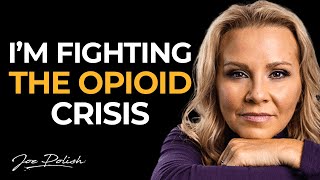
This YouTube interview (Joe Polish with Kami/Cammie Wolf Rice) centers on the opioid and fentanyl crisis through personal testimony and advocacy. Kami recounts losing her son (died of opioid overdose in 2016 at age 32) and brother (Xanax with fentanyl), argues much opioid harm begins with hospital prescriptions, and describes her nonprofit program that places trauma-informed life care specialists at the bedside to reduce opioid use and support patients. She cites outcomes from trials (70% baseline lack of patient awareness about opioids; 25% reduction in opioid utilization at Grady Hospital), recent funding ($1M private grant) and expansion plans (launching in 11 hospitals; awarded opioid-settlement funds in Arkansas). The conversation stresses fentanyl contamination in counterfeit pills, naloxone/Narcan use, destigmatization, peer-to-peer recovery hiring, and the need for broader public education and systemic change.
Questions this video answers
2016; he was 32.
70%.
25% reduction.
11 hospitals.
$1,000,000 (one million dollars).
Chapters
So I'm fighting the opioid epidemic, and I'm fighting the fentanyl crisis. 70% of the patients we talked to didn't know they were taking an opioid or what an opioid was or that they were going home with an opioid. Someone got an Adderall, they thought they were taking an Adderall to stay up all night to study for their finals, and it had a speck of Fentanyl in it, and they're dead. You're gonna have a health crisis at some point in your life. There's a missing piece of the healthcare team. But when you're in the hospital, you have no coach. Nurses don't have time, physicians don't have time. We need more innovation on how to deal with people's pain.
So let's just to give some context about where we're going to go, let's talk about your story with Christopher, because that's where. So you lost him to an opiate overdose in 2016. He was 32. How are you doing with that now?
It didn't have to happen. That's the sad, sad part, you know, because he was an amazing person. He was so smart, and he was a hugger. If you met him, he hugged you. And he had a health crisis. And he happened to have that health crisis at the exact same time that Purdue Pharma released OxyContin into the universe as an answer to everything, as the wonder drug. And so when he had his surgery, we went home with 90, 90 oxycontins. And I did exactly what the doctor told me to do because he had a hole in his stomach, give them to him every four hours. And he was in excruciating pain. So I'm the one that gave those pills to him, followed by 90 more. I didn't even think to ask a doctor a question. This was 20 some years ago, the white coat syndrome. You didn't even think to ask a question. And so he fought it for 14 years. His goal was to be a Navy SEAL. This kid was so disciplined, and he fought it for 14 plus years. I have a PhD in rehabs. It's called Mom. I've lived it. And I watched him suffer and relapse and try and try again. And he said, mom, just like you have to take a breath of air when you were doing that three minutes of breath work with Jason, he had to have that pill and it hijacked his brain. And so he fought it and he was tired, he was worn out, he was worn Out. And I truly believe that he sacrificed his life because I'm doing the work I'm doing. I would not be doing what I'm doing right now. He sacrificed his life so that I could be preventing and saving lives. And I know that in my heart and soul, because four years later, my brother took a Xanax. One Xanax, and it had fentanyl in it, and it killed my brother. So I'm fighting the opioid epidemic, and I'm fighting the fentanyl crisis. They're two separate things, but they're very closely related. And so now after that happened, I'm like, I get it, okay? It's either that or be in fetal position and be really, really screwed up. And so taking that pain and turning it in to a passion. Yeah, the pain's still there. It's always going to be there. I'm going to see him again. All the right things. People say his spirit's with me every single second. I wear his thumbprint. I have his signature on my, you know, my arm. But I miss his. I want to breathe his air. I want to hug my child. So I want to make sure that nobody else loses their children. That is my job. I don't want anyone else to die.
Yeah. And you take four. You take 14 years of suffering. People hear about the deaths. You know, there's over 100,000 plus desi. When I was interviewing Bobby Kennedy, who was a heroin addict for 14 years after his father was assassinated. And as you know, addicts do bad shit when they're in active addiction. And he said, you know, we have. When I interviewed him in December, he said, we have two Vietnams every year in America. That's how many people are dying. Twice as many soldiers that died in Vietnam, American soldiers, we lose every year, more than that now. And it keeps getting bigger and bigger and bigger and bigger. But what people also don't see is all of the human suffering for everyone that doesn't die, and not just the suffering for the addict, but the family members. And everyone has to take care of them. And so in. What happened with Christopher was this is not some. What people would typically think of a street addict. Someone shooting. I mean, he was. This was done in a hospital.
The sad part of it is I. Because the stigma was so bad for two years, even my family members didn't know what happened. Christopher died in Cambodia at a mission trip with me, and I was so worried about him having a respectable death. I couldn't say the word overdose because I knew exactly what they would think the needles in the eye. And he was not a loser. And he did not create this. A doctor did.
Right?
And so, you know, we gotta break the stigma of it all. You know, if you wouldn't mind putting up that one image that I gave you, I want you to see this because this really puts it in perspective in our country today, in the United States, it's like a 747 hitting a mountain every single day. This is not exaggerated. There's 150 kids, people, on this slide. There's two banners a day, two banners a day in our country. Why is there not a ticker on cnn, on Fox News, just like they had for Covid, Click, click, click, click. Of showing you how many people every single day that are dying. Yes, some people became addicted because they were partying right. With the wrong crowd. They had past trauma. Could be the girl over there in the column that went to the dentist and had her wisdom teeth pulled and. And was given 40 percocets. She had low self esteem. She had trauma. She's got a bottle of Percocets. It numbed her. She's off to the races. Her life and her trajectory changed. And I got to show you, underneath the M for can you see me now? Underneath the M, that's my beautiful son Christopher. And to the right of him is my brother Roger. It's so sad that I have two people on this banner. My best friend's son is to the left of Christopher Hagen, 22 years old. So I think it's important to see the visual of what's going on in our country, because you think, oh, my kid. I've had that conversation. It's not going to be my kid. Well, West Point cadets parents never thought that their kids were going to do cocaine at spring break. And it had Fentanyl. It's not an overdose. It's poisoning. There's a difference. Adderall. Colleges across the country, you're not hearing about it because the college doesn't want you to hear about it, because you're not going to send your kid to that college if you hear there was a poisoning the night before and they're calling it overdose. It's not an overdose. Someone got an Adderall. They thought they were taking an Adderall to stay up all night to study for their finals, and it had a speck of fentanyl in it, and they're dead. So understand, it's in every street drug. Kids that are experimenting for the very first time are dying. We all have experimented in drugs at some point of time, maybe some have not. But you don't deserve to die for experimenting and having something that you're told, a Skittle that's going to make you dance and laugh all night long. And you take one Skittle and it's got a speck of Fentanyl and you're dead. I could go on and on and on. So I'll slow down. I get very passionate about what I'm talking about. But I think it's important that you all share what you're learning today. I'm sure you know a lot of you know, but share it with everybody, because if you haven't had somebody affected, which I usually say in my speeches, when you ask somebody to raise their hand, Joe's done it before. Every time I speak, I ask people to raise their hands. If you're not raising your hand, a, you're lucky. But put your seatbelt on, because that's how treacherous this is. And nobody's talking about it like they should be. Our country, the DEA specifically says our country is under a chemical warfare attack. Today. We are under attack.
It is true. Yeah, it is. Yeah. I mean, I think right now the stats are. It's like 11, 9, 11. I'm sorry, every 11 days, there's the equivalent of a 911 happening in America. That's how many people are dying every 11 days. Yeah, it's getting worse and worse.
Yeah.
And so we had dinner over my house just a week and a half ago or so. And you're up to some pretty awesome stuff. And together we are seeing what we can do together. And any problem in the world can be solved at the right genius network. I would love to hear. After you hear what she's doing. Anyone that has ideas, suggestions, we're all ears. So let's talk. So I have some questions. I want to make sure I cover some things. What are some of the key initiatives and programs of your nonprofit that you've developed and what impact has happened so far and what would you like to see happen?
Because Christopher's illness started in a hospital. I know that many times addiction starts with one prescription. You're going to have a health crisis at some point in your life, and if you don't, great. But somebody in your family is going to have a health crisis. Right. So there's a missing piece to the healthcare team, and that is somebody to be your care coach. We have coaches for everything. Executive coaches, sleeping coaches, lactation coaches. But when you're in the hospital, you have no coach. And that's what was missing from Christopher. Had. Christopher had a coach at bedside to tell him about the dangers of the medication. He was to tell me as his mother, you need to get him to taper off quickly. What about the mental side of being sick? If you're in the hospital, you have stress, anxiety, depression, ptsd, you probably have all four of those things Christopher did. All my life care specialists have been certified in trauma. They teach you techniques at bedside to deal with those stresses, those anxieties, those depressions, give you techniques to hijack your brain without an opioid to manage your pain. Their job is to help you manage your pain while you're in the hospital and then follow up when you go home. And that doesn't exist today. And they should be in hospitals across the country. I've been doing clinical. We, my team have been doing research and clinical trials since 2018, 2019. What we found at baseline, 70% of the patients we talked to didn't know they were taking an opioid or what an opioid was or that they were going home with an opioid. 70%. We had a 25% opioid utilization rate decrease in our first trial at Grady Hospital, which is one of the top trauma hospitals in the country. It's in Atlanta. So since then we've received. Because you have to have data. Right. And I never even was in the healthcare world. Right. I've learned everything through living It. So we partnered with Emory University, we've partnered with Grady Hospital as our training hospital. We're launching in 11 hospitals this year, which is a big deal. I received a million dollar grant from a private family foundation. I'm going with vengeance. After the opioid settlement money in every state I just was awarded and I say I, it's not I, it's a beautiful team. So cwc, we were awarded with opioid settlement money in Arkansas, believe it or not. Arkansas is leading the entire country with deploying the money accurately and quickly. They're the second largest prescriber in the United States, so they needed to act quickly. But we're going in three rural hospitals in Arkansas. There's 11 hospitals total. I'm getting requests constantly and we've got the solution. They should be in every hospital. The other thing is it's given incredible respite for nurses. Nurses are saying the life care specialist is my lifeline now. I don't have anything to give a patient except an opioid. If they're pressing that pain button, Be lucky if I have a Heating pad. But I'm gonna give them an opioid because that's how I've been trained. They haven't even been trained on opioids, okay? And addiction. Don't take me down that road. Neither are physicians in med school still to this day. But we've been a value to the nursing team as well to help them when they've got patients in pain and they need somebody. A lot of times patients need a listening ear. When you validate someone's pain, it statistically can make your pain go down. They need somebody to spend time with them. Nurses don't have time, physicians don't have time. So we literally, during COVID we were able to continue our services. A 26 year old had her leg amputated. She couldn't have her family there. You couldn't have visitors in the hospital. The life care specialist sat with her for two hours every day. I said, don't leave her. Stay by her side. Be that care coach. And so what's interesting about what I've been able to. The people I've been able to meet here. Dr. Wood, my gosh, I've already been down to Dr. Wood's facility. He works on trauma. Anything that I can add to the arsenal to manage someone's pain is amazing. And so, you know, Jason's talking to me, wherever Jason is, about putting music and breathing. I mean, we're talking over lunch about all these techniques that he can have patients listen to at the bed. He's like, what? You know, because we need more innovation on how to deal with people's pain. And it's really hard to prove prevention, clinical trials, it's really hard to prove that psychosocial piece. So having things to help people deal with their pain, because that's why they've been taught to take the pill, to alleviate the pain.
No, I mean, I want to kind of emphasize this. Dabor Mate has that great line. The question is not why the addiction, but why the pain? And so I believe addiction is a solution to pain. And you talk about the 26 year old girl that had her leg amputated and not being able to. It's not just the physical pain, but just everything, the isolation, the loneliness. And we are becoming more and more isolated and lonely as a culture. Rory, with our interview talking about 20% increase in alcohol consumption during the pandemic. Do you have any idea what has happened with opioids and fentanyl over the last two to four years? Hey, I hope you're enjoying this video. And I want to let you know that I have a new book that's come out and if you'd like to get it absolutely free, there's a link below in the description. Or you can wait till the end of this video or you can Simply go to joesfreebook.com and you can get a copy there.
The prescription writing has gone down because they are monitoring. There is a database of physicians and states are sharing state to state. So we can see when, if somebody's state to state, doctor shopping. So that has decreased and doctors are being red flagged for over prescribing. So interesting enough, prescriptions are gradually going down, but the deaths are still going up. You still don't need 40 Percocets when you're going home from wisdom teeth. You still don't need 60 oxycontins when you're getting a hip replacement. No, we're still prescribing way too many. I'll tell you, HSA in New York City, it's where you go get knee. It's like a Home Depot for your body, right? Hip replacements, knee replacements. They were able to put a protocol in place with their physicians because a lot of the physicians are their own. Right. The hospital doesn't. They're their own doctors. But there they put a pain protocol prescription in place. One year they had a 1 million pill reduction in prescribing. One year. 1 million with one hospital. So we all know pharma money. We all know the way this system works, the shows, the books you've read about, the Sacklers. It's true. It's flat out true. It's what's happened and it's still going on. And now they're making money on Narcan and that should be given free. Everyone should own Narcan. Everybody. Overdoses are happening in coffee shops, everywhere. You see a fire hydrant, there should be Narcan, period. Our police officers don't have access.
How many of you don't know what Narcan is?
No, think about that. Don't tell me that.
Can you explain Narcan? Okay, it works.
Okay? Narcan. Naloxone is another word for Narcan. Naloxone, Narcan, they're coming out with some other generic. It basically is like a nasal spray, like an Afrin. It's a nasal spray and it's going to tell your lungs to breathe when you're in emergency overdose. So let's say you're at the airport. This actually happened to a friend of mine in the Las Vegas Shocking, right? But the Las Vegas Airport, someone went down on the ground. You don't know if it's an overdose. What if you do the Narcan and it wasn't an overdose, it will not hurt them. So you can't hurt somebody. And most likely it is going to be an overdose. They might have taken something before they were getting on a flight, a Xanax, and it had some Fentanyl in it. So I highly recommend that you. And, you know, I've had parents say, well, I've already had that conversation. Okay, don't get it for your kid. Get it for your kid's best friend. Get it for the neighbor that calls you, screaming, asking, can you do something to help? And, yes, I have Narcan, and I'll run it over. It sounds insane, but it's happening. 300 people a day. You could be at a coffee shop, you could be at a gas station. You could be anywhere. And somebody took an Adderall or a pill, and they're down, and you can save their life. It has a really easy illustration on YouTube of how to do it. You turn them on their side, you squirt them in the nose. In the nose. You still have to call 911, right? The fentanyl, there's so many flavors of fentanyl, and it's becoming stronger and stronger and stronger. They still need to get to the emergency department, and they'll. Sometimes you need more than one hit. Maybe it might be four or five, because the fentanyl is so strong. To save someone's life.
Yeah. So you're booked the flight. So you share your personal story in here. Your goal is to help other people. What do you hope that people get out of this? What is the goal?
Like I said, it took a life of its own. This book is about a lot of things. It's about forgiveness. I didn't save my son's life, and I'm a mom. That's my job. And many moms feel that way. And so it's about divorce and feeling guilty about divorce. I'm super raw. And all the things that I would never want anyone to know, ever, because I felt like if I divulged everything, it would give other people the freedom to divulge what they're embarrassed about. And let me tell you, the baggage that's off my back since I released that book is huge. It's huge. I don't care anymore. It's out. It is out. And people come up to me and say, you know, the weirdest things. Like, I'm gonna start a bakery because I read your. I'm like, okay, really? Why? You know, you didn't lose a child. There's no addiction story. There's nothing. But it was. Here's the thing. I used the. I lived in Hong Kong, so I spent a lot of time on an airplane. And so I used the flight as an analogy of our journey of life. And we all have people leave our flights unexpectedly. And people get on our flights unexpectedly. And we land at different places in our journey. We land at happiness and success, sorrow, grief. How do you refuel? How do you keep flying? Right? And I had to figure that out. So while I'm sharing my journey, it really allows the reader. I'm super proud of it. It took me 18 months. It was grueling. I never thought I'd be an author. I don't really like it. Hats off to you, all the books you've done. My God. But I'm super proud of it. And here's the thing that I thought was so cool. It was right during COVID and I put QR codes and I think, I mean, I don't know, I have QR codes after every single chapter because some people don't want to read. So just pull up a video and that way this thing never goes stagnant. And I put a resource library in the back. How can you get help? What if you need to talk to your, you know, your kids about it? You know, there's, there's partnership to end addiction. There's many resources out there, right, that we all have to work together. We can't be in silos. And I don't look at this talk about us talking about addiction. We're not talking about addiction. We're talking about one of the largest epidemics that's going on in our country today that we need people to be educated about and sharing so you can save lives. Like it's far beyond. Not to say addiction is not important, but you hear what I'm like, yeah, yeah, it's life. Yeah, this is life. Like, we need to care because we are living in this country watching people die. And I'm not being a fear monger, okay? I'm not. This is real life stuff. 18 month old is at an Airbnb with her parents. First time parents. They have an 18 year old. 18 month old, she's walking around the coffee table. There was residue of fentanyl. 18 month old is dead. That's what's going on. That's why you need to care as you can tell I'm passionate, Joe. It's a fire. I can't help it. I can't help it.
And it's useful and it's needed. I would like to offer an opportunity for anyone that has some questions for Kami to ask them too. So I'm going to ask you a few more. So what unique perspectives or skills from your entrepreneurial life have you been able to bring into the advocacy work? And how has your business background influenced your approach? Because you are taken an entrepreneurial approach to this because there's many. There's a lot of money thrown at things that go nowhere. But so how are you, how are you bringing that into how you think about this and how you approach it?
Hi, Christopher. That's what I figured out. Yeah, you know, it's a great question. Doing research, I will say, has been really frustrating for me because they want to ask a patient 45 minutes of very personal questions, right, when they meet him. And I'm like, everyone hates surveys. We all don't like surveys and we're lucky if we fill out five. And why are you going to take somebody in a hospital and say, I'm going to sit here and ask you 45 minutes worth of personal questions? So I fight these clinical researchers because I'm like, be human about it. Put a human factor to it. When you're surveying these patients, right, you're trying to ask them all these personal questions and you're wanting them to divulge. So I'm trying to get them to look outside the research box. They're trying to check boxes of doing research and I'm trying to prove something. And so it's been a little bit difficult from that standpoint. I don't take no. I really don't take no anymore. I mean, I'm not getting a paycheck for what I'm doing. So I don't care if I offend a doctor. I'm not coming after. I mean, I could have gone after Chris George, doctors, right? I could have been the one. And I do do White House rallies. I will say that I'm standing with a sign every year in July in Washington D.C. please come if you want. There's 50,000 parents there. But I'm not taking no. I'm not letting there be any barriers. I'm not letting anyone tell me this can't be done. Oh, this has never been. You know, you're trying to start a position in a hospital. They're not going to let you work in there. They're not Going to let. Yeah, they have. Yeah. And they've actually let me hire people in recovery because I need people in recovery to do that peer to peer. I mean, I have a variety of different people. Not everybody's in recovery that I hire, but I need people on the floor that are in recovery. So if somebody comes in, they've overdosed, they can talk to a peer, somebody that's been clean for 10 years, and say, look at me, I can do this. You can do this. Let me help you get into treatment. And it works. That peer to peer model works. So just not taking. No, I guess, you know, I mean.
That'S just not just applicable here. But what advice would you give for someone that has been through so much pain, so much grief, they feel like things are hopeless? You don't. I mean, I don't think people often realize it could come from anger, it could come from protection. How they can resource themselves when they actually have a big enough reason to do it. And oftentimes the pain of how you've been able to parlay it and transmute it is, I think, an important lesson. So what advice would you give for someone who's just trying to make a difference? And it could be in something like this or just in general, because I think we're sitting with a group of people that wouldn't be doing what they're doing if they didn't want to make a difference.
Yeah. Well, I will tell you, the purpose is the key. It's love. For me, it's love, God, purpose, not in that order. That's what saved my life. I'm on a board called Hope Movement, and they support families that have lost their children. And we tell them all the time like, it doesn't matter if you're knitting hats for babies in the nicu, if you go down to a dog place and walk dogs, if you plant flowers, you gotta do something that makes you feel like I did something today. I had purpose, I helped something, somebody. That's the key is helping somebody else that helps take your pain away. You know, it doesn't take it away. It just makes it easier to deal with, you know? And I want to go back to the other question, too. I wanted to add, you know, these life care specialists, I'm going out into rural communities and I'm hiring in the community. Right. And so I got a lot of pushback in the beginning. Well, you have to have college degree, you know, you have to have. I'm like, no, they don't. No, they don't. Here's the deal. You're not going to get empathy, compassion, sympathy. They're those things you're born with. Okay, I can teach them the curriculum. I have the curriculum. We have the online training. I need the skill sets that you're born with for this person to have. And I had to really push the healthcare system to say, you don't need somebody with a lot of college debt to do this position. You need a care coach. You need somebody loving. And I won. That's why I'm saying, like, don't give up and don't take no. Just go outside and break down the walls. It doesn't need to be a college graduate for this role.
Any problem in the world could be solved at the right genius network if you take that. It's just there are so many brains that when you can collaborate with them and bring them together, and you can go towards any. Even with Rory talking to him in the community that he's built with one year, no beer, and what he knows about building communities and how many hundreds of thousands of people, it's like, okay, how do we do this over here? And there's someone in here that just wants to help, you know, premenopausal mothers, right? And so there's all kinds of stuff in here, and it really is about collaborations. And when I. When I do interviews, like, right now, I'm recording my research. I mean, I'm learning, you know, because I am trying to learn everything I can about opiate addiction, because I'm now in the position where I can, through my connecting abilities, do something about it. And together we could do something. So there is the pain, there is the crisis, but what is the most optimistic opportunity? And when I say, what should we do? I do want to acknowledge you're already doing it. You've been at this for a. I mean, we both are. Behind the scenes, we're working our asses off on stuff, right? We're trying to bring people together. So what are the most promising opportunities for the future here? Do you see?
I think people just need some simple guidelines. They don't know. Somebody reached out to me today, and just how do I handle some family members? People don't know because there's so much conversation of tough love and cutting them off. And don't ever give up on your loved ones, period. Don't ever give up on them. You have to stay connected. It's about human connectivity. So, yes, we've got this recovery in this box, but we've got to have a connection to a human that's in that box. Yeah, Right. And you got that right. You've got the, you know, we're talking about putting access to a warm line where you can actually talk to a human being on the phone. Because to me, it's that connectivity, just like we talk about genius network, right? It's the human to human belly button to belly button. The love is really what ends up helping people and just giving people tips. Like, you know, here's how you talk to your kids. Here's the first steps to getting, you know, those kinds of things.
Well, you know, when Dr. Betty was talking earlier and she said present, being present, there a couple things that I've learned with recovery and then having, you know, my father being his caretaker when he was dying. My friend, Dr. Janice Dorn, who had two PhDs, and she became addicted to Demerol when she had gotten ill. And she was just this amazing, you know, psychiatrist, and she became a terribly addicted person. And she had become so addicted that she had fallen down and hit her cheek against the bathroom sink, laid on the floor for a week. She could not get up. She was laying on the floor for a week with a broken jaw. And she managed to somehow get the water faucet turned on and clogged the sink with a towel. And. And the water was flowing over the sink. And that's how she drank water, licking water off the floor for a week until a housekeeper found her, like a week later. And she weighed 77 pounds, nearly dead. And she then went on, she spent five months at the Betty Ford Clinic, a treatment for physicians. And she became one of the most amazing humans helping, you know, people that struggle with addiction. And she lost her license, but she had just, you know, she became, she got it back, but she just was like a coach. And she helped me early on in my recovery. And then later, when she was dying, her best friend Lisa, we were both her caretakers, and she was one of my dearest friends. And she died of cancer. And what I learned in that process, and she was so sweet. I have this interview with her that I will release at some point. I've never released it yet. And she. It's like, you're dying. It's not going to get better. But just being present with them. And so what I've learned is, like, so many of these people, if they just. So when you say never give up, that is the whole thing. You often like, a lot of people, they're so scared. It's like, what do you do? Like, I can't fix it. I Can't. No, you can't fix it. But you can be there as much as you can. And when you can't, because there are people where it's so. There are. For your own self protection, if it's so heavy, you know, you want support, you want help, you need to step out. I mean, don't, you know, don't drown yourself in the midst of trying to help someone else. You know, my friend Sean Stephenson, we would talk about who do you help when there's so many people in the world that want help. You know, he had this whole lifeguard philosophy where it's like, if you're a lifeguard, you throw a life jacket towards the people that are swimming towards you. You know, if you have a lot of people drowning and you're trying to chase. No, no, don't drown. But someone's trying, you know, it's like in that situation, you give the life jacket to someone who's swimming towards you. But, you know, what do you do if they're not swimming towards you and you love them and you care about them and they're doing everything? That's a difficult thing.
It is. You do have to have barriers. But back to, you know, when you were talking about her, I mean, I don't think we as a country are health advocates. We don't know how to be health advocates. And if you're in the hospital and you don't have somebody being your health advocate for you, or you're not being a health advocate for your mom or your dad or whatever, it's not good. It's just not good. You better know the questions to ask your doctor and ask a lot of questions. Why, why, why? And we're not used to doing that. But that should be in the box, you know, of how to ask doctors and physicians questions. You know, become that health advocate and. Yeah, it's so important.
Yeah. So as crazy as this is going to sound, you may not realize it, but your knowledge and your wisdom at some point may be heard or read by people that are struggling with addiction, family members. Most of what we're doing with the kids will be for family members, support people. You may be going to a prison and talking to people that are incarcerated. You may have your knowledge being, you know, it's like, is that the audience or the group? Well, these are humans. And you never know the byproduct of where that's going to go.
So, you know, it's a depressing topic, but I just want you to know that it is about being positive and you create and you call into existence the great, wonderful things that are happening. We are making a lot of progress. We are saving lives. I want to end on a very, very positive note. I am very encouraged about the changes. They're not happening fast enough. I want it faster, faster, faster. I might need to pick up something from you to do something like, you know, I like that, you know, faster. But I just. I really thank you from the bottom of my heart. I really, I mean, to get to this group. Seriously. Thank you.
Thank you. And you're a warrior and you're awesome. Thank you.
Okay.
I hope you found that video awesome and useful. So if you want to get a free copy of my book, I want you to click here. And if you want to watch some more videos that will be useful and awesome, click here. Go ahead. You're over here. Do it now.
Come on.
Thank you. Watch them.
More from Joe

This FBI Trick Can Command Respect Without Saying a Word ft. JEFFERSON FISHER & CHRIS VOSS

How To Stand Out, Be Different, and Create Raving Fans, Customers, and Employees ft. Jesse Cole



90% Of Businesses Fail In Their First Year, Here's Why! ft. Dr. Benjamin Hard & Dr. Robert Cialdini

The 1 Piece of Business Advice I Got From Elon Musk That Changed Everything Ft. Kamal Ravikant

The 6 Traits You CAN'T Teach in Entrepreneurship ft. Richard Branson & Gino Wickman

The Leg Method: How to Make Your Book into a Million-Dollar Asset ft. Anna David


7 Millionaire Mindset Hacks for Daily Success and Wealth ft. Brian Tracy & Dan Sullivan
