I Love Marketing Meet Up November 2020 with special guest Hal Elrod
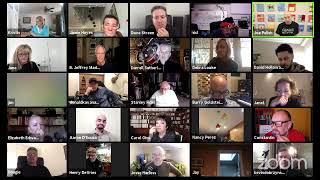
Recording of an I Love Marketing meetup (Nov 19, 2020) hosted by Joe Polish with guests including Hal Elrod, Dean Jackson, and Anna David. Hal tells three major wake-up/comeback stories (near-fatal car crash at 20, 2008 financial/depression rock-bottom, and a rare aggressive leukemia diagnosis), explains the Miracle Morning ritual (SAVERS: Silence, Affirmations, Visualization, Exercise, Reading, Scribing), gives practical tips for habit formation (set bedtime intention, move alarm across the room, drink water first), and discusses how he built the Miracle Morning into a global brand (self-published book, niche spin-offs, community, documentary). The session also covers mental-health topics (hope, suicidal ideation during chemo), behavior-change principles, and marketing lessons for entrepreneurs about focusing on one mission and creating products that change behavior.
Chapters
A free book and putting information in front of people in order to develop rapport and give them.
That'll never work.
Exactly.
Can we give a shout out to Dave Strean, who is holding up the two books?
Dave Strean. Dave, which book do you like the least out of those two? Since those are two of my books. Yeah, no, they're both fantastic. Both phenomenal. Oh, I'm still muted or. No, no, you're good. You're good. Okay, I'm good.
Cool.
Got some weird pop up on there. I'll tell you what, I've read this one a lot more. Just keep rereading it and rereading it and it's got some of those lessons that you just can't hear enough. And I'm sure five years from now I'll be having epiphanies from that book. It's timeless knowledge. Thank you, thank you. And by the way, the way that book came about is Anna, bless her heart, took my three a week emails that I've been sending out for a while now and she organized them and put them into like categories of my different musings and different thoughts and she put that book together. I didn't sit down and organize the book. She did it. And thank you, Anna. It's really awesome. And people love that book.
Well, can I just say, it was the way I knew to get you to read a book fast was first fill it with your wisdom and I knew you'd read it right away too.
Sweet. That's part of it. That's part of it. So let's see. So Hal is on. Okay, I've been on. Okay, you want to say something, Hal?
Say something funny?
Maybe I should unmute. Is that better?
Yeah. Yeah. All right, we can hear you. You're alive. All right, so let's go, everyone. We're going to. Well, we'll get this party started. So let's see. More people will join us as we go along. What we have found. This is really interesting for people that we have text messages for. We send a message. I think my team. Tarna, are you on?
Absolutely.
What's our strategy here that we have discovered? We send a text message out to people or notification via email seven minutes beforehand.
Yeah, that's what we shoot for. So that delivers. And then we also send you guys an email, which I'm thinking a good amount of you are hopping in from right when we start. And that usually is what gives is the trigger, the text and the email reminder that goes out now. Today we had a little Bit of a test. I hopped on really early today and at 11 o' clock we had quite a few people hop on. But one of the reminder emails that went out early, early this morning to a few of you said 10:00am as an error on our part in the email body and not in the subject line. 14 of you guys joined. So it's so interesting to analyze the human behavior of what reminders work for you guys. But it's the email that goes out right now that usually brings you all in.
Yeah, exactly. So it's interesting to just see how it climbs right when we're beginning to start. So, alrighty, I'm just gonna jump right in and introduce our special guest today and kind of give some context. Give a big shout out, of course to Dave Strand and Charlie, who started the I Love Marketing meetup groups, which has now morphed into us doing these things via Zoom, which is kind of cool. And am I okay, Giselle?
Yeah, you're fine.
All right, so I have someone walking behind me where the video is. So we've got Dean Jackson on, got Hal Elrod, got Anna David. And our special guest today is Mr. Hal Elrod. My dear friend. I'm going to do a just official introduction of him. Then I'm going to ask you how to actually explain, aside from this bio that I'm about to read, who you actually are. And we'll do, I'll ask Hal and Dean will have some conversation, then we'll leave some time for all of you to ask Hal some questions if you'd like, because he's got one hell of a story. All right, so here's Hal Elrod. After surviving multiple near death experiences and impacting millions of people through his work, Hal Elrod is leading a worldwide movement to elevate the consciousness of humanity one morning at a time. He's the author of 12 best selling books, most notably the Miracle Morning, which has been translated into 37 languages and sold over 2 million copies. His latest project is a brand new Miracle Morning movie, a documentary that gives you exclusive access to the morning rituals of some of the world's most successful people and shows you how millions of ordinary people are doing the extraordinary by simply changing how they start their mornings so that you can do the same. I'm actually in that movie also me and Hal and Anna David, who I have to give a big shout out to Anna because she's the one that did most of the heavy lifting. She interviewed me, she did the writing here. The Miracle Morning for addiction recovery, which Hal I Think this has been known to be the very best miracle morning book. I think that's what the deal is.
It is actually in the bio it should have said most notably the miracle morning for addiction recovery with Joe Polish and Anna David.
Yeah, awesome. So what did I not say about you that people should know? Because you've done a lot of stuff and you've actually been through some pretty difficult times too, which is a testament to your rituals and what you teach. So who is Hal Elrod?
Yeah. Well, I think that in terms of those experiences that you're talking about, we've all gone through what I would either call, we've had our rock bottoms or our wake up calls. And often they're one and the same. Right. And those experiences in life that really test us and challenge us. And it could be a divorce, it could be the loss of a loved one. It could be different for everybody. It could be COVID 19. Right. It could be a bankruptcy. For me when I was 20 years old, I was driving home from a conference, I was head on by a drunk driver at 70 miles per hour and I was found dead at the scene and I broke 11 bones. I was dead for six minutes, in a coma for six days and came out of the coma to be told I would never walk again. And I had permanent brain damage. That was my first kind of really having to decide, wow, this is unimaginable. I cannot control these circumstances that are out of my control. How am I going to respond? And I responded in such a way where within three weeks I was taking my first step. The doctors didn't understand how I was healing so quickly. And most importantly and I think relevant to everybody listening, which we'll I'm sure dive into today, was the mental, my mindset. The doctors thought I was in denial or I was delusional because I was so happy and positive and optimistic. And they thought this kid's lost it. You know, this 20 year old young man is being told he's never going to walk again. But it was very authentic. Using some principles and some strategies we can talk about today. In 2008 was the second rock bottom for me. And that was one that a lot of people can relate to. It was financial. I lost over half of my income when the economy crashed. I was a coach and all of my clients, you know, they couldn't pay me anymore. Most of them lost my house. I foreclosed on my house, my body fat percentage tripled and I got depressed for the first time in my life. And that's Where I created this morning ritual called the Miracle Morning, right. That turned my life around so fast. I told my wife it felt like a miracle. And she goes, it's your miracle morning. And I go, yeah, I like that. My miracle morning, right? And then, you know, the rest is kind of history as I felt like I had a responsibility to share that with the world. And so I self published a book in 2012 called the Miracle Morning. I was unknown, I had no audience, but I was so committed to reaching at least a million people with that book. That was my mission. And I tried to do it in a year. It took me six. But finally after six years, it reached over a million people and now it's like two and a half million and climbing. And most recently, about three years ago, I was diagnosed with a really rare aggressive form of cancer, again, acute lymphoblastic leukemia, which has a 20 to 30% survival rate. We were two years into filming a documentary at that time called the Miracle Morning that was showing, you mentioned some of the world's most successful people and Joe Polish's morning routine. And I need to fix that in the bio.
By the way, you can bust on me this entire time, Hal. I mean, we're friends, so you can say whatever you want.
I know, I know. And that's what I love about you is like you and I share that. That's how we show our. That's our love sarcasm is our love language. So I love that. Yeah, but. And then what was the last thing? So we were filming this documentary and I called, you know, I was given a 20 to 30% chance of surviving. And at the time I went into the hospital not knowing what was wrong. My lung had collapsed four times in a week. My heart was failing and my lungs or my kidneys were failing. So I was a mess. And we didn't know, the doctors didn't feel it was wrong. I took about a 11 days to finally get a diagnosis. You can imagine being told you have 20 to 30% chance of making it. I called our director, Nick Conadera, and I said, hey, the film is on hold. You'll never believe this, but I have cancer. And Nick came back, kind of took me off guard. He said, hal, I believe you're going to beat this cancer. And I think that we should film the journey. I was like, dude, I'm just trying to survive for my family. I don't care if this movie ever comes out. But what the movie became as a result of him filming me at my darkest hour. I feel like it's so relevant right now to what, you know, the world has cancer, metaphorically, you could say, in a lot of different ways. And I feel like people are struggling and this film is going to not only give them hope, it's going to give them a strategy to, you know, to go to the next level. So anyway, so that's kind of. Those are the three rock bottoms, the three wake up calls I've had in my life that have taught me that no matter what's going on around us, we can control what's going on inside of us and therefore control our quality of life.
Have you ever thought about, I mean, I imagine you've had to admit, but I'd like to hear about just giving up. I mean, I've seen you in some pretty dark places and I know even the times when I've seen you, it's been much worse. And one of the things about you is just you have dealt with some really heavy shit and have you ever felt like, I just can't do this anymore? Have you ever been suicidal? Have you ever thought about just completely giving up?
What's interesting, the answer is yes. And what's interesting is it was during none of Those times, actually 2008, I thought about it. I felt like I couldn't get myself out of this financial hole and it was scary. And so I for sure contemplated it. But I was never what I would call suicidal. Where you're literally planning it, you're thinking it, you're trying to figure out how to. But I was last year and interestingly enough, 2019 was the hardest year of my life. I was on my third year of chemo and my brain, and we talked during this time and I reached out to you and you were there for me. But my brain just stopped working correctly and I couldn't think clearly. I developed a severe anxiety and a depression. For four months. I was sleeping two to four hours a night, which on top of the anxiety and depression, it was horrific. And I lost the will to live. Every single day. I had to talk myself into continuing to go. And I would also try to figure out. I would try to brainstorm. The question that kept going in my mind every day is how could I take my life and not have it hurt my kids and my family? Is there a way? And I kept trying to figure out, is there a way if I drive off a bridge and I leave a video that gives them the lessons I've learned. I was trying to figure out how I could end my life. I was in such a Dark place. And I could never figure out an answer, right, How I could end my life and everybody else be okay. And so I just kept going. But it was, yeah, that was the hardest time last year. And I got off chemo about four months ago and interestingly enough, my brain came back. And I'm not 100% for sure, but I'm, you know, I'm getting close. Yeah.
Wow, that's good. Dean, Anna, you guys want to ask or say anything? Because I've got a whole slew of questions for Hal that I could ask him. But I want to give you guys an opportunity.
It's a pretty amazing story. I mean, the whole. For him to say last year was the most difficult year of his life, coming from a guy who died for six minutes, broke all the bones in his body, it was in a coma and came back from that to have topped that the next year. Something that you said, Hal, reminded me there's a book called Overachievement. And one of the things that all sort of overachievers share in this guy's observation is something that he called irrational confidence. And I thought when you were talking about, you are just knowing that you're going to beat this, that you're going to come back, you're going to walk, you're going to be, you know, just being so optimistic and happy. It was irrational in everybody's view that you were that. But I think there's something to that, that that's all part of it, you know?
Yeah, yeah, yeah. I think, Dean, that's a really interesting point. And I think, I think that it's true and why the doctors were going like, he's irrational, he's delusional, this doesn't make sense. And for me, you know, I call that unwavering faith.
Right?
And I think that's really two different ways of looking at a very similar thing. And it's unwavering faith as a decided upon strategy, right? Meaning if you take like the world's like Michael Jordan, I grew up watching Michael Jordan. He had an irrational confidence, an unwavering faith that he could make every shot that he took. And this is true for the best athletes in the world. They believe they're going to make every shot that they take, even though now that's a decided strategy to increase their success rate because they, the odds are no one makes every shot they take. Right.
But who's to say how much confidence is rational either? That's the funny thing, right? If you're going to think you don't Know what the outcome is going to be. There's no set thing in stone that it's half and half, and you've got to kind of deal with that. So if you're going to err on the side of being 100% unwavering, like you said, in one direction, why not err 100% in the direction of confidence that you're going to recover, that you're going to get through this, that you're going to be better than ever.
Yeah, I agree. And I think that there's an important piece to this, and it's acceptance. It's expecting the best and accepting the rest. And that's where people struggle with that irrational confidence or unwavering faith is as human beings, we really, we crave certainty. And so when people lack certainty, like if you're given a diagnosis, you know, as grim as I was, that there's a, you know, 30% survival rate, so 70% you're going to die rate. And I think most people go, well, it's this fear of failure, like, what if I put my faith in what I want, but I don't really know if it's going to happen, so that they feel like they can't actually invest that full, unwavering faith and confidence. But you have to realize it's a strategy that increases your likelihood of success. So you expect there is no other option, that I'm going to beat this cancer and live to be 100. There's no other option that I'm going to sell a million copies of this book. There's another option that I'm going to, you know, that I'm going to. Whatever it is in your life that you want to accomplish, but you simultaneously accept it may or may not happen, I'm not attached to the outcome. And when I was told I would never walk again, it was, I will walk again. There's no other option. While simultaneously knowing that I might never walk again. And I was at peace with that. Right. So it's this interesting kind of balance between acceptance and faith.
Preference is the word. With Homer McDonald. When we did stop your divorce, one of the things that he said, people have to let go of in order, even under seemingly impossible odds that their spouse is ever going to come back, they have to get out of this thing that they need them to come back or that they would be devastated if they don't. Once they get to a position that it's a preference, I prefer if they come back, but I'm going to be fine if they don't. It's, you know, it's an interesting shift in our minds there, you know.
You know what's interesting too? And I want to ask you because like in our book, even the Miracle Morning for Addiction Recovery, which all of you need to buy immediately if you've not got it. I know a lot of you have already gotten this book that. Follow us. The bio, the biochemical aspect of addiction where your brain is not working. What you described how with just being in that state, I mean that's the thing with disease, that's the thing with addiction. That's the thing with depression and anxiety. I mean you don't have happy chemicals flowing through. And then when you got off the chemo, that substance that changed. One of the things I think about in addiction and I'm relating it here is that hope heals. And a lot of times if someone goes to a 12 step group, they are hopeless. And that's kind of. They're just looking, they're desperate, right? They're not. They're in a place where they're looking for people that. Or anything that can give them some sort of faith. And so when you say unwavering faith, when you lose that, when you don't have it, being able to reach outside of yourself, being able to find, you know, if you're lucky, someone will show up. Other times you have to put yourself in the position to where you find people that will believe in you more than you believe in yourself. And so that's why we talk about, you know, even in the book, things about volunteering, finding people that are in a worse place than you are. Because there's always someone that needs help. And that if you can ever get yourself on that point in a very interesting way, it helps pull you out of that darkness. So Anna, you've had your own experiences and of course you know the Miracle Morning methodology and use it as do I, inside and out. So what are your questions? Thoughts?
Anything?
Okay, well, two things. First of all, what you guys were saying reminded me so much of that David Hawkins quote. And I know Joe loves David Hawkins too. I think went to his funeral. But it's. We get what we want when we stop insisting on it. So it's like we want. But the energy we put towards this has to happen is what keeps it away. So it's the balance of wanting and not trying to control. But what I was thinking as you were talking, Hal, and I'm wondering if people must have asked you this before for somebody who says I can't commit to the Whole miracle morning routine, Is there one thing that you would extract and say it can help give you that faith or that hellness that you have?
100%. Yeah. The miracle morning is made up of. And Anna, it's great to see you, by the way. Always way better to see you than Joe and Dean. No offense, but so, yeah, so for me. So the miracle morning, for those that don't know, it's made of six practices organized under an acronym, Savers. S for silence, A for affirmations, V for visualization, E for exercise, R for reading, and the final S is for scribing. And so six practices that you do in the morning from anywhere from 6 minutes, 1 minute each to 60 minutes or anywhere in between. Anna, when I get asked, like, is there. You know, is one of the savers better than the other? Do you have a favorite? Like, the politically correct answer would be, they're all equally important, right? But in my mind, that's not true. Everybody has their own that they lean toward. For me, it's affirmations. If I could pick one of the sabers that I did every morning, that would be a miracle morning in and of itself. It's affirmations. And I'll speak on this because I think affirmations are very misunderstood and they've been mistaught, which is why they're misunderstood by a lot of people. We're either taught one of two faulty ways to approach affirmations, and number one is lie to yourself, essentially. Essentially, like, just tell yourself that something is true that you want to be true until you trick yourself into believing that it's true, right? So if you're. If you're struggling financially, just say, I am wealthy. I am wealthy. I am a millionaire. Right? But if. The truth will always prevail. So lying to yourself is never the optimum strategy. Or if you know, if you want to be thin and you're overweight, you go, I am thin. I am thin. And you look in the mirror and you are not thin. Again, the truth will always prevail. So lying to yourself is not the strategy you want to approach with. The second problem is using this flowery passive language in the form of an affirmation that promises a magical result despite your effort. So, for example, we've all heard something like this. I am a money magnet. Money flows to me effortlessly and in abundance, right? Now, the reason that people like that affirmation is if you're struggling financially, well, that gives you temporary relief from your money woes, right? You just sit back and go yes. Oh, this feels good. Imagining that money's going to magically flow into my life. Ah, the savior is on its way. Right? But anybody that's built a fortune or that's wealthy or financially secure knows that it's not through being a magnet and having it magically show up. So I'm not saying that there can't be benefits to those approaches, but I think that for me, affirmations need to be rooted in truth, they need to be practical and they need to be actionable so that they're results oriented. So for me, kind of the three step formula, if you will, for affirmations and what I use during my cancer journey. Number one, affirm what you're committed to. So don't say, I am blank if that blank is not true. For you, say, I am committed to becoming blank. I'm committed to improving in blank area. I'm committed to achieving blank result. So when I was going through cancer and I had fear every day, now I will say this, the fear, as time went on, it got less and less and less because I kept actively using these affirmations to replace fear with that unwavering faith. And so for me, my affirmation that I read every day and Anna, this really answers your question directly. I am committed to beating cancer and living to be 100 plus years old alongside Ursula, Sophie and Halston, my wife and kids, no matter what. There is no other option. So if you're listening to this, if you're taking notes or you want to walk away with this as a strategy, it's simply, I am committed to blank. Whatever your ideal outcome is, I'm committed to blank or your ideal effort, I'm committed to blank no matter what. There is no other option. The second part of the affirmation strategy for me is why is that deeply meaningful? So I had bullet points. So I am committed to beating cancer and living to be 100 plus years old alongside my family, no matter what. There is no other option. Because step two, the why I am committed to be. And I had an affirmation for every member of my family and the world and myself. It said, I am committed to beating cancer for my wife, for Ursula, because I promised her forever and a day. I am committed to beating cancer for Halston, my son, because he needs my love, leadership and guidance. I'm committed to beating cancer for my daughter Sophie, because she needs her daddy's love and affection and belief and support. I am committed to beating cancer for my dad because he gave up everything to save my life. I am committed to beating cancer for my mom because she doesn't deserve to lose another child. I am committed to being cancer for myself because I deserve to live a long, healthy life. And last but not least, I am committed to beating cancer for the rest of the people in the world, the countless people in the world who are themselves battling some form of physical or mental challenge and don't have the same resources that I do. And they desperately need my love, leadership, and support. And if you look at that, the other day, I was interviewed by Dave Asprey, genius network member, and Dave Asprey. He paused me. He said, hal, I want you to note, he goes, I don't know if you're aware of this, but all of your whys, every single one of your whys, except for one, was for other people. And I had never made that distinction. But when you've got a list of compelling whys as to the reason, you're committed to do whatever it takes to achieve your result, to support the people in your life that matter the most. That fuels you to do whatever it takes. And then, last but not least, the third step is what specific actions will you take and when? So your affirmations should include all three of those, right? What you're committed to, why it's meaningful to you, why it's crucial, why it's important, why it's a must. However you want to word that. And then number three, which specific actions you'll take and when. And now you're affirming something every day that aligns your subconscious mind, your conscious thinking, and your actual behaviors to be in alignment with committing the results that you're committed to in your life.
That was very good, Hal. Seriously. Really excellent. Thank you. You know, and I'm gonna. We'll come to it. I just want to plant the seed. So during this session, we do not not cover. This is. You've sold, you know, over two million, two and a half million books. You've created a global brand. You've got. I mean, it's made a lot of impact on a lot of people. And so certainly this is a I love marketing meetup. Right? So I want to talk about that. So I just want to let everyone know that because we have so many entrepreneurs that are joining us, you know, they would love to know I've got an idea. I got things that could change the world. I have, you know, have an expertise or. I've overcome, you know, I've overcome shit. You know, I've overcome challenges. I've overcome things, and I Have. You know, I'm a phoenix that has risen from the ashes, and I think I've got ways that can help people. How do you package it? How do you market that? So I do want to have that discussion. I kind of want to stay along. What we're talking about here, that one of the questions I have is, as our world's in the midst of unprecedented times, I mean, we're in the middle of. Well, not just the middle. We've been going through the pandemic and so much political diversity and unrest and people arguing and fighting and fear and confusion and all the different things that are going on. So many people are experiencing tons of uncertainty, tons of fear. What do you believe is the most important for each of us to focus on right now, from your experience?
Yeah, it's a good question. For the last six months, to me, it's focusing on the one thing that we all have control over, which is ourselves. It's what we think, how we feel. You might think, well, I don't have control over how I feel. Well, if you take control of how you think and then what you do. Right. So your thoughts, your words, and your actions, that's all we have control over. And so, for me, I think that the ultimate goal in life is what I would call inner freedom. Right? And in the way that I define inner freedom is the ability to choose how you experience every aspect of your life at any given time, no matter what's happening in your life, no matter what's going on around you. And for me, that's been kind of, I guess, you know, that's been my superpower. When I was in the hospital at 20, you know, I felt very little, if any, emotional pain. I'm like, well, I can't change. In fact, one of the stories I told my dad, I said, dad, because the doctors called my parents in and they thought I was in denial, right? The doctors did, and they sent my dad to find out how I was really feeling. They said, your son is probably covering up some real emotions. Like he's probably deep down really terrified of his unknown future, that he may never walk again. He's probably depressed. He's probably. He might be angry with the drunk driver, with life, with whatever, but he's not admitting his real emotions. You need to get to the root of it so his emotional healing can begin. And my dad came in and sat me down, and he told me the doctor's concerns, and he said, hal, it's okay. I know you want to be positive. It's okay. To be negative, it's okay to be sad and scared and angry and depressed. It's important, though, that you talk about it and you feel those emotions. And I went inside, you know, my dad's like, you know, like, trying not to cry. His face is red and he's emotional. And he asked me, how am I really feeling? And I looked at him and I thought. And I looked at him and I said, dad, I thought you knew me better than that. And I smiled. He said, what do you mean? I said, remember, I lived my life by the five minute rule. And he said, remind me. And I said, it's okay to be negative and feel sorry for yourself when something goes wrong, but not for more than five minutes. And I was taught this in my sales training by my mentor when I was young, when I was 19, that when something goes wrong, literally, you set your timer on your phone for five minutes and you get five minutes to bitch, moan, complain, cry, vent, whatever you got to do. Feel it, feel it fully, right? As much as you scream, whatever you got to do. But when the timer goes off after five minutes, you say three very simple, powerful words. Can't change it. And it's an acknowledgement. I can't change what happened in the past, whether it was five minutes, five months, or five decades ago. So there's no value in wishing that I could. There's no value in resisting my reality and wishing that unchangeable aspects of reality were different than they are. I said, dad, the car accident was two weeks ago. You know, keep in mind this conversation was before I ever took my first step. I still didn't know if I'd walk again. I said, dad, the car accident was two weeks ago. My five minutes. It's long up. And I said, there's only one of two possibilities. And anybody watching or listening to this, consider that this applies to your life. There's only one of two possibilities. I said, for me, dad, either things go the way that I want and I get to walk again. I said, or things don't go the way I want and I'm in a wheelchair the rest of my life. It's one of those two, right? And I said, I've already thought through the worst case scenario. And if I'm in a wheelchair the rest of my life, dad, I promise you, I will be the happiest, most genuinely grateful person that you've ever seen in a wheelchair. Because I'm in a wheelchair either way. And I will never let the unchangeable circumstances in my life define my Emotional well being, I said. So the worst case scenario is I'm the happiest person you've ever seen in a wheelchair. That's not that bad. You and mom have nothing to worry about. I know you guys are concerned. No matter what happens, I'm going to be fine, I said. But the second possibility is I will walk again. I don't even know if that's possible. I don't know if that's realistic. But here's what I know. I'm committed to putting every amount of my mental, emotional and physical energy into what I want for my life. I'm visualizing walking again every day. I'm praying about every day. I. I'm imagining it, I'm talking about it. I'm going to therapy, I'm doing the exercises, I'm doing everything in my power to walk again while I simultaneously accept that I may never walk again. And I'm at peace with either outcome. One I'm at peace with, one I'm a little more excited about for sure, right? But that's true for all of us, right? That you can't change the things that are out of your control. So that inner freedom comes from choosing to be at peace with all that you can't change and truly grateful for everything that you have. And so that for me was the mindset that I applied through the cancer and through the car accident and everything else and through the pandemic, right? Every day I wake up, I do my miracle morning and I might have a stressful day. I might have. There's a lot of stress going on for all of us. I'm a keynote speaker, I lost over half of my income. That's not a positive thing. But every morning it's that reset button where I get an hour to myself where I'm reminded, oh, yeah, this is life. All that other bullshit. That's just my life situation. And there's a big difference for all of us, right? Don't confuse your life situation, which are your temporary circumstances, with your life, which is who you truly are. It's your soul, it's your essence. It is the extraordinary, limitless being that you are. And that's where you should draw your emotional well being from, not from the shit in your outer world.
That's great. That's great. Also, I just want to mention this because Jamie asked. Will recording of this session be available later? Yes. We will put this up as an I Love marketing podcast, so if you subscribe, you'll automatically be sent it. We're also going to Put it up on my YouTube channel so you can watch it there. Because this is something that. There's got to be lots of people in your life now and in the near future that are going through a lot of stuff that I think would be definitely benefit from hearing what. How Hal has overcome and endured and gets you. I shouldn't even say endure, because you. I want to touch back on like last year. It's interesting you said that, because last year was probably the most difficult year I've had in a decade. I mean, I had our dear friend who's actually in the movie, Sean Stevenson. He died. I was with him in the hospital when he died. I had valley fever. Earlier in the year. I had a breakup of a relationship. I probably had the biggest business betrayal that I ever dealt with in my entire business career. Last year was a shit show. And then it bled right into the pandemic. And then couple that with all the addiction work and stuff that I'm doing, hearing and talking daily with people that are in pain and angst and stuff. I mean, just hearing. And I know you. I mean, I can call you anytime, right? We can talk to each other at any point in time. It's just really good to hear this because the world right now needs some inspiration. If you had just stopped doing your miracle morning rituals, what do you think would happen to your life?
It would be like most people. Most people go through their day, I think. I don't mean to speak that I know all about most people, but I think that we can all relate to. You go through your day, and if you have a stressful day, then you typically go to bed feeling stressed and consider that your first thought in the morning. Our first thought in the morning is almost always the last thought we had before bed. So if you go to bed thinking, if it's like the night before vacation, as soon as your eyes open the next morning, you're like, oh, you. It's here, right? Or I think about being a kid on Christmas Eve, right? You go to bed excited. I can't wait to wake up. You wake up, the first thought you have is, it's Christmas. But in these circumstances, right, you go to bed stressed. You wake up feeling stressed. And what happens is one day bleeds into another, into another, into another, and they start to compound. And your stress level can manifest in the form of, you know, PTSD or. I mean, it can get worse and worse and worse. For me, the miracle morning is my saving grace. And it is for I had a lot of people during the pandemic in the miracle morning community that are like, thank God for this practice or I'd be a mess, right? And it's because now every night when you go to bed, you're not waking up to your problems. You're waking up to your miracle morning. You're waking up to a space of time that you've dedicated to meditation and affirmations and visualization, right? And exercise and reading and journaling. Six practices that essentially calm your nervous system, lower your cortisol levels, right? Remind you of who you are at your core, what you're committed to doing and being and achieving. You know, you visualize, you see what you want in your life. You go exercise and get the serotonin and the dopamine and releasing endorphins and blood and oxygen to your brain. You know, for me, my exercise every morning now, Joe, it has been for probably six months, is I go for a bike ride throughout my neighborhood. And it's a 10 minute bike ride, but I'm working my legs, I'm getting the muscles working, the blood and oxygen is flowing, but I'm also getting fresh air. I'm also looking at trees, I'm also looking at the sunrise. For me, the bike ride is more mentally and emotionally and spiritually beneficial than it is physically. That's the point is that with that miracle morning, it got me out of depression in 2008, it got me out of depression in 2020. And it has been the most important part because it's giving you that time to give yourself what you need to thrive mentally and emotionally, which then allows you to thrive in the physical world once your miracle morning is over.
Can I ask you about the whole notion of waking up early? Because all of these principles will, all these strategies, all these rituals in your books and even in our book would apply even if you're nocturnal, right? If you still woke up and did savers, they would still work. What is the pros and cons of morning versus late risers versus early risers? I mean, because you write about it in so many different ways in all the different books. But why the morning?
So there's a few answers to that. One is if somebody says, I'm not a morning person, if that's like your aversion, I would say that you're not a morning person until you try waking up early for a few days or a few weeks, and then all of a sudden you go, oh, I'm a morning person. I hated running. And when I started doing the miracle morning, I was so keep in mind, I was deeply depressed. 2008, I was depressed. My first miracle morning. I'm like, dude, this is it. If I do this every day and I feel this energized and focused and motivated and inspired, there's no, like, it's only a matter of time before I become the best version of myself that can create whatever I want in my outer world. Right. And so in terms of doing it at different times of the day, this doesn't mean you have to get up at 5. Like, there's a whole 5am Club. And I think that's great. But let's say normally you get up at 9. This means getting up at 8 or 8:30. Right. Like, it's not a radical change. But here's why people have said, well, Hal, couldn't I do my savers in the afternoon or in the evening and still benefit? The answer is yes and no. Yes, you'll benefit. You're going to benefit if you meditate journal any time of day. Right. The difference is the benefits of those practices are both immediate and lasting after they're done. So, for example, in the Miracle Morning movie, we interviewed Robin Sharma, and he said that the benefits of exercise are scientifically proven to last as long as 13 hours. After the exercise or when you meditate, you immediately lower your cortisol levels. You allow yourself to think clearer, have clarity. That benefits you immediately. So the point is starting your day with those practices that put you in a peak physical, mental, emotional, and spiritual state and enables you to win the day. If you don't do those until after work, well, you just had a, you know, you just trudged your way through work, and then it's like, then you got into that state. So that's the point is, will they benefit you any time of day? Absolutely. But if you don't do them in the morning, you're missing out on those benefits all day long. And by doing them in the morning, like, in simple terms, it's, you win the morning and then you win the day. And when you string together day after day after day with that starting that morning in a peak state, then that's when I think you see tangible results in your life that will exceed your expectations.
Yeah. You know, the beauty of this is just how many lives have been changed through this process. I mean, the amount of testimonials, I mean, even the ones that we've gotten. When our book came out with addiction recovery, a lot of people were using the miracle morning as part of their addiction recovery and becoming going from being an addict and having your life being unmanageable and changing that, that requires switching out the form of pain and soothing that addiction was for. Because I have on the back wall back here, I have a here, I'll drop it right here. It says it's one of the gaping void images and it says addiction is looking for love in all the wrong places. Right. And we look for. There's not very many good things that happen after midnight and after, you know, 1:00am or 2:00am or 3:00am it gets progressively worse. And so when you have a process, you know, the Miracle Morning to use as a path for your life, incredible things happen along the way. So I've posted a couple of times the savers in there and doing these things, it's not doing them that's really just the key. It's the byproducts that come out of doing them consistently. So out of what's the biggest excuse or some of the biggest excuses that you hear all the time that you have to constantly address with people? Because I'd love to have everyone get a copy of your book, watch your movie. I'll have my team post, you're going to be having a world premiere of this. I'll have them posted in the chat. I'd love to take all of you that are here and anyone that listens to this on our podcast or watches it on the YouTube channel, which we will put this video on the recording to actually enroll themselves into Miracle Morning. I mean, whatever. And there's Miracle Rattle off some of the Miracle Morning books because you have them in all kinds of different categories.
We got Miracle Morning for college students, Miracle Morning for writers, for network marketers, for entrepreneurs with fellow Genius Network member Cameron Herold, Miracle Morning for parents and families, Miracle Morning for Couples, Miracle Morning for salespeople, and most recently, Miracle Morning for Teachers. And that's part of the mission. It's funny, I just found my journal entry from 2016 that was the miracle morning 10 year vision. And one of the elements was that every, almost every school in the world begins the day with the savers and with the Miracle Morning. And as a result, bullying is decreased, ADHD is decreased, students are more focused, more calm, more peaceful, more empathetic toward each other. And then I go, wow, that's wild. Now the Miracle Morning for teachers is literally out there. And we have hundreds of teachers around the world that are doing this. Yeah. So the Miracle Morning book series was something that kind of came organically. A friend of mine said, hal, we've got all my salespeople that I've given your book to, all of them, literally 100% of them that have read it and that are doing the Miracle Morning, their sales have increased. Have you thought about doing, like, a miracle morning for salespeople or, you know, anybody? And, yeah, and that was. I just said, hey, no, great idea. Let's co author it. That was kind of how the. The series was born.
Yeah, yeah. So you actually took your process, you put it into a book, it started getting some traction. People started using it in all kinds of different areas, and then you have niched it into these different categories. And so the reason I want to bring this up is, for one, I think everyone here pick one of the Miracle Morning books that you think would apply to you if you're in addiction recovery. I mean, utilize it. Even with people that you're working through with your sponsors or whatever. There's. It's just an amazing book, and it's helped so many people. I mean, and so you've got literally hundreds of thousands of people have given comments, testimonials ever since you started doing this house. So what's the big obstacles that you haven't mentioned that need to be addressed or overcome? Because I don't want anyone leaving here saying, oh, you know, because I think everyone here, their life can be dramatically improved with this process.
Yeah, yeah. Thank you for circling back to that one. And I think it's the. I'm not a morning person. Right. And so I'll tell you this. I was asked a couple years ago on an interview, what percentage of Miracle Morning practitioners, you know, which, again, it's in the millions now, but what percentage were never a morning person before they read the book? So this was like, not just a, I'm going to do different things in the morning. It was literally like, wait, I got to wake up a half an hour earlier. Like, no, I'm not a morning person. They had to overcome that limiting belief. And he said, what percentage of people were already morning people? So this was just simply switching. Instead of watching the news or checking Facebook in the morning or email, they do the miracle morning, you know, the Savers. And I did not know the answer. And I thought, man, I should know the answer to this question. And so we surveyed our community, which back then, the Facebook group of Miracle Morning community was probably 100,000 people or something. 72% said they had never in their life been a morning person before they read the Miracle Morning. So if you're like, I'm not a morning person, join the club. I Wasn't a morning person, right? Just like before I started running, I wasn't a runner. And then I started running and I became a runner, you know, so it's. It really is something that for us is I think, a limiting belief of I'm not a blank. Just because we've never really committed to giving it a try. And here's what I want to. Let me share. I'll give you guys a little bit out of the miracle morning book. There's a chapter in the book that became a linchpin for people that did not consider themselves a morning person. And it's the shortest chapter in the book. It's called the five step Snooze Proof Wake Up Strategy for Recovering Snooze a Holics. Don't be afraid to give things long titles. So I'm going to give you a few of the steps, right? So number one is you have to set your intention before bed. In the book, there's a download. You can get the miracle morning bedtime affirmations that give you a word for word script that you read before bed to do this. But it goes back to what I said earlier, that the last thought we have before bed is usually the first thought in the morning. And if you have to wake up early, you're like, oh my gosh, I gotta get up tomorrow. I'm so tired. I'm gonna be exhausted in the morning. Then the alarm goes off in the morning. You're like, oh, God, I'm so exhausted. It's here. And then snooze, snooze, snooze. So before bed you have to go, hey, I'm going to bed tonight. I'm gonna feel rested. I'm gonna wake up excited, committed, focused. I'm gonna get out of bed. No matter how many hours of sleep I get, my body's gonna rejuvenate. It's a miracle, right? And that's off the top of my head. That's not word for word what it says. But the point is that before you go to bed, you set the intention that when you wake up, you're going to jump out of bed, brush your teeth, wash your face, and go into the living room and do your miracle morning. So that's step one. And again, there's a script. In fact, you guys can get it. Tmmbook.com TMM as in the Miracle Morning tmmbook.com. you can go download that right now for free. The biggest tip though is you have to move your alarm clock across the room. Most of us keep our alarm clock within arm's reach, whether it's our phone or an alarm clock. And what happens is the alarm goes off in the morning. And we've all done that, right? In fact, we do it a lot daily. You know, you reach over, you know, and you fumble over and you turn it off, you snooze and you do it over and over and over. And you wake up at the last possible minute and pull yourself out of bed. Keep the alarm clock and as far away as you can. Ideally, mine's in my bathroom. Right. So that when it goes off, it's radically different in terms of how much discipline it takes to stay awake. When you've already gotten out of bed and walked across the room and you're right there in front of the sink and to brush your teeth. That takes much less commitment and discipline to stay awake than if you're fumbling in the dark to turn off your phone and snooze on your phone. So there's a couple of tips, is, yeah, set your intention before bed. Make the commitment before bed so that when you wake up in the morning, you follow through with your commitment that you made before bed and move the alarm clock as far away as you can. And my third and final tip is drink a full glass of water first thing in the morning so that you rehydrate because dehydration and fatigue go hand in hand. And so don't start the day with coffee. Drink a full glass of water while you're making your first cup of coffee and then dive into the caffeinated beverage.
Well, you know, I have to mention this because I got this little guy that's sitting here and if you pull his pants down, he pees. Watch his. Everyone see that as I'm peeing all over the desk? It's actually water, by the way. And you can get one of these at Amazon, by the way, if you really feel.
Is that how you drink your water in the morning, Joe?
Yeah, yeah, yeah. Boy, that's bad. I'm definitely not going to do that on video. So how do you. Do you ever pee before you drink the water or do you drink the water and then you pee?
It depends on. Usually I pee first. Yeah, Usually I wake up. I usually brush my teeth first. Even if I have to pee, I try to brush first. Then I go pee and then I down a full glass of water on my way to the kitchen. Then I drink a sodium bicarbonate lemon juice shot. Right. Which makes your body alkaline. Then I go do the Beamer mat for eight minutes, which is like a electronic mat. Right. You know what it is. And then that gives my body time to alkalize. Then I go make either a cup of green tea or coffee. And so yeah, I've got that. That's my pre miracle morning ritual.
Awesome. That's great. All right, well I'm going to. In just a moment I'm going to start asking you some questions about marketing. So Dean or Anna, is there anything that you guys want to ask or something related to the topic we've had before I switch over to ask him about how the hell did he build this whole empire of miracle morning and help all these people in the movie and all this stuff coming out.
Well, I think it's fantastic. I mean you and I Joe talked about, we joked about Robin Sharma. I had dinner with Robin in Toronto and I was Talking about the 5am famously started out the way it really needs to be is the 9pm club. Because if you're going to participate in that, that's really what it's about is you got to go to bed at 9pm is really what that's about. And Joe and I talked that it'd probably be. It would do much better for people if they try aspired to join the nine hour club and get nine hours of sleep. Would be a. Would be transforming for people in a short period of time.
Oh yeah, I gotta. I gotta say something that d. Because so Robin Sharma, like my interview with him that I did in 2015 before the 5am club came out because Robin was in join Genius network I think back in 2014.
Yeah.
And basically that that video's got over 500,000 views on it now. And it was before the think about. And you're exactly right. It's like it's not about the 5am Club, it's about the IPM club. So what are your evening rituals? What's your miracle evening look like? Hal?
Oh, I'm sorry, I was reading a comment. My miracle evening. So I don't have my miracle evening. I don't do. It's really more about putting the kids to bed. Right. That's the miracle evening. I don't do a lot. I've had a lot of people in the miracle morning community that have a really dialed in evening routine. It's basically like a miracle morning at night where they'll do some journaling and they'll do some meditation and this and that. Here's my miracle evening. And this is the most duplicable thing that Anybody could do. I think positive, grateful thoughts until I fall asleep. That's it. I started implementing that when I had the depression and the anxiety and Covid hit and there was so much to stress about and I found myself, I couldn't sleep. And so that was one of my practices to be able to get back to falling asleep. I just think positive. I made a decision that at night there is no benefit to thinking about the things that stress me out. I'm not going to solve the problems while I'm trying to fall asleep. In fact, it's just going to cause poor sleep. So yeah, that's all my miracle morning is or my miracle evening. I do go to bed. I try to go to bed by 9:30 to wake up at 4:30. So I get seven hours of sleep. And where do you live? And then. Yeah, say again?
Where do you live?
Austin, Texas.
You're in Austin. Okay, that's funny. It's almost like be cool to just move a couple of time zones and stick with your same routine.
Oh yeah, yeah, yeah, yeah, yeah.
That's a good point.
4:30. So yeah, so that's it is I just, I go to bed, try by night by about 9:30 and sometimes it's a little later and yeah, I just go to sleep just feeling bliss. Like I, one of my, one of my simple mantras is in life you can be stressed out or you can be blissed out. Either way, life's gonna happen.
Yeah.
Yeah.
Well, so let's, let's talk about marketing suggestions. How do you build something like this, Hal? So you write a book. I mean, so a lot of people, if they knew your story, you talked about it earlier. This was, I mean you were in a tough place. You didn't have like a ton of resources. You didn't have a list. You didn't have anyone endorsing you. I mean you had an idea and you built it into now a very, very successful business that has impacted a lot of people. And in the midst of running this company, as you've mentioned, you've had cancer. You've had massive difficulties at times. So you know, I got a couple.
Of baseline observations that would fit for how he, how he did it. I want to point out a couple of things because I have. Well, here's the thing. In a, in a glorious display for all of us of our dominion over the space time continuum. While we've been doing this, I have also been speaking at an event with Bill Glaser, but it's been recorded and I have to jump on at 3:30 to do live Q and A. So it's being presented as if it's live right now, like simulcast. So some people must be weird if somebody was watching that and then watch this as well. But here's the thing. This is welcome to our world right now. We got such a great opportunity. The thing that I think that Hal had as an advantage going in is he picked one of the most brilliant book titles that you could have ever imagined. We've been doing a book. What are we calling it, Joe?
A book?
Yeah, well, the free book model in order to build a platform, which is interesting because Dr. Denise Worden is on right now and she's a doctor who specializes in cancer. And we spent yesterday with our genius network members going over book titles and so many of them related to cancer. So that's so interesting that she's.
But the fact that you chose the Miracle Morning, if you were on the. If you've been a genius network member, been on these trainings, one of the types of book titles we talk about is Name it and Claim It. I want that. That sounds like if I just hold this, I'm going to get a miracle. It's going to be the instruction thing that I need for this. And then when you take Profit Activator 1, select a single target market and you've got the Miracle Morning for teachers and the Miracle Morning for salespeople. It's like specific. It's Excedrin Migraine. It's exactly what you're looking for. So having a book title where you understand what it's, what it is and what you're about to get goes such a long way. You know, it's such.
It's.
It's packed in. So brilliant choice of title and brilliant syndication of the title. There is, I think, a moving sidewalk. That's a moving sidewalk that any of the marketing that you do to get that out there, people are immediately going to know what it's about, immediately know if that's for them. So, you know, congratulations on that. It's a fantastic book title.
Yeah.
Yeah.
Thank you, Dean. And again, I owe that to my wife. I literally just went to her two months after I started the morning ritual, and I said, sweetheart, we just signed another client. We have officially more than doubled our income from two months ago. It's all because of this morning routine. I go, I can't believe how much our life has changed. It feels like a miracle. And she goes, it's your miracle morning. And that was it. I go, yeah. And I just Started scheduling it. Miracle Morning. It was never a book idea, so it's interesting. So I can't get the credit for being a marketing genius in that regard. Yeah. But Joe, thank you for that.
Nobody hands it out, Hal. That's one of the secrets. It's self appointment. So you get to claim it. Yeah. I'm a marketing genius. Nobody's going to fight you.
Yeah. I'm starting a new mastermind called the Miracle Network, if anybody wants to join. It's kind of like Genius Network. But you get miracles in your life.
Yeah. If they're not. If you're not a genius, if you at least have a miracle, then maybe it'll work.
You're not a genius. Need a miracle. That's me there. Yeah.
That is great. Well, yeah. So what suggestions? I mean, look, there's so many. We could do a whole week on just all the business lessons of building and growing a company and stuff. And that's why, you know, we always have I love marketing episodes. Talking about marketing. Right. Because there's a lot to it. What, what advice would you give? What have you learned that would be really valuable for people that have a product, a service that is. They're not in the transaction business. They're in the transformation business because that's the business you're in. You're not in the transaction business. You're in the transformation business. So you have something that has transformed your life and then you started teaching it to other people. And there's a lot of people here that are in the transformation business. How do you build it? What advice would you give? What are some fundamentals?
Yeah, there's a few things. And yet, to be clear to everybody, I self published the book.
Right.
And like you said, Joe, there was no platform. So this was pretty slow going for me. You know, it was me doing. In the first year that the book came out, I did 150 some podcast interviews. I did 50 of my own. I launched a podcast to nurture my audience that I was going to build. It was just like, hey, I should have something to send out to people every week. And so that was the podcast. I was on 13 morning television shows, including like national NBC daytime that year. And I, oh, I give 36 speeches. And I engaged in the Miracle morning community every day, which started out with like five people. It started out with me and my parents and my sister and like a few of my friends. Like that. That was how the group started. Right. I never knew what was. What it was all going to become, but I was committed and here's. Here's a few things. The biggest thing is I focused on one thing. What has it been, eight years since the Miracle Morning published? I still do interviews every single week to talk about the Miracle morning. I have a movie coming out called the Miracle Morning, right? Like, I chose one thing, and I'll tell you, my goal my first year was to sell a million books. Just because you pick an arbitrary one year timeframe, I'm like, well, I'm gonna change one million lives one morning at a time. That was the goal. And I did everything I just said, right? 13 TV interviews, 150 podcasts, 50 of my own episodes, 36 speeches. I sold 13,000 copies that year. So I want you to think about that for a second. I was 987,000 copies short of my goal. 98.7% failure rate in terms of the metrics, right? But I dusted myself off and I went, I'm committed for as long as it takes to impact over a million people with this book. And so I tried to get in year two, and I sold like 25,000 copies in year two, give or take, right? I'm still 97% away or whatever it was. But, Joe, here's the point. It's one thing. It's like the Gary Keller book, the one thing. I've shown this graph of my book sales during speeches at your event, actually beyond the bestseller. I gave my beyond the Bestseller talk at Genius network. And I show this graph and people see how long it took for my book to take off. And that's all I did was focus on that one thing, because I believed in it so much. And I have all these authors come up and they go, man, I only promoted my book hard during the launch. And then I got the entrepreneurial ADHD and I shifted gears and chased the next squirrel. I wonder what would have happened if I would have stayed as relentlessly focused on that one thing for as long as it took. And I think it's true for most of us, right? Like, Joe, you're a great example. Genius Network, that's been your one thing. And it's a multimillion dollar a year business, right? Because you pick that one thing. And so I think that's one really important component, is that you've got to. If you know that what you're offering impacts people and it changes lives. Like, I knew because I had taught it to all my coaching clients. That's what got me to write the book is every coaching client I taught it to, they went from being I'm not a morning person to wow how this changed my life. And I went, if it works for me and it worked for them, it could work for anybody. Then when I wrote the book and the book came out and I started getting emails and reviews from people saying this cured my depression, this saved my marriage. I mean, these really profound results, I went, I have a responsibility to get this in the hands of. And I was thinking small. I thought a million people. That felt really big. And then once I reached a million people, we shifted the mission and I took the number off. And the mission is to elevate the consciousness of humanity one morning at a time. So that's the overall, I think mindset and commitment is to that one thing. And any thoughts on that? And then I want to give a specific kind of really nuanced strategy around the book.
I mean, keep going. This is really awesome, really helpful, Dean, thank you.
Thank you so much, brother.
You guys are awesome. Okay, I'll talk to you soon.
Here's the biggest thing, Joe, and this. While this is specific to the book, I think it can apply, you know, you can apply it to anything that you're doing. Most books simply shift people's thinking, and it's a very temporary shift because you, we've all been there, right? You read a book, the book you're reading, your mind is blown. You're telling anyone that you talk to, dude, have you read this book? Have you read. It's amazing. But if that book doesn't change your behavior in a consistent, meaningful, long standing way, then you forget about it as soon as you're done reading it. Because now you're on to the next book. And now that one's blowing your mind. And now you're talking about that one until you're onto the next book and the next book and the next book. So here's the nuance. Whatever product or service you offer, it's got to shift people's behavior in a meaningful way. Shift their behavior, change their behavior, transform their behavior in a meaningful way so that they don't need you anymore. Coaching is a great example. A lot of coaches, right? They just. You get on. It's like a therapist, you know, you get on. Even a therapist is a good example, right? You get on and you're like, wow, when I talk to my coach or my therapist, I get these amazing insights and I feel better. But then you go back to your regular life and you, for, you know, you forget. But if you're. If everything we do is focused around changing people's behavior so that every day they're doing things that enhance their mental, physical, emotional and spiritual life. Well, now they're going to talk about it indefinitely. And that's the thing with the miracle morning. The entire thing is a ritual. And the entire book culminates into a 30 day challenge that I hold their hand through to make this a lasting habit. And you know, we have people post to the miracle morning Facebook group all the time. Today was day 100, today was day 1000. I've been doing this for six years. Right. And so. And in terms of the word of mouth phenomenon, which is really important, the miracle morning became a word of mouth phenomenon when I was in the hospital fighting cancer. I didn't do a single interview. I didn't run a single ad. I just focused on fighting cancer. And we sold more books that year than any year before. And it was all via word of mouth. And again, that goes to if people's behavior changed in a meaningful way. People are doing the miracle morning every day. So when they have to leave a dinner party at 8:30 and they're like, why are you leaving early? And they go, well, I got to wake up for my miracle morning. What's the miracle morning? Oh, you haven't read the miracle morning. Right. So it's all about behavior change. And again, most people focus on, you know, we get information that changes our thinking or shifts it for a small amount of time and then we forget and life goes back to the way that it always was.
Such good advice. Yeah. The ability to be a effective consultant, coach, advisor is your ability to take what you know, transfer it to someone in a way where they can use it and apply it to their life and get results. Because it really is about producing results. I mean, that's what all of this boils down to. And something that me and Dean talk about constantly. You know, what would happen in your business if you could only get paid if you produced a result and it makes you really think about how you say it, how you deliver it, what you're delivering it, what you're offering. So that's really good. So I want to give an opportunity for people that are joining us to ask some questions directly to us. How, Anna, is there anything you'd like to ask or want to say or something that I did not bring up that you're like, joe, you're a dummy. You should be asking this or talking about this?
Well, I think that pretty regularly. But in terms of this, what I expected you to talk about is how what Hal said had to do with recovery and how the 12 steps are all based around you. Don't do it once. It's like an everyday thing because we all have a built in forgetter where what worked yesterday, we're like, that worked really well. Let me completely forget it and not do it today. So that's all I wanted to add.
Well, you know, can I speak to that too? Because you know, there's@geniusrecovery.org, which is the foundation I set up, where we have links to all kinds of different meetings, 12 steps and non 12 step meetings, interviews, links to podcasts. Ann has been instrumental in helping with Genius recovery. And one of the things I apply, even if someone is not an addict and doesn't identify with addiction, there's so much to be learned from it and there's so much that is applicable here to the miracle morning. For instance, like all the latest research that has come out on 12 steps, 12 steps, for years people were bashing them, saying there's not a high relapse rate and they don't work. And all the most Recent data is 12 steps is incredibly effective. And I constantly have people like, well, 12 steps doesn't work. And it's like, well, that's like saying gyms don't work. If you join a gym and you don't go to the gym, or you sit on the bench and you don't lift the weights, you can't say gyms don't work. I mean, if you lift the weights, they work. You can't say a book or a system doesn't work unless you actually use it. So with 12 steps, 12 steps are not about. It's not an attendance group, it's a step group. It's about doing the steps. If you just attend, well, the miracle morning, there is a process. They're the saviors. And if you don't utilize them, it's not just an idea, it's actually using them and doing it consistently. And what's interesting how with the recent stuff we did in Genius Network with our friend and now Genius Network member BJ Fogg, who's the the brilliant Stanford researcher, he has a behavior design lab. He wrote a book called Tiny Habits. One of the interesting thing is people don't do stuff if it's just big. It's like take massive action, which is a lot of people preach that massive action does not work for most people, it's too much, it's too hard. What's interesting with going through tiny habits is the way that you've actually spelled out the miracle morning. Even from the very beginning, very much is in line with Tiny Habits. I mean, you make it easy for people to understand and use it. And now you got BJ Fogg, who literally is probably, I mean, his book was right now voted that Tiny Habits the number one book of the year for a business book for Amazon. And he never even wrote it as a business book. He's got all the research to support this now. So even the things that you've been teaching you can tie it into, like, yeah, this actually works when you do it in this way and you build up upon it. I mean, the Savers, they're very small parts of each individual thing all combined together. Can you speak to that? Because I don't really think you articulated that about the Savers is like you looked at all of these principles and you built them into the morning.
Yeah, for me, in 2008, when the economy had crashed and I had lost my income and all of that, it was a conversation with a friend of ours, John Berghoff, and he gave me the advice. He said, hal, I want you to go for a run, start running in the morning. I said, I hate running. He said, well, what do you hate? Worse running or your circumstances? And I go, all right, I'll go for a run, asshole. And he said, while you're on that run, listen to some self help or some business audiobook so that while you're in that peak physical state, right, you then can receive that information and go home and implement it. And on the very first day, he had me listen to this Jim Rohn audio. And Jim Rohn said, you, level of success will seldom exceed your level of personal development. And so that was where the epiphany I went, wait a minute, I need to take my personal development up a notch or quite a few notches. And so I went home and I was just googling, what are the best personal development practices? And specific like to millionaires and billionaires, to entrepreneurs, to CEOs, to world champion athletes, like, what's the best practices to improve yourself and put yourself in a peak state? And I was looking for like one, maybe two. And I had a list of these six practices and that's where I went, well, I'm overwhelmed. I can't do all six of these. And then the epiphany when I couldn't figure out which one was more effective, I thought, wait, what if I did all six? What if I woke up an hour earlier tomorrow and I did 10 minutes of meditation and 10 minutes of affirmations and 10 minutes of visualization and exercise and reading and journaling. And I woke up the next morning and I sucked at all of them. Like I didn't know how to meditate. I had never really done it before. Affirmations, the way I was learning them felt super goofy. But even sucking at those six practices, like I said earlier, I felt, wow, I feel the best I've felt in six months. And then I of course started to kind of learn and play with different durations and different orders. And so those practices, when I was writing the book, by the way, for anybody trying to put together the acronym Savers, I went to my wife and I said, sweetheart, how do I organize these in a way where people are going to remember them and make it useful for people? And she goes, why don't you get a thesaurus and see if you can swap any of the words to form an acronym. And so meditation became silence, journaling became scribing. So the S's and then affirmations, visualization, exercise, reading. And so that became the Savers. And I'm going to say it this way. Robert Kiyosaki is a huge advocate for the Miracle Morning. He has read the book. When he interviewed me, he'd read it three times. He does it with his wife almost every single day. And he said it the best. At the end of our interview, he summed it up like this. I'll paraphrase what he said, but essentially it was Hal. Before the Miracle Morning, before I read the Miracle Morning, he said, every successful person on the planet swears by at least one of the Savers and attributes their success, or at least part of it, to at least one of the Savers. He said, now some people maybe do two or three. But he said, I had never heard of or met anyone that did all six of these ancient best practices. And he said, if you do one of them, it will change your life when you do all six. He goes, I really believe you named the book correctly because it creates miracles in your life. It creates results that are so far beyond what you thought were possible for you that it feels like a frickin miracle when you experience those results. And so, yeah, those are the Savers. You could do them in any order. You could do them in different durations, right? You could meditate for 10 minutes and journal for five. And you know, it's a very customizable ritual for you.
I love it. And by the way, there's a Miracle Morning book for many different categories. I'm sure you can Find one that will apply specifically to you. And if not, just stick with the first Miracle Morning book. So, Hal, you got this movie coming out, so I'm going to have my team post a link where they can actually participate in the premiere and watch it. Robert's in the movie, I'm in the movie. Sean Stevenson's the movie. A lot of great people are in the movie. A lot of our friends. Explain what you think. What do you want to have happen with that? And what's this movie about and why should anyone watch it?
Yeah. In 2014, one of my good friends, Nick Connadera, who is a filmmaker, was at my house just for dinner, and he was asking me for advice on what his next movie should be. And at that point, he'd only made one film, one feature film. It was like a millennial comedy. And I said, nick, if I were you. Because he was asking me for advice on what made the Miracle Morning so successful. And I said, look, the Miracle Morning changes people's behavior in a meaningful way. And that's why it's a word of mouth phenomenon. I go, you can't make a comedy that's necessarily going to do that over an extended period of time. I said, so if I were you, I would make a movie about a topic you're passionate about that changes people's lives. And I said, what are you passionate about? And he starts telling me, well, you know, I want to help young people be financially free. I want, you know, this and that. And so we spent like 30 minutes brainstorming ideas. And all of a sudden he goes, wait a minute, why don't we just do a documentary on the Miracle Morning? He goes, that's changing people's lives. And I was like, yeah, yeah, yeah, I love that. Forget all those other ideas that I gave you. And what I said is, let's. I said, call me, like next year, I'm so busy. I love this, but someday. And he kept pinging me almost every single day. And he finally got through to me. And this is important to understand the context of why we did the film. And he called me and he said, hal, hey, what's your mission with the Miracle Morning? And I said, it's to elevate the consciousness of humanity one morning. And one person at a time, I said, you know that. What are you getting at? And he said, what percentage of humanity reads self help books? And I got. I kind of started to get where he was going. And I go, yeah, like it's like 3% or something. It's pretty Dismal. He said, what percentage Watch television, watch movies? And I said, yeah, the other 97%, give or take. I said, we're making a movie. I get where you're going. And his point was, if you want to reach the masses, Hal, if you literally want to reach billions of people, which is the goal, he said, you can't do it in a medium that only 3% of them are actually consuming. And so we started on this path to form a movie. This was our original objective is, I thought, look, the book is working so well, it's not broken. Let's not try to change it too much. Let's turn the book into a movie so it actually teaches people how to do the savers and wake up early and do the miracle morning. I said, but let's go beyond the book. And I've got some connections. Maybe we could interview some of the world's most successful people and different high performers and show their morning rituals. Like, where else do you see that you don't get to go to people's house and actually watch their morning ritual and talk to them about it. So that was the original vision, and two years into it, we were on track. And then, as I mentioned earlier, I got cancer. And right now, when you watch the film, the first hour is exactly the original intention and promise that we made with the movie. And then all of a sudden, I've got a selfie video and I'm in the hospital and my lung is collapsed and my heart's failing, my lung's failing, and we don't know what's wrong. And then you watch me go through the most difficult, terrifying experience of my life. And you're there while I'm bawling in tears on pain management. You're there like, you're there watching me doing my miracle morning, reading my affirmation. Like, you see the whole journey. And the message at the end is, it's amazing it came out this way. But it's that we can't rely on anyone or anything other than ourselves to take control of our lives. And I love. There's a sound bite in there where I go, look, we can't rely on somebody else. You can't rely on the government. And I so love that I said that in the film. But again, I think that it will empower people right now when we need it more than ever. As a society. We are struggling as individuals, we're struggling in our own unique way. And I really believe that this film will almost immediately give people the mindset, shift and the actual tools and strategy to to take control of your life one morning at a time. And so we wanted to make the world premiere really special because the theater release we had planned for June got canceled, as you might imagine. And so with your movie ticket, so miraclemorningmovie.com, you don't just get to watch the movie. We're all going to watch the movie live Together Online on 12122020 at 12:00pm Eastern. And you have 72 hours to view it. So if you can't be there right when it starts, that's okay. But beyond that, you're going to get to watch the movie. It's an hour and 40 minutes long. Right after the movie is a Miracle Morning implementation training that I just filmed to get you started the next day on how to do your Miracle Morning. And if you're already a practitioner to the Miracle Morning, then I give these advanced strategies on how to take the sabers to the next level so it benefits both groups. Then we go into a live Q and A where you can ask me anything. And then you leave there with a 30 day challenge, a brand new and improved miracle morning 30 day challenge and the digital download of the movie so that you can show it to your friends and family. You can watch it again. You'll have it forever and all. That's 20 bucks. And then, Joe, I'll give a discount code if that's okay.
Oh, yeah, go for it.
So if you get the ticket, type in Miracle 2020 at checkout and you'll get 20% off of your ticket. So Miracle All Caps Miracle 2020. And I hope to see you there. It really is going to be a special experience.
Awesome. Yeah, so that would be great. All the links and everything are here. My team posted it. So just go ahead and put that in your calendar and you should be good to go. So let's take a few minutes and ask anyone that's got a question for Hal, go ahead and speak up.
Hal, this is Andres. I'm in Austin. First of all, thank you so much for everything you do. You have really changed my life and just wanted to ask you, how do.
You do your scribing?
That's one thing that I've had not problems with, but I don't really know how to do my scribing. Yeah, yeah. Great question, Andreas. Thank you for the question. So there's two different ways. One is I use a prompted journal, I use five minute journal. And whether or not you have, I use the app because I used to travel a lot. So I got in the habit of using the app when I was on the road. They have a physical hardbound as well, but it's prompted, so it's simply every day it's the same prompts. What are three things that you're grateful for? What are the three most important things for you to get done today? And so for me, what that does is, number one is with what I'm grateful for, I always close my eyes. And after I write each thing down, I feel it as deeply as I can to really embody that experience of gratitude and really anchor it in. So you start your day in feeling grateful, feeling abundant, recognizing that I've already got so much to be happy and grateful for. And then the second piece. What are the top three things that I get done today? My to do list has, you know, dozens of things on it on any given day, and they all feel urgent and important. I always look it over and I go, okay, what's the single most important thing that I'll get done today? That if I do so, I'll feel great about my productivity. And then what are the next two? What are the top three? And so that forces me or enables me to both feel great about where I am and make measurable, meaningful progress to move forward. So that's the main way that I do it. And then the other way, if I wake up and I'm feeling stressed, I will, honestly, I'll do free journaling to where I will just pull out a piece of paper and I'll start with, I woke up today at blank time and I was feeling blank. And then I'll just keep writing. I think I'm feeling stressed because this movie's coming out and I've got so much to do, and it's, you know, like, I'll literally just. I'll just write it out, and it's almost like self therapy. And, you know, five or 10 minutes later, I've written a page and. And nine out of 10 times, I've completely resolved whatever state I woke up in, and I've figured out what was causing it, and then I figured out what I need to do to change it. So those are my two forms. It's either a prompted journaling or kind of a free writing to work through any emotions or mindset that might not be optimum for me.
That's great. Thank you.
Thank you so much. Yeah, you're welcome, brother.
Hey, Halloween.
Yep.
Hi, this is. My name is Barry Goldstein. You might be able to guess what my question might be about by Looking at my background. But obviously music can be a powerful tool to set your energetic map for the day and create your intentions. And I was wondering how you utilize music in your ritual in terms of using it for affirmations or meditations or how you're plugging that in.
Yeah, I love, Barry, that you asked that. It's actually a part of the Miracle Morning movie. One of my good friends who's been a big part of our movement is a musician. His name is Brotha James. You should look him up. B R O T H A Brotha James. And he believes in musical affirmations. Every song that he writes, he writes it as an affirmation and then puts it with music so that it positively affects the subconscious mind of the person listening. And so I usually listen to Brother James music specifically. And then there's other bands like Satsang that I listen to in the morning to put myself in a peak kind of state and utilize that music with the words. Right. And I think that the music kind of opens your mind up to a different plane, and then that allows those words to kind of seep in and affect your subconscious in a way that might not happen without the melodies in conjunction with the words.
Great. Yeah.
I mean, my. My mission is. I wrote a book on how you can use music as a healing and transformational tool, and I would love to.
Share it with you.
But also, if you're looking for your next product for your Miracle series, I would love to talk to you about Miracle Morning Meditations, where you plug in some of your affirmations with music behind it. So.
Well, Barry, you're a new genius network member with Denise, which is awesome. Like, mention who you can. Some of the people that you actually do their music for because you work with some of the most influential people in the world.
Yeah. Well, Hal, you might be familiar with Nina Moorjani because she's had a near death experience and was Wayne Dyer's protege. I did her a joining program for her near death experience meditation. I developed Daniel Amen's music programs as well as I work with Dr. Joe Dispenza as well as providing meditation music. And I develop product and partnerships and using music as a magnifier for messages. That's what I do.
Barry. I love it. If you could do me a favor, go to halelrod.com or miraclemorning.com either one. But that's Miracle Morning. Either one. And if you. If you would fill out the contact form and just put that we met here. Yeah, I'm definitely interested in that.
And then by the way, I can just easily connect both of you. So I can do.
Oh, yeah, that's easier.
Yeah.
What are we talking about? Just go through Joe. Hey, Joe, I have a hard stop. I have another interview in seven minutes, so just FYI.
Okay, so let me see. Boy, that's a tough one. That. We'll do one more question and then we'll do a wrap up. How? Who. One more question for Hal if anyone wants to just pipe in.
How? Quick question. You mentioned about you had a goal of selling a million copies and then.
Once you hit the million, you then change that. I'd love for you to just say what it was you changed the goal to. If you don't want.
Yeah. So now it is Will. Thank you for the question. Now it's to elevate the consciousness of humanity one morning and one person at a time. And that doesn't have a numerical value, but in the back of my head, it's a billion people. I figure if we can reach a billion people. And that's kind of what the rest of my life is dedicated to. It's this one thing again, it's one thing. It's just getting the Miracle Morning in the hands in practice by over a billion people. And so the movie does that, right? We have a Miracle Morning song on itunes that helps a little bit to do that. We have the book. I mean, so the series, right? So everything is all supporting one mission. And that mission is not financial, of course. Financial becomes a byproduct of that. But just again, that lesson for all entrepreneurs, right, that what's the one thing? What's your mission? And how can everything that you create and everything that you do, the easiest way to back test your decisions and not get off course is to go, does this support my mission? So, yeah, so Will, that is the new. The mission for quite a few years now is elevating consciousness. I love that. Thank you. I have a similar goal. Mine is to empower a billion people to transform excuses into results. So it's interesting you mentioned the billion, but that wasn't the numbers there. Thank you very much. Beautiful, brother. Yeah, you're welcome. Thank you.
Awesome. Barry, post your book, a link to your book in here if you haven't done that also, because I think people find it useful. So, Hal, what didn't we talk about? What didn't I ask you that I should have. That would be the final things we can chat about before you have to hop off.
Joe, that's so lazy. Dude. That is your responsibility. No, no, no.
It is my responsibility, and I'm going to outsource that. It's actually a really good question for people that have done. You know, by the way, Hal, I've interviewed over now 900 people, probably more than.
And I'm your favorite God. Thank you, Joe. That means so much.
And this is the best interview I've ever done today.
I mean, I felt that intuitively, but it feels good to hear you say it.
No, no, actually. Actually, this was a fantastic interview. And here's what I want to do before Hal leaves, because I want him. And I'll get this to you, Hal, or you can just save the chat. I want you guys to write in. What have you taken away? What has been your. Aha. How has this impacted you? What is the insight that you've gotten? Right? Anything that this conversation with Hal has done for you or that you're taking away from it, what you're going to do, be it in action or an insider perspective. Take a minute. Let's type that into the chat and then you can read that as they type it in. Hal, it's pretty cool. Affirmations. You can't let the unchangeable circumstances in life define you. Focus on one thing, your mission. Hal has been my savior with his process. Thank you. Just do it. Stay focused. Miracles are possible. Must share the movie. Yes. I would like everyone to post on social media that you heard this. If you could post about his movie. We're all here right now. We can even do a screenshot. If you got the miracle morning and people can do a screenshot and post that. You heard this episode with Hal. We're gonna. It's gonna be on. I love marketing. That would be much appreciated. We do this stuff because obviously we want to be helpful to all of you.
Here's the movie.
You know, everyone hold up the Miracle Morning to do a screenshot. If you want to share it on social media, whatever Miracle Morning books that you may have, just go ahead and put it up there and take a screenshot if you want to share it. Awesome.
And Joe, I did want to mention if anybody wants to get. We're still figuring out the packages, but if anybody want. If anybody has a company, right, or an organization like a Joe Polish and wants to gift this to everybody on their list. We're doing like, you know, 50% off or more. Maybe. Yeah, maybe even more, depending on how many people. But that way you can get. You can. We'll basically email your entire list that. Hey, Joe Polish. Got you a ticket to the Miracle Morning movie world premiere live experience. So, yeah, so go to miraclemorning.com if you're interested in that and just send us a message.
Yeah. And by the way, if there's anything you want to post that we didn't link below, how do that before you take off and. Yeah, so, you know, look, I'm super happy that we did. This book has impacted many, many people and it will continue forever. Right. As long as books are available and you can get the audio version. If you'd like the audio version, you can get the book. Anna David. I always have to give shout outs for her because Anna, you know, what's really great about addicts that are sober is they work their asses off because they're not so busy drinking and getting wasted all the time. So if you take an. Anna David is a really prolific, amazing writer. And her first book, party Girl, is a New York Times bestseller. She got Dr. Drew to write the forward for a book. I'd met Dr. Drew before, but I wasn't buddies with him like Anna is. And it's just a great book. But this is the power of an idea. And great ideas, they don't die. You just gotta maybe stay consistent with them. And there's lots of ups and downs. So famous last words, Halloween.
My famous last words. Everybody listening. Wherever you are in your life right now, embrace that it is exactly where you are supposed to be. I think that we tend, especially as entrepreneurs, but all of us tend to live with this sense of urgency and this focus on the gap between where we are and where we want to be. And that is often more unhealthy than it is healthy. It is this constant, I am not enough. I'm not where I need to be. Life's not the way that I want it to be. And what I have found in Miracle Morning, the book, how long it took to reach as many people as I wanted to reach, it was a great example that when you finally get to the point in your life that you've been working so hard for, for so long, you almost never wish it would have happened any sooner. Instead, you look back and you see that the struggle, the journey, the setbacks, all of it was part of the process for you to get where you want to go. So with that, to me, it's be at peace with where you are. Be at peace, accept where you are unconditionally and maintain unwavering faith that every day, put one foot in front of the other, move forward, and eventually you will get to the point that you have been working so hard for, for so long. But it always starts with being in this moment and realizing it's perfect exactly as it is.
Awesome. Well, Hal, you are a fantastic human and you are doing great stuff in the world. I love you and I apprec. Appreciate you taking your time here and I'm wishing you tons of success with the movie. I hope everyone can join that. And yeah, please post what you got out of this because we will. Like I mentioned, we're going to put this video up on YouTube. We'll put it out as a podcast. Share it with anyone that you think could benefit from it. This is an important message. And so, Hal, if you want to jump to your other interview, go ahead and do that and then I'll wrap a few things or you can stay on as long as you can. And I really appreciate it. And we will.
I got to go. But I want to say thank you, Joe. I love you, man. You've been such a huge support in my life and. And I appreciate you having me on today and everybody that was here. Thank you. It means a lot to me and I hope to see everybody at the world premiere. Take care. We'll be there.
Awesome. Thanks, brother.
Thanks, Sid.
Thank you, Hal. And what I'll let everyone know. Just first off, I hope you found today really, really useful. And we're going to be doing a Q and A because a lot of people have been submitting questions. Me and Dean will do a Q and A. I'm going to ask my team to post it. This is next Wednesday and that's going to be November 25th. So go ahead and put that in your schedule if you have it available right now, Wednesday, November 25th at 11:30am Pacific, 2:30 Eastern. It's free. There's no cost. Just go to ilovemarketing.com answers and you can register for that. We'll send you a link and you will. And it'll be Q and A with me and Dean. I'll post it again here right now. Well, I think, yeah, my team's already done it, so it's right there in the chat. Thank you, guys. And you know what also is interesting? It made me think maybe someone on my team can post this too. I'm going to watch from a marketing standpoint. It'd be really interesting after Hal does the movie to see what that does from a marketing standpoint because I know many of you here have written books and someone, Devon Patel, one of our genius network members, did a movie about me and we've not publicly released it. It's been in a few film festivals. It played at the Chinese Theater in LA last year. And we've done one very small test of a premiere of it. And people tend to love this movie in spite of the fact that I'm in it. And so it's connectedthemovie.com I'm gonna ask my team to post the trailer. And listening to Hal today, it made me think because I'm going to take next year as a sabbatical. Many of you know that. And so we will have like, my buddy Jeff Madoff. Jeff, are you still on? Yes, ma'.
Am.
Yeah. So I'm going to. So Jeff and you know, he's going to co host some. He doesn't even know this yet. Even though he now knows it. He's going to co host. Jeff is an amazing interviewer and he has been interviewing all the famous people that I have speak at the. The annual events since, I think, 2012. When you first started with, we had Neil DeGrasse Tyson and Steve Forbes and Peter Diamandis and Arianna Huffington and Tim Ferriss and all these people over there that Jeff has done interviews with. And he's also a producer and a director. He's done. I mean, you guys have heard me talk about Jeff. If you were on the episode that we did, if you've not seen the episode with Jeff, this is on the I Love marketing podcast. It's on Jeff's book, Creative careers, how to make a living with your ideas, which is a great book. But I'm going to have Jeff kind of host some of these things and continue to do sessions. He also has a class at the New School in New York, which is now virtual. And Jeff is awesome. We're going to have continue even while I'm on sabbatical next year, we're going to continue with these sort of sessions and I'm going to let Dean and my team and you know, Tim Paulson, who's also going to be a guest and co host some of these things. So we'll continue to have really awesome people. It just made me think about the movie that I might want to try to do a premiere in December before I go on my sabbatical. And I'm curious to see this model. And so even though we talk about books and we talk about movies and you're going to find these things very valuable, it's also a way to engage people because at the end of the day, 90% of you that Are here are entrepreneurs, and you actually make your living by waking up and having to produce results. You don't have someone that's giving you a paycheck. And if you do work for a company, you're still responsible for your ability to produce results. Right. And so all of these different mechanisms, we think of marketing as storytelling, and if you tell a better story, you're going to enroll more people. Marketing can be used in wonderful, ethical, powerful ways to build a mission, build a company, or you can be an unethical marketer and hype the shit out of things that aren't true. And, you know, so one of the things I always want to reiterate is using marketing in the best of ways, doing things that are true value creation and doing it to help people. So that's why we do the I Love Marketing podcast. We really want people to love marketing and be able to get results with it. And so that's our. That's our goal and that's our objective. But if you've never seen the trailer for my documentary connected, go to connectedthemovie.com if you can stomach the four minute trailer and you like it, then just opt in. And if I do decide to, to do a premiere of it, I will notify you and let you know. And that's it. And anyone's got any famous last words they want to say, I'll just leave. This is kind of dangerous to just say this to a whole group of people and say if anyone wants to say anything, but I'll take one final comment or anything. If anyone wants to share.
I can.
Just say that I'm astounded that you.
Spoke about me for two and a.
Half minutes and there was no insults. That was kind of amazing. Yeah, I was just gonna wait for you to say something yourself. Thank you. Me and Jeff have known each other for 20 years. With Hal, I think the bonding is just literally bantering with each other, talking shit. I mean, it's kind of. Why do guys do that, Jeff, Why do you think that is? Is it like some sort of fear of intimacy or what do you think it is? I think it's striving towards intimacy. You're actually right. You're actually right. So that's Anna. David, are you still with us? I think she might have had to take off. All right, everyone, have a wonderful rest of your day. We'll hopefully see you next week. Get to bed early tonight, all right? And have a miracle morning tomorrow. And we will see you next time. Thank you. Save the chat.
More from Joe

This FBI Trick Can Command Respect Without Saying a Word ft. JEFFERSON FISHER & CHRIS VOSS

How To Stand Out, Be Different, and Create Raving Fans, Customers, and Employees ft. Jesse Cole



90% Of Businesses Fail In Their First Year, Here's Why! ft. Dr. Benjamin Hard & Dr. Robert Cialdini

The 1 Piece of Business Advice I Got From Elon Musk That Changed Everything Ft. Kamal Ravikant

The 6 Traits You CAN'T Teach in Entrepreneurship ft. Richard Branson & Gino Wickman

The Leg Method: How to Make Your Book into a Million-Dollar Asset ft. Anna David


7 Millionaire Mindset Hacks for Daily Success and Wealth ft. Brian Tracy & Dan Sullivan
