I Love Marketing® Presents: Barbara Hemphill of Paper Tiger on Emotional Clutter
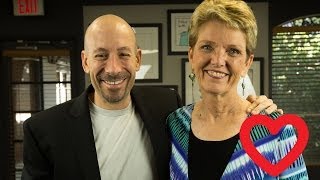
This is a recorded interview (YouTube) between Joe Polish and Barbara Hemphill where Hemphill recounts her 35-year career as an organizing/productivity consultant (starting in 1978), the origin of her Taming the Paper Tiger/ Paper Tiger work, and the founding of the Productive Environment Institute. Key ideas: clutter equals postponed decisions; apply decision-making to physical, digital, emotional and spiritual clutter; a guideline phrase—"have nothing you do not know to be useful, beautiful, or love"—and an oft-cited claim that roughly 80% of what people keep is never used. Hemphill describes practical frameworks she teaches (the seven information-management questions, records-retention/permissions/versioning/backup, and target-market specialization for consultants) and emphasizes marketing and training strategies (certified specialists, target niches like business travelers). The tone is conversational, anecdotal, and instructional.
Chapters
Hello, this is Joe Polish, and I am here with my dear friend Barbara Hemphill. I've known you how long. How long have we known each other? You have any idea?
15 years. At least.
15 years. Yeah, at least. At least. So you're awesome. I mean, we've done many interviews. You've even spoken at my conferences in the past. You are one of the world's leading organizational and productivity experts, starting with the Paper Tiger, which is the first book I read from you.
Thank you.
And yeah, we've just been friends for a long time. So you teach people how to do a lot of things, and over the years you have really developed your philosophy around organization. And today we're going to talk about emotional clutter, spiritual clutter. But let's just give the quick version of who is Barbara Hemphill and what quality qualifies you to have knowledge and advise people in these areas?
Well, for one thing, I've been doing it 35 years. 1978, I lived in New York City. I had adopted three children. My husband worked for a non profit, needed to have some more money in the household budget. I wanted to have flexibility. And so I figured the best way to have flexibility was to find a problem that I knew how to solve that somebody else would pay for.
Yeah, that's a good idea.
So I was sitting on the playground with my kids and I would hear comments like, we haven't eaten off the table in a month because it's piled full of papers. Or I had to file an extension of my income taxes because I couldn't find the receipts. Or I want to refinance the house and I can't get the documents that the mortgage company wants. And I thought, oh, you know, I think I know how to help that. So I took $7 out of the grocery money and said, organizing consultant can help you make better use of time and space. I got three crank calls. And the fourth call was from a woman, 58 years old, whose husband was an attorney. And he had died suddenly. And like the shoemaker's kids with no shoes, he was an attorney who died with his own affairs out of order. Piles everywhere in his home office, in his office office, and not a clue. The wife didn't have a clue what to do. She did not know that she was my first client. And I did not tell her. And I just went in and started sorting, saying, okay, I'll talk to the stockbroker about this and the accountant about this and the insurance agent. And, you know, just kept working on it. And to Promote the business. I would go any place that they give me a platform and say, here's 10 ways to organize your paper or 10 ways to organize your kids, or 10 ways to organize your kitchen or whatever. Move to Washington, D.C. and I went to. I went the Small Business Administration first to say, you know, help me start this business. And they said, just laugh me out of the room. I said, you're crazy. I mean, nobody's going to pay for organizing. You got to figure out something else to do. But I just didn't believe it. I mean, I saw it was a problem, and it was a problem I knew that I knew how to solve. So I called the editor of the Washingtonian magazine, and I said, I've just moved here from New York, and I have a service which I think would be of interest to your readers. And she was interested. We talked for 45 minutes. She said, wow, you know, this is. Fortunately, she never said, how many clients have you had? Or how long have you been in business? And I never told her. And they came and they did a story. They showed me sitting on a file cabinet and said, for $10 an hour, Barbara Hemphill would come to your house and organize your filing system. And that's sort of how it started. Very quickly.
Did you get. Just get a ton of business?
No. No, I don't think I. Maybe two or three calls, but hardly. Hardly anything at all. Which, you know, the first time I was on Good Morning America, I expected. Oh, I thought the phone would just. I was just expected to be bombarded. Nothing. Because there's this interesting factor of you work hard to be promoted, to be seen as an expert. But then when you're seen as an expert, it's like you're unreachable. It's like, oh, I couldn't let her see my stuff.
Right, right.
You know, it's like. And plus, people are embarrassed. I mean, you know, people. The other day, I worked with a client that I've known for three years and have been talking about how I could help him. And finally he decided to do something about it. And he was just, like. He said, oh, my gosh. You know, this is just so. And I said, okay, tell me, Doug, why did it take you so long to ask for help? He said, well, you know, there's two things that you worry about. One is that. That you wouldn't understand me, that my problems are not something that you could relate to, that your system wouldn't work for me because I'm really disorganized. But he Said, the other thing is that I wouldn't work the system. And he said that was my fear. He said, I knew that you had a system, and I knew I had seen you work with other people and I'd seen them change. But my fear was that I couldn't do it, that I just wouldn't be able to do it, that it was something wrong with me. So there's lots of emotion, but go back to Washington again. What I quickly saw was the question that people ask all the time was, how long do you keep? And in those days, in the early 80s, it was especially bank statements. How long do you keep bank statements? So I went to the library to get a book. I figured there must be a book on how long do you keep things.
Can I say something, too? Because there might be some people that cannot put this together. This is before the Internet. This is before scanning. This is before all the digital world. I mean, you could still scan back then, but if you went to the library, you had the. You know, I mean, it's a completely different system.
I did not have a cell phone.
Yeah.
In 1978, I did not have a cell phone.
So you went to the library to get a book.
So I went to library.
I went to the library online and do a Google search. So I just wanted to bring that awareness to people of how this came about.
So I found a book by Michael Larson called How to Write a Book Proposal. And I wrote the proposal. And the book was about every single piece of paper that comes into the American household. You know, junk mail, as we call it, recipes, coupons, children's artwork, photographs, bank statements, tax papers, insurance papers, mortgage papers, medical bills, bills, paid, warranties. I mean, every single piece of paper that you find in a house, which gets put on the kitchen table and in closets and under beds and in storage rooms and in attics and garages and everything. Every single one of them was listed in there. And it was called Taming the Paper Tiger. So for 20 years, that was my thing. I was the paper tiger lady, and I was helping people tame the paper tiger. I did it in homes first, and then people said, would you come to the office with me? I have a liberal arts degree. And I'm thinking, I don't know, but. And so I would say, I'll go, and if I can fix it, you pay me, and if I don't, I'll go home. So for 35 years, I've totally guaranteed everything I've done. I've gone to corporations that have paid me tens of thousands of dollars and said, if five years from now you say this was a waste of money, I'll either fix it or I'll give you your money back because you're paying me for the solution. You're not paying you for my time. I don't want your money unless you get a solution.
Right? Love it.
So I started going into companies and figured out that it was the same a filing system. Whether you were filing your personal papers or filing the papers in an office, it's the same. The principles are the same. A storage room in an office is the same as a closet at home. And it's really based on the filter. Four words that have been this business is clutter is postponed decisions. I learned that from clothes closets. Closed closets fill up because you haven't decided whether you're going to lose the ten pounds you need to lose to get back into that suit again, or that exercise equipment that looks so great on the shopping network that you haven't taken out, you know, or the candlestick you got from Aunt Sally. You love Aunt Sally, but that candlestick is really not your style. But she is coming for Thanksgiving, and she would be so, so happy if you had it on the table, assuming you could find it.
Right? Right.
Well, you know, it's the same with paper. You know, you sit down at your desk or at the kitchen table and you say, okay, today's the day I'm going to clean up this mess. And you pick up the first piece of paper and think of any number of reasons why a day is not a good day to deal with this piece of paper. And you put it over here, and then you pick up the second and the third and the fourth, and before you know it, the pile that was on this side is on this side, and you look at your watch and, oh, goodness gracious, I got to go somewhere. Clutter is postponed decisions. So basically, what I'm doing is teaching people to make decisions. I'm not making it for them. Because organizing is an art. Productivity is an art. It doesn't have a right or wrong way. So when people say to me, how long do you keep this? I can say, if it were mine, this is what I would do. But that doesn't mean it's what you would do, and that's okay. It's about finding something that works for you. You can keep everything you want if you're willing to pay the price. And the price is time, space, money, and energy. So my job is not to say, joe, you don't need to keep this. My job is to say, Joe, if you choose to keep this, this is what it's going to cost you in time, space, money and energy. Now you make educated decision. And research shows that 80% of what we keep, we never use. And the more we keep, the less we use because we can't find it. We end up recreating or repurchasing what we already have because we can't find it. So now we have even more. We are a society of stuff. Stuff. And we are drowning in it. And so that's what I'm working on, is trying to help people get rid of clutter. But my passion is helping people eliminate the physical, digital, emotional and spiritual clutter so they can accomplish their work, enjoy their lives.
That was really good. That was very, very good. You as an example, do you. The 80%, let's say that 80% of it is never used. Have you gotten to the point where that still exists for you? Or are you so well skilled at this that you are very lean in terms of what you.
I'm quite lean, although I'm sentimental. So, I mean, if you come to my home or to my office, it is an intentional environment. And that's really what I'm about. My company is called Productive and Environment Institute and I define a productive environment as an intentional setting in which everyone can accomplish their work and enjoy their lives.
I love that. I mean just even the word, the word phrase, it's very powerful.
So how do you make an environment intentional? By deciding. For example, one of the criteria I use is have nothing which you do not know to be useful.
I can quote this. I love it. Have nothing in your home which you don't know to be useful. Think to be beautiful or love.
That's right.
Got that from you. I have it up in the wall in my hand. Sorry, I should have just let you do that. I think my self esteem needed a little lifted. I wanted to feel good about myself.
Well, that was originally known to be useful or thankful. But beautiful was Henry Morris, who was an interior designer in the early 1900s. But I added or love. Because there are things that aren't beautiful or useful, but they're loved because they remind you of something.
Is that ugly cat or something?
Well, things that my kids made for me, if you looked at. I mean, this is not great, but I love them. It makes me feel. It reminds me of something. So I think the thing that's really important, Jo, is that this is an ongoing process. It is not something you do. And then it's done. It is a way of life. Making a decision about things is a way of life. It happens. I'm terrible at remembering numbers, but the numbers, it's like 300,000 decisions we make every single day.
300,000. Really?
Well, think about your email.
Yeah, I guess so. If you're just like, yeah, I mean.
You'Re driving down the road, do I. Do I change lanes? Do I not change lanes? Do I have turkey? Do I have ham? Do I look at this email? Do I look at that email? Do I turn on the tv? Do I turn off the tv? Do I turn on the light? Do I. I mean, it's everywhere.
Yeah, I think I made about 400,000 in the last two minutes. Just, like, which way I'm going to move my head, lift my hand.
That's exactly right. That's exactly right.
That's interesting.
And so really what I'm teaching people is decision making. So how do you make decisions? And that goes back to, who are you? That's the reason I talk about what I call spiritual clutter. Spiritual clutter is not being clear about your purpose on Earth. I think about. I was married the first time for 14 years, and my husband decided that he wanted a divorce. And I was devastated. We'd adopted three children. One of them was physically disabled. I was Mrs. Tom. I loved being Mrs. Tom. We had these kids. This is what I wanted to do. And suddenly it was gone. And I was sitting in a therapist's office, and she said to me, okay, you have a blank slate. What do you want? I said, I don't have a clue. I don't have a clue. And she made a statement that just changed my life and that I use with all my clients now. She said, let's start with what you don't want. And when I go work with people to help them eliminate clutter, part of the reason they have so much difficulty with it is they're not clear about where they're going or what they want or what's really important, and they have a really hard time with it. And that's okay, because the way we can get at it is by starting with what they don't want.
That's true. That's true. Because that was obviously my question to you when you first started was like, going, well, how the heck does someone know their purpose in life? I mean, it's much easier to say that or point to goals or things, but there's a tremendous amount of.
You know, a good key to that. I train productivity consultants. They're called certified Productive environment Specialists. These are women who want to make their family their number one priority, but they want to have meaningful work with substantial income opportunities and flexible hours. And so they come to me to be trained to do what I've learned in these last 35 years, but then to pick a target market for whom they will do it.
Right.
And one of the things that we work on with them is getting them to pick their target market. And that's the hardest. That is the. When they come to me, that's the most difficult thing because organizing applies. Productivity applies to everybody and everything. And so whoever's going to pay me, I'm going to do it.
Let me throw this in on I love marketing. We have Breakthrough DNA, which is a report that we teach people in the area of marketing. There's three stages of a business that the before unit, the during unit, and the after unit. They're all three separate stages. And we have eight profit activators and the number one activator, the first one is select a single target market. And it is the hardest thing for people to do because they want to be all things to all people.
That's right. So part of how I help them get there is by saying, tell me what you like to do when you were 9, 10, and 11 years old. Now, a lot of times I'll say, I don't remember. So I say, go ask your siblings, go ask your mother, go ask your friends, go ask somebody. Because that is such a clue to how you were created, how you were made. And as I think through my 40 consultants now, every one of them, there's a story related to what they were doing. My own story. I grew up on a farm. My parents were very poor. We lived on the second floor of a tenant farmhouse. The only space that was mine was a small closet. And my daddy bought me a small chest of drawers in there that was mine. And my mother worked at a jewelry store. And she used to bring the boxes home that were slightly bent that they couldn't sell at a store. And what I was doing was taking those boxes and fitting them in that chest. How can I maximize this space that I have to get all of my belongings in?
You were made for this stuff?
I was. And the other thing, which I did not know because my mother actually heard me give this speech and heard me say something about that. And she said, and you know what else you used to do? And I said, no. Well, my grandmother had a room that we hardly ever went into that was called the parlor. And it Was kept really nice. And it was when the preacher called, you went into the parlor. That was kind of the thing. My mother says I used to gather the food family into the parlor and preach to them. What am I doing today? I'm preaching, organizing.
That is funny. That is really funny. And yes, and you're a very good preacher of this.
And one of my consultants, when I first reached her, her company was called Anchors Away. And I said, well, why? She said, well, I love to sail. She lived in Colorado. I'm saying, okay, Anchors Away, Colorado. Well, she said, I married a skier, so now we live. We snow ski. So we were talking about her target market. I said, what about sailors and skiers? Because as it relates to productivity, sailors and skiers have specific needs. There are specific kinds of information. There's travel information. There's ways they organize their equipment, ways they eat so that they're healthy, so that they can do what they want to do. And so that becomes your target market. And now what you used to do for fun on the weekends that you paid for is now a tax deductible expense because it's marketing.
Right.
And she's. Oh, my gosh, I never thought of that. And another one of our consultants, her specialty are business travelers who want to stay healthy. She traveled internationally for 13 years, and she's also a competitive dirt bike rider. So if you're going to travel internationally and you're going to be a competitive dirt bike rider, you got to stay in shape. That means you have to know how to pack and how to eat on the way and how to travel and how to stay fit and all those things. So I'm sitting at the symphony sitting next to a woman, and we're just chatting, and I noticed she had a wedding ring on, but she was by herself. And I said, oh, where's your husband? She said, oh, he's in London. And I said, on business? Yeah, he travels there a lot. Oh, that must be difficult. Yes, it is. Especially because he's had a heart attack and he's supposed to stay healthy. And so now I'm saying, oh, you need to talk to Marcy, because she specializes in business travelers that want to stay healthy as opposed to saying, oh, you just need to get organized.
Right, right. You know, what's great about that is so not only do you have a real perspective and understanding about the art of productivity and organization, but you also think as a marketer, because you're helping, you know, it's not just making decisions on stuff. It's literally how do you actually monetize and maximize that, you know, because I always think two of my favorite words are productivity and leverage. You know, productivity, maximum results, least amount of time. Leverage, maximum results, least amount of effort. And when you combine those two, you simply just, you're better. I mean, you become better.
Let me give you another example. I think kind of ties in with that. One of the things that we teach our clients, both at a personal level and at a business level, and even with big corporations, is what we call the seven information management questions which every individual and every business needs to answer, regardless of whether it's a for profit, a not for profit size. So it's what information do we need to keep? Okay, in what form is it paper or is it electronic? And if it's electronic, what program is it going to be? Electronic? How long does it need to be kept? That's records retention, which in companies has to do with risk management, because you can't. Now, it's very dangerous to keep all kinds of information because if you're sued, all of that is going to be subpoenaed and you're going to pay for that and it's going to cost a lot of money. Who's responsible for filing it? That's teamwork. That's job descriptions. In a family, it's in a husband and wife. Who's responsible for filing it? Who needs access to it? That's permissions. If it's a locked file drawer or if you're in a software program, who has access? Who has the passwords and all that. And then how do we find it? That's version control and naming mechanisms we were talking about. There's so much information out there that nobody can find anymore in companies. I mean, I can tell you some stories that are just. Oh, they're just pathetic. And then the last one is, how do you back it up?
Gotcha.
So here's the interesting thing. When I go into corporations to do training programs for people, employees are not really very interested. You know, their employer has said, I just went to do some internal bank auditors, you know, and it's like the ED auditor got real work to do today. And besides this. So I say, how many of you left home this morning with more pieces of paper lying around than you prefer? Well, 50% will raise their hands. And statistically it's true for 80%. So I say, everything you're going to learn today applies at home as well. Well, now they're listening because they are wanting to tell not what they're going to go home and do, but what they're going to go home and tell their spouse to do, Right? So all of that, all of the things that we teach around the seven information management, we apply in a personal level. At a personal level, and then people are engaged. So give me an example. We were talking about what I call the art of waste basketry. I mentioned that 80% of what we keep, we never use and how difficult it is to throw away. And I asked the audience, how many of you have difficulty throwing things away? And a lot of people raised their hands and I said, how many of you know someone whose life is really hampered by the stuff they keep? You know, like they can't have people come into their house because they don't want them to see the mess or they can't go places. You know, it's like, I can't go to the movies tonight because I really got to pay the bills. You know, I put it off long enough that I can't do it anymore. Well, most of the people raised. Everybody raised their hand. Everybody knows somebody like that. I mean, a lot of them, it's them, but they.
Well, and then they're not going to want to.
They're not going to admit it, but I mean, every single hand was raised. How many of you know somebody whose life who isn't able to accomplish their work or enjoy their lives because of their stuff? And everybody raised their hand, which has happened. I mean, I've done this thousands of times and it always happens. So we're talking about, okay, how is it. So why is it so difficult to let go? Well, I wrote a book a number of years ago called Love it or Lose, Living Clutter Free Forever. And in the research for that book, I discovered a very interesting fact. Fact. And that is if there is someone who has a great deal of difficulty letting go of things to their own detriment by their own choice, it's not like they choose to keep it because they like it. It's like they're not really comfortable, but they just can't let go of it. If I ask enough questions, I will find.
More from Joe

This FBI Trick Can Command Respect Without Saying a Word ft. JEFFERSON FISHER & CHRIS VOSS

How To Stand Out, Be Different, and Create Raving Fans, Customers, and Employees ft. Jesse Cole



90% Of Businesses Fail In Their First Year, Here's Why! ft. Dr. Benjamin Hard & Dr. Robert Cialdini

The 1 Piece of Business Advice I Got From Elon Musk That Changed Everything Ft. Kamal Ravikant

The 6 Traits You CAN'T Teach in Entrepreneurship ft. Richard Branson & Gino Wickman

The Leg Method: How to Make Your Book into a Million-Dollar Asset ft. Anna David


7 Millionaire Mindset Hacks for Daily Success and Wealth ft. Brian Tracy & Dan Sullivan
