Jordan Peterson On How To MASTER The Art of Public Speaking and DEBATES
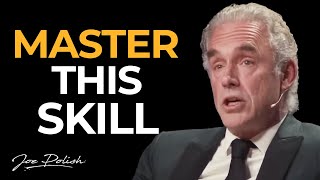
Jordan Peterson on public speaking and debate: develop verbal fluency, prioritize truth over winning, use firm words and pauses, avoid filler, engage individuals in the audience, and assume good faith unless proven otherwise.
Chapters
You are so good at debates and making your case and backing it up with, you know, not only your own view, but stats. I mean, you have this incredible ability to resource, you know so much. How does one develop that skill? I don't know if everyone can, because.
You can to a greater or lesser degree. I mean, it's helpful to have the innate ability, let's say. So one of the things people differ in, for example, is a trait called verbal fluency. It's associated with extraversion and sociability and positive emotion, by the way. But verbal fluency is the rate at which you can think up words. And there's massive variation in that. So for example, if I had all of you, you can test it very easily. So imagine I had all you people write down as many words as, as you could that begin with the letter s in three minutes. Okay? Some of you would produce like 30 words and some of you would produce 150. It's a huge variation and it's associated with verbal intelligence, which is in turn associated with general cognitive ability. But there are other elements of intelligence that aren't verbal. So you can have lower verbal fluency and be very good at spatial intelligence, for example, or manipulating images. But high verbal fluency is very useful with, with regards to a career as a debater or public speaker. And I mean, I don't know if you know who Camille Palia is, but she's off the charts in verbal fluency. Ben Shapiro, he's another like machine gun speaker. Russell Brand. Those are the people I've met in my life who are the most verbally fluent. And that's huge. Part of that's an innate skill in terms of developing your ability to speak, I would say, well, there's a variety of things that you can learn to do. I don't debate to win. I'm not particularly interested in winning. I stopped doing that when I was in my 20s when I learned that that was a counterproductive strategy. What I'm trying to do when I speak is to say what I believe to be true. And that's a long term victory. The truth is a long term strategy. Right? And it's the opposite of manipulation. And so all I'm trying to do is to formulate my words as clearly as I possibly can. And some of that's an embodied sense. Like if you, you can learn to, you can learn to do this. It's really worth learning. Although it's very unsettling when you start, you, you want to feel out whether or not the words that you're saying are like firm. Imagine you're crossing a swampy plain and you can't see into the water. You know, there's a trail and underneath the water six inches or so, there are well set foundation stones. And you can sort of feel them out as you make your way. That's how Moses went across the Red Sea, you know, the sea of chaos. You can tell when you're speaking if you pay attention what words you're saying make you confident. And that's a way of telling that there's firm ground under your feet. And it's the opposite of being self conscious. You know, if you start speaking publicly and you become self conscious, it's because you've become concerned with how people are responding to you. Well, it's not about you. It's not about you. It's about the validity of your words. And if you're focusing on what it is that you have to say and you find the firm words, you, you'll be a compelling public speaker. And that's the case too, even if you're not particularly verbally fluent, because people will be able to tell that what you're doing is wrestling with the ideas at hand and trying to find your way forward. And everyone wants to see that. That's a kind of high wire performance. And so, and that's way different than wanting victory. Like victory, there's lots of different kinds of victory. You know, there's the egotistical victory of the moment and there's the setting the foundations for success across the broadest possible span of time and place into the future. And the truth is a way better long term strategy. You might pay for it in the present, which is why people lie, obviously. But, so you want to find the right words now so you can learn to do that. You got to listen to yourself talk and you got to think, well, do I actually believe that or am I trying to impress this person or am I trying to close the business deal? You know, is there, am I manipulating the situation so that I get what I want rather than merely trying to represent the truth? Now you might say, well, why shouldn't you get what you want? And the answer is, well, what the hell do you know? I mean, how often have you been wrong about what you want? Lots, I presume. And how often have you got something that you wanted, maybe by the by a route that wasn't the straightest, let's say, and found out that that didn't you do you any good at all. It's much better just to say what you believe to be the case. And that also helps you build a foundation for speaking into the future. It also allows you to draw on your own experience. You know, like, there isn't anyone who can't comport themselves in a manner that's interesting. One of the things I learned as a clinician was that, and I had a very wide variety of clients, ranging from people who were just barely clinging to the edge of the earth by their fingernails to people who were extremely accomplished on multiple dimensions, you know, and even the simpler people, even the cognitively impaired people that I dealt with, who had, in some cases, virtually nothing going for them. If I could listen hard enough and get them to talk about what they knew, they were immediately compelling and interesting, and they had things to say, and I had things to learn from them. And so you can be a compelling public speaker if you actually talk about the things that you know to be true. Right. But that means you have to forego the ego games that are associated. It's the same in a. In a debate, you know, it's a victory if you clarify your thoughts in the course of a discussion. That's a victory that's sort of independent of the perceived victory of the moment, let's say. Now, the other thing you can do on the public speaking side is you watch. Watch your speech, and you should eliminate ums and likes and all those filler words that people use. That has to go. It makes you inarticulate, and you can learn to control that. And instead of filling the pause with an or a like or a, you know, you can just be silent. Like, there's nothing wrong with taking a pause and collecting your thoughts. And you want to have your goal in mind. Like, when I go on stage, when I'm doing my lectures, when I'm touring, I always have a question in mind, right? And that's a priority. It's like, okay, what am I talking about tonight? Here's the question. And what does the talk consist of? It talk. It consists of an attempt to not only answer that question, but to push the answer to the question farther than I've been able to push it before. And that adds some novelty to it. And then the. The talk becomes an exploration with the audience. And that's way more interesting for everyone. You know, you. The last thing you want to do is, like, read. If you can avoid that. Don't do that. Don't do that. No matter how good your presentation is.
Hey, I hope you're enjoying this video. And I want to let you Know that I have a new book that's come out and if you'd like to get it absolutely free, there's a link below in the description. Or you can wait till the end of this video, or you can Simply go to joe'sfreebook.com and you can get a copy there.
No matter how good your presentation is, you're going to lose most of the audience if you read it. Best to have. If you're going to use PowerPoint, use images or just a couple of phrases and you can read the phrase and then discuss it, you know, but people want to see you actively engaging in the ideas. They don't want to hear some canned and stereotyped set of responses. And you're not there to please the audience, you know, they're there to figure out something with everyone. And what else can you do when you're in front of a crowd? You're going to be afraid of the crowd, but you shouldn't be talking to the crowd. There's no crowd. You can talk to an individual, everyone. So what you do when you pick out people in the group and you talk to them, you know, and you look at them and when you walk on stage, you look everywhere so that you're not afraid of what's in front of you. And then you just talk. And you always pick people out and look at them and see if they're paying attention. And if they're not, well, you got to play with the audience, you know, and so what is it? Get rid of the filler words. Get rid of the idea that you're there to accomplish your goal, your narrow goal. Try to say what's true. See if you can find your way. Find the words that make you feel solid. It's the opposite of self consciousness. Play a bit, explore, have a question firmly in mind, you know, and risk some failure too. That's. That's fun. You go out on stage like I never know when I go on stage for a talk. I never know if it's going to work. And neither does the audience. And so they're all. Part of what grips them is the fact that I could just miss the mark, you know, that it could go nowhere. And that's a real challenge to see if you can put together new ideas on the fly and address the issue at hand and to bring everyone along for the ride. And that's. There's no failure if you do that. Even if it doesn't work out that well, at least it's a noble attempt that went somewhat sideways. That's something. And then people get to know who you are too, and so do you. And that's a good deal. Can be a good deal.
So to that point, to get to know who you are. So you have put yourself many times in positions, having discussions or debates or interviews with people that, you know dislike you, you know they're going to try to challenge you. Are you doing that? I love to have you break down to reach people that you feel need to be educated on a different way.
Of thinking about it.
Are you doing it to help yourself get better at thinking through these difficult sort of challenges?
I don't. I don't set out precisely to put myself in situations like that. It's more like they arise. You know, I've done a lot of interviews and some of them have been with people who are genuine interlocutors and others are people who want to play a game. And so I give people the benefit of the doubt. So if I meet someone, I assume that we're playing a straight game, and then I watch them, and if they're playing a straight game, then. Then I treat them politely. And if they're not playing a straight game, I think, okay, what the hell are you up to? And the problem is, for them generally is I was a clinician for a long time and tricky. Journalists think they're tricky. And they're nowhere near as tricky as the people that I've dealt with. They're not even in the same universe. And so I'm serious. And so if I think, okay, you're not playing a straight game. I see, so now we're playing clinician, are we? And so then I can usually figure out what the person's up to, and that's usually not very good for them. So. And I don't like doing that. You know, like when I meet someone socially, I'm not bringing my clinical eye to bear. It's the polite thing to do. And the appropriate thing to do socially is to assume goodwill and meet people there. And if you're not naive, that's a form of courage, you know, because I could be very skeptical when I meet people, but I'm not. I think probably you're playing a straight game, at least mostly. Or. And good, then we'll go. Will proceed on that basis. But if that's not the situation, then I'm also prepared to play that game. And so that's worked spectacularly well upon occasion.
Yeah.
And it was. It was often with journalists who. They weren't there to play a straight game at all. And they were. One of them confessed, in fact, a woman named Nellie Bowles, who. She got me probably more than anyone else did, because she was. She was very, very devious. Very, very devious. And she fooled me into thinking she was someone other than who she was. And she admitted several years later that her role at the New York Times was to seduce essentially the people that she was interviewing and then continue to talk to them until they said something that she could twist into reputation destruction and elevate her status in consequence. She said lots of the New York Times reporters are playing that game. And that's a, That's a pretty. That's a psychopathic game. And she was particularly good at it. Now, she did admit it and apologize, but those things aren't easy to change once you practice them. And so, you know, maybe she learned her lesson and maybe she didn't. So. So I don't look for trouble, you know. Well, I don't. I don't look for trouble. And I've avoided universities mostly since about 2018 because they just got way too annoying. I don't know why anybody ever goes and speaks at university. They're a pain in the neck. They don't pay anything. They think that it's a privilege for you to speak there. And sometimes it is. You know, there is occasions where that's the case, but mostly it's just. It's just not worth the trouble. Yeah. And so I don't, I do that rarely, you know, and still now and then, but rarely in terms of interviews. Mostly what we've changed as a family is I, I won't do an interview without recording it. And so often now if I run into someone who's playing games, we just release the whole recording. And that usually does the trick because I, you know, I, I'm not concerned about revealing what it is that I've said. And like, you know, you may know that the Ontario College of Psychologists and Behavior Analysts, they changed their name. How convenient for them. They're trying to take away my license, you know, and right now we're negotiating because I'm supposed to be re educated, which, you know, isn't really going to work that well. And, you know, I told them that I would do their re education, but there's no bloody way they're going to be able to do it in secret. And they told me two weeks ago that they would proceed with the re education because they found someone who apparently is willing to do this. But they told me that I couldn't record it, that they'd have a court recorder there to make a transcript, but that I couldn't have the transcript if I didn't agree to keep it secret. And now the reason that those processes, procedures are usually secret is to protect the person who's being disciplined, let's say not the people who are doing the discipline. And so I said, well, no, I'm not doing that. I'm going to make every bloody second of this 100% public. Clearly, obviously, you're not doing this behind closed doors, so. Well, that was the last letter we sent back to them. I don't know what the hell they're gonna do about that, but there isn't a hope in hell that they're gonna be able to stop me from recording this. Like, not unless they're willing to do a cavity search. So seriously, like, this is not happening in secret. I've got. Would I say I have nothing to hide? You know, everyone has something to hide. Let's make those, you know, mistakes about that. But there's certainly nothing that I could possibly say in the course of a re education episode, whatever the hell that would be, that I wouldn't be a hundred percent willing to make public. And that's also part and parcel of this, the consequence of this finding my words carefully. You know, it's like I'm not saying things I don't mean. And then you might say, well, what do you mean that you mean something? It's like if I say something, if I say no, for example, and I've said no, I've said no to government legislation in Canada. What no means is, there isn't anything you can do to me that would force me to comply with your request. And I've thought it through. And so I did a lot of negotiating counseling with my clients. You know, I know what no means. I know how rarely you use it. You use it when you mean it. And to mean it means you have to think it through. If you want to stop someone from having the upper hand over you, you just have to give up everything they want. You have to think that through. It's like, okay, you're going to take my license. Can I live with that? Well, then I have to have a plan. If that happens, what am I going to do? You know, if I'm all panicked about that, well, then I lose. But if I've got a way forward, it's like, okay, do your worst. And so, well, then what? You know, if you take away the upper hand, you're free. And all you have to do to take away the upper hand is to give up what's being requested and that you may have to think that through, but they might take it anyways, even if you don't think it through. So you might as well think it through. And, you know, you may also find that unbeknownst to you, there's tremendous opportunity in that sacrifice. You know, like with the college, for example, with the psychologists. It's, like, not obvious to me that I want to be part of their damn club anymore because they've become unbelievably corrupt. Like the medical establishments, the medical associations, you know, I'm not going to let them take my license because I'm not going to let a pack of faceless bureaucrats take something from me without making their life hell. But that doesn't mean that I'm happy to be part of their little coterie. So. But I've already. I can live without my license. I've got lots of. I'm not out of options, not by any stretch of the imagination. Kamala Harris was. Kamala Harris was talking about equity. She either didn't know what she was talking about, which is inexcusable, or she knew what she was talking about, which was malevolent. Those are the options. It's like, they just mean equality of opportunity. It's like, then why do they have a different word? They don't mean equality of opportunity. They mean equality of outcome. If you're foolish enough to believe in equality.
More from Joe

This FBI Trick Can Command Respect Without Saying a Word ft. JEFFERSON FISHER & CHRIS VOSS

How To Stand Out, Be Different, and Create Raving Fans, Customers, and Employees ft. Jesse Cole



90% Of Businesses Fail In Their First Year, Here's Why! ft. Dr. Benjamin Hard & Dr. Robert Cialdini

The 1 Piece of Business Advice I Got From Elon Musk That Changed Everything Ft. Kamal Ravikant

The 6 Traits You CAN'T Teach in Entrepreneurship ft. Richard Branson & Gino Wickman

The Leg Method: How to Make Your Book into a Million-Dollar Asset ft. Anna David


7 Millionaire Mindset Hacks for Daily Success and Wealth ft. Brian Tracy & Dan Sullivan
