Keep It E.L.F.!
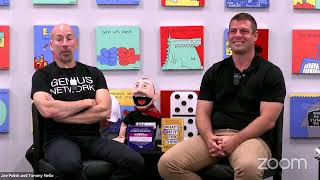
Joe Polish and Tommy Mello discuss building an E.L.F. business: easy, lucrative, and fun. Polish shares how he went from addiction and carpet-cleaning to marketing entrepreneur, then covers education-based marketing, risk reversal guarantees, and selling relationships instead of transactions.
Chapters
One minute, we will get started. We are going to talk about keeping it elf. Keeping an elf easy, lucrative, and fun business. Joe Polish is going to be interviewed by the awesome home services entrepreneur, Tommy Mello. We have lots more folks joining us. We're going to go live here on YouTube as well. We are awesome. We are live on YouTube now. And so Joe and Tommy will be joining us in just a moment.
Let's see, we have on Zoom. There he is sitting here next to Tommy Mello. And we will get started in a minute.
So I don't know that we can hear us. Hey, can you hear me, Joe?
I can hear you, Gina. Awesome.
Welcome. Good to see you both. This feels like deja vu.
What's that?
Feels like deja vu.
Yeah.
And by the way, if that seems really tricky, Gina's downstairs right now. I think she is, right. Or she's. Okay. Okay, cool. And you're not going to be yelling at us while we're doing this, are you?
No, I'm going to go on mute. If you're ready, I'm going to let you take over the show because we've got people to admit in the waiting room, and everybody's super excited to learn more about building and growing an easy, lucrative, and fun business where everybody wins.
Okay, well, as soon as we hit a very large number, once we hit 1,000 people online, let's go ahead and start. I'm kidding. We don't have that many, but hopefully it's getting up there. All right, so cool. Are we ready? You ready?
Ready.
Let's do it.
All right, so I will just let me announce this first part, then I'll turn it over to the man of the hour. See? So welcome, everyone, to the I Love Marketing Zoom, the I Love Marketing live. This is going to be a podcast episode for I Love Marketing, but we're doing multiple things here. So last month, I did an amazing interview with Tommy Mello. So he is the founder of A1 Garage. If you've not seen that episode, I will ask Gina to post it in the chat Zoom, so you can watch it. Many of you have, though, because I am looking and I know some of you saw that it was great. And so you're running a gigantic company. Your company is now valued at a billion dollars, which is pretty amazing and awesome. And he wanted to do an interview with me for his podcast, which is.
Called Home Service Expert.
Home Service Expert. So by the end of this, subscribe to that, especially if you're in the service business, because he's one of the top in the world. Not like in the area, in the country. In the world. So Tommy is amazing and he's going to interview me. I'm like, let's just do the I love marketing live that we do and we'll try this. And so if this is a really awesome event today, it's because I happen to say something that I pieced words together that hopefully are useful and meaningful. And if not, it's not his fault. It's all my fault. So I will turn it over to you and this is going to be you interviewing me for your podcast.
Yes, sir. All right. Well, the way I start out the podcast is I'm Tommy Mello, home service expert and today I'm in Tempe, Arizona. Been in this office about a decade ago and I'm interviewing in my mind, in most people's minds, one of the top networkers, period, in the country and in the world. I was walking up, you got Joe standing next to Jeff Bezos. I mean, he hangs out with Richard Branson. It's crazy how connected he is. And I said, I'm going to Vegas the other day. He's like, you gotta go talk to Chris Voss. Never split the difference. And I came to one of the genius a part of the Genius Network and just meeting top bestseller after bestseller, you name it, he knows him. He's an expert in marketing, sales, coaching, networking. He's the founder of Genius Network. 2006 to present Piranha Marketing started in 1994. I know he doesn't look an age over 30. 10X Talk Co founder 2012 to present I Love Marketing started in 2009. Amazing to present he's killing it on YouTube. Over 115,000 subscribers. Joe Paulus is the founder of Genius Network, one of the biggest high level groups in the world for entrepreneurs. He also curates the annual Genius Network event and the 100k group. Genius Network and the 100k is home of some of the most successful entrepreneurs alive. Joe has also helped thousands of businesses and generated hundreds of millions of dollars for his clients. He's been featured in Inc. Fortune, Forbes, among lots of many others. Joe also hosts three of the top ranked marketing and business podcasts including I love marketing, 10x talk and genius Network. And one of the greatest things he does is he gives back. He's a recovering addict and there's not much he hasn't done. I've never talked to him about sniffing glue, but pretty much everything out there Joe has done and I think he's going to share an Amazing story. He spoke at the last two events I've had. He's going to be at the big event in November called Freedom. And I just wanted Joe to be part of my circle. I want to be part of his circle and the wealth of knowledge, the marketing. The coolest thing about it is he started in the home service space. Why don't you tell us in the beginnings, just you get started in high school, just how you had to turn your life around and then just how you started dominating home service.
Yeah. So it's, to me, first off, it's great to be here and there's a lot we can talk about, so. And when I hear a bio of myself that says all these great things, I also want to preface it that having grown up with low self esteem and low self worth, it oftentimes is hard to take in accomplishments. And so over the years I've really tried to think, wow, I worked really hard. I did a lot of stuff and some things have worked and there's a lot of things that haven't worked. So when I started out in business, I was a carpet cleaner. And the reason I got into that business, I was an addict. In high school, I was a cocaine addict. And at my worst state, I weighed 105 pounds from free basing cocaine. There was one week where I just didn't eat anything and I got as low as 105 pounds. And so I moved away and went to college in New Mexico State University. Lived in a trailer with my father for a couple years, mainly to get sober, really, to go to college. I just happened to go to college. While I was there, I never got a degree in anything, but I did start exercising and working out and I started doing sales. And as you know, it doesn't matter how technically skilled you are if you don't know how to sell something, that's challenging. So I got a little bit of sales training by selling gym memberships. Then I got a job in a, literally a mental hospital. And I would drive the patients to AA meetings, Alcoholics Anonymous, Narcotics Anonymous, Cocaine Anonymous meetings. And I would sit there as an employee and I would listen to these people with just the most difficult challenges. And that was my first exposure to community because I grew up a very shy, introverted, scared person. Never thought I'd teach anything to anyone I didn't want to public speak. I mean, I was. It was hard to even ask someone out on a date, let alone present myself in front of groups. So I came back to Arizona trying to figure out what the hell I was going to do with my life. I had a friend I went to high school with that said, you know, I work for this carpet cleaning business. I run the phone room. And the guy that's the owner of it, he is an alcoholic, but he did $600,000 in business last year. And I was like, my God, that's a tremendous amount of money. So he's like, you want to go into a carpet cleaning business? And I'll set up the phone room, we'll hire some employees after we get it going, and then we'll build a big business. So I took the $1,500, which is all the money I had to my name. I bought a portable steam cleaner, and. And I got business cards that said professional carpet and upholstery cleaner, whatever that means. Right. And this was back in literally late 1989, early 1990. And I start this business with this guy. His name was Sean, and he was getting drunk every night also, even though he worked for a guy that was an alcoholic. And so after about two months of just painful trying to get anything done with him, I took his name off the business account. And here I was, stuck with this chemicals and equipment and business cards that said I was a professional. That proceeded two years of pure hell and misery, going, you know, $30,000 in debt, trying to figure out how to make this business work. So back at that point in time, that was a lot of money, $30,000. And so what I ended up doing was I. I had this entrepreneurial fantasy that I must be a business owner. I want to do this sort of stuff. And I think my friend Gary Halbert, who I ultimately learned marketing from, he says the world advances on the backs of its neurotics, and there's many ways that you can go broke. One of the dumbest ways to go broke is doing hard, physical manual labor. And not only was I doing hard, physical manual labor every day, I was paying money to do that. I was going into debt to do that. And I think there is a distinction between people that are willing to work through very difficult, hard times and people that just have an entitlement attitude and want things to be easy. Like today, I teach easy, lucrative, and fun versus hard, annoying, lame, and frustrating. Have elf versus half. But in the beginning, I had nothing in my life that was easy, lucrative, and fun. It was all hard, annoying, lame, and frustrating. Frustrating. Sometimes it can be hard, annoying, lucrative, and frustrating. So I have this chemicals and equipment, and I'm just annoyed. And one day, I have a friend named Pat That I have another friend named Pat, who actually is here in the building with me right now. But this is a guy that I also went to high school with, and he calls me up and he's like, do you want to go jet skiing this week? I have a really wealthy friend who's a big real estate investor. Yeah, this is a good story to actually share with anyone in business, but especially people in service businesses. And my friend said, you want to go jet skiing at Seguro Lake, which is a lake out here in Arizona. And when you're broke, you don't have a lot of motivation, let alone any discretionary income, to do anything. I'm literally almost starving at this point in my life, and I am working my ass off trying to figure out how to make it work. And he said to me, you want to go jet skiing? I'm like, nah, I got a lot of work this week, and I'm just trying to make it work. And I was starving, Starting to go to night classes to learn how to get my series 63 and series 7 license so I could be a stockbroker. Because I had to get out of this carpet cleaning business. I was trapped. It wasn't working. I didn't like it, but I didn't have any other options. So I'm like, I'm going to try to figure out what else to do. So I tell my friend I can't go, but he mentioned he had this wealthy friend that had this business. And so I said, well, yeah, maybe I'll come out and. And go jet skiing with you guys for a little bit. Because I was like, maybe I could talk to the rich guy and he can give me some advice. So I drive my piece of crap pickup truck out to Segura Lake. It's hot as hell in the middle of summer in Arizona like it is right now. The time we're recording this, and I have a chance to sit on the tailgate of a pickup truck with this rich guy. And my friend Pat and this rich guy's other friend were out on the two jet skis. And so I said to him, I said, I hear you do really well in business. And I have a small carpet cleaning business, and I'm looking to get into another business because it's just a really difficult business. I was wondering if you have any advice on what sort of industry I could go into. And he said, well, is there anyone in this business that you're in that's making money? And I said, well, there's a couple companies in The Phoenix area that do over a million a year, and that's a lot of money to me. And he said, well, if there's other people that are making money in this business, in the industry you're in and you're not, there's nothing wrong with the business you're in. There's something wrong with you. And I was like, well, no, no, I've gotten certified and I'm trained. A lot of these companies do bait and switch advertising, and I do a really good job. I care about people, but they've been established for a long time and it's difficult. And he said, look, young man, he goes, if you also told him that I had spent the last couple of years getting certified and that I did. So I told him about that and he said, well, look, young man, you're like most people. You think the grass is greener on the other side. And he goes, if you think you're going to go into another business or another industry without learning how to make a business work, you're going to repeat the same bad business habits that have caused you to be a failure like you're having right now in your own business. And I was like, well, shit, that's not the motivational talk that I wanted. And I still made excuses. I said, well, yeah, but a lot of these companies have been around a while. They're willing to do things ethically that I'm not willing to do. They do high pressure selling. He goes, look, he goes, what you need to do is you need to learn fundamental business skills. If you can learn how to make a business work, then you can take those skills anywhere. He goes, if you try to learn the skills of another industry, you're going to spend another six months, another year, another two years learning the technical skills of another business so you can go out and repeat the same bad business habits that have caused you to be a failure in this one. So that really, he wasn't giving me. I don't remember this guy's name at the time. This was the most instrumental conversation I'd ever had with anyone else that changed the trajectory of my business. So I now call those types of people or events or books, dominoes. The first dominoes. And it's the whole. When the student's ready, the teacher appears. He didn't say anything that probably someone else was not saying to me or books that I was reading or cassette tapes, because back then there were no. There's no Internet. I mean, I was listening to Nightingale Conant programs and cassette tapes and Things like that. But what I did, when he said that to me, I made a commitment that I am not going to get out of this business until I figure out how to make work. And I said, I live in America. I have a lot of anxiety, I have a lot of stress. I'm a neurotic person. I was recently a full blown drug addict a couple years prior. And my life was hard, but I was a hard worker and I had this drive and I had this dream and I had this vision. So I, I kind of used it as a game where I said, you know, there are other people that are making more money than me. They know something that I don't know. What the hell do they know and how do I figure it out? And that's when I started reading. That's when I really made the. Let me say this, Tommy. I know I'm going on a rant here. People care about things. Everyone here that's watching us, listening to this, people we're going to talk to. If we have family members, team members, everyone talks about how much they care about. We all care. But how committed are you to doing something? There's a big difference between caring and being committed. Yeah, I care about being in great physical shape. I care about eating healthy. I care about my business practices and my marketing. But am I committed to learning how to do it better? So I made a commitment after that trip and I said, I'm going to figure out how to make this work. And my business that I hated became a lab rat experiment for me to say, let's figure out what works and what doesn't work. And that's when I really started reading. I didn't have the solutions to my problems yet, which was how to get business. That came later. But it only came later because my mind was open. And I now realize that, okay, I'm going to figure out how to make this work. I'm not going to give myself an escape hatch. Because we all have escape hatches. We all have rationalizations, everyone, including myself. We all have alibis. Every time I blame. Every time I say I can't do something, and I do it all the time. We all do it as humans. What I did, though, is I quit doing it in that context there. And I was like, I'm going to figure out how to make this business work. And with that, I became receptive to all of the available resources. Like anyone that's in service business, you can and will transform their life with what you present to them. You're not going to do it for them. You're just going to give them a plan and a path. It's their choice to pick it up and do, do something with it. And that guy gave me that sort of insight and awareness, but it required the effort. I still worked my ass off. I still had a lot to learn. But I started. A friend gave me a newsletter on marketing, on direct response marketing. And I read it and it totally changed the way I thought of marketing. And then I started becoming a student of marketing and I realized there's no relationship between being good and getting paid. You can be really good at what you do and there's no relationship between getting paid. There's a huge relationship between being good, being a good marketer and getting paid. But I didn't even know what marketing was at that point in time. I had to learn that. And that's. And so today, you know, there's billions of dollars that have been made. We're sitting next to two giant shelves of. I brought these up there. People online might not be able to see those, but they're these, you know, there's probably, I don't know, 150 binders that are on these shelves. And so what I did is I turned my carpet cleaning business around by creating education based marketing. And then in end of 1994 I started teaching it to other carpet cleaners. And by 1997 I was voted the cleanfax, which was the largest trade magazine at the time, back in the 90s, the person of the year. And I was on the COVID of the Australian magazines, the UK magazine, New Zealand magazine. I became the most well known person in the world in the carpet cleaning industry. That would never get me dates and bars or anything, but it actually a lot of people knew who I was and I started teaching what I learned to other carpet cleaners. So I not only transformed my service business, I actually started helping other people do that. And that's very similar to what you've done. You know, you figured it out for you and now you are teaching other people. I mean, I think sitting here right now talking about that is a byproduct of you having learned a tremendous amount of stuff and you just want to share it with other people.
Well, you're talking about a business with hardly anything in 1992 to be famous for that career in 1997, that's five years. What were the basics that you just said? Okay, you studied marketing, you started reading Readers are leaders, networking. Obviously you networked to be in the top uk but what were the Five main lessons you took that you said, man, I wish I would have known this before. You've got a lot of marketing, even when you took a picture of the Valpak and you're like, dude, you need to let people learn about the product, where they call in and listen about it. But give me your top five. I think these things are still true to this day.
Yeah. Okay, so I'll say some fundamental stuff. So. So it takes just as much effort and energy to get a singular sale as it does to get repeat business over and over again. So you can either be in the transaction business or you can be in the relationship business. So whenever you're selling anything to anyone, don't just try to sell them something once. Try to develop and sell a relationship. Because the lifetime value of a client. You know, this is Jay Abraham, who's a great marketer, good friend of mine, he said you do not know how much you can afford to spend to acquire a client until and unless you know how much they're actually worth to you. So you know, how much do you spend to acquire a client? The biggest lesson that people I think would be helpful when it relates to marketing is the number one reason why most people don't do good with marketing is they undervalue the importance of it. Almost 50% of the cost of any product or service usually goes to what it costs to actually sell it. And that's if the person selling it has their act together. And most people really don't know what they're doing. So the first is selling relationships, not transactions. The second is direct response marketing. Whatever sort of messaging you're putting out into the world, make sure that you give people the ability to get a response. Back when I was going to college, I ended up going to a community college and I failed owning and operating a small business. And I got a C minus in principles of Marketing, which is really funny. And that was the highly esteemed Chandler Gilbert Community College. And they would show examples of branding and big companies like Coca Cola and just big GE and brands back in those days. Now you got probably one of the most well known brands is Coca Cola, which is pretty much Liquid Satan. And then you have Apple and things like that. But small businesses don't have the budget, they don't have the ad budget to advertise a service business like your Louis Vuitton or like your Rolex. They're just not going to do it. And so you have to put messaging out there. That really speaks to the title of my latest book, which is what's in it for them. People don't care about you. They don't care how much you work. They don't know. And especially I had to figure out how to successfully sell sell something that nobody wants to buy. Nobody wakes up every day and says, man, I really hope that the garage door breaks. I hope the cat pees in the corner. I hope the husband spills his coffee. I hope the kids drag mud through the living room. I had to figure out how to successfully sell something nobody wants to buy. So I had to figure out how to speak with an emotional language where you're using headlines and you're using offers. You can either be a world class copywriter like Roy William, wizard of ads, right, who has this magic ability. But if you don't have those skills, what you can do is you can educate people. And so one of the first things I did, and here's what, so you can call this a third one, is any problem in the world can be solved at the right sales letter as a quote by Gary Halbert. And so when I learned that words can have someone fall in love with you or hate you, motivate you, repel, attract. My favorite definition of selling is getting someone intellectually engaged. And this is from Dan Sullivan. Getting someone intellectually engaged in a future result that's good for them and getting them to emotionally commit to take action to achieve that result. And so when I'll say that to people, think of selling, getting someone intellectually engaged in a future result with the keywords good for them. Because there are ways to get people intellectually engaged in a future result that's bad for them, like eat this crappy food, watch this porn. I mean, there's all kinds of toxic things that are sold to people, but when you really care about humans, getting someone intellectually engaged in a future result that's good for them and getting them to emotionally commit to take action to achieve that result, you start wording your marketing. More importantly, and the difference between selling and marketing is selling is what you do when you're on the phone or face to face with somebody. Marketing is what you do to get someone on the phone or face to face with you properly positioned. So by the time you're talking to them, they're pre interested, pre motivated, pre qualified and predisposed to do business with you. And I've said that a thousand times. People that listen to my podcast, they've heard me say that definition over and over again. But I've had enough people say to me, thank you for the reminder, and I actually have to remind myself too. So my good friend Robert Cialdini, who wrote the book Influence, I just went to on Sunday this week. I mean, a few days ago I went to breakfast with him and his wife and then a couple of my friends because we had done a two day event on how to use AI and then we also went to dinner. So I spent pretty much most of the day with Robert Cialdini and he's the father of Influence. He wrote this amazing book that I read early on in my career. He wrote it 30 years ago and it's brilliant. It's how to persuade people with reciprocity and so social proof. And he has these and liking. Exactly. Yeah. The seven principles, the latest one called unity. Right. Because if you think about your group home service, freedom and all, you know, there is a belonging. There is. And see people, people don't buy from you because they understand what you do. People buy from you because they feel understood. Nobody wants to hire service businesses. Some things are bought, other things are sold. Like people wake up and they buy food, they go to movies, other things, you need to sell stuff to them. And I landed in an accidental industry where I didn't, you know, when I was a kid, I wasn't thinking, one day I'm going to be a carpet cleaner. It didn't occur to me. But you know, it's like it's an accidental industry. And a lot of people that are in service businesses, they just find themselves there. But the beauty of it is there's amazing things that you can do with the service business. As a matter of fact, if you want jobsuit, go into the service industry right now because the amount of people going to trade schools and getting trained on it. And the other thing is most people don't understand what service means. So here's I asked Eunice, my assistant, who's amazing, to bring me one of my first templates of my consumer awareness guide. So before the Internet existed, my first version of a sales letter was a consumer guide to Carpet Cleaning. So I got this idea from reading Gary Halbert News Letter that any problem in the world can be solved with the right sales letter. So I wanted to hire a copywriter to help me with this. And I was learning about copywriters. So I found this guy and I paid him $1,800 because that's what he wanted. He would help me create a consumer's guide to carpet cleaning. And so I would spend several hours a week for about a month training this guy. Everything about Carpet cleaning. And I would. So I created this consumer and I got all this stuff memorized, but it said consumer's Guide to Carpet Cleaning. It says, read this guide and you'll discover. See, people don't want to learn anything. They want to discover stuff. Like, I don't want to learn shit, I want to discover stuff. If we said learn everything you can from Tommy Mello is way different than discover the secrets of a guy running a $200 million a year business. It sounds way more compelling. Little words. And so Robert Cialdini, the reason I brought him up is his second book was called Pre Suasion. And so Pre Suasion is what do you do before the moment of influence? So anything you put in front of somebody in advance is marketing. When I was first trying to get business, I was knocking on doors, I was making phone calls, I was handing out business cards. They knew nothing about me. So to use like Dan, Dan Kennedy language. This marketing guy I've known forever, you can either be an annoying pest or a welcome guest. And if you don't have any marketing and you're just trying to sell someone, I would use this. It's kind of like tapping someone on the shoulder in a nightclub that has not even made eye contact with you. They turn around looking, you're like, would you like to sleep together? What would happen? You're probably going to get slapped in the face or they're going to call the cops, right? However, unless you're like some famous person or a friend introduced you or whatever. But that's how many people try to generate business. They develop no rapport. The people have seen nothing in advance and they think that yelling is selling. So the consumer guide. I ended up using my credit card to pay a copywriter to write my consumer guide. And it said Consumer Guide to Carpet Cleaning. Read this guide and discover seven questions ask a carpet cleaner before you invite him into your home. 8 mistakes to avoid when choosing a carpet cleaner cleaner. 6. Costly misconceptions about carpet cleaning. Crawling critters and crud. A guide to the slime, grime and livestock that's seeping, creeping and galloping through your carpet. How to avoid 4. Carpet cleaning RIP offs the difference between value and price. Which method cleans best, Blah, blah, blah. And then they would open this consumer guide.
How would they receive this?
I would run ads that said, you know, free report reveals how to choose a carpet cleaner.
And that would be radio.
No, I would actually run Valpak flyers that I would put out newspaper ads. Money mailer type Clips. I did do radio. I did test radio. I had mixed things with radio. What I found about radio, though, for me now, you in the Phoenix area, you're everywhere. Now, if you can go back to 1992, if you can imagine that, right, there's no GPS, there's no cell phones. We're using manual Thomas Guides. And I would run ads on the radio. And I'm living in the East Valley, so I had a place in Chandler, Arizona, and I'd get calls from way up in Glendale. I'd have to drive all. So I found that the radio was, you know, that was the sort. And the same with tv. I even did some certain spot TV ads, like in Sun City, in different locations where it would only be seen in certain areas of the Phoenix Valley. Because many people, I think Phoenix is what, like the sixth largest city in the United States right now.
Yeah, it's massive.
Yeah, but it is big. So. But the consumer guide was my first form of really effective marketing. Then people would call me up and they're like, I'd like information. I'd say, well, can I send you my consumer guide to carpet cleaning? It'll teach you everything you need to know about how to choose a carpet cleaner. And I'll include also an offer in there where you can get your. Well, we'll do a free room of carpet cleaning for homeowners only. We don't want to do it for renters. We will clean one room up to 200 square feet free of charge. And if you. And while we're there, we'll do a carpet audit and we'll give you a quote for the rest of your house if you're happy with the free room, we do. So I actually wanted. I didn't want to price discount my services. I wanted to create reciprocity by offering a free room of carpet cleaning. So I made more money giving away free rooms of carpet cleaning than I ever did trying to price discount my services. And when I started teaching that to other carpet cleaners, man, the resistance I got. We can't give away free services. We can't 100% guarantee our work. I was like, if someone's unhappy with your work or you did a shitty job, would you give them their money back? And they would say, yeah, okay, well, then you're already offering a guarantee. You're just getting no marketing value out of it because of some. Someone was ever unhappy with what you're offering and you would give them their money back. Then you already offer a guarantee, but you're not Broadcasting that. So I started doing things like make powerful guarantees. So one of the things I did to the list is risk reversal. If somebody wants what you're selling, the only thing that stands in their way of buying it from you is fear. And if you remove the fear, they will buy. So I wanted to do all my advertising to help reverse remove fear. Because the number one question in all consumers minds is who can I trust? All day long, everyone that's watching us right now, anything they're going to buy, any food that they're going to put into their system. If they get in an Uber and the person's driving like a maniac in their mind, can I trust this person? My life. For the first time in my life, I drove a Waymo driverless car. Yesterday. I got into a car, it's like an Uber and literally I got into the front seat, there is no one in the car. And this thing drove me to Phoenix because I was going to a location that if I was to drive my Tesla there, I knew it'd be a pain in the ass to park. So I got and I just was curious to see because I had a friend in town that my AI friends that were running the AI event we were doing for Genius network members. He was driving on this Waymo and he loved it. And I was like. And I'll tell you, at first I was like, okay, this is really weird. I am in a vehicle that is driving and there's no one in it. But after a few minutes I was like, this feels more comfortable than being in a car with someone where I feel like I have to attend to. So why do I bring that up? I started using free recorded messages where I said, okay, I got the consumer awareness guy. But oftentimes people would call me and they'd say, well, I want my carpet cleaned tomorrow. There wasn't enough time to get it in the mail today. With the Internet and social media and YouTube and text messaging and all of the things you could not do that there was no streaming video back then. I didn't even have my first website until 1996. And so there was no way to do it. And so what I realized is, okay, how about if I take the consumer awareness guide and I create a free recorded message. So I started running ads warning, don't call any carpet cleaner until you listen to this message. Learn seven questions. Ask a carpet cleaner before you invite him into your house. Or four mistakes to avoid when choosing a carpet cleaner. Call anytime, 24 hours a day, seven days a week, and People would call and they would listen to me talking a free recorded message. Now what's funny, you can do shit right now with AI that took months to do back then. I mean, you can literally create stuff instantaneously. So all of these marketing tools, because the beauty what AI can't do is I've got some of the best offers, some of the best copies. I've spent millions of dollars. And what even in the late 90s, from what we could even track, by 1999, we'd been able to track through our Piranha marketing members, over $800 million in revenue that had come in from my ads. And there were people running free recorded messages for chiropractic services, real estate, home remodeling, heating, air conditioning, pest control, florists, printers, painters, using my free recorded message model offering, you know, 24 hour free recorded messages. And now it's several billion. Fast forward to like, you know, that has been generated. But all I did was I was a dead broke carpet cleaner living off credit cards. And I needed a way to generate business. I figured out a methodology. It worked for me. And I was like, man, if this would work for me, I wonder if I could create a business teaching it to other people. And lo and behold, I did. And it worked. And that's the beauty of sharing and teaching. And the last thing I'll say about the Uber thing, I didn't feel like I had to talk to anyone, even though I know they had cameras, you know, while I was in the car. Of course, right. But I didn't have to attend to anybody. When someone would call and listen to a 24 hour free recorded message. Everyone has phone call fear. And when they would call up, is this person going to try to sell me? But when they were listening to a free recorded message, they were more receptive because they didn't have to respond. And what I learned is the same information, that it's how you present it to somebody. You could have a beautiful painting and you could have it duct taped to the wall, or you can have it in the Louvre in Paris and it's the Mona Lisa, you could duct tape to the wall in a dark room, or you can literally display it in a certain way. So how you present yourself, and that doesn't mean it needs to be nice. As a matter of fact, if you try to make it too fancy, you already know this from social media. Neatness rejects involvement, ugly works. So sometimes you want to make things look homemade and you want them to not look homemade. You want them to Be homemade. You don't want to over produce it. And with the consumer awareness guide, there was like literally there were no fancy graphics. It wasn't full color, it was black and white. And this thing has generated billions of dollars for businesses all over the world. And it just educates people on how to make a buying decision. The number one question it says with this information you can make.
It's a buyer's guide. Yeah. And what's interesting is I read this book by Marcus Sheridan. They ask, you answer. And I think he took all the notes out of your book because he owns a company called River Pools and he started writing an article a week, posting it online, lots of answers. Then he figured out HubSpot. If you send the link out on HubSpot, it tracks where the people go. So they're learning about financing, builder grade. You could actually match the right technician to show up to the house prepared. And if they spend more than 20 minutes on the buyer's guide, the closing rate goes above 80%. Because now they get to know you, you're answering their questions. So the CSR that's answering the phone would say, Listen, Mr. Pahlisch, if you don't mind, I'm going to send you a buyer's guide that's going to give you every single thing you need to know before you buy a door. And if there's another Mrs. Paul, she's going to want to know everything as well. So if you wouldn't mind, could I get your acknowledgement that you'll take 20 minutes to look over the buyer's guide? Now, I know every page you looked at, what you read, how much videos you played. And River Pulls has booked out over two years. And here's a funny story, too.
It's so good.
I don't know, this had to be 12 years ago. I'm out fixing this guy's garage door and this is one I already knew you. And he goes, yeah, I got that Mercedes. Who's the guy that used to be on TV selling all the real estate that you know in California? The biggest guy on tv, number one real estate.
You mean talking like Robert Allen back in the day or.
No, not Robert Allen, the guy. He's. He's younger guy. Well, now he's probably in his early 50s, but he's really good buddies with Tony Robbins and those guys are doing stuff together.
Gotcha.
Anyway, he said, yeah, Joe Polish's brother, I'm a copywriter. Here's my book. And he said that Mercedes got given to me because I did A lot of the copy for.
Dean.
Yeah, it's Dean. Graciaso. Yeah.
Yeah.
So, long story short, everything leads back to Joe. But it was funny because you were talking about copywriting. I made a note because how funny. I'm fixing his spring, and he's handed me a book, and he signed it, and he said, this is a very rare book because there's a lot of typos in this one.
Right, right.
Yeah.
And what did he call that? Tony palace, who you're talking about. Yeah. And he. Yeah, the Copywriting Guru book. He's written a couple books, but. Yeah, but see that. That's the thing, though. See, when I. Let me kind of back up, some people, they may be too young to remember this, but. You know Bill Phillips, the guy that wrote Body Filet? Yes. So I took the same marketing strategies that I was teaching to carpet and upholstery cleaners. Bill Phillips hired me in 1996, and that's when I was charging 3,800 a day for consulting. Now, it's funny, because I charge 50,000 a day when I do consulting, and I try not to do it, and I only do. So I'm six grand an hour is what my consulting fees if people want to hire me for consulting. And back then, I was charging 3,800, and Bill was like, I'm not going to pay Someone. No. Nearly $4,000 a day to come and teach me how to run my company. Because he was already doing 60 million a year in revenue back at that time. In 18 months, I took him from $60 million to over $200 million in revenue with the same methodologies. I was teaching the carpet cleaners. It was no different except the application of where he applied it in a very big niche, and he had a big team. And so he ended up writing a book called Body for Life that wouldn't even have existed had he not met me. And I started doing consultants consulting with him. And he literally sold that company for $300 million in 1999, which is a lot of money back then.
Yeah, it's a lot of money down money. It's a billion dollars. You know, I got that book, and I was watching Bill Phillips, and I was a kid and I was working out, playing football. And that's. I bought Arnold's book and I bought Bill Phillips book. And it's hard to imagine you were behind that. Another certainty that happened every day. I went out to the mailbox. There was an AOL CD there.
Yeah.
And that's how they blew up, but it's important. And some of these things, I tell everybody I'm going back to guerrilla marketing, the old school stuff, relationships, you know, I listened to Grant Cardone once say he thought he was all wrong by listening to millionaires. He goes, when I started hanging out with billionaires, I realized they don't work hard. Millionaires get up early. They go in cold plunges. They have these rituals, and they do amazing things. But billionaires connected. They know who to call at the right time, at the right place, right time.
Yeah. Yeah.
What are your thoughts on that? I mean, you know, billionaires, you know, really successful millionaires, and I don't think there's a big difference, but it seems like the billionaires have really focused on delegating more. I bet you when you're with.
Absolutely. Look for the knowledge that I have one of my. And I will openly say one of my biggest limitations is the ability to hire and attract, like, talent that I can delegate to and being able to let go. I mean, there's a part of me that if you're a perfectionist, you oftentimes have a hard time to delegate. I think it was Ronald Reagan that said. He said that leadership is reading a letter that a staff writer wrote knowing that I could do a better job writing it, but knowing it was good enough. And so I sent it out anyway. And it's really easy to, like, talk about this than actually do it, but being able to delegate and being able to hire. So I'll tell you a couple stories to that. So I became Richard Branson's largest fundraiser. And I've interviewed Richard. I mean, hours and hours of interviews with Richard, because I used to do trips to Necker island, and we'd be there for like, a week, and we'd have mostly breakfast, lunch, and dinner with Richard every day for, like, a week straight. Because I packaged up Richard because he's like Shamu the whale. You know, you go to SeaWorld to see Shamu. And so, you know, I packaged up Richard and showed them a way to monetize his island, Necker Island. And when I first started doing these trips, it's now more than two and a half times the price to rent that island simply because of how I showed them how to package it up. They've made millions as a result of what I started with them. And out of all the conversations I ever had with Richard, the one that was probably the most valuable that I could share a lesson of is I was just me and him were in his kitchen in one of the houses on Necker. And I was looking for like an orange or a banana. And Richard, we're sitting in there and I'm like, so you know, Richard, when's the last time you were in a grocery store? He's like, he looks up like he's thinking. He's like, I've never been in a grocery store. And I'm like, what are you talking about? Like, what do you mean you never been in a grocery store? He's like, I don't think I've. I go, what about when you, you know, he signed the Sex Pistols? I go, did you ever go get beer for Sid Vicious or Johnny Rotten, which are, you know, the members of the Sex Pistols? He's like, no, I don't think I've ever been in a grocery store. And I'm sitting there going, this is like the biggest. Like, there's no way that's what I'm thinking in my mind. I go, when's the last time you did your laundry? And he said, I don't think I've ever done laundry. And I go, what do you mean you've never done laundry? He goes, what about when you're a kid? He's like, my mom did my laundry. And I'm like, you've never done laundry? He goes, no. He goes, joe, he goes, you hire people to do that stuff. And he said, he goes, one good hire will save you thousands of hours in your life. And, you know, because Richard, people love watching. I've done a couple of interviews I've made public. Most of them were for people that came on the trips because we would charge literally 40,000 to $75,000 to go on those trips. And they were very exclusive. And that's when we first started doing the super high end stuff. So I haven't released most of those interviews, but, you know, people watch the interview and they get all gaga because, you know, it's Richard Branson. But he doesn't really explain a lot of stuff. People get all, you know, he's an intuitive entrepreneur, so it's hard for him to explain what he's doing. So there's that example, let me think of another one with billionaires and with delegating. Because that, I'll tell you, if someone wants to get really great insight into super wealthy people and people that are really into regular self help and they watch these how to get rich gurus, which most of them are full of shit, because there's people that are reporters of success and then there's people that are actually Successful is read the book how to Get Rich by Felix D. Dennis. He died, but he is super hardcore. In the beginning of the book how to get, he wrote every word of the book himself. It was not ghost written. And that's one of my favorite books because it's so hardcore. And I think he just really slams a lot of people that are promising people the moon when they're selling stuff. So there was a story I was thinking of. Maybe it'll come back to me. But right when you first asked me the question, I thought about the Richard Branson one. But there's another great example of how. Oh, I know what it is. It came to me. Okay, so you know Matt Mullenwig, he's the founder of WordPress. Yep. Okay, so Matt, I brought him to Necker Island. I originally went on a trip. I invited Tim Ferriss and Matt to go to Vietnam with me and a couple of my buddies. John Butcher is a friend who was organizing the the trip. And so we go to Vietnam for like nine days and Matt's there and I got to know Matt and he's a cool dude. So I invite him into one of my Necker island trips. And so at this Necker island trip, Janik Silver would come to my trips. I eventually turned the Necker island trips over to Jannik and let him run it because I got sick of all the mosquitoes and all that. There's too many damn mosquitoes on Necker. It's beautiful, but if mosquitoes like you, it's a real pain in the ass. But so. So we're sitting there with all these marketers and they're Internet marketers and they're talking about opt in pages. And Matt Mullenwig, at the time, I think 10% of every website in the world was on WordPress. Now it's far bigger. And he was worth a quarter billion dollars at the time. Now he's a billionaire and he was leaning in listening to this conversation. Everyone's talking about an optic page. And Matt, owner of WordPress, which There are millions of opt in pages, like Dean Jackson, who you've had on your show, invented the squeeze page in 1997. He's one of the original OGs that invented the stuff that he's the guy that I've been doing the I Love Marketing podcast with for going close to 15 years. So all these marketers are talking about opt in pages. Matt Mullenwig, founder of WordPress, leans in and he's like, you guys are saying opt in page. What is an opt in Page and they all look at him like he's an idiot. They're like, how do you know? How do you not know what an opt in page is? And something clicked in my mind at that point, like, he doesn't need to be the king or the queen, he just needs to be the chessboard. So in your particular case, you're not trying to be the king or queen, you're just trying to be the chessboard. And you bring on the kings and the queens and the knights and the, and the bishops and the pawns and all the things to play a chess game. So if you want to play a different game, you have to really define what are you trying to do. And so do you want to be an industry transformer? So I wanted to transform the carpet cleaning industry and I did. And I want to transform the addiction industry. I mean, one of my biggest goals with all these marketing skills is I want, you know, I have genius recovery, which is my addiction foundation. And I want to change the global conversation about how people and treat addicts with compassion instead of judgment and find the best forms of treatment that have efficacy and share it with the world. In the current way that we're trying to treat addicts is punitively. And you cannot punish pain out of people. If someone is depressed or has anxiety or sad or struggling with trauma, that's manifesting as addiction, throwing them in prison unless they're committing violent crimes. And you have to protect society, that's one thing. But there's a lot of people that are extremely pain mental and physical and spiritual anguish. And people are trying to look at them as moral degenerates. And there's a lot of workaholic entrepreneurs that don't feel good about themselves unless they can get an adrenaline rush of business deals. So part of it is like going, okay, I've learned a lot about marketing, what you put in front of people and positioning yourself. How do I actually do this in an area where I'm quite knowledgeable about and that I suffered a lot with my own life, which is a addiction recovery. And how do I use my marketing skills to do that? And when I'm able to do that, I find more meaning in building a business. I find more meaning in doing stuff like that. But you can apply everything we're talking about to anything. It could be for profit, it could be, you know, what are you trying to do in the world that's going to make a big difference?
You know, the networking side of things is people are like, man, you're just you were a kid from Michigan. You started this garage door company. You were the technician. You were the inventory. And then slowly, the same thing happened. Somebody handed me the E Myth, Then the richest man of Babylon, then the ultimate sales machine. So reading was great books, all of those. And then I became addicted to reading. And then I just slowly got connected to people and slowly came to your event more than a decade ago, where you used to come in and just right across from the bowling alley. Same spot.
Right.
And I'm just curious. Curious because getting in front of Jeff Bezos, getting in front of you could go on the list. It's hundreds, if not thousands of people now. What is it that really clicked? When was the first time you figured out that's how Alex Hermosi said, don't. Don't ask me what you could do for me? People always say, what do I got to do to hang out, learn from you? Just do it. Figure, like you just said. I figured out a way to solve Richard's problem. Problems. I did the business plan. I made him a ton of money. Therefore, he gave you the time.
You said something really. And I don't know if I talk about this a lot. You gave me the impetus, though. It's a good distinction. People constantly come to me, and they don't really kind of understand what I think. I do a pretty good job of writing about in my book. What's in it for them? Well, I literally go through the process of how to connect with people authentically, not using fake flattery. I mean, flattery works. I'd be lying if I would say flattery doesn't work. You know, enthusiasm covers many deficiencies. However, having some substance to what you're doing is valuable. And people often come to me and say, how can I help you? And when you're so damn busy, you don't even know what you need help with because there's like a hundred things, and oftentimes if you. What they're doing is they're putting work on you. It's like reverse delegation. When you hire people to do work for you, and then they bring more work to you, that's like the worst. And so just doing it. What you said is important. So you don't build a great reputation by talking about what you're going to do. You build a great reputation by actually doing it. So being able to anticipate, being able to understand what someone's value system is, being able to focus on, like, what Dan saw Sullivan. We've done episodes on this. What are their dangers? What are their opportunities and what are their strengths? So having a DOS conversation where you can ask the R factor question, which is if we were to meet, you know, a year from today, three years from today, what needs to happen both personally and professionally for you to feel happy with your progress? If you ask people, if you utilize Socratic selling in order to identify what people are interested in, what they want is really valuable. You can. Back before the Internet existed, Harvey McKay, who's now 90 years old, just sent me a message yesterday. He wrote how to swim with the sharks without being eaten alive. And he had a thing called McKay 66 which you can do an Internet search on. I write about it in my book the McKay 66 Method. It's gathering information about the person that you're wanting to align yourself with. So instead of saying, how can I help you Find out what would actually be helpful for, for them, start doing it and impress the hell upon them that like, oh my God, you actually created value in advance. So let's go to the consumer awareness guide. What's the number one question in all consumers minds? Who can I trust? I made my advertising valuable. People wanted to do business with me because I wasn't just advertising to sell something to them. I was offering to give them free, valuable information for them to make a buying decision. And they had trust and rapport with me in advance. If they listen to a 10 minute recording of how to choose a carpet cleaner. And it would start out, hi, this is Joe Polish, I own Fiber Tech Professional Cleaning Services. I've provided this information to help you make an informed, intelligent decision on how to choose a carpet cleaner. If all you want is to brush the dirt off cleaning, we respectfully ask that you call another cleaning company. However, if you want to know how to choose a carpet cleaner, I'm about to share all that with you. And then I would literally talk. And so by the time they called me, they never asked, how much do you charge? They ask, when can you do the job? Because I established trust and rapport. So let's take that to billionaires or really busy people like how do you connect with the Richard Bransons of the world or Jeff Bezos of the world? Well, when I first, people always ask, how'd you meet Richard Branson? Well, a friend named Ben Altadana called me up one day in 2006 and he's like, would you like to go to dinner with Richard Branson? I'm like, okay, what's the catch? He's like, well, my friend Mike Faith is organizing a Dinner in San Francisco with a group of about 12 to 15 people, you know, and it's a minimum donation to his foundation, virgin Unite, of $5,000. And so I thought about it for a few seconds. I said, I'll donate $15,000. Like, I want to meet Richard Branson. Right. So I then go to the meeting, and everyone's asking him about global warming and climate change and all that. And anyone that really has read books like Fossil Fuel Futures and different stuff, realize that the environmental movement is filled with a tremendous amount of scam artists. Things start out as a mission or. No, they start as a mission, then they become a business, then they become a racket. And so there's all these big categories.
Al Gore.
Yeah, exactly. No, An Inconvenient Truth is I met Al Gore twice. I mean, I think he'll be exposed to one of the biggest frauds in history. I'm sorry I said that for people that like Alfred Al Gore. But anyway, so. So the fact that this is live is even more funny. But, yeah, look, and this is coming from a guy who. Millions of dollars that I've raised have gone towards things related to the climate. I know things that are being really good related to climate, and I know a lot of people that are using it as a grift, which can really speak to a lot of stuff. So, anyway, get me back on track. So where the hell. Where was I going with this? Because now Summit Richard Branson.
Okay, so you paid 15 grand.
15 grand.
And everybody's asking about global warming.
Yeah. And so I was like, what was it like to hang out with the Sex Pistols? What was it like to sign Boy George? You jump out of a balloon. So he took a real liking to me because everyone's asking him all these serious questions, and I'm like, this is a guy that does crazy shit. Let me ask him about crazy shit. And then about five minutes into it, he's like, how old were all of you when you lost your virginity? And it's so weird because they're there in the presence of. If it wasn't Richard Branson asking that, some of those people never would answer that question. And everyone's going around, and then you really realize intimidation and posturing and positioning, which I always dislike when people use ways to try to intimidate people. Great book written in the 70s is winning through Intimidation by Robert Ringer. It doesn't teach you how to intimidate people. It teaches you how to not get intimidated. Because a lot of people, their modus operandi is to try to get instill power and control and manipulation. And I hate that. I mean, I like people that are actually conscientious, empathetic, and caring. And so it just became a more fun conversation. And then he started talking. And then I said, well, you know, you got your foundation here. And I told him the story of how I gave Bill Phillips the idea to raise money for the Make a Wish Foundation. And with my idea, Bill Phillips became the single largest individual contributor in the history of the world to the Make a Wish Foundation. And Richard's like, wow, can you share that idea with me? And so I said, yeah, you know, just how do you want me to send it to you? Text or email? And so he gave me his email. I think I was the only one there that he gave his email to. And so I sent him information. But I was thinking, I'd like to, you know, interview Richard. And I think at the time, his net worth, I don't know, was like 3 billion or something like that. And he had, you know, just a tremendous amount of employees. And so if you do the math, if you're a millionaire, take a million dollars. For someone to net a million dollars, you have to make $3,000 a day, approximately every single day, 365 days a year. Okay, if you're 5 million, what's 5 times 3? You have to make $18,000 a day. If you're a billionaire, that's a whole nother level. So I was thinking, okay, how do you. How do I do something for him that would be valuable, not so I can just ask him like everyone else does for something? So I said, you know, how about if we use education based marketing for your foundation? So I started doing interviews with his team members and stuff. And then I said, how do we have you come out to one of my events? And they wanted a donation. So that was a couple hundred grand. So people are like, you know, but see, people then say, well, I don't have that much money. I don't have 15,000 to take someone to dinner. Well, I was a dead broke carpet cleaner. Not, you know, 10 years prior. I didn't have any money. I was completely broke, right? So I had to figure out how to. So if you don't have any money. And this is chapter two of my book, what's in it for Them? And if people really want to go deep with this, literally read my book. I talk about Tammy, if you don't have money, you probably have time, you probably have energy, you probably have effort that you can put in. So if you don't have any money to put into relationships, put in your time, attention, money, effort, and energy. Those are the things that you can spend. Research people, figure out what's important to them, present it to them. We all want something. I want something. Everyone watching this wants something. One of the things I say is, if you want something from somebody, make sure that your give is equal to or greater than your want. And so I had to figure out what I could give to all of these people that I meet that will make it valuable to them so I don't come across as like a beggar. Like, all kinds of people want to work with me, be around me, learn from me, all that stuff. But they show up with like, oh, can I have this? Can I have that? And it's just like, that is not the way you develop. You can be enthusiastic and persistent, and you will. You certainly can, you know, if you're not persistent to a degree, but if you're persistent, as an asshole, as a taker. I like persistent givers. I don't like persistent takers. Love persistent. As a matter of fact, someone has tremendous amounts of stuff to give, they better chase my ass down. Because I am a busy guy that has too many things going on all the time, not because anyone forced me to do it. No one holds a gun to my head and tells me to take on all these projects and do all this stuff. Me and you are both driven entrepreneurs. We do it to ourselves because we want to grow.
Well, explain that. Explain some of the things you talk about that I want. Some home service expert listeners, which we just passed a million downloads. We're like at 1.1. So I'm pretty happy.
Congratulations. That's awesome.
Hunters are 5%. Explain that whole.
Well, I learned this from Dr. Doug Brackman. He wrote a book. I believe he wrote it in 2017. He's got a new one coming out soon, but he wrote a book called Driven, about the driven entrepreneur. And there's hunters and farmers, and about 5% of people in the world have the D2D4 gene. It's a genetic mutation which causes them to be a hunter. And hunters are very restless sort of individuals. Most of them have trouble sleeping. Most of them are not very satisfied with almost anything because the reward receptors in our brains require greater stimulation. Because the hunters need to go out and kill. They need to go out and get food. They need to gather. They need to feed, feed the tribe. And so hunters are pack animals. So the majority of people that join mastermind groups probably Listen to things like this, read a lot of books, listen to podcasts at double time speed, and never can seem to consume enough stuff. Most of them are hunters, not all, but most of them are hunters. And when someone betrays them or lies to them or lets them down, assuming you're dealing with hunters that have ethics, because a hunter without ethics and boundaries are some of the tyrants that we see run in the world that are destroying and damaging people's lives, that are in very high leadership positions. So a hunter without good boundaries and without ethics and integrity is a very dangerous sort of individual. But the hunters that are really, well boundaried and really empathetic and caring build some of the greatest businesses, they provide jobs, they do great stuff. And so hunters need to get into a pack and they need. And they're easily influenced by other people. So it's that whole line, you lay down with dogs, you wake up with fleas. You got to be very careful what you expose yourself to. If you look at television, television, everybody on social media, even TV before Internet existed, is trying to television to somebody else's life. So lasting happiness does not come from consuming values of other people. It comes from developing your own and living the mountain life. So for the hunters, which are most people that are the high quick start type A, often labeled as add, distractible, which, you know, I certainly have add, it's a hunter sort of thing and it's a reward receptor. So it's being aware that, you know, the pursuit of business. Like the alcoholic poet Charles Bukowski, he had this poem which said, you take the writer away from the typewriter and all you have left is a sickness which started him writing in the first place. You take the entrepreneur away from business and all you have left is a sickness which got them running a business in the first place. So is it going to become a disease dis ease, or is it going to become a drive that you do and accomplish things? So part of it is finding some contentment and finding some joy and finding fulfillment. Hunters need to hunt, though. If someone takes that hunter thing and you become an athlete, you have to do something that makes you feel accomplished. So for the people that are watching this, I've often said this to young people where if I would have known being successful was this much work, I would have stuck with being a loser. Because it's really hard to tell a young person that you're probably going to have your heart ripped out of your chest in a relationship or a business. Betrayal. Not once, but probably many times, you're going to have people that will betray you. You have people that will mislead you. You have narcissists and psychopaths and sociopaths, because a lot of those hunters come in those forms. And that is not to discourage you, though. That's just part of life, you know, all. So up here on the wall behind us, there's this one that says other people's Yellow Facer, other people's bad news. Other people's bad news is your good news. So everyone that's watching us right now, almost all the money that will come, not all, but almost all of the money that's going to be made in the world is transforming other people's bad news into good news. Garage door breaks, something, you know, fix it, fix it right. Carpet, you know, the cat peed on the carpet. Dog pooped in the corner. Kool Aid was spilled. Bad news, good news, if you can call someone out and they can fix it. If you're hungry. Bad news, if you can go and get some food, go to a restaurant. Good news, broke your leg. Bad news, if you can have a doctor. You know, my doctor's a trauma surgeon. I mean, my doctor, my girlfriend is a trauma surgeon. She's amazing and she's sweet and she's empathetic.
She's the doctor.
She's the doctor. No, she. Well, you know, I should just say she's a vaginoplastic surgeon. That's a whole nother conversation. I love the fact that I can insert the word vagina into certain conversations and get away with it because of my girlfriend's positioning as she's an amazing. It's funny is Daymond John just posted about her on his Instagram doing an EBOO treatment. Damon John from Shark Tank. And so did Dana Kilpatrick, you know, and she. It's so funny because nothing about her thinks of how to use this as marketing positioning. If you give something like that to a marketer, they're like, they go crazy with it. But see, my girlfriend is a farmer. She's not a hunter. And so the creative types. So what I would advise farmers is pay attention to some of these crazy hunters because they have really good ideas. But the best way to work with them is look at their wild racehorses bucking around all the time. And if you could find a way, like the analogy, you've heard me talk about this, and I like sharing it because it's a good reminder, is the million dollar racehorse. I've told this story to quite a few entrepreneurs. If you had a million dollar racehorse that every time this horse ran a race, you'd make a million dollars. Then you would have the best food, the best trainers, the best rest and relaxation. You wouldn't have the horse running in too many races because you would exhaust it. You wouldn't have the horse up at 3am Drinking alcohol, smoking cigarettes, snorting cocaine, watching porn. You know, you might if you want to have a toxic horse, but basically you would take care of the horse. And if you do, the horse wins races. Well, if you have a million dollar racehorse in your life, make sure the track is clear. Make sure you're looking out for that horse. Because the horse depends on the trainers and the people around it, and they depend on the horse. And oftentimes people get really pissed. I mean, I guarantee you, because it happens with me. Happens to you. Happens with any driven entrepreneur. The people around us think we're all.
Nuts half the time because you do this to yourself.
Well, they think we're nuts because we are nuts compared to the way they operate. But we need farmers and farmers need hunters. And so part of it is, how do you see, even with more my book, what's in it for them? I have to think about this all the time. Everyone I interact with, if I want to have, and I have literally thousands of relationships, there's that Dunbar law, which is you can only have like 150 relationships. That's true in most cases. I think I violate that to a certain degree and I don't know.
Violate is the right word. One of the exceptions.
Yeah, but there's also a lot of other areas that I am completely inept at, so. So I can sit here and talk about all kinds of relationship stuff too. But I also don't want anyone to think that I'm masterful in other areas. I mean, when God was dolling out brains, I got about 2% of my brains on how to design.
You thought he said trains and he said I'll pass.
Exactly. Yeah. So I focus it. So here's the thing. We all have skills and we all have talents. Part of it is finding where to put your Tammy. Your time, attention, money, effort and energy. And how do you leverage it. Productivity is maximum results, least amount of time. Leverage is maximum results, least amount of effort. What people that work for you, work with you, listen to you. The thing to best learn to get the most out of this podcast is listen to Where's Tommy productive? And how does Tommy leverage things? Like when I look at you, you're a massive leverager. I mean, There are people that are way better in social settings. Like one of my team members, Mike, back here. So he's back here. Mike is way better at social situations than I am. He's nicer, he's more chummy, he's less distractible. He has more patience. I can't do that shit. Eunice, who's been with me for 28 years, super sweet. There are some people where I'll be like, I need a firewall between me. Eunice, please show up here, help me out with that sort of stuff. So, you know, we all have to use the tools in our toolbox. And I'm constantly trying to get better in certain areas, but I've also made a decision that. And it came from Dan Sullivan. If you spend your life trying to get strong at what you're weak at at the end of your life, you have a lot of really strong weaknesses.
You know, it's interesting. I'm brain farting. There's a book that just came out from. From the guys here, Dan Sullivan and Ben Hardy. Ben Hardy.
What's the latest one? Well, there's 10 times is easier than.
Yeah, so 10 times easier than one. So here's the deal. I'm at my doctor's office, naturopath. I'm on four peptides. I'm on all this shit. And he goes, what are you really good at? If you had to name one thing? And I'm like, one thing. I'm like, I like to encourage others. I like to motivate people. I like to figure out their why and continue to push them back towards that, to remind them. And he's like, that's what you should be doing 98% of the time. He's like, I read a book. He goes, you should. And I'm like, I know that book. But it's interesting because a lot of times we focus on things like, I want to be well rounded. I want to understand everything, but I don't anymore. I don't want to be well rounded. I want to be the best at what I do. I want to be a specialist. I don't want to be a general practitioner. I want to be just really, really good at what I do. The best.
Yeah.
And then find people that are smarter, better. I'll tell you this, a lot of times when you don't have a lot of money, you look for a bargain. You hire somebody and you're like, well, I'm better than everybody here, so I'm just going to do it. I love when I walk in a room. And I have people around me, like here.
Yeah.
And I say simple things like, you're way better than I am. You tell me where to go, you tell me what to do, you get me ready for this. And that's what's nice, is a lot of people, if you're in your business and you're still saying to yourself, I gotta handle it or it won't get done, right, that's a reflection on your leadership and who you attract. And I would just say you need to reevaluate who you hire, because you should be impressed and they should be guiding you and what their specialty is, like a CFO or controller or a cpa. You know, there's so many things that I think we try to be well rounded at. You talked about nine principles in networking, and I don't know if you got those all. It seems like you're a photographic memory.
I can. Well, I know some of them, but I can make it a lot easier and just let me. I probably can't speak to every one of them, but, you know, how are they suffering and how can I help? Okay, that's the first one. So be a pain detective. So that's. See, one of the ways that I connect with people is. Is most of the very successful wealthy people that I know, no one even knows. I know them because I met them in recovery. Okay? So I know a lot of business entrepreneurs, but I also know professional athletes, NBA players, NFL players. I know actors and actresses. I know politicians. I know musicians and artists, and a lot of them are world famous. And I got over my intimidation thing of being around people. When you're around very successful people that the world admires, but you also realize that they're humans. And a lot of them, their fame came out of brokenness and pain and hurt. That a lot of people become lopsided losers, and some people become lopsided winners. And rarely do I know a balanced person that stays balanced for long periods of time. You know what I think life is? The treadmill of shit. Never goes away. You don't walk out back of your beach house and you look out at the beach and everything's beautiful. And you're rich and you have no debt, and you have the beautiful family and the beautiful partner, and you got all the material stuff. You've got the internal peace. That's not how life is. Life is boring. Life is mundane. Life is a lot of work. And there are moments of extreme bliss and happiness. And in a lot of moments of pain, there's something I have on the wall here that says my life as an entrepreneur. And it's from gaping void. The ones that do this image and it says hell yeah. Oh fuck. Oh fuck. Oh fuck. Oh fuck. Oh fuck, oh fuck. It says hell yeah. So there's two hell yeahs and a whole bunch of oh fucks that are. Maybe we could do a, you know, when we edit this video, we can do a picture of that and plop it on there so people can see. But you know, the thing is though, life is the only thing worth living for. Life is suffering. Life is pain. And I think part of it is to, to transform the suffering. Humans want more woo and less.
Ah.
So be a pain detective. And if you can bring sunshine and stuff to people's life, you will bond with them, you will connect with them. And actually, I think you get a real joy out of it because I mean, you know how good it feels when you help somebody out. People that say money can't buy happiness, for one, you haven't given enough away yet. And there's a lot of people that, you know, the world sucks for a lot of people. I always remind myself that there are 3,3 billion people on the planet right now, that their dreams would come true if they could trade places with me or you or anyone in this room. There's seven people in this room with us right now. If they can change places with these people for an hour, and oftentimes I will forget that, but I do my best to bring it back. So how are they suffering and how can I help? Second is invest Tammy time, attention, money, effort and energy into relationships. You have to invest in it. You don't walk around with an investor entitlement attitude. And if you want something from somebody, make sure your want is equal to or your give is equal to or greater than your want. And then chapter three, be the type of person they always answer the phone for. So this is one of the principles and I use this as a test. The next 10 people, 5 people, 10 people that text you, call you, social media, whatever, when you look at them, do you get woo, like you're excited or do you get like, oh shit, like obligation. And try to evaluate what. And I always caution people, if you owe them money, that doesn't mean they're the asshole. It means you owe them money. And you need to, like, you know, you need to be a responsible human. So if you're treating your relationships with responsibility, because what is responsibility? It's responding with ability. You know, it says react, don't respond when People are losing it. They're reacting to life. When they're responding, you know, people like, why me? Why me? Why not you? Why not you? Like, okay, yeah, you can look at everything as a challenge. You can look at it as an opportunity. So be the type of person they always answer the phone for. And if people are not responding to you, change your approach. If you're not getting what you want, try a different way to approach it. The fourth principle is be useful, grateful and valuable. None of this is rocket science. But I don't want people to like me because I'm showing them a high status sort of thing. Like pursue growth, not status. People that pursue status, they will get a lot of followers. They will get admiration. They will also get envy. They will get people that think they're annoying. And if your focus is status instead of growth, I think long term, it's like eating cotton candy versus nutrition. But try to be useful, grateful and valuable. And then chapter five, Treat others as you. And then we cross out you and we put they treat others as they love to be treated. You have to deal with people at the level at which they respond. I write in the book that you always want to try to be nice and you want to be cool. One of my favorite quotes early on in my life was be nice to the people you meet on the way up. They're the same people you're going to meet on the way down, with the exception that there are some people that you can be generous and you can be, it's just not going to respond. So you have to make the decision. Decision of deal with people at the level at which they respond and how they want to be treated. The six is avoid formalities. Be fun and memorable, not boring. You can usually gauge the value of relationships by how often you laugh together. So when I say easy, lucrative and fun. If you are not surrounding yourself with people that are easy, lucrative and fun and you're always having to beg them to do stuff for you, or you're always having to sell them on the mission. It doesn't mean there's anything may be wrong with them, they just may not vibe with you. Or I have this great motivational poster that I got from despair.com that says sometimes the best solution to a morale problem is to fire all the unhappy people. I just think that's humorous. Look, if you're having dinner with someone or you're watching a couple and they're not even smiling or talking to each other, I mean, they're probably not having fun. So go to clown school, Go to improv if you're not funny, try to hang out with funny people. Try to, you know, life is hard. And if you can find things, you know what comedy is? Comedy. Pain plus time equals comedy. That's what comedy is. And so you can look at things in your life right now that might be so painful. But I guarantee you, 10 years from now, if you at least say, what did I learn from it? How's this going to help me grow? You're going to look back at that painful moment and you're going to laugh your ass off about it. And most things in people's lives that are breakthroughs came out of adversity. So instead of wanting problems and bad news to go away, invite it. There'd be no business if there wasn't pain. There'd be no business if there wasn't bad news. What a business is is solving problems for a profit. The reason you're going to be a billionaire, I give you two years, and you will literally have a net worth of a billion dollars based on what it is you're doing, is you have to solve a shit ton of problems to make that billion dollars. But the fact is that is a byproduct of value creation. You're not out there fleecing people. You're out there educating people. You're doing a fricking podcast, trying to help people, sharing the stuff you've learned. This is an incredible service. And the infrastructure of not only the United States, but most countries in the world will crumble if there were not trade services and blue collar workers. And people want to be influencers and they want to be famous and they want to be youthful YouTubers, and that's great, but what are you influencing? Are you influencing? I want to be a thought leader. Any idiot can come up with a thought, be a result leader. Be a true result leader. Help people get results. And then you can make as much money as you want and you never have to make an excuse for it. If you're creating value in the world and you're making a lot of money, good for you. Do more of it. I think there should be literally foundations and charities for successful people that work their ass off, where people like that come to them and say, you know what? We want to give. We put a team of people together. Tommy, you've been working your ass off for like, you know, 15 years straight. You've probably not taken enough time off. We're going to help do some stuff. We're going to give you an award. We're going to celebrate you and say thank you for your contributions to society. And you know what, if they did that to like, certain people, not all, because there's a lot of shitty people.
John Rowland does that.
Yeah, yeah, the giftology guy. And so basically what would happen is you would be like, wow, instead of people being envious of my financial success, they would realize that I've paid a price for this. Because see, no one feels sorry for the rich guy with a house on the mountain. However, if they really got to know some of these people, they'd be like, these are good people. And there are rich people with houses on the mountain that are assholes. So I'm not saying, believe me, money does not create the values. I know gardeners and I know people that like, make no money, that are some of the most amazing, happy, connected, loving, caring people. And at the end of the day, when you're on your deathbed, all that money shit, your fair weather friends are not going to be around. Who's going to be around are the people that were with you through hard times and difficult times. So make sure as you have success in your life that you know how to discern between the givers and the takers. Because it's real easy when you become a big influencer and you're putting out stuff and people like you to misinform yourself, that these people actually care about you. So that's where. So this book is really about not deal friends, but real friends.
Well, real quick, let me dive into that. I know we only got about 10 minutes. I think things change, right? One of my buddies, Ken Goodrich, said, at your growth rate, with the way you're reading, he goes, a lot of people aren't gonna be able to keep up with you. Which means there's gonna be new people that need to come into your life and you need to run, you know, run with the bulls and so. But also I got kids I grew up with just like you do and like. And they'll never not be friends. And you know, sometimes it's family members as well. So what is the best way to approach that? Because, you know, this is an important question I think is you got somebody that's relied on you or you've relied on them, and then you just realize maybe you don't like answering the phone. Maybe they have nothing good to see. Maybe the cup is always half empty. Maybe they're always just saying, yeah, that's a great idea. But you always got a lot of ideas. Are you gonna finish one? Whatever it is that just kick you when you're down. How do you take some of those people you talk about it in the book is getting. How do you bring those people that breathe the life and energy out of you? Just get them out.
Yeah, well, a lot easier said than done. I mean, for instance, if there's someone that's an abus abusive relationship and they have children and they're not in the financial ability to easily unwind themselves, they do need to resource themselves and they need to, you know, develop hopefully a level of relationships and sounding boards. So. But there are certain people, you know, there is a on the wall, it says be willing to destroy anything in your life that's not excellent. And Dan Sullivan has this quote where he says, get you out of Egypt are not the same skills that get you to the promised land. You have to look at relationships and there's a point where the advantages and the disadvantages and the disadvantages outweigh the advantages. And you either need to change the relationship, minimize your involvement, and sometimes that's harder if they're family members, or you just need to cut it off and you have to walk through the world without apology. In in Al Anon, which was created for people that have in relationships with addicts, family members and whatnot, there's a great line that says, say what you mean, but don't be mean. So appreciate people, thank them for their contribution to their life. But some people, their purpose in life is to serve as a bad example. And so you oftentimes, I would always say be courteous until that no longer works. And if you're dealing with a narcissist or a complete taker, what they want is attention and they want acknowledgement. And no matter how you acknowledge them, you're an asshole, you're whatever. However you pander to them, they just keep coming back for more. So it's kind of like if you're on a consuming lots of carbs and junk food and sugar. You know how you wake up the next day and you want more junk food, carbs and sugar. We get into trauma bonds with people and if it's really difficult, I would always say go to support groups, go get different perspective, have someone. Because silent battles are the hardest battles to fight. And we're as sick as our secrets. And so most of the difficulty, we find people whose dents match our dents. And it wasn't until I did a lot of 12 step groups, a lot of therapy where I realized that a lot of the toxic relationships that I had in My life when I was an addict was because I myself was toxic and. And I needed to clean up the trauma. I needed to work through the shit that I write in this book about how I would want to get the attention of people that did not pay attention to me. Why did I find myself helping people that were abusive and unappreciative to me? What part of me wanted that, that wanted that validation? So the more you can esteem yourself and feel good for your contributions, you start, the people tend to go away. And I'm not gonna bullshit anyone and say it's easy. Sometimes you have to just take it head on and say, I'm sorry.
But this relationship, Tough conversations. Very few people are willing to have them, and that's why it's tough. And they do it to themselves. They don't even realize it. But what is that book called? Fierce Conversations.
Yeah.
Yeah, it's just tough, man. And until you get used to confronting those, it gets easier.
Yeah. Yeah, totally.
Listen, we got 10 minutes. I want to dive into a few things. I know we didn't make it through all those, but I want to talk a little bit about 10x talk podcast and the idea of 10x thinking. And sometimes you just. I could 10x my leads. I get 10x. But is there something like a breakthrough in my mind that just changes the industry? And, like, how could I. There's three ways to make money, right? You get more customers, you. You charge more, you keep them coming back more frequent. And that's where my whole life lives, is how do I do all three of those? But when you think about 10x thinking, what do you. What do you mean by that? What does that mean to you?
Well, it's two things. One, it's like how 10 10x doesn't always necessarily need to be 10x growth. It could be 10x more free time. Right. It could be 10 times better connection and better happiness. So there's many ways to get to 10x. The first thing is it takes just as much effort to manage tiny projects as it does bigger ones. And there's more juice that comes with the big 10x thinking. But in order to have a breakthrough, you got to break something. And so I think it's really good for people to do an audit of. Of their life personally and professionally on a regular basis, at least annually. And you list, you know, who are the elf people in my life, who are the elf projects, and who are the half people. And, you know, I helped Arianna Huffington. I don't agree with her politically. I Helped her with her book thrive back in 2014. And we did a lot of interviews, you know, hours of interviews, and one of the best things that came out of it was this line where the best way to complete a project is to drop it. So oftentimes, you know, people use persistence and don't give up. Don't give up, don't give up. Well, the best way to get out of a hole is to quit digging it. So sometimes the best thing you can do is give up certain relationships, give up on it. It's not fulfilling you, it's not fulfilling them. You know, quit putting yourself through that misery. Don't prolong it. You know, pull the band aid off. There's that sort of stuff. But the thing I wanted to point out though is entrepreneurs that are too tightly scheduled cannot transform themselves. So I took a one year sabbatical in 2021 and I had to set it up. In order to have the conditions that we want in our life, we have to set it up. So I had to take, you know, I took about six months to figure out, how am I going to take a year off with a business that's totally built around me running Genius Network. And my team did a phenomenal job and my members, my team got my members to lead the group and it was amazing. I mean, it actually worked way better than I thought it would. I was scared shitless. I was like, oh my God. But at the same time, I was more scared of what would happen to me if I didn't do it. And I knew the world was going into a dark place when the pandemic started. Because I talk to addicts, a lot of my time is spent talking with people that struggle with addiction. So I have a different, you know, I'm just not this business guy. I'm in this weird sort of place. And so with breakthroughs, you have to get away from it. I mean, when I say it, sometimes that's doing yoga every day or taking a shorter sabbatical or getting away from technology. I don't think all of the outside things are the issue, though. They definitely influence us, the internal stuff. So your nervous system, your sleep. So here's the way that I look at it is one elegant idea is worth more than a thousand semi good ideas. So one of my favorite quotes is from the Book of Survival by Anthony Greenback. And he said, in order to get through an impossible situation, you don't need the reflexes of a Grand Prix driver, the muscles of a Hercules, the mind of an Einstein. You simply need to know what to do. And when you're faced with a really difficult situation that seems impossible, the way to get through an impossible situation is you simply need to know what to do. So my friend, Dr. Alan Barnard, he has this line where he says, it's impossible unless. So whenever you're trying to have a breakthrough, do some thinking time, sit down and say, who would I need to be in order to be over there? And you do this all the time, even if you're not conscious of it. There's no way a guy like you is growing like you're growing if you're not constantly coming face to face with your identity, because the world and all. How many employees do you have right now?
750.
750. You have a lot of outside influences, so you have to have parts of you that are receptive so you can be guided, because you're hiring all these people to help you. But you also have to have Teflon to know how to discern. And you are making wrong decisions all the time. Time.
All the time.
All the time. Because you can't do this sort of shit with this without it. But you're making a lot of right decisions, and you're willing to do that and not have it define you as a loser. Because all day long, me and you are losing. Things aren't working. Things are breaking down. But you know what? Because of that, there's a lot of things that are working. And the things that are working, as long as they work a little bit better than the things you know, that's how you build a business. It's part of it. So the treadmill issue never goes away. What happens is your resourcefulness, your ingenuity, your way to look at it, the way you frame it. You know, Dan Sullivan says the problem is not the problem. The problem is how you think about the problem. And getting results doesn't take time. It's the not getting results that takes up all the time. So if you want to get results in your life, it's not that getting results takes time. It's all the other bullshit you're doing. So being a pain detective, having the ability to notice, like, the one thing. Yeah, yeah.
You need to get your focus. And I will say that it's definitely not easy. When you have adhd, it's not easy, but recognizing your weaknesses is half the battle.
Yeah.
And understanding. Jeff Bezos once said, unlike baseball, when I hit a grand slam, I don't get four runs. I hit 10,000 runs. But it's knowing they Failed at a lot of things. Listen, you think Amazon didn't fail 9 out of 10 times on most of the things they rolled out home services for? Amazon home services have failed three times, so. But you don't need everything to work perfectly, but you can't be afraid to try, right? One question I have before we close out and then I'm gonna ask a few closing questions and we'll go over.
For and those of you that have hung with us this long and I know we've not taken. I appreciate it. So I hope it's been valuable and we will. We have a bunch of people on so this is good.
So I don't know how you do it. You take a year sabbatical. My brain functions when I go to pick up an ice cream cone, I'm looking at the presentation and it'll just remind me of, oh my gosh, we need to wrap the rollers in something more. And I never call it a roller, I call it a self lubricating lifetime warrantied 12 bearing machine press roller. So I get all these ideas from all these other things and I can't imagine just being away saying, but also you have this other business that's helping recovery, so. And I know you're not just doing one thing and neither am I really. But Crosdros is my main, main focus. How do you do that? How do you just say it's handled?
You know, I don't know if I could summarize in like a minute, you know how I do it. I just do it. And so I wake up every day, I bumble my way through life and I do my best, do what I can and I read and I listen and I learn. I always try to approach it from a beginner's mind and I try to intuitively think about is this a good thing to do. And I'm willing to make mistakes, I'm willing to learn. You know, life is the only thing worth living for. And I don't expect life to be perfect. And I also try to look for the joy in the mundane. And I also know I'm not going to change the world. The world. When I die, the world's. Some parts may be better without me and other parts, who knows, Some people will be sad. But you know, you're at a funeral and it's, you know, there's a point where you're. And I don't like going to funerals. But I've, you know, I was just one of the dear friends a couple weeks ago, Utah, what's that?
Is that in Utah?
Yeah. Yeah. You know, there's a point where everyone's like, let's go have lunch. You know, life goes on. And so, you know, my friend Dave Keckage said, things are selling them as bleak as they seem when they're going wrong, or selling them as great as they seem when they're going, well, lighten up, you'll live longer. And that's coming from a guy that's paralyzed from the chest down that was a multimillionaire in his mid-30s and a beautiful girlfriend. House on Huntington beach. All the external trappings of wealth. And in a freak accident, lost his ability to walk. Never had sex again, never had children. Took an hour to two hours every day to get out of bed. You know, I have people like Sean Stevenson, who was my best friend that died. I didn't take the sabbatical because I was inspired. I took the sabbatical because I had a breakup. I had several friends die. There was a lot of pain. So oftentimes there's things that force you to take a look at stuff. And when things seem really shitty and really difficult, I also have now learned that in the moment when things suck, it's life's way of saying, pay attention. Physical pain, mental pain, sometimes you can't always get out of it. But I'll tell you, you know how I do it all. I just do the best I can. And I listen to people that are smart. I try to stay connected. If there's one word that I'm all about is connection, you know, I do it. If I become disconnected, my life sucks. But in the middle of busyness or boredom or mundaneness, if I at least can, if I start feeling shitty or I'm not doing well, if I can just connect myself. And oftentimes that's yoga, cold plunges, saunas, to talking to a friend, helping others that need help. It's the connection that always brings me back. That's my North Star.
Okay, I'm gonna go through speed round. How do people get ahold of you? Andrew, you gotta read this book.
What's in for it? Yeah, read my book. What's in it for them? And certainly I don't wanna just have people talk to me. Cause there needs to be a process. Joesfreebook.com is if someone doesn't. I love money. If someone wants to join Genius Network, you have to make at least a million bucks a year. It's a high level group. You're in the group. There's a lot of Amazing people in the group. Most of the people that benefit from this stuff don't give me anything because they're not at that level. So Joe Polish is my site. It's my Instagram, it's my social. Although I don't really like social media that much. I'll say this. So yeah, if anyone, joe'sfreebook.com, i give away a book called Life Gives from the Giver. That's good. You can download it for free. It's awesome. You'll love it. If anyone's struggling with addiction, it's all free. We don't charge for anything. One day we may put together recovery kits that will be donations. If people can't afford it though, my goal is to just put out information to help people because a lot of people struggling with addiction, they don't have financial resources. So geniusrecovery.org, the starting point for that is read the open letter there. And we have a blog that's written twice a week by one of the top therapists, not written by AI Even though we are building Genius Recovery all into AI so people can just ask questions on where to go, where to start, how to get help. And so that is my foundation. And if anyone's ever in the Arizona area, come visit my 40 acre ghost town called Cleader, Arizona.
I need to go there.
Yeah, it's great.
Last thing and we are done. We're over time. Joe's going to be at freedom event freedomevent.com November 1st, 2nd and 3rd in Orlando. He's speaking there and everybody, man, everybody was crying in the audience saying, man, I do have a problem and I didn't even really realize it and I got something I got to face and you put it all out there and you know, home service. So is this like the perfect match? I know you haven't really thought about it because it's November. What are the some of the things you love? Home service. That's where you got your start. What is something they could expect in Orlando here, November 1st, 2nd and 3rd.
I'm going to share how to put more intensity into the work you're doing anyway. You're going to wake up every day. We all have the same 24 hours as everybody else. It's what we do with it and the leverage we get out of it. So how to get more out of the time that you have by doing less. So it'll be a mix of, of elegant ideas. How do you solve one problem that solves 10 problems, 50 problems and subtraction, you know, how do you. Multiplication by subtraction. How do you make more money? By doing less shit. By doing less of the dumb shit and doing more of the stuff that actually works. So now that we've had this as a setup, and I have this big group of binders over here, and all of this wisdom that I have, I'm also going to have for everybody that signs up for your event, we'll give them a control. Control tool audit. And that is all the kinds when they need more business. It is filled with all kinds of stuff that you can do to generate business. The media they use, the cost, the roi. If you're successful, how do you automate it? What are the comparisons? What are the anomalies and changes to make? So I'll create a special control tool audit for your group of people. This alone will be worth the cost of admission for anyone that comes to it. And I'll get that to every one of your people that come to the event, and that'll be helpful to everybody, and it'll make them a lot of money.
Well, if Richard Brandt is listening to him, you guys should come watch him, too. Well, thanks, Joe.
Thank you, brother. That's awesome.
Time flies. I thought that was, like, literally 30 minutes. How long did we go? Hour and a half. So 90 minutes.
Yeah.
Well done, man.
And I know I babble a lot, so thank you all for listening and watching. And then that's it for this. And then I guess for people online, I didn't read any of the chat because I couldn't in the midst of this, and we were recording. But is it mostly favorable or did they dislike me?
Yeah, a couple people hated it.
Yeah. Does anyone online have a. Can we take any questions? Let's do that for a few questions of those of you that joined us online. And then, Gina, you can, I guess, open it up and we'll figure out how to. Or I'll let you, Mike or Gina, pick what questions, because I've not.
Joe, how many books do you read a year?
Oh, gosh, I don't know how many I read a year. Year. Let's see. So in the last, I'd probably say now I physically read probably 20 books a year, and I listen to probably 20. Definitely one a week. But because I'm ADD and distractible, I go through. I used to do a lot more before this evil thing called the Internet came into play. And then podcasts. I've interviewed over a thousand people. People. I've read over a thousand books, and the Challenge of being in Genius Network is that I have so many book authors, so everyone's always giving me their books. And most of my members know it's impossible. I'm actually a slow reader. Even though Jim Kwik, you know, has tried to teach me how to speed read a million times, I still have a retention thing when I try to speed read. So I, you know, I'll tell you the, what is it called? The, the Andy Andrews book? The Traveler. What's it called? I don't know. Is written in 2002, but it's the Traveler's Guide or something. That's a great book. And Strength to Strength is an awesome book I've read recently. And what else am I reading? Yeah, it'll come to me. All right. So, Tommy, what's your morning routine that's non negotiable. Huh?
You know, for me is I've been waking up pretty early. Not super early, but starts out, you know, we get in, I take a shower, I floss in the shower, I brush my teeth in the shower and I shave. I do the same thing at night, shower, same thing. But it's just a wake up routine. Yeah, I'm getting the ice bath. But for me it's looking at the schedule and figuring out the day. What time do I gotta go in? Do I need to be at work today? And it's so much easier than it's ever been. And my goal, and this is not the morning question, is just to find efficiencies. I'm changing my phone number. 300 people will have that number, but I'll still respond to all the other stuff. But this way I could have a full time person monitoring the phone. I'm finding ways to 10x my efficiencies and get my time back. Because you're right, my schedule looks like a rainbow. So I think it's just buy back your time as many places as you can and get more efficient. So I love it when I get to stay home, play with the dogs, just kind of walk around and just. I play a lot of Golden Tee, a big buck hunter, because that's at the house. But I just love my life. If I've got a whiteboard and I've got two hours, you know, look out for world hunger being solved.
Yeah, yeah. No, the world advances on the backs of its neurotics. I think if most people were to witness you and they didn't know the internal motivation, you know, like our Genius network member, Don Woods. I love this line. He's like, if you understood the atmospheric conditions of somebody's life, it would make sense why they are the way they are. And so the atmospheric conditions, conditions of your life has created you to be the way you are, the way all of us are. And you also know that you can create the weather conditions of so much of your world and for other people. And that's when you know you have that power. So I think when you're saying you're looking for efficiencies, so Peter Diamandis, you know, who I've known for years, he has, you know, he'll have a meeting. He has less meetings now than he used to, but at least once a year, he'll have a meeting, meeting with Jeff Bezos. And he told me at the last lunch meeting they had that Jeff was telling him he had so much shit on his plate that he's trying to figure out how to optimize his. How quickly he brushes his teeth if he can do it in 30 seconds less than he normally does.
It's called Kaizen. Yeah.
And I'll tell you, but again, I am thankful for the crazy entrepreneurs of the world, people like you that are willing to go out and do some of the stuff that they do, because, you know, the world would not be in the place that I think it should be in without the driven entrepreneurs that are willing to do that stuff. But, yeah, everyone wants to hear those sort of questions. All right, so which one, Michael? Joe, is authenticity in meeting people where they are at, is the most important to building a connection and supporting recovery? Is that authentically, meaning people authentically and.
Meeting people where they're at, Is that the most important thing to building connection and supporting recovery?
Yeah. Well, is authenticity. Leave it back up so I can just look at that. Meeting people where they're at is the most important to building a connection and supporting recovery. I think in most cases, unless you're dealing with highly damaged people that are not in a sane, rational place. We had Lisa Sini, one of my genius network members, that she builds really thoughtful conscious assisted living homes, and she's written several books. And she gave a talk that had one of the weirdest reactions before she gave the talk. And the title of her talk was if you love me, lie to me. And I've always liked the thing that Jordan Peterson says, which is tell the truth or at least don't lie. And she talked about people with dementia or Alzheimer's. And there's a place where if you tell them the truth of the condition, you're going to, they're not mentally in the place where they're going to be able to handle it. And I'm not sharing it anywhere near as effectively as you because this is her world and this is her business. So, you know, I do my best not to play games or tricks with people. And when I say play games, I mean that in the negative connotation. The truth is people play games. And even the book that was written In, I think the 50s games people play is worth reading. You know, humans play games. And when people say, you know, I want to meet someone that doesn't play games, which are usually single people that have had their heart broken recently, what they're really saying is, I don't want to be hurt. And if you played games that you were winning, you'd play games all day long. We love to play games and win. The key, though, is not playing games that hurt other people. So I think authenticity, you know, what does that mean? Because different people have different definitions, their value system of what is, you know, one person's freedom fighters and the other person's terrorists. So, you know, I think trying to understand you don't change anyone's mind by arguing with them. I think the question, what's in it for them? Is a place to start. And if you're at least focused, you know, because I'm able to sit down with people that have completely different political beliefs than me, different beliefs on all kinds of things, topics that there's differences in, especially with addiction and stuff. So I try to come from a place of authenticity for me. Sorry, click that mic here. What's real for me and meeting people where they're at. Absolutely. I mean, one of the things, I have two young entrepreneurs that are in the room here right now and they're very smart, sharp people. And I want to immediately go into the 20 year level of what I would do at my age versus having to put myself in their shoes, saying what is the best way and am I going to make mistakes on God? Absolutely. Because I can only see the world through my current frame of reference. However, I try to look at other people's frame of reference and stem from there. So I think it's always a good policy to just tell the truth or at least don't lie. Unless it's like make amends in 12 steps. Always make amends and say you're sorry. Except when to do so would injure yourself or others. Who else? One more question. Okay, well, good. Can everyone. I can see this. I can see everyone from here. On a scale of 1 to 10. How did you find this? Love to hear it. And then I'll know if anyone hated me or any of that stuff. You did great. Well, they'd say 10-10-10, and I really appreciate it. So, Tommy, what are some of the big, like, you've got this event coming up. Is it only for people in home service? Because there may be people here. Would anyone benefit from it? That's not.
Well, we talk a lot. There's some core basics. One of my buddies who's probably listening to this podcast 22 months ago, he started listening to the podcast. He reached out to me.
He.
He got his brand correct. He figured out manuals. He figured out performance pay. He thought about putting a scorecard that we helped with. He got on the right CRM and he went from $500,000 of profit to 3.5 million of profit. And we recently partnered with him. So I think every business should have a foundation. Home service is a lot harder because I gotta go to different people's house. I got trucks all over the road. You know, easy would be to contain everything within these four walls compared to we drive everywhere, we've got parts that get shipped. We're just in time on a lot of things. So I would say yes, there's any business owner that needs clients. We're B2C, and that's what we focus on. We're not B2B. So B2C. Although we do a lot of affiliate deals and a lot of B2B transactions. B2C. If you're in a business like that, we talk about motivating people around us. We talk about how the employees win. We talk about building a culture, leadership. That's what this is about. And here's the real deal that I don't talk a lot about is watching people try to figure out, should I sell my business? What am I going to do with my life? How does that even work? What's the quality of earnings? What does it even mean to have reviewed or audited financials? I hate lawyers. Joe, how does that even work? The goal should be one of three things. You're going to die, and it's going to go to the government. You're going to give it away to your kids that don't want it, or you're going to sell your business for a lot of money, maybe roll equity, still be involved. And that's what I'm helping people do. That's what this is about. Is same chart of accounts, same paper. Performance, understanding their HR needs, understanding all the opportunities for marketing and if they're aligned properly, everybody's going to win. And I just feel like if you're ever thinking about selling your business or if you always want to keep your business, I'm not saying retire. I'm saying have a financial event that helps you out to be financially independent, to do what you want, when you want, with who you want, which is what I consider freedom. You should come to this event. And here's the deal. You said it, I said it earlier. But if you are unhappy, and I mean this from the bottom of my heart, my word is my bond. And check me on it, I don't let people down. If you're not happy with this event, if you didn't get anything, I'll just give you your money back. I mean, we're spending $1.4 million on the event. It's going to be rock star Disney World, best venue we could find as a team, really rock star people. But ultimately, if you don't like it, just they'll give you your money back. If you don't like it in the middle of it, walk out, get. I don't need you to fill out a form. Just tell me, I didn't like it. I want my money back. I don't need you to go through a bunch of, you know, fine print. If you don't like it, I'll give you. I don't care. I won't go broke if I gotta give you your money back. We'll be okay, I promise. Yeah.
And so again, that is a risk reversal sort of thing, too. And. I'm sitting there, like, thinking how to summarize everything that you're doing. And there's an anxiousness of wanting to download as much learning as one can to someone. So I wish we could do that. Then we'd only have one book, one podcast, one. But this is an ongoing thing. This is like a gym. So you just have a book that came out recently. So elevate, elevate so we can put a link in there. And those of you that have never read Tommy's book, get a copy of that book. You'll learn more about him. If you haven't watched the interview that we did last week, do that. Is the site set up for the event?
Yeah, it's elevateevent.com I'm sorry, freedom event, freedomevent.com and here's what I can tell you guys. There is a lot that goes into business. There's a lot that goes into making it right. And it's just like math if you don't know the order of operations, you tend to get overwhelmed. You suffocate yourself. And you walk in and you're like, dude, I'm going through a shitstorm right now trying to figure out what to do first. And I bought his book and read it and I'm working on the manuals. Now you're telling me to bring on financing or promotions. We've got an order and it's very easy. You conquer one thing, move to the next, and it's. People underestimate what they could do in five years, but overestimate one year. We'll come up with a plan and if you want to make $10 million, we'll get you there. You want 100 million, we'll get you there. I would just question the motives of why you want the money and what you think your life is going to be like after this. Because once you learn what you're going to learn with this group, you could do it. I don't care if you threw me in a movie theater. I don't care if you throw me on a used car lot. I don't care if I'm selling medical equipment. I could do this in any industry. From what I've learned today, I've learned the KPIs, the OKRs that know my numbers. I know exactly where to spend my time every day. And I just want to share this. This is not a money grab. It's not. I don't need any more money. I'm really trying to put people better. Go to your kids soccer practice.
You know what's funny is like I have a lot of my speaker friends that do not have anywhere near the level of revenue that you have generated that will say, I'm not doing this for money. I just want to help people and all that. And then they're completely full of shit because they really need the money and they're trying to use fake authenticity. In your particular case, you really don't need the money. You have a lot of money you openly talk about. You have a. Your business is making in the hundreds of millions now. So it is the one thing I want to convey that there is a real joy of producing anything when you can earn something or you can do something. That is the real joy. And that doesn't. You know what I will say this doesn't. I don't want to poo poo money because money people say money isn't important. Try living without it. And inside every entrepreneur is somebody slowly going crazy. I mean, that just is part of the game and you decide to sign up for stuff. But the thing is, if you want to have success and you want to have business success, take advice from people that are already doing it. There's a lot of people that are, you know, and that's one thing that's often hard to do because I have people constantly surrounding me that come up to me and they tell me how I should manage my company, how I should manage people, how I should lead people, how I should make money, how I should sell this, I should sell that. And I have to say, some of it's good advice. I don't need to get shot by a gun to know that getting shot by a gun is a bad idea. However, when it comes to business advice, I really like taking advice from people. If someone's going to tell me how to exit my company, I want to talk to somebody. Someone that's already done that. You have successfully done that. So that is a real good rule of thumb. Like all of your friends, I cannot tell you doctors and certain. Well, not as much as they used to be on purpose. There are certain fields that people respect tremendously because of just the degree or the positioning that came with it. I have people that want to dispense marketing advice that have never read a single marketing book. And it takes a lot to learn how to do what it is we've done. And there's a lot of work that goes into it. And so the point is, you've been there, you've done that. I highly recommend anyone that wants to build and grow a business to listen to you because you've done it.
We did something that I had done. If you enter in the discount code Joe Polish 10, that'll save you 10% on any tickets you guys want. Enter in Joe Polish 10, save 10%. We know it came from listening to this and you'll save some money. But like I said, if you can't afford to come, let us know. If it's like just things aren't working out. If you're local in Florida, you should really come. But just, I really just want to get you there if possible. I mean, that's it. And I promise the events aren't a bunch of fluff. It's like actionable items. And I really think we have something great to offer because I'm watching everybody around me become multi millionaires. And it's not because of me. It's just because we figured out things.
Yeah. Yeah.
Now we made all the mistakes and it's really quite more simple than I thought it was. If I could talk to my 15 year old younger self, this event would be the number one thing I tell them is if you're at this event, you're hanging around with the guys that have done it in the branding, the manuals, the understanding the numbers. Well, we'll see. And I'll tell you all the other events. That's why we got a pretty good following. And this one's a little bit special because it's every home service company.
Yeah. And so someone put in the comments I looked. Here is the Freedom event in place of Vertical Track. Is it only for garage door companies or all service based?
It's all home service. Garage door Freedom and Vertical Track run together. I've got so many pest control companies, so many people that do painting. I've got all these H vac plumbers and electrical roofing gutters. You know, whether it's flooring, drywall foundation repair, swimming pools, landscaping, lots of landscaping, power, washing the houses, it's still the same stuff. And it's still the same marketing, it's still the same training, it's still the same culture. And I'd love to see, you know, we're hoping for a thousand people and I hate to put that number out there because I never like to fall short of my goals. But one way or another, if I gotta go knock on doors in Florida, I'm getting it.
No, if you do fall short of that, I'm gonna do my best to diminish you as your value as a human. After all this talk we had. No, but it'll be awesome. And if that fits you, great, it'll be in Orlando and I'll be there. And this is not an affiliate thing. I don't get any money out of this.
By the way, Joe did this pretty big sacrifice. He got a chance to go meet Jordan Peterson. Peterson. And he said, do you really want me to be at this event? I said, well, I'd like you to be. And he said, okay, I'm skipping out with Jordan. Then he goes, I'll be there. So yeah, pretty big deal.
Happy to be there because I know it'll be good. And you know, I've never gotten the part out of me that I remember what it's like to be dead broke, struggling. And I get. Even though most of my genius network members are running multi million dollar businesses and stuff, I still get a real joy out of helping people that are just wanting to build and grow their business because it's that enthusiastic. That's the shit that really makes the world go around. All entrepreneurs at all levels, the ones that are really doing good work, not the ones that are exploitive, but the people that are really doing good stuff. So I could babble all day long. I'll just say, and those of you sense there are people that are. Let's see how many people are on here. Still, why don't we put anyone that wants elf coaching, that wants to learn more about our elf coaching, just send an email that says elf E L F to who should it go to? Mike, Gina or you or elf?
Let's send it to.
Come on quickly.
Ginaopolish.
Ginaopolish.com thank you, Mike. Send elf. And then we will have one one of our elves contact you, one of our easy, lucrative and fun creatures. And we're doing some cool stuff here. So as always, thanks for interviewing me for your podcast. Those of you that are online, we'll figure out what we're going to do next month because I think I'm going to take the month of August off, but we'll probably have someone host a meeting. And if you do want, we have just launched our elf coaching in a different way and we are really creating some new stuff. So if you want elf coaching, then send Gina at joepolish. Com. It'll be in the thing to just put elf in the subject line and that you want info and we will follow up with you and that's it. So have a great day wherever you're at and peace out. Thank you.
More from Joe

This FBI Trick Can Command Respect Without Saying a Word ft. JEFFERSON FISHER & CHRIS VOSS

How To Stand Out, Be Different, and Create Raving Fans, Customers, and Employees ft. Jesse Cole



90% Of Businesses Fail In Their First Year, Here's Why! ft. Dr. Benjamin Hard & Dr. Robert Cialdini

The 1 Piece of Business Advice I Got From Elon Musk That Changed Everything Ft. Kamal Ravikant

The 6 Traits You CAN'T Teach in Entrepreneurship ft. Richard Branson & Gino Wickman

The Leg Method: How to Make Your Book into a Million-Dollar Asset ft. Anna David


7 Millionaire Mindset Hacks for Daily Success and Wealth ft. Brian Tracy & Dan Sullivan
