Kevin Harrington: You Have A Millionaire Mindset In Business If You Know These Strategies!
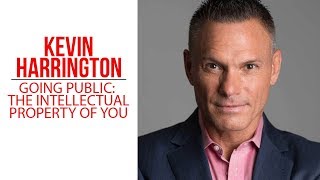
This is a YouTube event talk (presented by Joe Polish) featuring Kevin Harrington, an infomercial pioneer and former Shark on Shark Tank. Harrington recounts origin stories from his early infomercial work (e.g., Ginsu/Arnold Morris), describes how he helped scale niche services and celebrity products (Tony Little, Jack LaLanne, George Foreman), and presents a simple three-step playbook for 'going public' with intellectual property (Discover → Demonstrate → Dominate). The transcript also includes a Shark Tank clip (City Kitty) and short closing remarks referencing partnerships and sales tactics.
Chapters
How many have ever watched a TV infomercial? Show of hands, how many have ever bought anything from a TV infomercial? Awesome. Many people in the room are very happy to hear that most likely Kevin Harrington, who's one of the original sharks on Shark Tank, had something to do with it. For over 30 years he's been involved in over 500 product launches over with over 4 billion. $4 billion with a B in sales. Today he's going to focus on a unique product which is you. And the title is the Intellectual Property of youf. And before I bring Kevin on, we're going to show, of course, a short video. So here's who Kevin Harrington is.
Meet Kevin Harrington.
With 500 products launched and generating over $4 billion in product sales worldwide. Kevin Harrington is the inventor of the infomercial original Shark on Shark Tank and as seen on TV Pion. Kevin is the ambassador and principal architect of the global direct response industry and co founder of the Electronic Retailing Association. Kevin creates massive brands by combining great products with superstar talent like Kim Kardashian, 50 Cent, Kathy and Paris Hilton, Kris and Bruce Jenner, CeeLo Green, George Foreman, Billy Mays, Anthony Sullivan, Jack Lalanne, Montel Williams, Hulk Hogan and Tony Little.
My brand now is worth over $3 billion. So my advice to everybody, if you even have an idea, you'd want to go to Kevin Harrington.
Based upon his massive success in pioneering the infomercial industry, Kevin was selected for the ABC hit TV show Shark Tank, where he appeared in over 150 segments. Also currently running on CNBC, Kevin has appeared in numerous television segments. CNN, Fox Business, Bloomberg, Jim Cramer's the Street, MTV, Good Morning America, CBS Morning News, CNBC, Squawk Box Entrepreneur, Fox and Friends, Bethany and the View.
Kevin Harrington.
Hey Kevin, thank you for having me. Kevin was awarded the era's lifetime achievement award for his monumental impact on the industry. Kevin is the author of Act Now How I Turn Ideas into Million Dollar Products. Kevin is inventor of the infomercial original Shark on Shark Tank as seen on TV pioneer and the Billion Dollar Man, Kevin Harrington.
Give it up, my friend.
Kevin. Thank you, son.
Thank you. Okay, thank you guys. Than so 30 years ago, 1984, I turned my cable system on and that's channel 30 bars on the screen. So I'm like, I call my cable company and I said, what's going on with the bars on the screen? They said, we don't have enough programming to put on all the channels. So it's just going to be like that for probably six months. So that's when the light bulb went off in my head. And I was at the Philadelphia home show the following week. And there's a guy that. He's sitting with a knife in his hand. He's cutting through a Coca Cola can. Then he went through a hammerhead. And he's like, this knife's so sharp, it can still cut through a muffler and a pair of sneakers. And his name was Arnold Morris. And Arnold created this pitch. He's the greatest knife salesman in the world. And that's when the light bulb went off, because he was selling tons and tons of Ginsu knives with his presentation. So that's when he said, let's turn a camera on. Captured on video. What are we going to do? Put it right there where the bars are on the screen and watch this. This is the original show we did with Arnold.
If you take a tomato, the weight of the knife alone cuts that tomato. Let me ask you something. How many knives you have at home this sharp? You could drop the tomato on top. Pretty sharp, right? You know what one young lady said? Can you cut them thin? I said, thin. One tomato will last you all week long.
That show we shot for a thousand dollars, okay? It was just. It was one take. One take, Arnold. We turned the camera on and just put it up on the television screen. And by the way, the bars on the screen, when I went and said, how much is it going to cost? They said, $800. And. And I thought, that seems a little expensive for bars on the screen. They said, no, that's to run it 30 times, okay? So that was 900 minutes for $800 less than a dollar a minute. And it was. It did. It generated $26,000 in sales for $800. So that was when my whole business model changed. Up until then, I'd been selling businesses. I was a business broker. And not only did it change domestically, I decided, you know what? There's bars on the screen everywhere in the world. Every TV station in every part of the world. So I went to London and cut a deal with Rupert Murdoch to go up on Sky Channel, went to Saudi Arabia, the Arab radio television network we were running across Arabic countries. And this is when I say, what I'm going to talk about today is when we took Arnold public and went. That's what we do. When I say public, though, I don't mean ipo. I don't mean, you know, when you go public on the stock market. I mean, think about it this way. There's 28 million small businesses today, there's about 6 million new businesses that start every year, but only 300 actually go IPO public. That's not what I'm here to talk about. IPO public. It's very, very tough. What I'm here to talk about is. Is going public. Ipu, your intellectual property. What is your intellectual property? Think about it. Because, like, Arnold was his. His intellectual property was that presentation of cutting through the can, cutting through the knives. Then when I met Tony Little. Tony Little, he said, I do personal training. I do bodybuilding. I personally train bodybuilders. And I'm like, that's, you know, Does. Do bodybuilders actually need to be personally trained? He said, yeah, because they want an extra muscle right there or they want to get rid of the love handles. He said, that's my business. And what he does, he would go from bodybuilder to bodybuilder, home to home, making 75 bucks an hour, personally training. And I said, tony, I said, you got to work smarter than that. And this is now 1990. I said to Tony, you're target training bodybuilders. Let's take it public. And now let's take it to the masses. Let's take it to every woman in America. And that was called the Target training system. 1990 did over $300 million in sales. And this was just taking something he had been doing, making a living, but now making a lot of money. So we've used these principles for many other folks. I mean, when I first met Jack Lalanne. Jack, I said he was 70 some years old. I said to Jack, you look so amazing. How do you stay so in shape? He's like, well, I work out every single day. I'm like, yeah, but that's. I can't do much with that. We've already got Tony Little and we're doing things like that. I see Kathy Smith here. You've done an amazing job with a lot of your stuff over the years. This is Jack LaLanne's story, though. It was like every morning he had carrot juice, fresh carrot juice. How do we take them public? There we go. The Jack LaLanne juicer. And this became a billion dollar product over the next 20 years. Jack Lalanne, God bless, passed away a very successful wealthy guy. So George Foreman, how about that? What was his ipu? It was a simple concept of the grill that was slanted so that he loved cheeseburgers. And that grease dripped off into a reservoir, getting rid of all the fat. That was how George went public. Let me show you. And this, by the way, this was also very, very successful in terms of sales. George Foreman made $137 million by taking a grill public. All right, now, here's one we took public from Shark Tank. Watch this.
Hi, I'm Rebecca Riscati, founder of City Kitty. City Kitty is seeking $100,000 for 15% equity in our company. For the 200 million cat owners around the world, cleaning a litter box is a chore that we all dread. Litter boxes are germ breeding grounds. Kitty litter gets tracked everywhere. They stink up our homes. They cost lots of money to continually fill, and they cause fights in otherwise peaceful households because nobody wants to clean this thing. It's disgusting. And cat owners don't know there's any option. But there is. You can toilet train your cat with City Kitty. With City Kitty, the dirty litter box is gone. Your home is cleaner. You're saving money. You're doing good for the environment, and life at home is better for you and your cat.
You get rid of your litter box. It's an insert that goes on your toilet. You teach the cat how to jump on the toilet and go to the bathroom. All right. This is amazing because this went into the stratosphere. Sales went every end cap of Walgreens, you know. So how can you go public? There's three quick steps. Discover, demonstrate, and dominate. In the Discover step, does your idea solve a problem, ease the pain, or improve an existing business model? Think about that for your product or your business test before you invest. All right. Demonstrate. Create the perfect pitch. This is what people didn't know on Shark Tank. 50,000 people would apply every year. We would take 300. You got a tease. Please seize and prove it. And that's the part of creating the perfect pitch. I can spend hours on that. We won't get into it. Dominate idea to empire. And that is how you dominate. Because you can give a lot of money to a guy like Rupert Murdoch. Old media, it's a few channels broadcasting to millions of people. But let me just talk about the history of radio and TV, the Internet, the iPod, and Facebook. Radio took 38 years to get to 50 million. TV, 13, Internet, 4. The iPod, 3, Facebook, 2 years to get to 50 million people. But this guy did it. A billion people in six months. Okay, Cy the Gangnam guy, how did he do it? He hijacked. Really? America. And how he did it was new media. He did it with new media. He used all kinds of new media opportunities. And I know Brendan Burchard. I'm so excited. He's Going to be talking tomorrow and talk a lot about that. So in closing, I just want to say whenever I have a question that I don't know the answer to or how can you go public? I call my buddy Tony Little. I say, tony, what do you think? How do you go public? Can I do it? You can do it. Okay. All right. You can do it, guys. Thanks for having me today. Bye. Bye. When we launched this Zig Ziglar program, Mark and I, I said to Mark, we have to be part of the Genius Network because Joe has has unbelievable people that come to these events. But right away, within hours of us joining, we were on a podcast with you with Jason Flandlein. And I mean, Mark, just tell them about Jason real quick.
The coolest thing of all is that when he was unemployed, that he didn't have a job. Young guy, someone hands him the book secret to closing the sale. And Zig talks about in the book, he says, get some three by five cards out, write the close down, and then memorize it. Okay. And then do it for the next one and do it for the next one. You know, when we're traveling all around, Kevin will ask, how many closes do you know? The average person knows two to three closes. That's their go to. And when they don't get a sale or they get a no, they back off. So Jason doesn't even have a sales job yet, and he's memorizing these because he's like, man, when I get my shot, I'm not missing that six Close. I'm not missing that six. Objection. So he memorizes and memorizes and memorizes. He's got like 50 of these closes that he's memorized. And when he gets his shot, he crushes it. Absolutely crushes it. And now he's $100 million in sales through his webinar. Joe, I know you're doing stuff with him. We just partnered with him. And I want to tell you something. You made a statement. Kevin is a paying member of Genius Network because if it ain't worth investing in, it ain't worth having. And that's a lot of Kevin's mindset. He's not looking to cut corners. He's willing to invest. And, Joe, thank you for that introduction. Thank you for connecting us. We're just at the very beginning of that relationship. I'm sure it's going to be pretty spectac as we roll things out with these guys, but that's just number one. I'm sure there is a dozen more, you know, that will come as a result of, you know, our association here and maybe some of you that are out there.
More from Joe

This FBI Trick Can Command Respect Without Saying a Word ft. JEFFERSON FISHER & CHRIS VOSS

How To Stand Out, Be Different, and Create Raving Fans, Customers, and Employees ft. Jesse Cole



90% Of Businesses Fail In Their First Year, Here's Why! ft. Dr. Benjamin Hard & Dr. Robert Cialdini

The 1 Piece of Business Advice I Got From Elon Musk That Changed Everything Ft. Kamal Ravikant

The 6 Traits You CAN'T Teach in Entrepreneurship ft. Richard Branson & Gino Wickman

The Leg Method: How to Make Your Book into a Million-Dollar Asset ft. Anna David


7 Millionaire Mindset Hacks for Daily Success and Wealth ft. Brian Tracy & Dan Sullivan
