Lance Armstrong Podcast: URGENT: Do Not Judge Lance Armstrong Yet (wait until you hear this story)!
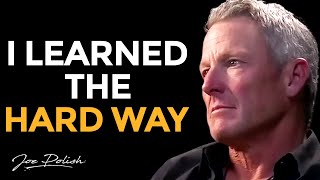
Podcast episode (YouTube) of Joe Polish interviewing Lance Armstrong (Mar 15, 2024). Armstrong recounts his fall from fame and recovery: PTSD after public downfall, experiences with mental-health therapies and intensive workshops, past substance use and selective use of psychedelics (mentions MDMA, LSD, ayahuasca), views on gun control and social dialogue, and lessons about investing (betting on people). The conversation also touches on parenting, forgiveness, and helping former rivals with addiction (Jan Ullrich).
Chapters
I've always woken up just sort of ready to go. Whether that's ready to train or ready to travel or ready to go to work from hero to zero in 24 hours. You can't go through that and not have PTSD.
Were you ever suicidal? Were you ever, like, I can't believe, like, I'm in this situation Only once.
And that's when I agreed to do this reality show for Fox last year called Stars on Mars. You figure out real fast who your true friends are. If I would have acted like that, none of this would have happened. I viewed cancer as a sporting competition. Like, okay, we got a scoreboard. I'm looking, I'm winning, and if I lose the game, I die. History is always correcting itself. Please help me welcome Lance Armstrong.
What's the best thing and the worst thing about being Lance Armstrong?
Oh, God. Well, the best thing about being Lance Armstrong. And I say this a lot, and I don't know how it ever goes over. I really don't care, but the best thing about Lance Armstrong is this morning when I woke up, I woke up as Lance Armstrong, and I fucking love it. I really do. And I'm gonna go to bed tonight as Lance Armstrong.
Yeah.
And I love that.
And you mean the name. You didn't have, like, angst attached to it?
No, it's just. It's. Look, it's been. You brought up 10. It's been 11 years since I did Oprah, and it's been a wild 11 years, right? And I think, to me, obviously, I've learned a lot. I've grown a lot. I've figured out a lot of things. You go through what I went through, and first and foremost, you figure out real fast who your true friends are. I mean, you figure out real quick who's on that bus. Most people don't get that opportunity. I mean, we have successful entrepreneurs in this room, great athletes in this room. Everybody's around you, kissing your ass, wanting to hang out, you know. You know, back in the day, I used to call them the three Ps, right? The planes, the parties and the.
Yeah, we got the other one.
We even have a doctor, the piranhas. And all that went away, right? Half of that room walked out.
Right?
This room is split in half, basically. So the second Oprah finished or the second that aired, half this, y' all just walked out, and this half stayed. And so you watched those people walk out of the room, and that stings, right? You cannot even begin to describe what that feels like. But you look at this side of the room, and they're like, no, we're here, we're here. We're gonna figure this out. And the feeling and the emotion and the power in that far overcomes what it felt like for half the room to walk out. So that's an amazing thing.
Were you ever suicidal? Were you ever, like, I can't believe, like, I'm in this situation. I put myself in this situation only once.
And that's when I agreed to do this reality show for Fox last year called Stars on Mars. It was a joke. It wasn't a joke that I did was like a reality show. We flew to the outback of Australia. We got put in this Mars simulation. It was like Big Brother, too. So you were constantly. I was like, is this what suicidal feels like because I'm about to jump off Mars? Like, this is the worst thing ever. But in all seriousness, no, like, I've. And look mental. This, the topic of mental health is, you know, at the forefront now, right? We talk about it with our children, we talk about it with society, we talk about it with athletes. I've never understood. This is. I've never been. That's never been a struggle of mine. I've always woken up as, you know, just sort of ready to go, whether that's ready to train or ready to travel or ready to go to work, whatever it is. But it's real, right? And I joke about the stars on Mars. I mean, there were. I was like, wow, I did get in a dark spot. I'm like, if this, what it feels like, like, I'm leaving soon. I'll get the hell out of here. I'm going to go home to my family. They just paid me a bunch of money to do it. It wasn't that bad, like, but if there's somebody who wakes up with 10 times this feeling on a daily basis, that's prison. That's prison on earth. So I never. I get asked a lot about it, especially with, you know, the athletes in question, Simone, Biles, and even, to an extent, Michael Phelps has become more outspoken on his. His struggles. I never, you know, every day when it was time to get up and go ride my bike out in the south of France, I was like, all right, let's go. I can't wait. I loved it. So. And then when it was time to race, I was like, yes, let's go kill these people. Like, we're going to destroy them. Yeah, And I loved that, too. So, no, no, never. And I don't ever want to. Not that Look, I mean, life changes and life gets messy and it would take something so bad to happen to me or to my family to get in that spot.
Okay, so what's the hardest part about all of this? I mean, you were in situations where. I know at different stages of your life where you're.
Yeah.
You can't go anywhere without being recognized.
Yeah, yeah. And that's, that's. The gray hair helps now. So I get away with a lot now. But I mean, look, nobody's ever asked me that question. The first part they've asked, the second part they've never asked, so. And I. And that's a serious question. So when somebody asks a serious question, I feel like you have to give a serious answer. And one, not one that you just sort of fling out there. I think if I had to pick one now, I mean, look, I've had to look at. Look, I did everything that everybody else did in cycling. I did nothing different. I don't care what anybody says. I don't care what article or book or documentary you watched. We all did the same thing. That's the answer.
It's the truth.
However, I acted differently. I treated people differently. I was more defiant, I denied more, I lied more. And part of that might have. I certainly got asked the question more, whereas a lot of guys never got the question. But I was getting that question. And I took that on as a competition of like, just like I wanted to go kill somebody on the bike. I wanted to kill them at a press conference. I wanted to kill them on a one on one interview. Doesn't matter. And so I paid for that. That is the reason I paid because of the way I acted. And I've been forced to watch a lot of this stuff, Right. I don't choose to go watch old YouTube interviews or YouTube press conferences, but I got sued six ways to Sunday. When did it all happen? Hopefully nobody in this room has gotten sued as many times as I have. But when you get sued, I have a feeling most people in this room have been sued. You know what happens, right?
Some have been sued, some have done the suing. Yeah, yeah.
Okay. Even if you're doing this, you know what happens? You can't wait. You can't wait to depose somebody. You can't wait to sit their ass down, make them feel so terrible, film the whole thing. And so I was forced through all of these litigations to watch all this stuff, right? And you sit there and watch that and it's just, you know, that's the. To me, I Have five kids and I have two boys. So let's just use the boys as examples. Like if my boys, if any of my kids did, but especially if my boys acted the way that I saw myself act. So as a father, that would be a real problem. And that's been. But it's been tough. That's been the toughest part. I want to think more on that question. But I didn't just sit back and be like, oh, that sucked. I didn't do it right. I guess I'll try to do it right next time. I've worked to try and fix a lot of these things and yeah, I've had a, I've had a fucked up life. Not, not in. Maybe not as fucked up as yours, Joe.
Mine was very fucked up.
If we were to compare. Yeah, I never did any, you know. Anyway, y' all know what Joe was into, but not as tough as Andre's life. I don't know where Andre is.
Yeah, he's downstairs.
But you know, I grew up with a single mom and who had me when she was 17. We were dirt poor. Like we came out fighting like fuck em, like, like we were gonna swing and fight until we were successful.
So a lot of your drive was just survival instinct.
Yeah, but no father figure in my life outside of coaches. And this all seemingly happened so fast. I mean, you brought up me turning pro. Just think about this for a second, right? We're talking, we've just timestamped a few things. Right. Joe said that I turned pro at the age of 15 in triathlon. That is true. You also said that I won the world championships when I was 21. That's only six years. It's not a very long time. Right. We've talked about me doing Oprah 11 years ago. I think most people like myself goes, gosh, that feels like yesterday. Because it does. It feels like yesterday to me. Well, guess what? So 11 years, if that feels like yesterday, that means tomorrow. We have to be prepared for that. Tomorrow is 11 years from now. That's how fucked up time is. And so it was a big. Because last year was the 10 year anniversary. So I got a lot of questions about it. There were more articles about it. And I just, I remember going, wow, that's. That was 10 years ago. It went like that. And so I sort of made it my mission in 2023 and going forward that, you know, I don't want tomorrow to be 10 years from now.
Right, Right. You know Chris Rock? Are you friends with Chris Rock?
No.
Okay, so I like I like.
I mean, I think I like Chris Rock.
Yeah.
I watch everything he does.
Yeah. Yeah, he's funny. One of his comedy, I think it was bigger and blacker where he. I don't know, many years ago this was. But he. He had the line where he says, a man is as faithful as his options, and he's talking about infidelity and cheating and stuff. Right.
I believe I've heard that line.
Yeah. So. But if you take the whole thing as options, when you. In your world, you had a lot of things, and probably still do, offered to you, thrown at you, you're in a position of power and status that most people never have access to because of who you are and what you did. How hard was it with temptations, not just doping, not just racing, but women? Like, I mean, how did you. How did you create boundaries? Or even to this day, how did you create boundaries?
Yeah, I wasn't great at that. At the height of it also, just call it 2005, I had won my seventh tour. I had no idea. No idea, Joe, at how powerful I was. I mean, you could argue that I was certainly the most powerful athlete in the world and one of the most powerful people in the world. And I had no idea. And that's a shame. That's a real shame. So. And I'll never. And I will never. I will never have that. That influence or that stage or that reach ever again, ever. I may have, you know, some percentage of it, but that will never come back.
Yeah, well, I'm sure you've been asked this question a million times, but it's like, you know, what would you have told your younger self if you were to go back, you know, 20, 30 years?
Yeah, I mean, well, and I have been asked it a million times, so I've answered it a million times. My younger self wouldn't have listened. Look, if I would have had. Again, let's just pretend that one of my kids is put in the same position, and the very first time they answer a question the way that I dared to answer a question, I would say, don't you ever answer that question that way again. Just don't. I don't know what you're into or what this is about, but don't act like that. I didn't have that. And even if I did, I would have told him to fuck off.
No. It's interesting because when I was a drug addict, people would always say to me, man, you really need to get help. When I was in my worst state, I weighed about 120 pounds. When I was 18 years old and I was free basing cocaine at one period for three and a half months straight. And people that I knew were saying, you look terrible. And it was so weird because I was just like, fuck off. Like, don't tell, you know, it was like I was so wrapped up in that addiction that I just, like, I didn't want help. I would have rejected it. So it's interesting that you say that. And do you today, do you strive to be a better person? I know that sounds ridiculous, maybe. I had a 24 year old kid who I was working with, with addiction, and he asked me, he said, do you try to be a good person? And I didn't want to give a flippant answer. I was like, you know, yeah, I do try to be a better person. I am tempted to do things that the carnal reptile brain of mine wants to do that aren't very good for me and are going to have probably really bad consequences. And I strive not to do those things. And I simultaneously have the hunger and the craving for it. Because, you know, one of the things with getting high and whatever your vice is, there is a thrill, there is a dopamine hit, there is excitement to it. And I think the same thing happens with performance, addiction and power. It is highly seductive. And I see it take down very powerful people.
Yeah. And it builds momentum. And this wave of what we had, look, you're winning arguably the hardest sporting event in the world. You've built this charity that's the most influential, like this wave was. And that just reinforced it for me that, look, I can't. People's like, why didn't you just tell the truth? I'm like, okay, pal, I've told y', all, no, I didn't do that a thousand times. You think I'm just gonna roll up on day thousand one and be like, all right, I've just been lying? I mean, no, you. And you're also considering what this would mean for Livestrong, what this would mean for the sport, what this would certainly mean for myself, what this would mean for the industry. And that sort of reinforces your conviction. So, no, that was not going to happen.
Have you ever done psychedelics, plant medicines, things that dismantle the psyche?
Now it's getting good. Yeah. Well, define which one. Let's go one by one.
It could be psilocybin. Mushrooms.
Yes.
Okay. Ayahuasca?
Not yet.
Not yet.
But I'm certainly not opposed to that.
Okay. Mdma?
Absolutely.
Okay, let's Keep going. Ibogaine. Nope, no. Peyote. Peyote. Okay.
LSD? Yes.
You know, I did LSD probably 75 times before the age of 18 when I was a drug addict. And doing, doing it today is a much different. Well, I don't really do LSD today.
I've done ayahuasca. Wait, let me interview you now. Let's go back to the freebase part. How does that work? Do you get to do certain things? Because it's now, I mean, look, let's be honest. I mean this, this space or this wave or this, you know, this new trend of psychedelics is, I think it's. I think there's merit there. I think being used in the proper. Look, anything you just asked me about, not that I've always stuck to this, is about set and setting. Yep.
That's a Timothy Leary line from the 1950s.
Yeah. So that's if that's the intent going in and there is actual intention going in, I think they're very helpful. Now, have I always done it that way?
Nope.
But. So how does that work for you now? Do you get to play with those things or no?
Well, I'm very like in 2015, I went and did ibogaine, which is the most powerful psychedelic in the world. And it was terrifying, it was horrifying. I did the four and a half hours.
You didn't enjoy it?
The first five hours were the worst fear and terror that I've ever experienced by a factor of a thousand times. It was fucking horrible. And then the following seven hours, because it was a 12 hour journey, was beautiful, it was bizarre. One guy described it, which is the best way, because you can't put it into words. I mean, I even was interviewed. I haven't put this video out, it would be viewed so much. But I didn't want to peg myself as like a plant medicine or psychedelic person unless real context is built around it. Because in my world now I'm looking at it for trauma and addiction, not for getting high. And I have a lot of friends that go to Burning man every year and they get high in the camp and they call it a spiritual experience. And then I also have friends that do have a spiritual experience. You can, you know, whatever that means to them. And so for. So I'm the first person in the world to have before and after brain scans of doing ibogaine and 5 Meo DMT. And we filmed it and we did interviews before and after, showed the brain scans what it does to the brain. I've never made all that public. Yet me and Akira, who's sitting back there, are going to eventually turn that into a documentary. But, you know, one guy said, it's like being on God's shoulders while you're walking through hell and you're not going to be okay. And you're going to be okay. You're not going to be okay. And what I said when I was interviewed, I said that's the best way. That's the only way I know how to put into words. It's like walking through hell on God's shoulders. But I didn't know if I was going to be okay because there were moments where I was like, oh my God. And what's interesting is it rewired my relationship with death and existence. And I didn't realize how fearful and scared I have been most of my life. And that so much of the things that I had done and tried to accomplish from business or whatever was not driven by inspiration, it was driven by fear and desperation.
You were taking counsel from fear.
Yeah, yeah. And I met people and have met people that like ibogaine. There's not been any massive research study on this in science or whatever. I'm sure the pharmaceutical companies, cali means we can talk about this, are just trying to co op all of these substances and drugs and hopefully they don't destroy it like they destroy almost everything. I think it holds the key to some of the best therapy, the best transformations, the best openings for people. I think it's insane that ibogaine that has an 80% success rate on a single dose without withdrawals and is the most effective way to treat opiates, is illegal because it would save countless lives.
I think that's changing. I mean, I think it is changing. The stigma in and around all of these things is changing. And why not? Why wouldn't we try these things? Right? I mean, you can talk about addiction, you could talk about ptsd, like, and look, you know, the evidence is there.
Yeah. And some of the best people doing work on soldiers and law enforcement are actually based in Austin, Texas.
Yeah.
Yeah. So cool.
We digress. Yeah.
No, no, it's not. This is actually an important conversation. So what message would you say to people that are like, oh, I want to. Should I do this or should I not do this? I mean, if you had to be the voice of contemplation, what would you say to them?
Let's have a show of hands how many people are thinking about that? Because if it's none, then we don't need to Talk about it.
How many of you are actually thinking about that or have thought about that?
Yeah, yeah.
Or you're thinking about doing that. Not even that you've done it. Yeah, yeah, I know Dan Sullivan back there really wants to do an ayahuasca journey.
Yeah, I would totally do that. I mean, I. Work up the courage, Joe. Yeah, you gotta find the right. I'm like. Because you got to go down to, like, South America. I'm like, was there bugs?
Yeah.
You don't want to throw up all day and be, you know, going through this journey and, like, getting lit up by mos. I don't know. Like, I don't love mosquitoes. I'm like, how's there?
You want to hear?
I'm a total diva. I am not playing.
I've done a bunch of trips on Necker Island. I don't even want to go back anymore. I've spent six weeks of my life on Branson's Island. I don't even want to go back anymore. Because you just get attacked by bugs. I hate it. I actually make vacations based on where bugs are not. But here's. I got to tell you something, though. In Costa Rica, during one of my medicine journeys, I was getting attacked by bugs. Until I was on the medicine, I was like, what the hell is going on? Is there some sort of spiritual frequency that life knows about it? And dota. It's the most bizarre thing. It's like, okay, what the hell is going on that causes that?
Yeah, I think I would be careful. What. I mean, I've done mdma. Let's just use MDMA as an example. I've never talked about this. Does this shit get put out to the world? Yeah, yeah, yeah. How safe are we to talk about this, by the way? I really don't give a fuck.
So.
I don't. I've done, you know, different types of. Look. You could go to a rave or any concert, you're going to find, you know, what they call Molly.
Yeah.
Or you can use what you know. You could have access to what they're actually studying, which, if it's ever available and it is now going through. I think they're in their first phase of FDA clearance for medicinal mdma. I have done that several now that I would highly recommend that everybody in the world do. It's truly heaven on earth. And if you go in with the right intent, I think it's absolutely, yes, for sure.
I mean, it gives you a big serotonin boost. The interesting thing about MDMA is you can. And I can only speak from my own experience, but I've talked to many people about this and I've, you know, I'm friends with the top psychiatrist in the world who specializes in plant medicines and psychedelics. He wrote a whole book on mdma. You can process things through talking that oftentimes people can't even talk about. And it opens you up. And so it is a really powerful way to process trauma. So a couple things I want to talk. I want to talk about business because you've, you know, you've got your venture and every. You're an investor in many companies and I think you've done extremely well there. So I want to do that. However, I got a couple of questions here. One is you tweeted I rarely agree with Piers Morgan on anything until now. Piers is right where Piers was saying that guns kill people. So can you expand on that? And I want to get your views on gun control.
Guns. Yeah, you asked me that in front of the main gun guy here too. I don't own any guns. I probably will never own a gun. I don't. Look, this is a hot topic. Obviously, you know, every, you know, it's not every. I mean, every day there's some what they. I don't even know how they classify mass shootings now. It's like more than four or five people, right? So it's. But you know, if you see things like Columbine, if you see things like Uvalde, if you see things even compare and contrast what happened in Australia 30 years ago, they had one of those. They had won. Guy walked into McDonald's, shot 30 people, they had won. Next day, guns are gone. So that's an idea right then you see. But look, I think I'm certainly not anti gun in the sense that people should not be allowed to own some firearm, a handgun, a shotgun. But having mentally unstable 17 year olds with assault rifles that take bodies and just completely purify them, I'm against that. I just am. And I don't really give a fuck what anybody thinks. No offense, but I think that's a bad idea. I don't know how that is defined as defending yourself. I think you can defend yourself with something far safer that cannot inflict such mass casualty. But look, we could talk about this and after you've all. Everybody stands up, everybody goes to the memorials, everybody. And nothing happens. Right. That's just the nature. That's the way this country operates now. So it's, it's. But I do struggle. You just can't Not. I think when you see.
Well, you have five kids and so you're looking at. From the. Do you familiar. Like Alpine, Texas. You know where Alpine Texas is?
Of course. I go to Marfa all the time.
Okay. So I used to live in Alpine and that's where some of the most awful shit happened to me as a kid. That's where I was raped and molested. That's where a lot of bad shit happened in that small town.
You have to go. Yeah. You go through Alpine on your way back to Austin if you're driving.
Yep. And I remember very little of that time there because I had this sort of blocked out thing mentally because it just wasn't a good experience there. And one thing I remember though, is I used to walk through the school hallways because we had shooting classes with a.22 rifle in school. And it's like, it dawned on me, I remember that going, no one was shooting each other. I think so much of the gun shootings and stuff, because if you look at almost every one of these kids, almost every one of them run some sort of pharmaceutical, you know, and is it the guns or is it the environment? Is it the set or the setting? Right. And so I think that's. I think these are very complicated questions. And of course, I'm a Constitution person, so. But there's.
Yeah, but there's. There's. Yeah, there's more nuance to it than that.
Yeah. And I'm not saying I have an answer.
I wrote the Constitution. They didn't imagine full on assault rifles that people could fire for 60 seconds straight. They didn't.
Yeah.
So I'm also, I mean, I don't know if I'm a constitutionalist or not, but that ain't gonna change. So when shit's not gonna change, I'm like, okay, let's just live with that. Now how do we walk it back a little bit so that things like that don't happen? Because that wasn't the idea. But at the same time too, I also. And I don't like having discussions like this where it turns into. I like discussions. I don't like arguments. And I referenced this show that I did this, that I did in Australia, and I got in this whole thing about transgender in sports. And I mean, it was terrible. These people, these woke kids went crazy on me. And that's when I woke up the next day. I was like, wow, I don't feel very good. This is fucked up. But it was a huge fight on the show.
Wow.
And I got branded a Transphobe and a bigot and all these things. And by the way, the story starts with me talking about an employee of mine who's now trans female who has a very important position in our family. And so I'm like, got some cred with this. And then I'm like, but I don't know about, like the 6:4 swimmer with size 15ft against a girl who's 5:7, right? And it was immediate. Like, that's not a conversation, that's not a discussion. There's no engagement.
There you go.
From. They were like, oh, this is great. He loves the trans. To, you're a transphobe, you're a bigot. I was like, what happened to the part in the middle where we talk about this shit? So, you know, whether it's guns, whether it's the trans issue, whether it's abortion, whether it doesn't matter, global warming, whatever you want to, you know, the five hot topics in the country, you know, we've lost all ability to actually have constructive dialogue.
Right, right. Well. And I think when there's a push to not even discuss it or you don't want to go off topic because you're afraid of what's going to happen and you won't be, you become unwilling to hear someone's perspective.
I mean, that's what happened on the show. There were other people in the room. There were probably 10 people. I stayed because I started it and I was gonna finish it, and the two that were just attacking me stayed. And everybody else ran. I mean, ran. They didn't want to have anything to do with it.
So how did you feel after that? You're just like, what the fuck? Hey, I hope you're enjoying this video. And I want to let you know that I have a new book that's come out, and if you'd like to get it absolutely free, there's a link below in the description. Or you can wait till the end of this video, or you can Simply go to joe'sfreebook.com and you can get a copy there.
I think I'm right. I think I'm right on that. Actually, I know that I'm right on that. So.
Well, my view on it.
I was like, well, this is fucked up. Look at the way people are acting. They won't even have a conversation. They can't even have an open mind. So when I came home, I did a whole series on my podcast on this. I did seven episodes on trans and sport. So I had Caitlyn Jenner, I had all the leading doctors and sports ethicists. And I had the trans community on. It was like, look, let's just hear from everybody, right? And then you all, whoever's listening or watching can decide. And you try to stay neutral and have a real conversation instead of sitting down with the trans community. This is organization was called Allied Athlete. I mean, I couldn't sit there and be like, you know, y' all are totally wrong. Like, you have to let them talk and make their case. Now, I think they're wrong, but at least have a conversation and put it out there so people can decide.
Right. I actually constantly, out of curiosity, strive to listen to people that have complete opposite views of me and think, in some cases, politically, whatever, dead wrong. Because I don't. You don't ever learn by arguing with someone. You can only learn by hearing their perspective of why do they believe, why it is they believe, what does that represent for them? And it's not that it oftentimes gets me to agree with them, but I. At least.
And by the way, if you get to the end of the conversation and you both just so. I mean, you are polar opposites and you both disagree, what is wrong with going, you know what? I think we just have to agree to disagree. Joe. Yeah, what's the big deal? You go that way, I'm gonna go that way and whatever. Like, you don't have to sit there and start branding people bigots and translating all this shit. It's like, come on, we don't agree, no problem. Let's talk about something else.
That's why everyone needs to do MDMA together in these big things.
Believe me, next time I do that kind of mdma, I am not doing it with those two. I can promise you that.
Yeah, I hope instead of presidential debates.
It'D be great to have presidential plan Ambien instead. This is the best Indian day you've ever had in your life. Give them an Ambien couple. Ambience, that is. How are y' all feeling over there? Yeah, we agree now, right?
Is there anyone that you have wanted to say you're sorry to in your life that you've not made amends to or not done that? Because it's just. It's too complicated to do replacement.
The reality is, in my situation, you had a handful of people that just jumped onto this thing. Well, he got my husband fired. Or he did. You know, there was a lot of sort of rage in that and a lot of, you know, Anderson Cooper kind of stuff on it, and those. I feel like the People who truly deserve that. I traveled the world and sat with. That's important. What is even more important? Think about this, right? I just told you in 2005, I was the most powerful athlete in the world, I think, and arguably one of the most powerful people in the world. So what do you have? You had all these people following you, following the story, believing in you, believing you, believing in you and you. And I'll never meet them, right? And, you know, a lot of them are like, man, that's not. There's two parts to it. One, they were like, okay, I got burned, right? And the second part is even worse because not only did they believe me, they defended me, because this storm was brewing. This didn't happen like that. This was years and years and years in the making, and I keep doubling down, doubling down, and they keep defending, right? So what happens then? Not only then do they feel betrayed, but then they feel complicit. There's a very big difference between being complicit and being betrayed. And so. But there, you know, there's hundreds of millions of people that will never, you know, sit next to me on an airplane or, you know, walk up to me in a restaurant that nobody's ever actually walked up and said, you owe me an apology. But they felt it, right? For sure. They felt it. And so that's the shame and at all.
You know, my friend Shawn Stevenson, who died in 2019, he never walked a day in his life. He had a brittle bone condition, had over 200 broken bones in his body before the age of 18, endured incredible suffering. Most people here knew Sean, Shawn was just larger than life, and he just transcended this shell of a body that I could not even imagine living with. And his parents, Gloria and Greg, were amazing humans, and. And he fell out of his wheelchair almost five years to the day of when he nearly died five years prior when he had gotten a new dog, and the dog got spooked and pulled the wheelchair, and he fell over, and he cracked his skull and broke a femur and broke a collarbone. And same damn thing happened again, except he had a new wheelchair. He was testing out, and it flipped going down a ramp, and he hit his head, and he FaceTimed me. He was in with his wife Mindy in the car, and he said, can you meet me Hospital? I'm going to the hospital right now. And I was like, oh, shit. You know, we thought it was just, like, a minor thing. He wasn't anywhere severe as what it was before. So I get to the hospital and he's on a. He's. Now, they'd given him drugs and he's like, in this sort of hazed, doped out sort of state. And his wife Mindy's on one side of the gurney and I'm on the other. And they're getting ready to transport him via, you know, an airvac to another hospital because they're going to have to do potential surgery. And he just comes out of this sort of, you know, drugged state he was in and really clear just for a few seconds. This line I'd heard a million times before. Not a million, but a lot. And he said it in just the fact of where we were at in the situation. He said it took on a whole other meaning. And he said he, like, comes out, he goes. He says something like, this is happening to me. And I'm like, what? He goes, this is happening. This is not happening to me. This is happening for me. You know? And then he goes right back in. And I was like, okay. And that brought on a whole nother meaning. Even if you believe that or not, that this is not happening to you, it's happening for you. Do you process the things that you've gone through like that? Or you're just like, man, I just like, whatever. I mean, because.
No, Well, I. Yeah, I mean, I've tried.
Yeah.
I don't think I. Look, I've had a fucked up life. I told you all that a minute ago. But, you know, from, you know, young mom, we were just fighting our whole lives. You can't. And we've talked about. Touched on ptsd. PTSD is not exclusive to our soldiers. Right. And it's not exclusive to first responders. Right? We can all go through ptsd. Right? But you cannot have lived the life that I've lived, especially the last 10 or 11 years, and not have PTSD. Or you cannot go, and I mean, from hero to zero in 24 hours.
You can't.
You can't. You can't go through that and not have ptsd. So, you know, how do you address that? Right? And how do you go unpack that? Right? And what is the T in PTSD is traumatized. And for a while, for probably five years, I was like, ah, fuck this, I'm going to muscle my way through this. And you can't. And you just can't. And you can't muscle your way through relationships in your life as you try to muscle your way through that. So it's been probably five years. So I went to a place outside Nashville called On site, which I love. We can all go. I don't know if anybody's heard of on Site. You've probably heard of Hoffman. Hoffman's another one that's.
I've done Hoffman, which is pretty popular.
Hoffman's warm Up. Hoffman is a group setting. I don't do well giving up. I don't do well surrendering in front of groups other than today. And so I needed, I wanted something. I just knew I'd give it all. And by the way, you can't do either of them or any of them if you're not gonna give it up. If you're not gonna go and give it up, then don't go. Do not spend the money, do not waste the money. Do not go. And so I end up at on sites five days, you know, 10 hours a day, full intensive where you just walk it back and you unpack your entire fucking life. And so I've been to onsite four times since. I mean it's. And I love it. I love. You know my favorite thing about on site is when you show up, they say give me all your devices. Like and if they see you with an apple, watch, give me that too. And I'm like, oh. And you're like, it feels so weird. And man, you get a day in, you're like, this is kind of cool. You get two days in, you're like, this is really cool. And then when you're done after five days and they go, give you those devices, whatever it is, phone, computer, iPad, watch, whatever, you're like, I don't want it, I don't want this back. But yeah, I mean that changed my life, right? And that's been really the last five years. And so, and I love, I kind of crave it in a weird way. I make it part of my annual.
That's pretty cool. Yeah, that's actually really cool.
Yeah, I mean, you know, you just, you know, you gotta unpack it all, dude. Not just sort of the famous stuff for the stuff that was a headline. You gotta go all the way back. I mean, I wasn't even born Lance Armstrong, right? I was born Lance Gunderson to a guy who walked out on the first date to a 17 year old mom. Like I grew up with this 5, 300 pounds by the way. She's turned 70 this weekend being Dallas Shithole for my mom's 70th birthday. My mom was 34 years old when I graduated high school. And so, you know, even as a one month old, right, Trauma starts in the womb I never knew that. Like, my mom must have been freaking out. You're in Dallas, Texas, and the whole everybody around is like, don't have this baby. You're crazy. You cannot have this baby. Right. And she's like, nope, I'm having this baby. Right. So. But that just starts there. Then I come out, dad move, you know, hauls ass. And then she remarries a guy named Terry Armstrong when I'm three. And I became Lance Armstrong, she became Linda Armstrong, and I was adopted. I became Lance Armstrong, and he was a complete loser. Right. So that the trauma continues. Right, Right. So, no, you know, and it's been fun to be like, I didn't have a dad. Right. It's been fun to be a parent. Like, people are like, well, how do you. You know, you don't have to be raised by a great dad to be a great dad. I like to think. And maybe it helps sometimes to be not raised by great men to know that what you just don't do. Yeah.
Well, I always think you. You know, everyone has a purpose in life, even if it's to serve as a bad example.
Yeah. See that? You're like, that's what not to do.
Yeah. No, you can learn a lot from it. We have one of our genius network members named Dr. Don Wood, and he is a former hockey player, and he's now a trauma therapist in his 60s. And he has this great line that I talk about all the time because it makes sense to me to get a better understanding of why people do what they do, how they show up, the way they show up. And he said, if you understood the atmospheric conditions of somebody's life, it would make sense why they do what it is they do. And so if someone went and looked at the atmospheric conditions of your life, it makes sense why you ended up as Lance Armstrong. Or me. Anyone here. Right. For that matter. And I believe you can change as an adult, you can change the atmospheric conditions of your life if you make certain decisions and what you expose yourself to, what you don't expose yourself to. So I always often look at, like, okay, what do I need to do or not do in order to improve the atmospheric conditions of my life? And I do believe you can change the atmospheric conditions of others. For instance. You know, you had an incredible domino effect on society. I mean, most people know who Lance Armstrong is. There's very few people that don't know. I mean, of course, younger people.
It'd be different if the name was, like, Mike Johnson. I mean, it's exactly. It Would be easier to fade away, but the name sort of stands out.
Exactly.
It's funny, I tell you, like, if I check in for a flight and they don't, you hand them your ID and they're like, whoa. Like, they know the name. It's really weird. That part I don't like. You ask me what I like, what I don't like. I don't like that. That's weird. But, yes, but look, to your point, like, I had. Look, 10, 11 years ago, I had a choice, right? By the way, six of my main rivals are dead, right? They all did. I told you. We all did the same thing. They all got exposed the way I got exposed, but they couldn't handle it, right? Their lives completely fell apart, and they're either dead by drugs or suicide. So you have two choices, right? You go that route or you say, no, no, this is going to suck for a long time, but I'm going to stay as healthy as I can. I'm going to just try and figure this thing out. And I could have gone the other route, too.
Yeah, totally. Well, okay. So now your life in business and entrepreneurship. Let's talk about how what you have done that you think has been the very smart. Because these are entrepreneurs, and there's a lot of people that will see this that are entrepreneurs. What have you learned about making money and losing money?
Let's just focus on the making money part. Anytime I've made a lot of money outside of sports, right? So anytime I've made lots of money outside of sports, it's been based on one thing. And even now, with our fund, we've stuck to this principle. And you all know that this is not going to be a surprise to anybody. It's all about betting on people. Number one, you're betting on a person, right? I mean, the story of me and Uber and all these, it's there, right? It's real, right? I didn't invest in Uber. I would love to. I'd love to sit up here and tell y' all that I found Travis Clinic. I thought it was a great idea, and I'm going to support it. I'm going to back this guy. I didn't do that. But Chris Sacca did come into my life, who had been around for a long time, and I had known him. I didn't know him that well, but I knew he was smart. I knew he was connected. I knew he had deal flow. He called me and said, will you invest in my fund? I gave him 100,000 bucks for lowercase fund one. I didn't know what he was going to invest in. I thought he was buying up some secondary shares from Twitter, former Twitter employees and da da, da. I didn't know Uber was in that portfolio, but it was. So when I finally figured out that Uber was in the portfolio, I was like, wow, that's amazing. And then of course, Uber, every nine months is raising a new round and it's going from valuation of 3 billion to 9 billion to 17 billion to 25 billion. So at this point, I call him, I'm like, so what was the valuation when we invested? He says, 3.7 million. So you can do the math on what the hundred grand worked out to be. But it was good. It saved, Saved a lot of things for us. That was a bet on Chris Sacca and same with Docusign, right? Same story. Bet on a fund and bet on.
People.
And it holds true for the way we invest. Now, people can have great ideas, but if it's just not the right person, you don't make the bet.
So void of luck. What is your criteria of what you would consider a person worth betting on?
I think. Well, first of all, I think a serial entrepreneur is always a safe bet. I mean, if you're in the space and you feel good about them and they've done this a time or two or three and had exits and they've proven that they know how to start and build and sell businesses, your risk comes way down. Everybody here knows that. But I also just, I mean, we. Not to get weird or woo woo. But it's just a Spidey sense, right? You just get around people and you're like. And you, by the way, the rest of your team, the rest of the room could be like, this is the person, this is the guy or the gal. Like we have to. And you're in that room, you're like, there's something fucked up about this person. I just don't, I don't know what it is. I don't want to go have coffee with them after. I don't. And that, I think you really have to listen to that.
I probably would have.
And by the way, I've been outvoted on my team on one deal in particular, which has held true. And it's hard in a team. I mean, you can't stand. If you're talking about a business plan and a space where people can make money and Tam and all these things that people talk about, it's hard to stand. I'm glad. Just, I don't know, we got a weird vibe off him. I don't think we should do it. Like, that's hard to say, but it's real.
Yeah.
You're like, I don't know. I wouldn't do it. Like, if the guy just called me out of the blue and it was my personal money, the answer is flat out no. Yeah, but that's hard to sell sometimes.
I agree. We have a friend, Patrick, who, you know, he's talking about yellow flags, where I would oftentimes ignore red flags. And I pay the price of ignoring red flags because bad shit would happen. But I never even noticed yellow flags until I got screwed enough times or made some. I was just with people that. Yeah, there was just a gut feeling that I ignored. And truly, I would inebriate those feelings. I would do. You know, I would think there was something wrong with me. And now today, I very much pay attention. You know, Dan Sullivan has, you know, we've had lots of conversations about this. Only align yourself with. With people that are aligned with you and try to feel that sort of alignment. Dan. Also, just to bring up Dan.
He.
Takes entrepreneurs through a questioning process of who do you want to be a hero to? And in your life, you were a hero to millions of kids, millions of people. I don't even know what you think about that word hero, but who do you want to be a hero to? Of course, you probably would say your children and stuff, but is there a group or a cause or. I mean, you did live strong because you had cancer yourself. Do you decide your business activities based on products and services in certain categories because of what you want to see happen in the world where you think of it? I want to be a hero to these people because I don't think of.
It that way, but I do. I mean, we invest in health and wellness and health care. So I think it's. I mean, it's not green tech or it's, you know, but it is. I mean, if you're. If you're. If part of your thesis is to prolong life and enrich life, then that's a pretty good thing. The word hero is no famous athlete. I mean, we have. Ask Danica. I mean, think about that, Danica. I mean, no chick is driven around a noble or all these other things with a bunch of dudes ever. Except for you, right? So there's a bunch of young girls out there. She's my hero. That must make you feel uncomfortable.
Throw her a mic if we need to. Yeah.
What do you mean by uncomfortable?
Well, I mean, if somebody's like, oh, you're my hero, that just feels.
Does there feel like there's a responsibility there?
Yeah.
Or something to do?
Yeah.
No.
No.
I think I, like, I'm proud that they would look up to me. And if anyone ever says they want to be like me, I tell them that you should want to be better than me. If you're going to.
I'm going to borrow that.
But, I mean, I think it's happening because of what I've done. I don't have to do anything to get that it's been. It's achieved through what's happened. So there's really nothing to do. Right. So I guess I don't feel uncomfortable. I will say I have, like, in my career because I would sometimes do more edgy things, so I'd have to kind of look at that and what that meant. But I did feel this underlying, like, I'd like parents to be proud of whatever it is that I've done so that they will show it to them, you know, So I always had to really stand behind whatever I did. And, you know, I had fairly large comfort zones for everything, so. But yeah, I mean, that's probably the only thing. Yeah.
It's interesting because both of you are in your categories, two of the top in the world. It's interesting. Just different experiences.
Do you feel uncomfortable? I'm assuming you do not.
I mean, it just. I don't know if it's. I don't take. When somebody. If somebody. They don't believe me, they don't say, like, back in the. And maybe that was part of the problem. I mean, I. Obviously, 15 years ago, I heard that hourly.
Yeah, right.
You're like, oh, this is really weird. Not many people come up to me and say that anymore.
But was the discomfort linked to the lying and the dishonesty maybe back.
Perhaps. I haven't.
That's fair, though. That's totally fair.
Yeah, that's totally fair.
Yeah.
But look, I think you asked me about before that you were starting to ask about, you know, what it is that, you know, how you. Not necessarily how you move forward, but. Or what you know better than me. But look, I think my favorite band in the world is the War on Drugs. I don't know if anybody likes the War on Drugs. It's a great band. You can listen to them later. But they have a line. So Adam is the singer. He writes all the lyrics and. And the lyrics are, some would say very dark, but they're deep. But he has a Line in one song where he gets through the whole song and he gets to the final chorus and he says, be the writer of your own story. We talked about tattoos earlier like that. I'm close. That should be. I think everybody's goal in life is to write your. Be the writer of your. What does that mean? Right? Writing your own story means that's how you like every step you take, every breath, every. Every second of every day you're writing your story. We're, we're. We've agreed to, you know, be together and be part of us writing our own story. And so it's. That's super important for me. That's sort of my anthem in a way.
No, I like it. I mean, yeah, people wake up and they write a comedy, a tragedy, a love story, a drama. Yeah.
And by the way. And people mess up all the time. And then you go, wow, that was not a good chapter in the book.
Yeah. You know, Dan. I heard Dan say this. He has a line where he's like, forgiveness is giving up the hope that one day you're going to have a better past. And it's an interesting, you know, because you're not going to have a better past. You ever struggle with addiction or had anyone really close to you that struggled with addiction?
Look, I've gone through. I've gone through periods. I mean, I grew up a white trash kid in Plano, Texas. Like, we drank from the age of 15. Like, even being an athlete didn't matter. I've tried to really dial that part back. I haven't been perfect. Haven't had a drink in a month, which is a long time for me. And I love that. Like, Look, I'm 52 years old. Right? Drinking at 52, for example, is not the same as drinking at 15. I think we can all agree. I'm like, why doesn't it feel like that when you wake up? Like, it just doesn't.
So it's.
And I want to live a long time. I really do. And that thing I told you all earlier about realizing that 10 years ago feels like yesterday I was like, oh, my God, like, I'm 52, so if tomorrow I'm going to be 62, like, this shit's just, you know, the roll of toilet paper just gets smaller and smaller and so nothing else. You know, I would love to have had less hangovers in my life. But working on that and in terms of other people around, look, my great. I mentioned that a lot of my rivals had died. There's one who didn't die Jan Ulrich, who was my biggest rival. He's a German guy who I never talked to, and we would shake hands and I didn't dislike him and I didn't even have a relationship. I just knew that I was scared of him. He inspired me, and I wanted to. Really. My number one job was to beat him. And he got destroyed. He was the biggest athlete in Germany. He got exposed and he took this other path and he got destroyed. When. I mean, off the rails. I mean, really off the rails. And I've never had the conference, but you know, crystal meth, cocaine. I mean, serious addiction. And everybody gave up on Jan, except for a few close friends. And then finally they. His close friend called me and said, we need you to come over. I didn't even know the guy. I said, can you come over? I said, what's going on? They said, anybody that's tried to help him, he's pushed him out and we can't help him. And I said, I'll be there tomorrow. So I left the next day and I went to sort of this Mickey Mouse rehab that he was in in Switzerland. It was so bad. Like, he could walk freely and he was clearly still fucked up. I'm like, what kind? Then I went and met with the head of the rehab. I'm like, I've never been to rehab, but this doesn't feel like the way it's supposed to be. Like, this guy's, like, walking around and clearly fucked up. And so we got him sort of sober. I started to do some events, and then I'm establishing this relationship with this guy. He's a very simple person. He wakes up every day. He's like, how far we ride today? What's for lunch? I'm like, I don't. I mean, I don't know, but I'm thinking about a zillion other things, and you care about shit like that. And we got him basically sober, and then he fell off again. And then two Christmases ago, I get the same call. He is in Cuba, just completely off the rails. Was flying back. It's like four days before Christmas. And for whatever reason, his connection was in Cancun. The pilot took him off the plane because he was. You could just tell, you know, just swollen. Pilot says, this guy can't fly. So they give him his bags and say, get out of here. So he's walking around Cancun, not the greatest place in the world. And what does he do? Goes straight to the bar, starts getting in fights. They're doing, you know, next Thing you know, he's in jail. Next thing you know, he's in the hospital. I get the same call, like, we're not. But his friends say, this time he's on my land. You know, he's in North America. They said, we're not leaving because it's Christmas. I said, okay, well, I'll leave tomorrow morning, so fly down there and get him. I mean, it was. It's been this time we got him in a real rehab and he's been totally sober for two years. He's. He's such a great part of my life. Yeah. His name's Jan Ulrich. You can look him up. He was such, such a sweetheart. Yeah, there you go. Well, yeah. Yeah. So this is. Yeah, I was in Marco Pontani's path. So Pantani was the great Italian climber. He died of a cocaine overdose in a seedy hotel room in Milan, Italy. He was also the biggest athlete in Italy. Bigger than any soccer player, bigger than anybody. But, yeah, if you see some of the. He would often send me pictures and videos of him and his, like, strung out phase. If you see that face right there versus the shit that I have. I mean, it's. It's. This guy was. It was terrible, but it. They just did a four part documentary on him. Amazon did.
Really.
That just got released in Germany that will eventually, I think, be released in the U.S. but, yeah, I mean, he. His friend said, when they first called me that, I said, well, why do you. I didn't question it. I mean, I was gonna leave. I was like, but like, why me?
Yeah.
And they said, you're the only guy that's ever scared him, by the way. He scared me. I was terrified of this guy. He was so talented. Like, he was. I in fact, believe he was way more talented than me. So he's. He scared me. But that motivated me. And I knew, I knew. I was like. Every day I was like, what's Jan doing? What's Jan doing? He was that good. And when they said he, you're the only guy that ever scared him, I said, all right, I'll leave in the morning. Wow. So it's been a fantastic bond. He's just, again, very simple, you know, he doesn't. He's got three kids. He deserves to be saved. And this is what I hate about. And maybe it's the media, right? And we all did the same things, right? Pantania is dead. Jimenez is dead. Vanderbrooke is dead. Gaman is dead. Jan is alive, I'm alive. We all had second in Commands and third in commands and fourth in commands that were all in the same cesspool. We can't do anything. If Jan and I want to go to the Tour de France, they do everything they can to prevent us from showing up. But second in command, third in command, fourth in command, they're on the podium. I'm like, how. How does that work? Are you kidding me? So not only did you basically almost kill this guy and try to kill me, but I was like, no, you're not killing me, but you almost kill the guy, and his second is on the podium, like, shaking hands and kissing babies. That's. That's not right. So.
Wow.
But, you know, guy like Jan. I mean, my number one goal for Jan is that he writes his own story and he's got a fucked up story, but he gets a chance to keep writing and editing this story. That is awesome. Yeah, you are.
I mean, that's like atmospheric condition changing right there. That's being a domino.
So, yeah. Awesome. I love that. When he. Funny story. When I finally made it to Cancun, he was in this awful hospital. You can imagine. So in Mexico, you have public hospitals, and you have private hospitals. He was in a public hospital. That's bad. And he had gotten really violent with the nurses, and so they knocked him out and they had him restrained from both wrists, ankles, and chest with a catheter. So he was asleep. And I go to this doctor. I'm like, what are you doing? I said, wake him up. And they're like, no, no, no, no. We can't wake him up. I said, wake him up. And they're like, okay, but you're gonna be in there alone. I was like, no problem. I'll be in there alone. So he starts to wake up, and he's just like, whoa. And he realizes it's me, that, you know, he's fucked up. He's like, let's. He's like, get me out of here. Let's go get some hookers and some whiskey and all that. I'm like, it is like two days before this voice, Two days before Christmas. I said, jan, no, we're not doing that. It's Christmas time. But he was so out of it. So out of it.
You know what people don't understand about that, too, is it's like, my friend Gabor Mate says the question is not why the addiction, but why the pain. People don't understand the pain. The coke, the hookers, the whatever. It's just trying to soothe. You're just trying to soothe this Incredible mental pain and anguish.
And I didn't know a lot of his story, but Amazon actually sent me the four parter with subtitles and I knew 10% of it. I knew that the media destroyed him. I knew that he was the biggest athlete in Germany. I knew that he was originally from East Germany. I didn't know 90% of the story. Right. You talk about trauma and a man who's not equipped at all to handle trauma and didn't know how to ask for help or get help for his trauma. I'll show you a picture when we get off here. I mean, of me and him in the bed in Mexico. You won't believe what this guy looked like. I can share it with you and you can put it up with the restraints. It was fucking. I'm like, wow, this is where we are.
Yeah.
By the way too. That's also like you talked about your buddy coming in and out of consciousness. It's not all bad to be being rock bottom is as long as you know you're at rock bottom, you're like, it's only up from here. The moment you say it can only get better. That's pretty cool. Like, can't get any worse.
Yeah, yeah, yeah. There's this saying that you'll hear in 12 step rooms a lot that'll say, you know, God never gives us more than we can handle. And hospitals, rehab centers, mental health facilities, they're filled with people that got more than they could handle and they don't know what to do. And I think there's a lot of that happening in the world right now. Even with the conversation with Callie we had earlier. Callie means. Yeah. And so, I mean, being able to show up like that, you're probably the only person that would have had an opening there. So I think all of that is to the as woo woo as I'm going to sound that sort of like is guided to have that happen. So that's awesome.
Awesome.
Thank you. Thank you, Lance Armstrong, everyone.
Okay.
I hope you found that video awesome and useful. So if you want to get a free copy of my book, I want you to click here. And if you want to watch some more videos that will be useful and awesome, click here.
Go ahead, you're over here. Do it now. Come on. Thank you. Watch them.
More from Joe

This FBI Trick Can Command Respect Without Saying a Word ft. JEFFERSON FISHER & CHRIS VOSS

How To Stand Out, Be Different, and Create Raving Fans, Customers, and Employees ft. Jesse Cole



90% Of Businesses Fail In Their First Year, Here's Why! ft. Dr. Benjamin Hard & Dr. Robert Cialdini

The 1 Piece of Business Advice I Got From Elon Musk That Changed Everything Ft. Kamal Ravikant

The 6 Traits You CAN'T Teach in Entrepreneurship ft. Richard Branson & Gino Wickman

The Leg Method: How to Make Your Book into a Million-Dollar Asset ft. Anna David


7 Millionaire Mindset Hacks for Daily Success and Wealth ft. Brian Tracy & Dan Sullivan
