Lead Yourself First: Stedman Graham’s Formula for Identity Leadership
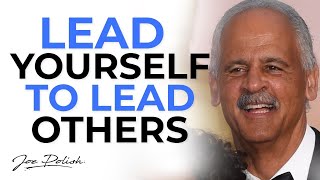
Stedman Graham outlines his nine-step identity leadership formula: self-leadership, vision, daily small steps, and lifelong learning. Andre Norman and the Academy of Hope describe prison programs designed to reduce violence and recidivism through mindset change and habit building.
Chapters
The single number one reason that I've been able to maintain a relationship with a very special person and a very special person to the world is that I work on me and I'm able to define my own existence, which has nothing to do with who she is or has nothing to do with anybody else. I define who I am, and I don't let the world. I don't turn my power over to the world to define me, because I know that whoever you turn your power over to define you will always define you as less than them.
Stedman Graham, who I'm going to introduce in a moment. I'm going to play a video first, though. So what I want to do first is the way that I got introduced to Stedman was from Andre Norman, who many of you, everyone in Genius Network knows Andre. Andre is awesome. And they're collaborating on some stuff. And I wanted to play a video first so that you guys can see what's being done with the Academy of Hope. You'll see Stedman in this video, and then I'll do a formal introduction to Stedman, and then we'll get into some questions and stuff. So let's go ahead and play that video.
Nelson Mandela has been locked up for 27 years, came out and became the president of his own country. What they didn't take is they didn't destroy his mind. They didn't lock up his mind. And so to be able to give these individuals who are incarcerated information that allows them to grow and develop and build and create is what the Academy of Hope is all about.
The goal of Academy of Hope is to diminish violence inside the prisons. I have a friend named Joe Polish, and he's taught me you cannot punish people into being better. You cannot torture people into kindness. You have to speak to them with humanity. You have to speak to them with respect and speak to them with firm, direct access. Where you want them to go. Our unit's been open for eight months now. Every day we go inside and we meet with the men, we engage with the men. We help them understand that they have a greater goal other than just fighting and being incarcerated. We go in and we speak to violent fellows. These are the people that you're scared of. And scared or not, they're gonna get out one day. Majority of programs for violent offenders is called solitary confinement. You lock them down, lock em down, lock em down until the day comes up where you have to release them. What did you just release on society?
They have the time to read, to learn, to develop, to build. After they pay their debt to society, to really try to become a productive citizen based on their talents and their skills and their abilities and passions and their purpose in life.
The educational books that you share with Genius Network that you make available, we're also making available to the prison populations of America. We have men and women in this country who are studying your books. Becoming better, becoming stronger, becoming ready, joining society and doing the right thing.
You can change, no question about that. Once you raise your consciousness, once you understand that there's a bigger world out there, once you have a bigger vision than what you currently have had, if you know how to plan, set goals, organize a process for empowering yourself, focus on the positive as opposed to the negative, you can absolutely change your direction and develop a different trajectory for your for your Future.
It's a 2.2 million person problem. It's a multi billion dollar problem. I'm just one ex offender. What can I do? I started hanging out with CEOs and the thing I loved about hanging out with them, they're owners of companies, they get stuff done. I just want to thank you for your donations for these books. I want to thank you for your contributions to society. Who knows, you might be the missing strategy. You just might be that missing piece.
So Stedman, welcome. Thank you so much for being here.
Thank you, Joe, for having me. I appreciate it very much.
Absolutely. I'm going to do an intro on you so that everyone really kind of knows who you are and what you've done, so. Stedman Graham is the Chairman and CEO of S. Graham and Associates, a management and marketing consulting firm. He's the author of 12 books, including two New York Times best sellers and one Wall Street Journal bestseller. As a businessman, educator and speaker, Stedman Graham lectures and conducts training programs for corporations and educational organizations worldwide. The topic of Identity Leadership based on the philosophy that one cannot lead anyone until you first lead yourself. He's delivered identity leadership programs in the Netherlands, Germany, China, Canada, the uk, Bermuda and South Africa. His proven nine step success process drives his powerful message. The success process is based on the principle that it doesn't matter how the world defines you, it only matters how you define yourself. Stedman Graham is honored as a Distinguished Visiting professor at colleges and universities throughout the country. He's a former adjunct professor at the Northwestern Kellogg School of Business where he taught the course the Dynamics of Leadership. Graham's clients include Gulfstream Aerospace, Microsoft, Deloitte, Wells Fargo, Lenovo, General Dynamics, and the US Department of Labor and Education. As a proud native of Whitesboro New Jersey. Graham has demonstrated an enduring dedication to youth and community. His New York Times bestseller, Teens Can Make It Happen has become a program utilized in numerous middle and high schools in the US and abroad with dedication to community development. Graham is the founder of the Concerned Citizens of Whitesboro and the Concerned Citizens of Lake Waccamaw. Hopefully I'm pronouncing that right. North Carolina. He's also the co founder of the Community alliance for Youth Success. Stedman Graham has also served in the United States army and played professional basketball in the European League. He also holds a bachelor degree in social work from Hardin Simmons University and a master's degree in education from Ball State University and has been awarded three honorary doctorates. And he serves on several boards, has received numerous awards and I could probably go on and on and on. So you know, Stedman, when people ask you what the heck do you do? How do you describe yourself?
Well, I really teach identity and identity leadership all over the world. Basically, I teach people how to organize a life around themselves, teach them how to find out who they are, how to learn how to take information education, make it relevant to the core of who they are based on their talents, skills and abilities, transfer it to the mind so they become a thinking human being and then transfer it to that global marketplace. Global marketplace. So they can create, design their own future, essentially. You got to know who you are.
Yeah, well, you know, right now, I mean, you wrote a book on identity leadership, knowing who you are. I think a lot of people are really having a shock to their system. Well, first off, I want to say you're on an iPad. You're on an iPad, you're self quarantining yourself right now. What's your life like right now?
Well, I'm quarantined for the next about four or five days and before I can go into, you know, my personal, personal world. And so it's not that much fun, but it's, it's necessary based on coming out from the outside world into the inside world here. And you know what, everything is online. I mean, we're working. I have a technology company, so we're building, you know, courses and developing content online and working to build that because that's the new norm. Normal, I think.
Yeah, yeah.
Awesome. So, you know, let me, let me kind of go back to create some context so that people that don't know you and I'd like them to learn about you. And then I think the knowledge that you'll be able to share with us will penetrate a little deeper. What Was your upbringing like, and what challenges, obstacles, difficulties, you know, et cetera, did you have to overcome?
Well, I grew up in a small town called Whitesboro, New Jersey. Basically a town founded by George H. White, a former congressman during reconstruction, which was a relative of ours. And all black towns surrounded by white county, where they said nothing ever good comes out of Whitesboro. Grew up with two special needs brothers in my family. Grew up with low self esteem, a lack of confidence in myself. The only thing that really kind of saved me, I had so much anger and rage. Only thing that kind of saved me was basketball. Basketball was kind of my way out. Gave me the opportunity to go to school, get out of my community, and basically start the journey of trying to figure out who I was as a person.
Hmm. Anger and rage.
He said anger and rage, which is what I see a lot of in the South Carolina prisons. Prison when I go there with Andre. You know, the key to transformation is transforming the anger into love.
Wow. You know, boy, what's the. Not that there's an easy way to describe how to do that, but if you could. Could you talk a little bit on that transformation?
Yeah. I mean, the key to. Becoming relevant to the 21st century is being able to change from negative to positive. I think. I think that's really the key. And from hate to love, from looking at the glass half empty to half full. And that's a very difficult thing to do because the world basically is designed for us to be slaves and to be workers. And it's designed not to help us to self actualize our potential. You know, we live in a world where we're doing the same thing over and over. You know, you wake up in the morning, wash your face, you brush your teeth, you get something to eat, you get the kids off to school, you work all day, come home in the afternoon, you spend time with the family, watch tv, you go to bed, maybe you dream that's Monday. You repeat that same process Tuesday and Wednesday and Thursday. And you look back over a number of years and you have no more in the end than you had in the beginning because you haven't been able to grow. You got a fixed mindset. And so until you understand how to transform your life based on your passion, based on your purpose, until you learn how to build your skills and your talents and what you love, you're not really going anywhere. Then you're controlled by the outside world. And the world defines you by your race and defines you by your house and your car, your money and your religion and your Gender, and it defines you based on the program that you received. And you buy into that program, and you end up becoming that. And without thinking and learning and developing and building and creating and learning how to take information and education and making it relevant to who you are so you can actually grow and build something, you're really not going anywhere. And that represents about 6.9 billion people who are basically stuck in a box. And also, the educational system is pretty traditional, and it's kind of outdated, which teaches us how to memorize and take tests, repeat the information back, get labeled with a grade, and two weeks later, we forget the. Forget what we learn. So unless you understand how to apply information and take education and knowledge and apply it to who you are as a person, you're not going anywhere. You have to be told everything to do.
Gotcha.
You know, let me ask you, like, so now I think you just rattled off a whole bunch of them. What are some of the lessons you learned working as a guard in the Chicago prison system?
Well, the lesson that you learn when you work in the prison system, I've worked there for five years, starting in Colorado and then moving to Chicago and working in the federal prison there. You learn how to be patient. You learn how to deal with a lot of different people who are, you know, and in some cases, you got hundreds and hundreds of inmates that you're having to deal with every single day. So you really learn a lot about human behavior, which I've learned. And you learn kind of how to a lot about yourself in terms. Because you're being tested all the time.
Yeah.
And so for me, it's been great for the work that I do in human development. It's been great in terms of relationship building, been great in terms of doing a comparable analysis between what. Where I came from, where I am, and where I'm going. And so I get to see it at all different levels. I'm pretty fortunate because I get to see a lot of human development at a lot of different levels. I get to see the rich and famous. A lot of times. I get to see. I'm in the American free enterprise system. I understand how to do that. I have a business. I get to travel around the world. I get to see people at all levels, all colors, all nationalities. And I realized that even in the prison system and even in these other countries, no matter where you go, whether you're training immigrants or refugees or whatever the case may be, everybody's looking for love. That's the common denominator. And so the key is to figure out or to again in my work, to be able to get people to understand how to find love in their own life.
Yeah, I turned around and looked back here because I have one of them somewhere that I don't even know if it's on this wall behind me. I have one of these images from Gaping Boyd that says looking for love in all the wrong places, which is what I think addiction is. People are looking for love, but they're looking for it in ways that are self destructive and hurtful and things like that. That's one of my concerns right now with the pandemic is that when you. Have I mentioned this earlier today, when there's stress or there's recessions or any sort of crisis, anything that causes a global stress or a community stress or a family stress, vices increase, people drink, they do drugs, they look for escapism in a lot of ways. My friend Gabor Mate says with addicts, the question is not why the addiction but why the pain and the more pain people are going through, there's ways that they can choose to cope with it that could heal that pain or reduce it or eliminate it, and others that just not only can massively increase it for them, but they can take that and start impacting hurting others. How do you deal with emotional pain and stress and angst?
Well, that's a great question. For me, it's really trying to change my thinking. So when I start to have negative thoughts, what I try to do is reverse those thoughts and try to make them positive and focus on love as a way to, you know, get, get away from my ego and get as close to humility as possible and, and gratitude and also being thankful for what I have. And so that kind of helps me to repurpose my feelings. Because, you know, your feelings are a result of your, your thinking and your thoughts.
Right.
And then after you're after you, you can control your thoughts and control your feelings and then you can control, basically control your actions and then, you know, you don't do something stupid or say something stupid.
Yeah.
So basically it's understanding that as a way to, you know, control my own way of living and control my own way of doing things. I start with the thinking first and then try to control my thoughts and as a result, my feelings as a result of the consequences.
Let me ask you about just using the word control. I mean, being in the prison system and just a lot of the people that you've worked with, you've been in so many situations where you see the consequences of people that have lost control and start making really bad decisions that have gotten themselves in a lot of trouble and hurt other people or in many cases, killed other people. So have you. Are there times where you've completely lost control or, you know, you're getting close to it? And what do you actually do when you reach out for help versus if it feels like it's beyond your capabilities? The reason I asked that question is that when things get really scary for some people, they feel like this is so beyond me, I don't know what to do. And I think there's a whole planet dealing with that right now. I wanted to just ask you about that. How do you reach out for help?
Yeah, I think that I tell you, the thing that's changed my life that's helped me so much is reading. Reading and learning. And Einstein said, you cannot solve a problem with the same mindset that caused it.
Right.
So your ability to be able to change your thinking in a very conscious state, there's the consciousness and there's the unconsciousness. And so we are repeating bad habits based on unconscious behavior and unconscious thinking. In order to be able to change that, you have to be conscious of that or you have to have a new program, design a new program for yourself that allows you to think differently.
Yeah.
And so it's, it really is about. It really is about awareness and about being conscious of what negativity does and anger does. You know, anger and negativity destroys. Whatever you put out comes back. You know, that's the natural law. So if you understand that and you're aware of that now, you have at least some ability to be able to replace that with something that's positive or something that's spiritual or focusing on. Again, looking at the glass half full as opposed to half empty.
Yeah, yeah. Very good, Very good. Let me, let me ask you about just the word consciousness. It's a word that gets thrown around a lot from some people. I'm not sure I'd love to what your definition of like. How do you know when you're being conscious? How do you know when you're like, man, I'm kind of not all together right now.
Kind of hard to know, because when you go back to a natural state and you go back to being relaxed, you go back to your unconsciousness. You're not even aware of it. So if you're not focusing on. I teach a nine step success process. The second step, once you understand who you are, check your ideas. The first step, you have to have an identity. The Second step is you got to have a vision. So vision allows you to focus on who you can be, not who you are. And it allows you to set goals and create a big picture. You know, what's the big picture look like? How you organize pieces of the puzzle, how you put them together, how you visualize what you have to who you want to become, and then how you set up a process for continuous improvement on a daily basis so you're not stuck in your historical framework.
Yeah, very good, very good.
Yeah, go ahead.
No, no, sorry, I didn't mean to interrupt. I was just.
No, no, I'm sorry, go ahead.
Okay, cool. So let's, let's talk about our friend Andre. I mean, you know, he's a great guy. He's an of someone that was probably what I guess based on what you just described, was in a unconscious anger and rage state. Committed crimes, got thrown in Federal Penitentiary for 14 years, was number three gang leader, tough guy, right? Had to go through a lot of stuff. And then he has an awakening and decides to transform his life. Gets out 20 years ago, goes to Harvard, becomes part of a social justice program. And now everything I do with Andre, just in a minute. Amazing human being and always helping. And when I first met him, you know, a couple of Genius Network members, Cameron Herold, Michael Bernoff, you know, said you got to meet, you know, this Andre guy and telling him that he had to meet me. And we just hit it off. And now it's been going on over two years now. I've been doing work with him. So can you talk about the work you've been doing with Andre Norman and the Academy of Hope and also what, if anything, you'd like to say about Andre or what you admire about him? Because I always try to introduce him to so many people because I think you guys are just doing great work.
Well, certainly he's one that has transformed his life and has discovered the other side. That's kind of like the Chinese say, there's a ying and there's a yang, you know, and so there's two choices. It's either negative or positive. He's lived the negative side. And to be able to discover man, there's a whole new world out there. You mean I can take information and education and make it relevant to growing and building and designing and creating my own future. And I can start a business and I can deal with CEOs and I can deal with the Joe Pollock's and I can deal with the Genius Network and, you know, and people judge me on my present ability and not on my past. And I can talk about my past and I can talk about who I was, who I am now. That's rare. Only a few people get a chance to experience that. And to be able to have the narrative, to be able to talk to other people and help those people to go into prison himself, back where he came from or back where he was and back where he spent so many years, to be able to help other people. You know, transform is really what it's all about. I mean, you really can't. When you become successful, your job is to go back and give back to other people, period. Give back to young people, give back to community, help other people that are less fortunate. Because you, you, you've had an opportunity to experience great things and to be able to be a servant leader to the world. The greatest gift you can give is that. Great.
Thank you. So let's talk about identity leadership. Okay. That's the title of your book and you say in order to lead others, you must lead yourself. You've talked about being control, you talked about your thoughts. I want to just dig a little deeper. What does it mean to lead yourself and what are the results of leading yourself? Because we hear a lot about leadership. You know, right now is a really important time where the entrepreneurs that you're talking to right now are a lot of people from Genius Network. I mean, literally millions of people follow the people that are in this group and look to them for leadership. So I wanted to, you know, in order to lead yourself, you know, and then leading others, like to get your thoughts that.
Yeah, 21st century says you have to be a self directed learner, you have to be a lifelong learner. This is kind of the you economy and you have to focus on you and develop you so that you're prepared for the technological revolutionary change that's happening right now. You have to be a learner and you got to stay on the cutting edge. It's almost impossible to do that the way the system is set up. You know, it's like I've talked about before. We, you know, we have an educational system where we memorize, take tests, repeat information, back your label with the grade, two weeks later, we forget the information. So there is no learning for the most part. And then we're just kind of working every single day, doing the same thing over and over every day. So if you don't create some self mastery, if you don't know who you are, if you're not focused on what you love and what your purpose is in life, you're pretty much out of it. I don't know how you're going to do it. It's almost impossible to do it unless you are building and growing and getting out of that fixed mindset. You have to have a growth mindset. You got to be able to be a better person today than you were yesterday. And the only way you can do that is to be able to source information and access information that's relevant to your development. So you have to take control of your own lifelong learning process. And again, you have to be able to understand the value of education and information and how do you apply that information from a cognitive level. You know, you got to be a, you know, constantly thinking about how to, how to, how to make yourself better, how to improve your life. Be the best person you can possibly be.
Yeah.
So then the leadership is, that's what it is. It's authenticity. You know, before you can actually become a leader, if you want to become a leader, you first have to become a leader of yourself. And again, you got to be able to change the learning system around, which is what I teach through this nine step success process is how to learn and how to build and how to grow.
You know, just because we're limited in time. Steadman, what's the best place for them to start? Just reading your book first or how would people that really do want to learn your whole process? Because I know it's extensive. Where should they go? Is there anything online you want to direct them to or just tell them to read your book?
I have a nine step success process, but you got to read a lot of books.
Yep.
Steve Covey, you know, Brian Tracy, you know, all the books you can get your hands on. If you're dealing with trauma and you're dealing with pain and you want to unpeel the onion, then what you have to go is you got to go internally to figure out again, how do you actually do that? And sometimes just socially, I mean, it takes a long time to work on yourself. It takes a lifetime to be able to do that. And it's an internal issue. So if you can read and learn about who you are, what you're capable of, and then find something that you really, really care about that makes you happy, find your purpose. That's your foundation for growth and development that's going to help you change. You know, you do what you do because you love it.
Yeah.
And it's changed your life. And you've been able to organize a global marketplace around it. And you're thinking every day how to become better. And you're changing your environment based on who you are. Those pictures in the back of you are a reflection of who you are as a person. And so to be able to build whole world around Joe, man, that's got to make you happy and also keep you out of trouble.
Probably more of a keep me out of trouble than anything else. You know what a lot of people say is like, God, why do you spend all this time helping with addiction and all this? And you don't sell anything, and you've spent so much time and money funding it and everything, I'm like, well, you know, it's actually a really good way to help with my own sobriety and stuff. When you are serving others at that level mean, it just really kind of helps you keep in check.
Well, the beautiful thing is you're strong and you're smart and you're a hard worker and you're a thinker and you're a reader. And to be able to, you know, and you. And you've learned a lot throughout the years to be able to take all of that and lead other people and help other people, it doesn't get any better than that. And that's what you're supposed to do. You're supposed to be stronger, better, smarter, faster every single day because you have the opportunity and because we live in America, the greatest country in the world.
So, Andre, what. What do you think is the most awesome thing about Steadman that we could talk about right now? Go for it.
What's happening?
What's that in my brother? Let me see. I'm in quarantine right outside the prison. Wow.
Well, you're kind of used to being in quarantine, I guess. That's a bad joke.
This is easy. This is easy. 14 days. I can do it standing on my head.
You spent two years in solitary confinement, right?
Two and a half years, 24 hours with no TV, no Internet, no Mac computers, no iPhones, no friends.
God. Like, boy, we should be having you.
Do cockroach at a pet cockroach named Sam.
Really?
No, I'm just kidding.
Okay, so what should I be asking Stedman? I mean, you more than anyone have some really good perspective on him because you. You know what the work you guys.
Are doing, Stedman, when people meet Stedman, it's like the wow factor. You get the wow factor for all the obvious reasons. And then when you get past the wild factor, you're still standing with a good guy saying, cuz, Oprah is someplace else 99% of the time when I met him. So when I meet him, it's like, okay, I see people get the wow factor because, oh, my God, he knows Oprah. He's known him for help forever and they're dating. But once you get past that, you start talking to him. He's have substance. He hasn't. He's intelligent. He has a vision and a plan. He's above and beyond super helpful to the cause. Then I don't know where we are on the call, but he has, like, global mindset. I wanted. That is a guy who wanted to do a shortcut video on something we're doing. And Steadman's like, no, either we go high ground or we don't go at all. Global pitch or leave it alone. The guy was trying to beg him to do his little tiny bitty piece. That'd be good for him, but not for the movement. And Stefan's like, no, I don't do small things. If it's not about the global, about the larger society, about making everything better, save it. Yeah. And he just. He walked away from. He's like, no. And I just watched it and reminded me of you and a few others of, where's that for everybody? Yeah, there's a small, cheap win in it for a few people, or you can go for the bigger win for everybody. So I like that.
No, that's. That's great. You know, let me ask you, Steadman, about that. Like, how do you. You get more offers and opportunities and people pitching you on things and trying to get your time and attention than you could ever possibly manage. So you certainly must have a process and way that you've learned over the years of a criteria or a standard of how you say yes and how you say no and how you make decisions. Can you speak to that?
Yeah. That is so good. That's a great question. You know, I try to stay in my lane. And when you know who you are and you're clear on that, you work on that every single day, and you organize your life around yourself, then you can eliminate all the things, all the time wasters. All the things are not relevant to where you're going. And the vision is like, you know, like Andre said, the vision. You know, the good book says, where there is no vision, the people perish. So you got to have a vision of where you're going, and you got to have some clarity around that vision so you can outline. I'm not, I'm not. You know, I'M not worried about next week. I'm five years out. So I'm looking at how all this lays out in terms of putting the pieces of the puzzle together so I can paint the picture. I'm looking at the big picture, and then I build backwards.
You know, I want to go back to what you just said about staying in your lane. And clearly, with all the work that you do, that you've written about and that you train people on with your identity, leadership process. If you think of the term stay in your lane, which is knowing where your strengths are, knowing where your skills are, where you create a result, where you make impact. And you're on a freeway, let's say metaphorically, and the freeway is now closed. And I think there's a lot of people that have just had the biggest threat to their identity and who they are and what they do and what they stand for and how they make their livelihood and how they survive. It's like they've just got completely thrown off their lane. Their lane is now closed. They've been hit by a truck. You know, what do you do when you're thrown off your lane?
Well, you have to have a process for reorganizing yourself and organizing yourself. So what does that look like? That looks like you. You know, you got to spend some time looking within you to find out what am I willing to die for? What am I willing to work on that I will work 247 on, what am I willing to do that will allow me to basically delay gratification? What is it that makes me happy? I mean, that's what we're supposed to be doing. And then how do I serve the world based on the gifts that I can develop for myself? So it starts with self. So this is a great time to now look internally to figure out, you know, how to reevaluate your circumstances and your life based on what has happened. It has to be you now, because you may have lost your job. You may not, you know, you may not have a place to organization or business to go back to. So you have to really figure out, you know, your ability to be able to take care of yourself and your family is all going to be based on you. On your ability to think, organize, develop, create, design and build and something that you can focus on for the rest of your life that allows you to build socioeconomic development.
Very good.
Very good. I just have this thought that's occurring to me right now with you and Andre here, and it just reminds me that I heard someone, I think maybe Three days ago that had said, yeah, I feel like I'm in prison. And it now has a different meaning based on just what Andre said. Oh, I mean, I didn't have an iPhone, I didn't have an iPad. I could do 14 days or whatever. And you guys both work within prisons. And then with Andre at times where I've heard him talk or I've interviewed him where he said it was one of the greatest things that ever happened to me because he was forced to have to really get to look at, like, what the hell am I doing with my life, Right? How did I get so much anger and rage? Which is what you mentioned earlier, Stedman. And there's a lot of people that feel their freedoms have now been taken away. And I'm having to juggle right now with the date that we're doing this. Some people that are like, you know, the economy is going to crash. We need to let entrepreneurs do what it is they need to do. And then others, and some of these same people are on watching us right now that, no, people can't go out anywhere. They're going to. This is about containing this disease and everything in between. I mean, and there's this person thinks this is the right way to do it. The other person thinks that's a death sentence for people. And then the whole where you're at right now, you're now limited. There are things you used to be able to do that we took for granted, and all of a sudden those options are not available. So in this space, what is, do you think the greatest? You talked about thinking. You talked about mindset. I would love to hear from both of you. One, how would you recommend people best utilize this adversity as a way to get to know themselves, learn how to make better decisions and connect with themselves? Because some people have told me privately, man, I've not been home with my spouse and partner and kids like this ever before, and I'm going nuts. And so everyone is having different experiences about this. And I'd love to have you guys give some. Some thoughts, recommendations, suggestions on how to make the most of what a lot of people perceive as a very horrible situation.
Well, I think you have to. If I can go first, I think you have to be able to eliminate the limiting beliefs about what you can't do, because this is, you know, and not look at it, look at this as a negative, but begin to figure out, you know, and ask yourself, what can I do? What is possible for me in this situation? You know, we're lucky to live in America. And we're lucky to have access to technology and phones. And so how do you now begin to work on a purpose in life that allows you now to, no matter what happens if the world stops, you can keep going, you can keep developing, you can keep building. You know, there's a saying that success is when preparation meets opportunity. It's in the preparation. And let me just tell you something, it's all preparation.
Yeah.
I was going to even ask you what your, you know, how you define success, both personally and professionally, but we'll maybe come back to that. Andre, anything you want to share on the Andre's Guide to dealing with a.
You know, Being in prison, Surviving Solitary by Andre.
Yes. Yes.
The first. I'm going to use a quote by your dear friend and our dear friend. This is happening through you, not to you. Sean's always with us. But this isn't happening to anybody. This isn't about an individual. If you make it about yourself, then you're stuck, you're already lost. This is something that's happening through you and you just have to figure out how to make yourself better from it and how you can help somebody else be better. So am I sitting still, forced to live inside his house for the next whatever amount of time it is? What am I doing to make it better for others? When I say, what have I lost? What have I lost? What have I lost? I've lost already. So one thing. When I was in solitary. This is just straight penitentiary rules. If you're locked in a cell 24 hours a day by yourself, the first thing you need to do is get out of your head because all your thoughts will just jumble because there's no barriers, there's no limitations. So write it down. Write down on paper. Leave your electronics out. You can keep your phone, your iPad, get a piece of paper, write it down because it doesn't move. Write down your thoughts, write down whatever is that you need to get done. I got a whiteboard behind me, I can't live without one. Write it down so it becomes visual. You can actually see it as you walk through your house or your space. The second is create a schedule. You need a schedule for work, you need a schedule for play, you need a schedule to do nothing. You need a schedule for sleep. Because if you don't create a schedule again, your whole day just meshes through and it just becomes crazy. You can actually do some at home workout stuff now as well. And second you right now, Genius network is the greatest network to be in I'm thinking of the nine word email by. By buddy. You said Dean Jackson. Yep. Dean Jackson. I mean, come on, you right now that I watched it work from your office. I was ingenious. Dean taught the nine word email. And everybody did it. Went to lunch, came back, and all this stuff, race stuff had happened. Why can't they do the nine word email now? Webinar master Jason Flatland's in this box someplace. Where is he at? All webinars are done from inside of a building or a house. So he's not on the street corner doing live webinars. He's doing it from inside of a building. Jim's on here someplace. You need to understand your finances. You never had time to really take the time to understand. This is a great time to get on the phone with Jim and say, hey, explain my money to me. So to sit down with Jim to say, hey, Jim's free for a call, they say, hey, explain to me beyond millions in real time. And you have what? I literally was just watching the Keith Cunningham two hour thing he did with us last year. One of the best things him and Dr. Man saw crush last year. And I'm watching, rewatching the video. You have hours and hours and hours of podcast video and information and people that can get anybody through this. You don't need to even go to the library. You just come to Genius and it's a treasure trove. Everything you could do to further your business. And the best part is it's not all about business. How to better your life, how to help your addictions. Whatever you need help with, from personal to professional, is someplace on the Genius network. Podcast or replay or you can get it live. Yeah. Yeah.
Thank you, Andre. It's very, very, very valuable.
That's an exercise. He just shows you how to take information, make it relevant to who he is as a person. Yeah, he's transforming every single day, which means this. He's smarter today than he was yesterday.
Yeah.
The process of success is the same for everybody. That's what I learned. What Andre just talked about is what I learned. And anybody can do that.
I'm sitting here, but every time I come home with a backpack full of books from Genius, I don't read them. I'm reading them. I'm reading them. I got time. Hey, Jason, you're on deck. You're right there. I mean, we have all these. You give us all this information that we never really process fully. We're too busy getting to the next meeting now. We have time to a Go deeper and connect. And I would say this is my challenge today. Jason Flatland tells me, do it in a challenge. Reach out to two people. One person you haven't reached out to a long time that you got love for one person you can feud them with that you just don't want to forgive. Do one in one.
Yeah.
Awesome.
Very good. You know, I think what you're sharing right now, both of you, would be so helpful for other people to watch this. I'd like to take this recording of this and ask Genius network members to share it with their communities if they'd like anyone that would find help with it. And I would love to get Stedman your advice. And Andre, anything you want to add to this for someone out there that's feeling completely hopeless, they don't know what to do. They've lost their job, they've lost their careers. They're really afraid, maybe even suicidal. Both of you guys have endured tremendous stuff and you've helped so many thousands of others over your careers, you know, with even what you're doing in the prisons, dealing with some of people in the most worst of conditions. What advice that you haven't talked about would you give to people that are out there really feeling this is the scariest, most difficult, challenging thing they've ever gone through. And if you could just share with them anything, what would that be?
Well, probably, you know, if you have. If you're. The foundation of your existence is negative, the transformation is always love, regardless of your circumstances. So you have to believe that. And it's called practice. The reason Michael Jordan became a great basketball player is because he practiced and practiced and practiced and practiced and practiced. And you have to transform, you have to practice transforming that negative energy because it's the energy that's taking you out. You know, the circumstances are maybe, you know, they come up, they're going to be tough sometimes, but unless you transform that energy, it's always going to be tough.
Yeah.
So you got to work on transforming the transformation. Everybody in the world is always love. It's never going to change.
I like that. You know what you just said about energy, too. I remember when I was first starting down my journey of reading books and going to seminars and I've been to a ton of stuff. I've done a lot of personal development and I have a love hate relationship with the whole personal development world. I think in a lot of ways when someone's like self help or personal development, there becomes such a focus on myself versus others. Right. And the thing that I Always remember is I used to go to these time management seminars, and the first conversation I had with a guy leading one, it's really not about managing time, it's about managing energy. And what you said about energy right now, just your sleep, the food you put into your bodies, the environment that you create, your stress level. And when you say love, I think within that, if you're not in an energetic state to even experience that connectedness, you're going to be what you said earlier at the very beginning, it's going to be anger and rage. And when you're in that place, it's really hard to not only be happy, but just even function because you're like, you know, nerve endings everywhere, just electrocuting yourself and everybody around you. And so I think what you just said about energy is really, really important, and I want to highlight that. And even Dr. Mansoor Muhammad, who I'm going to have give a presentation right after we're done talking. I know he's going to speak to things of what people are putting in their bodies, like food and sugar and stuff. And you spent many years with yourself as a professional basketball player and then also with so many athletes. You even had a foundation for athletes that were in recovery with addiction. Anything that you could speak to related to taking care of your physical body. It's one thing about the mind and about thinking, but what about the vessel that carries you around?
Well, that's what Andre was talking about when he talked about that piece of paper, that notebook. You got to write it down, you got to organize it. So I asked people, I said, if you want to change your life, write down everything that you love and care about it, then I want you to organize it in the 24 hours that you have every single day, which is what makes people equal, which makes us all equal. Everybody has 24 hours. The question is, what do you do with your time? So this is an organizational process of organizing every single thing, thing that you can imagine in your life and then learning how to take information, education and make that relevant to everything that you love so that you could develop a process for continuous improvement based on segmenting your life in every area. That is. That makes you happy.
Yeah.
That's your foundation for growth and development, for building, for designing and creating your future. Without that, you're going nowhere.
Gotcha.
Great.
Awesome. You, you guys cool with mostly Steadman? Andre? I mean, I think it's just great for you to pipe in here because.
It'S like, okay, the key thing you need to understand is you Are not alone. That's the biggest lie that takes people down when you. You convince yourself that you're alone. There's 6 billion people out here, and I'm one of them. Joe's one of them. Steadman. There's ton of us, myself on here. We love you. We're with you. We're gonna be with you throughout all of this. And in between, you're having. I've had bad days, and I've reached out. I've had bad days. I had bad day couple. I called Stefan. Yo, Stephanie, man, these people stressing me out at this prison. He talked me. He didn't give me the answer I wanted, but he took my call. I call you Joe. You don't always give me the answer I want, but you take the call. And most times, 99% of the time, that's enough.
That's so good. Thank you so much. And by the way, genius network members like Andrew has flown when we could, you know, remember those days when we could fly somewhere easily. He's actually, you know, done interventions. He's helped people with suicides. I mean, he's met with families. I mean, he's been in some crazy situations, always available. So when he says this, he's not joking. I mean, and we do this to, you know, help all of you as members, because this is so much more than just, you know, build a business. And it's about being a, you know, being a better human, being a better entrepreneur. Stedman, you cool with. We do some questions from the audience for anyone out there that wants.
Yeah, absolutely.
Okay, so if anyone has a question, either unmute yourself or post it in the chat box, and we'll go for maybe 15 minutes or so.
You know, what's the biggest mistake that.
You see people make? That years later, they look back and that was really the reason why they.
Didn'T get to where they wanted to go. They don't have the information. They don't. They're not organized. And for the most part, I would say they don't have a purpose. There's no foundation for even organizing information because they don't even know where to start. You can't even start without having a purpose. You can't start without having an identity. You can't even start without having something that you love and care about. So not even knowing how to begin the process is. Is the biggest mistake that I think is fed to us through the educational system, because it's not taught unless you have good parents or some good parents that actually know how to do that, you're pretty much just looking for value on the outside and you're being defined and looking for people to validate your existence when only you can do that.
Thanks, Steadman.
Love you, Andre. Thanks, Steven. I'm going to ask you a question from Neil Moore. And Neil, if you want to pop on, you're welcome to. If not, I'll read you two questions. The first is what do you consider to be the top three priorities in your life? And then when you're done with that one, I'll read the second question. What do you consider to be the top three priorities in your life?
It's up to Andre or me.
No, that's to you, Stedman. This is from Neil Moore.
I think the top three priorities first is working on myself. Number one, helping people around me, which would include my relationship with Oprah and being the best partner I could become. And then family would be the top three priorities. Great.
Awesome. Well, the second one then, which kind of similar to what's your priorities? What are the most important things that you believe have contributed to the success of your 30 plus year relationship with your partner?
That's a great question. I think the single number one reason that I've been able to maintain a relationship with, you know, a very special person and a very special person to the world is that I work on me and I'm able to define my own existence, which has nothing to do with who she is or has nothing to do with anybody else. I define who I am and I don't let the the world, I don't turn my power over to the world to define me because I know that whoever you turn your power over to define you will always define you as less than them.
Wow. So Barbara, this from Barbara Annis. And so Barbara, yesterday she actually shared that she's literally on day three of literally having stopped medic medically prescribed opiates. So she's going through a very difficult time right now, I'm sure physically and mentally. And she wrote and by the way, she's the top gender intelligence expert in the world. Brilliant woman, written five books, amazing human. And so she's done so much for the world. So she wrote, I've committed myself to take breakdowns in my life and health and create breakthroughs. The road is tough. But your messages were very empowering. I want to add to that, like what, if anything, have you not shared about taking adversity or taking breakdowns and turning them into breakthroughs? Because I've often said in order to have a Breakthrough. You got to break something. And sometimes we can consciously decide to do that. Other times it's forced upon us through life situations. So I wanted to just ask you about how do you. Anything that you've not already shared, and you've shared a lot about this, you know, shifting adversity into transformation.
Well, I think that's a powerful word, or maybe it's two words. It's called small steps. Break everything down into small, manageable steps. If you run a business, you better break it down into small steps. If you want to focus on accomplishing something like stretching in the morning or taking a walk or working out or whatever, you better break it down into small steps, you know, so you got to break it down into small steps so you can manage sometimes the fear that you need to overcome, you know, or manage the procrastination that you use as a way not to do it because it's too big for you, you can't handle it. There's no victory of that. So your ability to break things down into small steps, organize it, and then it's an internal process of finding out who you are and then organizing your whole life around small steps so you can actually get something done. You only have one day. So you become the best person you can be in that one day. But organize that one special day. You take that one day, you got a, you get, you make that. Multiply that times seven, you got a great week. You multiply that times four, you got a great month. You multiply that times 12, you got a great year. That's how it works. It's one day at a time.
Yeah, I love it. Really, really good. I need to actually speak to this too. On one of my favorite books on this subject is my friend BJ Fogg, who's a behavioral design researcher and scientist at Stanford. He actually his Fogg behavioral model, the founder, one of the co founders of Instagram, was his student and built Instagram using a lot of his models. And then there's some, you know, great books and authors that have written things that were students of BJ's Nir Eyal James Clear, who wrote Atomic Habits and he has, his book is called Tiny Habits, his newest book. And I actually spoke to his students last year at Stanford and took a film crew with me down there, Akira and Rakim and we filmed it and BJ's awesome guy. And I think everyone, based on what you just said would really find that book really useful. He talks about motivation, ability, and probably prompts. Those are the three things that Determine all behavior and start very small. He even has an example of if you aren't flossing your teeth. And for some reason, it seems onerous. He's like, floss one tooth, start with one tooth. If you are not exercising in the morning and you forget, put your shoes in front of the door before you walk out, like, you know, and do one pushup, you know, and like you said, it just builds upon itself. So that's actually really good advice. People have these big goals, and they think they just need to take it on. And the fact is, you just start. You start very small. Even one of the things earlier we were talking about was breathing. There's a guy, Wim Hof, you've probably seen Wim Hof, crazy guy that teaches breathing and cold exercises. One of the things to get people to do cold showers is, like, start the first day, five seconds in the shower the next day, you know, 10 seconds. Then you build up to, you know, longer periods of time. So that's. That's really good.
Yeah. It's called brand. It's called brand value. You know, the value. Brand value is about consistency over a long period of time. Advertising is range. Branding is depth.
Yeah.
So if you want to build layers and layers and layers of depth, it's over a long period of time with small steps.
Yeah. Love it. Love it. You know, during the break, we've been playing, like, this podcast I did with one of our genius network members who I think is on right now. His name is Dr. Patrick Giantempo, and his latest book is called you Stand Is yous Brand. And I really like it because it's just like, you can't stand for something because you wake up tomorrow and say, this is what I stand for. It's something that is developed, like you said, over a long period of time, and that ends up becoming who you are. Yeah. From Chip Franks. What is the first step for people to stop worrying, stop freaking out, and take their lives back in their own hands starting today?
Well, number one, change the energy around. So you got to change this energy around. And the way you do that is you got to practice on when you have fear. Replace that with a loving thought. You can't have but one thought at a time. You can't have two, or you can't have but one feeling at a time. You can't have two. And so your ability to be able to focus on love as the primary focus allows you to replace the fear that you're currently dealing with. So if you just practice that and practice that whenever I get in trouble, whatever the case may be, or I. I'm in an uncomfortable situation, I have to change those thoughts from negative to positive and the negative goes away and keep working on that. And that's a great tool to have because when you change your mindset, you change your feelings. When you change your feelings, then I feel the energy. The energy is different.
Love it. You know what? I missed this one from Chip, which was before the question I just asked you. I think you kind of answered this, but let me just read it and see if there's anything you want to add to it. Stedman, love is always the breakthrough. What would you say is the way to do that for yourself first for others? I'm talking to a lot of folks now who are really scared. Is that the first place for them?
Certainly it's the first place, but organizing it. See, just your love is fine, you know, but you got to make it practical. So the way to make it practical is do what Andre was saying. Write it down on a piece of paper, organize it, micromanage it, fill it with information, you know, and then, and then do the small steps to actually make it a part of your life. Make it relevant to who you are. Andre has all of those books he showed us and, you know, he's making that information, he's taking that information and he's going to write that information down that he gets in that book that's relevant to him and then he's going to apply it. So there's got to be some action steps on how you make this become a real process. And the only way you can make it become a real process, if you got to put it into a state where you can actually do it, can you actually do what you're saying that you want to do? What's that look like? What goals are you setting up? What's your vision for? So it really is kind of, it's a structural issue, organizing everything around you and then making those things happen. Great short and long term goals.
Love it.
Thank you, Joe.
I have a question, if I can. Go ahead.
Jeff Graham.
Knowing what you know now, what advice would you give your younger self as.
You were starting off on your career.
30, 40 years ago?
I would understand the value of knowledge and information and reading. I didn't. I mean, I was a basketball player, so I didn't care about school. I read one book in high school. I've written 12. What's the difference? I discovered the power of information. And now what I realize is that, oh, I can now take that information and apply it to the core foundation of who I am as a person and I can transfer that to my mind. I can actually think about what I'm going to do with that information and make it relevant to who I am as a person and do things that make me happy. And then I can take the global marketplace and I can organize the whole global marketplace around me. And I can organize segments of the global marketplace, whether it be health, all the health information, all the information around business, all their information around finance, all the information around economics, all the information around distribution, all the information around product development, all the information around social media, all the information around devices, all the information around my clients. And I can put together a roadmap for myself that allows me to control my own platform, develop my own opportunities, understand how to learn, grow and build every single day and not get tired and not get bored. Because I'm focused on things that I love and I care about and I'm developing my talents and my skills and my abilities. I don't know how it gets any better. I don't have to worry about race, I don't have to worry about where I came from. I don't have to worry about my background, you know, because I can take control of my own situation and it's personal and I can create self mastery around me and I can think through it and organize it and I'm a learner and I get to read. It's, it's, it's, it's. That's about as close to freedom as I know. And so I want to follow up, which is you've used the term a lot.
Identity leadership. Could you just define that for us, please?
Yeah. Identity leadership is self leadership. It's based on the philosophy that you can't lead anybody else until you first lead yourself. So my goal is to train people how to self actualize their potential. Maslow's highest level of development, which most of us never get to because we're all struggling all the time. And so the ability to be able to self actualize who you are, you got to reverse the learning process, which means you have to focus everything on you. So the more you have, the more you can give. Thank you very much.
Yeah, thank you, Steadman. Let me. Thanks, Jeff. Ashton, Palmer Stedman and Andre Norman. How can we, as genius network members and entrepreneurs help spread your messages? I mean, what I would say is I'll just make this interview in this video available and you guys can share it throughout. Would be one good way to do it. And then of course, Stedman and Andre, Anything you would add to that?
Andre, why don't you go.
I would say it's gonna. I wish you could have. We could have done this live in Tempe, but we're gonna get you to Tempe eventually. You can do a live. But right now, the easiest and the quickest way is podcast. If just somebody has a podcast, invite us on and we'd love to come on and just spread the word. And you can do it from home. Social distancing is in effect and it gives us opportunity to share the message focused on your specific audience and a specific niche. So it doesn't have to be. Right now we have like 74 people online and some people are in spaces that others aren't. So if it's a specific group, we definitely speak to it via podcast. Just a conversation.
Yep. And we've got other Genius network members, by the way, on the Facebook group right now that aren't on. On this particular one. So. Yeah, but I want to. I want this to go out to. To a lot of people. So Stedman, any. Any way you'd like your message spread that you would want people to know or do?
Yeah, I think developing systems and creating scale where you can utilize the platforms that are already in place to disseminate the messages. I also like community as a way to organize community so you can download content in the local markets, for instance, schools, organizations, boys and girls clubs, corporate America partnerships. The alliances are really good in those communities. So to be able to figure out again how you can deliver the content, you know, and make that content relevant from a community model. I love the community model because when you go into the community, you can develop a process for downloading that content and then you can basically structure the same model for any community in the world and be able to disseminate down to organizations and people that are. That are. That would welcome your message.
Thank you. So this is from.
In addition to using technology as a way to do that.
Yeah.
Awesome. Thank you. Thank you. All right, so we'll take this question. This may be the last one based on our time, but we'll see. So this is from Milad. He's actually in, I believe, Iran right now. I have an unsolvable question by you. Well, let's see. How can I persuade my family and people around myself to select this way as being so much better than for everybody in the long run? His vision is so great for long term goals. Then he continued below. But the people who are around Me, myself are so weird to understand me correctly, except some people, such as Genius network, other interesting leaders around myself. Thank you so much.
Joe.
Yeah, he's in a situation where, you know, and I've had some communications with him about, you know, the differences between his country and here and what's going on and just being around people that do not adopt a growth mindset and, you know, wanting to be in a better place. Any. I don't know, to what degree can you influence people that it seems like they aren't going to change?
Well, Gandhi said, be the change that you seek in the world, become the change that you seek in the world. So it really is about you. So don't worry about the external world and all the other people because they're hardwired. It's very difficult to change people. The most difficult thing you can do is try to change somebody. The most important thing you can do is change yourself, work on you. And then you become the example and let people watch you. What do you do? What does Joe do? What does Andre do? What does Steadman do? And you influence people based on that because people are watching you every single day and they want to. And they'll see you and say, you know what? I saw that Joe guy, man. Boy, he's smart and, you know, he's dedicated and he's driven. I want to be like him, you know, I want to be like Andre. That's the exam, the example that you can show people every single day, man, that's enough. Do that.
Yeah. Love it.
Love it. You know, Ravi just made a comment. He's the founder of metrocloud.com. he wrote, wow, Stedman is brilliant. I can't take enough notes over here. There's just a lot of wonderful comments that people have gotten a lot out of this mindset, feelings, energy, brilliant statements. Mike B. Wow, that was powerful. Yeah. Anyway, Stedman and Andre, thank you, guys. One last thing. I'll ask you. Well, no, two, two. What are some initiative projects and. Or causes that matter most to you right now? And anything that people here can do to help you with that. Cause that matters to you that you haven't brought up?
Andre.
Okay, first, I want to answer the last question. 14 first six years of my life in prison, I was a gang member and became a gang leader. And I'm surrounded by psychopaths every day. And I decided that I didn't want to be like that anymore. And I had a model of something I wanted to be. I didn't even have a real vision A person to point to. I just had a concept. And inside of prison, the leader of the worst of the world, not just there. I decided to change. And for eight years I studied inside a maximum security prison around psychopaths who knew me to be one way. And I didn't let the environment change me, I changed it. And I came home a better person. And I came home one of 700,000 people who got out of prison that year. And again the 70% go back. 70% of people who walk out of prison go back. Probably 95 will walk out like me, go back. And I decided I wanted to be in a 5% model. And I changed the image of what ex offenders look like and what they can do. Now I go into prison as an entrepreneur and I'm back in with the psychopaths, but from a different vantage point. And again I influence change based on how I choose to live my life. And I could have died in prison the first time. Anybody can die in the street. And I walk into a prison, the people have knives every day. If you choose to put yourself in all in position, you can't lose. You're always going to be surrounded by people, some who are with you, some who are not. I guarantee you there's always few who support them than who do. There's finally two or three who do support you and stick with them. Relative to that and causes, you know, I got two causes in the world, Genius Recovery and Academy of Hope, which are one in the same. We're trying to just help people with addictions of all kinds. And now we have to add in like this new trauma, trauma informed care for people, home suffering, just from whatever you want to call this. And then I'm Academy of Hope, which is going into the prisons and helping people put down knives and not kill each other. So I only have two.
Thank you. And I would just say if you, if you have anyone struggling with addiction or yourself, just check out geniusrecovery.com it's free, there's nothing sold there and it's resources where you can just find videos and meetings. And we're working on putting a lot of things up which will be happening next week or two on connecting with people virtually in that area. So thank you. Steadman. Any, any causes or projects or initiatives you'd like to do a shout out to that you've not mentioned yet?
Well, I really don't have anything other than what I do. I dedicated my life to identity, leadership and teaching people how to organize a life around themselves so they can empower themselves so they can eliminate all the labels. And just doing that successfully will take the rest of my life, you know, in terms of developing these systems where you can disseminate content that will allow people to empower themselves, you know, so I've worked on the nine step success process all of my life. I created it, created that for me because I needed it to define me so I wouldn't have to be held back by all of the, you know, historical baggage that I grew up with. And so I just want to be able to share that with as many people as possible.
Love it. Thank you.
Thank you.
And before we end, is there anything I should have asked you that I did not ask you that you'd like to bring up or any famous last words?
Seven.
I am just. Andre just blows me away, I have to tell you, you know, and I appreciate the work that he does and the dedication that he has for what he wants to do. And the Academy of Hope is very special, and it can affect. There's 21 prisons in South Carolina that need the Academy of Hope, and there's prisons all around the country that need prison reform. And Academy of Hope is doing the work that is needed to be able to. If you're in jail, you're doing life. You need the Academy of Hope. You need to read and learn. Because, you know, there were seven inmates killed, you know, in the South Carolina prisons where Andre goes in all the time. And so those could be guards, they could be prisoners that, you know, that's a serious thing, and lots of money is spent as a result of that. So for Andre to dedicate his life, to be able to go in to deal with prison reform and to be able to put information and content that raises people's consciousness about who they are and who they can be when you're serving double life and life plus 40, and so that you don't have those killings and you don't have that much violence, and to be able to transform prisoners as an example of what you can do for people on the street and what you can do for young people in alternative schools and what you can do for young people who are juveniles who haven't yet been confined in prison, that's an example of what Andre is doing. So to be able to model that and figure out how to download that content so you can change the way people think about themselves so they can become a better person and transform their life based on love. I don't know of any better. Any better mission than you can have in this country and in this world.
Awesome. Thank you, Andre, Anything you want to say?
That's what Genius produces. It connects unicorns and superhumans, and I'm glad to be a part of it. I love everybody here and, you know, you're my brother for life.
You know what, Stedman? Andre. First off, Andre, thank you for introducing me and Stedman. We wouldn't know each other if it wasn't for you. This wouldn't be happening if it wasn't for you making that introduction and Steadman on an iPad in quarantine. You showed up. You just delivered such valuable and useful and amazing life experience and guidance and suggestions. I really hope that at some point we can do this in person and you get to meet everyone in Genius Network live. And I just want to thank you so much for taking the time to do this and anything that we can do as a community to help you with both of you, with anything you guys are working on, please let me know. Thank you so much.
Thank you for your leadership, Joe. Thank you so much.
More from Joe

This FBI Trick Can Command Respect Without Saying a Word ft. JEFFERSON FISHER & CHRIS VOSS

How To Stand Out, Be Different, and Create Raving Fans, Customers, and Employees ft. Jesse Cole



90% Of Businesses Fail In Their First Year, Here's Why! ft. Dr. Benjamin Hard & Dr. Robert Cialdini

The 1 Piece of Business Advice I Got From Elon Musk That Changed Everything Ft. Kamal Ravikant

The 6 Traits You CAN'T Teach in Entrepreneurship ft. Richard Branson & Gino Wickman

The Leg Method: How to Make Your Book into a Million-Dollar Asset ft. Anna David


7 Millionaire Mindset Hacks for Daily Success and Wealth ft. Brian Tracy & Dan Sullivan
