Moonshots, Multipliers, and Marketing Secrets: 7 Life-Changing Insights for Entrepreneurs!
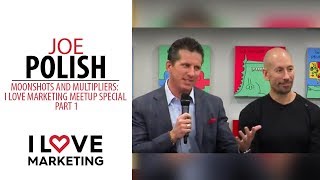
Joe Polish and Genius Network members share ambitious business goals. Polish is building compassionate addiction treatment programs. Nick Janicki's float-therapy company Truerest donated research to UCLA, while Kevin Donahue launched the Neural Performance Academy focused on concussion recovery.
Questions this video answers
24 locations open (speaker stated).
About 60 sold (speaker stated).
First-time client special: $59 (regular price stated as $79).
RedirectHealth.com
Approximately 240 employees (approaching 600 people covered total).
Chapters
I'm Dean Jackson.
He's Joe Polish.
And this is the I Love Marketing podcast.
At a recent I Love Marketing meetup.
In Tempe, Arizona, a group of Genius.
Network members shared their moonshots and multipliers.
Included in the mix is transforming the American healthcare industry, sports addiction recovery, and more.
If you would like access to the.
Full presentation, the show notes and the special resources for this episode, Please visit ilove marketing.com 314.
Welcome. Kevin, why don't you introduce this I Love Marketing meetup group?
We'll introduce this I Love Marketing group. This is the Phoenix, Arizona I Love Marketing group. How many years ago did we start this? I think five or six years ago.
You were at the very first meeting. That's awesome. I don't know if it was the first one, but it was definitely close.
Okay, well then yes.
And where's these mics here? So by the way, if we do questions and stuff, we have this. Who's going to be in charge of throwing this around? This is Darrel. And so basically I started doing the I Love Marketing podcast with Dean Jackson back in 2010. We have 300 and something episodes. I did my very first podcast in 2005 or 2006, when people didn't even know what podcasting was. Now, episode everyone and their brother has a podcast. How many of you in the room actually have a podcast? Okay. Handful.
Okay.
Now here's the cool thing about this particular one. Tis the season. Okay? So happy holidays to everyone. Everyone up on the panel here is a Genius Network member. And what makes them special is I'm able to knock out my bills and stuff because of these people. So they all invest between 25,000 to $100,000 a year. We've got 100k members sitting in there. Figure out who that is. And so what we're going to talk about today is moonshots and multipliers. And everyone is going to have an opportunity to share stuff. And so I'm going to just minimize the amount of time that I'm talking because I'm just as curious to hear what everyone here has to say as I hope all of you are. The goal behind these discussion groups for the meetup groups is simply to meet people, which is the same reason behind Genius Network to connect with other smart entrepreneurs and have discussions that will help inspire you and encourage you and give you some ideas and insights and maybe strategies, method, processes. But it's really about acquiring a mindset. And so what my hope is is that everyone walks out of here encouraged with not only the remainder of the year, but what you're going to do in 2018 and how you're going to utilize that to help and build and grow whatever your ambitions, you know, are what's exciting to you. And that's what everyone have to say. Now, Joel Weldon, who's truly one of the best speakers on the planet and who's also the guy that critiques all of the speakers, he emcees the annual events with me, is there anything you'd like to say to kind of set this off?
Because you're doing fine.
Are you sure?
Yes.
Have you thought about what you're going to get me for the holidays as a gift wise or anything? You put a lot of thought.
Yes, absolutely.
Okay, good.
So what I'm going to do first, let me make sure each person's going to go. We're going to have 14 people share for six minutes each. So this is going to be really tight. And I will tell you that we're going to do more of the meetup groups here at the office, especially once we have the downstairs designed. We're going to have live streaming with screens. It's going to be awesome. And basically that's, you know, we're going to. This is kind of like a setup. We haven't done one of these here in quite a while. And I'm. Hello, Victor. How are you, man? I've seen people I haven't seen in ages. So I'm going to read to you what I have as a moonshot because we handed out this book at our recent Genius Network annual event, the one we did in November. That was the event where we had Tony Robbins and Randy Zuckerberg and who here? Actually everyone was here. No, I'm just thinking who spoke? Joel, of course. So. And Naveen Jain, who's a billionaire, who I did a whole interview with him on moonshots, which is actually on the Facebook page if anyone wants to watch that. You know, the concept of moonshots comes from. I don't even know who originated. I mean, I guess you can say moonshot like was probably many centuries ago. Who's the first John? I mean, you've been around here for.
Yes.
You have socks older than me, right?
I think it was John F. Kenny.
John F. Kenny. Okay. But the thing is just any big goal that could impact tremendous amounts of people. So I'm going to read what I have in here. These books, we have extras. We're selling these and we're going to sell these books and the money will Go to one of the the genius recovery or artist for addicts. So here's my moonshot. Effectively treating addiction on all forms, chemical behavior, et cetera, and changing the global conversation around addiction. Because what I want to do is change the global conversation about how people view and treat addicts with compassion instead of judgment and find the best forms of treatment that have efficacy. Currently, most addicts are treated with judgment versus compassion. And so. And my best business decision, which was a multiplier, is learning direct response marketing, starting Genius Network and creating an environment where the best gift givers meet each other. And the addiction movement to help bring this very important issue into the space of Genius Network. To summarize, my best business decisions has been creating connections between people and their capabilities because I grew up as a very disconnected sort of individual and I actually used to do a lot of drugs and then it became behavior addictions later in life. And so now I'm using my marketing skills and my Genius Network to hopefully do something big about it. And it finds me in interesting places. I mean, I went to New York over on Friday and spent the day with a congressman who's organizing a presidential campaign. I will not say who that is. And then this morning I met with a very high profile celebrity and helping this person who's struggling with addiction challenges. So it's interesting where all of these marketing skills take you and really effective marketing is about connection. And I'm just. That's what's important to me. But every person in this room has something that's really important to you. And whatever that is, I hope all these people inspire you. So that being said, do you want to start Nick and we'll just, I mean, should we just go right into it?
Just moonshots, right?
Yeah, moonshots, multipliers, whatever you want to talk about.
So give everyone just a little background. So I have a company called Truest Floatspa. And originally our moonshot was to reach a million people with floating. So right now we have 24 locations open, we have 60 sold, and then we also provide float pods to the general wellness industry. So our concept originally was to reach that a million people and have those a million people not only get rid of pain, chronic pain, start realizing their greater potential as human beings and then make an impact in the world. So those a million people now can reach 10 million people or 100 million people. And so that was our original moonshot was just to reach that first million people. Now what I'm really trying to focus on is getting back to the basics. So through the Genius network. And I have to say thank you, Joe. I was able to really step away from my business. I actually hired a president to run my distribution company last year. So I'm out of the day to day ops. We've actually, we're in Joe's building. We've moved out of Joe's building. We kept the pod here. So that's your Christmas gift. There's the pod in the massage chair. I'll keep too, so.
Which is awesome.
Yes. So our entire operation has actually moved to Coronado in San Diego. So we're starting to do our annual events there. We're starting to do a lot of stuff there. And so what we're really trying to focus on, we've just donated a pod to UCLA for research. And we're really trying to distinguish what does happen when you're able to relax the human body. And so we know at a very base level that right now when we're talking we're very likely in a beta brainwave state. And so when you float, when you meditate, when you're lucid dreaming, you start moving into the theta brainwave state and that's when a lot of magical stuff starts happening. And, and so we literally call it the magic float. By the third or seventh float, you have this experience that's so deep and so personal that you know it's something you're going to take with you for the rest of your life. So really trying to figure out what is that interaction between the human being and relaxation. And this dovetails into the addiction, the recovery, you know, all that kind of stuff. So for me the moonshot is just really discovering what is it to be a human being and why is relaxation important and just reach as many people as possible.
I love it. And let me mention this too, most of the people here, I think almost every one of them, if there's anything that they say, just like you, everyone here has a company, a business, a product, a service that they offer that they sell. And if it resonates with you and you want more, I mean people come to Genius Network. I don't think anyone came here tonight because you just want to, you know, you got nothing else to do. Maybe you don't, maybe you're just bored shitless. And. But most people will come to something like this because they want a result. And in order to get a result you need capabilities. And so whatever capabilities these people have avail yourselves of it. If you want like for instance, you have locations here and there in the Phoenix area. Explain what they're our website is this.
Truerest.Com so we have six locations here in the valley and as I said, about 18 or so more, almost 20 more now across the country.
And so if someone wants to float, what does it cost and where?
So the cost in dollars is $79. For first time clients, we give them a special, which is 59. So in Tempe, we just started testing a sound lounge, which I think you've tried one super cool. Basically floating on sound with these sub audible ranges which is 5Hz to 20Hz. 20Hz is when you actually start hearing the sound. You literally are just put into this meditative state within about 10 minutes. Super awesome. So we just started that in Tempe. We're starting to do the chromotherapy, which is the salt inhalation therapy, which is very good for allergies and sinuses, things like that.
Yeah. So if you've never tried it, seriously, go try truerest.com super cold. There's one off of Shea. There's one here in tempe, which is McClintock and Warner. Yeah. So awesome. Thank you so much, Nick. Chris Smith. Campfire Effect.
Yeah.
So I have a company called the Campfire Effect where I manufacture and sell custom high end firewood. It's actually what my dad said when he's like, what do you sell firewood? Like Campfire Effect. You're gonna go do that for a career, like a living?
The jokes get better. This is the warm up.
Unfortunately, when they get to you, they don't. They actually get. Yeah, that's true.
I know how bad Jim's jokes are, so I'm really trying to set them up. So the Campfire Effect is a methodology that I created to teach entrepreneurs how to talk about what they do in a really powerful way. I believe that most entrepreneurs have a really amazing story to share with the world. And most of them aren't telling it in a way that's as powerful as it really is. And you know, my moonshot has to do with probably the biggest revelation that I've had in my business. You know, when I started the Campfire Effect, I had had some success in selling in different industries, traditional industries. And I thought it was all about how to tell your story more effectively. So that's what I did. For the first year and a half, people entrepreneurs would come to me in either one on one or group. I would teach them how to tell their story more effectively. And then what I started realizing is that over time I started having this thought I might be helping people tell the wrong story more effectively. So what if instead of just helping them tell their story more effectively, what if I help them really make sure that they're actually telling the right story? And I've just come to this belief that I believe that clarity creates power. Like, when you get really, really clear on who you are and what you stand for, you get really powerful. And I don't mean powers in force. I mean power as in you see yourself as someone that can go create anything you want in your life and your business. Like, power is like, I'm somebody that can make a difference. Like, I'm someone that matters, and my business can make a real difference in the world. And so what I started realizing is that instead of just helping people teach them how to tell their story more effectively, that we ought to really helping people get really clear on the stand they're taking in the world. Like, what do you really stand for? I don't know if any of you are entrepreneurs have ever experienced opportunity overwhelm, where it's like, there's so many things you could go do, like, what do you really go focus on and do? And that's where I found I could really make a difference for people is helping them really, like, take a stand, not. Not build a business based off the opportunities in front of you, but actually forget about the opportunities and get really clear on what you stand for and who you are and what you want to create in the world, and then only go after the opportunities that are most aligned with that. And it takes some faith, but there's never going to be a shortage of opportunities. So we should never let opportunities dictate what our brand and our story is. So for me, my moonshot is I want to set the world and entrepreneurs free to really go build a business that's really aligned with who they are and what they want to take a stand for, not what the best opportunity is. And then the second part of that is once we're really clear on what you want to take a stand for, then, yeah, we can teach you how to talk about it. So my moonshot is I believe I've stumbled on something, you know, for the first time with this idea of clarity that, you know, I. I don't. I believe there's not anyone that I can't help. And for me, it's like, how do I scale that? I've never run a Facebook ad. I've never done digital marketing. I. I grew up in a ranching rodeo family. I still rodeo and team rope so I'm a little bit like old school. So people ask me, like, what do you do when your pipeline's getting low? And I said, I don't. I just start calling people and get on Facebook messenger and drum up business. So for me, I know that a real big opportunity is digital marketing. So a big moonshot for me in 2018 is for the first time, I'm really setting things in place to reach a lot more people than I've ever reached and reshooting our online course and just want people to come and attend our two and a half day workshops that we put on.
And where do people find out about you?
The campfirefleck.com yeah.
Awesome. Awesome. Thank you.
Thank you.
Mr. Joel Weldon?
Yes, I'm Joel Weldon and I have a question for you. How many of you feel that you are unique, that you have unique and other people say you're different than that. How many fit into that category? Well, you should be because you are unique. There's no one else like you. And that was one thing that I discovered early on. I always felt that I was different, that I didn't fit in with other groups or other people. And I realized that everybody feels that way. And I'm the resident old person in Genius Network. That's why they have me around. But I'm 76 and I'm more excited about what I'm doing for the last 40, going on 44 years doing the same thing as a professional speaker and speaking skills coach. But since meeting Joe, everything has changed to a different level. And we didn't really define Moonshots as it was presented by Naveen James, but Jane. But he basically said, what can you do that would impact a billion people, change the world? And when I hear something like that, I wrote in that book, if you read my part, and I asked Gina, why do you want me here? Because you read what I wrote and it's exactly the opposite of everybody else. And that's what I learned many years ago. Find out what everybody else is doing and don't do it. And Earl Nightingale is a name that many of you don't know. But he was the developer of the personal improvement industry. Recorded a message called the Strangest Secret. How many have ever heard the name Earl Nightingale? Well, quite a few of you have and you should, if you haven't, just go on Google and put the Strangest Secret by Earl Nightingale. It's the most listened to audio message ever recorded. Still is today. And I got to know Earl. He moved here for the Last three years of his life. We were going out of a restaurant, and there were two doors, and everybody was waiting to get out the door. And he turned to me, he said, joel, you know, half the world is waiting behind that one door, and there's nobody in the other door. Why don't you just find out what everybody else is doing and don't do it. Let's go through this door. And we just walked out the door, and all these people are standing, waiting to go through the one door that was open. And they both did open. And I never forgot that lesson that if you feel different, then you shouldn't try to do what everybody else is doing. So my moonshot is not a moonshot. It's not to change the world. It's not to affect a billion people. It's to work with a few people and develop a better relationship. And that's been part of our core values. My wife and I have been married 54 years, and I've had the same career for 44 years and have lived in the same Scottsdale home for 47 years. And our value system is the word improvement. One word. I want to improve everything. I've improved our home by making seven additions. So if you think of your own life, if you feel different than everybody else, some people change and some people improve. And here's a great way to think about it. 51% rule. If 51% is positive in any decision you're going to make, then you improve it. So if you live in a home that you love, but there's a lot of things wrong with it, but 51% is positive, then improve the part that isn't. If you're in a relationship with somebody and it's not at least 51% positive, then get out. But if it's 60% positive, then work on the 40. So we have decided not to change, but improve. So when I was invited by a friend to meet this man, I said, no, I don't want to meet that man.
And the reason was, I've heard that before.
I looked at his website. He was a marketing guy. And I had been a professional, professional speaker. Never marketed, never advertised, never promoted, just did a good job. Either they'd hire me again or tell me, tell somebody else about me. And we've had a wonderful business for decades. Why would I want to market? I don't even know what marketing is. But then I met him, and I met him in this room four years ago. And my life changed in a way that I never would have imagined. How much improvement has happened since I met you? A complete change in my thinking about things. Not that I do market, but I understand it better. And I'm able to help people by understanding the things that Genius Network has taught me about values and about business and about marketing and meeting young people like Nick and Chris and this very young man named Jim do coming up next has just been such an amazing experience. Being around people who acknowledge they are different and have found a place where different people can meet and feel comfortable. And when I asked you that in the beginning, how many of you feel like you're different? And everybody raised their hand and you are. So why would you try to be like anybody else is find out who you are. So when I coach all of these members in their speaking, it's not about using your hands, your voice. It's about being you. How can you be you and get your message across by being authentic and real. And that's what I love about Joe is Joe is Joe. I mean, what you hear on I love marketing. What you're seeing here tonight is always the same. I've never seen you any different in any environment, on any program. It's always congruent. And that's what will make you successful, is finding out what you have and how can you use that to help other people. And I know some of you are in the health and fitness and wellness business. Others of you are in the coaching or training business. Dave is in the health business. Jim is in the financial services business. You're in the health business. Nick, that. How do you take that passion and transfer it to others? And the first thing is you need to be clear about it yourself. And that's what you said, helping them find their real message. So my thought for you, my moonshot for you would be, is to really start 2018 by getting a very clear picture of who you are and accepting that and that there's no one else like you. We know that our fingerprints and our eye prints are unique. There's nothing like that. So don't try to be somebody else. Learn from them, but keep that personal moonshot that you have in you.
Yours.
I like what I'm. Thank you. So Joel has been instrumental in helping some people with their messaging and their speaking careers. And he's phenomenal. And if you want to either learn through the courses he's created or work with Joel personally. How does one do that?
Well, it looks like there's enough success comes in cans over there that has been or corporate business.
Let me go grab one of Those for you, and you can explain it.
And I created that here in 1974 based on that same thing. I wanted a business card, but I knew that I couldn't have a business card that was two and a half by three and a half, because that's what all business cards were like. So I. I always thought that our attitude made a difference. So the can says success comes in cans, not in cannots. And the ingredients on the back are commitment, courage, goals, faith, imagination, creativity, honesty, persistence, knowledge, defined values, focused thinking, a sense of humor, and a positive I can. Attitude. So that has my phone number and contact question.
It's a very important question.
Oh, it's in the can.
Baked beans.
Yes. That's what I tell you. Let me read it again. What's in the can? That's what's in the. You don't want to open that can.
You.
Oh, no. Boom, it goes. It's so powerful.
It's fairy dust. It's success. Success. No, this is great. And I love that because I never heard Joel ever tell anyone what's in the can, other than what it says on the label, which is commitment, courage, faith, goal. That's.
Yeah.
So we'll give one of these to.
Everyone if they want to take one.
Yeah, if you want one, they're great, actually. And it's a good reminder. And. Yeah. And you could probably kill people with this. And it might be filled with cocaine. I mean, you never know. But it's. It's success.
See how authentic he is? It's always the same.
Awesome.
So this is great. In all seriousness, I have a great interview with Joel on I love marketing. Also. If you've not heard that, please go ahead and listen to it. And. Yeah, thank you, sir. Mr. Jim do, who's actually been my financial advisor for how many years now have we been doing this?
20 years.
Too long.
I've known you for 20 years, but yeah, it's almost close to 20. Yeah, close to 20. Not lost my money yet, so that's good.
And by the way, the 51% rule, you learn something from everyone in the group, and that's a great rule. The 51%, Joel. And by the way, our friendship is about 51%, so we can stay friends for the time being. So, Joe, I've known, as he said, for about 20 years. And I remember when I met Joe, he had a ponytail. Did anyone know Joe when he had a ponytail? Long time ago. Right. And first time I met him, he gave me a magazine with his picture on the front, and it was A carpet cleaning magazine. And I just remember thinking, what kind of narcissist passes out a magazine with his picture on it?
As everyone has a magazine with.
So some things never change.
My team put that out. I just. Now I delegate my narcissism.
Right, right.
It every pays in between.
But so Joe and I started working together and I remember when he first got the idea about Genius Network and he, he had done the carpet cleaning thing and he had helped people do very well in that area. And he decided he wanted. What he really wanted to do in life was help connect people and create a group of the smartest people on the planet to share ideas and to make friendships and to help each other and to make connections. And I remember Joe said he was going to charge $25,000 a person, which I thought, that sounds like a good idea, Joe. You'll get like nobody. And his idea. You thought, what did you say, 20 or 25?
You thought 20 originally.
20 people originally. And you can do the math on that. And I thought that's, that's a good little, you know, income stream. And today how many are in, how many are at Genius Network now?
Close to 300.
300. So you can do that.
We got 25 in the 100k group too.
25 in the 100k group. So damn, you're doing pretty well, you know. Yeah. Wow. Golly. Pretty nice. So at any rate, and I joined Genius Network originally something like eight years ago and was in it for a year. And at the time I didn't feel like I belonged. And because most of the members were digital marketers, I remember there was like a four hour conversation on direct mail and I just remember thinking, I don't do any direct mail. I don't really feel like I fit in. And then I joined again about three years ago and really felt like I found my home. Like, I felt like all these folks up here are just outstanding human beings and really smart and fun to be around and have these aspirations that help me think bigger and have more of a growth mindset, which is one of my tips today, is your mindset is everything. And having a growth mindset and thinking that you can accomplish all these things that other people don't think you can accomplish over a period of time, I think that's a huge advantage in the entrepreneur space. So thinking about, not that it's going to get next year, the quote Joe likes to say, which I guess is attributed to Bill Gates, that people overestimate what they can do in a year and underestimate what they can do in 10 years. But having that growth mindset, thinking of it as growing and learning, getting better, that will eventually get you to places that you may not even understand or believe at this point. But these folks up here help me believe what I'm capable of. And that's been a great experience for me. So I have a wealth management firm, as Joe kind of said, a couple of my biggest or greatest financial decisions or just decisions in my life for business about 18 years ago, thanks to my wife, Mimi, who's sitting in the audience, who now just joined. She's a Genius Network member as well. We've been married a measly 25 years. So I know Joel kind of Joel's like, 25 years, get it together. But anyway, so it was her idea for us to leave the big financial firms and to form our own independent fiduciary firm. 18 years ago. Now, that was the best decision I've ever made financially, I should say business, business wise. And the second best decision I made in my business was joining Genius Network. Really. I've had so many incredible moments and friendships and relationships. And one thing that also Joe, I don't want to give him too much because he's already difficult to deal with with his ego, but if I compliment him too much, it's just going to get worse. But one thing that Joe has said over and over is if you know what you want to do, just find out. Find who knows how to do it and pay that person, hire that person. And I've done that with the group. I probably hired at least half a dozen people from the group to do work for me. And that's propelled me forward. And getting over that, that we have to figure it out ourselves. Because as entrepreneurs, sometimes it's easy. I got to figure it out because no one's going to figure it out as well as I'm going to figure it out. But if you can meet someone who knows how to do what you're trying to do and you can just hire them, that's an instant win. I mean, then you leap ahead and go much higher. So we work with entrepreneurs. That's what we specialize in. And I'd say one of our competitive advantages is really understanding how the entrepreneur thinks. And because we're entrepreneurs ourselves, it's easier. One thing I would say that would help you and your business is no matter what your business, it's really critical to not just give lip service to this, but think about how your customer or clients or whomever is going to Buy your stuff, how they really see what you're providing, how they see what your problem you're trying to solve and their other buying options and the buying process, how they would work with you by really trying to put yourself in your customer's shoes and really think from their perspective, it will change how you run your business. And that's really the key. Right. If you can win the hearts and minds of the people you're trying to sell to, then that's where you're going to have huge success in your business. So my moonshot is kind of helping entrepreneurs reach their moonshot, because about two thirds of my clientele want to make a dent in the universe. They want to do something that's lasting. They want to impact a billion people. And we just help with their wealth and making sure they make really smart decisions in how they structure things and how they create those opportunities for themselves and their family. I learned myself as I started making more money as an entrepreneur. I realized all the financial stuff I had learned in my life and through being certified in virtually every designation you could get in my industry, that a lot of that advice is not really for entrepreneurs. That advice is for the general public. And when I started making so much money that I was looking at my tax return and thinking, what in the heck is going on? And then went to my cpa, who I'd been with for many years, and. And said, hey, what can we do about my tax return? And he said, well, you could buy a bigger house and get more of an interest deduction. You could. You know, he had these ideas that I just thought, these are not really ideas that are going to springboard me to a new level. And so I started doing a lot of research, and I found that today, due to technology, there are strategies that have been used by billionaires and their family offices for decades that are now available to entrepreneurs. Oh, we're done. Okay. All right. So anyway, there are a lot of ideas out there that can help you guys, and thank you very much.
Thank you. Let me also say, very important distinction, especially for new entrepreneurs, or ones that have metaphorically been kicked in the nuts so many times they still haven't gotten it, is that there's a huge difference between making money and managing money. And I know a lot of people that have had millions of dollars come through their hands that cannot keep any of it. And I know others that have not. You know, they literally make less than 100 grand a year, and they have just managed to manage it and have stockpiled some cash and one thing that I always did early on with a lot of Jim's help is every month, you know, just put a little bit of money away. And there was a time where we had a huge hit, and we literally. I had to reach in the savings just to keep all of my team employed and everything. I had a CEO many years ago that made a decision that cost me $2.5 million in losses. I've had embezzlement. There's been all kinds of stuff. And being able to weather a lot of very difficult storms because, you know, in any sort of situation, if I do a big event as an example, people come to the event. Everyone does the arithmetic, but no one does the subtraction. And they're like, oh, they count all the bodies. Here's how much money Joe's making. Not realizing this shit is not free. You know, I mean, like, teams and buildings and speakers and video crews. I mean, it's not like this shit's, like, free. So overhead, taxes, you know, all this sort of. All these little things. And so knowing having an expert help you navigate that is really, really important. And if you have enough money to solve the problem, you don't have a problem. You know, that's what it says up on that green picture up there. And that's a Dan Sullivan quote. So I like cutting checks to things that if I cut a check, it solves that problem. Those are the best problems to have. However, you know, making money, you can learn a lot of marketing, a lot of conversion, but once it comes in, how you handle that is just as important, if not more important, because the real goal is don't lose money. You know, just don't lose money. And a lot of people do.
Yeah.
Do wealth.com.
Yeah. Do wealth.com.
D E W like Mountain Dew. Do wealth.com. don't we have a video or an interview online, too? I think we do, yeah. If you just type in Joe Polish. Jim do. You can. Great stuff. So thank you, Mr. Kevin Donahue. The Kevin Donahue. More cowbell.
More cowbell.
Yeah.
So I. The idea of a moonshot, to me is it's playing in the world of transformation. It's playing in the world of miracles. When you decide to shoot for the moon, all kinds of things have to happen. You have to think differently. You have to think more strategically. You start to. Something happens with your creativity. Anyone hear what I'm talking about? Everyone? To step out into the miracle of life when you don't know what you're doing and you see all kinds of things happen, like resources show up, things that come out of you that you've never seen before. Do you know what I'm. Anyone track with me? Okay, great. So I got two moonshots I'm going to share with you. I'm passionate about both of them. One, I started a business called Neural Performance Academy. The moonshot here is to transform sports as we know it, leveraging the brain. So right now, a guy signs a major league contract, he's given, you know, a physical therapist, nutrition coach, a stretch coach, a massage therapist, and no one's looking at the brain. Right. So what I've done over the last couple years, I've partnered with the top functional neurologists in the world. And we've been in beta testing this past year. I was the first experiment. We've had about five other people go through the programs. Anyone familiar with the $6 million man or bionic man? Yeah, kind of like that. Faster, stronger, smarter, better. And so, so that's what we're building. And we want to see how we can transform sports and people's performance and memory. And what's interesting about this opportunity, it came actually out of sort of a tragedy I had in my life. I was in a motorcycle accident down in Ecuador about, I guess five years ago now. Four and a half, almost five years ago. Exactly. And I had a concussion, a mild traumatic brain injury. Didn't know it at the time, came back and you remember we got on the phone with Brenda Burchard and all these different folks and we realized I had a brain injury and I spiraled. I wrote a book called Concussion transformation. So if anyone here, go to concussiontransformation.com It's a free book. It's like a 30, 40 page book. The number one cause of concussions of car accidents, number two are falls, three is sports related, four is domestic violence, and five is battle time injuries. I really got moved because 22 soldiers a day kill themselves. Right. And that doesn't count anyone else who has committed suicide due to some sort of traumatic brain injury or ptsd. So I wrote this book and then what happened was in my own recovery was I got to spend time with some of the top functional neurologists in the world, observing them, getting trained by them. And then what I realized was, wow, there's something here that we can leverage within the brain to transform sports. So right now we're focusing on two sports. One is major league baseball and the other is polo, of all things. This is one of those things, one of those resources just Popped up out of the blue that all of a sudden polo, where these guys suffer brain injuries, but also is a very high dollar value sport. And the bigger moonshot within this is right now, this modality, this type of healing practice, it's very rare and very expensive to get into. What we want to do is show an ROI for baseball players. Like what would it be worth to you to get two more years out of your life in the league? What's that worth to you? Millions of dollars? Potentially the difference between major league and minor league is nanoseconds and millimeters. But the bigger picture here is to build these facilities around the country and potentially around the globe so we can also help some of the people who are suffering brain injuries and brain damage. That's who these folks work with now, people with concussions and mild traumatic brain injury as well as brain damage. To give you an example, there's a five year old boy who was at my session and he had fallen to a swimming pool. His grandfather was watching, wasn't paying attention, went in the back, fell in the swimming pool, face down, went into a coma. Was in a coma for two or three weeks. Came out of a coma. The doctor said, ma' am, to the mother, your son's brain damaged. This is the way he's going to be the rest of his life. Completely hopeless. Took him to another specialist, specialist said the same thing, took him to the doctors I partnered with. And these docs said, yes, your son's brain damage, let's activate neuroplasticity to get him back to a better and higher quality of life. And these guys work miracles. So that's the bigger moonshot for that. So it's transforming sports and then making this medical practice available for those who can't afford it. So if we get the high dollar here, well, we can actually make it more publicly available for folks. The other thing that I'll share with you, I just got back from Nicaragua and there's two young ladies here who were on our trip. I started a business a while back called Surf and Serve and it's, it's a four benefit business and we go down to Nicaragua and we build homes and feed families. There's two things that happen here that are transformational. One is it gets people out of our comfort zone. Entrepreneurs, we bring very successful people on this trip and it puts them face to face with poverty. I mean the kind of poverty where people aren't eating. And I've always said like one of the greatest acts of humanness that we can do is give someone who's hungry food, give them shelter. And so we just built three homes, fed 150 families, fed 600 kids over three days, had two pinatas, and really were answered prayers. I was involved with the group down in when I lived in Costa Rica, it was a church group. And what I saw was a lot of these mission trips and church trips. They were great, but I saw religion getting in the way for people participating in them. I said, what the hell? I said, I'm going to pull this out of the religious context and make it part mastermind, part mission trip, part yoga retreat, part adventure travel. And so we were just down there and we hiked up volcanoes and surfed down volcanoes and Jennifer taught yoga in the morning. But the moonshot here is this is a very impoverished community. It's probably the poorest neighborhood in this hemisphere, next to maybe some in Haiti. It's really, really bad. So our moonshot is to transform that neighborhood. We're going to build 10 houses next year. We're committed to that. And we're committed to building a vocational center and we want to transform the economy there. The reason I bring entrepreneurs, the reason I joined masterminds groups, is so I can put myself around people who think bigger than me. My thinking can only get so far. I'm really great. I'm the best in the world at what I do, but other people are way better than me at what they do. So we bring different people down to this community and all of a sudden, who knows what happens? We can actually create economy in this, this neighborhood. So that's my other moonshot. That one's sort of a personal passion project that I just love. And you guys are welcome to come @surf and serve.com. check it out. We usually go around the Thanksgiving holiday and what you walk away with there is not only a transformed life, that how you perceive yourself and your own generosity, but also the group of people you meet. So, Nicole, would you agree, like the people you serve side by side with. It's different, isn't it? Yeah, I mean, it's. It's. Yeah. So I mean, it's that piece, but it's also you walk away with connections and community like you, otherwise you wouldn't have. So two moonshots might as well take two, right? One is transform sports and functionality as a business. And then two is transform this community called Tippy Toppa down in Nicaragua.
So awesome. Thank you.
So my name is David Berg. I'm the owner, founder of Redirect Health here in Phoenix. And We've got our businesses spread now to all over the country in about three years. But before I jump into my moonshot, I just want to set the stage a little bit, the context a little bit. And I've got two people right here who are deeply involved in the moonshot that I'm going to share with you. Mike Bechtel, who's been working with me for about five years, and my wife Janice, been working with me for about 30 years coming up. And my daughter's there, too. She doesn't know it, but there's going to be any inheritance. This moonshot better work. Let me just set the tone just a little bit. The context. So if anybody has had a great experience with the healthcare system, meaning it's easy, it's truly affordable in the last month, and you got great value, just raise your hand, show us. Nice. You're only the redirect health members. I did not anticipate that, but I like it. So thank you for that because usually when I ask that question, I'm sorely disappointed from this perspective. That's my industry. And it's more of a testament to how bad my industry is doing for America right now. And I know it's hard for you. I know it's not affordable. And even if it is, you know you're getting ripped off. Even if you can afford it, you know, it's not a good deal. But I want to take you to most Americans. I mean, I'm not going to ask you guys this question, but I can't tell how many times people start talking about health care and what should happen, this and that, and it's just these people, not those people. And I'll say, well, what do you think we should do? And they'll tell me. I go, well, who people you're talking about. And it's always, well, the average American. The average American. And you probably sometimes thought you were the average Americans. But let me just give you a little context around that. 51% of American workers make $15 an hour or less. 51%, 38% make $10 an hour or less. Those probably aren't our friends, not probably, not the people we hang out with because they don't have extra time. They don't have an extra two hours to sit around here, listen to Joe and Jim go over his time, right?
Should have gonged him, he was over too, right?
So 51% of American workers make $15 an hour or less. But now here's another one. 51% of American families age 20 to 40 that working age have savings, family savings of $480 or less. That's a high number. So think about a second. As much as healthcare is not easy and affordable for you, these people are being asked to spend, what, 6,000, 4,000, $10,000 for the insurance for their family. It ain't gonna happen. It just can't happen. And even if our employers were silly enough to give it to them, do you think they have $6,000 to meet the deductible or the 25 bucks for the appointment or the ability to take three hours off work and miss that paycheck? They don't. So I just want to set that context for the moonshot I'm going to share with you. We are not the average Americans from that perspective anyway. And healthcare right now doesn't work in this country. And it didn't work for my business either. And I created a healthcare strategy with my wife 11 years ago, but we created it not to provide healthcare. We created it to help our people in our business and our families in our business. And that's why it works so well, I believe. We never thought about monetizing or commercializing it, or matter of fact, we kept it a secret for two years because I had an incredible competitive advantage over the marketplace in a tight labor market where I knew how to control health care costs and provide great health care. But to. So let me share the moonshot with you. I see a day when any American company who wants to. I'm really not that interested in the ones that don't. Right now, I'm having my mind. I'm having trouble getting my mind around convincing people or companies that don't care so much about it. But any American company wants to. I want health care to work so well for them so inexpensively that they would provide it for free to all their employees and their families. But they wouldn't do it just to be good guys. That wouldn't quite work for me. I know that'll be a part of it, but I want them to do it because of the free market competitive advantage it gives their business. That's why I want them to do it. And here's the truth. Any business in America could do it right now. There is a structure. There are other businesses doing it right now, but they're fragmented and they don't have a voice. Which is the main reason. The number one reason that I joined Genius Network is I felt that was the biggest hole in my business knowledge was knowing how to communicate this incredible value and the impact that it would make and I knew I needed to to learn how to communicate it better. So I see a day when any American company wants who can provide healthcare so well, so efficiently, so inexpensive, they want to give it for free to their employees and their families and they gain incredible competitive advantage. And we're seeing companies right now that pay for the cost of their health care is more than paid for by their savings and turnover costs and recruiting costs. And in the construction industry, workers comp costs just get obliterated and that pays.
For all of it.
And in our own company, we are approximately 240 employees today, approaching 600 total people we provide free health care for with no co pays, no deductible, no premiums just by following some just basic strategies that avoid waste and unnecessary administration, the cost of those things and capture the efficiencies that are pretty hard to get in the system today, but are definitely possible. And we spend less money today than we spent in 2002. So what you're hearing on TV about health care getting more expensive is not true. It's just simply not true. The administration, the unnecessary administration, the waste, the unnecessary services, the public company shareholder returns, all the things you want to add to the bureaucracy are getting much more expensive. But the actual cost of health care today is the same as we paid in 2007. Matter of fact, it's less in many spots. So that's my moonshot is that any American business will, who wants to will do that. And can you just imagine a little further what this would mean to America if we did not have to add the cost of health care, which is about 20% to every car, every service. Imagine what you'd be like in the global economy. I mean it would just secure our dominance. And I believe that America, when it's healthy and doing well, does a lot of great things in the world. And right now we might be struggling a little bit, but I see this as this is a pathway to that and we've got the ability to do it right now.
Awesome. Thank you. How do people get signed up? Explore it.
RedirectHealth.com is the easiest way. And Mike Bethg's in the back and he's probably the only person remember to bring cards if he didn't. Oh Mike.
Awesome.
Powerful.
Yeah.
So the guys up here, the reasons I just joined the Genius Network, I've been a network member for like a month. I attended the conference November here in Scottsdale. And it's life changing. When you look at the members of the Genius Network it's the who's who of entrepreneurs out there. Be coaches or web people. It would blow you away to meet these people and not pretentious, go up and talk to them just like these guys up here. And it's just been a joy to be a part of it so far. One of the members, a guy by the name of Dan Sullivan, changed my Life back in 2004. He was way ahead of his time. I'm also from the financial services arena and what these guys said about managing the money, once you get it, really important. Dan Sullivan spoke at a million dollar roundtable meeting in anaheim back in 2004. They wouldn't let him go during the day sessions. Like had a special night session that went from 7 to 11 at night. He changed the life insurance world and I come from that world and I'm very, very passionate about life insurance. He disrupted that industry so much, they banned him from ever coming back for 10 years. And so having a passion for life insurance. Has anyone ever went through that process of buying life insurance before? I mean, it is agonizing. It's unreal. So my moonshot, with the power of the Internet and with what we have with AI and other things, I want to change that whole experience. And it's probably one of the most confusing financial products in the world. It's been around forever. But the insurance companies do a good job of keeping it confused for the consumer. So what I want to do, I want to have a platform via the Internet. And that's another reason for being part of this network has become the best Internet minds or I think part of the genius network. So if we can get that to the buying public and like you said, that 51%, there are so many families out there that are unprotected that just for a few hundred dollars they could, you know, they could buy tons of life insurance, protect their family. But on the other side of that, we work with very wealthy families that have the ability to use life insurance in an incredible way in a nonprofit space that they can do so much for communities, hospitals, universities, just because there's a lot of power and a lot of leverage that you can get from life insurance. But most people have no clue because it's so darn confusing. So that's my moonshot is to try to change that paradigm and help many people that need it, that just don't understand or have the time to go through that process and also help families in the advanced marketing side of advanced structures. Because I'm very blessed in that I hang around guys and gals in the insurance world that have the brightest minds when it comes to life insurance. And I know we can do something better than what's happening today.
Awesome.
Thank you. Thank you.
More from Joe

This FBI Trick Can Command Respect Without Saying a Word ft. JEFFERSON FISHER & CHRIS VOSS

How To Stand Out, Be Different, and Create Raving Fans, Customers, and Employees ft. Jesse Cole



90% Of Businesses Fail In Their First Year, Here's Why! ft. Dr. Benjamin Hard & Dr. Robert Cialdini

The 1 Piece of Business Advice I Got From Elon Musk That Changed Everything Ft. Kamal Ravikant

The 6 Traits You CAN'T Teach in Entrepreneurship ft. Richard Branson & Gino Wickman

The Leg Method: How to Make Your Book into a Million-Dollar Asset ft. Anna David


7 Millionaire Mindset Hacks for Daily Success and Wealth ft. Brian Tracy & Dan Sullivan
