Politicians Are WRONG About Fossil Fuels And Energy...Here's Why | Feat. Alex Epstein
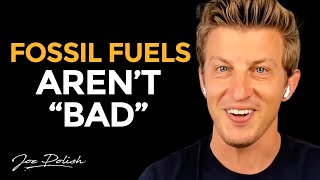
This YouTube interview (Joe Polish with Alex Epstein, May 10, 2024) presents Epstein's defense of fossil fuels and critique of mainstream environmental messaging. Epstein defines "fossil fuels" as hydrocarbon energy from ancient organic matter, emphasizes their advantages (high energy density, natural storage, concentration, affordability, versatility, and scalability), and argues that their benefits for human flourishing and climate resilience are routinely ignored. He attributes modern anti-fossil narratives to a ‘‘delicate nurturer’’ framing rooted in primitive religion and 20th-century political movements, and describes his strategy (Energy Talking Points / Fossil Future) to reframe debate and supply plug-and-play messaging and policy to politicians. The transcript includes several specific empirical claims used as talking points.
Questions this video answers
$200 trillion (claimed by Epstein citing a website figure).
98% decline in climate-related disaster deaths (claimed by Epstein).
About 3 billion people (claimed by Epstein).
About 300 new coal plants (claimed by Epstein).
About one foot per century currently; extreme projections up to three feet per century (claimed by Epstein).
Chapters
This is why, like Elon and I have an interesting kind of relationship. And he'll say, you know, hey, my batteries can power the world. I'm like, okay, I just went to your website and to store one day of energy is $200 trillion. But fossil fuels naturally store energy. So this is one of the big things about them. Nature storing energy means that we don't have to do it for ourselves. Even pro freedom politicians, I thought were terrible on energy, as in, I thought they were terrible at talking about it and I thought they were terrible at making policy about it. If you want the best messaging and policy in the I will help you. If you want to meet a bunch of billionaires to contribute, I will not help you.
Before we get into it fully, what are you really all about and what is it that you're trying to do? And then I'm going to ask you some different questions related to a few different topics.
It's a nice, simple first question. I think there's a couple perspectives about it. So I'd say as an individual, I'm trying to enjoy my life, which I think is an important thing. And I don't hide that and apologize for it. I mean, I think of it as a. I want my life to be an enduring and enjoyable experience and I think everyone should want that. And I think one of the truths that has been made apparent, particularly by the industrial revolution, this also relates to fossil fuels, is that it's theoretically possible for that to be true for everyone. So it used to be the case, if you think about pre industrial times when human beings were not very productive. And to kind of the point of a lot of my work, we hadn't yet figured out how to get machines to be our servants. It seemed like a very scarce world where if you wanted your life to be any kind of enduring, enjoyable experience that had to come at the expense of others. So others had to be sacrificed. And you see that people who wanted a better life, one path they often took was some sort of exploitation, you know, which could be sort of as bad as slavery, but could also be things in between. But because we can get machines to do our work for us, we can. That's one big reason why we can have mutually beneficial relationships. So I often see when people think like, oh, I'm gonna sort of make myself miserable so that everyone else is happy, why I don't see why you need to do that. So I feel like I'm having a very big positive impact on the world, but I also want a big positive impact on me. So that's my own personal thing. And that is a filter by which I choose to do things. I try to increasingly only do things that I really like to do and that I find meaningful. And there's a lot of other things, other people to do, so I would say. But specifically I think of it as, I think of myself as an intellectual inventor. So I invent things in the realm of ideas. So ideas are abstractions that shape how we think and how we live. And I think that I have an ability to identify ones of those that are really good for life. Now I think I've mostly done it publicly in the realm of energy. So I think I have some ideas that I've come up with there. Some of them are kind of business ideas, some are in the realm of personal development. But I really like creating those, discovering those, making them into working systems and then spreading them around.
Okay, so fossil futures, the word fossil and fossil fuels. I want to ask you to define that. That is probably a very basic question for you, but I think there's a lot of people that don't really understand it. That's the first part. Secondly, fossil fuels have been vilified. They are, when you even, I think a lot of people, when they hear that, immediately associate you with bad person. You want to destroy the environment, exploit animal, like everything. And it's really interesting the level of propaganda that has vilified something that has advanced humanity in so many great ways of which you describe and you personally, you're the smartest guy on energy that I personally know your energy talking points. As an example, he's created this platform to help people talk about energy. So this anti environment, pro environment, there's all these things that get very confused in the vilification of, of how people view and talk about fossil fuels. There's a lot of agendas on it. So could you describe fossil. What does that even mean and why the vilification of it?
So the term fossil fuels is an imperfect term, although I don't, it's not the worst term. So there are some terms that are so irredeemably, I think, dishonest that I just won't use them. Like, there's actually a lot of terms that I don't use. I mean, we could even talk about like, I don't use the term renewable energy. I don't think it's an honest term. I don't use the term sustainability. So a lot of terms that people think are amazing or everyone wants to use, I actually don't use the term the environment, we could talk about that. I think there's a lot of terms that are confusing. So the issue with fossil fuels is it implies sort of oldness, which is true in a sense and not true in a sense, but. So the way you could think of it is the plausibility of fossil fuels as a term is it is. It's basically hydrocarbon energy coming from ancient dead plants. And I'll break that down, but so hydrocarbon energy is basically energy that comes from the breaking apart of hydrogen and carbon atoms. So you have different kinds of molecules with hydrogen and carbon atoms. Basically you can think of it as natural gas has more hydrogen relative to carbon, and then coal has more carbon relative to hydrogen, and oil is in the middle. And this actually explains when we talk about CO2 emissions, because when we burn fossil fuels. So these hydrocarbons store a lot of energy in a relatively small space, which is one of the big advantages of them. So they store it, which is a big deal because it turns out it's really expensive for us to store energy. So if we want. This is why Elon and I have an interesting kind of relationship. And he'll say, hey, my batteries can power the world. I'm like, okay, I just went to your website and to store one day of energy is $200 trillion. So that's a lot of money, right? But fossil fuels naturally store energy. So this is one of the big things about them. Nature storing energy means that we don't have to do it for ourselves. And then it's concentrated. Concentrated is a huge value in anything economically, particularly anything involving mob, because whenever you're mobile, you have to carry the energy with you. So the smaller it is, the less it weighs, the more beneficial it is. So it's this hydrocarbon based energy that it stores this energy in a small space, we burn it, and what happens is we release energy from it. The hydrogen bonds to oxygen becomes water, and then the carbon bonds to oxygen becomes CO2, which is a greenhouse gas. So one of the effects of that is CO2 accumulates in the atmosphere over time and that has a warming impact on the planet, which we talk about. The magnitude of that and how good is that, how bad is that, how offset is that by other things? But it's important for people to just understand the basic physics of what's going on. At the same time, these hydrocarbon molecules come from ancient dead life. So this has a number of important implications. So it's not dinosaurs, but it's things like past ocean life, sometimes past land Life, particularly for coal. And one implication of this is, well, it's finite. They call it nonrenewable, but the way you can think of it is basically it's renewable, so to speak, in the sense of nature is forming it all the time, but we use it much more quickly than nature forms it. And so this leads to the concern of are we going to run out of it in some near term. Now it turns out there's more than 10 times more oil, coal and natural gas underground than we've used in the entire history of civilization. So it's really just a question of technology, do we have the efficient technology? But it is important. This is one reason why people are concerned about it, because it can't be done infinitely, so to speak, at least with current technology, if we can synthesize it ourselves, that's a different kind of thing. The other thing that's related to the fossil ancient dead life is more standard pollution. Because if it comes from ancient dead plants, plants have things in them like sulfur, like nitrogen. And when you burn a fossil fuel, particularly if you don't do enough to purify it, that stuff can accumulate in the atmosphere as well. So you can have like sulfur dioxide, you can have smog, can have different kinds of particulate. And so I think it's just really important for people to understand what we're doing is we have this sort of incredible natural store of energy that we'll talk about has huge benefits to it. But then because of. But then it has this kind of finite characteristic that people are concerned about longevity. It has this CO2 emission characteristic that people are concerned about climate. And then it has sort of this plant origin thing where people are concerned about more standard pollution. So it's one of these things that's a little bit tricky to think about. And it's sort of understandable why people will only focus on one thing or another or why they might misunderstand it. But my big theme is I don't think people are thinking objectively about its relative benefits and side effects. I think they tend to only focus on negative side effects and then wildly exaggerate those.
Well, I think people, if you say it from that standpoint, focus on the negative side effects. It's because of all the messaging towards it. So how has this messaging and this vilification created such a misunderstanding of it? Because I think in a lot of ways when I look to you, it's to clarify something that seems to be real, like the planets being just the planet, you know, like that term, the Planet, who's going to defend the planet? Well, if you say I'm anti planet, you're sound. Oh, you're this horrible human being that just wants to destroy. And you talk about human flourishing. What are the. So I guess my question is if you could change anything to get people to get a deeper understanding, other than you do that through your work, energy, talking points, your books, your speeches, you debate. I mean, I've seen you put yourself in the line of fire continuously just to try to educate people. So if you could really change a few fundamental things, I'm assuming, and how people talk about it is one of the most important, like what is causing it? What are the agendas that are causing this misperception of misunderstanding of what you try to clarify?
Well, I'll talk first about what I would like to be changed, which is very related to what I do try to change. And I think of it as the framework by which it's discussed. So I really. This is one of these terms, framework that's widely used and that I really like. A lot of terms that are widely used I don't like. The reason I like framework is it has a physical version that helps you understand something mentally. So a framework of a physical thing is a starting structure. So this building has a framework. And what you think about the framework of something. So the framework of a building, the framework of a car, is that starting structure has enormous influence over how the rest of the thing turns out. It's not the only thing. Right. But it has a very decisive influence, like a building with a certain framework can only proceed in a certain way. And the same thing is true about somebody's thinking. And the same thing is true to the point you're raising about communication. So if you think about. So I think of frameworks, intellectual frameworks, as having at least three crucial components. So one is thinking methods, one is assumptions, and one is values. And I'll just. I'll use it in the. In the case of something where I think all of us would agree this is a really bad thing, which is the issue of racism or bias based on skin color. But I'll argue that it's almost exactly the same thing being used against fossil fuels and actually more broadly, against anything the human race creates. I actually think we have a phenomenon I call human racism, which is that we think anything the human race creates or impacts is bad and anything the rest of nature creates or impacts is good. But we'll just start off with the standard racism that people will rightly oppose. So let's just take, I mean, a form of racism we can consider anti Semitism, which is in the news. So why don't we just talk about that? So we have the phenomenon of, you look at somebody who's anti Semitic, and what you can generally see is they'll talk about Jews and you'll just see they're just focusing on negatives all the time now. Part of it, you'll notice is they'll exaggerate or distort things. But one thing that everyone can notice is they'll only say negative. If you go certain parts of the world where Jews are hated, it's like a Jew never did anything good. You're like, okay, wait a second. But we have, like, people like Einstein, we have all these Nobel Prize winners. Like, there's a lot of Jewish people have clearly done a lot of good, and yet you can see no good in those people. Like, you immediately know you've got a bias. And then if you learn about certain of the circumstances, you'll be like, yeah, the negatives of. I mean, certainly of Jews as a whole, there's no such thing. But in terms of, like, they're just so focused on and exaggerating of kind of negative things. And so you notice that. And then there's a question of, well, why is that happening? And often they're underlying assumptions and values. So an assumption is a view about how the world works. Right? And it's usually it's a view about how the world works that you are not contesting or challenging in your thought process. It's often what you find with antisemites is the same with any other type of racism or bias. Like, this is the idea that there's something just wrong with Jews, so they have like a greedy brain or something like that, or they're uncaring. And you see this in propaganda, right? There's something about their nature that is just bad. And I would say this is a false assumption. I don't think, you know, human beings have these corrupt natures. I think we're basically the same and it's just not a true thing. But that's. You look at Hitler as an extreme example, right? It's like the Aryans are these wonderful, naturally wonderful people, and the Jews are these naturally terrible people. And so that's part of what causes the bias. Because if you assume that this group of people can only do negative, then if your assumption makes you think that, then you're going to have confirmation bias. You're only going to look for negative. You're not going to look for positive in a group of people you think is corrupt. And then the final thing is values. And what you see with the different forms of racism, they have a very kind of primitive value, but which is very wrong, but it's nevertheless there, which is they have a kind of only my group is valuable and every other group is not valuable. And it's kind of like, okay, well I'm valuable because I'm me and I was born this way and nobody else is valuable. People look different, the others are not valuable. And if you have that view, then it's sort of obvious that you should be biased against say Jews because by definition of your values, they're not valuable. So you could even say, well, you're killing 6 million Jews. Isn't that a bad thing? They're like, no, because the goal is to have just us. The goal is to have the Aryans, right? So your goal can shape your values, shape how you measure what's beneficial and not. So to just give a very quick version in fossil fuels. I think it's, we're taught to ignore the benefits of fossil fuels and just pay attention to and exaggerate negative side effects. I think one key assumption behind this is what I call the delicate nurturer view of nature, which is the idea that nature, including our climate, let's focus on that exists in a delicate nurturing balance that has three attributes. So it's stable, doesn't change too much, it's sufficient. It gives us enough resources as long as we're not too greedy and it's safe, you know, it doesn't endanger us too much. And this is how people view climate. Like climate before we ruined it was great. You know, we talk about we broke the climate, right? The climate was perfect. And you look empirically, this is insane. Climate was just a terror. Like people talk about climate emergency. We don't have one today, but we had one in the past perpetually because the climate wasn't stable. It never has been. It's dynamic. It wasn't sufficient. It deprived us of water all the time. That's why drought related death was a leading killer. And it was very dangerous. It was constantly threatening us. And actually what we did above all using fossil fuels is we mastered it basically by figuring out how to get machines to produce an incredibly resilient infrastructure. So you take something like drought, which used to kill millions of people a year, often now it kills less than 100th of that because we have things like irrigation that can take a drought stricken area and make it have bountiful food or we have crop transport which can take a bountiful harvest and move it to a drought stricken area. And this is the same thing for temperatures, right? I mean, where are we right now? In Arizona only livable because of air conditioning. Much of the world only livable because of heat. You know, many times more people die in the world because of cold than because of heat. People don't realize this, but we have this assumption that nature is this delicate nurturer and we evil humans are impacting it. So the assumption is if we do something that impacts nature on a large scale, like fossil fuels, which impacts nature on a large scale both through its side effects but even more through its benefits. Because its benefit is it impacts all of nature. By powering an industrial civilization, people assume it must be bad, right? They assume it must be a catastrophe. And there's so much fear around it. So if you think you're engaging in a behavior that's inevitably going to create a kind of hell on earth, you can't even think about the benefits. You're so focused on fear. And this is one big reason why even a lot of, of smart people, they're just obsessed with climate. Because look, it's the end of the world. What else could you care about? AOCs, you know, the world's ending in 12 years. How can you talk about the cost of energy? Who cares about that if we're all going to die? But it's this delicate nurture assumption that's causing that. And then in terms of values, this is the most controversial. But I think that a lot of the opposition of fossil fuels is because when we look at the Earth, you know, you talk about the planet, we're not looking at it from the perspective of is it a good earth for human flourishing. So human flourishing means living to our highest potential, having long, healthy, opportunity filled lives. By that measure, the Earth has never been better. I mean, you look at life expectancy, it's a hockey stick, right? Income, it's a hockey stick. Number of people, it's a hockey stick. Exactly. Correlates non coincidentally with fossil fuel use. Because that empowered us to use machines to be productive and prosperous and that made everything else possible. Healthcare, sanitation, science, technology, et cetera. And it's even in terms of climate. It's very, very well documented now and I'm proud that I've now spread this fact where politicians now use it. But we've had a 98% decline in climate related disaster deaths like drought and storms and flood et CETERA So we have the best planet for human flourishing ever and the safest climate ever, thanks to our mastery of climate. And yet people view it as the worst planet ever and the worst climate ever. So if they're ignorant, that's one thing. But the people in the know what that means is they have a different measuring stick for Earth. They're not evaluating Earth by how much human flourishing is advanced on Earth, they're evaluating Earth by how little humans have impacted it. And ultimately their goal is a minimally impacted Earth. And I think that is an anti human goal because humans survive and flourish by impacting. So ultimately the thing behind all of this, I think is that we do not have a pro human environmental philosophy today. I think we used to largely have one, but today we have a philosophy that says that human beings should not impact the Earth and that if we do, the Earth is going to punish us. So that's the idea of impact is evil. That's the moral thing. And then the assumption of the delicate nurturer is if we impact this delicate nurturer, it's going to punish us. So it's really this anti human religion that poses as an environmental philosophy. And I think that's what causes us to hate fossil fuels.
Where did that start?
Well, this is. And by the way, anyone can ask any questions about this. I know it's a lot of controversial stuff, but hopefully you can follow the train of thought. Where did it start is interesting because. So in terms of the delicate nurturer, this is something that comes from primitive religion because you don't have a scientific understanding of the world yet. So what you find is that things like climate have an enormous impact on your life. They determine once you're even when you're a hunter gatherer society, they determine the amount of resources. Certainly when you're an early agricultural society, they determine that. And what you find is, as I said, it's dynamic deficient and dangerous. So it's not in your favor. But you don't understand what's happening. And so if you don't understand how the rest of nature works, you're going to tend to anthropomorphize it. You're going to be like, well, I control things myself, so it must be the rest of nature is just being controlled. So if I pray to the sun God, maybe he'll give me the sun. Or if I pray to, if I do this dance, you know, the rain gods are going to give me rain. So you view it and you often view it as well. If something doesn't go my way. I've angered the weather gods, which is basically what the delicate nurture is, right human. And this is how a lot of climates have viewed like human beings sinned and the climate is punishing us. It's not just like hey, we've changed the system in a way that's suboptimal. How do we deal with that? It's this really avengeful climate. God is the model that people have. So it comes from primitive religion. Now the kind of assumption part of it now I think the view that human beings are just bad and that the best planet is one with as little of us as possible, that's more of a modern perversion. I mean Rousseau I think was big on this. I mean he's a philosopher from several hundred years ago. But it really only became a huge movement really in the 60s, starting in the 60s. And it's actually that the anti capitalists and particularly the political left, but sort of the anti. I think of it more as anti capitalist communism was failing and they needed a new cause because the anti capitalists used to argue that they were industrially superior. So everyone was arguing from a pro human, pro industry standpoint. The capitalists said we're going to have the best industry, the communists said we're going to have the best industry. And then communism just totally cratered industry because it craters freedom and then freedom is required for industry and everything else good. And they had this choice to make and it's basically do we care more about the industry or do we care more about the anti capitalism? And they basically chose the anti capitalism. So they couldn't have the argument that anti capitalism is going to give us industrial plenty or that capitalism fails to because it obviously gives us plenty. But what they could argue is well, capitalism is bad for the planet. And the reason this was so there's a real failure on the part of capitalists that made this possible. Because when you say bad for the planet, it can have two different interpretations. One is it's. One is it impacts non human nature. And that's just wrong. So it's just wrong for us to build factories just because we're evil and the rest of nature is good. And if they had put it forward that way it wouldn't have been very popular because it's like you can't convince all of humanity that we're just sort of evil and that we have no right to exist and this kind of thing. But what they did is they packaged together this idea of, of good for the planet, meaning we shouldn't impact non human nature. They packaged that with the idea of we would rather minimize pollution, we would rather minimize the destruction of the most beautiful parts of nature. And so they said we're for not impacting nature. And what they sold that to the public as is we want to minimize pollution, we want to enjoy the best parts of nature. You see this with the Sierra Club, they're trying to shut down everything, but they're like all, oh, we're just about backpacking and enjoying earth. Whereas actually capitalism is about having a good environment because we protect property rights, including air quality. So capitalism actually gives you everything. It gives you, over time it gives you lower pollution, gives you more wealth to enjoy nature, more ability to preserve the things. But the anti capitalists owned this issue of environmental quality and enjoying nature and the pro capitalists abandoned it. And so then people thought, well I don't want a terrible environment, I don't want low environmental quality. So I guess I'm going to go with these so called environmentalists. It's basically the people with the anti human environmental philosophy improperly owned the issue of environmental quality and natural beauty. And the pro capitalist side either ignored it and you have this false association. What I'm trying to do is reclaim it and show that no, if you support industrial capitalism, you're actually for a good environment in every sense. So you're for an environment with productivity, prosperity, but also with increasingly high environmental quality and with increasing ability to enjoy the rest of nature. So I think you can have it all if you believe in human flourishing and freedom. But that's the way that they co opted the issue. They owned environmental quality and the enjoyment of nature. Then the other thing they did practically was they used politics to put it in the schools. So they taught everyone nature is a delicate nurturer. If we impact it, it's going to ruin us. And so they've created generations that have been scared of a running out of resources. Right? We're supposed to run out of resources. Then we're going to have intolerable pollution. Pollution is just going to get infinitely worse. So our air and water just going to be irreparably destroyed. Then catastrophic global cooling, then catastrophic global warming, and then catastrophic amounts of radiation from nuclear. Like all of those five apocalypses. Those have all been based on this delicate nurturer view that nature exists in this stable, sufficient, safe balance and that we just ruin it. But they've just, they've sort of brilliantly taken over the schools. And once you take over the schools, you take over Every, what I call knowledge system. So all the different institutions that we rely on for expert knowledge and guidance, those are all taken over by anti human environmental philosophy. And then a whole bunch of specific false factual claims like climate is more dangerous than ever. No, it's empirically safer than ever. Right. Fossil fuels are easy to replace with unreliable solar and wind. We could talk about that one. But no, that's definitely not proven to be the case and there's no reason to think that's going to be true anytime soon.
Hey, I hope you're enjoying this video and I want to let you know that I have a new book that's come out and if you'd like to get it absolutely free, there's a link below in the description or you can wait till the end of this video or you can Simply go to joe'sfreebook.com.
And you can get a copy there.
Okay, so there's a lot of people though that are convinced that these catastrophic events are the greatest threat to humanity and have convinced millions of people that that is actually the case. And they wake up every day and they fight this. And you, I'm going to ask you, I already know a bit of the answer to this, but for anyone here, you know we're recording this, right? Why did you choose to take up this stand? Like a lot of people think you represent oil and coal.
Well, they groomed me, right. They somehow found me as a young man and I think they should actually go do that, by the way. But that definitely didn't happen with me. Just my own experience was I came to it on my own. I'll give more of the motives in a second when you finish the question. But it was so unusual for someone to be pro fossil fuels that I used to try to get tours of refineries because I live in Southern California and they would not let me in because they thought this guy must be an eco terrorist, he must want to blow us up. They just couldn't imagine that there was someone who was actually organically enthusiastic about fossil fuels. So it's very much. It was my own thing. But anyway, sorry, finish your question. No, no.
And you're not working or funded by some particular. I mean you just.
Well, now we sort of changed over. So I came to it on my own. We talk about now we have. I needed basically a few years ago I decided I need to impact politics. And so that required creating. That wasn't something I could do by. I like making profit directly where I can, but that basically there was an opportunity to influence politics. Politics where I needed to get outside funding. But there, what I did is I basically created something where everyone who funded it was like 100 equal people and they have no editorial influence, etc. So it's for sure true that no fossil fuel company has ever told me what to say, but I certainly will go speak at a fossil fuel company and many of them contribute to our project. That certainly doesn't explain why I went into it, because I went into it knowing no one in the industry, having no friends in the industry, and being very poor. So I guess there's a question of, I mean, I don't mean poor, like none of us are poor in the sense of we live in America and that's great, but in terms of there was no such thing as being a successful fossil fuel advocate. Certainly not, you know, you could be a lobbyist, which I had no interest in being, although I do admire a lot of lobbyists. But it was basically like, if I'm right, so if I'm right about these many controversial things that I've said, it's a very odd thing because literally the most popular political idea in the world is that we should rapidly eliminate the use of fossil fuels. And probably the thing that most people agree just about moral urgency about is the climate effects of fossil fuels as being apocalyptic. And so I'm based. And this view is not just attributed to the masses, it's particularly attributed to experts. And within that, experts in science, which are for many good reasons, experts we really value. I do value science and expertise a lot. So I'm in this position where I think that it's not everybody is wrong, but what we're told everybody thinks, including a lot of the smartest people in the world is wrong. So if you think that it's another way of saying is it's kind of like in entrepreneurship, it's like you think you have this great idea that nobody has. Now in my field, it's a little harder to monetize in the realm of ideas because it's not that if you're totally right about there's a new kind of smartphone, you could just go make a lot of money off that if you think that the political system is malfunctioning in a certain way. It's not as obvious how to make money off of an unpopular idea because we don't have the market in the same way. But I was very motivated just because I thought that. I thought like, this is totally right and almost nobody knows it. And if we go in the other If I realized energy is the industry that powers every other industry, good thinking in energy makes everything better because everything becomes cheaper. When energy is cheaper, there's more opportunity. But the reverse is true. Bad thinking in energy makes everything worse. I just thought, well, there's a chance that I could influence this for the better. It becomes very overpowering if you just feel like you know something that nobody else knows. But there's also a possibility. I believed then, and I certainly believe now, that you could explain it to people, because I wasn't. There's nothing unique about me in the sense of I didn't have any. There's nothing about my background that made me predisposed to agree with it. So, yeah, it's hard. I knew it would be hard to convince Al Gore. I didn't think that would ever happen. It certainly hasn't happened. But I thought a lot of people would be open to the truth if explained in the right way. And I think that's the. That's proven to be the case.
I remember you put up. I think at the time, his speaking fee was like 100 grand per al Gore. And you're like, just do a debate. I'll pay your speaking fee.
That was here. That was, in fact, here when I did that. That was like. When I announced it through this.
Okay, gotcha. Yeah. And I had seen him at ted, and I was like, did you ever take Alex Epstein up? He goes, oh, he's one of those climate deniers.
Yeah. He said, I remember. I think it was. I think you never published it, which is a good idea. But he said something like. He said, look, that's the problem that anyone thinks there's a debate. Right. And part of what he's trying to conflate there is the idea of there's no debate that we have some impact on climate, which even then, I think you should be able to debate that. It's not. I do think we have an impact, but it's not so obvious that we shouldn't even debate that. But I wasn't debating that. I was debating whether it's a good idea to rapidly eliminate fossil fuels. And it's exactly like saying there's no debate that antibiotics have some side effects. So there's no debate we should rapidly get rid of antibiotics. Well, that's a total non sequitur, right? Because to get rid of something, you have to say that its benefits are far, far outweighed by its negatives. And I'm saying the benefits of fossil fuels far outweigh its negatives. And Particularly with climate. What I'm saying is even the climate benefits of fossil fuels far outweigh the negatives because whatever, however, energy in general. But fossil fuels are basically the most cost effective and scalable form of energy. So they're affordable, A lot of people can afford. People can afford to use a lot of them. They're reliable, they're available when needed in the exact quantity needed, which is very crucial for electricity. They're versatile, they can power every type of machine in the world, which basically nothing else can. And then they're scalable, they're available to billions of people in thousands of places, basically. There's nothing close to them now and I believe for the foreseeable future, but Certainly now they're 80% of the world's energy. They're still growing. The parts of the world that care most about cheap energy, namely China, are using more of them. China has 300 new coal plants in the pipeline. That's more coal than the US uses right now as a total. So they have these amazing energy benefits like without fossil fuels, we can't have energy for billions of people. So one is they're uniquely cost effective and scalable. We have a world that's insanely energy deprived, in my view. We have 3 billion people who use less electricity than a typical American refrigerator. We have 6 billion people.
3 billion people. Just to highlight that point, 6 billion people. The reason I wanted. Sorry to interrupt.
Oh, no, no, please.
Just like the people that seem to be the biggest voices against this are also the ones that are keeping people in poverty in restricting, right?
They don't say that and many don't realize it. But yeah, you have to at least when you look at energy, you have to at least realize that we use an amount of energy like 6 billion people. Rather use an amount of energy that all of us, not just in this room, but anyone in the US watching this would consider totally unacceptable. And that's. And in general, the world is just unacceptably poor by our standards. So if you realize, wait a second, energy is the key to prosperity because it allows us to use machines to be productive and prosperous. And fossil fuels are uniquely cost effective and scalable and the world is drastically short of energy. That means there's no way for the world to be productive and prosperous for the foreseeable future without fossil fuels. And then on top of that, you add that cost effective and scalable energy is also the key to a safe climate because that's what powers all the machines, as I mentioned before, that make us incredibly Safe from climate. So I don't deny at all that fossil fuels have warming impacts and that can have other impacts, including a slightly faster rise in sea levels. Although right now we're at about one foot a century. Very extreme projections are three feet a century. So we're not having a very fast sea level rise at all. They can plausibly slightly increase the intensity of storms. Mainstream estimates are like 1 to 10 more intense hurricanes, actually less frequent hurricanes. There's some plausibility. In some cases it could increase drought. But what I'm saying is the climate challenges that come from having more CO2 in the atmosphere, there are also some benefits like more greening and more warmth in colder places and stuff. And warming occurs. It's mainstream science. Warming occurs most in the cold places, occurs most during winter, and occurs most at night. So it's quite benign compared to what people think. It's not just Arizona gets hotter, it's actually the opposite. It's other places get warmer for the most part. Like if you look at the climate challenges that come with continuing use of fossil fuels, I think those are just totally outweighed by even the climate benefits, the climate mastery benefits that come from fossil fuels, let alone the other benefits. So for Gore to say, oh, there are climate challenges, there's no debate, therefore we can't debate fossil fuels is insane. That's why I say it's the same as saying, oh, there are challenges to antibiotics, therefore there's no debate we should rapidly get rid of antibiotics. Well, I would say there is a big debate.
Well, my biggest issue, I guess, with. Let's just even just pretend that we were impacting in a negative way. There was a far more negative impact than positive impact. And we were running out. There's limited supply of all of this. Well, the biggest voices for this are the people that are flying to their events on private planes. They're the ones that are biggest consumers of it. And they seem to be oblivious to the fact that there's 3 billion people on the planet. Like, you've been.
Well, but in a sense. But if you look atso, I actually am more sympathetic to those people than you might think, because what they're really like, if you ask them. So John Kerry, for example, he's not wealthy himself, but he's worked for the government. He married somebody very wealthy. So he's one of these people who flies private jets to these events. And they'll say, like, how can you do this? And I'll say, well, he'll basically say, I need the private jet to do as much work as possible to stop other people from flying and doing these other things. And in a sense he's right because to do really good, to be really effective, you need energy and in particular today you need fossil fuels because we don't have anything close to it, certainly for flight. So what he's acknowledging is really important things take a lot of energy, but for him the really important thing is getting the world to commit to people using very little energy. So he's actually offsetting. Like he'll say, I'm offsetting it, but he is in a sense, but in a very evil sense because his private jet fuel emissions are offset by all the energy he deprives billions of people of. So by him flying a private jet, he'll stop countless millions from flying in planes, from having a better house, from having comfortable air conditioning, from having comfortable heating, to having factories from Africa industrializing. So he is offsetting his emissions. But that's a very anti human thing.
So if he was sitting here right now hearing what it is you just said, what would his defense be if you, is he ignorant? Is he just, he's just wrapped up in the religion of anti capitalist. I mean, what do you think isi mean? Can there be a getting through and a common ground between like someone like you and him as an example?
Well, I think what, you know, I would certainly talk to him. There are some people, I think that there's no chance, Kerry, I would talk to him, but what I would try to start, and this is related to this issue of framing and it doesn't just apply of this issue is I try to get agreement where I can on the framework before I go into the facts because I want to get for example, this idea of methodologically being even handed. So carefully weighing both benefits and side effects. Before I get into a conversation with anyone about fossil fuels and alternatives, I need a commitment that we're going to carefully weigh both the benefits and side effects of both. It can't be. We're just going to look at the benefits of solar and the negative side effects of fossil fuels. Like that's ridiculous. It's just like a person, I'm not going to agree. If we're talking about a person, somebody wants to talk about his mother in law. I'm like, okay, but we're going to talk about both the positives and the negatives. Like if she gave you $10 million and you're just criticizing her, like no dice, right? We have to be even handed. So I would start there and then I would see, hey, can he be even handed? And then what we do is we would dive into some of the. So I'd get him to agree, okay, we're going to look at benefits. And then he might say, well, actually, you know what, Alex, there are no benefits because fossil fuels can be rapidly replaced by solar and wind. I'd say, okay, well let's look at the evidence there. And you mentioned energy talking points. This is part of the goal of that website and more broadly it's a platform that a lot of politicians use that's to basically give everyone the answers on every specific question. Now we have Alex AI, which if any of you want to just, just email me alexepstein.com, just put Alex AI and I'll give you access to it. You can ask it any question. And John Kerry could have a conversation with Alex AI. That would be an interesting thing to see. But it's just going to, with all of these things, I find.
I think we should do an interview with him and Alex AI. That would be pretty cool.
Yeah, yeah. Although I would probably. Alex AI currently is better. That's Alex Human Intelligence, that's me. But Alex AI AI is pretty good and it's getting better. So I was going to say. Oh yeah. So with all these things, there's the framework and then there's the facts, basically. And I think you need both. But I try to first focus on the framework because if people aren't carefully weighing benefits and side effects in a pro human way, then we're never going to get agreement. Because if you're biased, you won't get agreement. And if you're against the human species, whether you know it or not, we're not going to get agreement. Because I'm ultimately arguing that this is going to make the world better for humans, which doesn't mean it's going to make it worse for every other species, but it's going to make it worse for some species. It's going to make it worse for malarial mosquitoes. Right. I want an Earth I'm very proudly pro human. I want an Earth where human beings have a very beneficial relationship to the rest of nature. Where this is a good planet for us, that includes enjoying the rest of nature, but where we're not eaten by it all the time, where it's not killing us with disease, where the climate isn't overwhelming us, and that relations requires a lot of impact. But once you have that basic philosophy, then there are all these factual questions, okay, what's the relative Economics of solar and wind versus fossil fuels. What's the potential of nuclear energy? How does that fit in on the climate side? What is the greenhouse effect? How does that work as CO2 goes up? What happens to temperature? How does warming affect sea level rise? How does warming affect storms? How does more CO2 in the ocean affect all these factual things that one needs to know about? And I've spent 17 years trying to learn everything I can. And that's where something like fossil future is very useful. And then energy talking points is useful. But it starts off with the framework. Once you have the framework, then the person is ready to process the facts.
No, I love that. And by the way, you do have a lot of people that look to you like your interview where Jordan Peterson interviewed you is giving him the information so he could understand how to even speak to this subject. So there's a lot of incredibly influential people in the world that go to you on both political sides to understand, you know, how to think about this. So that's. So if you could summarize how to utilize energy talking points because I think it's, you know, really difficult for people to understand, let alone talk about it. So share how to best utilize what you put together. I think you have 100 individuals that are.
Yeah, I'll give the basic idea of it because it was one of these things where it's definitely the best entrepreneurial idea I've ever come up with. I've come up with many bad ones that didn't work. And this one was, it was just one of these things that really worked. And the basic idea was, and it was focused on politics and it still is, although it's a resource for every, everybody. But the idea was it was based on a frustration which is even pro freedom politicians I thought were terrible on energy, as in, I thought they were terrible at talking about it and I thought they were terrible at making policy about it. So when people who are anti fossil fuels came around, even the pro freedom politicians, they would have just nothing good to say about it. They didn't know what to say and they didn't. They were just constantly on the defensive. They weren't doing anything good. I thought, and I used to just be frustrated by this and then I had the, I got to know a few of them and then I realized, wait a second, it's not primarily that they're, it's not primarily that they're unprincipled, it's that they are under resourced. So if you think about their life, you put them I mean this is a very much Joe Polish type of thing, right? Looking at the issue from their perspective, thinking about what's their situation, if they come into Congress, they have high hopes, they want to be pro freedom. And then on this issue of false, well, the culture is constantly attacking them, right? This is the number one issue is to attack fossil fuels. Well, what's the likelihood that they have, that they are a master of thinking about this issue, let alone persuading people? It's essentially zero. Right. That's a very, very hard thing to get mastery at. And if they don't have mastery at the messaging, they're not going to be able to. They don't even know the right policy and they couldn't even support it if they did because they don't have the messaging. Now what about their staff? Can they hire the best talent in the world? Well, if you know about congressional salaries, they absolutely cannot. They're hiring people for 75 grand a year, et cetera, and they have 20 different issues to deal with. So once you empathize with what they're going through, it becomes clear they're very under resourced. So the idea of energy talking points is what if we did all of the difficult work for them and it started off by saying, hey, let's just create messaging for every single situation they could ever run into. So if they're getting attacked on climate, just give them it, give it to them and give it to them. We created this at the beginning and it's still the way it works, in Twitter sized chunks. So every energy Talking Point is 280 characters or less. And one of the ideas was we can have very sophisticated talking points. So on some issues we'll have 60 talking points, but each individual one is self contained so you can copy and paste it out of context. This was a big breakthrough because usually when they would get content, they would get a white paper or a podcast or even an op ed and they had to do a lot of work to extract value from that. Whereas with energy talking points you could just take anything on that website, anyone is welcome to do it. Just copy and paste it and use it. And what we found is that was good. And so if you look at say what happened during the presidential primaries, there's this point that I've already made today that we have a 98% decline in climate related disasters deaths. You look at what happened in Ron DeSantis opening speech on energy, he talks about there's a 98% decline in climate related disaster deaths thanks to fossil fuels. You see Vivek Ramaswamy repeatedly saying there's a 98% decline in climate related disaster deaths. You're seeing that come up more. A big reason is because we've made it super, super easy to use. And part of it is everything is well referenced. So the idea was first that we would make basically done for you or plug and play messaging. And then what we've expanded into recently is plug and play policy. So if we have a new president, here are the executive orders that we recommend that will make the biggest difference in energy policy. And it's not just fossil fuels, by the way. I'm extremely pro nuclear and I'm pro anything that works. So here's how to make our grid better. So if somebody can figure out a good way to use solar and winds that we can use that. Here's how to make nuclear better. So we identify those. So we're now doing executive orders, we're doing ledge and we're even doing hiring and firing recommendations. So here are the people if you want to have a pro energy administration, here are the people you should hire and here are the career bureaucrats that you should fire. We call it the naughty list. And these things make a big, make a big difference. And for the funding of it, as I said, I like to make profit. Like my default is charge money. That's why I loved books and speaking, because I could spread my ideas but there would be a real market now with talking points. I figured if I try to charge the politicians for this, this, it's going to very minimize the effectiveness because you have to convince them to give you a bunch of money. So what I did instead is I found a group of people, some from an industry, but also some from outside industry. And I basically said all of you are going to contribute the same amount. Now you're going to get zero editorial influence, you're going to get no influence. And I'm not even really going to give you that much yourself. You're going to have the benefit of you can hang out with each other and you can ask us questions so you can use us as a consulting service if you want. Most of them aren't doing that, but it's basically you're going to create this platform that without you wouldn't exist. And I went to a lot of people and it started out with 10 people and it was 25k a year number I learned from Joe Polish originally and I was like, okay, it's 25k a year and most of the people there are very Very successful. So it's not a huge amount of money for them. It's not a 501C3 that was a big part of it. Because if you're a charitable thing, you're very limited. And I wanted to be unlimited. So I can talk to any politician. I can advocate for anything, no restrictions. So it had to be people who could either give 25k after tax or businesses could use it as a business expense. But we were very explicit. No lobbying, no representation. And with the politicians, we're very clear. No endorsements, no fundraising, no introduction. So if a politician ever says, hey, Alex, I'll bet you know a lot of wealthy oil people, I'd love to get to another side. I do not. There's just a wall, right? I don't help you meet people. Like, if you want the best messaging and policy in the world, I will help you. If you want to meet a bunch of billionaires to contribute, I will not help you. And the same thing on the contribution side, it's, I will not say, like, I'm not going to go to any senator and say, hey, you should support this policy. In fact, I often support things that many of our contributors disagree with. But overall, they like the idea that I'm fighting for energy freedom and they like what we're doing. And so this has been, that's how we've created this thing that's gone from 10 to 100 now. We're trying to expand to 125, 130, mainly because I need to pay for lawyers. Because you're doing policy now and when you're writing executive orders and this kind of thing, you need really high level lawyers. So I've been sort of scouring the world for the most talented energy policy lawyers, including people like former secretaries and administrations. But it's really fun.
No, it's a brilliant idea. I mean, love it too. You gave me the idea. I actually registered just yesterday. Addiction talking points.
That's good because I've bought up most of the talking points domains. I own a lot of the blank talking points.com, but yeah, that's a great negotiation talking points. You know, I don't own that one. Chris Voss talking points, but they should, I highly recommend. So one way of thinking about it is you want to make it really, really easy for somebody to be your ally.
Okay. I hope you found that video awesome and useful. So if you want to get a free copy of my book, I want you to click here. And if you want to watch some more videos that will be useful and awesome.
Click here.
Go ahead. You're over here.
Do it now. Come on.
Thank you.
Watch them.
More from Joe

This FBI Trick Can Command Respect Without Saying a Word ft. JEFFERSON FISHER & CHRIS VOSS

How To Stand Out, Be Different, and Create Raving Fans, Customers, and Employees ft. Jesse Cole



90% Of Businesses Fail In Their First Year, Here's Why! ft. Dr. Benjamin Hard & Dr. Robert Cialdini

The 1 Piece of Business Advice I Got From Elon Musk That Changed Everything Ft. Kamal Ravikant

The 6 Traits You CAN'T Teach in Entrepreneurship ft. Richard Branson & Gino Wickman

The Leg Method: How to Make Your Book into a Million-Dollar Asset ft. Anna David


7 Millionaire Mindset Hacks for Daily Success and Wealth ft. Brian Tracy & Dan Sullivan
