Positioning And Marketing Your Company Using Education - And No Teasing - 10x Talk Episode #7
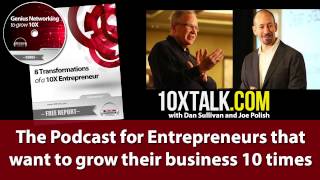
Joe Polish and Dan Sullivan discuss how to position a company through education instead of hype. They walk through Dan's eight transformations for 10x entrepreneurs, from unique-ability teamwork to extending creative careers into older age, emphasizing valuable content with no teasing and real solutions for your best clients.
Questions this video answers
May 12, 2014.
More than 15,000 entrepreneurs from over 60 industries.
December 2012.
Chapters
I'm Joe Polish.
I'm Dan Sullivan and welcome to 10 Times Talk.
Hello everybody, this is Joe Polish and.
This is Dan Sullivan.
And welcome to 10X Talk With Me and Dan. So, Dan, we've been talking about some really awesome things on 10 times talk. And one thing I want to talk about today is positioning and marketing your company. And when I say your company, I mean all the people listening and also your company as in Strategic Coach. And one of the things that both of us have used for years is education based marketing, where one of the ways that we sell our companies like Genius Network for me, my 25k group, Piranha Marketing, and in your case, Strategic Coach and the Strategic Coach program is you have lots of knowledge products which are recordings and print and video. You also put out lots of videos about Strategic Coach and different concepts. And even what we're doing with 10x talk would be an example of education based marketing where we're putting out really valuable things to the world, teaching people stuff, and at the same time, people that really resonate with it may want to join your program, may want to join one of my programs, or buy books and various things that we offer. And the way that we do this is through again, video, audio, the written word, things like that. And I want to give an example of that today with something that you wrote called the eight transformations of ten Times Entrepreneur, because it'll give all of our listeners an example of how Strategic Coach uses valuable methods and concepts and teachings to not only help people, but it positions Strategic Coach. So I want to part the curtain and bring people in and show them exactly what you do and how you do it so that our listeners can actually do the same thing in their own companies. And before I get into that, I'd like to get your perspective on how you position and market Strategic Coach using education and your thoughts about it.
Well, Joe, I started actively marketing coaching back in the 1970s, but I didn't really, you know, really get into the swing of things until the 1980s. And I think it was the great growth period for entrepreneurism because of the personal computer. You know, a single entrepreneur with a, you know, a good computer base could actually, you know, look like a big company. And so I think that was the real breakthrough. And, and so I started, you know, I was a guest speaker at a lot of conferences and you know, I always had things that people wanted to hear about. But one of the decisions I made, and this is probably what drew us together, Joe, is that we have a totally, totally like minded philosophy about the material that you sell in your program. And that is that I believe giving it away in the public forum actually makes more sense than sort of teasing people. So I've never teased people. I've said, you know, I always tell my audiences when I start, I said, look, I said, there's a certain number of you who are in the audience tonight who are going to come and they're going to join the strategic coach, and we're going to do a lot of great things together. But, you know, the vast majority of you are here. You're going to have a really good hour and a half, two hours. And my goal is that if this is the only time we actually encounter each other 10 years from now, you'll look back and you say, you know, that two hours that I spent with Dan Sullivan was one of the most valuable events that I've ever been to, simply because I gave them usable, transformable ideas and concepts and tools. And it's just a way of being, you know, totally transparent that I'm not here to tease. I know the people who are right for us are going to come forward and we're going to, you know, we're going to have a partnership together, but there's just a lot of really great people in the world who just want some really great ideas. That's sort of, you know, that seems sort of idealistic, but I actually have a strategy with that, is that if I give my ideas away broadly enough and they get out to enough people, then it becomes impossible to steal my ideas because everybody knows where they came from. And I've talked to you, Joe, about numerous examples of very famous people that we both know who have gotten up on stage and claimed one of my main concepts was their concept. And the audience called him on it. The audience just said, that's not your idea. That's Dan Sullivan's idea. So that's my framework. And this has a lot to do with the whole notion of positioning. You know, what is the attitude that you're using when you're giving away your information? Are you giving people real stuff that they can take away, regardless of whether they ever pay you a dime? And the other thing is, let the world protect your creativ.
Yes, exactly. I love that, too. What you said is I tend to have the very same philosophy about not teasing people. I always think that if anyone's going to hear me speak if I do a live presentation, that if they never buy anything from me, I want them to learn something and have something that's usable. I'VE done a lot of work with a marketing guy by the name of Dan Kennedy for the first nine years of my business. I hired Dan to work, write sales copy and various things for me. He's a great platform closer. I mean, he knows how to get up and do speeches and sell from the stage and basically extract money out of an audience. He's very good at it. One of the things that he would talk about is that speaking to teach versus speaking to sell or writing to teach versus writing to sell are two different types of things, which they are. And he also had a philosophy of tell people, you know what they need to do, but don't tell them how to do it, because if you tell them how to do it too much, then they're not going to want to buy what it is you're selling because they're going to feel like they've scratched their itch already because you've told them what to do. Why would they want to then buy something? For years, I kind of went back and forth about how I think about that, and I've really always settled on I'm going to teach people things anyway because at the end of the day, like you said, 10 years from now, 20 years from now, I think people are going to be around at least the ones that are worth meaning. I always want them to think, you know, this guy didn't get up on stage and just give me nothing of value. He really taught me something. He really gave me something useful and it resonated. And therefore I want to buy what it is the person is selling or look into it. Because at the end of the day, there are some people that do. They teach too much, but they never ask for the money. They never close because they. That's a whole other skill set which we can talk about in different episodes, which we have on 10x talk. But I absolutely believe that if you want to create value for people in advance, be as useful as you can in everything that you do. And I just think it attracts the right type of person and at the same time, you want to position it so that they can do business with you. If you've got something worth investing in, let's go through something that you wrote so that instead of just me talking about it and you talking about it, we can actually literally give all of our listeners, you know, exactly something that you have written and used to position strategic coach and the whole concept of growing 10 times. And what I'd like to do, Dan, is read what you've written and then have you comment on it, it'll be kind of like one of those Oprah shows where after someone watches it, there's cameras rolling after the show and they talk about the show. So the eight transformations of a 10 times entreprene. And you wrote this at the. I think December of 2012 was when you actually first put this together. Right. So it starts out saying, remember when your personal professional success was 10 times less than it is today? Now here you are where it's normal to have what would have seemed impossible then, if you want to do it again, grow your success 10 times while enjoying greater simplicity and freedom. The eight transformations in this guide are the path to getting there. They're based on the process we use in the Strategic Coach program, which We've evolved over 20 years of working closely with more than 15,000 entrepreneurs from over 60 different industries. Read through them and picture yourself in the shoes of a 10 times entrepreneur. Someone who can multiply anything in life by 10 times, confidently, enjoyably and predictably. So that's your first three paragraphs, very short, totally set it up before going into the eight, you know, transformations of a ten times entrepreneur. Anything you want to say to that before I read them or.
No, I would say that also, you know, just in putting this out there, this is actually a very, very small ebook that we have, you know, on our website. So we're right from the beginning kind of telling anyone who comes to us, regardless of what form that's in, who we're looking for, we're looking for someone who's already been highly successful. They're very ambitious, they're very talented, but they now don't see their present success as the end point. They just see it as a jumping off point for 10 times more success. So one of the things, you know, I remember our great friend Dean Graziosi in one of his Strategic Coach workshops, he says, you know, the way I got to where I am right now is by saying yes to almost everything, right? And he said, the way I'm going to get to where I want to go now is by saying no to a lot of things. And you know, and I know that one of the things you have to do as an entrepreneur as you're jumping from one level of success to another, is that you have to say no to people that you previously would consider good prospects or good clients. And the reason is because you want to go to a higher game. And therefore the motivation, we call it the 10 times motivation. We want to see that because that's, you know, it's the level that we've gotten to as a coaching organization. So it's really who we want to attract and it's really who we want to be in the program with because they can do such great things with the concepts that we've developed. So that opening part is just to kind of tell people who we're actually after. And that's part of the positioning.
Cool. Cool. Yeah, absolutely. And you establish that you've been doing this for 20 years, you've worked with over 15,000 entrepreneurs from over 60 industries, and then you say read through and picture yourself in the shoes of a 10 times entrepreneur. So you're literally getting them to look at their bigger future and how these eight transformations will affect them. So the reason I say this to not sound redundant is whoever's listening, think about your own company, think about what you're offering, how to position yourself, how to establish yourself, how to identify who it is, exactly what you're looking for, and what do you need to say about your company. The eight transformations of a blank. The six costly misconceptions of blank. The, you know, free report on blank. So it helps you identify it. So this is an educational guide. So what I'm going to do, Dan, I'm going to read two of them at a time. And after I read two of them, just have you comment for a couple of minutes. And then I think in the time that we have available, we'll be able to get through this whole piece and then give everyone a real picture of what you wrote and how you've done it. And the cool thing is, as I'm reading this, people are learning just in the same way that if someone was to read it themselves, they're getting something of value, which totally is positioning strategic coach. So the first one is one, transform all your current activities into unique ability teamwork with you in the center. And then it says, imagine a circle. This represents everything you do that takes up all of your time. Inside this is a smaller circle of things you do when you're at your very best or what we call your unique ability. Now imagine taking the smaller circle and expanding it so you get to do much more of what you do best. While everything else you currently spend time and energy on is taken care of by others who are good at and enjoy those things. This is unique ability teamwork. And it's absolutely critical for growing, growing your results exponentially. Without growing your complexity of your life and business, your unique ability team will play a big role in your growing ability to accomplish so much More within the same circle of available time. When things are taken care of by the right people, you're freed up to grow your business much faster and have the time for all the other things you enjoy and make your life complete. And then, number two says, transform the management of your company into a single, fast, easy, simple system. Here's another exercise. Imagine that everyone in your company just knows what to do. They're clear about how to help the company reach its goals, and they're also highly motivated and passionate about getting those results. In fact, they're often happier when you're out of the office because they can just get on with the business of growing the company without spending too much time reporting to you. You, in turn, trust them to make the right decision and give you only the feedback you need to create the vision and direction for the future to keep them on track. Beneath this idyllic reality is a system of communications and problem solving, structures and tools, processes everyone knows how to use that quickly and effectively get everyone on board and moving forward, no matter the challenge. This is what unique ability teamwork can look like in the service of a 10 times growth mindset, in the clear communications of really big goals with big payoffs. So there you go. In half a page, you covered a lot of stuff. So why do you position it like that?
Well, the starting point, and I'll use you as an example here, Joe, is that the real personal skill that I've developed as an entrepreneur over, over the years, and it goes right back to childhood, I've always had a very, very clear, fast sense of what people do really, really well. So that notion that there's a circle of everything you do, but in that circle is a small circle, and that's what you do extraordinarily well. And my constant philosophy, which I've developed for practically 50 years, is that why don't you just focus on the thing you do really well and then use the abilities of other people to do everything else that's required, but also free you up from everything that you're not really you do really well. And one thing happens out of that is that there's an enormous amount of passion that gets released. People just become very, very passionate about what they're doing, which is necessary to grow 10 times. And the other thing is they get very, very precisely clear about who they need to be a hero to out in the marketplace. So entrepreneurism is different from being creative like artists, you know, and they focus on their art. Entrepreneurism is an art form where the single most important Thing after recognizing what you're really great at is that you have to really decide out in the marketplace who the person is you really want to be a hero to. In other words, you really want to help them, you really want to transform them. Then the other third aspect of it, again different from artists, is that there has to be a multiplier in it. You have to get really well paid for this, and the chances of getting even better paid in the future have to continually multiply as your skill multiplies. So that's the entrepreneur right in the center. That's number one. But the number two thing that you wrote is really about the team that forms around you. Because when the entrepreneur is just that way, it really gives the team a clear focus on how they can be heroes. Everybody who's in a job, if they had the chance to be a hero in their job, that would be like doubling their income. I mean, I've never met any person for whom money was the most important thing. What they really want to do is to have their work be incredibly meaningful and very valuable and very, very powerful in terms of the overall organization. So by you focusing on your unique ability, you give everybody around you a chance to really be a hero using their best abilities. And the interesting thing is they don't need you around a lot. So what this does is it actually creates a much more relaxed, much more flexible, much more liberated operating mode for the entrepreneur. And the teamwork kind of manages itself. It motivates itself, and it monitors itself. So, you know, and this is just based on experience. You know, I'm not. I'm not making this up of something that I'd like to see in the future. This just goes back 20 years with, you know, as they say, 15,000 entrepreneurs who've done this, you know, and it's very predictable if you just follow certain concepts and use certain tools.
Well, yes, everyone will see how this all ties together. So the first two were about. The first one, transform your current activities into unique ability teamwork. And then the second is transform the management of your company into single, fast, easy, simple steps. And so, of course, this is what strategic hopes helps people to do. But in these first two, you actually gave people processes. I mean, even drawing a circle of what they can do. So let me go. I think I'll read three, and then we'll comment. So let me go through the next three. So number three says, transform your time management into continually increasing productivity and profitability. And then it goes on to say one of the very first things you Learn in Strategic coach is how to think about your time in a completely different way that lets you be more focused, present, creative and energized. Your time is the one finite resource you have as an entrepreneur. Get control of it and you can use it as a tool to produce all the results you want in every area of your life. You'll have time for everything whether you're creating the biggest results for your business, planning or developing new capabilities, spending enjoyable time with your family, or getting relaxed and rejuvenated away from work. Plus you have the luxury of capturing opportunities to grow and enjoy life knowing that all the while your business is prospering more. The fourth one is transform your money making into a process that multiplies your biggest and best clientele. Once you zero in on what you love to do and do best your unique ability, the question becomes who rewards me best for doing this? Your best clientele are willing to pay you for bigger, better solutions. To create these, you need to focus on and simplify your money making activities so you're not distracted from opportunities opportunities by a team or systems that aren't up to the task and you're not overwhelmed by too many opportunities. A very satisfying way to do this is to create and package a dream solution for your dream market, matching your expertise with the areas where they most need new direction, confidence and capability. Once you've identified what you're passionate about, the audience you want to be a hero to, and where your greatest growth opportunities lie, you'll know exactly which opportunities to zero in on and where you can do some strategic pruning. I love that word by the way. Strategic pruning. And then the fifth one is transform your lifestyle with a higher quantity and quality of free days. Perhaps you're already really good at taking free time, but if you're one of the many entrepreneurs who hasn't taken a real work free day in years, and we're talking about free from all work related thinking and activities, there are huge advantages to be gained by taking real time off. Scary as it may sound, as much as you love your business, you'll love it and your life even more when you get to take some time away from it to explore other things that offer different kinds of rewards. This could mean climbing mountains or spending more time with your family. This is the part of the program where kids thank us for giving their mom or dad back. And while you're away, your team gets a chance to shine in your absence, developing new confidence and strengths that enable them to multiply the business on Their own. You'll be a better parent, a better leader, and simply a nicer person to be around when you have guilt and stress free time off, not to mention that you'll actually make more money. Wasn't being free to spend your time as you wanted part of why you became an entrepreneur in the first place? Okay, other than me stumbling a little bit at the end, you covered a heck of a lot of ground on a single page with these three transformations. So why did you say those things and why did you position them that way? Because all of this ties in.
You know, I mentioned that unique ability is really the cornerstone of strategic coach. But after that we have a time system which has been designed just for entrepreneurs. One of the things that I noticed when I got into coaching entrepreneurs in the 1970s was that everybody lived by a time system that was really appropriate for large organizations or corporations or even government work. But it wasn't really appropriate for someone who really, really makes their life by providing direction to clients and customers, providing relationship to them, and providing creativity, you know, giving new capabilities to people. And what it came to me, Joe, was that the entrepreneurism is very, very much like the entertainment industry. You know, that you have certain moments when you really have to be on. It's like Showtime or it's like, you know, game day. Because sports is part of entertainment and therefore you need a totally different kind of time system than doing repetitive work every day, which kind of happens in large corporations. So what I came up with is what I call an entrepreneurial time system, which consists of free days. And I'll get into that because that's number five. But it consists of free days, focus days, and buffer days. So free days are, as, you know, as the definition says, it's completely free from all work related thinking and activities. And focus days is just about making money. And then buffer days are preparation days. You're either using your workday to prepare for going away on free days, or you're using your workday for actually setting up the best possible money making days. So it's very akin to how actors and athletes and entertainers really, really operate. And so what we found is that this produces a doubling. And if you combine it with other factors, this is one of the key ingredients that allows people to go 10 times, and they're using the same amount of time that their competitors may be using, but they're just using time in a qualitatively different way. We all have similar amounts of quantity of time, but this gives you a qualitatively different way of doing time. And then the number four is that I do not believe today that people really, really want to pay a lot of money for products and services. And yet, if you look at 99.9% of entrepreneurs, they're out there trying to sell a product or a service that somebody else sells. So they're immediately commoditized. The customer or the client is immediately looking at the lowest possible price that they can possibly get. And it's just totally the wrong discussion you should be having in the marketplace, especially if you want to have the best quality clientele. So what we said is that what really, really sells extremely well, it's not that you're not going to sell products or services, but you have to really sell people how to think about the thing that they're trying to use the product or the service to solve. In other words, it's almost like people know the answer, but they don't know the question. They know the solution, but they don't know the problem. And really, what people want today is they want to be able to think about things correctly. They want to have their mind clear. They want to have, you know, a real sense of a game plan, a real sense of a transformation that they can have in their own life. So this is a transformation for you as an entrepreneur, which allows you to create transformations, and that's a process. So in Strategic Coach, you know, Joe Piranha, marketing, when you came into the program, sold a lot of products and a lot of services, but really your breakthrough is when you created a genius network process. And you could just see, first of all, the type of people that you attracted to your genius, really, and your network. And it just multiplied enormously. And the reason is you now have a process, and you're at ease with that process. It's totally built around your unique ability. It's an incredibly simpler system for you just to be your unique ability in the center of the genius network process. And your whole team knows exactly how they can be a hero to you. So it's enormously simplified your life, and your results have been multiplying enormously since you've done that. And then the fifth one is free days. This is the hardest one for a lot of entrepreneurs because we're born into a economic world that believes that if you want bigger results, you got to put in more time. You know, you got to work harder and longer if you want bigger results. But that world was created before the microchip. And so the microchip is really our role model here, because every 18 months, the microchip. And this has been going on for almost 60 years. The microchip doubles its productivity. It gets twice as much done. The newest chips are twice as fast as the previous chips. And that's our model. That's how we should operate. And it's not a function of time and effort, it's a function of creativity. It's a function of, you know, really being a hero in the way that the clientele really wants you to be a hero. They're not looking for a product or service, they're looking for someone who can be a hero in their life. And so in order to do that, you can't do it a lot. You can't do it for long. You have certain days, you have certain hours when you do it. And then your other days, a considerable amount of them should just be free. So that you're rejuvenating, you're refreshing, you're, you know that you're getting ready for even higher performance than you've ever achieved in the past. So that's really the whole notion there. So you can see this whole system, it's kind of counterintuitive. For example, if you went to Harvard Business School and they tell you, well, the big thing you have to get used to right off the bat if you're going to go out and successful is that you're going to put in 70 hour weeks. And we say, well, that wouldn't produce a great entrepreneur.
I absolutely agree. And so let me touch on then these three and then I'll go on to the last three. So you talked about your time management to continually increase productivity and profitability, then transforming your money making into a process that multiplies your biggest and best clientele. And you always talk about who do you want to be a hero to. And one of the things that I've just known by not only being in Strategic Coach, but by observing people that are in Strategic Coach, just merely helping them get clear on who do they get the most energy from, the most satisfaction, from the most financial payoff and the most psychological payoff. You know, who do you identify? And that dramatically simplifies your clients lives. And by also helping them identify the importance of free time and rejuvenation and showing them exactly how to make that work for an entrepreneur gives them the ability to free up their mind so that they can even think about this. Because there's this famous headline that was used by Joe carbo in the 70s for a, a book called the Lazy Man's Way to Riches. The headline for the space ads that would run in newspapers and magazines was are you too busy earning a living to make any real money? You probably remember that it's a great headline because people get so caught up in earning a living that they don't ever really grow their businesses 10 times because they're too crushed. They got no space to breathe. You lay it out here on this page, but it all ties in earlier about how everything leads to the next. These are all stepping stones. So let me go to the next three. The sixth one is transform all your marketing and selling into a unique solution with no competition. And you say when you're the only one offering water in the desert, you don't have to do a lot of marketing and selling to move your product. The need for marketing and selling is inversely proportional to how desirable and essential your product is. When your product is essential, people look for you rather than you having to look for them when it helps them get something they deeply desire. You're out of the world of price competition and into a realm of unique value creation. Imagine you have an intimate knowledge of your clients and prospects, what keeps them up at night and what they're most excited about, and what they've got going for them that they'd like to put to even better use. Then combine this understanding with what you know and do best, creating dream solutions that your clients love and your competition can't even understand, much less copy. This is true entrepreneurship and it takes you outside the bounds of what others in your industry are thinking and doing. Eventually you learn how to package industry, but your unique value so that your ideas are out there selling for you 247 rather than you having to sell them. Then the seventh one is transform your support team so that everyone is alert, curious, responsive and resourceful. When you're trying to grow exponentially, there's really no room for dead weight. Alert, curious, responsive and resourceful. People who have a talent for the role and are aligned with your vision and goals, who contribute exponentially more than batteries not included. People who might be bright and talented, but aren't fully engaged. Set these four qualities as your standard and you'll notice a change in energy around your business as everyone starts to enjoy collaborating and even just coming into work a whole lot more. And then the eighth one and the last one is greatly extend your healthy lifetime in your active, creative and productive career. Imagine yourself at retirement age, whatever that means for you. Now imagine you're at a peak in terms of your health, relationships and business success. Engage in activities that constantly fascinate and motivate you. You love what you're doing and the life it provides you. So why would you stop? When you develop the ability to multiply anything you want by 10 times and doing it is increasingly fun and rewarding, you'll discover enough goals to keep you loving your entrepreneurial life for decades. Then it goes on to say, the Strategic Coach Program, a total support system for entrepreneurs dedicated to 10 times growth. Just by reading these eight transformations, you've gained a new context for thinking about your business and your future. But any good plan only becomes a reality when you have the practical structure and tools to make it happen in your daily life. This is what the Strategic Coach program provides. A complete, proven support system to help you make the eight transformations you just read about. Contact us to take the next step towards becoming a 10 times entrepreneur. And so that's pretty much your four page ebook here, but it's chock full of useful value. So let's talk about the the last three and then everyone that's listening now has a context of using education to position their companies. And they can do the same thing, but also at the same time they're getting a behind the scenes look at how you do it and why and what your concepts are about.
Well, the number six one where we talk about the dream solution and I have the benefit and a lot of it is through you, Joe, of really coming into contact with really genius marketers, I've met so many of them through your networks. But the one who really got to me was Dean Jackson, who of course is your co host on the vast, seemingly limitless I Love Marketing series, which is the greatest, you know, the greatest marketing educational program that's ever been put together. But Dean really caught my attention from just the way he thinks about it. And he said, you know, if you could create a solution where you didn't look at what your competitors are offering in the marketplace, you completely ignore what your competitors are providing. But you just got your very, very best clientele that you already have worked with and said, you know, if I could really give you everything that you would possibly want one, what would it look like? And if money wasn't really the issue, then I could provide that with you. And you have a discussion with them, you have, you know, you talk to one, you talk to five, you talk to 10. By the end of those 10 conversations, you would have a remarkably clear picture of your next reality in the marketplace, if you will, and they will literally design it for you. And all the things that I'm talking about in these eight transformations, Joe, really constitute our dream solution in the marketplace. So, you know, there's lots of programs that will give you tactical strategy and, you know, various kinds of technological capabilities and everything else. But when we've talked to the very best entrepreneurs, the ones who are really in it for the love of being an entrepreneur, they've told us that these are the types of experiences that they really want to have. They want to have multiplier growth 10 times. They want to have simplicity for themselves. They want to have fabulous teamwork. They want to have a complete whole life, not just one focused on business. They want to be surrounded by great clientele and they want to, you know, be themselves passionate and being a hero and having multipliers. So they're talking about a series of experiences. And that's one of the great discoveries that I've come to here in the 21st century, that more and more people don't want to buy things, they want to buy experiences. And so I said, well, you know, these are the experiences that the entrepreneurs who are most interested in Strategic Coach want. So let's talk about the experiences. And then we have hundreds of different, you know, thinking exercises and concepts and tools and we put them in a community with other like minded people who are after the same kinds of experiences. But really what really attracts them and what allows them to really participate fully and what allows them, you know, to go for many, many years in Strategic Coach is that they're just looking for the experiences. And that constitutes a dream solution and for us is to provide these kinds of experiences. And that requires a particular type of team. So that's number seven. And you know, and we're looking for, we're just looking for people who are deeply interested in the type of clientele that we have in the program. So if I could say where our company has improved most, let's say over the last 10 years, it's that the type of individuals that our clientele are meeting when they come to one of our conference centers, it's that they're very alert, they're very curious about what's going on in the entrepreneur's life. They're very responsive to any new requests and they're very resourceful about bringing solutions and they relate to each other that way, they relate to me that way. They relate to Babs, who, you know, my wife and partner who actually runs Strategic Coach because I run the program and she runs the company. So, you know, we're just looking for that type of individual and more and more when you collect that number of people inside your organization, then it becomes sort of like an attractor, because other people who are like that and find out that there's kind of a company like that and it has this type of culture, then they apply. So we usually have kind of like a waiting list of people who would like to work for Strategic Coach. They let us know. Sometimes they have to wait for a couple years and take another job. But when they find out there's an opening, they come to us because they want to have that kind of work experience. And then, number eight, one of my big things is that the whole notion of retirement is really part of an industrial economy that probably ended in any significant way, probably about 30 or 40 years ago. But the whole notion that sprung up in that industrial economy was that you were not going to like your work and you were going to get really tired and worn out, you know, by your 50s, at latest, 65. And therefore why you were doing all this very, very unpleasant work for an entire career is so that afterwards you can actually have some time in your life when you get to actually have your experience, you know, the experience you would really like. And what I noticed very early is that entrepreneurism doesn't work that way. You build all the other things that people would normally associate with retirement. You know, being rejuvenated and refreshed and being interested. I say, no, no, we build that in right up front. In a funny sort of way, we let you retire right away while increasing your income constantly. And what that does is that they give up the notion that there's going to be an endpoint when they are going to stop working and they're going to not do it anymore. And so, generally speaking, I've seen people who are going to ordinarily retire when they were 65, you know, are now 85, and they've been in the program for 20 years, and they're. They're doing 10 times, 20 times more than they did before. And all these transformations have taken place, so they have no notion they're just going to work until the very day they die. And I think this is possible, Joe, in the 21st century. I think this is unique. It wasn't possible, I think, in the 20th century, but it's possible in this century. And that's really what we're selling out there, a new kind of possibility, transformational possibility, just for entrepreneurs and for entrepreneurs who think in terms of 10 times, yeah, totally.
And I mean, you're probably not going to see a happier, more excited group of older people that are really younger because of what this whole process actually does for their thinking. I remember when I had interviewed Nathaniel Brandon, who's the father of self esteem, he made this comment that when someone is going to a therapist for help, they're not looking for an explanation, they're looking for an experience. There's a lot of people that write books and courses and do seminars and run programs that it's really just, you know, giving explanations live. You know, they're not really taking their clientele through a process. And one of the things that I've always talked about with people that are asking me about the Strategic Coach program, you know, what are they going to get out of it? Why should they join? You know, one of the things I said is, you know, if you just want an example of how a company that is really well run, like, does it just go and observe how you're treated by their team, by their employees, when you show up from the receptionist to everyone during lunches, the before, during and after experience of first up signing up with Strategic Coach, going through the program, I mean, just everything about it is orchestrated around people having an incredibly good experience. And that in and of itself is a great model for people that really care about delivering value to their clients. And so throughout, what we just took everyone through is one of the before stages of Strategic Coach to educate people about the program and how Dan has positioned it and written it out. And now if you want to see this report as a model, because part of this podcast is you need to be doing this sort of stuff for your own company. I mean, how are you positioning yourself? How are you educating people about what it is and how you do it? You can go to strategiccoach.com and you can actually get this report, which is the eight transformations of a ten times entrepreneur. That's the deal. We gave everyone a perspective on the value that you can communicate effectively in really four pages. And also now, everyone that has listened to this, the punch line here is if you're the type of clientele that Strategic Coach is focusing on, then you totally resonate with this and now have this emotional engagement of, wow, I'd like to have these transformations. If you're feeling this desire or this need to call Strategic Coach and get more information, then this report has done its job. It's actually conveyed value in such a way to where it's painted a picture and given you a new context of how to look at your life. And what Strategic Coach is communicating here, what Dan is communicating is in order to grow 10 times. It's not just about a marketing strategy. It's not just about positioning. It's not just about managing. It's about your entire life. It's about looking at your team, your unique ability, who you want to be a hero to and even your entire career. How are you going to set up the conditions in order to do that? That's our example. I hope that everyone found this incredibly useful and we'll also take the actions to do the same sort of positioning, using education in your own company. So any final words, Dan?
I think, Joe, you know, that it might be useful for us to, you know, I can probably write the eight transformations of being in Genius Network, you know, and that might be a useful thing. But on the other hand, if they're going to be players, as, you know, as successful entrepreneurs, then they've got to imitate this, They've got to copy it. They have to have their five things or six things or eight. I find don't go beyond eight because then it gets too big. But what it does is that it just says that, you know, you have to be clear about the experience, that the very best people that you would want to have working with you are actually looking for, you know, products and services, art and experience. There's something else that creates the experience. It's the entire interaction between, you know, this person and who they're doing the work for. You know, I've just been very, very clear right from the beginning that all the places where I go and the things that I buy in life have always been accompanied by an incredibly good experience. And that was the differentiator. It wasn't the product or service per se. It was the complete wrap around of, you know, tremendous thinking and real sensitivity and real observation that had gone into the total experience. You know, great restaurants, great stores, great hotels, great cruises, great resorts, even great educational experiences. Everything in life, you know, we're buying the experience. You know, the money we pay for a product or service is just part of the ticket that gets you into the experience.
Yes, I agree. Let everyone know that I'm no dummy. The fact that Dan just said that about Genius Network, you can bet that I'm going to be hitting him up right after we stop this recording and talking about how we're going to put the same thing together from his perspective for Genius Network. Because the deal is this is not just an idea. Dan has ran the most successful coaching program in the world for high level entrepreneurs for years now. And the clientele speak for itself. And this is not just a concept. This is something that he's been doing successfully for many years. And if you want to have success in your own business, do the same things. And that's why we do 10x talk. That's the whole purpose behind it. And this is another form of just helping entrepreneurs with their business, with their direction and being incredibly useful so that you can go and build and grow a great business yourself. And most of our listeners probably are already doing that, and we just want to help them become that much better. And so thank you, Dan. This was fantastic. And on the next episode of 10 Times Talk, just be on the lookout. We got more great stuff coming your way, so thank you.
Okay. Thank you very much. And we'll be talking to everybody on the next 10 things talk.
Sa.
More from Joe

This FBI Trick Can Command Respect Without Saying a Word ft. JEFFERSON FISHER & CHRIS VOSS

How To Stand Out, Be Different, and Create Raving Fans, Customers, and Employees ft. Jesse Cole



90% Of Businesses Fail In Their First Year, Here's Why! ft. Dr. Benjamin Hard & Dr. Robert Cialdini

The 1 Piece of Business Advice I Got From Elon Musk That Changed Everything Ft. Kamal Ravikant

The 6 Traits You CAN'T Teach in Entrepreneurship ft. Richard Branson & Gino Wickman

The Leg Method: How to Make Your Book into a Million-Dollar Asset ft. Anna David


7 Millionaire Mindset Hacks for Daily Success and Wealth ft. Brian Tracy & Dan Sullivan
