Rehab Time: How To Transform Your Greatest Adversities - Trent Shelton
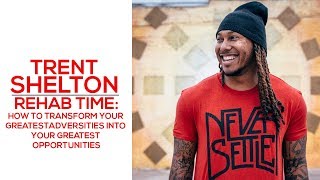
Former NFL receiver Trent Shelton hit rock bottom in 2008 with depression and substance abuse, then rebuilt his life through rehab and fatherhood. He turned his recovery into Rehab Time, a movement to help people face reality, release toxicity, and repair their lives by measuring themselves against their own standards, not the world's.
Chapters
Hello, this is Joe Polish, and I'm here with my buddy Trent Shelton, and I am really excited to talk with him. This is going to be just very inspirational, I believe, unless you're having a bad day or something.
I'm having a great day. I'm in Phoenix, so I'm having a great day. And I'm with you. So. Awesome.
Well, great to have you here, man.
Thanks for having me, man. I appreciate it.
Yeah, absolutely. So you, you're wearing a pink hat that says daddy. Explain this, what's going on, and then I'll tell everyone who you are if for some reason they're not one of the many millions of people that follow you online.
The hat has two meanings. My wife has a meaning that she gives me, you know, and for my daughter, too, my kids, so I'm the daddy to them. And then for my wife, we have another meaning that, you know, maybe we won't discuss right now. Right.
Okay, awesome. So I've got a whole slew of things I wrote down that I could talk with you about because you, you cover a lot of topics in what you do. So if you don't know who Trent is, he's a former NFL wide receiver that is now considered one of the most impactful speakers of this generation, which is actually true. He reaches over currently 50 million people weekly through his various social media outlets. And I would imagine a year from now that will probably be double. And then 10 years from now, who knows? Because he's totally on fire. He also travels the world to speak his message of creating lasting change in your life. Trent and his wife Maria live in Fort Worth, Texas area with her two children, Tristan and Maya. And so, you know, let's start with what was life like growing up and how did you become an NFL player? And then I'm going to ask you a bunch of stuff about business and about what you teach people, but let's start with that for sure.
Well, I was. I was born in Little Rock. I lived in Little Rock for maybe, I don't know, a few months. Then I lived to moved to the New Orleans area. My dad got transferred, so we lived in kenner for about 12 years. And then I moved to Fort Worth. I have two older brothers, so I was the baby of the family. And, you know, it kind of made me everything I am, honestly, my two older brothers, because they taught me what to do and what not to do, they made me tough. I mean, when we played sports, it was always, I don't know why I was like this, but it Was them two versus me all the time. So the sports aspect came from them. I mean, seeing them shine and grow. I always wanted to be better. And that's when I started playing football, Even baseball, basketball, every sport you can think of at the age of 4 years old. And that's where that hunger came from. I actually lived across the street from a guy named Gene Atkins. His son Geno, plays for the Cincinnati Bengals now. But seeing him all the time, like, running through the street as far as, like, jogging and working out, he would bring me to games and give me saints paraphernalia and all these things, it just made me really want to go after that dream of mine since I was 4 or 5 years, 6 years old.
Yeah. So how was growing up? Like, did you have, you know, the relationships with others? Were you an extroverted guy? Were you introverted? I mean, what were you like as a kid?
Yeah, well, both my parents were there, so that was always a good. A good household, my mom and my dad. But I was introverted, very much so. And it's funny because my dad and my mom always says, now it's like, Trent would be the last person we would think that would be the speaker out the family. But I think it came from me always listening. You know, my grandma always told me this. She says, when you speak, bless your soul, make sure your words count. She says, always listen and observe. And that's what I do. You know, I'm not a shy guy. I just love to watch and look and listen and observe these things. And then when it comes out, it comes out like it does. So I was an introvert type of guy.
Yeah. Well, you know what's interesting about being a speaker, There's a lot of professional speakers that speak to thousands of people. Huge crowds that both me and, you know, personally, that when they're not on stage, they literally don't want to be. They're like, shy as hell, but they can get up in front of lots of people and do it. And I think there's interesting things about that one, is that a lot of people that believe, oh, I can never go and address an audience. I can never do that. Because when I was first starting, when I first presented and did my first seminar, I sweated the entire day. People were telling me that, oh, after the first three to five minutes, you kind of get in the flow. You get over it, like, the whole day. And I literally got physically sick at the end of the day. But what I did is I wrote a sales letter inviting people to come to a marketing seminar. And so I filled up a room with like 52 people that paid a whopping $97 at the time to actually see me speak. And this was in my early 20s, so I had to deliver the seminar. I didn't have to, but I did. But I just kept doing it because I heard this saying that whatever you fear but you don't face controls you. But whatever you fear and take steps to face, you can control it or at least get a lot better with it. And I just kept at it. I just kept at it, which has a lot to do with so much of your message, which is about persistence, persistence in the right way. Because I mean, like, I'm not a big believer of never give up. The best way to get out of a hole is to quit digging it. So there are certain situations you give up on, but there's others where just the stick to itiveness of it will, you know, will show up. And that's so much about what you do. So were you as motivating to yourself back then as you are now, or what was it that. And I say this from people that may not have yet seen any of your videos. Anyone that follows you, I mean, you are like a lifeline to a lot of people. I mean, they wake up and Trent is the thing that is their morning ritual or they get their day started because you're really good at what you do. But I'd like to kind of reverse engineer how did this develop.
A lot of people who do follow me might not know because I don't really dive too deep into that all the time. So it's a great question. But I was always self motivating. I was a guy that didn't really say much, but my actions said a lot. You know, I knew what I wanted out of life. Sports was my motivation. And so I put in the work and I would always, you know, say things to me. I didn't realize it looking back. Now I realize how motivating I was to myself. But at that time, I guess I just thought it was normal. You know, my dad's kind of like that. He's a motivating guy. So I guess I kind of took that in. And the switch that really changed was of course, my struggle hitting my rock bottom. I tried the motivational tips and things like that, but it just wasn't working. I put myself in a bubble and that really birthed, I guess, my voice and just my mission. That pain turned into power at that moment and I realized that I had A choice in life. Either I can sink or I can swim. And so when I look back, though, I definitely had that grit about myself that, you know, I would tell myself, you know, I had to push through things. I wasn't a quitter, so I always pushed through.
Yeah. The appearance, the dreadlocks, the tattoos. When did this all start?
College. My brother, like I said, having older siblings, they get the blame. So my mother, she was a. I mean, my brother got tattoos. She almost killed him. So. But when I got it, you know, he took all the blame for it. And for me, I'm an artistic person. I'm a creative person. I mean, I love art. I can't draw, but I love art. And so it's expressions. You know, I feel like, you know, the story of my life if you never heard me speak a word. And with the dreads, it's just kind of a thing that. It was kind of a football thing, you know, just. I got tired of doing my hair. I wanted to get that rough look. It's like training camp. We call it the training camp vibe. You don't shave, you don't do anything. And my hair just started to lock up, and I said, I'll just go with it. And so I ended up cutting it, and then I grew it right back. Really? Yeah. So I cut it. After college, I went to NFL for appearance reasons. And then as soon as I got to the NFL, I grew right back.
You're like, once I'm in there, I'm going to do what I want.
Exactly. I was advised by my uncle. He's a coach, and he's like, man, you should just cut your hair just for certain reasons, you know, you don't want anything to hold you back. And I said, all right. And I cut it and I grew right back.
You know, it's funny, like, I don't know if you've ever seen pictures of me with long hair.
I haven't.
Yeah. When. I mean, I used to have bangs down past my. I mean, they were like. I had super long hair. And that was for. When I. When I was in high school, I would. You know, I looked like a punk rocker. Because back then, when I was, you know, I graduated in 1986, so that was back in the 80s. And I used to have, like, shaved head on the side, big, you know, spikes. And back then, the hair gels weren't that good, so I used to use nox gelatin and egg whites to spike my hair.
Oh, yeah.
I would hang up upside down with a blow dryer And I would just get and look, of course parents and teachers would just be appalled at me because they're like, look at this punk, you know. And I remember piercing my nose safety pin once. You know, that was quite painful and I only kept it in for like a couple of days. But I did, you know, it's pretty hardcore. I was in that case in high school. And of course, you know, my background and story is I became a drug addict. You know, I mean, you've talked a little bit about that, which is why I'm doing the stuff I do today with genius recovery and helping people with struggling with addictions. But I had long hair. And I remember when I was first starting out as a dead broke carpet cleaner and I, you know, I learned marketing because I needed to eat, I needed to survive, I wanted to look however I wanted. And people absolutely judge you based on hair length and based, I mean, you know, this, you talk about this. They look at your tattoos, they think you're like this rough sort of guy.
Very much so.
Then when they get to know you, they're like, wow, this guy's like, not at all what our judgments. And you talk a lot about that. But I said I'm going to figure out how to become a millionaire looking however the hell I want to. And I did. And then I ended up cutting my hair because I figured after a point I'm just not going to look really cool with long hair and my hair is starting to fall out at the top. So now I shave my head and it's so much easier because when I used to have long hair, I would literally put my hair in a ponytail on the top of my head so I wouldn't have to roll in when I'm sleeping. So I'm curious, when you have dreadlocks, do you sleep with them in or do you just lay them in like you're Cleopatra?
Yeah, I let them out sometimes because they're bunched back here. So I do lay down sometimes. It's like a small little pillow on the plan. I'll let it out. And then like you said, when it's funny when I'm eating, I have to pull them back because it'll get in my food, literally. So it is becoming a little bit of a hassle. You know, I've been kind of flirting with the idea of cutting them or maybe trimming them, but I don't know, I feel like it's just part of my journey, you know, I personally think.
You should ride it out for as long as you Can.
It's my progression, you know, it just. I don't know, I think it shows just progression in my life and times in my life. I look back at other pictures and so I feel like it's a story, you know?
Yeah. Well, the reason I bring it up is that so many people try to live other people's lives. They try to live what other people expect of them. And to certain degrees, I mean, this is all a context issue. So there's. You know, there are. You know, there are some people that you're going to pay a price for looking a certain way. There's just no ins. You know, I mean, there are certain. If you're going to get a job somewhere and you have tattoos on your face, you know, they're not going to hire you. You know, I mean, there's. So. I think it's smart to really think through all of your decisions. And at the same time, if you try to live your life to appease or please others, but it makes you miserable, that's not a really great way to live either. So what are your philosophies about just who you are? Because you hear things like, be yourself, and what if yourself is scared and insecure and frightened and paranoid? And then you hear things like fake it till you make it. What are your thoughts about how to present yourself in the world?
I think you present yourself out of respect. You know, my thing is, like, you know, treating people how you always want to be treated, giving people what you want to receive. And that's just how I feel. And I mean, I'm never gonna change who I am as far as in a negative way or lower my voice, because I want people to understand this is who I am. Because if you're changing who you are, that's still faking it, you know, till you make it. You know, then they realize, well, who is this guy? Who is this person? I didn't know. So I'm still respectable. And in certain environments that I know I have to bring that respect into somebody's environment, but at the same time, I still stay true to who I am. And like you said, I mean, you have to deal with your insecurities and your fears and being yourself might not be good. And I make sure I say that, like, if being yourself is toxic, it's negative. You don't need to be that. You need to change who you are. Unbecome. Some things get back to the core of your soul, which I believe is love, and go from there. But, you know, it's up to the person, I guess that's, you know, watching this or listening to this and where you're at in life, you know, if you need to make some changes, make those changes. But at the same time, don't do it to please people. Do it to please yourself. Because if you do it to please people, it's gonna get to a point where pleasing people doesn't fill you up anymore. Those people might, you know, lead. Those people still might judge you. And it just doesn't. I mean, I did that so much in my life, you know, did things to please people. When I hit my rock bottom, honestly, the people that I was trying to please, they weren't there. You know, it was lonely. So do it for yourself, do it for others, but also, you know, make sure you have the respect that you want to receive. Give that respect to other people.
Yeah, that's great. So you're here in Arizona right now because you just did your know, your tour.
Yep.
You did this. I don't even know how you describe it. I wouldn't say it's a one. It's a one person show because you got performance art in it. You got singers.
Right.
It's. It was really cool. It was really well done, and I was really impressed. And you made this one comment where you're like, when I was in the NFL, you know, all kinds of people around doing whatever, but you know who your real friends are when things are going bad. And so you refer to your hitting rock bottom. What was that and what did it look like? And what were you going through?
Yeah, my rock bottom was. The lowest of. My rock bottom was 2008. I just got released again. I say again because it was the third time from the Seattle Seahawks, from that team. I mean, that was probably my 10th time getting released. And what happened was I got released, I went back to Texas and I was back home. And this is how the NFL works. The side people don't see. I was back home and I was eating with a friend in Dallas, and I get a call from a 206 number in Seattle, of course, and they want to bring me back. My agent kind of informed me that they might. So I'm excited, of course. You know, I drive back to Fort Worth, actually say, hey, can I come tomorrow? Because, you know, late night flight, I got a pack. It's like, nah, just bring whatever you can ship whatever you need up here. We need you tomorrow. So I go back home, drive about 45 minutes, pack my stuff, get on Facebook, tell my family. I'm excited. You know, I'm going back, and I get to the airport, literally get to the airport, and I get another call from a 206 number in Seattle. And they tell me, nevermind, they changed their mind. And at that point, I was like, I'm through with it. Like, I was like, forget life. Forget my relationship with God. Forget everything. Because I feel like everything I worked for was ending. I felt like my life was over. And so during that time, I was turning to things as drugs, alcohol, you know, women, even pills, Honestly, all these things to numb myself from my actual reality. And what that was doing, of course, was diving me into a deeper depression. And yeah, man, it was a terrible place. Even flirted with suicide. Never actually got to the point of picking up a gun, but I flirted with the point of. Or the thoughts of not being here no more. Because I felt like, what else do I have to live for? My best times are in my past. And the thing that saved my life was my son. You know, every time I flirted with that idea or, you know, I wanted to give up, I thought about Tristan. So I always say, Tristan saved my life. Tristan was unplanned with my wife. She was my. She actually wasn't even my girlfriend at the time. All right? She was my really close friend. But at the time, he was unplanned. And, you know, it was. At first, I was like, man, what's going on with my Life? I was 22, but Tristan was my lifesaver. He was the biggest blessing in my life. And if it wasn't for the birth of my son, I can truly say I probably wouldn't be here today.
Wow.
Wow. You know, so.
Yeah, so what? So you had your son. You had that at least as an anchor.
Yes.
What did you do with it? How did you parlay this into a. Not only a way to get you out of depression. You talk a lot about that. And I think a lot of people that follow you, they can totally resonate from it because you tell of where you've been.
Right.
So how did you turn it into something?
Right. Well, the first thing was realizing that my life was bigger than me. And I think whether you have a son or whatever, you're here for a purpose. And a lot of people don't understand that. You know, maybe you don't understand that purpose right now. Sometimes you don't understand it until you move forward. But that was my, like you said, my anchor. And I realized my life was bigger than me. I realized I couldn't quit. Another thing was just to throw this in there, because it was a big part of. My college roommate committed suicide. So that was a big part of my push, too. But I remember being in my room and I broke down like a baby. I don't even think I was. You know, nothing dramatic happened. I just broke down and I said, enough is enough. I realized that I was a leader for my son and for other people, but especially for my son. I said, no matter what, Tristan's gonna follow my footsteps. And I think if you can get outside of yourself and realize that you have purpose somewhere, somebody. My mom always told me that. She said, we're all not going to reach the same people, but you always can reach somebody. Somebody's going to benefit from your life. Something, even if it's a small little thing, they're going to benefit from your life. And I held onto that. And I said, you know, I got to rehab my life, and what's crazy. And it just blows my mind talking about this, like, rehab time, like, was. It wasn't to start an organization. It wasn't to be a speaker. It was for my life. So I said, you know, it's rehab. And that meant, you know, going mind, body, and soul. That meant going to the gym, taking care of my body, stopped putting the things I was doing to it, getting into my word, my faith. And just mentally, I started reading books. I wasn't reading books. I started reading books, start working on my leadership skills. And the thing that. It's funny because I felt like, you know, God, for me, he used football to really bring me out, because I still had. In the NFL, we call it, not for long, but I still had one more chance because. Cause you get usually three years. And so I said, you know, what? If I get my life right and get everything right, I want to get this last opportunity with no distractions. And I had a trial with the Redskins, ran a four, three. They signed me. And make a long story short, I ended up getting cut. But that was kind of the magnet, I would say, that was pulling me out of my depression. And at that point, I started to realize better things in my life. I started to change. And that's when rehab time was born. And it was never out of, like, this is my plan. The only plan was for me was to be a better father for my son and a better person for myself.
It is really interesting how many people's businesses and what they end up doing for a career has absolutely nothing to do with what they ever thought they would land into. It's like these Strategic byproducts. And a lot of it comes out of total adversity. And for areas of life that not only don't work, that are totally broken, and you're forced to take a path that you would never typically want to go down. And there you are. And then your ability to parlay it into something. So, like, when did you first record a video and put it up and get feedback either from your friends or it just dawned on you and now you've got literally millions of people that watch you on probably a daily basis, right?
My first serious video. Cause I was still, you know, I was kind of a social YouTube guy at the time, back in like 2006. And so you stream back then. And so I would just stream regular stuff while I was playing football. I would go on there. But it was very rehab ish, as I would say, you know, Like, I was very inconsistent with my lifestyles. And the first, I feel like, rehab time video that I was like, committed to it. I remember I was still living in my mom's house. I was living in her guest room. And it was called. I'm trying to think of the name. It wasn't called Faith. I think it was called Faith It Out. I don't remember the title, but I think it was called Faith It Out.
Is it still up or did you take it down?
No matter fact, it's not called Faith that. It's called Free Yourself. That's what it was, Free Yourself. And I believe it's still up. If you dive back into the YouTube files, it's still there. And I was recording on my imac that I had in there. And back then I would like. I mean, I was just trying to be so perfect, like, you know, just trying to make sure everything was right. And so when I look back at those videos, I kind of cringe. But at the same time, like, man, that's where I started at, you know, so that was my first time doing that. And then got to a point where I just started picking up my iPhone and just started speaking from my heart. And I didn't have like, you know, some. Cause I used to think I have to have this production. I have to have this and that. And those things are awesome and incredible. But I realized I just needed to have my truth, my reality, and just. Just my soul to pick up a phone and inspire people. And so the videos that started to go viral were, you're perfect for the heart that's meant to love you and know your circle. And those videos, like, because at first I was getting, like, you know, maybe, I don't know, 100 views. And that was a lot for me and for people out there. If you're impacting 100 people with those views, that is a lot. But to see it now is just incredible. And those videos went viral. And those videos went viral after I officially quit football, literally, like, two months, I was still trying to play arena football. I was still trying to hang on. I let go of that. And I kid you not, Joe, like, two, three months later, those videos took off.
Why do you think that is?
I just think that, you know, just with my faith, I just feel like it was just God speaking to me, saying, you know what? You're trying to hold onto this thing out of fear. And I was. I was fear of financial security. That's how I was getting paid. Fear of my identity. Like, who would I be without football, even though I didn't love it no more. And I think a lot of people, we hold onto things that we don't love anymore. We aren't in love with those things anymore out of the fear. And so when I let go, it was like, okay, you're taking a step. And now the rope bridge was cut off, too. So I had no. I couldn't go back. You know, I couldn't go back. The rope bridge was cut off. And literally, people thought I was crazy. I mean, my friends thought I was crazy. My mom and my dad kind of thought. They didn't say it, but I know they were like, are you sure? Because I had a family to provide for. And I was like, I don't know how I'm going to do it. I don't know what's going to happen, but I know this is the purpose for my life. Because when I was on that stage, I'm not going to go through that whole story. But when I was on the stage speaking to 3,000 kids, my very first big speaking engagement, I didn't want to do it. I was nervous. And on that stage is where I found myself, because I prepared the whole night before. I prepared this long layout. I knew it. Like I always say, like a rap verse. But soon as I stepped on stage, I went blank. And at that point, I was like, I can either sink or I can swim. And I said, God, use me. So a lot of people ask, like, where do you get your speaking from the heart style and just your passion? It was in that moment because I had nothing to lean on except my story and myself. And, you know, with kids, you can't fool kids. They'll let you know, like, quick, you know, a youth. And at that moment is when I realized, like, man, I still had confidence in the midst of fear. I still had power in the midst of my weakness at that moment. So I said, this has to be what I was created to do in my life. And at that moment is when I made those calls and called my coach, told them I'm not coming, called my friends, called my parents, and that's when rehab time really started. Wow. Wow.
So let me ask you about. Because you weave a lot of God into your videos, and I always tend to try to bring it up because I sit and think of who are the listeners here that are atheists that don't resonate at all with God. And, you know, my background, I was. My mother was a former nun. She actually left the convent because she had gotten ill and met my father in church and ended up getting married. And I was raised Catholic. And my experience with it was very negative. And I Even to the point where this whole notion of God with all of the being molested as a kid, my mother dying, lots of abuse, lots of things that happened. You know, it wasn't until later in adult life where I realized I have a real issue with this whole God thing. And even though I spent thousands of hours of my life praying and going to church every day when I went to Catholic school, you know, I just could not feel this connection with this source. And so to this day, you know, I always am a little suspect when someone so hardcore about what they think God is, because, you know, there's many different perceptions of that. The real question is to not go into trying to describe God because, you know, you're going to have a million different versions. It's more about faith. And so what does God mean to you and where does this faith come from? Because I think a lot of times people have a real, you know, your messages. I don't care what anyone, you know, if they're religious, spiritual, atheists, there's so much good in what it is that you share. And what I don't want to do is have someone either cut themselves off because they're like, oh, they hear this charged word, which is very positive for some people and extremely negative for others. So I'd love to get your perspective.
On that, for sure. And I always tell people, like you said, I mean, people who follow me, I've had, you know, Muslims, atheists and everything. And I think they look at the message and take what they need and leave what they don't and they respect my beliefs. You know, I'm always a respecter of people's beliefs and only can speak about just in my life. Of course, I was raised around it. My dad's a pastor, my grandmother, all those things. But it wasn't until two situations happened in my life that really made me draw me closer to God. One was When I was 6, 7 years old, I had a real bad asthma condition. Of course, it's a lot better now with more knowledge I have. But living in New Orleans with that humidity, I mean, I'd take breathing treatments every night. It was bad. It got to a point where I was coughing so bad that my blood vessels turned white. I mean, my white around my eyes, my blood vessels popped, so all the white was red. And so I would go to school, and that's the first time I get bullied. Second grade, they're calling me, like, devil boy, all these things. And I was sick, and my mom, you know, my mother didn't know. The doctor gave us a suppressing cough medicine, which made it worse. And my mother said, you know, something. Told her God, you know, for her, told her, you know, through a friend, like, hey, take that baby to the hospital. Like, literally on the way to the hospital, I get there, I get in the er, and I still remember, like, it was yesterday. They put me down, and my mom leaves the room, and this is one guy across the table. His son had just got shot, and I stopped breathing. You know, stopped breathing. Gone pretty much. And the only thing I remember is them bringing me back. But the guy was watching me, went and told my mom, and they brought me back, whatever. Like, that at that moment is when I felt, like, just my connection with God. Honestly, just in that moment, I felt him. It's kind of hard to explain. I couldn't put it into words, but I felt him in that moment. And another moment was, of course, just me hitting my rock bottom and just me giving me this purpose. Like, you know, it's so hard for me to explain, like, rehab time and how everything is going on and things like that. But only that I can say is I just know it's the call that God has for my life. When I speak, I feel like he's flowing through me and all of these things. I mean, I think I'm an intelligent person, but I don't think I'm as incredible as people may put it on me. I think it's just the incredible God that I serve, you know, so that's what God is for me. Like, just my experiences through life. And when I look back, my faith isn't built upon, like, what could happen in the future. My faith is built upon what has happened in my life. And so every time I look back, and people can call it coincidence that they believe that or whatever it may be, but every time I look back in my life, everything added up to this moment. I had to go through the NFL, I learned so many things to put me in this moment. Friendships that it's just so hard to explain. Even how we met, you know, everything had to happen to get to this moment. Every time I look back, you know, my faith just gets stronger and stronger from that. And so that's what faith means to me, honestly.
Yeah, well. And I think to be void of faith in any particular area, not that you can't get through it, just it's a heck of a lot more painful. And what's interesting too is because of so much time that I have spent in recovery and with people that there are, I see some people that just not only don't believe in God, they hate the notion of it, and they hate people that even have that belief and so part of it. And there's so many people that are quote unquote religious that, you know, let's take Jesus. Even though you can look at God as many, many different sources where they seem to be the antithesis of what his message appears to be, you know, which is totally non accepting. And so I think part of it is just accepting others and accepting yourself without having to be like, oh, you know, I'm going to invalidate that person because of that. Because it's real easy to point fingers at any part of a person or what they do that you don't like. And if you want the world to change, good luck with trying to. You gotta change the way you look at the world, the way you experience the world.
And so I even think too, I mean, just to like, I mean, love. I mean, I think love is of course a universal language. And that's something I try to get people. And it's funny you said that because. And it's true, you know, even when it comes to Christians, and I say this all the time, is that, you know, we could be some of the most judgmental people ever. Like, even with myself, like, you go to my page, it's like, Trent, you know, you have. I have one lady tell me I don't dress Christian enough. You know, I'm like, what is that? You know, I wear sandals, you know, so I see so much judgmental Stuff, And I think it. It keeps people away. But I always say this to. Just. To, you know, believers that I talk to, I say, you know, don't let the imperfections of man keep you from the perfection of God, you know, And I think you have to understand that we blame. Even me, I blame God for my situation so much. I blame God for this. I blame God for that. But I was never taking the responsibility. I mean, we live in an evil world with people who do certain things, you know, and we have to take the responsibility also.
So I remember when we were doing yoga at my house a few months ago, and someone out of the blue just starts saying, yoga is like, some. And it's like, we're doing a yoga class, you know, with my friends.
I get that, too.
Yeah.
I'm just like, honestly, that's my best connection with God. Everything is what you make it. I feel like personally, you know, whatever opinion, whatever, everybody has an opinion. People tell you that some water is bad for you. I'm just like, what? So, you know, everything is bad, you know, so you just got to take your experiences for yourself. And I think as long as you operate in love, man, I think it works out awesome.
What's the mission currently behind rehab time?
Just to renew every heart and body. You know, I want to give people worth. That's my thing. I mean, know your worth tour. But I want people to understand that they have worth. I mean, that's my message. Regardless of what's going on outside of you, I want you to know that you're an incredible person. Don't let what's going on outside of you define what's inside of you. So that's my mission, man. Just to get people to understand their worth. Yeah. Great.
What are some of the most valuable life lessons that you've learned?
Oh, man, I think one is facing your reality. I can share this. The three Rs, you know, facing your reality is one. And I always say, you know, you'll never win your award by running from your battles. I talked about it at the tour, and I think so many times we run away because of fear, whatever it may be. But when you step and face whatever it is, that battle or whatever, that fear, you overcome it. You realize you gain strength that you never knew you had, you know? So I think a lot of people, a lot of times need to face our reality, whatever that is. You don't have to become your reality in that sense, but you have to face it, you know, and you can grow from that. I think another Lesson was release. You know, whether it's friendships, and I don't always promote that, but release the toxic things from your life. You know, people say don't burn bridges, I definitely agree, but I feel like there are certain bridges need to burn, you know, that you can't afford to go back to. So releasing things from your life, it taught me that I had to change my environment. As I always say, you know, you don't blame a flower when it doesn't blossom or bloom. What do you do? You fix the environment. So sometimes it's not always you, you know, sometimes it is what's around you. And so I have to change that. And last, just repairing your life, whatever that means to you, Whether it's, you know, seminars, whether it's mentorship, whether it's digging up the bad seeds that's been in your life since you were born, that was given unto you, and digging up those things and replacing those things with seeds of faith and seeds of power. So I go through that pretty much every single day. I think that's what my struggle has taught me and that's what I try to teach other people. Great.
You said something just briefly here about battles, and then during your tour you were talking about, I wrote it down here. Silent battles are the hardest ones to fight and to get help. And it made me think about just being an addict because I think people that struggle with addictions and my viewpoint of addictions are, you know, the bigger question is my friend Gabor Mate, who will be at my conference this year with you. He's one of the top addiction doctors in the world. He says, you know, the question is not why the addiction but why the pain. And so I think addictions are just symptoms in ways to cope with repressed emotions, trauma, deep seated pain, and you use it as a coping mechanism until it ends up becoming an addiction. Then it becomes a full fledged addiction, which I believe is beyond choice. That's where you tap into a higher power, be it whatever your version of God is, or a community or something that you can derive some sort of hope from. Because hope heals in silence. Though battling things in silence, I think it's just toxic shame. And recently there was a famous rock star who committed suicide that had millions of dollars, that had millions of fans all over the world. And this person, in their silent battle still was not able to reach out enough to where it could bring hope to this person. And this person killed themselves. Silent battles are insidious, they are terrible. And almost everyone goes through it in some sort of way. And a lot of people, they just cannot ask for help because of either the shame of what was done to them or the shame of what they have done to someone else, or at least perceive what they have had done is so horrible that I can never talk about it. I mean, we have a dear friend of mine who's sitting in the room that, like, was, you know, had a lot of sexual abuse in her life and openly speaks about it. What is a silent battle? And someone watching or listening to this right now, that's like, I could never tell anybody about this. I mean, there's just no way. What is it? And how do you ask for help if you're fighting that silent battle?
The best way I can describe it is like you said, I mean, it's wanting to reach out for help. It's screaming for help. And you think this is my opinion? You think people can see it? You think people can hear you? Right? It's screaming loud inside of you. But whether people are busy, whether people overlook it, people don't see it. And in my life, through my silent battles, that's what was going on. You know, I would always say I would smile for the camera but die behind the scenes. But I just felt like I just wanted somebody to be like, trent, I see what you're going through. But nobody ever really asked. And if they did ask, it was this stigma as a man, and I had to be strong. I can't show my weaknesses. You know, we're taught that growing up so much and for people out there, and also it's this, too. It's also feeling isolated. You feel like nobody would understand. You feel like you're going to be judged. You feel like nobody goes through what you're going through. And so not to take away somebody's struggle, because struggles are extremely powerful, but don't make your struggle special in the sense of. It's just for me. Because I realized that, I mean, doing what we do, I see it every day. There's no story I really haven't heard that. A lot of people go through a lot of things, and I can promise you that somebody is going through what you're going through or they've overcame what you're going through. And so it's important to find someone, even if it's someone you don't know. You know, that's why a lot of people hit me up and say, trent, I don't really know you, but I don't want to be judged. They know I'm not going to judge them. And they talk. So find somebody that maybe you don't know. Find a mentor, like, reach out to somebody. Find a stranger, whatever it may be. Watch videos and reach out to somebody, because those things will kill you inside, period. But you have to also realize, too, in overcoming that silent battle, as I said earlier, you turn your pain into power, and then you become the person that helps other people get through it. You know, I get this a lot, Joe. A lot of people will say, it's easy for you to say, Trent, you know, whether it's hiking Camelback Mountain or me speaking about faith, me speaking about overcoming, it's easy for you to say. And I used to kind of get offended by that. I'm like, you don't know my life. You don't know what I go through. Then I say, wait. It is easy for me to say, because I know you can overcome it, because I overcame it. That's why I talk with so much confidence and power and certainty, because I know if I can come out of that, you can, too. And so I always say, you know, there's a bigger purpose than your pain. And I think if you think that if you hold on, as you said, a little bit of hope, a little bit of faith, you can get through that silent battle, period. But give your pain a voice. And not a voice of, you know, sympathy or whatever it may be, but give your pain a voice by speaking out to someone, even if it's a stranger, somebody you don't know. Because the worst thing you can do is hold everything inside, because eventually the lid, the top pops off, you know, as you suppress more and more things.
Yeah, that's really. Yeah, that's really powerful. I was in Seattle earlier in the week, and one of the days I wanted to go to this clothing store where they sold outdoor gear, because I went and spent time on a island with Peter Diamandis. He's one of my friends and clients. And so it's kind of funny when I travel, I'll carry, like, avocados and different food and stuff. And so I'm walking to this place, and there's homeless people all over the area where I was at in downtown Seattle. And I walk by this gal who's just kind of got her head down and just put food next to her and just walk off, because she wasn't even, like, looking up, although she had a cardboard sign that says, mental illness need help. You know, walk by. And I'm not an expert on homelessness, and I see it everywhere, and it always bothers me. But at the same time, you know, there's YouTube videos from people on how to make $300,000 a year being a panhandler, you know, and it's just like, what is real? You know? And having gotten so much in addiction, I know a lot of homelessness is addiction and mental illness. And so I go to the store and literally buy about $1,200 worth of clothes because I can. And so I walk out of there, and this is probably 30 minutes later, and I walk right past this person, and I kind of look down, and she's smoking a cigarette really, like, anxiously. Almost looks like she's on meth. And I cross the street, and then I was like, it just bothered me. And there's, like, homeless people everywhere. But for some reason, I just kind of gravitated towards that, what the hell's going on with this person? And I. I just couldn't get out. So I walk back across the street, and I go up to her and I say, hello, how are you doing? And she's like, you know, she's. I'm just. Immediately went into this shitty place, and I literally sat down and started talking with her and said, you know, how long have you been homeless? Five years. She's been in Seattle. She's been homeless for five years there. And that she has a massive anxiety disorder and that she cannot hold a job. And she's like, all these people walk by. No one even pays attention. No one comes and talks to me. I need money. And, you know, her teeth at the bottom of her mouth were so ground down that there were just little, like, stumps. And this was truly a person that was not faking it. I mean, she had dirty fingernails, very weathered, and just having a hard life. And just, you know, I said, well, is there any resources here? And she's telling me about how the homeless shelters are bad and about how they give you a cop. And again, I have to put myself in those sort of situations where I have no idea what her mental illness is. I have no idea her ability to come up with solutions. If someone's dealing with a severe mental illness, you have no idea that people that, like, well, why don't they do this? Why don't they. That, well, maybe their brains don't have that capability of figuring out step by step what to do, or why don't they go be homeless in a place where there's nice weather? Maybe their brain doesn't conjure that sort of stuff up. But I was sitting there thinking that this woman, in her mind, it Was very painful. So I said, have you ever been to. Is there any support groups? I got to imagine there's some places to go to. And the only thing that I could think of is all the support groups that are available. And even if you're not an addict, there's all kinds of open meanings. And so I started, you know, she was raped repeatedly while she was a little girl. And she literally told me her whole story, and it was just heartbreaking. But it's also, almost everyone out on the street has those sort of stories, and there's millions of people with all of this stuff. And I always go back to the starfish story. There's many different ways that I've heard this story told. But the quick version is a man sees a little kid down at the ocean, bending over, throwing things in the water, Gets close to him and, you know, sees a little kid and, you know, says, son, what are you doing? The little kid's like, well, I'm throwing starfish that have washed up on the shore into the ocean. He's like, well, you know, son, there's thousands of starfish on the ocean and they're all going to die. You can't throw them on the ocean. He's like, what difference do you think it can make? And the little kid reaches down, picks up a starfish, throws it into the ocean. He's like, well, it made a difference for that one, you know, and it's like, that one, just one sort of difference. And, you know, and I sit and like, I'm sitting there talking to this person, saying, well, what can I possibly do? I can give her some money, which I did. And, you know, but at the end of the day, it doesn't solve the thing. And I'm like, you know, how do you literally make a really sort of lasting impact to someone? And the fact is, you can always, you know, unless. But what you can do is a little bit. And so I looked up online because I asked her if she had a cell phone. She had an old Motorola cell phone flip phone. She couldn't even go online and look at things. And she has to get enough money from literally panhandling in order to be able to pay this bill. Someone had given her the phone, she had told me. And I went into a Bank of America, which was like a few doors down, went and wrote on because I didn't have a pen and paper on me. And I looked up on my phone different code of meetings, like co dependence, anonymous emotions, anonymous open meetings where someone doesn't even need to be an addict, I wanted to try to say. And I wrote the addresses down. I found some. And I gave her three different addresses and I found three different women that are in support groups that would just take phone calls. And I wrote all this down and gave it to her and I left. And you know, and I don't know if she'll call those people. I don't know if she'll be able to go to the meetings. But I was just sitting there going, you know, the interesting thing is that I've seen videos online where some well to do person will dress up like a homeless person, lay down on the ground, and then no one, like for hours will film it. And you might have a couple of people that will go up to them and see if they need anything. But then if you take a guy in a suit that looks clean and lay that same person down in the middle of New York City, all kinds of people walk up. And it's just how we become numb to other people's pain is almost invisible. And it's like, fuck, what do you do about that sort of stuff? And so those are the things that bother me. Those are the things that keep me up at night. And so with things like Joe Volunteer, which has been started by a guy named Chip Franks in Killian, Texas, which is like Uber for volunteers, I'm like, that's how I want to be a catalyst to that sort of stuff. So we can maybe shift. You know, if Joe Volunteer was in play, there's a ton of people that would go out and help those sort of people, you know, recovery centers, animal shelters, assisted living homes where people have to sit alone. And so I want to bring this back to, you know, I look at a guy like you and I won't go into this whole story, but I had someone call me last night that I shared with you earlier that had started drinking again. That was. And I sent her one of your videos because it was fresh in my mind. And I just saw you last night and you just drip hope on the people. You give them inspiration and it's really power. And I think that's why you're blowing up right now. I think that's why. And I actually think you are a guy that will not only inspire people, help them make decisions in careers, jobs, relationships, family, like you say, you know, love people from a distance, even if you can't be close to them. But I also believe you're a guy that can save lives. I believe your message can get people to do things they typically would not do, because you have this great ability to instill hope and you make it available to people for free. And I have no idea how you monetize some of this other than you sell T shirts, public speaking and all that sort of stuff. And you should make a lot of money because the more money you make, the more you're able to do what it is you do. So I'm a big fan of figuring out out how to get paid for motivating people. My question to you is, because I'm always thinking like a business guy, what's the entrepreneurial solution to all of these things? I want to change the global conversation about how people view addicts and treat them with compassion instead of judgment. In your particular case, if you could wave a magic wand and have something happen that has not yet happened in your business or with a cause, what would that be currently? I mean, like, what are the areas where you are really focusing on? Here's some suffering in humanity and here's. Because I want to reduce human suffering. And I would like to think that's what totally you're about. I mean, everything I know about you is like, I just want to help people feel better about themselves. So what are like the areas that you're like, here's what I'm gonna do on this planet as long as I'm alive, right?
Man, a lot of stuff.
I know, I'm sorry, I went on to a whole tangent there.
No, that's incredible, man. Man, a lot. I mean, recovery is a big thing for me. Even though I didn't. I mean, I went through my small form of recovery. I feel like we all have things we need to recover from. But when it came to addictions, it wasn't as severe as some people. I work with an organization, her name is Lindsey Hope Soldiers in Seattle. And she brought me out there. She was an addict. And she talked to me how my messages helped her. And we became, you know, almost the best of friends. And so what she does is incredible. And I got a chance to go out in Seattle and. Because I've always had not a negative perception of addicts, but it was always, you know, what's force fed to you by whether it's people, you know, the perception that's given to you, how people are and being there, man, like, and being around it and seeing so many people with love inside their hearts. And it just made me always say this, you know, just because you made a mistake doesn't mean you are one. And so I go out there and I speak for free, all the time. And I talk to these people, and so many have already, like, did certain things. You know, they graduated from their rehab facilities, some graduated from college, and all these things through the messaging. And so if I could, like, I guess, wave a magic wand, I mean, I would want to create something where people just can come and honestly just get worth. Just. Just to be honest, to build a community where people can come get worth. I want them to learn about how physical fitness, you know, can change your life. I want them to learn about, you know, healthy living. And I want them to be. I don't want to say, like, submerging. It's like it's some type of cult or anything like that, but just a place they can come to that they can get love and understand that no matter their mistakes, no matter whatever it is, you're not going to be judged. And that's the thing that I think with my messaging and your messaging and so many people across the world that this world needs is that just because you made a mistake doesn't mean you're a bad person. Like, you still have greatness inside of you, period. I don't care what you went through. Like, you said something earlier, and I'm kind of paraphrasing this. Is that, like, you were talking about the homeless lady about. You don't. Like, a lot of people don't understand their brain. I think about it all the time. Like, if I was in that situation, that would probably be me, you know, if I went through those things. And when I see people, when I hear their stories and I realize, like, how much they overcame, I'm like, man, you're incredibly powerful. And I just wish the world, honestly, maybe we can have this, too, where we teach people not to judge people like that and see that in people, like, see the good in them. I mean, we live in a world now. I'm going on a tangent, but we live in a world now where it's like, we always see the imperfections first. You know, we always see the bad first. And I just want people to be able to see the good in somebody, no matter what. And I understand there's people who do bad things, but it doesn't mean that they're a bad person.
Right?
Some people just need love. And that's my message, and that's what I want to get out of people and say, you don't have to do that. I see the good inside you. You know, I believe that every single soul was created out of love. We just made a lot of Things in this world, bad things happen to us that create this shell of hate, that create this shell of jealousy and evil and things like that. And so I want to break the shell, man. So I don't have the exact plan, what I want to do, but I just want all of that, man. And just. I just want people to see people, the good in people. I mean, just imagine a world where somebody messes up and somebody's like, you know what? You messed up, But I still see the greatness inside you, you know? And it's just, we don't have that. I mean, we crucify people. I mean, you see it every day on social media. Somebody makes a mistake and they crucify them instead of helping them out.
No, you're right. I mean, we've gone through stages in the world where there's this book years ago called I'm okay, you're okay, where there's part of society where like, I'm okay, you're okay, then there's like, you're okay, but I'm not okay. And I think we're kind of in a culture right now where it's, I'm okay. You know, you're not. You're a jerk, you're an asshole, you're a whatever. And we are crucifying people. And I think so much of that happens because of everyone now having a voice. So just as much as you can put a video out there and millions of people could watch it, you can put a video of hate out there and millions of people could watch it and anyone could sort of do that. So you're dealing with a lot of haters and almost a lot more than supporters because it just, it's so easy to criticize and there's so much self hatred. And I think toxic criticism is self hatred turned outward. And when people are not okay with themselves, they're not okay with anyone else. And right now there's certainly a lot of people want to let the world know about it. So how do you deal with. Because you know, you're getting it all the time. How do you interpret the criticism? How do you interpret the haters versus the people that love you, support you, and resonate with you? Because I think it's debilitating to some people. They can't put themselves out there because they don't. They don't handle the, oh, they're gonna attack me. But if you're gonna do anything big in the world, guess what? You're gonna get attacked.
Yeah, big time. And one of my spoken words the first line, I think it's. I would encourage people to watch. It's called Pick Me Apart. And I wrote it from a place of that, you know, dealing with those things. And it got to a point where I said, you know what? Just pick me apart. This is who I am. You know, you wanna find anything wrong? Cause as you do things like this, people wanna find the littlest things to do. Pick you apart. So it's like, all right, pick me apart. And the first line of that video says, the first step to being unhappy is trying to please everybody else. And I realized that with my life, you know, trying to please everybody, I was still unhappy, so I had to please myself. And so what I tell people is this. First of all, everybody's not a hater. You know, we have that society, too, where if somebody tells you anything, they're a hater. Some people genuinely want the best for you. And I always say you can always tell when somebody offers you criticism, but they also offer a solution with it. You know, anybody can offer criticism to you, but a special person would say, like, this is what you're doing wrong, but this is how you do it, right? And so always respect somebody that does that. But when it comes to haters, I mean, you have. I'll call them keyboard gangsters, right? They on their back on their phone, and you post something and they just say, whatever. And people are gonna. I realize this. No matter how great you are, how rich you are, how successful you are, how low you are, whatever people low you appear to be to yourself, because I feel like nobody's low in the world's eyes, people are going to talk about you regardless. Doesn't matter. I mean, I always say they even hated Jesus. He's supposed to be the most perfect person ever, right? It doesn't matter. They're going to find something about you that they don't like. And at the end of the day, responding to them just gives their words power. And so I said it last night, yes, it's going to affect you. You're human. You're going to think about it, but don't care enough about it to stop your progress. You know, I have a definition for haters that a lot of people. Like I said, you know, haters are simply people who admire what you do. They just got a different way of showing it. You know, why would they follow you and pay attention to you? Like people on my page, they're like, I hate you, Trent. I'm like, well, you can press on, like, but really deep down inside it's another thing. It's understanding. And I think that's kind of the most powerful thing I can say is understanding. What you just said was self hate. It's understanding where that hate comes from. You know, they're not happy. You're never gonna meet. I wouldn't say successful hater, because there is people, whatever. But you're never gonna meet a person that's happier than you or more successful than you, whatever, that's gonna just tear you down. A lot of these people aren't happy with their life. And so a lot of people think that giving pain is the way to heal their pain. And so I understand that now. When I see hate, I give love back, you know? Cause I had an incident on my Facebook page where this guy. I was in my messages and this guy sent me a message. I mean, it was crazy. He was like, trent, you should die. I hope you all these things. And I'm just like, who is this guy? Like, you hate me that much? So I write him back and I'm like, you know, I love you. I'm praying for you, you know, like, protect your peace. And I genuinely meant that. And he writes back and he says, no, I don't think you get it. Like, I really hate you. I can't stand you. Blah, blah, blah, this and this. And I'm like, wow. And I write him back, I say, well, I love you. I kept giving him love back. Every time he tried to give hate, I kept giving love back. We went. We played ping pong for a while.
Was this on personal messages?
Yeah, it was a personal. Yeah, it was personal on Facebook. Yep. Because I go in my Facebook all the time and I respond to messages. So we played ping pong back and forth, and I finally broke him, you know, by just saying, I love you, you know, and he said, you know what, Trent? I'm just paraphrasing. He was like, you know, I'm going through so much, and I want to get your attention. You know, I knew that I had to say something outlandish to get your attention because you have so many people who follow you. And I apologize. I'm just going through this situation. I don't know how to deal with it. And, you know, things that you say are so true, but I don't want to face it, so it makes me angry, you know? And I said, man, I gave him a link to a video and all these things, and he's still a rehabber today is what I call people who support me. And so I realized that Giving love can overcome that hate. And so just understand where it comes from. Understand that, you know, people are going to hate you regardless, so you might as well give them something great.
Well, you know, Sean Stevenson, our little buddy in the wheelchair, his whole notion is that people that abuse others were abused themselves. People that spend a lot of time spewing hate were bullied, people that were received, I wouldn't even say love, but were just treated horrible as kids. They just have a maladaptive way of dealing with relationships until they can learn how to, you know, how to improve that, how to undo some of that pain. How did you build this business? Is it accidental? Was it strategic? Because now I know that you have a lot of strategic ways that you do things now because you've, you've actually got millions of people that follow you and rely on you to guide them. So you've intentionally or not, you've been forced to say, I have a lot of lives that kind of tap into me. And so how do I do this? And so for our entrepreneurs that are watching this or listening to this, that would love to have a million plus followers on Instagram and millions of people on Facebook and, you know, 50 million viewers on a regular basis, I mean, how does, how do you do this?
For sure, just to plug this in here, just because I have a 20 step thing that I did, short video, probably five minutes, which is short. I mean, I guess it's long for me now, but usually it's one minute. But I have a how to be successful. It's 20 steps. And so they can watch that. They want to dive in a little bit deeper. But I think, you know, at first it was, I guess you could say it was accidental, but like I said, at first it was for me, you know, so I never had like a plan to start a business or anything like that. But I think the main thing I would say first is understanding who I am and just being real, you know, being real with myself. Because when you are real with yourself, when you own everything about yourself, your insecurities, all these things, and I think the authentic feel and the realness, people can relate to that and people can see them inside of you. Whether it's the struggle that you're portraying or, or you're putting out, should I say, or whatever it may be, people can feel that in you. So first thing is being real. Never fake it till you make it. I don't believe in that because I feel like once you get there, then it's not going to keep you there, right you know, and so another thing that this isn't always, of course, it's in context, but for me it was always impact over numbers. And so I think a lot of people focus on the numbers so much and it's times you need to focus on the numbers. I'm not saying that, but. And we lose track of the impact. And so for me, I say, you know what, I can impact just one life, whether it's the room I spoke in yesterday, whatever, then I can eventually reach millions of people. And so I always picture myself when I do videos before I ever do them, whatever message I'm talking about, I picture myself in the room with that person. I picture myself sitting at a table with all these people that are going through different areas of life. And that's why like the general message always comes out through my videos. And I say, you know what? How can I impact these people? And so that was always my focus, just being real. Impact over numbers, being consistent. You know, consistency. I think when you give great value on a consistent basis, when you're consistent, you become reliable. When you're reliable, you become trustworthy. You know, I don't think I'm the greatest speaker in the world or, you know, whatever, the most talented, but I do believe I'm the most consistent in doing with my purpose, right? And so you gotta be consistent. You can't come with an on and off switch. And you got to understand, like, it's an uphill journey, you're going to lose. Sometimes your best looks like losses, sometimes your best looks like failure. But if you learn from those mistakes and fall in love with progression, I feel like you can do anything. And so as far as the messaging in the shirts, I mean, in the shirts, you know, the shirts sell like crazy. But always wanted to create a shirt that not only made people feel special when they put it on, but also when people saw it, it impacted their life. So it's still around impact. So when people see the shirt, I get messages all the time and say, trent, you know, somebody stopped me. They saw colorblind, they saw new beginnings, or they saw, you know, make the world respect your greatness. And we had conversations and it really helped them. And so I want people to be that mentor to other people by their shirt. And then they realize their power too and how much they can give to the world. And so just building that community and interacting with my community, I mean, I'm very involved. I mean, I'm easy to get access to. I can't respond to everybody. So somebody might say you haven't responded to my message. But I can't respond to everybody. But I'll wait after shows, I'll talk to people. I'll do free hikes with people. I'm very accessible because I want people to know who I am and I truly care. And I talk and I tell people to call me on my phone, just like you did with that lady. I tell people to call me for real people buy a shirt. I'll call them and say, man, thank you. I really appreciate you. And I think building that just that authentic foundation, I think that's the key to any business.
Yeah, it does change people's lives. I mean, it really. It really does. And you're doing really good work. Now, I have a couple of rulers here because you did this exercise last night. And then my wonderful assistant Eunice, I said, eunice, can you pick me up a couple of rulers? And so she did. And let's see, how did you phrase it? I have it written down here. Destroy the rulers you have measuring your life. So explain. How can someone use this as an analogy?
For sure. I like to call it the world's ruler. And I think the world's ruler. And I want to say the negative things you use to measure your life, because you do need to measure life in some aspects, for sure. But I think we. A lot of times I'll ask this question. I'll ask you the question. So, like, for you, or if it even is an answer, like, what's enough? You know, everybody says I'm not enough. And so, like, what's enough? What's the definition of enough?
Boy, the definition of enough, I guess, would be getting to a place where I would feel like a contented achiever. I love achievement. However, most of the time, the world's greatest achievers live with the highest levels of dissatisfaction. And so enough is like a finish line. And it's an interesting question because for me, in my life currently, and this is my current level of consciousness, I'm trying to settle into the journey, not trying to arrive at some sort of destination because it's never done. You're never going to have enough. I mean, ask a room full of millionaires, how many of you don't need any more money? No one raises their hands. I mean, it's always perceived that I want more. This I want more.
And that's exactly right. I mean, that's exactly where I see it just is embracing the journey every step of the way. And that's the question I ask a lot of people because they Always say, I'm not enough or I don't feel enough. And I say, well, what is enough? What's your definition of enough? And usually the answer they give me is a definition that the world is given. So if it's social media, I need this amount of followers. I need to look this way. I need to weigh this much. And I said, so is that what you want? Or is that what the world wants? And usually it's what the world wants. And so I tell people all the time now, and it's like, where I'm at with measuring. And I say, you are enough. Who you are, you know, it's just a journey. Life is a journey. You know, you're gonna hit highs, you're gonna hit lows. And your finish line, I feel like, is when you take your last breath, you know? And even then, you have a legacy that lives on, that keeps going on. And so I tell everybody to stop measuring your life with the world's rulers and break it and just accept yourself, appreciate it, protect your peace. Understand that life is not about perfection, but progression. And so that's where I'm at with everything, man. I just really embrace it. And I think people really understand that, because that was me. Like, I was like, even with. You know, when I was in the NFL, I had the most money in my life. I was the most depressed at that time. The most money in my life. I was the most depressed. And so I realized that couldn't bring me joy. The relationship that I had then, it wasn't good. I realized that couldn't bring me joy. You know, nothing was bringing me anything outside of me until I owned everything inside of me. And so I said, you know what? I don't know what I'm chasing. And I was in Fiji. I talked about this. I was in Fiji, and I learned this lesson of appreciation. And this goes right with this ruler, as far as measuring your life. I was in Fiji. And make a long story short, I was staying at a resort. I was speaking out there, and this guy named Eli, he works there, and we had conversations every night pretty much. And I guess he got comfortable with me. So I was throwing away my food, and he was like, man, you're throwing away all this stuff. And I was like, yeah, I am. I'm full, you know? And he was like, well, you went out there and you played rugby with the kids and everything. He's like, what were they playing with? And I was like, they were playing like a water bottle. He's like, they had no shoes on. Nothing. I was like, you're right. And he's like, just to make a long story short, Trent, he's like, what you think is trash is really treasure, you know? And he said, it could be used for something else. And I was like, man, that's deep. And I said, well, let me ask you this question. You guys live in a third world country. You don't have much as far as to everybody else, right? He's like, no, let me stop you. We have everything we have. And he's like, that's appreciation, Trent. When you learn to appreciate everything you have in your life, you realize you have everything you need. He said, because every time you hit some type of level, he said, you should have goals. Like, have goals, but still appreciate the journey. As you said about accomplishment, I feel like, you know, it's great to accomplish things, but it's more power in the attempt to accomplish, you know, and taking that step. And he said, you know what? If you always. You're going to hit a goal and you're going to say, you know what? You're going to hit a million followers. Oh, I need 2 million, I need 3 million. It just keeps going on. And you're teaching yourself that you're not enough. And so I learned just appreciation just for where I'm at. And so make a long story short, that's why I tell people to break the rulers of your life and just appreciate your life and enjoy everything that goes on. You hit a goal, great, keep going. Things like that. But don't get to the point where you feel like, oh, I need more, I need more, I need more. Because you're teaching yourself that you don't have enough. And if you look inside your heart and your life, you have everything that you need. I feel like, yeah, I love it.
When I was at the show last night, there's two people that you brought up on stage. Young guy, Jeremiah.
Yeah, it was Jeremiah.
And then there was a gal that you brought up on stage, and she's a single mom working in a bar and recently enrolled in a community college.
Right?
And then he was 20 years old and he was there with his two parents. And after the show, I actually introduced myself to both of them and. And you brought them up and you literally just, you know, encouraged them. I mean, you did a lot of stuff and it was very quick, but you frickin impacted those people's lives.
It's so powerful.
It's like it doesn't, you know, it doesn't take a lot of effort to shift someone in so many ways, and there's so much darkness. And when you can come in as a ray of sunshine and just add a smile to someone's face, I mean, you're being incredibly valuable.
The smallest thing can make the greatest impact. Smallest thing for sure.
So I want to. I wrote down a bunch of different things and sort of do a lightning round on stuff. How do you get rid of people that suck? And of course, with the caveat that you may suck and they may be wonderful. But let's just assume that you're just doing the best you can and you have people that, like, you know, they're just. They're just not good for you.
Right? I mean, it depends on the people, you know, Sometimes you gotta have a conversation with people. Sometimes you gotta. I'll tell you this. I'll tell you an easy way to get rid of people that suck in your life, that are no good for your life. Have this conversation, and it doesn't put the blame on you. But I tell people this. I don't cut you out. My life, my principles, do I have to be loyal to my principles? I'm not loyal to people. I want you to listen. I'm not loyal to people. I'm loyal to the principles in my life. So if I'm loyal to those principles, I know the right people who respect those principles are supposed to be in my life. And so tell people, look, I'm trying to go somewhere in my life, I have these values, and I can't live in peace. I can't live in joy. I can't progress my life living outside of those values. And so put the blame on your principles and your values. And if they don't understand it, then they just don't understand it. You got to move on with your life.
Awesome.
You can still love them, though.
For sure. How do you love people? From a distance, for sure.
That's a good. That's right into it. I think the best way is to always be there in a sense of, if they ever need you, still support them. For me and my faith, I still pray for them, but I just know they can't be close to me. I believe mindsets are contagious. And so if you have a trash mindset, I don't want to catch that. If you have a mindset of fear all the time, a mindset of negativity, I don't want to catch that. So it's nothing personal, but I just can't have my life around that because I have people that I have to live for especially what I do. I have rehabbers across the world, millions of people, my family, that I have to be the best me. And so if you can't push me to be that or you don't respect me and being who I am, I have to love you from a distance. That means that I still care about you. If you ever need me, I'm there for you. Because I have a given heart. I would do anything I can for you. But I just can't have you around my life daily. Yeah, yeah.
I've heard you say you can't grow your life without Growing Pains.
Yeah, yeah. I mean, whether it's starting a business or a company, you know, we. I don't know if it's social media, but everybody thinks it's an overnight thing, you know, I mean, I'm sure you can speak about it all day. I mean, it takes years to build. I've been doing this since 2009, 2017, so eight years. But during that process, it's like climbing Camelback Mountain, right? The valley hurts. It sucks. You get tired. At least I do. You get bruises, you get cuts. You want to quit, you want to give up. You're asking yourself, why am I doing this? But that why inside you, that reason inside you keeps you pushing to the top, that peak. You get to the peak and you realize that it was all worth it. But in order to grow, you have to go through growing pains. It's like when you grow up. I don't know if this is actually true, but I just know like your legs used to hurt. And my mom used to always say, my dad, well, you're growing taller. And so I used to actually fall in love with Growing Pains because I thought it was going to make me like 6, 4, 6, 5, you know, I didn't get to that and I realized that it was making me taller. And in life I've got to the same thing with my mission. Like the growing pains are hard, but I know it's necessary to grow my company, to grow my relationship with God and to grow me as a better man.
Yeah. And look, I started my first company in 1990. So I've been at this there you go for 27 plus years now. And they're definitely growing pains. But like you say, if you stay with it, it doesn't maybe show progress every day, but you may not see any progress at all. But you're still in a lot of cases, you're growing.
That's right.
Yep. Awesome. Growth is taking place even when you can't I've heard you say, yeah.
My analogy with that is, my grandpa used to always tell me that because I used to go in his garden when I used to go to Little Rock. And I was impatient as a kid. I mean, all kids are like this. We would plant certain crops, and, you know, a day or two later, I would expect the crops to be, you know, fully developed and sprouted from the ground. And I kept asking my grandpa, like, man, what's taking so long? What's taking so long? He said, first we have to practice patience. He said, trent, you know, things are growing right now. You just can't see it. And so I relate that as a flower or whatever crop, just because you can't see underneath the surface doesn't mean something is not taking place that's going on underneath that surface. Then one day, boom, it comes up. And so you have to realize that. And so that's when faith kicks in for me, is that I know something's happening. As we talked about with growth, I know growth is taking place even though I can't see. And then one day, you hit that tipping point. You're like, oh, okay, here it is. So just keep pushing into your flower. Pops out.
Love it. So I learned something very interesting with what you. I heard you talk about last night, and that is you said, speaks strength, greatness, and dreams into people's lives.
Yeah.
And opponents tear something down. Other people can build it up. And it made me think a lot about myself. I think most people consider me a very inspiring, encouraging sort of person. I would like to think of myself as always wanting to, you know, put a smile on people's faces, reduce suffering, help them become better versions of themselves, create as much value that I can for people, always leave someone better off than they were before I showed up. And it also made me think of, on a public level, I can do that. I'm good with crowds. If I'm in a bad place, though, it's real easy for me to come across as harsh. Meaning I don't think I explode externally. I mean, internally. When I'm exploding, though, I can get very moody. And it made me realize that, like, wow, my whole childhood, I was constantly criticized. I can't think of anything encouraging that came not because he was a bad person. My father was a broken person. My mother died when I was young. My father lost the love of his life. He was in pain, and as best as he could. I think he did the very best that he knew how to do. However, I was constantly criticized, so I had all this subconscious things that when things are going wrong, you just blame, you criticize. And I have worked so hard to try to undo some of that stuff, but a lot of that residue is still there. And it really made me think, like, even at times when I want to encourage someone, am I saying it in a way that they're hearing it? Even if my intention, because my intention is not to tear anyone down. I truly want to always build people up. The question, though, is how you say it. And so how does one that has a lot of that subconscious programming that has been yelled at, screamed at, and has gotten to this pattern of bitching, complaining, but they really. They aren't that. But it comes across that way. How does one speak greatness and dreams and strength into their lives? Because I think it also first starts where you have to do it into your own life first before you can think you're just going to be the one that does it to others.
Well, I think that's. I think that's the main thing. I'm not going to tell you to delay speaking to people's lives until you get all the way there, because we're not always all the way there. But I think that is the first step, you know, making sure you're digging up the seeds in your life, the things that you experienced as a child. And whatever conclusion you come to, you come to. And then from that, I just think it's about. It's kind of what I said earlier. It's about how would you want someone to talk to you? How would you want someone to speak into your life? And that's something that I always think about. And even if it's me making sure I'm in a great place before I do that, like, I'm not going to go talk to anybody if my mood and my state isn't right. So I'll go protect my peace. I'll make sure I'm in the right mental space before I go have a conversation with anybody, even if it's a conversation to go speak into their life. You know, if I'm in a bad place, it might not come across as that. So I talked about something called art communication. You know, that I think it's something simple, but I just came across it because, you know, even dealing with my wife, my children, all of these things. I think, just using an analogy, as far as opponents, you mentioned that, like, when I played football, you know, when we would go to the opposing team's stadium, you know, it was like crazy. I mean, they knew stuff about your mother, all these things. I'm like, man, this is crazy. And, like, it was always yelling and booing and everything like that. And when you were at home, you know, your home crowd, they were always lifting you up. And so I had to think about that. Even at the times I was speaking to people, I'm like, if I'm really on their team and on their side, why am I the one that's always booing? Why am I the one that always is criticizing their life? So I have to look in myself first. And so I developed something called art communication. And the A stands for appreciation because, you know, a lot of, whether it's your wife or it's a kid, it's always, you know, you got to take out the trash, you got to do this, you got to do that. And me and my wife talked about this with my son. You know, let's speak more life into his life. Like, of course we got to be a parent. But every conversation.
More from Joe

This FBI Trick Can Command Respect Without Saying a Word ft. JEFFERSON FISHER & CHRIS VOSS

How To Stand Out, Be Different, and Create Raving Fans, Customers, and Employees ft. Jesse Cole



90% Of Businesses Fail In Their First Year, Here's Why! ft. Dr. Benjamin Hard & Dr. Robert Cialdini

The 1 Piece of Business Advice I Got From Elon Musk That Changed Everything Ft. Kamal Ravikant

The 6 Traits You CAN'T Teach in Entrepreneurship ft. Richard Branson & Gino Wickman

The Leg Method: How to Make Your Book into a Million-Dollar Asset ft. Anna David


7 Millionaire Mindset Hacks for Daily Success and Wealth ft. Brian Tracy & Dan Sullivan
