RFK Jr Interview on Psychedelics, Healing, Meditation, Bitcoin, the NFL, Manipulation & Recovery!
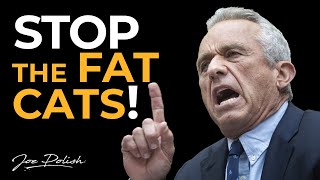
This is a long-form onsite interview (Dec 14, 2023) of Robert F. Kennedy Jr. by Joe Polish covering environmental advocacy and free-market critiques (examples: Hudson River pollution, corporate cronyism), personal recovery from addiction and the role of honesty and 12-step work, openness to therapeutic use of psychedelics (personal family and acquaintances' anecdotes), large-scale addiction and suicide/fentanyl harms, proposals for community-based rehabilitation/healing centers, worries about central bank digital currencies and the importance of transactional freedom (Bitcoin as alternative), and a sustained critique of public-health institutions (NIH, vaccine programs) and influential actors. The interview mixes policy prescriptions (investigate chronic disease causes, ballot access funding needs), personal storytelling, and calls to action (donations/volunteer for campaign).
Questions this video answers
40 years.
106,000 (claimed by speaker).
$42 billion (claimed by speaker).
Approximately $15 million (claimed by speaker).
Chapters
I don't have any control over what happens. Ultimately, that is in God's hands. The only thing I control is this little piece of real estate inside my own shoes. There's a couple of things that every demagogue can use to manipulate people, and one of those is fear, because it disables our capacity for critical thinking. There's a 2013 poll that showed that 85% of Americans under 35 said they were proud of the United States of America. Same poll taken last month showed only 80%. My initial bias about psychedelic drugs is again colored by my experience of being in recovery for 40 years. I would tell myself at 9 o' clock in the morning, I am never going to do that again. And at 4 o' clock in the afternoon, I'd be doing exactly what I said. And, you know, it was like somebody else had stepped into my body and was now, you know, a new driver in the truck. A true free market. You can't make yourself rich without making your neighbors rich and without enriching your community. You show me a polluter, I'll show you a fat cat. Using political clout to escape the discipline of the free market and force the public to pay its production costs. We have to be able to weather those difficulties without being crushed in our soul or without being ultimately affected by it. That's kind of the objective where we all want to be spiritually, where we're indifferent to the personal consequences of everything that we do and that we live our lives for higher purposes.
The vast majority of people in the audience are entrepreneurs, capitalists. Love to get your views on the environment and capitalism, because that's a topic that there's a lot of debate on.
First of all, thank you so much for having me, and thanks for the. For the reception. I've been working as an environmental advocate and attorney for 40 years, for my entire career. But I started out as an attorney for commercial fishermen on the Hudson river, and we built that organization. They launched a patrol boat. These were people who were capitalists. They were small business people, and they saw their livelihoods being destroyed by pollution on the river. And these were people who. The Hudson river commercial fishery is the oldest in North America. It's 350 years old. Many of the people I represent came from families that have been fishing the river continuously since Dutch colonial times. It's a traditional gear fishery. They use the same fishing methods that were taught by the Algonquin Indians to the original Dutch settlers of New Amsterdam and then passed down through the generations. And there was nothing wrong with their business model. But the General Electric company used political clout in Albany to get permission to illegally dump PCBs into the river rather than properly disposing them. And it saved them money. It allowed them to out compete the other producers of capacitators and to win in the marketplace. But they had distorted the market, the market signals by cheating the market. And these fishermen knew that their problem was not their business model. It was that we didn't have corporate, we didn't have free market capitalism on the river. We had a kind of corporate crony capitalism that was allowing polluters to use political clout to escape the discipline of the free market. One of the things I learned very early on was that we don't have to choose between good environmental policy and good economic policy. In 100% of the cases, good economic policy is identical to good environmental policy. If we want to measure the economy, and this is how we ought to be measuring it, based upon how it produces jobs and the dignity of jobs over the generations, and how it preserves the value of the assets of our community. If, on the other hand, we want to do what the big polluters often want us to do, which is to treat the planet as if it were a business in liquidation, convert our natural resources to cash as quickly as possible, have a few years of pollution based prosperity, we can generate an instantaneous cash flow and the illusion of a prosperous economy. But our children are going to pay for our joyride. They're going to pay for it with denuded landscapes, poor health, huge cleanup costs that are going to amplify over time and they'll never be able to pay. Environmental injury is deficit spending. It's a way of loading the cost of our generation's prosperity onto the backs of our children. And my approach has always been colored by my experience. I worked for 40 years for the commercial fishermen and that really kind of colored my worldview about the environment. And if you can go back 35 or 40 years ago and look at speeches that I was giving back then, where people would ask me what's the most important solution, most effective pollution solution to environmental pollution. And I always said the same thing as a free market, true free market capitalism. Because a free market, a true free market promotes efficiency, and efficiency means the elimination of waste, and pollution is waste. A true free market would require us to properly value our natural resources. And it's the undervaluation of those resources that causes us to use them wastefully or recklessly. In a true free market, you can't make yourself rich without making your neighbors rich and without enriching your community. What polluters do is they make themselves rich by making everybody else poor. They raise standards of living for themselves by lowering quality of life for the rest of us. And they do that by escaping the discipline of the free market. You show me a polluter, I'll show you a subsidy. I'll show you a fat cat. Using political clout to escape the discipline of the free market and force the public to pay its production costs. What I did as an environmental advocate, I really always considered myself a free marketeer. That I was going out into the marketplace to catch the cheaters and to bring them to court and say to them, we're going to force you to internalize your costs the same way that you internalize your profits. Because as long as somebody can externalize those costs, it distorts the marketplace and none of us gets the advantages of the efficiency, the prosperity and the democracy that true free market capitalism offers our country.
Okay, great, thank you. Let me ask my team, make sure we put a timer up here so we know the time, if we could, because it's not on. Thank you. So I asked the audience to submit some questions and I can't ask all of them, but one of them was about psychedelics. And let me preface this by saying, you know that I've been in recovery, you've been in recovery for 40 years. And I'm the first person in the world to have before and after brain Scans, doing ibogaine and 5 Meo DMT, which I did in 2015 in Mexico. And we took a film crew and we filmed it and then we did interviews with the doctor that did the before and after brain scans and whatnot. And I've seen miraculous things happen. But I'm also worried about the pharmaceutical industries like they're doing with everything, co oping it. So what are your thoughts on psychedelics? Cause my viewpoint on it is in the field of recovery, depression, mental illness, things like that.
Yeah, I mean, my initial bias about psychedelic drugs is again colored by my experience of being in recovery for 40 years and having gone to, I go to like nine meetings a week, 12 step meetings. I've heard a lot of bad stories about people involvement with drugs and alcohol and pharmaceutical drugs. My bias is that I don't think that in most cases that we can fix things that are wrong inside of us, with things that are outside of us, with all the things that we reach for when we feel discomfort, whether it's drugs or alcohol or sex or Reckless behavior, particularly people who are prone to addiction, are always looking for things outside of them to fix, to fill this empty hole that they have inside of them. Having said that, I have seven kids and my wife in 2012 took her own life and left me with six children. And so all of those kids were at risk at time. And they all ended up doing really wonderful things with their lives. And they're in good relationships and they're outside now of what I would call a risk bubble. One of them was worrying to me because he never processed his mom's death in a way that I could observe. He seemed like a happy kid. He was always smiling. He did get in a lot of fist fights and he was a. He became a boxer and he won a lot of tournaments and then he became a hockey player. But everything he did was a little bit of violence too, and it made me worried about him. And he went to a couple about five years ago. He was very self contained. He never talked about what was going on inside of him. And he went to Patagonia to run a white to kayak a whitewater river that I kayaked for many, many years, every year called the foot le foul. And he went down there to do it with a friend. And he had a five day wait between the time that his kayak trip was going to start and the time that he arrived there. And I had a friend who I knew a little bit, just an acquaintance down there who had some land property down there. And I asked this guy to put my son up for a couple of days while he was waiting for his trip to start. And that guy, the night my son arrived there, he had that guy said to him, I'm doing an ayahuasca trip tonight. And he said, God sent you boys to me because he was doing it with 20.8 Indians. And he said, I was praying to God that he would send me a gringo to do this with. And my kid ended up doing this. And he had this experience where after he drank the ayahuasca, they gave them all a bucket and they gave him a sleeping bag. And it was kind of in an outdoor place with a fire. And after he drank it, he felt himself sinking through all the geological strata of the earth. And he could look at all, he told me he could look at all the folds of stone and geology. And he had a total understanding of all of the processes that had laid them out for the eons. He ended up being propelled out of the other side of the earth and then floating through space. For what he experienced as hundreds of years. And he would focus on a distant planet and be transported there. And on each planet he would have an adventure. At the end of the adventure, there would be a lesson, a moral lesson that he would learn that he was supposed to remember the last place, the last planet he visited. He came into. His mother was there, and she started passing through him, in and out of him again and again. And every time she did that, he felt all these experiences of forgiveness, of love, of understanding, of comprehension, of empathy and compassion. And when he came back from that trip, he was completely changed. He was very open about talking about his feelings. He was on a real spiritual quest. He was very, very openly just happy all the time. And the reason I really know that it changed him is he started taking out the garbage and doing the dishes. And he's done the dishes constantly without ever being asked since then, as he's a 24 year old kid. So, you know, that's a miracle. So that opened my mind to the possibility that there may be something that I didn't understand or that was outside of my kind of bubble of prejudices. And I have a friend who's an AV seal who had severe ptsd and he went to Costa Rica and had the same kind of experience. And I had a couple of other friends who are in the NFL and they also had severe brain injuries and depression, terrible, terrible depression. And the same thing happened. And then I looked at Michael Pollan's documentary, which I think is on Netflix, and there's one particularly poignant story. He goes through each of the psychedelics, a show for each one. And I think the third show was on psilocybin. And there's a kid on that show who had severe ocd. He literally could not go out of his house. He had to do all of these rituals. He had to constantly clean his hands. He had to walk through the door 10 times or 20 times or 60 times, and he had to do all these very repetitive rituals and it absolutely paralyzed him and destroyed his life. And he did one psilocybin trip and it was completely gone. My mind is open to the idea that there may be things that I don't know about and that people ought to have the freedom and the liberty to experiment with these things. I like what you said at the outset, which is, we know the capacity of the pharmaceutical industry to come and capture this. If they see that there's money in it and to turn it into something very, very bad and to promote it in ways that it shouldn't be promoted. So my inclination, and I haven't thought this through that much, but my inclination would be to make this available at least in therapeutic settings and maybe more generally, but in ways that would discourage the corporate control exploitation of it.
Yeah, no, absolutely. And I mean, We could, you know, I believe that addiction is a solution to pain. And addiction works if you're lonely, depressed, anxiety ridden in the moment. But the problem is it has this thing called consequences that can destroy your life and make your life not work. And I think we live in a culture that we have the largest addiction crisis in human history right now. There's a lot of temptation, there's a lot of pain, there's a lot of trauma. I think the last three to four years of the pandemic has created more angst, more pain, more trauma that will last literally generations. And I think millions of lives have been destroyed as a result of it. And one of the coping mechanisms is addiction. And I think anything that could help with that, and I think psychedelics are one part of that is beneficial. If you become president, what could you do or will you do to fix this issue?
I mean, part of the, you know, addiction, like you say, it's a response to internal pain. It's also a response to atomization, to loneliness, disconnection, to disaffection. And we're seeing that's now epidemic in this country where so many of us feel that we're no longer connected to a community. It was a poll recently that showed that. There was a 2013 poll that showed that when asked 80, 85% of kids of Americans under 35 said they were proud of the United States of America. Same poll taken last month showed only 18%. So they've lost faith in our country. They've lost hope for their own future. They've lost a connection to community. And now we're seeing the biggest cause of suicide among black youth today, I mean of death among black youth, is suicide. We lost 106,000 kids last year to fentanyl overdose or to other opioid overdoses. That's double the number of kids that we lost in the 20 year Vietnam War. We're really in a crisis now. One of my kind of moonshot program or Peace Corps program, to use metaphors, from my. My uncle's administration will be to start to launch a string of healing centers around this country, particularly in rural areas where people will go there and do regenerative farming, regenerative agriculture, grow good food, healthy food, and learn to live in communities again without screens without cell phones. And I've looked at these places for 40 years. The rehab industry in this country is, I would say somewhat predatory at this point, like many, many other industries. But I had a relative who was in a lot of trouble. And I started looking all over the world for places that had a different model. And I found this place in Italy in Tuscany called San Padrinano. And it's a 500 acre farm. There's 2,000 kids who live there. It's absolutely free. The only thing they ask you to commit to is to stay there for five years. When you go five years, I mean, listen, if it's a choice, a lot of kids today are on a trajectory where they're going to die. And five years is like college. And if you can save somebody's life, it takes time because you have to re parent the person, you have to reorient them to live in a completely different way. And they're taking people who are criminals, who are not only drug addicts, but people who are headed for prison, headed for something very bad. They take them and they transform them into good citizens at that place. It's completely self supporting. In Italy you can do a check off on your taxes to send $1, approximately $1 on your taxes. There's a little check off to San Padignano. Most of their money comes from their industries. So they have one of the best bakeries in Europe and they teach kids traditional baking skills. They have an apparel center where they do weaving and they have a. They make accessories, fashion accessories. So they make purses for De la Vallee, for Prada, for Gucci, for these other big brands. They have a vineyard, 500 acre vineyard. And they make some of the finest wine in Europe. They have kennels and they have a wallp factory that makes this hand painted wallpaper. Very, very traditional with traditional artisans. There's no cell phones allowed, there's no screens. And the people live together in very, very tight kind of barracks. Six girls. And my relative was a girl and she was put in with six girls who watched her every move. And if she did something selfish, if she did something dishonest, if she, she was called on it. And it taught her a new way of living in a community. And when she came out, she became very, very successful. And not only in her business life, but also her social life. She was utterly transformed. Two days ago I went to a place in Salt Lake City called the Other side that is modeled on San Padignano. And they have now three city blocks full of buildings. They have 300 convicts. They take people out of prison or they take people who are facing long sentences and they interview them to see if they're suitable for the program. They bring them into that program and they rehabilitate them. And they have to make a two year commitment. It's absolutely free. Anybody can walk in the street and take advantage of it. They have the biggest moving company in Salt Lake. They have the biggest storage company in Salt Lake. They have a thrift store that is the size of two Walmarts. They have a construction firm that is very, very successful. And they teach the inmates how to be electricians, how to be plumbers, all of these skills that they can use in the world. And the guy who started it was facing his fifth term in prison. He was facing a 29 year prison sentence. And he persuaded the judge to allow him to go to Delancey street, which is therapeutic community in San Francisco. And he ended up working there for eight years and then coming out and starting this place. And it was so inspiring going to this place, to the other side and seeing what they'd done because it's a model that can be reproduced elsewhere instead of. You know, when I was in prison for the summer of 2001, I was sent to. I did a. I won a lawsuit against the Navy in Puerto Rico for bombing the island of Vieques. And I did it. The judge, there was a corrupt judge who would not enforce my injunction. And so the group I was representing 10,000 people on the island and they asked me to do a civil disobedience to go onto the live fire zone while the Navy was bombing. And I was arrested. They told me, I said, how long am I going to be in jail? And they said, well, just probably a day. But I ended up being the whole summer in maximum security prison. And my son, my youngest son was born while I was in prison. The first time I saw him was on Visitors day. But in that prison, which is a federal prison, much better than state prison, there was no. I couldn't even go to an AA meeting. There was no opportunities for any of the people living there to make their lives better. And we need to do that better. We need to make sure when people come out of prison they're actually productive. So the guy who was running this said to me that when he first started trying to place the convicts and businesses in Salt Lake and nobody wanted them because they're ex cons, but now they have such a good work record and such a good reputation, and he has a list of hundreds and Hundreds of businesses on the wall, and they employ 100% of the people who leave. And everybody in Salt Lake wants people from this program because they're such responsible workers. Oh, it was inspiring to me to see that, the transfer of what I saw inside Patrick nano happen in this country today. The biggest industry in rural areas in our country are prisons. And, you know, and I want to change that and make rehab and restoration of the feeling of community in this country, the skills of living in a community to reparent all of these kids who are lost today, an entire generation of kids with loss, give them the opportunity to go to places where they can. Where they can learn to be productive members of society and where they can get inspired again about their lives and regain hope in their lives.
I love that. I love that. It's great. So you probably met him backstage. I don't know if he's out here, but we have Andre Norman, who's here, who spent 14 years in maximum security prison, and he became the number three gang leader. He spent two years in solitary confinement. And now this guy's like an absolute angel and just helped so many people. And he's in charge of a program which currently has 600,000 tablets in prisons in the United States, soon to be a million. And we have genius network content. We have genius recovery content from my foundation on those tablets. 25% of the world's prisoners are in the United States. We're the highest incarcerating country in the world. I believe it's between 80 to 90% of everyone that's arrested or thrown in jail or prison, drugs and alcohol were involved. 40% of people that are incarcerated committed a violent crime. So that's a separate issue, but 60% had not. So we are incarcerating a lot of addicts. And when someone goes through recovery, as you know, you can take people that were really lying, cheating, stealing, doing bad things, and they become these incredible, compassionate, caring humans. And so I think there's something to that, the whole process of healing and creating that environment. So, yeah, I mean, we'll talk more about that. So let me. I have some questions about tyranny and all that, but before we get to it, cryptocurrency, bitcoin. What are your thoughts on digital currency?
Yeah, I mean, I became a huge converter. I really didn't know anything about cryptocurrency. My kids all are entrepreneurial and are interested in business, and they're all in that space. They were, you know, they had bought and sold cryptocurrencies and Talked a lot about it, but I was really just on the sideline listening to them. And then I saw what happened during the pandemic, what happened in Toronto to the or in Ottawa to the strikers. Children's Health Defense, which was the organization that I ran, started and ran, had embedded in the truckers convoy in Canada. We had a reporter embedded and we were helping them and we were sending money and publicizing what they were doing. And the truckers in Canada were angry at the mandates. And the truckers in Canada are very, very diverse group. A lot of them are from African descent, a lot of them from Asian Indian, Bangladesh, and then just white people from all over Canada. But it's a very, very diverse group. And they had started out in Alberta and they had then done a collected, made a bigger and bigger convoy coming across the country. They wanted to meet with Justin Trudeau and talk to him about the impact of the mandates on their businesses and on their lives. And Prime Minister Trudeau would not meet with them. And instead, and it was, if you look at the videos of this protests in Ottawa, it looks like Woodstock. You know, they had cleanup crews that were picking up garbage. They had crews that were passing out bottled water to people that were feeding the homeless people and hungry people in Ottawa. And there was a feel, there was music and there was a lot of joy. There was nothing nasty or mean spirited about it. And it was portrayed that way by the, by officials, government officials, and to a large extent by the mainstream media. But what they did in Canada is they used AI, they used facial recognition systems and they got the identities of the people who are participating in the protest and they froze their bank accounts. And this was shocking to me because none of them were charged with a crime. They also took $15 million that we had helped raise for them on PayPal and they persuaded PayPal to shut off their money so they couldn't access it. And it occurred to me then that I talked to one of the strikers, the truckers. Now they couldn't buy diesel for their trucks, they couldn't buy food for their kids, they couldn't pay their mortgages. I talked to one striker who said he was facing jail time because he had mandatory alimony payments to his ex wife and he could not pay them. And it occurred to me then that transactional freedom is as important as freedom of expression. If you have freedom of expression under the First Amendment, you can say anything you want about your government without consequence. The government then can shut off your capacity to pay your rent, to buy food, put you essentially on the sidewalk and paralyze you. What does it matter? If you have so called freedom of expression, they don't have to charge you with any crime. And I had seen this happening, what was happening in China, where they have what they call programmable currencies, which is, you know, in China now they use your face is your credit card. So that facial recognition is so ubiquitous and so refined and sophisticated that when you go to a store to pay, you don't use cash. You know, in many places you don't use any credit card. You just use your face to pay. And there's, you know, you have a digital account. On your digital account is other information, including your medical information, including your social credit score. If you drop below a certain credit score, your capacity to use your accounts now ends. And they, for example, they have one system where, and I'll give you an example, if there is a, if the government declared a mask day and you're walking around with your mask below your nostrils and you're seen on facial recognition system which knows everybody, you're going to now lose social credit points. Or if you're too close to your girlfriend on a social distance day, you're not even told about it, you're going to lose social credit. And if you drop below a certain point, at some point, your credit, your facial credit card stops working, except in grocery stores that are within a certain radius of your home. So you can't travel, you can't buy gas for your car, you can't buy an airplane ticket, you can't go to a hotel. You're essentially under house arrest. If the government has the capacity to do that to people, then it has the capacity. I mean, a government that can silence its critics has a license for any kind of atrocity. And it is the top of a very, very slippery slope or totalitarian rule. So again, I was struck at that point by how important it was that we have transactional freedom. And during that period, you may remember this, there were a lot of people in the federal government who were saying, we got to get rid of paper currency. And in fact, in many nations, like in Africa and Australia, et cetera, they were taking away ATM machines. They were doing that on the pretense that paper currency passes germs. So we have to get rid of it. Well, if we go to total digital currency, every transaction that you have is visible to the government, the corporations, it's taxable, can be monetized for profit by somebody, and you have no secrets in your life. If you wanted to buy Cigarettes or pornography or liquor or whatever you want to do stuff that you don't want to share with the world, somebody's going to know about that. And that's a very, very dangerous thing in a democracy. And so I think it's really important that we keep paper currency. Number one, people have access to Bitcoin and other currencies, and that we look very, very warily at central bank digital digital currencies, which are, you know, which they're putting in place right now. And that is how they did it in China. They started with central bank digital currency, and then they expanded its reach to become any instrument for social control. And to me, that's very dangerous.
Wow. Wow. Thank you. Tell me something that nobody in the world understands about you.
I don't know about that. As, you know, one of the things they say in recovery is that you're as sick as your secrets.
Yep.
And, you know, I understood when I was. When I was getting sober that I could not afford to have any secrets. That doesn't mean that you tell the world everything about yourself, but you have to tell somebody. There has to be somebody out there who knows everything. And so I think, you know, I have that. I have a number of people in my life who literally know everything about me. And so. And I think that that's important for.
All of us to speak to, that I'd like to get your viewpoint on, because here you are running for President of the United States. You are openly talking about addiction recovery, which I think is awesome. You're more focused on health than anyone else I know that is running. So you're a great role model in that arena, and you are sick of your secrets. I think that is a. It's true. It was actually at one of these Genius Network annual events in 2015, where I openly just decided I'm just going to share everything. I talked about drug addiction, sex addiction, work addiction, you name it. And it was one of the most freeing things that I did. But I also had been going to 12 steps for many years. And what's the difference between how you basically what you share and what you don't? There's secrecy, and then there's privacy, and there are trusted people. I always caution people not to make like, a Facebook confessional where you just go and share. It needs to be done and when you're ready to do it so you.
Can'T be like an idiot.
Right, right, right. Well, and some people do.
It hurts them. Yeah. You have to make prudent judgments. And, you know, we're not. You know, Jesus said you have to be gentle as lamb but clever as snakes. And you know, you need to be, you know, people. God gave us a brain to use it to make good judgments with, to make prudent judgments. And there's people that you tell everything to and there's people that you tell, you know, but you don't lie, right.
Well, you have a lot at risk for disclosure. So when did you first start disclosing this to others? Because I think, you know, Those from the 12 step world always will mention that it's in the fourth step that you find the cravings will start to relieve when you share it with someone trusted.
I mean, what kept me. I knew that I was an addict from when I was 50, 15 years old when I started. I started the year after my dad got killed. I started taking drugs and I progressed very, very quickly to heroin. And I was addicted for 14 years on and off. But I always wanted to quit. So I tried to earn. I was basically, you know, I was living against conscience at that time. I knew that I did not want to be an addiction, but. And I had iron willpower in other parts of my life. I gave up candy for Lent when I was 13 and I didn't eat candy again until I was in college. And I gave up desserts the following year for Lent. And I never had a dessert till I was in my freshman year of college when I was doing, you know, playing sports and I wanted to bulk up. But I felt like I could do anything with willpower. But somehow this compulsion was utterly impervious to my willpower. And I would, you know, the most, to me, the most demoralizing feature of addiction was my incapacity to keep contracts with myself. I would tell myself at 9 o' clock in the morning, I am never going to do that again. And at 4:00 in the afternoon, I'd be doing exactly what I said. And you know, it was like somebody else had stepped into of my body and was now a new driver in the truck. Was now nothing to do with me. And it was baffling to me, just bewildering. Why can't I control myself? But I tried earnestly, Sincerely, honestly for 14 years to stop and couldn't do it. One of the things I Never tried was 12 step program because of exactly what you said. There was no way, given my background and my vulnerabilities. And I would step into a room of strangers and start talking about what was happening in my life. And I came In September of 1983, I was arrested. I was in the papers. So at that point, there was no secret left. And it was the best thing that happened to me because I was able at that point to come in and take advantage of this program. But I knew from the beginning, you know, if you're an addict, you are dishonest. You're going to. You have to lie. You can't. You know, you can't. You cannot. I don't think. I think it's impossible to be a drug addict and not lie. And so. And I knew that dishonesty was associated with my addiction, and that if I did not become rigorously honest in every aspect to my life, that I was going to fall back into the addiction. And so, you know, I put a lot of effort into that, and it was. You know, it was difficult. I remember one time I was in court, and you know what? It's strange when you get. I wouldn't say I was a pathological liar, but I was habitual, you know, and if you ask me, where did I get this shirt? I would not. The first thought in my head would not be, where did I get this shirt? It would be, what can I say to put myself at some advantage in this relationship? I wasn't thinking, you know, of the truth. And I had to break myself of those habits by when I caught myself saying something dishonest to tell people right then. What I said to you just now is not her truth. And the pain of doing that a couple of times was what allowed me to move. I remember reading very, very early on about an obituary at C.S. lewis, who was a great theologian who wrote the Narnia books and a brilliant novelist. He wrote this obituary about a friend of his where he described his friend as honest as the daylight. And I read that phrase, and I was like, wow, I wish that someday somebody would say that about me. And around that time, I was in court. I was arguing in front of a federal judge in White Plains, and he asked me a question. I said something that was not true, And I sat down, and my opponent got up, and it was something that I could have never gotten exposed on a car. It was only slightly an exaggeration. I sat down, and it would have no consequence to me. It could never have any consequence to me other than just my conscience eating at me. And I sat down, and I was like, you know, wow, that was not true. The next time I got up, I said to the judge, I just wanted to say something. What I said to you was not true. And there was this stunned silence in the courtroom because nobody had ever heard a lawyer do that before. And then it just went on. But the pain of doing that a couple of times, you will get honest, you will get struck on as quickly because it's so agonizing to give yourself up. That got me kind of in a better habit of being on it. And right now it's critical for my. I understand it's critical for my survival. So I'm married to somebody who I don't think has ever told a lot in her life. And she's an example, she's a role model for me, but she has no impulse to it. It's like she has. She just. I've never heard her say anything even slightly self promoting or dishonest or distorted or even exaggeration. And she still manages to be very funny and very interesting.
Wow, that's awesome. Thank you. So let me. My friend Alex Mendozian, who's here, he sent this over to me via text, I don't know, maybe a month ago. And it's a quote from Thomas Jefferson. When the people fear their government, there's tyranny. When a government fears its people, there is liberty. What are your thoughts on that?
I think there are a couple of what I would call alchemies of demagoguery. There are buttons that we all have that were installed in us during the 20,000 generations that human beings were wandering the African savannah in little groups, warlike groups fighting with other groups, defending themselves against lions and predators and trying to feed themselves. And a lot of our hard wiring was installed during that key evolutionary period. And we were following a powerful male leader and doing what we were told. And you had to have unit cohesion and you had to behave like everybody else because otherwise you weren't arguing with the leader all the time. You had to do things. And we all have that programming internally. And so there's a couple of things that every demagogue can use to manipulate people. And one of those is fear, because it disables our capacity for critical thinking. And during, actually during the Great Depression, even before the war in 1932, Franklin Roosevelt gave a speech where he said to the American public, the only thing we have to fear is fear itself is after Wall street crash. What he was saying then was that he saw what was happening in Europe, which was suffering from the same depression in Eastern Europe, in Russia and the Soviet Union, democracy was collapsing everywhere because of the economic pressure. And you were seeing the rise of tyrants on the right and tyrants on the left, and each one was using fear and the other alchemy of demagoguery, which is racism, point to minority groups and saying, they did it to you, they're dangerous to you. These are all things that were installed in us during that multimillion year period. And people can come and exploit them today and disable our capacity for critical thinking. What Roosevelt was saying is the fear is actually our enemy. If we have confidence, we can restore American capitalism. At that point, 30% of the people in this country believed that capitalism had failed and that the answer was communism. And 30% believed that capitalism had failed and that the answer was fascism. And there was a small minority who still believed in democracy and free market capitalism. And Roosevelt, through his strength of character, through his persuasion, through his absolute indomitable calmness, was able to tell people, don't be scared. The fear is your enemy. Because fear is going to be used by demagogues like father Coughlin at that time or Huey Long or these other demagogues who were trying to drum up anger and fear. And he said, that is the enemy. If we stay calm, we'll come out of this. He was able to restore American capitalism because of that. It's an important lesson. During COVID you had both Republican and Democratic governments that were using fear to manipulate people, to tell us do this, do that. And they were telling us to do things that they knew and we knew were wrong. To allow censorship of critics, allowed doctors to be silenced, allowed people who said they were injured to be silenced, to ask people who were standing up for the children and saying, wait a minute, how can you keep kids out of school? They have no vulnerability to Covid, to shut them up and to silence everybody. Silence. Where I was, they were giving thousand dollar tickets to surfers who were out on the ocean and telling them to go home. A disease that even then we knew did not spread outdoors, but it spread, you know, at home when you're locked up. And it was crazy what we were being told to do, but everybody was complying because they were using fear. And to me, you know, my party, the Democratic party, I said, as you know, time and again, I said, you know, Roosevelt told us, don't use fear. And yet the entire government strategy at that time was just to scare the hell out of everybody. You remember they had the COVID death count every day on cnn, ticking like a time bomb that it was going to come and get you. And everybody was put in this state of, you know, your neighbor is a biohazard, don't go near Them and, you know, and we were telling our kids, putting masks on our kids and telling them not to go to. Not to smile at their friends, not to hug their friends. And it was atomizing society and fragmenting it and making it, you know, and that kind of society is very easy to manipulate. You know, I'll tell you. Can I tell one other? There was another one. Alchemy is one of those buttons is our. Our tendency from all those years we spent on the African Savannah to follow a strong leader, a person of authority, particularly a male leader, who will tell us what to do. There's an experiment called. That the CIA financed a lot of studies during the 1950s and 1960s. There were mind control studies to figure out how do you manipulate individuals to become a Manchurian Candidate? How do you manipulate whole societies in order to impose foreign control or totalitarian control? The names of the program, the first ones were Operation Bluebird, Operation Artichoke. And then the later ones were called MK Naomi MK Dietrich MKUltra. The MK stands for mind Control. And they were financing hundreds of studies in universities around the country by usually sociologists or psychiatrists or social scientists. Do different experiments with psychedelic drugs, with torture, with sensory deprivation, with sound deprivation, for various forms of other psychiatric drugs, et cetera. One of those studies was a guy called Stanley Milgram, who was an associate professor at Yale. He did a study where he recruited about 60 people from all walks of life. Students, professors, blacks, whites, business people, every kind of American. And he would bring them in and put them in a room where they had a dial in front of them. And they were told if they turned that dial, it would give an electric pulse to a person who was tied to the chair in the adjoining room. They couldn't see that person. And that person was, in fact, an actor who was a confederate of Dr. Milgram's. When they turned it up, he would scream and struggle and plead and beg and cry. And Dr. Milgram would say, turn it up, turn it down, turn it up, turn it down, turn it higher. Turn it down, turn it higher. And people who are part of that experiment, the people who were the recruits, the subjects, a lot of them were weeping because they did not want to do it. And yet Dr. Milgram was there in a lab coat with all of these badges on them and stuff. So he was this visible figure of authority. You can look this up on Wikipedia, which you should not believe for other as they're actually telling the truth. But if you. 67% of the people in that experiment turned it up to 250 volts, where it was marked potentially lethal. The good news is that 33% of the people got up and walked out. So there's a cadre of people who maintain their capacity for critical thinking even when all of these sort of atavistic stimuli are applied against them to disable that. And that, I think is our aim in a democracy, is to try to be part of that group of 33% who can't be manipulated by fear and can't be manipulated by racism or anti Semitism or all of these other alchemies of demagoguery or authority figures. And my father told me a couple of weeks before he died, I had a conversation with him where he said to me, people in authority lie. And that is something that is critical in a democracy for the public to know. Our job, part of our job in democracy is to question everything. This phrase, trust the experts. It's not a thing. It certainly is not a feature of democracy. It's not a feature of science. In science, you don't trust the experts. Never. I've sued. I've had over 500 cases, and in each one of them there was scientific controversy and there was experts on both sides. When I sued Monsanto, Monsanto came in with experts from Stanford, Harvard and Yale. My wife, who's an actor, came to court that day, on the last day in their testimony, she watched these people and then afterwards, and they were so convincing, she walked out and she said, why are you even troubling this poor company to me? I would like wait till tomorrow. The next day we had our experts from Harvard, Stanford and Yale, and the jury gave us $2.2 billion. It hurt both of them, and they had to decide which expert is lying. And experts have their own prejudice, they have their own biases and their own ambitions, et cetera. And so it's not. Trusting the experts is not a feature of science. It's not a feature of democracy. It's a feature of religion and totalitarianism. But it's not something we do. Well. You know, we were all told to do it right again and again. Trust the experts. It's not. It's something that should set alarms off.
Yeah. So I want to ask you about the way that I view what has happened during the pandemic was the biggest manipulation mind fuck that I've ever seen in my Life. And the 66%, that's scary when you can be manipulated like that, which means there's a lot of vulnerability out there. And so one of the things that led Me into addiction was I was raped and molested as a kid. And so I view what pharma and what a lot of these agencies did was they raped the population, they raped the globe because rape is non consensual, it's penetration without consent. And they did it with syringes, they did it with drugs, they did it with massive manipulation and lots of money behind it. And it was just atrocious. And I feel so sad for people that aren't in the position that myself and many people here that lost their jobs, that don't have a lot of financial resources, and the people that ultimately whose lives were hurt and destroyed the most were people that were poor and then everyone else. You know, psychologically, there's so many things that happen. So if someone wants to get a vaccine, okay, if you want to get a vaccine, but when it's forced upon you, when you're manipulated into it, that's a whole nother level. And so I think there should be a hashtag that's something like pharma rapes or something like that, maybe that I don't know. But there's a part of me that's like, you know, I really don't want to take the get angry and you know, I mean, I love your approach. You're very conscientious about not wanting to, you know, continue the battles and the fighting between each other and trying to bring people together. And that's a tough rope to walk. I mean, do you internally, are you just pissed about this or you just like, you know, I just, I'm gonna do what I can do. I mean, how do you. What is your emotional state as you take on battles? Stronger than anyone that I've seen, at least in that department. I mean, this book, the Real Anthony Fauci, Bill Gates, Big Pharma and the Global War on Democracy and Public Health, which sold over a million copies with zero features in mainstream media. You've got thousands of reviews, almost all five stars. It's all cited, it's all documented. And when I hear people say, well, he's a kook, he doesn't know what he's talking about, I mean, you put more data here, not just you, but all the top doctors that have been, you know, just treated so horribly. I mean, their careers ruined and what do they get for it? They're just trying to help people. And so, you know, I guess my question for you is with this is still happening and is that, I mean, out of all the reasons that you're, you're running for President. I mean, what are the main ones? What would, what do you really hope to do?
I mean, you know, one of the reasons that this, one of the reasons that inspired me to run was I see this chronic disease epidemic in our country. And when my uncle was president, 6% of Americans had chronic disease. And today, and by 1986, 11.8 had chronic disease. By 2006, 54% of kids had chronic disease. And we don't know what it is today because at that point NIH stopped publishing the data. They do not want us to see this happening. And to me it's the biggest thing that's happening right now. The cost of health care in this country. The cost of the military was supposed to go down to 200 billion a year. After the wall came down in 1992, we were promised a peace dividend. It's now 1.3 trillion a year at the cost of health care is 4.3 trillion. And 93% of that is chronic disease. These are new diseases mostly. So by chronic disease there's basically four categories. There's obesity. When my uncle was president, 6% of American kids were obese. Today, 42% and 75 are overweight. American kids did not suddenly become lazy. They're being poisoned, mass poisoned by something and we're all being lied to about it. And that neurological disease, all these diseases had suddenly appeared in the 80s, early 90s, ADD, ADHD, speech delay, language delay, tics, Tourette's syndrome, narcolepsy, ASD, autism. None of us ever heard of these diseases. When I was a kid, I worked at the dead center of the battle for rights for people with intellectual disabilities. My aunt Unit Shriver started Special Olympics. I was working in it as a hugger and as a coach. From When I was 8 years old, I worked for 200 hours in Wasego home from the retarded when I was in high school because this is part of our family DNA. And I never saw a kid with autism, full blown autism. The CDC's data say that in my generation today, today, right now, autism in 69 year old men, 1 in 10,000. And in my children's generation, 1 in 34. What happened? Well, Congress said to EPA, what year did the autism epidemic began? EPA is a captive agency. It's captive by the oil industry, the coal industry and the pesticide industry. But it's not captive by pharma because it doesn't regulate pharma. So they actually did a real study and they came back and said 1989, it's a red line. That is the year the epidemic started. A lot of other chronic disease epidemics started at that time as well. Allergies. I had 11 siblings, 70 cousins. I never knew anybody with a peanut allergy. Nobody prior to 89 heard of peanut allergies. And now there's EpiPens in every classroom. What happened? Something happened in 1989. And eczema. Nobody ever heard of eczema when I was a kid. Now it's everywhere. All these allergic diseases. Anaphylaxis, asthma. My brother had asthma. He was told by his doctor that there will never be a cure for asthma because it's so rare nobody will ever study it. Well, today, one out of every black kids in an urban area has asthma. And then the autoimmune disease, 120 autoimmune disease that we never heard of. Juvenile diabetes, lupus, rheumatoid arthritis, Crohn's disease. All of this stuff that nobody ever heard of. And suddenly it's everywhere. And why is nobody asking where is it coming from? So the pharma is of course making money on it. That 4.3 trillion and 93% of that, that goes for $600. EpiPens, albuterol, inhalers, anti seizure medications, insulin syringes. They're cashing in on it. And NIH right now, instead of doing science and asking the one question, they should be asking, where is it coming from? Instead, they have changed the purpose of that agency to become an incubator for new pharmaceutical drugs, which they keep half of of the Moderna vaccine. NIH owns half that vaccine. They get half the royalties. They're making tens of billions of dollars on it. And there are six individuals at NIH who have march in rights to the patent, who are each collecting $150,000 a year forever from that vaccine. And so naturally, the mercantile ambitions of the individuals and the agencies subsumed the regulatory function of those agencies. And I'm going to end that. And I'm going to go over there during the first week. I'm going to go over to Bethesda, my first week in office, and I'm going to get all of the big wigs from NIH together. And I'm going to say, you know, NIH gives away $42 billion a year, and it gives it to 56,000 scientists, universities all over the country. And what they're doing now is mainly developing pharmaceutical drugs to treat the chronic disease epidemic. And if anybody tries to study where is it coming from, they get a threat from NIH do not study that. And NIH can bankrupt their college. NIH can bankrupt any medical school in the country simply by not giving $300 million a year that that medical school is getting every year from NIH to study cures. Cures and treatments for chronic disease. Oh, I'm going to go down there and I'm going to say, we're going to give infectious disease a break and drug development a break. And we're going to. For the next eight years, we're going to figure out where is the chronic. Why are our kids the sickest kids in the world? Why do we have the highest chronic disease burden of any country in the world? Why do we have the highest 4 times highest health care costs in the world and the worst outcomes? Why are we 79th in the world behind Mongolia, Cuba, Nicaragua, Costa Rica in health care? Why did we have. Why do we have the highest body count from COVID on Earth? We had 16% of the COVID deaths in this country. We only have 4.2% of the global population. Why? Well, CDC said part of it is just mismanagement. The other part is we have the highest chronic disease rate burden. And Covid was killing people with. CDC said the average American who died from COVID 19 had 3.8 chronic diseases. So they had diabetes, they had asthma, they had obesity, and one more. That's what was killing people. It was not Covid. Covid pushed them off the cliff, but the chronic disease got them to the top of the cliff with one foot over. So I'm going to go down there and I'm going to say, we're going to identify. There's a. And I'll shut up.
And I oh, we can go a little bit more if you want.
There's a famous. There's a famous toxicologist in New York named Phil Landrigan, and I, I have used him on many, many cases. He's a genius. And he's very careful now about hanging out with me because, you know, the association could hurt his reputation. But Phil Landrigan has done a series of studies to say, yeah, something happened in 1989 and what could it be you need to find? We know it's not genes. Genes don't cause epidemics. Genes can provide a vulnerability, but you need an environmental toxin. So what was it? What environmental toxins are there that are in the category of suspects that became ubiquitous around 1989, that affected every demographic from Cubans in Key Biscay, Miami, to Inuit in Alaska, and that impact boys on neurological injuries at a 4 to 1 ratio to girls. What is there that could be that? And he's come on with about 13 or 14 things that it could possibly be. One of those is glyphosate Roundup. That fits that timeline perfectly. Another is atrazine, which is another pesticide which is now in 63% of the water systems in the country. Neonicotoid pesticides, same thing. PFOAS and PFAS is the forever chemicals that were put around that timeline in all of our furniture and all of our children's pajamas. They're flame retardants. WI FI radiation from cell phones, ultrasound radiation. Some of these things to me are not suspects, but they have to be treated as suspects so we can eliminate them. High fructose corn syrup, which clearly is part of the explanation for the obesity and the diabetes epidemic. So there's only. There's a small universe. And we have all the data we need already to figure out who's doing it. And what I'll do is I'll go down there and say that's what we're going to do and we're going to find out. And then the vaccine schedule, which went in 1989, we went from three vaccines to 72 vaccines. Three vaccines I got as a kid. My kids got 72 mandated. And the big change here was 1989. So that has to be a suspect, too. So it's probably all of them, or a large part of them. Our kids are now swimming around in a toxic soup and they're getting all of these exposures that operate along the same biological pathways, and they're probably cumulative, but let's find out and then let's eliminate them. And you can say to me, well, even if you find out it's a high fructose corn syrup, by the way, if you drink Coca Cola, you should drink Mexican coconut. This stuff at the high fructose. Let's say we find out it's high fructose corn syrup. What can you do about it? There's million farmers who are tied in that industry. There's big industrial BMs like Cargill and Monsanto and these huge players. You can never change it, but you can. The same way that we did with Roundup. We got Roundup taken out of all home gardening. Because once there's a certain critical mass of science, you can get past this threshold in the courts called the Daubert threshold, where you're allowed to take that case to a jury. If there's about 15 studies that say the same thing, you have Animal studies, bench studies, human studies. They also, at some point, the judge will say, yeah, you can take this case to a jury. There's not. Well, I'm going to create the science. And at that point, you don't need to change the regulations because the plaintiff's bar will go out there and vindicate that product and get it off the market for that purpose. So, anyway, that's the long answer to your question.
So I've studied marketing and promotion most of my adult life and use that for business. And also now with Genius Recovery, my foundation, trying to get, you know, my objective there is to change the global conversation about how people view and treat addicts with compassion instead of judgment, and find the best forms of treatment that have efficacy and share it with the world. And just earlier today, we announced, we have a. We're going to launch a recovery kit to help people with that. And so I think a lot about packaging. And you've got so many studies and so much data and so much research in your book. The real Anthony Fauci that I communicated to Tony from Skyhorse, the publisher, to create, like, cards and decks of all of the information in a shareable form, kind of like an Eckhart Tolle meditation deck or tarot cards, but with all of this data so that people can take it in sound bites. Because I'm constantly. I don't know how all of this research that you have in here exists. And Anthony Fauci is still walking around a free man. Like when Elon Musk said, arrest Anthony Fauci, what is going on? And I'd be curious of some of these people that seem like the just ultimate James Bond villains, that they just want to watch the world burn. And they. It's just crazy to me. So how is someone like that, who. And Bill Gates, I didn't have any idea just how behind. I mean, I'd love for you, because here we are. A lot of people have probably no idea when they hear me. Bill Gates, I met him in 2006 at all things Digital. I used to admire him. I thought he was this incredible businessman. And when you see what he's actually doing and what he's funding, and there's so much of it that it gets past the point of coincidence. I mean, this person has an agenda. Like, what are some things. I'd love for you to just rattle off some things about Bill Gates because you know so much about what he's doing and what he funds.
Yeah. I mean, one of the things that I do in this book, first of all the book's been through, I think probably about 4, 15 to 20 editions in the first edition and all of them I have a note in the beginning that says if you find a mistake in this book, we want to hear about it and we will then change it in subsequent editions. I don't want to be pushing information that is wrong. People accuse me, including the government, of passing on misinformation. My organization has probably the best fact checking resources in the country. We have a team of 300 and like 50. 350 PhD scientists, MD physicians who are part of our scientific advisory team and including until he died recently, Luke Montagnier won the Nobel Prize for discovering the HIV virus in 1983. And none of these people would be part of our team if we were promoting misinformation. In fact, what we now know from the Twitter files is that when the White House was telling Twitter to remove me and Instagram, which they did, Facebook actually pushed back and said what he's saying is actually true, it's not misinformation. And they had to invent a new term called malinformation, which is information that is true, but it is nevertheless inconvenient for the government. I invite people to find an error. There's 2,200 footnotes in this, the new book that just comes out today, I think on the Wuhan cover up as 3,300. What I never try to do is to look into Bill Gates had or to Anthony Fauci's head because I don't know what's going on there. I don't know why they made these decisions. I can show these patterns of behavior that were tremendously cynical and self interested. And I can show that they knew or had reason to know the injuries that they were causing. The faults in the science like Remdesivir, which both Gates, Gates was one of the owners, biggest owners of, of Gilead. And we can document that Fauci knew that remdesivir was going to kill people, that was going to kill more people than it helped and that he changed the study, altered the study outcomes three separate times to make it appear that it was effective and got that approved as the only approved treatment for Covid. And it's probably one of the reasons we had the highest death rate in this country. But I can show that again and again. But I don't look into his head and say here's what he was doing, he was thinking, because I don't know and I only write things that I can document and so what I would urge people to do is read a chapter or two and make up your own mind.
Yeah, read it or listen.
By the way, what we did here is we put with each footnote, there's a QR code so that you can. On your phone, you can look up that study right there while you're reading. You don't have to go someplace. I think it's the first book that did that. Every study, all those 2,200 studies that are in there or quotes or whatever, while you're reading the book in real time, you can go to that study and look at the source document. Document.
Yeah. And it's. It is. It is amazing. And what's even more is just how many copies of this you sold where there was so much attempts to. There were no. No pr. Nothing was talking about it. And you sold over a million copies. I think it's, what, like a million and a half or something at this point? All right, so would you guys like to take a picture with. With Bobby in a little bit? Okay, we'll do that quickly. So let me. Let me ask you a couple more things. First off, I want to give you an opportunity. What have I not asked you? Or anything that you feel would be really useful for entrepreneurs to hear? I mean, you are. You're running for president. I mean, this has got to be. You grew up in a family, though. I mean, this has got to be one of the most stressful things. But maybe it's just the environment you grew up in, and you're built for this.
I don't know. I mean, I have not, you know, I've been very. I felt very peaceful about this, what I'm doing. There's not been any time, weirdly, since I've. Since I started, since I launched this campaign that I've said, you know, I wish I hadn't done this, or, what the hell am I doing? I've had that experience with other stuff. Like when I do, like, you know, there's many times when I, like in rock climbing or when I do a whitewater, you know, a stretch of sort of hairy whitewater, there's a lot of times where I've said, why am I doing this? You know, But I've never had one of those moments with this, and my wife is happy, and, you know, I think my kids are happy and proud of me. But what I tried to do is not project about things, but just, you know, to live one day at a time to do my best. And then to let you know, the Outcome is in God's hands. I came out of the environmental movement and I saw a lot of people who were. If you're in the environmental movement, every victory that you have is temporary and every defeat is permanent. You know, you destroy, extinguish a species, you're not getting them back. You destroy a sacred piece of land and pave it over and it's never coming back. And what I watched during those years was a lot of people who were advocates, who were friends of mine who just got soul crushed because they'd give their lives to preserve a creek or a resource or a piece of land, they'd see it destroyed and they would just withdraw and go into isolation and lose hope. And I just said I'm not to going, going to ever let that happen to me. I'm going to, I don't have any control over what happens. Ultimately that is in God's hands. The only thing I control is this little piece of real estate inside my own shoes. That's the only thing I can control. And I can get up every day and say, reporting for duty sir, and then go forward and try to keep doing the next right thing. He, you know, to put, make my bed, to put the water in the ice tray before I put it in the freezer, you know, to put the shopping cart back where the shopping cart is supposed to go. You know, to do that.
Are you going out shopping right now.
One at a time or is this a secret? And that. And as long as I do that, you know, I can be peaceful. And it makes, you know, to me it gives me power because it makes me, because I feel like I cannot be defeated. And no matter what kind of blow that I got dealt, I get, I'm going to get up again and I'm going to fight because I've detached from the outcomes. I don't have expectations, I try not to. So I never have disappointments. And that I think, you know, it makes me a much more effective advocate for people.
Yeah, I mean you put out a video on Thanksgiving about gratitude that I thought was just absolutely incredible. And you know, I never really studied or followed politics that much. I would talk to my friends that did prior to the pandemic happening. Then I really started. It was a giant wake up call of wow, who's really running things? I have no idea who's actually running the country right now certainly is not Joe Biden. But if not that this would ever happen. But if it did, if Joe Biden or Donald Trump came to you and asked you for Advice. What would you tell them?
I would give them advice. I'd say you should get out of this race.
That's a great sound bite right there. That's really good.
Wow.
So, you know, this is, you know, with all our flaws and the flaws of our founding fathers, I still believe the great American experiment is worth fighting for. And you're taking on one hell of a battle here. And what sort of help or support do you need the most right now?
Well, I mean, the biggest. The most support we need right now is financial support. I have to get on because I'm not running at a political party. I have to get on the ballot in all 50 states, and that means a million signatures and different configurations of signatures. On average, it's going to cost us about $14 or $15 a signature. So I need to raise $15 million. And you can do that from big donors. If you get one big donor. And I need that, they can give to the super pac, but the campaign itself has to do the ballot access. And so the top donation, the maximum donation under Federal law is $6,600. And I need to raise in $6,600 increments. I need to raise $15 million to do that, and then people will volunteer. Go to kennedy24.com and if you have anything, if you have resources, intellectual resources, advice, whatever, I'd love to hear from you. But mainly right now, I need to. I need to raise money for our ballot fight.
Okay. Okay. I was having lunch with today with some of the group, and a woman had said to me about protection and why have you not been granted security protection by the president? And this was put in place because your father was assassinated and you still have not gotten it is what need. And she had mentioned, what can we do to help with that? Who do you send an email to? What do you do to. To get you protection? Because you're paying for your own security right now.
Yeah, I mean, they used to. People can send an email to the White House, as you said, the candidates. Historically, the candidates did not get Secret Service protection until they were. Until after the conventions. And then when my dad was killed in 68, I was with him at that time. They immediately provided Secret Service protection to all the other candidates, to George McGovern, George Wallace, Hubert Humphrey, et cetera, who were running at the same time. And then Congress passed a law that said every candidate, as long as they exceed a certain metric, which I've exceeded for six months, is entitled to Secret Service protection. 120 days prior to the General election. But in practice, the President can provide it to anybody on request. And I'm the first candidate in history who has requested it and not been provided. I've had a number of credible death threats, including three break ins at my house and a guy who showed up trying to get to me in the green room prior to his speech in Los Angeles, who I haven't seen security team that spotted him because he had fake US Marshal badges, a badge, he had fake federal id. And then he was carrying a lot of concealed weapons. He had two shoulder holsters with full magazines and then he had a lot of weapons and a backpack including a laser scope pistol with full magazines, a lot of action magazines, guns and stuff. My team detained him, held him for the police. He was trying to find me and the police then arrested him. He said that he wanted to find me for a job interview, which. Yeah, so then. But my uncle Ted Kennedy, when he ran in 1980, he was given Secret Service protection by President Carter. And they didn't like each other. They really had a lot of personal antipathy toward each other. But Mike Carter gave him Secret Service protection. 450 days out and Obama received it. 450 days out. I think 30, maybe over 30 candidates have received it before the 120 days. Jesse Jackson, Mitt Romney, almost anybody that you can name received it early. So it's standard to provide it early. But I think they know that I have to, you know, one out of every three dollars that I raise is going to my security team. So I think the White House is playing hardball and is, you know, has, has decided that they're, you know, that they're going to try to hurt me financially, which is not really in the spirit of democracy. Because when my father became attorney general in 1961, the first day at work, he called all of the upper staff of the Justice Department and he said to them, we have one rule. We're never going to politicize this agency. Whether you're Republican or Democrat, you're treated equally under the law. And I don't want to hear any, any even rumors that people are giving favoritism to somebody who's a Democrat and that people believe in the institutions of our country because we've consistently had leaders who have respected that. And in the last couple of years, we've seen this erosion where a lot of the federal enforcement agencies are being politicized. And I would say, you know, that it, you know, politicizing the Secret Service is just, is not a good look. We're supposed to be the exemplary democracy in the world. And to say that if people, if you don't like somebody's politics, if they're a political threat, you're not going to give them protection is not, you know, it's just not good for our democracy.
Yeah. Okay. What is the most significant or impactful life decision you think you've ever made?
Oh, I mean, you know, I'd have a hard time with that. I mean, my marriage is one. I wouldn't say that I decided to have kids because it just happens, you know, But I mean, this is one, you know, running is definitely. Running in this race is definitely life changing.
And how do you handle the criticism and the attacks on you? How do you process that?
You know, I process it by. Just because I was raised in a milieu where we all believed that we would, you know, that our lives would somehow be consumed in some great controversy and it would be a privilege to, for us if we were to be able to take an important part in that. And, you know, I think I understood from when I was a kid that if you're going to do anything important with your life, that people are going to attack you and that you're going to get criticism, you're going to lose friends, you're going to lose relationships, that there's going to be, you know, there's going to be a hero's journey where you go through these tremendous hardships, where you go through the valley of death. You feel you're completely alone at some points. And that's part of. If you didn't go through that, it would not be very important. So I feel like whatever I go through is a privilege to be able to do something that's important. And it's just part of it that. And then I also, I feel tremendously loved by my wife and by my children and by other my friends who are important to me. And I feel like everybody else is kind of playing. We're all walking through kind of a dream, right? And that life is a dream and that we have to treat it like that. We have to treat it. We have to ultimately be indifferent. Some of the defeats that we suffer, some of the criticism, the injuries, the wounds that we suffer, we have to get to a place where we're indifferent about it. There's a famous. I don't know how famous it is, but it's a story about a monk whose. Whose monastery was invaded by a warlord in China. All the other monks fled and that the warlord approached this monk who was meditating and tried to talk to him, and he ignored the warlord. And finally, the warlord gets irritated, and he says to the monk, he says, don't you know that I could run you through with my sword without blinking an eye? And the monk says to him, don't you know that I could be run through with your sword without blinking an eye? And ultimately, that's kind of the objective where we all want to be spiritually, where we're indifferent to the personal consequences of everything that we do and that we live our lives for higher purposes. And, you know, in the Buddhist tradition, the word nirvana means putting out the fire, and that means the fire of ambition, of pride, of. Of anger, of desire, at all of these things that we're supposed to view as just clouds that pass over us and that we take an interest in them, but ultimately are indifferent. And we all go through difficulties in our lives, and we have to be able to weather those difficulties without being crushed in our soul or without being ultimately affected by it and just focus on what we do, you know, and the choices that we actually get to make. That's ultimately the only thing that's important.
Thank you. We've got another evening session, but thank you. Thank you, Robert F. Kennedy, Jr. Everyone, and.
Thank you all very much.
Here's his book. Oh, picture over here. Let's do a picture. We'll do this with the book.
Thank you.
Thank you.
More from Joe

This FBI Trick Can Command Respect Without Saying a Word ft. JEFFERSON FISHER & CHRIS VOSS

How To Stand Out, Be Different, and Create Raving Fans, Customers, and Employees ft. Jesse Cole



90% Of Businesses Fail In Their First Year, Here's Why! ft. Dr. Benjamin Hard & Dr. Robert Cialdini

The 1 Piece of Business Advice I Got From Elon Musk That Changed Everything Ft. Kamal Ravikant

The 6 Traits You CAN'T Teach in Entrepreneurship ft. Richard Branson & Gino Wickman

The Leg Method: How to Make Your Book into a Million-Dollar Asset ft. Anna David


7 Millionaire Mindset Hacks for Daily Success and Wealth ft. Brian Tracy & Dan Sullivan
