Richard Branson: How A Dyslexic Drop-out Build A Billion Dollar Empire!
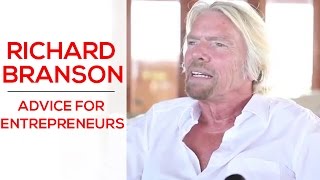
Richard Branson talks about building Virgin from dyslexia and dropping out of school, leading with people first, delegating ruthlessly, and using the brand to tackle social problems through Virgin Unite. He built a billion-dollar empire by protecting downside risk and making work fun.
Chapters
Hi, this is Joe Polish, and I'm here with my friends Jannik Silver, Maverick Business Adventures, Marie Folio, Rich, Happy and hot. This is Mr. Sir Richard Branson. Obviously, Virgin and everything related to Virgin, from Virgin Unite for the foundation to Virgin Airlines, started with Virgin Records and Virgin, pretty much like several hundred things. And of course, I have a company called Piranha Marketing and one of the top podcasts in the world@ilove marketing.com on iTunes. Now, we wanted to ask Richard some questions about you and about your business, about your success. And, you know, Richard, first off, we're sitting here on this amazing, gorgeous, beautiful island called Necker, and you've built this as a result of being an amazing entrepreneur. So I wanted to ask you what. What makes a successful producing entrepreneur? And I'll let Marie do the honors.
Ah, gosh. What makes a successful entrepreneur? I'm not sure that somebody will know that they're an entrepreneur from the beginning. I think they will have a desire to make a difference to other people's lives and they'll see that, you know, something's frustrating them. There's a gap in the markets. They feel they can do it better themselves and they'll try to, you know, fill that, fill that gap in the market. And, you know, that's, you know, and then. And then they almost become an entrepreneur by, you know, by default. You know, I don't think. I don't think you can sort of set out to become an entrepreneur. I think you've got. You've got to set out to make it. Make a difference to other people's lives.
Well, what are the business principles that have stood out for you, that just have worked really well for Virgin and for even building any sort of organization or cause?
Well, again, I don't necessarily think of them as business principles. I think the word, you know, I think the word business, it becomes the business. But what you're doing is you're. You're, you know, painting a picture. You're trying to. You're trying to create something to make a difference to other people's lives. You have a blank canvas and you're filling in every little bit of that canvas to get every single little detail right. And if that canvas sings out at you at the end and it's a beautiful picture, your business is going to be successful. If bits of the canvas are not quite right, your business may fail. So if you set up a. If you set up to change people's lives, you've got to get every single little detail right. You've got to make sure that the people that you're working with 100% believe in what you're trying to do. And you've got to make sure that what you're trying to do is worthwhile spending your time on. And at the end of the day, you want to be sure that, you know, the people's lives you've affected, you've, you've really been, you've affected them and benefited them. And, you know, if you get all that right, you know, hopefully you'll be able to pay the bills at the end of the year.
Well, you know, I know you've started so many businesses, Richard. I mean, you have, I think 300 some companies right now. And, you know, so many entrepreneurs. I work with a lot of entrepreneurs who are startups, who are in their growth phase, who are even in their, you know, legacy phase. And if you're in a startup mode, I mean, you just talked about this painting the canvas. That's really incredible. Is there like one tangible piece of advice that you wish that you had when you were just starting your first business?
I mean, the absolute key and like an old stuck gramophone record that existed in my day is how good you are with people. And if you, you know, if you genuinely care about people, if you can surround yourself with people that, you know, genuinely excited about what you're doing, if you, you know, if you can draw out the best in people, if you, you know, if you're good at, you know, praise, lavishing praise on people and not criticizing your people and inspiring your people, you know, that's something you just have to do from day one. You know, never use the I word. I mean, it's, you know, you're a team. We're doing this, we're doing that. Just never ever, you know, let it sort of center on yourself and just be a great, great leader of people. And, you know, if you can do that from day one, even if you've got one other and working with you or two other people working with you, then you know, you can enjoy the good times together. But there will be bad times and your people will pull around for you. They'll work day and night to try to keep whatever it is you're creating alive and make sure it survives. So the number one lesson is be a great people person.
And I got a quick follow up. And the follow up would be, so now you've started to make it as a business owner. So now we work with a lot of seven figure, eight, nine figure business owners. What did you do to take it to really the whole next level.
Well, I think the next stage is to be a great delegator and not try to do everything yourself. Try to find people who are better than you all the time. Try to find people who are better than you to put you, put you out of business effectively. So, you know, whatever you're spending all your day doing, try to find someone who's better than you to do that, to replace you at it so that, you know, you can go off and, you know, think about the next big picture. You know, an entrepreneur is not a man, not a manager. I mean, an entrepreneur is somebody who is great at conceiving ideas, starting, starting ideas, building ideas, but then handing over to really good managers to manage the businesses. You know, the moment you've got more than one business, you can't be hands on doing everything. You know, if on the other hand you are, you know, you're not really a great entrepreneur, but you're a really good manager, you know, then fine, just immerse yourself in the business. You know, worry about every, every detail. Don't worry about having to move on to other businesses. So it slightly depends on what kind of person you are. You know, in a strange way, Steve Jobs was more a manager than an entrepreneur. I mean, it sounds slightly strange to say that because, you know, but I mean, he, he was somebody that, you know, focused on, you know, you know, almost specifically on, on one subject matter, you know, immersed himself in that business. He second guessed everybody with everything. No bit of artwork could go out without his approval. And he built a formidable business, but pretty specific business in one area. And you know, and it worked very well for him. But you know, if you want to be a true entrepreneur and you know, build a lot of different businesses, you've got to be a great delegator.
So one of the things that we're all passionate about and I think we really admire you for is being a great marketer. And when you're launching a new company, how do you start to think about the marketing campaign? You know, what's the first steps? How do you even begin that whole process?
Well, the most important thing about marketing anything is, does, does the product itself, is it worthy of people's attention? So make absolutely certain that you've got a product that is worth going out there and shouting about. And once you've done that, then I think the cheapest form of marketing is to use yourself to try to put the company on the map. You know, there are a lot of chairman chairmen of Companies who seem to hide behind a bushel and just refuse to use themselves. But I think a good. A good chairman, at least a third of their job will be getting out there and promoting their company. And if anybody knows anything about that, that's, you know, if you're going to promote your company, you know, try to get yourself on the front pages of the papers rather than a little byline in the back pages. You know, be ready to make a fool of yourself. Try to come up with ideas that make people smile. You know, we've often tried to sort of pull the tail of our bigger competitors and have, you know, fun ways of trying to, you know, get our companies on the front pages rather than the back pages of newspapers. One fun one. You know, I had a telephone call one morning and I was to be told that, you know, the British Airways was sponsoring this giant wheel the other side of the House of Commons and that they were having technical problems getting the wheel up. And they had the world's press there to film it as it was going up. And we had an airship company. So I scrambled this airship and just out at London and headed towards this giant wheel. And as it flew over, you know, the massive banner at the back just simply said, ba can't get it up. And we had a lot of great coverage at BA's expense for that, and the press loved it. And obviously that helped help get Virgin on the map. Okay, cool.
Janik, you know, that actually ties into something that I truly, absolutely love and admire you for, is the fun and the just that amazing DNA that you instill in all your businesses and the culture. And where does that come from? Does that come straight from you and it kind of bubbles down, top down, or is it literally just everybody creates that?
I think the chairman of a company needs to be willing to let their hair down. And if, you know, if you take a party situation as an example, you know, if the chairman of the company stands in the corner sipping sherry with his fellow directors, as normally happens in a lot of company parties, everybody else in the room will be standing in huddled corners, you know, having boring conversations. If the chairman of the company is the first to throw themselves in the swimming pool and drag a whole lot of other people in with them, everybody else will be in the swimming pool or have the most memorable party they had in the year, and they would have had fun. And that sort of spirit of fun can. Can make it a fun company to work for. And therefore, you know, chairman of company has to be a leader. I mean, it has to, you know, has to try to, you know, get that sort of spirit of, you know, spirit of fun in the company and not take themselves too seriously. I mean, obviously there's the serious side of running the business, which people will appreciate and expect. You know, if you're running an airline, you know, you've got to make sure the planes fly and that the, you know, in the daytime, the engineers don't drink and the, and the pilots don't drink when they're flying and so on, you know, but when people are off duty, people should be able to have fun. And it's getting, you know, getting that balance. And I think that Virgin, you know, we've managed to get that balance. You know, we've got the best safety record of any airline in the world. But that doesn't mean that our staff can't have fun. And because they're having fun, because they enjoy the company they work for, they're genuinely proud of the company, they smile, they're happy. And therefore our passengers who fly on our planes, they smile, they're happy and they come back for more. And therefore we have a successful business.
Okay, well, I mean, I think we can all agree that we're all massive supporters of business owners and entrepreneurs. And you believe that.
Business owners having fun?
Totally. I mean, well, first off, let me talk about that for a moment. You know, I mean, here we are on Necker and we're bringing a group of people, all of us in our own businesses. Jannik has his maverick business adventures, which mixes fun with business and just, you know, allows people to do amazing, awesome things.
Marie, I wrote down a rule that you said yesterday, which was there's no work that can be done in the afternoon of Necker. And you literally stepped in and said, we're not having this meeting at 4:00'. Clock. And, and that's so amazing because it's like most entrepreneurs never take that time to just re energize and regroup.
I think that you can have meetings after meetings, after meetings where people can actually end up being burnt out. Whereas if you're having fun with people and get to know people and getting to know people in fun situations, you can learn a lot more than perhaps in formal meetings. So, you know, so yeah, we mustn't eat into our fun time.
I mean, Peter Drucker said you're either working or you're in meetings. So I tend to like that. Okay, Richard, I believe that you believe that social and economic problems can be solved in many ways through entrepreneurism. And I wanted to get your perspective.
On that, I think it's worth making one point, first of all, and that is that creating businesses in themselves can, can solve social problems. Because by, by being an entrepreneur, creating businesses, you create jobs. By creating jobs, you can help. Help take people out of poverty. And obviously that applies, you know. Well, that applies worldwide today, I think. I mean, it's particularly with recessions and things around the world. But equally, I think that, you know, once you've actually created a successful business and you feel that, you know, the business secure, I think if every business could then become a force for good and you can use your entrepreneurial skills to think, how can we, as, you know, as a company, tackle a social problem in the local community? Maybe if you're quite a small business, use our entrepreneurial skills to see how we can tackle it better than it's been tackled before, or if you've created a bigger business, maybe how can we tackle some of the seemingly intractable global problems and again, use our entrepreneurial skills to see how they can be tackled in a better way than they've been tackled before? I think if every business could do that, an awful lot of the problems of the world would get resolved.
So you've had the experience of meeting, I'm sure, just thousands of entrepreneurs over time and also helping to create them. Is there any consistent mistake that you see entrepreneurs make in business that they could possibly avoid?
I think, I think that if you don't protect the downside and you sort of treat your business a bit like going into a gambling, Gambling. Gambling casino and, you know, so keeping on doubling up to, you know, hoping that you're going to get out of a problem, you know, then you're asking for trouble. And eight out of 10 businesses do go bust. And quite often it's because people haven't thought of the, you know, the downside consequences of what they're doing. So without being too conservative, it is important, I think, to always think, you know, if I do this, what's the worst that can happen? Can I afford the worst? You know, for instance, right now, you know, some of our airlines have protected against oil. Oil going up. Now, a lot of, a lot of people within our airlines said, well, look, it can't possibly go any higher. We've got a recession on, you know, so do we really have to protect? The wiser people at Virgin said, yes, you know, we should protect against the worst happening, you know, so it was, it was good and sensible that they protected against the downside.
I see that too, Richard. I Mean, just as a great example is like Virgin Mobile, as we'd say in the uk, but Virgin Mobile and just instead of buying, building all the communication, all the infrastructure it would take, you literally leased, I think Sprints lines. And so there's very little downside and very big upside if it worked for you.
We have a strong brand and therefore we're able to avoid the enormous infrastructure costs of, of sometimes of building new businesses. We can piggyback on other people's infrastructure using, using, using our brand. And, you know, we'll, we'll put in the brand, we get 50% of the company, we use our marketing skills and other people put in the infrastructure. And that in itself also, as you say, protects the downside.
You know, with all the decisions that you have coming across your desk wherever you're at your beach, I guess it could be, yeah, exactly. How do you make really tough decisions on a daily basis? Because you're just, you've got to be. You've got so many requests and demands of your time and people that want your attention in the world. And like, what's the Richard Branson methodology of, I guess, time management, priority management, really thinking it through. I mean, how do you, how do you do all of this?
Well, you know, we spoke about delegation and I think the first thing is to make sure that everything is running without you. So, you know, if, you know, when I'm swimming around the island every day, you know, the shark comes and decides that I look tasty and I disappear. That, you know, everything will, will continue to run. And, you know, it may not run in exactly the same way, but it will continue to run and Virgin will continue to grow. The fact that everything is running, we've got a fantastic team of people on a global basis. It means that literally I can, you know, work out how I want to spend my day. And I think, I think it's absolutely essential for all of us that we stay fit and healthy because, you know, if we're not fit and healthy, we're not going to be able to achieve anything. So, you know, so, you know, I will swim around the island every day or I'll, you know, go kite surfing or I'll play tennis or I'll, you know, I'll do something to make sure that the body is healthy and the endorphins are running and, and then I can throw myself into work. And I suspect at least 50% of my time is sort of setting up not for profit organizations in the world to tackle, you know, some of, some of the Bigger problems of the world and, you know, the other 50%, I suspect, is diving in and out on, you know, some of our businesses around the world. You know, maybe doing a bit of firefighting when things are going wrong or giving them a push when things are going right.
So I have a question that's a little more personal in nature. I'm wondering, when you first started. Yes. When you first started and you were getting everything going, did you find it challenging at all to have any kind of balance? Because I know you love your kids so much and you love your wife so much. When you're getting something going, you invest a lot of time in the ramp up stuff stage. Did you ever deal with that sense of guilt of like, oh man, I have to put the phone down or oh God, I have to just shut it off, you know what I mean, and spend time with my family?
Well, I've done something which is slightly unusual and I think, you know, possibly it's the advantage of owning your own company and that is. I've always worked from home, so I've never worked from an office. When I say never notice pretty well never. I mean, you know. Right, right. In the early days, you know, I'd pop in a lot to our record record company. And so I originally worked in a. In a houseboat. You know, the kids would, you know, be crawling around on the floor. I'd be having, you know, meetings with people, might even be changing a nappy. You know, so the kids literally, you know, grew up, you know, grew up with me as we were building the Virgin, the virgin empire. And, and then when the kids holiday time came, you know, we would pack the bags and I would just move my office, you know, to Necker Island. And you know, so I would always be around my family. I suspect, you know, we're closer than, you know, closer than a lot of families because of that. And, you know, yes, I would be, you know, spend quite a lot of time on the phone and, you know, I'd be busy. But we were around each other. Now I think if there's any lessons to be learned from that for other people, I mean, I do think that with modern communication one shouldn't have to get stuck in an office. The more one can get out and about, the better. If you've got companies, go and live your companies. Spend a lot of time with your people. Spend as much time with your family as you can. And I think getting that balance is absolutely critical and making sure that you bring up great kids who are happy and loving and you found that time for them is critical because they are going to be the next generation.
What is your unique ability? What makes you Richard Branson? People consider you charismatic, friendly, funny. I don't want to say good looking.
Yeah, yeah.
Yeah, that pretty much sums it up, yeah. No, I mean, what makes you effective? I mean, so, you know, people look up to you as one of the most recognized, successful, fun entrepreneurs on the planet. I mean, what, what makes you.
You. I think, I think the, the sort of fun side is, is perhaps natural. I mean, I think, you know, I've always enjoyed having fun and making sure other people have fun around me. You know, whether it's, you know, building a UFO and flying it over London on April Fool's Day. You know, many. I was, I was quite, quite young when I did that and caused that absolute panic with the, the police force and the army coming out and so on, you know. But I think it's sort of, it's natural. I think other people can, you know, who are maybe not naturally that way inclined. I think they can train themselves to enjoy life more than they perhaps are, and they may be taking themselves too seriously. I think they can, you know, if they made it, make a real effort. They can also find the fun side in them. And I think you can train yourself out of. I mean, I was a awful public speaker when I was young and, you know, and the amount of ERs and UMS, I mean, I can now feel them coming back again. You know, somebody once did an interview with me and they cut out all my ERs and UMS, and my ERs and UMS were longer than the actual words that were there. And so I think you can train yourself out of difficulties. Somebody said to me the way to. The way to overcome fear of public speaking is just think of yourself. You're in a living room having a chat with some friends. And that helped me a lot. So I just, from then on I just have a chat with friends and it seemed to manage all right. But let's move on to another question. I can't remember.
Well, no, no, I want to go a little deeper with that one, just for a minute though, because, I mean, you do some things that other human beings don't do, and it makes you really effective. And I've often wondered, have you ever identified that or do you really not know? I mean, do you know what makes you powerful and influential and persuasive and, and causes people to want to surround themselves with you and get behind your causes and become a client of your Businesses. I mean, what. What is the. What's the Richard Branson secret sauce? I mean, do you really know?
Well, look, I think you are only as good as the reputation you've built over many years. And I hope you know that I've managed to build a good, good reputation. And, and therefore, hopefully, people can, you know, can trust. Trust me. So, you know, if you. If you look back over Richard Branson's life, there's the exciting side. You know, they're trying to, you know, be the first to fly around the world in a balloon or, you know, the fastest across the Atlantic in boats and so on. And. And I think that that sort of slightly sort of sexier side of my life, you know, the fun, adventure side, has also helped the brand and helped make the brand a bit more interesting than say, you know, British Airways, where the chairman, you know, hasn't put his life on the line too often. And then. And then there's the actual companies themselves. The fact that I think we have made it made quite a big difference to people's lives in, you know, whether it's, you know, if you fly on a plane or travel on a train or, you know, or listen to music, etc. You know, I think in a lot of different areas, we've made different differences to people's lives. And so I think there is some substance there. You know, hopefully then, you know, it's down to personality, whether you. Whether you're good at dealing with people, whether people want to actually spend time with you and, you know, whether you genuinely care about people. And I'm just extremely lucky. I love people, love spending time with people, love learning from people. Hopefully I'm as good a listener, which I think, as a good leader has got to be a great listener. Not wanting to listen to themselves all the time.
You know, I want to jump in on something. You keep coming up with this, make a difference and, you know, being a difference, and that's about entrepreneurs creating a difference. And so, you know, I actually have written it down in my journal because we've had several conversations on Necker, and one of the things you said that you wanted written on your tombstone or your gravestone was, he made a difference. And so I'd love to hear about that in the context of entrepreneurs and maybe their next phase or where you think it makes, like, for Virgin unite, because has it always been, let's make a difference and then, you know, the community and social involvement and the social entrepreneurship and the charitable, philanthropic side, or is that maybe in the second phase of entrepreneurship. Love to hear your take on that.
I think when you're starting a business, you've really just got to concentrate on survival and climbing over that wall. And once you've climbed over that wall and you know that you're secure and you can survive, then you can start worrying about the next phase, which is continuing to build your businesses, but. But also tackling some of the problems in the world. I think I personally get enormous satisfaction from utilizing some of my wealth and my entrepreneurial skills to look at some of the social problems in the world and see if they can be tackled in a better way than they've been tackled in the past. And so in this temple that we're in right now, you know, it's got 12 pillars. The elders was formed in this temple which Nelson Mandela and Grush and Michelle are the founding elders. And you know, they've appointed 12 wonderful men and women in this world who go into conflict regions and try to resolve conflicts, use their moral authority to try to tackle them. And we run the Elders just like we'd run a business. And we've found excellent chief executive to head them up, make sure they're properly funded, and then give them the freedom to go and do the wonderful things that people like, you know, Kofi Annan and Archbishop Tutu and President Carter and Nelson Mandela can do. And that is use their moral authority to resolve issues. And we've set up a number of other similar organizations in different areas, you know, the Carbon War Room, you know, to try to get on top of the problems of global warming, A Center for Disease Control in Africa to try to get on top of the problems of diseases in Africa and have done done it in quite an entrepreneurial way.
You've accomplished so much in terms of business and in terms of philanthropy. I would love to hear. Is there like two things? Is there something you're most proud of creating in business? I know I've had the pleasure and the honor of being at now three of your Virgin limited edition locations, you know, including here in Necker Island. And then I've also had the honor of being involved with some of Virgin Unite. So just would love to hear if there's things that kind of pop out for you. Just being so proud that you that you had a hand in creating them.
Well, I hope that our. I hope that Virgin Galactic will be on the business front. Perhaps the most exciting business that we've ever created. You know, the idea of building a spaceship, you know, I still have to pinch myself when I think about it. The idea of being able to fly on a spaceship that we've built is pretty damn exciting.
I'm pretty excited about it. I'm up for it. I'm in. I'm 144 already.
They.
We've still got to get these other two up.
Hey, hey, if there's a spot for me, get my specsy spacesuit on.
Anyway, I mean, I think. I think that, you know, it's the start of a whole new era where, where you. Where of commercial spaceship travel. And, you know, we're only about a year or so away, so it's getting. It's getting very, very exciting. You know, if you can tap into, you know, the hundreds of thousands of people I think would love to go to space and try to make it affordable to hundreds of thousands of people, then, you know, there's so many, so many possibilities in space. So on the business front, although I'm jumping the gun a bit because it hasn't even been properly born yet, I think Virgin Galactic will be perhaps the most exciting business venture that we've ever done.
And how about on the philanthropic side? Is there. Is there. I know you have so many initiatives and you're very passionate about many of them, but is there one that even if currently right now is just kind of popping for you, that you feel is. Is very important?
I think the Elders is something which hopefully will live on for hundreds of years, where the, you know, the leaders in the world who have really excelled can then be appointed by the Elders to join them as Elders, you know, to speak out on the big issues in the world and for the world to look up to. You know, that's something which I think will hopefully live on for hundreds of years and I think could make a big difference.
Well, you know, I mean, you could have just cut a big check or could all the time to charities, but instead you decided to start your own with Virgin Unite. So why did you do that? And what would you like to see Virgin Unite accomplish? And even people that are, you know, watching this interview, watching us talk with you, you know, what would you. Why did you start, first off, Virgin Unite and what are you hoping that it accomplishes?
I think if you're an entrepreneur, you can make a check go much further if you actually use your entrepreneurial skills alongside your philanthropic wishes to tackle problems. So I think that by setting up the Elders, or by setting up the Carbon War Room, or by setting up the center for Disease Control, we will run those like we'd run a business and we'll make sure that every penny is well spent and it's not wasted. And we'll make sure that, you know, that those organizations make a real difference. There are some times that we'll just write out a check to really good organizations. I mean, the tiger is in peril. I mean, there's only 2,800 tigers left in the wild. Most beautiful animal on earth. So we're supporting, you know, organizations that are trying to make sure that the tiger is there for generations to come. And hopefully, you know, hopefully we can get the numbers to double and triple. But where we feel we can bring our entrepreneurial skills is something we will.
Now. Would you like to ask us anything, Richard, Perhaps. Here you are with three brilliant entrepreneurs. I mean, there's got to be possibly something you want to. How can we help you?
We're here to serve. Now, Joe, is it your clothes that makes you so successful? Is it your good looks or is it just your brains?
You know, it's all the above, actually. No, it is my head. It is the fact that I have access to incredible amounts of knowledge in this world. You know, when people say, and I'm trying to answer this in a serious way, and I'm going to, though, because it's interesting, you know, when people sit around and say, I'm bored. I could never come to grips with that whole concept. There's so much to do. I mean, there's so many amazing people. There's so many things to learn. I mean, even if you're by yourself, you've got this incredible brain and you can actually do something with it. I mean, one of the reasons why do I come to Decker island, why.
Do we recruit people the way we do?
Why do we hang out with you? Because we want to act. We're inspired by people that actually do.
Something big and have great daring goals and amazing things that they want to impact in the world.
And so what? Same question for you.
What makes me successful? Honestly, I think when I discovered that I didn't have to hide my personality in my business, and I love to party, I love to dance, I love to have a good time, and I'm slightly inappropriate. And when I realized that I could be that in my business, everything changed. Everything changed. And I get to hang out with amazing people like you. And I just realized that business and fun go hand in hand. So I think that's it.
Sorry, guys, she's engaged. But isn't she gorgeous? Isn't he a lucky man? Anyway, look, I just like to say thanks. It's been fun. You got to go kite surfing. Joe's, I'm sure got more just. So are you going to relax, go snorkeling and you're not allowed to leave us?
I don't. I'm going to come and spend some time with you in Morocco next. That's my next mission.
All right. Morocco next sounds good. Anyway, thanks very much, everybody for listening.
This is Joe Polish, and I want to thank you for watching the interview with Richard Branson and Marie and Jannik. And what we'd like you to do now is there's a website that they have, which is virginunite.com and they do a lot of incredible things in the world, from the Branson school of entrepreneurship to all the. The many social problems that Virgin Unite, along with many partners, is attempting to really impact and tackle. And if you'd like to get involved, please visit the website and get involved. That's why we're all here, and we'd love to have you do that, too. So thanks for, thanks for watching and thanks for your support.
More from Joe

This FBI Trick Can Command Respect Without Saying a Word ft. JEFFERSON FISHER & CHRIS VOSS

How To Stand Out, Be Different, and Create Raving Fans, Customers, and Employees ft. Jesse Cole



90% Of Businesses Fail In Their First Year, Here's Why! ft. Dr. Benjamin Hard & Dr. Robert Cialdini

The 1 Piece of Business Advice I Got From Elon Musk That Changed Everything Ft. Kamal Ravikant

The 6 Traits You CAN'T Teach in Entrepreneurship ft. Richard Branson & Gino Wickman

The Leg Method: How to Make Your Book into a Million-Dollar Asset ft. Anna David


7 Millionaire Mindset Hacks for Daily Success and Wealth ft. Brian Tracy & Dan Sullivan
