Richard Branson: URGENT: Reconsider Your Work-Life Balance Now (Before Regret Sets In)!
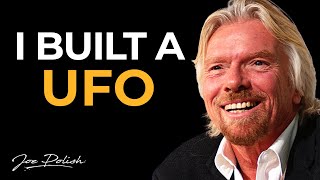
This YouTube interview (Dec 22, 2023) led by Joe Polish gathers entrepreneurs and leaders (including Richard Branson) to discuss work–life balance, what makes effective leaders, philanthropy, mistakes in success, and the value of human connection. Branson emphasizes integrating family with work (worked from home, moving his office to Necker Island), building mission-driven initiatives (The Elders, Carbon War Room), and excitement about Virgin Galactic. Other speakers (Chip Wilson, W. Brett Wilson, Anthony Amos, Patrick Gentempo) add perspectives on parenting, redefining success ("size of the smile vs. size of the wallet"), community building, and the practicalities of entrepreneurship.
Chapters
So I have a question that's a little more personal in nature. I'm wondering, when you first started.
Yes.
When you first started and you were getting everything going, did you find it challenging at all to have like any kind of balance? And because I know you love your kids so much and you love your wife so much, you know, when you're getting something going, you invest a lot of time in the ramp up stage. Did you, did you ever deal with that sense of guilt of like, oh man, I have to put the phone down or oh God, I have to just shut it off, you know what I mean, and spend time with my family?
Well, I've done something which is slightly unusual and I think possibly it's the advantage of owning your own company. And that is. I've always worked from home, so I've never worked from an office. When I say never notice pretty well never. I mean, you know. Right, right. In the early days, you know, I'd pop in a lot to our record, record company. And so I originally worked in a, in a houseboat. You know, the kids would, you know, be crawling around on the floor. I'd be having, you know, meetings with people, might even be changing a nappy, you know, so the kids literally, you know, grew up, you know, grew up with me as we were building the Virgin, the Virgin empire. And, and then when the kids holiday time came, you know, we would pack the bags and I would just move my office to Necker island and you know, so I would always be around my family. I suspect, you know, we're closer than, you know, closer than a lot of families because of that, you know. Yes, I would be, you know, spend quite a lot of time on the phone and you know, I'd be busy, but we were around each other. Now I think the, if there's any lessons to be learned from that for other people. I mean, I do think that with modern communication one shouldn't have to get stuck in an office. The more one can get out and about, the better. If you've got companies, go and live your companies. Spend a lot of time with your people, spend as much time with your family as you can. And I think getting that balance is absolutely critical. And making sure that you bring up great kids who are happy and loving and you found that time for them is critical because they are going to be the next generation.
What is your unique ability? What makes you Richard Branson? People consider you charismatic, friendly, funny, I don't want to say good looking.
Yeah, yeah.
Yeah, that pretty much sums it up. Yeah, no, I mean, what makes you effective? I mean, people look up to you as one of the most recognized, successful, fun entrepreneurs on the planet. I mean, what. What makes you. You.
I think. I think the. The sort of fun side is. Is perhaps natural. I mean, I think, you know, I've always enjoyed having fun and making sure other people have fun around me. You know, whether it's, you know, building a UFO and flying it over London on April Fool's Day. You know, many, you know, I was quite young when I did that and caused that absolute panic with the. The police force and the army coming out and so on, you know, But I think it's sort of. It's natural. I think other people can, you know, who are maybe not naturally that way inclined. I think they can train themselves to enjoy life more than they perhaps are, and they may be taking themselves too seriously. I think they can, you know, if they made it, make a real effort. They can also find the fun side in them. And I think you can train yourself out of. I mean, I was a awful public speaker when I was young, and, you know, and the amount of ERs and UMS, I mean, I can now feel them coming back again. You know, somebody once did an interview with me and they cut out all my ERs and UMS. My ERs and UMS were longer than the actual words that were there. And so I think you can. I think you can train yourself out of difficulties. Somebody said to me, the way to, you know, the way to overcome fear of public speaking is just think of yourself. You're in a living room having a chat with some friends. And that helped me a lot. So I just. From then on, I just have a chat with friends and it seemed to manage all right. But let's move on to another question I can't remember.
Well, no, no, I want to go a little deeper with that one, just for a minute, though, because, I mean, you do some things that other human beings don't do, and it makes you really effective. And I've often wondered, have you ever identified that, or do you really not know? I mean, do you know what makes you powerful and influential and persuasive and. And causes people to want to surround themselves with you and get behind your causes and become a client of your businesses? I mean, what's the Richard Branson secret sauce? I mean, do you really know?
Well, look, I think you are only as good as the reputation you've built over many years. And I hope that I've managed to build a good reputation and Therefore, hopefully, people can trust me. So if you look back over Richard Branson's life, there's the exciting side. They're trying to be the first to fly around the world in a balloon or the fastest across the Atlantic in boats and so on. And I think that slightly sexier side of my life, you know, the fun adventurer side, has also helped the brand and helped make the brand a bit more interesting and say, you know, British Airways, where the chairman, you know, hasn't put his life on the line too often. And then. And then there's the actual companies themselves. The fact that I think we have made it made quite a big difference to people's lives in, you know, whether it's, you know, if you fly on a plane or travel on a train or, you know, or listen to music, etc. You know, I think in a lot of different areas, we've made different differences to people's lives. And so I think there is some substance there. You know, hopefully then, you know, it's down to personality, whether you. Whether. Whether you're good at dealing with people, whether people want to actually spend time with you and, you know, whether you genuinely care about people. And I'm just extremely lucky. I love people, like, love spending time with people, love learning from people. Hopefully I'm as good a listener, which I think, as a good leader has got to be a great listener. Not wanting to listen to themselves all the time.
I want to jump into something. You keep coming up with this make a difference and being a difference, and that's about entrepreneurs creating a difference. And so I actually have written it down in my journal because we've had several conversations on Necker, and one of the things you said that you wanted written on your tombstone or your gravestone was, he made a difference. And so I'd love to hear about that in the context of entrepreneurs and maybe their next phase or where you think it makes like, for Virgin unite, because has it always been let's make a difference and then, you know, the community and social involvement and the social entrepreneurship and the charitable, philanthropic side. Or is that maybe in the second phase of entrepreneurship? Love to hear your take on that.
I think when you're starting a business, you've really just got to concentrate on survival and climbing over that wall. And once you've climbed over that wall and you know that you're secure and you can survive, then you can start worrying about the next phase, which is continuing to build your businesses, but. But also tackling some of the problems in the world. I think I personally get enormous satisfaction from utilizing some of my wealth and my entrepreneurial skills to look at some of the social problems in the world and see if they can be tackled in a better way than they've been tackled in the past. And so in this temple that we're in right now, you know, it's got 12 pillars. The elders was formed in this temple which Nelson Mandela and Grush and Michelle are the founding elders. And you know, they've appointed 12 wonderful men and women in this world who go into conflict regions and try to resolve conflicts, use their moral authority to try to tackle them. And we run the Elders just like we'd run a business. And we've found excellent chief executive to head them up, make sure they're properly funded, and then give them the freedom to go and do the wonderful things that people like, you know, Kofi Annan and Archbishop Tutu and President Carter and Nelson Mandela can do. And that is use their moral authority to resolve issues. And we've set up a number of other similar organizations in different areas. The Carbon War Room, to try to get on top of the problems of global warming. A Center for Disease Control in Africa to try to get on top of the problems of diseases in Africa. And have done it in quite an entrepreneurial way.
You've accomplished so much in terms of business and in terms of philanthropy. I would love to hear. Is there like two things? Is there something you're most proud of creating in business? I know I've had the pleasure and the honor of being at now three of your Virgin limited edition locations, you know, including here in Necker Island. And then I've also had the honor of being involved with some of Virgin unite. So just would love to hear if there's things that kind of pop out for you. Just being so proud that you, that you had a hand in creating them.
Well, I hope that our. I hope the Virgin Galactic will be on the business front. Perhaps the most exciting business that we've ever created. You know, the idea of building a spaceship, you know, I still have to pinch myself when I think about it. The idea of being able to fly on a spaceship that we built is pretty damn exciting.
I'm pretty excited about it. I'm up for it. I'm in. I'm 144 already.
They.
We've still got to get these other two up.
Hey, hey. If there's a spot for me, get my specsy spacesuit on.
Anyway, I mean, I think, I think that, you know, it's the start of a whole New era where. Where you. Where of commercial spaceship travel. And, you know, we're only about a year or so away, so it's getting. It's getting very, very exciting. You know, if you can tap into, you know, the hundreds of thousands of people I think would love to go to space and try to make it affordable to hundreds of thousands of people, then, you know, there's so many. So many possibilities in space. So on the business front, although I'm jumping the gun a bit because it hasn't even been properly born yet, I think Virgin Galactic will be perhaps the most exciting business venture that we've ever done.
And how about on the philanthropic side? I know you have so many initiatives and you're very passionate about many of them, but is there one that even if currently right now is just kind of popping for you, that you feel is very important?
I think the Elders is something which hopefully will live on for hundreds of years, where the leaders in the world who have really excelled can then be appointed by the Elders to join them as elders to speak out on the big issues in the world and for the world to look up to. That's something which I think will hopefully live on for hundreds of years and I think could make a big difference.
Well, you know, I mean, you could have just cut a big check or could all the time to charities, but instead you decided to start your own with Virgin Unite. So why did you do that? And what would you like to see Virgin Unite accomplish? And even people that are, you know, watching this interview, watching us talk with you, you know, what would you. Why did you start, first off, Virgin Unite, and what are you hoping that it accomplishes?
I think if you're an entreprene, you can make a check go much further if you actually use your entrepreneurial skills alongside your philanthropic wishes to tackle problems. I think that, you know, by setting up the Elders or by setting up the carbon war room, or by setting up the center for Disease Control, you know, we will run those like we'd run a business and will make sure that every penny is well spent and it's not wasted. And. And we'll make sure that, you know, that those organizations make a real difference. There are sometimes that we'll just write out a check to really good organizations. I mean, the tiger is in peril. I mean, there's only 2003, two, sorry, 2800 tigers left in the wild. Most beautiful animal on Earth, you know, so we're supporting, you know, organizations that are trying to make sure that the tiger is there. For generations to come. And hopefully, you know, hopefully we can get the numbers to double and triple. But where we feel we can bring our entrepreneurial skills is something we will.
Hey, I hope you're enjoying this video. And I want to let you know that I have a new book that's come out, and if you'd like to get it absolutely free, there's a link below in the description. Or you can wait till the end of this video, or you can Simply go to joe'sfreebook.com and you can get a copy there. You know, even before we started, we're talking about, I mean, you've had incredible financial success. You're a billionaire. And even, you know, hearing that, I'd be curious to hear it. You know, when people are like, chip Wilson, billionaire, like, how do you think about that? Because you struggled so much financially growing up, so you've been on both spectrums of having financial wealth and whatnot. In terms of. I asked you earlier, before we were recording different business things that you're looking at, and you said, you know, I'm really just. I've got kids. I'm really happy. I love spending my family. And I'll tell you, that's actually really rare for most people I know that have had extreme financial success. Many of them are still mired in business. Not that you're not running companies and doing things, but this is such. Your wife, your children. From everything I've seen about you, heard about you, just, you know, and just feeling it. I mean, this is so, so important. So I'd love to get some family, relationship and parenting, call it advice or suggestions or things that you've learned. And why is it so important to you? I mean, out of all the things that could get your attention, how does Chip Wilson determine. This is really what makes me happy. This is really what's important to me, and this is what's going to get my attention. Because I think as an entrepreneur, one of the most important things to protect is your attention and what.
What you give it to. I think there's never enough because there's that era of, like, the Great Depression thing or entrepreneurs growing up in a poor family, and you never think you have enough. Something is going to happen, some disaster is going to happen. It could be the 2008 crisis. It could be the 2001.com thing. It could be, you know, cancer happens in the family, and there's all of that fear that I don't have enough. And I think people are driven that way. And I think, again, It's a matter of choice. Like people looking at how long they think they're going to live their life. And on the deathbed, what's really important, you can read billions and billions and billions of things and everyone will say it doesn't. Didn't matter I made another business meeting or didn't go to another dollar, made another dollar. Was, did I have a relationship with my family? It seems all kind of. So if that part is the most, is what gives the whole life meaning at the end of the day, then that's where we should be putting our intention. And certainly what I did, does it mean that I had a perfect relationship with my kids? No. You know, like they're their own people. And you can pick your friends and you can pick your business associates, but you can't pick your family. And so, you know, a parent's dream or thoughts or whatever they're going to be is they're their own individuals and you kind of have to work with that. And I think it's unconditional love. And I think everybody comes around at the end of the day.
So does your whole family have kind of like, for lack of a better word, a personal development program in the same way that you've done in your companies? Or how does your wife, Shannon, and your kids, I mean, how do they engage with reading and development and learning in the way that you have?
Yeah, I mean, they're phenomenal. And I think we had so much success in Lululemon and we probably put like, you know, 25, 30, maybe even 100,000 people through that, you know, or two, three week course that we had that. I think the children grew up within that and then they just automatically kind of fell into it, like that was normal. So it wasn't something that had to be talked into. So again, through that we've developed the linguistic abstraction so we understand the definition of responsibility. Rackets, complaints, buy when, dates. You know, I've got like a series of about 30 of them. So we have a basis for communication which makes it very easy for us to get through stressful issues.
Yeah, yeah.
Chip, in your world, you've had to encounter things that most people in business probably don't at the level that you have from, you know, PR that wants to attack you to, you know, people that simultaneously are begging money from you while also envious and want you to go down to ruthless business deals. And you, you just seem like such a, you know, I mean, I met you at TED for the first time, you know, several years ago, and then Again a couple years later. And you just are your demeanor, your tonality, you're just a kind, friendly person. Is this the chip that everyone sees or to what level? I mean you just seem like a much nicer person than a lot of very high level people. And I've interviewed quite a few and many are friends and some are just acquaintances. And I gauge who becomes my friends and who's in my inner circle or how are people that are more powerful treat people that are less powerful than them. And I've seen people with power can become really hardcore and really arrogant. And I'd love to get your perspective on navigating this world of not only financial success, but I mean you do have tremendous influence, but you've also, from everything I can tell, the positivity that you've put throughout the world and how much you've changed, it is pretty spectacular. And I mean you don't, you don't sell poisonous food that kills people. You actually are one of the people that openly speaks about the things that are damaged. So I want to kind of get your perspective on power and just who you're being as a person.
It's very difficult for me to. I have this American like loud marketing side to me and I have this very reserved Canadian side to me. And the Canadian side I think overtakes. I would never self promote myself in any kind of way. I think that it's all about the company or the people or the product. And I think, you know, I've always been in the tried to be in the background of all of that. Now there's times when things happen and I wouldn't know what was happening to me. And what I learned in the business part of it is that there's the business of making a product and being with people and supplying solves for people and really being happy with all that and how the business works and the mechanics of it and right from one creativity right to the customer. And then there's also then the business of business which is governance, finance, public and all and private equity and all that type of thing. And other people wanting control but putting a facade up in front like they're really out for the best of the company as a marketing tool for them to get what they want to get personally in life. And I'd say my demeanor is one is I trust everybody. And so my life has been one where I'd rather leave my keys in the car and trust everybody. And every now and again my car gets stolen and that's fine with it. You Know, because I can't spend my brain power not trusting people. Right? But there are 4% of the people in the world that are sociopaths, and then there's a whole group of people that, you know, they've got a winning formula on how to make money. And it's very different than I'd call what I'd call a very west coast peace, love dove, Hare Krishna, all you groovy cats, loving everybody, you know, and being out for the best for everybody. It was. It's. And so what am I getting at there? I'm getting at that I would find myself at times when I was, like, upset, I was mad. I didn't know what was going on, what was happening. And it just was too hard for me to believe that people had an agenda that was different than what they said it was. And so once I really got the context that everyone's an entrepreneur, and these people aren't bad. They've just got a good business formula, and now I have to go, oh, I have to deal with that business formula. Right, right. And I think that had me be super calm about business.
That's very good.
That's interesting.
How would you define an entrepreneur? I mean, what's entrepreneur? I mean, I know the original definition.
If you've never read it, I don't.
Know if you ever heard it, but I.
Well, you know, I don't know if you've ever heard my definition, but my definition is an entrepreneur is someone who's too incompetent to work for anyone else. And really, you know, I was. I had, like, big ideas. I had things I wanted to do, and I'd get into a company and start working. I just go, like, I can't work in this minutia. I have to like, no, I want to do this. And. And so I became somebody that wasn't a very good employee, you know, and so. Okay, you know, it's kind of chip, you know, if you don't like the way we're doing things here, why don't you go do it yourself? And finally, I had no other option. It wasn't even a choice. It was like, if I want to feed myself, I gotta figure something out.
No, honestly, I was in the same boat when I started my own company. I was 22 years old. I could not work for other people. I just had this thing in me, even to the point where I, you know, was in debt for, you know, two years, Credit cards, just, you know, clean carpets, doing hard manual labor, and I was even going broke doing It. And I was like, you know, there's so many ways to go broke. You know, sitting on a couch watching TV is an easier way to go broke than doing hard manual labor carpets. But it was in me. I was wired, and I wanted to do it.
And you learned probably something there.
Oh, my God.
Yeah.
And I think entrepreneurs, they solve problems for a profit, you know.
Yeah, yeah, yeah, exactly. That's very good.
And like Dan Sullivan says, you just make it up and make it real. So you came up with all these things and you actually made them real. And so there's a lot of people that will be watching this that will look at you as an incredibly aspirational role model of how to build and grow a successful enterprise. And they're trying to take their ideas and. And make them up and then turn it into something. And I remember saying this years ago in a seminar. If I would have known how difficult being successful in business was, I would have stuck with being a loser. It was just a lot.
Except you have a passion. Exactly.
Again, it's another version of advice you would give to the person out there that hasn't quite nailed it yet. And I say this because even the people that really have reached the top, most of them don't think they have, Right?
There's never any top. Yeah, exactly.
And so the world's highest achievers live with the highest levels of dissatisfaction.
I mean, I agree with you. Yeah. I mean, not me, any. I chose not to. But I could see my mind moving into that realm if I wanted it to.
Well, that's something I want to highlight, too, then. I'd love to speak to that mindset that you've had about that, because, look, if you're going to play the game, you might as well enjoy it as best you can, because a lot of times you could be winning, but feel like you're losing totally based on how you frame it, how you look at it. And so when I ask questions like, what would you say to a young person? The truth is, I'm really talking about everybody because this is all available to anyone that's willing to do it. So if someone is wanting to just become better and they're, you know, they don't. They're not hitting it, what advice would you give them? Or what do they need to do? They need to change their attitude? Do they need to look at a different business model? I mean, what are some of the factors? I know there's not just one answer, so I wanted to get some of your perspective.
Well, I go back I can only say about me. But, you know, there was that time when I was like 18 when I just decided that I wanted to learn everything I could. And I think there has to be. Knowledge is based on the knowledge you already have. So the more you know, the more you know, I find that some people just aren't. They say this is. They say they want to be successful, they say they want to do it, but then they play their video games or they watch football games on Sunday or they, you know, they're not really driven. I think mostly because they haven't found their passion. And I think they haven't found their passion because either when they were in university, they didn't take a myriad of courses to find out what was really easy for them, which is where their passion is, or they haven't read enough to actually find something they're passionate about. And it almost seems lame, like talking to people like, find your passion. But I think I would have made athletic clothing for no money my whole life. Just enough to pay my, to feed my family, just enough to pay the mortgage would have been fine because that's what I was put on the earth to do. Right. You know, and so I think it's up for people to get out there and find that. And, and as we've talked about before with the landmark is like figuring out what the blocks in my life were that had me view the world from a place of ultimate possibility rather than being constrained from my past.
What scares you, if anything?
Well, I think the normal things, like one of my kids dying would be number one. I'm actually not concerned about climate change at all. I think the world is like moving at such a rapid pace, technology wise that we're going to, we've got to solve for everything. It's coming. Like the knowledge that's on the web and the way people are able to crowdsource information and solve things at such a rapid rate I think is far faster than climate change is occurring.
Yeah, well, I agree. And there's a lot of technology and I will say this because I'm still, as far as I know, Richard Branson's largest fundraiser. I've raised a few million doll. A big chunk of that money has gone into things that have to do with climate change and the environment. And I've also been around a lot of people that are in that world that call themselves like the saviors of the planet. And this, that I don't find to be very, you know, very high integrity individuals. And I think a lot of it is used as fear tactics and things. And there's enormous solutions. And I look at both sides and I'll interview people on to get completely different perspectives. And there's a guy that I interviewed, Alex Epstein.
Oh, very good, great guy.
And he wrote a book called the Moral Case for Fossil Fuels. And it's very fascinating because he doesn't sell anything related to that field. He just took a look at how much propaganda is put out about climate change and things, and this other side didn't have a voice to it. And of course, his favorite book is Atlas Shrugged, which is one of the. One of my favorite books and one of your favorite books, and we can even maybe talk about that. But, yeah, I mean, I think technology coming from the mind of entrepreneurs and the creation of things can solve almost all world problems. And I don't think we have a resource problem. We have a distribution problem when it comes to food. And some of the greatest resources are human resources employed in a certain way. And if I. I don't know if anyone's ever described the you this way, I think you are a brilliant deployer of human resources by empowering them in a certain way. Like the original definition of entrepreneur, the first time it was recorded in usage was in 1804 by a French guy named John Baptiste, who said an entrepreneur is an individual that takes resources from a lower yield to a higher yield.
Okay, interesting.
Yeah, from a lower level of productivity to a higher level of productivity. And so when someone thinks of, you know, there's an axe to chop down the tree and someone invents a chainsaw, they've made an invention. But I think when you take a human mind and you take it from here and you make it here, be more productive, higher integrity, more resourceful, more happy, that's entrepreneurship. And then you apply that to technology or anything where there's world problems, you can improve it. And there's plenty of people that use business principles to sell toxic foods, alcohol and tobacco, pharmaceuticals, things that are damaging. But there's a lot of other individuals that are what I would consider empowering and doing things that do good for people. And I think the way that I think of you, which is one of the reasons I wanted to interview you, is there's very few people that not only have transformed an entire industry and have made billions of dollars as a result of it, but have empowered literally hundreds of thousands of team members. Because when you take someone to get them to read that book or go through landmark or whatever sort of thing, you've not just improved that person's performance and their career. You've improved their family, you've improved their.
Family'S family and then their community and then. Yeah, it's extraordinary how that works.
Yeah.
Okay, so I guess with what. It's easy to ask what makes a successful entrepreneur? How have you been successful? But what I'd like to delve into, because you're totally open about talking about stuff, is how have you fucked up? How have you. Like, what are the mistakes you've made? What are the.
We only have 25 minutes.
Yeah, yeah, we're gonna. The three days we're gonna spend talking here starts right at the this moment.
Let me do some paraphrasing really quick. So I was born in a small town in Saskatchewan. My mother was a social worker. My dad was a car salesman. And that's why I sometimes describe myself as a capitalist with a heart. Finished high school when I was 16 years old. Been bullied a lot, picked on. Went off to university, first year of engineering. I'm looking around and these guys are absolute dorks. They've got jeans that are torn, shirts that are dirty, glasses that are taped. And for the first time in my life, I fit in and it was great. And I ended up getting involved with student politics. I had seven elected positions in my last two years on campus. From residence to central student body to the senate. And I started building self confidence, probably more than I needed, but certainly lots. And ended up working as an engineer for a few years up in the Arctic, across. Across Canada. Some extraordinary experiences. Then I ended up doing a business degree. I did an MBA at the University of Calgary. My specialization was in entrepreneurship. And I really, truly fell in love with the world of entrepreneurship. A place that I'd been afraid of. My dad had bought a grocery store when he was younger and it had failed quickly. And so my parents didn't speak glowingly of anything entrepreneurial. It was, how do you pay the bills? Well, you have a job. And so that was really my focus. Then the world of entrepreneurship stumbled along. I spent five years with one of the biggest investment banks. It was associated with Sherman Lehman, Shearson Lehman. And I had some extraordinary experiences in investment banking, in Energy Partners. And I built an investment bank from scratch. We put up 2 million of capital. It was valued at over 300 million. Ten years later, we're doing 100 million of revenue. And you can imagine that in an Investment Bank, 95% goes to revenue salary. And the partners took most of that. So we were coining it left, right and center. Everything that you ever want to celebrate in terms of recognition, I got listed as one of the top M and A specialists in the country. I got listed as one of the top 20 deal doers in the country. Recognition and philanthropy, left, right, and center. But to jump to a probably the pivot point, I still remember the night vividly where I was stuck at home babysitting. And that sentence in itself tells you almost the whole story. Stuck at home babysitting. I was parenting, not babysitting, because it was my own kid. And being stuck at home, in hindsight, was a huge mistake in my mind. Made a lot of money. So we had a big house. And the bigger your house is, the more you can spread your family out, so the less you have for connection and communication. That was really important to me at that time. And the reason I was stuck at home that night was that I had wanted to be at an art auction. There was a particular artist whose piece of art was up that was going to change my life. So I had to be there. But I decided to call in by phone. That's fine. Anyway, the phone rang regularly that night. I was in the office. I had a couple of kids in. In two of the other bedrooms, way at the other end of the home. And I finally phoned the auction house and said, where are you at with this, Lindner? And they said, well, we've already sold it. I was pissed. And I said, well, Peggy, I told you I wanted to call. And she said, I called three times, and a little girl said, you weren't home. So now I've got every right to be pissed, and I'm going to rage at this little girl for what she did to me. I remember going up to Rebecca's room, opening the door, and she's lying on the bed, crayons, coloring, whatever she was doing. Nine years old. I don't remember what I said to her in the two minutes that I was standing there. Three minutes. But she crawled under her bed. She was so afraid of this vicious prick standing at the door. What I remember the most was the last sentence, which was, what the fuck are you doing telling someone I'm not home? And she looked up at me and said, well, you never are. That was the first time I'd ever cried standing without a reason to think it undermined everything I'd ever done in the previous. I mean, the reason I worked hard was to show my family how much I loved them. How fucked up is that? Anyway, I sat down in another room and I just realized how screwed up things were. And everything I just told you about in terms of success. And the recognition was absolutely meaningless given what I'd accomplished. And I ended up through a circuitous route, discovering a place called the Meadows, Wickenburg, Arizona. And I checked in for a month. My partners at the investment bank thought I was gone forever, that I was going to bow out and be done. I left the Meadows after a week with the encouragement of my counsel. She said, you know what you got to do. And my book really speaks to this. The book's entitled Redefining Success. And the full title would have been, if they'd had room for it, Redefining Success in a Wealth Obsessed World. And we live in a wealth obsessed world. I've heard many speakers, many coaches challenge that and I appreciate that greatly. I've loved what I've heard in the last day and a half. But we do live in a wealth obsessed world. Your first words when you define success. The size of the house, the size of the wallet, the size of the party, the size of your office, the size of the desk, the size of everything that's based on the shallow and superficial trappings of wealth. Anyway. And the subtitle on the book, by the way, is Still Making Mistakes. And I remember negotiating with HarperCollins or whoever my publisher was in terms of I wanted the longer name. And they said, well, why don't we just call the book Still Making Mistakes? I said, look, my life's not that up. I want the headline is Still Redefining Success. And let me tell you, I just spent two weeks in Hawaii with the daughter I raged at. I just spent two weeks in Hawaii with her husband and their six month old baby. The four of us were there and there was tears when we went our separate ways. So trust me, I've recovered the gap that I created that night. But a lot of it was, oh, thank you. But it really came down to resetting priorities. And someone else has made the comment, it might have been Derek, but he was talking about how do you define success? And that's a really interesting question because most people define it by accomplishment. And ultimately, I'll jump to the closing line right now was my daughter who coached me and she's heard me tell this story exactly as I told you. She's been in the audience a couple of times and she just waves and I love you, dad. But her comment is, why can't we define success by the size of the smile instead of the size of the wallet? And it really drives home for me the importance of how I've evolved my life. I've been to more than 50 countries with each of my daughter and my son. I've been to 30 countries with my oldest daughter. I have three kids, two girls and a boy. They have amongst them three husbands. I couldn't be more in love with all three of the husbands. I'm struggling with my relationship with my oldest daughter right now. She's just like her mother, but that's another story and I'm learning. And actually Amy Chan, wherever the hell you are, you gave me a couple ideas so thank you for that. Thank you. The daughter I'm struggling with, I work with a coach. I have a full time coach and he came to me 10 or 12 years ago and we did not like each other. That's because he asked the tough questions and that guy pissed me off. Anyway, he, we got, we, we stuck it out and he actually offices in my offices now looking after other people. And anyway my daughter reached out to him about three months ago to get coached on how to get through to me. So we're working on it and it's just something I'm again I'm working on because I care. And that goes back to the definition of success. The size of the smile. Going back to definition of priorities. And that became, you know, the night that I was stuck at home babysitting, my priorities would have been wealth, art, the car, the cars, the house, the holidays, the jet, the visits, all of those things that would have been my priority list.
Why?
Because those are the things I did to make sure my son, my family knew I loved them. Coming out of the meadows, my priorities shifted. Very simply, number one, health. A lot of people talk about physical health. Well, as you know there's sexual health, physical health, emotional health, spiritual health. There's the relationship health. There's a lot of things about health. And the reason your health is so important is that without it you've got nothing to give the others in your life. So that became my number one priority. And a lot of us try to prioritize other people in our lives but if you don't have your health, I mean I'm a four time and I heard the word cancer survivor and I've evolved that to the word cancer graduate. First time I got cancer scared the out of me. I was the C word meant I was going to die. And I still remember driving in a car I had a friend of mine was driving at a 15 passenger van. We were taking all our kids up to the lake and I'm writing out my funeral plans I'm crying. The kids don't know I've got cancer. And all of a sudden, someone from the backseat, my son taps me and says, dad, all right, we'll close the book, and we're done. And I thought I was going to have to tell him something because I was afraid he had read something in my notes, and he said, dad, I have to pee. Well, that was the end of my pity party. And we stopped peed and kept going anyway. So there was a fear factor embedded in cancer. Round one, and it led to the meadows. It led to a lot of different things. But the second round of cancer was 14 years later, and that was just a learning moment. And round three was three years ago, and round four was a year ago. And to be blunt, round five is next Thursday. And because of targeted therapy, I'm completely unafraid of the cancer I deal with, so there's no problem there. But I really do believe I became a better person because cancer may have saved my life. The death spiral I was in in terms of work, life balance, and family. Cancer gave me every reason to rethink that. That's that fear factor, that scare factor. But it can wax. So the number one priority would be health. Number two is family, and I've screwed that up a few times, but it is a priority. Number three is friends. I live for friends. I absolutely love my friends. I enjoy spending time with friends. I put a higher priority on friends than the charities I support.
Support.
And I'm working on that more and more. Number four is education, and that's your learning. Whatever you choose to do, how you learn, whether it's online or books or university or college, I don't care. It's learning. So that's number four. Number five is the career. You got to pay your bills somehow. And number six is community. But there's many things I do that engage all six, and that's the fun factor. Whether it's taking 60 people to Mexico to build homes. Well, that sounds like charity. No, it's the best team building work I do with family and friends. It's extraordinary. We happen to build some homes. People benefit, but our benefit is multiples. And the guy who runs this program in Mexico, Shawn Lambert, Homes of Hope, as he calls it, it's mutually transformative. So there's a bunch of work there. So, anyway, reprioritizing my life allowed me to redefine success, and it's got me to a much happier place.
Hey, I hope you're enjoying this video, and I want to let you know that, that I have a new book that's come out and if you'd like to get it absolutely free, there's a link below in the description. Or you can wait till the end of this video or you can Simply go to joesfreebook.com and you can get a copy there.
That's great.
Here's the thing, because you having built out franchises and this is kind of what you're doing now, there's the technician, the person that does the actual work, especially in the service business, then there's the visionary, the person that comes up with this idea. How do we replicate it? So clearly my perspective of you is you're this visionary guy. Washing dogs just happens to be the service provided. But it's the whole business around that. Because just washing dogs in and of itself does not make somebody a millionaire. Learning how to develop a business and package it around that does. And so since the vast majority of people that are listening to this or watching the video version of this, if you are listening to the audio on the podcast, we do have a video version of this too. I mean, I would like to speak to some of those people because those are the ones that typically listen to my stuff. And they want to, they're either already in business, they want to start their own business, they're looking for different key insights and things. And I don't think about just oh, how do we help entrepreneurs market or how do we build businesses? Is I try to think, how do we build a better entrepreneur? Which has to do with their health, it has to do with their family, it has to do with the value creation behind what it is that they're doing. So there's a lot of layers to what it is that you're doing. It's one thing about washing dogs, but you've got causes. The idea from you, it started with your son Austin about saving dogs lives. So I kind of want to go into all of that. But first I want to ask you, what's your philosophy when it comes to feedback, family and business? Since you're traveling around the United states in an RV in 200 square feet, you know, I mean, so how do you think about this?
The transition from Australia to America was just mind blowing because we all speak English, but our cultures are so different. And I often do things. I'm going to tell you a very funny story that's actually in the book that I've just written. I always do. The cultures are colliding and the, and the colliding of the cultures is always I tend to get away with a lot of things because of the Australian way. Nothing's ever intentional. It's just who we are. And the Americans are a little bit more serious than us. We're sort of a little bit more. What's the word? Careful.
Americans are more serious than. By. To what degree? I mean.
Well, just by. With the rules and regulations of having. Like, for example, if somebody wanted to sue you in Australia, you have to put money into a retainer and you've got to go down a path and actually go to a bigger effort to get someone. But here they do it on pro bono. You just. Basically, that's the difference. We know if you've done something wrong, then we're ready for the consequences. But here you can sort of go for somebody over the littlest, tiniest things and it doesn't cost you a thing to do that. So I guess we've sort of got more of a carefree way of just presenting it. So I'm not explaining myself right, but that's how I sort of feel with the introduction when we first came here. But the best story was. And just to sort of back up a bit, we were very successful very early. And then, like everybody in the crash, we crashed as well. So we had to sort of reinvent ourselves. This time it's now me and my wife, my brother and I separated in our business and we got together. Well, we were together, but we came to America together. And I remember sitting on the back of my dad's place. It was the last night, just the five of us were there. It was New Year's and the fireworks were going off the Harbour Bridge and it was like, it's New Year's and Rachel had fallen asleep and the kids were asleep and this big gust of wind came through the back door and I got really emotional thinking these four guys believe in me to make a new life for us. Going to America, I had no idea how we were going to do it. Zero. I just knew with hope and faith in my back pocket and this big blue dog, if I've done it once, I can do it again. And that's pretty much when you talk about family, when you're on that. That edge of life, knowing that everything that you do right now is all to do with their future. It's a very impacting moment. And I think that was the precipice of me growing from 20 million population to 365 million population. I had to put my big boy pants on and come over here and sort of start from the ground level, whereas I was a big fish in a small pond. And now I didn't even know what I was when I came here. But there was. But it was very, very challenging to sort of make that decision. But once I made it, I think that's when the family value system I really appreciated more than you can believe.
Well, the entrepreneurial culture in America, from your perspective compared to Australia, how do they differ?
Oh, so different. And I probably might get a little bit of slack about this, but we have what's called the tor poppy syndrome in Australia. So the tor poppy is, you know, the heroin when you cut the top off, and now the stem's worth nothing anymore. But. So I'll give you a really good example. Playing local football like I did, everyone was great because we're all, like, on the same level. But as I started to escalate in business, I was now separating myself away from where we all were collectively together. But everybody wanted me sort of back at that level, so they'd sort of try and, you know, tear apart. I guess your growth just become back and be just like us. Don't be up there and be, you know, anywhere else but here in America. Oh, my God. Everyone wants to be an entrepreneur. Looks at entrepreneur, looks. Looks at you and says, I want to be just like Joe. And they go all out to mimic or read or listen. And it's a culture of great respect and wanting to aspire to be something different. That's definitely not our culture in Australia, for sure.
Interesting. Interesting.
Okay.
Yeah. You know, it's been a while since I've been back there, but I have several hundred service companies that have become members of Piranha Marketing in Australia. And so I've always thought it was such a cool country, but it's interesting to see because there's so much of that, too. That's, you know, one of the questions I'm going to ask you. What are some of the mistakes that people, you know, make in business? One of the things is the. I think one mistake is not preparing yourself for success. You know, most people don't become successful as entrepreneurs. The vast majority don't. But when you do, you literally will find that you have people that are incredibly successful, supportive of you, and then people that you thought were supportive of you aren't supportive if you're surpassing what they perceive their thing is, because, I don't know, there's probably many causes to this, but I think it makes them look at their own lack of success or, oh, you're doing something and it's bizarre how much people shift. And so one of the things I think about a lot is that being successful as an entrepreneur is not just being strategic and making stuff. Smart decisions and the ability to create value, get paid for it, be a great marketer, communicate what it is you're doing. I think one of the attributes of successful entrepreneurs is a tolerance to all the crap that exists because you got to have thick skin. I mean, there will be a point in time where people that you thought were your allies are really your enemies. They don't want to see you be successful and they will give you their opinions about what you should or should not do. And so part of it is being able to know what to pay attention to and what to ignore, what's relevant and what is irrelevant. So how do you think about, like, how did you go through that transition? Because there's a lot to be learned.
I think the number one thing for me is, and maybe I think a little bit differently than others, but when you marry your lifetime partner, they've got to be on board 100% of what your dreams are, or vice versa, whatever it is. But the support that I get. I can be me Joe every day of the week. I normally swear when I say that, but I can be Anthony Amos every day of the week. I don't have.
I would be cussing right now if.
Your kids were not in the. I cuss in front of my kids. I'm sorry to say that, but we're from Australia. But it's just one of those things where, yeah, I'm a little bit crazy and I love getting out and having a few drinks with guys because it brings out the best in people. If you sort of say a little bit reserved, it's not like off the menu, but it's just really getting other people relaxed and talking more. What they would normally do if they didn't just have a couple of beers. But, you know, that sort of. I mean, the things that we do aren't normal. I mean, we do embarrassing things and we've all got a similar sense of humour and it's a lot of fun. But you can't have that stability if you don't have that support at home. Because when you walk in those doors and it's open arms, you know, this is great. I know it's a tough day to day. You've got to have that. If you don't have that, then I don't think I could have done it. I really don't.
You know, the classic think and grow rich from Napoleon Hill. He had his 31 causes of failure and one of them was wrong selection of a mate. And I think when it comes to entrepreneurship, yeah, there's a lot to be said of it's a tough life for someone that is not an entrepreneur, that doesn't get the drive and the ambition. And I think entrepreneurs are misunderstood. A lot of people think all they care about is money. And frankly, most of the entrepreneurs that I hang out with, and I know money is important because you need money in order to run a business, but it's not the cause of what it is they're doing. I mean, many entrepreneurs I know that are very successful honestly don't care all that much about money as long as they have it. Now, if they don't have it, nothing else functions. So it holds a very important context. But these are people that are dreamers and they're trying to make stuff up and make it real and dream it into being. I mean, when I sit and think about your dog grooming business, I mean, at what point did it occur to you that this is a good idea? I mean, you probably weren't a little kid saying, you know, when I grow up, I want to wash hundreds of thousands of dogs. Seems like hard work to me. I don't know if I'd want to wash a single dog.
Well, it's funny because I literally wash dogs day in, day out for six or seven years that funded the company. So I learned the business from the ground level all the way through to the high end level, like selling our master program within 18 months. We sold every single state and territory within 18 months. It is just unheard of. But I think when you learn and grow the business and not raising any capital, but raising the money through your hard work and pouring it back into the company and living on baked beans, but still growing the company, that does something to you inside it gives you a real strength of knowing that as you get into the next venture, I know what it's like to be like that. So when I relate to my franchisees, when we start selling franchises, I've done what you're about to do. I know every angle that you're going to go through in your business and I'm going to be able to help you with those particular decisions. And when we're talking about the partners, the hardest thing when selling a franchise to some of the men back in Australia, the wives are like, I don't want my husband to be a dog washer.
What?
He's not a dog Watch, he's an entrepreneur. He's getting out there out of the rat race and wanting to be a successful person. I don't. And that's what I was talking about. But the other husbands that came in the door, how was your day, honey? How many dogs did you do today? Yeah, you broke the record. That difference between oh, I don't want my husband to be a dog washer, how am I going to tell my friends my husband's a dog washer? That's when you've got to align yourself with the right partner to know that when you do come in the door, they're happy that you did one more dog that you did than the day before. That's the type of thing where I'm coming from with that.
That's so true. Speaking in my own life of many relationships that I've gone through and thankfully I'm dear friends with most of the relationships I've had in the past. I'm talking intimately. I mean, I know I've all kinds of relationships personally and professionally. It is alignment. I mean you have, if you do not have alignment in any sort of relationship, it's going to be very short lived. There's going to be a lot of tension. And there still is. I mean, because I'll tell you what I tell people. Successful entrepreneurship is really about developing a tolerance to stuff. Because the stuff that would have killed me in the very beginning of my business happens on a daily basis today. And I'm like, whatever. I've built up just a tolerance to nonsense. Just like crap that happens. But that's part of the game.
Well, it's funny that you use that word because in the book I talk about congruency. So the first thing with me is I've got to a point where I just, I instantly know whether I'm congruent with somebody, I feel it or you just have a little bit of a conversation. Oh geez, that feeling that you really like that person, it's congruent. Whatever this value system is, we don't even know what it is, but it feels good. And then when you know it feels good, I like to add as much value as I can first. So if I get in there first and go not expecting anything other than we could be friends from that point of view or making an effort for our friendship. This is my favorite part. I call it like the triad of how it works for me. But if I've become friends or business partners with that person like Kevin, I get out of the bed in the morning we're about to go and have coffee at lunch. Like, I can't wait to go and see this guy. I'm so excited. And I get all ramped up and, you know, excited, because when you know that I actually felt like that coming here today, I felt, like, so excited. The kids can tell you, like, and this lovely lady, of course, how excited we were to get here and to be broken down the day before, not getting here. And then we thought, well, Wednesday's actually a better day. It just worked out perfect. But it's that feeling that you get so goddamn excited just to turn up and be in the presence of that person. That's when you know you've nailed it. That's when you know you've done it.
You know, Because I used to get all giddy about, like, going to a rock concert when I was a kid, you know, going to, well, not just rock, but any sort of concert, although just the sheer excitement. And that's what really great business deals, I think, do for entrepreneurs.
Oh, my God.
Just like sports, which I never really got into sports. I had a Little League coach that ruined my liking of sports because he would force me to hold a baseball bat in a certain way that I couldn't hit the ball. So it ruined my liking of sports. So it's interesting how influences affect you growing up. But I see a lot of entrepreneurs, they're corporate athletes, which is a term my buddy Tony Schwartz says, and they want to win. And winning comes in different things and different levels of excitement. But part of success as an entrepreneur, aside from, obviously, strategy and a sound business model and the ability to keep your act together, is just massive enthusiasm for what it is you bring to the table.
Oh, my God, you speak my language right now. Because if you strategically put together, I want to be friends with that person to get that. I've never been that way anyway. But I just know my brother was very much that way inclined, and that's how we sort of butt our heads a lot, is that he'd worked out strategically how to get to that person to get that end result. And I was always uncomfortable with those sorts of deals because you're really looking out for yourself first. But if you genuinely believe that that person has got some sort of value system similar to you, then show them that you're good and you can do something to get them excited. Let's be friends. Let's see how this could work out. I love doing it. I got chills thinking about it. I love doing that stuff.
That's awesome. Well, okay, so here's your book, how to Catch a Shark. And you did this with Kevin Harrington. How much did he actually. Because Kevin really doesn't do much work.
Well, we actually. He did a story on Donald Trump when he was in Donald Trump's office and put a deal together. And he. We did a lot of work with recording. So we recorded it and then sort of typed it. And my beautiful wife over here and a great, dear friend of ours, Bonnie Crandall, edited the book and pieced it all together. And we've got our publisher. Tara.
Tara. Richard, of course.
But we had so much fun putting this together. Cause Kevin and I have developed a. A really awesome relationship. And I think he vicariously lives through me a little bit now with him being sort of on the straight and narrow. And I'll often read him.
You have one for me, buddy?
All right, you get out of there. I'll get out there. But we've got. I think he's got such a. Not a lot of people know this, but he's got like a kid like, sense of humour. He's just funny as hell. So in even the most serious situations and we're at a meeting, I've got probably a little bit like you sort of my attention. Isn't that good. So I'll just sort of sit there and send Kevin a text. Kevin will always read his phone no matter what meeting he's in. So I'll send him a text, something hilarious of, you know, who we're talking right now. You see him go. But I think that's the type of thing you've got to do with relationships like that when you're in a. You're there because you've said you would be, but you don't really want to be there. And you got to make light of the situation sometimes to really sort of get through it.
Oh, well, totally. I mean, one thing about. I can usually gauge the value of relationships, man and woman or friends or whatever, just based on how much they laugh together. If you see people that cannot laugh together, then there's a good chance that they're probably not.
Wow, that's really interesting. I've instantly got what you've just said, but I've never looked at it like that before.
Well, if you're at a restaurant and you see a couple that's just sitting there and they're just not really even talking to each other, well, there could be times they're just arguing, but for the most part you can prevent. Pretty much gauge that. Do they have Fun together or not. Because I have this thing I came up with years ago to try to describe the marketing systems that I created that are robotic. Using the 24 hour free recorded message that SIF sorts and screens people that want to get information about how to choose a carpet cleaner or how to use a sports supplement or pick a category is a far easier, more robotic way to get people information than doing face to face selling. So I started calling anything that would use replicatable, canon, clonable sort of marketing systems as ELF marketing. And I started saying you could have an elf business which is easy, lucrative and fun, or you can have a half business which is hard, annoying, lame and frustrating. And so if you're going to go out and develop a business, you want to make it as ELF as humanly possible. Now in my life I actually look at human beings that way. Is this person easy, lucrative and fun or, or is this person hard, annoying, lame and frustrating? Or in some cases hard, annoying, lucrative and frustrating? Because not all money is created equal. There's some money that is just painful and there are some people to work with that they're just not fun to work with. And so kind of what you were saying to you earlier, I've never approached relationships as let me figure out what I'm going to get from this person. I mean, I don't ask anyone to do anything for me if I can't create value for them first. And I really come from a try to be generous, try to be useful. And I don't even say try. I actually believe I am. You know, you just show up and you just are useful and if you cannot be, then don't show up. I mean, what reason do you have to do anything if you can't bring that to the table? And so I think part of you, because I mean the moment I first met you, you're just a very likable, very friendly guy. And that's.
Did you hear that?
Yeah.
Now again, they may experience something completely different than me. But the thing is that's very hard to fake doing that consistently. I mean some people can, they'll have their spill, they'll do that sort of stuff. But for the most part, being a generous, caring, useful, value creating individual is not a shtick. That's who you are, that's what you do. And if you adopt that as a way, way of life, I mean that's how you develop things. Because in the beginning when you have not created any results, when you just have a dream and idea, the thing you have to go on is just your caring, your enthusiasm, your wanting to be a contributor. And that's going to get you much further. You can read every negotiation book on the planet or read how to manipulate people, but that's going to be very short lived. I mean, it really genuinely comes down to how caring and how useful are you. And that's a far better attribute and way of being, to be and to develop than anything else I've ever figured out.
I really appreciate it. It's a very nice thing to say. I feel very good about myself right now.
Good, good.
Well, let's try to take that down a little bit.
If you think of the word connection, what comes to mind for you both in business and in family.
So here's the why this is especially important right now. A big part of my activities have been in healthcare activism and that's our civil liberties, our healthcare liberties. This is all being challenged in a big way right now. And when you look at, as a matter of fact, we're in the midstar just completing a docu series on Covid and it's a fairly comprehensive look at it with some extraordinarily brilliant scientists and academicians and physicians and others. And a big part of that conversation of course is around the COVID restrictions, the shutdowns, separations, etc. So I had been thinking about this for a long time because a lot of times there's a single focus right now and it's a little bit of a long answer to your question, Lee, but I think it warrants it. So there's this idea of what we're doing right now in the form of trying to avoid infection and control Covid and control maybe the amount of cases of COVID severity, cases of COVID et cetera through varying lockdowns and other type of isolating measures. And early on I recognized that there's a single focus on that and it's not looking at the collateral impact of what's being done and measuring that also and saying, hey, this is a concern too. Even if there is validity to masking separation, et cetera, especially of a healthy population, we won't get into that whole conversation right now because we'll be here from many, many hours. But even if you found that to be valid, you have to say, okay, so what is the impact on the, on the psychological aspects of individuals and how might that impact them? Saying you're trying to protect them from one thing by you creating other problems. So what was interesting is we came out of, I was at a Genius network meeting and we ended up in contemplating this, hiring the draw shop to do. I wrote a script to do a video for us and I haven't released it yet and I probably will soon, but the title of the video is Connection is Not Infection. I think that's really the central point here is that what's happened is there's been this facilitated paranoia built where suddenly now connecting with each other in varying ways that we might have been used to connecting is equated to infection and risk, etc. The consequences of that, I believe are more adverse than what people might understand. We hear these horrific stories about loved ones dying in hospitals and they're dying alone because nobody's allowed to go in and see them and other such things. But in the end, when you look at what is the whole point of being alive, being a human being, being on this planet and having loved ones and people that we care about and recognizing that in the absence of connection, I'm just not sure how much life is worth living. That we have to understand that if we're going to modify our social behaviors around connection, that as evidenced by right now, the fact that we're all here looking at each other on the screen and connecting through this virtual approach towards life, we have to just start to, I think, give a great deal of consideration to what we, what we value in our life, how we value relationships and connections, and then what compensatory actions might we take if we decide that isolation is a good idea? So connection, you know, and I think I saw some of the things going out, you know, they call it vitamin C, I think Ned Hallowell, I heard talk about that, you know, vitamin C is vitamin connection and the importance of that. I probably don't have to get into all the data and research that's been published, published on the importance of human beings connecting, how that changes your hormonal balances, lowers cortisol levels, lowers your adrenaline levels, increases parasympathetic function and increases your heart rate variability parameters. The general impact of health and well being is absolutely enhanced through meaningful connection with other human beings. And converse is also true that isolation starts to create depression, increased cortisol levels, sympathetic bias and all these other things that are very detrimental to not only your psychological health, but your physical health and well being. I happen to live in Park City, Utah. Most people spend their time outdoors here. I'm out on a mountain bike and hiking and so on. And nobody's masking around here. People are able to connect and see each other. And there's generally a good vibe here. But in my travels, when I've gone, like, you know, last couple of times I've been out in LA or in New York and other places, it was a reminder to me that there's entire populations of people living in a disconnected way and there's this, this, this undercurrent of dread that one experiences when they're in those environments. And I think if that becomes a chronic thing, that it starts to adversely affect a person's health and well being in measurable ways.
So how are you managing your connections in your family and keeping safe within your community?
So for myself personally, I don't have really concern about COVID I'm deep, deep, deep into the data and the risks and all that kind of stuff. And there are some people who should be concerned. There are people at risk. But for me, for young kids, et cetera, my children, I just don't. I don't have a concern about it. So I don't let it inhibit me from living my life the way that I want to live it. Certainly there are some life is normal.
As it was before COVID You're just living your life as regular.
Maybe some minor modifications depending on circumstance, but for the most part, the answer to that question is yes, as normal as it can be within the context of the varying restrictions that are put on people. In other words, when you're in federal areas like airports and airplanes, you're going to be masked and all that kind of stuff, but you just roll with that. But as far as my own personal behaviors and habits and interactions with the people that are closest to me and the people I love, no, there's no, I'm not really changing any of that, or haven't really changed any of that.
Hey, I hope you're enjoying this video. And I want to let you know that I have a new book that's come out, and if you'd like to get it absolutely free, there's a link below in the description. Or you can wait till the end of this video, or you can Simply go to joe'sfreebook.com and you can get a copy there.
Okay, so Covid aside, we'll take that.
Out of the conversation for right now. Now, how about the connection with your community? Because you have so many communities, you're.
Developing movies, you have your chiropractic community, you have people that are following you.
How are you connecting in a powerful.
And meaningful way with them right now?
Well, this is an important question because there's obviously the personal connections, but you are correct from the business side, my email list is roughly about 2 million people. And it's not a single community. There's. There's a lot of sub communities within the group, you know, and they have varying interests. Everything from our people have more. The financial interest and money revealed and some of the other finance and money oriented docu series we've done. We have the varying health docu series that we've done, docu series on cancer, docu series on supplements at docuseries, on vaccines and Covid and so on. And they even have their subgroups. We did one called Christ Revealed so that that entire community, a subset as well as others. What I had done recently, which may be something of consideration for the people here, is you need to nurture these communities when you're communicating with the list. And I realized that having generic nurture content for these lists isn't really serving them properly. They signed up to watch some of our series, which means they have particular interest. And certainly you can kind of. And for a while it was okay, here's some nurture content that we're going to give to this group. And it might be a video I'd make, it might be some things that we wrote, some things that we put out there, considerations. But I realized that, wow, people came on to be a part of a community because each docuseries breeds its own community. Yet now they're getting content on something that's separate from that. And I think it becomes somewhat of a non sequitur. And so what we did about three weeks ago, four weeks ago, as I made a new hire, I brought somebody in to be a director of community content. And we created five different buckets. We were able to identify, you know, these, you know, the total 2 million list would say that each of the people on that list fall into one of five buckets. Maybe some of them fall into more than one of the five buckets. And now we started to create specific content that was based upon what bucket they're in which, which we understand their interest. And that's how we start out now with this management. And you know, this bunny hole can run pretty deep. You start to look at when you're sending things out now, okay, is, you know, who in that list is clicking this type of an offer or this type of a content piece. And now you can create kind of sub buckets out of that. And that's. Well, I'll say this opposite. What most people do, that's below my pay grade. So meaning I push that down to somebody who runs that for us in our company. But. But nonetheless, I have an understanding that we have to pay attention to such things in order to keep people engaged and to have a sense of community. And I think to your point earlier, to, you know, because I know that Covid as a conversation is a very polarizing subject. So it's probably not. This isn't the forum for it. But the one thing that we can all understand is that I think Covid, no matter what your point of view is about it, should have you paying more attention to connection with your, whether it's through email lists, whether it's through direct contact, or what have you than the type of attention you were paying prior to Covid. So our business and our audiences were there before COVID ever existed. And I will say that the need for connection on a deeper and more meaningful level in Covid has escalated compared to what it was before COVID Okay.
I hope you found that video awesome and useful. So if you want to get a free copy of my book, I want you to click here. And if you want to watch some more videos that'll be useful and awesome, click here. Go ahead. You're over here. Do it now.
Come on.
Thank you.
Watch them.
More from Joe

This FBI Trick Can Command Respect Without Saying a Word ft. JEFFERSON FISHER & CHRIS VOSS

How To Stand Out, Be Different, and Create Raving Fans, Customers, and Employees ft. Jesse Cole



90% Of Businesses Fail In Their First Year, Here's Why! ft. Dr. Benjamin Hard & Dr. Robert Cialdini

The 1 Piece of Business Advice I Got From Elon Musk That Changed Everything Ft. Kamal Ravikant

The 6 Traits You CAN'T Teach in Entrepreneurship ft. Richard Branson & Gino Wickman

The Leg Method: How to Make Your Book into a Million-Dollar Asset ft. Anna David


7 Millionaire Mindset Hacks for Daily Success and Wealth ft. Brian Tracy & Dan Sullivan
