Rob Schneider Just Dropped LIFE Lessons Nobody Expected
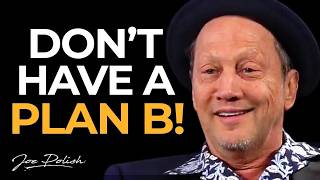
Rob Schneider criticizes younger generations' work ethic and "whiny" culture, contrasting the 1980s to today. He uses a "desert island test" to hire people and warns against weaponizing victimhood through trauma language. He's launching a talk show through Friendly Fire Studio to counter what he sees as liberal media dominance.
Chapters
The calmest people I know are professional boxers. They are the absolute most peaceful people because they know what real combat is. And they also know that most of the time, they're not having combat. Same thing in the Ukraine war in Russia. Most of the time it's not intense fighting. Most of the time it's peace. So if they can find peace during. When their lives are at risk, if a boxer can find peace for that one minute between fights, then you must find peace in your job and what you do. Fire. What does fire burn? First thing. And you put a steak on it. The fat fire burns away what doesn't belong. Get rid of it. That's your ego. You got to get rid of that right away. The desert island test. When I'm meeting in new employees, the desert island test, and I go, what the hell is that? They say, well, I want to be able. If I get stuck on a desert island with this person, is he gonna be a pain in my ass or is he gonna help me, like, kill fish and climb a tree and get coconuts? You gotta find out. This is a desert island. Make that desert island test. Desert island test. Can I flip this guy? Because who you bring on is pretty damn important.
Rob Schneider has spent more than four decades doing one thing exceptionally well. Walking into a room of strangers and winning them over fast. From his years as a writer and cast member on Saturday Night Live to starring, directing, producing, and financing his own films and Netflix projects, Rob has mastered the art of timing, presence, resilience, and connection. Beyond the laughs, Rob understands human psychology at a deep level. How people pay attention, why they drift, how stories move people to action, and what bombing teaches you about ego and resilience. Today's conversation isn't about comedy tricks. It's about persuasion, leadership, and what entrepreneurs can learn from someone who's made a living performing without a net. Please help me welcome my good friend, Rob Schneider.
Thank you. Thank you very much. Thank you, Joe.
Thank you, brother.
I'll use the stairs.
Yeah, yeah.
For the entrance. It's. All entrances are very important. Thank you. Thank you for having me.
Yeah, man. So I have not shared with you any of the questions I have prepared. Good.
We don't want that.
I know. We can go off script, but I've got a couple things.
I like that you said something very interesting. You talked about, like, no net. That's really important because when you have no net, you have to make it work. And like, I remember my mother was just, you know, you know, this is a woman. You know, we talked last Time, it was more an emotional conversation. She found money in a cave, her and her sister, and that's how they afforded it. Her mom cleaned it up. So in the Philippines. And so they went to school, and that's how they paid to go to school. And so my mother, when I said I wanted to become an actor and a comedian, she said, robert, but what if that doesn't work out? You need something to fall back on. You need that. She was talking about a net. And I think the best incentive to make it across a tightrope is no net. If you have no net, I cannot afford to fail. I cannot afford to not make it across. And I feel like that thrill is part of it. And then you have to weigh the danger of that. But for certain particular things, especially in a realm of not physical danger, there's still some psychological danger. There's still that fear of failure, which is thrilling. And what do you want? There's two sides to it. You can't have a thrill without that fear. And how thrilling do you want to get? And how much fear do you want to get? And what party are you going to concentrate on? Are you going to concentrate on the fear? Are you going to concentrate on the thrill? And for me, I can't do it unless I'm afraid. I don't want to watch any performer on stage if he has no fear. If he is fearless, he is boring. If he's slightly afraid and you can see the twinkle in his eye, then I go, oh, I want to watch that guy. Because he doesn't know. You can't know 100%. Sure. In your business, you can't know 100%. If you do, what fun would it be? As Alan Watts said, a complete picture of a knowing future is already the past. It's been done. You don't know. So the not knowing is the thrill. Wow.
Okay. So you've walked on stage thousands of times. You just did it here. What do you do within the first 30 seconds in order. Do you even think about?
Appeal to their humanity. What's that appeal to their humanity? In the same sense when you're. When you're in a car, you can put your signal on, but it doesn't necessarily. It says that you would like to change lanes, but it doesn't say that they're going to let you change lanes. But then an interesting thing happens. You put your hand out. Remember when they taught you how to do that, you would fail in your driving lesson. Your teacher would say, if you just keep the hand in the window Then you will fail. So you had go out that way is left. And I saw a bicyclist do it yesterday. And I went like, man, I hadn't seen anybody give a hand signal in a while. This is right. Turn this. Slow down if your lights don't work. So when you're turning, you get a hand out there. Hey. And people go, oh, that's right. They get so desensitized. There's a human being in there. And so I try to remind people, I'm a human being. And as soon as you could do that, you disarm them, because they'll go, okay. Because sometimes they'll see you as a CEO, they're going to see you as somebody successful. They're going to see you as somebody. But if you remind them right away in the first 30 seconds, which is such an interesting question, that you're a person first, that you were sitting in their seat, that you understand where they came. If you can get to that, then. And I usually do that by talking about something that they can relate to or something that I try to be like. There's the great Italian absurdist, Dario Faux, who won the Nobel Prize for literature in 1997, and he said something that shook me. He said, you have to be an artist in your time. You have to be of your time, commenting on your time. Or you're not an artist of your time. You're not an artist that has. I hate to use the word relevance because people could say you're irrelevant, but I think you have to have something you can relate to people, because people can look into you, whether it's your job, whether it's my job, which is, you know, I didn't even realize what my job was. Making people laugh, but. Making them laugh, but how they look at you. Like, especially today. I was in California last weekend, and the audiences, they look at you like, please make sense of the world for me. I don't understand it anymore. I can't put it all together. There's just too much happening. So if you can relate, just take a little bit of pressure off them, like your last caller was talking about, Just ignore it for a while.
Do you try to make people like you, or does it depend on the audience and the situation? I mean, how does. Do you feed off of energy or.
It's a dance. I want them to not like certain things, and I want them to. I want to push them in certain ways. The thing I'm working on right now, which is very challenging, is talking about what's happening with because it's even entering my home right now, the ice. And so a joke came from that which was very, very telling because I was at breakfast. And so this is my opening when I talk to an audience. I said I was at breakfast and there was a Mexican waiter there who was afraid because he's not here legally. And I thought I was there with my other co workers. And we're like, this is the guy we want in the country. These hard working Mexicans, not criminals. This is the guy who's working, you know, we want that. And then he completely screwed up our order. And I went like, get this guy out of here. As soon as we got the check, I called ice. They dragged him out in front of the family. But you see the laugh, but you also see what's planted. As I told them they're good hard working people here, but I also said that they're, you know, but you can't. I'm there to entertain. If I do not entertain, I've not done my job. And then that seed, I can't make it grow, but I can plant a seed. I planted a seed about these are people who are working hard, we want them people here. And then I do a joke and then they dance away because I gave them something. But that is the seed that's planted. I'm doing a whole 20 minute piece now on why women shouldn't be allowed to vote anymore. And guess what? By the time I'm done with it, the women agree. I swear to God, I swear to God they do. They laugh and they agree. I just got a shitty review in the Santa Barbara, you know, Santa Barbara, those assholes, those liberal morons. But they, but it was good because they mentioned about. And they had to admit, this woman had to admit, very liberal woman, had to admit that the women laughed because you have to get them to laugh. Because if you can show absurdity, and that's the job, if you could just show, just take people out of the situation. And that's your job. You got to take people out of the situation. Because for instance, this room is something. We decided to make a genius network because Joe said, let's call it something, you got to call it something. Let's put up a sign there, let's look at professional, let's put two chairs, let's get a room of people. But we had to all decide, we have to decide that this was a meeting that was going to be about this. This was something that was created. This is something that did not exist before. And so, so Much of life we go through, as they call hypnotized. Hypnotized. Not in the sense of, no, you go through life like a zombie, not paying attention. It is the true definition of ignorance. Ignorance is not being ignorant. It is not seeing. But if you can get, if you can see that these pieces are put together, these people are in the room and they have their own particular wants and needs. But if you can get them to see a singular vision for what you want to do with your business and include them and, and show them why it's good for them and why it's good for others, then you're going to get them to be motivated. And so my job is to get them to be motivated to laugh. And how can I do that? By bringing them together very quickly, letting them know it's going to be silly. Letting them know it's a safe place to talk about potentially horrible things. That's the key for me. I want them to be, to realize this is a safe place. I want them to question, make some questions on their foundational thinking, including their morality, including their ethics, including how their view of the world. And I have to get them to do that by not threatening them, but by showing my own lack of morality, my own lack of ethics, my own flexibility with morality. And if I do that, then I can get them to laugh and then I could also, you know, I'm not there to plant seeds for everything, but I do want to put some things out there that I think are interesting because I think our culture is under attack. That's one of the things I want to make sure about.
Hey, I hope you're enjoying this video and I want to let you know that I have a new book that's come out and if you'd like to get it absolutely free, there's a link below in the description. Or you can wait till the end of this video or you can simply go to Joe's freebook.com and you can get a copy there. So yeah, because what I want to. And I think you're fantastic at being able to, because you've done it your whole career is helping people engage with other people in a way that is effective. David Ogilvy, who's an old school marketer, he had this quote, you cannot bore people into buying, right? So you have to be interesting, you have to be engaging. And it's not even about find a need and fill it. It's find a want and fill it. And people want certain things and your job is to position it and package it and deliver it in a way to where people are engaged and you would have not had the success you've had if you weren't engaging. So that is my hope that we, through this conversation, that they can pick up some methodologies and some ways to think about it. So what are mistakes that people make, CEOs make, entrepreneurs make when trying to get attention to engage with people by
approaching a difficult situation by its difficulty. In other words, you take something that you want to get them to do that is difficult, and you tell them it's difficult. What I would say you can. It is your approach to things. And how you can approach this is to motivate them to know that you got to tell them right away this isn't going to be easy. However, here's what could happen and you can get them there. Like, for instance, when I talk about this idea and I want to go back to this idea about it, because this is what you want to have. You have something difficult that you want to accomplish. Okay, this is going to be difficult to accomplish, but here's where we can find agreement. Like, where's our agreement going to be? How are we going to get there? Like, what can we agree? What part can we agree on? When I say that I don't think women should vote anymore, I say, listen, let me give you some just background. And I said, like, 85% of women, white women, are voting in ways that do not give them the best representation for what it is that they want. And they said, well, that's a very kind of broad whatever. And then I. Then you have to give examples. You have to prove, and you have to walk down there. And I would say, listen, and I talk about like, you, you were talked into voting for Kamala Harris by. And she would say, by, you need to defend democracy. And I would tell them, yeah, we need. And the women who are the liberal women, yes, we want to defend democracy, yes. But Kamala Harris wasn't put in democratically. She was just appointed very undemocratically. And then I said, you have to give a joke. And so I say, you know, replacing Joe Biden with Kamala Harris is like changing your shirt because you shit your pants. So there's a joke. But now I want to get to. I want to manipulate them. So what your job is to get them to do the thing you want them to do of their own volition, but against where they would normally go. And so I said, ladies, it's just the fact of the matter is you are emotionally, you are that Person that is emotionally manipulated, I should say, you can be easily manipulated against your own people because you're such good people. And then I kiss their ass because you're such good. Because you have that love, because you have that empathy, that empathy can work against you. And let me just show you the difference in guys. They did a test with boys and girls who were at a relatively young age, 9 or 10. And they would look at art and they would say, what is better than the other one? And the girls struggled because they did not want to make critical judgments of these other girls. They're like, no, but this. He was really trying to make a tree. And that just. I know it doesn't look like a tree, but I can see. Once he told me it was a tree. I can see it's a tree now. Whereas the boys would go, that's shit. Absolute garbage. This is better. So their judgment was ira. They took the rationale, they kept their rational and they took out the irrational to bring that. And I would tell women, I'd say, women, it's not that I don't want to take away your vote. You can vote as all you want. There's plenty of things to vote for, you know, Dancing with the Stars, America's Got Talent. What you gonna cook that day? So what I'm trying to do is get them out of their. The seed that I'm trying to put there is a seed for humor, but it's also the point of not of being who is more empathetic, who's less empathetic, who makes better decisions, whatever, to think about your decisions. But no one's being attacked and it's in a room where it's friendly. So I would say that you can to manipulate them and basically to subvert them to your point of view. Now that's. Manipulate is such a. It's a terrible word. Subvert I like more. Subvert means just take away the underpinnings of their foundational thinkings so that you could move them by reason, by humor, by adjoining of shared goals, to a position that's closer to what you want for what your objectives are with your company. And that's important. That needs to be done safely and it also needs to be done with compassion for these people. And if you do that, then you're going to move them away because some of the stuff that they're not going to want to do, it's a little bit uncomfortable. Sales is uncomfortable. You're asking to talk somebody into giving money away. But if you, if you approach it that way, it's cold. But if you can say, no, this is going to be good for you. And you give them why and you motivate them to, like, they feel like they're getting something. You can learn a lot in sales. You can learn a ton from Sotheby's. Sotheby's, as they're taking your money for a winning bid, what do they say? They don't say, can I have your credit card? What do they tell you? Congratulations, you're the winning bid. You've spent a lot of money. Congratulations. We just took your money. Congrats. And the guy goes, yeah, I did. But that's, it's a very good trick. But it's also the feeling of shared winning because if you do are doing something of value, then you feel good about selling it. You feel good about your company because you're bringing some value into it. You're bringing people into value. And those shared values, depending on how much money you're asking for, too. I'm asking for people for my company right now. And we're looking at, we have a show which is a difficult sell. It's a debate show, Charlie Kirk type debate show. And the numbers aren't there financially. So we're asking people like, well, you're gonna break even. Congratulations. And that's, that's the. We're gonna have to deal with because right now, monetarily, the way doing the numbers, you're just not gonna make a lot of money on that show. But I want to do it because I think it helps the culture. I think it's good to have something to discuss, but that's a different ball game. But if something, if you bring in value, how much do you care about the culture? So I have to sell it that way. Do you care about conversation? Do you care about young people? And I tell this to people for young people because we've been, Robert Kennedy and I been talking for over a year and a half now. Finally, President Trump agreed and did an executive order to help young people afford to buy homes by taking away and giving an executive order against BlackRock buying up 30,000 homes in the suburbs, here or anywhere, basically taking the market away from young people, making them forever renters. And I use this as an example. When was the last time you, you washed your rental car? Yeah. You went out there and like. Or you went to a car wash. You don't do it because you don't own. It doesn't mean anything to you. And I was at the room full of people in D.C. two weeks ago, I was like, that got to them. It's like, hey, we gotta make this country. We need to make these young people feel like they own something or they're not gonna care. They're gonna treat it like they're gonna treat this country and our rights and our liberties and our constitution. Like a rental car that got through to people. Why? Because it was a shared value and it costs, it does cost to do things. So if you break even to me, I tell people this, breaking even is the new getting rich. You broke even. Congratulations.
You know, it's interesting because with selling, it's been proven that pain selling is more effective than benefit selling. Creating an agitation and then offering a solution, right?
Yeah.
So if I sit and kind of reverse engineer some of the ways that you have gone about trying to affect change and get people to see a perspective. Even the example you just used there with the rental car, it's like you show the pain, you show the angst, and then you're like, okay, the solution here is we gotta make it affordable. So everyone here is selling. The word selling conjures up in someone's mind a bunch of different things. And oftentimes people have a negative perspective towards selling and marketing. And I think it's deserved because there's a lot of scumbag people that are selling and marketing things. So my favorite definition, like there's a little clip on YouTube from about, I don't know, 14, 15 years ago. I was being filmed for a documentary and the B roll was uploaded by one of my team members who still works with me, a guy named jr and they asked the question, is selling evil? And I went on a 3 minute and 50 second rant about selling and if it's evil and it depends on how it's used. And I quoted Dan Sullivan, you've met Dan, who's a friend of mine, who years ago, I asked him, I go, how would you define selling? And he said, selling is getting someone intellectually engaged in a future result that's good for them and then getting them to emotionally commit to take action to achieve that result. So I would ask people, what do you think the most important words are in that definition? And people would say enthusiastic or commit emotional. I was like, well, if it's used ethically, it's good for them getting someone to, you know, emotionally commit to take action to achieve a result. So you wanted to get someone intellectually engaged and emotionally engaged. Well, with propaganda, with everything that went on, they were very persuasive. They still are. And when I say they, I talk about the media. People that have, you know, power and agendas and the ability to message. They can get people to do things that are not good for them, but they can do it very powerfully. So when you are putting, when you are getting someone to do even the things they want to do, like I want to be in better health is often difficult. So selling and marketing and persuasion and engagement, I say now is think of selling as persuasion and influence and think of marketing as storytelling. And if you're more persuasive, you're going to get a better result. If you tell a better story, you're going to enroll people. So you're a master at telling stories.
What you have to do is you bring your humanity to it. Just like that hand out the window. You as a salesperson, no matter what it is you're selling, you can either have the signal there's not a human being there, or you can have the hand out the window. You want to be the guy with the hand out the window. You want to let them know there's a human being there. And you let them know that. You have to let that relatability and that can be done very quickly. Joint need, joint want, get to that right away. Let them know that you're a person there before you're a salesperson. There's a human being in there. David Mamet does it very well in Glengarry Glen Ross. He's in a booth and it's in the play. The guy is telling this incredible story about his life and about what he's gone through and everything. But he's really selling a timeshare. By the time it's a timeshare, they become best friends. And it's a wonderful way of humanizing a salesperson for a very cold, the coldest business that there is, timeshare. You're basically buying nothing. It's a hotel room and you're with the illusion that you own anything that costs you ten times more. So that's an extreme case of use of usury ness. It's like the Nigerian prince. Yeah. People give money to this crazy thing because they want an attachment to something. But if you're giving them value, the Nigerian prince is just like these people, stupid people who are attaching themselves to something because for some reason, you know, the monarchy somehow fascinates America, which is. Bores everyone else in Europe to tears. But we have some fascination still with it. So that humanity, you have to get to it quickly. Whether, you know, I've got a daughter and family. You have kids. What are they going through right now? Get to that and let them know there's a human being in there. And then if you can, let them know you have problems, too. There's something there. There's some sharedness, and it could even be a smile, you know, and I'm here. I think this is good for you. I wouldn't be here, I would not be here if I didn't think it was good for you. I'm going to tell you why, and we're going to go over this list, and you don't have to buy it if you don't want to. But I'm just telling you this is something that you need. This is something that could be good for you. And that's why I could feel wholeheartedly walking away and being with you through this whole process, because I know it's going to be good for you. Now, if you approach it that way, then you're a human being helping another human being. Yes, you. It's a commercial exchange. However, there is humanity in that exchange. That's why, like Disney, Disney feels totally fine taking your money every month. But you know what you're buying. So if they don't know what they're buying, if they don't know your brand, your particular, your speciality, what it is that you do, you got to let them know pretty quickly what that is because and why that has value and why you're a human being in that exchange. Dealing with another human being, if you can get that across, that's the sale. At the end of the day, they're buying you. A lot of people forget that in sales, they're really buying you. Now, that isn't to say they're always going to buy it, but you can walk away from that exchange. They'll remember a person, a human being there. And that's very important to recognize when the sale isn't going good. And I used to sell shoes, and that was really illuminating. One of my first jobs, selling shoes. And were you good? No, because I believe that these ladies really wanted to buy a shoe. Otherwise why would they be there? And then, you know the guy who was the manager who'd been there for years, Dominic Madelone, I'll never forget his name. Great guy. He said to me, you just wasted 20 minutes of your time. You could have made money. Because that woman had no intention of buying shoes. She's just waiting for her husband to come pick her up. And you didn't realize that in that time I sold three pairs of shoes. You didn't make a penny. And I went, well, how the heck do you know? He said, you got to read the signs. You got to know if they come and sit down right away, they're not there to buy anything. They just need a seat. They want some man to go do something that their own man wouldn't do. That's what you just did. If they're standing, if they're really, if they're looking, if they're ba, ba, ba, then you gotta just, you gotta read it. So you read the signs too, and it's okay. But the quicker that you read those signs, the less, the less you waste your time. And sometimes when I'm performing, it doesn't happen a lot. I'm very lucky because people, I'm famous enough now. When I perform, people are paying to see me. There's not the free tickets, what the heck is this kind of stuff? But I will tell you, like Louis C.K. who's a master, he has his personal problems like we all do, but he's a master at the craft of live performing and humanity and understanding humanity and understanding how to subvert an audience to his point of view. And he said to me something which was really telling when I needed to hear it, which is about eight years ago, he said, eight years ago now. He said, you know, you're great. Not getting great. He's beyond that. We weren't, we were just talking to each other and he literally is one of the greats. And he said, you know, you're great when your worst shows and your best shows still pretty close. So I have to gauge, you know, when this show still really good, but it's one of my worsts, I got to be able to gauge that. And then there's sometimes when I have a show that'll go horrendously bad, not often, but I had a, whenever I had to do like a charity function, I did a charity function in Canada in a very woke part of Canada. And Canada's nuts, by the way. Canada is terminally. You are potentially, it's potentially fatal to be depressed in Canada because they can legally put you down. They've euthanized even a 26 year old, murdered her basically for being depressed, being in a bad place. So I didn't, I wasn't taken kindly to that. So when I went up there and they said we were trying to raise money for pediatric wing, I said, I'll go, but you're not going to tell me what to say. And they just assumed I would be polite and everything, and I wasn't. And I literally. They ended the show mid show.
How long ago was that?
Well, that was two summers ago. Not that long ago. And I remember there was security on the side of the stage, and they said, okay, we're going. And I said, what, back to the hotel? He said, nope, the border. I said, okay, but I didn't back down. I didn't back down. And I did what I had to do. And so it's the same thing with what you're doing. Believe in it and know that it's good. Know you're giving something. Something of value and don't back down to it. But also, you got. Also know when you're wasting your time. That's. That's a tough one. Like, that was a night where I was wasting my time. What am I doing up here in Saskatchewan? This is a bunch of. You know, they're blinded. This. Their culture is just. They can't. They got blinders on. It's a socialistic culture that they don't. They pretend to be kind, but tolerance is not kind. Tolerance opens you up to a kind of ugliness that you're submitting your culture to. That is not going to end well. So that's why that did not go well that night. And I'm glad it didn't. I was glad. I'm very proud of that evening.
Well, you know, I was going to. I was going to ask you about, like, I wouldn't. I don't know if I'd call that bombing on stage, because it's not.
Well, it was basically. They stopped laughing very quickly. A lot of them were laughing, and then they got shunned into not laughing.
Well, I want. Okay, two questions on that then. So when you bomb or when something doesn't go well, what does that. What do you. What does that teach you about ego or rejection or resilience?
Fire. What does fire burn? First thing, when you put a stake on it, the fat fire burns away what doesn't belong. Get rid of it. And that's your ego. You got to get rid of that right away. You got to not take yourself. You got to let that part of the equation go. You got to get down to that humanity to relating to other people. Take your ego out of the equation. It's the most unattractive trait, and it actually doesn't even exist. If they tried to operate on your ego, where would it be? Next to your spleen? Your ego is simply an idea, and it's an idea that it's a false idea because it's not real. It's your interpretation of who you are, what money you have, what car you drive, whatever. And then there's another weird element to it. What do you think of, of what? Your interpretation of what somebody else's interpretation, which has to be, you know, a myriad of flaws. So all that is built in money, ego, youth, whatever you look like these, you know, size of your breasts, whatever this is, this is your false image of yourself. But is that really you? Does any of that have to do with how your pancreas is working, your kidneys are working, they're just taking care of yourself. So that is the false part of you. So getting to the you part, the human being of you, that's what's going to be successful. Not the addition, not the car you drive, not how you talk nicely or flatter somebody. And then you have to get to the. There's also, there's a level though of your confidence to what you need to do to what you need to do for your business, for yourself, for your dignity. I remember as a young man bombing on stage and it was very telling and I knew, I said, I'm going to be very successful at this. I know I am. However, it didn't happen tonight. And I remember the feeling of my ears melting off my face from the, from just, just the abject bombing of that. And I went like, wow, I cannot let these people and this rejection affect me to this level again. And I said, I. But you can't just be a stone wall either. So I said, I said physically, I just my belt that holds my pants up. I said, I'll let them get to me to here, but then that's it, then the rest is mine. So while you risk yourselves and put yourself out there for a business, a new business, know that that rejection is part of it. And know that you must allow your own self dignity and your own how good that you know you're a good person. You can never let that enter into that area. That is just yours, yours alone, that is for you, that God gave that to you. The rejection that somebody else from something that didn't work out, a sale, a business, a friendship or whatever, that cannot affect you. And that's an important lesson because that's going to help you. And I learn more from my failures than from my successes. But those failures, if you let it creep into you and let it take away from how you feel about yourself and if you start to let it be to diminish you, that's when the problems begin. Because when you realize a failure and then you could dissect the failure, okay, this happened, whatever. It wasn't a plane crash. There's no recovery in a plane crash. It's over. This was something that didn't go well. Well, what happened to it? And you got to always come back to like, I deserve love. I'm a good person. I want to give value to people. I love people, people love me. And it's important to get back to that because it's a cold world out there. But come back to that place of love that you are given love by our creator. And that love is something that you could pass on in your work, in your life. And at the end of the time, like all these problems that you think you have in your business now, what's happening when you're 90, you're going to realize, yeah, what was I ever worried about? So it's important to have that objective too, because the more that you go there, the more risks you're willing to take because you realize that the failure is an illusion. It's your interpretation of the failure. If you let go of what that means, it's a negative, it's just, it's a learning, it's a step. And that, that, that failure to regroup, to find other people that are aligned with you. And that, that step, anybody will tell you, is one of the most important ones. Because those are the ones that hurt, the ones that you remember, the ones that you build from, the ones that make you more human. The stuff that burns the fat away.
Earlier today we were talking, I asked everyone to just make a list of their Kryptonites. You know, what are the Kryptonites? Could be pet peeves, it could be people, it could be triggering. And then what are their superpowers? What are the things you do that are incredible? Because I think the ability to use our skills is in direct proportion to, you know, not walking into a landmine. So what are, what's your Kryptonite? What are your superpowers? How would you consider it of what, as you've gone through your 40 year
plus career, superpower is bringing an audience together quickly, bringing everybody on the same page and getting an idea across with common folk language. Not using, I mean, Norm MacDonald was like, you know what, you never hear, they never go, I want to go see that comedian because he's so smart. He always played the dumb guy, but Norm was always the smartest guy in the room. But he played it dumb so that everybody can Go like, oh, that's why when I was a young boy, I remember seeing, like when you were watching Charlie Chaplin or Abbott and Costello, you'd be able to laugh because you go, well, my life is difficult, but look at this moron. And so you bring some commonality to that and so that, that, like, I will be the dumbest guy in the room quickly, and I'll make you laugh, and then I'll. I'll get you to my point of view through a way where you're not. You're not expecting it. My kryptonite would be sometimes to get lost or to get distracted by expectations that are outside what I can control. I would say I've wasted time on that. Like the idea of what, you know, show business, what success is like. I've never wasted my time going to an award show. I was like, what. What am I doing here? I'm not even in this business. This is self congratulations. You know, many awards they give out to themselves, they just keep. There's not even one best Actor. There's like the Best Actor award at the Screen Actors Guild, and then there's one for the Golden Globes, and there's one for the foreign artists. Then there's the LA critics, Then there's a New York critic, and then there's a Venice. How much is enough to say you're validated? What more do you need? Do you love it? Then just do that without having to get a slap on the back. It's embarrassing being in the same business as most actors. It is embarrassing. I look, I go, these morons, like this Mark Ruffalo wearing the ice thing, shut up. Go out and protest in Minnesota or shut up. So I do that creeps in and that's a waste of my time. That's a waste of my time. Thinking about that and also thinking about there are things outside. I mean, there's stuff like thinking about, like, well, the economy now. Well, thinking about, you know, raising money, knowing that people can make more money doing this than in this, in the raising of the money that I'm doing. We have a 20% a year payback for a television show that we're doing. 20% is pretty good. Then I have an investor who I really like, a guy who owns a beer company. He's a great guy. And he said, he said to us, I can make more money than 20% a year. I want something like five times back. And I went like, well, good luck to you. I love you. But if this is what we have to offer, this is what we're doing. And then you got to be okay with that. And the frustrations, the things that don't exist that we worry about. And I will just tell you this. There's things you're going to worry about. They're not happening. Now, I have to remind myself, your problems that you have in your company, Nobody's knocking down the door and closing the door right now. Nobody, not all your employers are quitting right now. This is not happening. The IRS is not breaking down your door. You're not being investigated. It's not happening. None of that's happening. And I would just give you the extremist case, extreme case of like I was talking yesterday, and I keep coming back to the boxer. The calmest people I know are professional boxers. They are the absolute most peaceful people because they know what real combat is, and they also know that most of the time, they're not having combat. Same thing in the Ukraine war in Russia. Most of the time it's not intense fighting. Most of the time is peace. So if they can find peace during when their lives are at risk, if a boxer can find peace for that one minute between fights, then you must find peace in your job and what you do as a CEO. Because if you can find peace in your position, then you are demonstrating peace to everybody who works for you. And if you can give that to people to be successful in their business, in your business, how much more so can you be successful? They can be successful. And you can be successful in what's most important, your own life. So I take that with me to bring me peace. And if I can give the audience, at the end of the day, if I can make them laugh and give them a little bit of peace within the cultural warfare that we're in right now, we are in a cold civil war. Now, if I talk about that and I say the facts of this and that, these are. It's only one side that's shooting right now. It's not very funny. But if I can get to them and show them an extremist on one side and me on the other, not extreme, maybe I can get everybody to go, oh, it's okay. Look, he's calm. So during your storms, which I'm sure they will come, because you'll learn more from the storms and the problems that you have in your business than you will from when it's smooth. Anybody can have a good time and be in a good mood with all their employees, and everything is good. How are you going to behave when things are Rough. What example are you going to lead when there are storms in your business, in your personal life, that's who you are, how you behave in that. So when you behave really well in tough times, that sets the tone. You are the sale. And that's important to know because it's not just a business, a business come and go. It's you as a human being with other human beings and working with them. And if you do that and if you give them that, you'll have not only employees. You're going to have loyalty. And that loyalty is going to get you the hardest work you've ever had. The best working employees you could ever have. Because you cared. You shared that with them. And that's important. The most important.
Do you know the actor Glenn Morshauer? By chance, he was on every season of 24 with Kiefer Sutherland. He was like kind of red haired guy with sort of a shaved head. He's actually been in not an A list actor, but he's been in American Actor. Yeah.
Can I tell you that the guy who costumed that was my costumer on Deuce Bigelow and he wouldn't do any of my other movies. He said, I have to do the new Kiefer Sutherland show. I said, why? Because it's the easiest job ever. Why? Because they wear the same costume for the whole season.
That's hysterical. That's.
You gotta take that job. I'm sorry.
That's funny. That's funny. You know, I was. The closest thing I get to like getting dressed up in a costume is I was on ABC's 2020 in 1999 with Barbara Walters and I selling stuff to carpet and upholstery cleaners because that's how I started out. And so I was doing. I used to do these bait and switch shows on how to. In the news stations. They would never do a show on like how to hire a carpet cleaner. That's too boring. But if it was like how to keep the carpet cleaner from coming in your house and murdering your family and taking advantage of you, that was interesting to them.
You approached it from a. Different. From an entertaining place.
Yeah, exactly. And so I do this and the guy that had done all of the makeup and costumes for Boogie Nights, you know when Mark. What's his name? Mark. Yeah. Was a porn star and everything, was the person that did my makeup and I had long hair in a ponytail and they had to put it under a hat. And we were like, we have to find a freaking hat. And back then it wasn't wireless stuff. Well, there was some wireless, but they were putting cameras and like planners, they had a microwave that was a hidden camera. I mean like today you can use iPhones in pretty much anything. But we had to like go find a hat. And the only, the only store that was open was like Kmart at 7 in the morning. And I had a hat on the show. It's still on YouTube. You can go find this video and it says, pope John Paul ii comes to St. Louis. Because we were. I'm in a closet with this whole crew from, you know, ABC's 2020 filming this sort of thing. But I just remember the dude like that did the makeup and everything for Boogie Nights, sharing with me all of this story. So anyway, that's the lessons, the thing
we learned from doing commercial this Saturday Night Live. Jim Downey, who's the real genius of that show, he's the head writer and he said because we had to come up with commercials because I started as a writer there and they said so the rule of thumb is non existent problem, inefficient solution. And you would have something like. So one of his favorite, one of my favorite things ever on that show was a thing called Change Bank. You go to the bank to get change. That was it. It was just the bank that gave change. That's all they did. And if you go there and you give us, you give us $100, you know, you give us, you know, we're not going to give you 2,000 nickels unless that's what you want.
That's great.
And so, but it's, but it's a good example of what you can do. You got to be entertaining with what you do. And you could be entertaining with anything. You could take something so potentially boring like cleaning your carpets and you could become a multimillionaire because of how you decide how you can make this entertaining, how you can realize there's something else to it. And if you get a lot of people to do it, the next thing you know, and that's, that's what's like. That was his entree. But what that did with Joe, which I love Joe is because what it did was it gave him, it opened up his world to anything he could do. He said, if I could make this work with carpets, imagine what you could do with the rest of, with everything. And then what Joe's generosity of spirit is, that's why Joe's incredible is that he wants everybody to feel, experience that. Because if you could sell something mundane and make it arty and fun. Imagine what you could do with something like what your businesses are. You have to find that. And that is the true passion. You have to find it. You got to dig in. You have to find it. You have to. May have to wake up 3 o' clock in the morning and find what that passion is or how I can sell this thing. And that's what happens to me. It's like I pray I carry this with me because I really know that it isn't me. There's something happening. And sometimes I know God has a good sense of humor and sometimes I said, I don't know what I'm going to do. Please let me, God, please give me something. And I had to give a speech. And this one wasn't funny. This was an emotional speech. And it was about Charlie Kirk. And I said, God, I got nothing. I've got nothing. And I mean nothing. I don't know what I'm going to say, how I'm going to get there, what is the crux of the, of the speech going to be? And I swear I just prayed, God, I got nothing. I meant I got nothing. And then I Woke up at 4 o' clock in the morning, Telemachus. I go, I remember that, Telemachus, what is that? And I looked it up. This 4th century monk that was murdered at the Coliseum. And it ended the games of the Coliseum. And I realized the difference, the commonality and the similarity between Charlie Kirk and the games of social media and all that stuff and the craziness that led to his murder. And I realized, whoa, this is a monk who called for a stop to it. And Charlie Kirk was calling for a stop to the violence and let's have conversation. And that was powerful. And that got through to people. And people told me that was the best speech of that for Charlie Kirk, the last turning point usa. But that was the thing though, is that you can ask for it. Like, I need guidance for this. Like, help me out here. And if you come from a place, a pure place of like, I really want to do something good here, I know I'm gonna do good. It's gonna come to you. It really does. That's just how it works. There's no judgment to it. If you get excited about something, it's a magnet, it'll get answered. I believe that. I don't know where it comes from. You can ask. I believe it's God for sure. I believe there's, there's something outside of space, time and matter, something outside of that that we can't understand, that's part of the whole thing. That's infinite. That's what I think that is. But there's a. If there's an essence to it, it's love. And all I've talked about is finding a way. And all Joe talks about finding a way to give that and generosity. You can define love in so many different ways, but it really is just a giving and an acceptance of others. Somebody said to me very recently, they said, instead of I love you, say, I got you. I got you. What did you give? What did you do? What did you love? And if you can do that and bring that to your business and just help those people, guide them a little bit. But coming from an example, from your example, you're going to have more success than you're going to know what to do with. I really believe that.
So, as you know, we have genius youth now with young people. And one of the things that I hope comes out of it is that we give them really useful life capabilities, the ability to think critically, the ability to boundary themselves from things they should be. But also, you know, I've always liked the saying, don't handicap your kids by making their life too easy.
Yes, that is such a toughie, because I want to help my kids as much as they can. And then, you know what, what you say, Joe, which is important. Jordan Peterson's like, oh, don't let your kids do anything. Don't let him do anything. If you. Anything that they can do, let them do it. Don't do anything for your kids at all. Nothing. Nothing. Yes, make them Drive at 11. Yes, make him drive. Really? But you're right, though. If you make it easy for them, then they feel like, I mean, that's new for me.
Well, I mean, you see how many. What's that line that Dan says? You know, they're born on third base and think they hit a triple. Right. And so if that happens, I love that. I mean, there's so many people that Myra here who literally has dealt with people that have inherited billions of dollars. That's her. And the psychological stuff that she works with them is way more than even all the financial stuff. And so you can. So here's what I was going to say. I asked you if you knew Glenn Morshauer, because I can tie what I was going to ask you about with this. So Glenn Morshauer, me and him were speaking in around, I don't know, it was like 2009, 2010, at Caesar's palace in Las Vegas at Navet. And I watched him and then I went on after him and he watched me. And then we went and spent four hours together. And during that time, Kiefer Sutherland was on the National Enquirer, People magazine, like, drunk with his shirt off in front of the Viper Room. So the paparazzi snapped the pictures of him all drunk. And I was like, so, you know, what's going on with Kiefer? He goes, well, now that it's public, you know, I can speak to it a little bit. He said, you know, Kiefer is having fun. Yeah. He goes, He's. He goes, a great guy. Shows up for work, does a great job, but sometimes it's easier for him to sit in the trailer and talk to the, you know, the rest of the actors and everything than it is to go back to his mansion alone. And he goes, and at this stage in Kiefer's life, he said his fame is globally inescapable. And he said there's nowhere he can go in the world without being recognized. And he goes, a single piranha. And it's funny because my original company was Piranha Marketing, right? He goes, a single piranha won't do much harm, but a swarm of them will take down a great creature. And then this is what he said to me, and I wrote it down because I thought about it so much since that time. He said, if you get into this business, meaning the entertainment business, acting business, without knowing who you are, it will misinform you.
Absolutely, yeah.
And he said, like, so the pressure that is on someone when they become famous, if they don't do the work, if they don't have their own sense of value in their own, like a strong philosophy, you know, they're kind of a leaf in a wind sort of thing. So when I.
Well, being. And this is something to be very aware of the biggest pitfalls for those. And the people most susceptible to the pitfalls and the dangers of show business are the ones most attracted to it, you know, the ones who need it because they didn't get enough attention from mommy or daddy or something, or didn't have a daddy.
Is that what the attraction you think is? Validation? Just wanting to be loved?
Absolutely. And ego. This is a combination. If I. If I had to say from like, without mentioning superstars, that I know that, you know, the biggest action star in the world is gigantic ego, low self esteem. That's the combination. It's not no way to live a life like that. I remember I was doing a movie in the Czech Republic and There was a guy walking down the street with four giant bodyguards, and that was bringing more attention than. And it's like, what's Tom Cruise? And I went like, well, if he didn't have those four bodyguards, nobody even know was Tom Cruise. Instead, it's like, oh, who's that guy? He's got to be famous. Oh, it's Tom Cruise. So the bodyguards brought their own attention, the attention he didn't want. So that's the problem. You say you don't want it, but you do want it, or you're bringing something to it. That's why if you're doing something higher for yourself, you have to. And sometimes you'll lose track of that because it's easy to get wrapped up as I'm doing this, it's for me, and whatever. But if you're doing something to serve other people, I mean, to really do it, if you know what you're selling and you know what your business is doing it, and it's a good thing, and you're doing it to help other people, then you could feel good about yourself, that you're not rising and out of control with this thing, like you're something more special than other human beings. That's, you know, that's an important lesson. But also getting back to, like, doing things for other people, like, you can learn a lot from somebody who's come from a totalitarian country or a country that has nothing. I mean, my mother, we talked about. She wouldn't throw away food because it's like, you could still, you know, my dad would have to explain to her, you got to throw that away. That has mold on it. Yes, but we can cut the mold off, make soup out of it. No, no, no, no. We'll buy new stuff just the same, but new. She said, wow, what a crazy country. And so, you know, it's the same thing that people come from Korea. That's what's an interesting thing about this country that has so much, is that there is no idea of nothing. There's no idea of an absolute bottom here. Whereas, like, the people who came here in 1914 and, you know, through Ellis island and the immigrants, they had no. They had nothing, but they had also no guarantees when they came here. They weren't given anything. They got to work their ass off, make something work, live at their relative's house, whatever. That's an interesting thing about. People come from South Korea, especially when they came. When South Korea, before it's become the, you know, this economic miracle the last 40 years before that I mean, like in the 60s and 70s when Koreans came over, and even. Even more or less in the last 20 years, still there is a work ethic that is not the same. And they come over here and they'll work seven days a week until they can live at their relative's house for 10 years, until they can figure out, open up their own dry cleaner, open up their own Kentucky Fried Chicken, like where I grew up in San Francisco, what the Koreans did, that's hard worker, you know? That's why, like, I remember, like this. Peter Lee was a guy. I've been telling this story. It's a true story. Peter Lee came here in eighth grade, moved here because Hong Kong was given back to the Chinese in 1976 by a terrible labor organization. Labor government that was. Didn't do their research, blah, blah, blah. It's a long. That's an hour story. But anyway, so the people realize, if you can get out of Hong Kong, you better get out before China takes back over. So anyone with money, anybody with influence, you got rid of everything. You came to America, came to Canada, you went to Australia, you got the hell out. Because you know what the totalitarian system was going to eventually do to you? Take away your most valuable thing, your freedom for your children. Nothing more valuable than that. And he said to me, robert, how come Is this all the homework we get? And I said, what do you mean? No, I mean, in Hong Kong, we got five hours a day. Five hours every day. Every day. We do one hour on the bus home, three hours wake up in the morning, one hour on the bus back to school. Here, there's no homework. I don't understand. And I went like, well, I'm just happy I don't have homework. But it's true. They push harder. This is a system. It's too easy. It's too easy for kids. It's too easy. And that's the weakness in this system. We can be invaded and you can have bad faith. Actors coming in here, we talked about that a lot. There are people like, I gotta tell you, moving here was different. I had an assistant who said, I don't want to do this job anymore. I said, what? She says, it's just too hard. Too hard. What's too hard? You have to drive. Yeah, I just don't want to drive 45 minutes a day, every day. That's it. We had 65 employees in the movie that we made here. We ended with 35. 30 couldn't take it. It's like, that's too much work. Too much work. It's work. So you're going to come across that too. You're going to. And be able to recognize that as quick as you can. I've met some great people here, hard working people too, but I've met a lot of people who just don't want to work hard. You got to recognize that.
And are you saying that like Arizona compared to LA or.
I'm saying Arizona in my experience, that's what I've experienced.
So our ghost town cleader. So I have a guy, Corey, who's the groundskeeper there and he's from Pennsylvania. And when I first met him he was like needing to find other people to help him. The guy's helped restore the whole friggin town. And he said it was funny. He made this comment, he goes, the shit that people won't do here, he goes, you would get your ass fired. Where I come from they don't even show up sometimes. They don't even return a phone call. And I thought it was kind of interesting. I was talking with Denise on my team in Eunice earlier during lunch today and I was like, it's so interesting. When I was growing up, how hard. And I don't say this wanting to diss young people, this is a programming. There is something happening in the system that is causing people to, you know, I don't know, like the fragility of it, the, the, the work ethic, it's this bizarre.
And the music, everything's whiny. Everybody's complaining. It's all self indulgent and it's all inland like it's sad and whiny and there's no good tunes. I remember when I grew up in the 80s, it was about meeting girls, fast cars, going out and having a good time and that. But I don't know why it's so whiny now. What's wrong with like having a good time, going out, meeting girls? And that was like what's every. Everything's kind of a bummer. Everybody sounds sad in these songs. I hate to be one of those guys who like you know, was older, complaining about how everything was better when I was younger, but everything was better when I was younger for sure. So how do you motivate these young people? You got to get them out of that somehow. And there's some. And you got to identify the ones that don't want to get out of it. They're stuck, God bless them. But like you can motivate people, you can. Do you have the time? Is it worth it? Is it worth your time? And I gotta say. And, like, you're gonna have employees that aren't gonna be 100% motivated. They're just not. That's what I had to deal with. And, you know, it took me a while, even Los Angeles, to realize, you know, these people don't care about my movie as much as I care about my movie. And I had to go, oh, wow, that's a bummer. But it's my movies, not their movie, so how much can I get out of them? And I remember somebody gave me the numbers. A CEO said, okay, if you have an intern, they're going to give you at the most, 65% of what you want, 65% of what you tell them to do. They're going to do up to 65. That's it. These guys aren't getting paid. They're just there. It's an internship, whatever. If you have, like, an assistant, the most you're going to get the most with the best assistant you're ever going to have is 85%. That's the most you want, 100%, you do it. So you got to know that there are some limitations there. And there are more limitations now than I have witnessed. And I don't understand where that's coming from, but that's a reality. That's a reality that we're going to have to deal with. What I would like to do is I'd like to get back into this education system that is a bunch of teachers who are asking, you know, young people to protest, say, keep them in school. They're already. The grades already suck. They're. Their math scores are below where they were five years ago, 10 years ago. Keep them in school. What are you. Having them protest right now pisses me off. But that's what's. There's an attack on our culture in a lot of different ways. That's just. The education system is part of it. But you got your business. You got to figure it out. How do you motivate these people? You can approach them humanly and also recognize that there are some limitations that I haven't witnessed before. That's a little bit more. And you're gonna have to. That's gotta be part of the equation. What can you get out of these people? How do you answer that, Joe boy?
Well, it's interesting. I mean, I try to find people that are intrinsically motivated because I'm absolutely terrible at trying to get. You know, it's like some people are a fountain, other people are a drain. Right. So I try to find fountains. Then there's people, batteries included. Then there's batteries not included. Right. So you can charge someone that has batteries when they're down, but if they have no batteries, you're just going to be wasting a lot of time charging.
That's a good point. There's a good thing. A friend of mine who's a Charles Edelstein, the most bubbly, wonderful guy, who's also the most brilliant guy that I know. He invests money for billionaires. Charles Edelstein, amazing guy. They put him in charge to hire everybody at the firm of Credit Suisse First Boston. Big banking. A big bank, Especially at that time 30 years ago. And I went like, why did they put you in charge? And then I realized, oh, of course he would. He's the guy. He said, I could tell the desert island test when I'm meeting new employees. The desert island test. And I go, what the hell's that? And they said, well, I want to be able. If I get stuck on a desert island with this person, is he going to be a pain in my ass or is he going to help me, like, kill fish and climb a tree and get coconuts? You got to find out. Yeah, this is desert island. Make that desert island test. Desert island test. Can I flip this guy? Because who you have, who you bring on, is pretty damn important.
You ever heard of the blue vase story? Someone just have to look it up. I won't go into take too long. So a few weeks ago, I went with me and Cherie and then Garnett and Shirley, I took them over to Gabor Mate's house in Vancouver. And then I
Is my hero, by the way. He's such a brilliant guy. Yeah.
And I sent the message you had sent to share with him, which he did. Which he loved. And it's funny because, like, politically, you guys are on the complete other side of the spectrum.
Yeah, but completely. But I love him. And it doesn't matter. We're on completely. We agree on one thing. Humanity.
Yeah.
How do we get there together? Yeah.
And the reason I bring this up, because it kind of goes into what we were just talking about with where people are, is that, you know, he's masterful at explaining trauma, how to think about trauma, how to understand. I've learned a lot from him, and he's helped a tremendous amount of people. And I like the fact that there's all this talk about trauma. However, what I don't like is that now these narcissistic people that are using woundology as their excuse for not taking responsibility for their life. Or they're using psychological terms to manipulate people. And it's like ramp. And it's confusing as hell.
Well, yes, it is a weapon.
Yeah.
People are weaponizing victimhood.
Exactly.
What does it really mean? It means these people don't want to do anything and they were going to point to you as the problem. Everything else is the problem except for themselves. You got to identify that that's a dangerous person to have on your team.
Yeah.
However, there's no one that's not changeable. There's no one that there's. There's no one. If you can. Good behavior, it's like it rubs off, you know, I mean, and a good example. People swimming and being successful. Who doesn't want to join that? So nobody's hopeless. However, how much time do you have? How much time you want to put in? And one egg can rotate, can ruin the whole carton. That's true. But you know, at the same time, you're gonna have. It's gonna come up. How do you deal with it? How do you deal with it? At the best description, you're gonna have problems in your business. The ones that are most successful, the ones who identify quickly deal with it and move on to the next problem. Because the next problem's coming too. It's coming soon.
Well, so, you know, they are suppressing the first interview that I did with you. 100% know that. Because.
Why? Why would you. What was it about it?
I don't know.
I don't know.
And we talked about everything from COVID to the government to propaganda, whatever. I don't know. But you know the difference.
I think it was honesty. I think that. I think it was very honest. And I think that. I think that if you're talking about subjects that just. It just flags it. And there were several enough that that might. Must have flagged it. Right. But I do think that, like, I'm really, really working on my communication to bring for the culture. I'm really working on that. And I've been very successful with it because I haven't made a movie or done really anything in a long time. But yet I'm in the public for whatever reason. Like, my personal life is. Is suddenly world news. It's like, what. When did that happen? How come people can't just get divorced and like, it doesn't make the news. Why am I making the news? Well, you know, it happens if you put yourself out there. What do you mean? Put yourself out there. Well, if you have opinions, if you care about the culture, and if you realize that there is an attack on the culture and you point those things out and it goes against the. It goes against the. I'll just say it, the liberal intelligentsia, then you're a target. But the beautiful thing is they can't touch me. There's nothing they can do to me because I don't care. I have no value for what any of them have to say. Doesn't affect me at all. Does not know, because there's something higher and I feel a purpose to what I'm doing. And it's like I saw what they did to Charlie Kirk for talking, for having conversations, for being successful at it because of his organization, more than anybody else in America, 22.5% of the youth, young kids did a turn and voted against the craziness of the last few years. Now, you know, if you like. I don't care if you like the president or not. I don't care. You don't. Don't listen to him if you don't like them. But look at the policies. And so that was why he was murdered. So, yeah, if you're going to talk about stuff, you know, like, on the level that I am, I have to have security when I perform everywhere, gun checks everywhere I go. Why? Because I make opinions, because I care about the culture. Because you have to risk yourself if you want to have impact, you got to risk yourself. And for me, I'm here. I don't want to be. I don't want anybody to take my life. But, like, at the same time, I'm not going to go down without fighting the good fight. And as my friend Robert Kennedy said, there are some things worth dying for. Making sure that your kids don't live in slavery is definitely high on that fucking list. So what are you going to do? What are you going to live your life? My kids, when they grow up, they're very young now. When they grow up, they go, well, I know what my dad did during the culture wars, so that's important to me. But you got to do it in. Thank you. Thank you very much. But you got to do it in an entertaining way. And also be careful about, like, I have to be careful about my ego. How much am I doing? That's just for me, my own attention, my own thoughts.
Do people think I'm smart? Do people think I'm doing good?
How much is that for me or how much is it really for the culture? So that's something that I have to keep an eye on. I'm here because of this man. He's a great man who connects people because he does it, because he knows that if he makes the culture better, if he makes the connections better, if he makes business better, entrepreneurs, bring them together, he. He can improve the culture. He can create jobs, he could create creators. And all of a sudden I went like, wow, what a generous man. I said, anytime Joe calls, I'm there, because that's what a great person he is. And if I can help a little bit of that impact by talking to you, by talking to people and having slightly good influence, giving you one or two ideas, again, it's seeds. All you can do in your business is plant seeds, including in sales. You plant seeds, and then you give it up to the higher power and up to them if they're going to grow and something comes from it. But make sure those seeds that you plant are pure and good from a good place because you're a good person, you're trying to do good for all people. And you know that there's a benefit to it for everybody. And with that intention, that intentionality, then it's just doing the work, getting up, doing the work. Wow.
Thank you. Anything we can do for you.
Wow.
Well, and that could be a suggestion on. Read this, watch this, or here's what you're up to.
Well, we're doing this talk show if anybody wants to break even. I want to change the culture, and I'm spending money, a lot of money, to help change the culture, because I realized that, what does money mean? How much time do I have left? What do I want to do? I said, well, I want to get. Instead of Bill Maher, who just talks with a bunch of other elites. I'm tired of that. I want to hear what the kids have to say. That's what Charlie Kirk did. He put the microphone down, said, you talk. Those who disagree with me come to the front of the line. So I'm asking people to come help me with this show, and there ain't a lot of money in it, but I called the Chris Pavlovski of Rumble. We're going to try to get on Rumble then. And you know, CBS and Bari Weiss is the new person they're trying to get rid of over there already because she's slightly less liberal than everybody else there. So I want to affect the culture because I think this culture's worth saving. So that's what I really would like to do. And it's not a cheap show. Not crazy Expensive. It's a half million bucks to get six episodes out and get the first three going. And, you know, it's the company's Friendly Fire Studio. And my buddy Eric Verras is here. He's the coo. And we're going to do good work. But it's going to be something that, like, the intention is there. I want young people to have a voice. I want to go around to campuses. I want to hear what they have to say. Because what I don't like is happening is 97% of academics are all. They're liberal, but not in the liberal. When I was a liberal, before I started making money, who wouldn't be liberal? I mean, if you're broke, why wouldn't you be liberal? Let's get some free shit, you know? But when you start making money, what am I paying taxes for? But it's important to have a voice in the culture. It's important to be in the culture, and it's important to, like, get young people talking, get them able. Like what we've been able to do with this administration, thankfully, is to. Is to stop, you know, prevent at least the tax benefits from BlackRock, which is a $5 trillion company with a T, from getting tax benefits from buying these homes and making young people out. So what else can I do for young people? Give them a voice. Let them know that their voice is heard. What are your concerns? How do we get your vote? How do we keep you? Because I'm going to be gone. Joe, you know, will be around a little bit longer than me because he works out all the time, takes good care of himself, and he has his own gym right here in this building. No, but who's going to take over and what's that going to be like? As Ronald Reagan said, you know, this freedom that we enjoy right now, just one generation away from being taken from us, this incredible experiment in freedom. If you think about 250 years this year, the Roman Empire, 800 years. I hope we make it to 300. But I think if we can start that foundation and realize and identify the enemies, foreign and domestic, then we could have a chance to keep this thing going. It's an incredible experiment in freedom. No one's swimming to get the hell out of here. No one needs to climb a fence to leave America. It's pretty damn good. If you can get over here from Somalia, you can get rich and you don't even have to watch kids. That's a pretty good system. Pretty stupid system, too, but, yeah, so that's what we're doing, and thank you for your time.
Okay. I hope you found that video awesome and useful. So if you want to get a free copy of my book, I want you to click, click here. And if you want to watch some more videos that will be useful and awesome, click here. Go ahead. They're over here. Do it now.
Come on. Thank you. Watch them.
More from Joe

This FBI Trick Can Command Respect Without Saying a Word ft. JEFFERSON FISHER & CHRIS VOSS

How To Stand Out, Be Different, and Create Raving Fans, Customers, and Employees ft. Jesse Cole



90% Of Businesses Fail In Their First Year, Here's Why! ft. Dr. Benjamin Hard & Dr. Robert Cialdini

The 1 Piece of Business Advice I Got From Elon Musk That Changed Everything Ft. Kamal Ravikant

The 6 Traits You CAN'T Teach in Entrepreneurship ft. Richard Branson & Gino Wickman

The Leg Method: How to Make Your Book into a Million-Dollar Asset ft. Anna David


7 Millionaire Mindset Hacks for Daily Success and Wealth ft. Brian Tracy & Dan Sullivan
