Rock the Room: Transform Communication into ART and Stop Time with Victoria Labalme!
Victoria Labalme teaches how to turn business communication into art that captures attention. Find your through line, the one-line advice you'd give a young person, then express it across different formats to create memorable experiences. Strong content, clear structure, and controlled openings and closings matter most.
Chapters
Our first presenter, Victoria labaume. Our first presenter is a member of the hall of fame and strategic performance coach to elite entrepreneurs and executives. She's helped her clients craft landmark keynotes, earn standing ovations at arena events, create top rated PBS specials up live stream conversations by double digits and worth contracts worth 400 million. Her title is the through line Rock the room. Please welcome Victoria labaume.
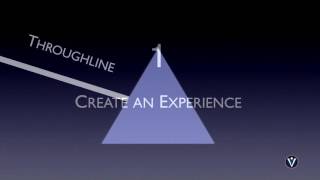
Thank you. Every time you communicate, you have an opportunity to influence people's lives for the better. But it's challenging to remember that because we have so much pressure in our day and so many projects to complete. And what happens is we get into this conveyor belt mindset and for many of us, time as entrepreneurs can feel very tight. It can feel almost like this conveyor belt that moves along in a linear and limited fashion. And on this conveyor belt, we imagine they're empty boxes. And our job is to pack each box with as many activities as we can just getting through the day so that at night we can lie in our bed and say, that was a good day. Look at all the things I did. So a day for you on your entrepreneurial conveyor belt might look something like this. You're asleep, all cozy in your bed. The alarm goes off and we often grab our phone right away. And we're in our phone and we're squinting into the light, checking our emails. We get undressed, we get in the shower, we get dressed. Maybe we have breakfast with the kids, we send them off, we get in our car and we drive to work. And if we're like Joe Polish, we're making video messages while we're driving. We get to work, we're on the phone, we're on our emails, we've got opt ins and surveys, squeeze pages and funnels. We've got teleseminars and webinars. You're working on the book, you're working on the blog, you're eating lunch at your desk to make up for lost time. You have a client meeting, you have a client call, you have a meeting about a meeting, more things. You've got spreadsheets and excels. You're working at Facebook and Twitter and maybe you're lucky, you get to the gym, you change your clothes and you're at the gym and you're on the bicycle, you're on the treadmill. You take Pilates, Pilates, yoga, breathe. Bicep, biceps, tricep, ab. Bicep, biceps, triceps, ab. We're in yoga, we're checking our emails in yoga. We go Home, we pick up gluten free bagels and green juice and gross sweets, we put them away. Three more things done. We have dinner with the family, we send them off to bed. We get in bed, we channel surf, we're looking at our favorite TV show, we read our book on spirituality, but then we check our email one more time and we go to sleep. And that's considered a good day. And that's just Sunday. So if we're in this time crunch, how do we reconnect with what really matters? How do we communicate in a fast paced world? And so I'd like to share with you a strategy I've given my top clients which has not only changed their perception of what they're doing in their business, but their perception of who they really are. And it's the foundation before you even plan your communications. So I'm going to ask you a question here and I'm going to ask you to close your notebooks, your computers, put down your pens and trust the first response that comes to you. So in other words, don't second guess your first idea. And the question is, if you were on a desert island and you were dying, but there was a young person there with you, someone whom you cared deeply about, and you could only give that young person one piece of advice before you died about life and how to live it, what would that piece of advice be? And whatever just flew into your head is the starting of the thread of what I call your through line, the driving force behind your life. For some of you, it might be life is a game, enjoy it. For others, it might be follow your dreams. Some might say, don't be afraid to be yourself or be kind. Some business minded friends of mine have said, find someone who is the success that you want and model it. Whatever it was that you said is what you believe in the end really matters in life. And so my challenge to you is how do you take your business and make it an expression of that through line that drives you through your life so that you're not on the conveyor belt, but you understand that all these details, these duties, these data, these deadlines add up to something, what I call your noble intent, that you're fusing that constantly. Because when we don't, our day does feel frazzled. So when you reconnect with what really matters and you start positioning and packaging and creating your communication materials to support that noble intent, it takes you from a transactional entrepreneur, not just to transformational, but to transcendent. Because your customers, your clients, your audience, whether it's one or two or 1,000 or millions, knows that you understand in the end a higher purpose. So then your next challenge becomes if your customers, your clients and your audience are on that conveyor belt, how do you take them off? Well, if the challenge is that everyone is busy, then what is the solution? I think it's to stop time. Bob Dylan said the purpose of art is to stop time. And I think that's true. Great art stops time. When you're in a movie, you're out of the conveyor belt, time has stopped. When you see an extraordinary play or you go to a rock concert, you're not on the conveyor belt, you're transported. Or a rock concert of any kind of a symphony, a great book, a beautiful painting, an amazing meal, that is a work of art. So if art stops time, then the challenge for you becomes how do you turn your communication, your business, your busyness into an art? How do you make every experience for those that you serve so extraordinary that it takes them out of time and off that conveyor belt? And I think when we do that, we've provided a great service and we lead them towards a noble intent, ideally theirs, what matters to them. So here's what puts people back on the conveyor belt. And I think it's the biggest mistake I've seen made. Whether you're in a sales pitch or a keynote, doing your two minute video, your two day training, your 20 minute TED talk, is that people tend to focus too much on the information they want to convey and, and not enough on the experience they're creating. Because if you think back to a great communication setting you were part of, what you remember is not just all the information, but how that information came to you, the experience of it. And if it's an extraordinary communication, it took you out of time. So rather than think of creating. Sorry, rather than think of getting information, think of creating an experience. A client meeting could be an experience. Your two day training could be an experience. Not what are we going to teach? What's all the content we're going to teach, but how are we going to do that? A conversation could be an experience. So how do you do that? How do you create that experience? Well, if you think of your through line, that question, that answer that I just gave you for your noble intent from the desert island, if you think of that beaming through your business, your presentation, imagine that as a triangle, then what comes out the other side are all the different ways that you can express it. So I often think of it Like a prism, your through line is like the white light. It's your message. And then all the different ways you can express that. And the extraordinary part of a prism that we take for granted. Oh yeah, I know optics, Newton prisms. But think about it, what makes that light so bright is the combination of colors. When you start restricting yourself and pulling colors out, you dim your light. And what does this mean for you as an entrepreneur, as a person? Well, so often we get in our industry and say, well, I'm in insurance, I'll do it like everyone else. Well, I'm an Internet marketer, I'll do it like everyone else. Well, I'm in healthcare, I'll have to dress and act and sound like everyone else. And we start to shave off parts of who we really are. And we come, we cut ourselves off and we put ourselves into a mold and we lose our light as well. Your audience, we all know this adult learning, they need different modalities to absorb your information. So if you're always expressing it in one color and not the full spectrum, they may not receive it the way you want. So you think, here's my through line, here's my message. What are all the different ways that I can express that so that they receive what it is I'd like to share? And as you begin to do this, you create this mesmerizing, mesmerizing experience for your audience. So there are three parts you want to consider in any presentation. And if you're missing any one of these, you'll falter. You have to have extraordinary content, you have to have great material, but then you need to structure it properly and you need to deliver it with excellence. If you have great delivery skills and charisma, but no content, it's a problem. If you've got content, but it's not well structured, it's a problem. So you need all these three things, not unlike a three legged stool, for it to be cohesive, to connect and to land. Some people speak in all one color. Courage, action, determination. Ladies and gentlemen, this is the triad of success. And I am here. And that is exhausting. And then you see people who feel they have to be all pastel. Hello everyone, my name is Maya Diora. Let's talk about meditation and mindfulness. Did anyone see the Matrix? And they're not. And you sense somewhere they're not who they really are. There's some phoniness, there's sort of a false Persona because they're afraid to show who they really are. And then you see presenters who are over coached. You can't tell what color they are. They've lost all their light. They're like black. They've lost all their light and they look like this. All right, let me do my presentation for you. They come into my studio in New York City. Ready? Hello, everyone. I am so honored. And I say to them, what you doing there? They'll say, well, I worked with this coach. They told me a hint. I said, well, how does that feel? They go, it feels a little weird. And I say, it looks a little weird because they've lost who they really are. So what you're looking for is that full expression of your personality, your creativity, your unique approach. So what you want to do next is take the audience on a journey. Take them out of time like a film director takes them out of time. And the way I have my clients do this, this is the number one time saving technique. Joe's using it. Jj, Kellyanne, Lisa Sasevich, the people I've coached. If you look at it like this, you're taking the audience on a journey, whether you're planning the keynote. I've done it for my large scale keynote events. And here's Jo texting me with Dean Jackson. They were putting together a project. Here's JJ putting together her PBS special. We're in her hotel room planning it. Here's the head of jcdeco. They do all the advertising at airports, the concessions. So we're working. We put together a $400 million pitch. We won it using this system and Microsoft. Think about it. Microsoft invented PowerPoint. So at first they were very resistant to working on index cards. They're like, no, we'll do it in our PowerP. But this is Takeshi Nomoto who runs Windows 365. We put his presentation together and rocked it. And here is my client, John Roskill, 17,000 in the audience. All of this created with index cards and taking the audience on a journey to take them out of time and stop time. So here are some of the elements you can consider. It's a busy slide. You can take a photo. All of these create different experiences for your audience. Maybe you have a challenging question, you have a key point. You then you have them doing an interactive exercise. You're doing a little video and throughout you're taking them on this unexpected journey. So they never see what's coming next. What makes it boring and long is when it's one color, you want variety. The audience craves variety. And so the last element I want to share with you is this to craft your first and your final moment. There is no work of art in the performing arts that begins and ends randomly. And yet most presentations kind of do. Most meetings kind of do. Most meetings actually end with a final moment that is a Q& A. And you never want to end on a Q and A because you're giving your final moment to chance. Instead, you want to close with something that you know you can control. Your video, your story, your bit, your quote. And so my final moment for you is to share with you something I learned from my great mentor, which is to take what could be a transactional element, in his case mime, Marcel Marceau, the great French mime, and take it from transactional to transcendent. So for him, it wasn't just a bird. It wasn't just a wall or a rope. If he was the bird, it was. And that is my hope for all of you to stop time. Take an experience. Make it one that takes the audience off their conveyor belt, because that is how you rock the room. Thank you so much.
More from Joe

This FBI Trick Can Command Respect Without Saying a Word ft. JEFFERSON FISHER & CHRIS VOSS

How To Stand Out, Be Different, and Create Raving Fans, Customers, and Employees ft. Jesse Cole



90% Of Businesses Fail In Their First Year, Here's Why! ft. Dr. Benjamin Hard & Dr. Robert Cialdini

The 1 Piece of Business Advice I Got From Elon Musk That Changed Everything Ft. Kamal Ravikant

The 6 Traits You CAN'T Teach in Entrepreneurship ft. Richard Branson & Gino Wickman

The Leg Method: How to Make Your Book into a Million-Dollar Asset ft. Anna David


7 Millionaire Mindset Hacks for Daily Success and Wealth ft. Brian Tracy & Dan Sullivan
