Spartan Grit: Lessons on Life, Leadership, and Burpees with Joe De Sena!
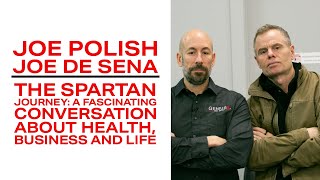
This is a recorded live interview (YouTube) where Joe Polish interviews Joe De Sena, founder and CEO of Spartan. De Sena recounts his upbringing, early businesses (pool-cleaning, buying Peak.com), transition to Wall Street, and the founding/growth of Spartan as a global obstacle-race and lifestyle brand. The discussion covers Spartan's scale (events, participants, countries), product positioning (accountability + legit sport), sponsorship/media opportunities, B2B/corporate offerings, training/mindset practices, and De Sena's leadership philosophy.
Questions this video answers
2010
More than 1 million annually; this year hoped to hit about 1.2 million participants.
About 250 events in 40+ countries (speaker also cites 250 events in 41 countries).
More than 6 million lives since founding.
Spartan Up; Spartan Fit; The Spartan Way.
Chapters
All right, it is. I'm really excited about this. So this, this interview I'm going to do is with this guy by the name of Joe decenna. He's the founder and CEO of Spartan. It's the world's largest obstacle race and endurance brand. He's demonstrated his entrepreneurial drive since his preteens. Following a successful career on Wall Street, Joe Decentis set his sights on ripping people off their couches by creating the Spartan lifestyle. With more than 1 million annual participants at more than 250 events across more than 40 countries, Spartan offers eats for all fitness levels and ages, from beginner to elite and kids as young as 4 years old. The brand has transformed more than 6 million lives since it was founded in 2010. Descenda is also the host of the Spartan up podcast and is a New York Times best selling author, having written three books, Spartan Up, Spartan Fit, and the Spartan Way. And so go do an interview with him, ask him a bunch of questions, and also have an opportunity for you guys to do that. So give it up for Mr. Joe Decenna. When I first met you, we did a podcast interview over at Dean's office, and I actually had a cold. It had been. Make a long story short, I had. I don't know how, but I had somehow managed to get a staph infection in my sinuses. And so I was on this weird treatment, getting rid of it. And when Joe had come, it had been about three weeks, and I was wheezing and coughing, but I was kind of like on the tail end. And he's like, let's do. Let's do some burpees. And I'm like, I got a fricking cold right now. I can't do burpees. Like, no, no, we'll go slow. And I was like. So anyway, we ended up doing 51 burpees. No, actually, I think it was 60. But I thought I was literally going to die. But something happened when we did that is it made me realize that, wow, you know, I mean, I am not pushing myself to the levels of where my intensity can go. And so you're a super intense guy. Explain for other than what I just read about you.
What.
Who the hell are you? What do you do when people ask you that, other than just your.
So I am just a regular guy with triangular wheels on my bicycle. We went through that earlier, but I grew up in a crazy neighborhood, in a crazy household, like I'm sure many of us did. And I love to push myself, but I really, I think what I Love more than that is. I love pushing others. I love pushing others like you with the staff affection to. Not to their limits. Because you didn't go to your limit. We could have went much further. I think it inspires me. I think selfishly, it inspires me. Like, I think I was. I had to finish some burpees. There was a re.
Like, I. Yeah, you were just. You were finishing them with all of us. During that time, we actually. I think you even had Eunice doing burpees. And Dean and Dean's CEO.
Yeah, everyone was doing it because I made a commitment to myself and I said, I gotta do them. And so I didn't really feel like doing them. You talked earlier about this idea of being in the dark warehouse alone. The professor spoke about it. Right. And I don't want to be alone. So it was like I roped you in. So I'm helping you, you're helping me. And I do that all day. My father was a master at this. When we were 10 years old, my friends would say, I don't understand. I came over to your house, seen if you wanted to go to the movies, and I'm putting up sheetrock with your dad. My dad was a pro at it. And somehow you liked it.
Yeah.
You got recruited into these things, into, like work.
Yeah.
Yeah.
Well, here's the thing. When that happened, it set off this whole trigger where I started doing burpees. And I would wake up in the morning and I think I went that week because I was still. I had a cold. I started playing around with doing burpees. But about a week later, I was like, I'm going to just make a commitment and do them every day. And so it was very similar to when I made this commitment to doing yoga because I had this yoga instructor that said to me, if you do yoga three times a week, it'll change your body. If you do it every day, it'll change your life. And so I said, I'm going to do yoga every day and see if that actually happens. And I ended up doing 81 or 82 yoga, yoga sessions in a 90 day period. But what it did for me mentally, it ended up becoming sort of like this mental state. And I even have a thing back here, it says, don't react, respond. What it did was it changed. It changed. I was able to respond to life. It increased my ability to respond versus react. And so when I started doing burpees, talk about priming in the morning. I mean, I would do them first thing in the morning and I went, I think, eight months where I did at least 30 to 100 burpees every day for eight months straight. Didn't miss a day. And then I, you know, kind of went off a little bit. But I, you know, I still do burpees and I've gotten probably hundreds of people to start doing burpees as a result of you having me do that sort of thing. So what is a Spartan?
What does a Spartan. Let's go down that road a little bit longer. Because you're all, you know, you're, you're all, lots of stuff are running through your minds right now. And I guess what we do as a company is we put a date on the calendar for you. Because 90% of people that sign up for gyms or buy fitness apps or say they're going to be on a diet, like if everybody showed up to the gym that actually owned a membership, the gym couldn't handle it. No one. Very few people do it, but we're the only company, along with a New York marathon or somebody at like that actually forces you to do those things. Just like a professor forces you to hand in your paper on Friday or a wedding date gets a bride and groom to get fit and good looking right before the wedding. Right. If you don't have that thing on the calendar. So that's all we do. We're like an accountability partner. But I had done a ton of races myself over 25 years and I kind of knew the psyche of the psyche and the brands over the years that came and went and the sports that came and went, BMX surfing, et cetera. Right. That are now Olympic sports. But they went through some really tough times. And so I said to myself very early on, yeah, we're an accountability partner, right? We're gonna get people to get in shape. But if we're gonna have longevity, it's gotta be a legit sport, right? It's gotta maybe be in the Olympics. So I put that out there. It's gotta be an Olympic sport. It's gotta be authentic, right? It's got, I have to actually do this stuff I'm asking other people to do. And by the way, there's a downside to what I just said. The downside is if I was a 5k color run where you have a ton of beer at the finish line and that's we'd get more people to come in, but it flames out, it doesn't last. And I know because I did this stuff myself for 25 years. And so we took a Very hard line in the sand. And we said, this is what we're going to be and this is what we're going to do. And it's so sucked because every time I announce an event, I'm gonna spend $600,000, whether we have one person or 10,000 people. Right? And I'm a maniac. So I didn't just announce one event. I announced an event in Slovakia, one in the uk, one in Montreal. And it's like, fuck, right? Cause now you got a market. And I didn't know what a USP was a unique selling proposition until I saw your book. I didn't know anything.
All right?
And anyway, I'm going way off the deep end, but this is good. That's what we do.
Okay, I have this question. So you started in business cleaning pools for the mafia in Queens, New York. So how did you go from that into transforming people's lives in, like, Korea?
Yeah.
And 42 other countries. So tell a little bit about that upbringing of what makes. What made you this guy that now is literally so.
True story. Who saw the movie Goodfellas? Probably everybody saw Goodfellas. So I'm not exaggerating. I grew up ground zero of Goodfellas. The Varios who the movie is based on were my neighbors across the street. And we lived right next to Kennedy Airport. So what the movie portrays is very accurate. And my dad had a trucking company, and every morning it was like Christmas. In the garage, there might be a box of leather gloves that didn't make it where it was supposed to go. Computers, when I be like. So that was very real, what you see in the movie. But it had some real negative. Like, lots of people went to jail, lots of people died. My father and mother used to fist fight. My mother had a broken. I mean, it was just. It was craziness because that's what comes with that. Well, unbeknownst to me, my neighbor is the head of the Bananos Banano organized crime family. And he has daughters. He only has daughters. And he takes a liking to me. I'm 10 years old and my parents are going through this fight. My mother Finds Yoga, 1972 and Meditation and becomes a vegan. And this is like before yoga magazines, before Whole Foods, maybe in California. There was a spot where this was happening, but it was not happening where I was. And so she's, like, outcast by me, by my father, by everybody. She's a nutcase, right? Crunchy. And all the guys in there, they're driving Cadillac like, that's who you want to be. You don't want to do yoga, right? And so they get divorced, and my neighbor sees what's going on, and he says, hey, why don't you clean my pool once a week? I'll give you $35. Which was like, unbelievable. And he teaches me a bunch of lessons, which then leads to the head of the Lucchese, John Gotti, John Gotti's brother. Like, I had 700 customers by the time I graduated college. And they were mostly those guys. So if the FBI wanted to infiltrate, I would have been the perfect. I would have been the perfect guy.
Freaking poor guy.
Yeah, but it was. It was awesome. I mean, it was awesome.
What. What have you taken from that experience into your business? And what have you left behind? Because you had to. You had to be surrounded in a very interesting world of.
So the crate. The crazy thing is, which nobody in this room would expect, is I got a lot of great lessons directly from a lot of those husbands and wives. Even the wives who were the wives were amazing because in many instances, the wives made the husbands think they were in charge. Like, they were really good at playing, but really the wife was in charge. And you could see that. Like, I could see that, right? Cause they let me in their yard, I could walk in their house. Like I had access. They trusted me implicitly. And a guy named Paul Arreola had a long wooden table that I hoped to have one day. Like, I would take little bits from every family and say, I want that someday. Anyway, he'd sit there and he'd be smoking a cigar. And he said, you know, in life, the best thing you could do is help people. Now, this is a guy who killed people for a living. But I internalized that. Like, I'm going to help people. And that was consistent with my mother's message. Joe, my neighbor, said to me, look, if you say you're coming at 8am you better be here at 7:45. If you say you're going to clean the pool, you better straighten up the yard too, even though I'm not paying you for that. And the shed, you gotta go above and beyond and never ask for money. You'll get paid. But like, that stayed with me for 40 years, right? And never. How would you learn these lessons from these guys, right? Never. Little Vic, they called him Vic Amuso. You can look all these guys up. He said, never talk about how much money you don't want to be that tall tree. These are lessons that the gurus, like you now, are pushing the Mobsters were pushing these. They were the original gangsters.
Right, right.
And all this stuff's still alive, though. Yeah, Vic is still alive.
Do you still have any contact with any of them?
So it's a crazy. This is crazy. Does anybody know. You probably saw pasta sauce in stores. Rao's. So the story gets crazier. So can I just. I'll just go with the story. Oh, yeah, yeah. So. So. So I build this business. I don't even realize what's going on, but I'm getting a peek into all these lives and these houses and how households are being run. And I'm watching, like, 12 years take place, like, in a movie, and kids that get screwed up and go to jail and other kids that excel and go to college and. And families that break up and guys that have girlfriends on the side and wives that have boyfriends on the side. And I'm just like Bruce Lee saying, all right, I want that. I don't want that. And I don't even know I'm internalizing. So that's awesome, because it's like a fishbowl. Like, I'm right. And I certainly don't want what I saw with my parents. I want to have a healthy marriage. And my mother moves me to Ithaca, New York, because it's a town that she hears is going to be open to her lifestyle, being vegan and yoga and meditation. So my sister and I are kicking and screaming because we don't want to leave our friends. And then I got this business I'm running, so I got to go back and forth on the weekends. And as a young. I don't have a license. Right. But anyway, I'm in Ithaca. I'm graduating high school, and a friend of mine. And my grades are terrible. My parents didn't teach us about going to college or studying or just wasn't on the list of things to do. And I had this business. And so my friend John R. Bell, True Story, says, why don't we go to Cornell? Because Cornell is an Ithaga, and there's three months to graduate high school. And I'm like, how would we go to college? My grades are terrible. My SAT scores suck. And by the way, I got this business. My dad's a professor. He's gonna get us in. Which made perfect sense to me, considering where I come from. And the neighbor, like, you got a guy, right? We got an inn. We pay the guy off, and he's getting us into Cornell. So I gotta get a suit. We're gonna go for interviews, and it's in the bag. Anyway, it was awesome, right? Wearing a suit and going in and doing it. But neither of us get accepted. But now I'm interested. Now I want to go to Cornell, right? And so my friend says to me, listen, I spoke to my dad, and we could go extramural, which means most kids will take 15 credits that get accepted. We could take nine credits, three classes. We'll be behind. They won't be official, but we'll prove that we can handle the workload. So I said, that's interesting. Do you know the story? No, I don't. So I said, that's interesting. I said, so what I'll do because I've never studied, is while I'm running my business in Queens that summer, I'll go to St. John's I'll take two classes so I could be at least close to what the other kids will do. Plus, I'll learn how to study during the summer. My friend says, fuck that. We'll go to unlv. Not unlv. We'll go to Vegas and party all summer because we gotta buckle down in September. So, one, I can't do it because of my business. But two, it just. That didn't even make sense to me, like, why you'd want to prepare. Why would you. Anyway, we veer off. We go back that next semester. I get two A's and a B, and he gets like three C's. Right? But I had studied all summer at St. John's and neither of us get accepted again. I really worked hard, but now I'm furious. Now I'm like, I definitely want to go here. So triangular wheels on my bicycle. If I had just taken the pill, I would have got him from the beginning. So I apply again, and he says, screw this. He goes to unlv. So I apply again, and I don't get in. I apply a third time, I don't get in. By the fourth semester. Now I'm a ton of credits behind. And my business, I'm probably making $100,000 a year at this point. With my business in New York, maybe college isn't for me. I'm going to pack it in. And I tell my mother. And my mother says, you know what? There's a woman I want you to meet that I teach yoga to. And I had never connected my mother with that. Like, she wouldn't have connections like my dad would have or somebody from the neighborhood would have. But I figured, out of respect, I'll meet who she wants me to meet. But Then I'm leaving for New York. I'm done with school. Anyway. I meet Professor Anita Racine. Cornell University is really unique in that it has a ton of colleges within the university. So you could. You could be a veterinarian, you could study hotel school, you could be an architect. It's massive. And she was running a textile school within Cornell because 100 years earlier, farmers would go to Cornell and the wives would learn homemaking and things in this school of human ecology. Textiles is one of the divisions. Anyway, I sit down with her. I'm brushing it off already. The meeting's going to go nowhere. But I'm doing it for my mom. And she says, listen, I run this department, this textile department. There's 90 women in the class. There's no men. Do you like textiles? I was like, I love textiles. I didn't know. I didn't even know. I didn't even know what a textile was, right? And so she got me in, and it was awesome. Wow. And so I don't know where I was going with that.
Those spaghetti.
Oh, the spaghetti sauce. So I'm graduating now. I got in, and I'm graduating, by the way. And I gotta pat myself on the back because it was a big deal for me last semester. I had to make. I had to do, like, 30 credits to make up to graduate on time. And I made dean's list, which was, like, a big deal for somebody that never. So it just goes to show, though, SAT score, it doesn't really matter, right? So. So anyway, I'm graduating, and I decide to go for broke. And there's the Johnson Graduate School of Management, and there's a program where you could do one year, get an mba. So I'm like, I'm already doing this. Let me see if I can get MBA on one shot. And so I take a class in the MBA program, and I meet a guy named Al Capucci, who I clicked with right away. Italian guy, right? Because I have all these Italian customers, and he runs a billion dollars for the Teamsters. And so we get along right away, right? But he's clean. He doesn't do any of the things that my customers do back in New York. But he says to me, what the hell are you doing? And I'm telling him about my business and how well I'm doing. That's where I'm going to go when I graduate. And he says, you got to go on the other side of the river. You got to go to Manhattan. You got to go to Wall Street. And I didn't really know anything about Wall Street. I knew the 87 crash. I assumed nobody made money there anymore. And I had my business, and I was happy when I graduated. Every month on the month, he called and said, when are you going to Wall Street? And I would just brush him up, when are you going to Wall Street? And this went on for four years. He called me every month and just took a liking to me and just stayed with me. And four years into it, he says, one day, if you're not going to listen to me, I want you to buy a stock. And I had never bought a stock. Now, I had some savings. And he says, I want you to buy this stock, Syntex. It was a drug company. And that day I was picking up, like, a $200,000 check from a customer that owed me money. Because now we were building houses, we were doing brickwork. So the customer I'm picking up money from is a pharmacist. So I say to him, hey, my friend just said I should buy the stock. Syntax. And he's like, towel drying himself. He just got out of the shower. He said, I can't believe you're bringing that up. He says, I'm buying Syntax today. I'm buying 10,000 shares. Stock was $14 a share. He spent $140,000 in front of me by Syntax. He sits me down. He says, you're not married. You're making money. Now would be the time to take the risk. Your friend is right. And he hands me the 200,000. He says, I'm going to do you a favor. I'm going to call a broker right now. And he makes me put the whole 200,000 into syntax that day. Stock gets taken over the next day, right? I make whatever $100,000. I'm like, I'm going to Wall Street. This is unbelievable. You don't have to do anything, right? I'm burying bodies to make money. So I go to Wall Street, I sell my business to my employees, and I go to Wall Street. And now we get back to the pasta sauce. So there's a restaurant in New York called Rao's. You couldn't. It might be a little easier to get a table now, but still pretty hard. There's very few tables in the restaurant. It's been around 100 years. Mostly it was mostly gangsters. You might find the head of the New York Stock Exchange at that time, Dick Grasso, the head of General Electric, Jack Welch, Billy Crystal, Denzel Washington. It was pretty unbelievable. If you can get into the place, my Neighbor, the head of banana organizer, had a table Wednesday night, obviously. Right. So he now goes to jail. So the wife, who I was friendly with, says, hey, do you want the table on Wednesday nights? So that made my whole life.
Wow.
So, you know, it was awesome that I got into Cornell. It was unbelievable that I had got to Wall street, but it was the table that made my whole life. So. Yeah. So I don't know what the lesson is there. Find the best restaurant in your neighborhood and get a table.
Yeah, yeah, that is. That's really.
Because there was not a person on Wall street that I couldn't get to by just saying, hey, Wednesday night, seven o'. Clock. Do you wanna.
So how long did that last?
On and off, eight years.
And did you sell it? Give it up? How does that work?
No, no, no. Giuliani broke up organized crime, and everything got messy, but I had it for a long enough period of time that it worked.
Did you have to pay for that or was it just granted to you?
In the beginning, it was just granted, but then it became something I had to pay for. So you would pay towards the end, you'd pay $5,000 just to have the reservation and then pay for dinner on top of that.
So part of it, in terms of getting access, I think the ability to get access to things has a lot to do with where your life goes and how you do stuff. So. Okay, so let me talk about the business, and the question here is a lot of people in business talk about changing the world and making an impact, and very few people actually do it. And so you often say you want to change 100 million lives. And so are you really doing that?
I mean, that's the goal. It's obviously a stretch goal. We have doled out hundreds of millions of burpees to people. Right. And so if you measure a change in somebody's life, like I do, which is getting. Like getting you to do those burpees, like, and then that. And then you tell 10 friends.
Oh, yeah. I mean, I've influenced hundreds of people.
Right. And it's not just burpees. It might be going for a run. It might be carrying a kettlebell. Although no one's picking that up as a pastime.
Yeah.
It's not going viral like the burpees did, man.
I swear, you should freaking. Like, you should. This is a marketing idea, because I can't help myself. But you should just have Spartan branded kettlebells and just. You should have sponsors. Once they win, they're able to lug a kettle Ball around for a year, document it on social media, and after they do that, they get some special meeting with you. You would have enough crazy bastards lugging around.
People are not picking that one up. But if you measure, if you measure, lives change that way it's possible we could get 100 million. Now, we're not gonna get 100 million people to come out and do a race, but if they could sprinkle a little Spartan in their life, maybe they take a cold shower, maybe they do some burpees, maybe they go for a run, maybe they sign up for another event and that motivates them to do stuff. Maybe they get their kids off video games. That's the goal.
Well, okay, so can you talk about the revenues and stuff of where you're.
At right now, like how big you're getting rough numbers. So this year we hope to hit 1.2 million participants. It's roughly $100 to do a race. Then they buy some clothing and some other things. And so you could do the math and figure out the size of the business. It's 250 events in 41 countries. And the real switching gears, the real business opportunity is can we become a lifestyle brand? That word I joke with Richard Branson, right. For me, I think spartan's a better word than virgin, but that's just me. And so that's a powerful word. What can we do with it?
Virgin, Spartan. I mean, there's. What does a spartan mean? What does it mean and what does it mean to you?
So like, everybody conjures up an image in their head when they hear the word Spartan, right? It might be an image from the movie 300. It might be a Spartan life where you've got, you're sleeping on the floor or on a futon. A simpler life. It's less words. Say more with less. Right? And so even across the 40 plus countries, no matter where we go, everybody has those same images in their head. And look, I think certainly in the first world we have too much stuff. And when I think about nutrition, I think I want to sell less stuff. I don't think cabinets should be filled with protein powders and all that. I don't think you need. When I think about training, I don't think you need these fancy, fancy gyms. I think bodyweight exercises covers most of it. Maybe you don't need a full time four year education at Cornell University, right? Maybe you can get it done like you're suggesting. So I'm a big believer in less is more. Now, if it was 400 years ago, I might be sitting here talking about like, we need couches. People are broken, we gotta. Right? So. But in the first world, it's tough right now because we have too much.
How long ago did you start Spartan? And what. I mean, so this is. You've grown tremendously. So I want to talk about.
So this is an 18 year overnight success, right? So 2000. You're gonna love this story. I don't know. It's gonna be on video. Can I say something? And you cut this part out.
Yeah, yeah. Just make a note of it.
So in 2000, I bought the URL peak.com, P-E-A-K.com and that was my brand. In my mind I was going to build a social network for lunatics that would climb Everest and go on long runs. And it was too early. And my product was a 350 mile. There was nobody that was willing to sign up for it. There was no social network. I was focused on Wall Street. I didn't have the time. But I paid a million dollars for Peak.com and I messed around for 10 years and I lost millions of dollars and I just couldn't make it work. In 2010, I got serious, changed the name, changed the format, against my will. 3 miles, 8 miles, 13 miles. Facebook existed, tons of veterans coming back. CrossFit, it was just the right time. And Hockey stick, it took off four days ago. I got a call, somebody wanted to buy peak.com and like literally, I've been playing a tape for 18 years. What an idiot. Who would pay a million dollars for. I'm such a jerk. Four and a half million dollar bid four days ago for peak.com. right.
Did you sell it?
I just got an email, the cash cleared.
Wow.
I can't even. I figured there's no way anybody. No one's paying. I can't believe it. My luck, I probably sold it $4 million too cheap. But Unbelievable.
Luckily you work on the facts program.
Yeah, exactly. Exactly. Yeah, exactly.
Well, that's awesome. And so explain to people what the races actually are or what it actually is so they get a context of it and everyone, you know, the red for the blood and all of that stuff. I mean, there's some interesting things.
Yeah. So it's not hokey in any way. It doesn't feel like the Renaissance Games. Everything we did had to be athletic and legitimate. And so I went back and we. Look, even in the ancient world, the original Olympics, you know, back when the Spartans actually existed, or even the modern Olympics, 100 years ago or military training 100 years ago. And it's really no different. It's scaling walls, it's climbing ropes, it's crawling under barbed wire. It's all the things that a human being, from a mechanical standpoint, should be able to do. We should be able to crawl, climb, jump, and we sit and we type, and that's all we do. Right. And so we're actually learning helplessness. And so I'm trying to make people harder to kill. Did you guys see that? There was a Apple news yesterday, I think, or the day before. There was a runner in Colorado attacked by a mountain lion. Choked it out, choked it out, killed it himself. Right. Like, that's what we're doing. We're trying to make people harder to kill. Like, you know, you may want to.
Get that guy for your next spokesperson.
We already spoke to him. He's like, I got to recover a few days in the hospital before I'm ready.
Wow.
Can you do a podcast right now? Yeah, No, I want to. I said, get him on the phone. I want to go right to the hospital. He's like, I need a few days to recover. I'm still getting stitched up.
He's going to be famous.
Yeah. That's awesome. By the way, I was at the Explorers Club. You've heard of the Explorers Club in New York, right? There is a stuffed lion on the wall, and same exact story from, you know, 80 years ago where one of these explorers literally choked out a lion by sticking his arm down the lion's throat and choking him. And the Explorers Club president, that's explaining the story is like, I don't know if it's true or not. But then when you hear this story, it's like, you know, you're fighting for your life.
Yeah, that is.
Wow.
So, all right, so people, explain a little bit of the logistics. If someone signs up for a Spartan race, what are their options in terms of the length, in terms of how difficult?
It's three miles. First of all, 99% of the people are going to finish. Really? The imagery is scary. The word Spartan's a little scary. Right. But it scares you into training, to not drinking as much, to waking up a little earlier. That's what it's meant to do. But 100% you're gonna finish the thing.
Well, almost everyone that goes through it actually will swear that they've had a total mind change.
Life change. Life change. Yeah. Now, again, if we were in the third world, somebody would do it and say, that was a joke. The Way I live, every day is tougher than that. Right. But just because we learn helplessness and we're living the way we live, it's like a little bit of a rite of passage.
Yeah. Who is the community, where are they coming from and how do they engage outside of your core product of just the races?
You know, I mean, you guys are pros at marketing. And I wish I could say, like my answer may be a terrible answer, which is it's a marine, it's a mom, it's a monk. Literally. Monks show up in robes. It's big, tall, short, skinny, fat. It's everybody. It doesn't matter what country, what culture. So people just don't feel first world. You just don't feel alive. You don't feel good. Right. You have it a little too easy. And so a friend signs up and then a friend gets eight buddies to come out and it's a 6 million person community. And they get tattoos and they feel like they're part of this tribe, this spartan tribe. And there's nothing negative about the brand, it's just a positive brand. And you know, if you went into a restaurant, you'd see right away who the Spartans were. And once you've suffered through this, like you don't. Like you cut me off. That's all you got. Like, I'm not running through barbed wire right now. Like who? Right? So yeah.
So, you know, it's interesting. Like we had talked about this before. So you have a ton of. You have like an economy within Spartan that with some good marketing on this. Just because we have a room full of marketers. How much water is consumed during a spartan race?
I mean you're.
And where does it come from? Do you have a water sponsor?
No, it's ridiculous. So, you know, the problem is. This is going to sound crazy, but I would welcome all. I am help agnostic. Anybody can give us help. The problem is even the big companies, even Aribach, who was our sponsor for a while, they're not big enough to handle us. Because that sounds crazy, but like for them to execute in 40 plus countries, it's just too much of a nightmare for those employees to figure it out. Right? Look at Clif Bar. Clif Bar came on as a partner of ours. They branded 100 million bars for us. 100. Who could do that? They do 800 million in sales. Right? So that's the problem. It's not unsolvable. You know, Rakuten, next week I gotta get you. Rakuten's having a conference here next Week I'm coming back. And they're a digital company so they can execute across. They get it right. So, so they became a giant partner of ours this year.
I mean, think of the opportunities here with the right partnership with 6 million people that are pursuing betterment.
It's big. It's big. You're going to do a race every year?
No, no. How many do a race?
Oh, about a million. A little over a million. Yep. And the thing is, and I'm not saying this to be self serving, you'd see it if you came out, if anybody was doing the race right now and you're at mile two, three, whatever, you're climbing a hill, you're exhausted, you're sweating and all of a sudden there is a Clif Bar there to give you nutrition. You'll never stop eating. Like the psychological, the connection, the neural pathways that get connected, right. I'm dying. Clif Bar saved me. That's it. Rest of your life.
You know what's funny? I went school scuba diving in Hawaii and I remember getting like, this is the first time I ever scuba dived and I was so thirsty and so hungry. When I got out, I ate pineapple and it was the most delicious pineapple I'd ever eaten in my life. And it totally, it just wired something in my head about pineapple.
Yeah, yeah, exactly, exactly, exactly. Right. Wow. On the subject of sponsors and the difficulty of getting a big enough sponsor to sponsor the event, if you had the right system, you could do regional sponsors. Right? Just like we do regional and we do local, we do lots of them. And so I'm probably answering this wrong. I'm a bit snobbish. I don't know if that's the right word. I want some big global partner. It's easier for me, selfishly. Right. And the other thing is. So for example, in Spain, Mercedes Benz is a partner, right? In China, Infinity is a partner. And Japan, BMW. It's ridiculous because when I put this stuff out on social, it bleeds across markets. So like, who is it? Is it Infiniti, is it BMW? Is it Mercedes Benz? And I'm banging my head against the wall in meetings with Germany, with BMW. Like, I don't understand, if it's good enough in Japan, why don't you just do a global deal with us? Mercedes, if it's good enough, it's just mind boggling.
How many media impressions are like, like in last year, if you could.
It's one million plus, by the way. I use numbers loosely. So like it could be 1.2 million per month uniques come to our website. Right. I remember when we did the deal with Reebok, it was a crazy number in the first quarter. We got like 500 million impressions or something. Some crazy number. Because the reason is. And this is one to think about. Well, you and I talk about this. I take 8 million photos a year. I take 8 photos of each person. Right. Think about those photos get shared by everybody. How do I not have an owner? How does Canon or Nikon or somebody not put their name on 8 million? I don't get it. Doesn't even make. It only cost me a million dollars a year to shoot those 8 million. Like, who doesn't pay a million dollars to put their name on that?
What would you pay for that?
No, no, I would take. I just want my cost eliminated. I don't. Right. Like it's gotta be worth a million dollars.
So if someone gave you a million bucks, you would.
8 million photos that are gonna share all over the world in 40. Are you crazy? Who doesn't own that? Shop it.
Shop it. Yeah.
We should come up with some headbands. I put 1.2 million headbands on people that get seen in all those. Like anyway, it's just craziness. Don't use a sponsor, just private label. Make em yourself. Well, I do. I mean right now they say Spartan, right? And those photos say Spartan. But I want to eliminate the cost. I get that. Right? Yeah.
No, this is. Okay, so after building such a strong B2C business, why now in 10 years, start over with B2B.
So I met the owner of Saks Fifth Avenue. It's owned by a company called Hudson Bay out of Canada. And I became good friends with him and he's got 65,000 employees. And it started the wheel spinning a year or so ago where I said like, it's a force multiplier. Right now I'm in hand to hand combat, getting one customer at a time. If I can get companies to buy into this idea that we could change lives, get people healthy, I gotta get to companies. Right? That's the way to do it. So that's the reason. So we're doing leadership talks very much like this setting. We get an Olympian to come up, military person to come up and just try to inspire companies to get people healthy. Yeah.
Okay. What does the B2B look like? What's the business model?
So the offering right now for B2B and again I'm health agnostic, is we do some stadium events. So Fenway for Example or at and T Park, or we do stadiums around the world, probably a dozen of them. And at those stadiums the Friday night before, it'll be an event like this, only there's 300 people, 200 people in the audience, and there's five speakers. And we're talking just like this. And we're inspiring folks. And then hopefully they go back to their organization and inspire the organization to come out and race. And the organization pays for that?
Is that how that works?
And the I give it to them for nothing or they pay like, well. So I already have a big event, a $600,000 event that I write going on. This is just the Friday night before. So really I just want to get the corporate leaders out, do some team building and show them how to get healthy. This is just another way to raise awareness for the Spartan race event that's going on and hopefully pierce that corporate veil. Get in there and have it go like wildfire within the organization.
Yeah, Think of the potential for like an LMS or something. Learning management system training within the organization.
Well, that's why I was asking, because I mean, our CEO here comes from the corporate world. Like billion dollar companies. Right. We work with corporations. They'll pay you money for this, significantly large sums of money. And they'll consume your training and they'll do exactly what you're doing right now. But they'll pay you a lot. Yeah, they will. Yeah. We should talk about that. Yeah, yeah, There you go.
All right. So you've talked about OCR obstacle course racing becoming an Olympic sport. Is that going to happen in your mind? And why are you pushing for this?
So, again, it was really important that we get legitimacy. We're trying to create a sport from scratch. And when I was a kid, I used to race bmx and BMX came and went and snowboarding came, you know, was popular and died off a little bit. And so I said, if we could make this an Olympic sport, it's going to have staying power. And so you need to have governing bodies in 42 countries. Anyway, worked on that whole thing. It's probably a decade away. Gotcha.
If you were to get in a physical fight with like the cross trainer folks, do you think you could take them CrossFit people? Did I say cross trainer? CrossFit people?
Yeah, CrossFit folks. I think the CrossFit folks would kick my ass, like in a little combat in this room, but if we had to go on a run, I would kick their ass. Gotcha. And so, like, not that I'm Fast. But our.
But you're lugging bricks and shit around while you're.
Yeah, yeah. And when I say me or them, I mean that audience versus our audience. Our audience. And you'll see it in a documentary we have coming out. Our audience is running five minute miles. Our elite audience is running five minute miles. And sub five minute miles. After lifting an 80 pound sandbag. Right. Climbing over walls, crawling under barbed wire for two and a half hours, a crossfitter is competing for 12 minutes. Right. And so we tested our athletes versus Olympic runners, cross country skiers, you name it. Our athletes surpass everybody on VO2. Max testing and overall strength. They're not great at anything, but they're really good at everything.
Yeah.
Yeah.
Wow, that's cool.
Yeah.
So we'll take a couple questions if you guys want. We only got a few more minutes left, but I want to ask you what's next for Spartan and how much longer do you plan to run the company? I mean, are you going to have.
I was joking with Dean earlier that maybe I'll do a global search for CEO, where we do, like, send in a video if you think you could be CEO. Because I'm getting to that point where I'd like to step back and be chairman. But it's a hard. I know every CEO thinks this, what I'm about to say. I feel like it's a hard role to fill because it's not. It's not just running a business. It's all. It's like, it's the sport and really understanding the mindset. So it's somebody that was into this stuff, but also could run a business.
How big is your staff? How big is your team?
So we're. I made a funny joke. I said I never want to get bigger than 300 people because of the movie 300 and the story in Thermopylae. But I think we're at 340 or something. And I told the HR, I said, I want to get it to 300. We can't get it to 300. 300 is the number we have to stay at.
That's a great.
Wow.
Elka, what are the mindset tricks you tell yourself when you have to get tougher?
So is the question when I have to get tougher or is when you do something you don't want to do.
For example, or when you know, okay, now I need to get mentally tougher because there's a big task or just.
Because I think it'd be interesting for everybody to hear, I'm going To answer the question, I made first, then I'll come to yours. I've interviewed tons of Olympians, military, all kinds of folks. And it's always around this resiliency and grit and those questions. And I do this myself. I didn't even realize I was doing it. When you wake up in the morning and you don't feel like working out, there's a couple of tricks. And one is say to yourself, know what? I know I was going to go to the gym and do an hour. You could say to yourself, I'm only going to do five minutes. So that's one great trick. The other great trick is have all your stuff out and say to your. I just got to get my sneakers on. That's okay, right? Because 99% of the time, you end up doing the full hour anyway. And so do you, Olympia, and so do military people. When I'm in the grind and I'm trying to run a couple hundred miles, some crazy thing, right? I'm carrying this damn kettlebell first. For me personally, everybody's got their own little word or phrase. For me personally, I remember Muhammad Ali. Will Smith plays him in the movie, and he is saying, I'm willing to die. Like, to his opponent, he's saying to himself, and I don't know. That's the sentence. Like, you're not. I'll take it to the end. You know, I secretly wish I was wrestling that tiger, that lion that we read about. Like, I don't know. I have an issue that we got to work on.
Have you ever gone to therapy?
I'm here now.
I mean, it's. I often wonder, like, you know, do you know you're crazy?
So I don't think I'm crazy. I think the rest of the world. And I don't say that jokingly. No.
And I'm saying it actually kind of jokingly.
Do you know?
Because what does that actually mean?
Right.
No, but I'm. I'm sort of saying. I'm more saying, like, you're an intention. Hence, Guy, you're not the average person, but to you, that's your normal.
It's just. Yeah. Like, I feel like. I feel like we're all, like, watering down the human race with every passing generation. And I don't say this in a negative way at all, but, like, as parents, because I'm a parent and I'm a tough parent, and even me, I want to coddle my kids and be a safety net, and I have to, like, fight that instinct to make them tougher, right?
Do you still have that guy coming in the morning?
I still have a guy. It's a woman now. A German woman. So years ago. You ever see Kill Bill with Uma Thurman? I always had this dream where she was trained by. I forget the actor's name. And I always had this dream, wouldn't it be cool if I was trained. Yeah, if I was trained by somebody like that grown up. So I said to my wife, what if we got a kung fu master from China to come live with us and wake the kids up every morning at 5:30? And she said okay. So we, she said, OK, yeah, we had somebody living with us for years. And then I got. I'd go on forever down the rabbit hole. But yes, there's always somebody in the house every morning, waking the kids up, working out. So now it's a German woman. It's a German woman now because we just moved to Boston and. And she's tough. She was a judo pro. And I don't know what'll happen with the kids. I never parented before but. But they train every day up your own kids.
Whose kids can you screw up?
Exactly, Exactly. Yeah.
That's funny.
Yeah.
We'll wrap in a couple weeks.
Tell me about the kids thing and the person staying at home because I have a tough time waking up sometimes the kids early in the mornings. I love this idea. So I'll answer that question this way. So we just lived overseas for three years and in each place we moved to, I would find somebody like you or anybody in this room, you, that would quickly be excited about Joe that moved to town from Spartan. Oh, and he trains his kids every morning with some trainer. Right. And then they would all come like all of a sudden parents started coming over my house at 5:30 in the morning with their kids and it would go on for like a week and a half and then they'd fizzle out. And then the parents would invariably say to me, this is, by the way, this is in Japan, Singapore and Vancouver. So it wasn't unique to a culture. And it happened in America too. And it happens today. They come for a week or two and then they tap out. And invariably every parent says to me, oh well, I want the kid to make their own decision. And I don't know if I'm right or wrong. We'll find out in 20 years. Right. When the kid's hopefully not in therapy. But kid can't make a decision at that age. So when you ask me, you know, how do you get the kid up? I Fucking rip him out of bed. Sorry. I got him up. There's no fuck, there's no discussion. You can't think I'm waking you up. I'm the dad, I pay your bills. Get out of bed. When you're 18, you get to make decisions. How do you hire the person who can come and do it? Oh, I always find I find somebody in 10 minutes, any city, anywhere in the world. You find somebody. I pay, you know, $100 a day or.
Right.
And they're enamored because there's nobody else on the planet that does this. So they love coming over and training the kids. And it's best. I learned very quickly with the kung fu master. If I'm not there, I need to go do my training somewhere else. They'll listen to the outside person. They're not going to listen to me. And I will say this. I don't mean to sound strange when I say it. I only am saying it so you understand the positive power of what I'm doing. If you consider this positive. When my oldest was 8, he's 13 now, he ran the Boston Marathon. And he didn't do it crying and being dragged by me. And he didn't set any records, but he got through the Boston Marathon. And then his brother wanted to one up him and ran the New York Marathon. And then The Sister at Six did one of our longest races in Indonesia, a 13 mile race. And they didn't train other than like we train every morning, but they didn't, they don't run a lot because I don't believe that. But they're fit. They're extremely fit. And I'm hoping that that carries with them the rest of their life.
How are they as kids?
I mean, I mean, I'm gonna say they're great because they're my kids, but they're great.
Okay. What is your regimen like? When do you.
How much do you sleep? So I have to work out every single day. And I believe in flexibility and mobility first. And the reason I believe in that is one, my mother was pushing this since 1972, right. And I wasn't listening to her. But the only thing that's gonna stop you from completing a hundred mile race or two or anything, your wildest dream is if you're injured. So, like, everybody here is gonna say I can't run 100 miles. Bullshit. If we were in a plane crash and we had to go 100 miles for safety, everybody in this room would make it. Okay. The only thing that would stop us is Injury. And so we have to avoid. It's my belief we have to avoid injury. How do you do that? You've got to be flexible and mobile. So between my mom and kung fu masters and living overseas, I've picked up these 21 movements. They're non negotiable. I got to do them every day.
Okay, that's really good. And I'll tell you like on your book Spartan up, like, have you read. Because I've only listened to one of them on audio. I think it was Spartan up probably. But it's actually really. His books are great and lots of mindset lessons and stuff. And when you're having. I actually think it's like a great sort of thing to listen to when you're doing any sort of hard workout where you have the ability to have on headphones and stuff. So anyway, there's a lot of good content you put out there and your podcast. Jim, go ahead.
Yeah, I was just going to ask.
As you speak, this company, as you.
Scaled Spark, smartest thing you think you ever did as far as a business decision and then biggest mistake you think you made along the way. Biggest mistake I'll start with first was I'm not one. I never like, raise money and spend a lot of money in the beginning and build infrastructure. I only care about sales, sales, sales, sales. And that was a huge mistake. But I didn't know if it was going to work because I had stumbled for 10 years. And my assistant said to me, you got to build a CRM. I didn't know what a CRM was. I should have had all that stuff organized from the beginning. I screwed that whole thing up. That was hands down biggest mistake. I'm still paying the price on that. Best thing I ever did was move overseas. I did it selfishly. I moved overseas because I thought it would be cool with the family. But we are the largest thing going in China right now. We are all over Asia. We're in Japan. We got our biggest sponsor at Rakuten because I lived like transformed the whole company.
Why are we so big overseas?
Why are we so big overseas? I think it's easier, not easy, easier to export an American concept overseas than it is the other way around.
Okay. Last thing I'll ask you is.
You.
Had a video on Outside magazine where you tell the story of does it make the boat go faster? I'd love you to just give the short version to that story as a mindset of how people, what they put in their bodies, how they think about things, who they hang out with. I mean, there's so many lessons in that story.
So I'm going to go down a rabbit hole, I'm going to do it really fast because we got to go. And I came up with 10 principles that will get you through business, get you through anything in life. One of the principles we'll dive into. But I'm gonna rattle off the 10 principles quick. Right? And the professor spoke about earlier, know your true north, right? If you know your true north and have self awareness where you wanna go in life, it's gonna be easier to do. Commitment is a huge one for me. Like commit, make it non negotiable, be enthusiastic. Like who wants to be around an energy sucker? Right? Delay gratification. Can I take two more minutes and.
Say, oh yeah, no, absolutely.
So I tested my son when I learned about the marshmallow test. You know the marshmallow test. I tested my son. He was my oldest son, he was 6. And I gave him a scoop of ice cream. And I said, hey Jack, you could have the scoop now or you could wait and I'll give you two. And you don't know what kind of kid you have, right? I didn't know I was gonna have a kid that doesn't. And three and a half minutes into the test, he turned to me and he said, dad, how long would it take to get 15 scoops? And so that, So I. So my message is, how do we all go for 15 scoops? Because that's what we're going for, right? So delay gratification, maximize time. So there's this great story, you look it up that Joe references called Will it make the boat go Faster? And it's a rowing team. I'm going to screw up the facts of the story in the sense of dates and things. But it's a UK rowing team. I'm not sure what Olympic Games it was they're going up against, let's call it the Australians. They're going to lose. There's no way they're going to win. And the coach says, here's what we're going to do. The next 18 months, every single decision we make, we are going to ask ourselves, will it make the boat go faster? Right. Hey guys, let's go for ice cream. Will it make the boat go faster? No, we're not having ice cream. Hey guys, let's go hang out with the girls. Will it make the boat go faster? No. So the only thing they did were things that made the boat go faster. Probably very boring, probably very painful. They won the gold, and it's no different. So maximize your time, get gritty, embrace adversity. The professor and I were going back and forth. I'm a big believer in manufacturing adversity in your life because you never know when a lion's going to attack you on a run in the woods. Right? Adjust your frame of reference. Dean was talking about earlier, and all of a sudden, you don't get upset in traffic. Be honorable. And then the last one is be Spartan, which encompasses all of them. Anyway, that's that awesome, dude.
Thank you so much.
Thanks. Thank you.
More from Joe

This FBI Trick Can Command Respect Without Saying a Word ft. JEFFERSON FISHER & CHRIS VOSS

How To Stand Out, Be Different, and Create Raving Fans, Customers, and Employees ft. Jesse Cole



90% Of Businesses Fail In Their First Year, Here's Why! ft. Dr. Benjamin Hard & Dr. Robert Cialdini

The 1 Piece of Business Advice I Got From Elon Musk That Changed Everything Ft. Kamal Ravikant

The 6 Traits You CAN'T Teach in Entrepreneurship ft. Richard Branson & Gino Wickman

The Leg Method: How to Make Your Book into a Million-Dollar Asset ft. Anna David


7 Millionaire Mindset Hacks for Daily Success and Wealth ft. Brian Tracy & Dan Sullivan
