SUCCESS UNSHARED is FAILURE with John Paul DeJoria
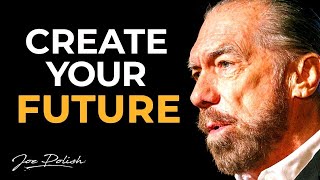
John Paul DeJoria went from homeless and collecting bottles to founding John Paul Mitchell Systems and Patron tequila. He built both by focusing on repeat customers, treating people right, and sharing success with employees. His core belief: success unshared is failure.
Chapters
Don't ever go into the selling business. Whether you have the greatest service in the world or the greatest product, never go in there to sell your product. Go in there to be in the reorder business. That's got your mentality.
That's true, yeah.
Because if you're going to sell it, that's where your focus is. If you want to be in the reorder business, even if it's a one time product, whatever you do is so good that they'll want to tell somebody else. Reorder themselves. When you're really down and out and you're at the very bottom, all you could do is look up. You know, I think it's kind of in life a lot of times when people are down, they look at how to survive while they're down, but stay at that survival mode long term opposed to I'm going to learn how to survive right now and make it, but I'm immediately going to work towards the next step. The next step and the next step. Yeah.
Great, great. So what was the most difficult time in your life? I mean, was it. Has it been when you've just been under maybe immense pressure from everything you created or was it when you were really just at.
No, I think when you're down and out, can't pay the bills the next day, that's the most difficult time. When I was homeless the first time, it was in my early 20s, my wife just couldn't handle being a mother anymore so left a two and a half year old in my arms and wiped out all the money we had and never paid the rent for three months. So we were actually evicted within three days of the time that happened. And I was in between jobs, but I had money, but she took it all. So my son and I were on the streets. We, we had this old car that we were in and we realized that hey, we're going to make this together, this two and a half year old kid. But where do we get money? We don't have any money. So what we did was even though we weren't really thinking ecology, we were thinking survival is I went around to vacant lots and picked up, you know, Coke bottles, seven UP bottles. And in those days you got two cents for a little one, five cents for a big one. So I'd go there and they'd have to give you the money and that's kind of how we survived. Then a couple several days later, a dear friend of mine who was what you would call a heavy duty biker with a gang, he just Found me an old buddy of mine from high school and said, johnny, come on in, your son could come live with me here. And we've got a couple really cool biker mamas here that'll help watch him while you get yourself reorganized. So that was a nice break too.
I mean, so how did you learn, how did you learn how to be a successful entrepreneur?
Well, I don't think it's learning how to be a successful entrepreneur. I think it's just being able to do something and know that you have that ability to do it. You see, the human race has the ability, all of you do, to do 10, 50 times what you're doing right now. Well, if you realize you have that ability, as you go along, you find obstacles, but you overcome them. Or you go right around them like water might go around them a little bit. And that's really it. You look at what assets you have. It's a little bit like selling. Whether it's a tangible product or a service, it's got to be the very best. And you put forth its features and then how it benefits the customer. Well, with yourself personally, you put forth the features you have how these features might benefit. And if you have a product, and I'd love to share this with everybody, don't ever go into the selling business. Whether you have the greatest service in the world or the greatest product, never go in there to sell your product. Go in there to be in the reorder business. That's gotta be your mentality.
That's true, yeah.
Because if you're gonna sell it, that's where your focus is. If you wanna be in the reorder business, even if it's a one time product, whatever you do is so good that they'll wanna tell somebody else reorder themselves. So that kind of helps along the way if you have that mentality. And I think selling. Oh God. Whether it was flower pots when I was a little kid or newspapers or in my early 20s, encyclopedias, Collier's Encyclopedia, door to door. You knock on 50 doors and they could be closed in your face. You had to learn how to be just as enthusiastic on door number 51 or 105 as you were in the first door. Now that's difficult to do, but you learn how to do that. I believe the average encyclopedia salesman commission only door to door was three days. That's how long they lasted. I lasted about three and a half years. But I learned to kind of overcome rejection and be prepared for it. If you're prepared, and we'll cover That a little later too. I saw your questions. If you're prepared for rejection before you start anything, whether it's your personal life, whether it's a business life, when you're prepared for it, it doesn't shock you. When you come along and all of a sudden see rejection in your face, you say, well, I was prepared for that, but I'm gonna continue on just as enthusiastic and as confident as I was when I started. And that's not easy.
Absolutely. Do you experience rejection today in the same way you kind of did then and you just keep yourself in an enthusiastic state, or is it just much bigger levels of rejection?
It's a little different today. In those days, let's say you knock on 100 doors to get somebody that's reactive to what you're saying and will listen to you. Today, it's a little bit easier, I think, in life as you build a history that's conducive to a good life, where in business you realize success unsurit is failure, and you try and be honorable with what you say you're going to do no matter what it costs you. Well, it gives you that clout to be able to talk to people and they know, here's a sincere guy. You know, this guy has a track record of doing things right and not ripping off anybody. And, you know, by gosh, there are ups and downs. There definitely are, but much more easier to overcome today.
So what are your core values, personally and professionally?
Core values are, I would say it's the golden rule. Do unto others as you would have others do unto you. That's the basis for most religions, but they get sometimes carried away in rites and rituals. But that's the core value. Do unto others as you'd have others do unto you. And then it's the feeling of knowing that success unshared is definitely failure. In other words, when you make it, it's not really just about yourself making it. Hey, if you make it, you know you made it. But along the way, one of the great lessons to learn is it's not all about you. It's about your ability to be of service to this planet while you're here. And by saying, me, me, me, me, look what I did. This is me. Hey, here's my building. My name's on it. You know, I did this, you didn't. By doing something like that, it kind of takes away from how genuine you are. Because people don't like to just listen to people talk about themselves, how great they are. They want to know how to incorporate it to make them successful also or do something a little different. And I think that's very, very important.
You know what? I hang out with a lot of quote unquote successful people. Most success in this culture is viewed financially, although I know a lot of extraordinarily wealthy people that are miserable bastards. So there's a difference there. The thing that always annoys me is if there's someone that knows the answer to something, then there's a person who is asking them about how to build a business or how to do something and they know what to tell the person, but they kind of withhold it. They don't say anything. And I love what your whole notion of success unshared is failure. Because I think that's why. Because so many people that know you have said so many great things about such a nice guy, so caring, so generous. And my experience with you has been absolutely that you just want to be helpful.
You know, Joe, it's also very self rewarding. We look around and I'm a child of the 60s, so I know what we were looking at in the 60s for self rewards. But anyways, the highest high you're going to ever get in your life, the highest high, if you want to be satisfied, the highest high you'll ever get is to do something for somebody else and ask absolutely nothing in return. Boy, do you feel high and are you energized? And that lasts a while. It's very contagious.
Yeah, totally.
Thank you.
So what is your decision making process or thinking when it comes to investing your time, your money, your energy?
Sure. It's very important because time is the most valuable thing you have. Is one make sure where you're putting your time and energy is something you want to do. Not just because you're exploring with people you don't like or a business you don't like, or a situation you don't like? Time is so valuable. Try and speak. If you're speaking to people or a situation to people you feel there's hope for that you could do something with to do something great, not just make money. Whenever you go into business or in a relationship with someone just to make money, then it means you've already decided to take a portion of your time to make these papers that are backed up by nothing but will buy stuff. Call it a possession. We have all these great possessions. Well, if you have these great possessions, could you give them away? If you had any possession, you could give it away, hey, great, it was a possession and you moved on. If you can't give that possession away to somebody, just give it away, then it possesses you. When I started John Paul Mitchell Systems, I had been in the beauty industry. And I knew there was an opening for products that were unique and different, that weren't in salons. Even though I had no money, that's what I went after. When I started patron tequila in 1989, we were doing shots. You'd hold your breath. I knew there had to be a way to get something so smooth and the world was ready no matter what the cost was of a sipping tequila. Tequila. Hence Patron came out. Harley distributor says, you'll never make it. It costs too much to make it. You have to sell it for $37. And who cares if you sit around and sip and enjoy that tequila. And even though you don't get a headache the next day with Patron unless you drink the whole bottle, we don't advise that. Okay. That, you know, people don't care, see. But they do care. And I believe that there was a better way to do it. When I got involved with John Paul Pett, I knew there was a business I would start where my profits would help out pets throughout the world. With the profits, not with me. I knew that just a good thing. When I got involved with Irwin Jacobs and Marquis yachts, that was something that I did that realizing that during the bad situation of 2008-2011 12 that the boat industry was down. But if you had the highest quality boats, by gosh, this is the time to get in. And that's when he and I got in it together. And I'll tell you a little bit later about Rock Mobile and about Avio. But you know, just you look for the situation, the quality of the product, what the end result's gonna be and the people you're with are these cool people. Do you all have the same energy together to kind of move forward? Yeah.
I think that's so critical because trying to do business. There's no such thing as a great business with a bad partner.
No. For any amount of money whatsoever. Yeah.
How big is between your companies? How big is your team, your staff, your employees?
We're in the thousands. We don't tell Forbes everything because I like to be low key. In fact, I wouldn't even be on that list if it wasn't for Bacardi getting invol get a little piece of patronal minority interest many years ago. I try and stay off that list. Off that list. Okay. But I have darn good people, darn good partners. That work with me and they're just the very, very best. And the end result is we have thousands. But I'd like to share with everybody here, if I could, how we treat our people and why we, these thousands, love us. Let's take John Paul Mitchell Systems. I started the company 35 years ago. We are in 90 countries. Our turnover in 35 years is less than 70 people. But I teach people to do unto others as you do unto you. There were so many times, Joe, when I worked for people at a dollar for lunch. You don't get much for a dollar. So as soon as we could afford some money, first thing I did was give everybody free lunch. Today, even in Mexico, with my staff and my partners down there, 1500 of them that make the patron. If you work during the day, a chef makes you lunch. If you work at night, a chef makes you dinner. You want to pray, I build you a chapel. At John Paul Mitchell Systems. No matter where you are, you've got free lunch. If you carpool, we take care of that gasoline for you. So you do things for people. If we have a good profitable year, and every year we have, we share through profit sharing with all of our people, but we treat them the way we want to be treated ourselves. It's not like we're bosses. It's, you're my partner, right? Anybody could pick up the phone and call me. I don't have email. And the reason I don't is I'd be inundated with all the stuff I do, business wise, philanthropically, not to mention family. I'd be so inundated. I couldn't do all the things that I do and expand upon it. I couldn't have had email. So I'll take a phone call, obviously, go through my executive assistant. I'm inundated. And if so, this is important, I think, for you guys to know. If someone writes you a letter, people just email back and forth. Try some time. If someone writes you a letter, to take their letter and write the answer on it and sign it and mail it back to them or pick up the phone and call it. It means a lot to people, have that personal touch a whole lot.
Infinitely. Infinitely greater than electronic communication.
Yeah.
I mean, one of the things, like every day, trying to send 10 personal postcards, even if it's coming from my team, it makes such a huge impact. I mean, it's the simplest thing. I mean, if someone just hand wrote a note to 10 people a day or figured out how to have with your team, your assistant, do it and you did that for a year straight. Your life would transform in terms of the depth of the relationships and it's such a simple thing to do. So did you come across this method of communication or you just knew intuitively that I'm not going into this world of email? Have you ever had an email and you're like, this is crazy, there's no way this shit works.
Well, when I started looking at it and looked at people around me just being on the computer all the time, even though all my companies, believe me, are state of the art computerization, they're technocrats anyways. So I get my reports the way I want them. But I saw that it takes so much time and I wouldn't be able to call people as much or write, handwrite people, special people letters or, you know, being able to do or time to think, at least in my case, not for everybody, but in my case I thought, let me try and stay away from this. And it worked.
What does success and happiness look like and mean to you? I mean, how do you think about that?
Success is not how much money you have, which a lot of people equate to success. Success is how well you do what you do. How well do you do what you do? And do you continue doing it that well? Do you master mastering something is doing it extremely well, but doing it that way every time and then having the ability to grow from there and realizing success and shared is failure. Now, how can a janitor be extremely successful? I'll take a quick minute with a quick story. Worked all my life, from 7 years old and then paper routes at 11 years old throughout high school. I worked for a while at Stuart's Cleaners. I'm the guy that swept the floors, put the little drape on the hanger and just did all the work after school and on Saturdays. And Stuart was so tight, this guy squeaked. They paid me a dollar and a quarter an hour because he had to or he'd give me $0.75 cents an hour. Anyways, one day after school he calls me and says, johnny, come over here. He says, last night I was working late. I went up to my mezzanine to lay on my cot for a few minutes and I took my watch off, put it on the table, dropped on the floor. So I went down there to pick up my watch and looked under the cot and there was no dust. Well, the cot's light, I moved it, no dust. Looked behind the cabinet, no dust. Picked up a rug, no dust. You clean this as if I'm watching you every single minute. But Stuart, that's my job. You hired me to it. And my mom growing up taught the boys how to clean. I know how to clean. So my job, which I like, my job is to do the best job I can. Whether you tell me or not, that's my job. He was so touched. He said, johnny, I'm giving you a 25 cent an hour raise to $1.50 an hour. Oh my God. For Stewart to do that, it's like, wow, I won the Academy Award. But the lesson learned is this successful people, whether you're working for somebody else or working for yourself, do whatever you do as a Viv. Whoever's really involved is watching you every single minute do it. And that's difficult for people to do. If you can do that, you do your job so well.
So what, what, what would you consider yourself just really skilled at? And what are you just not skilled at?
Do you think about. Yeah, I would say I don't think about it, but I think what I'm really skilled at is being lucky enough. Lucky enough in life to be able to have the ability to listen to somebody else tentatively. In other words, listen to them, everything they're saying and not just think about what you're going to say next. And that took a while. I think I'm pretty good at that. And I think I'm also pretty good at being nice to people. I believe in just being nice in life, just being nice even with people. Have just a lousy day and maybe do some really stupid things. Things. Try and handle the end result in a nice manner. If we did more of that in the world, we wouldn't have wars and everyone would take care of everybody.
Hey, I hope you're enjoying this video. And I want to let you know that I have a new book that's come out and if you'd like to get it absolutely free, there's a link below in the description. Or you can wait till the end of this video or you can Simply go to joe'sfreebook.com and you can get a copy there.
Well, absolutely. I mean, one of the ways that I gauge who I develop deeper relationships with because I interact with a lot of people is how people that are more powerful treat people that are less powerful than them.
Sure.
I mean, it bugs the shit out of me when I see someone kiss ass to someone who they want to curry favor with because they want something and then they don't say thank you if someone opens up a door or they're rude to a wait staff or something.
I've seen a little bit of that. I've seen a little bit of that. And when you all see a little bit of that, just learn from it. Whoa, that's not gonna be me. That's not cool.
Yeah, exactly. Everybody has a purpose in life, even if it's to serve as a bad example. So what are you not good at that you have learned to avoid because you know, it's just not your thing? Like Dan Sullivan has a thing called unique ability where you're skilled, and then he has.
You know what I'm not good at is taking all the time to do all the little details, Fill out expense reports, just all the details. I leave that to accountants or leave that to other people that are much better than that and try and take that segment of my life and think in that segment or do something else. I have a little saying that I picked up selling encyclopedias. And it's pay attention to the vital few, ignore the trivia. Many. Too many people get tied up. I know. I was at the CIA a couple times. I trained them in management, motivation, and to Buzzy Krongard, their executive director, I said once, I want to teach all you guys here how to handle a piece of faith for once. He said, at the CIA, if we could handle a piece of paper 100 times, we'd be doing good. In other words, fewer moving parts. Try and pay attention to the vital few, ignore the trivia. Many. Or let somebody else handle that that might be much more capable than you.
That's awesome. So clearly you have really learned how to build teams, encourage teams, grow teams. And so you're obviously very good at having set up management structures, which I think first stems from self management. You obviously learned how to manage yourself, if you could speak to that. How do you not go off the rails at times? I'm sure you have, but you've learned from this. So what would you say about self management?
Yeah, we all have self management. My God, I could take it back to the US Military when I was in the Navy. If you wanted clothes, you folded your own clothes and they had to be exactly perfect and you had to manage your locker and manage your time. A little bit of a start managing yourself and your time. If you cannot manage yourself and your time, where you're just at the end of the day totally frustrated, or three phones are going at one time and you haven't figured out how to that one yet, don't think that you're a manager. You got to manage yourself first. Your time, how you allocate it, the time you have for your family, the time you have for yourself. Very important, the time you have for yourself. Many people, especially entrepreneurs coming up forget that they're busy from morning to night and well, where's your time? It's like money. If you get money, whether you work for somebody or make money, what do you do first? Most people, you pay all the bills, whatever's left. Well, then I have something opposed to. Another philosophy is pay yourself for what you've done. Pay yourself first, even 5%, take it off the top and just stick it in a stupid savings account. If you had to, just pay yourself something first. If you can't afford 10%, 5%, then believe me, the rest of the money will be allocated out. Take care of yourself first. That's part of your own self management. And then try and find some time. I find love to share this with you. About five minutes in the morning. I wake up in the morning, do obviously what you have to do when you wake up. Then I go right back to bed and I try and clear my space. Let's say I'm in this room. I will look at the ceiling, look at the walls. I will be in present time or try to. And then I normally have just one saying, you know, creator of souls, thank you for all that you've blessed me with and may I go forward to be able to do something that helps make this world a better place and try and be in total present time. Not about what I'm going to do today, not about my next appointment. Just be. And then when you wake up, your head's a little clear, your mind's a little clearer, and it's not cluttered.
So what's the biggest or most important business lesson that you have learned either on purpose or by accident?
By accident. One of the biggest business things that I ever learned was I started John Paul Mitchell Systems with $700. The business partner I started with was a top hairdresser, but he didn't do business. I didn't do hair. So we had no money. No money, okay. So I did 10 or 15 things. After six months, we were able to hire our first employee. Shirley Wong was her name. I gave Shirley 10 jobs and said, I hope you could do them, Shirley. Whatever you can to, honey, I'll figure out how to help you. Shirley learned how to do 10 jobs. Not one, but 10. Then I realized, wow, it's not just the person that started to cut me through necessity, but people do a heck of a lot more than what people say you should be doing. We're all capable of that. So that point forward, I paid people very well but gave them the opportunity to do more than. This is just your job. This is just your job. Now that might be anti union. Okay, no disrespect to the unions. Okay, no disrespect. But when one has the ability to do whatever they can do that they want to do. I'll give you the end result. Four months ago I'm in my office, I fly from Austin to la, had to do some work. My staff closes up at 4:30. Some come in at different hours in the morning to miss traffic. So by 5:30 I'm there and I hear something in the office. So I go back there and there's a couple girls working, a couple guys who said what are you doing here? Hey, it's an hour, two hours after we close. What are you doing here? They said jp, we love working here and we wanted to finish these little projects. I said how many people are here? They said I don't know. Hey, who's here? JP's here. 12 people came out with the same exact thing. JP, we just want to be here. We know we don't have to be here. We're not paid for this. We want to be here. We love what we're doing jp, we just want to finish this. You know, they didn't want to leave. Well, needless to say we all went out for a really good dinner and a couple great bottles of wine and a little bit of good tequila too. Anyways, we were a team. But when people feel good and respected and you give them the ability to do more than this is just what the job is. You'd be amazed at how they expand their business for our size company. Take John Paul Mitchell Systems. I should be in the thousands with employees John Paul Mitchell Systems alone. Now this includes the warehouse has 300 employees. That's it for the world. Now we have about 800 part time but 300 full time employees for the world. Patron has a lot more because hand bottles blown out of recycled glass. We have a lot of labor intensive there but you can't have fewer moving parts. But my people do. My family, they do more. More than three times that many people because they love what they're doing and who they do it for.
So what have been one or two of your biggest business or life challenges and how did you get through them?
Well, the first one was obviously starting Paul Mitchell with $700 and living for the second time in my Car because our backer pulled out. That was extremely difficult. How do you start a company? Balance. Your bill's not going to be paid, knock door to door, selling your products, extremely difficult. That story would take up too much time to tell you right now. But if you want to see that story, there was a fellow named Donny Deutsch who on cnbc had the big idea. I was on his show four times. He has a half hour special on step for step, how I did it and how you. How the hell do you do it on $700 and no money? Start a company and grow it. So it was along the way that was the biggest challenge. And you want to know the success out of that? This was a success. How do you know you were successful? Two years later, we should have gone bankrupt every single day. Two years later, we were able to pay our bills on time. Not pay them off, but pay them on time. We said, hey, we made it. And we got $2,000 left over. We made it, we're successful, we're all happy. And that was a real challenge. Another challenge is on. There's many businesses I started that didn't go so well, but they were good learning experiences where when I had a partner that I really trusted and they're like stealing money or kind of stab you in the back, that was very, very disappointing. But on the whole, other partners are really great. So it weighed itself out.
Usually it's not a matter of if, it's just a matter of when.
Yeah. And try and handle with love. When you do. I mean, it's kind of like you. Son of a. Anyways, try and handle with love. Hey, you screwed up, man. Now what are we going to do to make this right? You know, I mean, you handle these things when they come up and it happens in life, you know, just something that happens. And I'm sure it'll happen again somewhere along the way.
Yeah.
Awesome.
So what's the most useful life and business advice you can give to someone who is a high level of achiever or entrepreneur? Not just startups, but people that are already at a certain level, because the vast majority of people here are run very successful companies.
One sentence. Success. Unshared is failure. One sentence with your own people, with your family, with your friends and the world. Success. Unshared is failure. We have 118 Paul Mitchell schools nationwide of cosmetology. They're all taught over several months, a culture of giving back. They all do fundraisers. We pay for the whole fundraiser. Every dime goes into their local community, their State our country and the world to make it a better place to live. Success unshared is failure. And you don't need money to be sharing. You could do just something nice. Yeah.
Awesome. Thank you. So when it comes to money, making it, keeping it, giving it away, what should every person in this room know?
Have six months worth of what it costs you to live in the bank in cash if things went wrong. I mean, including about movie theater tickets, gasoline, insurance, have that in the bank. No matter what happens, you know you're going to survive the way you survive right now for a period of six months minimum. I would say try and eliminate as much debt as possible. Pay off your house if you can. First, very, very important. And then as you're making money, whenever you make money, don't invest at all. Oh my God, don't invest at all. You're investing on the next thing to come along, that's fine. But take a portion of it in, of a secure investment. You're not going to lose. Take a portion of that and be a little conservative on that one. So as you're building your own empire, you're building something for you and your family and your friends in the future that no one could touch. Then of course, with others, you want to take gambles, you want to invest it in yourself and your own growth. But take a little piece of everything and pay yourself first where it's a stable investment so that you feel really, really good. And the bigger you get, the harder it is to make sure you're investing money. I'm part of a group called the Giving pledge. There's about 103 of us, Warren Buffett, Mike, Bill Gates and a few of us. And we've already pledged. We were so blessed in life that 50% of our wealth while we're alive or after we die will go to make the world a better place to live. But we found in our seminars that we do, you've got to check who you give the money to. There's certain great charities, but 50% of it goes to fundraising. In one case, 80% went to fundraising, 20% went to actually helping the people out. So when you do that, check it out. But don't just give money. Give something that'll let somebody do something for themselves to continue. It's like you feed somebody, hey, it's good, you should feed people. But when you teach them how to fish, they could do it themselves. So that should be part of what you're doing. What's the end solution? Long term, not just what's a band aid.
What are the key characteristics that you think make the best leaders?
One, be empathetic. If somebody comes to you and talks to you and they're just pouring their heart out to you, listen, you may have been there once yourself once, and nobody ever listened to you. Listen to that. A great leader is someone that could listen. A great leader that doesn't look at, okay, what am I going to get out of this? The great leader looks at, what's the entire team going to get out of this? And how does this benefit the end customer, not just me and my team, how do they benefit more than anybody else? And when you have that mindset, it's easy to move ahead. And you move ahead with a lot of people that are right on the same, shall we say, thought pattern that you're on. Very important.
Okay. I hope you found that video awesome and useful. So if you want to get a free copy of my book, I want.
You to click here.
And if you want to watch some more videos that will be useful and awesome, click here.
Go ahead. You're over here. Do it now. Come on. Thank you.
Watch them.
More from Joe

This FBI Trick Can Command Respect Without Saying a Word ft. JEFFERSON FISHER & CHRIS VOSS

How To Stand Out, Be Different, and Create Raving Fans, Customers, and Employees ft. Jesse Cole



90% Of Businesses Fail In Their First Year, Here's Why! ft. Dr. Benjamin Hard & Dr. Robert Cialdini

The 1 Piece of Business Advice I Got From Elon Musk That Changed Everything Ft. Kamal Ravikant

The 6 Traits You CAN'T Teach in Entrepreneurship ft. Richard Branson & Gino Wickman

The Leg Method: How to Make Your Book into a Million-Dollar Asset ft. Anna David


7 Millionaire Mindset Hacks for Daily Success and Wealth ft. Brian Tracy & Dan Sullivan
