The Domino Effect: Brian Tracy’s Key to Changing Lives! | Joe Polish
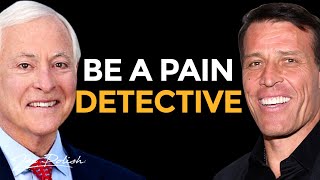
Brian Tracy, Tony Robbins, Peter Diamandis, Robin Sharma, and Larry Winget discuss what Tracy calls the two core dominoes of change: contribution and personal responsibility. Tracy uses personal stories to show how serving others first and owning your choices reshape workplace culture and life outcomes.
Chapters
One of the things I wanted to ask you two things. 191 books. I mean thousands of hours. I imagine it's thousands of hours of training that is recorded, documented, packaged and available to the world that you've put into two courses. I've consumed hundreds of hours of your content in terms of audio. So I know you have so much of it. If you had to say what are, I call them dominoes at the end of what's in it for them? Every chapter ends with the, the first domino. And you have been a first domino for countless people where they read one of your books, change the trajectory of their life. They heard you say a concept or teach them something you know, be it the psychology achievement who I can't tell you how many people have told me over the years that's their all time favorite audio program. Out of all the things you taught, what do you think are the most important dominoes? Maybe you could just pick two or three. That's first thing I want to ask you. And then I was going to ask you about what do you not talk about or haven't shared yet that are going to be in those, these upcoming nine books. So I'd like to get the Brian Tracy dominoes that you think are the most important ones and maybe some future ones that you haven't yet shared with the world.
Well, I think of my books in terms of a single word. The book Psychology of Achievement is really the best that I've ever done and according to my fans and friends, they say it's the best they've ever, ever read all over the world and in 50 languages. And it's I get emails every day. You changed my life. You changed my life. You changed my life. And I started off as a poor guy and I came from a working family. I failed out of high school. So I didn't start off with any blessings or anything else. I didn't have a great childhood. And so I consider it to be really a reward. It's a wonderful thing to have a positive effect on people's lives. And so I'm trying to think of what are, what are the ideas and one word that I'm going to be focusing on which is really closely related to your book and its contribution is I'm going to write a book and it's going to be on contribution and it's going to be on the, the effects that if you want to be successful, look for ways to contribute to others. Don't worry, don't worry about what's in it for me. Just contribute to others, help other people and do it first. You don't have to expect or negotiate a return. So that's a word. And responsibility is another word that can be a whole book. You could talk, talk about every, every, all the different things and different ways that you can accept responsibility and practice it so that it helps other people. And so people say, well, I want to be successful. Everybody wants to be rich and successful. Then what you do is you constantly look for ways to contribute to other people to. And with regard to negativity and negative thinking, accept responsibility, say, I am responsible. I'm responsible for my. Everything that happens to me or doesn't happen to me is up to me. Nobody's going to do it for me because I am responsible. And so I think of the single concept almost like a hard nut. And then all the different ways that you could apply in your life, which makes it so simple and so easy to apply and there's no cost to it and you don't ask for any money. And where do I get these from? The same as you is people have told you that when they heard this from you or, or read it from you, that it changed their life, it changed their thinking. They always thought accidentally that they should be doing it this way. And then they learned that, no, that's not, that's not efficacious, it doesn't help them. And so they follow your advice and they do something different. Earl Nightingale One of my favorite concepts of Earl's lead the field was the whole idea of service. And you know, and he talks about service comes from the Greek, the Italian servus, which is from serving, from service. So therefore what you do is you constantly look for ways to serve other people and serve them better and serve them faster and serve them earlier and serve them sooner and keep asking them what do they need from me more than anything else. And that's, that's summarized in the title of this book. And you know, just by looking at the title that this is going to be a good ride. As they say in the west. It's a, it's, it's going, it's going to give them ideas that they can use to really improve their lives.
No, go ahead.
Sorry. Yeah. Constantly look for, look for ways to give, look for ways to put in what can I do for it. I, I remember when I was young and struggling and coming up and I was working for, I call, I call him the big boss. He, when he died, unfortunately, he was worth $750 million. And he started off a Small family. He became a doctor, then he became a surgeon. And he worked his way up and he found he had a flare for business. And so he was well paid as a doctor. And then he continued invested his income in. In other things. And he became one of the fourth richest man in Canada. And he was a doctor. I called him the Doc. People called him the Doc. And he was a great man.
Just.
He was just a great. A great man. Very quiet, very humble, just. Just a good man. And so I think, well, what a wonderful reputation for a person to have, as there's never a person in his life who said anything but good things about him. And I still to this day. So in the back of your mind, I think, what would the doc do? What would the doc say? I remember one thing he said. He said to me several times, because he would use me sort of like a falcon would toss the. Toss the bird out to go after the game. He would give me a project. People would bring him projects starting with hundreds of thousands, going up to many, many millions of dollars. And he would say, brian, check this out for me and see if it's something that we want to get involved with. And one of the things he told me, which I keep reminding myself of, is that it's easy to get into something. It's much harder to get out.
Yeah, yeah.
So true.
Time to do your thinking is before you get committed too deeply. And I. I teach that to other people. But the other thing I do is I practice this with my children. My children, of course, my staff. Here's an. Here's an interesting thing. People always say to me when they come to my office, the first thing they notice is laughter. I went before, when I. My company reached its peak, we had about 35 people. And then of course, we had Covid and a whole bunch of other things, and we cut back and. But people came to our office and they would hear laughter. People laugh together. If we hire somebody, we only hire somebody that we liked, and we only hire people that everybody else liked. And if we. If they didn't laugh, if they didn't contribute to a really positive environment, then we just let them go. Not angry, no. Anything else, but just a happy environment. And we're one of the most productive and most profitable businesses of our kind. I developed millions and millions of dollars worth of real estate. Not only my own, but the real estate of my clients and my bosses. And so I worked with a lot, a lot of people, and they're all happy. That was a good thing. And they look Back at that of those times as. As one of the best jobs they ever had. And they said that to me, you know, one of the best jobs I ever had was working for you. Because everybody's happy. Good thing to aim at.
No, that's really important. I mean, I write about this in my book where you can often look at couples and you can tell. Engage the value of most relationships by how often they laugh together. And if there is no. Because life can be difficult. Life is not always Kumbaya. Life can be very, very difficult. And laughter brings like. So, for instance, the first chapter of my book, what's in it for them is be a pain detective. And what I have learned, and a lot of this comes from my own journey to. In recovery, is that one of the best ways to bond with someone is to identify where they have pain and struggle and suffering in their life and remove it, eliminate it, or at least bring some relief to it. And when someone's dying or they've got a terminal illness or they're really in the depth of addiction or depression, oftentimes the best thing you can do is just be a companion to them. You may not be able to fix the situation, you may not be able to dispense advice, but you can at least be there with them. And you can. And that is soothing, and that is comforting in and of itself, even in the midst of enormous difficulty and suffering. And so my whole thing is be a pain detective. And part of that is you can connect with people on pain. And what is a business anyway? A business is solving problems for a profit. And if you can identify the problems that exist or bring some sense of relief to that, then you're doing really good in the world. Now, there are ways to make money by exasperating. Exasperating the pain. And some companies, unfortunately do that, but I would not. Those are not the companies that I honor and admire. I admire people that are actually in the transformation business, not the transaction business. And so this. This whole, you know, everything that you're saying, I think is. Is. Is critically important, especially for young people. And I. I think as we get older, I mean. How old are you right now?
78.
78.
Okay.
And I'll be 55 in February. And as. As. And I have a. I have a Godchild that is 5 years old that I. His birthday was a day before yesterday, and I recorded a video. And it's funny because his father, Akara Chan, is. We make films together and stuff. And I know he'll store this video. So his son can watch it 50 years from now because I said, I want you to watch this video 50 years from now. And you will, you will realize how amazing life could be or how difficult it could, but you know that you'll be a different human at that point in time.
What are the biggest trade offs that both of you consider maybe negative in order to do what it is you do? Because you're both, I mean, incredibly driven, what I would consider insane schedules. But at the same time, you're making massive contributions to humanity. So what are the trade offs that you would consider? Like, you know, we work our asses off, we do a lot of stuff, but this is what we had to sacrifice in order to do it. If you think of it that way.
I think if you think of it as a sacrifice, then you're going to build frustration or resentment. I really don't. If you think it's a sacrifice, you shouldn't do it. I think the challenge is that most people have this illusion about life, work, balance. And I think that's, you know, if you're going to accomplish it. People are laughing because you know it's bullshit, right? What's true is life, work, B, integration. So I was just in 21 countries, or seven countries, 21 days. But who's with me is my family, who's with me as my friends? And I've done well enough to have a plane and bedrooms and all that kind of cool stuff makes it. But when I didn't, we still, we huffed it together. And beginning days, it was coach and dragging ourselves around. But I thought it was great for my kids to have schooling, but I thought an education was more valuable and traveling the earth was a part of that. But, you know, we're in the middle of this crazy schedule, but we're. It's not work, it's a mission.
We're.
When it's work, it's that I always ask people, I said, how would you describe what you do? And people I say, is it work, is it career or is it mission? And most people, of course, say it's work. And that's exactly what it is. It's heavy. If it's, you know, if it's your career, it gives you something more. If it's your mission, it doesn't wear you out. It brings energy to you. It's fulfilling. And if you can tie your mission in with the people that you love, it's pretty cool. You know, there's some people in this room there, my friends, I see Dean here in the front Row here. And it's like we're all on this mission and we find time to connect and be with each other and have a blast with each other, but we're sharing about things that matter. I'm not a person to go to a party and like, you know, go on the corner and chit chat. It's like you want to talk about something deep, let's rock. You don't let me go home and be with my family, you know, let me go do something fun, some of that nature. But in the middle of all that craziness, you know, we were stuck for two days. So we went ice racing. A group of my friends and I were with me and some of them are my security guards, some of them my cousin workers, some are partners I have in business. But we went 70 kilometers below the, the equator and just, excuse me, the arctic and went 200 miles an hour and Lamborghinis. I was doing it like this.
I love that you said you're stuck.
And you went, you did this versus like get going to a spa and getting pedicures.
Yeah, like going through that shit. I was able to squeeze in a Porsche. And if you can imagine, 200 km an hour on pure ice, on a lake frozen as fast as you can drive. And the beautiful thing about it is like, you know, most people have fears and I've learned to make sure I give myself enough fear to stay intelligent. But here you don't have to have it because when you wrecked, you just went straight into the snow. It was just incredible. So. But we do crazy things together. We have a blast together. We laugh, you know, we cry, we see the impact. And to me there is no dividing line. And for my kids, you know, like all the work we do feeding people. My youngest son, Jarek, when he was five or maybe six, probably five, we would go and in the early days, I was feeding families and I'd take all my friends and we'd build these baskets up, make them great. And we fed all the families. We had some food left, some baskets left. So we went to this place in Oceanside, this park, and there was a man lying on the ground in the toilet area covered with a bunch of pieces of rags. And so, you know, I gave it to my son and I said, come on. He could barely hold the thing, it was so big. I said, you know, on come going to help you give this to this man. He goes, and he set it down next to the man. All of a sudden the man jumped up and grabbed my son's hand and I jumped. My son jumped and then he just did this and he put it down. My son is 31 years old now, 32 years old now. He's just gotten married, he was working on kids. His entire life is about contribution. He's got a heart this big. He works his ass off, but he does it in a way that's so fulfilling. And his wife travels with them and they have this great life and he doesn't have to pick between work and mission and he's not burnt out and he's probably been to a hundred countries and I'm proud as hell of him. It's just like if you can combine your mission with your family, combine your mission with some of your friends, then you're going to accomplish a million times more. But if you think it's a sacrifice, don't do it because then all you're doing is you're going to have resentment later on or frustration later on and you really aren't contributing because you're trading off. You're not giving. Great, great.
Hey, I hope you're enjoying this video and I want to let you know.
That I have a new book that's come out and if you'd like to get it absolutely free, there's a link below in the description. Or you can wait till the end of this video or you can Simply go to joe'sfreebook.com and you can get a copy there.
Yeah, ditto. I think I'm a nine year old kid. Those of you who know me know I am a 9 year old child in my body pinching myself every day. That I get to do the shit that I get to do, it is extraordinary. I could not, would not want to be doing anything else. I mean, there's hard work and it's like I push myself more than anybody else, but I love it, I love it, I love it. I cannot imagine doing anything else. And that's the challenge, right? The question is a lot of people are doing something to get to something else and that's just wrong.
I agree.
And it's a matter of don't do because your parents told you, because you heard on an infomercial, because whatever, do what is your highest calling in life and love it. And so I don't work at all. I really don't work. And the shit that's work, you know, Dan has told me to get rid of it and so I get rid of it.
So what do you find or see are the commonalities of people who achieve greatness? I mean, you've studied so much.
Sure. Just trusting in your vision when the world calls you crazy. So Elon Musk, after PayPal, he made his money. He could have cashed out and lived in the Caribbean. What did he do? He started two companies that he admitted in an interview at Stanford Business School had a less than 50% chance of success. SpaceX, with the vision of colonizing Mars over the next 100 years, as you know, and Tesla, So literally you've got a number one, believe in yourself when the world calls you ridiculous because otherwise you're not leading your following. And that applies to not only Elon Musk, but the baker and the taxi driver and the startup entrepreneur and the manager. Number two, you've got to surround yourself with the right people. I mean, you do become your conversations. If you're the smartest person on your street, maybe it's time to find a new street. If you are the fastest person in your neighborhood, maybe it's time to find a new neighborhood. If you are the most loving person in your social circle, maybe today's the day to find a new social circle. Okay, so find the right people.
That's great advice.
Yeah. Number three, the bigger the dream, the more important your team. You know, you just can't do it alone. You can't have an A level company with C level performers. A fourth thing, I mean, there's so many things. The fourth thing is you want to get your inner world right because you can't inspire your team and your customers in the marketplace if your well is empty. What else?
I wish you would like not have.
To struggle for just recalling content here.
Yeah, no, another thing is you want to commit to mastery. So this is a gorgeous opportunity. Forget the economy. I think the economy is going to fall apart pretty quickly and we've seen last week what happened and I think we're going to get into a very messy long period where the global economy will fall apart. But that really doesn't matter because what I'm inviting your listeners and your viewers to do is to be so good at what you do, to paraphrase Steve Martin's words, that you create your own personal economy. Because the marketplace always pays for mastery. So the best in world BIW say, you know, in a world where most people resign themselves to mediocrity in their work, you go into hotels or taxi drivers or whatever it is, it's like so many people are at average the card carrying members of the cult of mediocrity. So it's a gorgeous opportunity to say, I'M going to play at mastery and be so good at what I do that when people witness me working at what I do, tears come to their eyes. Like tears come to your eyes. If you go to the Sistine Chapel and see Michelangelo's work. A few other things. You want to get your routines right. What make the great athletes, not their natural talents, the right routines right. So you've got to nail your habits. And the best in world leaders, they really have great habits. So many of them, 5am Club. So many of them, they go to the learning every quarter. So many of them have masterminds. So many of them are into personal development. They'll never tell you about it, but they're into personal development. So many of them are runners or into fitness. I mean, that is a game changer. You want to get fit like a professional athlete. Watch what happens every other period of your life. Final thing, I'd say that the great leaders, they're cause driven. If you, if your source of motivation and engagement is money, you're never going to sustain the ups and the downs, the pain and the failure that you need to get to world class. You have to find a cause that touches you at a heart level or an emotional level. So you start living for a cause bigger than yourself. And that's not some platitude or romantic you look at. You know, Steve Jobs, he didn't care about money. Even when he had money, all he had in his mansion or his house was a futon and a beautifully designed lamp. He wanted to bring beautiful products into the world that made people's lives better.
Yeah, no, there's so much insight there. You know, a couple things I want to mention of what you said. I've had two meetings at SpaceX with Elon Musk that Peter Diamandis put together. And the first one, a friend of mine asked him, how did you do what you did? Because he had literally was borrowing rent from his friends. He had spent all the money he made from ebay trying to make SpaceX work. And he said, he goes, you know, I just have a really high tolerance for pain. He goes, it didn't even matter. I was just going to make it work. Or it just wasn't going to work. It was a really just. But the way he said it was so powerful. And then you talked about the stuff. Steve Martin quote from the Charlie rose interview in 2007, asked him, how do you become such a great comedian? He said, be so good, they can't ignore you. And then Cal Newport wrote this book Called Be so good they can't ignore. Well, it wasn't even his book. It was one on. But anyway, I think that's.
Yeah, you're right. So good they can't ignore you.
It was about passion and it was about how passion is overrated and develop a skill that's rare and valuable. Not, you know, so many people. If you pursue passion, it's about what can the world bring to you. Find your passions and make your life about your passion versus if you focus on skills, you're looking at what can you bring to the world. So his whole premise is that passion sounds great in a seminar, but it's really not how most successful people achieve what they achieve. And I've heard both sides. I mean I'm friends with people that are all about passion and other people like yeah, it's made me rethink it with what are your thoughts on that? I mean, what are your thoughts on find your passion and pursue it? Because a lot of people, they're not anywhere near finding where they fit or where they're in a flow state. And so how do you look at that?
Well, I agree with you. Both are important. So I think acumen and talent without passion is a hall of victory. You've got to have passion. Let's go to the science emotional contagion. Social scientists are realizing that we feel, feel like the people who populate our life most often, you know, husbands and wives were studies. If the wife or husband was depressed, over time the husband or wife, the other partner became depressed. So if you're around energy vampires and people who are depressed and miserable, you will pick up their emotions and that will be your emotional default over time. That's pretty powerful. So passion is incredibly important because underneath it is actually love. And people don't talk about love. But if you don't love what you do, if you don't love your vision, if you don't love your craft, you're not going to run through walls to be biw, Michelangelo da Vinci, Beckham, Buffett, Jobs, Mother Teresa, the baker or the barista with the sparkle in their eyes at your favorite coffee shop when everyone else is complaining, who still, even though their heart might be breaking, looks at you and smiles and thanks you and brings their A game is showing love. Having said that, a loving person who's like a D level player is never going to reach iconic.
Right? Right.
And that's what I mentioned, the opportunity of mastery. I mean, how many people do you know? Well, you know a lot of A players, but just walk out in the world, across the world, and very few people are on a path to mastery. You don't have to be there. And that just goes to belief. Because fundamentally, your daily behavior reveals your deepest beliefs. And the sad thing is, most people on the planet today have been sold a series of lies that the icons are cut from a different cloth. And because of that self identity, their daily behavior matches their self identity. And they're not doing the work required to be masterful in their professional lives and their personal lives. Because they say, what would be the point? Which is really sad, because, you know, could you imagine if we got this interview out to kids and the world, people would start to go, oh, genius is less about genetics. It's more about the things I do. What do I do? Let me start doing them.
That's great. That's great.
Well, how do you think about goal setting and what's the best way for someone to not only set goals, maybe the right way, but achieve them in the most fulfilling way possible?
Sure. So vague goals lead to vague results. Ask most people, right? You know, no judgment, but, you know, what's your quarterly goal or your annual goal? I don't know. So you want to bring great precision to your goals. I call it the Big Five. Ask yourself at the beginning of every year, what are the five things that need to happen for this to be the greatest year in the history of my life? And then look at that every single day, single day, you know, and then move it forward every single. Every single week. You know, I also have something called the Daily Five, which is, you know, a great life is less about doing one brave act on a beautiful Sunday afternoon. It's more about what you do every single day.
Right.
Your days are your life in miniature. Take care of each day, and a great life will take care of itself. So if you were to achieve five little wins every single day, at the end of 30 days, that's 150 little wins. At the end of one year, it's 1850 little wins. So the daily five is another tool to help you do that.
Good morning, everybody. It is truly a pleasure to be here with family. And I really view all of you as family. A family of individuals taking action in the world. One of the things that I realized is we don't have enough people taking action in the world. And I think that difference between someone who says, I'm going to sit back and let it go by, and someone who says, no, I don't like the way it is, is huge. We're now Living in a time where the ability we have to actually stop complaining about problems and solving problems is extraordinary. I think about the fact that hundreds of thousands, thousands of years ago, if you wanted to solve a problem on a global scale or on a national scale, you had to be the king or queen of a country to have an impact. Hundreds of years ago, you'd have to be the head of state or a robber baron or an industrialist to have an impact. Today, all of us can have an impact. The difference between having an impact and not having impact is a decision. It's not resources, it's not money. It's all there. It's a decision. So I want to talk a little bit about mindset today, about thinking about how we think, because ultimately, it's the most critical thing. What distinguishes us as humans from every other animal, what distinguishes one human from another, is how we think. And I want to encourage you to think in what I call a bold and abundant mindset, because how you think matters, and it changes everything in your business, in your life, everything. So I'm going to begin by a tribute to Joe, because my life changed extraordinarily when I met Joe. He's someone who is such an extraordinary giver, a man who is like, what can I do for you? What can I do for you? What can I do for you? And, you know, Joe is to love Joe. And Joe introduced me to Dan Sullivan and Babs, which was a great gift as well, who's become a new mentor and friend. So I wrote this book, Abundance. It was great. We hit number one on Amazon. In between, New York Times got close, folks like Mike Klein jumped in, and the whole superhero community here in 25K, where I'm a proud member, really helped drive this on the New York Times list for nine weeks. And I'm so grateful for that. And again, the thing that I realize is that most of humanity is so mired in the muck that comes to them over the television and the newspaper and the radio, what I call the Crisis News Network. Every time I walk by CNN in my office, it's some calamity on the planet going on that is fed to you in high definition over and over again. And if you listen to the news and you read the newspapers and you read, you know, watch television. Their mission in life is to capture your attention. And every murder, every pro on the planet is fed to you over and over again in high definition. I mean, how can you possibly have a positive mindset watching the news? And I think if you know, my work the realization is that it's not the way the world really is. In fact, the world has gone under tremendous transformation over the last hundred years driven by technology, which is itself exploding onto the scene. And we'll talk about that a little bit. So Abundance was a book about where we're going to be in 20 or 30 years. I'm very proud. You know, it was such a success again with the help of this incredible community that my publisher Simon Schuster quadrupled the advance and said let's do the next one. And Bold, I don't have a cover yet, but Bold is about how to get there. Bold is what I'm going to be speaking about here. It's co authored with my good buddy Steven Kotler. But it's the how to manual. How do we create a world of abundance? Because the realization is that the world's biggest problems are the world's biggest business opportunities.
Right?
The best way to become a billionaire is help a billion people. Just think about that. And my goal here is to have you think big, help you think boldly. So to get us in the right mindset. Let me share some data. Re releasing Abundance in September. You can see this is the paperback edition, but there's that Starburst with new evidence of abundance. And I have an amazing team from my Abundance360 community. And in fact actually if I just. Guys raise your hand in the back here and Marisa over here and they did a bunch of research of what's the data showing us. And I want to just give you some of the data. So let's talk about where we're going in Abundance. So the first is increase in freedom and happiness. So this is in fact the look at slavery and indenturedness over the world from 1750 or 3/4 of the world was indentured or enslaveitude if you would down to under 10% today. This is annual hours worked per person. So even as the rate of our status of living has increased massively, the number of hours that we've had to work for that standard of living have plummeted. And of course on this graph you can see that France is where you work the least. This is percentage of degrees awarded to women has been skyrocketing. And I love this graph. It is a correlation, a direct correlation between happiness and access to technology. And guess what's happening in terms of access to technology? It's exploding around the world. If you look at reduction of violence and increase in safety, CNN would have you believe that there's constantly a World under siege, that your life is about to end. But the fact of the matter is, and this comes from the world, the work of Steven Pinker. We're living during the most peaceful time ever in human history. Your chance of dying a violent death are 1-500th of what they used to be. So you can see just the radical fall off in war around the world. Yes, World War II and World War II one are peaks here, but at the same time, look at what's been happening over the last 20 years in terms of regional and local wars. If you look at safety, automobile and airline just plummeting. In terms of fatality rates increasing health. I love this maternal mortality for the mothers in the room here, it used to be a risky business to have a baby. Today it's dropped off to near zero. At the same time, infant mortality. Imagine having your children die today. The ability to guarantee that your children can get through childbirth and live to age 5 or older. On the flip side, the extended healthy human lifespan more than doubled the human lifespan in the last hundred years. And I'll be talking about how we double it again very shortly. On the energy front, electrification and the cost of energy has dropped and plummeted. Solar costs are plummeting at the same time that the production of solar is going through the roof. I was having drinks with Elon talking about from solar cities, what the prediction is 50% solar in the US within the next 15 to 20 years and the rest of the sunnier parts of the world catching up very quickly thereafter. Reducing poverty. And I love this. This is the COVID of the Economist magazine that we really are heading towards the end of poverty on this planet. At least extreme poverty. Finally, what's making this all possible is technology. And look at these numbers. This is bandwidth costs for a gigabit $1200 down to 23 bucks over the last 15 years. This is the cost per a million transistors used to be $222 down to 6 cents. This is the cost of storage for a gigabyte, 600 bucks down to 3 cents. This is happening right now. And if you want to know why your businesses are exploding and what's going on the the reach you have around the world. Here's the data. This is what's happening. And then finally, I love this one, which all of us are the beneficiaries of. In 2000, if you wanted to start a tech startup, the average startup cost was 5 million bucks. Today it's 5,000 bucks, thousand times cheaper. Talk about an explosion of Entrepreneurship. So what's going on, on the scene here is that we remain unchanged as humans. We haven't had a software upgrade in 50,000 years. We're the red line here. That linear and local thinker that evolved on the savannas of Africa, that yellow line, that exponential growth, an exponential is simple doubling, right? 1, 2, 4, 8, 16, 32, that's exploding on the scene is the technology that we are creating and using. And the difference between those is either disruptive stress or disruptive opportunity, depending on your point of view. If you're the CEO of a Fortune 500 company and one of you guys come up with a disruptive innovation, it's disruptive stress. If you're the kid in the garage who comes up with the innovation, it's disruptive opportunity. What we're going to be seeing over this next decade, and we're living at the knee of the curve. This is like the most important time and exciting time ever to be alive. Science fiction is becoming science reality every single day is that in the next 10 years, 40% of today's Fortune 500 companies are going to be gone, put out of business by companies we haven't heard of yet. At the same time, to echo that, this was from Richard Foster at Yale. If you started a company in the 1920s, you had a 67 year run rate that you could milk the company before you were disruptive. Today the average is 15 years. The rate of disruption is increasing at an extraordinary pace. I love this. And it's happening every day. And we report on it. We go from I've got an idea to I run a billion dollar company in record time. Literally we're seeing billion dollar startups in 18 months. And here's just a short list of some of them that we read about, plus play with, know about. And it's possible, right? You can go from I've got this great idea and scale to a billion dollar valuation in a year's time, two years time. It's not easy, maybe you have to be lucky, but it is now possible like never before. All of that's being driven by computational power. All of this exponential change I speak about is being driven by the fact that computers are getting faster and faster and faster. That nine years from now, the average theory thousand dollars computer that you go out and buy is having the computational power of the human mind. And then 25 years later, it's got the computational power of the entire human race. And what's happening that's so extraordinary is we're living into this world of convergence. This is where I spend my life. I spend my life running the X prize. Singularity University Abundance360 looking at and feeling the pulse of this convergence where all of these faster and faster computers are driving a slew of different technologies. What do you mean by that? I mean pervasive networks connected everywhere, ubiquitous sensors, a trillion sensor economy where you're going to be able to know anything you want any time you want. Anything you want can be measured. Artificial intelligence, which is going to rock our world like you've Never imagine. Robotics, 3D printing, synthetic biology and medicine. And so faster computers is sort of the growth medium that all of this stuff is happening in. And all of this stuff is technology that if you're not using it yet, you will be guarantee you will be touching and using all of these technologies within the next five years. Do you remember the first time that you guys remember seeing email or hearing about email or a webpage? It was like this foreign thing. I remember the first, like what's this AOL thing I keep hearing about? Or this webpage thing I keep hearing about? And now it's second nature. We're using it all the time. You're going to feel that way about these technologies soon enough and you have to to be able to have the impact scale that you want on this planet. And part of my mission, part of my ethos is helping people understand how to use this, how to gain access to it and how to use it to try and solve bigger and bigger problems. Creating wealth, but also creating a world of abundance in the process, because those two are so correlated. So I want to give you just a fallback a little bit on some of the lessons here to give you an understanding. So what's driving all of this convergence and this explosion of technology is what is called Moore's Law. You may have heard of it. This is the guy it's named after, Gordon Moore, who's one of the founders of Intel. And while he was at intel, he noticed that the number of integrated circuits he could put on a chip was doubling every 12 to 24 months. He wrote this paper in 1965 after just seven years of seeing these doublings, predicting this was going to continue. In this paper he said the IC chip price performance doubles every 18 to 24 months and is expected to for the near future. And that projection is held true for 50 years. And every time we hit a boundary condition of what kind of particular manufacturing processes, we break through that boundary condition. So what does that look like? So this is the first integrated circuit ever built in 1958. It's got two transistors on it. You can see it there, those like rectangular things and they're interconnected, so it's an IC. In 1971, intel put out its first commercial product. It had 2,300 transistors, about a dollar per transistor, 740 kilohertz frequency. And then a couple years ago, here's the Nvidia GPU graphical processor unit. That's 7.1 billion transistors at 0.0000001. And that's what's driving all this. The fact that you have so much capability so cheaply that empowers so many different technologies. So it's a hundred billion fold improvement since 1971. Pretty extraordinary. And we're seeing this and I just want to point out we don't notice it. We take it for granted. And that's extraordinary. I want you to take a second with me to notice this. Let me give an example. Here's the first digital camera ever. In 1976, Steve Sasson comes up with it inside Kodak, brings into the boardroom of Kodak and says, here it is, the future of Kodak. And of course, Kodak ignores it because they don't realize what business they're truly in. They think they're in the paper and chemicals business while they're really in the memory business in the photography business. And so today the digital camera is not 0.01 megapixels, it's 10 megapixels. It's 10 bucks. It's 1,000 times better resolution, a thousand times cheaper, 1,000 times a billion fold improvement. And because Kodak missed it, they went bankrupt. But here's the point. This is where it is today. If you expect it's going to stay here and don't project where it's going to be, you're missing the point. Where's it going to be when, 10 years from now, it's 1,000 times better than this? In 20 years, a million times better. In 30 years, a billion times better. I mean, it's going to be insect eyes, right? It's going to be in our clothing, it's going to be floating through the air in microdrones. It's going to be everywhere. And as a marketer, you're going to be able to ask a question. How many people in Manhattan, that Fifth and Madison are wearing blue shirts right now and know that answer. I mean, the notion that you can be able to know anything you want any time you Want is what's happening with this global sensor explosion. So I think about the fact that this is where it is today and you have to stretch your imaginations to imagine where's it going to be a decade from now and build your businesses with a projection. I remember meeting the founders of Siri who said when we got together to found Siri, the technology didn't exist for it. We had to project where it was going to be three years from now in terms of bandwidth, computational power and build for that. So as you, the first learning here is as you are building your businesses, you need to project where is technology going to be as a facilitator for you two, three, four, five years from now? Because if you deliver a product based on what it's today, you're out of business or you miss the boat. Does that make sense? It's skating to the puck and I'm not a good sports analogy guy, but I think that's correct. This is the first inertial measurement unit that took us to the moon. £50, millions of dollars. Here it is today, under a buck a chip on your phone. This is what makes drones possible. Where's it going to be in the future? It's going to be molecular in size, it's going to be in the clothing, it's going to be in. Every device is going to have accelerations and velocity and state vectors information. So when you pick up your fork, it's going to tell you how fast you're eating your food. This is the first GPS unit. 120,000 bucks. 53 pounds. Imagine this on the dashboard of your SUV. Here it is today, right? You can barely pick it up because it's too small. Five bucks. So where is this going to be? So just think about the technologies you have today and project them forward. Because what we think about in science fiction is in fact happening. And again, this is where it is today. It doesn't stop here. It isn't like we're not like, aha, we've achieved it, we've arrived. No, it continues a billion fold better than that. So when I think about this, Dan encouraged me. I'm just again, so grateful to Dan Sullivan and strategic coach for all of his support and mentorship. As I teach this, I teach about the six Ds of where exponential technology is going. And this is a framework for you to think about your business and technology. The first is that anything that becomes digitized by Google becomes digital and everything's becoming digitized. Manufacturing, health. Obviously, everything that we do in this room. Here, it enters a period of deceptive growth. Because in the beginning of exponential growth, 0.01 megapixel camera is 0.02, 0.04, 0.0. It's a slow growth phase, and it becomes disruptive. Then it drives three things that's rocking our world right now. Dematerialization, demonetization, and democratization. Dematerialization means that today, all of these things, these physical objects, have dematerialized into your phone. So I asked CEOs all the time which of your products or services are going to dematerialize. Because once they do, they demonetize, right? Uber has demonetized the taxi fleets, Skype, long distance, Amazon, the bookstores, Google Research, Airbnb, hotel chains. Craigslist has decimated the newspapers. It's taken the money out of these, put them back in the consumer pockets. So you have to be clear. Are you demonetizing industry, or are you being demonetized? Because I would posit to you that everything can be demonetized and dematerialized in one form or another. And then when that happens, it democratizes a billion handsets in Africa. By 2016, you can come up with a concept and have a billion users in Africa. I mean, you had to have been Coca Cola with arms and legs in every country around the world to have that kind of a reach. Today, you're a kid in a dorm room. That's the exciting world we're living in. So, four critical insights. The first is that the only constant is change, and the rate of change is increasing. Are you with me there? And you can't relax or you can't sit back? You can. I mean, it's up to you. We're living in a world where abundance is coming, but if you want to keep on top of it, the second is you either disrupt your own company or someone else will. Standing still equals death. And this is what scares the shit out of Fortune 500 CEOs. And they pay me to scare them. But this is what should be exciting to you. Because when you see a great profit margin in a large company, your opportunity is to go and figure out how do I disrupt them, because they cannot move as fast as you can. Third insight is your competition, and this is mostly to large corporations, is no longer the multinational overseas. It's the guy or gal in the garage. And the interesting thing is that it's not the one or two guys or gals in the garage. It's millions of them. In Mumbai, in Singapore, in San Jose, the number of Entrepreneurs is exploding into the world. And then finally your mindset matters a lot. So the question is, what's yours?
You're a pretty interesting guy. You've written five New York Times bestsellers. Your newest one, which will be it's time we're doing this.
Interesting.
This is your brand new book called Grow a pair. How to stop being a victim and take back your life, your business and your sanity. But you're known. We're going to talk a lot about the content here. And at the time that we're doing this, I'm only halfway through the book, but I think it's really awesome. And I love your books, I love your videos online, you met on tv. You are contrarian. You say it like it is. I tend to agree with almost everything that you say. You've got big cojones. You'll describe that this is not just a male thing. This is a male and female thing.
But what do you really do?
I mean, what's your deal? You've written all these books. Like your first one is shut up, stop whining and get a life and we'll talk about other stuff. But who is Larry Wingett?
I wake up every single morning figuring out how many people I can piss off by taking.
Do you get joy out of this or just.
I do. It delights me like none other. Now see, I think that people should be challenged. And if I have a role on this planet, it would be to challenge people's thinking. So I say things that will piss them off, make them think, make them look at what they believe, make them look at all the crap that they're hearing out there from all the motivational bozos and all those happy smiley faced people and say, is that really right? And the way you know whether it's right or not is whether it works or not.
Yeah.
And if it's working for you, good, believe it, go with it. But if it's not, stop believing it and start believing something new. And so I try to challenge people into thinking that's really my role. I do that. I speak. I've been speaking professionally for over 20 years. I've done 400 of the Fortune 500 companies. It's hard to believe that companies hire me and pay me a whole lot of money and go on stage.
Do they keep having to come back?
Yeah, they do. Which also surprises me. It's not like I've been unclear the first time. I think they should have gotten it right. But they bring me back and I yell at them and say, you people are idiots. Your service sucks. You need to get off your ass and work harder. The reason you're not doing well is nobody's working around here. So I go on stage and say all that stuff. And they love it. I also discovered you can say about anything in the world of people as long as you make them laugh. Right? And that is true. Anything. If you're funny, they'll get you by with it, let you buy with it.
I've always loved the line. Enthusiasm covers many deficiencies, but it's how you do it, it's how you approach.
So I speak, I write books, I'm on television a lot, work lots of different television networks.
Talk about some of that because some people, you know, a lot of times when I'll be out with you, like, where have I seen this guy before? But they can't pin where they.
I'm easy to spot in the crowd first. Well, of course. I mean, you sort of look like.
This all the time. We're going to talk about your attire too.
Yeah.
Do you like my get up here?
I mean, it's. It's very safe. It's very safe.
Well, I was, I. I brought some props. I was good to see if you wanted. You know, it's brand new too.
Look at this.
I can tell it still has the tags. You might want to keep that hidden. I've been on television. I had my own show on A E for a few years called Big spender, where I would go in and sort of interrupt people in the middle of their stupidity, People who'd wrecked their lives financially. And I would go in and point that out to them. Really. It was a television show about an angry bald man yelling at stupid people until I made them cry like a baby. And it was great.
Did it change their lives, though?
No, but it changed a lot of people's lives who watched. I don't think people really change their lives that much during the show. It's hard to turn somebody's life around when they're really, really in love with their lifestyle. You see, I think people change when they want to, not when you want them to. And so I don't really ever try to change anybody's life. I just point out that it would be very smart for them to want to do that all on their own. If they don't want to, I don't care. I'm one of those motivational guys that will go on stage and say, I don't care whether you do anything or not. Your life can suck. And I don't Care, I'm good with it. What you do in your life has no effect on me. So I don't care what you do. And I have all my buddies in the industry say you shouldn't tell people you don't care. I don't. I care about my life. I don't care. I don't give a damn what you do. I don't give a damn what anybody in my audience does. Not my deal. Go fix your life if you want to. If you like it the way it is. You, you like being broke, fat, stupid, lazy. I don't care. No impact on me.
So what is your primary motivation like?
Motivation?
Because you're called a motivational speaker. I don't know if you refer to yourself.
No, no, no. In fact, I license that. I trademarked that. I'm the world's only irritational speaker. See, I don't think you can motivate somebody from where they are to a better place. I guarantee you I can make you so irritated with where you are you'll do anything to go to a better place.
Do you think that's a far better process?
Much better. You see, I don't think you can paint this pretty picture. You need to go over there, it's wonderful over there. I think you can say, are you kidding me? Your life sucks. You deserve better than this. Let me prove to you what an idiot you've been. So what I do through all of my work is just try to hold a mirror up to people so they can see how dumb they've been and then show them that they have the power to do whatever they want to do when they decide to fix it. But it's up to them, not up to me. When I get those letters that say, larry, you changed my life, I write them back instantly and say, no, I didn't. I just reminded you that you could change your life.
That's great.
That's great.
Well, you know, when I was, you know, we all have our own stories, however we want to convey them in the business world. When I went into what I do now, which is, you know, marketing and teaching people marketing, I read so many books. I mean, Think and Grow Rich, all the old ones and the new ones. I've read over a thousand books, most of them business related and a lot of self help, a lot of personal development. And I've always had a love hate relationship with it because early on I learned that the best positive attitude in the world is no better than the worst attitude in the world relation to making money. It wasn't until I actually had a system on knowing how to take a skill and persuade people to give me money and do business with me, that how I felt about things had nothing.
To do with it.
Now, having a good attitude, of course you're going to approach things differently. But the fact is, you know, I mean you can, you can run around and think positive thoughts all day long or you can get motivation, but if you don't direct it into somewhat something that's going to produce a response result, it's usually just completely ineffective.
I'm not a big believer in a positive attitude.
Well, I'm not either.
I'm a much bigger believer in having a negative attitude. I think you have to get negative about your life before you're willing to take positive action in your life. And so what I like for people to do is to get really negative. When I was shooting the television show, if I couldn't make people cry, tie some emotion to their stupidity, then I knew I hadn't done my job. I want people to cry. I want them to go to the mirror, look themselves in the eye and look up to the heavens and cry like Jimmy Swaggart. Really, I want them to, I want them to have that Jimmy Swaggart moment where tears run down their face and they say, oh God, I'm an idiot. When you do that, then you might have a shot at turning things around. But first you have to stop and assess, get negative and then take positive action to create positive results. You don't happy your way to success, you don't think your way to success, you bust your ass and work your way to success.
Okay, so what are your thoughts on the personal development self help industry in general? And I will say this, I'll preface this, that I have taken a lot out of it.
Okay?
I've learned a lot from a lot of people. And as you know, I know a bazillion people in the self help world and half of them, well, I wouldn't say half, probably a lot more completely and utterly full of shit. But there's a lot of people that are incredibly smart and really, really helpful. And at the same time, you know, I learned early on that if you ever invalidate the message because of the messenger, you'll never read another book or attend another seminar because there's a lot of people out there dispensing advice that they themselves do not follow. So what's your, what's your take on it? I mean, you like it, you dislike it.
Unlike you, I came from the self help Industry. And I've like you read a lot of books in the last 20 years. I read over 4,000 books that cover thousands of years of information. Read all the time. Most of my friends come from the self help personal development industry. Yeah, I was truly a self help junkie. And I think when your life is a mess and you're broke and all that sort of stuff and you go, shit, I need help. You become a junkie. And just like you said, you read everything you can get your hands on, you quickly figure out that most of it is full of shit because it's not working. Especially you can read all these guys stuff and you say if you believed it and it worked, you'd be better off than you are. And most of them are not really very well off. But my problem with the whole movement was that I think, and I talk about this a lot and grow up here is that the, the message got bastardized along the way. It was originally, the original intent was to empower people that you have, you know, Zig Ziglar said you can be whatever you want to be, do whatever you want to do, have whatever you want to have, as long as you believe in yourself. That's a message of empowerment. In my opinion. If you believe you can go accomplish whatever you want based on your level of belief and confidence and so forth, we turn that whole message into a message of entitlement. And so we move from empowerment to entitlement. That's what happened along the way. Self help went from self to help. And so everybody stepped back and said, well, help me, I deserve it. Do nice things for me because look, I'm special and I'm wonderful. I believe in myself. Instead, what they should have said was, I have the confidence in my own abilities to get off my ass and go make anything in the world I want to happen happen if I'm willing to work hard enough to make it happen.
Yeah, okay. So was your life sort of a wreck when you first started doing this? Like a lot of people that I've learned in there, you know, if you want to look at what someone's interested in, what the hell did they write about? And I've also learned that sometimes the best messengers of something are also people that suffer the most pain from it. So if someone's going to talk about how to raise your self esteem, there's a good chance that this person has terrible self esteem and has done enormous research. So much so that they want to start writing about it or making a.
Career out of it.
Some of the People that I've met that are really skilled at writing about time management, they actually suck at managing time and. But they're really, you know, they're really aware of that condition. So they can articulate it, they can talk about it, they can write about it. So what, what was going on in your life that caused you to go into this stuff and start doing this? Was this kind of like Larry's version of being a convert of his own system or what?
In a way. I grew up dirt poor and I, a kid made fun of me when I was 13 years old for being dirt poor poor in front of a bunch of little girls in the eighth grade. And it just humiliated me. And I made a decision at that very moment. I was going to get rich. Didn't know what rich looked like, I had no role models for rich, didn't know what it took, but I just made a decision. I was going to get rich because no one was ever going to make fun of me for being broke again. So I made that decision. At that time in my life at 13, the only thing I knew I ever had going for me was I could work harder than everybody else. I wasn't smarter than anybody, I wasn't better or bigger or badder or meaner or any of those things. I could just outwork you, no matter what. I could outwork you. I could come in earlier, I could stay longer, whatever it took. And that's what I did. No matter what job I ever had, I worked harder than everybody else and I did real well. I went to work for the phone company when I was in college and I was a telephone operator when I left 12 years later. I was the area sales manager for 8 AT&T. And so I worked hard to make all that happen. And when I left at the end of, during divestiture of the Bell system, I started my own telecommunications company, went out again, just did really well because I could outwork everybody. Built it from just me and found a part time installer until soon we had offices all over Oklahoma and Kansas and we're doing great. And then the corporation commission ruled that what I did was illegal. So I went into work one morning and a rich guy and I went home that day and my company was gone. So I went from rich to bankrupt that quick, lost everything. And so I turned to my wife and she worked there too because she came out of telecommunications. And I said, you need to find a job because I'm going to go be a speaker. And she said, you don't know what it Takes to be a speaker. And I go, no. But I've written a lot of sales training material over the. For the Bell system over the years, and I can sell this sales training material. And besides, all I've ever wanted in my whole life was an audience. So I got the Yellow Pages out, and I started the DA's in the yellow Pages in Tulsa, Oklahoma. And I called every company and I said, do you have anybody that sells at your company? I didn't care what kind of company it was. Dry cleaners, whatever. They had one person, I wanted to train them, and I would teach them how to sell. And I started doing that and found out I was pretty good at it and built a sales training company and was doing a lot of speaking around the topic of sales. Then I found out that they pay you more to make people laugh than they do to teach people how to sell, so. And people thought I was funny.
Right.
So you actually. You're semi funny.
Yeah. Pay me enough, I get real funny. And so I started doing humorous stuff. And I was sort of a motivational humorist.
Did you have this whole get up? Did you wear suits?
No, no, no, I wore suits. I didn't have earrings or any of this stuff. I wore suits. I look like you're supposed to in corporate America. And about 10 years into that, I was doing really well in the motivational speaking, happy, feel good crap that everybody talks about.
So you actually did do that in the beginning.
Oh, you bet. You bet. If Zig could say it, I could say it better, you know? Really? And that's the way a lot of people get started, you know, they're just out there saying what everybody else wants them to say. And everybody wants that message of, make me feel good about myself and I'll be okay. They love that message. And it just flew in the face of everything. I truly believe I had a meltdown, a typical midlife crisis thing. And I.
At what age?
45. Okay. Wow. And just everything fell apart for me. And I went to my wife and said, I don't like you anymore. Went to my manager and said, I don't like you anymore. And I hated my audiences, and I hated every word that came out of my mouth. And I just threw it all away. I said, I'm getting in a car and don't call me, I'll call you. So I drove from Oklahoma to Sedona, Arizona, and I got a big bottle of good scotch and box of cigars and some good music and a stack of books. And I just sat and I Was watching TV one night. There's a lot of story here, but.
No, this is very interesting.
I was watching TV one night, and I watched an interview with Dennis Miller, and they were talking to Miller about his career. And he said he used to go on stage like all other comedians. Comedians go on stage to endear themselves to the audience so the audience will like them. Because if the audience likes you, the audience will laugh at you, he said. The problem was, I realized I'm not very endearing. So I gave it up. And when I gave it up, that's when my career really took off. And when I heard him say that, just this light went off in my head. Changed my life that quick. And I said, I'm not very endearing either. I think I'm gonna give it up. And I did. And I called my wife and said, we'll be okay if you'll still have me. I called my manager and I said, the business will be okay, but it's going to be different. I don't know how it's going to be different, but it's going to be different. And I just decided that I would never be inauthentic again. I threw away the suits. When I was a little bitty boy. I used to watch Porter Wagner with my grandma on Saturday afternoons. And Porter Wagner was the original king of Bling. I said, if I ever get rich, I'm going to dress like Porter Wagner. And I realized it was. So I did. So I started dressing like Porter Wagner. I put my earrings back in because I used to take them off before I went on stage.
So you always had this. You just were. You're basically wearing a costume.
Yeah, this is the real Larry. The other stuff was a costume. And so I went on stage the next time a couple of weeks later, and a guy heckled me, and I turned on him and said, you know, you need to shut up, stop whining, and get alive. And the audience jumped to their feet at that moment in a standing ovation. And I went, that is a good line. I think I will keep that. Shut up, stop winning, and get a lie. And so I started telling that story in my speeches, and people really responded. And so I just built this whole speech and philosophy around this. Shut up, stop wine, get a lie. I kept telling people I was going to write a book called that, but until then, I had T shirts, and I had to shut up, stop wine, get a life T shirts. Then I printed them upside down so you could just look down and read it yourself. And sold hundreds of of thousands of T shirts and did real well. And then I wrote the book and I self published 25 books. But a buddy of mine said, you could get this one published. And I said, I don't care. I got a big audience buying self published. Back of the room. He said, yeah, but they'll be in bookstores. And I said, that is appealing to me. My ego got in the way. And so I sold. Shut up. Stop whining. Get a life. This book for just damn near no money. And the first week it came out, it went to number one on the bestseller list. And when it went to number one on the bestseller list, that's when the agents all started calling saying, who the hell are you? I said, in your world, I'm not a big deal. In my world, I am a big deal. And that's when they signed and they started getting me more books and all that stuff. And that's when A and E happened to be looking for a host for a TV show. I had a number one best seller with a sort of a different kind of and a contrarian view. And so they looked at me and hired me. And there you go.
Yeah, that's it. So going back to when you were watching Dennis Miller, you were obviously ready to hear that sort of message because you were just in a totally fucked.
Up state, pissed off. So to answer your question, yeah, my life was a mess.
Does it usually have to get there? You mean you always hear the thing about hitting bottom.
The problem is we allow people to sort of hit the bottom and way too comfortable away. And then while they're at the bottom, the whole self help movement again will meet them there and help them wallow in it. And so we don't want you to be too painful down there. So we'll come down there and hug you and we'll hold hands and sing Kumbaya and it'll all be okay. And I think that's exactly, exactly the wrong thing to do for people. I think you should say you hit the bottom for a reason. What were those reasons? And no matter what they come up with, it comes down to you made bad decisions. This is your fault. I can sum up everything I do in one sentence. Life's your own damn fault. Your thoughts, your words, your actions created the life you're living. If it's a great life, you caused that, that's your fault. And if your life sucks, it's because you suck. You made stupid decisions, recognize them, take responsibility for them, take action to fix it. And so I want failure to Hurt. We don't allow it to hurt enough in our society. We're too quick to bail people out. We're too quick to come to the rescue. We do it with our kids, we do it with society in general. We do it with people who buy houses they can't afford. We do it with all kinds of people who make bad decisions. We should let it be plain painful because if it hurts enough, you'll go, I don't think I want to do that again.
Well, that sounds a little insensitive to some people.
Absolutely.
Now here's I want to. And some of these I'll just ask as double advocate questions because I've read in your books and stuff and so I sort of know how you feel about it. Who deserves a certain level of compassion and coddling, if anyone?
People who can't come to their own rescue. There are people who cannot come to their own rescue.
No, I mean, I don't know if.
You'D ever admit it, but I actually find you to have lots of areas where I think you're incredibly caring, compassionate. I mean, elderly people, people that have injuries, people that are born with mental.
Disabilities, all that stuff. A friend of mine said recently while we were having dinner, he said, you don't really care anything about taking care of people. I said, no, I don't. I care about teaching people to take care of themselves. I think that's a much more, again, empowering message. I want to teach people to take care of themselves, but there are people who really can't. More people can than think they can't. But there are people who genuinely.
And I think that's. I think that's a fundamental problem. And one of the things I think you address better than anyone is that, you know, you're not giving people outs when they, you know, so they, if they have the ability to make an excuse, you're just not going to tolerate it. You're not going to listen to it. You're going to call them on it.
Okay.
I hope you found that video awesome and useful. So if you want to get a free copy of my book, I want.
You to click here.
And if you want to watch some more videos that will be useful and awesome, click here. Go ahead. They're over here.
Do it now.
Come on.
Thank you.
Watch them.
More from Joe

This FBI Trick Can Command Respect Without Saying a Word ft. JEFFERSON FISHER & CHRIS VOSS

How To Stand Out, Be Different, and Create Raving Fans, Customers, and Employees ft. Jesse Cole



90% Of Businesses Fail In Their First Year, Here's Why! ft. Dr. Benjamin Hard & Dr. Robert Cialdini

The 1 Piece of Business Advice I Got From Elon Musk That Changed Everything Ft. Kamal Ravikant

The 6 Traits You CAN'T Teach in Entrepreneurship ft. Richard Branson & Gino Wickman

The Leg Method: How to Make Your Book into a Million-Dollar Asset ft. Anna David


7 Millionaire Mindset Hacks for Daily Success and Wealth ft. Brian Tracy & Dan Sullivan
