The Power of TRAUMA: Insights from Gabor Maté on Healing and RECOVERY – 3 Vital Lessons!
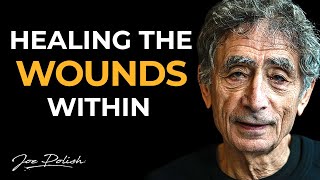
A recorded panel hosted by Joe Polish (June 13, 2023) featuring Gabor Maté and other contributors discussing trauma, its definition, origins, impacts, and recovery. Maté defines trauma as an internal psychological wound (not merely the external event), distinguishes 'big-T' trauma from developmental trauma (when children’s needs are unmet), emphasizes that trauma disconnects people from their feelings and self, links childhood adversity to later mental/physical illness, and argues treatment must address core trauma with compassion. Panelists add perspectives on stages of healing, self-compassion, role-play/empathy to repair relationships, organization as therapy, and recovery practices (e.g., 12-step programs, Miracle Morning habits).
Chapters
And so, in other words, you have to treat them with compassion and you have to actually get to the core trauma rather than just dealing with the behavior and the problem. With all the many programs, Betty Ford and elsewhere, people go for all these high end, expensive treatments. Rarely do they deal with the trauma. And Even in the 12 step programs, they rarely deal with the trauma.
I'd like to have you first off, define trauma and then the difference between using it as a badge or as a living in woundology, which a lot of people do, versus what is really trauma, and addressing it and not just sweeping it under the, you know, under the rug.
Sure. Well, first of all, it is possible to identify with your trauma and make that into your personality, make that into your identification. Yeah, yeah. Which means that you're stuck in something that happened in the past and you can't move beyond it. So that's not. But on the one hand. On the other hand. So trauma can get a bad rep that way. On the other hand, we're not looking at trauma nearly enough. So what is trauma? This is to the point where even though there is voluminous scientific research that's not even vaguely controversial, that shows the relationship between trauma and. And physical and mental illness to the point that a British psychologist, a member of the British Academy, Richard Benthall, said that the evidence, for example, linking childhood adversity trauma to adult mental health conditions is as clear as the evidence linking cigarette smoking to lung cancer. But despite that scientific fact, the average medical student never hears a single lecture on trauma, which is almost unbelievable. But they don't. So that means they don't know what they're looking at. So what is trauma? So trauma literally comes from a Greek word for wound or wounding. So trauma is a psychological wound. Trauma is not what happens to you, it's what happens inside you. It's not the hit that you get, it's the concussion. So trauma is the wound that happens inside you. So trauma. For example, in the very first chapter of the book, I talk about how when I was 11 months of age, I was given to a complete stranger in the streets of Budapest by my mother and I didn't see her for six weeks. The trauma is not that I was given to a stranger. She did that to save my life. As a Jew living under the Nazis, that's the only way she could keep me alive. So I didn't see her for five or six weeks. The trauma is not that she gave me to a stranger and I didn't see her. The trauma is the wound, which is What I made it mean in myself. What did I make it mean? The only thing that an infant can make it mean, which is that I'm not lovable and that I'm being abandoned and rejected. So that wound can show up 70 years later when something touches it. So a trauma is a wound. It's not what happens to you. It's what happens inside you. And the characteristics of the wound basically are twofold. One, if you touch it, it's very sensitive. That's when you're triggered. And by the way, this word about being triggered. I'm being triggered. Good thing you're being triggered, because it means you get to examine yourself. Because the trigger is only a very small part of the mechanism. For the trigger to do its work, there has to be explosive material inside you. Every time you get triggered, you get an opportunity to examine what explosive charge, what ammunition am I still carrying from childhood that has just been triggered? So trauma, first of all, is, you know, if you touch the wound, it's very sensitive. The other aspect of a wound is that it scars over. And scar tissue, while it's protective, is not live. It doesn't have growth capacity. So people who are traumatized get stuck at certain levels of emotional development. Scar tissue has no nerve endings in it. So you don't feel. So people who are traumatized to the extent that they're traumatized, they disconnect from their bodies. They disconnect from their feelings, which is not a bad thing, you see, because if you take an extreme example, a child being abused, you can't run away. The healthy response is to fight back or to run away. But, I mean, I know your experience, Joe. And could you have fought or escaped at that time? You couldn't have. So that the protective response is to disconnect from yourself. So that's trauma, in a sense, represents the organism's automatic defense mechanisms. But then that disconnection from feeling, it creates all kinds of problems later on in life. Mental and physical illness, or when the pain gets too much and you can't bear it. You have no way of dealing with it because you couldn't deal with it as a child. And now you get into addictions to soothe the pain. So trauma disconnects you from yourself. And that's the biggest impact of trauma. Which means that now you're no longer leading an authentic life. And everybody in this room is committed to being authentic. And isn't it just a challenge? But why is it just a challenge? Let me ask you a question here. I'm just going to ask for a show of hands. How many of you had the experience of having a strong gut feeling about something, ignoring it, and then being sorry afterwards that you ignore your gut feeling? Just raise your hand. It's always the vast majority. Do you know what you just told me? The story of your childhood. Because you've never met a one day old baby who's disconnected from the gut feelings. So something happens that's something that disconnects us from our gut feelings is the traumatic experience. Now, I define, or at least I describe trauma as having two major categories. There's the big T trauma. Excuse me, this is the last gig on a seven week speaking tour now, so my voice is rather challenged at the moment. But the big T trauma is when terrible things happen to a child. Such as the sexual abuse that Joe endured, such as the separation from my mother that I endured at age 11 months. Such as poverty or racism, such as being emotionally abused or neglected, or a parent dying, or a parent being addicted, or a parent being mentally ill, or a rancorous divorce. That a child has to live through violence in a family, a parent being mentally ill. These are the big T traumas. At least these are the big T traumatic events. But there's another way you can hurt people. Don't forget, trauma means a wound. You can wound people in two ways. One is by doing bad things to them. Or you can wound children not by doing bad things to them, but by not meeting their needs. Human children have evolved with specific needs. They're not just a blank slate on which you can write anything you want. They have certain emotional needs. As adults, we have certain emotional needs. For the healthy development of the human child, certain conditions have to be met. For example, an attachment relationship with the parents where the child feels absolutely secure, absolutely safe and secure. Rest which means that the child shouldn't have to work to make their relationship work. He, she, they shouldn't have to be pretty, compliant, smart, any of that stuff. They just have to exist. That's the need of the child. Children have to be given the freedom to experience all their emotions. And our brains are wired for emotions. You see, our emotional brain developed long before our intellectual brain. And in the individual development of the human infant, the emotional brain develops before the intellectual brain. The emotional brain is the scaffolding for the intellectual brain. When the scaffolding is good, the intellect will serve the proper purposes. When that scaffolding is not good, the intellect can go rogue and be very brilliant and create a lot of evil. So that one of the essential needs of Children is to be able to experience all their emotions, which we share with all other mammals, by the way, which include caring or love, fear, panic, grief, playfulness, curiosity, rage, anger. In any parenting, and this is.
A.
Lot of the parenting advice that parenting experts, so called give moms and dads in this society, is that some emotions on the part of the child are acceptable, some are not, and they have to be discouraged and even punished. When you do that, you're forcing the child to make a terrible decision. If I'm myself, I won't be accepted. I won't have the attachment relationship. On the other hand, to have the attachment relationship, I have to suppress aspects of myself. That's why you all put your hands up. Because at some point you learned that in your family or virgin, it was safer to belong than to be yourself. And then it becomes a lifelong struggle to get back to who we actually are. So trauma then is this wound that you sustained either because terrible things happened that shouldn't have, which happens to a lot of kids, or because the good things that should have happened did not. Not because their parents didn't love you, not because they didn't do their best, but because they live in a culture that makes it so difficult to be a good parent.
Hey, I hope you're enjoying this video. And I want to let you know that I have a new book that's.
Come out and if you'd like to get it absolutely free, there's a link.
Below in the description. Or you can wait till the end of this video or you can Simply.
Go to joe'sfreebook.com and you can get a copy there. How do you treat it, Gabor?
What's the best?
I mean, we're currently, I think we're so much as a society in the infancy stages of even beginning to really understand this as a whole. I mean, if you controlled everything, how would you treat this?
Well, take a very well, tragically well known case right now, Harvey Weinstein, who clearly had an addiction to sexual predation. And of course there's all kinds of justified outrage at the system that allowed him, that enabled him to carry on for so many decades. And people are angry with him, which is totally understandable. But if you came to me for treatment, I would not begin with any kind of a judgment that what you did was bad. He already knows it. I would ask him, like I asked you guys, what did it do for you? What did you get from it that was missing from your life? And what was missing from your life? How did you lose it? What happened to you? In other words, whatever else you do, first of all, you have to accept these people as they are and not judge them and understand that they were slaves to something inside them and they didn't willingly make themselves slaves, number one. Number two, something happened to create that compulsion. And that something happened. That's something that happened that created the compulsion of. Was rooted in pain. And so, in other words, you have to treat them with compassion and you have to actually get to the core trauma rather than just dealing with the behavior and the problem. With all the many programs, Betty Ford and elsewhere, people go for all these high end, expensive treatments. Rarely do they deal with the trauma. And Even in the 12 step programs, they rarely deal with the trauma. They just. That's David Smith, who's a physician in San Francisco who funded the Haight Ashbury Clinic back in the 60s. He said to me once that the medical profession is traumaphobic. So is the whole of society. We're surrounded by trauma and the manifestations of trauma which show up in the culture from politics to every other field, and yet we don't talk about trauma.
Right, right.
So treating the trauma is how you.
Would dealing with the trauma.
Yeah, yeah, yeah.
Gabor, you were referring to trauma that's.
Passed from generation to generation.
Yeah.
And if I inferred correctly from your.
Saying, it was based on the behavior. So the behavior, the trauma gets passed through by the behavior of the parents.
To the children, then that results in addiction.
But I keep reading about this field.
Of epigenetics, where there may be an actual biological change. So how sure are you that there's.
Not a biological mechanism?
Well, it's not. No contradiction. So you're quite right. So epigenetics, for those of you that may not know, the word EPI means on top of. So genetics. On top of genetics. So it turns out that genes are turned on and off by the environment, and that happens early in life. So that even two people with the same genes, if they have different experiences, they'll have different outcomes, because in one case the gene was turned off, the other one was turned on. So the trauma is passed on, both behaviorally and in the pain that it induces in the child. That's clear, because I can tell you that what I haven't said much about, I refer to it, was that if I look at the circuits in the brain that are affected by anxiety or ADHD or addiction or any other mental health problem, these circuits develop an interaction with the environment. You see, the human brain is the least mature of any Mammal, the horse can run on the first day of life. We can't do that for a year and a half. And that's because we're born with large heads, comparatively speaking, already at birth, the head is the largest part of the body. And the female, a human female, has a relatively narrow pelvis compared to a horse because we have to walk on two legs. So narrow pelvis, large head, we have to get out of there prematurely. And that means that most of our brain development, 80 to 90% of it, occurs after birth and not before. Very much affected by the emotional environment. So that these are not just behavioral problems. They become physiological problems in the brain based on what happens in the environment. And on top of that, then what you say is also true, that our gene functioning is also affected by trauma multi generationally. And so that you traumatize grandparents and that still affects the genetic functioning of their grandchildren. So that's true as well. So it's all these things coming together. Having said that, though, the brain can develop new circuits even later on in life. And that's called neuroplasticity, for which I always say, thank God for neuroplasticity, because I'm 73 now and I would not wish to be as stupid as I was when I was 71, you know, so thank God that the brain can change. And, and that's why the word recovery is so interesting. Because when we talk about recovery, what does it mean to recover something? What do you do when you recover something? You're fine, you get it back. And when you ask people when you recovered, what did you get back? I got back myself. So in trauma, there's a loss of self, and in recovery there's a reconnection with the self. I want to distinguish two kinds of trauma. So there's overt trauma, then there's what we call developmental trauma. And we have two very great examples of it in the United States. So what does trauma do? It separates us from ourselves. We lose ourselves. Like we said. It also gives us a very negative view of the world. So if we have a negative view of the world, then we act accordingly. We are defensive and we are grandiose and we are aggressive. So there's a man who said that the world is a horrible place.
Now, I'm not.
Commenting on anybody's politics here. I'm talking pure psychology, okay? I'm not talking about policy, foreign or domestic. I'm talking about mind states. Please understand that. So however you voted in this last election, don't take offense, please, but the man who said that the world is a horrible place is the President of the United States. That's the world he lives in. Why does he live in that world? Because he grew up in a family that taught him that. His father was a domineering, rageaholic tyrant who demeaned his children. His brother drank himself to death. And this man develops all these issues like attention problems and grandiosity, and psychiatrists have diagnosed him with narcissism and all this kind of stuff, which are not false. They're the outcomes of trauma. So there's that overt trauma. And we live in such a traumatized society that these people actually rise to the top. But his opponent was even more interesting. I don't know if you saw the Democratic National Convention. And when Hillary won the nomination, there was a video narrated about her life by God himself, Morgan Freeman.
Now, how many of you saw that.
Video about her life? Now, there was something very interesting in that video that I saw. No comments on whatsoever. This anecdote comes from Hillary and what happens is that. And it's presented as an example of wonderful character building, strength building, parenting. What happens is that the four year old Hillary runs into her home to her mother afraid because neighborhood kids are bullying her, threatening her, and the mother says, there is no room for cards in this house. Now you get out there and you deal with it. And this is presented as, this made me tough and this made me a fighter and this is character building. Now the actual message to the child is not that there's no room for cards in this house because the four year old or five year old who runs to mom is only doing what any mammal will do, any young mammal will do when they're threatened is they'll go to their protective figures. It's not cowardice, it's just natural attachment. The message is there's no room for your vulnerability in this house. You have to be tough, you have to suck it up. Now jump 65 years ahead and the presidential campaign and there's a famous scene where Trump is looming all over, hovering all over Hillary, and she doesn't say a thing. She's just sucking it up. And then she develops pneumonia. Remember during the campaign she had pneumonia? How did the world find out that she had pneumonia? Because. Because she collapsed and her security people had to pick her up. But she didn't tell anybody about it, she didn't talk about it because she learned at an early age to suck it up and she mustn't be vulnerable. So what I'm saying, and that's what's called developmental trauma, where not when something bad happens to you, but when the good things that should happen don't happen. And the good thing that didn't happen is the mother should have scooped her up and said, oh, boy, you're really scared, aren't you? That's what didn't happen. And so what I'm saying is there's that overt trauma, and there's lots of studies on how overt trauma. If those of you are not familiar with the adverse childhood experiences studies, the AC studies, where they looked at 17,000 Californians, most half of them university graduates, and the more adversity that was in their childhood, meaning physical, sexual, or emotional abuse, death of a parent, a divorce, a parent being addicted, a parent being mentally ill, violence in the family, neglect, a parent being jailed for each of these adverse experiences, the risk of addiction goes up exponentially. And you can download your ACE score just by going to the Internet. It'll give you a lot of insight about yourself. But there's that other kind of trauma, which is the developmental trauma, which doesn't happen because bad things happen to you, but just because you weren't held in the way you need it to be held. So that's the final thing I wanted to tell you.
You know what, Dave? So much of. I think the draw for me originally to Amy and her book was not just love, relationships and things, but it's just relationships in general. Just going through the ending of certain things, or when you're dealing with betrayal and stuff like that. Like, Amy, when someone has been deeply betrayed and they lose faith in humans, they quit. They don't trust. They're just badly wounded. What do you say to them?
Yeah, I think that there's different stages of dealing with the pain and the trauma. And it's important to honor what stage you're at because there's different strategies depending on where you're at. Right in the very beginning, you want to honor the feelings, right? You don't want to label them as good or bad. I think that especially North America, we label the feelings of sadness or anger like bad. And there's extra shame. And I deal with a lot of overachievers. So overachievers have a tendency like, this is terrible. I want it over. Like, get me through this. And they want to fast forward out of the pain. Thing is, the pain needs air to breathe. And if you just shove it down, you know this. You know, you've talked about this in your own work, it's gonna show up in either another relationship in another behavior, it's gonna come out somehow. So I think the very beginning is just processing and not judging yourself and allowing yourself to go through all of it. Because, you know, I look at it as. Whenever I'm crying, I look at it as tears, as pain exiting my body, and I'm like, oh, I'm just expanding my emotional range. How fortunate am I able to feel all of it, right? And so I really have reframed my approach to how I look at these emotions versus just going to a shame spiral. So I think there's that in the very first stage. And then I think the second stage is practicing compassion. And I don't mean this in a fluffy like, oh, just like, think positive. I mean this as compassion is a muscle that you build, and the more you practice it, the stronger it gets. And compassion is very necessary because it is a critical ingredient for forgiveness, letting go, and acceptance. And you can't just get to forgiveness of someone else or human beings and the world if you don't have compassion for yourself first. There's tons of things you can do. Kristin Neff is an amazing thought leader on this. She has free guided meditations. Do this every day for 30 days. You will feel a difference. So I think that would be the next thing. And the third part, you know, is when you can get into more the cognitive thing, right? Because it's very easy right now for me to look back and be like, oh, the dots all connected. The worst thing was the best thing. But when you are. If you say that to someone who's just right after a trauma or a breakup or, you know, rejection, that is actually shaming. Don't ever say to someone, you know, just be stronger. It happens for a reason. Because they can't cognitively get it at that stage. So I think once they've kind of hit a little stage afterwards, that's when you could start thinking about, okay, where am I accountable? What are the patterns here? How can I start shifting this? You know, how can I use this as a catalyst to transform my life? Because pain is an excellent catalyst. So that's how I would approach that. And I just want to leave. One last thing is whether you're dealing with pain from, you know, a professional breakup, a friendship, a relationship, or, you know, you've been betrayed, I think one of our coping mechanisms is too close. And so I say that our greatest lesson in this lifetime is to practice opening our hearts even when it hurts, Especially when it hurts. And I remind myself that when I feel hurt and I'm like, hell no. Am I going to allow this person or this event have me close up? And I'm like, I'm just going to open it up even bigger. And I really hope that whatever situation you're in right now in your life, that you can take that and remember that even when it hurts, especially when it hurts. How what Hal said had to do.
With recovery and how the 12 steps.
Are all based around you.
Don't do it once.
It's like an everyday thing. Because we all have a built in forgetter where what worked yesterday, we're like, that worked really well. Let me completely forget it and not do it today.
So that's all I wanted to add.
Well, you know, can I speak to that too? Because you know, there's@geniusrecovery.org, which is the foundation I set up, where we have links to all kinds of different meetings, 12 steps and non 12 step meetings, interviews, links to podcasts. Ann has been instrumental in helping with Genius recovery. And one of the things I apply, even if someone is not an addict and doesn't identify with addiction, there's so much to be learned from it and there's so much that is applicable here to the miracle morning. For instance, like all the latest research that has come out on 12 steps, 12 steps for years, people are bashing them, saying, you know, there's not a high, you know, there's high relapse rate and they don't work. And like all the most Recent data is 12 steps is incredibly effective. And I constantly have people like, well, 12 steps doesn't work. And it's like, well, that's like saying gyms don't work. If you join a gym and you don't go to the gym, or you sit on the bench and you don't lift the weights, you can't say gyms don't work. I mean, if you lift the weights, they work. You can't say a book or a system doesn't work unless you actually use it. So with 12 steps, 12 steps are not about. It's not an attendance group, it's a step group. It's about doing the steps. If you just attend the. Well, the miracle morning, there is a process. They're the saviors. And if you don't utilize them, it's not just an idea, it's actually using them and doing it consistently. And what's interesting how with the recent stuff we did in Genius Network with our friend and now Genius Network member BJ Fogg, who's the brilliant Stanford researcher. He has a behavior design lab. He wrote a book called Tiny Habits. One of the interesting thing is people don't do stuff if it's just big. It's like take massive action, which is a lot of people preach that massive action does not work for most people. It's too much, it's too hard. And what's interesting with going through Tiny Habits is the way that you've actually spelled out the miracle morning even from the very beginning. Very much is in line with Tiny Habits. I mean, you make it easy for people to understand and use it. And now you got BJ Fogg, who literally is probably the. I mean, his book was right now voted the Tiny Habits, the number one book of the year for a business book for Amazon. And he never even wrote it as a business book. He's got all the research to support this now. So even the things that you've been teaching you could tie it into, like, yeah, this actually works when you do it in this way and you build up upon it. I mean, the savers, they're very small parts of each individual thing all combined together. Can you speak to that? Because I don't really think you articulated that about the savers, is like you looked at all of these principles and you built them into the morning.
Yeah, for me, in 2008, when the economy had crashed and I had lost my income and all of that, it was a conversation with a good friend of ours, John Berghoff, and he gave me the advice. He said, hal, I want you to go for a run, start running in the morning. I said, I hate running. He said, well, what do you hate worse running or your circumstances? And I go, all right, I'll go for a run, asshole.
And.
And he said, while you're on that run, listen to some self help or some business audiobook so that while you're in that peak physical state, right. You then can receive that information and go home and implement it. And on the very first day, he had me listen to this Jim Rohn audio. And Jim Rohn said, your level of success will seldom exceed your level of personal development. And so that was where the epiphany I went, wait a minute, I need to take my personal development up a notch or quite a few notches. And so I went home and I was just googling, what are the best personal development practices? And specific like to millionaires and billionaires, to entrepreneurs, to CEOs, to world champion athletes, like, what's the best practices to improve yourself and put yourself in a peak state and I was looking for, like, one, maybe two. And I had a list of these six practices. And that's where I went. Well, I'm overwhelmed. I can't do all six of these. And then the epiphany when I couldn't figure out which one was more effective, I thought, wait, what if I did all six? Like, what if I woke up an hour earlier tomorrow and I did 10 minutes of meditation and 10 minutes of affirmations and 10 minutes of visualization and exercise and reading and journaling, and I woke up the next morning and I sucked at all of them. Like, I didn't know how to meditate. I had never really done it before. Affirmations, the way I was learning them, felt super goofy. But even sucking at those six practices, like I said earlier, I felt, wow, I feel the best I've felt in six months. And then I, of course, started to kind of learn and play with different durations and different orders. And so those practices, when I was writing the book, by the way, for anybody trying to put together the acronym Savers, I went to my wife and I said, sweetheart, how do I organize these in a way where people are going to remember them and make it useful for people? And she goes, why don't you get a thesaurus and see if you can swap any of the words to form an acronym? And so meditation became silence, journaling became scribing, Right? So the S's and then affirmations, visualization, exercise, reading, and, you know, so that became the Savers. And I'm going to say it this way. Robert Kiyosaki is a huge advocate for the miracle morning. He has read the book. When he interviewed me, it was. He'd read it three times. He does it with his wife almost every single day. And he said it the best. At the end of our interview, he summed it up like this. He. I'll paraphrase what he said, but essentially it was Hal. Before the miracle morning. Before I read the miracle morning, he said, every successful person on the planet swears by at least one of the Savers and attributes their success, or at least part of it, to at least one of the Savers. He said, now, some people maybe do two or three, but he said I had never heard of or met anyone that did all six of these ancient best practices. And he said, if you do one of them, it will change your life. When you do all six, he goes, I really believe you named the book correctly because it creates miracles in your life. It creates results that are so far beyond what you thought were possible for you that it feels like a fricking miracle when you experience those results. And so yeah, those are the savers. You could do them in any order. You could do them in different durations, right? You could meditate for 10 minutes and journal for five. And you know, it's a very customizable ritual for you.
One of the things that it says we can talk about is three skills to heal any damaged business relationships.
Okay?
That can happen a lot, can't it?
I mean it happens a lot. Like a lot of 80% of my practice, right? My clients. So here's what happens. Think about a business relationship with co founders, right? It pretty much starts off like a marriage, right? You come together. It's lollipops and rainbows. You're going to do this better than everybody else, right? You have the honeymoon phase. You're going to set the world on fire. And then one day you wake up and you realize you can't stand them, right? And sometimes you literally wake up and realize you can't stand them because you've been in denial. Also sounds like a marriage, right? Anyway, so what do you have to do when that relationship becomes damaged? You have to re establish the trust. Because without trust you don't have a relationship. So before we talk about reestablishing trust, let me just tell you what you need to do to establish trust in a relationship. First question I will ask somebody is, well, are you trustworthy? You can't expect somebody to trust you if you're sort of kind of shady, right? So be trustworthy and then be authentic. Be genuine. Most of us can smell a rat a mile away. And be respectful. So those are the keys to developing the trust. When the trust gets broken, this is what we need to do. And people don't like this when I first say this. So just everybody take a breath. Whatever created the distrust or the broken trust, think about take some personal responsibility for the situation. Even if it's only 1% because takes two to tango. If you think that you're going to be able to mend a relationship and re establish trust by the other person taking 100% of the blame, you are waiting for Godot. It just won't happen. Their ego won't allow it. So take some personal responsibility that's real and acknowledge it. That's the first thing. The second thing is use the imagination like we said earlier, with empathy and put yourself in their shoes and imagine the situation from their perspective. But you have to be genuine with it. You have to be Authentic. And I even have my clients, no joke, stand in front of a full length mirror and make the case of your business partner. Here's what happens with that. That's amazing, Dean. Our brain doesn't know that it's imagination and role play.
Right.
Our brain doesn't know that it's not true. Just like you got to be careful how you talk to yourself because your brain and it starts to create a new neural pathway.
Yes.
Right. So it ever so slightly shifts your mindset to becoming a little bit more open to re establishing the relationship.
Right.
And then finally, and I don't know, I don't know if you heard my 10 minute talk, but consider the possibility that maybe, just maybe there's more than one truth. Because truth is not objective and it's not a zero sum game. Because if it is, if I'm completely right, baby, you're wrong. And we're never gonna, we're never going to heal this.
Right?
Right. So your truth is based upon your perspective of the situation, which when a relationship is damaged, it's very different. Right. And your life experiences, which makes it so different. So if you do those three things, that will start to heal and that happens in marriages and that happens in business partnerships. And you need all three.
Yeah. It really is interesting, the ability of our minds to role play in our minds without like to play things out. I read, I mentioned Jordan Peterson. He's got his book 12 Rules for Living or Life. And one of the rules that he has is treat yourself like someone you're responsible for helping. And it was a really interesting thing because it gets you to detach from yourself, do yourself with empathy. Right. And to really, you know, you do look kindly on yourself and get yourself the help that you need. But I've been thinking about that from a marketing perspective. We've been thinking about how to take that and transfer that to our prospects, to the people who we're starting a relationship with. We were able to run ads for books and generate leads and start relationships like that. And again, these are all relationships. That's what I think. When you're saying there's so many different flavors, it's the same skills of, of starting a new relationship. What's that?
Don't tell anybody. It's the same skill set, but it.
Is platforms, of course, that same thing, the same questions is, are you trustworthy? Is what we're really trying to come to. That's why when people are referred, when somebody refers somebody to Genius Network, it's always comes with a much more Elevated trustworthiness because I, they know the person that's referred to Genius Network, they're coming in now and transferring that trust onto this mutual, onto the community and onto Joe and the people they meet in the context of that. But when you're coming into something new and they're observing from the outside, they're coming from, you know, they were wandering in the desert and they come across this, this environment of what looks like a fun place, they're coming in, but they don't have any context for what's going on. And so thinking that way of treating your prospects like someone you're responsible for helping flips the switch that primarily the people. I would say the lower EQ way of thinking about prospects is trying to find the ones that you can sell.
Or giving them what you think they want.
Right. But more importantly focused on what you want, which is you want them to buy rather than you want them to get help.
Exactly.
That's a really, that's a different. That's a lower. I think you could really take the low EQ approach and equate it with the low income approach being a lot of the using low EQ strategies in lead conversion marketing, you're probably not going to have as a better as good.
Yeah, there's a lot of wealthy people that have low EQ because, you know, maybe that's true. But, but to, but to your point about treating yourself like, you know, I tell people, don't talk to yourself the way you would never let other people talk to you.
Right.
Right.
So you wouldn't let people call you stupid or dumb. So don't call yourself that. And from a marketing perspective, gosh, Jean Dean, it's absolutely true what you're saying. If you take the emotional intelligence perspective of meet the client where they are, give them what they want, not what you think they want and know like, and trust. And you're so right when you make a referral, like when somebody ever refers me, like, even when Cameron referred me to Genius, I felt such a responsibility. Like, oh my gosh, like somebody put their trust in me. You cannot blow this. And even when Eunice asked me to.
Give this to do this, I'm like.
Oh my gosh, I better show up with my A game. Because you never want to let somebody down because they put their trust in you. That's sacred. I feel it's sacred.
Well, you know what's great about that is so not only do you have a real perspective and understanding about the art of productivity and organization, but you also think As a marketer, because you're helping. It's not just making decisions on stuff. It's literally how do you actually monetize and maximize? Because I always think two of my favorite words are productivity and leverage. Productivity, maximum results, least amount of time. Leverage, maximum results, least amount of effort. And when you combine those two, you simply, you're better. I mean, you become better.
Let me give you another example. I think kind of ties in with that. One of the things that we teach our clients, both at a personal level and at a business level, and even with big corporations, is what we call the seven information management questions, which every individual and every business needs to answer, regardless of whether it's a for profit, a not for profit size. So it's what information do we need to keep? In what form? Is it paper or is it electronic? And if it's electronic, what program is it going to be electronic? How long does it need to be kept? That's records retention, which in companies has to do with risk management, because you can't. Now it's very dangerous to keep all kinds of information because if you're sued, all of that is going to be subpoenaed and you're going to pay for that and it's going to cost a lot of money. Who's responsible for filing it? That's teamwork. That's job descriptions. In a family, it's in a husband and wife. Who's responsible for filing it? Who needs access to it? That's permissions. If it's a locked file drawer or if you're in a software program, who has access? Who has the passwords and all that. And then how do we find it? That's version control and naming mechanisms we were talking about. There's so much information out there that nobody can find anymore in companies. I mean, I can tell you some stories that are just. Oh, they're just pathetic. And then the last one is, how do you back it up?
Gotcha.
So here's the interesting thing. When I go into corporations to do training programs for people, employees are not really very interested. Their employer has said, I just went to do some internal bank auditors. You know, it's like the auditors are like, got real work to do today. And besides this. So I say, how many of you left home this morning with more pieces of paper lying around than you prefer? Well, 50% will raise their hands and statistically it's true for 80%. So I say, everything you're going to learn today applies at home as well. Well, now they're listing because they are wanting to tell not what they're going to go home and do, but what they're going to go home and tell their spouse to do.
Right.
So all of that, all of the things that we teach around the seven information management, we apply in a personal level. At a personal level. And then people. People are engaged. So give me an example. We were talking about what I call the art of waste basketry. I mentioned that 80% of what we keep, we never use and how difficult it is to throw away. And I asked the audience, how many of you have difficulty throwing things away? And a lot of people raised their hands and I said, how many of you know someone whose life is really hampered by the stuff they keep? You know, like they can't have people come into their house because they don't want them to see the mess or they can't go places. You know, it's like, I can't go to the movies tonight because I really got to pay the bills. You know, I put it off long enough that I can't do it anymore. Well, most of the people raised. Everybody raised their hand. Everybody knows somebody like that. I mean, a lot of them, it's.
Them, but they, well, and then they're not going to want.
They're not going to admit it. But I mean, every. Every single hand was raised. How many of you know somebody whose life who isn't able to accomplish their work or enjoy their lives because of their stuff? And everybody raised their hand, which has happened. I mean, I've done this thousands of times and it always happens. So we're talking about, okay, how is it. So why is it so difficult to let go? Well, I wrote a book a number of years ago called Love it or Lose Living Clutter Free Forever. And in the research for that book, I discovered a very interesting fact, and that is if there is someone who has a great deal of difficulty letting go of things to their own detriment by their own choice, it's not like they choose to keep it because they like it. It's like they're not really comfortable, but they just can't let go of it. If I ask enough questions, I will find out that that person at some point in their life had a severe emotional loss. I was doing a book signing at Barnes and Noble, and a young man in probably his 20s walked up and he said, my mother died when I was six. He said, my apartment is so full of stuff, I haven't had anybody in it for months. He said, I come home from work at night. And I say, okay, tonight's the night. I'm going to clean it. And he said, the only flat surface I have as a studio New York apartment is a bed. And he said, I start kind of sorting on the bed. And he said, I become physically paralyzed. He said, are you telling me that I have to deal with the grief of losing my mother before I can deal with this? I said, I can't answer that question. I'm not a mental health professional. But I can tell you what I've seen, that if you will find someone that you trust to come in and work with you to help you put what you have into some kind of order. Because what is true is the more organized you get, you have an ability to then to measure whether you are using something and whether it is valuable. And then you can begin to let go. Told that story at a convention one day, and a woman came up and she said, you just saved my marriage. I said, wow, that's pretty dramatic. Tell me what you meant. And she said, I came to this convention with the intention of going home and telling my husband, to whom I've been married 13 years, that I was leaving because he keeps all this stuff. I have allergies. I can't dust the house. He won't let go of it. And then she stopped, and literally the tears started running down her face. And she said, his mother died when he was seven. So I said. She said, I don't know what I'm going to do, but I now realize that it wasn't that he wouldn't get rid of it, but that he couldn't. And I'm willing to go back and give it another try. I'm not sure what I'm going to do, but I'm willing to try again now that I see this side of it.
That's interesting. That's cool.
And so I said, may I make a suggestion? She said, sure. I said, go back and say to him, you know, I never understood before how important all this is to you. Figure out how we can keep it so that I can live with it, and you can live with it, too. It changed everything because he felt heard always before. And I see this all the time. It's like, you don't need this. Yes, I do. You don't need this. And there's this constant angst. And as soon as he was given permission. Now, it still took time, but I stayed in touch with him for months afterwards. And she said it was vastly improved. And there were times when he would even say, oh, I really can get rid of this. Well, I told this story at the bank auditors, and at the break, one of the women came up and said, My husband died 10 years ago, and I have all of the stuff in the house that I just have not been able to get rid of. So we were talking about these sorts of things, and at the end of the seminar, she came up and she said, I just figured out how I can get rid of this stuff. And I said, tell me. She said, I decided that every time I give away something of his, I will give away something of mine as well. I get goosebumps just telling that story. I said, one of the reasons that I'm so passionate about what I do after all these years, that's something new. In 35 years, I never heard anybody suggest that. But isn't that an awesome idea?
Yeah, no problem.
And look at all the people that are being blessed, the people that are on the receiving end of what is being given away. There are now two people being blessed and the person who's had 10 years of stuff in her house that, you know, she feels guilty about every single morning and every single night is being freed.
Yeah.
So, Dr. Barbara Hemphill, this is the therapy. That's great. That really is great because that takes things to a whole level of the impact. And I love the way you articulated it because we're talking about a subject that really undermines people's ability to function and relate with each other. And even just that level of understanding. I sat and think about my own behavior when I was interviewing your dear friend Tracy Parks. I talked about. I have a. And she talked about digital organization, and I sort of have a hoarder sort of behavior about me. And the way that I think about it is I hold onto stuff because I see the marketing and business potential of it. So, like I'd mentioned with her, it's not like I collect lint or old socks or I can't throw out clothes, you know, I mean, it's not that sort of stuff. It's. I look at a lot of emails and I see, oh, this could be used as a template. This could be used as a model. But deep down inside, there's this psychological thing. And I have a person that works for me named Nate, who actually happens to be sitting in the room right now. But he's been helping me with project management stuff. And one of the conversations we're having a week ago was just the ability to get rid of stuff that it's so hard. And he said, you Know, in order for me to help you, I want to. And he thought about this and he, you know, showed me some questions that he had. And the top one was, what are you afraid of? Like what, what is the fear? Is it opportunity loss? Is it you're not, you know, I mean, what, what is it? Why you're holding some of this stuff, which is really important.
I mentioned the art of waste basketry, which is a series of questions. Would it be difficult to get again, does it exist in another place? Is it recent enough to be useful? But the last one is, what's the worst possible thing that would happen if I didn't have this? So when I'm working with someone, that's the question. There are two questions that I'm always asking. One is, what's the worst possible thing that would happen if you got rid of this? Whether it's deleting something from your digital storage or whether it's throwing away something and it turns out you were wrong, what would happen? And is that a price you're willing to pay? And that goes back to what I said earlier, which you can keep everything you want if you're willing to pay the price. I think about a client I had who had a PR firm in Atlanta many years ago, and I set up a filing system for her. We use a numerical filing system where we tie. This was paper filing back in those days, and it was a paper filing system, but we tied it into an electronic search engine so you could find it. She had 35,000 files, but we could still find anything in five seconds because she could do a search, but the price she paid was a whole room, two full time file clerks. And it was a choice she was willing to make. And that's not a moral issue. It is not a moral issue. It's like this is the lifestyle. It's like some people love to be around books. I mean, it makes. It's like some people love to be about waterfalls or something else. It's your environment. That's the reason that I call my company Productive Environment. So it's. When you keep all of this, is it making you more productive? So the question is, what's the worst possible thing that would happen? And then the second one is, does this help you accomplish your work or enjoy your life? So one of the things, one of the services that we offer for companies, Tracy mentioned it when we were interviewing was a productive environment day. And this is an event. If you take any 100 employees and say, if you had the time, are there things you could comfortably throw away. 99 out of 100 would say yes. But nobody goes to work and says, oh, I don't have anything better to do today. I'm going to clean out the files. Or I'm going to. You know, the place I love is in the. In the kitchen, under the sink. That's where the cartridges go for the printers that we don't even have anymore. You know, that kind of stuff. Nobody says that. And if somebody does do it, because there's always somebody in the company that really likes to do that. You know, they like doing that. But if they do it, people look at them and say, are you mad? We have this project we're working on. And besides that, in order for me to clean out, I have to ask you, is this the most recent version or do we need to get. And it's like, get out of here. I have real work to do. So we go to management and say, I mean, if you look at the price that companies pay for clutter in terms of storage of things. Let me give you a scenario of this. When I first started in this, I.
Mean, we could just walk around my building.
When I first started in this business, the way decisions were made about paper was every executive had a private secretary. In the early 80s, every manager and every executive had a private secretary. And every private secretary had a file clerk. And every company had a file room, and every file room had Mabel. And when you as an executive were done with a project, which in those days was all files, you would hand your file to your private secretary, who purged it, who filed it, who gave it to her file clerk, who organized it and filed it within the office for like, say a year or two. And then at the end of that year or two, she walked it down the hall to Mabel. And Mabel had the records retention program for the whole company. And so Mabel filed it as long as it was supposed to be filed for the company. And then it was either purged or it was shipped off site to Iron Mountain or wherever. That's the way that was the decision making structure about information. Bill Gates put computers on everybody's desk and we said, oh, we don't need all this before now. Granted, there was too much infrastructure. There were in New York when I was there. I saw file clerks reading books because they didn't have enough work. So I mean, that was. But it's a classic case of the pendulum swinging too far. We went from having way too much support to suddenly having none. And now an executive who's never done any Kind of admin stuff like that at all is supposed to figure it out, and they don't have time to.
Right.
So what happened is they started just stuffing things in file drawers, and then the file drawers get full, and nobody wants to clean them out. Nobody wants to make a decision. So we move them out in the hallway, and then nobody wants to clean out the files in the hallway. So we move those down into a storage room, and then nobody wants to clean out the storage room. So we move them to off site storage. All right. I have a client right now that has six buildings and they are downsizing to two because the economy has hit them hard and they cannot afford private offices, file clerks, I mean, file rooms, file cabinets, all of this. They estimate that they have 50 million paper documents that they have to decide what to do about before they relocate.
Wow.
Because there was nobody making decisions. Now, here's the scary part. I think as a country, we are headed toward the biggest information management disaster in history. History. If we do not teach employees, give them permission, and empower them to make decisions about digital information. Because if you have 1,000 pieces of paper and you have to find it for some reason, you can hire temporaries who know nothing about anything and say, I'm looking for pieces of paper with these words on it. And they can flip through the papers and they'll find them. If you have 1000 digital documents and they are filed, who knows where? You and Tracy talked about all the places they can be filed.
Right.
First of all, you may not know where they're filed or you may find them, but they're now created by a program that you don't even have access to anymore. So although the screen says that document is there or that video is there, but the program that was used to create it doesn't exist. And so we're just piling up stuff and piling it up and piling it off. So go back to the productive environment days. The way productive environment days are done. We turn them into games. We get management on board. Management has to participate. This is not something that management says to employees you're going to do. So either management does their office first so that their office has already been done, or they participate on that day. We start the day with bagels and coffee or whatever, because when employees are eating, they're always happier. Right?
Right.
And while they're eating, I do a seminar.
I start with steamed spinach and stuff.
Okay, well, whatever.
Me too.
That's good. We start with a seminar called Sometimes it takes an expert to take out the trash, in which we talk about the art of waste basketry and clutters, postponed decisions. And there's only three decisions you can make. File, act, toss, and all of those things. And we set up shredding bins. We bring in shredding companies, recycling bins. We set up a trash to treasure table. So, like, you know, here's this mug that I got, and I don't like it anymore, and I'll put it on the table. And. And the rule is that any employee can come in all day long and take anything they want, as long as they take it home. And we give our prizes, you know, prizes for the funniest thing and the oldest thing and the most unlikely thing and the most unusual thing and stuff like that. So then we. And we send them back and everybody starts cleaning. As my mother used to say, many hands make light work. When we're all doing it together, then we can communicate about things. And the camaraderie, you can see it happen at the beginning. People are like, you know, and then it begins to pick up, you know, and then people get really excited. You know, it's like, great. Well, then we come and eat lunch together because we want them to tell stories about what they're finding and what they're doing.
Right.
Then in the afternoon, while they're doing their lunch, I do a seminar on digital cleanup, or Tracy does a seminar on digital cleanup, and then we go back and have them clean up their computer and do the same thing. Well, let me give you one example. A company, 400 employees, they were getting ready to move. A classic client for us is either someone who's trying to move to what I call almost paperless, because I don't think paperless is viable, but I think almost paperless is desirable. So when somebody's moving to less paper.
That even rhymed. I disliked how that.
Yeah.
Or they're relocating. Because when you're relocating is the one time you have to consider all those things. And are you going to pay to move it?
Yeah.
So they were getting ready to move, and I was fairly new at doing these. And this was a. I had worked with this gentleman that owned the company at a bank before. And so he said, I'm getting ready to move. I thought maybe you could help me. What do we want to do? And I said, give me your most cluttered department. I said, give me one day. And so he said, okay. Client services. So we went into client services. Like 25 people, we did that day. At the end of the day, he said, okay, 11 more days. So we did 12 days in the 12 different departments. At the end of the 12 days, we had shredded alone 33,000 pounds of paper.
Wow.
And we deleted almost one half of the files off their server.
Wow.
So you're empowering people to do it now. The question you asked me before we started interviewing was, how do you maintain it? That is, you do an annual day like that that becomes part of the company culture. And people, when they know it's going to happen, then it doesn't get so bad. I have one client that does it on St. Patrick's Day and on Halloween every year. That's their company culture that they do half a day on physical and a half a day on digital.
Wow.
I love it. That's such a great idea.
And then what happens is employees are saying, I'm going home. I mean, every time we do this, I'm going home, cleaning out the attic. I'm going home and cleaning out the garage. So we have something, some companies that will actually contract with goodwill or somebody like that to bring a tractor trailer on site so that employees can bring the stuff when they come. Because a lot of times employees have the stuff at home that they want to get rid of, but they just don't have time or they don't want ever. So they know then that's a way they can do it. So it creates a win win.
Personally, my 15 years of doing emotional healing, client coaching, you know, I'll certainly raise my hand and say, I didn't specialize in working with addicts. Yes, I think we're all addicted to something. And at the beginning of this, I said, well, you know, I haven't had addiction in my life. And then you mentioned workaholism. It's like, oh, yeah, I've been addicted to not seeing my addiction.
So, yeah, workaholism is the respectable addiction, by the way.
Sure.
And, yeah, maybe more functional than others, but nonetheless, realizing to some degree, all people are addicted to something if it's not a clinical problem. What I found with the folks I've worked with over the course of my 15 years of doing emotional healing work is what would heal the shame, what would heal the guilt, what would heal the anger and the fear is connection with thyself. And I don't mean to just placate this and like, oh, yeah, heal it. Connect to yourself. Yeah, great words that are very useless to say because it's a very much a journey. But I personally really found value in encouraging people and working with myself in My life looking at the emotions, the traumas, the wounding and the pain that we still carry, whether we know it's there or it's there, but we don't know it. But making connection with those emotions is a big connection because what we connect to when we're connecting to the emotions that are so painful and so intimidating is the part of us that holds that emotion. I do a lot of inner child work. So it's like when, you know, when I went through a wounding experience when I was seven, very shaming, disconnected from it for a couple decades because like when I was seven, I didn't know how to deal with intense shame. I didn't even know what it was. What I would realize is, wow, my whole 7 year old inner child is not a part of my life. I'm very disconnected from him because I don't want to feel what he feels. And the late John Bradshaw, you've probably gotten into some John Bradshaw.
Yeah, he was brilliant.
Yeah. So he has a quote that says this might oversimplify it, but maybe not all addiction is a symptom of not feeling what you're feeling. So I found when we can make connection to our feelings, especially those past pains and traumas and feel the feelings, feeling is the evidence of healing. It is a huge, huge, huge step of recovery. It's connecting to ourself and it's recovering thyself. And in my opinion, one of the biggest forms of hell on earth is living beside yourself. You not being connected to you. To me it's a form of self betrayal. And not to make this too much about me, but I'm going to make it a little bit more about me. Last night at the book signing I was giving a talk and I. Someone asked me a question about my comedy and the moral of the story was about two and a half years ago, years ago, when I started making comedy videos, it was a very important rite of passage of reconnecting with a part of me. When I was seven, when I was four, those young ages, I developed a sense of humor in order to disconnect from pain. And the more I would use humor, the funnier I got. I was getting more practice with it, but the more disconnected I was getting with myself. Let me cover up the pain with the dirt of humor. The flowers of humor. Cover up the dirt with the flowers of humor. Change the analogy. So I found when I reclaimed my inner comedian in a big way a couple years ago, it was really reconnecting with like the wounded 7 year old inner child that was Covering himself up with the camouflage of comedy. And, and that's why when I. I'm not sure if y' all have heard me talk about, like, my breakthrough making videos, it was something I was comedy video, something I was so resistant to for so long. It was so scary to me. Like, ah, it'll discredit me professionally, but it was me connecting to me, another part of me in a big way. So maybe connection is a huge, huge, huge force of healing that we all need in our lives. And P.S. like addicts too. So I just, I. I talk, you know, kind of haphazardly there because again, haven't worked directly with addicts. That hasn't been my specialty. But just curious, your thoughts on any of that ramble, my friend.
Well, I think a lot of people probably watch your comedy videos and can connect with it because they can see all of these things that they have pursued and that many people pursue trying to find joy and enlightenment and connection. And you know, that there's just a lot of crazy shit out there. And it's. And humor brings a lightness to it. And I believe humor is critical, especially when you're going through difficult, challenging times, like if you're stressed or you're having a shitty day. I mean, the more you can inject laughter. You know, I made that comment earlier, we were shooting videos earlier where, you know, that whole saying, you know, an apple a day will keep the doctor away, unless you realize the sugar in the apple could perhaps make you have to go anyway. And there's that, there's that. But, you know, laughter every day will probably keep the doctor away, and it really allow you to just feel alive. So, like, if there's a cutter, someone's cutting themselves, you know, in some ways that's. They don't feel and they just need to feel. Even if the feeling is pain, that is something other than feeling neglected or. And I'm not. There's many reasons why people cut. Okay, so I'm not trying to say that's the reason. It's just with connection, it's so critical.
Okay. I hope you found that video awesome and useful. So if you want to get a free copy of my book, I want you to click here. And if you want to watch some more videos that will be useful and awesome, click here.
Go ahead, you're over here. Do it now. Come on.
Thank you. Watch them.
More from Joe

This FBI Trick Can Command Respect Without Saying a Word ft. JEFFERSON FISHER & CHRIS VOSS

How To Stand Out, Be Different, and Create Raving Fans, Customers, and Employees ft. Jesse Cole



90% Of Businesses Fail In Their First Year, Here's Why! ft. Dr. Benjamin Hard & Dr. Robert Cialdini

The 1 Piece of Business Advice I Got From Elon Musk That Changed Everything Ft. Kamal Ravikant

The 6 Traits You CAN'T Teach in Entrepreneurship ft. Richard Branson & Gino Wickman

The Leg Method: How to Make Your Book into a Million-Dollar Asset ft. Anna David


7 Millionaire Mindset Hacks for Daily Success and Wealth ft. Brian Tracy & Dan Sullivan
