The Real Reason So Many Kids Have ADHD! Feat. Gabor Maté and Dr. Don Wood
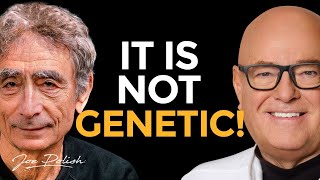
Gabor Maté, Dr. Hallowell, and Dr. Don Wood discuss why ADHD diagnoses are rising, linking trauma, prenatal stress, and modern life to attention problems. Maté points to environmental causes; Hallowell reframes ADHD as a trait with real strengths; Wood connects active trauma to changes in how genes are regulated.
Questions this video answers
About 80%
Chapters
How does ADD and ADHD develop?
Yeah. So ADHD is said in medical terminology to be the most heritable mental health, illness, mental disease. Well, in this book I make the point that to say that ADD is the most heritable mental condition is like saying that quartz is the most chewable crystal because it's neither a disease nor is it inherited. So go back to your childhood, you being abused. Go back to my childhood, the wartime persecution, all the things as I said earlier. Could we have escaped? No. Could we have changed the situation? No. Could we have fought back? No. What does the mind do when it's under too much stress? One of the things it does is automatically tunes out. So they're tuning out, but this is when the brain is developing. The human brain develops from really from in utero to adulthood. And already stresses on the mother during pregnancy can affect the brain of the child. So if a mother is very stressed or depressed during pregnancy, that kid is already at risk for ADHD later on. It's got nothing to do with genetics or very little to do with genetics, I'll put it that way.
You underwater.
Thank you. So the tuning out is simply one of these natural protections, one of these automatic wise dynamics on the part of your organism to protect yourself from stress. That's too much.
Now.
What you have to understand again is that the human brain biologically develops under the impact of the environment. And as an article from the Harvard center on the Developing Child, which is the world's most prestigious child developmental organization, published in the journal Pediatrics, which is the official journal of the American pediatric academy in February 2012, pointed out, the human brain develops from in utero until adulthood. And the most important input into the physiological, healthy development of the human brain is the quality of adult child relationships. So we're relational creatures, which is again what Yuruka is all about. And our brain itself develops under the impact of our emotional interactions with our parents. Now, if you look at why more and more kids are being diagnosed with this condition, it can't be genetics. Genes don't change in 10 or 20 or 15 years now that we're seeing ADHD in countries that never used to have it. On the impact of corporate globalization is because parents are more and more stressed in this world. They're more and more isolated. And our parents are stressed and isolated. And by the way, we were never meant to be parented in nuclear families by a couple or perhaps a single parent. We evolved for millions of years and hundreds of thousands of years. And even in the existence of our own species. We've been here for about 150, 200,000 years. If our species existence can be measured in one hour, then until six minutes ago we lived in small band hunter gatherer groups where parents had support from other people, where the kids were with the parents the whole day, where kids developed in the context of adult relationships. But that's our need. So in this society which is more and more stressed, and if you look at the triggers for stress, these are the research proven triggers for stress in people. It's uncertainty, lack of information, loss of control and conflict. Our society could not be better designed to stress people. So parents are stressed, not their own fault, not their own fault. They're stressed, the kids are stressed. When the parents are stressed, you can measure the kids stress hormone levels, they'll be elevated. Now how do kids deal with that stress? They tune out. And now they're being diagnosed with the so called disease. It does have a biological template in the brain because the biology of the brain develops an interaction with the environment. So sometimes medications can help, but they're not the answer. The answer is to change the atmosphere so kids can develop in a healthier way, so they can feel safe. And when that happens, the brain will start developing in healthier ways. So ADHD is not this disease, inherited. Otherwise it's actually a response to stressful circumstances in this culture, despite the best efforts of parents. And the way to really deal with it is not to medicate these millions of kids and to try and just control their behaviors, but to try to understand what's happening for them.
Very good.
The people that I think in the business world, because anyone could probably benefit from this and just wants to organize email. But our world is mostly entrepreneurs, right, and business owners. And they're utilizing email not because they're just sending messages to their friends. This is how they do business. It's one of the many ways that they communicate and many of them are distractible and many of them, they're so quick that they don't set up systems. I remember, I don't know how many years ago this was. You even made this comment to me that systems cramp our style. I mean you literally said that. So describe, define what ADDHD is because you've actually come up with a new name for defining it which is vast.
Vast. Yeah. No. Attention deficit disorder is a complete misnomer. I have the condition myself. Most entrepreneurs have it. We have an abundance of attention, not a deficit. Our challenge is to control it. You know, we've got this runaway brain, Ferrari Grain with bicycle brakes. And so it's constantly running away with us. And once you learn some measure of control to put on the brakes to slow yourself down, then you do a lot better.
We, we are.
So I call it variable attention stimulus trait vast. So we, you know, we're driven by curiosity, which is distractibility, depending upon how you're operating. And we're driven by a constant need for stimulation. What we can't tolerate is the absence of stimulation, that is boredom. And if we're in business, we're driven to take advantage of every opportunity. So every email represents a possible opportunity. So we don't want to miss any of them. You know, FOMO and fear of missing out. And those could be advantages or disadvantages depending upon how you use them. The problem with email is it presents, you know, there was a time when the mail came once or twice a day and we'd run to get the mail. Now it comes once or twice a second.
Yeah.
And we're still running to get the mail. And, you know, there's something irresistible about an unopened message, you know, so we're opening more messages than we need to and we don't know what to do with them. They provide stimulation, but they clog up the Runway. And so we're operating in a place of perpetual traffic jam. It gives us the stimulation and we gratify our curiosity, but in every way it slows us down unless we have a system to manage it.
You just said something really interesting that I didn't even think about. I mean, it's kind of obvious now that I. You made the statement. But we used to run to get the mail, you know, when the mail was delivered. Well, the news used to come on at 10:00pm, you know, from. Even though there was 6:00pm news and.
That sort of stuff.
And I used to deliver newspapers as a kid.
Right.
And you would deliver the news once a day and then people would go out and now they deliver the news every second. Well, first off, it's on every. It's never ending.
Right.
It's like it never stops.
Exactly.
So we live in that sort of world now. So we are, we are just inundated with continual, never ending, non stop communication.
And unless we, unless we create barriers of some kind of. It overruns us. And it clearly. And that stimulation. I coined the term screen sucking because we become addicted. We aren't even aware of it. When someone says, I have more to do than time to do it, my first question is, how much time do you spend in front of a screen? And they're not even aware how much time they just give away to their screens because they're screen sucking. You say, I'll just check my email. An hour later, you're still sitting there, you know, hardly just checking your email. You're surfing the net, you're responding to emails, you're sending emails you don't need to send. So it's this big jumble that's fraught with brain candy that we can't resist, even though it's so counterproductive.
Well, we're living in an interesting time where you have more opportunity to be distracted than you've ever had before. We were talking about AI earlier today and chat GPT. Right. The algorithms of all these different platforms like Instagram, Facebook, they're starting to get to know your deepest, darkest secrets so well that they can suck you in.
Right.
And it's hard to get off of that screen. So it's not just an email problem, it's.
Right.
Social media, it's everything. Text message, it's.
There's a.
It's too easy to get a hold of people and to grab their attention. And the algorithms are getting so good now to keep your attention that you need to put constraints and frameworks in place, otherwise you could get nothing done.
Yeah, yeah, absolutely. So, you know, so it. Again, it's everything about modern life, the good news and the bad news. The good news is you can do so much. The bad news is you can do so much, you know, and it's a. It's a matter of how you manage your enthusiasms, really. And if you're not careful, those of us with add, we become victims of our enthusiasms. We have too much of a good thing and we don't know how to say no to every food item on the buffet bar. And we come back with our plate.
Overloaded and we pig out.
And some are the consequences.
Well, I know, speaking for myself, I have add and I developed a lot of the content and frameworks and everything that we're training out as a way to solve, kind of, yeah, my add, because I could be sitting and doing something, having a conversation. 20 ideas popped in my mind and then the anxiety of losing one of those ideas, because for me, every idea I have is brilliant. Like, I just don't argue, but I just think that every idea I have, it's like potentially going to win me a Nobel Prize. So if, like, I lose one of these things.
Well, it might, though.
Don't, don't, don't. So you never know.
So for me, it's hard to.
It.
Would be hard sometimes to be present with people because I'm trying to latch on to these 20 ideas or you know, oh, I have to text Joe, polish this thing. Or oh, this is an idea for this thing. And you could be in the middle of a conversation, you're like parallel processing like all these things happening. And so if you, I found like if you, if I don't have a strategy of how to get things out of my head so that I could get back to being present because otherwise there's just too much going on. It was very, very challenging and for me and I know, you know, David Allen's helped you with some of this stuff before. He has a great quote which is your, your brains for having ideas, not holding ideas right. And for me that's an underpinning concept. With a lot of this stuff I, I come up with and extend onto teams and if I don't have a place to organize and dump things, I'm just a lunatic.
Hey, I hope you're enjoying this video and I want to let you know that I have a new book that's come out and if you'd like to get it absolutely free, there's a link below in the description or you can wait till the end of this video or you can simply go to Joe's freebook.com and you can get a copy there.
Yeah, you know, years ago. So I spent a day with David Allen probably right after getting things done.
Came out and he's.
We decided we're going to spend a day at my office in Tempe and it was an office building I used to own that was probably about the seven minute drive from where we're at right now. And we spent half the day helping me with GTD stuff and getting things done. And then I spent half a day helping him with marketing of the GTD was GTD getting things done, which is book. But then it became people. To this day it's a big thing. It's called gtd. It's a methodology.
Yeah.
And it became, you know, a way to organize, manage. Um, and back then I would, we were using Office and the most organized I ever was on email was when, you know, there was no online Microsoft Office. It was all like software based installed on the computer and there was a GTD at, you know, add in that you could have and that was the most organized I'd ever been. But then when I switched to Mac because I like the aesthetics of Mac and this was going back to probably like 2010 when I finally had my whole company put onto we. We went from PC to Mac just because I like the aesthetics. I never, I lost the organization and I've never gained it back. And we're talking now, you know, man, it's been 13 years later, right? And so, and I was using a Mac when I went to a short, you know, Sprint in college. You know, so this is the wave 80s, right? So one of the things I was.
Like, okay, so the, the computer looks cooler.
There's all kinds of neat things you can do. Everyone was always saying Mac is so much easier than PC. And in many ways it depends on what you, what software you use and what you're using, how you're using it. But for me, I totally lost my email organization. And right now, it. I've never been able to get a handle on it. So I tend to have a sense of. I hate email. Well, do I really hate email? I love the things that email and text facilitate. But what I hate is overwhelm. I hate disorgancy.
You hate email.
You love email.
You love the instant, you know, love.
Tools that enable me.
Not that you hate overwhelm. Yeah, yeah, exactly.
Let me bring you into the world of ADHD, a world that I live in, obviously. I'm 71 years old. I've been living in it for 71 years, and I've been treating by now thousands of people who have it. I know this condition inside and out. And I'm here to tell you the term is completely misleading. Attention deficit hyperactivity disorder is a terrible term. Throw it away. Throw it away. We don't have a deficit of attention at all. If we did, it would be a form of dementia, which it's not. We have an abundance of attention. Our challenge is to control it. Our mind is going a mile a minute. We've got a race car for a brain, a Ferrari for a brain. We have just so much attention. We're brimming with attention. But the Ferrari engine that drives us has bicycle brakes. So our challenge is to control all this attention, to control this tremendous mental activity. Not to suppress it, but to direct it. I make the analogy with Niagara Falls. It's just a lot of noise and mist until you build a hydroelectric plant and then you can light up the state of New York. So I'm pretty much in the hydroelectric plant business. I take people with these incredibly powerful Niagara Fall brains and help them build their hydroelectric plant. Entrepreneurial activity is a really good example of a hydroelectric plant. Most entrepreneurs have this condition. What is It. Well, the condition is a collection of ways of being in the world. Again, I don't see it as a disorder, I see it as a trait. And if you manage it right, it becomes a superpower. But if you don't, you see it's high stakes. If you don't, you live a life of underachievement, of frustration. Worst case scenario, addiction, incarceration. The prisons are way over representative people with undiagnosed adhd. So are the halls of the addicted, the unemployed, the people who can't stay in relationships, the people who are getting in their own way time and again, self sabotage and whatnot. It's undealt with unrecognized. It can be holy hell living with this condition. But if you recognize it and learn how to develop breaking power and learn how to channel the tremendous power that you've got, then super success. And I could name you so many people who have it. In addition to your host, Joe Polish, the man who founded JetBlue Airlines, David Neeleman, big time add. And you know, he went from JetBlue to found another airline, then another airline, now he's finding yet a fourth airline. And he invented the electronic ticket, by the way. And I think it's ironic that it's someone with this condition with ADHD who thinks of a way for us to go to the airport and not have to remember to bring our ticket. He also came up with the idea of putting television sets in the back of the seat in front of you because, you know, the ADHD boredom is kryptonite. And so he didn't want to be bored on flights, so he said, why not put a tv? And so suddenly, you know, and that's David Nealman. You've all heard of the PCR test for Covid. The PCR stands for polymerase chain reaction. Well, the man who invented that, Kerry Mullis, he's now in heaven. But he won the Nobel Prize in chemistry. It was one of the biggest advances right up there with double helix in terms of advances in chemistry. And he has, he had flaming adhd. Gary Mullis was one of his favorite things to do was walk on in Malibu with a penguin. He was a genuine eccentric fellow, as people with ADHD tend to be. So if you manage this right, the sky is the limit. You know, I'm mentioning sky. Richard Branson has it too. You know, so, so, you know, you're in really good company. But watch out because the downside, as I pointed out is, is also very real. Probably the, the biggest pothole in the road of ADHD is addiction. And addiction is 10 times more common amongst us. And we're basically self medicating. And it's not just chemicals, it's behavioral addictions as well. But if you get your ADHD diagnosed, then it's a lot easier to control the addiction. See, our greatest asset and what sets us apart from Joe and Jill normal is our imagination. We have an extraordinary imagination and that can serve us or it can impede us. Let me explain a little bit more of what goes on in our busy, busy brains. The condition is defined in the diagnostic manual in terms of three core symptoms. Distractibility, impulsivity and hyperactivity. We are remarkably distractible. We are remarkably impulsive and we're hyperactive or very restless. Got to be moving. When you take each one of those supposed negative symptoms and turn it on its head and you get a tremendous asset that you can't buy or teach. The flip side of distractibility is curiosity. We are unbelievably curious. We are driven by curiosity. The ADD brain is like a toddler on a picnic. It goes wherever curiosity leads it with no regard for danger or authority. Off into the lake, into the woods, stick your hand in a snake's nest.
I mean.
We are driven by curiosity. We will not sit still until we find out what's in there. What's over there. Well, that's what makes us distracted, but distract. But what's that? What's that? What's that? We want to know. We're the opposite of lazy. We're the opposite of taking things as they come. We are forever investigating. And that's why we're such great scientists and such great entrepreneurs and such great creators. We noticed the petri dish changed since we left it, and next thing you know we've discovered penicillin. So curiosity is our driving force. And as I mentioned before, boredom is our kryptonite. The minute we feel absence of stimulation, curiosity drives us off to find something else that will engage us. You see, we have to be engaged. We have to be stimulated. We can't deal with lack of stimulation. That's called boredom and that's kryptonite. We repel from it. We reflexively. We just can't stay. We can't stand that state. Like nature abhors a vacuum, ADHD abhors absence of stimulation, or called boredom. So that's distractibility. And again you have these paired opposites. Distractibility, curiosity. Each negative has a paired positive.
Hey, I hope you're enjoying this video and I want to let you know that I have a new book that's come out and if you'd like to get it absolutely free, there's a link below in the description. Or you can wait till the end of this video or you can Simply go to joe'sfreebook.com and you can get a copy there.
Impulsivity may be my favorite one. Impulsivity is what gets us all into trouble. Impulsive decision making, reckless deal making, impulsive romances, you know, impulsive actions, you know, dangers seeking behavior, all that impulsive. Well, let me ask you, what is creativity but impulsivity? Gone, right? You don't plan to have a new idea. You don't say, it's 10 o' clock time for my creative idea and lay it like an egg? No. Creative ideas pop. They come spontaneously, unbidden, unplanned, in the midst of something else, completely not related. They come impulsively. If you tamp down all your impulses, you will not be creative. And those people who have what I call attention surplus disorder, they never have new ideas because they censor them before they reach consciousness, their mind rejects them as being too new, too alien. So it's the ultimate conformist who's just. But we are the ultimate non conformist. We welcome the new idea. Now, 9 out of 10 of them are useless, but 1 out of 10 wins you the Nobel Prize, you know, so our creativity and our impulsivity go hand in hand. And that's why you don't want to get rid of, you don't want to turn your repress, your impulsivity so much as you want to have breaking power. You want to be able to direct it and know when to shut up and when to speak up. And that's hard for us because we tend to just, you know, we blurt things out.
We.
You know, I used to, when I was dating, I can't tell you how many women I asked to marry me on the first date. I'd say, well, we're having fun, let's just make it last forever. And now I've been married to my wife sue for 33 years, so I'm not in danger any longer of proposing marriage at the spur of the moment. But, you know, there is in that also a tremendous positivity. We fall in love, if you will, pretty quickly with a deal, with a project, with an activity, with a cause. We are prone to fall in love in a good way. And that's part of our impulsivity, if you will. We are ready for action. We're ready to Give it our all, we're ready to go for broke. And we're kind of innocent in that way. People say, well, we should be more cautious. Well, the best way to do that is to partner up with someone who's more cautious because it's awfully hard for us to exercise that on our own. I've been trying for years to learn how to be more cautious and I've not succeeded. But I have good friends and advisors who are naturally more cautious. And then the third element of that triad, hyperactivity. You get to be my age. I'm 71. It's called energy. I'm really glad I've got this little turbo pack on my back. You know, I was born with a genetic, you know, extra charge of energy and it served me very well throughout my life, you know, but once again, you know, you can be out of control. And so you need to learn to put the brakes on. You know, you have this runaway brain that's forever wanting to jump out of the corral. And so you have to learn how to saddle it up and ride it so it doesn't ride you, so it doesn't run away with you. And that's the challenge. Well, but it's a very doable thing. So I'll mention one other quality then. I want to get into management a little bit. But our sense of time, we, we don't have the same executive function skills that other people do. We're not detail oriented by nature. We have trouble sweating the details, planning, organizing, prioritizing. And it's particularly noticeable around time. Our sense of time is fundamentally different. In our world, there are basically only two times. There's now and there's not now. You say the proposal is due on my desk next Thursday, not now. And it's just gone until not now is almost now. And so we are forever getting things done in a panic at the very last minute. What we're doing. What happens in a panic is your body puts out a lot of adrenaline, so you're essentially self medicating with adrenaline. And adrenaline is chemically very similar to the medications we use to treat adhd. And that's why you find a lot of people with ADHD drawn to very high STEM professions. Entrepreneur, trader on the commodities exchange, trial attorney, Navy seals. I've worked with them and they're not allowed to take medication, but they say that doesn't matter because danger is their medication. And that's exactly right. They get the adrenaline hit. Okay, so what do you do in terms of. As I like to Put it unwrapping the gift or strengthening the brakes. And there are a number of steps. The most commonly talked about one is medication. And then medication used properly is great. It operates like eyeglasses. It's effective about 80% of the time. In my case, it doesn't work. My medication is coffee. But 80% of people will respond very favorably to stimulant medication. Now 20% won't. It's not anywhere near 100%. But if it does work, it works like eyeglasses. It allows you to focus, doesn't take away your creativity any more than eyeglasses do. In fact, it allows you to use your creativity with greater care and direction. And it allows you to focus even when you're not super stimulated. So when the meds work, they can be really life changing and take you from here to here in a short amount of time. But remember, they don't always work. Now what else goes into unwrapping the gift or learning how to direct the power of this brain? One of the most important ones, and I stress it in my new book, is finding your right difficult. Yeah. Now what do I mean by that? Well, I mean it has to be the combination of difficult. See, if it's not challenging, we'll get bored. We love difficult, but it's got to be the right difficult. So it's also got to be in your wheelhouse. It's got to be something that resonates with you. We're very mission driven. So appeals to the mission. Well, you know, for an entrepreneur, the mission is to grow something, to grow the business. And that's a big turn on. And it's, you know, by the way, it's growth that turns us on, not money. We like money. Sure. Who doesn't? But it's really that feeling of growing something that is so exciting for us. So the right difficult and challenging. But in my case, I discovered my right difficult in 12th grade. It was writing. And writing is a very stern taskmaster. It's never as good as you want it to be. But I've written 21 books and the reason is if I don't have a book going, I get depressed. So, you know, I finished ADHD 2.0. Now I'm on, I'm writing a novel, my next one. And you know, I have to have something going. And for you guys and ladies, I'm virtually certain you have to have some deal cooking or project cooking or something you're working toward in order for you to feel right. So it's really important to Find your right difficult. If you don't, you won't be at your peak. Another real important step is to learn how to manage your dark side. Learn how to manage Most people with a tremendous imagination, which is really the hallmark of adhd, have a dark side. Have a side they maybe don't talk about, but they have a dark side where they brood and ruminate and get down on themselves and think they're a fraud and imposter. And by the way, that's when they're most likely to turn to drugs, is to self medicate the dark side. So you want to learn how to manage that dark side, obviously without illicit drugs or behavioral addictions like spending, shopping, sex, gambling, whatnot. And the best way to do that, let me explain it to you because this is fresh out of new neuroscience. Turns out when you're doing something constructive, positive, four different regions in your brain light up in aggregate. They're called the Task Positive Network. We can see this on FMRI and functional magnetic resonance imaging. We can see the imagination in action on fmri, the tpn, the Task Positive Network. Now, when the task is completed, when the deal is done, when the cake is baked, whatever it might happen to be, the TPN shuts down. And what lights up instead is called the Default Mode network, the dmn, which I call the demon for the following reason. In those of us with adhd, the demon, which is the seed of your imagination, instead of building castles in Spain, it attacks you. It sends out this terrible onslaught of negative messages. You suck. You're stupid. You're ugly. You're boring. You're never going to do achieve your goal. You're never going to become the person you wish you could. All the other people are doing better than you. You're way behind in the race. You're never going to get there. Furthermore, you're ugly and boring and just. You just lay it on yourself. You just attack yourself viciously and horribly. One reason you keep in that state is contentment is too bland. You never say someone was riveted in contentment, but you do say they were riveted in self hatred, in fear, in anxiety, in images of gloom and doom. So it's riveting and gripping. Remember, we're always looking for stimulation. We'll sit there in this dark, dark place for extended periods, unable to snap out of it. What's the treatment? And this is a terribly important insight because it's so common in highly creative people. The treatment is not medication. Medication really doesn't touch it. The treatment is so simple, but so difficult to enact. Sometimes it's to shut off its oxygen supply. The DMN depends upon. You're feeding it with your attention. So you have to redirect your attention. And that's hard to do because like I told you, it's very gripping. Painful, but gripping. So you have to rip it away, Redirect your attention to something else. Go for a run, have a conversation with a friend, blast loud music, go out and chop down a tree. I mean, do something that will engage your imagination and shut off your attention. Being directed to the default mode network to the demon. That's a tremendous life skill if you can learn to do that. You basically will exorcise that demon. You will exorcise the power that the dark side has over you. No medication, just redirecting your attention. The motto is don't feed the demon. What we tend to feed it with is our attention. Don't feed the demon. Redirect your attention so you do not have to be living in fear. And the grip of the, of the dark side, which most, most highly creative people, most entrepreneurs have that they tend not to talk about it because we tend to want to be positive and upbeat. But it does haunt an awful lot of us. And if you'll just do what I just recommended, you'll be able to master that, to tame that. There's a whole chapter about it in ADHD 2.0 that I recommend to you. I want to add one more element in terms of unwrapping the gift. And then I will stop and entertain your questions. That is the force of connection. We live in highly disconnected times. Covid certainly threw a tremendous curveball into all of our lives. And people are separated physically and the warring with each other over politics and positions and all that. And that's not good for us. That is not good for us. We really desperately need connection. So you guys coming together, for example, so good for you. You are extending your life by having this meeting. Just being with each other, sharing each other's energy. I call it the other Vitamin C, Vitamin Connect. And it's way underappreciated in terms of how powerful it is. Loneliness, social isolation. And most people don't know this is as dangerous a risk factor for early death as cigarette smoking. Social isolation is as dangerous as cigarette smoking. And the beauty is social isolation. You can cure this. Being with each other, sharing each other's energy. I call it the other Vitamin C, Vitamin Connect. And it's way underappreciated in terms of how powerful it is loneliness, social isolation. And most people don't know this is as dangerous a risk factor for early death as cigarette smoking. Social isolation is as dangerous as cigarette smoking. And the beauty is social isolation you can cure if you make a priority of doing it as you all have done by coming to the Genius Network meeting. But keep up with friends, talk to people in the supermarket. Don't walk around with your head down, glaring and glowering and feeding the dmn. Instead, try to look up, look outside. I prescribe dogs. Dogs are the world's greatest provider of connection. Get a dog. You know, it's no accident that God spelled backwards as dog. And, you know, so prioritize friendship, prioritize dogs, prioritize participating in causes, going to meetings. It's not enough to believe in something. Go to the meeting, connect, you know, really. And connection is really the source of pretty much the best of life. And disconnection is the source of pretty much the worst of life. So. So whenever you're, you know, feeling a little bit out of sorts, connect. One of my favorite mottos is never worry alone. It's fine to worry, it's good to worry. You solve problems, but when you worry alone, you tend to catastrophize and make things worse. When you worry with someone, you start into problem solving. Well, those are three of the of the main methods of helping you unwrap the gift. Basically, I hope you've identified with what I'm saying. I hope you can see it as a real positive in your life as long as you manage it properly. And it does separate you from the pack because you've got a special power. And it's just a matter of learning how to manage that special power and develop it and hook up to your hydroelectric plant. Find your right difficult, and then the world is just an incredibly exciting venture for as long as we get to be here.
I think there is a lot to be said about distractibility. And there are times where grief or situations, betrayal, whatever, are so difficult that they're. I guess the way I think about it, does it. Is it. Does it expand you or does it contract you?
I mean, it's very good point. And I'm sorry to interrupt you. No, no, but it's just like something that I thought a lot about and I've seen that in myself and others. Right. In any crisis, like, you know, one of the two outcomes usually happens. As we kind of go into this suffering, one of two things can happen. We either contract more and we become more defensive and we're like this will not happen. You know, I know what happened and this will never happen again. And we just like, you know, contract around our pain and we become more rigid, more defensive or we fall apart, you know, and we fall apart. It's a very difficult process, right? And happened to me recently as this breakup that I went through. It really triggered deep abandonment trauma that was sitting deep in me. And I was just like doing so much crying and screaming and waiting. And thanks to medicines, I was able to do that with abandon. And you know, falling apart was so beautiful because at the bottom of this, there is so much peace happens, right? Because you experience what you're scared of end of the day, every difficult situation. Why is it difficult? Because it triggers an emotion that for some reason human being, this particular human being is having hard time with whatever that emotion is, right? Let's say grief and sadness and loneliness, whatever it is. And once we experience that magic happens and the brain kind of looks at it like, yeah, that's sad. But you know what? You know what? Not a big fucking deal. We're okay, we're here, right? And it's no longer that scared of that emotion. It stops being this thing. It's like that we constantly protecting, like, you know, no, no, no, don't do that. They should not say that the government should, blah, blah, blah, like all of those should and should not, right? They really us trying to manage the emotions, trying to protect that, right? And once we experience that emotion deeply, when that happens, then something magical can happen, Right? So that's exactly what you said. It's about like we either expand and there is freedom, relaxation, while there is more determination and contraction, which is very powerful in itself. Sometimes that's what we do. Sometimes we use that mechanism. We persevere through some really difficult stuff in war, and it's extreme. But building businesses and dealing with kids and dealing with loss with all kinds of stuff. But powerful mechanism. They have their place and they have different consequences.
Well, I want to, I want to emphasize this, what you're talking about, because the way I interpret that is if someone's spending time listening to us right now or they're watching us, all humans are going through pain. I think a magic moment is when someone talks about going into a place that everyone deals with, like to go back to trauma. Let me say this like the, you know, I like that there's so much conversation about trauma. The downside to it though is you have a lot of people now that are, and I have to be careful this myself, is that live in Woundology, where they use their story, their pain, to manipulate or to make themselves feel like, I can tell horrendous shit about my childhood, and I can get people to empathize with me. I mean, people be like. And if I identify with that too deeply, it becomes like, well, everyone's had shit. Every human being has pain. And so when you just talked about, like, you were wailing and you're crying and you were unraveled and how peaceful it became, that is like, there's that Joseph Campbell line I love, which is, the cave you fear to enter holds the treasure that you seek. And there are a lot of caves that are just scary as to go into. And admitting that you have an addiction problem, you know, trying to hold yourself together when you have your heart broken and you've been betrayed.
I mean, that.
That is really difficult. I can't even fathom. You know, I will often think about some of the shit I went through. And one of the things that comes out of the addiction recovery work is, as weird as it sounds, I will talk to people on a weekly basis that I hear stories where I'm like, I cannot even imagine this person went through this. And a lot of these people have. They're grappling with it. Some of their lives are out of control, but other people have transcended it. I mean, they have done the work. They have whatever the work is, right? And I'm long past, like, there's a right or wrong way to do stuff people have to go through. You know, I mean, I have ideas of things that are helpful for others. And that's why I like hearing other people's stories. I like hearing, how did you. How did you go through this? What did you learn? What did you discover? And. And so for me, it's really encouraging when people have gone through enormous pain and they have come out, you know, on the other side, and they have become better humans as. It's fascinating. So with. It's almost like for anyone that's listening that is going through something that they think. I. I don't even know how to deal with this, and I'm hiding it from everyone. I have this shame. I have this pain. I have some loss, and I can't seem to get my life into a place that even feels good because. But you kind of went there. So did you actively seek out this or. Like, how do you. When you're in a situation like that, how did you get to that medicine journey? What.
What. What.
What needed to happen for you?
We. We do what we can we do what we, you know, what we have learned? And we keep trying different things. We're also creative and we keep trying new things. And it's interesting, like, you know, and you talk to humans, right? That's a very powerful way of dealing with different things and reminded me, I'm blessed that I have a lot of amazing humans around me with a very deep, authentic connections, right. Where we can share stuff. And. And it's not about advice. It's not about telling people what to do, but it's about just sharing. It's like, I know what this is. Fucking. This fucking sucks. Oh, yeah, I've been there. Right? It's just like being human, trying to get all of this right. And I had some friends who are like, end of the day, as we talk to another human being, and they express something difficult, right? Some difficult emotion. Sometimes it's hard for us to feel that emotion and we start giving them advice. Well, you should not feel that way. And a few people in my, you know, I talk to them like, you should. Oh, you have so much to live for. Look at the bright stuff. Like, you know, there's. I'm like, thank you. I know that.
Right.
But it's. Who cares?
That's not what I want right now.
Yeah, like, you know, right now I'm in pain. This is, Is the reality. That's it. Right? That's very simple. And it reminded me, like, some of the people I talked to sometimes, some of my friends and connections, people who are suicidal. Right, right. And again, when you talk to a person who is suicidal, I see the reaction. And many people, oh, you should not be talking about this. You should not be thinking this way. Like, you know why? Because they are scared themselves. Like, oh, what if they do die? Like, you know, what does it mean for them, for me and my. Well, you know what? When I talk to somebody who is idle, who is suicidal, I just appreciate that they're sharing this with me. Right. And I can, like, I felt somewhat suicidal. I felt deep pain in my life. And I just, like, I can empathize with them. I can be just with them without trying to invalidate what they feel, without telling them that this is wrong.
Right.
And you know what? We humans, end of the day, we're just complex monkeys, right?
Yeah.
And when another human can see, they're in deep pain and their brain is like, I'm in deep pain. And like, am I dying? Like, is this normal? This is bad. When they can sense from another human this is normal, they can sense the peaceful Presence.
Right.
It's normal. It's absolutely normal to sometimes want to kill yourself. Yes. Is it absolutely normal to sometimes feel deep pain? Yes. Right. And when they can sense that, that not in like intellectual level, but they can sense, oh yeah, this human being is not freaking out, they are with us, they sensing our pain, they still here. They seem to be okay. Maybe I'm okay too. You know, we kind of like learning that, right? So that deep empathy that we get from a peaceful presence of another human being, that's so powerful. Right? So I mean, the question you asked is about how do you go there? And there's no answer to that. Right. Because sometimes you will go there, sometimes you will not be able to go there. Right. Like in my life in the last 10 years, I discovered the very powerful tool of psychedelic medicines. And they've been awesome. They've been sometimes extremely difficult and challenging, but they also been very powerful. Like, they help this organism to, to fully experience some of the emotions that it was not able to experience from extremely deep sadness and despair and helplessness or even anger. Like most of my life, anger was a very difficult emotion for me. It was very hard for me to sense it in people around me and also pretty much impossible for me to experience myself. I could not raise voice at people, right. I could not scream. I remember I was at some conference and they're like, hey, we're doing this. So that was maybe, I don't know, 10 years ago or more. Let's do this fun exercise. We will scream. And people are screaming. I'm like, I cannot scream. Well, right.
Just.
Just for fun, right. And then eventually I did some medicines. 5 Meo DMT, if you're familiar with 5 Meo?
I've.
I did a lot of screaming and that was, that was fun.
How many times have you done five meo?
I did it with a particular guide, really awesome human being. So I did it maybe seven, eight times over the course of six years.
Wow.
And. And now, like, they're not illegal in Toronto. You can buy five me away pants in mushroom shops all over Toronto.
Oh, I didn't even know that.
So you can get that. And I have a weight pen and sometimes now can I use a light those on my own? So.
Wow.
So, yeah. Wow. All in all, maybe, I don't know, 12, 15 times, however you count the small doses.
Well, I just as an Aside, in, in 2015, I went to Mexico and I. I'm the first person in the world to have before and after brain scans of doing ibogaine and 5 Meo DMT.
Nice.
Yeah. And it was. We took a film crew there, we filmed. I've never put that footage out publicly. At some point it might end up in a documentary or something, but it's. Yeah, so you do. So the point is, though, is you have been willing to travel into places to open up this.
Very fucking scary places, right?
Oh, yeah. God, yeah, it's so. Yeah, it's so.
It's like this is where your illusion of control, you kind of like at some point it's overwhelming that it just like disappears, right? It's. Yeah, yeah, this is it. Maybe I'm dying, maybe whatever it is, but this is it, right? And. And that's the magic of this, right? When that happens, and then your brain, your organism is like, oh, wow, something new can be born in this. And like in this. Total pain, total despair, total helplessness.
Yeah. What have you discovered or seen? And it could be packaged in a particular way. It could be a new modality. It could be something that you think is worth talking about, that if anything, it might not. It might just be. No, no. It's all the same. You just got to do the work.
Well, the one thing that we're doing right now and I've talked to you about is we're doing studies on DNA. And what I have, we're just going to be publishing this study now, is that when trauma is active, it actually changes the gene regulation. So the genes that regulate inflammation upregulate, the genes that regulate the immune system downregulate because the focus is on survival. So the mind that's operating in the present says we're in danger. We need to increase inflammation to protect ourselves. So that means we don't need to do maintenance because we're in survival mode. We got to get away from the lion. We don't have to. Afterwards, we'll start doing repairs. So the immune system is weakened. So now you've got people in addiction who are stuck in that position. And they keep getting. So not only do they have the addiction, they keep getting sicker because now they're susceptible to all kinds of disease because their immune system is weakened. And so now you got that combination. But what we're showing in the study is that when I get the trauma resolved, the inflammation comes down, the immune system comes up, it goes back into balance. Our minds and bodies are designed to heal. What's interfering with it is the constant threat that it loops and loops and loops and keeps it in an active state of fight or flight. And if you Resolve that every. It'll start taking care of itself. And the Lord said, yeah, that was.
That was the signal from Jesus. That was confirmation of what you're saying.
Exactly.
There's many ways that I could try to make something up to try to like, you know, but by the way, the building is closing. So the audio, the lights change. So if you're listening to just the audio and you're like, what the hell is going on here? It's just the lights kind of turned off for a minute.
But that's the science. And what I love about it is we're proving that trauma is at the root cause of it all. And what I love about AA and NA and what they do really well is just like you talked about, they create community. Which creates what? Safety. They create connection. And they're working on the codes. The only thing add to that is the trauma. If you could add a way in to do that and fix the trauma, boy, that would just. Just push that to a whole new level. That's what I think we can do. That's why I'm excited to, you know, work with you.
Right, right.
And work with Tim and say, let's get that added to it. And you'll change everything.
Yeah.
A whole new way to treat addiction.
Okay. No, that's great. That's great. If you can only choose one person to work with because you think one's better than the other, who do you.
I'm kidding.
You'll have to do that. I just love putting these people, those sort of situations. What's your favorite child, though? So what about you? Anything you've learned?
Yeah, so. So for me, my. My first 10 years of sobriety, I mean, I. AA was. That was what worked for me, and I was in it. And I went to meeting, you know, and I. And I actually worked the steps. You know, I had a sponsor, I worked the steps. I. I went to one or two meetings every single day. I did service work. I was connected to that community. I learned how to do a gratitude list every single day. All the things that they say in aa, I took suggestions. That's one of the big things for me is to the newcomers take suggestions. Because your best thinking got you where you are today. And your best thinking is not going to get you out of it. And we all know some very smart people that are just not able to get clean and sober because they're too smart.
Oh, yeah, no, those are the hardest people to get sober is the smart ones because they think they can intellectualize their way.
They haven't lost everything. They're, you know, and they're.
Yeah. And by the way, I'm not saying this because I think I'm like some intelligent person, like, part of it. Early on in recovery, I had read so much self help, right? I'd gone to so many seminars, I was like, I've got to be smart enough to figure out how to, you know, you treat it like it's a business strategy, like we're gonna write a sales letter. You know, it's. No, it's like, yeah, I don't think.
I need to do step four. I don't think I need to do step nine. You know, it's like, no. So I, I fully did the whole. And. And I was, I was, you know, 100 abstinent, and I was not open to psychedelics. I wasn't open to, to like, suboxone maintenance or anything like that. I. I just was, I was hardcore. Just, no. No drugs, no alcohol. And over the last few years, there's just more and more evidence that supports ketamine, mdma, other psychedelics. And so I just have become more open to it. And what I've realized is that changing the brain because it's a brain disease, and changing the brain, if you canif there are ways that you can change the brain and make it more plastic and make it more malleable. And I don't know if I'mI'm stating that correctly, but there's some new things out there, including ketamine and other psychedelics and tms. Transcranial magnetic stimulation, which is the newthe newest thing that we have at our treatment center. You're going through the TMS process right now, and, and it's non invasive. It's not a drug. There's zero side effects. And it's just, it's a, it's a game changer. I mean, combined with something like your program. So there's lots of different things out there which I believe help, I guess, reprogram the brain that I'm really excited about. I mean, I'm, I'm going through the TMS program as well, and I'm finding, like, I'm. I'm finding some, some things that about myself that are really working. And it's like, for example, I'm, I'm like, not as.
I don't.
I'm not as irritable. I'm not getting irritated. I'm not as attached. I'm like, huh, wow. Like, this isn't really that big of a deal. And I believe that The TMS is helping me.
It's brain training.
Right.
Your brain will do whatever you train it to do.
Right? Right.
And that's what TMS is doing, is retraining in the brain. So if you've got a very low active area in your brain, in your frontal lobe, right. You're going to be depressed.
Why?
Because it's not running.
Right.
So you have to train it. And that's what they're doing with TMS is teaching it to come back into regulation.
Right.
And the more.
And what. Repetition keeps repeating it and eventually the brain goes, okay, you want me here, I'll go there. Yeah, Right?
Yeah. And I think it's. It's combined with the prayer and the meditation and the breath work and the cold plunging and the red light therapy and eating healthy and getting enough sleep and hanging out with people that I learned from. So all of those things are really helpful. So it's like, I'm not just going to TMS and then hanging out with toxic people. I'm doing TMS and then I'm surrounding myself with people that I want to.
Be like, yeah, no, that's. That's very good. I think that's a really important point because I've always liked Ernie Larson's. He wrote the books. He's written a couple books. Stage two recovery. Where most people think of recovery is getting sober, but we all know a lot of dry drunks, they abstain from drinking or whatever, but they're still dealing with all the issues and oftentimes can be real assholes. Right? But he talked about stage one recovery is ceasing or stopping the substance or the behavior that was pretty much making your life unmanageable and making you a real pain in the ass to everyone around you. Stage two recovery is dealing with the underlying causes of what caused you to use for pain relief. In our language, drugs, alcohol, behaviors in the first place, which he would say has to do with the ability to be in relationship with other people. And so if you can't be, most addicts can't have a relationship with themselves that's functional. And if you can't have a relationship with yourself that's functional due to the coding, you know, you sure as hell ain't going to operate very well in the outside world.
Right.
So if you can get yourself right, then everyone around you, and that's, I think, a really important point, you know, you can do a lot of stuff, but if you go back to a toxic environment, toxic relationships, you know, and toxic is relative because I hear Toxic people all the time refer to some of the healthiest people in their life as those people are toxic, right? And it's like if you're toxic and you perceive as a healthy person to be the. It's really. You're just witnessing delusion of your own making, right? So it's funny because in relationships we find people whose dents match our dents, right? And when I was the most up in my life in active addiction, I somehow magnetically attracted people that really helped encourage that. And they were all up. It's like, up people find each other.
You know, you attract what you are.
What's interesting, the girl I was telling you about was on heroin, right? She said to me, three months later, I was talking to her and she says, this may sound really strange, she says, but people keep asking me, did I change my hair color? What am I doing different? I get a haircut. She goes, and I look in the mirror and I feel like I do look different. She says, and then people at work that I never knew even work there are stopping by my desk, not on a romantic basis, but asking me to go to lunch and hang out and have a. And she goes, my energy has changed and they're attracted to it. When she was on heroin, they didn't know what it was, but I'm just staying away from her.
No, absolutely. There's.
There.
Call it whatever, you know, aesthetics, call it frequency. When you change the energy.
Yeah, yeah.
I mean, I can tell you there were like people that didn't want to have anything to do with me.
Yeah, it's a darkness, right?
Yeah, it's like an antenna. I mean, it taps into whatever you're kind of putting out, you know? And yeah, I mean, we get really woo, woo and sound esoteric as hell and, you know, all kinds of stuff. But the bottom line is if you, if you start getting your life to work, and honestly, I just care if someone's life is working or it's not.
Working, you know, but it is energy because that's what you are. That's why people are attracted to you, right? Because you have an energy to you, right? And it's also a vulnerability to you. So all of a sudden it's safe to hang around you, right? Because you're not going to judge them and that's why they're attracted to you, right? They don't know it. They couldn't put a. They couldn't write it down exactly what it is, but that's what it is.
And if I, even if I am judging Them, I'll say things to them in such a sarcastic manner. They'll be like, that's, that's cool that, you know, I could. Yeah, yeah. And I do that to myself constantly. No, you're, you're right though. I mean I, I, the really.
You.
Know, because you'd expect me to say a smart ass thing right now. There is something magical about feeling safe with someone in them. Feeling safe with you when in the past, you know, Because I'll tell you, like I, in my latest book, you know, I write a lot about givers and takers, right? In that we all want something. And you want to make sure that your give is equal to or greater than your want. Because, you know, takers are the types of people that really annoy us. If you look at your closest friends that you really appreciate they're contributing more than they're taking, right? And when you're in active addiction or you're in a state where you're selfish or you're self centered or you're desperate, that is an energy of taking and people don't like it. And when you're in that state, you know that you start sizing people up for what you can get out of them. Like a drug addict that has no money views everything through the lens of how am I going to get drugs? How am I going to get, you know, in money? Money is an interesting thing. Like, I think money's really important. I don't, I do my best not to poo poo money. Because you think money's not important. Try living without it. And there are people that will lie, cheat, steal, kill other people for money. And it doesn't mean the money's bad. It just means the mechanism of how they're associating with it is. And when you no longer have that white knuckling, craving, I gotta go get something. There is a peace that does not exist when you're in that craving state. And that's why I think being an addict is real human suffering. You may not even see like some people, you can see their addiction because of what it does to their body. Like really bad drug addicts or someone that is, you know, a food addict. You can, I mean, you can observe, be it anorexia or obesity, you can. Because it. Addiction lives in extremes, right? But there is a weight that comes off your being when you really do the work. And what you're saying when people started coming up to her at work and saying, it's like amazing. And that's where I want people to get to, to get a taste of that. Because if you feel that and you can set up your life and your intentions and you become committed to it, that's where you get real change. Because I always make, you know, I always make a comparison between caring and commitment. If you ask, like I do it to my entrepreneurs at Genius Network, I'll ask, how many of you care about your kids? Almost everyone that has kids raises their hands, unless they're really pissed at one of their kids. But how many of you care about your health? They raise their hands. How many of you care about your job, your career, your clients? Everyone raises their hands. Of course they care. But how many of you are eating food and not exercising or doing something in a way that doesn't seem to be congruent with the person that really cares about that? And the thing is, there's a difference between caring and being committed. Everyone cares, but are you committed to it? So when you get to a particular place in your life, that's what I had to grapple onto. When you're talking about finding an alternative, like, man, once you get a taste of that, hold on to it for dear life. And we've all had conversations where I don't have time to do all this stuff, you know, like the. Because you rattled off a bunch of stuff that could be like, I have to breathe and do cold plunging, I have to go to meetings and I have to eat well and you know, there's like 14 other freaking things and go to therapy and then go to 12 step meetings. And it's like, you know, I always say, because it was said to me early in my recovery, if you put 10% of the effort, effort into your recovery, as you did to your addiction, your life would change. And if you put the time into your recovery that you put into your addiction, not only is your life going to totally transform, you're gonna have a lot of extra time too. Because any active addict puts a ton of time into being an addict.
I mean, it takes a lot of.
Work just because of survival.
Yeah.
So of course, what would you spend more time on than anything is surviving.
Right, right.
Yeah.
So that's why you do anything to survive.
Well, stay in it. Addiction. Because it's all about survival.
Yeah.
And they're in so much pain. And that pain creates the threat. But that's why I say what it really comes down to is memory. One of the things, when I was doing the research to put the whole program together, one of the cases I studied was a gentleman called Henry Malaison. Have you ever heard of him?
I've heard the name, but I. He's the most scientist.
But this is what told me this was a memory issue.
Yeah. Is it?
Henry Molaison, when he was a child, fractured his skull in an accident, started having blackouts and seizures, lasted all the way into his 20s. Finds a neurosurgeon, this is in the 50s when they're doing lobotomies, Finds a neurosurgeon, says, oh, we can fix that. We're going to drill two holes into your head. We're going to remove your hippocampus and part of your amygdala. Right, okay, sure. Right. I don't want to have blackouts and seizures. So they do that. They don't know that the hippocampus is responsible for processing memory. So they take out his hippocampus. He seizure stop. Now, this is what I found, which was interesting. And his seizure stopped, but he could never remember anything again. So he was like an animal, would watch TV shows over and over and never remember watching them because he couldn't store the memory. So what they said is, okay, we learned a lot. So they studied his brain about memory. But I looked at it and said they missed something. His seizure stop. Why did his seizure stop? Because it was never an accident. His seizures were connected to the accident. If he never had an accident because he can't remember it, that's why. So the seizures were the symptom of the problem, which the accident was the trauma. And that's what taught me. And I said he could still learn procedural memory. So they took a star. This is one of the experiments they did. They took a star, and they had a star outside that star. And they asked him to draw a star in between the two stars. There was a gap in between them, but he had to look in a mirror, right? Not look directly at the paper. So look in a mirror and then try to draw it. Now, if anybody tried to do that, it's hard to do, to try to coordinate that. So the next day, they did the experiment with him again. He never remembered doing it the day before. Every day he get better and better. That's the coding. That's why I said it's two memory systems, the explicit, which was the event, and the memory, which is the coding. And so you have to fix both, because if you just work on the coding and you don't fix the memory, the memory will keep trying to bring the codes back, and it doesn't forget the codes. And so taking it at a high Definition into low definition won't turn on the codes. And that's what taught me that experiment that they did with Henry. They watched him for 55 more years of his life. He could never retain memory again for the rest of his life. Most studied brain in history. But I said what they missed was the seizure stopping. They never talked about that. And I said it had to be connected to the memory.
You know, when I first had dinner with Gabor Mate in 2015, he said this really interesting comment to me, me. So Gabor knew about me being my childhood and about, you know, the. Some of the stuff that happened to me. And we're just in this restaurant in Vancouver, and we're just sitting there talking. And this first time I met him in person, we had spoken over the phone, but this is in 2015. And he's a, you know, small sort of, you know, he's not a big guy. And he's a, you know, Hungarian doctor in his 70s. And he. We're just talking in this busy restaurant table for two of us, surrounded by people, and he says, I know the cause of cancer. And then he continues to talk. I'm like, hold on, back up. You just said, you know the cause of cancer? He's like, yeah. I go, all cancer. Children with cancer, Animals with bone cancer. He's like, yeah, all cancer. I'm like, okay, what's the cause of cancer? And he's like, suppression, repression. I'm like, what do you mean? He said, well, if I started pouring water on your head right now and yelling at you, I could change the physiology of your whole body. And he goes, so everything would change. He goes, so if I started pouring water on your head and yelling at you right now, what would happen? I go, what do you mean? He goes, well, your face would get flush, your adrenaline would surge, your heart rate would go up, all the cells in your body would change. And he goes, so if I did start pouring water on your head and yelling at you right now, what. What are some of the things that you could do? I go, he's like, how would you react if I started pouring water on your head and yelling at you? And so I'm sitting there thinking about this, and I go, well, I could walk away. He goes, yeah, you could run away. And he goes, what else could you do? I said, tell you to fuck off. He said, yeah, you could fight back. And he goes, what else could you do? And I'm sitting there thinking, what are my options? I already went through those two. I go, I guess sit here While you pour water on my head and yell at me. And he goes, well, no, you could ask for help. And I, right at that moment, I was like, wow, I think I just heard something pretty profound. And he said, so what happens when you're in a situation, usually as a child, where you can't run away, you can't fight back, you can't ask for help? There's two ways that humans deal with it. They either develop an addiction as a coping mechanism, or they develop an autoimmune condition or something like cancer. And he goes, I learned that a lot before I wrote the book when the body says no. And so I shared that with you. And I believe there's something. Now, if I believe cancer and many diseases dis ease, I don't think the body's built to have diseases. There's genetic things. There's a lot of things. Of course, there are certain things, though, that people say you can't do anything about. This would be one of them. You got a 2% chance. Well, what does that mean? And what is the cause? And so I think it's either mental or physical toxins, and sometimes it's trauma. And when you're a kid and you can't run away, you can't fight back, you can't ask for help. When you were 13 years old, and probably way before then, you already had this built in trauma, so you had atmospheric conditions. But as we become an adult, we actually can ask for help. But the thing for me is I never even realized it was so conditioned to me that, oh, that was even an option. I'm in a busy restaurant surrounded by people, and it never even entered my consciousness that I could ask someone, hey, there's someone right here yelling at me, please, someone help me. I just. And I realized when I was an addict and when I had so much physical pain in my body and all kinds of stuff, my mother, women that are abused and molested, there's been some studies that they have six times increase of getting cancer. My mother became a nun. She left the convent because she had gotten ill. I don't know what happened to her. But my father, he lost the love of his life. You look at Louise Hayes published Hay House Grief. Lungs have a lot to do with grief. Why'd my father get lung cancer while he smoked? But why did he smoke? You know, there's a lot of stuff. So I believe that, you know, not only can you be completely cured from this, I believe you can help a lot of people too, which is why I wanted you to come here and tell this story because you have been taking on, I mean, going through this journey with you. You reached out to people, and you were very hesitant to going to your group gathering of titans, which you created, and all this and the outpouring of love. And no matter what happens, you have opened yourself up in ways that you've never done before in your life. You've transformed your health. You have connections that never would have happened. So in a lot of ways, I look at this as a gift for you. You're 100% right. And that is his name, Gabor. That changed my life. I spent about three or four weeks praying and forgiving my mom for what she did. And just getting that release, I think, was the start of the healing.
Okay.
I hope you found that video awesome and useful. So if you want to get a free copy of my book, I want you to click here. And if you want to watch some more videos that will be useful and awesome, click here.
Go ahead. They're over here.
Do it now.
Come on. Thank you. Watch them.
More from Joe

This FBI Trick Can Command Respect Without Saying a Word ft. JEFFERSON FISHER & CHRIS VOSS

How To Stand Out, Be Different, and Create Raving Fans, Customers, and Employees ft. Jesse Cole



90% Of Businesses Fail In Their First Year, Here's Why! ft. Dr. Benjamin Hard & Dr. Robert Cialdini

The 1 Piece of Business Advice I Got From Elon Musk That Changed Everything Ft. Kamal Ravikant

The 6 Traits You CAN'T Teach in Entrepreneurship ft. Richard Branson & Gino Wickman

The Leg Method: How to Make Your Book into a Million-Dollar Asset ft. Anna David


7 Millionaire Mindset Hacks for Daily Success and Wealth ft. Brian Tracy & Dan Sullivan
