The Road Less Stupid Feat. Keith Cunningham
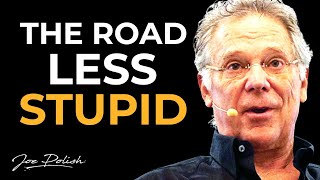
This is a recorded interview (YouTube) where Joe Polish interviews Keith Cunningham about building sustainable businesses and learning from mistakes. Cunningham emphasizes structured "thinking time," clarity about current state and goals, identifying core obstacles, allocating resources to priorities, and assessing risk by probability, cost, and controllability. He also shares personal stories—losing ~$100M framed as an expensive but valuable course and a detailed anecdote about how he met his wife Sandy—to illustrate lessons about learning from failure and understanding customers.
Chapters
Let me tell you how I view this. I view life like a university. And in university there are courses and courses have tuition. I just took a course in the university of life and the tuition was $100 million. That's part one. Part two is the key is not how much it cost. The key is, did I get my money's worth? Did I take this course, Pass fail where I went in to do the least I possibly could, or did I take this course and I want to make an A? I think a key is for me, Joe, and I see this over and over again in my own life and other people's lives is the mistakes or the failures are not nouns, they're verbs. They don't define who I am. The question is not did I make a mistake? The question is, can I admit it and did I learn something?
So I am really excited about who I'm about to introduce you to. I'm going to do an interview with him. I've got the bio up here. I'm just going to sort of say what I want to say about him though. Let me see if there's anything on here you must know. American entrepreneur, international speaker, acclaimed author. He's been doing this for many, many years. His name is Keith Cunningham. Many of you know who Keith is. I've sent everyone a copy of his book the Road Less Stupid, which is literally the best business book I've read in like a decade. It's unbelievable. And here's a lot I could say about Keith. I've gotten to know him this year over the last few months and I was with Robert Kiyosaki. I don't even know how many years ago, it must have been over a decade. And I was asking him, who's the rich dad? He's like, well, there's a couple people, but you know, there's this one guy who was a booze runner in Hawaii, which is, I think, more of the story he tells. He said, but Keith Cunningham is who I learned stuff from. So who you're about to meet is the real rich dad to rich dad, poor dad, and he's made a boatload of money and he's lost a boatload of money and he's made a whole boatload of money back and he's learned how to do it, he's learned how to run a business. So he's got, he has a book called Keys to the Vault. He has a business school. I just went to his four day MBA with Jim Doo and a couple of other people that were genius Network members that were there. And I'll just say about the road less stupid. It's about adopting the discipline of thinking time which will enable you to run your business more effectively, make more money and dramatically increase the likelihood of keeping that money. And Keith has been married to Sandy I don't know how many years, but that's a great story. I might even ask him about that. So Sandy here and they reside in Austin, Texas. And Keith is true. We had him out to Genius Network. How many of you have seen the interviews or actually were at that meeting? Yeah. Mind boggling how bright this guy is. I mean, I cannot say enough good things about him. I think he's going to be a first domino for many of you. Give it up for my friend. I like the choice of music here that they have.
I do too.
Yeah. So we seem like far away here, but. All right, I've got a few slew of questions, but at any point in time you can just go down any path that you think will be most useful for. I appreciate you being here.
Thank you very much for having me.
Yeah. So first question I have. What do successful entrepreneurs do to create sustainable, successful businesses versus entrepreneurs that fail, that don't? So what's the difference between the ones that fail and the ones that succeed?
So my experience is that business is really, really complex. I think sometimes we make it harder than it is, but nevertheless there's a lot of moving parts. One of the problems is you can do 99 things right and one thing wrong and the whole thing be wrong. My experience is that successful people tend to have three or four for sustainably successful people tend to have three or four common characteristics. One is they're really good at what they do. They consistently execute on what they know. There is demand in the market for what they're doing and there's a healthy dose of luck. I think most people underestimate the importance of luck. I know lots of people that have, they're very smart, they work hard, they've got a good product or a good service, there's demand for it. But someplace along the line there was a miss. And sometimes that bad luck is self inflicted. And that can happen. You know, you can do the right thing at the wrong time, it turn out wrong. You can do the wrong thing at the right time and it turn out right. And so to some extent there's some amount of luck. And I think anybody who's successful and doesn't acknowledge luck is arrogant beyond words. It is unbelievable how we minimize, sometimes minimize the importance of Warren Buffett has said, you know, I'm really good at what I do. I really enjoy what I'm doing. There's huge demand for what I do. I've made a ton of money at what I do, and I'm probably the luckiest guy. Had I been born 50 years or 100 years earlier, or had I been born in a different country with different parents, different, this wouldn't have happened. And so I think those are some common characteristics. And I'm going to quickly add. I do not believe in bathrobes. I do not believe that one size fits all. I do not believe in pithy little. Do these three things and get success. Don't do these three things and avoid failure. I don't think it's that easy. One little thing can make all the difference. You can get the right apples for an apple pie and still have a crummy apple pie. Right. And so I tend to look at it that way.
So in terms. So you've made literally hundreds of millions of dollars and you've lost the tune of that. I mean, and so there is. I mean, you've.
I would rather not talk about the loss.
Okay. I will, though, dig into. With you, though, is in the pain of it all. That's where it seems that you've got getting yourself on, say, the road less stupid. You've made, admittedly, some very stupid, arrogant mistakes early on. And you, like what it did to you, mentally and psychologically, nearly crushed you. And you told the story how you overcame that and it became one of the greatest things ever. I'd love to have you like, how did you learn all of this? What did you need to do in order to get the business knowledge and wisdom that you have done an incredible job of condensing in this really amazing book.
Thank you. Yeah, I think. Right in the middle of this disaster, Dan and I were talking backstage when he was coming off, and I was getting ready to come on, and I said, I have also had a divorce and a bankruptcy. I feel very fortunate on the sequencing of my. Because my bankruptcy came about a year before my divorce. So that sequencing was really important. I would have hated to gotten divorced five years before I went bankrupt. Look, I was giving an interview. I don't know if I talked about this when we were together a few months ago or not. I was giving an interview in Ireland for a radio station that was trying to promote an event that was going to happen the next day in which I was going to be the speaker and the. The radio interview host right before I went live during a commercial break, looked at me and said, look, I've read about you. I know who you are. I know your background. Is there anything you don't want me to talk about? And I said, yes. I said, don't ask me how it feels to lose $100 million. I can tell you it feels horrible, right? I mean, so don't ask me about that. He said, no problem. We go live on the interview, and the first thing this guy says is, I'm sitting here with Keith Cunningham, the man that lost $100 million. He said, Keith, how does it feel to lose $100 million? And so I'm now stuck because I'm live. And I said, let me tell you how I view this. I view life like a university. And in university, there are courses. Courses have tuition. I just took a course in the university of life, and the tuition was $100 million. First of all, there's very few people who get to take this course. I mean, it's kind of expensive. And so that's part one. Part two is the key is not how much it cost. The key is, did I get my money's worth? Did I take this course, Pass fail, where I went in to do the least I possibly could? Or did I take this course and I want to make an A plus plus because I never again want to have to take this course? It's far too expensive. I think a key is for me, Joe. And I see this over and over again in my own life and other people's lives is the mistakes or the failures are not nouns. They're verbs. They don't define who I am. The question is not, did I make a mistake? The question is, can I admit it, and did I learn something? I love what Buckminster Fuller said. Who's one of my heroes? Bucky said, a mistake is not a sin unless it's not admitted. The only way it can be a problem is if I don't admit it and then learn from it. And so in the book the Road Less Stupid, I have a chapter on the log of lessons learned. And those are lessons that I had to learn the hard way. And part of what I do, part of what you do, part of what Dan does, what all the teachers, what all the mentors in this room are doing, is they're allowing other people to stand on their shoulders. I'm standing on someone's shoulders. You're standing on. That's. That's the exercise you just did. And it's very powerful. Who is the first domino Whose shoulders are you standing on? And the idea is, is there a way for other people to learn from my mistakes? And if I can do that, I will have had a successful life.
Hey, I hope you're enjoying this video. And I want to let you know that I have a new book that's come out, and if you'd like to get it absolutely free, there's a link below in the description. Or you can wait till the end of this video, or you can Simply go to joe'sfreebook.com and you can get a copy there. So you, you're the highest rated, I think now, the only speaker of business mastery. Tony Robbins, Big Business mastery event, correct? Or does he have other.
We've been told. We've been told that people like us.
Yeah, I mean, yeah, you're definitely the highest rated speaker of business mastery. And you have, you read a lot. You're a voracious reader, and you see a lot of people dispensing advice out in the world through books that people, business owners, entrepreneurs follow, that you disagree with. And so I'm going to ask you, which will sound kind of like a silly question, especially since you said, you know, I don't believe in bathrobes. When people ask you, you know, what's the secret to business success? What would you say to that? Because people always want to know, what's the secret? And from a marketing term, I know it works. If I said, here's three rules I want everyone to write down, or if I said, here's three secrets I want everyone to write down, everyone would literally get out their pen when you say the word secrets. So people are pursuing it. And I think what you do such a great job in the real, less stupid of is dismantling so many myths and so much bullshit that exists that people are being taught about business. And you're a guy that actually has made a lot of money and is very good with it and has gone through. So what, you know, when someone says, oh, what's the secret? What is the thing they're always looking for the easy way to do it. How would you respond to that?
So I think the first thing I would say is there are no secrets. There's just stuff you haven't learned yet. There's not a secret. There's no magic pill. There's no little formula that's locked away in a vault someplace that says, oh, God, if you can just learn this one little thing, this is. And nobody else can learn it because it is a secret. I think that's I think that promotes the wrong kind of. Of work ethic. I think it promotes the wrong kind of execution. I think that's the magic pill, tooth fairy, financial tooth fairy kind of mentality. And I strongly disagree with that mentality. I do think there are some, some things that successful business people do. I think successful business people, some of them make a little list. It's not intended to be all inclusive. It's intended to maybe spark a conversation or a thought. I think successful people have extreme clarity about where they are, the reality of their current situation, which is point A, and they have clarity about point B. They have clarity about what they want, where they're going. And my experience is that most business people and most business advisors orient towards the second one. It's all about getting clarity on what you want, which I'm in favor of. But I think the only reason Google Maps works is because you tell Google Maps where you want to go and it knows where you are. And if you don't, if Google Maps didn't know where you were and you told it where you wanted to go, the likelihood of you getting from where you are to where you want to go rounds to zero. So the idea is, where are you, what do you want? And what's the obstacle or the problem that's in the way? I think the hardest work I do in my thinking time is what's the problem? Not the symptom, what's the core root obstacle? Because if I'm going to get from where I am to what I want, there's something that's blocking and I need to know what that is. I need some clarity around that. Because if I don't have clarity on the obstacle, I have zero probability of building a machine that will help me solve the problem. And building the machine requires allocation of resources. So there's a bunch of things in this little sequence I just said there's clarity about where I am, clarity about what I want, clarity about the obstacle that's in the way, some thinking about what's the machine, which is priorities. So priorities. I think successful people are really good at identifying the correct priority and then and then allocating the resources to execute on those priorities. I'll say it this way, I'm going to put it on a bumper sticker. A shift in priorities without a simultaneous shift in allocation of resources is wishful thinking. And wishful thinking is at the root of every failed business. They thought the idea was if they could just get clear on what they want, that somehow what they want would manifest and I'm going to quickly say I totally agree with Dan and what he just talked about. I think getting clarity about what it is you want is important, but I think. Because that allows you to filter. But I also think somebody's got to pick up the business end of the shovel and consistently execute. I'm not a believer in the magic pill. So.
Can I say something? Because this is an interesting point because, you know, Dan says his entrepreneurs, you know, just their creativity, you know, make it up and make it real. Now the making it up part and making it real, all kinds of shit goes squirrely right along the way. And what you're saying with the execution and even like the impact filter, which is a thinking process in order to get clear on the importance selling yourself on it, what's the success criteria and piecing it together. I mean, think of the amount of suffering of these idealistic, aspirational desires that are missing all of the roles, the key elements and the priorities done in a certain way, they actually achieve something, which is why there's so much business success. And I think what you're doing here is getting people to slow down enough with thinking time. So they're not so reckless as they're trying to drive. Because so many entrepreneurs are just. They're driven, but their drivenness is driving them in the walls. It's driving them into poor health, it's driving them into insanity and a tremendous amount of driving off cliffs all the time.
I think that's it. I think this need for speed, I think this need for significance, I think this need for. My friend Alex Mandozian, who's someplace in here, has said it very eloquently. Few things are worse than running the wrong direction enthusiastically. And I think there's a lot of truth to that. I think we tend to. To substitute passion and what we're excited about. I will tell you, whatever your passion is, it's either something you think you can be successful at or you are successful. At. The instant it becomes unsuccessful, your passion goes to zero and you start looking for the next cool thing. So the passion is not. It's just excitement about what I think I could be successful at or what I am successful at. But if you sucked at it, I promise it would no longer be your passion. So I tend to gravitate. I'm probably, and there's a great example right now in the press, this guy, son, I don't know how to say his first name. Marushi Son, who is the guy who put together the hundred billion dollar fund that Invested in Uber and we work and a dog walking service and has blown through $100 billion in two years. In two years. And it's probably gone. The bulk of it is. And I contrast him with somebody like a Warren Buffet who's been, he's been at it 60, 70 years and has built something that, that has withstood the test of time. And I compare that to what other people are doing and it seems like there's a lot of people that are optimizing for a one hit and it may turn out good, but I'm not sure if it's sustainable because there's a lack of business skills and tools. I'll say it this way, business success requires business skills and tools. Much like ping pong success requires ping pong skills and tools. And if you want to win a gold medal at ping pong, somebody better have ping pong skills and tools. And the same thing is true with business. If you want a gold medal in business, somebody better have some business skills and tools and bring more to the table than simply an excitement about the idea. Somebody's got to execute something. And most failures have to do with either. We haven't identified the problem. We're excited about something but don't know what to go do. We've built a crappy team or a team of munchkins, a team of people that are C players and that can sabotage. There's so many ingredients and it just being thoughtful about what's really required and what's really the problem, I think is the key to saying, how do I keep this thing going? The environment's always changing. The environment is the only thing that's the only thing that's always changing. So a good idea today could be a bad idea tomorrow and vice versa. So I think one of our jobs as business owners is to be thoughtful about good. How are things changing? Either the competition, the economy, the White House, Brexit, North Korea, interest rates, price of oil, the competition, consumers. I'm changing and so what I can do today is vastly different than what I could do 25 years ago. Yeah.
Well, I'm going to ask you a question. So based on the impact filters that I read from people, I'm going to try to ask you what I think as a whole would benefit many of the people in the room. So it's how should entrepreneurs evaluate risk and if a negative financial outcome does befall somebody, what can or should they do to survive?
Evaluating risk. Risk has three flavors. There's a probability that the bad thing happens. There's the cost if the bad thing happens and there's the controllability that you do or don't have over the bad thing. I think that understanding all three of those is vitally important. And I think one of the. My jobs as a business owner is to, number one, identify the highest probability risk. So in your business, whoever you are, whatever business you have, there's a opportunity for you to think about what are the. What, what are the five highest probability risk that I currently have that would disrupt. Here's the guardrail. That would disrupt my future stream of earnings. What are the five highest probability risk and assign a probability to them. So in your world, in the teaching world, a huge risk for you is you. You are the single point of failure in your business. And if something happens to you, that's going to disintermediate genius. And I'm the same way. Something happens to me, there's going to be. I in the teaching world am the product because it's my experience. So if we can Understand what the 5 highest probability risk are that we face and we're thoughtful about those, we can then say, well, is there a way for me to reduce the cost if that risk occurs or can I make that risk more controllable? Is there anything I could do that would reduce the probability of that risk occurring? So W.C. fields said it, W.C. fields said, I wish I knew where I was going to die and I would make sure to never go there. It's true for us as well. If we can have clarity about what the risks are, then we can minimize sometimes the probability of that risk happening or if the risk does happen, or the cost in the event that risk happens. And I think one of the, one of the primary roles of a CEO of an owner is to think about defense along with thinking about offense. We tend to be offense oriented. It's growth, it's maximizing, it's optimizing, it's 10xing. It's all the things we talk about. And rarely does a business owner think about what, what are the gotchas, where are the places that if a risk did happen, it would somehow cause a major disruption to the revenue stream or the earnings. And so I, I happen to be a big believer in being thoughtful about the risk now. If the risk does occur, you know, if it's failure, and that one's much harder. You know, Dan talked about taking four months off. I'm not quite as quick as Dan was. So it took me 18 months. When I went broke and lost everything, it took me much longer to get my mind screwed back, my head screwed back together. And part of the reason for that is because I have my net worth and my self worth entwined. And that's a deadly combination. You get who you are entwined with, what you do. It's deadly, particularly when you lose on what you do, right? I mean, so if those two are entwined. And so it was a brutal, brutal time period. And it took me a while. I used this example when all this happened, I was between 38 and 40 years old. And that was 30 years ago. So those of you doing the math. I'm 69. The analogy I use is that time in my life, it was like being a basketball player. And it's halftime, and I'm trotting off the court and I look back at the scoreboard, and the score is 87 to 3, the other guys winning. And so here I am in the locker room at halftime, my midlife, and I'm trying to figure out, how do I win this game? How do I win this game? And a very wise person looked at me, and after months and months, I grew a ponytail. I got my hair, my ear pierced. That still hurts. It's been 30 years. Still got a little problem right there. I don't know why I did that. And a very wise person said to me, keith, you're asking yourself the wrong question. You're asking yourself, how do I win? And you should be asking yourself, how am I going to play? How am I going to play this game? It's not about winning. It's about how I'm going to play. And I made a decision right then. I'm going to play for excellence. I'm going to play for mastery. I'm going to play for keeps. I'm going to play for spectacular. This is my life. I'm proud of it. And I will gladly live it again if only given the opportunity.
You know, this is going to seem like a diversion, but I'd love if there is a way. Is there a quick way to tell how you met Sandy and what you said to her? Not. Well, if you go through the. How you met her, that could take a long time. Because I know this story. It's great. But when you sat down with her on your date and you asked her a question, could you tell that story? Because I think it's not only useful in terms of Keith Cunningham dating advice, but I also think it's actually really relevant to people's clients and customers and simply finding out what is important to them.
So we're on our first date. We had known each other 15 years prior and hadn't seen each other in 15 years. This is the first time we had seen each other. And it's a first date. We're three hours into the first date. It is a spectacular first date. And I looked at Sandy at the end of three hours, and I said, I'm about to ask you a question I've never asked another woman in my whole life. And she kind of braced herself and said, okay, what is it? And I said, what do you want? And she said, I mean, what do you mean, what do I want? I said, what do you want in a man? What do you want in a relationship? I said, at the time, I was 50 years old. I said, I've been single for 10 years. And I said, I have been playing whack a mole and pin the tail on the donkey with every woman I've been out with for the last 25 or 30 years. And I'm tired of it. I need to know what. She looked at me and said, oh, that's easy. She said, I want to be loved and adored. And I asked the waiter to come over and bring me a pen and a piece of paper. And I wrote down, Sandy, January 4, 2001. Loved and adored. And I looked at her and I said, now tell me every single thing that needs to happen for you to feel loved and adored. And I started writing. And she talked for an hour and a half. I'm talking high maintenance here, right? And I'm writing it down, writing it down. And at one point, literally at one point in this hour and a half, she said, and I want a note every day. I said, you must be kidding me. I tried to make myself right. I couldn't, I couldn't. I said, every day, my God, what if I forget? She said, I'll remind you. And she does, right? I mean, at 3 o' clock in the afternoon, if there's no note that's been sent, she send me a little text and say, did the mailman break his leg? I go, oh, shit. I start, so the idea, to me that you're referencing, the idea is, look, find out what they want. The key is find out what they want, not what you want. Don't fall in love with what you want. Fall in love with your customers. What do they want? And we make the mistake of business owners of believing that the key is to figure out what we're passionate about. We don't, we're, we don't have the money. Our Customers have the money. Why don't I fall in love with the customers? Why don't I fall in love with something that can love me back? Falling in love with my product, falling in love with what I do is, to me, intergalactically stupid. Why would I fall in love with something that doesn't love me back? Let me fall in love with customers. Find out what they want. Go and get it. Go and get it and give it to them. If I can do those three things, it turns out I love writing the note because Sandy loves getting it. And if you would have asked me what the key to this woman's heart was and asked me to think about it for a hundred years, at no point in time would I have written down or thought, oh, she wants a note every day. Find out what they want. Go and get it. Give it to them. Sandy's very smart. Here she is right here. She's prettiest woman I've ever met in my whole life. And thank you for loving me. Thank you. Sandy's very smart. She asked me for the piece of paper. When she finished, she wrote down, what do you want? I said, okay, let me tell you all three things, right? There's only three. So I told her all three. And it's been really, really good. Thank you. Thank you.
That's awesome. You know, it's got me thinking a lot, too. The impact filter, the tools, what me and Jason Fladlin have been doing, talking to prospects. I mean, I'm doing the biggest deep dive into what do Genius Network members, what do you to Genius Network prospects? What do they actually want? Because there's so many different places that people could get learning and devote their time. And the challenge is it's the whole paradox of success sort of thing. The paradox of choice. There's so many choices available that I really want to know what my clients and members really wanted and looking for. Because me and Alex Mendozio, we did a program in 2003 called Stick Strategy Secrets, and it to this day is one of the best training programs that I've ever done that, you know, we've. People have made millions with that program and implementing it. And so we're doing a stick strategy secrets 2.0 that we're going to start recording in the beginning of the next year. And so much of it has to do with what do people want and teaching people. Like, you know, Dean Jackson, who I do my podcast with, is here. You know, he has his before unit, during unit, and after unit, before the sale, during and after the sale. And so, so much of just being a relationship marketer and having clients coming back and back is. Is, you know, it's the difference between the pickup artists that get a phone number or an email or. Versus someone that actually sustains a relationship. And so all of this. The reason I'm bringing this up is that, you know, all the things that I'm doing that you see me doing, even the impact filter at the beginning here, is all based on just learning what it is people want and delivering it to the best of my ability. Every speaker here, every person, every, you know, people, the dominoes that they're telling me would be important to them. So critical. So if you had to give your most prized business, money and wealth advice to your children or to children in general, what would you tell them? The most prized business advice?
I think the wisest thing I ever heard was in the middle of my do over time, my timeout box, and I had a very, very, very wise man say to me, keith, hell on earth would be to meet the man you could have been. That's now been 30 years ago. There has not been a day in the last 30 years where I haven't thought. Thought about that idea. I heard somebody say one time that at the end of most people's lives, their biggest. Their biggest regrets are not for the things they did, but rather for the things they didn't. And I want to be able to meet the man I could have been, look that guy in the eyeball and say, I know you. I am you. I think the opportunity that all of us have. And if I could give my children advice and they've heard this play for keeps, this thing goes really, really fast. And the older I get, the faster it seems to go. I've been aware for a long time that there is a tension that I have. And the tension is I'm not particularly excited about growing old. On the other hand, I'm not really that interested in dying. Right. And those two are somewhat incompatible thoughts, right? So I'm aware that this thing goes really fast, and I'm aware that if I don't play for keeps, if I don't play at a level of mastery, if I don't play at a level of excellence. So to me, success is getting there and excellence is staying there. And how do I need to think about my life in terms of creating the excellence of mastery so that I don't have a regret of meeting the man I could have been?
Yeah, that's awesome. Last thing I will say, your. Your book The Road Less Stupid. I mean, I've read over a thousand books. This book is phenomenal. I mean, I think I had many years of. Of setup, which gave me an advantage, which is strategic coach, which is really asking great questions. And so you have this. There's a lot in this book, but one of the things, one of my favorite chapters is thinking time. And so we have little books, the Road Less Stupid, this little version, and the ultimate blueprint for insanely successful business. And this is a great line. Great operators get tired. Great business owners get rich. And so everyone will have a copy of one of these. I've sent everyone that's a Genius Network member, I believe, Khmer a copy of the Road Less Stupid.
Thank you.
I'd love to have this group take this book that I think is infinitely better than most. The business of wisdom, advice. And literally through this room, the reach of the people in this room is literally in the tens of millions, hundreds of millions. And if you like it, you know, share it because I've been recommending this book a lot. What would you love to have happen with this? Because Genius Network can solve a lot of things.
Wow. I was listening very close to, to Dan earlier when he said, you don't have to justify what you want. That's one of my takeaways from this first 30 minutes. Right. So I already have a takeaway because I do tend to do that. Well, here's why I want this as opposed to this is what I want. I would like for business owners want to be business owners, entrepreneurs to get exposed or to learn from the years of experience, the mistakes, some of the successes, although I haven't learned that much from success, mistakes tends to be how I learn. And so I'd like for people, if you know somebody or you have the ability to influence and you see that there's value in this work, in this book and what I'm trying to do, then share it. I would love for people to share it. And that's one of the things that has really drawn me to you, Joe, is how much you have given me already and how generous you've been with enrolling me in your network. I tell people all the time, I'm not a. I'm not a seminar guy. I'm a business guy and I teach. And if there's value in what this book and you see value, I'd love to have people know about it. I'm not optimizing for size. I'm optimizing for impact. And if there is a only one person that gets this and says, good, I made a shift. I'm good with that. I don't feel like I'm in control of how big it gets. I'm just in control of putting it out there and then letting people like you see where you want to take it.
Right. And, Sarah, you said one thing to me too. And we were talking about people that knock off our stuff and then share it with the world. And we're at dinner, and he's like, there's two types of hay. There's the hay before it goes into the horse and the hay after it comes out of the horse. And so I like it from the original source of the person that's been there, done that, and advised it, which is why I love this and why I want to share your work with everyone. And this is just the beginning part of Keith Cunningham. I wanted to introduce those of you that have not met him yet into Genius Network. And thank you. You're awesome.
You're awesome. Thank you. You are a stud. Thank you very much. Thank you. Thank you. Thank you. Thank you. Thank you. Thank you.
Okay. I hope you found that video awesome and useful. So if you want to get a free copy of my book, I want you to click here. And if you want to watch some more videos that will be useful and awesome, click here. Go ahead. They're over here. Do it now. Come on. Thank you.
Watch them.
More from Joe

This FBI Trick Can Command Respect Without Saying a Word ft. JEFFERSON FISHER & CHRIS VOSS

How To Stand Out, Be Different, and Create Raving Fans, Customers, and Employees ft. Jesse Cole



90% Of Businesses Fail In Their First Year, Here's Why! ft. Dr. Benjamin Hard & Dr. Robert Cialdini

The 1 Piece of Business Advice I Got From Elon Musk That Changed Everything Ft. Kamal Ravikant

The 6 Traits You CAN'T Teach in Entrepreneurship ft. Richard Branson & Gino Wickman

The Leg Method: How to Make Your Book into a Million-Dollar Asset ft. Anna David


7 Millionaire Mindset Hacks for Daily Success and Wealth ft. Brian Tracy & Dan Sullivan
