The Secret Project That Russia and China Don't Want You To Know About Ft. Jan Jekielek
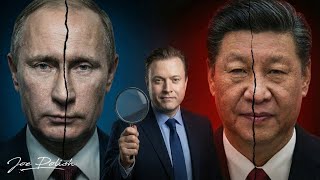
Jan Jekielek, senior editor at Epoch Times, discusses his reporting on forced organ harvesting in China, an alleged $9 billion annual industry involving 60,000 to 90,000 transplants yearly. He covers congressional responses, information warfare threats, and why cognitive liberty matters in an age of AI.
Chapters
How many of you caught the hot mic moment? Xi Jinping, Vladimir Putin, Kim Jong Un are walking in Tiananmen Square and suddenly there's this mic that picks up this very strange conversation. Okay, Putin responds. With continual transplantation, we can perhaps achieve immortality. She responds, our target is 150 years. And 150 years is actually kind of a code word for something called Project 981, which is the to extend the Chinese elite's longevity. What would it be worth to have unlimited on demand available to you forever? It's probably worth everything if you're an immoral, evil person who's happy to have people murdered for organs. And it's still happening today.
The following was recorded at the Genius Network annual event hosted by founder Joe Polish.
This event is for high level entrepreneurs.
Who want to make a difference in the world. Learn more@gienius geniusnetwork.com all right, well, this is my second interview that I've done with Yann. I've also been on Epoch TV and we've had whole conversations about addiction recovery and what's going on in the world. And the reason I wanted you to come here and thank you very much is you have a pulse on what's going on in the world because you've been the senior editor for how many years now, 18, 19?
Well, I've been with Epoch for 20 years, but senior editor, I think it's probably maybe six or something like that.
Gotcha. Yeah. So I mean, you see and meet with world leaders all the time, and this is. They actually have a. Most of what they do is digital and online and video and print, but they actually have a real newspaper. And here's some examples of it here. I'll just. You guys, if you've not seen it, you can pass them around. But tell us a little bit about Epoch Times and who you are, and then I'm going to get into some, what I hope are valuable and important conversations.
Yeah, well, so Epoch was actually started to challenge. There was a great introduction earlier. Thank you, Jeff, for that. I just want to mention Jeff is just this incredible documentary filmmaker. I'm very honored to be introduced by him. But yeah, Epoch was founded actually to challenge a major grand narrative that has really hurt America and frankly, the whole Western world. And that was this narrative that Communist China was going to liberalize. Okay. We're talking about the year 2000. It was the Kissinger Doctrine. There was this idea, right, that if we pump enough cash into communist China, it's going to become a democracy, it's going to become A South Korea or a Taiwan, it'll change. But the communists in China never had any plan to do that. In fact, it was all a massive deception. And we already knew that in the year 2000, because they were basically torturing people to death for their beliefs. And so EPOC was founded by Chinese Americans in Atlanta, Georgia to first tell that story, because everybody almost believed this thing that China is this open liberal, gonna be almost a democracy if we just put enough cash into it. So that's how we started.
So our last conversation that we had, which is on YouTube, you came to 100k meeting, and we talked about a lot of stuff. But one of the things that has really opened a lot of people's eyes, even when I met with Mike Rowe and I was with Tommy Melo at that meeting, he's like, I know you somewhere from somewhere. And, and. And I said, I. I don't know. He goes, I watched the whole interview you did with Jan G. On where we were talking about. And then he had you on as a follow up. So Mike, Mike Rowe really loved your work and loves your work. And we talked about the Chinese $9 billion organ harvesting industry where they are literally murdering people for their organs. And this is real. Is it still at 9 billion or can you speak to that? We did a whole conversation about it, but people are like, oh, my God, I didn't even know this exists in the world. And it's. And you're the one that has an epoch, has worked so hard to. I mean, you're a true humanitarian. I mean, you are out there really trying to expose the evils of the world. You're doing it with as much strength and compassion at the same time that I've ever seen.
I was listening to what you were saying, Joe, earlier, just kind of moments before we came on stage about doing one thing that scares you every day. But not the traffic, not the running in traffic. Right. I did some of the initial reporting on this forced organ harvesting industry. I'm going to explain to you what it is because it's kind of beyond. It's very hard to believe. In fact, one of the great documentaries done about this film that you can find on Amazon or wherever is actually called Hard to Believe. And no one wanted to believe it. How many of you caught the hot mic moment? Xi Jinping, Vladimir Putin, Kim Jong Un are walking in Tiananmen Square and suddenly there's this mic that picks up this very strange conversation. Okay, this is roughly how it goes. She says to Putin, you know, when we're 70 years old. These days, we're just a baby. Right? And Putin responds, with continual organ transplantation, we can perhaps achieve immortality. Right. And then she responds, our target is 150 years. And 150 years is actually kind of a code word for something called Project 981, which is the project to extend the Chinese elite's longevity. They're working very hard on that. And by the way, most Chinese I talk to don't believe that hot mic moment was by accident. They don't believe. I don't know what to say. Right. But basically, what are they talking about? And I was just flabbergasted when someone said, God, I didn't see it live. They're like, yeah, check out what they did. Because they knew what I was working on. So they kind of said the quiet part out loud. Right. But to summarize it, and I can go into the details. Right, More details. But to summarize, in 1999, okay. In communist countries, in totalitarian regimes, there's always someone that's an enemy. There's an internal enemy, and there's an external enemy, because the Communist Party is supreme and can never be wrong and can never have done anything wrong. So someone always has to be blamed. The external enemy, since 1949, has always been America number one. Okay. And that's. It's bizarre because America is essentially mainly responsible for the China miracle or whatever. It's American money. But they've been telling everyone America is this great enemy. The internal enemy changes. At the beginning, it was the landowners, and then it sort of moved up into different groups in 1989. You're familiar with the Tiananmen Square massacre. How many people here know the Tiananmen Square massacre? I hope a lot. Excellent. Okay. Yeah. So that was the students. It was a student movement for democracy that was actually all across the country, but it was crushed when they killed at least 5,000. We think it's more like 10,000 students, and massacred them in Tiananmen Square. In 99, they picked a new enemy. Okay. It was a very popular spiritual discipline called Falun Gong, which had been practiced. It's very grassroots. It doesn't fit into a communist hierarchy, which is, by the way, Communism is a. We can talk about that too, if you like. But this was something that was kind of the opposite. Right. In fact, I'll just have to mention this because I've been thinking about it a lot lately. How many of you here read De Tocqueville's Democracy in America? It's an incredible Book. I would highly, highly recommend it. De Tocqueville was thrilled. This is in the early days, founding days of America. He was amazed at America, right? And what it was about and what he pointed out was that the thing that he thought would make America great was just people. People like you, actually, very much. Exactly. People like you with the entrepreneurial spirit. And there's something that just needs to be fixed. There's something that needs to be done, and people just naturally coalesce, figure it out and get it done and make it happen. Civil society, basically, it was the sort of the best, most powerful civil society that was basically building this whole thing. That's precisely that thing. That is precisely what communist regimes, what any totalitarian regimes, seeks to destroy. Okay? It's the first thing. It sees that as its basically biggest existential threat because, again, the Communist Party has to be supreme. All of these great things that are done, they all have to be because of the party, not because of people like you, not because of entrepreneurship, not because of any of that. Okay? So that's. I'm giving you a little bit of a structure here. So now we go back. It's 1999. Falun Gong has grown into. We think it's about 100 million people. The government estimate was 70 to 100 million people are doing this thing, which is grassroots. There's no worship. There's no money collection. There's no roster. There's no hierarchy in it anyway. How do we deal with this? Well, we don't know. So they say, okay, it's illegal. They called it a heretical religion. We're gonna wipe it out. We're gonna eradicate it. Okay? They put millions of people into the labor camps, prisons and everything. And this is where the organ harvesting comes in. Okay? They do that. And the growth of the Chinese organ industry goes exponential for five years from 2000 to 2005. And we know that, by the way, this is all a state secret, right? But we know because the hospitals were being built at breakneck speed, and people are starting to go to China to get organ transplants. And they're going to get them. Get this, in 2005. There's one instance. This was an Israeli transplant surgeon who was the former head of the Israeli Transplant Association. Two weeks, he has a patient that says, hey, I'm going to die. I can't wait anymore. I'm setting this up in China in two weeks. And they've scheduled it. And wait a second, he was incredulous. The surgeon. Right. Because what does that mean? You can't transplant from a cold body. It's a very specific situation. Someone has to be brain dead, but body alive largely. And there's whole ethics questions about how you determine that, right? But this guy, but he goes, that's impossible. But the guy goes, comes back and he's got his new heart, right? And then that's when this transplant surgeon understood something horrible is going on. Because first of all, how can you get a perfect match, right? It has to be the right size, right tissue, right blood type, all of this stuff, right? And two weeks, that's impossible. That's why you wait for years, because someone has to just die in the right way. Well, so I'm not going to give you the entire picture of the research because this has taken 20 odd years to do. But basically they blood type, tissue type, all of that stuff, all of these people that are incarcerated, the vulnerable people who are being demonized through government propaganda and so forth and are kind of seen as less than human by the population using language that's very similar to what the Nazi Germans used in the 1930s to demonize the Jews. And basically that's how you can. And this is the name of the book I'm writing right now, Kill to order, right? Because you have a database of everybody's vitals, right? And that's how you can get it. I even know one credible case. I just learned about it in the last month of three days for a liver, okay? And that's. So there are black markets for organs all over the world. To be clear, this is not. The organ trade is not unique to communist China, but the scale and just the ability to deliver so quickly because you have a farm, basically, and I hate to say it, this way of living people and with Falun Gong, particularly healthy people, this is one of the reasons it was so popular. I actually have benefited from that, from it myself in this respect. To kill to order. And it's still happening today. And Joe, one last thing. Okay, this is what dawned on me with that hot mic moment. I just like, I get a. I'm getting this horrible shiver up my spine thinking about it. It's one thing that it's really hard to estimate, but we think David Matis, one of the big researchers on this issue, thinks it's a $9 billion year industry. The estimate is 60 to 90,000 transplants a year with no real credible organ donors. And I can explain how we know that too. I just interviewed one of the congressmen who's best on this issue. His name's Neil Dunn From Florida District 2, he told me that the US intel community says it's 100,000 a year transplant. I still have to find out from him exactly where he got that information. That's a little bit of homework that I haven't done yet. So, 9 billion. Now, what if you're a Chinese elite? What if you're one of these 7 million? I also happen to know this number of the elite red card holders. That means you have access to the elite health care. Okay. Which, by the way, a lot of people have very crappy health care in communist China, you know, very, very poor country for many people. What would it be worth to have unlimited on demand organs available to you forever? How much money is that worth? Right? And to me, I don't know, it's probably worth everything if you're an immoral, evil person who's happy to have people murdered for organs.
Hey, I hope you're enjoying this video. And I want to let you know that I have a new book that's come out and if you'd like to get it absolutely free, there's a link below in the description. Or you can wait till the end of this video or you can Simply go to joe'sfreebook.com and you can get a copy there. How many of you find this to be hard to believe? That this is actually existing every day? So Falun God meditators, once they exceeded the amount of people in the CCP Communist Party, then they created a propaganda campaign to all of a sudden take this peaceful people that are predominantly living healthy, not drinking, not smoking, meditating every day. They're the. And for one, a couple of things, because people might be like, why are we talking about this? Well, for one, I want you to have this perspective. Secondly, this is going on in the world. Third, if you're not aware of this, then these things do happen and they're happening at scale. And that's how propaganda works. So my question to you about this. There's now video evidence. You have living donors that have had.
There's actually a survivor. And that has helped with getting sort of media awareness. But there's a tie to the U.S. i mean, actually, I just wrote an op ed in the Baltimore sun, if I can see and I can send it to you, about the US complicity in this and how that works. Because. So the problem with crimes against humanity, there's a reason there's a genocide convention, okay? For a bunch of reasons why there's a genocide convention. The problem is with these extreme crimes against Humanity, where you're eliminating entire groups of people. What happens is history tells us it spreads. People don't say, all right, I'm done. I'm done eliminating this group of people. It moves on. So in China, you know, it's actually moved as well to the Uyghurs. Are you familiar? There's actually. The US officially believes that the Chinese Communist Party is genociding the Uyghurs in northwestern China and Xinjiang Province, so. And it's similar situation, large group of people incarcerated, millions in these concentration camps, similarly vulnerable, similarly confused. And there's a market, and I hate to say this for Halal. They call it halal organs. Right. Muslims prefer Muslim organs. It's crazy, right? But these are all realities. But how are we involved? Well, I've been doing a bunch of research on this. I learned all sorts of crazy stuff. We believe that, for example, that China does all this. Well, China does a ton of manufacturing that's shifting now, of all sorts of things. But when it comes to transplant stuff, a lot of it actually comes from America and from the West. ECMO machines, these are machines that replace the heart and lungs, help the body stay warm, various types of materials. Of course, people go and get the transplants too. There's some number. I don't know the exact numbers right now. And we train hundreds of transplant surgeons who are essentially, unless you have really good evidence otherwise, which I don't know how you would get, probably they've been turned into murderers by the system because of this just horrible way that the system is done. So there's a, like, I'm arguing basically that we should cut all kind of relationships related to transplantation. We've tried. There's been all sorts of groups that have tried the way, you know, through engagement, so called engagement. But this is actually going back to what we knew at epoch times back in 2000, when it was founded. The Chinese regime was never interested in being changed through engagement. Not at all. Okay. They were just interested in continuing to be able to grow, to flourish, to act as a parasite on the US economy, build itself, steal all of that stuff, but absolutely not change. And I think so for that reason, I think we have to sort of cut it off because in a way it makes us also responsible.
Yeah, and you said an interesting line there. It turns people into murderers because of the system. And I've always looked at things where people will work for, like during the pandemic and all of the. The things that were done with health care, which is really not health care. It's health, carelessness, and whoever profits from the crime is guilty of it, especially if they knowingly profit from the crime. Or they can say, oh, well, I don't know who that person is. And, you know, you can look at the moral justifications through if you had a loved one, your wife, your husband, your daughter, your grandmother is dying, and then you get presented with the option, well, they're going to die, or we can get you this organ. You could see how if it becomes acceptable and it's being done, how you can propagandize people into believing something evil is not evil or to go along with it. And so this is just one of many topics that you cover. However, I wanted to bring it up because.
Because.
It'S very hard to operate in a world where these things are happening if you're in denial of it.
If I may just a little bit, there is. I've watched this for 20 years, okay? And for some reason, we were just discussing backstage about this. Maybe it's because of COVID Maybe it's because what we saw happen during COVID For some reason, people today seem more ready to accept that this is happening. I don't know why that is. I can tell you it's a profound difference, because it was very hard to talk about it 20 years ago with anybody. People just like, I don't want to hear this. And you're right, we have a revulsion to this kind of stuff. Right? Of course we do. It's horrible. Right? You have to be a psychopath to feel kind of like this is all perfectly normal. Pardon me. Some of us are desensitized. I'm a little bit desensitized, but as well. So there's actually. There's three pieces of legislation in Congress that have been, for example, that have passed, that actually have some teeth for the first time. None of this has never existed before. There's something called the Falun Gong Protection act, which sanctions people, okay, that are involved in this. Now, why is that? Well, why will that save a few lives? It won't end it, but because all those Chinese elites, it kind of works. Like. I mean, we could talk about this if you want to kind of. But it's. If you've ever seen the Sopranos, you know how the Chinese Communist Party operates. Okay. Basically, it's almost like a mafia system.
Yeah, well, you know, over a decade ago, I had interviewed a Falun Gong prisoner, a woman who had been. She was in prison for three years. They tortured her on a weekly basis. She shared just horrendous stuff that happened to her, all the sexual abuse, everything. And, and at the time I never, I didn't release the interview because I was like, if I release this interview, I will never be able to step foot in China. I will be killed. And you know, and I was like, well, until I'm at a place where I can actually have an impact, not just be a lost voice, you know, I had to make this judgment call and I talked with her about it and she, she had agreed with that. And you know, now here I am talking to you and we're talking about this stuff and now there's the momentum that you've created with Epoch Times with a lot of stuff which will lead into my next question. Question. But I saw if you want to learn more about this, watch the previous interview I did with Jan in your book. And you're so polite. You know, you mentioned to someone you have a new book coming out and then they come up to me like, and then you tell me about it last night and I said talk about you. Oh, can I do that? You know, like very respectfully, yes. I want you to talk about your new book that you have coming out. Because the Epoch Times is one of the most incredible, you know, non propaganda forms of media that exist. There's not too many left and if there are, and I think everyone here would be well served to. How many of you currently read or watch Epoch Times?
Thank you. Yeah, thank you for that. It's subscriber over there. I appreciate it.
Yeah, it's really incredible. You'll learn a lot.
We live and die by people like you. I don't know the exact number now, but it's something to 90 to 95% funded by these. We're 501 funded by individual subscribers largely. There's some larger donors and stuff like that, but we realize it's the most durable way to have a media today because it's the least kind of external influence that can come and force you to do things you don't.
And that's what you hear all the time from mepa. It's like it's literally the complete opposite of fake news. So here's my questions for you. So you've been digging into stories that most of the mainstream media won't even touch. So what's the most important truth people in this room need to understand right now about the world we're living in?
Wow. Yeah. The most important truth, you know, I think a really, really, really important one is that we're living in a World where the primary means of warfare, for lack of a better term is information warfare. We're in. We're constantly being bombarded by all sorts of information and the technology of all sorts is designed to affect us, to influence us. You know, you heard about, you know, for example, how Instagram was built and how it's affect. I don't know how, I don't know if you've heard, but you know, how it's, you know, affected young girls, right. And like, you know, suicide. I don't want to. It's not just Instagram, but there's some of the case studies of demonstrated, were demonstrated in Instagram where basically they become really uncomfortable with themselves because they see these beautiful, perfect people as highly curated people living their lives on Instagram and they think they need to live like that. And of course, it's a show. And then there's TikTok, which is still around right now, part of this recent trade deal which was negotiated in. In theory we're going to see some resolution around the TikTok issue, but I've even argued that it's a more potent weapon for the Chinese regime, which controls it by the way, than their nuclear weapons. Why? Because they can have an unbelievable amount of data and a lot of people in here know this, know how this works, right. On everybody that uses that app. And they can feed psychologically and do psychologically destabilizing information to those people at a level that allows for some kind of plausible deniability, right? And that's think about how powerful a weapon that is. Millions and millions and millions of Americans, right? That's why that app has to get out of their control. There's no scenario where they can control that app. Like, it's just, it's a horror show and obviously very influential, valuable for elections too. And that might be the reason why, why it's still around.
Yeah.
So I think just being aware that we're saturated in this information war and that AI is a part of that, right? And I mean, AI could become the greatest tool for good and it could also become the tool of our eternal enslavement, quite frankly, because the way that AI allows information, we're already seeing, seeing, you know, people are getting away from the search engines which are already curating content and choosing what's already going to be on top. And now people just want to hear. People are reading, even on Google, from what I hear, they're reading the AI results. They're not even looking at the results. So, you know, however, those AIs are programmed and believe me, they are wildly biased, some of them. Okay. That's what people. That's the kind of stuff people are going to believe. This is like Orwellian at a level that George Orwell had no clue was even possible. Okay. Or we could have, you know, an information environment that actually allows for free thinking, but that we have to be very careful how we build that. And it has to be in a way that it's not a gift from the government by the way, because that doesn't work very well. I think we've seen that probably most people here are a little aware of that.
Yeah, well, you know, it's interesting. So I have. There's someone I know that has a energy system that OpenAI and Sam Altman have visited and you recently probably saw where Bill Gates said that global climate change is not going to be the end of civilization, where he totally flipped that whole thing. And my theory, and what do I know is because of his investment in AI and all of the energy that that is going to consume, that he better not be an anti climate guy anymore because of all of this stuff. And I think it's just another, another way for someone as evil as Bill Gates to try to control things and to flip the switch on that. But that's my opinion. So you can take that for what it's worth.
It's a good. I think it's a good opinion. I mean I was, I was at this roundtable in D.C. of Real Clear Politics. Got like a whole bunch of people, energy experts across the spectrum. There were organizations there that had green in the name. Anyway, everyone said their piece, right? And I'm sitting there and I was like, wait a second guys, just small question, okay. Is net zero dead? Like, is that what you're telling me? Like it's gone. Like no one's even. This isn't even an issue. This was like the centerpiece of our energy efforts two minutes ago. And now you're. No one said this, but is that what you're saying? And everyone's like, that's a very interesting 180. Why? Because all they're talking about is how do we get enough energy to build to power these massive data centers that are required to run the ultimate AI? And it's like, okay, I'm for that. I like nuclear. Clearly nuclear is having a massive renaissance as of this moment.
Right.
Cleanest form of energy by far. This is all.
Which is crazy too. The amount of like waste, like energy, you know, if you as a human, the other forms of energy will fill up rooms of waste. Your entire life, if it was nuclear, would be like the tip of your finger.
Yeah, it's. No, no, But I think your theory has a lot of merit because. Well, okay, let's pretend, okay, we know there's people out there who, in positions of power that like, control that they believe that making sure everything is managed really well and controlled, that that's the right way to go. And I, and I'm not sure a lot of those people that kind of, you know, orchestrated this kind of disaster, which was the COVID response, have fully realized that what they did was a disaster entirely. Right. Like this is this, this is actually one of the huge problems. We haven't, we haven't had an accountability. And unfortunately, AI has the potential to offer this unimaginable level of control that even George Orwell, who explained to us how powerful it is to have rewritten history for people to not understand what that looks like. This is what AI is doing now, even never mind in a future where. So I'm worried that there's some of these people that are into the control model of how humanity should be running with a few kind of elites at the top making sure everything's done just right. I'm afraid that they're extremely excited about AI and that might be part of the reason why this narrative has just completely shifted in like two minutes.
No, you're exactly right. You see all the tech company, anti capitalist capitalists, you know, climate change, global warming, everything. All of a sudden now there's this whole need for, you know, the consumption of things that they vilified for many years. And you don't hear they completely switching. And I met Bill Gates in 2008 at All Things Digital. I took a picture with him. I mean, you can see that picture online. And he was really nice. We had a good conversation. Then a few years later, I go to the Bill and Melinda Gates foundation for a talk. And it was interesting because I think at that time Melinda was probably on to how many times he was visiting Epstein's island. And they were totally separate from each other on stage. I mean, they. It was like, it was really weird. I was like, I don't think they very much like each other. It was years later where they. She finally left. But. And I saw him in, you know, brief conversations with him, but I was like, he was a real, real mean asshole. Smart, intelligent, but there's a lot of smart, intelligent, evil people. But I never had a context of it until later. And then seeing what happened with reading the real Anthony Fauci, which is so well documented by Bobby Kennedy and all of the things that Bill Gates is. And I can't imagine any person reading that book and not being like, oh, here's actually who Bill Gates really is, or at least part of who. We don't really know who he is. I mean, he just. But it's power. It's power and control. And there's a hand. I think most humans are really good. I'd like to get your perspective on that. You know, people go. All the propaganda causes people to hate different groups, different religions. A lot of these individuals are just really. They're just humans. They're just trying to get along. Most people are really just caring. And there's just a small percentage that seem to have so much control. And those are the tyrants that. That are messing things up. And the people that suffer the most are the ones that don't have the resources to do anything about it. So I always want to lift up freedom fighters and people like you. That's why you're sitting here right now. That's why we're having this conversation too, because you're out there bringing a voice to people that don't have a voice.
So one of the theories, you're reminding me there's a very kind of a largely unknown book, and it's a very absurd, obscure name. It's called Political Ponerology. Political Ponerology is the empirical study of evil. This guy named Lobachevsky pioneered this name. You know, it's a little bit books, a little bit hard to read, but it has a very powerful thesis. And his idea, he was watching Poland basically get pulled into communism. So the war ends, Iron Curtain comes down, Russia, Soviet Union occupies, you know, a whole bunch of places, including Poland. And then he's. He's in psychology at the Agilenian University in Krakow. And basically people come in that are, in his words, have no business being teachers because the actual teachers are run out of town. And you have some sort of these apara Communist apparatchiks, right? And he's watching how people respond to this, right? So this guy who's sort of, again, has no business being a teacher, is kind of telling people how it is. You know, it's sort of this weird scientism. And so there's a small group of people that are just offended by this and are like, what's going on? This is crazy, right? There's a large group of people who are just staying quiet and just don't want to get Sort of called out, and there's another small group of people that are very enthusiastic about what's happening, okay? And he says he sees this scenario all the time. And so the good people, I think, are the group that's a little vocal, the small group that's vocal, and also probably a lot of the group that just doesn't want to be caught in the crossfire, right? So it is actually the vast majority of people, I think. Well, his theory, and I think it's compelling, is that what communism does is it's a pathocratic system. So what happens is Tom Sowell's famous kind of insight that very powerful for me, is that incentive structures determine what happens. And if you're in business, you know that that's how everything works, right? You put the right incentive structures in place, you flourish, you put bad ones in. Life is horrible. Lobachevsky says communism, actually, the incentives are set up in such a way that the psychopaths rise to the top, okay? And they become. It puts them in charge. And that creates a very weird situation because also, you can read these studies about Cluster B people and how they, for example, affect their children, right? And they take. Terrorize their children, and the children take on, in that process, take on some of these characteristics, even though they're not psychopathic themselves. They start acting that stuff out from the trauma as a way to deal with the trauma. You probably. There's more people here and Joe know more about the details of this, but basically. And that's how you get the gulag. That's how you get these places where there's all these people in charge who are ready to do horrible things to people, basically, as part of just how. How it works. Right. And so, yeah, this is just a very. An unknown book, but I think a very valuable insight into, well, why you need to stay away from that system, among other things.
Yeah, no doubt. You know what I want to say, though, because I am going to put this interview out fully, unedited, and based on what I said about Bill Gates, I would love to interview Bill Gates, if you. If he would like to. He probably would never want to interview me. Who the hell is this guy? However, I would love to see him do an interview with Alex Epstein or former Governor Rick Perry or Mike Rohr or Bobby Kennedy. I mean, all of them would do if Bill Gates would ever be willing to do it, which I doubt he will. But I would interview any of these people that are like, no, that's not wrong. That's not who I am, because it's one thing to say something about someone, and I wouldn't just make a flippant comment like that if I didn't have hours of reading and research and looking at what is happening. And I think a lot of people are in denial of it for no other reason. They've just never seen the information. They've never really looked at it. So therefore, you know, because for many years, I admired him as an entrepreneur and a business person. And, you know, so I don't want this to come across the wrong way. I mean, anything that I ever say negatively about anyone, I mean, I will talk with them and I will do it publicly. And, you know, I hope I'm wrong on a lot of these issues. It's just what you look at the facts, though, and you follow the trail. Doesn't appear that way. So you've covered everything from we already talked about forced organ harvesting to fentanyl flooding in America. What do you see as the single biggest threat that entrepreneurs and citizens are sleepwalking past?
Well, you know, I. I think I want to go back to this information where, that I talked about earlier, because there's a lot more to flesh out there. Just that we're constantly being manipulated, and the more we go deeper into this virtual world, the easier it is to do that and the less easy it is to be resilient to it and realize it's happening. Right. You know, there's this. Actually, there's a group called. I just came across them recently. Touch Grass. Okay, what's Touch Grass about? It's very simple. Make sure you go out and touch grass often. That sounds crazy, right?
Like, no, that doesn't mean getting stoned. Elko in Amsterdam. All right.
Oh, yeah, yeah. Wait, some people here are like, what kind of grass is he talking about? Right. No, no, the natural world. Engaging with the natural world as something that you have to do. Make a point of doing that in your life to counter this ever increasing kind of digital virtual AI reality that we're being kind of pulled into. You know, there's young people that spend the vast majority of their time playing video games. Right. And things like this. Screens. Actually just. I was just with Jonathan Haidt at this. He was giving a talk at a. In Washington, D.C. and about some. Some kind of further work that's been done following up on his incredible book on. On, you know, the. The problems associated with screen time.
But he's. He's very bright.
The bottom line with that is, yeah, screens for kids are worse than cocaine. I mean, that's A little bit of a. It's not exactly a clear analogy. The point is simple, that people say, yeah, we just got to restrict it a bit. Yeah. No, no, no. Massively damaging. And he has this. It's a great graphic. I wish. I wish I could put it up there. I'm sure it's sort of writing around it. But he says he takes. He got AI to. Of course he did. Right. To take a phone and have this brain kind of grow, like grown around, and the phone is kind of sitting. Sitting inside the brain, kind of wrapped around. Because this is what happens when you're young and your brain is developing. It's very plastic. If you have this phone that's basically designed to capture your attention, to keep you scrolling deliberately to addict you. Never mind. Actually, you've had Anna Lemke's on where she demonstrates that everything in our society. Society is addictive. Here you have things that are hyper. Created to be hyper addictive. Right. And the brain adjusts to that and creating huge problems for people. And they can go away. If you have a school very quickly, if your school says absolutely no phones in class ever done. They go in a lockbox. Right. Changes how things work. And it's, you know, I suspect for adults, it's also at a similar level of importance, quite frankly, but especially for kids, because it actually changes how you think. Just one other thing I wanted to mention. I've heard that cursive. That handwriting is not done in school anymore.
Really.
Handwriting is. I mean, for me, if I wasn't handwriting my notes as I was going through, it was like a central part of me being able to internalize information. It's how I remember things in a way. Right. Is through verbal. But also the writing kind of really reinforces it. I don't know. And it's not at all the same when you're typing. No. There's all these shifts.
There's studies about that, too. With your retention with using your thumb and your finger to retain things versus typing. You actually retain it more when you use your hands. And I mean, could you imagine how to fix anything? How to be an artist if you just. Everything's done through a keyboard or through a tiny little screen. Yeah. We're mutating ourselves as a culture. So you can either profit from it in weird sort of ways or you can actually be a real human. Which. Let me skip to this question, then. You said before that spirituality and meditation can be more threatening to tyranny than missiles. Can you unpack that? And why tyrannical governments fear inner freedom so much.
I touched on this a little bit earlier. I interviewed this Stanford scholar named Chungang Xu, who was a communist in Communist China. He was studying communism in rural areas. And he came up with some conclusions which the Communist Party didn't like. So he went to jail for years, basically. That's kind of the short story. But eventually he was able to get out, escape, and now he's got a Stanford scholar, wrote this very obscure. Obscure. I don't want to say obscure, because the book is fantastic, but it's titled Institutional Genes. And it's hard to. For a lot of people probably to understand what it means. But he's talking about the elements of communism, the genes of communism, right. How it works. And he tried to explain how, and he did successfully. Why is it that communism in China worked better than Soviet? What he figured out was this. And it's obvious once you say it, but he figured out that I mentioned communism is obscenely hierarchical. Well, in the Chinese characteristics version of communism, they said we're just going to set the goals at the top. And then what we're going to do is we're going to get the regions to compete with each other to realize those goals. So they actually created a market around basically instituting the edicts or the goals that the party has at the top. So this is actually how I think this organ industry, why it grew so fast in the early 2000s. Cause all you needed is one very evil person to say, hey, I'm gonna monetize the eradication of these people. They're kind of subhumans from the government perspective. And the moment he's incarcerating a lot, he's transforming state incentive structures. You have to deliver these reeducated people. There's this extra fear. And this one region starts doing really well. Everyone else is. Is man. I've got to get on board with that because otherwise they're going to get the prize they're doing. So it's basically like creating a market around doing evil things. Why am I mentioning this? Because this particular system, basically, it's designed to kind of cut out or reduce whatever moral high ground you might have, right? And there's different ways that this kind of plays out. I mean, my mother actually in Poland, one of the reasons she had to leave was because she was, you know, asked to report on someone and she refused to the security services. And she then, you know, basically she lost a lot of. A lot of her privileges because you have to play along, right? Or they might say, hey, you know, tell me what your wife did last night. And you're like, well, I can't tell on my wife. Like, well, my comrade over there, he's with your daughter right now. You to want. You wouldn't want anything to happen to her, right? Well, okay, now you're forced to make the no win decision, right? Every decision is bad. And now your moral high ground has been cut down and now you're easier to control. Right? What we found both in these extreme sich communist regimes or during COVID for that matter, right, where we experienced quite a lot of reduction of civil liberties, let's say, say again, to put it, to put it lightly, is that the people who had spirituality, who had a strong connection to God or the divine, who took that, that that was a central part of their lives, okay. That, that was something incredibly important on average. And this is not everybody, this is not a blanket 100%. They did better, they flourished and they managed to kind of overcome it. I'm just looking at, you know, I. One of my greatest things that I'm thrilled with, my mother was in Toronto, one of these big lockdown cities. She's more elderly, but she has this incredible church that she's a part of. And man, does that community take care of itself. Right. So she just was able, like she basically, she was supported throughout Covid in ways that most people can't imagine. Right. Because she has this amazing faith community that she's part of that I'm so grateful for. Thank you people for, for doing that. Because it's because you believe in something higher. It's not the Communist party, it's not the government, it's not whatever that's at the top of that pinnacle. No, your reason to be is something higher than that. Something bigger.
Yeah. I'm going to ask you some quick. I'd like to get some rapid fire responses to these because so I can at least have you touch on stuff with. Of course the goal and objective is I hope that everyone from this conversation is a little more aware, pays a little bit more attention. And this does not apply to everyone, but I believe to entrepreneurs and just people that are ambition seekers. How many of you has your ambition ever gotten you in trouble? You ever gone out with the wrong person because you were in lust for that person and you're like, what the fuck was I thinking? But I was kind of call it whatever you want, you know, in a state of desire, desires gone haywire can get us into a lot of trouble and danger and being a degenerate is Actually seductive. And you see it in music, you see it in movies, you see it in villains. And there's a part of us that wants to, you know, rage against not getting what we want. And there's the, you know, the monkey mind and all these other things. And so Guns N Roses, their first album that sort of made them famous, was three words that really perfectly describes not only addiction, but it was appetite for destruction. And there are people in the world that have an appetite for destruction. It's like the Joker movie, the Batman, one of the first ones where it was. Some people just want to watch the world burn to give them heat. They don't give a shit what they destroy in the process. And so inside every human is that shadow self where they can. And if you. It's that whole poem, you know, it's the dog you feed.
The line between good and evil cuts through every human heart. You'll recognize that from Solzahitzen, right?
Yeah.
Very, very powerful.
Yeah. So part of it is I wanted to bring to light. And you're like the best person, I think, to talk to about this because you have a whole team of people that are constantly scanning what's going on in the world. And really you are practice. You practice what you preach. You're a Falun Gong meditator. How often, what length of time per day do you spend meditating?
Well, so I've had this is live confession on live tv, I guess, or something. But, well, so, you know, in the ideal world, most people that do Falun Gong, they'll do it for about a couple. They'll do it at two hours a day. Typically it doesn't. You don't have to. There's no strict rule around that. But that's like a typical number that's. Well, people will get together and practice together, both these standing exercises that look a bit like tai chi and this sitting meditation. I myself, because I have to have routine. And the only routine I've been able to kind of keep up with is I do. I do an hour and 15 minutes a day. And that's. And that's kind of a truncated version. And I can guarantee. Well, almost guarantee that every day. That's kind of my. Yeah.
What time did you wake up this morning?
I woke. Actually, I woke up a little bit early. I woke up at 4:30 and then. But I went back to sleep and then I was up at 6. But I had done a little bit of work before. Okay. I just had to jump into something. So. Yeah.
And by the way, I'm not suggesting that his practice needs to be your practice. The point is, though, have a practice and have one that really takes.
Yeah. I mean, it's incredibly important. I mean, there was, you know, years ago, there was this book called the Miracle Morning. Did you ever come across.
I'm a co author of the Miracle Morning for Addiction Recovery. Yeah.
Yeah. Okay. Oh, okay. Well, then.
And Anna David. Where's Anna David? Is she in the room?
But there's something amazing about having this morning routine that involves. Part of it is just really centering yourself. And, you know, obviously in that. And part of it is. Part of mine is actually, you know, getting a few very specific things done that are very. That are very important to me in that. In the day.
Yeah. And I mean, David Bach talked about transcendental meditation. Elko talked about putting white space in there. All this stuff that. That stuff, man, I'll tell you, you put that into your life. All the other business strategies that you're trying to employ, you know, we got Barry Goldstein over here that does all the music for Joe Dispenza. So his music is listened to every day by millions of people for meditation. And so, yeah, it's. Have a practice.
There's something just to mention really quickly, right. What you fill yourself with. Probably this is a truest. And probably you've heard this minute. That's what you become, Right. So I think this is like, in terms of, like, how to deal with. How to deal with this onslaught, how to deal with this, you know, infowar that we're subject to all the time. I think you have to very. At least this is my approach. Right. So there's this piece where I, you know, do my meditation, do my practice, and I. And study. I try to make a point of filling myself with good things every day, making time for that. Books, you know, beautiful artwork, beautiful music, you know, and all of that. By the way, there's a connection to something, spirituality too. Because I mean, to me, most of the really beautiful art is somehow connected actually to that reverence to God or the divinity or spirituality. People conceive of that differently. So it helps you remember that connection and how important that is. Yeah.
So, I mean, I've not said the million dollar racehorse analogy yet this weekend. If you had a million dollar racehorse and every time the horse ran a race, you'd win a million dollars, then you'd have to say, how do I take care of that horse? Right. That's the whole analogy. You'd have the best food, the best trainers, the best tracks. You Wouldn't have the horse hanging out with loser horses or eating seed oil filled bad food. You would not have the horse drinking and smoking and watching porn and snorting crystal meth.
Definitely would not.
Yeah, you would. Unless he was kind of a wild horse. But you would take care of the horse. You would have. And you would also make sure that the horse is in the right races. You wouldn't put the horse in the wrong races. And so if you, if you treat yourself because the punchline is you're the million dollar racehorse, right? So what are you putting in your body? What races are you putting yourself in? Which races should you not put yourself in? Are you running from one race to the next? You know, to go back to Elko, you know, giving yourself white space? He chooses what races he's going to be in and how he's going to do the race, right? How he's going to play the game. So every single person here, if you're winning the game, it's because you've set it up in a way that allows you to win. If you're losing, it needs to be recalibrated. So what I would say with all of that, hardly anyone ever does this, but the ones that have done it and do it always report back. It's total game changer. Not all people can do it because they don't have the luxury of financial resources or maybe even the way their life is set up. However, most people in this room could leave today. And for the next 30 days, you could devote an hour a day if your life depended on it, and it does. To book an hour or 90 minutes every day to do something that's going to help you create a much more capable nervous system. So what I recommend after this is get a massage every single day for 30 days straight. Every single day. Even if you went to like a foo foo, high end, expensive, like hotel massage, where it's like 300 bucks. Everyone here in the room has enough money to do that if your life depended on it, if you had cancer or, or if you were going through a breakup that you didn't want to have happen. And you said if you did this though, it could help you, you will make that money back over and over again. It will not cost you anything because of what will happen to your brain and your nervous system when it gives you time to think. You know, David Bach can speak to the one year sabbatical. You know, you can. You take a one week. Most people haven't taken a week sabbatical, let alone a Year, right? And so if you do that for yourself. And I have to say this to remind myself, because when I do it, it's like, oh, my God. And if you don't like massages, meditate or go for a walk or do yoga, do something. Go have someone stretch you or go to a stretch class, whatever will help you feel relaxed. And the first week will be like, what the hell am I doing? I need to be working. I shouldn't be taking time off. You may even feel guilty, especially if you've not done this before. But what will happen after about a week or so? Your brain, usually, it happens quicker than that. But you will get ideas and you will get thoughts and you will have things you're angry about or things that are bothering you. And all of a sudden it just dissipates, you know? When David lynch first started doing transcendental meditation, he wrote a book called, like, the Big Fish or whatever. So Bob Roth, who runs the David lynch foundation, is a friend of ours. That's how I introduced David Bakhtu years ago. And David lynch, you know what he realized within the first two weeks of doing Transcendental meditation is he was really angry. And he didn't realize he was really angry. And then his wife at the time said, where did all the anger go? And he didn't even realize that he wasn't angry anymore. And a lot of people, they just are angry all the time because they're just wound up. And so I hope that in the midst of all this, that's one thing you take away. And I'll tell you, that's why I think I've never seen you blow up in anybody. You're always. Because you spend fucking all this time meditating and you think about things and. But here's the thing. You're dealing with some of the heaviest shit in the world. I mean, you are reporting on things that are very intense. Wars and human suffering and propaganda and everything. And you somehow exist in this chaos and you're not a chaotic person at all.
I'm going to go back. I started at the beginning. I was thinking about you, talking about doing that one thing that scares you every day. I kind of. I have a project to do that. But sometimes I forget I've been doing that for a while, right? And lately, actually, people have been. Since I've been writing this book, Kill to Order, people have been asking me, sorry, like you. Are you afraid for your life? I'm like, I hadn't thought about it.
Should I be?
And now I'm starting to get afraid.
You know, but you are.
You have to. But the point is, like, what do you like? I mean, this question has been rocked. Plato. Plato wrote about this, right? Like, you have to. Even if things look really bad, you got to do what you got to do, right? And because with the assumption. Or like, let's take something more contemporary, right? The ring. You got to get the ring to Mordor, to the Mountain of Doom, and destroy it. Almost impossible, however, just might work out. And it's worth it. All of the effort is actually worth it, because when it works out, it's everything. Right? Yeah.
And I hope I'm conveying this in the right way, because you are in charge of an organization that millions of people read and watch every day, and you direct that, and that's a big responsibility, and you do it from a place of real connection. And so all I'm saying is, I hope, Even if it's 5% more connection in your life, whatever it needs to happen, whoever it needs to happen, with whatever collaborations or capabilities or ideas that you've heard here today, apply that. And also pay attention to all the crazy stuff because you have so much more power and influence to help the. Your own atmospheric conditions, as Dr. Don Wood says. But you can do it in the rest of the world. So, last thing I'll ask you is, looking ahead, what battles for truth and freedom do you see coming next? And what role can the entrepreneurs in this room and anyone watching play in pushing not only back the things they need to push back, but push forward the things that you think will be most valuable?
You know, that I think the big battle that we're facing. Right. And in a way, we're fighting these battles individually. I mean, this has kind of been almost like a theme of this interview, right? It's the battle for cognitive liberty. Okay. When I say that, you know, there's even. I was just made aware of a whole book that the idea, this idea of, like, free thinking humanity is actually a relatively new thing in the last. You know, there's a book called the Bicameral Mind. I haven't read it yet. It's supposed to be, you know, maybe not older than 3,000 years, and it's this very rare experiment. Fascinating concept. I'm going to be looking into that. But that's the danger that we're facing is that on all these different scales, our ability essentially to be free is being encroached on, you know, in the external side. We have, you know, a very dangerous totalitarian regime that's militarizing at a rate that's never been seen in the history of the world that that is. Seeks to, you know, control thought. It's been. Become very effective at doing that in its own borders. It's exporting all of this stuff to other white, labeling this for other totalitarian regimes that are interested in the system and so forth. So that's happening internally. We have this dance or kind of. I don't know, there's part of us, the line between good and evil cuts through every human heart. Part of us, it's a lot more comfortable and convenient to control. And you might believe and believe it that it's the right way, that humanity will do a lot better and will be able to, you know, kind of create a. Create a better world. Right. It's always this kind of utopianism that kind of leads to terrible realities. And we're flirting with that in a major way here in the west as well. And, you know, in the US and in other places. So this is. This is the. To me, this is the battle of our time to basically keep our individuality. There's even people that are looking that are thrilled at the idea to create generative AI. To create AI, that. That is the new God, right. So to speak, that will. Will tell us what to do and how to operate and that. I mean, I don't see any way if that. If that happens. It's hard to imagine how human individuality is maintained. Right. And that's sort of. That's sort of a construct, you know, how. And I guess the question is how to deal with that. That's what you're.
Yeah, well, just. Yeah, well, it's a.
It's. It's a. It's a serious time that we're facing.
But.
Well, okay, let me share one thing, okay. That I find incredibly, something I've gotten very into lately. And I've done a bunch of episodes for American thought leaders about this is people who are doing what's called regenerative agriculture. Have you ever kind of come across that? It's a very interesting mentality. And the grandfather of this is a guy named Joel Salatin. Okay. And he's been doing it for something like 40 years. He's also a great communicator. So he's like, I love, you know, talking. Explain everything really well. But the idea is, look at how nature works. First of all, understand that the God's in the world and organizes everything. So he'll use the term creation, right? And he'll say, well, and the way that we should farm the way. And by the way, you can do this at scale. And he, you know, there's ways to scale this. Not to some of the industrial, it's a very different approach. But you model how nature works. You look at how nature works in all its different ways and, and you.
Build.
You have all these different animals and plants in your fields. And he has his farms out in very big farms out in Virginia where he does this. There's egg laying hens, there's pigs, there's all this stuff. And you enshrine the pigness of the pig and the chickenness of the chicken, which he loves to talk like this. And you go there and it's an unbelievable place. It's a place of equanimity and, and life and flourishing, right? So there's this, I'm not saying that that's the future agrarian future for humanity at all, right? Absolutely. Technology has a place, but an important place. But it's how we approach doing things. It's how we approach the way we approach farming in large ways. We imagine it has to be highly mechanized, a lot of chemical and so forth. And the reason is because we need to feed the world, but we actually waste an incredible amount of food. It's like we also kind of make excuses for keeping with things the way they are. And I'm not against, you know, the way farmers are doing things and so forth, but I think we have to look at these, you know, kind of very powerful and kind of reverent if that's the way like sort of reverent ways of approaching the world. And I get. Lately I've been getting incredible inspiration from the homesteading movement and kind of regenerative agriculture kind of approach. We have a bunch of columnists now. Joel's actually a new columnist at Epoch. Oh. And if I may, I'll try.
I think ghost towns are going to save the world. Ghost towns, Cleater, Arizona specifically.
No, but I mean this is, I have to plug our media a little bit here. But what I'm saying, one of the reasons why people come to us, we do surveys all the time, right. Try to figure out, figure that like we, we're a media, even though we cover a lot of very difficult things, right. We, we also, we're not a bleeds that leads media, right. We cover things very honestly. We cover difficult things very thoroughly. But people generally come away and this is, we see this in our, in our, in our feedback all the time. Come away feeling better about themselves. Okay. And this is something we actually, and I realize this is something, something that we do just it's very rare in media and I would, I would encourage you to check it out and tell. And see if you, by the way.
You can plug Epoch, subscribe to Epoch Times, Tell, tell people exactly what they need to do in order to start.
Theepoctimes.Com and up top there's a little button that says subscribe and, and they have the, they have the paper version too. It's, it's, it's not, it's very reasonable. Very reasonable. Whether you want to get the print it edition or the. Or there's always some kind of deal going on or the digital. The print. I wasn't a print guy, but I've kind of been converted as I have in my office in D.C. now I have stacks of papers building because it's just, they just do. I'm not involved in making the print edition but they do such a fantastic job. I just almost said really?
We have this.
This is incredible. You know. Yeah.
Well, so I guess anything that I didn't ask you that we didn't cover, even though we're out of time, that would be the final thing you would share with everyone.
I will just reinforce this idea to realize, become aware every day that we're becoming part of a kind of digital increasingly with technology, part of a digital virtual world and make a point of exiting that world into reality. That's where this touch grass idea comes in. It actually, there's studies showing that this actually works. This actually grounds you and lets you keep more of your equanimity because as we're being pulled out from the natural world, we actually need that as human beings. And don't forget to do that. And also try to make sure you put good things into yourself every day. I'm talking about of course, food and so forth. That probably should be obvious but. But I'm saying mental things, things that are good for your mind and your heart and your spirit. Make a real point of that. And I mean for me I've been doing that now for 25 years and it was absolutely transformational.
Yeah. And you know, for all the people that say the media is this or the media is that a lot of that is absolutely justifiable and there's a ton of propaganda. However, there are really good people in the world working really hard, doing good work, standing up for people and giving a voice to people that don't have a voice, including people that their voices are being totally suppressed. And you are one of the good people and you are doing great work. So thank you. Thank you for being here. Janney Kellett, Epoch time.
Thank you.
Okay. I hope you found that video awesome and useful. So if you want to get a free copy of my book, I want you to click here. And if you want to watch some more videos that will be useful and awesome, click here. Go ahead. You're over here.
Do it now.
Come on. Thank you.
Watch them.
More from Joe

This FBI Trick Can Command Respect Without Saying a Word ft. JEFFERSON FISHER & CHRIS VOSS

How To Stand Out, Be Different, and Create Raving Fans, Customers, and Employees ft. Jesse Cole



90% Of Businesses Fail In Their First Year, Here's Why! ft. Dr. Benjamin Hard & Dr. Robert Cialdini

The 1 Piece of Business Advice I Got From Elon Musk That Changed Everything Ft. Kamal Ravikant

The 6 Traits You CAN'T Teach in Entrepreneurship ft. Richard Branson & Gino Wickman

The Leg Method: How to Make Your Book into a Million-Dollar Asset ft. Anna David


7 Millionaire Mindset Hacks for Daily Success and Wealth ft. Brian Tracy & Dan Sullivan
