These Questions Will Transform Your Relationships and Businesses Feat. Keith Cunningham
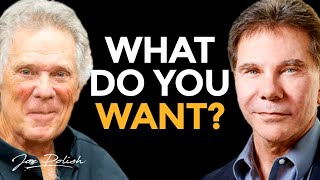
Joe Polish hosts Keith Cunningham, Robert Cialdini, Brooke Castillo, and others on how asking the right questions transforms relationships and business. Keith's core move: ask people what they actually want instead of guessing. The group covers persuasion framing, customer retention, team compensation, and scaling a personal brand into something sellable.
Chapters
Is there a quick way to tell how you met Sandy and what you said to her? If you go through the, how you met her, that could take a long time. Because I know this story, it's great. But when you sat down with her on your date and you asked her a question, could you tell that story? Because I think it's not only useful in terms of Keith Cunningham dating advice, but I also think it's actually really relevant to people's clients and customers and simply finding out what is important to them.
So we're on our first date. We had known each other 15 years prior and hadn't seen each other in 15 years. This is the first time we had seen each other. And it's a, it's a first date. We're three hours into the first date. It is a spectacular first date. And I looked at Sandy at the end of three hours, and I said, I'm about to ask you a question I've never asked another woman in my whole life. And she kind of braced herself and said, okay, what is it? And I said, what do you want? And she said, what? I mean, what do you mean, what do I want? I said, what do you want in a man? What do you want in a relationship? I said, I, at the time, I was 50 years old. I said, I've been single for 10 years. And I said, I, I, I have been playing whack a mole and pin the tail on the donkey with every woman I've been out with for the last 25 or 30 years, and I'm tired of it. I need to know what you want. She, she looked at me and said, oh, that's easy. She said, I want to be loved and adored. And I asked the waiter to come over and bring me a pen and a piece of paper. And I wrote down, Sandy. January 4, 2001. Loved and adored. And I looked at her and I said, now tell me every single thing that needs to happen for you to feel loved and adored. And I started writing. And she talked for an hour and a half. I'm talking high maintenance here, right? And I'm writing it down, writing it down. And at one point, literally at one point in this hour and a half, she said, and I want a note every day. I said, you must be kidding me. I, I, I tried to make myself right. I couldn't, I couldn't. I said, every day, my God, what if I forget? She said, I'll remind you. And she, she does, right? I mean, at 3 o' clock in the afternoon, if there's no note that's been sent. She'll send. She'll send me a little text and say, did the mailman break his leg? I go, oh, shit. I start. So. So the idea to me that you're. You're referencing the idea is, look, find out what they want. The key is find out what they want, not what you want. Don't fall in love with what you want. Fall in love with your customers. What do they want? And we make the mistake of business owners of believing that the key is to figure out what we're passionate about. We don't.
We're.
We don't have the money. Our customers have the money. Why don't I fall in love with the customers? Why don't I fall in love with something that can love me back? Falling in love with my product, falling in love with what I do is, to me, intergalactically stupid. Why would I fall in love with something that doesn't love me back? Let me fall in love with customers. Find out what they want. Go and get it. Go and get it and give it to them. If I can do those three things, it turns out I love writing the note because Sandy loves getting it. And if you would have asked me what the key to this woman's heart was and asked me to think about it for a hundred years, at no point in time would I have written down or thought, oh, she wants a note every day. Find out what they want. Go and get it. Give it to them. Sandy's very smart. She. Here she is right here. She's prettiest woman I've ever met in my whole life. And thank you for loving me. Thank you. Sandy's very smart. She asked me for the piece of paper. When she finished, she wrote down, what do you want? I said, okay, let me tell you all three things, right? There's only three. So I told her all three, and it's been really, really good. Thank you. Thank you very much.
You know, it's got me thinking a lot, too. The impact filter, the tools, what me and Jason Fladlin have been doing, talking to prospects. I mean, I'm doing the biggest deep dive into what do Genius Network members, what do Genius Network prospects, What do they actually want? Because there's so many different places that people could get learning and devote their time. And the challenge is it's the whole paradox of success sort of thing, or the paradox of choice. There's so many choices available that I really want to know what my clients and members really want and looking for. Because Me and Alex Mendoza, we did a program in 2003 called Stick Strategy Secrets. And it to this day is one of the best training programs that I've ever done that, you know, we've. People have made millions with, with that program and implementing it. And so we're doing a stick strategy secrets 2.0 that we're going to start recording in the beginning of next year. And so much of it has to do with what do people want and teaching people like, you know, Dean Jackson, who I do my podcast with, is here. You know, he has his before unit, during unit, and after unit, before the sale, during and after the sale. And so, so much of just being a relationship marketer and having clients coming back and back is. Is, you know, it's the difference between the pickup artists that get a phone number or an email or versus someone that actually sustains a relationship. And so all of this, the reason I'm bringing this up is that, you know, all the things that I'm doing that you see me doing, even the impact filter at the beginning here, is all based on just learning what it is people want and delivering it to the best of my ability. Every speaker here, every person, every, you know, people, the dominoes that they're telling me would be important to them. So critical. So if you had to give your most prized business, money and wealth advice to your children or to children in general, what would you tell them? The most prized business advice?
I think the wisest thing I ever heard was in the middle of my do over time, my timeout box, and I had a very, very, very wise man say to me, keith, hell on earth would be to meet the man you could have been. That's now been 30 years ago. There has not been a day in the last 30 years where I haven't thought about that idea. I heard somebody say one time that the. At the end of most people's lives, their biggest, their biggest regrets are not for the things they did, but rather for the things they didn't. And I want to be able to meet the man I could have been, look that guy in the eyeball and say, I know you. I am you. I think the opportunity that all of us have, and if I could give my children advice and they've heard this play for keeps, this thing goes really, really fast. And the older I get, the faster it seems to go. I've been aware for a long time that there is a tension that I have, and the tension is I'm not particularly excited about growing old. On the other hand, I'm not really that interested in dying. Right. And those two are somewhat incompatible thoughts. Right. So I'm aware that this thing goes really fast and I'm aware that if I don't play for keeps, if I don't play at a level of mastery, if I don't play at a level of excellence. So to me, success is getting there and excellence is staying there. And how do I need to think about my life in terms of creating the excellence and mastery so that I don't have a regret of meeting the man I could have been.
Hey, I hope you're enjoying this video and I want to let you know that I have a new book that's come out and if you'd like to get it absolutely free, there's a link below in the description. Or you can wait till the end of this video or you can Simply go to joe'sfreebook.com and you can get a copy there.
Changing one word pre suasively. So suppose you want to co create with your customer base your new line of products or services, or you want to ask them about how to best improve what you have for new models and services. And this is this co creation. It's the biggest thing right now in marketing. What we typically do is to ask people for their feedback. Ask for that information by saying, could you provide us with your opinion on this topic? It's a mistake because researchers have found that when you ask for someone's opinion, that person takes a half step back from you, a separating step, and they go inside themselves for the answer.
Interesting.
If instead of asking for their opinion, you ask for their advice, they take a half step towards you.
Wow.
And you've created a partnership, teamwork, collaborative frame in their mind. And here's what the research shows. Now, when they encounter your products or services or your brand, they're more supportive of it because they feel more a part of it. They feel a merged identity with it because they've moved into that identity with you by providing advice instead of an opinion.
I love it.
I love it. So one method of approach is repelling, the other is attracting. It reminds me of the quotes, people support what they help to create. And the others, if you let them plan the fight, they don't fight the plan. And I utilize that with my team in my own company by having everyone do teamwork together. But you just gave me a whole other way of thinking about framing it.
In fact, what I like there's a quote, people don't sink the boats they're riding in Right, Yeah.
Yeah.
If you can get them to see them as part of your enterprise, it's both of your boat now. You're both riding in that boat. They're not going to torpedo it.
Yeah. Because, you know, one of the things that I have always thought of in marketing, and I learned this from studying sales copy and persuasive words. When you're not having the advantage of being face to face with someone and you have to use words to persuade. And so part of it is the communication, how you say it, the frequency of it, the usefulness of it. And I've always thought the number one thing to do with clients is to bond and how to bond with them. And anything that breaks that bond is not good. And alignment is critical. Like in business. The way that I. My new marketing book, which is coming out, currently titled Joe's Marketing Book. And we're crowdsourcing different titles, although everyone seems to love the title Joe's Marketing Book. It'll be out in a few months. It's all about elf. You can have an elf business, which is easy, lucrative and fun, or you can have a half business, which is hard, annoying, lame and frustrating. And I think learning persuasion is going to give you an elf business because if you don't utilize what you have researched and proven and studied, then to do anything other than what you're saying is hard, annoying, sometimes lucrative and frustrating. And so I look at like any sort of thing that I can do that's going to give me a greater advantage, that is going to get a better result. To not only study it, learn it and apply it is just idiotic. And now in some cases you can't fix stupid. So some people, they just don't get it. However, knowing that there is knowledge out there, knowing there is a method that will improve things, is critical. And I only want to align myself with people that are aligned with me. And I think the greatest joy of using persuasion and getting someone into a better position to make their lives better is if they wanted to go along with it. It wasn't like trickery, it wasn't manipulation. Although sometimes you persuade people into directions that they don't want to go, but it's actually good for them. So you can argue that you're doing them a favor. However, anything that can be set up to just, you know, I think people love to be sold. They hate to be pressured. And if you do things in a certain way, it doesn't even occur to them that anyone's selling when anyone is really conscientious. And cares about us and gets us into something to exchange our money or our time or our energy for something and it actually helps you and you like it. That feels good. Everyone loves that.
Everybody feels good about that.
Yeah.
And so they, they want to continue to do business the next round and the round after that.
Exactly. Because the most expensive business cost is client acquisition. And once you've already done that, I always think of it as it's a lot harder to create momentum than it is to maintain it. Every once in a while I'll run into you guys at the gym because you work out consistently. The thing is, if you just did that every three months, I'm going to go work out and do a really great workout. And it doesn't work that way. And I think what you teach is kind of the same way. These are just ongoing practices that if you put them in the place, your business, your connection, your quality of clientele, your joy of how you do things just increases. So this is great. Well, you've already covered some of this, but I'm going to go a little more specific. So what specific steps could someone listening to this take to better persuade or prepare the moment or moments before the message is delivered that you've not shared?
So let's take a step back and provide a general approach. It is to focus your attention on your message. What is the strength of your message? What is the strongest element of it? The thing that if people say yes to it, makes it most wise for them to say yes so that they will benefit.
Right.
What is it? Identify that thing and then reverse engineer the persuasion process to the moment before you describe that thing so that you've aligned people's consciousness and their sense of who they are with the strength of that message we just saw. You could make me a comfort oriented buyer. You could make me a cost oriented buyer, depending on what you put first. If you put fluffy clouds or coins in the background of your landing page, I become that person. Now, if you know that and comfort is the strength of your product, you've got me. I'm going to rate that as important. I'm going to search for it and I'm going to use it to determine how to behave.
Well, I'm not sure if it's in the second chapter or third chapter in your book. You talk about playing French music or German music. Explain that.
So there's a study that shows that if a wine shop owner plays German music for a particular time of the day, people buy more German vintages. If he plays French music They buy more French vintage because they're put in a German or a French state of mind. And now they're going to behave in ways that are aligned with that state of mind that's been installed by something as background based as the music that they're hearing on the PA system.
I always listen for words that you say because it leaves so many strategic clues on what to do installed. So if you sit and think like, okay, I want to sell more of my thing here, what do I need to install in order to set it up in order to do that?
Let me give you an example that's just worked for me. I've got a colleague who I've worked with for a long time over in the psychology department where I'm housed and I needed a big favor from him. I sent him an email and I said, don, I'm working on a project. I don't have the information I need in my files, but I know you have it in your files. I'm going to call you later to get that information. I would really appreciate it.
He planted that seed. Yeah.
So I called him up, he said, bob, I know why you're calling. I can't help you. I'm swamped right now. I know you've got this project with a time limit, but I've got projects with time limits too. I'd like to be a bit of help, but I can't this time, sorry. So I didn't say to him.
But.
Don, I'd really appreciate it if you could help me with this one. It would mean a lot to me. I said, don, you know, we've been in the same department now for 10 years. I really wish you could help me with this. It would mean a lot to me. I created a framework of unity. I had the information that afternoon.
So what happened in his head? I mean, explain what went down.
There was something that was true, that we had a relationship, a long term relationship, but it wasn't at the top of his consciousness. It wasn't the thing that was aligning his subsequent behavior until I brought it to top of mind. We're relationship partners, Don, for 10 years. And inside relationships you say yes to people. I just moved it from somewhere at midbrain to top of mind and it made the difference. So what did I. I didn't install the relationship. I installed a focus on that relationship. That was now the thing that he was paying attention to. And what you're paying attention to in that moment changes who you are. He became a relationship oriented respondent, not A selfish respondent about his own issues.
Everyone is in the marketing business even if they think they are not. I mean, you know, and really the real business you're in is the arithmetic business when it comes to actually making profits. So, you know, no matter what, you got to make the math work. And marketing is the thing that turns on the money faucet and that's necessary. And how you package and position and present yourself. It doesn't matter what it is. But yeah, one of my favorite lessons was that if you truly believe you have the best product or service, you're doing a disservice by not getting it out there. That was really a paradigm shift for me. Yeah. And if you're one of those people that are completely unethical and you don't give a shit about delivering any value whatsoever, you at least convince yourself that that's true. Your business will still do better. Yeah, but it is true. How many of you sell something that adds value to other humans lives? Okay, so there's no relationship between being good and getting paid. There's no relationship. And so there's a huge relationship between being good, being a good marketer, and getting paid. And that's, you know, that's where. And marketing makes selling easy and in many cases unnecessary. Because if you don't have marketing, then you have to rely on selling. And there's nothing wrong with that. It's just selling is just, you know, I mean, marketing is just leveraging the ability to sell in far more effective ways so that you're, you know, you're communicating and you're packaging and you're presenting as effectively as humanly possible. I mean, and I learned marketing. Many of you know my story. I was a deb bro carpet cleaner, living off credit cards. I never wanted to learn marketing. I just wanted to eat. I wanted to be able to pay my bills. And marketing is the one area where I was a good carpet cleaner. But I didn't know how to get anyone to hire me for my services until I started to learn how to effectively communicate that. And it was great that it was something as boring and mundane as a carpet cleaning business. Because when you have to figure out how to successfully sell something that nobody wants to buy, it actually puts you really in touch with. What do we say about this? How do we talk about this thing? And that's where what I learned that helping people make a buying decision, taking the complexity out of how to buy and educating people on all the things they don't know, that they don't know is one of the most effective and also one of the most ethical ways to actually sell anything. So I think everyone should be a education based marketer. And those of you that don't sell, because a lot of times people are like, why? I hear all these coaches and I hear these speakers that are talking about information, but I don't really sell information and I don't know a single business category where if you don't put information in front of it is not going to make it better. So I was selling carpet cleaning, but I created a consumer awareness guide. I had 24 hour free recorded messages and free reports and now we got videos and we got social media and all this stuff. But if you're not putting information in front of what it is that you're selling the product or service, you're just not going to sell it as effectively. So in reality, everyone is an information marketer if they're wanting to do the best they can possibly do. So that's my rant on that. Like Joe says, it's easiest to sell. Like if you're selling food, sell it where people are hungry. Yeah, Kind of stuff. A starving crowd is really important if you're going to sell. I mean, the perfect example. Sorry, I'm just kind of hijacking this thing. I mean, everyone's gone to a sporting event or some sort of event where you're, you know, you're a clean eater, you're trying to do well, but you haven't had dinner. And you know, at first the cotton candy and the popcorn and all the shit that they're selling, I'm not gonna eat any of that stuff. And then two hours later you find yourself eating a hot dog. Because supply, they got supply and demand on their side. If you have supply and demand on your side, you don't need to be a great marketer. The analogy I use is if the world supply of toilet paper ran out tomorrow, you don't need to be a great marketer to sell toilet paper. Because I don't think toilet paper existed until the 1800s. I've thought for hours, what did they do before that? Because I'm psychologically messed up. But the thing is, you don't need to be a great marketer. You just put a, you know, you don't need social media, you don't need a website, you don't need anything. You just simply need to put a cardboard sign up and say, I got toilet paper, $50 a roll, you're going to sell it. However, most people are not in that sort of position where you have supply and demand on your side. So that's where learning about marketing effectively. And what are you ladies laughing at? I'm dying over here. I'm looking back there, they're both smiling like they're making fun of me. Googling what they did before. Looking at pictures.
Yeah.
And it's one thing where someone has a smile, but if the smile looks really deranged and weird, I start thinking, progressively gets larger. The smirk. Yeah. Look at these.
Yeah.
So, Eunice, would you like to say anything? Okay, so. No, but that's the whole thing. So that's my little rant on the effectiveness of marketing. And certainly everyone is here because they're interested in the subject or why the hell would you be at an I love marketing meetup group? Right. What would you recommend to the entrepreneurs out here that have books and courses and teach and do seminars? And then people that don't have that, they're in brick and mortar businesses. Anything that would help them with building and growing their profits in their business?
I think one of the most important things when you're building any business is to decide ahead of time what kind of business you want to end up with. And for me, I never wanted to. I wanted to work three days a week, and I wanted to have a 50% profit margin. And I didn't know how to do that in the beginning because I didn't understand direct response. And as soon as I started studying direct response marketing, and I think one of the most significant lessons that I learned was self funded, aggressive acquisition.
That's okay. The breakdown of what that means. Self funded. Yeah, that's a good.
So obviously a lot of companies have outside funding or they have. They're willing to go into debt to be able to grow their company. And I didn't want to do any of that. I wanted to fund my own company and I wanted to be able to grow fast. And that's tricky, Right. Usually it takes a lot of money to grow or you grow slowly. And so I'm like, how do you do both at the same time? How do you grow fast and not take any outside funding? And so I really started studying direct response and understanding funnels and ascension funnels. And Todd Brown is amazing. If you don't know him, you should. He has what he calls the E E5 method. You know Todd, right? Yeah. Amazing. And so he had like my first aha. Business moment when I really understood that there's three ways that he describes acquiring a customer. Right. You can. And most people, when they Acquire a customer, want to be able to get paid immediately on that customer. Right. That's like level one and level. So because they're basically like, I want to make a profit immediately. And I feel like if you, if you think about making a profit early in the, in the funnel, you're going to make less profit later is kind of how I visualize most businesses. And when I work with other businesses, that's what I see. And then there's kind of the second type of acquiring a customer where you can break even on that customer. And then there's a third kind where if you're willing to go into kind of the red on that customer, you can grow so much faster. Right. Because Dan Kennedy, whoever pays the most for a customer is going to be able to win. But how do you do that and maintain cash flow and be able to fund yourself? And I remember thinking, so my membership site is $297 a month to join the membership. And my initial goal was to get 3,000 people in there. And I had this idea, what if. And then my back end is 18,000 for a six month certification program. And so I had this thought, what if I was willing to use all the membership money as just marketing money as just money to fund the marketing for the back end. And that was like a $12 million business. And it was just, I mean, the money, how it's divided up, this was just kind of a mental construct for me.
Right, right.
But as soon as I did that, as soon as I was willing and you have to have your data dialed in order to do this. But as soon as I was willing to do that, my business just exploded. That year we went from 5 to 17 million.
Okay, willing to do that. So you went to five. And how many team members do you have right now? Because this is a very interesting model.
20.
20, 20 people. And you're doing 50 million a year revenue and you're netting. Yeah. I mean, you, you're doing well. Yeah, yeah, yeah, yeah. So that mindset of being able to look at that pot of revenue that comes in as marketing dollars, what.
It's kind of crazy, right, to think about it.
That's actually very smart. Yeah, it is kind of crazy.
And it scares people when I make that suggestion to them. Because that, you know, it's so interesting to me to talk to other people about money, usually people making less money, telling me that I'm doing it wrong. It's fascinating. But I, when I, when I read this work from top round, I was like, wow, like I Had never thought of that. It's like if you want your money up front, right, and you want to be able to be able to cash it in, then you're not going to be able to fund your own business. You're going to have to get outside funding. And I just never wanted to do that. I wanted to be 100% owner.
Yeah, no, and we talked about that also when you're at my house a few days ago where like I have Equity in over 20, 27 companies right now and I still, whenever I get a deck of people pitching me, which comes all the time and now I'm like, I don't even want to even think about any sort of investments for someone that's not in Genius Network because you have to meet with people and talk to people. I always send it to John Raymonds. This guy over here, this dude, he's an impressive individual. He never brags, so I always brag about him. He sold his first company for $500 million. And then he's just a smart investor and just a nice guy. What's funny is this dude, compared to most info marketers are always taking pictures in front of their stuff. Stupid planes and. Which usually aren't planes. No, no, you have a real plane. You own your plane. I'm talking about the ones that are using it as a prop that they rent the plane for like an hour and then act like they have a plane. Those, those douchebags. But you know, the influencers of the world. But like, you know, John, he really, you know, he never brags about stuff. And the guys made more money than like most all those people combined. But he owns Bronze Studios which is, you know, know made the Joker Joker movie which is the highest grossing R rated film of all time. So I, John unfortunately has to get de sent to me where I ask his advice the most amateur questions because I've never understood like whenever I needed money in my life, I just think of what can I sell where people give me money. It's hard for me to be like, let me go raise money. Because I see what I've learned more and more is like a lot of the people that are raising money, you know their story that they tell others and they tell themselves of these fantastical, exaggerated things, but they just haven't figured out the marketing. Now in some cases you need to raise money to scale. I get all of that. There's, you know, there's purposes in doing that. We're doing that in our VR company. Right. But the, you know, the fact Is though, it's like being able to self liquidate. Those were the words that made sense to me. How do you create self liquidating advertising where. Where it just pays for stuff.
Yeah.
And it does really work.
And so a couple of ideas that I think are most applicable for us in this room.
First is really to get out of.
Your head what you pay people. We do these studies, comparative studies. I just spoke in front of 2,000 IT service companies last Friday and they're all out doing their studies so that we can compete with other folks in our space.
Space.
Look, I think you have a very simple decision. Would you rather have less people paid more and be smarter or would you rather have a whole lot more lower paid stupid people? I really think it's the fundamental decision we make. And if you're familiar with the Container Store, they've always believed that one good great employee replaces three good. Steve Jobs always thought the ratio was 20 to 1. 50 to 1. Bill Gates. Oh, we saw it as 10,000 to 1. One great programmer can replace 10,000. And so I think a key number if you're achieving what Brooke was able to achieve in terms of revenue or gross margin or profit per employee, when you're at her numbers with 20 employees, you can take what off the table? Compensation. And so our partner, Andy Bailey Telecom stories it's not Facebook or Google, but when he started with our habits in 2004, he was averaging about 75,000 gross margin dollars per employee. We think that's the key number. By focusing on that, he was able to quadruple it four times his industry. When you've got that, guess what, you can compensate your people a lot more and still take more to the bottom line. And so what we're seeing is that it's fairness, not sameness. I think that is the most unequal thing. And if you look at sports teams, let's just take one position on a sports team and they might have five or six that play in that position. Does everybody that plays right tackle make the same amount of money that plays quarterback that in any one of those. No, it. And if you look at the delta between first string and second string or third string, if you look at the violinist there in the orchestra, the delta is tremendous. And so rule number one is, what's the first thing? If you've got any kind of number of employees, people come into and ask, I would like a career path. What is that code for? How do I make more money? But here's your issue. You don't have places for them. To move up to Brooke doesn't. And we don't want to be putting those layers in. The large companies are stripping them out. And so the first thing is you've got to have super wide pay bands. People have got to be able to make two to three times what where they started in their same position but with key metrics that are driving that. So I want to take to my buddy John Summers in Allied Printing. Look, this isn't Facebook or Google. This is commercial printing. But his customer service reps who start at 48,000 can progress through a series of. And by the way, we think you ought to give people titles that start from beginner to wizard to maestro. Seven ways that they can get promoted in their position. They start at 48, they can finish at 96. Folks managing print projects come in at 68 and can make up to 140. Salespeople start at 60 and can make up to 600 a 10x. And so first you have super wide pay bands and is it clear what are the things they need to achieve in order to be able to accomplish that? So you take the pressure off people saying, hey, I need a career path. Then we think it's critical to gamify games. I just want to share a story. So we get. Now I think it's the casino industry that understand the psychology of humans better than all of us combined. They have figured out how ways to get humans to sit in front of computer screens where we're just trying to get them to come back from break. I mean, have you been to a casino? Folks don't even want to pee. If they could pee right there, they would, right? They want to be served up food. And by the way, you're having trouble having people work all night. It's not an issue at casinos. And which way is the compensation moving. And so I'm like, what has that industry figured out? So we get called into HSN and they're call centers. We're just trying to get folks to upsell. They've got this whole pile of money they can't give away. And so what we did is rather than give money, we said let's give people chances to get movie tickets, dinners for two flat screen TVs. We had enough money. We parked a car out in front of the call centers. And the result, if we promised it, we never got the contract upselling increase. Not 16, not 60, but 260% as a result, just by gamifying the results. And last then I think it comes back full circle to sharing. So I just want to share one quick idea that again we got from John Sommer and it comes back to bonuses. And so first of all, I don't think bonuses ought to be paid out any more than once every year. Sometime way after the end of the year, if you pay it out quarterly, it feels like what part of the regular compensation. And so it starts to become like an entitlement. But here's what John does because he already pays people fairly and they can make twice as much and they know how to do that within their existing position. His retention in that industry is crazy. And when you're making twice what everyone averages in the industry, you've got it right and out of sight. So John's got the base and all of that figured out. So what he does with the bonus is he only pays out 50% sometime after the end of the year and then the other 50% vests over the next five years, 10% in each of those buckets. So as people stay, what's happening to that future buckets? They're getting bigger. And so now we play to Robert Cialdini psychology People do more to avoid a loss than to get a gain. And so I've got to think twice, am I going to leave and leave five years of increasing buckets of money, which by the way, you're doing employees a favor. First, two reasons people also leave. You make me work with stupid people and you make me do stupid stuff. And what we want as a company is if we have great people, I want you to retain them. You lose a good person, it's hurting everybody around. And number two, a lot of your folks don't have savings. That's one of the real tough things. Even those that are high paid now, they've got five buckets of money that are building out to maybe pay for college, pay for that down payment on a home or whatever. And a company is going to have to offer a huge signing bonus to make up for five years of vesting bonuses.
My name is Ryan, CEO of DigitalMarketer.com and exactly. I want to talk to you about how to transform from a personal brand from a guru brand into a profitable scalable and if you want to sellable brand, brand. Now obviously you don't have to do this if you don't want to, but if you want to, it's kind of a cool thing to know how to do. So that's what we're going to talk about. Now there's a big problem and I guess this is the reason that I want to Talk about this today. It's a disease that I see infecting so many of my friends in the entrepreneurial world today. And I. I call it Guru Itis. And it's literally every single CEO I know wants to be the next Tony. Now, there's nothing wrong with this. If this is what you want, that's fine. But in my experience, what so many people don't realize, the big challenge with guruitis is while very often you look really successful on the outside, inside you're stressed beyond belief because you're thinking, like, how do I maintain this facade? I gotta look like I got my stuff together, right? And really I'm of kind screwed up like everybody else, right? You're also exhausted because you're the one doing all the work, right? You're out there doing everything. There's only so much that you can have other people do. And the worst thing is you're trapped, right? You're trapped. You're trapped because you are the business. Worse, you're trapped because you are the product. My business partner, Roland Frazier, who you saw up here earlier today, he calls that refers to that having a dancing bear business, right? You're the dancing bear. And when the bear stops dancing, the bear stops getting paid. So my goal, my hope is to at least give you a path, give you an option to de guru fying your business again if you want to. I know many of you would actually, though you don't like to admit it, would much rather be famous than rich. And that's cool. That's cool. But if you're like me and you're mostly in it for the money, then I want to show you how you can build a business transition away from a pure guru into a business that's maybe a little bit more sellable. Now, where I came from, definitely. I've been doing this since 1999, made my first sale online in 99, and have kind of started out in the guru space. I mean, I was running stupid ads like this, talking about, look at me, I'll build your funnel. So I went from doing jackassy kind of stuff like that. Two, with the help from a lot of smart people launching the helping to launch the brand digitalmarketer.com, which thankfully is relatively well known by enough people to keep my family fed. And it's now a real company and everything. And it's a company that thankfully has value outside of me. It's a company that if tomorrow we wanted to sell it, my partners and I would make probably more money than we Needed for a while, right? Not Roland. Roland. If you know Roland, he spends all his money on way too expensive wines. He'd be done in like a month or two, but Perry and I'd pretty much be fine. And so, again, this is. This is what we've been able to, you know, to roll out and do. So I just want to talk to you about kind of the process of what we went through. If you want to follow a similar path, step number one is you need to materialize your genius. All right? You need to productize your genius. You need to take the voodoo that you do so well, and you need to somehow extract it from your brain, from your general awesomeness, and you need to put it over here. It needs to kind of become separate from you. In other words, you need to not do what a lot of people talk about doing, which is black boxing. Everything that you know. And I see this done. I see this talk. Like, if you want to be the expert, you're the guru on the top of the mountain. Don't tell anybody how you do what you do, because then they won't need you anymore. You want them coming up to you. The problem with that is, is if you're the one they want, you never really get a day off. You can't really take a vacation. And what you got really isn't sellable. Now maybe you're thinking, that's fine, I'll write a book. I've written a book. I love books. I think books are great. I think just about everybody in this room should have a book. If you don't have one, they're good for business. It's a good marketing tool. But this is not what I'm referring to.
Hey, I hope you're enjoying this video. And I want to let you know that I have a new book that's come out, and if you'd like to get it absolutely free, there's a link below in the description. Or you can wait till the end of this video, or you can Simply go to joesfreebook.com and you can get a copy there.
Primarily because no one in the history of the world has actually finished a book. Do you realize that, like, nobody's actually ever read a book? People buy books and they put them up on shelves and they look really nice. But in general, sadly, human beings don't read and finish books. So if we want to get our knowledge out of our head, we want to put it somewhere where it can be transferred, then. I'm not talking about a book. I'm not talking about writing the bible of your industry. I'm really talking about what's your ten Commandments? Okay, what is your ten commandments? I came across this accidentally. I remember I was at a really low point in my business career, and I kind of scribbled down on a napkin one day. Here's generally what I know to be true about how my business works. I know that, you know, I want to bring some leads in, and somebody will buy something small, and that'll upsell them something a little bit, you know, bigger. This napkin that I wrote, which now is framed and in my office, I now refer to as the million dollar napkin. It's a super corny name, but this napkin is actually what was the planted the seeds of digital marketer. We first started teaching and talking about this idea of the napkin model, right? Go from a lead magnet to a tripwire to a core offer to a profit maximizer. This five step funnel concept, has anybody else heard of this? Yeah, that's where it started. It was an accident, but it was the first time I took something that I had and I said, you know what? I'm gonna place it over here. I'm gonna let it stand separate from me. That was when things started to take off. People started to adopt it as their own. The napkin became customer value optimization. Now it's a flowchart. Now I'm beginning to see people print these out. They're turning them. They're making posters out of them, putting them up on their wall, and then eventually became an actual tool that people could use to figure out what's the process of turning strangers into friends, into customers, into raving fans. And that's the customer value journey. Now. You know you've nailed it. You know you've got it right? You know that people are really beginning to adopt your framework when they're doing stuff like this, all right? When they are taking your framework, when they're taking your concept, they're printing them out, they're turning them into posters. That is when you have it. That is when this genius that is yours can now be consumed by someone else. They can. They feel like it can be. Now, the important thing I want you to keep in mind, to pull this off, you must fully transfer your genius onto the artifact. Okay? You must fully transfer your genius on to the artifact. It must hold the power, or you will remain trapped. So when people say, oh, you're so smart, you're so great. No, no, I just do what I talk about on that napkin thing. It's not about Me, it's about that. You have to learn to redirect the attention away from you and onto the artifact if you want to be free. Does that make sense? It can't be about you. This can be the hardest thing in the world to do. But if you want it to, if you want to be free, it's got to be about the thing that can be transferred and your brain ain't that. So my first question for you, I'm going to have three Question number one, what's your Ten Commandments? What's your napkin? How do you materialize? How do you productize your genius? That's step one. Step two, we need to prophetize your message. That's not a word. Made it up. What do I mean by prophetize? Well, I don't mean prophet P R O F. I mean P R, O, P, H. And the question I have for you is, are you a prophet or are you a God? Are you a prophet or are you the God of your brand? How have you positioned yourself in your business with your brand? I want to kind of take you back, and I want to show you some. Some of the homepages for DigitalMarketer.com and I want to see if you notice any themes. So this is kind of where Digital Marketer started. Not bad looking. Then for some reason, we got worse. Not really sure how that happened. Then we got a little bit better, right? And then we decided, oh, maybe we should capture some leads. So we did that. And this is kind of where we sit today, right now, throughout all the different changes, one thing has remained consistent. This jackass has not graced the top of the homepage. Right. My face hasn't been at the top of the homepage. And I would submit to you that if your mug is at the top of your homepage, you are likely positioning yourself as the God of your brand and not a profit for your brand. Now, this is where I want to kind of pause for a little bit. And let's talk about what's the role? Right? What should your role be? Let's think about the Ten Commandments, Moses coming down from Mount Sinai. Even if you haven't read the book, you've probably seen the movie, right? Charlton Heston, long beard. So up here at the top of the mountain, that's God, okay? That's not you. Now, I know that's gonna be hard news for some of you to swallow, all right? That's not you. And the reality is you don't want that to be you, because God doesn't get a day off, right? God doesn't get to take a vacation. Who are you? You're the messenger. You're the prophet. You are the guide. You're the one coming down with the tablets, which is your message saying, I have the good news. You are the messenger bringing that to your customers. So the question that I have for you, that I want you to ponder, this is question 2 of 3. Are you currently positioned as the prophet?
More from Joe

This FBI Trick Can Command Respect Without Saying a Word ft. JEFFERSON FISHER & CHRIS VOSS

How To Stand Out, Be Different, and Create Raving Fans, Customers, and Employees ft. Jesse Cole



90% Of Businesses Fail In Their First Year, Here's Why! ft. Dr. Benjamin Hard & Dr. Robert Cialdini

The 1 Piece of Business Advice I Got From Elon Musk That Changed Everything Ft. Kamal Ravikant

The 6 Traits You CAN'T Teach in Entrepreneurship ft. Richard Branson & Gino Wickman

The Leg Method: How to Make Your Book into a Million-Dollar Asset ft. Anna David


7 Millionaire Mindset Hacks for Daily Success and Wealth ft. Brian Tracy & Dan Sullivan
