THIS is What Europe REALLY Thinks About America Right Now ft. Eelco de Boer
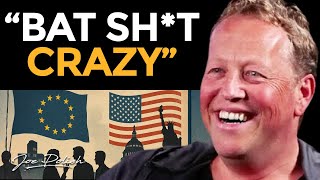
Dutch entrepreneur Eelco de Boer explains how Europeans view America: they see openness and entrepreneurial intensity, but also question the relentless pace. He built businesses by importing American direct-response marketing to Europe, then designed his life around freedom instead of growth for growth's sake.
Chapters
I actually think in most countries that I have, almost all countries that I have gone to, and I've gone to quite a few, the people just seem genuinely great and nice almost everywhere.
Yeah.
It's just a handful of just the propaganda on the news and a few power hungry corrupt individuals that create a branding for a particular country that has very little to do with its people.
So I think when you look at entrepreneurs, because my peer group is entrepreneurs, I think there's a group who really think, yeah, batshit crazy over here. And there's a group that's like, wow, it's super inspiring what's happening right now. Because, like the White House now, like, it's really entrepreneurial right now, which for a lot of entrepreneurs is very inspiring. So if you look at the entrepreneurs, I really feel that, yeah, inspiring or batshit crazy. And if you look at like the regular folks, and this is what I've been hearing for like 20 years, and I think it's so not true. If you ask a Dutch person or you talk about us, about Americans, what they oftentimes say is that, oh, they're kind, but they're fake. Which in my belief is so not true. I have the opposite experience for 20 years now. I think Americans are very open and they ask an open question. Even like when you meet somebody, it's like, hey, how are you doing? Like, in the Netherlands, you would never ask them like, hey, hut it. How are you doing?
So all the way from Amsterdam. Elko Deboer is a visionary entrepreneur from Amsterdam who has been transforming the online business landscape since 1999. A pioneer in the SaaS space and a mentor to thousands across Europe, Elko is known for helping entrepreneurs design businesses that align with their lifestyle and values. His work centers around one idea. Freedom. Whether it's time, financial independence, or personal fulfillment, Elko believes that business should serve life, not the other way around. He's also the founder of Bar Raisers, a cross continental entrepreneurial network connecting innovators and Amsterdam, Europe and the usa. In this conversation, we'll explore how Elko views America through the lens of a global entrepreneur. What does the world think of American business, branding and culture today? Is the US Still a symbol of aspiration or has the perception shifted with his international perspective? Elko will help us unpack how America is seen by those shaping the future of business from abroad. So please help me welcome my good friend, Elko DeBower. What is up?
What is up? Thank you.
You know. Yeah, because you're one of the most successful entrepreneurs in, like, the world that we operate in in your country.
I'm trying it.
Yeah. Yeah. And I was like, you know, we can talk about all kinds of business stuff, which we will. I'll also leave a few minutes for you guys to ask some questions for him. But I wanted to. I made a list of questions, and they're no particular order, but I just wanted to, you know, get your. Your. Your sense of it. So let's first start with it. Just describe to everyone kind of what you do and how you do it.
Yeah. So what I would say is that I'm. I'm a mentor for entrepreneurs. I always see that, and I think a lot of us can relate is that we all start our business for one reason, and that is freedom. And then a couple years in, we're like, hey, where's the freedom?
Yeah.
And I really am passionate about helping entrepreneurs claiming back their freedom and. And adjusting the business towards their lifestyle instead of adjusting their lifestyle towards their business.
Yeah. So there's different types of freedom. There's financial freedom, there's time freedom. There's relationship freedom. What does freedom mean to you?
Really being able to do who you are.
Do who you are.
Yeah.
Okay.
At the last Genius Network meeting, I don't know who said it, but somebody said, if you don't know who you are, you become what you do. And I think a lot of people, they become what they do.
Yes.
And what I'm passionate about is helping entrepreneurs really going back to center and seeing who they truly are and figuring out who they truly are and then adjust the business towards them.
Have you ever read the book the Culture Code, which I know Michael Fishman's a big fan of?
No.
Yeah, it's. What's the author's name? Raphael.
Clotaire Rapide.
Okay, I really had that one. Right. So it's a great book. And one of the things he talks about, the codes, and there's another book called the Culture Codes, different author. Where when you ask someone in America, what do you do? What they're actually responding with is who they are. There's such an identity with what we do with who we are, but it's different in other parts of the world. So how many different companies do you have or have equity in right now?
4. 4.
Okay, so here's the question. So as a European entrepreneur and global thinker, how do you personally you view America right now?
I love America. The first time I got into America was 2005. I went to New York. I ran the New York Marathon with my father, and I got in my hotel room and I put on the TV and there was a person, you know the guy, and he was doing infomercial. Right. And in my life I've never seen an infomercial. So in the Netherlands, there's no infomercial. Doesn't exist. Direct marketing doesn't exist. Like direct response marketing. Like a physical letter in the mail. In my life I've never had one.
Wow. Wow.
Which is like a huge opportunity for everybody in Europe to use direct response marketing. So the difference between Europe and for me, I'm from Netherlands, so I know about the Netherlands, is that in the US to really stand out, you really gotta be great. You gotta be great. If you're average or okay or just good, forget about it. In the Netherlands, if you just wave your hands, people see you. So if you do something right, people notice and then you can do business.
So, God, I could get so much more attention there than here. I'm getting ideas.
I mean, you already are, but you would be such an anomaly in the Netherlands. It would be interesting.
Well, I'm going to come visit you in a few months. So this is going to be good. It's going to be good.
Wow. Okay.
So when you saw that, then what did you do with it? You just went back and said, I'm going to. Because honestly, I think what people do is they notice opportunities from one place that's missing in another and just say, let's take that model or that strategy.
Yeah. So 2005 for me was really a pivotal moment. I really got introduced to USA and I saw what was happening, especially in the Internet marketing community. So I learned about you and about Dean and about like all the guys who started the Internet marketing community. And I started selling in 2005 ebooks in the Netherlands. I was the second person in the Netherlands who started selling ebooks. And at that time, everybody was trying to convince me, like, nobody's ever going to pay for like a PDF document and stuff like that.
And this is in 2005.
This 2005. And then I was like, oh, I need payments for my, you know, to automate my ebook sales. So we created a system which is comparable to ClickBank and which is called PayPro. And we still own PayPro. It's 20 years later now. So we created PayPro. Then I needed to have an autoresponder and all those things. They never existed in the Netherlands and we couldn't use the American services. So I started Enormous, which is an email marketing company where you can do autoresponder. Service. And I sold that like two years ago, but it's still going strong. So basically what I've been doing in 2005, in the first couple of years, really looking at what's happening in the us what's working and what do we need in the Netherlands, and then just build it. And that's been the first five years of my career. And it's been very like those five years were very, very important for where I'm at right now.
Gotcha. Now you've become good friends with Dean Jackson. He's even going to be doing another breakthrough blueprint. You guys do stuff together and everything. And Dean. I mean, most of you know who Dean is, but he, you know, he was doing. Selling his ebook Stop youp divorce back in 1997. So he'd been doing it for. So it takes a while for. But you're the one that brought that stuff to that country, sort of.
I mean, if it's not that, if I wouldn't have done it, it wouldn't exist. Yeah. But in the first, like 10 years, from 2005 up until 2015, there was no competition.
Wow.
I mean, maybe a few people who try some stuff, but. And now it's a big, big market.
Did that help you or did you. Did you kind of become complacent too?
Both.
Okay.
Both. So one of my frustrations is that I'm a big fish in a small pond in the Netherlands, but outside of Genius Network, nobody knows me outside of the Netherlands and outside of Genius Network. And I've never really went all in, like, globally because it's so easy in the Netherlands, and I have a great business and it's, it's. And over here, I need to really start from scratch, which is also very exciting. And I'm excited about that. And that's my new next goal.
Yeah.
But yes, it's you. You can become complacent.
So your view of America in the last five to 10 years, is it gotten better? Has it changed?
I always love America, but I think so. I remember 20 years ago when I went to New York and when I figured out about the us US was really like something to be proud of as well. How do I say this? We perceive us as something really powerful and exciting and inspiring. But that whole idea changed a lot, obviously, since the last 10 years.
Ish. Yeah. A lot of politics and stuff.
Yes. And. But for me, personally, I love it.
Yeah. Well, you know, here's the thing. I actually think in most countries that I have almost all countries that I have gone to, and I've gone to quite a few. The people just seem genuinely great and nice almost everywhere. Yeah, it's. It's just a handful of just the propaganda shit on the news and a few power hungry corrupt individuals that create a branding for a particular country that has very little to do with its people. Yeah. You know, I mean, there's. There's people that are rotten people and people that certainly, you know, are the opposite of my book. You know, what's in it for them? They're there. All they care about is themselves. There's all that sort of stuff, but it's, it's not most people. And I think people get really skewed opinions of. I mean, you know, I've lived in America my whole life. I travel a lot of place. People are cool, people are nice, you know, so it's unfortunate when an entire country gets branded a particular way and then people think that's how the people are. Yeah, yeah. Outside of you, how do people in the Netherlands or in Europe do you think, view America right now? Because you do business with a lot of people.
Yeah, it's just not a black and white. Like, there's people who love it and people don't like it and there's a lot of in the middle who people don't really know. So it's. Yeah, it's just not that black and white. So I can't say, like, oh, the people in the Netherlands, they think about the US like this.
Well, I was hoping we could get some sound bites so you could be the representative for all of Europe.
I know, yeah.
Yeah.
I'm really careful about the words that I use, so. Okay, so full disclosure. I woke up this morning and I check. I got a message from Eunice and she. Was this the correct bio for your interview today? I was like, interview today? I don't know about interview today. And then I saw that, yeah, Joe wants to talk about Europe and the US and like, I might be the least. Yeah. Because I, for me, I really have this intention of or idea of. I don't know. Yeah, I have ideas and I know, I'm certain that I have certain beliefs, but I just don't know. I just don't know about this whole thing that's happening in the world right now. And I like to look at it that way again. Like, I have a lot of ideas about how the world is, but I'm not. Let me put it this way, I'm not sure.
Yeah.
And I like to stay there. I think that's A safe place. Because oftentimes I really. I think it's Mark Twain who has the quote, and it's in the big short, the movie. It is not what we don't know that hurts us. It's what we do know that hurts us. That just ain't so right. We're so convinced about certain things, but we might be wrong. So I try not to be so, so convinced about certain things, and especially about geopolitics and all that stuff, because I'm not sure.
Yeah, that's a good philosophy. Same here. Same here. I mean, there's stuff that we can draw. And I always come at things from a collaborative point of view, and I just know there's a lot of people that don't, and they're very competitive. And so I'm always, you know, I first assume, how do we work together? Don't try to increase the slice of the pie, try to increase the pie. Whereas some people, they're like, no, I'm not going to increase any. I want the whole pie or I want my slice to be the biggest. That sort of thing. So what can we take from what you're doing in Amsterdam and other places you operate that is not being done well in the U.S. hey, I hope you're enjoying this video. And I want to let you know that I have a new book that's come out, and if you'd like to get it absolutely free, there's a link below in the description, or you can wait till the end of this video or you can Simply go to joesfreebook.com and you can get a copy there.
Yeah. Again, it's not a black and white. Like, it's not that we are completely different. Like, it's. There's so many different. But I think what I am able to bring, and also a lot of Europeans could potentially bring, is maybe a bit more balanced.
Like work, you mean?
Yeah.
Okay.
I love the talk from Benjamin about scaling and then amazing question from you, Jim, about scaling your family or scaling your personal life. And I really feel that a lot of entrepreneurs also in Genius Network, obviously, because we're all successful here and we all make a lot of money, but are we also really successful in our personal life? Do we have really the life that we really want to live? Do we spend a lot of time with ourselves, with our family, with our friends? So I do think that prioritizing the most important thing make the most important thing the most important thing. I think that's super important. And hopefully I can bring that a little Bit.
Yeah. Great. All right, so I'm going to go through some other questions there. So already asked you. How do peers and business leaders in Europe talk about America? What comes up most often when people talk about America? Do they talk about innovation, leadership, decline, chaos? I mean, what are some of the things that.
I mean, what do you think that usual thing is that a European person would say about Americans?
You know? Well, it depends on if they're watching the news or not. It depends on if they're, like, in your world. I don't think you're glued to the news. So it's like the big reason you're like, I don't know, because you're kind of in your business.
No, actually, I know a lot about American politics, and I follow it a lot.
Okay.
And. But I'm also very aware I need to follow it less.
Well, here's the interesting thing about watching the news, and I'm surprised with people that really, I think, would know. There are some very famous authors that write books that millions of people read that are so propagandized. My perspective, but they're just propagandized, you know, whatever. And intelligent people that believe absolute lies. And so part of it is, what do I think? I mean, if I knew, I wouldn't ask you that question. Believe me, I'm not trying to get you. I don't try to do gotcha questions. I mean, I'm making a joke, like, I'm gonna get it out of you, so I'm not trying. Yeah, I don't do that stuff. At least I don't think I do. You know, the thing is, it depends on what their focus is, what their perspective is. And I think social media has become a giant propaganda machine.
Yeah. So I think when you look at entrepreneurs, because my peer group is entrepreneurs, I think there's a group who really think, yeah, it's batshit crazy over here. And there's a group that's like, wow, it's super inspiring what's happening right now. Because, like, the White House now, like, it's really entrepreneurial right now, which for a lot of entrepreneurs is very inspiring. So if you look at the entrepreneurs, I really feel that. Yeah, inspiring or batshit crazy. And if you look at, like, the regular folks, and this is what I've been hearing for, like, 20 years, and I think it's so not true. If you ask a Dutch person or you talk about us, about Americans, what they oftentimes say is that, oh, they're kind, but they're fake. Which in my Belief is so not true. I have the opposite experience for 20 years now. I think Americans are very open, and they ask an open question. Even like, when you meet somebody, it's like, hey, how are you doing? Like, in the Netherlands, you would never ask them, like, hey, Hujedat, how are you doing?
Yeah, that's how you say it.
That's how you say it, boy.
Before I come over there, you gotta teach me all the dirty words and all this stuff, the important things, the essentials, you know? So you wouldn't ask someone how their day is or how they're doing?
Not really. It's like, hey or hello.
So how do people normally greet.
Yeah, hey, hello. But over here, it's like an open question. How are you doing? Yeah, and. Yeah. And then the Dutch people. There's a God. That's so fake. They don't mean it. I was like, well, it is a. I mean, the opener is already amazing. I think I have so many great contacts in the US Simply because of that question. You're in an elevator, like, hey, how you doing? Well, pretty good. Like, it's a conversation starter. Okay? And for us, it's closed.
So one of the things I like doing, especially in Las Vegas late at night, is if you're in an elevator and the door closes and you're there with a group of people and, you know, half of them are licking up, you just turn around and you just say, can I ask you guys a personal question? And they'll be like, have you accepted Jesus Christ as your savior? Sheree can attest to this. I do that. I do that. And it's the best. Because they can't escape. They don't know what to do. But if you said that over there, what. How do you think people would respond?
Let's try. Let's try.
We will.
Yeah, we will.
We're going to be there. Yeah. I'm so curious to see how this goes down, but it's a tone of voice. You got to. It's not even what you say. It's how you say it. Like, you know, because you can. What I think is really funny about people getting offended. Almost everyone that I know in a safe place at some point has told a racist joke. Right? There's a difference between telling a racial joke and being a racist. But then there were. People just don't even talk at all. Because. Don't even. But when humans think the thoughts. Human think the thoughts. The question is, how do they express what they think and how they say it? And so tone of Voice and communication. So is communication. How many languages do you speak?
I speak Dutch, I speak Frisian, which is in the Netherlands. We have a province and it has a certain other language. And I grew up there. And then English and then a little bit German, French, Spanish.
Okay.
But I just thought of something that. I haven't thought about this for, like 15 years. First time was 2005. I go to the US 2007 was the first time I attended a seminar in the US and we arrived in Los Angeles and we were in Santa Monica and we were on the beach and it was a beautiful day, and so we looked at the water and then there was a guy who was standing next to us and he was talking about, like, that there was no waves. And it almost never happens that there's no waves in la. And we start talking with him and again, like, how you doing? Like, it's an open question. So we got connected with him and then he took us to lunch and they had an amazing conversation and it was a really great connection. And this is something very special about the us. People are very, very open. And this. What? I'm just explaining this story. It just really doesn't happen that often in Holland because you just don't really do that. You're on your own a bit. And I love the Netherlands. I love Holland. Do you know the difference between the Netherlands and Holland? Tell me there's no difference.
I didn't know if this is a joke or.
First couple of years, I thought you were thinking that I was living in Denmark. You were so confused.
Yeah, yeah, yeah. I still am.
Yeah.
I'll just. I'll just shake my head and act like I am.
You're just typical American guy who knows everything about America. Yeah.
No, the funniest thing is because I have a group called Genius Network, people actually think I have any level of intelligence. The only, like, I've expansive world knowledge I don't like. You know, I always would say with Gary Halbert, when God was doling out brains, I got 98% of my brain's on how to design a marketing campaign. The other 2% on how to run the rest of my life. So I'm. Yeah, there's a very limited amount of.
But again, disclaimer. Because I sort of generalize now. The Netherlands, like, oh, we don't know. It's not like. It's also not that black and white. But overall, I feel people in America are more open. That's my experience.
Well, because drugs and prostitution and God knows what else is Legal there. Is this a better place to live there because of all the drugs and the hookers and all the stuff you have access to?
I think so. And no, I'll tell you why. Because it's legalized.
Yeah.
And you don't need to do, like, crazy shit to get in.
Yeah.
Like, I mean, the drug problem in the US is incomparable to what happens in the Netherlands. Like, it's, it's not a huge problem here.
Say like so. Of course, what I just said. I'm joking, right? To a degree. And at the same time, you're right. Like, sex workers are safer when you make it.
Totally.
Yeah. You know, it's, it's, it's, it's wild where the drugs in America that, you know, we're the highest incarcerating country in the world. 25% of the world's prisoners are in the United States. You can't punish pain out of people. There's so much depression, so much suicide, so much anxiety addiction as a result of some of these laws. Because you have a punitive group treating mental illness and depression and loneliness and things like that, which often manifests themselves in, you know, drugs and alcohol and behaviors and things like that. So the drugs that save people's lives are illegal. The drugs that kill people are legal in America, mostly. It's pretty crazy. So. Yeah. So I'm saying this jokingly, however. Yeah, I just think. Yeah, it's.
So I live, I live in the center. Center of Amsterdam and it's close to the red light district and all the things.
And.
Like, almost again, generalizing, but almost everybody who goes to Amsterdam, they want to experience all the stuff that Amsterdam has to offer. I in my life have never taken drugs. I've never smoked weed or I've never done that stuff. A lot of my friends, they'd never done it. But a lot of people who come there, they do it because it's illegal in their country. So they want to do it. And so. But if you legalize it, this is my opinion. I haven't thought this like through, like, extremely. But if you legalize it, you know, it's not that exciting anymore.
Yeah, exactly.
Yeah.
No, it's the whole Adam and Eve principle, which applies to marketing too. You can have an apple from any tree except that one. And it's human nature. I want what I can't have. Yeah, it's pretty wild.
Yeah.
You ever thought about moving here and having a place here? I like in Arizona, right down the street.
We just.
Yeah, okay, good.
No. So in the Last couple of months, I really started to feel and think and know that I live on the world. And I have this vision for me and my family that we're traveling more. Like, we travel a lot already, but we're traveling more and more. We're doing great things, really living my purpose, having my family around. That's something. That's my big vision for my family and for me. And what I really like is to think without construct. And so I don't really say that I. So when I go to Amsterdam now, I say I go to Amsterdam. I'm not saying I'm going back home. So I feel like the world is my home. I like that. Yeah. And it's. It makes you think differently. So tomorrow morning, I fly to Miami, and then my wife is there now with my kids. And then we drive to New York. I have an event next week in. In New York, do a road trip, like, five or six days. And we're gonna meet. We're going to Dean, probably going to John Ratliff on the way there. And then we'll be in the Hamptons. We have this amazing home that we rented. And my family is there, my friends will be there, my team will be there. And we're just gonna be there for, like, three, four days. And it's because the mindset is like, the world is my home, so you can basically live anywhere. And I really like to live. As I thought this morning, like, the title of a new book would be Carry On, Carry On Lifestyle. Like, I like to travel with. Just only Carry on. And it's just a mindset. Like, don't have too many possessions.
Right.
Be clean, be clear, and be able to really live the life that you want to live instead of, like, having all this construct and being confined to whatever you thought before. So. Yeah.
What do you like spending money on? Things that are, like, fun or, like, do you have. Do you have a bunch of shoes? What is it that you spend money on?
No, I own almost nothing, so I own a bunch of these shirts and a bunch of these.
Yeah, you kind of have your uniform thing.
Totally, totally.
Yeah.
It was funny. I was recording a video last week, and I had a slide, and there was a picture of me when we were on necker. And I was. You know, I had this really good picture with me and Richard. Like, it was just random moment that. Oh, picture. And we both keep our glass like this. Like we're best friends. And I was wearing, literally, this shirt in white. And while I was recording a video, I was wearing this shirt in white, it's like, wow, this is 11 years ago and nothing changed.
That is hysterical.
It is a fresh new shirt, but it's the same shirt. So this is. This is €10. If you buy two, it's 15. So I got this shoes. I have journals. I have maybe 20 books. I used to have like 2,000 books. I now have 20 books. I do have a few watches that I would never buy again if I wouldn't have them anymore. I got my sunglasses and that's about it.
Wow. Yeah, that's awesome. Yeah, there's a lot less to attend to when you don't own a bunch of stuff.
Yeah, yeah.
Everything that you own could own you.
So true.
So you sent me a text the other day about your son in Sugar. Can you tell that story? We actually have that video if we want to show it.
Oh, yeah, of course.
Yeah.
So my son, I have three children. My daughter is 12. Also have like an amazing full circle moment with her. The first time I met Joe was in 2013, and I knew of Joe, but we didn't know each other. And I got the opportunity to come to Necker island and that's where I met Joe. And when I got to Necker Island, I was a fresh father. Six weeks. My daughter was six weeks old. And I had this expectation of fatherhood that, you know, once she's there, it'll be just rainbows, unicorns, amazing all the time. And I noticed that my connection, I was judging myself of not feeling my daughter all the time. And I can recall that I went to my office in the first couple of weeks and I didn't say bye to my daughter. My wife was like, hey, you're not gonna say bye. I was like, oh, fuck, I forgot, like, I actually have a daughter. And so I was judgmental towards my role as a father. In the first couple of weeks, got to Necker and Do you remember Benjamin Richter? Yes. Yeah. And so we got on the boat going to Necker and he's like this extra extrovert guy handing out shots, all the things. And I, at that time, I just wasn't feeling great because I was judgmental towards me being. Not being the greatest father that I thought I could, could be. And so he was handing out shots, being super extroverted, like this alpha male guy. And I was like, nah, I'm not sure if I like this guy. And he's a character. He is a character. And then the day after, in the morning with the first session in the temple, and the temple is the Place on Necker where the elders come, like used to come. Desmond Tutu, Kofi Nam, Olsen Mandela, those guys. And we started discussing. And the first discussion was about fatherhood. The first discussion, and I thought, this will be a week about business, marketing, sales skill, whatever it is. And the first discussion was about fatherhood. So Jannik started to share about him being a father and then Benjamin started to share. I don't know if you can remember, but he's this passionate guy and he started sharing about how amazing he is as a father.
I do remember that. Yeah.
And I was like, in one way it was inspiring and the other way it was almost like frustrating. Almost like, okay, he has this relationship with his children that I might not have. And I was like, he might be full of shit because, you know, this guy is like out there. And then John, John Ratliff started sharing about Benjamin, how he is as a father. And John got emotional. And there's something really powerful for us men to be with other powerful men who are also really much in tune with their feelings, their emotion, their intuition.
They're trying to get Garen to really get into that sort of space.
Yeah, you're right.
Yeah.
And he needs to come out of.
The shell of it.
Yeah, exactly. So I was so in my emotion, but now I'm in my head. Thank you, Joe.
I'm just testing, I'm testing the resilience of your connected. So John. Yeah, but you're right though.
So they're sharing and I was like, wow. And I really, really felt it for the first time. I really felt me being a father. And it was such a powerful moment. And I remember going back to my room and really got connected so deeply with my daughter and it was such a, such a powerful moment. And that was because of Necker Island. That was because of the invitation. How did I get here? You were asking me a question.
How about your son?
Oh, yes. So this was 12 years ago. 12 years ago was the first time on Necker Island I really got connected on a deeper level with my daughter. And a couple weeks ago I was in Necker island with my daughter. So that was amazing. Full circle moment. And she had the time of her life and she's selling bracelets. And you know, obviously, like if you're selling bracelets to high level entrepreneurs, you get paid a lot of money. So that was really cool. And we stayed at the Mosquito at John's place. I stayed there for like a week. And John took us in, my wife and my daughter. And it was, it was a Magical full circle moment. And so that was amazing. But Otis, my middle son. So I have two boys, seven, nine. My daughter is 12. He's a dropout already. He's nine, and he's a dropout already because he's like, very active. I'm not going to put a label on him, but he's very active and has a lot of unrest and the schools can't take him anymore. So we had an amazing trip with a family and I decided to do a one on one week with him. And I asked you guys. Okay, if Otis will be here. And one of his challenges was that he had a. He was just not connected with food. And it's very hard, obviously, as a parent to see that because I know what's right and what's wrong and. Yeah. So anyway, I just felt compelled to bring him to Genius. And I also noticed that he started to sort of get out of shape. Like he had. He had trouble walking for like 30 minutes or trouble getting up, like having fun and stuff like that. So, yeah, very hard to see as a parent. And so we go to Genius and he has the time of his life because. And my daughter Danny experienced the same thing on Necker. Like, if you're in a group like this and you see a child, you guys, you really see the person and you really see them, and that's not common in like normal places. And so for my children to really be seen is really, really powerful. Obviously we see them, but having other powerful people and amazing people see them is super, super amazing. So he had conversations with like a lot of people here. He had fun with you. He went to have lunch with Andrew, he had a conversation with Whitney, and then he noticed Joel and he was like, who is this guy? And we started sharing. And I'm not sure if Joel shared it or somebody else or I shared it. But then the story was, Joel, he hasn't had sugar for like 40 years. Most of us know the story of Joel not having had sugar for like 40 years. And you look at Joel and that's the result of not having had sugar for 40 years. And the day after we had breakfast and he decided to like eat the proteins and skip the sugars. I was like, oh, this is interesting, but this probably gonna take like two hours. And we're back by. And the day after, same thing. Day after, same thing. And now it's been six or seven weeks and he haven't had sugar maybe a little bit here and there, but he's really focused. And for the people who saw him last time, who saw my son last time. So a bunch of people. You have the video, right?
Yeah, yeah. Mike, can you play the video?
So I sent the video to Joe this week and this is. It's a 10 second video, but look at the difference of him now and six or seven weeks ago.
So little, little hinges swing big doors.
Oh, my. And you have no, like the, the impact this has made on him right now. But I, I am certain that in 10 years, we'll look back at this moment and know for a fact that it changed everything.
Yeah.
So thank you.
Of course. I love it. No, that's great. Yeah. So, you know, there's so much to take from that. And in the simplicity of it all, it's just making a decision. How do you decide? Because when it comes to freedom, there's a lot of decision making. There's decision fatigue. I think the reason, you know, to go to, because you have given some. There's some great talks that Elko has given on the membership site on freedom and lifestyle and how he sets things up. So to touch on a couple things just to, you know, bring in some optics. I think you really set things up for success where you have success with like making it simple of what you're going to wear. You try to minimize, I don't know if you do this knowingly now or it's just how you set up. You try to minimize decision fatigue. Whereas I'm a multiplier. I tend to magnify decision fatigue. Right. I can create chaos out of like, where my brain can go. And then once I. And I don't even know that I'm doing it. And then once I'm there, I'm like, okay, how do I unravel this knot that I just tied? And so you, I think, over the years have really learned how to set up a lot of ELF systems. So I'd love for you to talk about how you decide.
I think that's a great question. And so yesterday we had to do an exercise, you know, ELF half and which decisions are you going to make? And I really feel that if you. And again, circling back to where we sort of started. If you truly feel and know who you truly are and can be in tune with that and just sit still for like 20 minutes, 30 minutes, maybe an hour, and make decisions based on. Based on who you truly are versus an inspired version of you or a frustrated version of you or a motivated version of you, just sit still and make decisions from intuition and knowledge instead of inspiration.
And.
Yeah, frustration stuff like that. So really just because we are all where we are right now based on the decisions that we made in the past. And for most of us, it's really amazing. But we also have certain things in our lives like, yeah, man, this really sucks. And also that oftentimes is a result of all the decisions that we made in the past. And so making the right decisions, so crucial. And Keith Cunningham, I think he's one of the greatest business teachers in the world.
Absolutely.
And he has this great quote. He says, like, most problems started off as a good idea. And so really think it through. Like, is this a good idea? Is this serving me really well? Is this something that I truly want? Does it really fit who I truly am? And so, like, even with Genius Network, it's so. I really, really. And I also love the 35k meetings a lot because there's so many new ideas, new perspectives. But even then afterwards, just sit and sit, be still, and really know, really know what, what the right decision is. And if you don't know what the right decision is, just take more time or ask some more questions or whatever. And same thing with Keith Cunningham. He has this whole concept about thinking.
Time and one of the best things that anyone could ever do that hardly anyone does. So true.
Yeah, so true. So take, I mean, we all work like 30, 40, 50, 60, 70 hours a week. Take three times a week for 20 minutes, 20 minutes three times a week, sit down and just think, think for 20 minutes. Ask yourself two or three questions. Buy his book the Road Less Stupid. It has like 200 thinking time questions. I usually don't even use his questions because I got questions like, okay, I want to make a decision based on this and then ask yourself some questions. And after 20 minutes, you know the answer. You know the answer. But we don't think things. Think things through.
Honestly. God. One of the reasons I do some tools here in Genius Network is most people left to their own device. Like, there's all these tools that you can do with thinking time. On the Genius Network membership site, there's several interviews I've done with Keith Cunningham on how to do this. And if you don't plop someone down to do it, most of the time they won't do it. But if you can do it for your, like, you're saying, game changer.
So amazing that Genius Network does that. Strategic Coach does that. But if this is the only place where you think or have like this, like three, four, five minutes to think through a decision, something is wrong.
Yeah.
So just take. Yeah, Go ahead.
Sorry, I didn't mean to interrupt. Like it's just making. Yeah, I know, I'm very hurtful. I'm trying to be super, you know, Europeans, whatever, Holland, Amsterdam, whatever you call this place. So fake Denmark. With. Here's my take on addiction. So not to talk about addiction like heroin addict, alcoholic, drug addict. Just the craving state and being able to sit down and just do nothing for 10 minutes is hard for most people. And I interviewed Pat Carnes on sex addiction probably, I don't know, maybe 15 years ago. I've interviewed him a couple times, but that was I think the first interview that we ever put up online. And I remember like he wrote the very first book on sexual addiction and it was called out of the Shadows. And after online streaming video came onto the scene, there were people that were in their 60s, 70s, 80s, that never showed signs of addiction ever until it was accessible, right? So people's distractibility is based on availability. People's use of substances and behaviors has to do with availability. And that line, when everyone's sick, they no longer call it a disease. And we've tried to normalize a lot of mental and physical illnesses and sickness in disease and dis ease in society because you can't even tell who doesn't have it anymore. And so I think a lot about, well, if you really like yourself and you really honor what you're doing, why would you not want to sit by yourself and just be with yourself and think you don't need to look at a phone? But then I was like, well, I have a hard time doing that. Why? Because we're conditioned with all of these things in our lives that are tied in around technology and devices. You know, I owned a tonal, I own a peloton, you know, and they're actually great. Like I worked out in the. I did literally a leg workout this morning on a frickin tonal, you know, and it was a hard workout in 30 minutes, like because I don't have a lot of time, the meeting to do it. But I wanted to get a workout in because I feel better when I do. And what I been thinking about the last year is like I'm literally working out, looking at a screen. And then you're going to leave your house and you're going to look at a screen. If you're looking at GPS and you're going to look at a screen for text messages and you're going to look at a screen for music. And it's all this interactions of people here on zoom Looking at screens, right? And what happens is, in order to sit and do thinking time, or sit and decide in a space of non distractibility, most people have to go through. My friend Anna Lemke's taught me a lot. You have to go through a dopamine fast. You literally. And it's going to be really uncomfortable. Like you. Because we are conditioned. These are dopamine cash registers. Every time we're looking at something, it's doing something to us biochemically. And then if you're going to go sit somewhere. You know, when I was 10 years old, I remember I would walk around with a BB gun by myself in Alpine, Texas. It was not the best time of my life. But on weekends when I wasn't in school, I would literally walk out of the house and just walk around into the fields. Far away from any, if anyone think if I would have gotten attacked by an animal or attacked by a human or whatever. There was no phone. No one was tracking me. There's no wearables. And it was weird because most kids will never do that again, right? At least maybe once in a while. If they go on.
It would be something special.
Yeah, exactly. And you know, and now my, you know, my freaking car can drive me here from my house. I don't even, you know, it's a self driving, you know, And I sit and think, like, okay, in order for us to have thinking time for your son to quit consuming sugar. And the impact. Well, if everyone here gave themselves an hour of thinking time, 20 minutes, three times a week, and they could get themselves in a state where it was peaceful and productive and engaged, that alone would change everyone's business. Like Ben Hardy talking about scaling, you know, you're not going to scale by changing nothing. You have to actually make decisions that are different. So how to decide is a really important thing. I actually want to get Annie Duke here because she wrote a book called how to Decide.
Okay, great.
And she's the poker player, but.
And Dopamine Nation is an amazing boost.
Yeah, it is. It is. And just know that a lot of the stuff that. The cravings. So when I brought up addiction, most people will not admit it, especially very successful people. When I look at almost strategic coach Tony Robbins events, you know, workaholism, my own, you know, it's like how easy it is to get caught up in achievement. So I guess my question for you is how do you walk away from things that you already know you could be. I mean, you know, how to make money. You're very skilled at Making money. So how do you. What's enough for you in this whole frame of freedom? You know, because you. You've given yourself a lot of play time.
Yeah. So I really feel that the more. The more you adjust the business towards yourself instead of the other way around. You then have superpowers because you feel better. You have more space, more white space, more room for thinking, more creativity. So that becomes a superpower. And I truly feel that we, as entrepreneurs, we shouldn't be caged. We should be free. And the more free that we are, the bigger things that we can accomplish. So for me, I don't see myself as. I wouldn't label myself. I mean, actually I am, but I wouldn't label myself as a lifestyle entrepreneur or somebody who just wants to make some money to travel. I would be bored if I would just travel. I want to create, I want to produce, I want to be prolific. I want to get my ideas outside in the world. I would be miserable making enough money just to travel and that's it. So. But I feel that the more I can adjust the business towards myself and the more I can be myself, the more prolific I can become and the more impact I can make. And so, yeah, okay.
I hope you found that video awesome and useful. So if you want to get a free copy of my book, I want you to click here. And if you want to watch some more videos that will be useful and awesome, click here. Go ahead. You're over here. Do it now. Come on.
Thank you. Watch them.
More from Joe

This FBI Trick Can Command Respect Without Saying a Word ft. JEFFERSON FISHER & CHRIS VOSS

How To Stand Out, Be Different, and Create Raving Fans, Customers, and Employees ft. Jesse Cole



90% Of Businesses Fail In Their First Year, Here's Why! ft. Dr. Benjamin Hard & Dr. Robert Cialdini

The 1 Piece of Business Advice I Got From Elon Musk That Changed Everything Ft. Kamal Ravikant

The 6 Traits You CAN'T Teach in Entrepreneurship ft. Richard Branson & Gino Wickman

The Leg Method: How to Make Your Book into a Million-Dollar Asset ft. Anna David


7 Millionaire Mindset Hacks for Daily Success and Wealth ft. Brian Tracy & Dan Sullivan
