Top Neuroscientist on How To Have a Better Brain Health in 2025 Feat. Dr. Daniel Amen
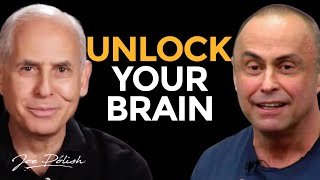
Dr. Daniel Amen uses brain imaging to identify treatable patterns in addiction, aging, and brain injury, advocating diet, supplements, and lifestyle changes. Dr. Ned Hallowell reframes ADD as a trait that can be managed to unlock entrepreneurial strengths through medication, connection, and redirecting attention away from the default mode network.
Chapters
I am so grateful to be here because of course, you know, brains run the world. They run the stock market, the local market, huge corporations, mom and pop shops down the street. Brains run governments, although not that well. Schools. Sexual art program in the Fraser Academy in Vancouver. We teach thousands of kids every year to care about their brains. Children, churches. We have a brain health program in churches around the world. Families. It's my family and you. Yet most people rarely think about their brains, which is a huge mistake, because success in anything you do always starts with a healthy brain. After looking at NOW's 115,000 scans and some of the most interesting people in the world, including Joe, it is very clear to me that when your brain works right, you work right. And when your brain is troubled for whatever reason, a head injury, an infection, mold exposure, you're going to have trouble in your life. With a healthy brain, people are happier, physically healthier because they make better decisions, wealthier because they make better decisions, and, and they're more successful in everything they do. When your brain is not healthy, people are sadder, sicker, poorer, less successful. So your competitive advantage or your disadvantage is the actual physical functioning of your brain. But let's be clear, you're in a war for the health of your brain. Everywhere you go, someone is trying to shove bad food down your throat that will kill you early. The real weapons of mass destruction are processed pesticide sprayed, highly glycemic, low fiber food like substances. The clown and the king have killed more people than ISIS has ever dreamed. And these food companies use neuroscientists. They use tricks to hook your pleasure centers because you know, this woman would never look this way if she ate that. Tech companies create addictive gadgets that hook our attention and distract us from our loved ones. New study from Microsoft. The attention span in humans is now 8 seconds. A goldfish is 9. This is evolution going the wrong way. Study from the Harvard Business Review said that only 10% of us are high in both focus and energy, the two things that drive success. 90% of people are without one or the other. Which is why in your bag I put our Focus and Energy supplement. This is the one I hate now that I'm 61, because it's very clear to me after doing a study with 8,000 people, your brain gets less and less active as you age. Typical 55 year old brain with lots of wrinkles. Worse at 82. But here's a friend of mine who actually lives in Phoenix. At 82, she has a stunningly beautiful brain. Brain aging is Much more about your habits than your age. So here's the program. This is the $250,000 idea. And for you in this room, it's way more than that. If you pay attention to me, it's, you're not stuck with the brain you have. You can make it better. I can prove it. Here's the plan we use at Amen clinics. First, you gotta look at your brain. So baseline brain health assessments. We do a study called SPECT that looks at blood flow and activity. Here's a healthy scan. Compared to someone with accelerated aging, someone who has Alzheimer's disease, which we can tell decades before you have any symptoms, someone with a brain injury, someone whose brain's working too hard, such as people who have obsessive compulsive disorder and people who have underactive brains. This one drank way too much. I think of imaging like a map. You know, a picture's worth a thousand words, but a map is worth a thousand pictures. A map tells you where you are and gives you direction on how to get to where you want to go. Without a map, you don't know and you're lost. And it can cost you your life. The second thing we do is we don't want you to have normal. Anything normal is sick. 51% of the US population, at some point in their life will have a mental illness. And if you're fortunate enough to live until you're 85, 50% of you will be diagnosed with Alzheimer's disease. That's normal. And I don't want any part of it. And Genius Network people don't either. So I want to know your important numbers. And you got a copy of my new book, Change youe Brain, Change youe Life. This program is in there in chapter 19, in detail. The third part is your brain. You know, people go, oh, take my supplement, because it'll give you a great brain. And it has one thing in it, and that just doesn't work. Why? Because the brain does not get sick in one way, and it gets sick in many different ways. And that's exactly how we get it better. So we take a multiple mechanism approach, from omega 3 fatty acids for inflammation, ginkgo for blood flow, and so on. And the last thing, and I'm really proud of this, in 2005, I wrote a book, and I got all sorts of grief for it. It was called Preventing Alzheimer's. You can't do that. But since then, there have been programs at UCLA and Johns Hopkins called Preventing Alzheimer's. I love that. Here's the short course. You want to prevent Alzheimer's disease in yourself or your family, you have to prevent or treat all of the risk factors that are associated with it. And if you go after obesity, diabetes, heart disease, hormone levels that are not optimized, and all the rest of these, this is how you prevent it. So let me show you how this works. Joe's one of my favorite people. I love Joe having a problem. I called Joe. Having a great day. I'll call Joe. And Joe called me. He's like, my brain's not right. And this was about five years ago, and he got hurt. He had a head injury. Most people don't know that head injuries are a major cause of addictions and psychiatric problems. And nobody knows because psychiatrists are the only medical specialists that never look at the organ they treat. How crazy is that? He came, his brain was troubled, and he just. What I love about Joe is he just did everything I said. Imagine if you just did everything he said, where your business would be. And in seven months, his brain is better. Five years later, it's freaking normal. It's healthier than his age. Some of you who've come to my clinic, I'll tell you, your brain looks older than you are, and his looks younger than he is. I love that for him. We also did the world's largest study on active and retired NFL players at a time when the NFL was lying that they had a problem. And we demonstrated high levels of damage in 96% of the players that we study. It's horrible. And, oh, by the way, if you played football at any level, 80% of you have brain damage. But my job, my love, is never to tell you you have a bad brain. I'm like the eternal optimist. Well, can we make bad brains better? And in fact, on this program, 80% of our NFL players showed improvement in memory, attention, mood and sleep. You are not stuck with the brain you have. You can make it better. Here's one of our players, Freddie Dreyer, who said, I replaced a part of my mind that had been lost. My energy and focus are much better. Duvall Love, played 20 years, is an offensive guard. His brain just looked awful. Year later, it's much better. Oh, by the way, lost 110 pounds. I was pretty excited for him. Now he has a master's degree. He thinks he's really smart. It's really awesome. And so November 3rd, Change youe Brain, Change youe Life, which is in 26 countries. And I'm so proud of this book, but it's old. And so I had to revise it, and I expanded it, and I put all of my best work into this book. So I'm very excited. I called Joe up. I said, joe, how do we get this to the world? He said, well, I have a forum, the Genius crowdsource Blueprint. And I. I'm a good student. I just. I do what he tells me to do. So we have a name. I changed my brain and changed my life to win the prize, best video or essay on how you used my work to help your brain and your life. Our goal is a thousand stories, a million more books sold, and the prize is we will pay for you to come to Southern California, get a full evaluation that we pay for. I'll actually do it because I don't do many of them anymore. And we'll give you a year's worth of supplements. And the deadline is February 14, because that's love My Brain day. And the first day, we got 60 entries, so we now have about two. It's been out for, like, four days. So one of them, Steve, writes my rental car confirmation number. And I'm thinking, why do I want to know this? The reason I know is that I'm supernaturally able to remember things that I would never have been able to. And they don't go away. My productivity and creativity is off the charts. I'm able to connect with my wife in ways I've never experienced. And the sexual intimacy is another area of peak performance. I love that. But my favorite one so far is Cheryl. My brain was broken because of your work. I went from being homeless and hopeless without the custody of my three children to being an RN on a busy surgical trauma unit in a stable relationship. But most importantly, I'm able to be a good mother to my children. You are not stuck with the brain you have. You can make it better. I can prove it.
Hey, I hope you're enjoying this video. And I want to let you know that I have a new book that's come out, and if you'd like to get it absolutely free, there's a link below in the description. Or you can wait till the end of this video, or you can Simply go to joesfreebook.com and you can get a copy there.
I am so excited to be here because what I get to do is talk about my obsession, which has been the brain. But I want to start with this slide. I saw this recently. If you knew a train was going to hit you, would you get out of the way? So that's Going to become very important. It's 1991. I'm a psychiatrist, been a psychiatrist for about 10 years. And I order my first brain SPECT study. SPECT looks at blood flow and activity. It looks at how your brain works. It's different than a CAT scan or an mri. Those are anatomy studies. So we're looking at function. So I'm the director of a dual diagnosis unit, a psychiatric hospital unit that takes care of drug addicts. So this is a healthy brain. This is an addicted brain. And right away, you realize why you shouldn't do drugs. It's because they damage your brain. I got so excited about this technology that I scanned everybody I knew, including myself. And when I scanned myself, this is my first scan. I was horrified. I'm like, why is it so bumpy? A healthy brain is fat and beautiful and smooth and even. And I was horrified because I don't drink. I've never used drugs. But I had meningitis when I was in the army when I was 18. And I had a lot of bad brain habits. And what I'm excited about, what our work is all about, 20 years later, my brain is younger, and it doesn't usually work that way. You literally can change your brain, and when you do, you change your life. Imaging changed everything for my children because, in fact, if you dated one of my daughters for more than four months, you had to come to the clinic and get a scan. It's actually meet the parents. But worse, imaging changed my love life. After being in a long marriage that I wasn't very happy with, I was determined the next woman I would give my heart to, I would first see her brain. And so I got very attached to Tana. And two weeks later, she's in the clinic, she's getting scanned. Her brain is beautiful. Now she gets to stay. Imaging literally changed absolutely everything I do with my own patients. So the current psychiatric model is you tell the doctor your symptoms, he gives you a diagnosis that actually is just a regurgitation of your symptoms, and then he gives you a medicine to attack the symptoms. So if you're depressed, you get a depression diagnosis, and you get an antidepressant. If you're anxious, you'll get an anxiety disorder. Diagnosis and medicine for that. My favorite to explain this is if you explode intermittently, if you have temper problems, they'll actually give you a diagnosis called intermittent explosive disorder. So think about that ied, and then they don't know what to do. And did you know outcomes in psychiatry happen to be no better than they were in the 1950s. So it's psychiatry's dirty little secret. So when I started looking at people's brains, I'm like, oh, my goodness. Scans taught me that depression wasn't one thing. In fact, it's a symptom, that there were many different causes. In fact, giving someone the diagnosis of depression was exactly like giving them the diagnosis of chest pain. And doctors don't give people the diagnosis of chest pain because it doesn't tell you what causes it or what to do for it. And so I've written a number of books. One, my latest one, healing add, where I talk about seven different types of add. Don't put everybody on a stimulant, because you can make some people much better and a whole bunch of other people dramatically worse. Imaging helped me see the underlying biology behind the symptoms. So was your brain overactive? Was it underactive? Was it toxic, either from substance abuse or alcoholism or an environmental toxin like mold? Or did you have a traumatic brain injury? Traumatic brain injuries are one of the major causes of psychiatric illness. But of course, nobody knows that because nobody's looking at the brains of their patients on a regular basis. Imaging. And this was the beautiful part. This is the heart part of imaging. It decreased stigma.
Hey, I hope you're enjoying this video. And I want to let you know that I have a new book that's come out, and if you'd like to get it absolutely free, there's a link below in the description, or you can wait till the end of this video, or you can Simply go to joe'sfreebook.com and you can get a copy there.
I love that because people saw their problems as medical and not moral. It decreased shame, decreased guilt. And the other part I truly loved is the families then got on board because it increased forgiveness and compassion. We have nothing else in psychiatry that's that powerful or that immediate. Imaging actually completely changes the discussion around mental health. Nobody wants to see a psychiatrist. I mean, how weird is that? I decided I want to be a psychiatrist, and now nobody wants to talk to me. You're not going to shrink me. No one wants to be labeled as abnormal or defective, but all of us want better brains. So what if mental health was really all about brain health? Imaging changed everything about my health. Oh, my goodness. There are 200 studies now that say as your weight goes up, the actual physical size and function of your brain goes down. Oh, my God. That should scare the fat off anyone. This is the biggest brain drain in the history of the United States. Two thirds of Us are overweight. Can you imagine the neurons and the IQ points we're losing? In fact, a couple of years ago I coined this term called the dinosaur syndrome. Big body, little tiny brain, you're going to become extinct. Now I know that's rude, but it's true. And when I read the first study, I lost 30 pounds because I don't want to be a dinosaur. Imaging can change the Alzheimer's epidemic. Did you know Alzheimer's disease is expected to triple in the next 25 years? There's no cure for it on the horizon. If you're fortunate enough to live until you're 85, you have a 50% risk of being diagnosed with Alzheimer's disease. And the little scary nugget we've learned in the last 10 years, Alzheimer's disease starts in your brain 30 to 50 years before you have any, any symptoms. So if you knew a train was going to hit you, would you get out of the way? This 59 year old woman was diagnosed with Alzheimer's disease. It's a scan on the right, you can see the whole back half of her brain is deteriorating. Likely she had brain changes in her 20s. I think all of us should be scanned by 50 because treatment works when early or late? Early. And how would you ever know if you were vulnerable unless you looked? Imaging changed everything for the NFL. And my problem with the NFL is if you don't admit you have a problem, you can't do anything to solve it. And imaging really broke the NFL's denial. We did the first and largest study on active and retired NFL players and it just changed everything. So our first study on 100 players, the Blue equals damage across their whole brain. And you know, I think most 9 year olds would figure out it's a brain damaging sport. That's not hard. What was really exciting about our work with the NFL was we showed that 80% of our players could rehabilitate their brains on a smart program. Now how exciting is that? You're not stuck with the brain you have. You can make it better. Now I hate this graph because I just turned 60 a couple of weeks ago. But it's really clear based on a study we did with 8,000 people, your brain gets less and less active as you age. So sort of like as your skin falls off your face as you age, the same process is happening in the brain, but it doesn't have to. That's really the exciting. So a typical 82 year old scan on the left, my friend Doris Rapskan on the right, fat, full beautiful for 82. You know, if something happens to Tana, I'm asking her out. So the most exciting thing I'm going to tell you is you can literally change your brain and change your life. But how would you know unless you looked? So my favorite story to illustrate this is my oldest daughter, Brianne. Always easy, always sweet. But the sad truth is I never thought she was very smart. Had to get her tutors, had to work hard, had her tested, and in 10th grade, she fell apart. She got depressed. She came to me one night in tears and she said, dad, I just don't think I can be as smart as my friends. And it broke my heart. Next day, scanned her at the clinic, and I'm like, oh, my God. I cried when I saw this because what it indicates she had really low energy, low blood flow in her brain. I knew how to fix it. I mean, that's really what made me so sad, because I had been fixing people's brains for years. The next day, on just a little tiny bit of targeted medication for her was much better. Three months later, this is a girl who never got one A in her life. The next three months later, straight A's. The next ten years, straight as. So the ultimate question is, which brain do you want? Which brain do you have of these? And how would you ever know unless you looked?
Well, Joe was saying, I have specialized my career in add. Essentially, that means I have been specializing in bringing psychological insight and assistance to entrepreneurs. I think we should rename ADD the Entrepreneur Entrepreneurial Trait. And Dan Sullivan and I got together around this and have been making friends around this notion. Dan has been working with entrepreneurs for 30 years. I've been working with ADD for 30 years. And we discovered we're working with the same people. And I thoroughly abhor the term attention deficit disorder. So I just soon throw that in the dust bin in and rename it the Entrepreneurial Trait. And because I'll bet you 90% of you have it, and it's really because of it that you're achieving in the remarkable and interesting ways that you are. But it also may be holding you back in certain ways. And what I thought I'd do is bring you into what I've learned about the mind of the entrepreneur. Point out the way things ought to go, and then point out some of the most common ways that entrepreneurs sabotage themselves. And I want to begin with a story from ancient Baghdad. One day, a master sends his servant into the marketplace to get some provisions. And while the servant is there, he sees death across the marketplace, and he's captivated by Death. And then Death turns his way and makes a menacing gesture which completely freaks the servant out. And he goes running home as fast as he can run home. And he falls to his knees in front of his master and says, master, please, you've got to let me take your horse. I've got to get out of this area. Let me take your horse. And I'm going to gallop as fast as I possibly can to Samarra, which is 75 miles away. I'm terrified that Death will find me otherwise. And the master says, well, by all means, you feel free to take my horse. You've been a good and loyal servant, of course. Take my horse and come back when Death has moved on. So the servant gallops off to Samarra. But the master is curious, and so he goes to the marketplace to see what he can see. And he looks around, and sure enough, he sees Death. Well, he's brave. And he walks up to Death, says, I understand you saw my servant. And Death says, yes. And the master says, and I understand you made a menacing gesture toward my servant. Why did you do that? And Death said, oh, that was not a menacing gesture. It was simply a gesture of alarm and surprise. I didn't expect to see him here because I have an appointment with him tonight in Samarra. And it is amazing to me how many people I encounter in my life as well as my work, who are galloping as fast as they can in precisely the wrong direction, believing that they're heading toward their salvation, when in fact they're heading toward their destruction. One of the unique opportunities I get is to tell people that that's what they're doing. I often think I'm sort of like the fool in classical drama. You know, kings would hire fools to whisper in their ear the stuff they didn't want to hear. It was a dangerous job because sometimes they'd be put to death for their trouble or they'd be whipped. But I sort of think that's what a psychiatrist, you know, we're paid to whisper insights that maybe someone doesn't want to hear, and then it is up to that person to reverse direction or not. The way the arc, what I call the arc of the entrepreneur, ought to go. If you're not galloping towards Samarra usually begins with some kind of success. Now, it may have happened yesterday, or it may have happened when you were 10 years old on a paper route, or maybe, as in Dan's case, when you were able to wangle the extra cookie out of your aunt. And you felt that thrill of succeeding at bargaining, at selling, at getting a profit that you never thought you could get. And you feel that rush, that excitement, excitement which is so much more than just the cookie or just the fee. The rush of I can make something grow, I can make something happen. And I did it by my wits, I didn't follow some instruction manual. And you get hooked. And then most entrepreneurs, from that success comes a dream. And they imagine a conglomerate, they imagine asteroids, they imagine they dream big. It's in entrepreneurs DNA. They dream very big. And then the next step, which is what separates them from the cynics and the realists, they take it seriously. They say, I'm gonna populate an asteroid, I'm gonna develop a real estate agency for outer space. I'm gonna do these things. They take it seriously, which again, as I say, separates you all from the realists and the cynics. And then they begin what I call the avid and faithful pursuit. Avid and faithful pursuit. Faithful faith is, you know, the assurance of things hoped for and the conviction of things unseen. You all have faith. You may not have religious faith, but I can promise you, you feel the assurance of things hoped for and the conviction of things unseen that also separates you from other people. You begin this avid and faithful pursuit of what many people think are crazy goals. Think of who colonized this country. Would you have wanted your son or daughter in 1600 to get on a boat and come over here? It's as crazy as Peter Diamandis wanting to colonize outer space. I have a sign in my office that says, don't wonder if your ideas are crazy, wonder if they're crazy enough. And you all specialize in taking seriously and faithfully and avidly pursuing these crazy ideas. This country was colonized by people like you, separating themselves from the gene pool in England. From the conservative non risk takers to the wild eyed visionary, pioneering, swashbuckling, cowboying folks that became our ancestors, your ancestors. And it's why I love entrepreneurs. You have the assurance of things hoped for and the conviction of things unseen. And guess what? You make it happen. So the avid and faithful pursuit then leads almost always to disappointment. You don't get there right away. And once again, one of the key qualities the entrepreneur kicks in, which is grit. You don't have give up in your vocabulary. You don't have it in your DNA. You don't do that. It's just unthinkable. It's just not an option. And it's not because you have some slogan, failure is not an option. It's because that's not who you are. You're just not built that way. You don't give up. So when you encounter disappointment, which you invariably do, nobody rides a bicycle without falling off first. When you encounter disappointment, you just say, well, no is the first step on the way to yes. And you keep at it and you try it again and you try something else. And almost always what happens is the next step, which I call intervention. Maybe it's divine intervention, or maybe it's something more practical, like you go to take Dan's strategic coach. Or maybe you come here and someone gives you the bright idea, like we were swimming in bright ideas. We've been swimming in bright ideas all morning. Or maybe you partner up with the right person. Maybe you meet someone at the table today, there's some kind of intervention that gets you past that stuck place, and then you're on your way to realization of the dream. And that's what I call the arc of the entrepreneur. And it's wonderful. It's magnificent. It is what makes life not only exciting, but productive and what makes being alive today such a colossally exciting opportunity. The world has never teamed with so much opportunity for so many people. People never. Never. And the obstacle now is psychological. Psychological. So what are the traps that I want to point out to you to help you, to help you avoid? Now, there are many, many traps, and I'm going to highlight five of them. But I want to underline that my message is. Is by no means negative. I'm just cautioning you. My message is 1000% positive that now is the time to be alive. If ever there were a time for an entrepreneur to say, praise God for having me be born, now this is it. This is the time for us folks who have this kind of brain. By the way, I have the entrepreneurial brain. I have add. I also have dyslexia, too. And I wouldn't trade either one of them for the world. It's a terrible mistake to call these conditions disabilities. They're traits. They're traits, and if you manage them right, they become enormous assets in your life. You know, I tell people I don't treat disabilities. I help people unwrap their gifts. And these conditions are markers of talent. People who have this kind of mind, they're markers of talent. My model is, you have a Ferrari engine for a brain with bicycle brakes. And I say, don't worry, I'm a brake specialist. You know, and when I strengthen your brakes, then you'll be able to win races. Now if you don't strengthen your brakes. A Ferrari with no brakes is kind of dangerous. So, you know, and that's why, why you see the prison population full of people with undiagnosed, untreated add.
Okay, so what do you do in terms of, as I like to put it, unwrapping the gift or strengthening the brakes? And there are a number of steps. The most commonly talked about one is medication. And medication used properly is great. It operates like eyeglasses. It's effective about 80% of the time. In my case, it doesn't work. My medication is coffee. But 80% of people will respond very favorably to stimulant medication. Now 20% won't. So, you know, it's not anywhere near 100%. But if you, if it does work, it works like eyeglasses. It allows you to focus, doesn't take away your creativity any more than eyeglasses do. In fact, it allows you to use your creativity with, with greater care and direction and, and it'll end. It allows you to focus even when you're not super stimulated. When the meds work, they can be really life changing and take you from here to here in a short amount of time. But remember, they don't always work. Now what else goes into unwrapping the gift or learning how to direct the power of this brain? One of the most important ones, and I stress it in my new book, is finding your right difficult. Yeah. Now what do I mean by that? Well, I mean it has to be the combination of difficult. See, if it's not challenging, we'll get bored. We love difficult, but it's got to be the right difficult. So it's also got to be in your wheelhouse. It's got to be something that resonates with you. We're very mission driven. So appeals to the mission. Well, you know, for an entrepreneur, the mission is to grow something, to grow the business.
And that's a big turn on.
And it's, you know, by the way, it's growth that turns us on, not money. We like money, sure. Who doesn't? But it's really that feeling of growing something that is so exciting for us. So the right difficult and challenging. But in my case, I discovered my right difficult in 12th grade. It was writing. And writing is a very stern taskmaster. It's never as good as you want it to be. But I've written 21 books. And the reason is if I don't have a book going, I get depressed. So, you know, I finished ADHD 2.0, now I'm on, I'm writing a novel, my next one. And you know, I have to have something going. And for you guys and ladies, I'm virtually certain you have to have some deal cooking or project cooking or something you're working toward in order for you to feel right. So it's really important to find your right difficult. If you don't, you won't be at your peak. Another real important step is to learn how to manage your dark side. Learn how to manage. Most people with a tremendous imagination, which is really the hallmark of adhd, have a dark side. Have a side they maybe don't talk about, but they have a dark side where they brood and ruminate and get down on themselves and think they're a fraud and imposter. And by the way, that's when they're most likely to turn to drugs, is to self medicate the dark side. So you want to learn how to manage that dark side, obviously without illicit drugs or behavioral addictions like spending, shopping, sex, gambling, whatnot.
And the best way to do that.
Let me explain it to you because this is fresh out of new neuroscience. Turns out when you're doing something constructive.
Positive.
Four different regions in your brain light up. And in aggregate they're called the Task Positive Network. And we can see this on fmri, on functional magnetic resonance imaging, we can see the imagination in action on fmri, the tpn, the Task Positive Network. Now, when the task is completed, when the deal is done, when the cake is baked, whatever it might happen to be, the TPN shuts down. What lights up instead is called the Default Mode Network, the dmn, which I call the demo for the following reason. In those of us with adhd, the demon which is the seed of your imagination, instead of building castles in Spain, it attacks you. It sends out this terrible onslaught of negative messages. You suck. You're stupid, you're ugly, you're boring. You're never going to achieve your goal. You're never going to become the person you wish you could. All the other people are doing better than you. You're way behind in the race, you're never going to get there. Furthermore, you're ugly and boring and just. You just lay it on yourself. You just attack yourself viciously and horribly. One reason you keep in that state is contentment is too bland. You never say someone was riveted in contentment, but you do say they were riveted in self hatred, in fear, in anxiety, in images of gloom and doom. So it's riveting and gripping. Remember, we're always looking for stimulation. And so we'll sit there in this dark, dark place for extended periods, unable to snap out of it. What's the treatment? And this is a terribly important insight because it's so common in highly creative people. The treatment is not medication. Medication really doesn't touch it. The treatment is so simple, but so difficult to enact. Sometimes it's to shut off its oxygen supply. The DMN depends upon your feeding it with your attention. So you have to redirect your attention. And that's hard to do because like I told you, it's very gripping. Painful, but gripping. So you have to rip it away, Redirect your attention to something else. Go for a run, have a conversation with a friend, blast loud music, go out and chop down a tree. I mean, do something that will engage your imagination and shut off your attention. Being directed to the default mode network to the demon. That's a tremendous life skill if you can learn to do that. You basically will exorcise that demon. You will exorcise the power that the dark side has over you. No medication, just redirecting your attention. And the motto is don't feed the demon. And what we tend to feed it with is our attention. Don't feed the demon. Redirect your attention so you do not have to be living in fear and the grip of the dark side, which most highly creative people, most entrepreneurs have, that they tend not to talk about it because we tend to want to be positive and upbeat. But it does haunt an awful lot of us. And if you'll just do what I just recommended, you'll be able to master that, to tame that. There's a whole chapter about it in ADHD 2.0 that I recommend to you. I want to add one more element in terms of unwrapping the gift. And then I will stop and entertain your questions. And that is the force of connection. We live in highly disconnected times. Covid certainly threw a tremendous curveball into all of our lives and, and people are separated physically and the warring with each other over. Over politics and positions and all that. And that's not good for us. That is not good for us. We really desperately need connection. So you guys coming together, for example, so good for you. You are extending your life by having this meeting, just being with each other, sharing each other's energy. I call it the other Vitamin C, Vitamin connect. It's way underappreciated in terms of how powerful it is. Loneliness, social Isolation. And most people don't know this is as dangerous a risk factor for early death as cigarette smoking. Social isolation is as dangerous as cigarette smoking. And the beauty is social isolation you can cure if you make a priority of doing it as you all have done by coming to the Genius Network meeting. But keep up with friends, talk to people in the supermarket. Don't walk around with your head down, glaring and glowering and feeding the dmn. Instead, try to look up, look outside. And I prescribe dogs. Dogs are the world's greatest provider of connection. Get a dog. You know, it's no accident that God spelled backwards as dog. And you know, so prioritize friendship, prioritize dogs, prioritize participating in causes, going to meetings. It's not enough to believe in something, go to the meeting, connect, you know, really. And connection is really the source of pretty much the best of life. And disconnection is the source of pretty much the worst of life. So. So whenever you're, you know, feeling a little bit out of sorts, connect. One of my favorite mottos is never worry alone. It's fine to worry. It's good to worry. You solve problems, but when you worry alone, you tend to catastrophize and make things worse. When you worry with someone, you start into problem solving. Well, those are three of the of the main methods of helping you unwrap the gift. Basically. I hope you've identified with what I'm saying. I hope you can see it as a real positive in your life as long as you manage it properly. And it does separate you from the pack because you've got a special power. And it's just a matter of learning how to manage that special power and develop it and, you know, hook up to your hydroelectric plant, find your right difficult. And then the. The world is just an incredibly exciting venture for as long as we get to be here.
Now, Ned, here's, here's the thing too. The people that I think in the business world, because anyone could probably benefit from this and just wants to organize email. But our world is mostly entrepreneurs, right? And business owners. And they're utilizing email not because they're just. Just sending messages to their friends. This is how they do business. It's one of the many ways that they communicate and many of them are distractible. And many of them, they're so quick that they don't set up systems. I remember, I don't know how many years ago this was. You even made this comment to me that systems cramp our style. I mean, you literally said that. So Describe, define what ADHD is because you've actually come up with a new.
Name for defining it, which is vast.
Vast. Yeah. No. Attention deficit disorder is a complete misnomer. I have the condition myself. Most entrepreneurs have it. We have an abundance of attention, not a deficit. Our challenge is to control it. You know, we've got this runaway brain, Ferrari brain with bicycle brakes. And so it's constantly running away with us. And once you learn some measure of control to put on the brakes to slow yourself down, then you do a lot better. So I call it variable attention stimulus trait vast. So we're driven by curiosity, which is distractibility depending upon how you're operating. And we're driven by a constant need for stimulation. What we can't tolerate is the absence of stimulation, that is boredom. And if we're in business, we're driven to take advantage of every opportunity. So every email represents a possible opportunity. So we don't want to miss any of them. You know, FOMO and fear of missing out. And those could be advantages or disadvantages depending upon how you use them. The problem with email is it presents, you know, there was a time when the mail came once or twice a day and we'd run to get the mail. Now it comes once or twice a second and we're still running to get the mail. And there's something irresistible about an unopened message. So we're opening more messages than we need to and we don't know what to do with them. They provide stimulation, but they clog up the Runway. And so we're operating in a place of perpetual traffic jam. It gives us the stimulation and we gratify our curiosity, but in every way it slows us down unless we have a system to manage it.
You just said something really interesting that I didn't even think about. I mean, it's kind of obvious now that I. You made the statement, but we used to run to get the mail, you know, when the mail was delivered. Well, the news used to come on at 10:00pm, you know, from. Even though there was 6:00pm news and that sort of stuff. And I used to deliver newspapers as a kid, right. And you would deliver the news once a day and then people would go out and now they deliver the news every second. First off, it's on every. It's never ending, right. It's like it never stops. So we live in that sort of world now. So we are, we are just inundated with continual, never ending, non stop communication.
And unless we, unless we create barriers of some Kind of. It overruns us and it clearly. And that stimulation. I coined the term screen sucking because we become addicted. We're not even aware of it. When someone says, I have more to do than time to do it, my first question is, how much time do you spend in front of a screen? And they're not even aware how much time they just give away to their screens because they're screen sucking. You say, I'll just check my email. An hour later, you're still sitting there, you know, hardly just checking your email. You're surfing the net, you're responding to emails, you're sending emails you don't need to send. So it's this big jumble that's fraught with brain candy that we can't resist, even though it's so counterproductive.
Well, we're living in an interesting time where you have more opportunity to be distracted than you've ever had before. We were talking about AI earlier today and ChatGPT. Right. The algorithms of all these different platforms, like Instagram, Facebook, they're starting to get to know your deepest, darkest secret so well that they can suck you in. And it's hard to get off of that screen. So it's not just an email problem.
It's. Right.
Social media, it's everything.
Text message, it's. There's a. It's too easy to get ahold of people and to grab their attention. And the algorithms are getting so good now to keep your attention that you need to put constraints and frameworks in place, otherwise you could get nothing done.
Yeah, yeah, absolutely. So, you know, so it. Again, it's everything about modern life, the good news and the bad news. The good news is you can do so much. The bad news is you can do so much, you know, and it's a matter of how you manage your enthusiasms, really. And if you're not careful, those of us with add, we become victims of our enthusiasms. We have too much of a good thing and we. We don't know how to say no to every food item on the buffet bar. And we come back with our plate overloaded and we pig out and, you know, some of the consequences.
Well, I know, speaking for myself, I have add and I. I developed a lot of the content and frameworks and everything that we're training now as a way to solve kind of my add, because I could be sitting and doing something, having a conversation. 20 ideas popped in my mind, and then the anxiety of losing one of those ideas, because for me, every idea I have is brilliant. Like I just, I don't, I just think that every idea I have, it's like potentially going to win me a Nobel Prize. So it's like if I lose one of these things.
Well, it might though. Don't, don't, don't know it. You never know.
So for me it's hard to, it would be hard sometimes to be present with people because I'm trying to latch on to these 20 ideas or you know, oh, I have to text Joe polish this thing or oh, this is an idea for this thing. And you could be in the middle of a conversation. You're like parallel processing like all these things happening. And so if you, I found like if you, if I don't have a strategy of how to get things out of my head so then I couldn't get back to being present because otherwise there's just too much going on. It was very, very challenging and for me and I know, you know, David Allen's helped you with some of this stuff before. He has a great quote which is your, your brains for having ideas, not holding ideas right. And for me that's an underpinning concept. With a lot of this stuff I, I come up with and extend onto teams and if I don't have a place to organize and dump things, I'm just a lunatic.
Yeah, you knew years ago. So I spent a day with David Allen probably right after getting things done.
Came out and.
We decided we're going to spend a day at my office in Tempe and it was an office building I used to own that was probably about the seven minute drive from.
Where we're at right now.
And we spent half the day helping me with GTD stuff and getting things done. And then I spent half a day helping him with marketing of the GTD was GTD Getting for Things Done which is Dave's book. But then it became people. To this day it's a big thing. It's called gtd. It's in a methodology and it became, you know, a way to organize, manage. And back then we were using Office and the most organized I ever was on email was when you know, there was no online Microsoft Office. It was all like software based installed on the computer and there was a GTD app, you know, add in that could have and it. And that was the most organized I'd ever been. But then when I switched to Mac because I like the aesthetics of Mac and this was going back to probably like 2010 when I finally had my whole company put onto we, we went from PC to Mac just because I like the aesthetics. I never, I lost the organization and I never gained it back. And we're talking now, you know, man, it's been 13 years later, right? And so. And I was using a Mac when I went to a short, you know, sprint in college, you know, so this is the late 80s, right. So one of the things I was like, okay, so the, the computer looks cooler. There's all kinds of neat things you can do. Everyone was always saying Mac is so much easier than PC. And in many ways it depends on what software you use and what you're using, how you're using it. But for me, I totally lost my email organization. And right now I've never been able to get a handle on it. So I tend to have a sense of.
I hate email.
Well, do I really hate email? I love the things that email and text facilitate. But what I hate is overwhelmed. I hate disorgancy.
You know, I hate email. You love email.
You love the instant, you know, love.
Tools that enable me.
Not that you hate overwhelm.
Yeah, exactly.
So when it comes to even some of your, like the athletes that you've.
Worked with, I'll show the Facebook Live.
Crew, the beautiful audiences.
You talked a lot about like the yin and some of the mindset. And so how have you been able to get to people to be more consistent with their workouts and some the of of these things as far as like stopping drinking pot, for the most part, it's probably like an emotional thing for them that's stopping them from working out or emotional thing, a trigger that gets them to drink that pop.
I don't give much credence to that because if people don't control their food intake, then it's easier for them to make bad choices. So the emotional part somewhat, but I think that a lot of it is solvable by managing your brain nutrition to a T. Right. For example, a lot of ADD is malnutrition. So you fix the kid's diet, then suddenly you can concentrate, as are addiction. Yeah, yeah. And addictions and so on. So I think that if you. There's a lot of papers that have been published mainly out of Toronto and Boston, where they look at the composition of the breakfast and how it is impacts cognition, but also food choices throughout the whole day. So it does really set you up as far as discipline. If you have a proper breakfast, I think that, you know, one of the best ways to solve America's health issues would be to have a federal breakfast program. Right. And then you don't have to feed your kids at home. You bring them in half an hour earlier and they have the right nutrition. So if I was emperor of all galaxies, I would standardize the breakfast because that would be a way to fight things like obesity and kids. Don't pay attention in class. And ask any school teacher. You can tell if kids eat breakfast and proper breakfast by the attention span in class because it sets you up for the whole day.
So everyone in the room here is an optimizer. So let's take a moment and imagine your perfect way of being in the world. Maybe for you, your perfect way of being is calm and in control. You're planning, you're organizing, you're in control of your day in your mind. Or maybe your perfect way of being is compassionate. You're caring, you're empathetic, you're listening. When you have a conversation with somebody, you want them to feel like the only person in the room. Or maybe your perfect way of being is maximally productive. You are laser focused on what needs to get done. You do what's important, and you do it in less time every day. So all these ways of being are amazing, but we're not all these ways every day. What if there was a technique that could help you get there each and every day? And there is. It's called meditation. So most people think that meditation is just kind of letting your mind go blank. It's not. Meditation is a practice or a training that leads to healthy and positive mind states. Sounds pretty good, right? Practice that leads to a healthy mind. There are lots of different forms of meditation. The most basic one is a focused attention on the breath. In focused attention on the breath, you focus your attention on your breath, your mind wanders, which all our minds do. You notice it and you bring it back to your breath. So you focus on your breath, your mind wanders again, you notice it wanders and you return it to a neutral object. This very simple, simple thing has profound impact. So the first thing you notice when you start to do this exercise is that you can take your mind off of your thoughts, which are often negative, repetitive and stressful, and, and put them on a neutral object. This is huge. You can actually have control over your mind. Most people just sort of feel like every day your mind has stuff going through it and it's kind of thinking you. But with meditation, you learn that you can have control over the contents of your mind. You can get off the thought train. And once that happens, something really amazing happens. If you recognize that you have control over your mind and the contents of it. You can also make decisions about what's in it. And you don't need to be defined by it. You realize that you are not your thoughts. And so all those stories that you may have about yourself and what you're capable of and what your limitations are on the world around you, those can go out the window. You can make the choice about what's inside your head. And then you realize the same thing can happen with your emotions. If you feel an emotion, it would in the past trigger an uncomfortable thought, which triggers more uncomfortable feelings. With a meditation practice, you realize that you can get off the emotional rollercoaster, that rather than having a feeling and having it rule you, you can simply experience it as a sensation, let it rise and let it fall, and not give it the attention to control your life. So as an example, you are an employee and maybe you just made a big mistake at work. Your boss starts walking up to you and you feel your heart rate starting to raise and your breath is getting kind of shallow and you don't realize it and you're realizing you have all sorts of sensations of fear and shame and guilt. And this really sucks, these feelings. And so maybe you'll just blame your colleagues so you don't have to feel this stuff. Well, if you have a longer term meditation practice, you can begin to start to work with those feelings and as they start to rise, not be ruled by them, not be triggered by them, and then make a more appropriate choice in that scenario.
Hey, I hope you're enjoying this video and I want to let you know that I have a new book that's come out and if you'd like to get it absolutely free, there's a link below in the description. Or you can wait till the end of this video or you can Simply go to joe'sfreebook.com and you can get a copy there.
Another place where meditation has fantastic impact is in your pocket productivity. So you may not realize it, but every time your mind wanders off task, you're actually micro procrastinating. Each and every one of those little mind wanders is actually something that's sucking up time from your precious day. So one of the things that I noticed when I started a meditation practice is I got incredibly efficient early on. I had a long format essay to do and I was the boss of a company. We sat in an open office. Everything was distracting me because everybody's problem was my problem too. So I was writing this long format essay which normally took me a few hours and Everything was distracting me. But once I started a meditation practice, those long format essays just became really efficient because each of those distractions I could say, nope, don't care. Back to the task at hand. You're a distraction. Don't care about you. Back to the task at hand. And I finished one of those things in of front 45 minutes. So all of these great benefits that we've discussed, improved productivity, better emotional responsiveness, they actually have corollary changes in your brain. Meditation makes real change in your brain. So let's dive into our brains to find out how. So let's start at the top. One of the first ways that meditation can change your brain is it affects your prefrontal core cortex. Fantastic news. We have this area at the front of your head called your prefrontal cortex. It's your attentional control center. It helps us plan, it helps us process and organize. It's amazing. Bad news, as you age, your prefrontal cortex thins. Good news, if you are able to maintain a long term meditation practice, you may maintain the thickness of your prefrontal cortex as you age. In one, in one study, a 50 year old long term meditator had the prefrontal cortex thickness of a 23 year old. Meditation can also help you down regulate your amygdala. So if you remember in that example with the employee when his physiology was flying all over the place, well, that was his amygdala in hyperdrive. Meditation helps you actually calm and downregulate your amygdala so you can calm and manage your body's emotional responses. Meditation also can increase the volume of your hippocampus. The side of your brain right there, right in the middle, your hippocampus is the area responsible for learning and memory. And who couldn't use more learning and memory in their life? Meditation also impacts your temporal parietal junction. Why does that matter? Well, your TPJ is an area responsible for compassion, empathy and perspective taking. And a meditation practice actually impacts that area of your brain. Meditation can also, and this is the coolest one to me, eight weeks of meditation can increase the density of your gray matter. Why is that meaningful? Well, Einstein had more gray matter than the average individual. Just saying. So if all of these things are so amazing, why don't more people meditate? We saw that only a portion of you do it. And the ones that do them, fantastic. But the ones that don't, why not? Or why do you start meditating and then you stop? Well, it turns out that meditation is actually hard to do. There's no one sitting inside the black box of your mind to tell you what you should be doing in there or to guide you and coach you. And we wanted to change that. So we set about a few years ago to create a tool called Muse that would actually give you real time feedback on your mind during meditation so you could know what was going on in there when you were focused and when your mind was wandering. As you heard, it's been used over millions of sessions, hundreds of companies and institutions. And then we stood back and we said, we want to really ramp this up. We want to build something new. And today, for the very first time on stage, I'm going to present to you. Muse 2. It's a beautiful, slim little device, slips on just like a pair of glasses. It has sensors that track your mind and your body during meditation to give you real time feedback to start, deepen and enhance your practice. So those of you who know Muse one will know that Muse one had EEG sensors to track your brain during meditation. Muse two adds sensors that track your body, your breathing and your heart to give you real time feedback on your brain and body to guide you into a deeper practice. So Muse's body sensors track your body's movements to guide you into stillness and to help you find a pain free posture for meditating. For a lot of people, this is the first place to start. Muse2's breath sensing technology tracks each and every one of your breaths and guides you in breathing exercises to calm yourself or to energize yourself. Within this very same device, there's also a heart sensor that tracks the beating of your heart and gives you real time feedback on it. It's a beautiful experience. It's not simply a number on your wrist. You actually hear the sound of your heart translated every beat into the beat of a drum so that you can tap into your heart's rhythm and learn what helps you calm it. Our classic brain feedback, still in this device, actually lets you know what your brain is doing during meditation, gives you real time feedback so you hear when your mind is wandering and when you're focused. The metaphor we use is your mind is like the weather. So when you're thinking distracted, you hear it as stormy, and it guides your brain into calm. So not only is there real time feedback that actually guides you into an ability to harness and hone and calm your brain and your body, but there's also data. All this rich, beautiful data that's actually showing you what your brain and body is doing so that you can Understand it, track it, and improve it. It's like having a little coach right inside this device. So meditation is amazing, but you need to actually build a daily practice. So we have a motivational architecture in there that helps you build a practice and even lets you schedule your meditations. Because. Because meditation really is amazing. It's one of the best things you can do in your life. But so few people actually do it. And in order to get this benefit, you need to actually do it each and every single day. It's like going to the gym. You go to the gym for your body, you go to the gym for your mind. And when I asked Joe why does he meditate every day, what are the benefits that he experiences, he said that, that meditation helps me respond versus react. So you owe it to your mind and your body to teach it how to shift its responses so that you can live more productively, more compassionately, more happily, and so that you can make the choice of how you want to show up in the world every day.
The notion of mindset, you know, is extremely well documented. Carol Dweck spent her career proving that what she calls a growth mindset becomes a self fulfilling prophecy. The growth mindset says no matter what skills I need, I can get to achieve my dreams. And the fixed mindset says I'm limited by my iq, income, station in life, what have you. And it's like that old line, whether you think you can or you think you can't, you're right. So just start thinking you can. And very hard evidence proves you'll do it. And the question is, how do you do that? How do you do that? Well, let me give you my answer before I get into talking about attention. You do it through connection. And that's why coming together here is so wonderful. Tell you a quick story because you know, it's okay to hope for the best when things are going well, but when they're not going well, that's when you need a method, when you need a recipe. And my nephew, one of the bravest people I know, is 37 years old. He went to medical school, fulfilled his dream of becoming an orthopedic surgeon, married the most beautiful woman, also a doctor, had the most adorable child, and got a dream job in Santa Barbara and was, you know, windsurfing every day and doing total hips and just on top of the world when he got diagnosed with als. And I just visited him a couple of weeks ago, he's now in a wheelchair. He will die before Christmas. He'll, he'll go to a hospice, and they'll give him some extra morphine and he'll go to heaven unless we come up with a miracle before then. But what's amazing about him is how positive he feels, he says. And he can't talk much because of the als. Uncle Ned, don't worry about me. I've achieved all my dreams. How could I complain? And he means it. He means it. And I think, you know, you keep that in mind. You keep in mind someone like that who's dying a terrible, slow death. And every day he's talking about how great life is, and it's because of the force of connection, because he had all his friends, like 30 friends from Yale, come visit him a few weeks ago, and they're all talking him up and his beautiful baby. And every day he's celebrating being alive. And I think you want to keep that in mind, that it is the power of touching each other that brings out our best. You know, it is in connection that we find pretty much everything that we need and in isolation that we wither. And the beauty of technology today, as Peter so brilliantly pointed out, is that it allows us to connect so much more power than ever before in history. This really is the greatest time ever to be alive. It is. Not to say that bad things can't happen, my nephew Jake being just one example, but that as we work together, we will be able to solve problem after problem after problem, achieve victory after victory after victory. And we're only limited by our capacity to dream big. And, you know, I just. I couldn't agree with what Peter said more. And you all, you all are specialists in doing that. You all, the entrepreneurs, the dreamers, you know, I know some of you so well, and others, I wish I knew better. You know, someone like Dan Sullivan is just a dream maker, you know, and all of you sort of have embodied the power to take whatever notion you have and turn it into something real that changes the world. How cool is that? And you keep doing that over and over again until you can't anymore. And what does it all mean? I don't know. But I know it's positive. And I know what drives the good is really at its most distilled, the power of love. That's what we all need and rely on. Well, with that as sort of an introduction and a frame, let me now talk about attention. Because it fits so well into what Peter was saying. The resource that is diminishing in this world, the most precious resource in many ways, that any of us has, is attention. Every Day, you have to decide where to focus your mind. And when you have minds, like you guys do, by the way, I gave you a handout. The mind of the entrepreneur. And it's short because you like short. It's just bullet points. And you can see. Don't read it now, please. But. I know, I know you guys, but exactly when you have the idea of foric minds that you all do, the big decision you have to make every minute, every day is what, where to focus your mind. And if you're not careful, what I think of is a tin can surrounded by a thousand magnets. And your brain is like the tin can. And you wake up in the morning and a thousand magnets come on. And what does the tin can do? It just spins. Thousand magnets. It's attracted to every single one of them simultaneously. And you can spend a day, a week, a career spinning if you're not careful. So the skill now that we need to learn that really technology has brought us this opportunity. The great thing about modern life is you can do so much. The curse of modern life is you can do so much. So what you have to do is get really tough with yourself and prioritize, decide. Where do I want to find focus? What do I want to put my precious mental energy into? And I'm not here to tell you where you should focus, but I am here to tell you it's one of the most important decisions you can ever make. And you know, you say, okay, I'll focus on my business. Well, what part of your business and where do you want to put your energy? And what do you need to delegate the magical letters cde? Curtail, Delegate, eliminate. What can I curtail? What can I delegate? What can I eliminate so that I will have sufficient focus to achieve my goals? You see, it's not infinite. Every day it gets depleted, really in cycles throughout the day. You cannot maintain a single level of focus throughout the day. And so one of the great skills for all of you to learn, for all of us to learn, is how. How to first of all, choose what to focus on and next. Maintain focus, regulate focus, manage focus. And I'm basically a focus doctor. I've sort of invented a specialty when I got out of Medical School in 1978. I'd never heard anything about focus in medical school. And then I learned about this condition, so misleadingly named Attention Deficit Disorder. It's a terrible term. It's not a deficit, it's not a disorder. It's a trait that many of you have, and it's associated with having lots of ideas, lots of energy, thinking outside the box. Being an inventor, a pioneer, it's really add people who colonize this country. If you think of it, who in the world would come over here in 1600 in a boat? You had to be some wacko kind of risk taking, visionary dreamers, you know, pioneer. And that's our gene pool. And that's a lot of you. And the doctors, you know, the medical establishment that likes order decided to call it a disease. So it gets called attention deficit disorder. But quite the contrary, it's a tremendous asset if you manage it right. If you don't manage it right, it's the prison population. But if you do manage it right. And the way I explain it, it's like having a Ferrari engine for a brain. You've got this incredibly powerful engine. You're a champion in the making. Ferrari engine for a brain but with bicycle brakes. So you gotta learn how to control the power of your mind. Sounds simple. It's not simple. You need to learn to control the power of your mind and that Ferrari engine in order for you to win races. You need to learn how to strengthen your controls. Not to make you a normal corporate citizen. I quite agree with Joe. The life is sucked out of them, but to make you like Shakespeare and Mozart. Shakespeare and Mozart wrote within extremely confining structures, extremely iambic pentameter, Shakespeare, Mozart, very tight musical forms. And because of that structure, because of those breaks, those boundaries, they were able to create infinite variety. So make friends with the structure, make friends with the controls. It will potentiate your creativity. It will take your business 10 times higher, as Dan is helping people do every day.
Okay, I hope you found that video awesome and useful. So if you want to get a free copy of my book, I want.
You to click here.
And if you want to watch some more videos that will be useful and awesome, click here.
Go ahead. You're over here.
Do it now.
Come on.
Thank you.
Watch them.
More from Joe

This FBI Trick Can Command Respect Without Saying a Word ft. JEFFERSON FISHER & CHRIS VOSS

How To Stand Out, Be Different, and Create Raving Fans, Customers, and Employees ft. Jesse Cole



90% Of Businesses Fail In Their First Year, Here's Why! ft. Dr. Benjamin Hard & Dr. Robert Cialdini

The 1 Piece of Business Advice I Got From Elon Musk That Changed Everything Ft. Kamal Ravikant

The 6 Traits You CAN'T Teach in Entrepreneurship ft. Richard Branson & Gino Wickman

The Leg Method: How to Make Your Book into a Million-Dollar Asset ft. Anna David


7 Millionaire Mindset Hacks for Daily Success and Wealth ft. Brian Tracy & Dan Sullivan
