Transformational Relationship Practices That Will Change Your Business and Life Feat. Benjamin Hardy
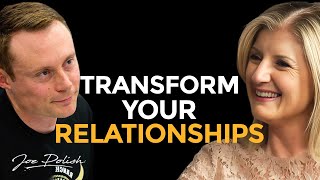
Benjamin Hardy breaks down transformational relationships into three parts: giving, gratitude, and growth. He shares how Christina Tosi's gift of dessert and his own entry into Genius Network sparked major changes. Dan Sullivan explains his 10x mind-expander tool and why deep collaboration scales capability faster than shallow networking.
Questions this video answers
September 2017.
1996.
Chapters
So I'm going to tell you for a minute what I'm going to talk about. I will draw back the curtains. This is what I'm going to cover. How to create the deepest possible human connections, how to create the most lucrative business, how to develop the most innovative collaborations. And also I'm going to teach you a little bit about the magic that happens here at Genius Network and really kind of the magic of Joe Polish. What is all this stuff? I'm going to pull back the curtains on all of this stuff because this is what I've been figuring out, analyzing, studying, brute force learning for the past eight months. So in September 2017, I joined Genius Network. I went to my first 25k meeting and for about a month and a half before my first meeting, I worked a ton with this guy. I was really lucky. My aunt Jane was actually a member of Genius Network for two years. And she told me when she found out that I joined, before you go to your first meeting, sign up for a 10 minute talk, give a 10 minute talk during your first meeting and work with Joel. That's exactly what she told me. So I worked with Joel, worked with him a ton. And after my 10, this was me after my first Genius Network meeting. Actually, that's not me. That's how I felt. This is what happened. I learned a ton from Joel and also I developed a ton of what I learned about this culture. So I learned a ton. Guy named Dre Redfern immediately helped me to make $10,000 more a month to my business. He had his whole team working with me, helped me for free. All of this stuff was crazy. And so I learned very quickly the rules of this environment, of this culture. Joe says it all the time. Life gives to the giver and takes from the taker. That is the rules in this environment and that is the rules for all of the things that I was mentioning before. Immediately I joined 100k. I said, if I have this many epiphanies and this many experiences, I'm already getting this much. What's going to happen at the next level? My only goal was be helpful. I wrote an article about it on Inc. What happened when I paid $100,000 to help someone? One of the things that really surprised me during my first 25k meeting was one of the first conversations we were having was how do you get a return on your investment? Of that 25k, I thought that is the most weird conversation. It seems so backwards to this whole focus on being a giver and not a taker. And then there was someone who said something really brilliant. He said, here's the secret that most people don't realize. You pay someone money and then you help them. This is how you create 10x returns. By the way, that person was Jason Fladlin. He said that at I think 100k. Or he said it at a recent 25k meeting. So here's a really interesting story.
Hey, I hope you're enjoying this video. And I want to let you know that I have a new book that's come out and if you'd like to get it absolutely free, there's a link below in the description. Or you can wait till the end of this video or you can Simply go to joe'sfreebook.com and you can get a copy there.
I don't know who here has heard of Christina. I think it's Tosi or Tosi. Anyone heard of her? One person, that's my assistant. She happens to be one of the most famous pastry chefs in the world. People come from all over the world to come to New York to come to her place. It's called Milk Cafe in New York. It's been all over the place. Internet. Not the Internet, sorry. It's been all over, like the media, the news and stuff. So 10 years ago, she was working at a very fancy restaurant. No one knew who she was. She was working in the back, she was a server, she was doing dishes and stuff like that. She needed a push. Here's basically what was happening. She had a huge passion, a side love for making desserts, for making pastries. She just loved it. It was what she loved to do. And she started bringing those pastries and desserts to her co workers just because she just loved giving those things and it blew their minds. They all, by the way, this is a very high end restaurant that she was working at and her boss was a very famous chef and he begged her for months, please let us serve your desserts at our restaurant. And she wouldn't do it. She was terrified. She was freaked out. She didn't actually see in herself what other people were experiencing. She just saw it as a passion. She enjoyed it and she loved doing it. But she didn't have the confidence in herself. Again, she needed a push. If you've ever seen the documentary Chef's Table on Netflix, please do it. It's one of the most aesthetic, beautiful shows ever. But in her boss's words, I just needed to push her off the cliff because she wouldn't do it herself. And so he one day Said, you have three hours, and then whatever you produce, I'm serving, and you're getting credit for it. So if you produce crap, you're getting. That's you. So basically, she freaked out. She took three hours, and she produced a magical TV dessert. It was a strawberry cheesecake. It got raving reviews. And then she started making the desserts at the restaurant, and way more people started coming, even though this was already a really successful restaurant, because her desserts blew their mind. Fast forward a few years. She's one of the most famous pastry chefs in the world. So she went on to succeed, and she got a gift. That's one of the core components of what I'm calling a transformational relationship, is that you receive gifts and it's something you cannot get for yourself. That's part of this environment. That's part of why you need to be a giver, and that's part of why there are so many gifts in this room, is because there's certain things that you need that you can't get. You may need a push. I recently just published my first book, my first traditionally published book. Willpower Doesn't Work. I was pretty overwhelmed with the launch of a first book. I needed a push. I had a mentor who gave me an enormous gift, something I could not have given myself. So Dan Sullivan, he has defined basically what are the key components of healthy, powerful relationships. And those are the three components that I consider the core essentials of transformational relationships. Basically, there's giving, there's gratitude, and there's growth. If you're not giving, it's not a transformational relationship. If you're not experiencing gratitude, you're not experiencing it because you're probably not giving. You're not appreciating what you're getting. If it's a transformational relationship, you are receiving abundantly, and you should just be blown away. Blown away and humble. And if you're not growing, if you're not being pushed, if you're not transforming, then it's obviously not a transformational relationship. In transformational relationships, there's no keeping score. There's no tit for tat. That's purely a transactional relationship. That's what we're talking about here. And again, that's not where the most growth happens. It's just giving, being humble, being blown away, and being grateful. Also, if you want to create transformational relationships, you have to be the one to initiate it. You've got to discover how to give, what people need, how to be useful. And you can't wait for others to do it for you. You just can't. So one other comment is just obviously you cannot do this on your own. There was a very famous philosopher. He once said something that really gets me every time he said, self made is an illusion. There are many people who have played divine roles in you having the life that you have today. Be sure to let them know how grateful you are. That philosopher was Michael Fishman. And that's one of the things that I have probably quoted more than anything else. Steve Sims has an entire book on how to create transformational relationships. He's called the wizard of Oz of Business because he knows how to create impossible situations. Whether that's getting his clients on stage with Journey. How does he do it? He finds out what people want, he creates a win win situation, and then he creates impossible situations. Dan Sullivan talks about impossible. He talks about going 100x. We talk about making a 10x investment or 10x return on your investment. Dan Sullivan's like, way above that. He's talking about, how do you go 100x? The only way to do that is when two givers come together who are operating in their unique ability, and they come together and they create transformational collaboration. It's where the whole becomes fundamentally different from the sum of the parts. And what's freaky about transformational relationships is that you don't actually know where they're going. With a transactional relationship, you know exactly what you're getting, and if you're not getting that, you're out. With transformational relationships, there's a lot of risk because you don't actually know what the transformation is going to be. Genius Network and Strategic Coach is an amazing example. Here at Genius Network, this is basically the purpose. It's to bring a bunch of givers together in their unique ability and to create transformational relationships. Again, what are the rules? Life gives to the giver, takes from the taker. We've heard Joe say it, and it's exactly what works. So here are some questions I have for you. Have you 100x'd your investment? How many transformational relationships do you have? Do you initiate? Do you give? Are you radically humbled and grateful? Are you growing? How much are you actually growing? How much are you pushing and how much are you getting pushed? One of my favorite authors is Seth Godin. One of the things he said is art is a personal gift that changes the recipient. The medium doesn't matter, the intent does. Art is a personal act of courage, something one human does that creates change in Another. So my question is, are you an artist? You may think of yourself as a businessman or something, but are you an artist like Tim Paulson? And by the way, he has an amazing picture on that other thing, Joe Polish. We consider Joe a marketer or a connector. In my opinion, Joe is an artist. He creates art as a personal gift that changes the recipients. Transactional relationships don't change you. They're not gifts. There's no gratitude required. They're status quo. Transformations are where artists come together in their unique ability. They give their greatest gifts. Extremely generous. There's growth. Here's my call to action. Create more transformational relationships, even more. You guys would not be in this room if you didn't have any. Create them more in your personal life. Create them with your clients. Give, give, give so much that it blows their minds. And then create them here at Genius Network. It starts with you again. It starts with you.
Hey, I hope you're enjoying this video. And I want to let you know that I have a new book that's come out and if you'd like to get it absolutely free, there's a link below in the description. Or you can wait till the end of this video or you can simply go to Joe's freebook.com and you can get a copy there. Well, welcome. So what's this whole 10 times thing? I'll listen. Start with that. Like, what, what is this?
Yeah, I mean, what is it?
Or anything you want to. I don't know.
Yeah, this, this came up first of all from strategic coach experience. So we started the program in 1989 for entrepreneurs. And so around 95. So we had had about six years. I started having examples in the clients that I was dealing with that they had gone 10 times. And what was interesting wasn't the result 10 times, but the kind of thinking, because it was a challenge, you know, it's a challenging thing to have suddenly a 10 times increase. And this is revenue. I mean, we're talking about revenue. So I put together a thinking tool which was called the 10 times mind expander. Because I find if you have a 10 times result but your mind hasn't expanded, it's destructive. You know, it's destructive of how you think about things, it's destructive about your relationships, it's destructive about a lot of things. Okay. So it's actually that. It's what you do with your mind as you have that time of growth. So that's really where it started.
Wait, what year did the 10 times mind expense?
96. I think it Was so a year before you came.
Yeah, yeah, I started in 1996. You know, it's really interesting that you say that. I mean, I'm just thinking of this right now is that when I first filled that out, my brain at the time was telling me, that's bullshit. I mean, I'm not going to go 10 times. I mean, and. Cause I was still in that rugged individualist mode, trying to do everything. I didn't have any real concept of teamwork and all of that. And it's interesting that you. Because that brought me back. I mean, we didn't have this discussion prior to. This is all like stream of consciousness right now for me, but just thinking about the resistance that my brain had to that concept initially. But that was before I filled it out. And then when I filled it out and started thinking, because the brain cannot avoid a question, right. It starts making you really explore, well, what would have to be. What would have to exist in my life or not exist in my life in order for that to be a possibility. Which is exactly what I would like to have happen with everyone here today. And many of you have already done this. You're already there. It's just, how do we. Okay, now how do we. 10 times that, right?
Yeah.
Okay, awesome. So let me ask you this first, Ben. Like you are now translating a lot of Dan's thinking and concepts in the books, putting it out into the world. They're very, very amazing books. I mean, even the intro of the Gap, how many of you have read the Gap in the gain. Okay, the intro, it's so good. So in the process of doing this, what has this been doing for your thinking? Because you have, you know, you've gone through. I mean, you've had a crazy few couple of years. I mean, instant kids, like instant oatmeal. And, you know, writing all these books, you were at one point the number one writer in the world. On medium.com, you've totally transitioned and have a different thing. So you've completely have. You know, I've seen so much growth in you even since, you know, you first joined Genius Network and just everything going on. So what's it like to.
Well, one of the reasons, and sorry for my voice, but one of the reasons I like 10 times is for this very reason that when you're at 10 times, it looks fundamentally different, whereas two times you're just trying to do more of the same. And so when I first joined Genius Network, it was all blogs. I was starting my first book. Whereas at 10 times it does look fundamentally different. I'm no longer writing blogs. That makes absolutely no sense in this situation. And so I like that 10 times creates transformation. But as far as working with Dan, one of the things I love. So I actually choose the books. I was the one who chose who, not how. And I really, first time I ever read the gap in the gain, it just changed how I saw everything and I knew who, not how would be first.
But I was.
And I also had listened to Dan's talk, 10x is easier than 2x. And I think that we'll explain more of why that's true. But I was asking Dan after who, not how was in place, which book makes sense to go next, Gap and gain or 10x? And his response was, well, there's no point in helping people go 10x if they're going to stay in the gap all along the way. And once you get up to 10x, why stay in the gap? And so it's a fun collaboration. Honestly, it's very much a free zone. I think it makes life easier. I am in my unique ability and it encourages me increasingly to go into my unique ability. So as one example, this is the first book where I've actually gotten a ghostwriter to write this book. I'm applying more who, not how. One of the things that Dan talks about is never show up without a team. And I'm increasingly showing up in every situation I have with a better team. And so even with this book, in order for me to go 10x, I need to make my life easier. And it's amazing getting this writer who has written 30 books, she's a much better writer than me. And it makes my life so easy and all of my stress is gone. And so I just love. I love learning. And so it's a beautiful, fun collaboration, a lot of freedom.
Yeah, that's.
Well, you know, let's define a couple of things too when you guys say it, because a lot of people here that are in strategic coach understand coach talk right in the terminology. But what does free zone mean? How would you define that?
Well, another thing that I notice, clients as they've really become successful. Actually, not so much that they've become successful, but they've really become free. Freed up their time, their money, their relationship and their purpose. They stop competing. It's just something I noticed. They stopped competing. And what they're looking more for, where it's not about cash anymore, it's about other people's capability. So I write a lot, actually. When I was 70, I said, you know, what a really neat project would be is to write 100 books in 100 quarters.
Okay.
And they're small books. Anyone who's seen our books, they're, you know, they're about 60 pages. And I'm just trying to think Barnes and Noble was one of the big stories. I can't think of what was the other?
Borders.
Borders. Borders had a survey of ebooks and they. So ebooks for the first time actually gave publishers a way of measuring, when someone started a book, how far did they get in the book. If you bought a book.
You got.
A best selling book, but hardly anybody's read more than 10% of the book. And so what they discovered is that if a book is over 200 pages, 3% finish the book. This is nonfiction. This is not fiction. Fiction. If it's a good story, everybody finishes the book. And then if it's 100 pages, only 10% of people finish the book. But if it's less than 60 pages, 60 pages or less, 80% of the people finish the book. So I said, I'll just write books that are copywise less than 60 pages. And a lot of people, if they have a book they've been working on for 20 years and it's got 25 chapters, they would have been better to produce 20, 25 little books. Take a chapter, make it a book, take a chapter, make it a book. And especially for entrepreneurs, because you're not writing the books for the money. You make your money with your business. The books are a marketing strategy. So I've done that in 30 quarters, I've written 30 books. And what it does, and I didn't realize the value of doing that, but it gave when a capability like Ben came along and I met him at my very first 100k meeting. And Ben came over and he had a break and he sat down with me and he said, I noticed you write a lot of books, but you don't write for the popular market. And I said, you know, if it's not finished in 90 days, it's, it's not going to work with me, you know, so I don't take on any project I can't finish in 90 days. You know, like I just fall off a cliff after 90 days. And I'm sure not going to attend any meetings and I'm sure not going to deal with a publisher. And he said, well, I, you know, I know how to do that. And he's got a great style. I mean, he just has a beautiful, beautiful public reader style. Major Market style. So when he sat down, something clicked in my brain and I said, I think this is good. And I think. I don't even know if it was a handshake. I don't know if we brought me.
An impact filter the next morning.
Yeah, yeah. And I. Success. Yeah. But the way we did it, and this is a way of thinking about 10 times how we put the collaboration together. Because you couldn't hire Ben. There's no way of hiring Ben. Okay. You can't get this kind of talent by hiring them. Okay. And we don't have that kind of talent inside the company, what we're looking for right here. And so he knows the entire territory and he knows all the other people who can supply the capability that he doesn't know about. I don't know any of that stuff.
Hey, I hope you're enjoying this video. And I want to let you know that I have a new book that's come out and if you'd like to get it absolutely free, there's a link below in the description, or you can wait till the end of this video or you can Simply go to joe'sfreebook.com and you can get a copy there.
So what I realized is that at the level we were operating with Ben, and then the other great collaborator on the project is Tucker Max. And Tucker, you know, Tucker is just. Tucker is the map maker for the publishing world. He really knows his stuff. And so originally we thought Ben's agent and publisher would be it, and that turned out to be not true. So we were at a genius network meeting, and Joe had it on publishing, and Ben was there because for obvious reasons. And Tucker was there for obvious reasons, but Reed Dracey from Hay House was there. And I remember I walked into the room in Tempe. I walked into the room and Reid was sitting there, and I said, hi, I'm Dan Sullivan. And he said, I know who you are. And he said, you know, he introduced himself and he said, I followed your stuff for years, but you don't write major market books. And I said, well, that might change. So Tucker and Ben took Reed out that night and they essentially had the deal by the end of dinner for one book. And then as a result of the really fast start of the first book, Tucker and Ben worked with Reed. And so we have a 10 year, 10 book contract. And Ben determines every year what the book is.
Yeah, yeah, I think one.
No, but I want to tell you this. So people say, well, what's the financial deal? And I said, well, With a book, there's an advance and there's royalties. And they said, so how do you split it? And I said, well, real easy. I have a really easy split. It's called 100% zero. So Ben gets all the money forever. Ben gets all the money for the book. And people say, you're giving away all the money. And I says, what money? What money are you talking about? There wasn't any money until you put the collaboration together. The collaboration created the money. How do I get paid? Every once in a while, somebody who reads a book signs up for the program. So far, 400. Average lifetime value, $40,000.
Tell him your goal for 2022. 2024. But then I want to share a thought on Free Zone.
Yeah.
Did you want to share your goal for 2024 or no?
Huh?
About the books.
Yeah, go ahead.
Well, he said he wants a thousand people in strategic coach in 2024. Through the books.
Yeah, yeah, 2024. So, you know, it grows because when you have a book out there and you put a new book, the new book sells the book that's already out there. Books sell each other. You know, I mean, you know that from fiction.
The best marketing of your last book is your new book.
Yeah, yeah. So anyway, I mean, it's an interesting thing because we know how to make money. Ben knows how to make money. So if you know how to make money, it doesn't have to be about money, but capability acquiring. You know, you can increase your capability by 10 times and the IRS doesn't know it.
You know, there's a couple things I.
Was just giving a. You know, this is in relationship to Garrett. Yeah, Garrett had a great line. You know, Joe always says what Dan said first. I think that was lineup. Yeah. But Dan doesn't say anything that anybody hears unless Dan knew Joe. So thank you. Just put things in their proper perspective. Yeah.
You know what also is.
And ours is a great collaborator.
Oh, absolutely. No, we have a fantastic collaboration. You know, we don't have an affiliate thing. I'm the highest referring person to Strategic Coach. You're the highest referring person to Genius Network. And we try to refer people and recommend things that we know will make our clients better. You know, if someone joins Strategic Coach as a Genius Network member, I know Strategic Coach is going to do things with them that are going to have them come back as a better Genius Network member and vice versa. You know, so that's how we collaborate. And we're also, all of us are very much long term in terms of thinking, which has always been a weird thing for me because I'm a very spontaneous, impulsive person. And what I do, though, is I stick with things that I see growth and benefit from and for where I feel good. Like, what I would say, and I've heard this a lot with Genius Network and with Strategic Coach from other people also. You know, half the time, I have no idea what the hell is going to happen when I go to Strategic Coach, But I walk out of there feeling better. I just like, oh, I feel more capable. Right. And I want people to walk out of here feeling more capable. Like, how many of you feel more capable, to use Dan's words, direction, confidence, capability, and clarity. How many of you feel more of that today than you did yesterday morning? Right. So when you put yourself in those environments all the time, that's many of the reasons why we read certain books or we meet with certain people is to do that. And the collaboration between you and Ben did not even happen until you were seven or eight years into Genius Network. Right. Because you started in 2010. 11.
2011, yeah.
So, you know, the thing is, what pains me is when I. Oh, it is 10.
That was November of 10.
Yeah. Because I remember we shot. Yeah, I remember we shot a video in 2010 with a group of us, and at one of the first meetings you came to. And so the point is, like, anything that you want in life, it's going to just be more effective if you go deep versus going shallow. And the problem is so many people, let me go to this mastermind or let me go to this seminar, and if it doesn't just hit me exactly. You know, I'm going to. One of the funniest things. Two things that were very insightful when I started Genius Network, to go to this 10 times, thinking and stuff, is that I discovered that I did not expect is how many. Because most of the clients I targeted this to in the beginning were information marketers. Were a lot of marketers. And I've done my best to bring in the best marketers, but also distance myself, because some of the greatest marketers in the world are the biggest con artists. And there's a lot of people that were information marketers that would talk about how much money they help people make. And I didn't realize how many people that claim they made a lot of money, didn't have any money, and could not afford to cut a check for 25 grand. That was fascinating to me. I'm like, weren't you just, like, shooting a picture in front of your fucking Ferrari and talking about how you made a million dollar launch in two days and you can't cut a check, then you're completely bullshitting people about what you're actually doing. That was the first insight. The second insight is there are just as many rich seminar junkies as there are wannabes that just bounce from one event to the next. And they have money, but they just don't stick with anything. They're not, they're, they're very promiscuous with their pursuit of, you know, they don't like monogamy when it comes to groups. You know, let's go to this group and this group. And if you're in like 400 different groups, I mean, how deep can you go with any of them? Right? So part of it is in different groups resonate for different people. I mean, I think we've referred more people into different group than any company that has a group. Right? Because some things resonate with different people for different reasons. But the thing is, when you find something that's good, go deep with it. And there are times, because I want to talk about what do you have to give up? If that's even the right word? I mean, what's the sacrifice? Because there are times in this journey all the time, and you all know this, where your business is kicking ass and then a pandemic happens, then your spouse dies, then you have an employee that rips you off. There's some regulation that's made, some vendor. I mean, there's a million different things that are going to throw you off. And I think the group you go to, the people that, you know, that, you know, success, in my opinion, is not how much more shit you've learned. A lot of it has to do with your tolerance for, for bullshit. Like the same treadmill of shit, you know, that I was dealing with 20 years ago, it's actually 10 times as amplified tremendously what's what. So the treadmill of shit has never stopped. It's my ability to deal with it and my capabilities and who I turn to and my, my tolerance of it because of what I learned. The same stuff I deal with every morning would have killed me when I first started my business, you know, damn near. Well, 1990 was when I started my first, late 80, 1989, 1990. And so, and I'll tell you, your thinking was the biggest accelerator for me. I mean, I came into strategic coach in one of the. Dealing with one of the most personal crises I ever dealt with. I was, you know, I was in active addiction as a result of something that had happened to me. And I'll tell you, it was one of the few things that gave me the ability to just function in a company when I. When my life was personal chaos. My clients, fortunately, still, you know, did well. But I would go to bed many nights, like, wishing I was dead. I mean, I had very. A lot of suicidal thoughts during some of those periods of my time. And coach was, as crazy as it sounds, was more helpful than most of the therapy I was doing.
Yeah, it was interesting last year when Joe was on sabbatical, we had about a. Babs and I, we had sort of a check in with you, but not about business. Just, you know, what were some of the experiences we were having. And I met Joe for the first time in 2008. He had done a year of the program with another coach. And then you jumped.
You mean 1998.
1998, yeah, 1998.
And.
And I really clicked. I mean, the ones who are really crazy, I feel very comfortable with. It's the ones who sit there like this, you know, that I have a hard time with. And so Joe, you know, Joe, we've become fast friends and we have nothing in common from a personality standpoint. I mean, we have zero in common.
That's true. It's pretty obvious if you. If you're not paying attention.
But I think there are some fundamental issues of integrity and that where I think we have common ground. And I was saying to Babs, when Joe started on his sabbatical, I said, when I first met Joe, he couldn't have taken a half hour sabbatical. I mean, he would have been squirrely by 15 minutes.
It's true. Howard, you have to use the mic. He's itching to make it.
But I just want to finish this thought before we get started. And that is that it was a beautiful thing to watch last year of just checking in with Joe every month and then actually fully participating in the 100k program during that time. And all sorts of talents just rose to the surface in two ways. The team just got really, really great last. Really, really got last year. So the capability you have in your team has been multiplied over the last year. And the other thing is you found out there were other people who could totally facilitate meetings. And Howard, Howard is one of the, I think, two days that we spent with Howard, you know, his agenda and his hand. I think, first of all, it was a huge surprise to me, you know, I said, Howard, you know, and it was just beautiful and, you know, and it Was packed, filled with really, really interesting people, including his cousin who's Abraham Lincoln, well known, worldwide known Abraham Lincoln, Lincoln expert. So it was really, really, really great. But when you see that is that without working over the last year, you had two massive capabilities develop, but it was because of who you were over the previous 20 years that those capabilities developed.
No, totally. And that's one of the biggest, best things that came out of the sabbatical is the fact that you, you know, I heard you say it, I heard other people talk about it. I go away for a little bit, but I never, you know, take a whole year. And you don't realize how, when, when, when your team, you don't know how good your team is until you leave.
Yep.
You know, and, and I mean, really leave. Not just there to check on it.
Until they, until they can't call you.
Yeah, yeah.
So until you can't rescue your team, you don't know how good your team is.
And Eunice is an example who's in the back here. Next month. She'll have been with me for 27 years. And Eunice is amazing. I mean, Eunice is amazing. And I didn't think she could do what she was able to do last year until I left. Her capabilities massively increased. It was incredible.
Well, that's actually one of the biggest keys to 10x is own freedom of time.
Right.
It is about freedom ultimately for me.
But freedom of time.
Yeah.
Like most of the people who I've seen go 10x often, it's working 50 to 5, you know, and then freeing yourself up.
Yeah, yeah. So we're here in New York. We're going to talk about your new book, which is thrive. Look at this. You need to get this immediately. The third metric to redefining success and creating a life of well being, wisdom and wonder. So this is your 14th book?
Yes.
Why'd you write it?
Well, it was like the surprise baby. I had promised myself, my children, everybody who cared for me, that I would never write another book because it's always been so stressful and filled with deadlines and sleep deprivation, all the things I was trying to avoid. And then I gave a commencement speech at Smith where I talked about the need to redefine success and move beyond the first two metrics of money and power. Because so many people, including very successful people, were just completely burned out. And instead of finding happiness in success, they're undermining their health, their relationships, et cetera. The same happened to me, incidentally. So I was suddenly inundated with all these offers to write a book, and my agent had to sell it to me first. And finally he did. And I. I promised myself I would write it in a different way, and I did. It was a book which I wrote without the same kind of sense of stress and pressure that book writing has had for me before. So at least I proved to myself that it can't be done in another way.
Right, okay, so you're literally wanting to redefine the definition of success because you basically say in the book, and you talk about this in your third metric conferences that people can find online if they just look for it, that the definition that we currently have, that people look at money and power, is what success is. And you're saying this is wrong and it's destroying people.
It is, and we have the evidence to prove it. We have 75% of health care costs in America are because of preventable chronic stress related diseases. And I'm talking about heart disease, diabetes, high blood pressure, etc. Etc. And women are particularly susceptible to it because we internalize stress differently. You know, you guys are better at handling it than we are. So women in stressful jobs have a 40% greater risk of heart disease and a 60% greater risk of diabetes. So I call this the third women's movement. You know, the first was to give us the vote. The second was to give us equal access to every job at every level, equal pay, etc. And it's still an ongoing process. We're not done yet. And the third one though, which is absolutely urgent, is to make sure that we change the world in which we are competing. Because it's not working for women, it's not working for men, it's not working for polar bears. It's not sustainable. And we're all, in some way or another, paying a price. You know, I start the book with my own wake up call.
Yeah, talk about that. When you literally collapsed in 2007.
I literally collapsed in 2007 and hit my head on the way down on my desk, broke my cheekbone, got four stitches on my right eye. And then nobody knew exactly what was wrong with me medically. So, you know, I found myself going from MRI to echocardiogram to test after test. And doctors waiting rooms, it turns out, are good places to ask yourself the big questions. What am I doing? What is a good life? Is this really success? You know, by conventional definitions of success, I was successful. You know, I was on the Time 100 list and I was on the COVID of magazines. But by any sane definition of success. I was clearly not successful. So that's what started me on this journey that was April 6, 2007.
Do you think someone needs to have literally hit bottom or one of these? You know, do you see people typically change without having a heart attack or having some sort of major breakdown?
I think yes, when the culture changes. So that's why I'm an evangelist for this now. I want people to change and I believe there is a collective longing to change without having painful wake up calls, often much worse than mine, often life threatening wake up calls. And that's why I believe that by putting together three things, my own personal journey, the information about how the world is changing. 2013 was the year when we had the coming out of CEOs not as gay but as being meditators. You know, literally had Mark Benioff of Salesforce and Mark Bertolini, the CEO of Aetna, the third largest health insurance company in America, who came out and said that after he broke his neck.
More from Joe

This FBI Trick Can Command Respect Without Saying a Word ft. JEFFERSON FISHER & CHRIS VOSS

How To Stand Out, Be Different, and Create Raving Fans, Customers, and Employees ft. Jesse Cole



90% Of Businesses Fail In Their First Year, Here's Why! ft. Dr. Benjamin Hard & Dr. Robert Cialdini

The 1 Piece of Business Advice I Got From Elon Musk That Changed Everything Ft. Kamal Ravikant

The 6 Traits You CAN'T Teach in Entrepreneurship ft. Richard Branson & Gino Wickman

The Leg Method: How to Make Your Book into a Million-Dollar Asset ft. Anna David


7 Millionaire Mindset Hacks for Daily Success and Wealth ft. Brian Tracy & Dan Sullivan
