What is the difference between MARKETING and SELLING?
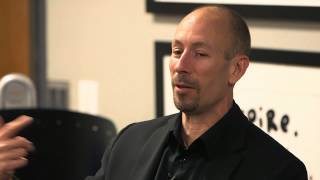
This content was created by Joe Polish. This content was uploaded by Joe Polish. This is a YouTube video titled "What is the difference between MARKETING and SELLING?" created on July 16, 2015. It features a conversation with Joe Polish and other speakers discussing the distinctions between marketing and selling, pricing strategies, and the importance of confidence in business.
So a lot of people seem to confuse marketing and selling. I know early in my career, my teens and twenties, when I had my first company, I know I did. And what would you say is the difference between marketing and selling?
Okay, well, my whole shtick that I've said a million times is that selling is what you do when you're on the phone or face to face with somebody. Marketing is what you do to get someone on the phone or face to face with you. And if you do your marketing right, write sales letter, write offer, write list, by the time they end up talking to you or your team or visit your website or go to your order page, they're pre interested, pre motivated, pre qualified and pre disposed to give you money. Pre interested, pre motivated, pre qualified, pre disposed. So it's positioning. So marketing is selling in advance. If you can remember that selling in advance is what you want, then you have to. If you do your marketing right, you don't have to hire salespeople or as many. And if you do have salespeople and you've dramatically enhanced their ability to sell because you're delivering to them people that have already been put through a process, it's kind of like, let's just assume that everyone here is not a vegan and you eat like steak. Okay, well, marketing would be a cooked steak. Not having any. Marketing would be trying to sell someone a raw steak. I mean, it hasn't gone through the process yet. It would be a different sort of experience. And people. When I read the E Myth by Michael gerber back in 1997. I'm sorry, 1997. In 1992, he ended up hiring me for consulting in 1997. When I first read that book, it was all about setting up your company like it was a franchise. What if there was more than one? So, you know, if you had to have 50 locations or if you had to have 100. And he would use, you know, McDonald's as an example of a franchise, a turnkey system, and he would. The whole book was based on systemizing and automating things. And the thing that clicked for me was what if you automate and systemize the most important function of a business? Going back to Drucker, you know, marketing and innovation produce results. What if you could systemize selling? That's what marketing does. It systemizes and automates selling. Selling, but not the marketing that they teach in most schools. They'll teach brand building, they'll teach logos. I mean, all of that for small business owners is just nonsense. But it's really hard to argue against it because, oh, you don't want to have a good brand, you don't want to represent yourself. So it's like if you say to someone, don't focus on building a brand. It's almost like they interpret it like you're telling them to be evil or something. It's like, no talk about the benefit. No one cares about your company name. No one cares about anything related to you unless you give them a reason to care about it. What they care about is themselves. People are self interest. You know, there's a couple of books. There's ones like why not Socialism? Which is one of the biggest books pro socialism. And then there was the argument against why not Capitalism? And what's said in the book why not Capitalism? It's not that socialism would be bad for the planet, it's just it's bad for people. Human beings are bad for socialism. It doesn't work. It's a horrible system. I mean I just did the fourth episode today with we did a four part series of 10X talk about social entrepreneurship and how calling anytime you put the term social in front of something it demeans it. But people do it so they can dress up like entrepreneurs and get invited to the right dinner parties. And then if you're anti like oh, social entrepreneurs, people think you're evil. It's like, no, I mean these are just leeches that try to disguise themselves as. Listen to the podcast. It will give you that perspective. One more thing I want to mention before I forget. Price. Do you know how much the formula for? Some of you already know this because you've heard me talk about this or you just know it. Someone that doesn't know the answer. Do you know what the formula is for? How much to charge for something? Any idea? I mean how have all of you, how many of you have things that you sell and you have a price? How did you come up with the price?
I just kept trying to charge more than people were willing to pay and eventually as I got more confident, my prices went up.
Yep.
And my more credibility, my prices went up. So now I charge more than most people in my market.
You said something really important which as soon as I got more confident, my prices it's all about. This is all a confidence game. This is all a confidence game. And some people are really good at marketing but they've never been able to get a check for it. They think about it, they read books about it, they tell other people about it, but they never roll anything out. They'll try a little test here. And they might spend 20 bucks and they'll make 30 bucks. And they don't realize, well, if you spent 2,000, you might make 3,000. And if you spent 20,000, you might make 30,000. And if you spend 200,000, you might make 300,000. And there's a big difference between making 10 bucks on running a small Facebook ad versus getting to the point where you reinvest the profits and you literally start running a multi million dollar business. And so it does come with confidence. What I believe though is it's generated, it's generated by action. I mean, if you take the most freaking attractive, good looking rich guy who's shy and has trouble asking a woman out, and you take a bald, ugly, smelly Bulgarian who's vulgar. And nothing against Bulgarians or bald people or any of that, I'm just trying to make an example vulgar. But that person goes out and asks women out for their phone numbers, for their emails on a date, and the other person just sits around at home watching videos of Evan Pagan or reading the game by Neil Strauss or whatever, both of which are great friends of mine. I mean, I just spoke at Evan's last event that he's doing in the dating genre. And being a convert of your own system gives you confidence that you're not going to get any other way. So pricing. The thing I was going to say about the formula for how much you charge for something is based on your ability to sell it. That is the formula. The better you become at influencing, the better you become at telling a story, the more you can charge. I've said this a million times. If you go out and buy a Timex for 100 bucks, you're buying a watch. If you buy a pebble watch, you're buying kind of a cool techy watch. If you go out and buy a $10,000 Rolex, you're buying jewelry, you're buying status. And so I would, going back, I would have focused a lot more of my energy knowing that there's a segment of the population that does not feel psychologically good unless they spend a lot of money. Because you know where the biggest opportunities are with people that no one is hitting up in quite the same way. No matter what business. What business are you in? Heavy construction equipment. Construction. What about you, sir? Real estate. If you cannot convince yourself that what you're doing is an enormous value, then you sell from your heels. You know what, selling from the heels is where you kind of like, you ask for the clothes, but you're really not into it, you're sort of afraid. And the confidence actually comes from the validation and the edification that you're actually creating. You want to sell yourself on what is it you're doing first? So the question for all of you is whatever business you think you're in when it comes to making money, write this down somewhere, put it on your computer, remind yourself you're in the arithmetic business. That's the business that you're in. And if you can't make the arithmetic work, then, oh well. One of the things that I've done to help professional carpet cleaners is literally get them to raise their prices 10%. So you take the average carpet cleaner, based on banking information of the profitability of an average carpet cleaning company. The average carpet cleaner, not a very high priced one, but not a bait and switch, but a middle of the road average carpet cleaner around the U.S. i had these numbers done years ago by Larry Stymetz, who wrote a book called how to sell at prices higher than your Competitors. The average cleaning company can raise their prices 10% and they can lose up to 40% of their clientele and still maintain the same net bottom line profit just by a 10% increase. So I got all these carpet cleaners, they're charging X dollars a room or X dollars a square foot. Get them to do a 10% price increase. You think you're asking them to go commit murder. It's like, oh my God, I can't charge 10%. And I have to say, well, do you really think that you're going to lose 40% of your clients now? If you do, who gives a shit? Because you're still, as a matter of fact, you're still, to save net bottom line profit, you have less mileage on your vehicles, less gasoline, less chemicals, less equipment, less labor, and you're still making the same. Now what if you doubled your prices? What if you actually, what if you didn't lose 40% of your business? If you raise your prices, three things will happen. Your sales will go up, your sales will go down, or your sales will stay the same. And what usually happens is they typically stay the same. And if your industry is so commoditized that literally you're going to lose the whole slew of your business based on price, then look at another business to get into. But the bigger reason is they don't instill enough value in why they charge what it is they do. So pride of spending is a really great element. So a lot of you here could absolutely transform your business. Even if you didn't learn anything more about marketing just by leaving tonight and increasing your prices by 10 or 20%, it would transform many of your businesses.
Yeah. One other way I think I've learned from you of looking at marketing and pricing is it's like field position in football. Great marketing, you talk about sets people up so that they're predisposed, pre qualified, pre motivated and pre interested and ready to do business with you. And so the key is with your pricing and or your messaging or your storytelling, it's all about that field position. All of us are doing it. It's just, are you setting yourself up? You got 99 yards to go or do you have 50 yards to go? Are you basically at the other goal line, ready to put it in the end zone?
More from Joe

This FBI Trick Can Command Respect Without Saying a Word ft. JEFFERSON FISHER & CHRIS VOSS

How To Stand Out, Be Different, and Create Raving Fans, Customers, and Employees ft. Jesse Cole



90% Of Businesses Fail In Their First Year, Here's Why! ft. Dr. Benjamin Hard & Dr. Robert Cialdini

The 1 Piece of Business Advice I Got From Elon Musk That Changed Everything Ft. Kamal Ravikant

The 6 Traits You CAN'T Teach in Entrepreneurship ft. Richard Branson & Gino Wickman

The Leg Method: How to Make Your Book into a Million-Dollar Asset ft. Anna David


7 Millionaire Mindset Hacks for Daily Success and Wealth ft. Brian Tracy & Dan Sullivan
