What Technology Has Made Possible To Leverage Your Marketing - Episode #4
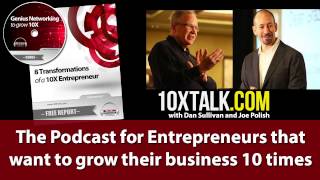
Dan Sullivan and Joe Polish discuss how direct-response marketing and education-based messaging create leverage. Polish shares his carpet-cleaning origin story: he hired a copywriter to create a consumer guide and recorded message that pre-qualified prospects, multiplied revenue, and eliminated one-on-one selling.
Questions this video answers
1992
He reported increasing from about $2,100 per month to about $12,300 per month within six months.
Chapters
I'm Joe Polish.
I'm Dan Sullivan and welcome to 10 Times Talk. Hello, it's Joe Polish and Dan Sullivan here.
Yes. So, dan, we're back. 10 times talk.
Yeah.
What do you got going?
Well, one of the things, you know, I've been thinking a lot lately, Joe, about one of the incredible impacts that you've made on my thinking since I've known you when you first came into Strategic Coach. It's on the whole impact of. And you know, when I even hear the word marketing, your face flashes in my mind because you are probably the individual that I know. And I doubt if I'll ever come across anyone who surpasses you, is really that you have the most comprehensive understanding and knowledge of marketing and all the different sources of marketing that I've spent a great deal of time with. I mean, I think Dean Jackson is certainly in this category, but you know, I've spent far, far more time with you than I have with Dean. And it's really, really, first of all, I'll say the impact that you've made on me. And then I'd like you to talk about this. And it's the distinction between marketing and selling, because the vast majority of entrepreneurs lump these two terms in together. But what's really true is that the vast majority of entrepreneurs have spent all their life selling, but they've never done any marketing. And so the first question I'd like you to do, first question I have for you is just define according to you, what marketing is in relationship to selling.
Yeah. Okay. Well, I'll just quickly give a definition, then I'll kind of expand on it. Selling is what I always say. This is kind of like my canned answer if someone like asks me, you know, what is the difference? Selling is what you do when you're on the phone or face to face with somebody. And marketing is what you do to get someone on the phone or face to face with you, or if you have employees that are salespeople, your team. So let me say that again. Selling is what you do when you're on the phone or face to face with somebody. Marketing is what you do to get someone on the phone or face to face with you so they're properly positioned so they're pre interested, pre motivated, pre qualified and predisposed to do business with you or give you money or support your cause, whatever your motivation is. And it's positioning. The greatest way to sum up the difference is positioning robotically in large mass versus one on one. Because selling, even if you're really Skilled at it. What is always surprising to me, Dan, is a lot of people that are just fantastic salespeople. There's a few that are. You hear the term born salesperson, they're just persuasive, they know how to get what it is they want. They're really good at being charming. These could be introverted individuals too, that could be incredibly effective in a one on one situation or over the phone. It doesn't have anything to do per se with always being a flamboyant individual or a great talker. There are some people that stutter and stumble through their words, are slow, that are still incredibly effective at selling one on one. And there are many people that will spend years honing that particular skill. And I'll run across people that don't spend any time honing the skill of marketing, which is the ultimate leverage. It's like how to actually leverage the ability to sell. Because with marketing in many cases selling becomes much easier and in some cases ideally unnecessary. Because if everyone you're talking to is pre interested, pre motivated, pre qualified and predisposed to do business with you because you did your marketing right, then you're actually selling in advance. That's why if someone watches a video of you explaining something, the video was say up on YouTube and then they contacted you or they contacted your company and the video did a great job of sifting, sorting and screening people that were a right fit or interested versus not interested, attracting the type of person they were looking for, repelling the type of person they weren't looking for. And by the time they actually contact you, they had 30 minutes of consumption about you, your product, your service, the problem, the challenge, the opportunity, whatever the deal was. So that by the time you're actually talking to that prospect, they're no longer a skeptic, they're no longer a suspect, they're a prospect. And in many cases they're a warm prospect. And in many cases they're simply ready to sign up. And in some cases, if you do your marketing right, people call you up and say, hey, can I give you money? That's exactly what you want. You want people that are so well positioned that you don't have to do a sales job on them. Because selling in many cases just means you haven't done any marketing in advance. So you have to spend a lot of time taking someone from the annoying pest stage to the welcome guest stage, which is a term that came from my friend Dan Kennedy. Basically, that's what marketing is. Marketing is the quickest path to the sale. This is counterintuitive because sometimes the path to the sale sale could be days, weeks or months, but it is still the quickest path to the sale. Because sometimes you have to take people through just like you harvest, you're taking them through a process. Selling is rarely an event, it's a process. So that's how I would define it.
Yeah. And the really interesting thing is that I've noticed kind of a crisis that has increased more and more over the last 20 years in the selling world precisely because the kind of attention span that people used to have available to them, you'd phone someone and there was a good chance that you would get them on the phone, or you'd send them a letter and there was a good chance that they would read the letter and you would have direct contact with them right away. That that kind of attention span and the availability of someone who would be a prospect to write you a check has actually declined, I would say dramatically over the last 20 years. And therefore the robotic quality that you referred to, that there are things that are happening all the time that are educating other people, predisposing them and preparing them is done without any time input on your part once it is set up.
Yeah. I mean, even looking at what you do in Strategic Coach, because what is really great about Strategic Coach is when people come into Strategic Coach, you teach them a lot of things and a lot of times you just teach them how to teach themselves things by how to think better. I mean, one of your quotes is the problem is never the problem. The problem is that you don't know how to think about the problem. And people come into Strategic Coach and they're like, okay, they kind of look at what they're doing, how they're doing it, and you're really surprised. Superb at showing people how to uniquely package what it is they do and how they do it. And you know, to kind of part the curtain. If people look around, you know, you take 10 times talk that we're doing right now, anyone that's out there, that is a high level entrepreneur that has hit a ceiling of complexity, that is interested in growing their company, 10 times they're listening to you talk about some of your philosophies, some of the things they're hearing me, a client, talking about how all the Strategic Coach is and they're consuming, you know, in this particular episode, 30 Minutes of Us talking about stuff. And Strategic Coach is one of those places where they can go to become a better entrepreneur and reach a 10 times goal. Well, that makes the whole process of them talking to someone at Strategic Coach because you have salespeople just like I have salespeople. You know, they get on the phone, they answer questions, they talk to people, they help, you know, explain what's in it for them. But at the same time, if people want to read any of your books, you've got books out there. If they watch videos that are out there from you, if they hear other Strategic Coach clients talking about Strategic Coach, you have a whole slew of knowledge products. And all of those things help sell people in advance because they're actually utilizing some of that in the same way that it'll cause. 10 times talk is a great education based marketing process for sales sifting, sorting and screening ideal people for the 25k group and for Strategic Coach. In a lot of ways, we're providing content for people for free, just to learn, just to hear stuff. And a lot of people will be like, wow, if we're getting this much value from them for free, I can't imagine how valuable we would get something if we actually paid for it. And it makes the whole process, it just enhances the, the whole sales process. And also there's a lot of people that will listen to 10 times talk that just aren't ready for Strategic Coach. They're not ready for 25k. But hopefully along the way they'll hear good stuff. They'll have great feelings about Joe Polish and Dan Sullivan because we're providing value and guidance to them so they can become better entrepreneurs. And maybe they're going to talk to someone that's a real successful entrepreneur and say, hey, you ever heard of this program called Strategic Coach? I mean, the funny thing, Daniel, the way I joined Strategic Coach is that I actually heard about Strategic Coach years ago from a guy named Terry Hunnifield who had never actually been in the program. And he'd heard about it from Joe Stump, who was a coach to the real estate industry, who attended Strategic Coach. This has gone back 15 years ago. He had told Terry about it. Terry told me about it. I was like, so what did I do? It just was the right message for me to hear. I ended up calling up Strategic Coach and I signed up and then got Terry to actually sign up, who is the one that actually told me about it, who had never even attended it. But part of that is you have knowledge products and CDs and all these things that were sent to me in advance. So it wasn't a real tough sales job for your salesperson in order to enroll Me, because there was all this material that was sent to me in advance that allowed me to learn about it without having to speak, sit down and have someone start from scratch explaining what the Strategic Coach program was all about.
Joe, kind of along those lines, I know your history and how you got started in business, but I think it would be very useful for our listeners to sort of mark the date or the point in your life where up until that point you were a good salesperson if you could get in front of them, but you had no marketing capabilities. And then what was it that actually put you on this path, which has really been a lifetime path for you, of just being this encyclopedic explorer of the entire marketing world. Can you just give a little bit of life history here? Because I think everybody is fascinated with how entrepreneurs suddenly discover something that they need.
Yeah, yeah, absolutely. And you know, before I, before I do that, Dan, let me actually mention because on the last 10 times talk, I said I would ask you about you're only 20 new habits away from doubling your income. And so what I'm going to do, because I'll maybe talk about the end and we'll expand that on to another episode. But what I'm about to share in terms of just going into my story, I'll do it in a way to some of the habits that actually developed that really did allow me to more than double my income. So it all started in how I got on this path of marketing. When I was a carpet cleaner, I had gotten into the carpet cleaning business from a friend who recommended I go into it with him. And we started out as a partnership, but that partnership lasted about two and a half months because my partner was incredibly misguided, didn't know what he was doing, and a little excessive in his partying. That's the censored version of it. I mean, it was not a good partnership. Great guy, but just not a good business partnership. Basically, I was stuck with chemicals and equipment and no money because I invested all my money in starting this carpet cleaning business and buying chemicals and equipment and getting business cards that said professional, which I was professional at delivering the service, but I certainly wasn't professional knowing how to actually build and run a business and make any money. And so I could get in front of people with price advertising. You know, we would have two rooms in the hall for $39.95, doing telemarketing, going out to restaurants and handing out business cards. I mean, you're talking cold call selling. And if there's anyone that's listening to this. And I'll mention this, whenever I talk about carpet cleaning, it's like, well, you know, I'm in financial services, I'm in, you know, high tech, Internet business businesses. What's that got to do with me? And I always tell people, well, if I had to figure out how to effectively sell and market something that nobody wants to buy and learn methodologies, it certainly is applicable to whatever business you're in. If you're in any sort of industry that's sexier than carpet and upholstery cleaning, you certainly can derive some best practices and techniques and strategies based on what I've done did in that industry. And so I, you know, I would get in front of people and you know, you know, to a certain degree, charming. And I cared about them and I educated them and I offered, you know, a really good price, starting out very low because that's the only offer that I knew how to make. And although I spent in many days, all day long working, I was commoditized because I would. One of the things that literally kept me in business for the first year was I would get these apartment complexes. And this is me in my early twenties doing hard manual labor cleaning carpets myself. And I would be lugging a portable steam cleaner up three story apartments in the middle of summer in Arizona. And I was allergic to cats. And I always remember sometimes I'd be, it's like cleaning carpets in a sauna and while you're wheezing and having the equivalent of an asthma attack because you're, you know, I was allergic to cats. So it was a pretty miserable sort of thing. And I would, you know, but I would sell people I know, let me do it. But the problem was I would be selling myself into accounts and work that wasn't even profitable because I was going broke. I literally was spending money on credit cards to stay in business. And the joke that I made was, well, you know, if you want to go broke, go broke being lazy, sitting on the couch watching tv. Don't go broke doing hard manual labor, working your ass off. That's the dumbest way in the world to go broke. And so that's what I was doing while I was still a good salesperson because I could sell those jobs. But the big discovery came and when a friend gave me a issue of a newsletter called the Gary Halbert Letter written by this really insane marketing guy who later became a real dick friend of mine named Gary Halpert. And Gary passed away a few years ago, he was a Genius, though. And I started reading this newsletter and one of the things that dawned on me was the difference between institutional or image advertising in direct response and image or institutional advertising is typically what back then and even today is taught in most business schools, which is brand building, name recognition, get your name out there, establish a brand, establish credibility, that sort of stuff. And it's usually the type of mass media marketing you see from banks or insurance companies and things along those lines. Big companies, who you are, what they do, that sort of thing. Whereas direct response is designed to not only get your name out there, but get a response back, make specific offers, speak in a language that sift sorts and screens people, create a sense of urgency, that sort of stuff, and make a specific offer. And the way that Gary would explain it is can and clone yourself. He would say, you know, the problem with being an effective salesperson is you're still limited to how many people you can talk to. But with the right ad, the right sales letter, you can speak to, you know, 10 people, 50 people, 100, 1,000, 10,000, in some cases, millions of people with the right ad. And you can leverage that through sales letters and through video and radio and that sort of thing. My first big insight was Canon clone yourself. How do I go out and say something to people without physically being there? So I hired a copywriter, which I thought was all the money in the world at the time. But I paid a copywriter in 1992 to write my first consumer's guide to carpet cleaning. And from that moment forward, that started a whole shift that changed my life. I mean, that has generated literally hundreds of millions of dollars in revenue for many of my clients for different cleaners. So many things have come out of it, but it took me from taking all of the things that I used to say one on one, putting it in place, print, into a format that was far different than a brochure, because, you know, brochures at the time, and I'm speaking in the language that there was no Internet back then. So it was paper and ink, tv, radio, advertisements. I mean, that's how you generate a business. There was no Internet, there was no Google, there was none of that. So how did I communicate through print advertising and that sort of thing. And it literally created a system where I could talk to many people without physically being there. And I took that consumer awareness guide, which basically taught people how to choose a professional cleaner, and I turned it into a 24 hour free recorded message. And now I had a free recorded message when someone could call and listen to a 10 minute recording on how to choose a carpet cleaner. And by the time they listened to that, I didn't have to sell them. They would call up and say not how much do you charge? They would call and say when can you do the job? Because the pre recorded message, the consumer awareness guide set people up so that they were positioned so they're pre interested, pre motivated, pre qualified and predisposed to do business with my company. And now today that's what we teach many, many people how to do. And that is a huge habit of getting in the habit of quit trying to be the world's greatest salesperson. Instead you can be a mediocre salesperson or terrible salesperson, but if you have the right market marketing in place, you can sell a tremendous amount of stuff robotically.
Yeah, I mean it's so amazing because you know, we've been very successful because we've been, you know, at coach, even today, 90 to 95% of individuals who come to Strategic Coach actually do it pretty much the route that you follow, Joe, that they just heard somebody that they respected say something and but we realized that, that the way I put it to my team about two years ago, I said that stage one of Strategic Coach, we were selling to our friends and our friends were selling to their friends. But stage two, we're going to continue to do that, but we're going to add that we're going to be talking to tens of thousands, hundreds of thousands and millions of strangers too because we know exactly who we want to be in the program. And just using the insights that you put in your consumer guide, we can provide free knowledge and we can ask great questions which would interest only the kind of people that were actually looking for such that they would respond because we've sent out the right radio signal to the right person. And I think that yesterday I was doing a workshop and I said, you know, probably up until now your entire career has you been selling other people so that they could find out about your ideas. And I says, why don't you change it now so that in the future your ideas are out selling so that people can find out about you. And you know, it's just a switch that I can have my ideas out there working 24, 7, 365 days a year and, and require none of my presence. And I can hit millions of people with my ideas and there's almost no cost to it. With the Internet being what it is.
You'Ll see that's the greatest advantage because I mean one of the things I tell people, like, you know, you look back at the 70s and stuff, if someone was going to run a space ad in a newspaper or magazine, they're you know, using whiteout and exacto knives in order to lay out camera ready artwork. And you know, today people bitch and complain because you know how hard it is to do marketing and how hard it is to get messaging out there. And it's like, man, you don't realize how easy technology has made it, how cheap technology has made it. You can shoot a video off most smartphones that you can have uploaded onto the Internet literally within seconds of videotaping it. I mean, you can livestream from your phone if you want to on video. To do that sort of thing a decade ago would have cost you a bloody fortune. And in most cases you couldn't have done it even if you had spent a million dollars. And so, you know, the greatest thing with technology is it just allows you to can and clone yourself on video, in print, on audio. I mean even what we're doing right now, I mean, you know, we're going to have a 30 minute conversation, it's going to go up there, thousands of people are going to hear, hear it. And you know, in this particular case we're really, you know, we're not hard selling anybody. There's no trick here. We're not holding anything back to say, oh, in order to get the good stuff you got to pay us. No, we're just delivering, you know, incredibly useful value to certain types of individuals that will find this incredibly useful and other people won't. And what we're doing even right now is education based marketing. And one of the greatest ways to, you know, position your prospects so they're pre interested, pre motivated, pre qualified and predisposed to do business with you is to educate them, just teach them useful, valuable things and at the same time, you know, make an offer on how you do it and what you're doing. With strategic coach in this current phase, Dan, you know, you've got advertising that is starting, you've got campaigns done in ways that have never been done before. And it's, you know, it's all it does is build on all of these things that you've learned over the years. And a lot of times people will get frustrated because they're like, oh man, if I would have only known this 10 years ago. Well yeah, of course if we would have only known the secret passcode 10 years ago. But we didn't. So here we are right now. And as you are so good at framing for entrepreneurs. That was phase one. And let's go to phase two. Now you're going to 2.0 of your company and everything you've done in the past is all the R and D. And now it's a matter of putting all of that into doing marketing. Because the greatest products and services in the world are useless without customers and clients. And marketing is the ultimate leverage.
Yeah. And putting it back into the 10 times talk context is that this would be one of the major platforms if we were, you know, keeping track of major platforms of the 10 times talk that we're doing here, Joe, Marketing. You, you will not do 10, you will not do 10 times in your business unless you become a master marketer. You know, I, you know, and I'm a convert to this because I've always been a great salesperson and you know, I'm 68 and I, you know, I had a conversion when I'm, you know, when I was around 65 that, oh geez, you know, now I'm ready for the big show, which is the marketing show. So here I am three years, you know, into an entirely new capability and I feel like I've started life over. I feel like I'm right at the beginning in terms of a learning curve. And it's, but it's, it's got such extraordinary multipliers attached to it that was never possible the way we were approaching it before. So I mean, this is just, you know, it's just extraordinarily exciting stuff because the technologies to support you on this are just, you know, they're doubling their capabilities. You know, every year. There's new means, there's new methods, there's new. It's just a marvelous world we're living in. If you're an entrepreneur who's talented, ambitious, successful, and just has a vision of yourself in the future that you're going to be doing 10 times greater in the things that really matter in your business.
Yeah, yeah, absolutely. The cool thing about what you just said too is that you already had established yourself as the highest level coach for successful entrepreneurs in the world. There's no coaching program like strategic coach that has had the amount of truly successful by income entrepreneurs on the planet. You spent more time coaching successful entrepreneurs than anyone else in the world. I mean, you're already the top guy at your game and you already had established a very successful multi million dollar business for many, many years. And the greatest thing about 10 times is now you're saying, okay, I've already had this Great achievement. I mean you are already the. See the lesson here, I think for our listeners is you can be the best in the world and still be better. You even wrote a course with CDs and a book, a knowledge product called how the Best Get Better. And the people that will really resonate with this conversation are people that are the best and they want to get better or they haven't gotten to the best, but that's where they're headed and they want to get better. And it's a mindset. Just like 10 times. First starts with the mindset and then putting the multipliers and putting the methodologies. Like you said with marketing. I don't know anyone that's become super successful without marketing. I mean people look at Apple. What did Steve Jobs do with his keynote presentations? They were education based marketing presentations where he would get up and he would talk about how cool the products are and but what they do and how they do it. And he would explain them in ways on how you can utilize them in your life. And he would take what most of his competitors did was take computer related technologies that were very complex and they would just make them more complex in many cases where Steve Jobs just got up there and he just made things seem so simple and so easy and so exciting. And he would engage people and people would watch that. And the Apple Stores today are, you know, one of the most profitable retail spaces in the world. And you know, it's all about even, you know, I love going to Apple stores because the whole thing is built around, you know, effective marketing. And you know, it's hysterical to me in terms of doubling the business because one of the things I want to ask you when I'm done rambling here is about your quote. You're only 20 new habits away from doubling your income. Well, when I first put direct response marketing into place in my carpet cleaning company, I was averaging $2,100 a month in sales over a two year period. And within six months, and this is in 1992 by the way. Okay, so money's worth a lot more now than it is then. And I'm now running a multi million dollar organization. But basically back then I went from $2,100 a month, I couldn't even survive on that without living on credit cards, to over $12,300 in six months. I literally five times the revenue of my small carpet cleaning company just by changing the message on my ads. I didn't become a better carpet cleaner, I wasn't a better manager, I wasn't more concerned. I was already a nice guy. I already cared about my clients. What I did was I changed the message. And I always love to say the difference between a $1 bill and the hundred dollar bill is the message on the paper. And if you can improve the message, you can improve the value by 100 times if you look at a dollar bill. So if you can make your website messaging twice as good, if you can make your business cards, if you can make your signage, if you can make your social media communications, your audio, your video, your tv, your radio, if you can just improve that message, if you can literally have a really awesome sales list letter that could not only double your business, it could 10 times your business. And you're not going to 10 times your business if you don't look at that as one of the most important things that you could get skilled in.
Yeah, well, I'm a total convert. I mean it's been very, just extraordinarily refreshing and thrilling for me to enter this whole new world. I mean I know a lot and you know, I got a lot of stuff that can now be multiplied. But just Back to the 20 habits, Joe. You know, a lot of people say, well, what are the 20 habits? You know, like I've got a manual or a kit. And I says, well, it's kind of interesting, you can actually write the manual for yourself in relationship to, you know, the thing that we've been talking about before, that if you take a part, the most exciting part of your business and you draw a circle around it and that means that everything that's outside of the circle is the non really exciting part of your business. And you then say, I'm just going to take the exciting part of my business in the circle and I'm going to take that 10 times and then I'm going to change everything so that I can spend all my time doing that, there's a whole bunch of obstacles present, obstacles that are going to come up and every one of those obstacles you can flip. It's almost like martial arts that, you know, in the martial arts from the Orient, there's, you know, there's five or six or seven different martial arts. But one of the key principles is that you always use the opposition as to take the strength of the opposition and actually flip it to your advantage. And when you have a really powerful goal, the barriers and the limitations and the deficiencies in your present situation will suddenly make themselves known to you and say, well, you can't do that because of this and this and this if you just take the top 20 things over a period of time and flip them so that they become the pathway to achieving that 10 times goal. Which means that you're adding, you're increasing the amount of time that you're spending on the exciting thing and you're decreasing the amount of time that you're spending on the non exciting time. Habits will form and there will be 20 of them. That the moment that you, you know, that you put them in place and you just stick with them, they'll actually automatically take you. You know, I mean we talked about the quote that you did was you're only 20 habits away from doubling your income and I've now upgraded that. I think it's 20 habits away from taking your income in a particular part of your company by 10 times.
Yeah, yeah, I totally agree. Those are our thoughts. We can even expand on this in a future episode. What I would love to have all of our listeners do is give us their comments on what they think about this@10timestalk.com and if you know anyone that is a successful entrepreneur, an industry transformer, someone that really is creating tremendous value in the world and they're not leveraging themselves themselves as best they could, then share with them 10 times talk. Because we put this out there to help value creating entrepreneurs get better and grow their companies. Ten Times the recommendation that I would have for everyone this week is that think about one particular area of your business, some value creation that really doesn't have the proper messaging. You're not communicating effectively to the marketplace in print or online through your advertising, your marketing, your website or your team, just how awesome what it is you have, your process, your product, your service, what it is. And look at what is a headline and what is some copy that you need to say that you need to communicate and then sit down and write it down or record it on audio or have someone put a video in front of you. And it doesn't need to be high tech and just talk speak as if you just had to communicate robotically like you were going to go away for 10 years. And you know, there needed to be some message that was said in order for your company and organization to carry on the selling of this process, this product, this service. And you had to say it in a way that would just be compelling and would be persuasive and just capture that, capture yourself at concert, pitch and put it into place. That's what marketing is. And we'll continue to expand upon this and many other best practices@10timestalk.com and any final last words from you, Dan?
No, I mean, it's very exciting. And, you know, I've even in the time that we've been launched on this project, Joe, I just noticed my thinking speeding up because, you know, there's so much from my last 40 years of coaching that I think that can come into play here. So I'm just looking forward to the next into our next interview.
Absolutely. Thank you so much. And to our listeners, see you next time.
More from Joe

This FBI Trick Can Command Respect Without Saying a Word ft. JEFFERSON FISHER & CHRIS VOSS

How To Stand Out, Be Different, and Create Raving Fans, Customers, and Employees ft. Jesse Cole



90% Of Businesses Fail In Their First Year, Here's Why! ft. Dr. Benjamin Hard & Dr. Robert Cialdini

The 1 Piece of Business Advice I Got From Elon Musk That Changed Everything Ft. Kamal Ravikant

The 6 Traits You CAN'T Teach in Entrepreneurship ft. Richard Branson & Gino Wickman

The Leg Method: How to Make Your Book into a Million-Dollar Asset ft. Anna David


7 Millionaire Mindset Hacks for Daily Success and Wealth ft. Brian Tracy & Dan Sullivan
