What's In It For Them | Joe Polish and Dean Jackson
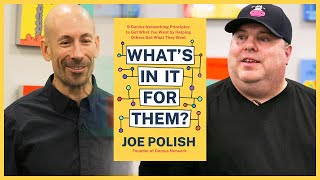
Joe Polish and Dean Jackson discuss Polish's book on nine networking principles for mutual gain. They cover how to build genuine relationships, ethics in marketing, and how technology like VR and AI are changing human connection.
Questions this video answers
"Nine genius networking principles to get what you want by helping others get what they want."
November 1, 2022.
Wiiftbook.com (what'sinitforthem / what's in it for them book site).
$18,000.
Generally requires doing at least $1,000,000 (one million dollars) per year as part of the financial criteria to join.
Chapters
I'm super excited because I'm proud of you. Your book is amazing. First, I want to congratulate you on the title. First off, would you have a picture? You have the book you can hold. There it is.
I have a gallery of it. So what's in it for them? What's in it for them says nine genius networking principles to get what you want by helping others get what they want.
I love everything about that title.
It's got the, the COVID is gaping void.
Yes, it's a good looking title. I mean, good looking cover. It's going to jump off of shelves, everybody's going to see it. And it's a great question. I can't believe actually that nobody in all the history of time has ever named a book what's in it for them. And here you are solving the problem because you know why? You're one of the very few people that have that driving purpose of what's in it for them. Not many people, you live that. So not many people would think of that because they're constantly thinking about what's in it for me. That's how people name their books often, right?
Yeah. Yeah. Well, I'll tell you too, Scott Hoffman, my agent, he actually this started several years ago because this book, I guess this must have been three little over three years ago when we first came up for the concept for it. And trying to describe my behavior and what I do and how I think about approaching people and how I think about connection and connecting and getting what you want by focusing on other people. I mean, the Genius network tool, you know, I'm wearing a Genius network shirt right now. You only see the part which is kind of. Yeah, yeah, you could cut off. It is a genius. As if I walk around with a shirt that just says genius on it. So we were talking about sort of how I emphasize that if you, you know, there's that Zig Ziglar famous line which is you can get anything you want in life by helping enough other people get what they want. And the challenge with that is it's actually not true. It's true some of the time if you focus on the right people and you, and you give to givers, but if you give to takers, you can help them get what they want. And not only will they not do a damn thing for you, they'll abuse you, they'll take advantage of you, they'll steal from you, they will gaslight you. And so, you know, you have to be a bit strategic and intelligent of pick up on not Just the red flags, but the yellow flags and the yellow flags in people's behavior is, you know, the thing to look out for. So when we were talking about this, Scott Hoffman, he actually helped me come up with the title. What's in it for that?
Well, let's congratulate Scott because it is great. Like, I mean, world class. It's one of the, like, I think it's this. It's got the longevity of how to win friends and influence people or think and grow like that. It's going to be for a long time. That's going to be a, you know, durable title.
I think that's exactly what I wanted. I actually wanted to write a book that long after I'm gone.
Yeah.
Even though I don't think my spiritual energy will exist for infinity. But, you know, whenever I've gone, I want people to. Decades from now, hopefully, you know, that'd be great, have a book that lives beyond 100 years. Right. And I wrote it that way. It's not a. It's not a timely book. It's a timeless book. And there are principles that no matter what technology changes, no matter what sort of AI or deep fakes or whatever happens, there's going to be human connection.
Great. You know, we've, we've got. Have you been following, you've been following all the deep fake stuff, right? Like the AI?
Yeah, look, I own a. I own a. I'm a co founder of a VR company, so, I mean, pretty involved in a lot of interesting things happening in the world with.
I'm amazed by that. But, you know, you remember, like, when you and I first started the I Love Marketing podcast, our conversation leading up to it was, you know, doing it for a record. That's going to be like a long time. We had, we actually had the conversation about, imagine if Claude Hopkins and Albert Lasker, two great marketers of the early 1900s. Imagine if every week they got together and recorded a conversation about what they're doing in marketing and what's working for them, how valuable and interesting that would be to us. And I say that always, I always footnote it by saying, I'm not saying in any way that we're Claude Hopkins and Albert Lasker, but when you look at it, that a hundred years from now, I mean, we're active marketers in the world and we've made a lot of cool stuff that looking back a hundred years from now, somebody's going to be. It's going to be very interesting to people. You know, I look at all Those episodes we've done now of I love marketing and with the deep fake and AI and machine learning, if they just somebody programmed an AI to take in everything that we've said on all of those hundreds and hundreds of hours of our thoughts on audio, and they could build a framework of how we might answer things or how we might think of things to say in our own voice, with our own likeness. We might never have to, you know, create another podcast again. People, they can take it. And what would Dean and Joe say and do the whole. Do that whole thing. And that's why I'm excited to see where your VR stuff goes. I saw a thing on 60 Minutes where they were making this Holocaust experience where they were in a room with so many cameras that were holographically recording Holocaust survivors and just telling their stories, answering questions for hours and hours and hours to create an experience where you could have a conversation with this Holocaust survivor and say, you know, what was it like when you were growing up as a child? And you say that, and it would cue up what he said about when I was growing up as a child. So it feels like you're having the experience with them. That's amazing.
Totally. And that is what we are just seeing, the tip of the iceberg of immersiveness and dialogue that most people can't even fathom where this is going to go and how it's going to be pieced all together. And it's. It's fascinating. I mean, the reason I got interested in getting involved in VR was, you know, Adam Ghazali back in 2014 was putting VR headsets on homeless people. And it was, you know, it was significantly reducing their stress levels. So most, you know, tech in that sort of world is gaming or blood sports or sports. And when I say most, I mean, there's a lot of applications from surgeries, and I mean, you name it. I mean, the sky's the limit. But in terms of education, you know, we really want to. I'm not a big fan of people staring at screens all day long. I mean, you're not going to live. You could but live in. In that world. And many people do not know. Yeah, I'm not sure. And what. What I mean, Dean, is of course we do. I mean, we're starting at screens all day long. It's become part of life. But I mean, where you're. You're literally living in a virtual world, the goal is not to do that. The goal is to utilize these things and enhancement. And part of this is Dosage. And it's a bit of a catch 22 also, because I see some very dangerous applications of how people, you know, utilize tech and utilize AI and there's always a rationalization and a justification or a bit of positioning and posturing of what they're doing is somehow good or healthy. And, you know, I often think about, as we forge the road ahead with the things we're doing, how do we keep it on that track, that this is a. Is a connecting mechanism for people, not a disconnecting mechanism. Because we are, you know, like Ned Halliwell, our friend for many years. You know, we've had numerous conversations with him about this. You know, we're more connected electronically than we ever have been in human history, but we're more disconnected as humans. And you can look at that here. So if you at least approach the world in relationships, because what you. What does anyone do that accomplishes anything meaningful that does not involve others? You know, the one commonality is you're going to involve other people. And so if you can dialogue or learn how to dialogue, like for instance, in VR, you know, when we were growing up, we did not have, you know, I remember when I was 10 years old, I would go out on a Saturday with a BB gun and I would walk these fields in Alpine, Texas, for miles. There was no cell phone. No one could get ahold of me. There was no payphone.
Right.
There was no traffic. I mean, we're talking out in fields. If something happened to me, you know, they would have had to send out, you know, search helicopters and stuff. I would go in nooks and crannies for just miles. And there's hardly any kid that lives like that in, you know, unless you're in cultures where they still are not really. You know, you're going to have to be in the middle of, you know, like Africa or something in order to even experience some of these types of things. And what I mean by that is that, you know, areas where there's still massive amounts of land.
Yeah.
But we're not developed. But, you know, in America, it's very rare that that happens anymore, except maybe, you know, in piecemeal here and there. But, I mean, that was just a way of life. And so now that we're so, you know, connected electronically, I mean, I watch people that never even go in stores anymore. They don't even go and check out. They don't use cash.
Nobody goes to the. I mean, you think about anything. Nobody. This is where it is now, is that we can get Anything that's physical, that can be moved from where it actually is, can be at your house at the very latest, tomorrow morning. You want food, it could be at your house faster than you could go and get it. Anything you want. I mean, with Instacart, grubhub, doordash, all of it, anything delivered right to you, we don't have to go anywhere. You know, it's so. We don't even have to do any kind of connecting with people. It's, it's sad really. I was having a conversation with a good friend I grew up with yesterday and we were talking about like just reminiscing about like what the world was like when you were off the grid kind of thing, you know, and now we're so, we're, it's so ingrained in us. I've been really trying to, and making a conscious effort to leave my phone a lot of the time as much as I can do it. Like if I'm going to go and do some 50 minute focus finders or do write in my journal or think that even having the phone beside me is a distraction, you don't realize it until you don't have it with you and, and how much richer a freedom experience it is.
Yeah, yeah. You know, you do not mean where they show an old phone and they're like, when the phone used to have a cord attached to it, we had more freedom.
That's the truth. Yeah, exactly. I like it.
Well, let me, let me say this for the topic of, you know, the listener, the watcher. However someone's consuming this, you know, in if you don't go and do the reps of talking to other humans in the real world, there's something that ends up very much missing. I mean, half of my time is spent helping people that struggle with addiction. And one of the biggest addictions is electronic addiction because the constant built in. You know, there's a book that was written about gain in Vegas, you know, addiction by design. And tech companies design for addiction. They design for use and they oftentimes will use words like build a community and all kinds of nice words to disguise the ulterior motive. Let's try to suck people into never getting off our devices and that sort of stuff. The funny thing too, I just said I needed to fill in that line, never getting off because it sounded kind of weird. But you know, as I think about it, if you never get off, you're always searching for when am I going to hit it? You know, when am I going to have the Buzz, when am I going to have that moment where I feel satiated? And if you pull in a state of never feeling satiated, they keep consuming, they keep watching. They're glopped in front of the screen, they're glossed in front of whatever that sight, sound, taste, touch, you know, whatever. You know, you can't eat just one potato chip sort of thing. Right. And it's like if you keep people in a constant state of craving, then they'll quote, unquote, keep consuming your stuff, but at what cost, you know? You know, at what point does that actually help somebody when they just can never walk away and they're always feeling like they're jonesing. Like when I was a cocaine addict, you know, the term jonesing, that constant craving. So, you know, I look at everything through the lens of addiction because there, you know, there's a lot that can be said about that miserable, suffering, intolerable craving state and trying to feed something that never comes with fulfillment. And the more you feed it, the hungrier it gets.
Yeah.
And that is what I strive to actually help people connect with themselves first. Because if you're not connected with yourself, it's very difficult to connect with other people and to not bullshit yourself and to not show up with an agenda thinking that, you know, your thing, your glop, your product, your service, your intentions are always the right thing for the other person. Oftentimes they are. And you know, any person, that's a real caring value, creating, contributing, helpful human that produces results. Not a thought leader, but a result leader.
Yeah.
You know, they. They show up most of the time with that sort of intention, but your actions need to follow your intentions. You know, that whole thing about people judge themselves by their intentions, they judge others by their actions.
Yeah.
And you want to make sure your actions are congruent with your intentions. You have to live in the real world. You know, now the question is, what's the real world? You know, what is the real world? You know, how do you design a life that gets you what you want by helping other people get what they want. And there are often times where. And I break this down in the book. I mean, some of this is context. You know, you could be a parent and have, you know, a child that just wants candy, and you're not going to be helping that child by giving that child what they want.
Right.
You know, all they want to eat is candy. Right. You know, you have to. You know, our friend Michael Burnout, you know, he talks about food is. There's addiction, there's entertainment and there's nourishment. Right, Right. So is the food you're eating, you know, nutrition? Is it entertainment or is it addiction? And so what you're selling, if what you're selling is nutrition, it really helps people because there are a lot of things that people want that aren't good for them, and there are things that they want that are good for them. And there are ways to make money exploiting people and selling stuff that really doesn't do much for people and in many cases is harmful and dangerous, and there's other things that are really beneficial. So my whole thing is if you want to go to bed at night and even if you have trouble with insomnia, and there's other reasons for that, if you want to sleep at night, metaphorically feeling like you are doing good in the world, the emphasis is on changing the positioning of how you approach people with what's in it for them, Asking that question, what's in it for them? That often requires observing, asking them questions, getting in dialogue, and sometimes getting in dialogue and relationship long enough that you. What they say they want versus what they really want and what they really need is, you know, being facilitated, if you can. And that's not to mean that everyone in the world needs to be working on transformational stuff. I mean, oftentimes someone just, you know, needs to pick up a screwdriver.
Right.
And they need to go to Ace Hardware or something that they need to pick up, you know, a hinge for a door, you know. However, the thing is, is I. If I look at my life, everything that all the great. The greatest relationships that I got have all come from the emphasis on what's in it for them. And people always ask me, how do you meet people? Well, you know, for one, I love opportunity. But there's a big difference between pursuing an opportunity and being an opportunist.
Yeah.
And there's a difference between really connecting with people and connecting with people where you connect with them by conning them. And marketing, which me and you have spent decades studying. You know, both of us now, you know, it literally is 30 years. You know, I mean, I first learned about direct response in 1992. That's when I read my first Gary Halbert letter. Yeah, I'm in Napa for a long time. I mean, I've spent and made tens of millions of dollars, and I've helped my clients make hundreds of millions and in the billions of dollars range. I mean, you invented the squeeze page back in 1997. That is you know, the ripple effect, the domino effect of that because I talk about every chapter of what's in it for them. I end it with the domino.
I love that I was going to ask you about that because that. Yeah it was really. The book is really well organized, really well laid out. Yeah I finally finished it by the way. I didn't finish it in time to do the And I love this about. This is something that says a lot about you actually that every endorsement on the book is written only by people who've read the entire book. And of course. So I didn't finish the book before the deadline for endorsements. So you would think that I would have an endorsement of thing and I 100% endorse it. But it's my own thing that I wasn't able to finish the book before the. Before doing it. But it's. You know and that just that level of integrity because so many endorsements people just go and get these celebrity endorsements of things and they've never even seen the book. They just send over the blurb of the is a life changing book. Joe Polish is this but every. And you can tell just in the people that have done it that they. It's authentic. And that's something that you know that that's part of the attraction. I think of the you know the length of the relationship that we've had is one of those things that I know you're 100% authentic and you know that about me that that's the we are who we are and yeah. 100%.
Speaking to that. Yeah. I wanted to make a point because almost all books written by that are bestsellers that are filled with blurbs and testimonials from famous people. The people haven't even read the book and so they're getting the blurbs in order to help with the marketing of the book. But if someone's not reading the book and people. And here's the reason too people constantly ask me to write testimonials of the book.
Me too. Yeah.
And I'm like if I haven't read the book, I can't write a testimonial. If you want me to write. If I know you and you want me to write a character testimonial or if there's something specific to something the book is about that I have experienced and done myself that I could speak to, that's one thing. But I'm not going to pretend that I have read your book if I've not read your book because it's it's not authentic. It's not real. And I also want people to think about this themselves. I'm not writing. This is not just like, oh, Joe, some angel here sort of thing. I would like to think I'm angelic, but nonetheless, you know, it's. It's the right thing to do. And if you start presenting yourself into the bullshittery of what almost everyone does, see the problem with all these marketers. When I say all these marketers, I mean, believe me, we have a podcast called I Love Marketing. Marketing.
Yeah.
The problem with when it's used wrong is they sit and they cut corners or they start stealing everyone's shit, and they start, you know, they start hacking this and hacking that, and they start, you know, fnd steal and distribute, swipe and deploy, and they start crossing the line. And then all of a sudden, you know, they're not. They don't have a relationship with someone, but they're plagiarizing their stuff, or they do have a relationship with the person and they're plagiarizing their stuff, and they don't ask for permission, and they. They take and they, you know, it's like, if I came over your house and started taking a couple of forks and a couple of knives every time I visited, I just, you know, I. Me and Dean have been friends for 30 years. Let me, you know, I see a couple of books on his bookshelf. I'm. I'm over his house. I'm just going to stick these in my backpack and I'm going to walk out with them. Or, you know, I like that mop block pen that Dean has sitting on his. He makes money. He's not going to miss that. And, you know, I'm just going to take that. And if he asked for it, I'll say, oh, yeah, I took it. I thought it was okay. You'd be like, what the hell are you talking about? So. But what happens is people do this with other people's ideas, and they start cutting. They start cutting corners, and then they assure each other. They get together in mastermind groups where they get together in seminars, and they all sit around together doing show and tell, assuring each other that how they stole this idea from this person. It's one thing to model something, and, you know, that's where you kind of. You understand the. Like my friend JR Says, you know, for those that get it, no explanation is needed. For those that don't know, explanation will do. When you have to actually explain certain things to people that you're, you're being unethical or you're being stupid.
Right.
It's. It's like there's a point where that is not what I call. And I write about this extensively, an elf relationship. Easy, lucrative and fun versus a half relationship. Knowing layman. And that comes in many forms. See, one thing too is there is a lot of games that are playing life, you know, and if you don't want to play the game, you know, you may not want to show up in certain things because there's this whole game plan. There's a lot of politics. You got to learn how to navigate it. Some of this kind of stuff, you.
Got to know who you're. You know, you got to know what you're dealing with, too. Like, you and I, we've talked about this before, but the idea of sharks and mammals, and there's a lot of. In marketing and in business world, there's a lot of sharks, which are very different than mammals. And it's a whole thing. I think you and I kind of gravitate to mammals that, you know, that that's where building real relationship with people coming.
Yeah, yeah. And, you know, and in order to have good people in your life, you know, you think it would be obvious that you want to be a good person.
Mm.
There's a lot of people that just bitch continuously about how people are screwing them.
Yeah.
And there are really good people that get screwed. I mean, both you and I, there's not a single person walking around that has not been taken advantage. Let me clarify that. There's a lot of people, though, that are constantly complaining about how mischievous people are, that they themselves are the biggest mag. They're. They're mischievous themselves. They're. Some are just outright criminal con artists that present themselves as anything but and they're. They don't see it, you know, so the thing is, people have their own value systems. Right. You know, I recently saw Chris Rock did a show here live, which is funny, and they took everyone's phone and they put it in the little case. So, you know, talking about Will Smith.
I was gonna say, was it post Will Smith?
Oh, yeah, yeah. No, this was like, literally, this is a. Like a week ago.
Oh, that's great.
And so. Yeah, yeah. And, you know, there was. There was a thing years ago, though, where he did a. He did. Where he's talking about, you know, a crack addiction isn't, you know, dating someone that's not a crack addict. You know, they're not a crack addict. And then you have someone, you know, that you're married to, in a, in a, you know, waking up at five in the morning putting on the three piece suit and going to work. No, you're, you're hanging out with other crackheads, you know.
Yeah.
And so the thing is, is, you know, Bonnie and Clyde found each other, right? There are people, you know, it doesn't matter. Like, everyone finds kind of their people. And you know, the thing is, is be careful, you know, who you believe and what, you know, watch people's actions, you know, I mean, like isn't what has been going on the last couple of years with the pandemic and all of the propaganda and all of the bullshit and the government and big tech companies and all of the gaslighting that has been going on, you know, from pharmaceuticals to central banking to, you know, all the things. And I'm not going to turn this into, you know, a full blown political thing, in case you're worried. What I'm pointing out is if you look at the level of deception under the guise of we care about you, that being perpetrated on humanity and history is repeating itself in many ways. What has not been able to be done in history though is the level of fear porn being pumped out into the world at scale because of tech you could never as quickly do today what, I mean, do what you can do today could not have been done during, you know, the 40s or the 50s or the 60s or the 70s or the 80s or the 90s. I mean, this is a new form of accelerated exponential fear porn. Yeah, and so much stuff, you know, and it's just the most clever modern day use of, you know, a brilliant but basically evil human like. Well, it can be used for days using propaganda.
Oh, propaganda, exactly. But it can be used because everybody has a megaphone now. Everybody's got a voice and there's no middlemen, there's no, you know, no stopping it. And everybody's got the technology to make things appear official and appear like as good quality as any broadcast television or official communication channel. And so there's nobody stopping, you know, anybody getting their, their views out there. And so it's up to us to filter that out in our own, through our own values system. And that's where a lot of people are struggling with that because through our entire lives there's been somebody else deciding what we're exposed to. And now there's this addiction of. Now you can go deeper on any of the crazy conspiracy theories that you want to explore. There's so much evidence to build any sort of view that you have.
So.
But it's also done. It's also amazing in that it's truly becoming a meritocracy for the good ideas and helpful ideas and most entertaining things to rise to the top, too. Like, you look at everybody to. Wouldn't otherwise have a voice, but you're seeing it now on in music, in entertainment, in everything. People with an idea, with a vision are able to get that out to the world. And the world's saying, that's great. And then it expands and, you know, spreads. It's so much easier to spread both good and bad through that same channel.
Yeah, without doubt. Like when I was saying the first domino. Yeah, there are first dominoes that will put your life into a trajectory of pain and suffering. I mean, you know, I became an addict in a lot of ways because of some defining moments of trauma that there was no way for me to deal with at the time. So later in life, those manifested as addictions. And an addiction is just an attempt to, you know, solve and soothe a pain. You know, like my friend Gabor Mate says, you know, the question is not why the addiction? But why the pain? And so I look for pain. I look for pain in my life, pain in other people's lives. And if I can eliminate or reduce or change or reframe the pain, because pain is also a messenger. And what is often hard and took me a while to figure out, is that the pain in the world, the people's lives, the pain in the marketplace, if you can find a solution, not a band aid, but a real solution, and oftentimes a band aid is in the moment.
Right.
Some people's pains, like, you know, I. I spend a lot of time with people that struggle with addiction. And some people, they're going to die. They're. They're just suffering. And so the. What you. You know, sometimes the best you can do is just sit with them, you know, be a companion to them, talk to them, listen to them, do what, do what you can. Other times, you can help people get out of the trap of their own lives by sharing, you know, your own experience, strength and hope with them. Because hope delivered in the right way can heal. Hope heals. Hope delivered in a bullshit way is actually quite destructive. Because hope often a terrible strategy if it's false hope, you know, so there's different ways of. There are negative ways of utilizing hope and positive ways of utilizing hope. But the thing is, is, you know, almost all money is made by solving problems for a profit.
Right?
And if you. So my Whole thing is identify the pain, become a pain detective. And as you do that, you become actually more aware of the pain in your own life. And, you know, there. Yeah. And I think if you can go through the day and you can identify the pains that people have and offer them ways to remove it, eliminate it, get out of it, walk away from it. You know, if someone's bashing themselves, metaphorically speaking, bashing themselves in the head with a hammer ten times a day, and you can get them to do it eight times a day, that's a reduction in suffering. Yeah. And if you can eventually get them to quit hitting themselves in the head with a hammer, it's oftentimes that doesn't come by telling them to quit hitting themselves in the head with a hammer.
Right.
You know, I talk about that video, you know. You know, about the. The woman with the nail in her head. Tell me, you know, and then. Well, it's not about the nail. You know, there's a video on YouTube that, you know, there's a. She literally has a nail protruding out of her head, and she's talking with her partner, and the nail keeps, you know, hitting him in the head. When they get closer, she just wants to talk, and he's like, well, you know, you got a nail in your head. And she's like, it's. We always want to try to. And, you know, so he sits back and he talks and listen. Finally he's like, you know, because she's like, it hurts. And I snag my sweaters and everything. Oftentimes you have to enroll people in interesting ways, and part of that comes from having rapport, like, right after, in a few minutes, you know, that's why I have a limited amount of time today for us to do this. What will be the first version of a conversation about this book. Because what I want to do, Dean, especially for the people on our marketing podcast, is as this book launches, I want them to see the things that I'm doing and how they're doing it. Because if they ever write a book, it would be a good idea for them to see some of the things that we're doing that I'm doing with this book from a marketing standpoint, although the primary marketing for what's in it for them is a book that I hope once it's out in the wild, people will like it enough to tell other people about it. I wanted. I wrote the book, so the marketing is built in. Even if I don't spend a penny on marketing that I wrote a book in that sort of way. But anyway, the point is we're going to, you know, we're going to have conversations about different levels of this. Not, you know, not the content of the book. I mean, hopefully people will read the book, they'll like the book. The content and what I write about will speak for itself. But I'm doing, I'm having a conversation with our buddy Neil Strauss, you know, who's written numerous, you know, New York Times bestsellers. And you know, he has a line that I write about in the book that came out of. I don't know if it was the Game or what. Cause I helped him with his book the Truth on the stuff related to addiction in that book. And he wrote that 10 years after he wrote the Game. You know, so he had this crazy ass life and you know, he had to go through all of his lessons and learnings and ups and downs and everything like that and you know, wrote a much different book 10 years later. But the, it's, it's rapport. And rapport is trust with comfort, where you don't just trust somebody, but you're comfortable. And so I'm going to have a whole conversation with Neil about connection and, and about rapport and about trust and about, you know, whatever we end up talking about, which could talk about the pickup world or it could talk about bonding and connecting. And you know, that's going to be literally. And that is something that in the book we talk about different subjects and different people. Because I'm very big on acknowledging and edifying where ideas come from. I'm a huge respecter of people's ip, people's ideas. And my goal is to encourage people to give credit where credit is due. Don't take something that you learn from somebody else and present it as your own. Now you, if you create, you know, your own ideas and your own innovations and stuff, great. But I always, I don't think it takes anything away from your message.
No, and it doesn't. It's almost like the opposite too. Because if you don't, especially if it's an idea, that's an established thing out in the world. Like, I can't tell you how many times people tag me in a comment of something where somebody's talking about this nine word email that they've got to revive dead leads and they're expressing it like, here's what I did, we tried this. And without fail, everybody in the comments will say, oh yeah, that's Dean Jackson's nine word email. Or what? And it's so funny to just see when people are trying to not, you know, try and push something off as an original thought.
You know, let me, let me point this out too. Yeah, no, you're right. And I'll tell you, if you're a empathetic, caring person, and I would like to think both of us are me way more than you probably, but. I'm kidding. You know, it actually is, it hurts. It actually, it's bothersome. Right. And I write about in the book conversation I had with Gary Chapman, you know, years ago, he's the one that wrote Five Love Languages. I was talking with him years ago after an event and he said to me that if you want to know what somebody's love languages are, listen to what they complain about.
Ah.
Because within complaints, people are crying out for help, attention. They're, you know, they're venting.
Yeah.
They're literally telling you what it is that is important to them.
Yeah.
Oftentimes, I mean, they're like seriously crazy toxic. Criticizing people that are just, you know, they, they don't, they don't want to solve anything. They just want to, you know, playing. However, you know, people don't view complaining and ranting oftentimes as the fuel that it can be. And when someone takes your nine word email and there have been God knows how many hundreds of people that will learn that and they will never give you credit. And it's great when you have an army of people that will stick up for you because we both have that. Dan Sullivan has that, right.
Yes.
Where he, you know, he's got certain IP and people will violate it, they'll take it. And you know, the fact is, you know, usually his, his clients and people that know him will come and say, no, that's not your thing. That's Dan's right. That for me. And that's how we end up finding out about it, you know, and that when, when people start telling you that other people are stealing your stuff, it actually shows that you've at least created some marketplace, you know. You know, capital.
Right, That's. I was going to say capital. That's a funny thing that you've. Equity is what I was going to say. You've built some equity in people's minds that there's something. It's always this balance, Right. That no matter what we're in, everything we do in business, commerce capitalism is an exchange, right. Of goods and services for money. That's really how it's all happening. And the goods and services hopefully are in exchange for results that's really what it's about. Nobody's just buying the goods and services without an intention of it creating a result. So if you just can focus on. That's what I love about what's in it for them. If you can just focus on what's the actual outcome that they're trying to create and wrap your goods and services around helping get that outcome. And preferably if you can get it for them in advance, you know, we have to talk about that. One of my favorite questions to ask is what would you do if you only got paid if they get the result? And that's really from that mindset of thinking. I don't know whether I've shared with you the idea of the. The receiving doc versus the purchasing department. That that's been a thought that I've had a lot lately is that most businesses, most people are approaching businesses or people who, they want to sell their stuff, they're going to the purchasing department and say, hey, buy my stuff. Give me a purchase order for this stuff, and maybe I'll deliver the goods to you after I get the money. And you're in line with everybody else that's competing for those available dollars or resources that people have to buy stuff to get the result. But what I discovered is if you metaphorically approach a business from the receiving doc, there's nobody stopping you because every single person in any business is 100% authorized and desirous of bringing good things into the business. So if you could just start with that, if you've got the capability to deliver an outcome for people and you just start doing it and get that outcome, then, you know, for the right people, as you said, the people who are, you know, you've got to have that discernment of knowing that this person is really someone who, you know is ethical and is worthy of like providing that kind of arrangement with. But you can. That's where I believe you can have anything you want. That's what Zig Ziglar was talking about. Exactly. That. That you can help if you help enough other people get what they want. Not just. It's not about promoting yourself more and getting out there with a thing, but the actual ability to deliver what they actually want.
Oh, yeah. And part of it is I don't want a group of people that I somehow impostured in position. Like I am the smartest one, and these are all my students and followers and all that I. I have built a whole business with for years now with people that are in many cases more financially successful. Than me. More capable in so many different areas than I am. Because, you know, that's what a genius network is. A genius network is a network of people with different capabilities that come together and they collaborate. And I focus those efforts on industry Transformers. I focus those efforts on givers. I. I do believe I have. You know, it started out as a mastermind group. It's not a mastermind.
I remember when it was. Yeah, I remember we would do me and you and Eben and John Carlton and Craig in your boardroom there, you know, just brainstorming, you know, info marketing stuff. That's. That's the genesis of it. All. Right. I mean, yeah. Amazing. That's. That's like nine, 25 years ago, 1997, we started doing those kind of things.
Well, yeah. What's funny is I always used to bring people, you know, like Brian Tracy and different people together at my office, and it was just these one off things. No one was paying for it. And then everyone loved it. Right. And I would bring people down to, you know, Key west in. And hang out with. In Miami with, you know, Gary Halbert.
Yeah.
Back in the 90s. And everyone would love it, and they would be like, you know, when are we gonna do another one of those meetings? And it eventually dawned on me that, you know, maybe I should formalize this and maybe I should make it more consistent. And that's what ended up becoming Genius Network. I mean, Genius Network originally was the Genius Network interview. Literally interviewing people on cassette.
Yes.
That tape, along with the transcript. And I did my first interview, and it wasn't even called Genius Network back then. That's when it was like, you know, I was in my 20s, and, you know, when you're young and kind of crazy and insane, it was the Joe Polish Superstar audio tape of the month program, which, thinking about it now, sounds so kind of arrogant in a lot of ways. Wasn't. It wasn't me. It was me interviewing people smarter than me and sharing those interviews with people. And that was before podcast, and people used to pay money to receive a cassette.
Paid $18.52 a month. 53 cents a month. Yeah.
And then when I turned it to the Genius Network interview series, we moved it to 2995amonth, and then eventually went from cassette to CD.
Yeah.
We would. And then the transcript. And then I would have a hot tip sheet where it was the best ideas from the interview. And then, you know, the very first podcast I ever recorded was with Alex Mendozi in 2005, when no one even knew What a podcast was. And then me and you started our podcast in 2010 and I think like a year or two before that you were doing Marketing Monday.
I started in 2005. 2005. I started marketing Monday.
The podcast did.
Yeah, yeah, Marketing Monday. When I started Marketing Monday, this is how far it goes back that there were, I believe there were only 500 podcasts. And the way that they were organized in the itunes, the podcast area was they were organ. You could sort them by alphabetic, by category and by popularity. Right. And so I worked out how to game the system. So I had this. Mine was dash 10 real estate marketing ideas in 10 minutes. Dash. And then marketing Monday was the name of the podcast. So it was alphabetical. It would always come up at the top then because people were seeing it and it had marketing in the, you know, both in the title and in the thing it was content related. It would come up and then that would gain the popularity because of, you know, more people were watching it. So now, any way you looked at it, I was up there. That was what gained all the momentum initially. But yeah, that's. You know, it's so funny when you start to think about being early adopters on. On things.
Well, I mean, I think. Yeah. And so for the, for the point of the people listening to this, you know, think of anything that is worth doing. Putting information, putting knowledge out in the world. You know, like one of the conversations I would have continuously with Gary Halbert is there's three things you need in order to sell something. You need a product or service and you need a sales pitcher marketing message and you need a delivery system. And so how do you deliver stuff out into the world? And what's the difference between giving something away for free versus charging a fee? And so even, you know, like for instance, this book, people will buy this book. You know, what's in it for them? I also have a website, Joe's Free Book. And when someone goes to Joe's Free Book, they can download my other book, which is called Life gives to the Giver. And it's not a. It doesn't put people into an upsell where they have to buy other stuff in order to get something good. I actually give away a really good book and people opt into my list and then we send them emails and if they like the short emails that I write then. And using the super signature, which is the bottom of the email, which is a marketing idea and strategy that came from you that we've actually done podcasts on, which is a really Good way to do emails. Then, you know, I will bond with them. And if I bond with them, they will start looking at other things that I offer. And then the main thing offers Genius Network. But most people cannot afford Genius Network if they're not doing a million dollars plus a year. Because that's the, you know, at least the financial criteria to join Genius Network. And that's only one part of the criteria.
We should set up the, we should set up the Genius Network to get people into the Genius Network.
You know what, just off with my ADD brain. I can totally go down a path with that one, but we could definitely discuss it. The Genius Network. Yeah. But you know, the thing is though, even that model is what's in it for them, right? It's giving value in advance. It's giving something that will benefit people and letting them determine if it's useful to them before they even have to give me any money.
Well, that's that, you know, marketing. I love marketing. Perfect example of that that we both started the podcast with no intention or plan for monetizing it formally or, but literally by, we started launched at Christmas, by February or March, people were demanding that we sell them something. You know, that was why we did the first big I love marketing event because people felt dissonance about the.
Yeah, yeah, yeah. And here's the thing too. And in this entire time, and maybe this is a really dumb thing to say, there's never been a sponsor, there's never been any money taken from anyone to promote them. We, it literally has been a pure give it away for free value play for two reasons. One, we genuinely like helping people. We like putting good ideas out in the world. I mean it comes from a really good, genuine place. And secondly, it allows us to flesh out different ideas, share stuff. I mean we're both wired to pontificate, you know, different thoughts and ideas. Mostly marketing, but all kinds of things. And it's a four builder, you know, I could say third, fourth, fifth and all the other benefits that come out of it. And what's even funny, and I've been talking about this more and more, is I can't tell you how many famous podcasters do a podcast because they're too arrogant or self centered to actually go to a therapist. So their own therapy, they, you know, they have to do their own podcast and interview all these therapists and, and all of these people about different stuff because it allows them to at least position themselves as experts. And everyone that's doing the podcast, in truth be told, is doing their own form of therapy in a lot of ways. Some will tell you that and others won't. They, they, they hide behind how smart they are. And so if you, if you want to know what someone's grappling with in their life or what they're interested in.
Just what the hell are they writing about?
Yeah, yeah. What do they do? What are they speaking about? This is apply to podcasts. It applies to everything. You know, I'm writing about what's in this book and all this stuff because I'm interested in it. Right. I want to get better at it. And it's, it's an effective way to teach people. Teaching people stuff is a wonderful way to get better at it. So Dean, I have a limited. I've.
I know. Yeah, yeah, this is great. Time flies.
Is the last thing you would like me to talk about or say or anything.
Well, let's, you know, I think this was great. It was good to get back to, to you know, together doing a podcast like this, just having the conversation. I think the next thing that we could do is let's do a pure brainstorm call about getting the word out about the book so that people can see like almost like just forget about that we're recording it, but do it like just as we would have a conversation to brainstorm, you know, what to do about the, about the book, to get it out there. So I think that could be our next a good follow up one for us today.
Yeah, we'll talk about, we'll talk about the marketing, the book and if people, you know, there's a website which is Wiift, what's in it for them? Wiift book.com if anyone wants to pre order the book. Yeah, that would be wonderful. I would not be opposed to that at all.
Me neither.
You can get it, you can pre order. The book actually comes out November 1, 2022, depending on when you hear this or watch this episode. And I also, one of the marketing things I did and it cost me a lot of money. I literally paid $18,000 for the website. What's in it for them? But I wanted the name. I wanted to own the name. What's in it for them dot com. And so we're waiting as we're doing this, we're waiting for that, that, that domain transfer over and then we will, you know, probably redirect things to that unless I set up something differently. But if you want to see the marketing that I'm doing and how, like, because so many great people have read book, I've Got amazing. One of my favorite authors in the world, Steven Pressfield, gave me a glowing testimonial on the book, and so did Robert Cialdini and BJ Fogg and Chris Boss and Vern Harnish, you know, said it's one of the best books he's read in the last decade. And so I just hope that people that don't know me actually respond even a little bit like the people that have.
Well, now that I've finished it. So now that I've finished it, I missed the deadline for being on the actual book, but I can write an Amazon review. I might be the first Amazon review on there. That'll be a good.
You know, that would be great. And if people read it, five stars. Well, here's the thing, too. We can put you on the website because if you there, we can. But I'm not using a single testimony from. That's not. Read the whole book.
Yeah.
And that's one of the things. And I. I'm not just doing that because I think it's the right thing to do. I want other people to follow suit. I really. This book is written for givers, to protect themselves from takers and how to facilitate being a giver, how to be more of a giver. I believe you can. It's not a book just on capabilities. You'll learn a ton of capabilities. It's on character. It's really a book on your character.
Do I have enough. Do I have enough pull to get one of the galley copies?
Yes.
Okay, perfect. I'm up there still. That's good.
Cool. All right, Dean. Well, as usual, it's been fun. And to everyone out there watching and listening, I wish you all well. And today, ask the question. Anyone you meet or interact with, for business or for just fun, ask what's in it for them and see where it goes. And I guarantee you, if you want to deepen and build your relationships, it's not about winning friends and influencing people. It's winning the right friends and influencing the right people. And I literally bow to Dale Carney because of that book. He allowed me to write another book that I think will enhance that. And I think everyone needs to read, if they haven't already, how to Win Friends and Influence People. And if you're going to love what's in it for them, because it is just a whole nother approach on how to, you know, build relationships.
I love it. Well, say hi to our friend Neil and we'll talk soon.
More from Joe

This FBI Trick Can Command Respect Without Saying a Word ft. JEFFERSON FISHER & CHRIS VOSS

How To Stand Out, Be Different, and Create Raving Fans, Customers, and Employees ft. Jesse Cole



90% Of Businesses Fail In Their First Year, Here's Why! ft. Dr. Benjamin Hard & Dr. Robert Cialdini

The 1 Piece of Business Advice I Got From Elon Musk That Changed Everything Ft. Kamal Ravikant

The 6 Traits You CAN'T Teach in Entrepreneurship ft. Richard Branson & Gino Wickman

The Leg Method: How to Make Your Book into a Million-Dollar Asset ft. Anna David


7 Millionaire Mindset Hacks for Daily Success and Wealth ft. Brian Tracy & Dan Sullivan
