What’s New In Reciprocity: An Exclusive Presentation For Genius Network by Dr. Robert Cialdini
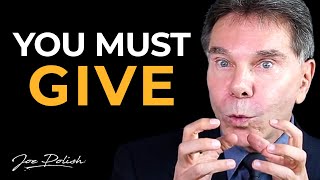
This transcript records Dr. Robert Cialdini presenting unpublished/new material on the reciprocity principle (part of a forthcoming revision of Influence) and answering Joe Polish's questions. Cialdini summarizes three features that amplify reciprocity — unexpectedness, meaningfulness, and personalization — and illustrates them with empirical and anecdotal examples (a candy-shop test: 42% higher purchases after receiving a chocolate; a supermarket surprise-coupon test: 10% higher total spend). The interview also covers ethics in influence, pre-suasion (the practice of changing recipients' state of mind before the message; demonstrated by a wine-shop music study), mention of a new Unity element, and that a revised Influence and an online course are scheduled ("end of next year").
Questions this video answers
42% more candy (visitors given a small piece of chocolate bought 42% more than those who did not).
Total spend rose by 10% on the day shoppers received a surprise coupon for a half-gallon of milk.
Anecdotal report: average delay fell from six months to three months for that client.
"Pre-suasion is the ability to move your audience into agreement with your message before they encounter it."
Scheduled for the end of next year (as stated in the interview).
Chapters
I like this one. This is the one I think is more important than the other two combined. If you can convince people that what you're giving represents something for them personally has been customized for them. Right. They will want to give back to you for you and your outcomes.
I'm really excited about bring in my good friend Robert Cialdini up on stage. So let me. Although it's not widely known yet, Dr. Robert Cialdini is revising his book Influence. It's just the most foundational book, although the Universal Principle of Influence remains foundational. He will be adding new research examples and digital applications because he's just completed the new reciprocity chapter. He wanted to share his first editions even before they appear in this new edition. This has never been shared with anyone yet before. So there's so much I could say about Robert Cialdini. But this is the world's leading expert with real scientific research on influence, which is applicable to everyone's business and personal life. So please join me in welcoming Dr. Robert Cialdini.
Thank you, Joe. I'm very pleased to be here. He's right. When we talked, he said, is there anything new and exclusive that you could provide to our Genius Network members? And I said, well, you know, I'm writing a new edition of my book Influence. And I have to say that book has been very kind to me. Sold a lot of copies, a lot of languages. I was in Poland a while ago, and I have a colleague there, Professor Wilhelmina Vosinska. She said, you know, Bob, your book Influence is so famous in Poland, my students think you're dead. And I thought that was an affirming yet sobering observation on the excess of the book. And that's one reason I decided to write a revision, something new, because I wanted people to know I'm still kicking, I'm still thinking. And so I just finished writing the chapter on reciprocation, the principle of influence, that says people feel obligated to give back to those who have first given to them. And I thought, well, there were several new pieces of information I thought I could share. And as we go through it, I hope you'll think about these insights and see if they're. If they're available for you to use in your own businesses. But let me just provide a first example that sort of takes us through a validation of how this principle works. There was a study done in a candy shop in Southern California one day for half of the visitors who came in. The manager met them at the door, greeted them warmly, and escorted them to the candy counter for the other half. He met them, greeted them warmly, gave them a small piece of chocolate, and escorted them to the candy counter where they bought 42% more candy than those who didn't get a piece of chocolate. And you might explain that in ways other than the rule for reciprocation that people felt that they had to give back after they had received. You might say, well, maybe they liked the chocolate and they wanted more of it. But if you look deeper into the data, the majority of those 42% more people who bought chocolate didn't buy who got chocolate, didn't buy more chocolate. They bought some other kinds of candy. So it wasn't what they had been given. It was that they had been given something that caused them to change their purchase decisions up to 42%. So what we know from that is that the act of reciprocation triggered the act of giving triggered triggers an act of reciprocation. But that doesn't mean that what we give is unimportant just because people get triggered. Here's what the newest research shows about what you can give first to your customers, your clients, your partners, your colleagues that will cause them to want to give back to you at the highest possible possible levels. That will cause them to be ready to give back to you, be standing on the balls of their feet waiting for the opportunity to give back to you in a major way. There are three things, three features. If what you give is unexpected, it's not just part of the normal exchange. You know how you get a holiday greeting card and you send one in return, that's not unexpected, that's just normal exchange. Right? Something that's a surprise elevates the willingness of people to want to give back to you. Secondly is if what you give is seen as meaningful by the recipient, that you've gone to a step to give something to them that's meaningful, right? Then they want to give something meaningful in return to you at a higher level. And finally, if what you've given is personalized or customized to their identity, to their preferences, to their current needs or challenges through the roof, they want to give back to you for that kind of kindness. Okay, so let's take some examples. Here's the first one that has to do with unexpected gifts. There was a supermarket chain that sent coupons to their shoppers regularly in the mail. And sometimes they would include a coupon for a free gift, a free half gallon of milk at the store. What they were disappointed in is that many of these shoppers who redeemed the coupon didn't then buy more other things.
Right?
So that is their total spend wasn't increased by the fact that they got a gift. So they tried something by a consultant, not me, told them about the research that shows when people get an unexpected gift, then they're more motivated to give back at high levels. So they did an experiment where one day everyone who came into the store got a coupon, a surprise coupon for a half a gallon of milk. Those people, their total spend went up by 10%. You know what 10% increase in total spend for a supermarket is? It's unheard of because the gift they got was a surprise. So what's the implication for you? If you're working online with people, send them a coupon out of the blue for one of your popular items or services, something, at least a discount for it. They're going to feel from that surprise more obligated to give something back to you. Okay, so that's the idea of something unexpected elevates the power of the rule for reciprocation. How about this meaningful thing? Let's go inside your organization. Suppose you have an idea, an initiative that you're in charge of, and if it is successful, it'll elevate the outcomes of your organization. It will elevate your reputation within it. And you want the people inside your organization to get on board to embrace this. And you send them information about this new initiative and you want them to incorporate it into the way they behave. Is there anything you can do to ensure the likelihood that they will do that? Here's a study that was done in the UK that gives us an example. It was done by the British National Employment Service Office who tried to get people who were not working, who were unemployed, to apply for and appear for interviews for a new job. And a lot of these folks, they weren't interested in getting off corporate, off welfare. They liked getting their unemployment and they didn't show up for these interviews. They would be scheduled for interviews and they just were no shows. What the researchers asked the office to do is instead of just saying to these individuals in a letter, we have scheduled an interview for a job at such and such a time, on such and such a date with Mr. Jones. Here's the time and the place. Please appear. They said in the letter, here's what we did to secure that interview for you. We called the office, we got a return call, we talked with the supervising manager. The supervising manager saw what was the most appropriate fit for you. We contacted that person and we made this appointment. In other words, they talked about the effort that they had gone through to get the appointment. And as a consequence, people spent the effort then to appear for it. They gave back in true reciprocal form what they had received. So what's the implication in your initiative? You need to tell people who you want to expend effort to get on board, the effort that you expended to develop the initiative, how many months it took, how many meetings it involved, how much interplay and revision of the initiative occurred before I'm presenting it to you now, that will cause them to be spurred more likely into action. Okay, so that's unexpected and meaningful. What's seen as a meaningful effort that you undertook to provide that gift or service first or favor? How about the last of these issues? Personalized, customized to the identity or the preferences or the challenges of the recipient.
Hey, I hope you're enjoying this video. And I want to let you know that I have a new book that's come out, and if you'd like to get it absolutely free, there's a link below in the description. Or you can wait till the end of this video or you can Simply go to joe'sfreebook.com and you can get a copy there.
I like this one. This is the one I think is more important than the other two combined. If you can convince people that what you're giving represents something for them personally, has been customized for them, they will want to give back to you for you and your outcomes. I have a friend who's a consultant who told me about a problem she was having with a particular client, a particular customer, who was notoriously a slow payer when she would send an invoice. And this was true of all of her friends in the industry as well. It would be typically about six months before he would pay. And she said, what can I do about this? What do we know about influence? I said, well, what do you know about this guy? And she said, you know, he lives in a different city, and I really can't find very much about him except that I know that he's an art lover. So here's what we decided to do. When she sent the next invoice, before she did that, she went to the art museums and galleries in, in her town where he would not have had access, Right. And she got a little postcard that depicted one of the exhibits there at the museum that he wouldn't have been able to see. And she wrote on the back of it from Anna and enclosed it with the invoice, I got an email from her. She said, you won't believe this. That postcard cut the delay in receipt of our money in half. We went from six months to three months for the cost of that postcard because it was personalized to something that she knew he liked. And then it was inscribed to him by her. Now, she didn't need me for this. She took the next step. She found out that not only was he an art lover, he collected modern art. So the next time, and the time after that, that she sent him an invoice, right, she included a postcard of a piece of modern art that he wouldn't have had access to. Now, this time she didn't write me an email. She called me, she said, you won't believe this. I'm getting paid immediately. Immediately. And all my friends want to know, how did you do this? And she said, I'm not telling them, but I'm telling you. You know how this will work? Now, with an invoice, include something so that in the moment that invoice is open, there's a gift. The rule for reciprocity dominates that situation right there. And that man, in this case anyway, succumbed to the rule of reciprocity. He wrote a check in that moment, right? And I think that's important for us when we give anything, if we personalize becomes more valuable. Let me ask. I'll give you one more example. It doesn't have to be just with a preference. It can be with a person's identity. How many of you have seen, or maybe your companies do this, that you send. You give gifts to customers and clients. Like a pen, right, with your company's name on it. A calendar at holiday with your company's holidays with your company's name on it. How many of you have seen that or actually participated? It's the wrong name. Sorry? It's the wrong name. It's your name. Not that customer's name, not that prospect's name. And that's what happened to me when I get things like this. This is from some company. I throw it in the drawer with 50 other pens with a hundred other, you know, with all these other names on them. And then I had one customer who gave me this pen that has my name on it, my name on it. It's for me. And on the other side is their name. And you know what I do with this pen? I carry it wherever I go. And every time I take out this pen, I notice and I remember the gift, the personalized gift that was given to me, it wasn't an advertising device. It was a gift, a personalized gift. Everywhere I go, it's in my pocket. You know how much this costs to do? Now you might say, come on, I've got thousands of customers. How about for your best customers? How about for your biggest customers? Talk. It takes about $3 to do that. Are your biggest customers worth that? I think so. Okay, let me give you. I'm going to finish now. In this new book that I'm writing, we have something called Reader's Reports where people who've read the book influence write to me. I ask them to write to me with examples of how they've seen one or another of these principles used on them or by them with great effect. And as regards the principle of reciprocity, here's a reader's report that I got from a guy in Australia. Here's what he says. Not long ago, we moved to Australia where my five year old daughter has been struggling to adapt to the new culture and find new friends. Recently, on walks around the neighborhood with my wife, she tried leaving gifts in neighbors letterboxes. These were really just drawings scribbled in crayon and then folded and taped together into a letter addressed to my new neighbors from Carlee at. And then she included her address. And this guy goes on to say, I thought it was pretty harmless. And I was more concerned that it might be perceived as a nuisance. I worried that we would be known as the phantom letterbox litterers. Then funny things started happening in our mailbox. We started finding cards, proper Hallmark cards addressed to my daughter that cost anywhere from three to five dollars apiece. Then packets of sweets and small toys started appearing there. If it wasn't for reading your book, I wouldn't have understood this. But the power of reciprocity is unbelievable. She now has a group of friends she plays with in the park across the road every day. Why I like this story is you see each of the three features that amplifies the power of the rule for reciprocity was included in those small gifts. As tiny as they were, they were unexpected. Suddenly there's a letter in the box from this little girl. It was meaningful because she created those letters herself. Right. She went to the. To the effort. Right. And customized for my new neighbors from Carley. Lovely. I love that example. So if we can all do that. Take that counsel, take that. Right. I'm sorry if we. I don't think this is working either. No. Hello. I'm going to use my old professor voice and just Shout this out. If we all can do this right, we will dramatically leverage the power of what we give first. If we can include one or another of these principles, and if we conclude all of them close to you.
So we can.
Yeah. And if we can include all of them, then everybody wins. Everybody wins. People get gifts, services, and favors that are for them, that benefit them, that give them joy, and they give back to us what's warranted from those kinds of resources. Thank you very much.
Okay.
We good? Yes.
All righty. What did you think of Robert?
Thank you.
What I'd like to do, I'm going to sit down with you and ask you some questions for a few minutes here. And so we'll get the other stool over here.
Great.
Thank you so much. Okay. Are we too far apart or is this good? All right, well, so is there a way to take the lights down for just a moment up here? Just these ones. I want to be able to see the audience and not have it be too bright. Okay. And I'm going to do some. Since you. Since you're here with Dr. Robert Cialdini at Genius Network, and how many of you have made money or dramatically improved your business as a result of Dr. Robert Cialdini's work? Okay.
Oh, wow. Makes me feel great.
Awesome. I mean, I don't know anyone that's made more marketers money, which I think in a lot of ways your intention when you first did all of this research was to teach people not only how to use ethical influence, but not getting taken advantage of by people. You make such an emphasis on the ethical use of influence. And there's. In the marketing industry, there's a lot of snakes. I mean, there just simply aren't. So I've always appreciated how much emphasis you put on the application of all of the research that you've done. Anything you want to speak to about.
That, you know, that's a big issue for me. It's always been a big issue. But it seems to me that being ethical can lead. We always say, well, it's a trade off. You're ethical. You might lose in the short run, but you gain in the long run. I think that's true. But I think if you use these principles ethically and wisely, you win in the short run as well as the long run. I'll give you an example of one of the principles in the book is scarcity. People want more of those things. They can have less of anything that's dwindling in availability. Last time I bought a big screen TV I was in electronic shop. I wasn't really looking for a tv, but I saw one on the shelf that I knew got great ratings in Consumer Reports, and it was on sale. And as I was standing looking at it, a salesman came up to me and he said, I see you're interested in this set at this price. I can see why. It's a great deal. But I have to tell you, it's our last one. Your last one. And he said, yes. And I just got a call from a woman from Scottsdale who said she might come down and get it this afternoon. 20 minutes later, I'm wheeling out of the. And I'm supposed to be the doctor of influence.
It's so funny, because you know this, and it's.
I know it. But here's the thing on the dimension of ethics. If that was the last one, I wanted that man to use the scarcity principle on me, genuinely. Because if I went back to my, you know, back home to think about it and then came back the next day and it was gone, I would have said, why didn't you tell me it was the last one? That's a piece of information. I. I wanted to know about a valuable resource here, a good deal. I want to know when it's scarce, I want to know when there are competitors, and I want to know when it's dwindling in availability. So people using, all of us using these strategies, honestly, there are allies. There are allies in the exchange we're in. We're informing people into yes. We're not deceiving them into yes. Now, if that man was lying, it wasn't the last one. There were 10 more in the back room. And when I took mine, he just went and put another one on the shelf and used the same strategy. Then he's not my ally, he's my antagonist. He's my rival in this process. So I went back the next day to see was there an empty. There was. There was. And so I went back to my office now and I wrote a glowing review for that shop and that man, because he was my ally. He was my collaborator in this exchange. That's how I would like all of us to act by using these principles. So we educate people into ascent. Yeah.
You know, I mean, I remember this story from years ago where this. I mean, I read it a couple decades ago about a man that took his two kids to a movie theater. And I think the kids. One was like, you know, 11. The other one was like, 13. And he said, I'd like, you know, two adults and one child and the person behind the ticket counter, you know, this is before the Internet of buying tickets. I said, you know, sir, I would have not known your son was one year older than the child's age. You could have got, you know, an adult ticket and two children. He goes, yes, you know, you wouldn't have known, but they would have known. And it always reminded me, you know, wow, ethics is about you, not about what you can get away with and that sort of stuff. And your knowledge and research is so powerful in the right hands and in the wrong hands it could be very dangerous. And that's why you've always been very good about.
Can I just add an addendum to your story? Not only would his kids have known, he would have known. He would have known that he's a cheater. That's not how we want to think of ourselves. Why would we ever, for that momentary lift in success, degrade the way we have to think about ourselves in terms of self concept that the only way we succeed is by cheating? No, we can do it with these principles and an understanding of human psychology and win in the short run as well as the long run.
Yeah. And I do believe in karma and I believe people that are not willing to operate that way, their punishment is their own existence. So let me ask you a couple of things. What is the most important rule for pre suasion or persuade? Let's do persuasion first and then I want to ask you about pre suasion.
So the most important rule for persuasion, of course. What do you put into your message to get people to move in your direction? I guess we can answer it in terms of a, a colleague of mine, a marketing professor at University of Florida, who set out to find the single most powerful persuasive appeal. What works best across the widest range of circumstances and populations and so on. This is your go to strategy. Use this one and you will be more successful than any other strategy. So he went and he started investigating this and I saw him about two years later at a conference. He said, bob, I found it, I found the single most effective persuasive appeal. It is not to have a single persuasive appeal. That's a fool's game to think that the same strategy is going to be optimally effective across all circumstances, all sets of conditions, all populations, all experiences with the buyer that you, you've had or relationships. It's silly. What you have to do is use the principle that's most, the appeal that's most appropriate for that situation in that time, that's the most successful persuasive approach.
Okay, so for pre suasion.
Now for pre suasion.
Oh, and define pre suasion.
Pre suasion is the ability to move your audience into agreement with your message before they encounter it. That is, get them in a state of mind whereby they are receptive or sympathetic to the core elements of your message before they get to your message. Let me give you an example. Do you know that there was a study that showed that if people go into a wine shop and there is German music playing, they become more likely to purchase German wine. If there's French music playing, they become more likely to purchase a French vintage. The concept is put in their mind. The. The idea of things that are German or French is in their mind. Top of conscious. Now, when they get to the choices that focus on what they experienced first guides their behavior into the sales setting. I don't know if anybody remember what song was playing when I came on this stage. They asked me, do you want. What song would you like to be played onto the stage with? Anybody remember was Think by Aretha Franklin. See, you know, I'm a public speaker these days, and most of the time when I get on stage, people play loud, upscale, highly energetic music. I'm not that kind of speaker. That's not. I'm not that kind of speaker. I'm not a motivational speaker. I'm an informational speaker. I'm an educational speaker. I don't want people thinking about energy and drive. And so I want them to take a step back and think about the content. And so that's the song I get played onto. In the same way that it's like German music, You're more likely to follow the concept that has first been made prominent at top of mind. Your behavior is likely to flow in that direction. And here's the concept. I think the great psychologist Daniel Kahneman won the Nobel prize in economics a few years ago, said in his view, the most important idea that he would want people to know is nothing is as important as you think it is while you are thinking about it. In other words, if a communicator can get you to think about a particular concept. French. Right. That causes you to overestimate its importance to you because it's top of mind. And as a consequence of that overestimation, you will move in the direction of it. So what pre suasion is about is the ability to change the state of mind that your customer is in or your. Your recipient of your message so that it aligns with the core features of your message before they experience it.
Wow. You know, so we've known each other for three decades and we've done some great interviews. And you have just an incredible body of work. And one of the greatest things that, you know, has happened this year as it relates to your work is I got to sit in on several days of you filming in my office an online course. He's never put together this training on an online course. And I sat and I know, I know Dr. Cialdini's work pretty darn well. I mean, he's been out to 100k meetings. He's been out to Genius Network meetings. We've done interviews on the subject. I've read his books. I've recommended his books for years. And I got to sit and watch him share the latest applications, methodologies of influence. And you've added a seventh one, which I am doing my best to create here in Genius Network, which is Unity. And this online course, when is this coming out and when is this going to be made available?
Because we're in the final stages of developing it. We're very excited about the online course because it gives a chance for a greater reach of the information than we ever had before in in situ rooms with 30 people doing a workshop that doesn't really give the information much in the way of legs to get out there, but a digitized version of it. That makes me excited.
And why? What will happen to someone's life if they really develop and master the skills and use the scientific research that you have? I mean, this is not just ideas. I mean, you have proven this works better than this. And you've got just so much of that in influence and in pre suasion. And your other books, if someone became a master in your content, what would happen to them?
They will become more successful, not just in their business world, but in their personal world. And we're talking about the influence process. We're talking about how people respond to particular triggers that were built into us from childhood or even before evolutionarily. And if you can make contact with those triggers, people will move in your direction. And if you do it ethically, you will be successful. That's one thing. And you will feel good about the success. You get to feel really proud of this because you were informing people properly as to the best choices to make.
All right, now we're out of time, I want to ask you one last question. Who do you think or feel is the most influential human alive or Dead. And why? And I didn't ask him this beforehand. I'm just curious to see what you would say.
You know, I'm not going to go that far back. I'm going to go today. It's Warren Buffett. It's Warren Buffett.
Why?
Because he not only understands the markets and how investments and financial choices work, he and his partner, Charlie Munger understand human psychology. In their spare time, they read books about human psychology. They know that the markets are not made up of econometric models. They're made up of people. And so they understand not just the laws of finance, they understand the laws of human psychology. And that combination of being a brilliant investor and analyst on the financial side combined with being an eager learner and master of the psychology of human behavior, I think I saw in the last report of what a single share of Berkshire Hathaway stock is going for on the New York Stock exchange. It was $320,000 a share. We've never had anything like it in our markets. Never anything close. It's that combination of understanding the markets and finance and understanding the psychology that undergirds financial decisions that produces this level of influence.
Well, okay, so you don't know Warren Buffett personally?
No.
No. Okay, so this is really cool. I'm so glad you actually said that, because I'm just making this up in my head as we're sitting here talking. So I know Warren Buffett has actually said, I believe the book Influence is one of the top 20 most important books he's ever read. I mean, he loves your book. You don't know him personally. You just made that statement out of a question I asked you. We have an audience here of quite influential people. I want to take a clip of what I am answering this question, and I'm going to send it out to everyone. And I want to figure out how to get Ward Buffett to actually watch that and then see what happens. That's going to be one of the things I'm going to make sure happens, because that is pretty cool.
But I have to say that Warren Buffett is not alone in making those decisions. He has a partner named Charlie Munger who's super brilliant. And once again, it's a collaboration. It's a combination of ingredients that produces these levels of success that are just unparalleled.
Yeah. So here's what I'd like to do. So when is Influence, the new version, coming out?
It's scheduled for the end of next year.
Okay, great. And we're going to. Obviously, I'm going to bring Robert into whatever I can into your world. Because it will enhance every single thing that we do in Genius Network, with marketing and across the board. Any famous last words? Anything I should have asked you that I didn't. That you'd like to share before we hop off stage?
No. Except that, you know, I was truly touched by the session that went before me on addiction. I know it's important. I have had a close family member who suffered from it and committed suicide as a result. So I know the emotion and the importance of it. And I just want to give you a high five for that.
Thank you. And here's what I'd like to do. Because you wouldn't say this almost two years ago, before I even had a foundation, you heard what I was doing. This is you and Bobette. And you literally gave me $35,000 for genius recovery. That's the kind of man that he is. And I just want to publicly thank you and Bob for that.
Yeah, yeah. Thank you. I appreciate. Okay.
I hope you found that video awesome and useful. So if you want to get a free copy of my book, I want you to click here. And if you want to watch some more videos that will be useful and awesome, click here. Go ahead. You're over here.
Do it now. Come on.
Thank you. Watch them.
More from Joe

This FBI Trick Can Command Respect Without Saying a Word ft. JEFFERSON FISHER & CHRIS VOSS

How To Stand Out, Be Different, and Create Raving Fans, Customers, and Employees ft. Jesse Cole



90% Of Businesses Fail In Their First Year, Here's Why! ft. Dr. Benjamin Hard & Dr. Robert Cialdini

The 1 Piece of Business Advice I Got From Elon Musk That Changed Everything Ft. Kamal Ravikant

The 6 Traits You CAN'T Teach in Entrepreneurship ft. Richard Branson & Gino Wickman

The Leg Method: How to Make Your Book into a Million-Dollar Asset ft. Anna David


7 Millionaire Mindset Hacks for Daily Success and Wealth ft. Brian Tracy & Dan Sullivan
