When You Understand THIS, ANYTHING Becomes Possible
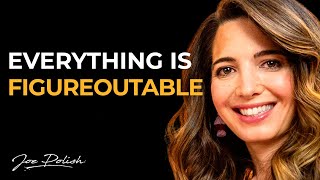
Marie Forleo, Tim Nelson, and Dan Sullivan discuss how problems become solvable when you believe they are. Forleo's framework: everything is figureoutable unless it violates a law of nature. Nelson's Heartworks is growing lab-made heart muscle to treat congenital disease. Sullivan argues short books under 60 pages work better for marketing than long ones.
Chapters
One day when I was coming home from school, this is in New Jersey. I'm walking home and I hear the sound of music kind of blaring from my house, which was not unusual. My mom likes to dance. As I got closer, the sound was coming from an unusual orientation, like high up. I look up and I see my mom perched on the top of our two story house, very precariously. And you gotta get. I'm a little kid. So I'm looking at my mom on the edge of the roof and I'm like, mom, what are you doing? Are you okay? And I. And my mom yells down. She's like, re, I'm fine. Don't worry about it. The roof had a leak. I called the roofer. He said it was gonna be like 500 bucks. I said, screw that, we've got some asphalt in the garage. I'm gonna fix it myself. That's my mom. Another day, I come home and I go in the house and I hear the sound of this little radio coming from the back of the house. So I walk to the back of the house and turns out she's in the bathroom. And I push open the door and there's like pipes sticking out of the wall and there's like dust in the air and there's just. It looked like a bomb went off. And I was like, mom, are you okay? What? She's like, ree, I'm fine. She's like, I'm just retiling the bathroom. I saw that a couple of tiles had cracks in it. I didn't want the bathroom to get all moldy, so I'm doing it over now. You have to understand, I'm a child of the 80s, right? So this is like pre Internet. This is pre Google. This is pre YouTube, pre TikTok, pre everything. And my mom only has a high school education. So one day I come home from school. It was a fall, it was around this time, and it was getting dark out. And as I approached the house, it was completely dark and completely silent. And for an Italian American home, that's not good news. So I walk inside and I had that feeling that something was wrong. And I didn't hear anything. And I'm thinking to myself, like, where's my mom? Where's the Tropicana orange? And then all of a sudden I hear these little clicks and clacks coming from the kitchen. So I tiptoe in and I see my mom and she's hunched over the kitchen table. It looks like an operating room. There's like Little screwdrivers, there's electrical tape. And in countless little pie is a completely dismantled Tropicana orange radio. And I was like, mom, that's your favorite thing. Are you okay? What happened? Did it break? And she looks at me and she's like, re, it's fine. She's like, the antenna was a little off and the tuner was a little not working, so I'm fixing it. And so I sat there, my arms crossed, watching her work her magic. And I finally thought to ask the question I should have always asked, which was this. Hey, mom, how do you know how to do so many different things that you've never done before and nobody's showing you how to do it? And she puts down her little screwdriver and she cocks her eyes. She's like, ray, what are you talking about? This is no big deal. You can take anything that you want to figure out in life and you can fix it if you just roll up your sleeves, you get in there and do it. Everything is figureoutable. And I was like. And I just let that phrase wash over me. And I kept repeating it in my head. I was like, everything is figureoutable. Everything is figureoutable. Like, holy shit. Everything is figureoutable. And so that little phrase took root in my soul. And from that moment on, it has become the driving force in my life. You know, from healing and getting myself out of an abusive relationship when I was in high school to. To figuring out how to help pay for college, to getting every job I've ever had, from being on Wall street, to bartending in some of the top restaurants in Manhattan to selling glow sticks at mega clubs. Anything I could possibly do. I just had weird oddball jobs. I was a Nike elite dance athlete. I created tons of fitness videos and then eventually pulled everything together to have the business that I have today. And so this phrase, everything is figureoutable. It's so incredibly simple, but it's so incredibly transformative. And so I feel like if you're willing to try it on and willing to allow it to drive your life, there is nothing. There is no problem. There is no circumstance, There is nothing you could possibly face that you won't find some way to transform or transcend. Now, if I may, I actually remember talking to Joe about this when this book was coming out. And he actually said something to me. And this is like, why we're really good friends. Cause we're really honest with each other. And he said, I don't know if you remember this. You're Like, Marie, what do you really like? Everything is figureoutable. Like, that's a super lofty promise. What about addiction? What about death? What about life changing illness or diagnosis? And I said, that's an awesome question. Let me tell you my response to that. So I've been talking about this idea literally for probably 15 to 20 years now, sprinkling linen. And so I've had the opportunity to hear a lot of different responses to how people interact with this idea. And the first time I shared it publicly, besides my own audience, was on Oprah's stage. So she had an event called Super Soul Sessions. And it was kind of like a TED Talk that I gave for her and her audience. And then she shared it with a wider world. And so I got an email one day from a woman named Jen. And Jen said, marie, I had watched your Oprah talk. It was actually an idea that my mom had been trying to instill in me. And I showed my mom. We both loved it and we were so on board. And then everything changed. My beautiful mom, who meant everything to me, got diagnosed with pancreatic cancer. And all of a sudden, nothing seemed figureoutable. But she said, when I stepped back and took a deeper look, I realized something extraordinary. What I could figure out was how to get nursing care for my mom. And we live in a rural area. What I could figure out was how to find foods that she could actually tolerate. And then this is the big one. I could figure out how to get medical equipment. So my mom, who wanted to stay in her house for the last of her days, could spend the last five weeks exactly where she wanted to be, with her family and surrounded by her friends. And she said it made me realize that, yes, indeed, everything is figureoutable, even the things that seem so difficult. And then the last thing I'll say before I go back to that, because I think it's important to have a mental framework to work with this idea. There's actually three rules to the figureoutable framework if you want to write this down. So rule number one, all problems or dreams are figureoutable. Rule number two, if a problem or a dream isn't figureoutable, it might be a law of nature, kind of like gravity. If a problem, if you don't care enough to solve a particular problem or a dream, you have to go back to rule number one. So essentially, here's how it works. All problems or dreams are figureoutable if you care enough. And that's the big one. Does that make sense? So if you don't care enough about it, you're not going to spend the time, the effort or the energy to go after it.
Am I, Tammy?
Yeah.
Time to touch money. Yeah. So heartworks was the evolution of a family that I'd like to tell a story, and I'm not going to tell the actual story, but it's going to be an example of a story that a mother being expecting mother is gets a 20 week ultrasound on her belly and there's a half a heart missing. And this is the most feared condition that a pediatric cardiologist will tell an expecting mother that half the heart is missing and it's called hypoplastic left heart syndrome. With that, we will then proceed to educate you. There's no cure for it, there's nothing we can solve the problem for. But we can do three open heart surgeries at three days of life, at three months of life, and at three years of life. We'll do three open heart surgeries. We'll carve your child's heart open, we'll put it back together, and it will be good enough to last some amount of time, but it won't be a cure and it won't last forever. And that moment is typically in the Midwest, 99% of families say, okay, let's do the surgeries. It's typically about 10% on East coast and west coast that families say, okay, let's do the surgeries. That means 90% of families will be saying, no thank you, and we'll have comfort, care. There's other first world countries in this planet that do not offer these surgeries because the outcomes are not good enough. And then imagine this, that when that child gets to be 10 years old, 15 years old, some point the heart starts failing. And now for your son or daughter or loved one, their only chance at survival is somebody else dying. Think about that, right? You go through all of this and you get to a successful point and the only chance of long term survival is a heart transplant, which means somebody else had to succumb to their illness trauma to be able to have your. I honestly cannot imagine even being a provider interacting with these families. I cannot imagine what that family feels like through this journey. So abundance mentality, the expertise in a room like this and the technology that's available to us, we can do better than that. That doesn't have to be the reality. This isn't a scare tactic. This is an exciting opportunity that we're sitting on. And so the technology that's fundamentally changing this, that heartworks is driving is simply this is the geeky creepy part that you gotta get out there, Joe. That we can take a piece of your skin the size of a pencil eraser. We put it in the lab, we grow it for many months, we train it to become an induced pluripotent stem cell. Some of you might know what that is. It's a pluripotent cell that looks like an embryonic stem cell, but it's genetically identical to Joe. Can you imagine that creepy concept?
Isn't it weird as hell?
So now we've got a pluripotent cell, Joe, that is your genetics that can give rise to every single cell in your body. Every single cell in your body. These cells in the lab can give rise to. Now then what we do is we train that to become your beating heart muscle. And so we literally recreate your heart muscle genetically identical to you. And now we have FDA permission to do the world's first clinical trial where we will be transplanting the patient's own heart back into the patient's own body so that they can live longer with a stronger heart. This is the game changing technology that is possible today because of Shinya Yamanaka and the Nobel Prize in 2012 and all the work of the scientific community. We now are sitting on this rocket ship, engines lit, and we're ready to take off by curing congenital heart disease. So heartworks is formed as a clinical stage nonprofit that can develop the people, technology and processes to take this technology to the market and cure congenital heart disease. And as we do that, we are going to build sustainable business models that can cure other more common diseases. But where focus goes, energy flows, and heartworks is focused on congenital heart disease for these most severe forms of kids that have literally no options. And this technology is rewriting the book and is literally rewriting history as we sit here today.
Yeah, yeah.
How do you recommend that we take philanthropic research and turn it into profitable innovation?
I guess I would say there's three parts, but it has to start with one philosophy. The first philosophy it has to start with is there is no exit strategy. If you go into the model with an exit strategy in mind, it's going to fail. Your exit strategy has to be the cure. Your exit strategy has to be the depletion of X. Your exit strategy has to be eliminating the need for you to exist. There can't be an exit strategy, because if there is an exit strategy, you're gonna pop off and you're gonna have something that doesn't work, and it's gonna be mission misalignment so first thing is no exit strategy. Our exit strategy is a cure for congenital heart disease, Plain and simple. Then there's three steps that I think have been important for us in our journey. The first is you have to define the island that you're on. You have to wall yourself off and say, we are focused on congenital heart disease. What do we need to know about congenital heart disease that would fundamentally change the outcomes? That was, how do we make the heart stronger? That is the core issue. And so our island that we built was we need to make the heart stronger. And that was the. Everything that didn't make the heart stronger. We ignored the care packages, the good things that we could do at the hospitals, the whatever didn't fit our mission. Our island that we walled ourself off on was we were going to build autologous hearts, period. So build an island that gives you intense focus. The second thing is you have to build assets on that island. You have to amass the resources on that island. You have to start building assets that somebody else is going to care about. You have to ultimately be able to sell yourself to somebody else to get more money in. You can't just write a paper and think that that's an asset. Nobody's going to pay you for that knowledge. So the assets we created were the largest community of genetic samples, the largest samples of bioengineered samples. We created assets that we then could go to the hospitals and say, this is going to increase your value of what you do. And that third part of that is you got to build bridges off the island. Then we went and got the hospitals to invest in us.
Right?
So build the island, build the focus, Build some assets within your addiction network within your. That you can go market and then build the bridges. And the bridges, I would say, in this no exit strategy, have to be who's profiting from that island existing.
Right.
Congenital heart disease as it exists right now. Hospitals profit. That's the facts. I'm not trying to call anybody out. It's just the facts. The surgeries and the care delivery, they profit from congenital heart disease. That's been done for three decades.
Right.
We have to reach out to them and get them as a partner in us because that's where the money is that can start this thing flowing in a sustainable way. So those are the three steps. But it really starts in my mind, is your exit strategy has to be the cure.
Yeah, I love it. I love it.
Yeah.
The number one.
So go to. I used to go to a lot of Events like this. I only go to Joe's now. And you do. You have a lot of people selling glop. And it's. It's always a tool or it's always a thing or a revenue number. And people get stuck on it. You know, more money, webinars, learn how to write, copy, whatever. All great skills. But then we got people that are, like, comparing revenue numbers and they're comparing these metrics on whatever, advertising, and just observing. It's like, I don't think anybody remembers what they actually want. Like, what is the point of all of this? Because now we're in the race of, oh, well, that person has this kind of. This person's spending a million dollars a month on ads. I gotta spend a million dollars a month on ads. And so I said it to Jeff Moore the first time, actually, and he's like, hey, so I'm doing this and this. And he was working through some stuff, and I said, well, why don't you. You just stop? Hey, I do. It's like when you go to a doctor, like, hey, when I do this, it hurts. He's like, okay, well, stop doing it.
You know?
So I was talking to Jeff. I was like, so stop doing it. He says, yeah, but I'm really good at it. I can be, you know, like, I'm better than anybody. And, like, cool. So you're going to win a race that you don't even want to be in. And he just hung up. He texted me. He's like, I don't need to hear anymore. Thank you. And so it just became a thing. Like, look, you're not going to. You know, people say, hey, should I do this? But I could be good at this. But I could be better than this person at this. And I'm really competitive. It's like, well, first of all, if you only do something because you know you're going to win, that's not competitive, that's petty. Second of all, what are you really winning? And so that's the question. What race do you want to be in? So I'm. It's like, all I care about personally for all of you and everybody I talk to is that you get what you want out of life because you show up and you come to these events and you work really hard, and it should probably be worth it. That's where I'm coming from now. So that's. As an investing thing, you really do have to know yourself. Like, anything else. You ever seen one of the reasons people fail miserably in crypto is they look at the technology. You ever hear somebody be like, that's a problem. Bitcoin fixes this. They're like, no, it doesn't, because you're going to behave the same. Bitcoin doesn't fix anything if you keep behaving like an idiot. It doesn't, right? So it's like, I'll give you a different example, is you watch people and they're like, I'm going to do this diet. Like, that diet didn't work, so I'm going to do this one. And that one didn't work, so I'm going to do this one. And they think they're gauging the efficacy of this. We'll call it a technology, right? This tool. But if they were like a reality show and you're watching from above, you would see even though they're changing out the technology, their behavior is almost identical the entire time. They're not gauging the efficacy of the thing they think they are. It's like, ah, the S and P wrecked me. Like, no, you wrecked yourself. Like, we talk as if we were laying in bed and the S and P just kicked the door down and, you know, rummaged through your stuff and held a gun to your head. But it's actually like, no, it's your behavior. So that's the biggest reason people fail in crypto is it's so volatile. You're so emotional, and you already don't understand your behavior at all. And so we turn to technology and we're like, better. Technology is the answer. Bitcoin fixes this. But from a technology standpoint, if your car started five times out of every seven you tried to turn it on, you'd be pretty pissed off about that. That would very clearly be an impediment to your goals. You know, like, you're trying to get to the office, your car won't start. Or if your computer turned on five times out of every seven you try to turn it on, you'd be like, this is shit. This is unacceptable. I can't get anything done. And yet, when you do what you expect to do five days out of seven, I'm gonna wake up at 5am every day. And then you do a five out of seven. You're like, yeah, that's pretty good.
Yep.
So we're incredibly unreliable, which is why I love the AI people in the room that are trying to remove as much of that unreliability as possible. So we just have to be aware of that, because we will go into crypto and we will study it and we will know it and we will behave ridiculously and we'll be like, yeah, this technology is dangerous.
Hey, I hope you're enjoying this video. And I want to let you know that I have a new book that's come out and if you'd like to get it absolutely free, there's a link below in the description. Or you can wait till the end of this video or you can Simply go to joe'sfreebook.com and you can get a copy there.
Another thing that I notice, clients as they've really become successful, actually, not so much that they've become successful, but they've really become free. Freed up their time, their money, their relationship and their purpose. They stop competing. It's just something I noticed. They stopped competing and what they're looking more for, where it's not about cash anymore, it's about other people's capability. So I write a lot, actually. When I was 70, I said, you know, what a really neat project would be is to write 100 books in 100 quarters. Okay. And they're small books. Anyone who's seen our books, they're, you know, they're about 60 pages. And I'm just trying to think Barnes and Noble was one of the big stories. I can't think of what was the other. Borders. Borders. Borders had a survey of ebooks and they, they. So ebooks for the first time actually gave publishers a way of measuring when someone started a book, how far did they get in the book. If you bought a book, you got a best selling book, but hardly anybody's read more than 10% of the book. What they discovered is that if a book is over 200 pages, 3% finish the book. This is nonfiction. This is not fiction. Fiction. If it's a good story, everybody finishes the book. And then if it's 100 pages, only 10% of people finish the book. But if it's less than 60 pages, 60 pages or less, 80% of the people finish the book. So I said, I'll just write books that are copywise less than 60 pages. And a lot of people, if they have a book they've been working on for 20 years and it's got 25 chapters, they would have been better to produce 25 little books. Take a chapter, make it a book, take a chapter, make it a book. Especially for entrepreneurs, because you're not writing the books for the money. You make your money with your business. The books are a marketing strategy. So I've done that in 30 quarters I've written 30 books and what it does, and I didn't realize the value of doing that, but it gave when a capability like Ben came along and I met him at my very first 100k meeting and Ben came over and he had a break and he sat down with me and he said, I notice you write a lot of books, but you don't write for the popular market. And I said, you know, if it's not finished in 90 days, it's not going to work with me, you know, so I don't take on any project I can't finish in 90 days. You know, like, I just fall off a cliff after 90 days. And I'm sure not going to attend any meetings and I'm sure not going to deal with a publisher. And he said, well, I, you know, I know how to do that. And. And he's got a great style. I mean, he just has a beautiful, beautiful public reader style, major market style. So when he sat down, something clicked in my brain and I said, I think this is good. And I think. I don't even know if it was a handshake. I don't know if he brought me an impact filter the next morning. Yeah, yeah. And I. Success. Yeah. But the way we did it, and this is a way of thinking about 10 times how we put the collaboration together. Because you couldn't hire Ben. There's no way of hiring Ben. Okay. You can't get this kind of talent by hiring them. Okay. And we don't have that kind of talent inside the company. What we're looking for right here. So he knows the entire territory and he knows all the other people who can supply the capability that he doesn't know about. I don't know any of that stuff. So what I realize is that at the level we were operating with Ben, and then the other great collaborator on the project is Tucker. Max and Tucker, you know, Tucker is just. Tucker is the map maker for the publishing world. He really knows his stuff. And so originally we thought Ben's agent and publisher would be it. And that turned out to be not true. So we were at a Genius Network meeting and Joe had it on publishing. And Ben was there for obvious reasons, and Tucker was there for obvious reasons, but Reed Tracy from Hay House was there. And I remember I walked into the room in Tempe. I walked into the room and Reid was sitting there. And I said, hi, I'm Dan Sullivan. And he said, I know who you are. And he said, you know, he introduced himself and he said, I followed your stuff for years, but you don't write major market books. And I said, well, that might change. And so Tucker and Ben took Reed out that night and they essentially had the deal by the end of dinner for one book. And then as a result of the really fast start of the first book, Tucker and Ben worked with fried. And so we have a 10 year, 10 book contract. And Ben determines every year what the book is. Yeah, I think one no, but I want to tell you this. So people say, well, what's the financial deal? And I said, well, with a book, there's an advance and there's royalties. And they said, so how do you split it? And I said, well, real easy. I have a really easy split. It's called 100% zero. So Ben gets all the money forever. Ben gets all the money for the book. And people say, you're giving away all the money? And I says, what money? What money are you talking about? There wasn't any money until you put the collaboration together. The collaboration created the money. How do I get paid? Every once in a while, somebody who reads a book signs up for the program. So far, 400. Okay.
I hope you found that video awesome and useful. So if you want to get a free copy of my book, I want you to click here. And if you want to watch some more videos that will be useful and awesome, click here.
Go ahead. They're over here.
Do it now.
Come on.
Thank you.
Watch them.
More from Joe

This FBI Trick Can Command Respect Without Saying a Word ft. JEFFERSON FISHER & CHRIS VOSS

How To Stand Out, Be Different, and Create Raving Fans, Customers, and Employees ft. Jesse Cole



90% Of Businesses Fail In Their First Year, Here's Why! ft. Dr. Benjamin Hard & Dr. Robert Cialdini

The 1 Piece of Business Advice I Got From Elon Musk That Changed Everything Ft. Kamal Ravikant

The 6 Traits You CAN'T Teach in Entrepreneurship ft. Richard Branson & Gino Wickman

The Leg Method: How to Make Your Book into a Million-Dollar Asset ft. Anna David


7 Millionaire Mindset Hacks for Daily Success and Wealth ft. Brian Tracy & Dan Sullivan
