Why Effective Communication Is Your Most Valuable Skill Feat. Jordan Peterson & Les Brown
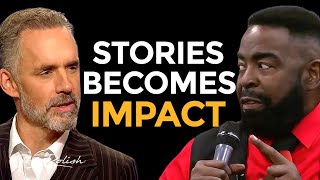
Jordan Peterson, Les Brown, and others discuss what makes communication work. Peterson stresses truthfulness and verbal fluency. Les Brown shows how storytelling and strategic questions move people. Weldon and Bowen share systems for using speaking to grow a business.
Chapters
You know what, you are so good at debates and making your case and backing it up with, you know, not only your own view, but stats. I mean, you have this incredible ability to resource, you know so much. How does one develop that skill? I don't know if everyone can, because.
You can to a greater or lesser degree. I mean, it's helpful to have the innate ability, let's say. So one of the things people differ in, for example, is a trait called verbal fluency. It's associated with extraversion and sociability and positive emotion, by the way. But verbal fluency is the rate at which you can think up words. And there's massive variation in that. So for example, if I had all of you, you can test it very easily. So imagine I had all you people write down as many words as you could that begin with the letter s in three minutes. Okay? Some of you would produce like 30 words and some of you would produce 150. Like, it's a huge variation. And it's, it's associated with verbal intelligence, which is in turn associated with general cognitive ability. But there are other elements of intelligence that aren't verbal. So you can have lower verbal fluency and, and be very good at spatial intelligence, for example, or manipulating images. But high verbal fluency is very useful with, with regards to a career as a debater or public speaker. And I mean, I don't know if you know who Camille Palia is, but she's off the charts in verbal fluency. Ben Shapiro, he's another, like, machine gun speaker. Russell Brand, Those are the people I've met in my life who are the most verbally fluent. And that's huge. Part of that's an innate skill in terms of developing your ability to speak. I would say, well, there's a variety of things that you can learn to do. I don't debate to win. I'm not particularly interested in winning. I stopped doing that when I was in my 20s when I learned that that was a counterproductive strategy. What I'm trying to do when I speak is to say what I believe to be true. And that's a long term victory. Like the truth is a long term strategy.
Right.
And it's the opposite of manipulation. And so all I'm trying to do is to formulate my words as clearly as I possibly can. And some of that's an embodied sense. Like if you, you can learn to, you can learn to do this. It's really worth learning. Although it's very unsettling when you start. You, you want to feel out whether or not the words that you're saying are like firm. Imagine you're crossing a swampy plain and you can't see into the water. You know, there's a trail and underneath the water six inches or so, there are well set foundation stones. And you can sort of feel them out as you make your way. That's how Moses went across the Red Sea, you know, the sea of chaos. You can tell when you're speaking if you pay attention what words you're saying make you confident. And that's a way of telling that there's firm ground under your feet. And it's the opposite of being self conscious. You know, if you start speaking publicly and you become self conscious, it's because you've become concerned with how people are responding to you. Well, it's not about you. It's not about you. It's about the validity of your words. And if you're focusing on what it is that you have to say and you find the firm words, you, you'll be a compelling public speaker. And that's the case too, even if you're not particularly verbally fluent, because people will be able to tell that what you're doing is wrestling with the ideas at hand and trying to find your way forward. And everyone wants to see that. That's a kind of high wire performance. And so, and that's way different than wanting victory. Like victory, there's lots of different kinds of victory. You know, there's the egotistical victory of the moment and there's the setting the foundations for success across the broadest possible span of time and place into the future. And the truth is a way better long term strategy, like you might pay for it in the present, which is why people lie, obviously. But, so you want to find the right words now so you, you can learn to do that. You got to listen to yourself talk and you got to think, well, do I actually believe that or am I trying to impress this person or am I trying to close the business deal? You know, is there, am I manipulating the situation so that I get what I want rather than merely trying to represent the truth? Now you might say, well, why shouldn't you get what you want? And the answer is, well, what the hell do you know? I mean, how often have you been wrong about what you want? Lots, I presume. And how often have you got something what that you wanted, maybe by the, by a route that wasn't the straightest, let's say, and found out that that didn't do you Any good at all. It's much better just to say what you believe to be the case. And that also helps you build a foundation for speaking into the future. It also allows you to draw on your own experience. You know, like, there isn't anyone who can't comport themselves in a manner that's interesting. One of the things I learned as a clinician was that, and I had a very wide variety of clients, ranging from people who were just barely clinging to the edge of the earth by their fingernails to people who were extremely accomplished on multiple dimensions, you know, and even the simpler people, even the cognitively impaired people that I dealt with, who had, in some cases, virtually nothing going for them. If I could listen hard enough and get them to talk about what they knew, they were immediately compelling and interesting, and they had things to say, and I had things to learn from them. And so you can be a compelling public speaker if you actually talk about the things that you know to be true. Right. But that means you have to forego the ego games that are associated. It's the same in a. In a debate, you know, it's a victory if you clarify your thoughts in the course of a discussion. That's a victory that's sort of independent of the perceived victory of the moment, let's say. Now, the other thing you can do on the public speaking side is you watch, watch your speech. And you should eliminate ums and likes and all those filler words that people use that has to go. It makes you inarticulate. And you can learn to control that. And instead of filling the pause with an or a like or a, you know, you can just be silent. Like, there's nothing wrong with taking a pause and collecting your thoughts. And you want to have your goal in mind. Like, when I go on stage, when I'm doing my lectures, when I'm touring, I always have a question in mind, right? And that's a priority. It's like, okay, what am I talking about tonight? Here's the question. And what does the talk consist of? It consists of an attempt to not only answer that question, but to push the answer to the question farther than I've been able to push it before. And that adds some novelty to it. And then the talk becomes an exploration with the audience. And that's way more interesting for everyone. You know, the last thing you want to do is, like, read. If you can avoid that. Don't do that. Don't do that. No matter how good your presentation is, you're going to lose most of the Audience, if you read it, best to have. If you're going to use PowerPoint, use images or just a couple of phrases and you can read the phrase and then discuss it. But people want to see you actively engaging in the ideas. They don't want to hear some canned and stereotyped set of responses. And you're not there to please the audience, you know, you're there to figure out something with everyone. And what else can you do when you're in front of a crowd? You're going to be afraid of the crowd, but you shouldn't be talking to the crowd. There's no crowd. You can talk to an individual, everyone. So what you do and you pick out people in the group and you talk to them, you know, and you look at them and when you walk on stage, you look everywhere so that you're not afraid of what's in front of you. And then you just talk. And you always pick people out and look at them and see if they're paying attention. And if they're not, well, you got to play with the audience, you know, and so what is it? Get rid of the filler words, get rid of the idea that you're there to accomplish your goal, your narrow goal. Try to say what's true. See if you can find your way, find the words that make you feel solid, find it's the opposite of self consciousness, play a bit, explore, have a question firmly in mind, you know, and risk some failure too. That's fun. You go out on stage like I never know. When I go on stage for a talk, I never know if it's going to work. And neither does the audience. And so they're all. Part of what grips them is the fact that I could just miss the mark, you know, that it could go nowhere. And that's a real challenge to see if you can put together new ideas on the fly and address the issue at hand and to bring everyone along for the ride. And that's. There's no failure if you do that. Even if it doesn't work out that well, at least it's a noble attempt that went somewhat sideways. That's something. And then people get to know who you are too, and so do you. And that's a good deal, can be a good deal.
So to that. That point to get to know who you are. So you have put yourself many times in positions, having discussions or debates or interviews with people that, you know, dislike you, you know they're going to try to challenge you. Are you doing that? I love to have you break down to reach people that you feel need to be educated on a different way.
Of thinking about it.
Are you doing it to help yourself get better at thinking through these difficult sort of challenges?
I don't.
Hey, I hope you're enjoying this video. And I want to let you know that I have a new book that's come out, and if you'd like to get it absolutely free, there's a link below in the description, or you can wait till the end of this video, or you can Simply go to joesfreebook.com and you can get a copy.
I don't set out precisely to put myself in situations like that. It's more like they arise. You know, I've done a lot of interviews, and some of them have been with people who are genuine interlocutors, and others are people who want to play a game. And so I give people the benefit of the doubt. So if I meet someone, I assume that we're playing a straight game, and then I watch them, and if they're playing a straight game, then. Then I treat them politely. And if they're not playing a straight game, I think, okay, what the hell are you up to? And the problem is, for them generally, is I was a clinician for a long time, and tricky. Journalists think they're tricky, and they're nowhere near as tricky as the people that I've dealt with. They're not even in the same universe. And so I'm serious. And so if I think, okay, you're not playing a straight game. I see, so now we're playing clinician, are we? And so then I can usually figure out what the person's up to, and. And that's usually not very good for them. So. And I don't like doing that. You know, like, when I meet someone socially, I'm not bringing my clinical eye to bear. It's the polite thing to do. And the appropriate thing to do socially is to assume goodwill and meet people there. And if you're not naive, that's a form of courage, you know, because I could be very skeptical when I meet people, but I'm not. I think probably you're playing a straight game, at least mostly you are. And good, then we'll go. We'll proceed on that basis. But if that's not the situation, then I'm also prepared to play that game. And so that's worked spectacularly well upon occasion. Yeah. And it was. It was often with journalists who. They weren't there to play a straight game at all. And they Were one of them confessed, in fact, woman named Nellie Bowles, who. She got me probably more than anyone else did because she was. She was very, very devious. Very, very devious. And she fooled me into thinking she was someone other than who she was. And she admitted several years later that her role at the New York Times was to seduce essentially the people that she was interviewing and then continued to talk to them until they said something that she could twist into reputation destruction and elevate her status in consequence. She said lots of the New York Times reporters are playing that game. And that's a, That's a pretty. That's a psychopathic game. And she was particularly good at it. Now, she did admit it and apologize, but those things aren't easy to change once you practice them. And so, you know, maybe she learned her lesson and maybe she didn't. So. So I don't look for trouble, you know. Well, I don't. I don't look for trouble. And I've avoided universities mostly since about 2018 because they just got way too annoying. I don't know why anybody ever goes and speaks at a university. They're a pain in the neck. They don't pay anything. They think that it's a privilege for you to speak there. And sometimes it is. You know, there is occasions where that's the case, but mostly it's just. It's just not worth the trouble.
Yeah.
And so I don't. I do that rarely, you know, and still now and then, but rarely in terms of interviews. Mostly what we've changed as a family is I won't do an interview without recording it. And so often now if I run into someone who's playing games, we just release the whole recording. And that usually does the trick because I, you know, I. I'm not concerned about revealing what it is that I've said. And like, you know, you may know that the Ontario College of Psychologists and Behavior Analysts, they changed their name. How convenient for them. They're trying to take away my license, you know, and right now we're negotiating because I'm supposed to be re educated, which, you know, isn't really going to work that well. And, you know, I told them that I would do their re education, but there's no bloody way they're going to be able to do it in secret. And they told me two weeks ago that they would proceed with the re education because they found someone who apparently is willing to do this. But they told me that I couldn't record it, that they'd have a Court recorder there to make a transcript, but that I couldn't have the transcript if I didn't agree to keep it secret. And now the reason that those processes, procedures are usually secret is to protect the person who's being disciplined, let's say not the people who are doing the discipline. And so I said, well, no, I'm not doing that. I'm going to make every bloody second of this 100% punishment public. Clearly, obviously, you're not doing this behind closed doors. So. Well, that was the last letter we sent back to them. I don't know what the hell they're going to do about that. But. But there's, there isn't a hope in hell that they're going to be able to stop me from recording this. Like, not unless they're willing to do a cavity search. So seriously, like, this is not happening in secret. I've got. Would I say I have nothing to hide? You know, everyone has something to hide. Let's make those, you know, mistakes about that. But there's certainly nothing that I could possibly say in the course of a re education episode, whatever the hell that would be, that I wouldn't be 100% willing to make public. And that's also part and parcel of this, the consequence of this finding my words carefully. You know, it's like I'm not saying things I don't mean. And then you might say, well, what do you mean that you mean something? It's like if I say something, if I say no, for example, and I've said no, I've said no to government legislation in Canada. What no means is, there isn't anything you can do to me that would force me to comply with your request. And I've thought it through. And so I did a lot of negotiating counseling with my clients. You know, I know what no means. I know how rarely you use it. You use it when you mean it. And to mean it means you have to think it through. If you want to stop someone from having the upper hand over you, you just have to give up everything they want. You have to think that through. It's like, okay, you're going to take my license. Can I live with that? Well, then I have to have a plan. If that happens, what am I going to do? You know, if I'm all panicked about that, well, then I lose. But if I've got a way forward, it's like, okay, do your worst. And so, well, then what? You know, if you take away the upper hand, you're free. And all you have to do, to take away the upper hand is to give up what's being requested an hour. That you may have to think that through, but they might take it anyways, even if you don't think it through. So you might as well think it through. And, you know, you may also find that unbeknownst to you, there's tremendous opportunity in that sacrifice. You know, like with the college, for example, with the psychologists. It's, like, not obvious to me that I want to be part of their damn club anymore because they've become unbelievably corrupt. Like the medical establishments, the medical associations, you know, I'm not going to let them take my license because I'm not going to let a pack of faceless bureaucrats take something from me without making their life hell. But that doesn't mean that I'm happy to be part of their little coterie. So. But I've already. I can live without my license. I've got lots of. I'm not out of options, not by any stretch of the imagination. Hey, Les, thank you so much for sharing that. I struggle with using humor when I speak. How did you get good at it and what advice would you give?
Don't struggle with that. Laughter is the lubricant that allows us to handle and navigate our way through life. Don't struggle with that. I don't tell jokes, but people say that I'm funny. So you find things that you can use that will trigger laughter, and particularly if you're a presenter, because when you are, when you use humor strategically, case in point, you know, ladies and gentlemen, how many of you know, people say money will make you happy, but everybody want to find out for themselves. And I remember a time in my life I was so broke, I'd walk past the bank and trip deal off. And then I had a moment, I got a call. Leslie, my sister, Margaret Ann, are you sitting down? What's wrong with Mama? Margaret? Mama's got breast cancer. She's got breast cancer? Yes, I'll be there tomorrow. Leslie, you don't have to do that. You just got elected for the third time. Listen to me. I promise her if anything happened to her, I will be there. How many of you have somebody that you love that anything ever happened to them that you would be there for them? Raise your hand if you know what I'm talking about. And so, ladies and gentlemen, I want you to write this down. Earn walk away money that I had a job in LA. I was making over $220,000 for two hours on a radio station on CBS radio station. And I walked away, left. They said, are you crazy? I said, my mama needs me and I'm going to be there for her. But you notice the laughter before and how I came to that place. Write this down. Never make a point without a story and never tell a story without a point. So rather than doing the stuff like our friend friends that we know in the industry that's pushing, getting planes and boats and making a lot of money, I said, you know, you want to be in a position if something happens to someone you love, that you can be there for them, that you can do more than just pray for them. Does that make sense? When I asked that question to the audience and James is right about the power of questions. Now I've created an opening in the presentation so that they now are participant in the story and the presentation that I'm creating because we're orchestrating an experience in this audience now. There are audiences inside of each audience, people who are going through some stuff. Some people need humor, some people need content, some people need passion and energy. And so when we are talking to people who, separated by education, by the things, have gone through that as presenters, we have to create a presentation that will allow us to make that audience, those audiences inside of the audience, one audience, by listening to the listening of the audience and then using your stories strategically so that your story becomes their story and you create an experience where you take them to a place in themselves where they can't go by themselves. That's what I'm doing now at this stage of my life, because there's no success without success. Training speakers on how to take their life, their story, their skills, their hunger to make a difference, to make their mark, to live a life that will outlive them and be able to make a difference in people's lives to promote themselves and knowledge in their companies.
You know, to speak to. You could probably articulate this, which you're already doing pretty well, is that my version of this is somewhere along the way I was reading so many books and trying to figure out how to learn more effectively. Like, how does one accelerate learning? And so for years I would share with my service business clients. Early on when I went from dead broke carpet cleaner to learning how to make that business work, then taking, wow, I figured out a bunch of things that work and now how do I share them with other people? And I'm definitely afraid of speaking, so I don't want to go speak. And then I would force myself to be in situations where I had to present, although I was a nervous wreck. And then I started going to Toastmasters and that was incredibly beneficial. And then it dawned on me, like, wow, I'm learning this stuff so much quicker because I'm now putting myself in a position to have to teach other people. So I would then later share three ways to learn something. You learn through the school of hard knocks. You just don't ask for directions. Before gps that who. There was that whole stereotype of men never ask for direction sort of thing. You just bumble your way through life, you figure it out, you'll learn stuff, but you're going to fail a lot. It's going to be painful. So that's one way to learn. Second way to learn is you learn through the experiences of other people. You read their books, go to their seminars, buy their courses, learn, get educated. Not education in school, but education out of school.
Right.
Real life education. And that's a more effective way to learn. That's why I read a lot of books. That's why I've gone to a lot of seminars. That's why I've hired a lot of people. So then the third way to learn, which is the most, you know, accelerated, fastest way, is you put yourself, you start teaching other people because then you have to integrate it at a whole nother level.
So I would challenge that.
Well, yeah, I want to hear your perspective on this.
Yeah, I went when I graduated from high school, friend of mine, Larry Littles, he went to Bethune Cookman College, graduated together. They traded him to he. So he, he went, he went to San Diego Chargers. He was an offensive guard. He was so ineffective there, they traded him for like two or three dollars.
He must have been really ineffective.
Very ineffective.
Yeah.
But he went to the Miami Dolphins, Don Shuler, a coach. Larry became all Star offensive guard 12 years in a row, inducted into the hall of Fame, Football hall of Fame. Very seldom that offensive guards induct into the hall of Fame. What was the difference? The coach. Yeah, what the coach was able to find and bring out of him. When I met Mr. Leroy Washington, when I was in his class, when I was put back, when I fell in the eighth grade and I was looking for a friend and you know the story. MacArthur Stevens and Mr. Washington, who was a speech and drama teacher. And I admired his, his oratorical skills and how he trained students and my classmates. And he said, young man, he's going to do a play called 12 Angry Men. And so he said, I want you to go out up to the front And I want you to work this problem out for me. We're looking for something. And I said, sir, I can't do that. I'm just here looking for a MacArthur Stevens. He said, I want you to do what I ask you to do anyhow. I said, sir, I'm not one of your students. I'm just looking for my friend. And the other students started laughing, saying, he's Leslie. He's got a twin brother, Wesley. Wesley's smart. He's dt. And they started laughing and he asked, what's dt? And they said, he's educable, mentally retarded. He's in special education. And he looked at me and I said, I am, sir. And he came from behind his desk, he looked at me, he said, don't you ever say that again. Someone's opinion of you does not have to become your reality.
Do you hear me?
And I said, yes, sir. He disrupted the story that I believed about myself. And as a result of him, he told me three things that serves me today that I mentioned earlier. He said, you want to make it in life, don't you? I said, yes, sir. He said, number one, develop your mind. You don't get in life what you want. You get in life what you are. He said, I want you to listen to this. And he gave me Earl Nightingale. Strangest secret in the world.
Wow.
He says, number two, practice the principle of OQP only quality people. The award winning Academy Award winner, Sidney Poitier, he wrote a book called the Measure of a Man. He said, when you go for a walk with someone, something happens without being spoken. Either you adjust to their pace or they adjust to your pace. Whose pace have you adjusted to? We're earning within 2 to $3,000 of our closest friends. When I found that out, I got all my broke friends out of my life. I said, y' all gotta go. Don't go away mad, but y' all gotta go. And the other thing he said, Mr. Brown, develop your communication skills because once you open your mouth, you tell the world who you are.
Yeah.
And where's James? James, yeah. Questions of what he said was very important. I did a presentation for a major pharmaceutical company. And when I was getting ready to leave, I saw a sign that said Danger Zone. And all of these people lined up to go into this room, do a presentation. And I came in and I was curious to find out what was going on. And so there were doctors in the room. I was the only one that was not a doctor, except people in the hotel. And so. And this conference was teaching doctors how to communicate with their patients to encourage them to take their hypertension medication. And if they don't, they will have a stroke or they can suffer an aneurysm or heart disease. And so I was seated next to the CEO. He came in late. I said, excuse me, sir. I said, you're the CEO? Yeah. I said, do you have hypertension? He said, yes. And I tested him slightly on his leg. Doctors who touch their patients reduce their chances of having a malpractice suit file against them by 37%. I said, you have hypertension? He said, yes. I asked him, why do you take your medication? He said, I want to live. Then why do you have a fear based campaign? Why not have it the success zone appeal to people's desire to want to live? He said, you got a point. He said, can you train doctors? I said, yes. They had all these doctors there. I'm the only one not a doctor, right? The only raisin in a glass of buttermilk. I'm turning red, but y' all can't see it anyhow. He said, you got a contract. You never believe what that contract was for training 3500 doctors. You never guess anybody. Wild guess, one month. How much money I got paid? No, those small. I just trained them. Went to different cities and trained them. But that's good. I like James. You are profit.
All right.
Thank you though. $640,000 because I asked the right question. I didn't try and sell myself on it. Everybody. You've heard the expression, you can take a horse to the water, but you can't make them drink, right? What we do as coaches and as speakers, we create the want. If you know how to effectively communicate and ask the right questions, then they will want to do business with you. Because our goal and objective. When you look at Joe Polish and his whole staff, they're not here to sell you, they're here to serve you. And that's why you show up. The greatest among you will be your servant. So when you ask the right questions, something Zig Ziglar talked about and you in your book addresses this, he said, if you give enough people what they want, they'll give you what you want. Maya Angelou said, people don't care how much you know until they know how much you care. And so when you care enough to ask people questions, as I train speakers, I said, never let what you want to say get in the way of what your customer wants to hear. And all thy getting get understanding. Find out who are they what's going on with them? What challenges are they facing? What's keeping them up at night? What have they done before? That did not work, as you talked in those strategic questions. And so I sent out a needs assessment. And when I spoke for Merrill lynch and Talked about these two guys who got together in 1905, one was a businessman, the other one was a visionary. As a result of my doing research, people seated in the audience thought that was just one name. And I got another 22 engagements out of that. And so you're asking key questions, but becoming knowledgeable and finding out things about your client and incorporating those things in your presentation. I spoke for a guy named Brian Buffini. Anybody ever heard of him? He said real estate. So when I go in to speak, I send a needs assessment. Brian filled out. So I wanted to find out where he was and what he wanted, because he's a man that signs a check. Okay. Then I talked to his top performers, and I extracted stories out of them. And so when I got up and was giving my speech, every point that I was going to make in my speech, I create a framework how trained people do this. I would use their story as an example. So I said, you know, I was talking to James, and he's been with the company for years. And he said that this. This place he loves because it helps him to begin to learn more about the customers, that life is a question, and how we live our lives is the answer. And so James said he loves being here because it's a family consciousness. And when I talked to Veronica, Veronica talked about the day that she was thinking about how she was going through a tough time when a family member died, but everybody got together, and it gave her the strength to weather that red sea, to weather that storm. And when I got to the end of my speech, when I was getting a standing ovation, I said, I'm so glad to be able to see you. And I started walking off, and I said, oh, by the way, I'm not too busy for referrals. That was it. That's his theme. We're never too busy for referrals. 56 speaking engagements. Wow.
Wow.
But that's not. But that guy, guess what, James, he said, wait a minute, Mr. Brown. He said, this is November. He said, whatever number of engagements that you have for the rest of the year, I want them. I write the check for them. And at that time, I was charging $35,000 an hour. But he paid for every speaking engagement for the rest of the year, because I did Research on him. I interviewed the top performers. What is it about you that's different than the rest of the people here? I found out his mission statement. I found out how he met his wife. I said, you know, Brian, one of the things I know about you, when you met your wife Martha, you became very spiritual and said, the Lord is my shepherd, I see what I want. So, complimenting his wife, I did research on him and his people and the people that came in the room that I interviewed them individually and used their story, they say, oh my God. When I would use their story, they start hunching me, he's talking about me, you know, and all of those things, you put those elements in. It's different than just going out doing an information dump. If information could change people, everybody would be skinny, rich and happy. They can Google information. They bring us in. You ask the right questions, you can create an experience. Oliver Winder Holmes said that once a man or woman's mind has been expanded with an idea or concept or experience, it can never be satisfied to going back to where it was. And when we look at what this experience that we're going through right now, it's giving us a larger vision of ourselves and allowing us to navigate all the things that we're facing right now.
I want to go to something now that I've been asked so often, oh, I'm in good shape. I've been asked so often what is my favorite broadcast segment or commercial or interview or situation, whatever it is. And I usually came up with something different. I finally put together what I call my list of 10 mosts, and I want to share them with you because I have my most illuminating interview, the worst interview, the most interesting to me interview, the most humorous, the most embarrassing, the most satisfying, the most historically important, the most musically significant, the most agonizing physically and the most strenuous. And I'll just run them down for you. The most illuminating interview that's number one was this was about. I can't tell you the exact year, but I was doing the Today show and it was coming from the ground floor on the old Florida showcase in Radio City. King Hassan of Morocco, the father of the present king, was in town and they snagged him for an interview on the Today show. And the king was pretty cool. I liked him. But his retinue included those terrible martinet type people that are insufferable and they were insulted. They were going to tell us the king would be insulted. They arrived at 8:22 and they wanted to put him on right away. And I explained that at 8:25 about half of the stations, close to 100 stations, would dump out and do their own local things. And I said, the king really deserves more better than that. If he waits till 8:36 after the 8:30 news, he'll have the full time for the interview. Well, we finally, we finally won. But during that time the king detached himself from his retinue of bodyguards and moved. It was early in the morning. Bear in mind seven something. No, it was eight when he arrived. He went across Fifth Avenue to Saks Fifth Avenue and just strolled around, looked in the windows and later that day told his people if they would get Saks to open up again at 9pm he wanted to go there and shop and he did. And he bought about $50,000 worth of stuff. And I always felt I should have had 10% of that. I'm the one that delayed him. But in that interview he told me something I didn't believe at the time and later saw it. It was proved for me, me that in Morocco there was no strife between Muslims and Jews. And this was. And I didn't, I thought, well, it's a bit of a stretch. Years later, Ruth and I were, were in Morocco with a guide in the city of Fez, and he showed us a synagogue and a mosque across the street from each other. And he said, he said, you know, when one of these buildings breaks down momentarily, the other side lets them use the their building until they get it fixed and it works back and forth. I said, my God, the king is right. And wouldn't it be worthwhile for the Middle east to study this and find out how that comes about? And that impressed me with the idea that the king managed that and managed to sustain it. So now the worst interview. The chess player, Bobby Fischer was a great chess player, obviously very intelligent man, but he was not exactly Mr. Charm. In this live interview, I had about seven and a half minutes on the Today show. It was the worst interview I ever had because he was sort of hostile and suspicious and detached. And I was forced back onto bad interview questions like how does it feel to be representing your country? He was going to go to Iceland to play Boris Pasky, I think. And he'd say, well, what do you mean, how does it feel? And I said at one point, I said, who taught you to play chess? He said, my sister. Thud. You know. And I said, why? Imagine she was a pretty good chess player. He said, no, she wasn't very good. The whole interview was like that. And I Was. I just thought that was so, so miserable. The most interesting interview. I was talking to somebody backstage here a moment ago about the most interesting one for me was the advanced theoretical physicist Stephen Hawking, who has Lou Gehrig's disease, you know, and, and Ruth and I spent four evenings in his home in Cambridge, and I did a. And I'm sure I would never have been able to do something and get licks in on advanced theoretical physics on network commercial, primetime television, except for his dramatic physical condition. And it was a wonderful thing to do because he somehow knew of my interest in the subject. And this is. I've been interested since I was 15 in that subject. And he was very. I got a glimpse into that cauldron of a mind and came to understand why many scientists think he's smarter than Einstein. You know, he really was a leading mind and still is, oddly, even though his body is a wreck, he doesn't. I got to tell you one thing about him. He.
He.
At one time he was wheelchair bound, but he still could. Had enough intercostal muscle voluntary to expel air through his larynx and talk. Now, he can't do that. You know, he's. From here up, he's normal. And this is characteristics of the disease. I think he can blink, he can smile, he can swallow. But from here down, he has only the use of two fingers on one hand and a wrist. That's. That's the prison that he's in now. But he works a wheelchair with that, and he can work a computer that comes out and get. And says things for him, you know. But back before he, when he could still speak, a friend of mine, the late Dr. Robert Jastrow, who was a very good mathematician and physicist, was visiting Stephen. And Stephen wheeled his way out of the room momentarily, and Jastrow was alone and noticed the manuscript on the coffee table. And he saw that it was a thing by Stephen that was going to go to one of the technical journals. And after reading a little of it, Jastrow realized he was in very deep water and it was so, so arcane. And when Stephen came back, Jastrow said to him, how many people in the world could understand this? And Hawking thought a minute and said, four. How'd you like to write something only four people would understand, but that meant a lot? Number four, the most humorous interview I had with Mel Brooks. Mel Brooks is something else. You know, he's made many movies and never any really good movie, but every movie had things in it. You know, he never got an Oscar, anything. He must have felt like Bob Hope did when Bob Hope said. Because Bob Hope never got one. And Bob Hope once referred to it, and he said, and now at the Oscar ceremonies, which in my house is called the Passover, And Brooks never, never got that kind of an award, but he certainly had some really funny stuff in his movies. And the one movie that was opening, I was interviewing him and I had every question just would put me on the floor with laughter, because at one point I had to do some serious biographical stuff about him. And I said, I understand that you were only four when you lost your father. And he said, oh, we didn't lose him. He died. He said it wasn't like we left him at the corner of his 67th and Madison, didn't know where to pick him up or anything like that. And that whole interview was like that. But it was a lot of fun, the most embarrassing. And this is odd, because when you're doing a secular thing of any kind and something goes wrong, you can joke your way out of it, but if it's religious, you kind of don't like to do that, you know. It was a charming story, really, on the Today show. I'll tell you what the story was that I was going to report on a group of Kalmuk Buddhists on the banks of the Don river in the days of Stalin. And they were kind of rough days for them. They fled. Finally, they realized they had to to get away from persecution. They had to. And they went west, and they went to Germany about the time Hitler was rising, which wasn't a good place to flee to. And they managed to flee from there on west and wound up in New Jersey and years ago, New Jersey. Well, they. They built a temple there, and they. And they were peaceably there for a long time, but now things were safe again on the banks of the Don, their original place. So they had raised money to mark the blocks on the temple and put them all back and then put it back together. It was a charming story. So I knew that much about it. But it was a branch of Buddhism called Kalmuk. And the morning arrived, and a Buddhist priest was there with an interpreter. And I started the interview, and I did a very short layup, started the interview. And I asked. I don't remember the question I asked, but the priest smiled at me and nodded, and I looked at the interpreter and he smiled and nodded. And I thought, well, I wasn't too articulate in my question. So I rephrased the question, got the same thing, smiles and Nods and nothing. So then I went in. I told the audience everything I knew about Kalmuk Buddhism, which took about eight seconds. And. And then I asked another question and got smiles and nods and wound up thanking them and dismissing them and going to a commercial. And I said, what was that all about? Because things were flashing through my head like, is this April 1st? And they. They set me up for some kind of a thing. And what had happened was the priest was there ready to talk about it, but the interpreter had been taken ill in the night and didn't want to disappoint us, so he sent his brother, who didn't speak both languages. That was one of the wildest things I ever was involved in. I couldn't really joke my way out of it either. The most satisfying, really, was this piece had no socially redeeming value at all, but it meant a lot to me. I had always been interested in the South Pole. And Admiral Byrd, when I was a kid, had set up Little America and. And I always wanted to go there and once thought I had a chance because a syndicated group was doing a thing on Admiral Byrd, and I volunteered to be the narrator and the host for it, and then found they didn't have any budget to go there. They had to do archive footage and do his home on Beacon Hill in Boston. But I was trapped. I had to do it, and I did it. But years later, 20. I was doing 2020, and I read, you know, when Amundsen discovered the South Pole, there were. He did it with a horizon sextant. And they got it boxed in within about three miles, which is pretty good for that, by the International Geophysical year, which is 1957, 58. They had gotten that down to where I saw a photograph of a ring of oil drums 75ft in diameter. And they said, we know 90 south is where the Pole comes out through within this circle. Well, now, it had just at that. In 1982, they had done some early work with a new polar satellite which could determine where the Earth's axis came out through that ice within 20 inches. Now, that is for a globe 8,000 miles in diameter. That's precision. And I knew I was going to do a thing on Antarctica. So I called John Slaughter, who had attended some of my science meetings, and he was then head of the National Science Foundation. And I said, when do you plan. I heard you plan to move the South Pole to a corrected position. And he said, yeah. I said, when are you going to do that? He said, well, early December. I said, I'm going to be down there in early December. Could I be the guy that moves it? And I was only half serious. Three weeks later, Slaughter called me back and said, we talked to the scientists down there and they think that's a good idea. So I got to go down there. And on December 10, 1982, at what would have been 6:10pm New York time at that time, and that was because all the convert, all the things converge at the polls. So you can't, you can pick any time you want, you know. But at that time I. And it's on tape that I, I picked up the pole from the incorrected position, went to the surveyor's pen in the snow, and I've got the paperwork at home that tells about how they arrived at this and put this. And incidentally, the South Pole is not that barber pole you see ringed with the flags of the treaty nations. You know, that's quite a ways from the real pole. And the real pole is a 15 foot bamboo pole with a tattered green flag on top. That's what it was. So I carried it a fair distance and put it in where it belongs. And I was the one who corrected the position of the South Pole. This allowed me to do something had never been done before. I clocked a radius up The Greenwich Meridian 7 1/2ft exactly. That allowed me to walk around the world in 24 steps, each one in a different time zone. And that somehow meant a lot to me. But unfortunately, when I got back into this hemisphere, people blamed me with the lousy weather we were having because I moved the pole. You know, that's what they seem to think the most historically important. Adlai Stevenson was the ambassador to the United nations for the US this was during the Kennedy administration. Ruth and I had been invited to the White House for, I think it was honoring Robert Frost or something of that kind. And we weren't sitting together on the dais. She was next to someone of cabinet level. And I don't remember now who that was, but he said to her while they were eating, he said, you ought tell your husband he ought to have Adlai Stevenson on his program very soon. And she said, why? And he said, I'm not at liberty to tell you that's worth. So I, I naturally called Stevenson's office the next morning and said could, could he come on the program this week? And, and they, they agreed. And we set a thing up for Friday. An hour later his office called back and said could he come on tomorrow? Because now he knew why. And when he got there, he laid it out, and he told me what it was. There was a Kabul, a fragment of the Kennedy administration that wanted to dump him. That was the old eyeball to eyeball confrontation thing, you know. And they had planted something in the then Saturday Evening Post, which is still being published regularly. And if that got out, that would give them an excuse to go after him and dump him. He explained all this on the air. And I said. I said to him, do you think the administration will give you a clean bill of health and you'll continue as ambassador to the United Nations? And Stevenson said, I can't speak for the administration, but I know they'll be do what's right and honorable. And the coup collapsed, and he stayed on. That's the closest I've come to being any part of history, but I did enjoy that. The most musically significant. I did 10 years of Live from Lincoln center on PBS, and Yo Yo Ma was a guest one time. And in the middle of now, bear in mind, this is all live out of the blue. He said to me, I hear you're a composer. He said, if you write something for cello, I'll play it. And my hair stood on end. I didn't know how he even knew, because that's a hat that I wear that I never publicized. But it took me eight years. And I finally. And I wrote to him in the meantime, and I said, it won't damage our friendship if you don't want to play this. But I finally finished it up, orchestration and all, and I sent it off to him. Two months went by, and I didn't hear anything. And I thought, yo yo is trying to figure a tactful way of telling me that he doesn't want to ruin his career by playing my composition. And then his letter came and said, no, he loved it just as is, and he wanted to premiere it with the St. Louis Symphony in June, and he did. And Ruth and I went down there, and that's the first time I got to hear it, really. You know, I could hear it in my head, but it kind of added, you know, the glory of the sound of an orchestra makes it. And that was a very, very worthwhile thing. I think I got time to tell you the last two. The most agonizing. This was an odd thing, and I'm glad I did it, but I would never do it again. I was in Siberia in January at the Arctic Circle. Now I've been to both poles, and I never experienced a temperature like this was 66 below zero Fahrenheit that's not a wind chill. That was the temperature. And there's an old Air force rule of 30 that says that human flesh in a 30 knot breeze at 30 below zero will freeze in 30 seconds. And so I was doing this stand up. And it wasn't. The breeze was not 30 knots. It was much milder than that, but it was much colder also. And I realized that I was not seeing out of my right eye for a while, but it was watering. And every now and then I had full arctic gear on and I had a scarf that I would rub my face with every now and then. And toward the end of that thing, I, before this Russian cameraman signaled me that I ought to get into a vehicle that wasn't far away. I rubbed my face and it felt warm. And I looked at. The scarf was covered with ice because my breath had done that to it. And then I rubbed again. I thought warm ice, that's really unusual. Well, the reason was it was all anesthetized because I was. And I got in this military vehicle and looked in the mirror and my right eye was frozen open. It just, it just, it wasn't water, it was ice, you know, And I, so I thought, well, I won't, I won't blink it right away. I let it melt. It never affected my vision. But I had to have two operations then to. For what they called proud flesh. And then they had to do some cosmetic surgery to make sure that I was reasonably symmetrical. And I came out of it all right, but I'm not going to do it again. And lastly, the most strenuous. This was a wonderful opportunity when John Glenn was going to go back into space when it was first rumored. And I've known Glenn, he's in Ohio and I knew him before there was a NASA when he was a young marine pilot. And there was a rumor that he might go back into space because, you know, after the Mercury, he was the first American to orbit the Earth. And he was such an icon and such a fixture that President Kennedy decided that he shouldn't risk going into Gemini and then Apollo because sent back to America if something happened to him would be bad. So he ruled him out of that. So Glenn went on to other things, including being a very good senator for 22 years. And I called him when I heard about this. I said, are you going to go back into space? And he was going to go on a shuttle mission. He said, well, don't hold your breath. He said it might happen, but I'm not sure it's going to happen. And I said, well, if it does, could My Magazine 2020 be the thing of record that covered it? And he said, yes. So I got my best producer, Rob Wallace to do a, you know, get with NASA and see how we do this. And NASA came back with the word they would not allow us to film or tape John Glenn's training. And we thought, oh boy. I realized right away NASA was right because if they let us in, they'd have to let everybody in and that really would ruin it. So we looked at each other and said, how do we make a program out of this? Rob went back to NASA and said, Downs is exactly the same age as Glenn I am. And he said, could we film him doing the training? And NASA said, yeah, it'll be all right if he qualifies. So I bundled everything from mail up, I do once a year, I should have known better. And they sent word back, I said, that's not good enough, it has to be a flight search. Well then I thought, duh, you know, I went to my flight surgeon, I'm still current as a pilot, and I sent everything there. And they sent word back, that's not good enough, it has to be a NASA flight surgeon. And I thought they're trying to weed me out because they don't want another 77 year old on their hands. It might be a problem. But when I passed their rather stringent exam, they turned clear around, were enormously helpful and I got to do almost all of that training and qualified really to go on the shuttle. But I didn't get to go. That was. And I know when he came back I was among the first to greet him back in Florida. And I said, John, if they, if NASA wants to see how 87 year olds do in space 10 years from now, can we both go? And he said, you're on. But don't look for that to happen because there are two impediments to it. One is named Annie Glenn and the other is named Ruth Downs. So I don't think it's going to.
Happen really as you're attending this event, remember I'm a sponsor, so you're going to know in this time that we have together the power of systems. As Joe said, you're going to have an understanding of why speaking effectively can help you grow your business. And Kara just proved to you what she's done with $150 million business by being a speaker. And hopefully you're going to feel committed to being an even better speaker. Now think of your systems you probably have a system for new clients, for a new team member, a system on how to stay fit and healthy. And now we have a system to breathe through our nose. A system is a set of procedures, as you know, that is put into an organized framework to get something done. And when you have systems, you can predict the results, and you know it's going to work. So, as a sponsor, I'm offering you a system on communicating your ideas. Now, we have two other sponsors. Jennifer Houdi has a system on conveying in print your vivid vision. And Bill Gerber has a system for using accounting virtually. Mine is a system to use communication of your ideas and making it even more effective verbally. So think of this. The longer you work with a system, the better the system is going to work for you. Joe, are you still there? Is that true from your experience, that the longer we have a system, the better it's going to work?
Absolutely, because you get more. I mean, like with anything, the more it marinates, the deeper it goes into your behavior, into your knowledge, into your awareness, into your resourcefulness.
Well, and that's what experiences really do. So when you went to Lake Powell with me, which you had never done on our houseboat, you saw the power of systems at work. Everything worked. All of my boats worked because I have a system for maintaining them. We caught fish for dinner because I have a system for fishing. You got up on skis, which you had never done before, because I have a system on how to teach people how to water ski. Everything Joe you experienced was part of a system, and that's why you had such a good time. Now, remember what we said? The longer you use a system, the better the system gets. So in reality, that houseboating experience of Joe's is a metaphor for what I can do for you when you hire me as your speaking and communications guide. Why? Because of my systems and my experience. You see, when Joe left our houseboat, that was my 1,689th day on my houseboat. Not 1,689 days in a row, but that was over 30 years on that boat. So I perfected those systems. And I don't know anybody that has that many days on Lake Powell on their own houseboat. And the same is true for your ability to communicate and speak. I've got 46 years of taking every part of the communication process and creating an easy to use system that you will learn and use. And as you know, a system saves you stress, time, energy and money.
Hey, I hope you're enjoying this video And I want to let you know that I have a new book that's come out and if you'd like to get it absolutely free, there's a link below in the description. Or you can wait till the end of this video or you can Simply go to joe'sfreebook.com and you can get a copy there.
It could be the best decision that you've ever made and it sure was for Jim do. Because Joe, you always ask people to write in the chat box what was the best idea that you got. And at a recent meeting, Jim wrote this in the chat box. Since I hired Joel Weldon as my speaking skills coach, I have made at least an extra $500,000 by growing my business through speaking. Well, Jim, congratulations and thanks for saying that. So if you want to increase your income every time you speak, go to the chat box and just say, joel, let's talk and we'll have a conversation. And when you have me as your communication and speaking guide, you're going to learn these systems. And remember, when you have a system, it's going to save you stress, time, energy and money. And we're going to work together on helping you learn these systems so you can make better one on one presentations. Big Joe Clark said that was one of the best benefits he got in working with me. You're going to have a system how to write powerful introductions, get your audience involved before you say your first word. How to capture their attention is a system. How to use visuals and then how to speak virtually. That's a system. What about your videos? Evan Carmichael gave us such great stuff on Friday that you can use, but you got to have good videos. That's what I can help you with. A system on how to close with impact. And one of the best ways to energize your listeners is with humor. And Devang Patel, one of our longtime members, has mastered that. And when Devang hired me six years ago, he wrote this and let me just read that to you. I believe in coaching because every time I hire a coach, it makes me even more money. Plus, investing with Joel Weldon was one of the best coaching investments I have ever made. Well, thank you, Devang. So let's talk about the investment. Unlike most coaching programs that you've been involved in, this is a one time investment. There's no monthly or annual fees. Once you're in, you got me. The investment for me to work with you one on one is normally $10,000 for eight hours. But instead of that, 10,000 if you're a Genius Network member. You save $2,100 one time, that's $7,900. But wait, there's more. As Kevin Harrington would have said on his commercials, there's no time limit. It's not going to be eight hours. Once you invest, you get me forever. That's a bonus for this annual event. Now, you might be thinking, Joel, how can you do that? It's very simple because of the systems. When you learn these systems, which are so simple and easy to grasp, you're going to be able to use them immediately and get results immediately. And once you have them, you're not going to need me that much. But yet, you can always use that unlimited time. Bounce ideas off me, have me write introductions for you, check your slides. It doesn't have to be for an entire presentation. I want to make sure that I have time. So just like I have for the 167 Genius Network members that have hired me in the last seven years, I'm only going to take nine people from this annual event. That's it at the $7,900 one time. If this sounds interesting, just write in the chat box. Joel, let's talk in the chat box. We're going to also give you a link to a handout which has some more information on it, and it's unconditionally guaranteed. Plus, we do these on Zoom and we transcribe them for you. So all of our conversations are printed out and you get a copy of everything. It could be for five minutes or two hours, whatever you need. Now, Joe, you asked me to work with John Raymonds and Bill Gerber on their two presentations. Bill on the accounting and John on the investment. What did you think of those talks that they delivered?
They were both terrible. I didn't like you. No, I'm kidding. No, they were great. They were fantastic. Here's the biggest thing, too, with John. See, if you would not helped him with that, I don't know if John ever would have agreed to do it, so, I mean, he probably would have. But I thought they were fantastic. And I got so much great feedback in the Feed Forward forums about those talks. So thank you.
Well, as John said, he's not a speaker, but he has such wisdom to share. And what did I do? I just helped bring out the best of John. This was his material, but it needed to be organized and structured so you could follow it. And he was so open and willing to listen to suggestions. Same with Bill Gerber. When I came up with the dating theme, it was because he said He's a wild and crazy guy. Let's put that in. And when we work together, I don't beat you up. There's no negative criticism. I don't ask you to be like another speaker or be a stage performer. The key to this system is to be you. John Raymond was John. Bill Gerber was Bill. So what will I do then? If I'm not going to pick on you or change you, I'm going to look for your strengths and encourage you with positive reinforcement to bring out your uniqueness, to add clarity and conciseness to your message and help you connect the message even better to your audience. Now, let me just name drop a few people, since this is a commercial. Ask any of these people, and these are some high visibility members. Dave Berg, Jason Campbell, Jennifer Carroll, Kevin Harrington, Liz Herrera, Verne Harness, Jamie Hope, Mike Koenigs, Big Joe Clark, Mary Morrissey. Joe, you're in there too. These are all part of those 167 members. Joe, what do you hear when you talk to these people about what I've done in seven years? Do you get a lot of complaints?
No.
No.
I mean, everyone loves you. I mean, I think the only complaint, because I'm not gonna lie, the only complaint is just your foul mouth. So much profanity. No, I'm kidding.
You never hear.
Joe, I'd love to actually hear you use profanity during this presentation while you're pitching. That would be awesome. No, I mean, you have helped so many people with literally understanding the before, during and after part of their presentation. So many of the talks that you have helped people with have led to books, they have led to full length presentations. And I mean, people didn't even know how to introduce themselves or even think about speaking to many people. I mean, half of these people weren't even speakers until you worked with them. And now they're doing seminars, now they're doing events. I mean, it's crazy. So that's, you know, that's, that's what I think is the biggest strategic byproduct of you helping people.
Well, that's so kind of you to say. And that's why that tagline is important, using speaking to grow your business. So just type in the chat box, Joel, and let's talk if this seems to make sense to you. So on August 6, 2017, Joe, you and Eunice called me and said Ben Hardy is a new member and he wants to give a 10 minute talk at the September meeting, his first meeting. He's 26 years old, he's still in school and he doesn't really know how to talk, but he has a good idea. Would you help him? Do you remember that, Joe?
Oh, yeah, yeah, totally. It was.
And so at his first meeting, he was going to give this talk. So Ben and I started working on his message. And halfway through the first call, he said, joel, I need what you have. You got to help me beyond this talk because I got to learn to speak better. And that began a three year journey with Ben of using speaking to grow his business. And grow it he did. On Ben's testimonial video that he made for me at last year's annual event. Here's what he said. When I hired Joel to help me with that talk, it changed my life. That talk was so well received, it got me to speak on one of the most prestigious stages in the world. That talk opened the door to riches beyond my wildest dreams. And since then, that first talk, it's led to at least $1.5 million in revenue. Joel, I love you. Ben always says he loves you. Well, Ben, I love you too, my friend. And I know you're in church today with the five kids and Lauren, so that's why you're not here. But let me ask you this question for you as a member. What if Ben was not prepared and confident and equipped with a powerful message three years ago, he would have missed out on that opportunity and the rewards that followed that 10 minute talk. So what about you? Are you missing out because your speaking skills aren't what they could be? And who is missing out on hearing your message because your speaking skills aren't what they could be? So, fellow Genius network members, you're going to love the opportunities coming your way and you're going to love using these systems to grow your business. And when you do, you're going to see your dreams come true.
Joe, thank you, Joel, thank you. And you know, I hope you read all these comments that people have posted here because you have a lot of real respect and a real appreciation and you have, aside from, you know, just your business and helping people, you're a really great testament to living a good life. I mean, there's been so many talks about health and how you take care of yourself. And you also have built a life where you spend a lot of time doing what you love to do, which is how many times you been on Lake Powell?
1689 days when you were there. But I had another week after you left. That's four and a half years over the last 30 years on that boat. So we've averaged two months a year while I was young and my daughters were younger. They were raised up there. And as a result, we have the family that I have. And now my youngest daughter is joining us at Genius Network and going to be. She's been part of our company for a while and so is my oldest daughter.
Which is awesome. And, you know, I'll tell you, if the world ever, like zombies took over and, you know, everything got really crazy, I would probably go find you. And then they have you be like the survival guide, because he's really good at that stuff.
Yeah.
I mean, that's only because I'm the oldest member of Genius Network. And when you stay as many years as you should, you'll be treated with respect like Joe treats me as the old man in the group. But I'm not planning to go anywhere for a long time. No.
Which is so awesome.
Put a note in the chat box and we'll talk.
Thank you, Joe. So, hi, Joel. And let me say this about when it comes to things that are offered and sponsors and things that are sold, as you know, I do not turn my events into Pitch a Thons and I would never have anyone offer anything. And I don't recommend things that I don't have a high belief and experience with. And the way that I look at anything that someone's going to offer. If anyone would hire Joel and you don't considered an incredible value, I would even back it up with guaranteeing it. So I'm not going to recommend anything that has a fee to it that I don't think is going to make you money in the same way that even Genius Network membership, it's a school that pays you to attend. So those are the things that we will recommend because that's how I feel about it. So awesome.
Okay. We.
Over the last two days, we have heard a lot of messages from extremely remarkable entrepreneurs. Each of us in the room, we have a message we want to bring out. I'm going to share one more tool and I know over two days we've got a couple tools in it. I'm going to share one more tool that you can leverage that is extremely effective. So how I'd like to start the presentation. I'm going to first define what a virtual conference is, because not everyone.
Well, maybe a show of hands.
How many of you either participated in a virtual conference or have been to one?
Okay.
So the most of us have been there. I'm going to start with that and I'll just touch on it then the second part. Then what I'd like to do is share some of the results we're having. We do over 100 webinars a year. Each webinar I run generates on average about $50,000. I'm trying to figure out how I can do 200. I haven't gotten to that point yet. But they're all automated. Nobody's there. Yesterday I ran a couple. They're all pre done. We looked at that and we're seeing the success. And we said, why don't we just do it on a bigger scale? And that's where we started working with virtual conferences. And I want to share the results. And then I'm going to share with you seven steps that we use to make sure they're extremely effective. And in each of those, I'm going to share a little bit like Ari. And I have worked with Ari, and he's phenomenal. And share with you kind of some of the processes along the way. So let's get started. Very first thing in the seven steps is to take a look. There we go. Technology is to take a look at the conference itself. You know, look around the room here. Do you think this might. I don't know, Joe, what you spent on this. I do two of these a year like this. Somewhere between 350,000 and $500,000 to put these events on. They're expensive, they're time consuming, they're energy, they're great meetings. But they're also a lot of things at risk. All of us have gone to professional or trade associations. How many of you have either.
Put.
One on or exhibited and spent over $50,000 as an event?
Yeah.
Okay. A lot of us have. I'm going to show you how you can stop doing that and make it very effective. And those of you who have avoided that pain of being at a booth and all that, you can be at a virtual booth. So that's what we have here. We have an auditorium. You can see in the lobby, the auditorium where keynotes, typically, we'll have about eight keynotes, 12 to 16 breakouts. We have the lounge where you can chat. There's all kinds of interaction you can generate. There's the exhibit hall, everything. So it's pretty amazing technology. Now we're just getting started on it. We've done three events, but I want to share with you the success we've had. We've started in our core business with financial advisors. We've done two, and we've done one recently. It was really kicked off with Dan and Babs from strategic coach Joe as well, and a number of others here in the room. And it was very successful. It was a good start. On the entrepreneurial side, what we found in doing this is that there's an opportunity to engage. So you think of a virtual on your desk, seeing this on your laptop or an iPad or an iPhone, you know, how engaged can you be? The average person that attended, across the three that we did, spent just under three hours. They went to four presentations, they visited the exhibit hall, they walked away with on average at least five downloaded reports or ebooks. It's amazing we were able to put a clear path to really engage them and deepen the relationship with our existing clients as well as the prospects. And it's very cost effective, depending on how much you do. It's somewhere between. Oops, let me go back. It's somewhere. Let's see, I get the right slides here. Okay. It's somewhere between 20 to 40,000 on the effectiveness. Second part here though is who's showing up. So we're targeting, and this is kind of a mixed one. We're targeting financial advisors. Just, it's fairly high level, 200,000 net income and above. And then the entrepreneurs were targeting roughly 5 million and above businesses. But let me give you some numbers across the three. You can see there were 6,357 attendees. Registrations, 2,680 attended. The first one was a financial advisor, one we did. We generated over 500,000 of revenue for ourselves, our firms, and, and that doesn't count any of what the other providers did. So it was very, very successful. And what did the speakers have to do? They basically had to cut a 27 minute video and if they wanted a booth, they had to show up. Okay. Other than that, there wasn't much work. We put all the technology. I don't want to say it's really easy, but if you have a good technology group, it's not hard to do. I want to. Is Mike Klein in the room? Mike from Tech Guys who gets Marketing has really helped us begin to streamline the process as much like what Ari was showing you on podcasts. It's just an amazing process and the data that's generated out of this is unbelievable. I want to focus on the 625. This is the one where strategic coach Dan Babs were the linchpin. JJ helped me out on this. Vern, I think I saw Vernon, a number of you.
I'll put the pictures up.
Bo Eason over here. So we had a whole Bunch of great speakers that helped out and a couple of lessons. 1 2,600 registered with no effort and no good marketing. Our tech people just shot it up at the last minute. 10% of the people bought a $100 package for the videos so they could have it for the rest of the year. Okay. Kind of a oh, maybe we should actually do something about that type thing in this audience. Second part is we had 18 people raise their hand. Financial advisors were not invited to this. That came and raise their hand. One third of them have already bought a $24,000 coaching program we had with just a test market. Eight people raised their hand to become investors through a referral program that's worth a couple hundred thousand dollars. Okay. So the opportunity we saw and our partners saw were pretty amazing on this. Now let me go and share with you why. Let's see.
This is.
There we go. Okay. Let me go to the steps. There are some steps that you want to have. Number one, you want to identify who your clients are. This is one where you really target. We found it to be targeting upmarket. People love this. They love the engagement. Everything else got to be clear on a date. You need about three months to put this on to do it right. Pricing, there's all kinds of models. But the key is the pricing is mostly free and an upsell I use On24 as a platform. They are the Cadillac. The way we look at it, this is I'll make available through Joe just because of time. I don't want to go into it, but we do a lot of research on our audience. These are entrepreneurs. The level of affluence in the US and we've got a whole book on that. From there, what we have is we go. The next step is a marketing platform. We use the software Eloqua. It's an unbelievable capture every piece of data, the whole thing. It's really important. Obviously have the copywriting done from there. What we're looking at is sponsorships. I don't know if Robin is still here, but Robin has taught me an awful lot. If anybody wants to know about sponsorship, Robin has done. Robin Robbins has done a phenomenal job. Very clear. To have targeting technology we use is ime. It's like go meetings and it's just. Or join me. It's a very successful one. Just real quick. There's a lot of revenue and sponsorship that I didn't get that I am now getting for the next ones. We're running ones in September and November. We do get media partners. They've been really good on doing promotions. The big thing has been email. One of the technologies though that we've had a lot of success with is one called in Inside Sales. It's a sales automation for telemarketing. Post into your CRM, you're able to do 30 calls in an hour. And we're getting some tremendous success there. In addition, speakers, one of the key things with learn lessons, we got a lockdown earlier. You want to have at least two weeks to get everything organized with all the videos. Make sure it works. One of the best production software where you can do shoot it and have it all done is Wirecast. It's a very inexpensive software. This is one of the programs that's just coming up. Most important part is a call to action. The call to action is critical. We look at like Peter Diamantis with Abundance360. Having a program where you're qualifying Strategic Coach, doing the same thing, having that discussion. We do that as well. In addition, kind of last step putting it all together is follow up, follow up, follow up. Not only do we get the results immediately, but they trickle in. All the data goes into Salesforce. It is huge. Having all that last thing is a lot of merchant account stuff. We use a service called Pay Hub that puts out our business for bid. It's been saved a tremendous amount of money and with that you can do conferences with tremendous conference and what we've gone ahead and we're doing in 2015, we're going to be doing partnering with Strategic Coach, with Joe and his team and a few others to put on a series of conferences next year that are going to be really successful. You can too.
Okay.
I hope you found that video awesome and useful. So if you want to get a free copy of my book, I want you to click here. And if you want to watch some more videos that will be useful and awesome, click here.
Go ahead. They're over here.
Do it now.
Come on.
Thank you. Watch them.
More from Joe

This FBI Trick Can Command Respect Without Saying a Word ft. JEFFERSON FISHER & CHRIS VOSS

How To Stand Out, Be Different, and Create Raving Fans, Customers, and Employees ft. Jesse Cole



90% Of Businesses Fail In Their First Year, Here's Why! ft. Dr. Benjamin Hard & Dr. Robert Cialdini

The 1 Piece of Business Advice I Got From Elon Musk That Changed Everything Ft. Kamal Ravikant

The 6 Traits You CAN'T Teach in Entrepreneurship ft. Richard Branson & Gino Wickman

The Leg Method: How to Make Your Book into a Million-Dollar Asset ft. Anna David


7 Millionaire Mindset Hacks for Daily Success and Wealth ft. Brian Tracy & Dan Sullivan
