Why Most Teams Stall (Even When Everyone’s "Accountable") ft. Gwen Bortner
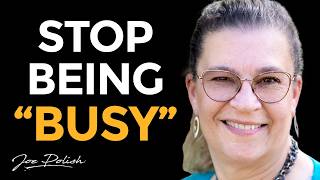
Gwen Bortner argues that most teams call task management "accountability" when real accountability drives business momentum. Her three-element Performance Accelerator uses consistency, focus, and curiosity-driven feedback to unblock teams and improve efficiency.
Chapters
Are you and your team accountable? Mentally answer these 5 questions. Is everyone rowing in the same direction? Is everyone clear on what the strategic priorities are? Is time or effort rarely wasted? Is it clear how activities and energy are creating outcomes? And does everyone understand what it takes to be successful? If you answered no to any of these 5 questions, you're not alone. What we have come to think of as accountability and what creates real accountability are two different things. By creating a truly accountable environment, the right things are done for the right reasons at the right time, and that means better results from the resources you already have. Explaining this critical difference is the purpose of this next 10-minute talk by Gwen Bortner. Gwen is a business advisor, speaker, and trainer. Over the past 40 years, has owned multiple consulting companies, worked as a consultant for Ernst Young, ran the IT department for a regional phone company, and provided effective accountability for entrepreneurs across the country and the world. Her latest venture is training team leaders on her signature accountability process, the Performance Accelerator. Gwen's talk is Accountability: What Everybody Gets Wrong and Why It Matters. Please help me welcome Gwen Portner.
Thank you.
Thanks, Joe Polish. Appreciate it.
Thank you, Joe Polish. I really appreciate the introduction. When you heard that word accountability, my guess is your brain went immediately to checking off boxes, getting those tasks done, status updates, all of those things which really aren't that fun but always feel a little bit needed. However, that misunderstanding about accountability is probably costing you thousands upon thousands of dollars. Because when accountability is done effectively, it actually is one of the most powerful tools you have in your leadership toolbox. The problem is what we think of as accountability often is just task management. And, you know, sprinkled in a little bit of hounding and policing people, chasing updates down, those kind of things. But real accountability, true accountability, actually will create business momentum. It helps everyone on the team start developing strategic thinking skills, and it is the real key to facilitating effective delegation. Now, at its core, accountability is a willingness to accept responsibility and, more importantly, account for one's actions or inactions. Now, after years of developing and implementing a really low-effort but highly effective accounting system— accountability system with my clients, we've learned that there are 3 elements to success: consistency, focus, and feedback. Now that first element, consistency, technically is the easiest, and it's kind of the hardest too. We all know what consistency is, but this is one of those things that's a little bit easier said than done, but it is important, and real accountability requires communication and consistent communication over time. Now, that second— part of this is two-way communication, and as we were talking about earlier today, connection. So if someone isn't showing up consistently in the process, it makes the other person feel like they don't matter, that there isn't really any support for it. So We need to make sure if we're putting in accountability system that there is a consistent mechanism in place, that we have it scheduled regularly, regular intervals, and that we are committed that this is one of our highest priorities. Now, what I've discovered over time is often the person holding someone else accountable tends to be the problem because we say things either out loud or in our head about, Things like, I don't want to micromanage, or I should not have to parent another adult. Or one of my own personal favorites is, it would be a better use of our time just to do the work. Right? But when you're consistently checking in, it ensures that the important work doesn't get overlooked until it becomes critical, that initiatives don't slowly drift off course, that key priorities actually get communicated and adjusted in a timely manner. Fundamentally, it's making sure everyone's rowin' in the same direction, building momentum over time. Now, the second element is focus. And focus is what moves this from a task management activity to an accountability activity. Task management is all the things on the list, right? We've got lists. This long, right? But accountability is saying, let's focus on the key strategic things, the most important things that we need to be moving the needle. It's a bit of the question that Joe asks us all the time. What is the one problem, if solved, would solve 100 other problems, right? It's the things that actually land in the important but not urgent category of the Eisenhower matrix. I call it the strategic category. Now, that deadline category, the important and urgent, that stuff always gets done, right? It's in our face. We're paying attention to it. We're on top of it. But the problem we have these days is urgent is seductive. And when we finish things in that deadline category, we immediately move down to the urgent but not actually important category. That busyness category. But what accountability does is it entrains us to start moving our attention over to that strategic category, that we're looking at things that are important but not right in front of us right this moment. Now, you may think focus is so obvious, I know what the most important things are that need to be getting done, but that's hardly ever true for your team. And so Part of this process is helping them get better understanding of what are the most important things. How does their role fit into the bigger picture of the organization? How does your vision come to them in a way that they can see their practical application to it? Now, the third element is feedback.
Hey, I hope you're enjoying this video, and I want to let you know that I have a new book that's come out, and if you'd like to get it absolutely free, free. There's a link below in the description, or you can wait till the end of this video, or you can simply go to joesfreebook.com and you can get a copy there.
Feedback in the world of accountability needs to be focused on problem solving and reflection with a strong lens of curiosity. Now here's the thing. Annie Duke, she's a former professional poker player, and she wrote a best-selling book called Thinking in Bets. And she points out that when we get good results, we assume those are from good decisions. And when we get bad results, we assume those are from bad decisions. And although this is true a lot, there are times that it's not true in either direction. And so good outcomes also need to be critiqued. And that means we have to reflect. We need to have reflection in our process. And as part of that, we need to be able to have hard questions asked. We need to challenge assumptions. And we need to consider possibilities that may not be that obvious. Now, when things aren't going so well, what do you need to do? Well, we need to focus on problem solving instead of getting into accusation and blame and shame. That's really not that helpful. Now, Last year, I enrolled in Golden Swan with Nick Peterson, and we were in this room with Joe Polish and Chris Foss, and we spent a lot of time chatting about how our choice of words can make a huge difference in how we process mentally a question. And what I got from it on the accountability front is if we can change our questions from why questions to what questions, we actually get a better result faster. I'm gonna give you a quick example. If I'm your accountability partner for working out every morning and you didn't work out this morning and I ask you, "Why? Why didn't you work out?" Our brain almost always goes to reasons and excuses. Sometimes that voice inside our head will start that shame and blame cycle. So not helpful, right? But if I change the question to what, What prevented you from working out this morning? Your brain actually goes into problem-solving mode so much faster, which allows us to get to root cause and see what do we need to do to change a behavior. So my first challenge for you is to practice that today or tomorrow during one of our small group discussions. If you're digging in trying to do some problem-solving with another member, You're going to start with a why question. I promise you, I still do it all the time. It's really a hard thing to break. But see if you can reframe it into a what question. And I think you'll be surprised how much faster you get into problem-solving mode and get to root cause quicker. Now, you take all of this into account, and it becomes pretty obvious that an accountability system can be super helpful with teams. It helps them solve problem— problems faster, stay on point, make good effort. And when you consider that team costs are probably one of your larger items on your expense— in, in your income statement on the expense line, even little incremental improvements can actually have a giant effect on the bottom line. And if you're— and so that means that just because its accountability, it's not just for teams that are struggling. It's also for teams that are ready to move to that next level. And if you're ready to move to your super boss level, you need to find someone who can hold you truly accountable. Now, this means you gotta find someone who's going to show up consistently for you and expect nothing less from you. You need to find someone who will actually help you focus on a few key strategic initiatives for whatever is this season of your business. You need to find someone who will actually give you deep, honest feedback, challenge you with questions, and be able to help you think through strategic problems. Now, where do you find that person? Well, it might be your COO or your right hand. The key here is you need to make sure they've got the confidence and the insights to help you, along with the auth— authority to challenge you when it's needed. It might be a business friend, someone sitting in this room right now. You decide you're going to hold each other accountable. The problem with this that happens is you aren't equally committed. So make sure you have a commitment pact so that you're both showing up equally for one another. You might actually hire someone, a coach or consultant, Make sure that not only can they hold you accountable, but they can also help you think through whatever problems come up through the process. So here's the thing. An accountability environment, it starts at the very top. Imagine, imagine that your team is building momentum, that you are getting more and more results faster than you ever had before, and In the process, your team is more engaged than it ever was. If you find your accountability partner today, those results, those results can be yours too.
Okay, I hope you found that video awesome and useful. So if you want to get a free copy of my book, I want you to click here. And if you want to watch some more videos that will be useful and awesome, click here.
Go ahead.
They're over here. Do it now.
Come on.
Thank you. Watch them.
More from Joe

This FBI Trick Can Command Respect Without Saying a Word ft. JEFFERSON FISHER & CHRIS VOSS

How To Stand Out, Be Different, and Create Raving Fans, Customers, and Employees ft. Jesse Cole



90% Of Businesses Fail In Their First Year, Here's Why! ft. Dr. Benjamin Hard & Dr. Robert Cialdini

The 1 Piece of Business Advice I Got From Elon Musk That Changed Everything Ft. Kamal Ravikant

The 6 Traits You CAN'T Teach in Entrepreneurship ft. Richard Branson & Gino Wickman

The Leg Method: How to Make Your Book into a Million-Dollar Asset ft. Anna David


7 Millionaire Mindset Hacks for Daily Success and Wealth ft. Brian Tracy & Dan Sullivan
