Why You Can’t Escape Work Addiction Without Healing Trauma (Gabor Mate)
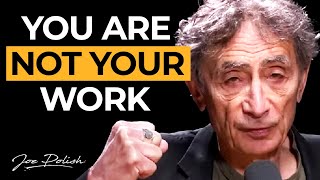
Gabor Maté argues work addiction stems from childhood trauma and relational wounds, not just willpower. ADHD, he says, is shaped more by prenatal stress and caregiving quality than genetics. Healing requires addressing trauma, not medication alone.
Chapters
So let's talk about, I guess, compulsive work.
How does one address it?
Sure. Well, again, if you address everything from the point of view of what can it teach me and how can I be compassionate about looking at it? The answers will emerge. So, you know, like you, I was a workaholic doctor. Now, the more I was a workaholic doctor, the more the world rewarded me, the more money I made, the more respect I had. So, like you say, it's a respectable addiction. What was the downside? I was disconnected from myself. I wasn't available for my children as they were growing up emotionally, because the work was. I was identified with the work. And of course, my marriage suffered. And it was hard to recognize that because the work is so rewarding and it turns you on. You get this dopamine hit from working. What was it all about? Well, when your mother gives you to a Stranger when you're 11 months old, what conclusion are you going to come to that you're not wanted? You can't come to any other conclusion. That's the wound. Not that they give me to a stranger, but that I conclude that I'm not wanted. Now, if you're not wanted, if you don't think you're important just for existing, as I said many times before, you know what you do? You go to medical school now, they're going to want you all the time. When they're being born, when they're dying, and every minute in between when they're in trouble, they're going to call you. And every time they call you, it feels so great. You're so important. But it never fulfills or it never fills the inner emptiness, does it? It's a temporary hit, like with any other addiction, because something in you says, whether you're aware of it or not, would they still want me if I was giving all the time? So you have to keep proving to yourself so that hole never gets filled. You have to keep doing it. And so it's completely addictive. Now, the work that you guys do, there's probably two levels to it, if I can make a broad generalization. One is you're really turned on by some project, by some idea that you have that you want to realize in the world, that you want to give to the world through which you want to express some aspects of your genuine being. Like, for medicine, I really was interested in helping and healing people. That's perfectly good and legitimate. But then there's another underside to it, which is where I have to prove my importance. I have to validate my existence, I have to justify the very fact that I'm here on Earth. And I have to keep proving to myself just how good I can be, because I don't believe that I'm good. That's the part that creates the workaholism, not the first part. You can do the work without identifying with it. Now, identification means this. It comes from the Latin word idem, which means the same and facera to make. So when you make yourself the same as your work, when your identity is bound up with your work, now you're lost in your work. On the other hand, if you know who you are or find out who you are, and then you choose to do the work because that's your calling and it's what turns you on, it's what allows you to express your creativity, then that's great. And now you're no longer a workaholic, you're just somebody who does great work. So the distinction again is the inner relationship to it and whether or not you identify with it. And if you identify with it, it's always some attempt to salve without healing some childhood trauma. Well, in this book I make the point that to say that ADD is the most heritable mental condition is like saying that quartz is the most chewable crystal because it's neither a disease nor is it inherited. So go back to your childhood. You're being abused. Go back to my childhood, the wartime persecution, all the things as I said earlier. Could we have escaped? No. Could we have changed the situation? No. Could we have fought back? No. What does the mind do when it's under too much stress? One of the things it does is automatically tunes out. So the tuning out. But this is when the brain is developing. The human brain develops from really from in utero to adulthood and already stresses on the mother during pregnancy can affect the brain of the child. So if a mother is very stressed or depressed during pregnancy, that kid is already at risk for ADHD later on. It's got nothing to do with genetics or very little to do with genetics. Let me put it that way. You're underwater. Thank you. So the tuning out is simply one of these natural protections, one of these automatic wise dynamics on the part of your organism to protect yourself from stress. That's too much. Now what you have to understand again is that the human brain biologically develops under the impact of the environment. And as an article from the Harvard center on the Developing Child, which is the world's most prestigious child child developmental organization, published in the journal Pediatrics which is the official journal of the American pediatric academy in February 2012, pointed out, the human brain develops from in utero until adulthood. And the most important input into the physiological, healthy development of the human brain is the quality of adult child relationships. So we're relational creatures, which again is what Yuruk is all about. And our brain itself develops only the impact of our emotional interactions with our parents. Now if you look at why more and more kids are being diagnosed with this condition, it can't be genetics. Genes don't change in 10 or 20 or 15 years. Now that we're seeing ADHD in countries that never used to have it under the impact of corporate globalization. It's because parents are more and more stressed in this world. They're more and more isolated and parents are stressed and isolated. And by the way, we were never meant to be parented in nuclear families by a couple or perhaps a single parent. We evolved for millions of years and hundreds of thousands of years. And even in the existence of our own species, we've been here for about 150, 200,000 years. If our species existence can be measured in one hour, then until six minutes ago, we lived in small band hunter gatherer groups where parents had support from other people, where the kids were with the parents the whole day, where kids developed in the context of adult relationships, that's our need. So in this society which is more and more stressed, and if you look at the triggers for stress, these are the research proven triggers for stress in people, it's uncertainty, lack of information, loss of control and conflict. Our society could not be better designed to stress people. So parents are stressed, not their own fault, not their own fault. They're stressed, the kids are stressed. When the parents are stressed, you can measure the kids stress hormone levels, they'll be elevated. Now how do kids deal with that stress? They tune out and now they're being diagnosed with the so called disease. It does have a biological template in the brain because the biology of the brain develops an interaction with the environment. So sometimes medications can help, but they're not the answer. The answer is to change the atmosphere so kids can develop in a healthier way, so they can feel safe. And when that happens, the brain will start developing in healthier ways. So ADHD is not this disease inherited. Otherwise it's actually a response to stressful circumstances in this culture, despite the best efforts of parents. And the way to really deal with it is not to medicate these millions of kids and to try and just control their behaviors, but to try to Understand what's happening for them.
It's also why this is my number two pothole on the road of ADHD addiction. Why addiction is about 10 times higher among us than the general population. Chemical addictions, but also behavioral addictions. Sex, spending, shopping, gambling. Those are all, you know. And there are ways of our relieving the negative feeling we carry around, which I call the itch at the core of add. You can't make the itch go away. What you gotta do is find adaptive ways of scratching the itch. The addictions being the most maladaptive. Well, what are some of the most adaptive? Right at the top of the list. And this is chapter four or five. Find a creative outlet. I hadn't appreciated until the past few years how fundamentally important it is for us to have a creative outlet. You need to find some way every day of expressing your creativity. Dan does it by these amazingly interesting grids that he makes up. I do it by writing. Joe does it by any number of amazingly productive activities. But you need a creative outlet. We're like cows. We need to be milked every day, you know. And the reason, after I finished book number 21, I start on book number 22. If I don't have a book going, I get depressed. If I don't have a book in motion, I get depressed. Now that doesn't mean I have to write every day, but just that it's in my unconscious. It's like your business is always in your mind, you know, and you're working on it even if you're not working on it. So you really take seriously the notion of finding a creative outlet for you, for your kids, for your employees, if they have add, we really need that. And the addiction problem, you know, the big problem with addiction is the shame and humiliation and disparagement that society heaps upon it. So most people with addiction never seek help. It's a terrible thing. And then until recently, the only help we had to offer was, was 12 step programs. And God bless them, I'm a big fan of them. But their success rate, if you define success as sober after one year, is about 15%. That's not real good. But now that we have medication assisted treatments and now that we are understanding better the role of trauma in addiction, that success rate has gone up to about 70%. So it's a much better story. You just want to make sure you get the right help. Because as you all know, addiction is just a terrible disease. And it is a disease, not a moral failing. It is a disease. And it is something that wastes the talents of some of our absolutely most talented, most talented people.
Hey, I hope you're enjoying this video. And I want to let you know that I have a new book that's come out, and if you'd like to get it absolutely free, there's a link below in the description. Or you can wait till the end of this video, or you can Simply go to joe'sfreebook.com and you can get a copy there.
So, to talk a little bit about deprivation, See, most people like not to identify themselves as addict. I get it. I understand. And I understand why. I mean, I've been over to 3500 SAA meetings in all kinds of meetings you can think about in my days and time. So you, when you walk in, you're basically saying, I'm a sex addict, I'm an alcoholic. I'm whatever I am. Okay, so who wants to do that? Well, it's helpful to be able to take that term and separate it from your personhood. Who am I really? I am an unrepeatable miracle of the universe. Have been, always will be. I won't get better on that. I'll become a better person in my behavior, and I won't get worse no matter what I do. If I walk out of here and act out forever until I'm dead, I don't improve on that. A diamond is a diamond. That's what I've always been. So I'm saying that to say this is that it's so helpful to recognize how deprivation in my life fueled the addictive components that I engage. So that goes all the way back. As a kid. I grew up in a hellacious a family. I grew up in a family of 12 children. To the best of my knowledge, all 12 of us were sexually abused in some form or another by. Through a church. They called it a church. It was a cult. So I had all kinds of craziness in the background. But the point is, to me is how do I fill up those needs that I have developmentally? Some people say, well, I don't want to go back and look at that stuff. Well, I would entreat you to consider Soren Kierkegaard. He's an existentialist philosopher. He says, well, life's meant to be lived forward, but it can only be understood backwards. So why do I want to look backwards? So I can understand. I don't want to live in that storyline. I want to give that up and to do so if I can understand and if I can Clean out some woundedness. It helps me. But when I don't, I live deprived. And so I want to feel fill that deprivation up in my life. And so I use all kinds, not just one addiction. I'll use a cocktail of experience of life, work, sex. I use sports, gaming. I'll use bitching and complaining. I use all of these things I can do to fill up and escape that emptiness that's inside. So what I always help people understand is deprivation fuels entitlement. Entitlement to what? To feel good again. And one thing for sure, any addiction really delivers. It delivers what it promises. At least for a brief moment, there's a payoff. I mean, you're gonna pay for it. But when you're in a lot of pain, when you're in a lot of, you know, just discomfort, then quickly, in a shortsighted way, I'll pick my addiction in that regard. Now, I think of it this way. I love what I heard Ned talking about yesterday. He about talked. He talked about, I believe it was distractibility, changing into curiosity. He talked about impulsivity, being changed into creativity. And then it was hyperactivity into energy. Well, I think that about addiction, See, this whole lifestyle, it's a metaphor. It's a paradox. What do we do? Well, we just take, like. We take opposites and make them so. Like, for instance, addiction. My goal is to take my curse of addiction and make it a blessing. How do I do that? Well, I don't do it from run. I don't do it by running from it. I embrace it. I listen to it. You know, actually, I make it my understanding of the voice of God. If God's anything. It's that voice talking to me what's out of balance. It's that voice telling me what I need to address underneath. It's the legitimate need that must be met in a healthy way. And so I take a pause. I get out of the way of the addictive rush. You know, like sitting in the middle of a intersection in New York City, here comes a bus. You don't sit around thinking, well, how did I get here? You best get the hell out of the way. So I try to get out of the way from my addictive rush. And then I sit and think, what's legitimate need that must be met? That's called intimacy to self. To people I care about, intimacy is so important. And that's why we talk about addiction. Anyway, Joey, it's an intimacy disabling experience of life.
Okay, I hope you found that video awesome and useful. So if you want to get a free copy of my book, I want you to click here. And if you want to watch some more videos that will be useful and awesome, click here. Go ahead.
You're over here. Do it now. Come on. Thank you. Watch them.
More from Joe

This FBI Trick Can Command Respect Without Saying a Word ft. JEFFERSON FISHER & CHRIS VOSS

How To Stand Out, Be Different, and Create Raving Fans, Customers, and Employees ft. Jesse Cole



90% Of Businesses Fail In Their First Year, Here's Why! ft. Dr. Benjamin Hard & Dr. Robert Cialdini

The 1 Piece of Business Advice I Got From Elon Musk That Changed Everything Ft. Kamal Ravikant

The 6 Traits You CAN'T Teach in Entrepreneurship ft. Richard Branson & Gino Wickman

The Leg Method: How to Make Your Book into a Million-Dollar Asset ft. Anna David


7 Millionaire Mindset Hacks for Daily Success and Wealth ft. Brian Tracy & Dan Sullivan
