You Are CRAZY If You Sell The Lowest Priced Products In Your Category, Here's Why! Feat. Mark Young
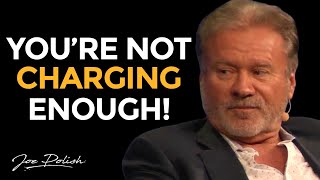
Mark Young, CEO of Jekyll and Hyde Labs, explains why selling the cheapest product in your category is a mistake. Higher prices fund better products and marketing. He breaks down persuasion tactics: use concrete language, commands, the word "because," and headlines under seven words to reach the unconscious mind where real buying decisions happen.
Questions this video answers
Jekyll and Hyde Labs (CEO: Dr. Mark Young)
Hypnotizing
Bob Evans (mashed potatoes and related products)
Approximately 10–15× (lowest to highest retail price)
Approximately 4× (lowest to highest manufacturing cost)
Chapters
The majority of our clients, in our agency, our clients are usually the most expensive product in their category. And the reason that we do that one is trying to be competitive and trying to be low price is just a race to the bottom. Because now your competition is just your whole life is based on who's going to be crazier than you and lower the price. The second thing is in the world of consumer packaged goods, I can tell you that the average is when you look at the highest price product. I'll use hairspray as an example. There's $18 hairsp, there's $1 hairspray. We usually find that the gaps are about 10 to 15x is the price of the lowest to the highest, but the cost of manufacturing from the lowest to the highest is only 4x. So all of a sudden I spent 4 times more money than the cheapest one, but I have 15 times more revenue, which means now I can create a great experience, now I can create great marketing, and now I have the money to take care of my clients and to make better products. So the first thing I would say, if you want to build a product that has an ethos, I'm sure your product is not low priced. Harley Davidson is not low priced. Apple computers are not low priced. Teslas are not low priced. It is going after the part of the market that will appreciate it and having a pricing strategy that allows you to do exceptional things. When you don't charge enough to do exceptional things, you're always looking at the bottom line.
You all know a disruptor.
Well, to introduce a disruptor, a challenger and a world class innovator, you need a similar kind of person. And that's why Mike Koenigs is going to introduce your next speaker. Mike created your next act to help business owners and entrepreneurs create incredible offers, powerful pitch and sales systems, all with the help of AI His AI enhanced team, all are designed to help you Increase your prices 2x to 100x plus. Mike helps you get even higher quality customers, even greater attention and attract the thought leaders to your brand. Mike's the perfect man to introduce the CEO of Jekyll and Hyde Labs, Dr. Mark Young. Mike, come on out and let him see what Mike Koenigs is all about.
Hey.
Hey, hey, hey. Hey. Hey, brother. Thank you, Joel. Hi, family. How are you doing? So good to be here. All right, well, it's been said it's impossible to know everything about everything. Therefore it's vital to at least know a little something about everything. That's exactly what Dr. Mark Young has done. He knows about neuroscience, business, economics, persuasion, human behavior, advanced tech, advertising, airplanes, motorcycles, race cars and the media. His company, Jekyll and Hyde Labs, is one of the country's most successful advertising agencies, specifically focused on challenger and emerging brands, consumer products with sales measured in the billions. Get set to hear some amazing ideas, concepts and solutions. Please welcome my friend Dr. Mark Young and your host, Joe Polish.
First off, I'm super excited to be doing this with you because this guy's a smart dude. How long have we known each other?
10 years? 12 years?
Yeah, something like that. Yeah. Finally. Glad to have you. You've been here before, but just not. I've never interviewed you. So everyone can get a copy of his book hypnotizing. Okay. It's a fantastic book. I actually wrote the Genius Network letter in July was about Mark and Hypnotizing. So I've got more questions to ask you than I will have time. Unless you are super succinct, which I don't need you to be because my goal is, I mean, what has not been said about you that they should hear in terms of what you have done in business and what you've helped people do? Because I want people to have a context of who you are and what you actually have helped create in the world. In terms of marketing, first off, I.
Would probably use Dan Sullivan's explanation, which is unemployable.
It's true.
That is probably the best explanation for me. So that's why I have a bunch of companies, because I don't play well with others, I guess, or something. But yeah, I'm unemployable.
And so talk about being a race car driver.
Racing. I'll tell you what, auto racing is the perfect metaphor for business and it's the perfect metaphor for what we do as entrepreneurs because we go there, there's one winner, there's a bunch of losers and you take all the risk. And if you smash your car, that's on you. And of course we burn tons of fossil fuel and we burn tires and stuff and we completely destroy the planet. But it is.
I think you're very happy when all that's happening.
I am. I am absolutely thrilled. I just finished a race three weeks ago and it was on Sebring eight hours on Saturday, eight hours on Sunday and we used $1,000 of gasoline each day.
Really? Yes.
So yes, we are not very eco friendly people, I guess.
Yeah.
Well, my buddy Chuck Woolery says he's planning on putting on my headstone he had the largest carbon Footprint of any man.
I'm sure you and RFK are gonna get along gloriously. Yeah, no, you know, we'll go into the environmental stuff later. Cause I have my own opinions on that, so. All right, so I've got some questions for you. So what pivotal moments in your journey bridged your neuroscience passion to advertising entrepreneurship? Cause you have the most uni way of speaking to this of anyone I've ever heard.
I appreciate that. First of all, I'll give you a little background. And that is I apply to a reverse version of Pareto's law. And that is you think of Pareto's law as being 80 20. And I look at a 2080 model, and what that is. Give you an example. You can learn that. You can learn conversational Spanish in about 10 months. It takes 10 years to learn the last 20%, but you can get to 80% relatively quickly. So my life has been built on the model of about every 18 to 36 months, I decide I want to learn an entire new skill set, But I take it to the 80 because the 80 gets me to the point where I can have intelligent conversations. I know what I'm missing. And as Dan would say, now I can figure out the who and the how because I have enough knowledge to say, okay, I need this person over here now. So at one point, I decided my background was actually an engineer, and I decided, okay, I need to learn psychology. And one of the reasons I decided to learn psychology is because I actually am almost a drone and have people say I have no emotions. And I thought, well, if I learned psychology, then I could actually understand why other people have emotions.
Right.
So started learning that, and I started getting into things like hypnotherapy. And then what happened, Joe, is as I'm learning the hypnotherapy side, it was that little aha moment. Hypnotherapy is using words and images to cause an immediate change in human behavior. And it hit me. It's like, that's what we do in advertising. We use words and images to cause an immediate change in human behavior. So why can't we take neuro, linguistics, programming, and neuroscience and hypnotherapy and bring it over to the ad side, and that's where the moment happened.
Yeah. So what are some of the campaigns that you have done that have been educational? Because what I love is for people here from our conversation to be able to learn some elegant ideas and methods that would dramatically help them build and grow their business and also connect with people. So you know, in Hypnotizing, which is a fascinating book. So the question I have is how can entrepreneurs use hypnosis principles in advertising as you discuss in here? So you're very much a student of NLP and hypnosis and applying this in your communications. I mean, you're the smartest one I know in the CPG world of getting products into all the big stores from CVC and Walgreens to Kroger's to Target to, you name it. So you've not only helped small businesses build and grow, but you've also done really mass products, too.
Oh, absolutely. Bob Evans is one of our clients. So if you've ever bought Bob Evans mashed potatoes or any of that stuff, that all comes from us. If anybody here watches Fox News, you will see me on FOX News five, six times a day. Cause I'm the guy on Fox News that is telling you a product for your dirty waxy ears. Which is amazing because of everything I've done in my life. The thing I get recognized for is dirty ears.
Yeah, yeah.
So I'll be in a restaurant and somebody will walk up. Aren't you. The guy with my wife would go, yes, he has dirty ears. Thank you.
Hey, I hope you're enjoying this video. And I want to let you know that I have a new book that's come out. And if you'd like to get it absolutely free, there's a link below in the description. Or you can wait till the end of this video, or you can Simply go to joe'sfreebook.com and you can get a copy there. So let's talk about how do you actually get paid from your clients? Like, what is your model for helping people with their marketing and advertising? Because a lot of people here, they do that. But then there's people that would like to have someone like, you know, a company like you that does that for them, and they have no idea how you know, who to go to, where to go, that sort of stuff. Some do, some don't.
So there's a couple things we look at. One, typical advertising agencies are always selling people on the idea that they're brand builders. They're going to come in and we're going to. We're going to be the champion of the brand and we're going to define the brand and we're going to design the brand. And my comment to that is, that is absolute crap. Brands are built by amazing products and amazing companies with amazing service. All the branding in the world, all the advertising in the world will not keep a bad product or a bad service alive. It will for a little while, but it can't sustain it. So the way we approach advertising first is we approach it as we are match.com our job is to get you a date, and our job is to get you as many first dates today as possible. It is your job to get a second date. It is your job to go steady. It's your job to get engaged, and it's your job to get that product to marry you. Now, can we help you craft the brand? Yes. Can we make what the brand looks like? Of course we can. Can we help you build your communications to accomplish that? Yes. You need to make a great product and have outstanding service with your product. We're just there to get you lunch.
You know what's interesting? Like on that interview where I showed that clip of Elon in that longer. The interview that he did, they asked him, he's like, I've never spent any money advertising Tesla. It's all been through word of mouth, it's been referrals because I built a really great product. And he says, that's what you have to build, just a great product.
Absolutely, yeah. Think about Harley Davidson as a brand. Now, Harley Davidson does have commercials. They do have ads. But how many brands do you know of where people tattoo the logo on their arm? That's not done by an ad. That's done by an ethos. That's a relationship where Harley Davidson has become part of their life. I actually believe, and I actually own a Harley. I believe that Harley riders are the world's largest cosplay group.
Interesting. Interesting. And people that don't know what that means, you have to do a Google search. But, yeah, you got a good point. So what sort of brand excitement, loyalty, cultish sort of following creates where someone's tattooing the name of the company on their body? Huh?
It's rare. That is a rare event when that happens. When you look at Apple, you'll see people that'll put an Apple logo on the back of their car. You never see anybody with a Microsoft logo on the back of their car.
Yeah, mostly because Bill Gates is fucking evil.
Well, I'll go with you on that, but I'm not arguing that point. But it's because Microsoft is a. Is there as a function. Apple has figured out how to be integrated into your life by creating an ecosystem and doing elegant design and making you so that you want to have an Apple computer. I mean, my God, a $1,900 Apple laptop can be replaced for 600 bucks with a PC. And by the way, I have all Apple stuff. You know, I fall for it too. We're all people, we all fall for this stuff.
So we've got Jeffrey Hunter, who's the CEO of Storyteller Overland, which are the big sprinter vans. If you see the big van outside, that's love that thing.
I need that for my race team.
Yeah, that's their company. They're now in their fifth year. They hit 250 million in revenue in their fourth year. And when I went to this Overland Expo, and this is all new for me, by the way, this is one of like, what's your cleater? Which is we bought a ghost town, me and Jason Campbell in Mike Leone and Ben Hoodie and what your cleater is like, you know, what's some big goal, aspirations? Sort of my version of like, you know, what's a moonshot? Something wild you want to do. And so I decided, you know, I don't. I've never even changed a tire. And I'm like, okay, I want to like look at this van life sort of thing. And so I trying to make the decision on stuff. I meet Jeffrey Hunter there and cool dude. And we start talking, telling him about my ghost town and everything and. And I'm looking at all this stuff and it's this whole niche in this whole world that I did not even really realize to the extent how big this is. You know, people that are in the van life and stuff and just outdoor Overland world. And there was a Mercedes booth, but they had all the different types of sprinter vans, you know, revels from Winnebago and different brands and stuff. And they had Storytellers and they had Storyteller had, you know, their own booth and bunch of different people that had displays spread out in this whole thing of Flagstaff, Arizona. And I talked to this guy from Mercedes and I said, do you work for Mercedes? He's like, no, I'm a freelancer. I do videos, commercials, photography. And I said, are you familiar with all these different built out vans? And he's like, yeah. I go, which one's your favorite? He's like, storyteller. And I'm like, why? He said, well, because they're the best built of all of them. And he goes, but the community is the most tight community. They're really awesome people. And he's like, I live on the road, I've seen all of this stuff. And so that was like a great qualifier for me to a guy who knew nothing about it, but that's how they're building their whole brand. And then once I get one, I see a woman in the gym wearing a Storyteller shirt and I go, do you have a story? She goes, her name's Bridget and she runs the Facebook group for Storyteller, like Worldwide. And she starts inviting me to all this stuff. And then I start meeting these Storyteller people and it's like this new world that I didn't even. And they're super cool people, but they're doing it right. They're building a brand. And then I, you know, I did a two hour zoom with Jeffrey and I'm like, would you come to Genius Network and, you know, do an interview? And he did. And he told it. It was great. And some of you were at that meeting. It was awesome. But there is a way that brands get built in community that's beyond the product. And I'd love for you to speak to that because you're really skilled at doing that or helping guide that.
Yeah. Using that as an example. First off, let me, let me say this. When the majority of our clients, the majority of our clients in our agency, our clients are usually the most expensive product in their category. And the reason that we do that one is trying to be competitive and trying to be low price is just a race to the bottom. Because now your competition is just. Your whole life is based on who's going to be crazier than you and lower the price. The second thing is, in the world of consumer packaged goods, I can tell you that the average is when you look at the highest priced product. I'll use hairspray as an example. There's $18 hairspray, there's $1 hairspray. We usually find that the gaps are about 10 to 15x is the price of the lowest to the highest. But the cost of manufacturing from the lowest to the highest is only 4x. So all of a sudden I spent four times more money than the cheapest one, but I have 15 times more revenue, which means now I can create a great experience, now I can create great marketing. And now I have the money to take care of my clients and to make better products. So the first thing I would say, if you want to build a product that has an ethos, I'm sure your product is not low priced. Harley Davidson is not low priced. Apple computers are not low priced. Teslas are not low priced. It is going after the part of the market that will appreciate it and having a pricing strategy that allows you to do Exceptional things. When you don't charge enough to do exceptional things, you're always looking at the bottom line. I can't go refund this because we don't.
That is a great quote. If you don't charge enough to do exceptional things, you're always looking at the bottom line.
Right?
Yeah.
So I want to be in a position, whether it's my clients or our own companies, that when we need to try to make a client feel good, when we need to make a client have an exceptional experience, we don't have to worry about. Can we afford to do this? No, just go do that.
Okay. So let's go back to my question about hypnosis principles. How do you do the communications in a way that deeper connects the person with the messaging?
Well, let me give you an example. I'm going to use a couple of visuals. One of the visuals is, I want you to picture a grape. And this grape is resting on a dime. And that grape and dime are resting on a beach ball. So you can see how off sized that is. That grape represents conscious awareness. And that conscious awareness is seven bits of information per second, plus or minus two. This is not my opinion. This is scientific research. This is the reason telephone numbers are seven digits. And at one point France tried to create an eight digit phone number. And the people nearly rebelled when they tried to do it. This is where the human brain operates. That dime that represents critical faculty. The beach ball represents the unconscious mind. That unconscious mind can process 10,000 pieces of information per second. So I'm going to give you a quick example. You're driving to work and you drive to work. You've driven this path many, many times. And you're driving down the freeway. Tell me what your brain's doing. Your brain is thinking about the next meeting, the first meeting you have at the office. Who are you gonna meet with? I've got a lunch to do today. I've gotta be out of the office by 5 cause my wife and I are gonna go someplace. None of your thinking is about driving the car. Who's driving the car? Your unconscious mind is driving the car. Now all of a sudden, as you're going down that freeway, somebody comes flying in from an entrance ramp on the freeway and swerves into your lane. You in a heartbeat, in milliseconds, look in both mirrors, find an opening, move the car over, get out of the way. Save yourself from the accident. And then your conscious mind says, what was that idiot thinking? As marketers, we keep trying to talk to the conscious mind. We Keep trying to create advertising that speaks to those seven digits per second brain. Because we think as marketers, we think that's what people want to hear about. We think they want to hear that my product is 62% more effective or my product comes with a five year guarantee or whatever these things are. But that's not who buys things. Who buys things is the unconscious mind. Here's another example. You still drive your Tesla?
Yeah. Yeah.
It's $110,000 car. A $22,000 Chevy Spark would take you to work just as well, wouldn't it?
Yes.
It would get you there the exact same time with no problem. Why did you buy a $110,000 car instead of a $22,000 car?
Because my low self esteem and need for acknowledgement and validation and status required me to have a cooler car.
And we should applaud his honesty. That's the reality. The reason there's a Rolls Royce or a McLaren or a Tesla is because people buy things based on how they feel, how it impacts their life, how they feel about it. And think about. I'm gonna give you an example of somebody walking into a Chevy dealer. You walk into a Chevy dealer and there's a Corvette on the showroom. But you really came in to buy an suv. But you look at the Corvette and it's like, this is so cool. And I would look so good in this thing, and it would feel so fast. And you get behind the wheel and you feel the leather on the steering wheel and you're like, this is so nice. And then the salesman comes up and what does he do? Well, he decides, I'm going to feed the grape just enough information to let the beach ball make a decision. And he says, joe, you know, you look fabulous behind that Corvette, man. You should see how you look in this thing. And you know, this car will go from 0 to 60 in 2.8 seconds. Ever done that? Have you had that experience? And then he tells Joe, do you know the Corvettes have the highest resale value of any American car? So did you know that you could buy this Corvette and drive this car for the next two years and you'll sell this car and actually spend less money driving this car than you will that Chevy Tahoe? Now, Joe can all of a sudden say, I need to buy a Corvette because that makes me a smart consumer. He's not buying it because he's a smart consumer. He's using information to rationalize his beach ball. I'm giving him the information he needs. So in this Case he can go home. The guy can go home and tell his wife. She's like, why did we just get a Corvette? Honey, I did this to save money, and let me tell you why. I talked to the salesman, and he told me, this thing's going to have such a great resale. We're going to drive this for nothing. That's how we have to approach our marketing. We have to figure out how to get to that unconscious mind, that conscious mind. The conscious mind. I want you to think of that as a spam filter. So I'm gonna jump into hypnosis for a moment. In hypnosis, if I was going to hypnotize a patient, what I do is I get the conscious mind to shut down. I just throw it offline, and I can talk to the unconscious mind. When I'm speaking to your unconscious mind, Understand, your unconscious mind always wants to do what's best for you, but your conscious mind is literal. So if I put someone in a hypnotic state, I can quickly tell how hypnotized they are, because I would say, can you tell me your name? Now, normally, if I said, can you tell me your name? You'd say, yeah, my name's Joe Polish. If you're in a hypnotized state, I would say, can you tell me your name? And you would say, yes, because your conscious mind is literal. Your conscious mind says, yeah, I know my name is. It's not going to interpret what I'm asking. It's going to answer exactly what I'm asking. So oftentimes we create these ad messages where we create these convoluted messages, and we're asking people to pick up the nuance. We're asking them to understand what we're trying to tell them. We need to not do that because people aren't paying attention to advertising. Advertising is an interruption into my day. I'm not waiting for your new 30 second commercial to come out this week. So you need to talk. You need to get that spam filter offline. Talk in literal terms. Tell me what you want me to do, and give it to me as a direct command. You can actually give commands. Have any of you ever seen a stage hypnosis show? We all get trained the same way. I know how to do them. Every one of them is exactly the same. You call 15 people out of the audience, you line them up in a little horseshoe, and you do something called suggestibility testing. And what we'll do is, I'll tell somebody. Put your hands together right now. But now lock Your fingers together, push your arms out as hard as you can. Now, no matter how hard you try, keep trying, keep trying, keep trying. But no matter how hard you try, you can't pull your hands and go part together. And they won't be able to pull their hands apart. Now, out of the 15 people I get up there, five of them will pull their hands together. And you'll see that somebody on stage will say, thank you for participating. Go ahead and sit down, and we'll keep the people that can. Now, why can't they pull their hands together? Because I get them in such a state where I keep saying, keep trying, keep trying. Try is a mental word. Try is an escape word. So as an example, if I was to call you up and say, joe, I'm moving Saturday and I'm gonna move my 8,000 square foot house, I'm gonna do it myself. I wonder if you come over and help me and you're going to say, I would rather take a beating than help somebody move furniture. Which, personally, I would rather get in a ring with Mike Tyson and move furniture. So what does your brain do? Your brain's gonna say, geez, Marc, I've promised to take the kids someplace, and I've got this party that my wife wants. If I can find some time in the day, I promise I'm gonna try to get by and help you. Try is how your brain says, I don't have to. Now, what do people do in their advertising? Try new Product X today. And your unconscious mind is literally saying, or not, because I don't have to, because I can get out of this. Because that's what we do. And this is why they can't pull their hands apart, because I'm yelling at them, try it, Try it. Keep trying. And that's what panics them. So they can't pull their hands apart. So we have to deal with people. Literally, we have to tell them what we want. So we wouldn't say, try Product X. We would do something like, get Product X now at literally give them a command. And if you ever listen, if you ever pay any attention to commercials or radio spots, we do, we literally change the cadence in the voice. So as an example, we might be talking in a very soft cadence about a product. And then when we get to that part of the audio where it says to go get it, it'll say, product X will do this, but get ProductX now at CVS, that the voice will drop and it will become commanding, and then the voice will come back up. It'll get singsong after that and soften up because we're throwing that grape offline and we're telling the people what to do. Again, like in hypnotherapy, what we do in hypnotherapy is we take that line off, we talk to the conscious mind, and we tell the conscious mind what it needs to do.
Yeah.
So we say, look, you have this fear of spiders. We're gonna talk about your fear of spiders. And right now, I want you to imagine that you're sitting in a chair, and on the arm of the chair right now is a spider. And you're looking at the spider and you see the spider is harmless and the spider is not doing any. And you even reach over and you touch the spider and you realize, wow, spiders actually won't really hurt me. Your conscious mind is then taking in information saying, oh, yeah, okay, I guess that wasn't so bad. And now we're going to bring you out and you won't have your fear of spiders. How do we do that in our advertising? And there are different cadences we can create, we can do. As an example, we do things like feel. Felt Found. If any of you have ever seen the commercial on Fox News that I do, it starts out with, it's about Earwax. And the commercial starts out with, have you tried all kinds of products for Earwax and been disappointed? Feel. Yes. I feel like that guy. So we have an ethos. Yeah, he's just like me. Now, by the way, if you don't have a problem with Earwax, I don't care. Tune out. I don't need your attention. I'm not ever going to try to sell you something you don't need. So the reason I'm saying, in that particular spot, have you tried other products for Earwax and failed? Because I want people to raise their hand and say, yeah, I have a problem with Earwax. Yes, I've tried products. He's just like me. What is the next thing that we say in that ad? Me too simple. That comment. Me too. Feel. Felt. Felt is, wow, this guy. Not only does he have the same problem as me, he just validated who I am. He just literally said, I'm right. Because I thought it was only me that couldn't, you know, that was having this problem. But, yeah, he's got the same problem and nothing worked for him. Too. Feel. Felt found. Next comment is until I found, in this particular case, Waxrx. So somebody who has a problem, like me, who I have an Ethos with who just validated me, said, hey, I've got a solution for you. Okay, I kind of trust this guy. What's he got to tell me?
That's great. Do you see the applicability? Okay, awesome. So just like you just shared, what are some things if you only had, like, two minutes to rattle off? We got more than two minutes. But if you wanted two minutes to rattle off, here's something you could do that would make a profound improvement in your marketing and advertising and how you spend money.
What would it be as far as a technique?
Yeah.
The word because.
Because.
Okay, the word because. The word because. You can make a lot of money on the word because. And I'm going to tell you how to do it. There's a researcher from years ago, her name was Dr. Ellen Langer. And Dr. Ellen Langer was amazing, and she did just amazing experiments. Well, one of her experiments was to find out how people's brain worked when it came to getting people to do things they didn't want to do. So she hired actors to go to university bookstores. For those young people, this won't make sense to you, but for us older people, we used to go to the college bookstore and stand in line at the copy machine to make copies of stuff. So there would be 100 people standing in front at the copy machine. And she sent these actors in, and she asked them to go in and cut in line, to ask people to cut in line. So they first just went up and said, do you mind if I cut in line about 20%, 15, 20% of people actually would let them do that. Then they went to, do you mind if I would cut in line? Because I've got a class in 20 minutes and I'm going to miss my class. Like 80 plus percent people would let the person cut in line. So then she said, well, what happens if the excuse gets dumber? So they started making the excuse worse and worse and worse. They finally got down to, do you mind if I cut in line? Because I don't like lines. Guess what? 80% of people still let them cut in line. And here's the reason. The reason. This is how your brain works. Your brain is always looking for the other shoe to fall. So when I and I proved this to my wife, by the way, I was telling her this, and I'm like, I'm gonna give you a demonstration. I went up to my daughter's room. My daughter's room was a mess. And I said, andy, you need to clean your room tonight because we're going to go out to dinner tomorrow. We go out to dinner all the time. And then she cleaned her room. And my wife's like, son of a bitch. How did you get her to do that? It's the because statement. Our brains crave reason. We want to know there's a reason for something. So when I say, get Product X because here's what happens, your brain goes, okay, here it is. And the first statement I said that was get Product X passes to the unconscious mind as a command statement. I literally just told you, go buy this. And you let that in. That got past your spam filter. Because you're so busy doing this, waiting for. Because you can literally build these bridges like that.
That's great. I mean, so what other forms of techniques or manipulations do you have for influencing family members, children, team members, all that, that are really sneaky and clever? And I'm saying this jokingly, of course.
I'll tell you one very quick, though. I was at breakfast with my niece, and she has had a little boy, and he's playing with the car on the table, and she keeps telling him, stop throwing your car on the floor. And he would look at her and smile, and he would throw the car on the floor. And I'm looking at him like, do you realize you're telling him to put the car on the floor? And she goes, no, I'm not. I told him not to. I said, okay. Understand? He's a year and a half years old. He's one and a half years old. His brain is literal, which your brain is literal, too. Unconsciously, when you tell somebody, don't throw your car on the floor. Car has a visual image. Floor has a visual image. Don't is an abstract. Abstracts don't have visual images. So all the kids hearing is, car, floor, car, floor. So I picked up the car. I said, aj, keep your car on the table. And then for the rest of the meal, he sat there doing this with the car on the table. And then my niece looked at me. She's like, so I'm the problem. I'm like, yeah, in this particular case, you are. Keep your advertising literal like that. Don't use abstracts, use concretes. Because our brains think in pictures.
That sort of explains. Which I think is one of. It's clever, but it's also evil. There's a couple of evil advertising slogans. One is drink responsibly, okay? Which is the command, because they're commanding you to drink, right? Drink responsibly. What they hear is, drink, okay? And I don't know what the stats are now since post pandemic, but before the pandemic, which dramatically increased smoking, drinking, everything, it made people. More people are dying and have died from the health challenges than have died from quote, unquote, Covid and whatnot. So I think it was like 80 to 90% of alcohol consumed was from like 10% of drinkers. So, you know, the alcohol industry wants people to drink. And then what happens in Vegas stays in Vegas. Except a friend of mine that made that slow STDs. Really. He's a bad person. Is he gonna burn in hell?
No, actually, he's. Actually, he's a really good guy.
So he came up with that.
Yeah, it's R and R Agency. That's actually.
I wanna talk to this dude.
I can introduce you to him.
I would like to. Yeah, that would be. Would make one hell of an interesting conversation. But like, you think of it, what happens in Vegas stays in Vegas, right? Except. Except debt. Except lots of things, right? But what you're doing, though, is you are like, drink responsibly. I mean, it's what you're saying. You're embedding these sort of commands. And I think most people completely overlook the, you know, the significance of how you.
Oh, it's brilliant. Think of the phrase, you deserve a break today.
You.
That's my favorite topic.
Right?
Deserve. You're recognizing that I'm special. A break, damn it. I do deserve a break today. Right now. Talk about a call to action. I mean, how perfect is that phrase?
Yeah.
The other thing that they always try to get people to do. I'll give you an experiment here. Go drive down the highway and look at billboards. If you see any billboard that has more than seven words on it, I guarantee you that they just took money and set it on fire. And the reason is because remember those seven bits of information in your conscious mind. Guess what? Your brain can only read seven words as a phrase. That's why headlines should always be under seven words. Billboards need to be under seven words. You deserve a break today when you do that. If I say you deserve a break today and I put that on the wall, you don't need to read it. You take it as a phrase. Once I start you reading, I broke that cadence. That's why you see these billboards that are complete waste of time. Seven words on a billboard. That's it.
Okay, so what advice would you give your younger self at the start of your entrepreneurial journey?
Oh, my goodness. What advice would I have given My younger self. You know what? I don't know if I'm going to answer this the way you expect me to answer it. And I'm going to credit this to Dan Sullivan. Dan Sullivan taught me to learn to fall in love with my past and literally said, if you don't, if you. And it grabbed me when he said that if you don't embrace your past, then it's going to interfere with your future. And I don't know that I give myself any different advice because everything that went right and wrong in my life got me to where I'm at. And probably the best lessons I've ever had was the stuff that went wrong.
Yeah, yeah, I would agree with that. And I think, you know, having been in coach since 1997, I think it really helped me reframe the value of the past as being, you know, raw material for doing something with it. I also don't buy into the no regret comment. When people are like, I have no regrets. Everybody has regrets.
Oh, of course.
And I think when people say no regrets, they're lying to themselves because it's hard to, you know. And I say this. There's a very interesting book that I'm halfway through with called the Power of Regrets. And it validates that as the no regret thing is not really accurate. However, the past comment, you know. Yeah. I mean, everything. There's a line in 12 steps which is, you will never regret the past or wish to shut the door on it. You will find a new happiness and a new freedom, you know, you know, goes on. You know, financial insecurity will leave you in the benefits of recovery. And when I first started going to 12 step groups years ago, there would be people that, you know, I'm so thankful and so grateful for my addiction. And, you know, and I would be like, what the fuck are you talking about? This is horrible. I mean, like, I hate this, you know, I hate this crate. And now I look back and see how valuable that all was. So oftentimes it doesn't seem to make sense. When you're going through. Dan talks about nothing feels good in the middle. When you're in the middle of a bad situation, it feels terrible. But most people here, their businesses, their greatest progress all came from these adversities.
My entire career changed and my fortunes changed when I came to one particular moment. And that moment was when I realized that everything that went wrong was my fault. And even if somebody else cheated me out of money, I opened the door to them. I let them in. I made the decision When I really came to the conclusion that everything is my fault, it then let me know that, well, if everything that goes wrong is my fault, then everything that goes right can be my fault too. And that's the moment where my entire career changed. And everything worked after that.
That's good. I like that. So you scaled your business. You've grown it. What advice would you give? This would be my last question. What advice would you give on just what to do to maximize, making money in a way that you're really aligned with? Because a lot of people will trade an enormous amount of pain just to try to build a business that doesn't really work for them. But you. You have a lot of fun. You have a world record race car driving. You're. You know, I've never. I mean, you're very opinionated, which is great because you're. You're. If you want to listen to his podcast, it's pretty hysterical. I've been on a couple of times. And what advice would you give with building and growing a profitable, awesome business?
The first thing I look at is if somebody comes to me, a new client comes in, and they come in and we've got this idea. If they're passionate about the idea because they want to. I want to solve eczema for people. My daughter had eczema, and I've spent the past three years coming up with a new treatment, and I've done this, and it so works. That's the passion I'm looking for when someone comes and contacts us and says, we've found a niche in the market and we think that there's an opening for an eczema product. So we're gonna hire a bunch of people to make an eczema product. We're gonna raise this money, and we're gonna sell this out in five years. Those are the people that I try to walk away from because they're not there for the passion to solve a problem. I like it when people say, I have a problem, or as Dan says, I have a secret. And I have a secret that I know how to do something better than anybody else. And I'm gonna throw everything I have behind that secret. I always liken it to people, to being on a rope bridge. And as you make your first step on the rope bridge, you set the rope on fire, and then you better run to the other side before the rope burns through. That's how I think people should go at business. But you don't do it because it's just the money, right? If it's just the money. That's not what. You shouldn't be here. The other advice that I would give everybody is surround yourself with competent people. Get in a genius network. Get into strategic coach. Surround yourself with people who have done things, who can guide you, who you can respect, that you can listen to. Because as entrepreneurs, we spend all of our time doing things that people say we can't do. And after a while, we start to think we're all geniuses because everybody told me I couldn't do this and I'm doing it, so why should I listen to anybody else at this point? We do need to listen to other people, and you need to find those right people.
Awesome. Love it. So Mark's book is called Hypnotizing. You can get a copy of it in the gifting suite. There are podcasts. Anything else that you would recommend that they follow you or that you put out there that would be useful for everyone?
Well, I would say don't follow my political podcast unless you happen to be very conservative. So I would say yes. Skip over that. If you're not. If, you know, if Newt Gingrich or Donald Trump as a guest insults you, you should probably avoid it. We do have another podcast called CPG Insiders, which, if you are in the consumer packaged goods, that's actually a great podcast for people to listen to and it really helps a lot of people. Yeah.
And no, it really is great. It's really valuable and you share awesome stuff. So thank you, sir. Thank you, Mark Young, everyone. Appreciate it.
Thank you. Thank you, sir.
Appreciate it.
Thank you.
Okay, I hope you found that video awesome and useful. So if you want to get a free copy of my book, I want you to click here. And if you want to watch some more videos that'll be useful and awesome, click here. Go ahead. You're over here.
Do it now.
Come on.
Thank you.
Watch them.
More from Joe

This FBI Trick Can Command Respect Without Saying a Word ft. JEFFERSON FISHER & CHRIS VOSS

How To Stand Out, Be Different, and Create Raving Fans, Customers, and Employees ft. Jesse Cole



90% Of Businesses Fail In Their First Year, Here's Why! ft. Dr. Benjamin Hard & Dr. Robert Cialdini

The 1 Piece of Business Advice I Got From Elon Musk That Changed Everything Ft. Kamal Ravikant

The 6 Traits You CAN'T Teach in Entrepreneurship ft. Richard Branson & Gino Wickman

The Leg Method: How to Make Your Book into a Million-Dollar Asset ft. Anna David


7 Millionaire Mindset Hacks for Daily Success and Wealth ft. Brian Tracy & Dan Sullivan
