Spending Time With Ben Nguyen | Men In Manufacturing
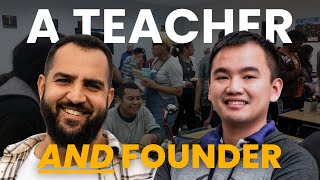
Ben Nguyen, a manufacturing teacher and Milken award winner, built Passage, an app connecting young people with real workplace videos and job pathways. He describes the gap between school and work: fragmented listings, AI-generated postings, and entry-level jobs that demand unrealistic experience. The conversation spans mentorship, masculinity, and how educators can create spaces where young men learn strength through vulnerability.
Chapters
Welcome to Money Manufacturing, the podcast where we keep it real about what it takes to build a life and not just get a job. If you're a father, a leader, or a young bloke, you're going to want to listen to this one, especially if you're trying to figure out who the hell you are in the world that keeps shifting. This one's especially for you. Today, I want to introduce to you a man whose story I believe deserves to be heard. Ben Nguyen, a manufacturing teacher and the founder of Passage. We met through a contact that I made when I was traveling America. He's in Las Vegas, I'm in Australia, but the heart of what we're doing is one and the same. We both believe that we're creating a new path forward for men who feel like they've been left behind. Ben, I, I thank you for getting on the show with me this morning, and I guess the best way to begin this is the origin story of how we met and the nature of how we met and the beauty of that. And I was traveling the US back in April this year, and I tell the story, I was— I'd landed in LAX, and I was asking, I was asking the person next to me how to give a tip. I'd never been to the US before. And so I asked a lady who turns out to be Cindy, and I just asked her, what should I be doing? And she says, young man, this is how you should be tipping here in the US. I say, thank you so much. And oh, by the way, what is it that you do for work? And so we start this conversation over my my question of how to give a tip in the US. And it turns out that she is also in the education space. She loves manufacturing and has a wealth of knowledge. And so we hit it off. Obviously, that's at LAX. It then turns out to be that 2 weeks later, I'll be in, I believe at the time, North Carolina, which is where she lived. So then we meet up again, have the conversation about education, men, manufacturing. And she says, there's someone I think you should meet. And so that's how, that's how I get introduced to you. And really from there, if you'd like to share with anybody watching, what happens is just we have a bit of dialogue and if you'd like to share how we've got to this point.
Yeah. Wow. Cindy is one of my, I would say, my education mentors in reflecting on my experiences in education. She comes from a group of educators known as the Milken Educators, which is a group of awardees for a National Teaching Award. A comparison that I've heard of the Milken Award is to that of the Oscars here in America. So imagine that for a teacher. And so a teacher or teachers from each state across the U.S. every year get awarded this honor of being a Milken educator. I think you've heard of a program called like Teacher of the Year. I'm sure like many states and countries have the sort of program where a city will sponsor that sort of thing. So the Milken Educator Award represents that plus so much more. You win a $25,000 cash prize unrestricted to that educator, and you also get to be part of this larger network of educators called the Milken Educators that span back many decades. And so I myself am a fellow Milken Educator recipient in 2019 representing Nevada. Where I was a manufacturing technology teacher and a computer science teacher at the time. And she told me that she knew of someone that she had met that I need to speak with because I shared her a little bit about some of the projects I've been working on here in Las Vegas related to workforce development, career technical education, and myself being now a manufacturing teacher in terms of like the advanced and automation space. I thought to myself, you know, what I see as the future of my career is building more connections with people not just within our own country of the USA, but also internationally as we try to tackle the issues of how we upskill our workforce of all age groups. And I work primarily with high school students, but I'm part of different programs, K through 12, in the state of Nevada. So I'm really looking forward to what we can create from our partnerships. And it was so fortuitous that I ran into Cindy at this last forum in LA that we had And here we are.
The timing never ceases to amaze me. The timing of things is just one that you couldn't predict. You set out on a mission to do something with your life and perhaps to leave a legacy or make some kind of positive impression, and you do it with a level of faith where you step out and you say, I'm just going to try my best to do what I can. And you could never really make up these kind of stories that you meet someone randomly in the airport, it happens to be you're in, you have the same passions, and then they know somebody else who would be also sharing in the same passion. I'd love for you to talk to me a little bit about Passage before we get into your story and what Passage aims to do.
Sure. So during my career as a teacher, I'm now in my 12th year. I began to build connections with my students such that as they would graduate from my program, I taught starting in physics and also in the computer science space, as well as doing an after-school robotics program. I would have many students that would go on to the STEM career fields, including that of like engineering, of doing technical work or skilled labor. So I have kids who are like electricians, kids who are in construction, etc., HVAC, which is a lot of what we see here in Southern Nevada because it's so hot. And as I've continued on in my career and moving from sort of the academic focus, especially through the what we call Advanced Placement or AP classes here, in the States to more of these career tech, work-based learning, skilled trades pathways that we're creating, I decided to delve really deeply on where the pain points that my students are facing, especially in, in terms of finding work and finding gainful opportunities, so that they can visualize where it is that they'll be headed after they begin, or rather after they finish their education training in whatever program. It could be a bachelor's degree, it could be a certificate program, it could be an industry-sponsored program from the community college, which they'll hire the best students out of that into their company. And I began to realize that that journey of transitioning from your education experiences into a real opportunity, a real job, was and has gotten even more difficult for young people now that entry-level jobs in so many different spheres are requiring a litany of different bullets, how you say it. It's a wish list of what the employer wants. And think to yourself, if you're a young, you know, 18-year-old, 21-year-old, 25-year-old recent college grad, and you see this opportunity to be, I don't know, a diesel technician, and there's this laundry list of things, and plus you got to have these experiences. If you don't have that experience from an internship or from a contact that you knew of previously, many of the folks who go through these programs, including many of my own students who incur all this debt, start to realize that, hey, you know, what happened? Like, I didn't— I do everything the way my teachers told me, my parents told me, society told me in terms of investing time sacrificing my financial security, etc., to enroll in these programs, of which right now when it comes to finding work, we have these large databases of jobs, job boards. But the frustration of many as they're experiencing, and they have experienced this for the last couple years, especially as including with the AI revolution that we're going through now, yes, is that many of the postings online for work are not real. And in many ways we're building a generation of people, young people, and especially young boys and young men who are going through these educational programs who become frustrated that the amount of work that they put in and they sacrifice and the time that they put in isn't being translated to an opportunity of which there's a sense of guidance towards a goal, towards a path that will bring them higher in their life. Right now what I see is they're doing whatever they can to just survive, to subsist. And so Passage is an online platform, a soon-to-be-launched mobile app that will allow for a localized job placement/job discovery environment. So think of like Yelp, but with jobs instead. We're looking at different businesses. We get a close view at what it looks like to work at that business. Especially on the entry side level. So we're taking video clips, we're producing short film, we're producing sort of bite-sized B-roll pieces. So if someone says, hey, I wanna go be an auto mechanic, hey, you know what, Jiffy Lube over here is hiring. Hey, this place is hiring over here, here's their story. Or maybe there's a local mom and pop shop.
Would it be correct in saying you bring those stories to life and you give them a face, a real face?
Yes, it is very much what I do already as a teacher. I try to make what I teach in the classroom, especially manufacturing, where like most people think of manufacturing as you're in like a stuffy, dirty factory, bringing in all these toxic fumes. And then we do modern manufacturing in my shop. We use CNC machines, we use all the, you know, 3D printing technology, use a lot of CAD design, and kids love it. And especially even some of the female students who I have who who enjoy applying their creative minds, especially towards these larger projects that we're doing, whether it be electrical work, hydraulics, etc. Passage to me is answering to the other half of education that I feel isn't answered, which is what do I do after I'm educated, after I'm quote trained by smarter and wiser and more connected organizations. And so that's awesome.
And the question that we raised when we've been getting to know each other over the past few months now was you know, why Ben? This is a question that would occur in my mind. Why Ben and why the passion? And I think the response that I had within myself was, it seems like you're built for this. And whilst you're a teacher, none of it felt theoretical. It felt that something that you've lived through. And I'll get you to talk a little bit about your origin story, from the refugee roots to living or trying to realize the American dream, which doesn't lend itself to anybody easily. And I think you've touched on your upbringing, some of your beliefs and a moral compass. And what really stood out to me and what I thought was beautiful is the process of a man becoming a man is the process of manufacturing. It's the process of constant refinement, fire, pressure, purpose. It's the same thing that makes a diamond what it is in its, in its rarity and its beauty. And so as I sit there and spoke to you over the past few calls that we've had together, you become a role model and you do that through a teacher. And whilst you have a choice to do anything in life, you really also feel like you have a calling or a deep desire, passion for this industry and for these people. And I'd love to learn a little bit more about who you are as a character and your, your history, if you will, that led you to do this and be so passionate about it wholeheartedly. And it's so much more than just a job.
Thank you. I think that question of freedom is something that many people across the world, not just here in the US, they, they wrestle with in a world where we have the access of instant technology with information, which I don't know about yourself when you were younger, but, you know, I grew up as a library kid, a book kid, where if I had any innate curiosity about whatever I saw, I would go wander to the library, walk there, check out a bunch of books and take them home and walk read them, and then the next day I'd be back with another 5 to 7 different books trying to feed this insatiable hunger about learning about things. This was innate to me, but I recognized that just consuming information or processing things, just ticking off more boxes, it did not fill my soul with a sense of direction. And I think for me, in reflecting on my background, That of my family, uh, we're refugees from Vietnam. Yes, we're part of this lineage called the Boat People, where you have millions of people, uh, post-war, uh, the Vietnam War, um, and the events of the turnover of the Southern Vietnamese, the Democratic side, to the Northern Vietnamese, the Communist, uh, socialist-led branch of that government, uh inflicting severe pain and suffering on people, uh, to which my parents, uh, lived through, uh, my father especially being put in, uh, internment camps 3 times, uh, what they called the reeducation camps. I learned of this story, not from him telling me directly, but from me in college, getting a grant, flying back to my home village, meeting with relatives from our small community of a couple thousand people nearby the coast. This is in central Vietnam. And them telling me all the secrets of my parents that they never told me.
And how come they didn't share that with you personally?
I think to what the role of a parent is when they bring their children from far away to a new land searching for a brighter future. Oftentimes that focus is purely education or economic, or some way of sustaining oneself within that community. Often it means assimilating in such a way where you lose your language and lose some of your culture. I was lucky to keep much of that. I, you know, I still speak the language and I still interact with my relatives and family members, many of whom who've come to the States since we have immigrated here. And why they hid it from me, as I would later find out, is they wanted me to focus on what was in front of me, what was in front of our family in terms of, you know, being in a new land and having to find a way up. And I think for many folks who do this journey, it's education and through hard work. Yeah, work in the sense that you cannot make any excuses. There, there's no excuse for failure. There's no excuse for not trying. Yeah, there's no excuse for laziness and all these sort of things where, you know, as they reflect on their own lives, my parents, on what they went through for a chance at freedom and then to secure it as refugees, because only a small percentage of the, what, 3,000 refugees that were in that tiny camp in Hong Kong, yeah, that we had sailed a boat to. Basically, you cram like 25 people on a small boat that's honestly built probably for like 6 to 8 people. With a small motor in the back, and you sail as far as you can away from the coast without going too far into typhoons, uh, and also not too close to the ocean so the North Vietnamese don't shoot at you. And you sail this narrow passage, uh, hugging Southern China to make it to Hong Kong, which at the time was owned by, uh, Britain, uh, before '97, where they turned it over to China. And, uh, we applied for an opportunity to be interviewed by different countries, and obviously We ended up winding up in the US, and my dad told me, what, 0.1% of refugees at that year secured entry. And so myself and my dad, my mother, and my uncle were the lucky few. So I say all this because I reflect upon this, this knowledge of which they told me before I graduated high school, actually, about this story. Growing up, I just thought, you know, yeah, I knew I was born overseas, but I didn't know the circumstances. I thought I was just a normal kid growing up in America, you know. I, I would say I'm pretty Americanized. I grew up doing the, the fun stuff, riding my bike out, yeah, chasing ice cream trucks, you know, playing outside, you know. Yeah, yeah, yeah, all the normal stuff. I went to public school, you know, K through 12. Yes, I enjoyed that. I was exposed to cultures of all different backgrounds and I was one of the few Asian kids growing up, so, you know, I had so many different ethnic backgrounds that I was immersed within and around that to me, that's what it felt normal. Like, that's what freedom, I guess, I guess in the beginning of my life felt like, is I could express myself and be within a community of which I could find myself in. And so the story, however, especially when I got to college and uncovering the meaning of freedom And what's led from that meaning to what I do now is focusing on what are the primary motivators for myself and for that of people. I studied anthropology in college. I was also— I wanted to save people. I wanted to be a part of a group of people that dedicated their lives towards the betterment of others. I'm alive today because of a surgeon who did lung surgery on me at the refugee camp. Of which, uh, I can say what I say today because of that life-saving surgery and the charity of others. But I wanted to make sure that what I was doing was built on what I felt to be internal, uh, to me rather than external, in terms of pleasing my family or living up to what an expectation would be within my culture of strive for the best and the highest status and the most money. And while some of those things, uh, how to describe it, as a teacher, as a, uh, a founder of a local nonprofit, and I also worked in tech in a startup in robotics and manufacturing, or more like robotics and technology rather, um, startup here in Vegas during the, the bulk of my young adulthood. I've got a taste of what that looks like as far as being able to really put my all into my community and building up what I have influence over, especially in education and technology. Where I've struggled is how do I take this essence of who I am and my identity and build something that others can help find themselves in? And especially where I'm really focusing deep on is finding a way to gainful employment, work, how one identifies oneself. And I think many of us realize, especially in our world that's driven by money, is what we do for work has such an impact on who we are as people.
You have just made such a great segue there into what I've noted here as the deeper fight, and that this isn't just about jobs to you. It's deeply personal. It's about men and women. But as men, we speak to that because it's something that we're both confident in. And as a teacher, I recall you'd said in earlier conversations that you had a moral responsibility that we all carry to share the lessons and to be able to live life to its fullest based on the opportunities that we've been afforded when people like your parents and family have left their whole life behind, but I think also their identity. And a lot of that can come to sparing young men unnecessary pain that we've already experienced. And I think we were along the lines that this allows us to pass on a blueprint, and not just for employment, because we all know that we need money, we need to live, but it also forms who we are and our identity. You and I share the same value that we have a generation of young men who doesn't really know what it means to be a strong man, because we feel, and we would be correct in feeling amongst many other people and men, that the lens for that has been shattered. And there's no longer a clear, strong, guided definition of what manhood is. And so we have the path here, right? We've got the path that we continue to let the confusion grow Or we do what you're doing, which is rebuild the frame and then hand them a mirror based on our experiences. And you're shaping that from your own learnings and from your experiences and putting that into the classroom. That's, that's something beautiful. And how does that impact you as a person in your daily life?
I think for me, as I reflect on within, I could say, just the first chapter of my career, you know, There are those who went to me and said, as I embarked on this journey to create Passage, am I gonna leave the classroom? Am I gonna pursue some sort of audacious leadership opportunity? Maybe try to become a principal or a superintendent, or, you know, just sort of chase a title, if you will, that would be able to give me a platform that I could reach out to more people. I said, no. What I'm doing and what I can build with the networks, with the knowledge and the, the basis with which I've been able to sort of create my own philosophy and build upon it are more than enough for me to pursue this next chapter of my life, which is how do I enable people through what I have access to, whether it be information, teaching, guidance, mentorship, etc., towards opportunities that truly exist in their own relevant communities. I can show a student, hey, you can be, for example, a lineman working on electrical lines in, let's say, Chicago, Illinois, and watch a fancy documentary and see this gentleman, you know, working for his company. But if I can't show them we're in Las Vegas, Nevada— yes, what programs after high school and what— and based on their academic qualifications, here's what's accessible to them— to me, I'm not doing enough. And I find that especially because of what we charge for schooling and the amount of time that's required to complete these schooling programs, this next generation that we have, especially young boys who are becoming increasingly influenced by online systems and how we've socialized men and masculinity, basically we've pacified this innate, what I feel to be an innate masculine drive towards accomplishing things, of overcoming, uh, obstacles, of navigating life with a sense of— I wouldn't necessarily call it control, but a sense of confidence, of focus.
Yes, yes.
It's the big, you know, SAT, where, as you call it here, the sense of I'm going to do what I need to do and do the best I can because that's what I want to do. We've lost that in the translation And I think, you know, being a public school educator and seeing the system that we have in place, especially with those in leadership and the way we've taken pedagogy and the teaching, the study of teaching, and moved it to this focus of how do we make people confident and comfortable in their own academic circumstances. Feeling good about what you know versus trying to learn and know more, and then creating a statistical system of which to analyze growth for growth's sake and to justify these oftentimes pedantic or academically winded explanations for why we ought to be pursuing certain systems and education done by people who don't even teach the same students, much less the same communities. Us teachers do, that it leaves me with a sense of emptiness, not within myself, but of the world with which I work. And to me, it's very important that I've identified an area within this discipline of education that I work in, this industry, unfortunately being run like a business, even on the nonprofit side, that I feel I have to do something about it. It's a moral responsibility to do something about it. Because our future generations are not being helped in any way when we pursue the same systems and put new names on them and then continue to spend, especially in the US here, billions and billions of dollars to get what we get. I am sorry. Yeah.
No, no, don't apologize. I think I love that you're so passionate about this. And I'd made a few notes earlier and I want to be able to read them to you and just seek your opinion that in the current world we live in, masculinity and being a man is not a problem, that it's got a beautiful energy which can balance typically what we'd call chaos with structure and sacrifice. And that the boys in your classroom and these young men dream of battle. They need tests, they need challenges, and they really want to make a difference and they want to matter in the world.
Yeah.
And perhaps the world now is currently spoon-feeding them comfort, and slowly, whether it's on purpose or not, it's destroying them and their soul and really the essence of their being. You made a point in our prior conversations that boys need discipline. They don't need to be diagnosed, they don't need therapists, they need someone to guide them, to stand with them, and to encourage and guide them through the process. How do you feel about that, and how true is that in the context of your classroom?
I think there is a level of I think if you look at the personnel percentages of education or educators, especially in the K-12 space, a larger majority of that is female.
Yes.
And so that's part of how folks are socialized within those who work within the environment, the teachers, administrators, support staff, et cetera, but also our students as well. And so it isn't until about high school where the percentages start to level out and you'll see more equal proportion of men and women. But even within that, the system, especially in the public school sphere, focuses on compliance, of being amicable to your peers, stirring up chaos, of not getting out of your seat because you have a lot of energy, of just being quiet and doing your work, whether or not it has meaning or not. And in that case, especially at the younger grade levels, boys who want to be on their feet, who have a lot more energy, that want to take that energy and direct it towards a particular interest of theirs. Whether it be like, let's say I have a set of puzzles in the back of my classroom, and that child who is bored with my lecture on AC/DC electrical systems—
not the band—
wants to go do that instead, maybe bring it to his desk. For me, I have to pick up on the student and who they are and how they tick as far as the adjustments I have had to make. And as I talk to my students and their parents about the school system, what I see is a consistent lack of support and continuity between the types of things that we're teaching them and guiding them through the development of their life. Parents are struggling in and of itself just to stay above water when it comes to the trappings of raising kids, being financially stable, of course, and staying out of trouble from all these different avenues that we could run ourselves into, especially here in America. It's so litigious ways that people have to get to that a bit later. Yeah, how we, how we approach these things. But as it relates to young people, especially young boys, uh, you have an overly feminized system of which there are certain behaviors and certain influences within the, the social sort of hierarchy of those in education, such that the voices of reason, and especially those that are focused on knowledge development in young people, are being shut out by those who are proponents of calming students down, assuaging their uneasiness about other people, not speaking on certain issues, or teaching kids how to socialize or to think about issues, avoiding certain topics versus teaching how to think about them, how to reason about them. And I recognize part of it is due to the liability and legal structure with which America operates, where especially in the public sphere, a young child can take what they're hearing from school and bring it home, and then it creates a chaos within the community. But what, what that's led is essentially we're babying our students K through university, where our institutions and our educators are afraid to teach students how to think about the world as it is, as opposed to the academic framework with which they're mastering a system of learning of a narrowly constructed, often narrowly constructed base with which they input A to get B. And now with AI, they're tripping up the whole system because they're sidelining all the critical knowledge development that I think many of us growing up, especially from the past, we had to depend upon. You know, what can I learn about this thing I finished my homework, but I need to learn more about this process because I want to do this someday. I think my friends who would work in their garage on engines and rebuild parts, or they would go and go to the junkyard and grab some random thing and to build upon their knowledge because it was just interesting to them. Those are sort of the nuggets of opportunity that I think should be better communicated, and that would help to cultivate a better sense of directing one towards their interests versus just saying, well, here's the system. If you comply, you'll get XYZ. And many of the patterns that you see, not just in terms of gender or sex, but on ethnical— ethnic— your ethnicity, rather, and performance on different school measures, many of that connects to— those things connect to this philosophy of Do we assuage the uneasiness of the child, or do we build them for success given the way the world actually works? Do we stay consistent enough to help them through the world as it is, or do we make them feel better about how they are? So this is something I've had to wrestle with because I understand both points of view. But as it relates to doing what's important and necessary for the better development of young people, this includes, you know, both boys and girls, is that we approach it from truth and reason of looking at the world not for what we want it to be, but the way it is, and how we adapt and become better to overcome these challenges and to draw a sense of inspiration and fire within the soul to accomplish, to succeed, versus what I see now, whereas, uh, there's a sense of this lingering dread, this feeling that no matter what they do, the world will only get worse. And every generation said they've had it harder and harder.
Yeah, sure.
But this generation, especially because of automation and AI and uncertain economic terms, no matter what they do to comply with the system the way it's written, without immense aid and support and mentorship and connection to special people in their lives, many youth will just be put down in the same type of order that they approach the system, which often is saddled with debt and traps and all these sort of programs that exist to justify themselves that are heavily financed by, by debt and money that no one knows to whom or what it goes to. And that frustration, I've seen it, especially in young boys. It's like, what do I do? What do I do when no one cares about me? When modern society says my natural tendencies are seen as disruptive or disharmonious? How do I translate this in a way that isn't just pure anger or fighting or all these sort of negative So solution.
Yeah. How do I direct that energy? And I'm going to ask you in a moment about the hero's journey that we've spoken about. But before I do that, you grew up on the eastern side of the world where there were things like honor, respect, courage, and a sense of duty. And in the Western world, I think it's very self-centered, self-absorbed, and it's whatever is in my own self-serving interest first and then everybody else. I note that getting to know you has been beautiful. And one of the things that keeps coming out out of you is you have a sense of what I've now coined a beautiful duty to serve, educate, and guide these men. And we spoke about that in the context of every man is on his own hero's journey, and the pain isn't the problem, rather it's the avoidance of it. It's interesting because what you say is so true. There's this immense amount of energy and excitement and want, and I'd love you to speak to this, is Do you find that desire? But it is very hard for a young man to know how to channel that to get where he needs to go.
I think the sense of overcoming great challenges. I think for you, you think about, you take a life of a regular person today, what does overcoming a challenge look like? I think for many, navigating social class and moving up another level is is considered an immense, how to describe it, overcoming of an obstacle in life.
Yes, I would agree.
Education, finishing a degree program of high value, it's considered overcoming an obstacle. Having a family, having grandkids, that's for the parents, I think that's considered overcoming an obstacle. And while all these things are important, What's not being highlighted or not being taught or passed down in such a way that younger generations especially can connect with is the process of going between the steps of where you are in your life. That it is not necessarily a linear A, B, C, D, but life is almost like a 3-dimensional spiral where you're circling through a list of options and activities Endless, always. And I'm telling you, my kids, like, you got— you, you're the vector, right? You're the finger pointer. You got to point either up or down. That's how your spiral is going to go in life. You're either going to pick things that are going to bring you down and away from your goals, or you pick things that are gonna move you closer and closer to where you're headed. So maybe you don't end exactly where you said you were, but you're somewhere in that vicinity. That may be what will give you that extra push and extra energy to fulfill whatever your dreams may be. And I say this because what isn't important that I find is for a student to tell me what exactly they want to do for a job, but more so, where do you want to be in the world? What type of person do you want to be? What are the things you see yourself, that version of yourself through this journey doing? Who is that person? Can you describe that? You think outside of the average? Well, I don't know yet, you know. Yeah, I don't know, I'm not there yet.
Uh, do you think one of the questions there is to those men is how do you want to show up in the world?
Yeah, yeah, that comes down to role models, who they see, what they're exposed to. And obviously I think most kids are socialized through school, like here's your, your general look at heroes within your nation, whether it be, uh, famous figures or a president. Friends here, etc. Honestly, with the way I see it with my kids, especially younger generations, especially if they're not academic-oriented, you know, they're going to be looking at who's on their phone, right? Who's got a high Instagram follower count, family members that they know that have a bunch of, a bunch of stuff, a bunch of cars and houses and that sort of thing, and they measure themselves based on that. And while having especially someone in your network that you, you know in person and can understand that is not sufficient of which to find yourself on the path towards, how do you say it, a transformation of life, leaning into the positive elements of masculinity, which is to overcome challenges. And that balance, you know, it will vary based on student, their background, their family's background, their parenting situation, etc. And you spoke about my Eastern heritage, you know, being Vietnamese. Confucianism and, you know, especially the influence of Chinese culture on Vietnamese people is such that, yes, you know, filial piety and saving face and restoring honor to the family or preserving that and chasing really, really high lofty goals in society can be a motivator, but it also can lead to situations with which when one does not reach those goals set so high by their elders and the family unit, that, that can swing it the opposite way, where you have a— especially amongst Asian cultures— a large percentage of people who are mentally ill and disturbed by a sense of loss and a sense of failure.
And so is that true, that there, there is a large portion of people within the Asian culture who feel that they're never good enough, or that have, let's say, mental illness or have some form of— the bar's been raised so high that they're just never going to get there. And that— what does that do to them? Talking from your own experience, what does that do?
It differs based on the person, right, and, and who, who and what they have to turn to, to address those insecurities, or what, what could be a lack of communication. For the young boys especially, uh, young men here in America, it's not sociable to, to speak on these things. It's not in the normal communication structure with which to bring these insecurities out in the open. Only really with truly trusted friends or mentors do these sort of conversations come out. Uh, hey, you know, I failed at this. What do I do?
Yeah, safe space.
That goes probably for most people, not just boys, but I think how we socialize young people into adjusting to the world. But as it relates to masculinity and accomplishment and overcoming challenges, not everyone can be, for example, you know, the top of their class or be the most prepared out, you know, from an educational program and have that easy gateway into a six-figure job, as we call it here in America. and have this pathway to freedom, financial freedom. Many people have to navigate a bunch of different influences from education, social, familial, et cetera, to, to find that. And the challenge that we're focusing, I think, in this conversation and what motivates us is how do you connect these elements in a way where it's almost like a web of support You have this continuity, it's like this thread of which all these structures are supporting one another within an individual where they, if they see a lack in this area, whether it be in connecting with their family or connecting with mentors of theirs or connecting with the communities or the industries that they have to be in contact with to find that star job that they want or whatever program it is that interests them. The thing that we're trying to figure out is what is that messaging? How do you create the consistency so people, upon finishing a program or from experiencing what it is that we deliver in our communities and through our programs, that they can walk that path on their own?
Not alone necessarily, but with us and everything around to support them, independently standing up strong on their own to to feed people there, to support and encourage them along the way. I want to backtrack, and I just really want to add this in, because at Empire Blueprint, there's something that has transformed the way that we lead, which is strength through vulnerability. And I think you touch on it when you say nobody has that way of talking, and people don't ask those questions. It's rare to have the safe space. One thing that we love doing in our workplace and with any of our clients is really building strength through vulnerability. And that means that he who is leading first should be so confident in what they're saying, no matter the difficulty of the topic, and so self-assured of any outcome in a humble sense that they're willing to share what would otherwise be a very personal, very private, very humiliating detail. And they would do that to build a rapport and establish a good little goodwill with the other person. So we can create that culture with your students, with our team, with our clients, that we can share those experiences that we all go through that none of us ever want to speak about. I remember when we were prepping this, I asked you if we could leave politics out of this, and I then also pondered whether I'd put this in, in today's podcast, but I think it was a relevant question. You said, JP, we, we can't. And when I said to you, well, why? It was rather because what's happening isn't necessarily political, but it's a cultural shift. It's a foundational shift. Men are voting for leaders who reflect them. They're supposed to be anyway, right? And too often they're not seeing anyone worth following, both in the US, Australia, or really, if we want to talk globally. And we've given up things like morality, clarity, courage, strength, a lot of those key words which would define our masculinity to go out and do good things in the world. We also touch on the fact that not everyone wants to have this insatiable appetite for power and world dominance. But most of us humans, let alone men, really want to live a life without fear. Fear of what's going to happen in our relationship, in our living circumstance, in our work arrangement, in our finances. It's like one of the most basic things from, you know, the hierarchy of needs that exists is we just want to live a life in safety and security without fear. When not everybody is going for that, that thing which is unattainable, and we both share something which is very true, that we will always speak the truth no matter how difficult that is, even if it would cost us individually or collectively. Because we both uphold the value that speaking the truth and getting the message out there, which is, man, if you're going through a tough time or if you're lost, that is not okay, we understand it, but please find other people that you can count on, that you can lean on. Resources exist, other people exist. We're doing great work, but both in Australia and America and across the world to really bridge that gap. Because we've both gone through the period in our lives where we've understood that feeling of feeling like it's not enough. We grew up in households— I grew up in a Lebanese Christian household which has very similar values, which is you are expected, and as the eldest son, you are expected to perform and take care of the rest, and you are the big brother. And so you feel a huge letdown, which is why I asked you before, because it was so dear to me. You feel a huge gap when you don't think you're good enough. The, the problem we try and solve with the issue we're trying to bring to light here is it's okay because that's life. We understand that, but it's not okay to stay there. Men move on. Men stand up. Men call to action. Take arms. Find something to do with your lives that is productive, and that will put you on the path of, like, again, just looping this all in. If men are like manufacturing, which is a process that takes time, effort, refinement, and there's a continual process of always trying to be better, and that's just the way it's going. It's going to start with people like us. I'd love you to add in anything else that we may have missed on and anything from the political point of view. I know that you had something to say there, and then we'll round out this amazing conversation.
Yeah, I think especially on that sphere in America, of politics, of how it changes the way people communicate with each other. It has become a system of extremes of which ideologies are dominating, and associations by which where one decides to vocalize their own thoughts on certain issues leads to, especially publicly, sort of the shoving effect of them into a certain category red or blue, if you want to call it that. And because of that, it's more difficult to critically speak on perspectives within the spectrum of viewpoints on different issues. And so what we see in America, especially as a result of the most recent election, a fissure within our sexes, if you want to call it that, of men drifting towards a more conservative end and women drifting more towards a the liberal end, I think lends itself to what we see in terms of how our young people have been socialized, especially here in the West, of this system of— when you want to call it— of compliance to authority versus one of answering to authority with which they have the liberty to interact with. Do we overly rely on those who are governing of us, or do we depend upon ourselves and what we have control over to interact with the world? And I think that's a challenge that we face as people, is the systems of governance in the world, much of which moves the financial needle for us. It controls our interest rates, it controls the flow of goods into our countries, it flows And that flows through our job systems, what industries are going to be able to survive and not on a basis of these larger decisions. I think where it has become especially poignant thing as far as the sexes, especially is the fissure of men from the liberal end, much of which if you want to point to movements like feminism as being one of power struggles as opposed struggling for power on the side of women over men versus pursuing of true equality. And we can look at many examples within that as far as double standards of where men are held to a much heavier and graver liability in terms of the courtroom and decisions in terms of punishments as opposed to that of women. That has led to a lot of strife, including, of course, you could speak on marriage and divorce rates and many other—
something I've lived through, especially something I've gone through—
that they speak upon. Of course, you have certain, certain voices that are more vocal than others, certain—
yeah, always.
And they call it the manosphere and all these other things. I speak to these things as someone who thinks very diligently, very critically. I consider who am I, who is speaking on these things? What is their experience? Of course. Where are they getting their data on these things? And trying to speak to it in such a way that I can learn from that perspective, from who this is, no matter what background they are from. And I can communicate that in a way that is healthy and productive to those that I care about, my students, my families, the programs that I support here in Nevada. And to me, that's the exchange of knowledge and the thinking process with which I highly value. But the world is unfortunately in such a way where to merely speak on certain issues will, by way of, how do you want to call it, political jockeying, if you want to call it that, allow others to label you as a this or that. You're a this supporter or that supporter. Name-calling. And I think to myself, if that's predominant socialization technique of the wisest of minds, the most critically enabled world, and this is how we communicate now as an educated society with information in our fingerprints— our fingertips, rather— um, it leaves me very depressed. Because being a futurist, someone who thinks about how can we use technology to better the future, including the manufacturing that I teach my kids, where they have an idea and they can make it the same day from a 3D printer. It's crazy.
It's absolutely crazy.
Even if I have a project, have it done by the evening time. That we have to strive for truth. We have to focus on what is the realities of the things that we say. And it relates to politics. Most folks on whatever side they're on recognize that there is a sense of showiness and not necessarily a sense of truth within that whole environment. It's a theater performance. But when that theater performance has led to the fracturing of society and how we communicate and work with each other of different backgrounds and beliefs, that is where I feel like I have to intervene and do something about it. And much of what I do is instead of speaking politically or speaking to those voices within that community, what I do in terms of my program, in terms of what I do in serving society as a teacher, that will be my answer to what I see as these issues. And as you relate it back to men, men are being seen as the antithesis to the growth of the other sex and all the other different backgrounds that someone can associate to themselves. And In putting men against that as a power struggle, that conflict is not helpful. It has not led to a more unified society of which everyone betters each other in our community. The sense that has allowed the human race to survive as long as it has by way of truth, by some way of responsibility and duty to the collective, that's being lost in a sea of people who are self-minded and focusing more on what they can associate themselves with by way of individually social and individual influence, as opposed to how society truly betters. And this includes the politicians who say a lot and don't do a lot. And if you look at the numbers here in America, if you look at the finances, you break down where money's going, to whom, to what organizations, the closer you look, the The more you find out, the more pain that you, you see, uh, as a human society. Because those in power will do what others are doing in power, which is to not relinquish control. And so how do I get my kids hope? I learned things that I was through.
Just gonna ask you that, right?
I strive for truth. I try to uncover what they are lacking in access to understand and know. And I communicate to them. I figure out a way to help them understand it in a way that will motivate them to either overcome or understand or better develop themselves. Because youthfulness is all about energy. It's all about taking oneself, going through experiences, and coming out the other end better. Not necessarily have to be related to money, but they come out as a better individual. Better able to adapt to the world.
So if you could leave those students, those men, those people watching this one message of encouragement from the many various points we've covered today that were deep and broad, what would it be?
If there was one takeaway that they could just take from this, I think reflecting on on my life and the teachings that have given me the most pause, the most reflection. I say this as someone who occasionally will go on, on long runs or walks where I'll just think an idea or something that I've been working on personally. Yeah, I made a commitment to myself that I'm gonna, for example, be in this type of shape by the end of this period of time, or I'm gonna learn about this system by this end of the time. So I can do better at whatever I may be working on, my job, or whatever comes. I think for me what's been very helpful and what's brought me clarity is having faith in my ability to, to learn and to overcome and to find others who share that, to not be alone in my own thoughts. Because I think especially men who become isolated I think there's a natural tendency to isolate away from positive forces. And this is, you know, not, you know, not, not like, you know, the whole staying away from your parents because they don't get too personal and they'll—
sure, sure, yes, yes, I understand.
But really from, from people, uh, from organizations, groups, of which I felt like, you know, you would think with social media that this sense of this wholeness of self being supported by an extended network, that, that would improve. But as we found, it has been the opposite.
It's gone the opposite.
It has been a chasing of— been chasing vanity and illusions of connectedness than truly feeling and being that. That's the humanity that's been lost. And that's why human work, what we're doing, it's important because we work directly with those of which we, we care for and, and are trying our best.
What a beautiful thing to end, to end this podcast on, which is you believe in a better world, and, and so do I and my team at Empire Blueprint and your team at Passage. And we're— I really believe that the point of us having these conversations is to help people start believing in themselves again, and when they're ready, we're going to be standing by them. Taking to the point that social media should have been a positive reinforcement of a group or of a community that would encourage, guide, and support one another. Knowing that's been lost is a great pain to us, which is a huge motivator for the two of us who feel a beautiful sense of duty to stand up and to be a mentor, if you will, to those men who need it, or a beacon of light, or somebody to ask a question. Reliability, all those words that we've lost. The point of this channel and this podcast always aims to do that, is to give those men like you and I and the people that cross our paths that safe space to feel strength through vulnerability, to ask the questions, to ask for the support, to not feel like they've got to go through it on their own so they don't isolate. Because I know what that feels like, and, and so do you. And so I want to thank you for your time today, which is obviously very different across different time zones. Thank you for believing in what you're doing and for being such a huge proponent, but also for making the time to get on this podcast, which keeps driving this thing home, which is if you want to become the best boss or brother, if you want to become the best leader or lover, you can do that at work and in life, and you can do that simultaneously. And so if you're watching and you want to learn more about Ben, please follow Ben and his journey at Passage Nevada. And if you like what you see, you can always follow me and my team, what we do at Empire Blueprint. And I thank you dearly for your time, and I can't wait to do the next one with you and check in and see how you're going.
Yes, John, I'd love to. Thank you so much.
Thank you.
More from John



Unlock Your Potential: 3 Life-Changing Principles for Business and Mindset Success