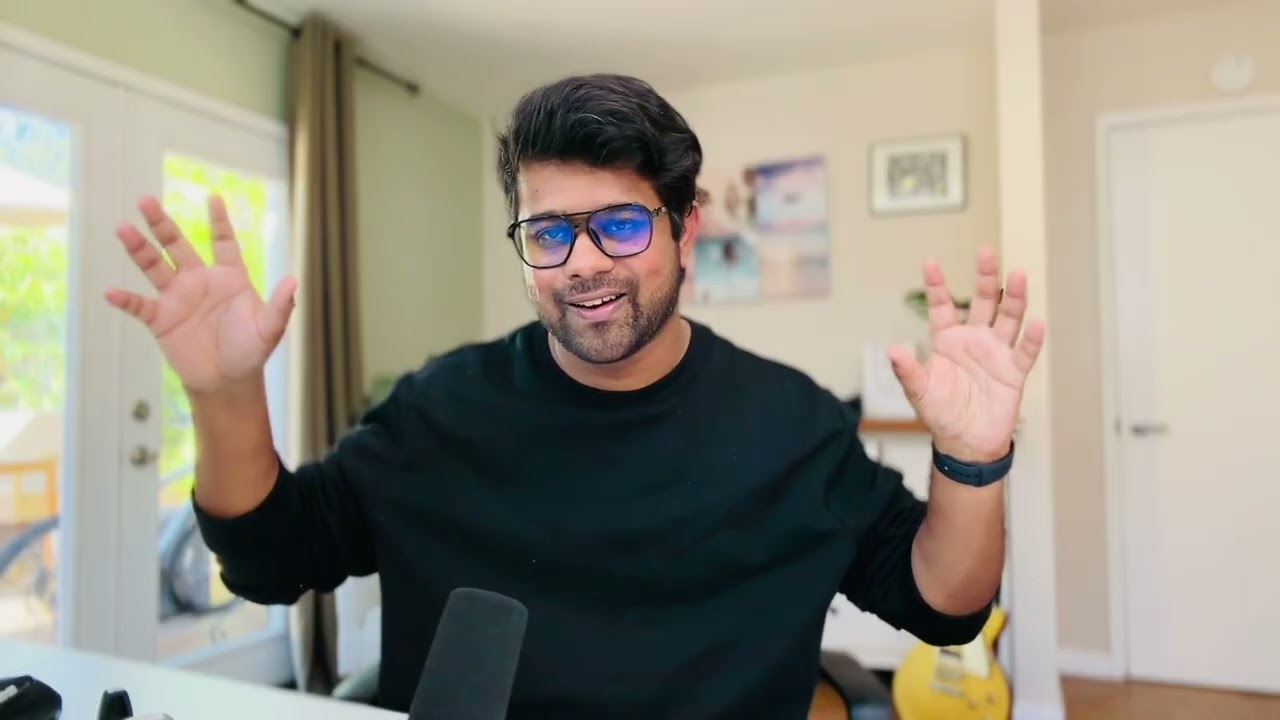
Designer to Founder Journey with Elizabeth Alli

A recorded interview (YouTube podcast) between John Rodrigues and Elizabeth Alli (May 27, 2024) chronicling Elizabeth's path from classical pianist to product designer to founder. She describes starting DesignerUp (a design education platform) after mentoring bootcamps and seeing gaps in practical product-design training, and building Simple (getsimple.com) — a website-builder aimed at non-technical users. The conversation covers trade-offs of founder paths (fundraising vs. bootstrapping), gaps in design education (business knowledge, developer collaboration, dealing with ambiguity and mental health), advice for designers seeking work (collect stories, document process, learn tech/business basics), content-as-documentation, systems/automation, and the unique advantages designer-founders bring.
Chapters
Hello everyone. Welcome to today's podcast. So today we have a special guest, Elizabeth Ali. We met through Clubhouse and then we stayed in touch for such a long time through our content and LinkedIn and everything. And today we are going to speak about being a designer, founder and building a successful startup. And I think in today's generation, so many people are kind of going in that path of being a founder designer. And we have Elizabeth today who was kind of like doing it all. So we're gonna learn from her. She founded Designer app. It's a design education platform. Now she's also building another startup which is called simple, which Elizabeth will tell us more. She's also an educator and then she also a content creator and she grew hard YouTube to 63k. That's a lot of efforts. I can understand being a creator. It's really hard to go that number, so. And her content is really amazing. Like the quality is so consistent and I always love it. Thank you, Elizabeth, coming on the podcast and super excited to have you here.
Thank you, John. No, this is fun. That was a nice intro. Thanks very much. Yeah, you were mentioning, I was trying to remember last night, like when did we first meet?
Right.
And that was Clubhouse days, when you used to host those Clubhouse rooms. That was a lot of fun actually. I personally liked that. I miss it. So yeah, it's really fun to talk to you again. I know we haven't talked like this.
In a while, so it should be cool to talk to everyone.
Yeah, that sounds perfect. And now we both are in Bay Area. We'll catch up sometimes for sure. So to start with Elizabeth, tell us about yourself and your journey of being a designer and founder and building your startup.
Yeah, so it's funny, I started like really far away from anything that had to do with design or anything in the digital space. It was like AIDS ago. I was a classical pianist and I was a piano teacher, an out of.
Work classical pianist and piano teacher after university. And that's kind of what started the whole thing. I was building myself a website to.
Get some business for my private piano practice. And it was really fun. I loved making the graphics and picking the colors and telling a story visually. It was really fun and different and it was such a rush to be able to think about something and execute the final product in like the span of 10 minutes instead of like 10 months.
With piano, you get a piece, it's extremely difficult.
You practice five hours a day for.
Months and months and months before it's like realized with a website, it's Like.
I have this idea, a couple of.
Clicks, here it is, it's done, it's.
Live, I'm sharing it with the world. And that blew my mind. That like time shift was wild to me. And so my brother was doing freelance design work and development work at the time and so I started helping him do a few things and I just kind of had a knack for it and interest in it, so I kind of kept pulling on that thread. And I was getting paid to do graphic design work and stuff like that. I definitely wasn't getting paid to do classical music. So that's sort of how it all started. And yeah, and then I kind of transitioned into web design and then UX UI design. And for me it was always this process of like someone would ask me to do something to, you know, do a project or ask me if I had a skill and I would just say yes. I didn't know what I was doing, I didn't know how to do it. But then I would just go home and figure it out and learn everything.
I could and then do that thing.
So it was sort of just that. So when people started asking about UX.
And ui, I'm like, yeah, I do that. I didn't know what it was, but I figured it out and kind of.
One thing led to the other. So that's how I ended up here.
Yeah, that's awesome. Yeah, I think whenever we start with a career, that's how it starts and then it ends up being like a full fledged vision and then you start building a company around it.
Right.
So you went ahead and built designer app and it's from a design industry. Somebody is so involved. Like your content is so well reputed in terms of like the quality and the thoughtfulness. Actually it's hard to find content that's so much like thoughtfulness behind it. And you do that in like every video, free video or your courses or anything. Like what inspired you to start designer up?
I'm so glad you said that because I really, it's really important to me.
That that comes through. It's something I spend a lot of time on.
But yeah, I mean when I started really working for companies and clients, it was my brother and I that started a design agency. And this was in 2007, 2008, around there. And so you have to think this is when like the very first iPhone came out. UX and ui. It was super unknown. It was just a few companies really focused on that and that user centered design approach. So a lot of what I was working on it was client work. It was like companies with a lot of like development debt that had a couple of business founders who came up with this idea. They slapped together an undesigned MVP with some engineers and then they hadn't had, they didn't really have any design on it or, you know, design process in place. So I would come in and like reskin things, redesign things, give it some ux, you know, as much as you.
Could at that time.
And I eventually ended up moving out to Silicon Valley and I was working for a lot of startups out here and that was kind of like in the heyday of when funding was like free flowing to everybody that had, you know, an idea. And so there was a lot of money out here. They were paying designers pretty well. And I worked at a lot of different companies, like all different sizes. And so during that time I was kind of approached by a lot of boot camps that were coming up in the space, big design boot camps that needed mentors. So they asked me to mentor or teach their curriculum. And when I got into those courses and I'm looking at the curriculum, I'm like, this is not what I've been doing for the past like decade at these actual companies and startups. This isn't aligned with what we're doing in the real world. That was a bit of a disconnect for me and something that made me think like this, this could be done better. There's a lot more here that could be taught. There's a lot missing. This probably isn't going to serve students very well in the future. And so that was kind of the inspiration behind it. Every time I saw some lesson I was like, there's a different way that I've been doing this in practice that I think would be a lot more helpful to integrate into a lesson like this or I might frame this in a different way. And I started kind of answering questions from students and collecting these ideas and that sort of just became a journal of sorts that, you know, was the initial inspiration for what would later become Designer Up.
Yeah, that's the problem you're trying to solve is so like a genuine and a real one. And then it's, I feel like it's only growing with time. So it's awesome that you're building and kind of becoming a solution for that problem to the, in the design industry. And I always like share your sources with my mentees and all that stuff. And you also are working on another startup, right? It's more of in a product space. Can you tell us a bit more about another startup you're working on.
Yeah, yeah, yeah. I've built a few startups over the years. It's something that I've done like just again seeing a problem, having an idea for solution and being someone that can execute and having partners and developers that are close to me that like to build these things with me. I tend to do that often every few years and this one, this recent one is a really big achievement for me because for a big chunk of my career I ran a design agency and a WordPress theme shop and an HTML, you know, like template shop. So I was doing a lot of that kind of work and it was like the same problems that kept coming up for non technical users of like it's really difficult to put together all the technology, like having to buy a domain name here and hosting over here and then customizing this template with a thousand different options. And then you know, it was always like they would end up having to hire a really expensive designer developer to do it for them and not being able to just do something simple themselves. We sold a lot of niche themes for just like brick and mortar businesses and mom and pop shops and simple landing pages and stuff like that. But it was always built on a solution that we didn't feel was optimal or wasn't built for them. It was just sort of like trying to fit it into like a, you know, a circle into a square hole. And so we always kind of had this dream. And when I say we, I'm talking about my co founder Eric and my other co founder Ryan. We worked together for many years on that theme shop. We always wanted to build a website builder that was really just for the non technical crowd.
John and I were just joking before this when I explain it's just like, like it's so easy. Your mom can build a website and that's kind of like I think the tagline I'm going to use moving forward.
It really is meant to be that easy, but it's actually quite difficult to make things simple and we decided to call it simple. So it's get simple.com, simple with two eyes. And it's just for that reason because we kept seeing this question of like how can I make a really simple website just without all the bells and whistles. I don't need to tweak every design aspect of it, I don't need anything fancy. But we took a lot of time to make it so that it's very difficult to mess up a website. Accessibility responsiveness all that stuff is like considered. And so this is kind of a, a real long time dream and problem that I got to solve with this and that's again where that came from. So yeah, that's what I've been working on for the past year.
Yeah, that's exciting. Yeah, the tagline sounds very catchy. Even your mom can build the website. So I think I personally use so many we builder and the solutions to build things. It gets very harder to like maintain, even just get started for building something simple. And also I feel like this could be very helpful for building portfolios for designers as well. And you bring that like design thinking and like a designer's perspective has a to product. I think that's very valuable because a lot of the products I use don't. I can sense that lacking that design sense. And I think like you kind of bring that uniqueness to the product. So that's, that's amazing. Amazing. So how do you go about transitioning from being a designer to a founder? I know there's a benefit to it, but also there's a bit of a, a drawback to it as well. How do you go with that mindset? Like change?
Yeah, yeah. You know, I, I kind of feel like I never unzip per se, but I do kind of juggle it day to day. Right. Because like you said, sometimes you're sort of in that head space of being a designer and looking at things that way. And then as a founder, I'm looking a lot more at the business and you know, the revenue and the business model and all that kind of stuff. So I think that it's just kind of that entrepreneurial spirit that you sort of have to have. And it's a lot of doing a lot of things that you just don't know are going to pay off until a long time from now. So it's, it's not like just having a job as a designer because when you're a founder, you are the one making the decisions and you have people relying, relying on you. And so it's a different kind of pressure sometimes in that way to be the business as well. But I think, you know, being a product designer and a founder just means that I'm thinking about the whole process, the whole life cycle. I'm thinking about how do my developers experience my work and how do they work with me. That's a whole experience to think about. And then how do users receive the product and how are they experiencing it. And then it's also I'm getting My hands dirty. Right. Making the flows, deciding on the business model, drawing the pixels and things to make it a reality. Yeah, I think some of it is. I mean, a lot of it is just problem solving. Right. And that's something that you kind of have to get comfortable working that muscle just like shit's gonna blow up every day, constantly.
That's all it is. It's like, fix this one thing just to buy yourself enough time to get to the next problem, to get to the next problem. And you can, you can only. It's like a fog of war always. You can only see, like, this much ahead of you. And you've got to wait for data and you've got to wait for user feedback to come in. And then you try to put that into something to guess what you should do next, and then you just keep rolling. So it's.
It's a ride.
Yeah, it's a ride.
I completely can relate to it. Especially when things keeps going wrong during the launch day or it's working. I was trying to launch my book and had, like, set like a deadline. The COVID image is not working, the editing is not happening. The website is crashing.
It's like everything will just go wrong.
Yeah.
That's the only thing you can rely on.
Yeah. And then it keeps crashing. When you post it on social media, it looks, oh, everything is perfect.
I'm just launching this book and it was just easy.
Yeah.
So that takes me to this question of sometimes entrepreneurship or being a founder is kind of seen as a perfect thing on the social media. What are some of the realities of being a founder? That people don't often share it in the public or on the Internet.
Yeah, I think there are a lot of challenges that are talked about, but I think one distinction in particular that's not talked about that much are the challenges of founders that are going for funding and the challenges of founders that are bootstrapping. Because those are two really different worlds. And I've been in both of them. And when you are going for funding, you really are framing things in a way that, you know, the vanity metrics appeal to what investors want to see. So you're maximizing for those KPIs. You want to show that you can capture a gigantic market, that you have a huge vision, that you're going to make a ton of money, but you're not going to make it for a really long time down the road because you're going to grow and grow and grow and grow, you know, pre revenue or whatever it is. And then when you're bootstrapped. You know, it's like you have to turn a profit. And every, like, you know, you count every minute and every decision. And every minute and every decision counts. Right. And you're very, very focused on the user because they're kind of all that matters. You've got to please them, you've got to turn them into a customer, a happy customer, a staying customer. And you need that influx to run the business. So you're not beholden to investors, you're really beholden to your users. And I think that's a. They're very different challenges. But a lot of times when you see founders talking about the challenges they face, a lot of, A lot of the times they're invest. They're invested in. Right. Their company is being invested in or they're going after funding. So they do need to make it look very shiny and very packaged for that way. So, yeah, I think that's a distinction. That's important. And there's also really diff when you're going like B2B versus B2C. Very different ways that you would handle the business or different challenges that you would probably have.
Yeah. I was recently talking to another startup founder and I asked her, what's your biggest problem? She mentioned the similar fundraising and that investor thing. And I was like, I'm always pro to bootstrap. I don't. Never. Yeah, but then, but then she's. Then there's a matter of scale. Right? It's hard to scale bootstrapping faster compared without the funding. Yeah.
You will be toggled with speed and certain things you can do. And it's just, that's. It's a definite reality for sure.
Yeah, that makes sense. I want to like, switch gears a little bit from the startup conversation to more towards the design industry and speak about some advice and tips for you for like designers who are listening to this. In terms of like, I'll start with like the design education. Since you created a course and on product design course and build designer app, how do you see the future of design education?
Yeah, that's a big question. It's a big question for sure. Because future. I don't know the future tomorrow, the.
Future, like five years, 10 years.
But I think, like, there's still a lot missing from design education. But design education is such a big umbrella now because, like, what is design? Right. There's so many different things. There's. There's graphic design and then there's like service design. And so I don't know that anything is necessarily missing. I mean, it's pretty easy to find a lot of knowledge and then we have chat G. And like, finding that knowledge isn't so difficult, but, like, putting it together in a way that makes sense, like connecting all the dots together and then putting it in a personal, like your personal filter, that's what's still difficult. And even with, like, let's say we talk about product design education, right? There's a lot missing from that still. A lot of it is theoretical and not as practical. And a lot of it, there's just this gaping hole of, like, business. I run into designers all the time. You probably know what I'm talking about. Like, they don't know how businesses even start from the top down. Like, they don't know how the business requirements get created from investor, you know, like pushes and pulls and like the market and all that kind of stuff. They don't know why their PMs have these specific requirements and why things are happening. And that causes a lot of problems for a lot of different reasons. I mean, one, designers don't feel confident. They're. They don't have clarity. They feel like they don't have a proverbial seat at the table. But a lot of that is also just because they don't understand the inner workings of what's happening. And so that causes friction, I think. So a lot of that kind of stuff is missing, you know, from design education, I think, like, when we talk about, like, how to collaborate with developers, I see a lot of these webinar and podcasts and stuff like that talking about it. But there's a lot of little practical nuances that I don't hear talked about. Like, a product designer should be able to, like, skim through API documentation and just get an idea of the tech stack that their team is working with. Because a lot of the times you don't even have to design half these flows you think you do. Like, if you're working on payments, they're probably using stripe, right? They're integrating stripe payment systems probably 99% of the time. You don't need to design those screens. So when I see those type of flows in portfolios and stuff like that, I'm like, that that's not really how it works. You're not going to be doing that kind of stuff. And it kind of is a telltale sign that they may not have a lot of practical, like, touch points with that. And I think another thing that's missing too is just how to deal with ambiguity and like, how to Take good care of yourself. Your mental health. Designers will come in and look for validation based on what they've done and learned from outside sources, whether it's their manager or their boss or the company. And they'll be really disheartened when they don't get it. But at the same time their self talk is terrible. They berate themselves, they call themselves stupid, they do something wrong and they beat themselves up about it. That lack of practicing self compassion is I think more dangerous too because you need to be able to give that to yourself and like fill yourself up with that. Right. Rather than looking for it outside too. And so that's a big part of like, I think soft skills that are missing from design education as well, which is a big part of what I teach at DesignerUp. I use mindfulness as the lens that we do these exercises through so that you're not just prepared to do tasks like a robot, but like that you can can reason and discern and build your own self confidence and self worth because a job is a job. But at the end of the day it's like you got to take care of yourself. You've got to prevent burnout. You have to recognize when you're in a toxic environment and have the confidence to do something about it. And like it's just kind of how we show up for ourselves and each other that like really matters at the end of the day, you know. So yeah, I think that's probably in a nutshell.
There's a lot you kind of uncovered there and those are like such a right point. Especially like there's so much information, theoretical but lack of practical. And I'm seeing that need for more personalized education also. It's like growing and seeing like so much like cohorts are becoming popular now. So I think. And yeah, that like knowledge gap is like huge.
Yeah, right.
Yeah, so. And it's a hard problem to solve too. It's like is solved by one person or an education institute. But I think personally I feel like people should stop, you know, have that reality check and like not go with that pretty picture of ux. And then it just like disheartened. And you spoke about mental health and like we designers have to deal so much with stakeholders, pushbacks, this and I think that's having that intelligence is very crucial. Yeah, you kind of like packed it up. I feel like this could be like an entire blog of its own.
Right?
Yeah, we could do another talk on that for sure.
Yeah. You mentioned you have such passion for design education and that can be seen in your content as well. How do you kind of, like, balance creating content versus building a product at the same time?
You know? Like, I think it's. I treat all of my projects as case studies. Like, every product that I'm working on, I document everything. Right. Everything I'm doing is an ongoing case study. I'm very meticulous about documenting and keeping a work journal. And so it's just a way that helps me reflect on and, like, analyze my own process and, like, get my thoughts in order. I think documenting things, it really forces you to get clear. Right. And it forces you to poke holes in your logic or at least see holes that might be there. It, like, shows you ways you can optimize. So I'm pretty big on that. And the only difference really between my work, like building and being a content creator is then I package that up and share it in a way that's digestible and relatable to other people. And I think that's really the only difference between most of us creators. Right. And same with you, John. Like, I know you share your process. You share what you see what you're doing, and you just. You just frame it in different ways and you deliver it. And that's really all it is. I mean, like, people create content for all sorts of reasons, but for me, it's just kind of like an outward reflection of, like, I have this problem. Other people might too. Other people might find this helpful. Yeah, it's just really framing what you're. What you're working on. I think that's how I approach it.
Yeah, that's very interesting point you brought up. It's more of like documenting and then sharing rather than like creating. Right. When the last podcast, I was talking to Grace, the founder of Design Buddy, she. She asked me at then, like, why, what's your goal of creating content creation? I was like, if I don't create it, I feel bad.
Right?
Yeah, so that's what I said. At some point, it becomes by default, like, if you don't put it out there, you feel like something is missing.
Yeah, I just gotta get it out.
Of my brain and like, talk about it or just get some feedback on it or something like, other. Especially when you're like a solo book bootstrapped founder or, you know, you have a small team, like, you just kind of get lonely in your own brain. Sometimes you just want to get it out.
So. Yeah.
Yeah. And it personally has helped me so much with my career growth and like, finding jobs and all that stuff. So it's been very effective. Do you have any tips for designers who are struggling in this market to find any work opportunities or freelance or full time job? What would you advise them in terms of like navigating this market?
Yeah, it's, it's definitely challenging for sure. It's, it's a few orders difficult now I think just because like barriers to entry are also lower too that can, you know, again, knowledge is so easy to get but like the application of it, the execution of it, the, the experience is harder. But I think you do need to like take initiative, like take that course, reach out to that mentor, you know, put yourself out there, do an open source project, attend a hackathon, just put your work on the Internet, whatever it is, like get it out there, make some moves, whatever you have to do. If it's volunteer work, if it's, you know, helping a startup, interning for a little bit, you've got to get some of that real work under your belt. I think that's pretty important. You need to put your in difficult position to kind of learn to deal with that ambiguity and like collect. Just think of it as collecting stories. That's what great product designers do in interviews. They have a specific story to tell about a failure or a success because of something they did. Even with my students, when they're working on a portfolio project and they're building their MVP and we're doing like real MVPs, like you're doing a real project, I'm building a real product, they get really caught up in the beginning of, well, I don't know if this is a good idea. And I always tell them it doesn't matter. You are trying to validate the idea with users. You're trying to validate whether that problem really exists and how are they solving it. And is what they're doing sufficient now? And the answer might not please you, it might not validate your idea. That's okay. That lack of validation is still really useful in a case study. Not showing the happy path like they say. Right. It's equally valuable to employers to say they recognize that this wasn't a good direction and pivoted or this is why this might not work. Or you know, so I think capturing those stories as failures and successes. Again, why I recommend keeping like a work journal of some sort is really useful. Just produce a ton of stuff. Like you're gonna have to produce a whole lot of awful stuff and like a little bit of good useful stuff. And then that's what makes up like, like Experience over time, really start to explore things beyond just your scope of expertise that's design related. Think about the tech stack, skim through API documentation, understand how stripe integrations work. Like I mentioned, talk to developers, make friends with developers, see what they're doing. If you have the opportunity, don't just hand things off. Just kind of like go and shadow a developer and just watch what they do. It's so enlightening. And maybe ask them to like, talk through their process while they do it. I do this all the time, much to the annoyance of my co founders, and I have them explain things to me that are all mostly like this, right? But still, sometimes a little light goes off later on when I'm designing something and it really helps me and it helps me speak their language and, you know, it just makes all that stuff better. Learn business stuff, learn KPIs, learn pirate metrics, understand those things so that you're not like taken aback when a PM asks you to do something. And do something outside of the box, right? Like, don't just make a case study on a website that's like a diagram and then some text. Do a video walkthrough of just a single flow that you designed, why you did it. This can tell an employer or hiring manager, anyone, so much, right? It shows your personality, your sensibilities, your ability to communicate, to tell a story. It truly shows them what you've designed. Like, that's powerful, right? Do a quick video, get a simple.
Website, put it on there, Done.
You don't have to like slave over your case study for, you know, six months. I think those things are really helpful because what it does is it shows that, hi, I'm in it, I'm in the trenches, I'm doing it, I'm working, this is what I've done. And for sure, think about your audience. What do they want to see? If you have experience, like you're transitioning from another industry, right? You have experience in cycle psychology. Think of all the ways that you can show how that ties into what you do now. And all the companies that would be interested in a psychologist, product designer, or whatever it is, because that aligns, right? They see you and they're solving problems in mental health. And they're like, okay, this designer may not even have the best portfolio in the world, but they get our users, they get the problems that we're trying to solve and that will go a long way. So I know that's a lot, but, but that's like all the things that I'm seeing that have been separating like designers that are getting positions from the ones that are not or getting interviews. And even if you're in a position, don't like get too comfortable and assume that you're going to stay there. You've got to keep learning more. You've got to keep pursuing more knowledge in different areas because it's like very volatile right now.
You know, nothing is.
Yeah, no, you brought up such good points. I could listen to this for hours, by the way. So it's awesome. And this is something I constantly see all the time. I mentor people. This recently a student I'm mentoring. The point that it stuck with me what you mentioned about selling stories and this is so important as a designer. And then many designers struggle with it and sometimes the stories they have on their port Portfolios or like LinkedIn is causing them go away from reaching their goals to the stories, what they have about themselves. There's a misalignment in their portfolios. I see their LinkedIn, the story is different compared to the story that person is telling me.
I was like, why?
It's not matching. Yeah. And they get like wrong opportunities because of wrong stories and just like I don't want that. So I think. And also even at work I feel like it's so much about storytelling and narratives and. And I kind of see that you have that such a problem solving, design thinking mindset. You apply that in your startups as well. I think that that approach like designers also could take and yeah, case studies. I feel like I could. We could.
Do you have. How many portfolios have you probably reviewed by now?
For me? Yeah, I have 200. I counted them. So maybe I'll write another book on it.
Preach it to the choir. I can only imagine what your eyes have seen.
Yeah. And every. It's. I also like, I had a change in me. Like there is this survival triangle. Right. A lot of the people, the thing is like most of the people just want to get a job. They want to make sure the recruiters like it. Right.
Right.
Yeah. And I think we are missing that of when I ask what problem you are trying to solve. 90% of them don't know what problem. Then they're like, john, can you just tell me what the recruiter wants? So I battled that. Then I also like thought of they just want to get a job for now. But then we are kind of having that gap. Like you can't just be impressing recruiters designer first. So that's definitely a gap. And maybe I'll. I could write Another book on that.
You should. Oh my gosh, I could not even imagine what you could write about that. But you're totally right.
Because like impressing recruiters, I mean, really, that's. That's difficult, right? That's. It's a difficult goal. But to align with a problem as someone who can solve it, you can't argue with that. Right. You can defend that all day if you know what you're talking about, if you have some background in solving this problem. And that doesn't mean it has to be a digital solution, you know, it just means that you need to be clear on that. And people can see that when you're in alignment, you know.
And when I got recent got hired, even in this difficult market, after getting on my first day, I asked my manager, why did you hired me? He said not in a wrong way, but more of like the curiosity.
Yeah.
He said, you are passion to solve problem for our clients. Is that what we hired you for?
That must be such a great compliment though. Seriously.
Yeah, yeah. And I drove eight hours from LA to SF to interview.
Wow, the dedication.
Yeah, yeah. I wasn't moving anyways. I was looking at apartments. So I tied up to that story and that story spread within the company. This guy drove eight hours.
Yeah.
I became.
People really underestimate the power of just being yourself and, you know, telling the.
Story and like putting that in the context of like how you solve problems. I mean, again, I always say this.
Like, if you want me to know that you're funny, don't tell me you're funny. Tell me a joke and make me laugh. Like if you make the person laugh or smile or whatever it is, like half the work is done.
You don't have to do anything else.
Right. So let your portfolio make them feel, make them think, make them, you know, laugh.
Yeah, I had done like a little deep dive into hunt design and the design of humor.
It's.
It's a. It's an interesting space to. I think IDO had this on their website. We don't just collect cookies, but we also have like cakes or some jokes like that in that. So I think, yeah, it's. It's a very interesting stuff. On the first podcast I had Samantha, she's a standup comedian and UX designer.
Amazing.
And she said like, every designer should learn improps. Yeah.
Oh, for sure.
Yeah.
Okay. Switching gears to like the startup back again from, you know, the industry and skill development. I've recently found out about the powers of building systems. And it's something that I didn't think through for a long time, but when I started incorporating it, it freed up so much of my time and then it helped me to reach those goals, which I'm trying to accomplish. So what's your take on, you know, building systems and scalable systems around your products and services and stuff?
Yeah, I mean, it usually starts out manually, right? Like, if I do it once and it works, then I duplicate it and I document it and I try to optimize it, do it a little bit more efficiently, a little bit more quickly, add in a little integration, a little something here, and if I can then repeat that, like with any degree of success a number of times, then I automate it. And then when I automate it, I try and scale it and as I.
Said many times, document, document, document.
Right. But that's sort of my process. And again, like, I'm, I'm always trying to juggle. I, I think where the friction can be sometimes is like, like, is this the time to put the time in to figure out how to automate this for like my future self, or is it too soon to do that? Like, am I still saving time manually doing this thing? Right. And I think that's like something you probably know so well with design systems and building those and stuff like that. In some stages it's just not right. Or the time to spend all of that upfront loaded effort to build a design system or to build a system incrementally as you need to grow, or this thing is something that needs you a little less in the picture to do it. That's when I think you need to start figuring out how to automate it. It's like this thing is happening a lot and I need to not be doing this thing all the time. Is there a way I can do an integration? Can I use Zapier? Can I use ChatGPT? Can I, you know, like, start there to shorten the duration? And I think a lot about time to value. Like, how can I shorten time to value? Whether that's for my users, it's for my. And you know, it's like prioritizing when that value is high and you can really reduce that time, then you're going to have a flywheel there. That's, it's, it makes sense. But if it's starting to tip into where there's a ton of time, but the value may not be that much, maybe it's not worth systemizing that. So you can't systemize everything as much as we'd like to and maybe we will be able to one day when AI is there. But I think that's how I approach each other project and like, look at it.
Yeah, it's very interesting. Especially it starts manually. Rough and documenting, I think. Yeah, it's usually like founders can get stuck into that. I need a system. But then first you do it like manually, and then eventually you kind of slowly document and to do it. Yeah, I think when I launched the cohort last year and I used to like send emails all the time, like the same email. I was like doing it again, again. And then I found out you can automate this. I didn't know I was like. That saved my time. So I'm learning a lot. So that's something I'm fascinated about. Like this year, how do we create like processes that helps scale our products and stuff? I'm very fascinated about design systems and like processes and stuff this year. So that's. I'm looking into. Okay. That being said, one final question, you know, and I could talk with you for two, three hours, but yeah. So since I want to like ask you about what is the unique advantage you have as a designer being. And being a startup founder, like, not all startup founders are designers. Brian Cheskes, he said, I think he's the only CEO in Fortune 500 who is a designer and a CEO. So what do you think? Yeah, he told that in the config during Figma's Config last year.
Yeah, I remember that. I just, I guess I hadn't thought about how rare it is, but yeah, I guess so. You know, I think like, when you're a designer, you notice when things aren't designed well, it kind of sticks out to you. And when you're a founder, you notice when there might be an opportunity to like make something or to make money off of something, or when something's like lacking a good solution in the market or, you know, you'll see patterns of groups of people who are. They keep trying to duct tape this thing together that they're trying to do. And so when you put those two together and then you have the skills to execute, that's where you can really have a unique advantage, I think so. I think it's not just that I'm a designer, but it. You could be anything. It's just kind of how like you look at the world. But designers do kind of have a unique way of kind of seeing problems and then creative solutions as well. So I think, yeah, it's probably an advantage.
I'd say so yeah, that makes sense that I've been trying to host like my courses and stuff like that, right? And I try like multiple platforms and then I, I cancel the subscription. I don't use them. And those salespeople, they reach out to me, why did you cancel? And I was like, I can't use your product. The UI is like giving me, causing me problem. Then they try tell us more. Like tell us more. No, that's my job. I can't give you.
I know.
Yeah, I, I, that happened to me just the other day. And it's this, this little plugin thing, it has such great potential and like the features are all exactly what I need but like all in the wrong place and it looks really bad. Like they've never had a designer touch it. And this poor co founder, it keeps reaching out to me and asking me why I'm not like using it and if I'm happy with the product. And I don't even know where to begin with that. And I feel terrible and I'm telling him, but I don't know how to just say like, you just, you really just need to hire a designer at this point to be, fix all of this and to think through this.
Like there are systemic problems here with the way you have made this experience and how badly it looks. That yeah, my, my answer to that.
Is hire a designer today.
Okay, that's perfect. And I think that's why we need more designers building good products. It's good for the world.
Yeah, yeah.
And now you mentioned one more thing is systemic problem and I think that's where it's, we are kind of heading more towards as designers solving the systemic problem. And yeah, I think that's like a good note to end as well. Just as a final take, where can like people find you your content, your two startups you're building, what's like the best way for people to find it?
Yeah, most of my stuff is on LinkedIn. You can find me at Elizabeth Al DesignerUp Co is where you'll find all of my free courses about ux, UI and product design and mindset stuff. And my paid course that is, I'm proud to say very beloved by the design community. We have a lot of great students coming in and matriculating through and learning all those real world skills that I mentioned. And then simple is simple with two eyes. And the website is get simple.com. and yeah, if you want to like build a website in under an hour, that's just perfect, beautifully designed. Like everything is thought through and your hosting is set up, your domain is set up. It's all ready to launch. Go. Go there and do that.
That's perfect. I'll also include that in the description in my substack, YouTube or LinkedIn or wherever you look at this podcast. Elizabeth, thank you so much for taking your time to, you know, talk to me regarding your startups, talking about design education. And we covered a lot of stuff. And I'm kind of building this podcast for, like, founders, creators, and, like, designers, because I feel we are kind of heading into that space right now. So I'm glad to have you, who is like, all three of them. That's awesome. Thank you again.
Amazing. Thank you, John. This was wonderful.
More from John

Building Orb AI in Public: Episode 6 Accelerator & Creator Focus #creator #orbiai

Jev: The Decision Layer Boosting AI Retrieval from 72% to 95%. #Jev #AIDecisionLayer #GenerativeUI




Design Engineer's Ultimate Tool Library: designengineer.tools #designengineer #designsystems