🎙️ Podcast #1: How AI Is Redefining the Design Industry and UX Jobs
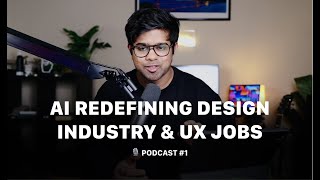
John Rodrigues argues generative AI will augment rather than replace UX designers by improving personalization and efficiency. He recommends designers use AI for meeting synthesis, transcription, and prototyping to boost productivity while keeping human judgment and empathy central to the work.
Chapters
Welcome everyone to this podcast. So in this podcast I'm going to talk about the AI revolution and how it's redefining the design industry. And this is going to be a very candid podcast, unlike my YouTube videos. So I thought to like have this like a deep talking session, very conversational, to share some of my opinion without feeling that YouTube pressure of, you know, speaking the right thing with the on the bullet points and everything. So this is going to be a very conversational. I'll share some of my experience, but I do have an outline which I'll be covering. There are three things we are going to look into in this podcast. One is speaking about how innovation in AI is transforming the tech and the UX industry. We'll also speak about how it's impacting the jobs. I know this is a big topic and everybody seems to be concerned about it, especially in this unstable market when the AI revolution is happening. So it's kind of easy to feel that stress. Is AI going to take my job away? So we'll speak about that and then also we'll speak about we'll also cover topics on certain opportunities you as a product designer or UX designer or a researcher can look into in when this AI revolution is happening. The tech has always been like that. It's always been changing and something new comes like every week. So it's important for us to stay relevant and updated and this is why I do all this content to keep ourselves relevant and updated and that's very crucial as a product designer or someone working in tech. So these are the three things we look into and the broader topic I'm covering is how AI is impacting the design industry. And also we'll look into how it impacting the job roles and certain opportunities you can keep look an eye for. So starting with the let me start with how the AI innovation is impacting the design industry and how we think about user experience. So it's definitely value add. The innovation in AI is definitely a value add and something that designers and product folks need to leverage to create better experience in the product. We can see the most of the innovation is happening on the generative AI side. You might be hearing a lot of gen AI so that that's a generative AI. So if you are not aware what gen AI is, it's nothing but it's nothing but it's nothing but generative AI. It's called generative because it generates content based on the prompts you give and it's not just like a hard coded Data. You ask a question and it give you an answer. It's like understanding your questions. Well, it's having its own intelligence, which is artificial in nature. That's why it's artificial intelligence. It will gather data from its database or from the Internet to give you a personalized answer. And it creates, it generates something that might not be existing before. So for example, when you ask ChatGPT to give a poem, it will create a poem that didn't exist before. And based on the prompt it created that poem for you. So it's again, it needs data to make that decision and to create that Gen AI is not just limited to text based content. It also generates videos, it also generates pictures. You might have seen Dall E Dolly or Dali, whatever it is. You might have also seen Microsoft Copilot creating images. I think it's also called as Microsoft Designer and and then you might have heard of Mid Journey. So based on prompt you give, it creates images. We recently also saw Sora which is the video model which generates video based on the content based on the prompts you share. And then it was quite fascinating for me to see it look so realistic. And so this is generated content based on the prompt and prompt is nothing but that instructions you give. I also heard this some designers speaking that before we need to give instructions to the computer and it will give you an outcome. Now you can describe the outcome. The computer will figure out what path it needs to take. It might look like oh, what is this? Just creates content out of prompt. What's the big deal of that, right? But it's indeed a big revolution. I'll tell why and we'll look into some examples as well. So this can be helpful to improve efficiency, make experiences personalized and it helps to products to create a better user experience at scale. We'll dive deeper into what that means. So for example, in Amazon you might have seen when you are buying a product, you get personalized recommendations. It's based on your usage data and everything personalization is. Personalization is very expensive. For example, if you are trying to manually curate what that person is interested in, just imagine you have to do that for 1 million people. How will you go about finding what people like for 1 million people? You need some kind of a scalable approach. That's where AI comes into picture, where it analyzes that data and makes those recommendations. And it's not random recommendations, it's different for different people. And then imagine 1 million users using that. That's where AI can help into personalization. That's Why I say personalization is expensive, but AI can help to make it scalable. So AI has a lot of benefits like that. Even though now it has been a trend and everybody speaks about it because of probably the ChatGPT kind of made it accessible to everyone. But AI has always been used in our product from Netflix recommendation to credit scores and all that things. So AI has been part of our products and even companies like Apple and they have incorporated all of the machine learning and AI models to make better prediction. For example, the fall Prevention and the Apple Watch. When it detects it's a fall, it recognizes multiple patterns of motion and determines if it's a fall. If you have to call emergency 911 or not. There are models that are always been there with us. But now it's I believe because of ChatGPT it is becoming more consumer friendly. From this, what I understand is experiences are getting highly personalized and it helping to improve efficiency of the user. For example, the notion AI which helps with the writing and it's like a writing assistant at your service. Again, it's probably not going to replace an entire writer, but then it assists you to write better, outline things, summarize things, synthesize things. This can be tedious work which AI is currently helping. And then companies are leveraging this strategies of incorporating and creating this personalized experience to improve, to create value for their end customers, but also increasing the revenue. Right. Like our notion you have to pay additional $10 a month, that is increasing the revenue for them when they have millions of users. $10 is a lot of revenue increase, even 10, 20% people convert. Right. So and once people get used to this highly personalized experience, that kind of helps to solve their problem, helps them be efficient. It gets harder for people to use product that are not AI enabled. You can also see AI generative AI incorporated in Google Search as well. When you are searching, it summarizes the insights for you and it lets you ask follow up questions. That kind of interaction didn't exist before. Maybe in the future generation might not even know how that interaction was. Like now when AI is becoming highly personalized where you can ask follow up questions and it maintains the context what you asked, it's like conversation. So I think so Google has incorporated that. And then even though it can feel a little scary, people feel threatened because hey, it can make an animation video, it can make a video and clip and like what's my role here? But I personally believe AI is going to be super helpful to democratize the craft of making things But I don't personally think it's gonna able to replace completely. There's a definitely research going in AGI, that's artificial general intelligence that has intelligence similar to a human. That is something probably the regulation things and everything will come into picture when that becomes accessible for the users. And all these AI companies do have a social responsibility as well. It's not always about technical feasibility, but also the social responsibility. But however we as a user experience designer, we definitely have to leverage and know how AI works. So in order to incorporate that in our design process. Right. This section I want to emphasize more on how companies are using to create value for their users and end customers and also with their business growth. I also been using Spotify AI. They have a DJ AI which is create personalized music tracks for you. Whenever I am drive when, whenever and I don't have time to create my own playlist. The AI Spotify DJ AI mixed my playlist and then I'm always surprised that it picks music based on my preference and my past usage data. And then it's not just like creating music, but it also has that conversational aspect to it which talks about hey John, this is a song I'm paying you, hope you're having a good day. And then it also blends the music track really well. Like as a musician I'm aware you got to match the right note scale and everything. And it does that really well, which is quite fascinating. That's. We can see based on this example, you can see that AI has been super helpful to improve the user experience of the product and to create value for the end customers. And also with the business growth and everything. And now a lot of these APIs and technology is available for companies and people are building products on top of that. And that's going to be a huge opportunity. AI is also being used in customer care to reduce the calls and everything. And that also has created fear, even though I'm a bit optimist about this. But there's always going to be job replacement and also jobs creation as well. So at certain jobs that can be automated will be automated. We kind of have to be prepared and constantly upscaling ourselves to stay relevant and educating ourselves to kind of continue to do what we want to do or we love to do. So that being said, let's speak about so that. So that being said, will AI take the design jobs away? So this is the most asked question by people. Will AI replace product designers, UX designers or UX researchers role? I personally believe AI is not going to replace UX designers, product designers, UX researchers job. But rather it's going to be a great tool for designers and researchers to augment some of their workflows. So there are a lot of repetitive things we have to do. There's a lot of tasks which are not fun sometimes like researchers need to synthesize large set of data and everything that that might be humanly difficult to where AI tools can help you. And I see it's like human working alongside with AI because that human judgment is also crucial and the designer's ability to empathize, able to understand the context, able to understand the cultural norms and everything, those things become very important and people are making content and spreading news about AI is going to replace UX jobs and things like that. But I personally disagree and I feel it's coming from the place where design is seen from a place of outcome. Like right, they will probably show you hey, you give a prompt and the UI is made. And the conclusion of that finding is it's AI replacing UX design job. But we both know me and you know that design is much more than that. And the field of human computer interaction is bit broader than just evaluating it based on the outcome of it. At the end your outcome and output matters, but also the process and the humanization and the human factor that goes into making these decisions also matters. This you, the designer working with AI is most likely be the future of it rather than the AI doing all the UX design work which externally, if you see people think it's just making screens, but it's much more than that. And I personally feel that the role of UX designers and researchers is going to be, it's going to be more important than ever because that ability to empathize is able to create experiences that create value for the end users is going to be more important. And then most of these AI products can be hard to use, hard to understand or hard to interact with. That's where designers come into picture to make this products more human. And the role of designers is going to be more than important. Our tools, our way of working might change, but the whole has a whole the design, especially the field of user experience design and the field of product design. It's a lot to do with the problem solving and the people part. Problem solving, communication, creating the experience, defining the context and designing the product that's aligned with the user's need. And then there's a craft side of it too as well. Like you could get any AI templates, you could get Templates by giving prompts. But it's the designer's ability to have that taste, have that cultural understanding and able to put things together to create some kind of a value. And that story is going to be more and more important and it's going to be super helpful for product folks designers to quickly create an mvp, validate their concepts and with the tools which enables you build your prototypes and products and services. And I also saw this data that search in the AI tools, especially design AI tools has increased 1700 percent times. So that also goes to show the demand and the interest people have in building AI enabled products. That also opens up doors for designers to contribute their design skills either can be research or design or management or operations or anything like that to build AI product that creates values. And there's a growth in this digital product, SaaS products and AI integration with the existing softwares and everything. That's where you having upskilled about AI is going to be super helpful for you to stay relevant. And one thing I've learned looking back to years of experience in my profession, the only thing that matters is that relevance and how this industry keeps changing. But as an early designer, if do not feel the pressure that only if you know AI, you'll be the best designer in the world. But the best designers are the one who understand the fundamentals and the foundations strongly. Right? Like you got to focus on that as well. But it's important to stay relevant and this can be a competitive edge as well for designers. For example, in an interview, if you could present any AI product, that can be a huge advantage for you and this can help you stand out and everything. If the company is working towards AI products and everything and also a lot of the AI startups are like coming up, this is a good time to volunteer, good time to work with those startups to help them build this product. As a product designer, you understanding how AI works or even having that passion for building AI enabled product to create better user experience for the customers is going to go a long way. And those are some of the opportunities that designers need to keep an eye on. Yes, it is easier to feel that fear is easier to get caught up with that fear mongering content people are producing. Yes, I'm not denying the fact that certain tasks which we might like doing can be replaced by AI. But the whole design profession as a whole, I think it's going to be more important than ever. If you think of it from the core, if you think of from a place of design, of problem solving and creating that human centered products and everything. Sometimes you might not be even designing an interface and sometimes you might be designing a conversation. There are conversation designers like that even. I feel like I did try the AI enabled design tools. They create like UI from the prompt and even the prototypes or the flows and everything. Flows and everything. But it's more of an inspiration tool. I mean there are already so many templates out there, design systems, templates, kits and everything. But that ability to put things together to solve a problem, create that narrative and create value for the users and drive business growth, those value, those skills will become important. I know as I make this podcast, I record this podcast. That's a huge difficulty. There's a huge problem in the industry of designers struggling to find jobs. And I don't believe it's because of AI. It also because of the economic conditions and layoffs and demand and supply and education issues and things like that. But, but I think smart move would be even finding leverage, even finding able to collaborate with companies who are building AI products and contribute your design skills there. So this brings up to the last topic of how. So this brings us to the last topic of this podcast is how designers can leverage AI. And I kind of divided this into three parts. One is improve productivity, second one is using your workflow, and the third one is. And the third one is finding a competitive advantage, which I covered a little bit right now. But AI tools can be a super helpful thing to improve your productivity, especially in terms of we have to deal with so many meetings and stuff, right? So using AI tools to synthesize your meeting notes, analyze your meeting notes and create summaries and takeaways, those things can save you a lot of time. So, so we can focus on the work as well. And also I feel like it's going to be a norm in the future where we are taking inspiration based on generative AI content. Or you might be asking, we might be prompting and getting inspiration. You might have start already seeing that in tools like UI wizard and Galileo AI and things like that. So that might be a norm where we are probably doing some kind of a computer analysis or looking into inspiration or need reference for the flow. We might be using prompts and creating these references. I have done some experiments like this and they do work, but I think they are not streamlined yet. And that's another opportunity to look into. And then it can be super helpful to automate some of the repetitive tasks. I recently did a masterclass on using AI in job search and then there are so much Repetitive tasks in your job application process are able to automate some of that processes can be super helpful to reach your goals. And using AI to build better systems for you to reach the goal is another opportunity to look into in terms of improving the workflow. I can see in extensive research it can help to synthesize information and give you insights. When I was working on the VR in Healthcare project, I had to do a lot of user interviews where I use Otter AI to record the interviews and transcribe AI helped to transcribe it and then draw insights and the keywords from that interview that helped me to make better decisions. So those tools are going to be super efficient for us. And I think there will be days where once we don't have this AI enabled tools, other tools might feel hard to use. So there's a user behavior we need to consider and see how people are being adapted to it and keep that in, you know, keep that in that in mind while designing. So I've used Otter AI before. You can also use ChatGPT to synthesize some of that data and draw insights and everything. And there are certain things you need to be careful about is not all companies will allow you to use all those tools. So don't be over reliant on that. You have to build your foundational skills. Sensor designer and also that the data companies want to be protective of their data. They have like patent related data or any sensitive data which they don't want to be leaked. So make sure that you are being thoughtful when you're working for a company and things like that. But if for us, if you're working in a company that is okay with using all this AI tool that's something to keep in mind. Or if you're working a personal project or any personal things you are doing, that's also a good use case too. Like I am incorporating a lot of the AI tools in my content creation. I'm trying to reduce my content creation time by 70%. That's something I'm exploring and maybe in the future podcast I'll speak about how am I using AI in my content creation process nowadays like being any profession is like you have to do your job but also be a content creator and everything. It's not a mandatory but it definitely helps you to build your personal brand and everything. AI can help you to, you know, be more efficient and so you can focus on things that matter to you and spend more time with friends and family and not overloading yourself with doing all these things. Right? Right. And the one, the last one is you as a designer building a competitive advantage. As a designer it's important to stay relevant and then in this crowded market having some kind of a competitive advantage help if the company is working towards AI innovation and then you have worked in the space of AI that can help you to get hired as well. And also there are a lot of startups, companies investors investing money in AI companies, you having some experience or having interest or I think that that are trying to work in the startups who are working towards AI products can definitely help to have that competitive advantage and stand out in the crowded market as well. But you got to focus on your core foundations. Sometimes just having AI skills and not having a design skills not going to help you in your favor. So you've got to focus on your foundation but also use AI as a competitive advantage as as well. Well, so that's about this podcast. I'll just quickly summarize. We covered what gen AI is and it's nothing but generating content based on the prompt. We spoke a little bit about if AI is going to take away the jobs or not. It's not going to take but it's going to augment the abilities. Some repetitive tasks might be replaced. But I believe the role of human centered design is going to be more important in this age of AI where the need to humanize products and able to focus on the experience become key every day and there are ethical concerns and there is a lot of research that is needed to make the design decisions and to also help designers be more efficient. Sometimes by building design systems in a complex enterprise product, you know, using AI tools, do some kind of audit and analysis. Those things kind of going to be more is going to be coming in the future. It's going to helpful for the designers. Again there is like we saw that data, there is intra there is a lot of interest in AI enabled product right now in the markets. We are digital product designers. As long as they are digital products people are building, you can help them to build those product and design better experiences. And yeah it can be scary to see AI automating some of the workflows and things like that. But I think it's important to keep an eye out there, listen to podcasts like this, consume content that helps you stay relevant and continue working on being a better designer. Because we have seen in the history, in the history of design technology does it disrupt things but it also creates new opportunities. So that's about this podcast and if you like this podcast do let me know and you might be consuming this either through video or through a blog or through the audio based podcast. Let me know what you think or share with your friend who's interested to learn about about AI. And yeah I'm trying out this very candid podcast style discussion and so it's like more conversational and I share my experience. I also was thinking like nowadays you can just write a prompt and get any facts you want right? But what's important is that the experience and what a person believes or the person's insights or opinion those things also matter now now So I thought to make this more conversational style and I'll continue making videos like this and keep it more candid. I'll keep it more conversational and speak about some of the pressing issues in the design industry and what you need to level up in your design in your design career. So yeah for more resources you can Definitely check out ProductLearn IE where I am curating good resources for designers to level up. Thank you for watching. Peace.
More from John

Building Orb AI in Public: Episode 6 Accelerator & Creator Focus #creator #orbiai

Jev: The Decision Layer Boosting AI Retrieval from 72% to 95%. #Jev #AIDecisionLayer #GenerativeUI



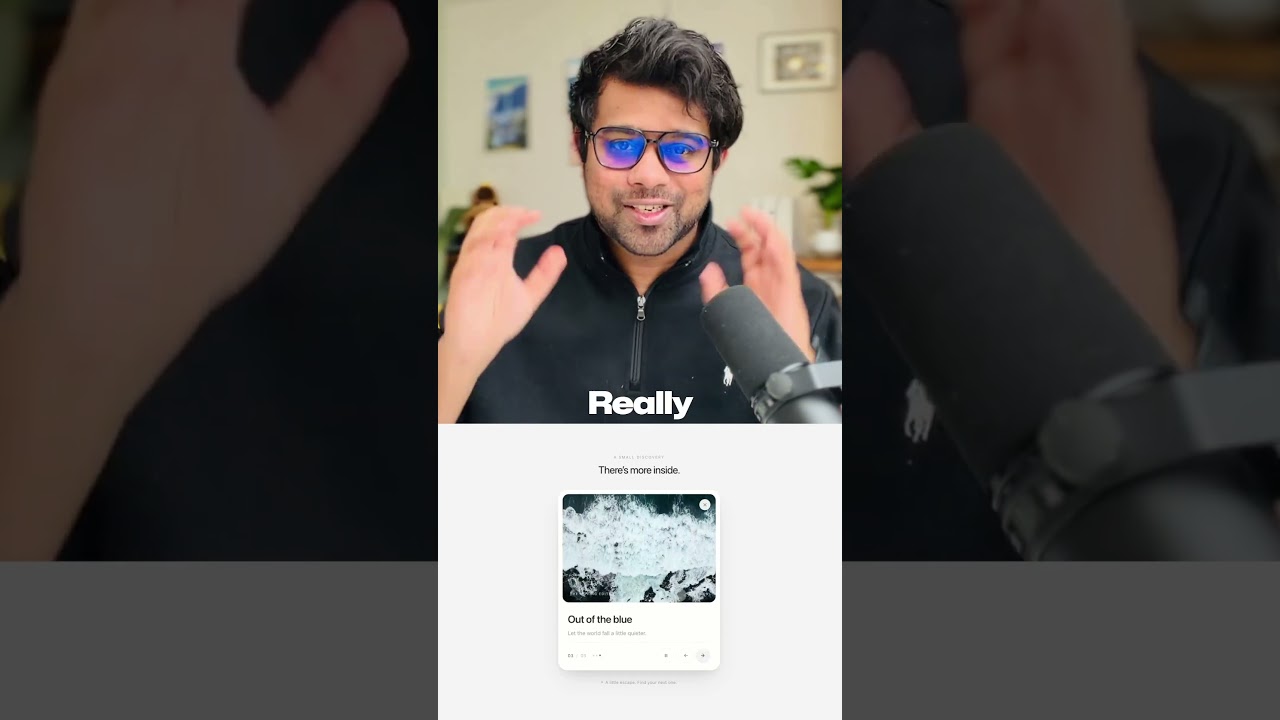

Design Engineer's Ultimate Tool Library: designengineer.tools #designengineer #designsystems